Spring to snow

4 04 2026

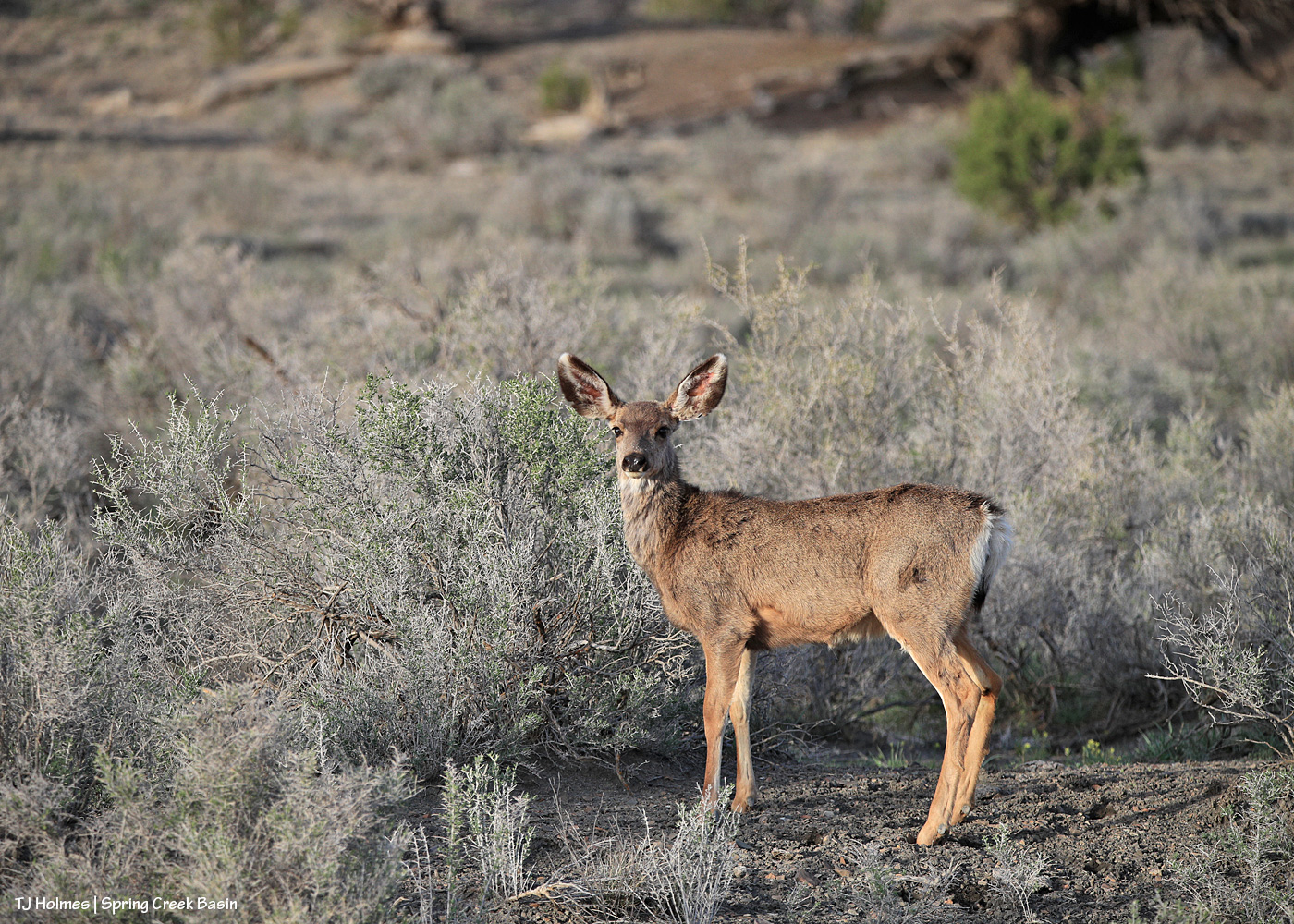
Wait, that’s not a mustang, I hear you thinking. πŸ™‚ Correct! That’s a young mule deer, and s/he starts the journey of this particular blog post (which doesn’t include a mustang in sight). S/he was, in fact, inside Spring Creek Basin Herd Management Area, and I was on the road.

But let’s back up a moment.

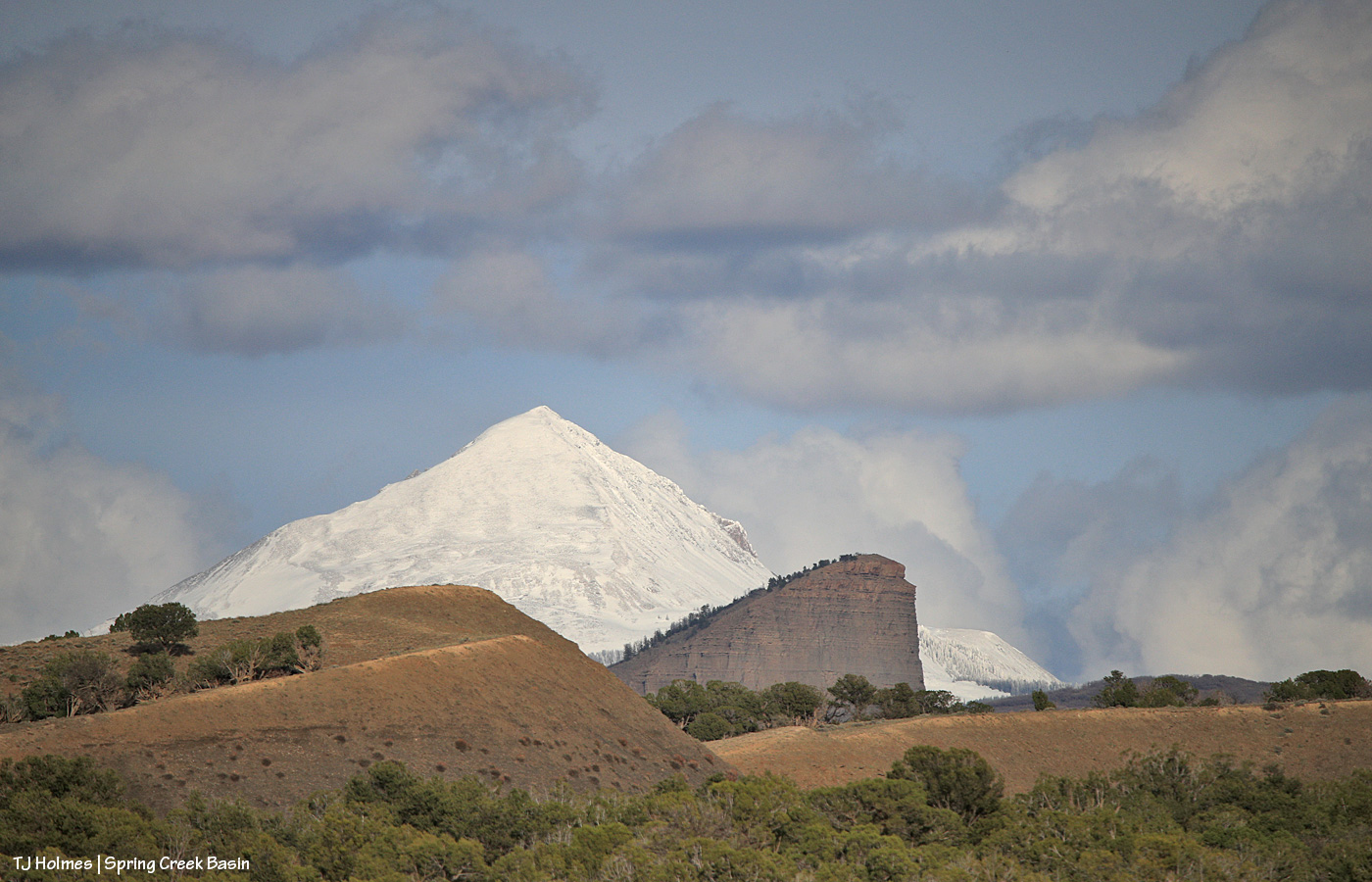
This is where my short trip up-Disappointment-Valley actually started: Seeing snow completely covering nearby Lone Cone from just within the southern part of Spring Creek Basin (not quite as far south/southeast as the mule deer). Except for the very southern area, Lone Cone isn’t visible from most of the basin. (And that promontory in the distance isn’t Temple Butte, which is closer and to my left out of frame.)

Much, most – all?? – of the region got blissful, sweet, rejuvenating rain (at least) on Wednesday. Obviously, higher elevations got some welcome snow. I write a lot about how dry it is in Disappointment Valley and, specifically, Spring Creek Basin. I’ve been writing a lot this “winter” about how dry it has been this past non-winter. It gives me no pleasure and a lot of terror to note that folks are now calling this the “worst [winter] on record,” according to The Colorado Sun. How bad is it?
β€œIt’s now safe to conclude that this has been the worst year for Colorado snowpack in recorded history,” [Colorado Climate Center’s Russ] Schumacher wrote in his blog Thursday. (Note: Find his blog here.)
So consider this post part education, part joy at seeing Lone Cone covered in snow (at least for a little while). The words or phrases in blue (and possibly underlined) indicate links to outside sources. It’s going to be a little bit of a long post, too (sorry to bury the lede!), so grab your brew of choice and come along with me – and also, I should tell you now that this spans back-to-back days, an evening (Thursday) and the following morning (Friday). You’ll see why as we follow the snow. πŸ™‚
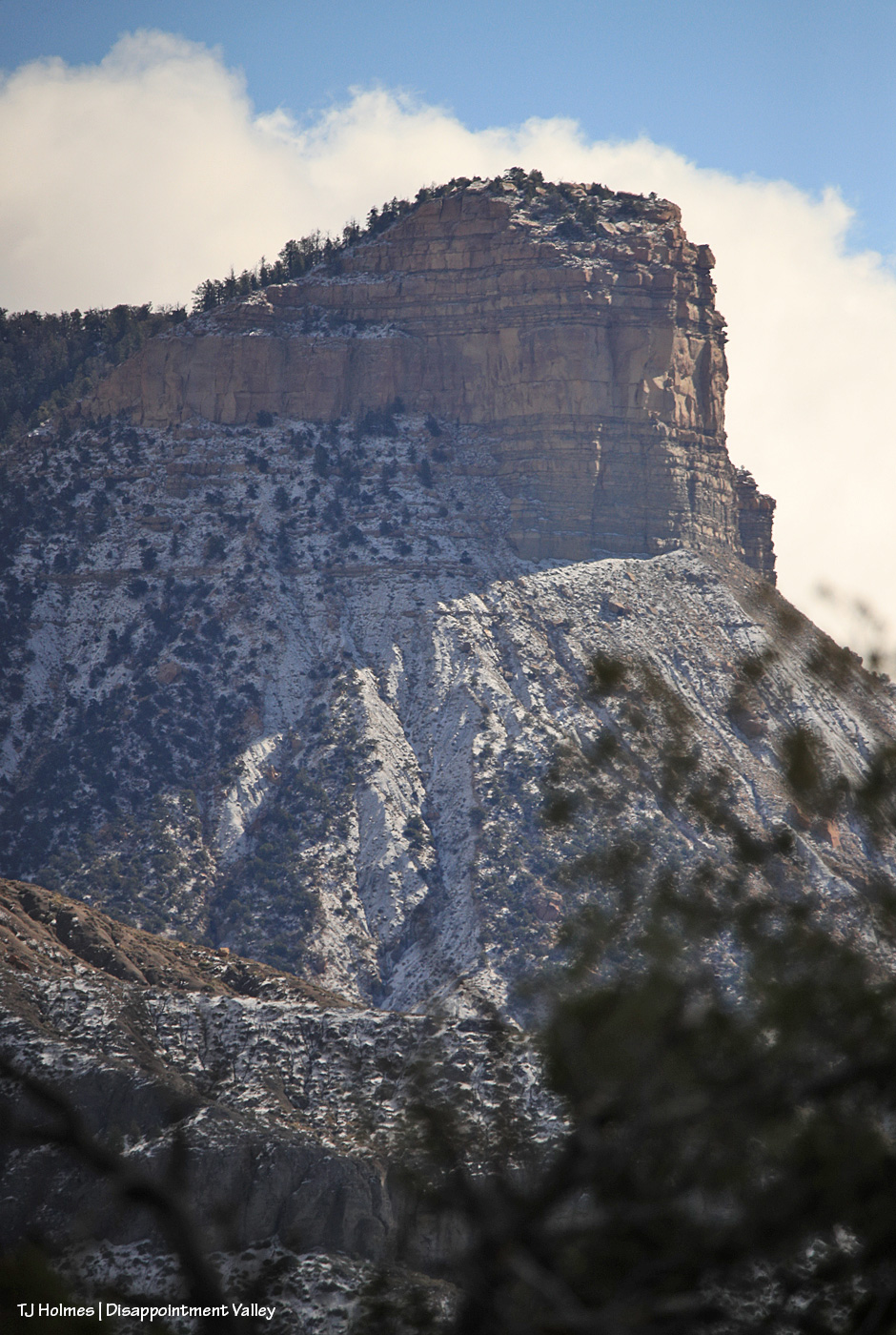
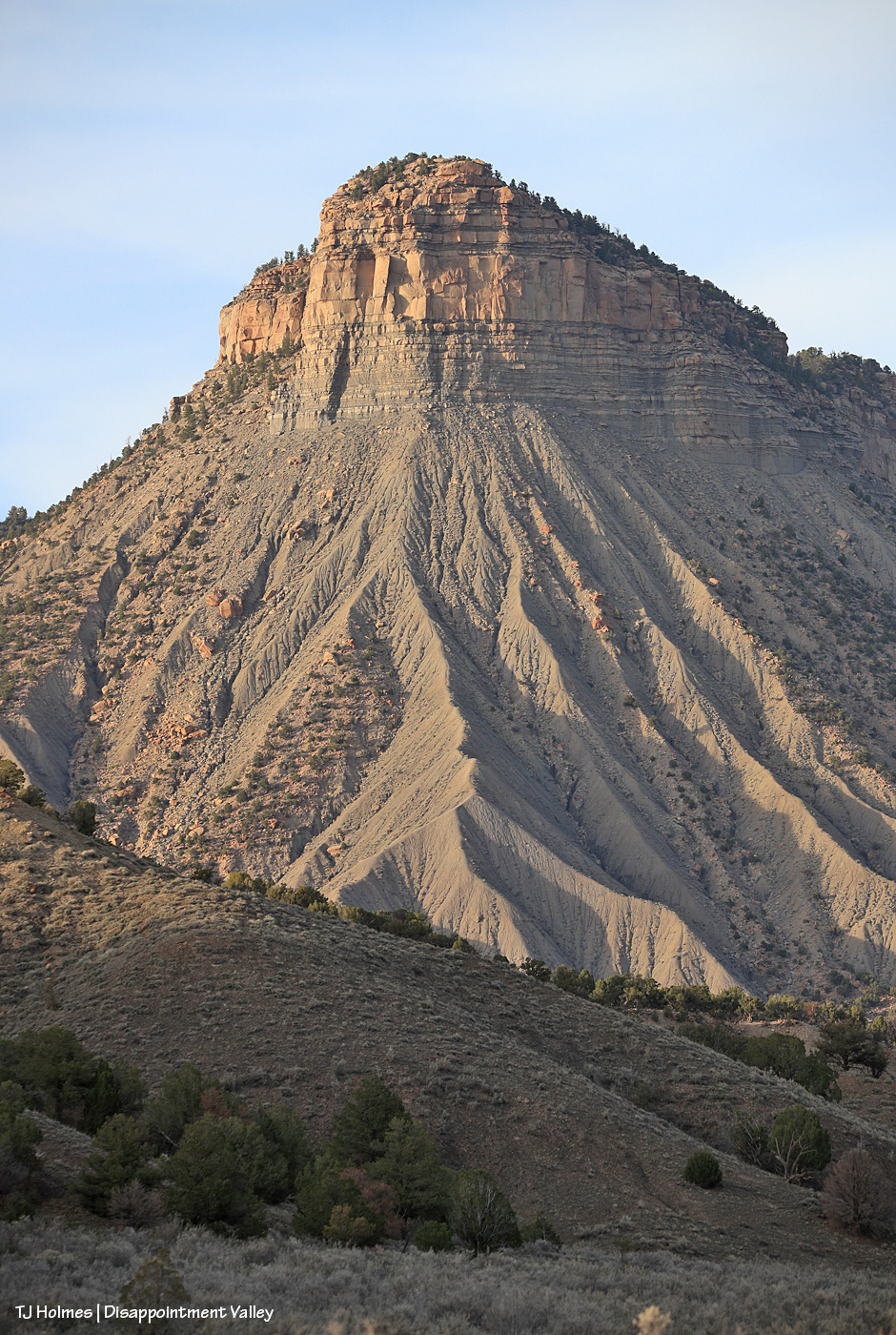
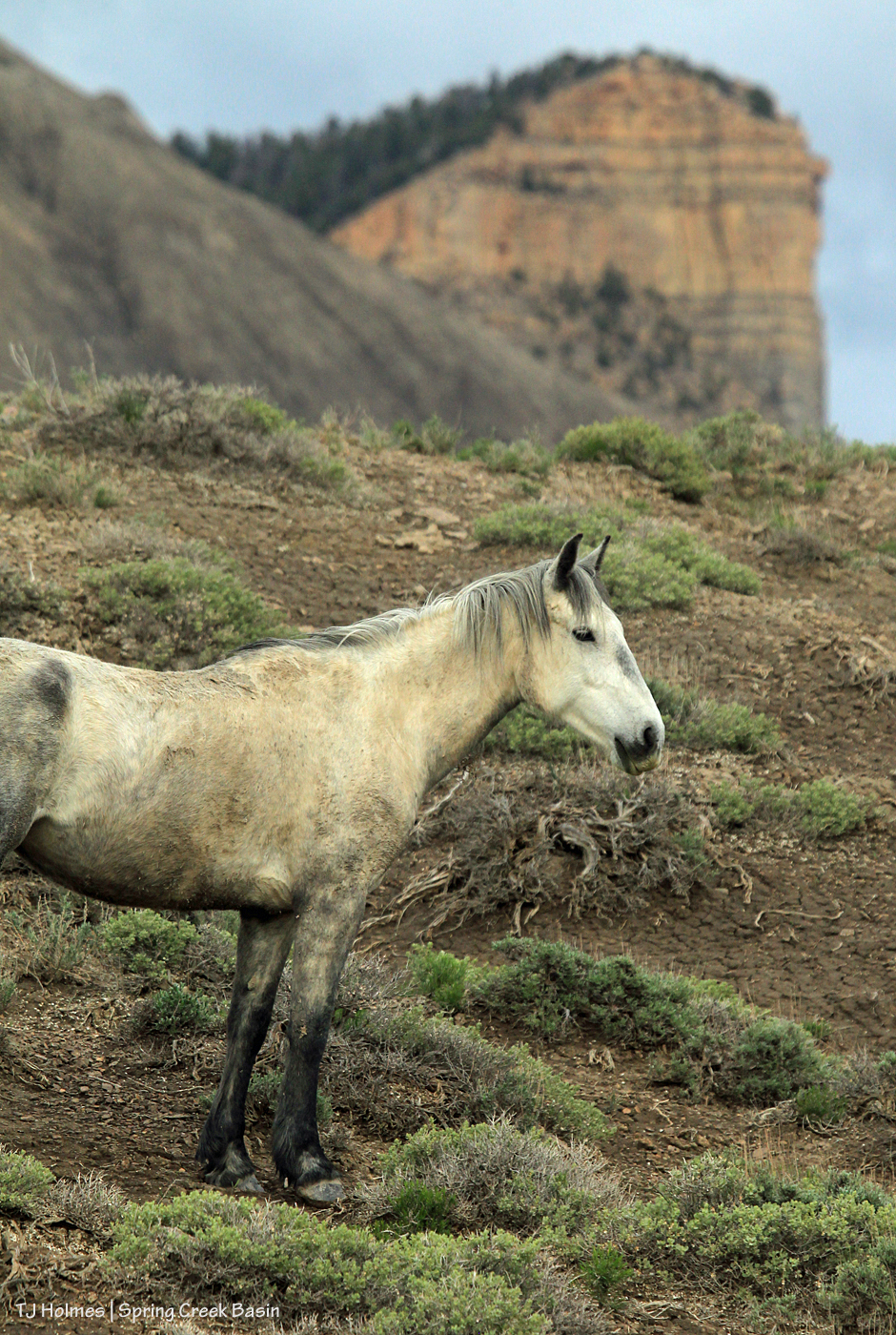
I love Temple Butte. I loved Pati Temple, for whom the butte is named. Previously and for several years, I called it the unnamed promontory, and because it was unnamed, officially, we were able to apply to the U.S. Geological Survey, five years after her passing, to start the process to honor Pati and her dedicated devotion to Spring Creek Basin’s mustangs. Huge thanks to Kat Wilder for coming up with “Temple Butte” as a name, and especially ginormous thanks to Ann Bond (retired from the U.S. Forest Service) for diving deep into the computer work to get that done – undying gratitude! Now it is *officially* Temple Butte, though it’s hard to find maps yet with it marked as such. Our new kiosk at the main western entrance to Spring Creek Basin has a map that shows it (thanks, BLM!!), but when I did a Google search, although I came up with other Temple Butte(s) (!), I found only this reference to ours. It’s a super cool sort of AI rendition of looking at the region as though you’re on top of the butte. Move the view around, and you can see numerous named points of view, including McKenna Peak and Brumley Point. I’ve never been atop either Temple Butte or McKenna Peak, or Brumley Point, though I’ve been way up its sides, but I imagine you can’t help but have noticed that Temple Butte and McKenna Peak (at least) favor heavily in a lot of my images of Spring Creek Basin’s mustangs from all over the basin. πŸ˜‰

I continued driving up-valley. …

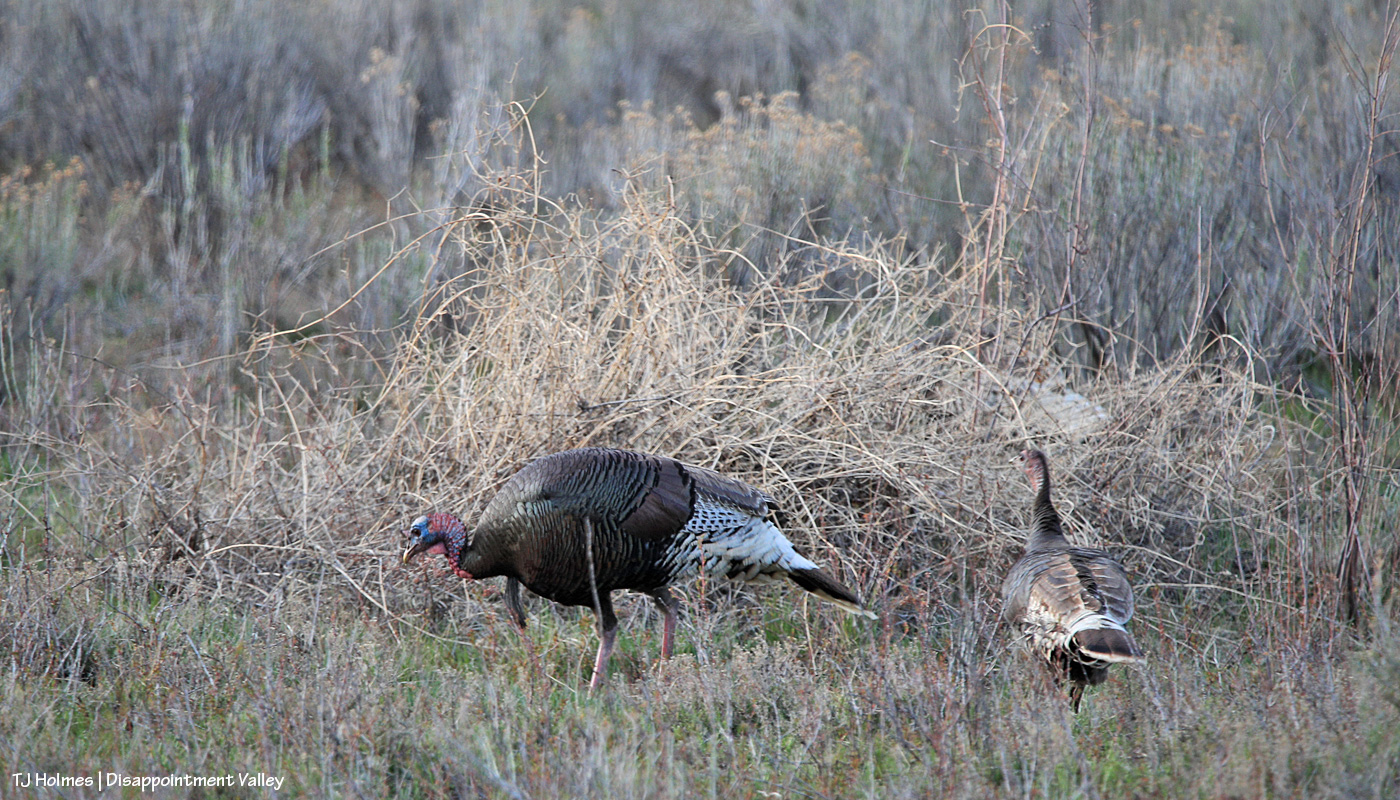
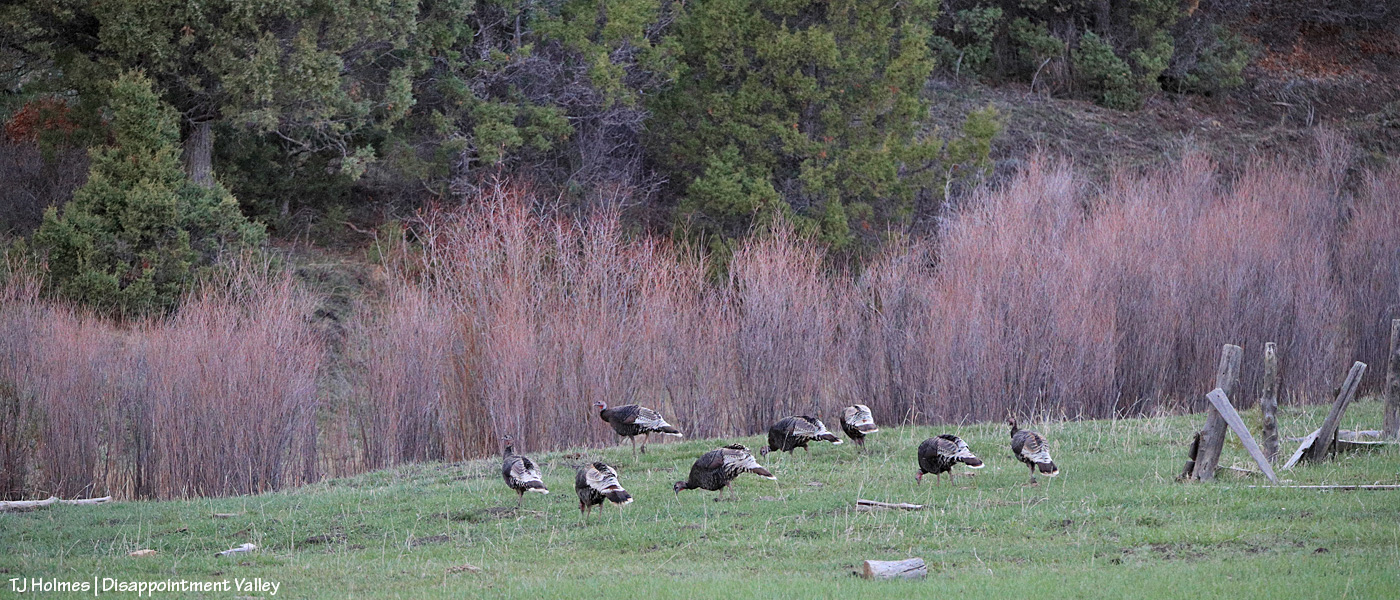
I was so surprised to see this flock of turkeys that I almost didn’t realize at first what I was seeing!

Question: Why are turkeys SO hard to photograph?? Even when I’ve seen them close, my pix of them are almost always blurry. You’d think that with a bird THAT huge, they’d be a cinch. … Yeah, but those tiny heads are, well, tiny! I do love that you can see the color in this tom’s head and some of the greenish iridescence of his gorgeous feathers. There might have been eight to 12 birds in this flock?

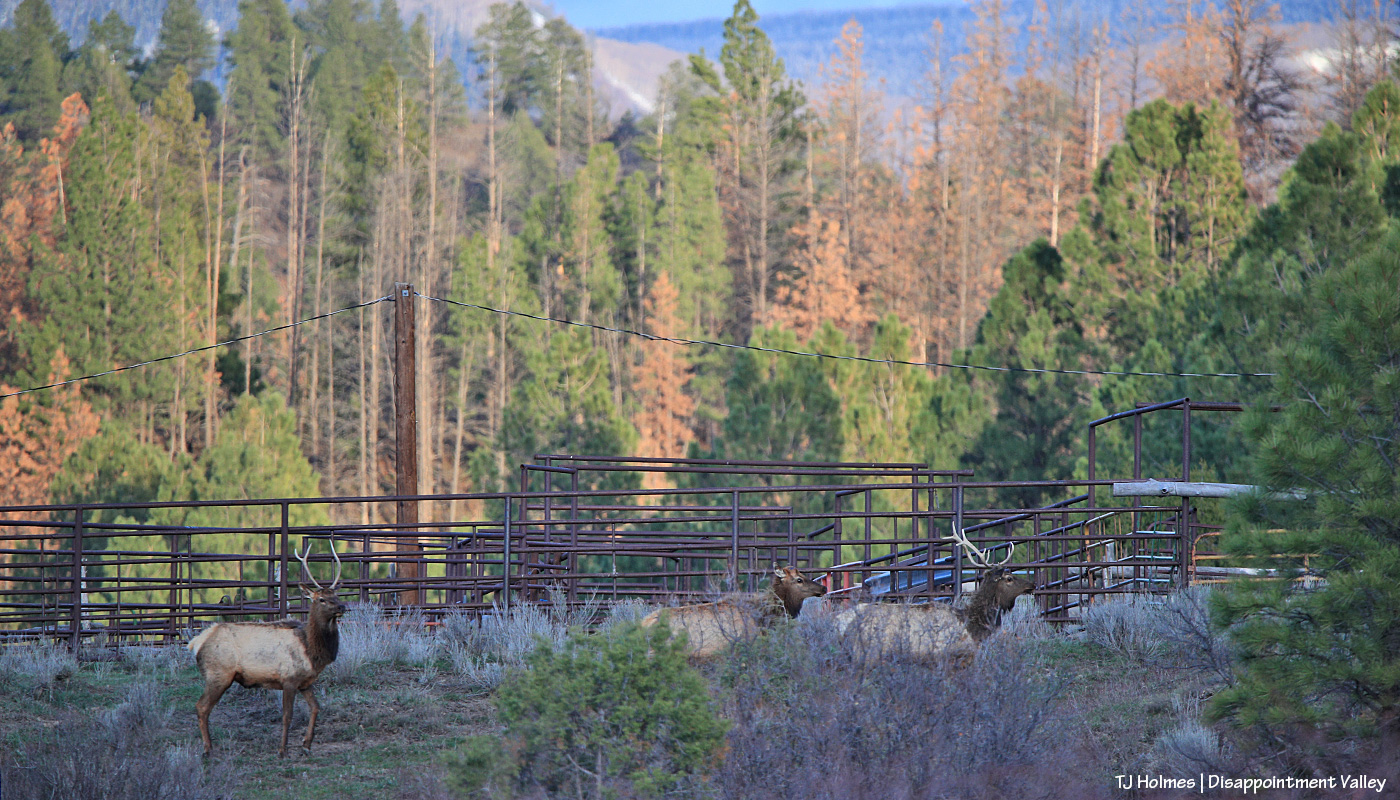
Not much farther, I stopped in the middle of the road and shot over the hood to try to catch these two young bull elk and a cow as they raced across the road and into the trees near some cattle pens belonging to up-valley neighbors. Note the “orange” pines in the background. Not even in Southwest Colorado are we escaping the deaths of ponderosas (and other conifers) across Colorado and the West because of drought and insects.

According to the Colorado State Forest Service, there were more than 800 million standing dead trees as of this report from 2017: “Colorado’s decades-long mountain pine beetle epidemic resulted in almost 3.4 million acres with some degree of tree mortality; an ongoing spruce beetle epidemic has thus far resulted in 1.7 million impacted acres.”

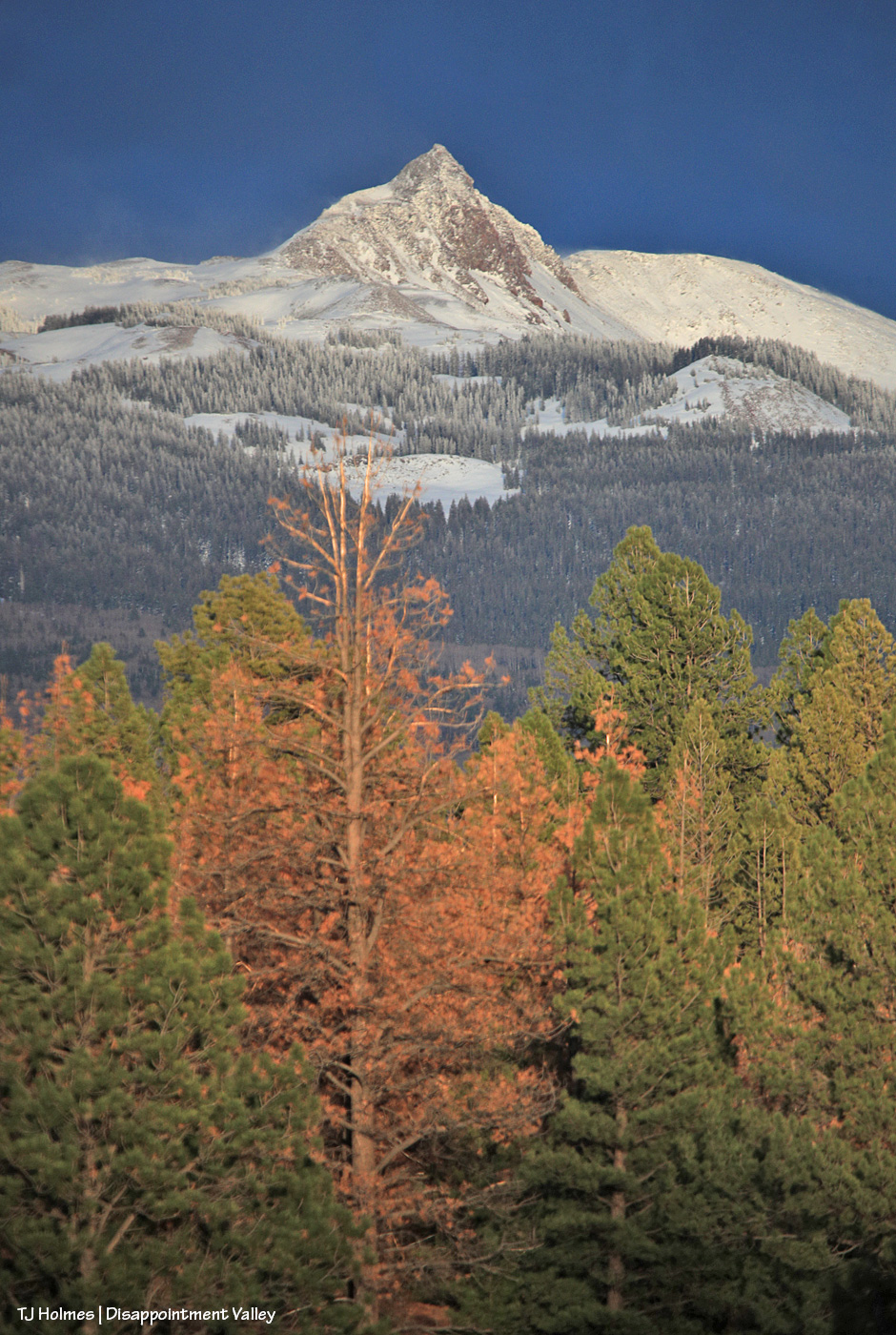
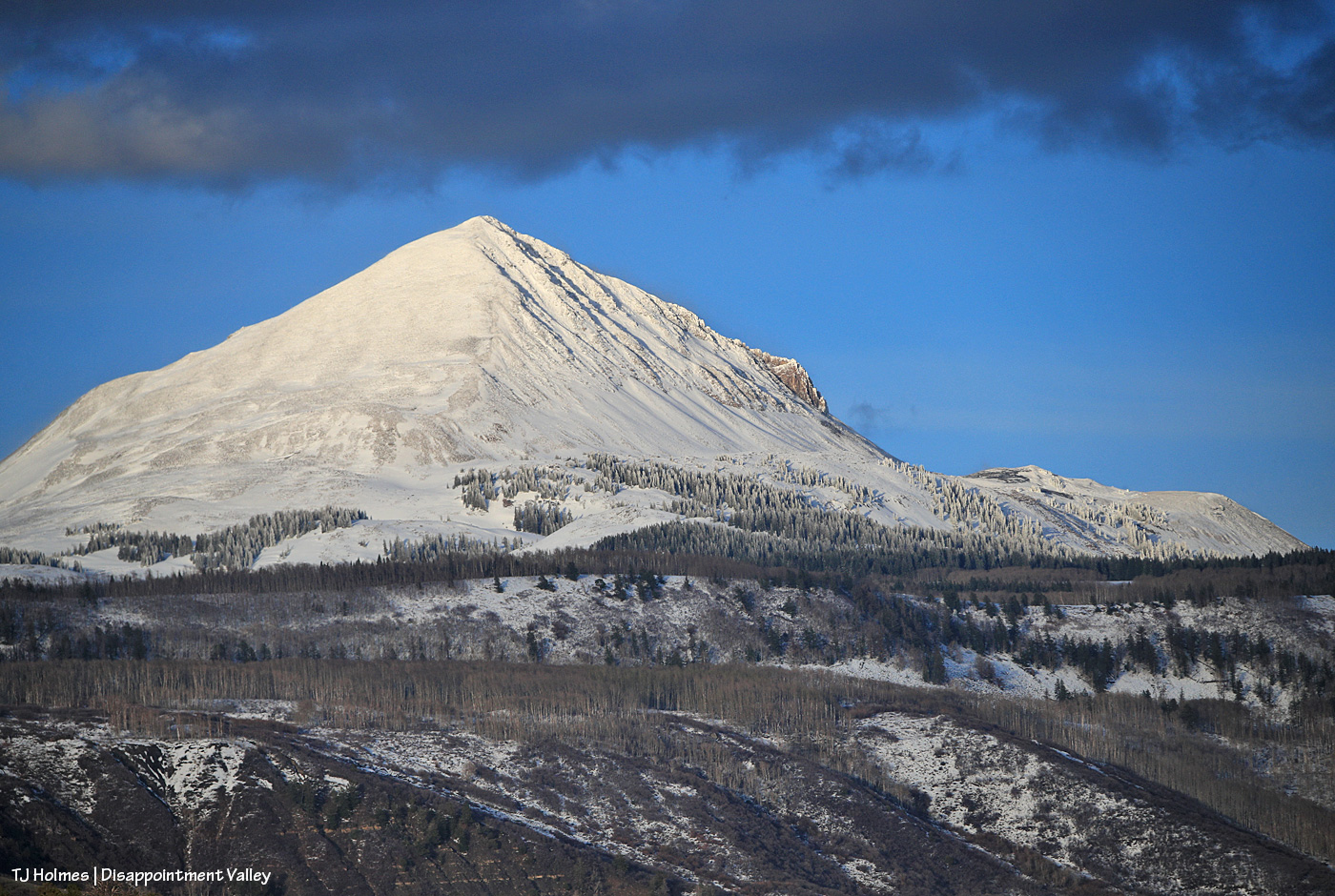
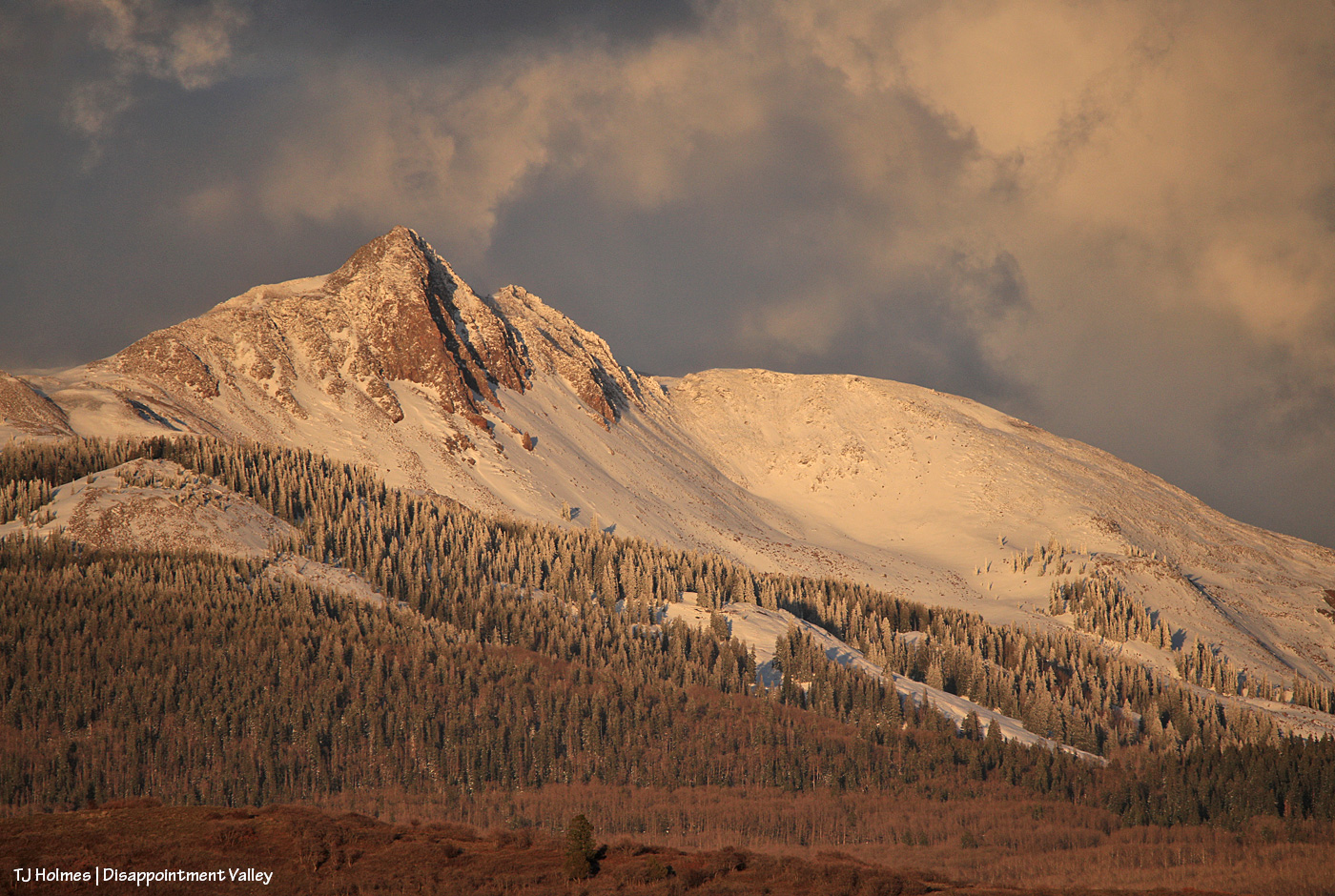
Thankfully, there also are many live ponderosas. At this point, way up-valley, I was starting to get amazing views of Groundhog Mountain. “Groundhog” in this neck of the woods generally refers more to Groundhog Reservoir, where there’s a store and rental cabins and a tiny community of summer cabins. From this view of Groundhog Mountain, those are over yonder on the other side. In the view above – and also of Lone Cone – I was fascinated to see that the trees on the lower shoulders of both mountains were still cloaked in snow. And if you look closely at the above image, you can see that crazy ol’ wind blowing snow from the peak.

Looks pretty wintry, eh? But I think you can tell, even from this distance, that the snow layer is thin. The lower stands of trees are aspen, which are only just beginning to bud and leaf out (depending on elevation; I did see a couple of small pockets of aspen wearing their brand-new bright-green spring leaves).

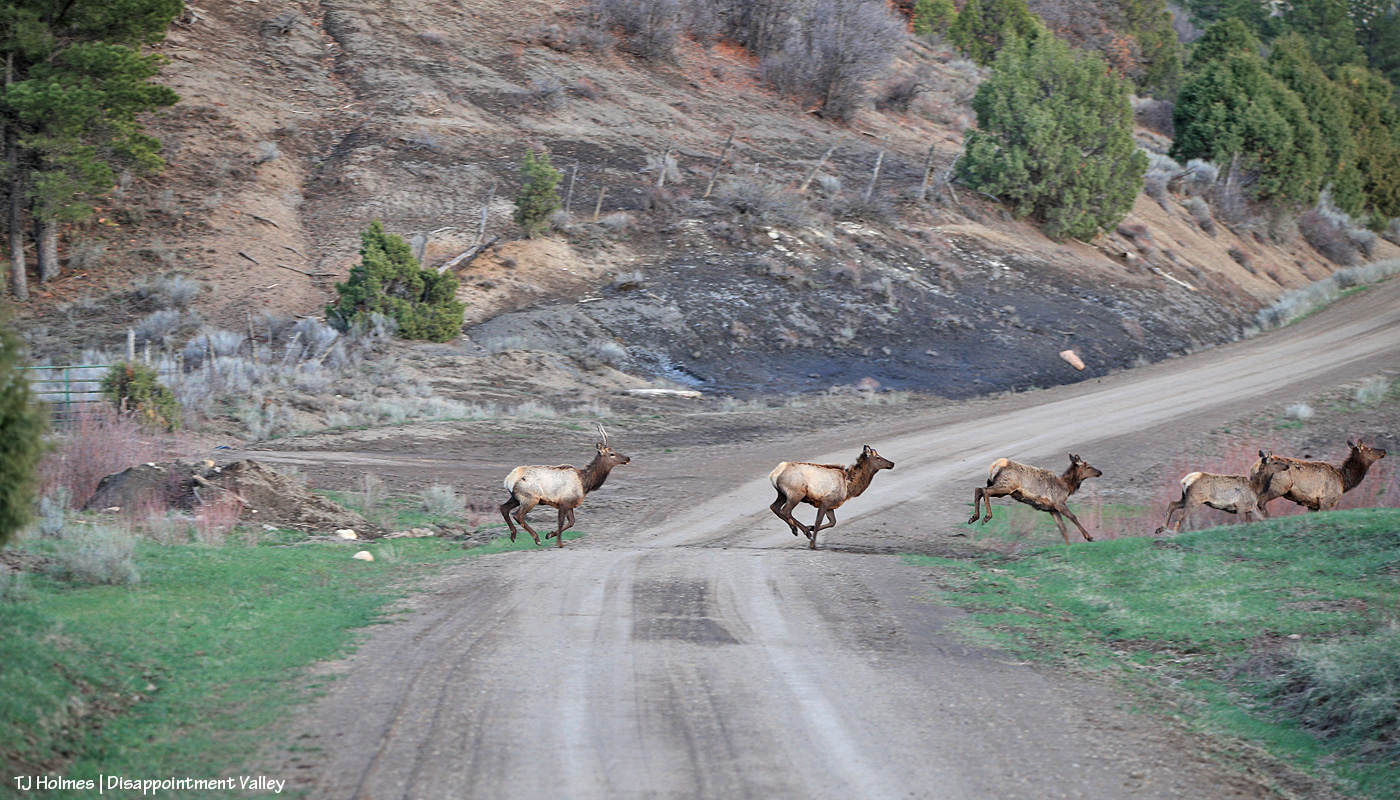
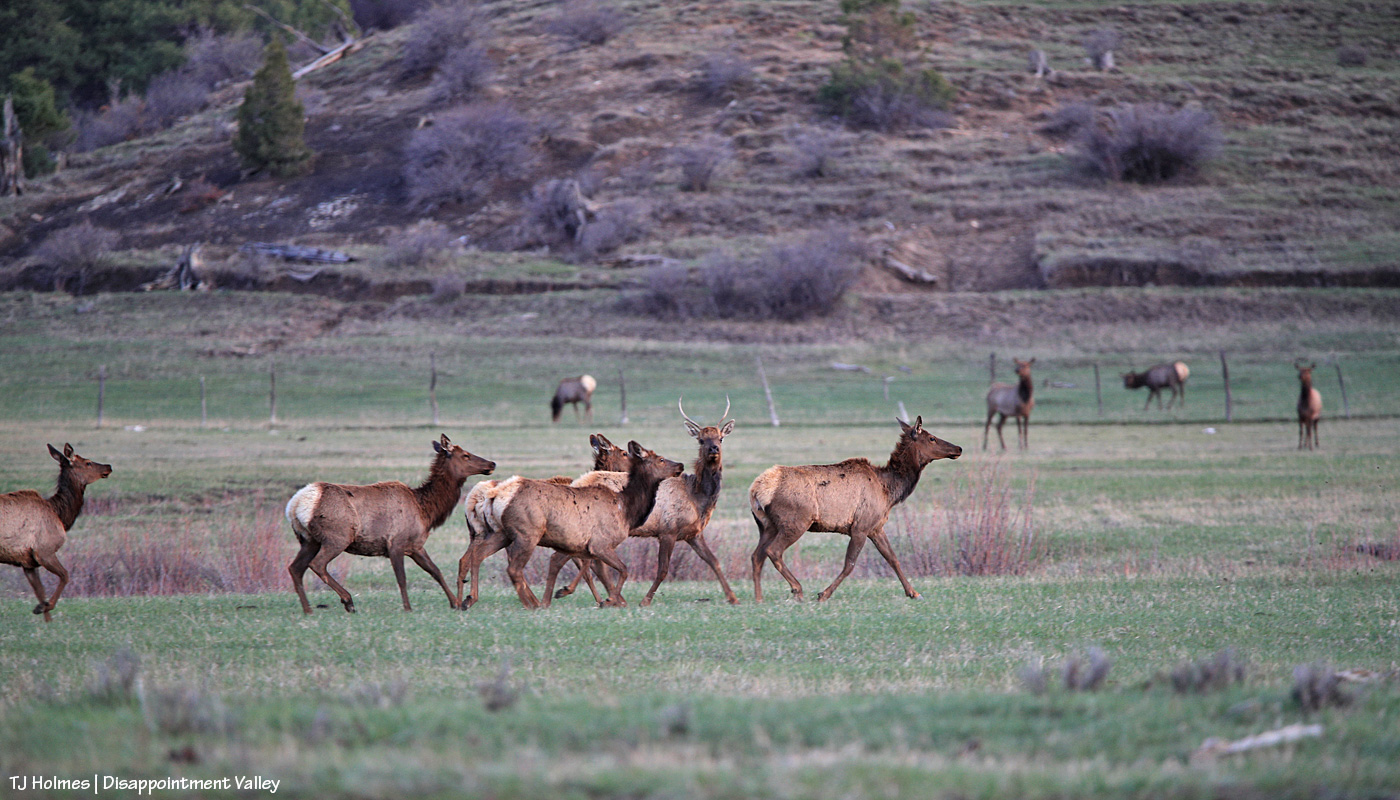
Traffic jam! Disappointment-Valley-style. πŸ™‚ Look at that GREEN. GRASS!

The elk didn’t cross the road to get to the green grass (there was plenty where they’d crossed from) but because the other side of the road features wide-open meadows and more of their friends and family. Almost all I saw in this crowd were cows and youngsters with some young bulls still hanging onto associations with mamas and aunties. There weren’t a huge number of them … fewer than 75, I’d guess.

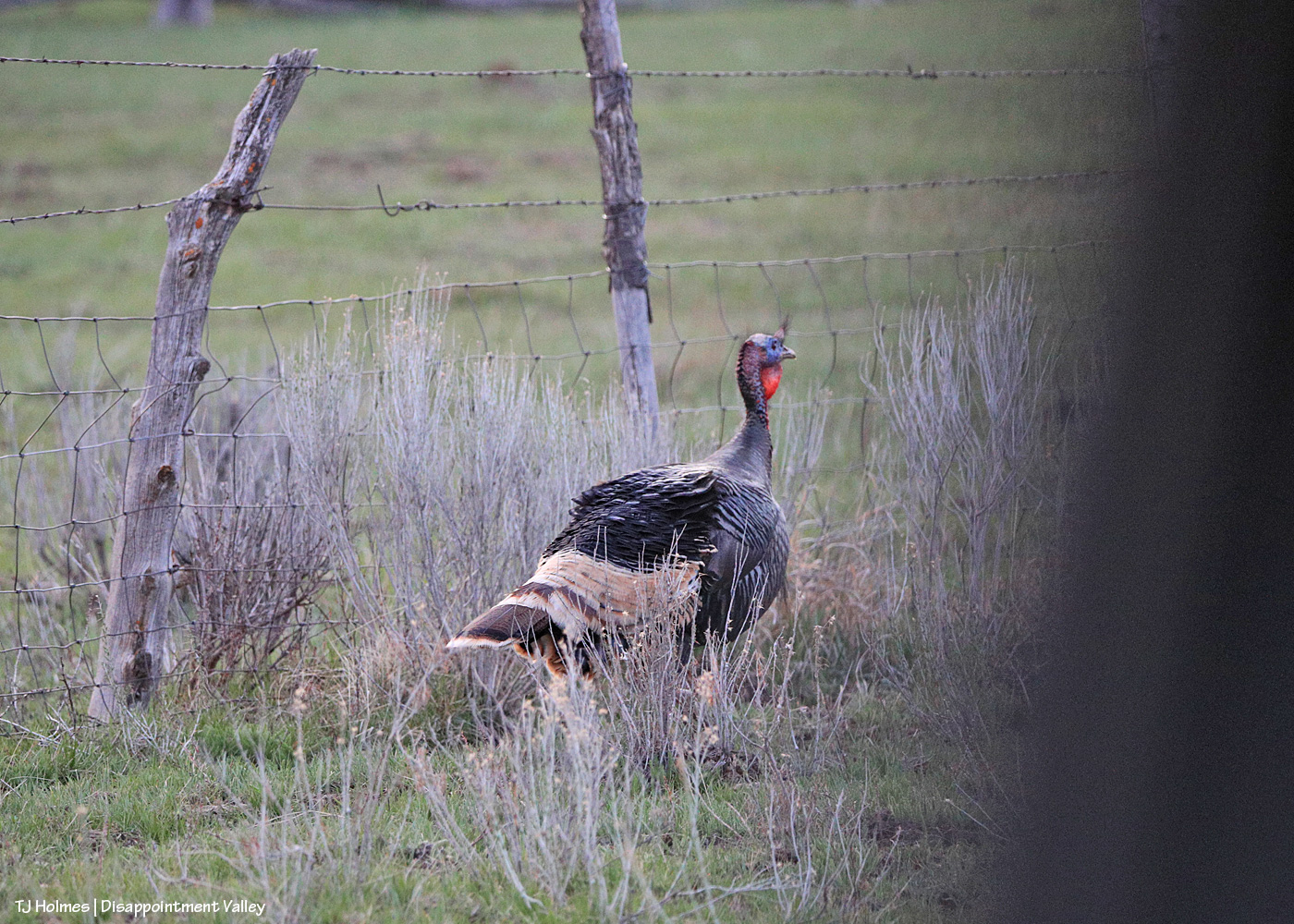
What a contrast, right? The “ugly” head – but those colors! love! – with the absolutely gorgeous feathers. (The darkness at right is the back of my back truck window.) They’re also hard to photograph because they’re faster than you think they should be. This poor guy and another one were “stuck” on the road side of the fence …

… but they very quickly flapped and flew those big bodies over the fence to rejoin their flock. (I can’t get over how green it is up-valley. This is just several miles above the south end of Spring Creek Basin.)

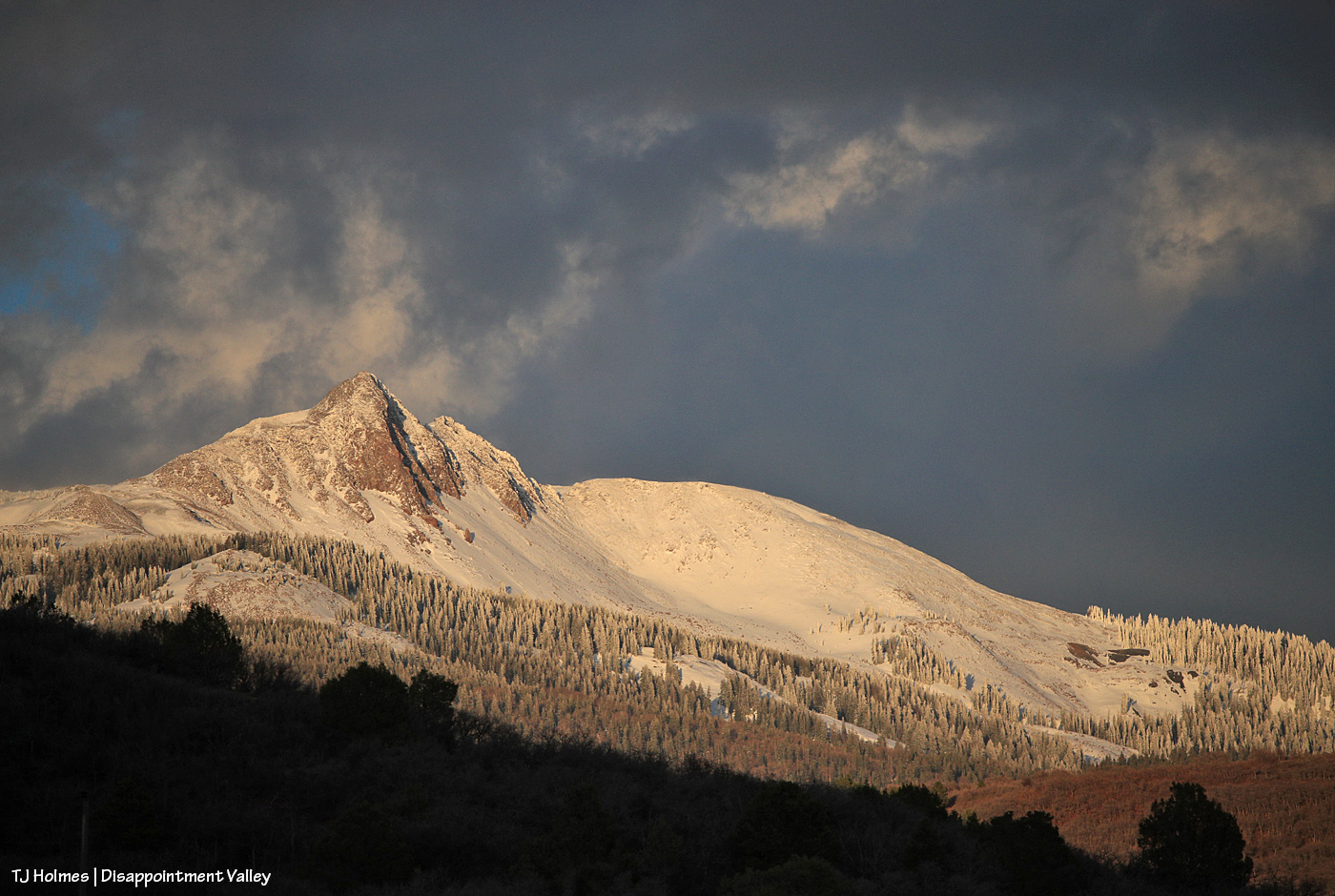
The sun was quickly nearing the western horizon when I took this and the next couple of pix. Great timing, especially with some stormy clouds still swirling above and beyond Groundhog Mountain.

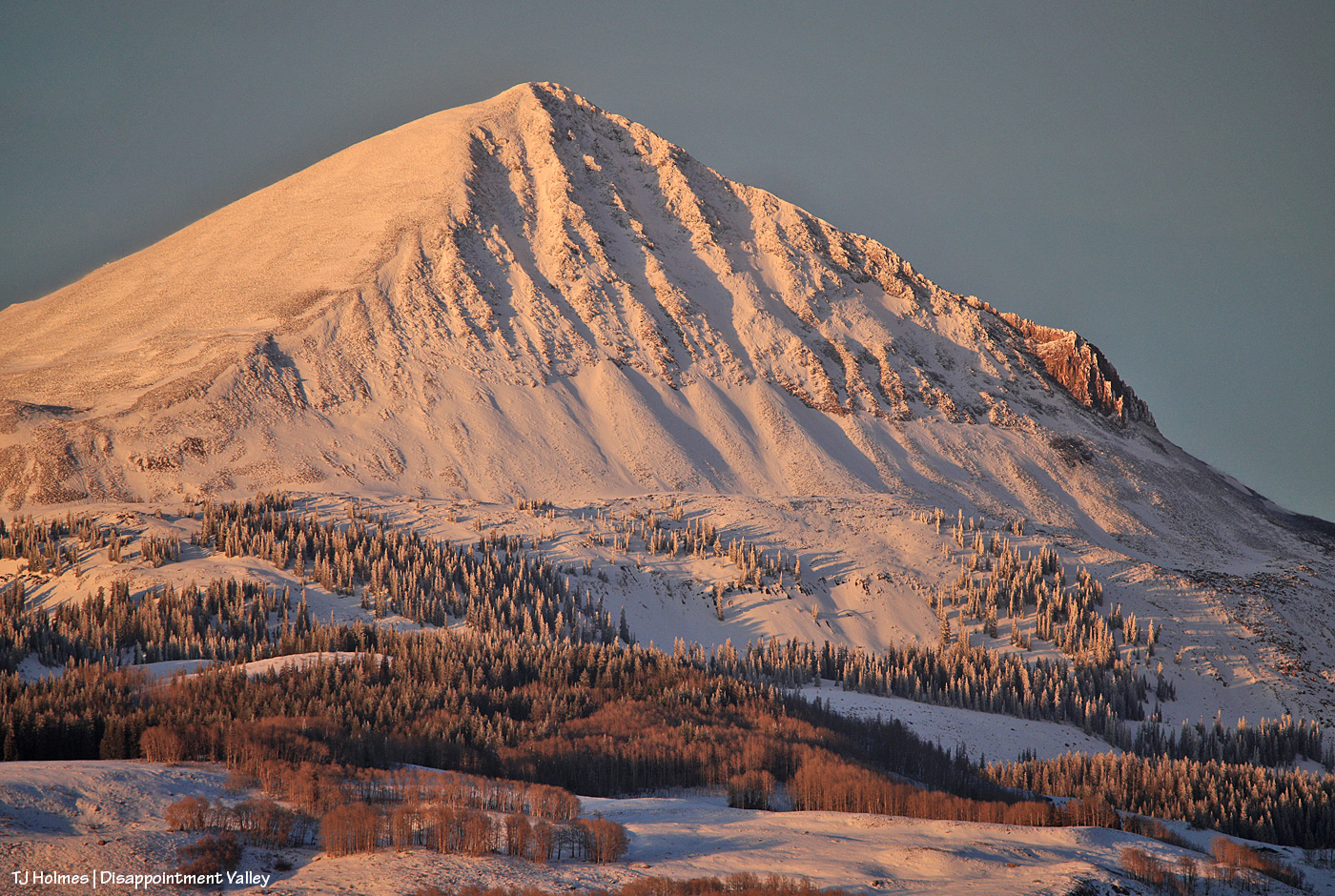
That light! That snow. πŸ™‚ (You can see how not very far down it isn’t there at all.)

It’s still winter somewhere. πŸ™‚ For a little bit longer. Lone Cone snow provides the water that eventually flows down Disappointment Creek, so the more snow, the better. That water doesn’t benefit the mustangs in Spring Creek Basin, but it benefits numerous other species of wildlife from way up high all the way to the canyons of the Dolores River at the far lower end of Disappointment Valley.

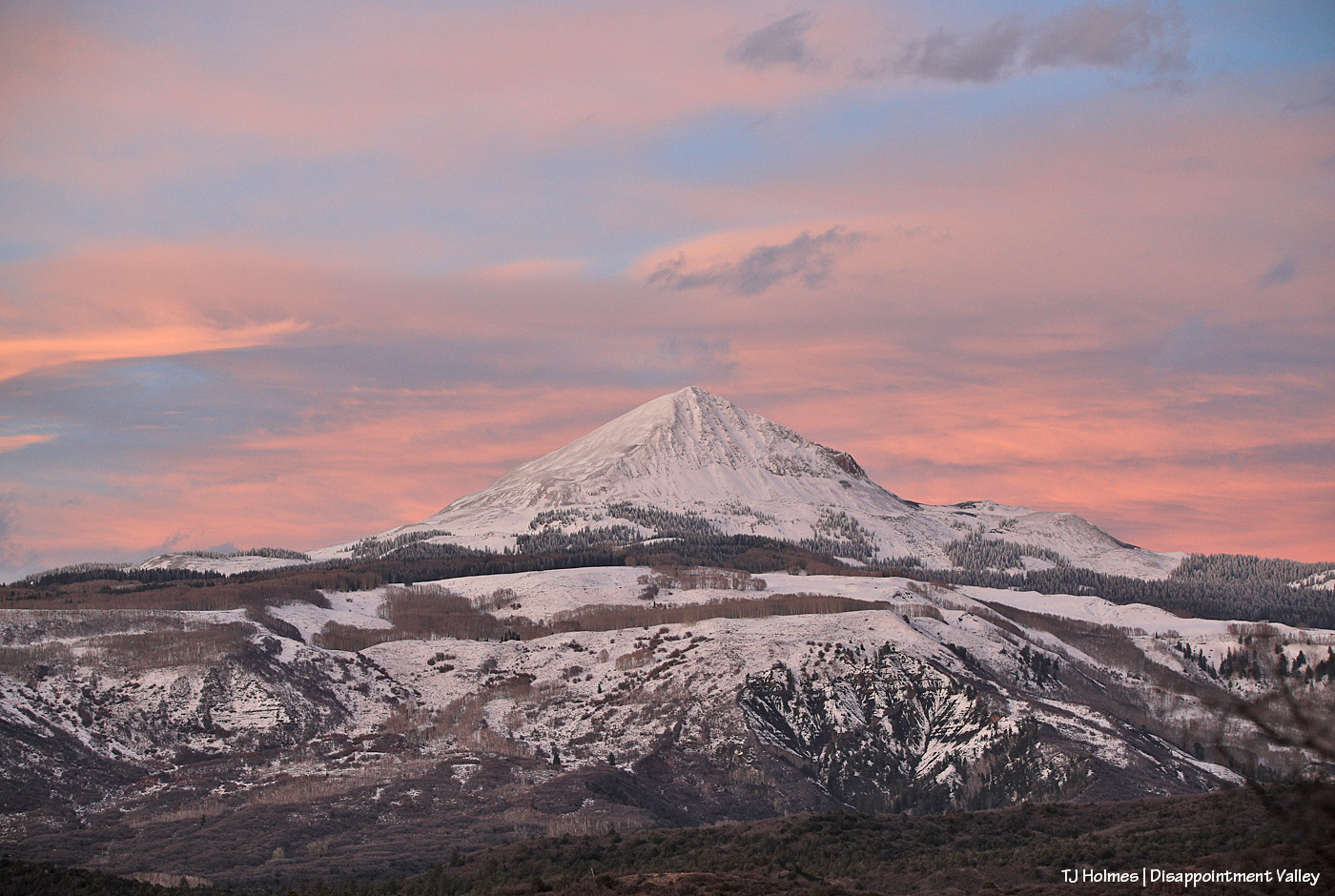
Admit it, you didn’t think it could get better. πŸ™‚ When I first was at the upper end of the valley, the clouds were giving Groundhog Mountain the dramatic, bold light and color. This was pretty immediately post-sunset, and the clouds had drifted over to light up the sky above Lone Cone (Groundhog Mountain is farther to the right from this perspective). Um, WOW.

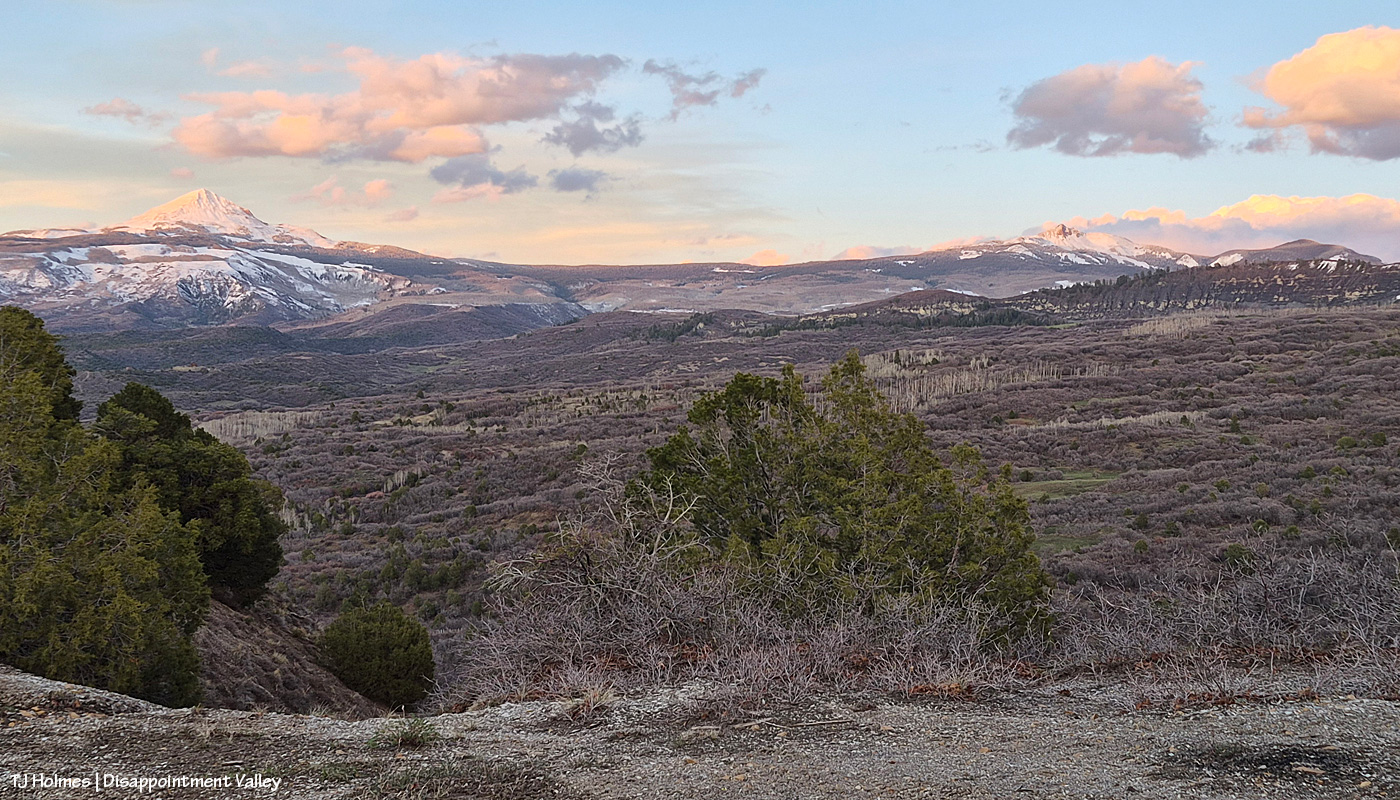
Here we go: A cellphone pic from the “lookout curve” on the switchbacks that lead up and out of Disappointment Valley on the Dolores-Norwood Road (toward Dolores) shows Lone Cone at left and Groundhog Mountain at right at just about last light. I couldn’t have timed that better (the curve was my ultimate destination) if I’d tried (and I did!).

Then it was a down-valley drive as the light faded. Fortunately, though I watched hard, no kamikaze elk or turkeys (or even deer) shared the road with me. I missed full-moonrise this month because of the weather (if you think I’m complaining, please allow me to reiterate my eternal gratitude for the mostly daylong rainfall!!!), and although there were some colorful clouds, they were mostly drifting along the horizons by dark, so I thought maybe I’d get to see the night-after-full-moonrise from farther down-valley. …

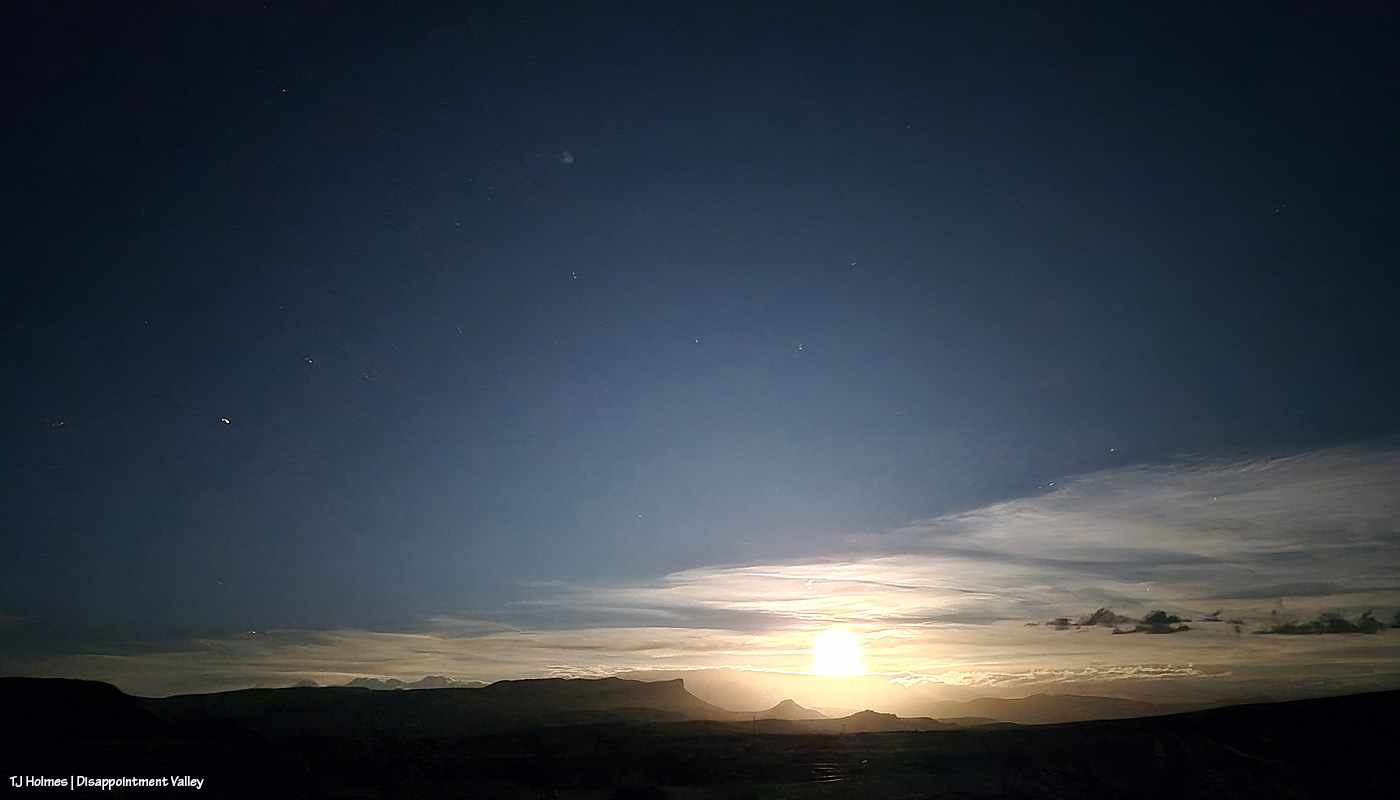
This is from my phone (!): Moonrise over Disappointment Valley. WoWoWoWoW!!!

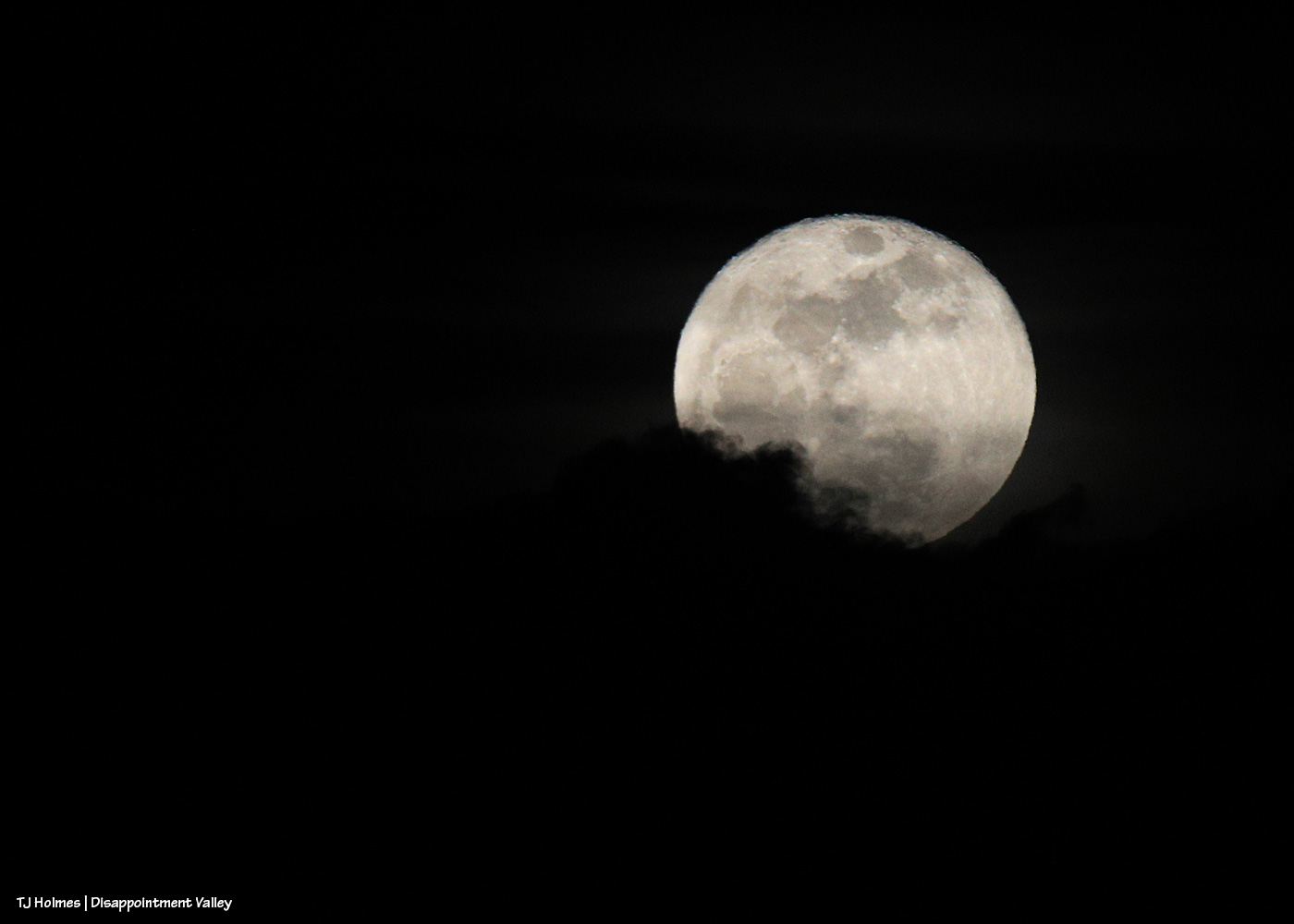
It took a bit for the moon to clear the horizon clouds, but holy wow. You can clearly see Temple Butte and Brumley Point under the glow of the moon. While I’m sure the view of space FROM space (lookin’ at ya’ll, Artemis II astronauts!) is, ahem, otherworldly, I kinda think the above is pretty damn cool (and from my *phone*!). This might be my favorite image from the entire day/night.

Because I couldn’t resist trying to capture it with my camera, too. πŸ™‚ Those are clouds at lower left as the moon was rising out of the cloud bank.

What a day, right?! And that was literally just about the last three hours of it.

And then the next morning came. … My phone’s weather app’s radar showed spots of snow over Disappointment Valley. Oh, you liar, thought I (because it so usually does lie). … And then I went out into the world.

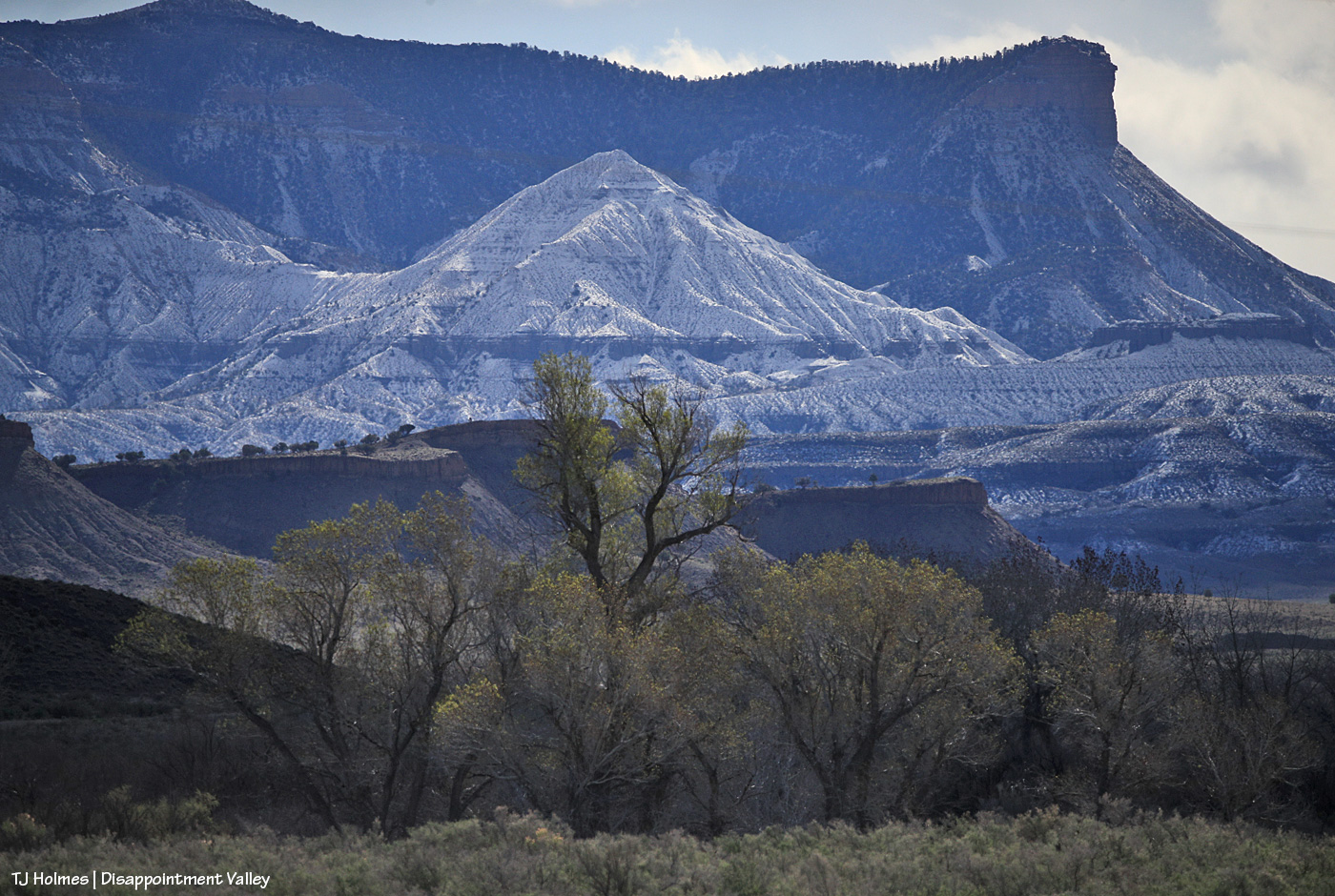
Well, knock me over with a feather! It DID snow … up-valley, not mid- or lower valley (nor did it rain). In the foreground are very newly leafed-out cottonwoods along Disappointment Creek, and in the midground are part of the rimrocks that form the southwestern boundary of Spring Creek Basin. In the background, starting at far right: Flat Top, Round Top and submarine ridge; smack dab in the middle, McKenna Peak; and towering o’er all, Temple Butte.

And from up-valley:

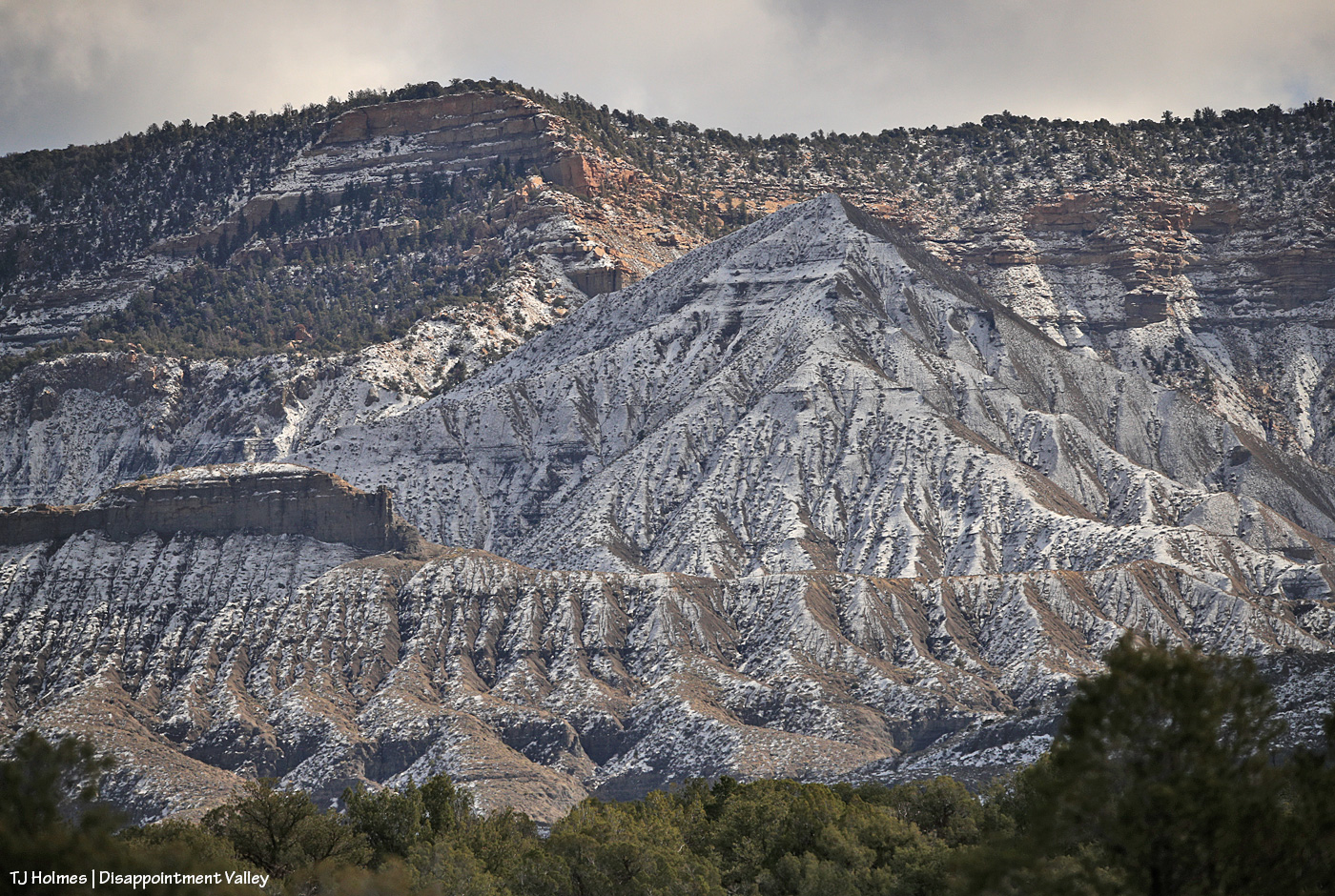
What I call submarine ridge at far left … and McKenna Peak just right of dead center. The very top/back ridge, if you follow it right, ends in Temple Butte.

Voila!

That snow will soak in; it’s not enough to produce runoff. And it was windy again, which further contributes to drying.

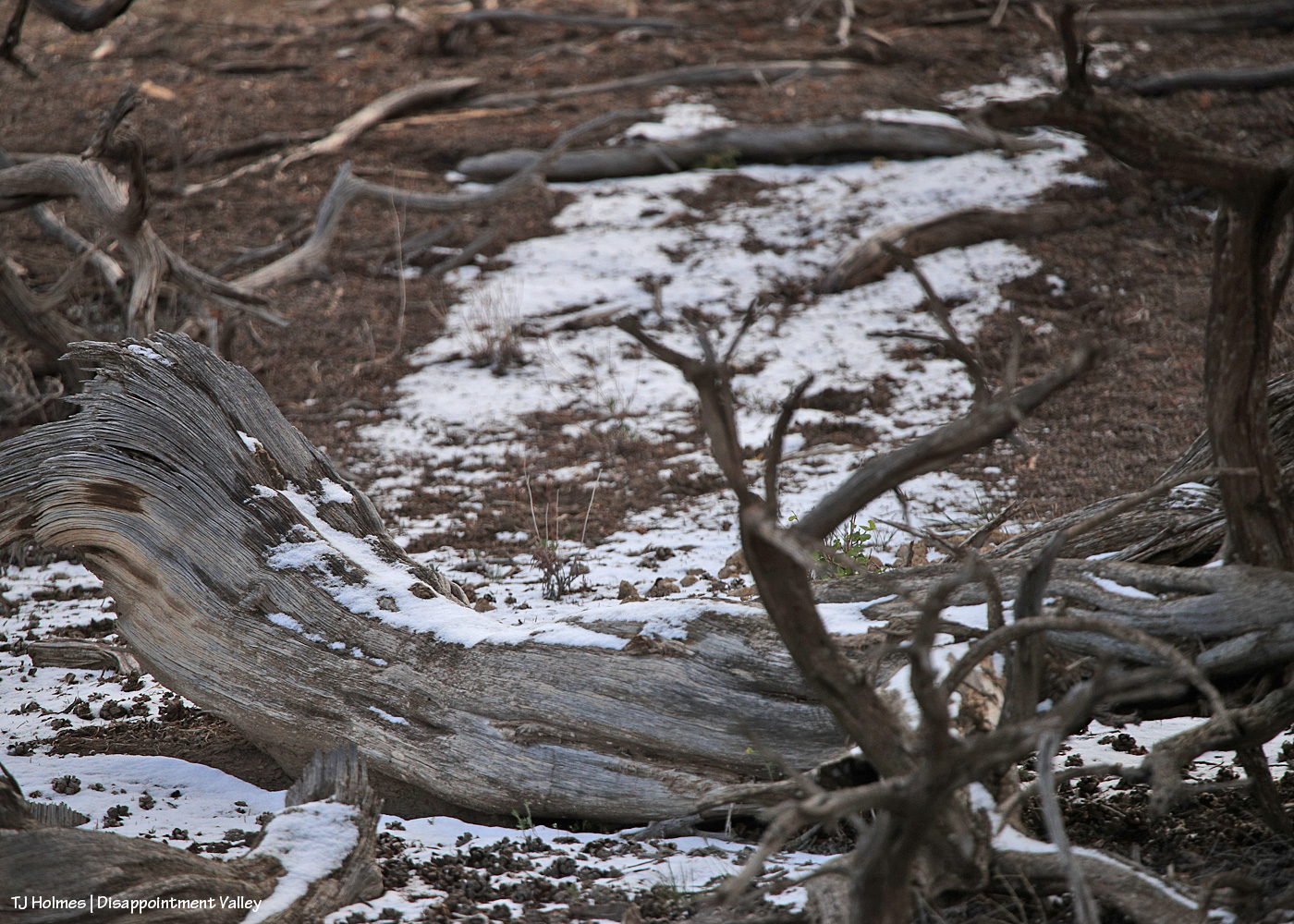
The tiniest bit of a tiny dusting still lingered in shady places under trees (this was just inside the Spring Creek Basin boundary from up-valley along Disappointment Road). Evidence that it HAD, in fact, snowed in the area.

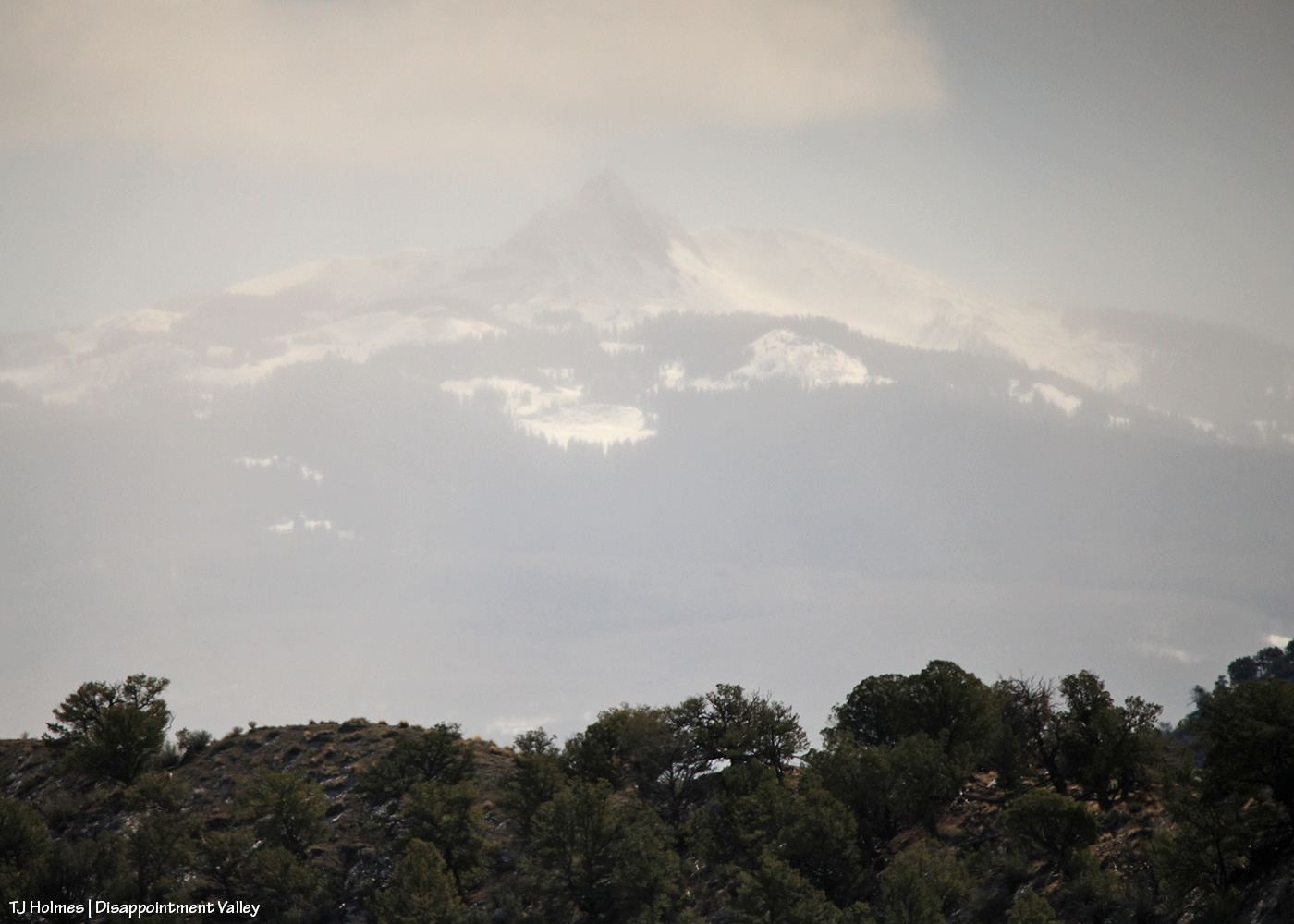
And one last view, of Groundhog Mountain, through a curtain of snow!

It’s a crazy world. πŸ™‚

It’s a crazy BEAUTIFUL world! πŸ™‚

Thanks for coming along. Hope you enjoyed our (temporary) retreat to winter. Snow or rain, we need any and/or all that Mother Nature wishes to bestow.


Happening today …

19 05 2019

Maia; Temple Butte and McKenna Peak

A special dedication to a special lady.

Today in Disappointment Valley, we’re having a ceremony to dedicate Temple Butte in honor of our dear and much-missed friend – and friend of mustangs – Pati Temple.

Last year, just before Christmas, we learned that the U.S. Board of Geographic Names had granted our request to officially name Temple Butte. It was an arduous application process, and we are tremendously thankful to Ann Bond for her commitment to the paperwork and seeing it through to the successful end.

San Miguel County commissioners (Kris Holstrom, Hilary Cooper and Joan May) wrote a letter of support for our application, and we thank them, especially past and present members who knew Pati personally.

Pati worked tirelessly with local BLM employees to get things done for Spring Creek Basin’s herd, and Wayne Werkmeister, herd manager in the 1990s who played a vital role in the creation of the Colorado chapter of the National Mustang Association, wrote a letter of support for Temple Butte. He’s currently the associate field manager at the Grand Junction Field Office (out of which the Little Book Cliffs herd is managed). At Pati’s insistence (one of her best traits was her absolute refusal to take no for an answer!), Wayne was here for our 2011 (last) roundup, during which we implemented our PZP program.

Mike Jensen, current Spring Creek Basin herd manager who also knew Pati, had this to say: “I really see it as fitting to have that beautiful butte which looks down on the HMA named in honor of Pati. Her passion for those horses was a driving force in where we are today in the management of the HMA.”

During her many years of involvement with Spring Creek Basin and its mustangs, Pati made sure that we partnered with BLM instead of fighting with the agency. That philosophy continues … and look at the good it has generated for our mustangs!

Pati touched the lives of humans and animals alike during her life, and it is fitting for those of us who knew her to continue to advocate for all those who need a helping hand and a word of encouragement.

Thank you, Pati. Thank you to all who made this happen.


Temple Butte forever!

19 12 2018

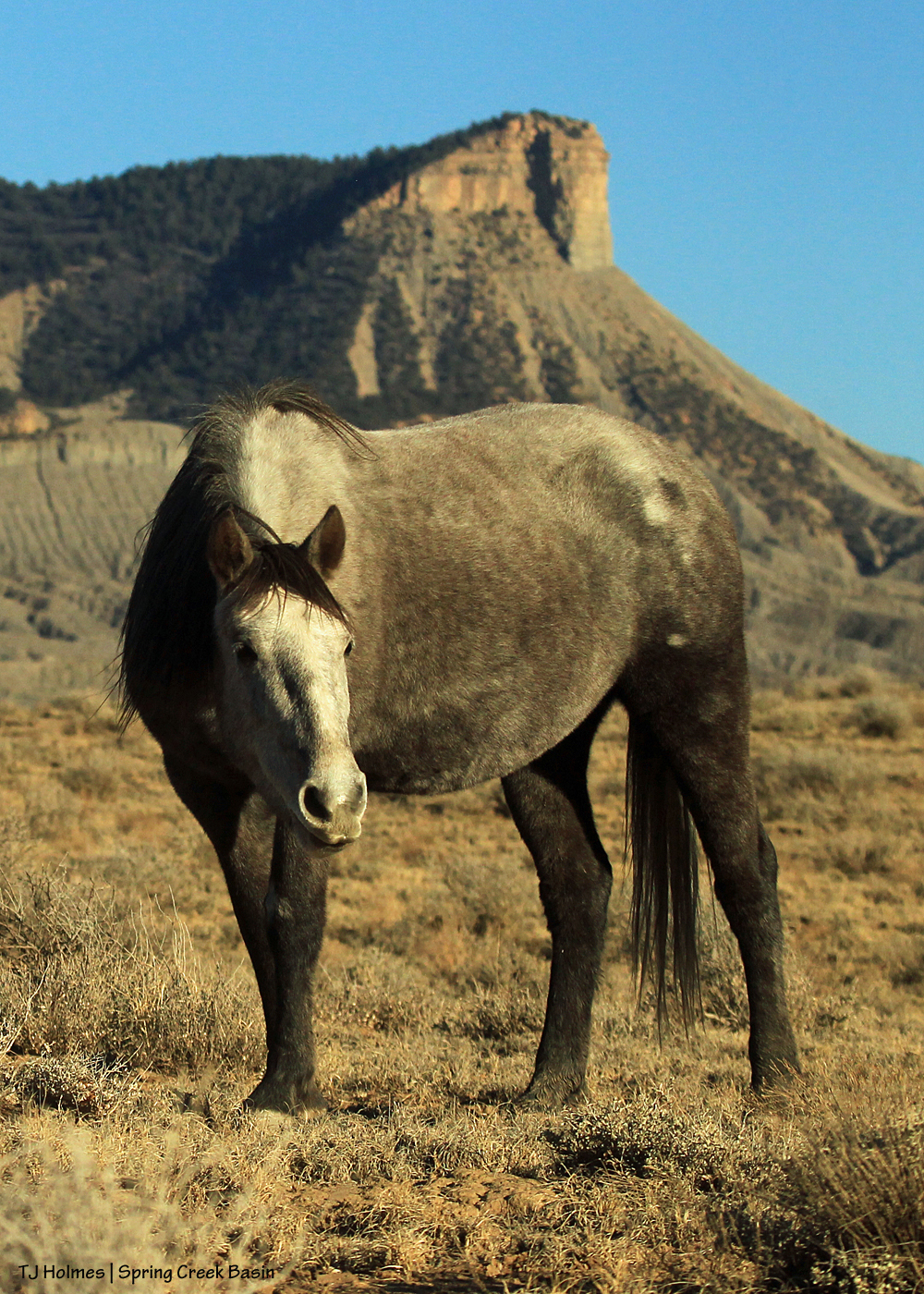
Seneca; Temple Butte

It’s official! Temple Butte IS Temple Butte!

Just last night, we received word that our application* to name Temple Butte, above Spring Creek Basin’s eastern boundary, in honor of our beloved and much-missed Pati Temple was approved by the U.S. Board on Geographic Names.

We are ecstatic. πŸ™‚

Pati was an integral part of NMA/CO‘s long mission to protect and preserve Spring Creek Basin’s mustangs in a way that sustains both the herd and the range upon which they depend. With perseverance and commitment, our partnership with BLM’s Tres Rios Field Office is stronger than ever, and our horses and their range are beautiful and healthy.

We are forever grateful for Pati’s guiding light, and, thus named, Temple Butte now is a testament to her memory.

The formerly unnamed promontory has its forever name. πŸ™‚ Just in time for Christmas!

*Heartfelt thanks to Ann Bond for her diligent efforts gathering and submitting the paperwork for the application!

** Another aside: Pati is responsible for Seneca’s name. πŸ™‚


Not enough white

4 02 2018

Kwana; La Sal Mountains

Those patches of snow are gone, though damp spots on the earth still linger in shady places. The snow on the La Sals is rapidly fading to the grey of the rock below as the sun shines relentlessly down during this winter of discontent.

***********************

Today is the fifth anniversary of the passing of a beloved friend, Pati Temple. Even as we continue to mourn her loss, we celebrate her life and the shining light she was to all creatures, especially Spring Creek Basin’s mustangs.


Spotlight-worthy

5 01 2017

Tesora

Tesora helps show off another unnamed promontory, farther up the valley. Behind her is the shadowed ridge of Brumley Point, and above and beyond that is our previously unnamed promontory, now called Temple Butte in honor of Pati and David Temple, who advocated tirelessly for Spring Creek Basin’s mustangs (David still does, and Pati spreads her angel’s wings over our blessed basin).

The very last light lit up that promontory, and it was hard to balance its brightness with the already shadowed foreground – and mustangs. So that’s not snow; it’s very-bright sunshine spotlighting the golden rock of the promontory.


As the snow falls

4 02 2014

Temple, Spring Creek canyon

Today marks one year since we lost our amazing Pati Temple. One year since heaven gained a unique angel. One year of grieving and insights and feeling her presence among us still. She is missed, but she left us all with lessons and love.

The basin didn’t get a whole lotta white stuff (coupla inches), but it came on top of rain, and it’s sloppy and saturated. The above photo of Temple was taken before it snowed.

We have decent numbers beside the percentage signs in the forecast for the rest of the week! Thanks for the dances and prayers. Pati, please nudge aside the dome over the basin/lower valley and let it fall!


Water for mustangs

30 06 2013

Not elephants. Although, as this drought continues, it’s beginning to look a lot like the sere plains of Africa out here.

I call this photo “La Sals, Imagination”:

062813greyswatch

Whaddya mean you can’t see the mountains … through the smoke? Use your imagination. πŸ™‚ Although Grey/Traveler’s band seems to also be looking for the mountains, they were watching Chrome’s band walking toward them on their way to the water catchment.

Smoke from this fire – way, way, way east of here – apparently has drifted into New Mexico then blown back north and west into Colorado. But it’s not the only fire burning in the region.

Earlier, Grey/Traveler’s band had been drinking at the water catchment’s trough:

062813greystrough

Maia, clearly at her leisure, worried me; I thought the worst, that the storage tank had drained and the trough was empty, and she was waiting for someone to come fill it, darnit!

Not to fear.

Water trough at the catchment in Spring Creek Basin, looking toward the road.

The trough was full of water. Whew. (The big green tank is the storage tank that holds water from either rain or snow or direct-fill.)

Because of the drought, BLM has been checking to ensure that the horses have enough water sources, and we – National Mustang Association/Colorado – recently got the green light to deliver a load of water – 4,000 gallons – to the catchment tank. Donors and silent-auction-item buyers at the Pati Temple Memorial Benefit Bash, this is the first use of the money you helped us raise! Interestingly, the area of the catchment is used primarily by Chrome’s band and rarely by other bands. But some other bands have started to find the water – and the good forage in this area. Water is a good way to disperse the horses’ grazing and get them to use under-used areas.

062813chromesdrink1

Chrome’s band at the catchment trough, drinking clean water. This is an important water source because it’s the only clean source of water in the basin. The others are high in alkalinity and salt because of the basin’s soils. The dusky, hazy color cast is because of the smoke.

The temperature hit 110 degrees Friday. On Thursday, the high was 108. Smoke, wind, heat, zero moisture = ugh.

Cecil Foster, owner of Foster’s Water, to the rescue.

062813watertank2

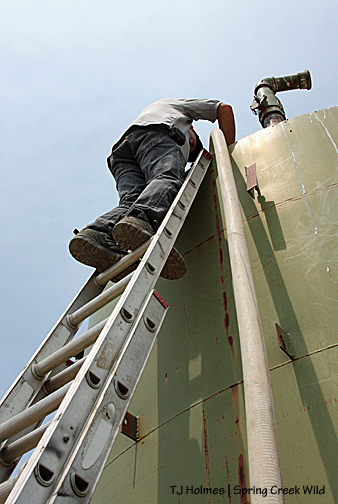
The storage tank is about 15 feet tall, so Cecil brings his ladder to access the hatch at the top. At right is the hose from his water truck.

062813watertank3

Seen here are his water truck, the hose to the tank and the water trough in the background at right.

062813watertank1

Thanks, Cecil! He also donated a load of water for the benefit’s silent auction. Cecil is a super nice man, and a friend of the mustangs of Spring Creek Basin.

Thank you, NMA/CO, for the delivery of water to the mustangs!


Pati Temple Memorial Benefit Bash

5 06 2013

Monday’s event to honor the National Mustang Association, Colorado chapter’s Pati Temple was a great success! A huge, heart-felt thank you to all the friends and family of Pati – and David – Temple who donated items to the silent auction and/or attended the bash. Your attendance and contributions go a long way toward helping us continue our advocacy on behalf of our Spring Creek Basin mustangs!

060313claudesarahr

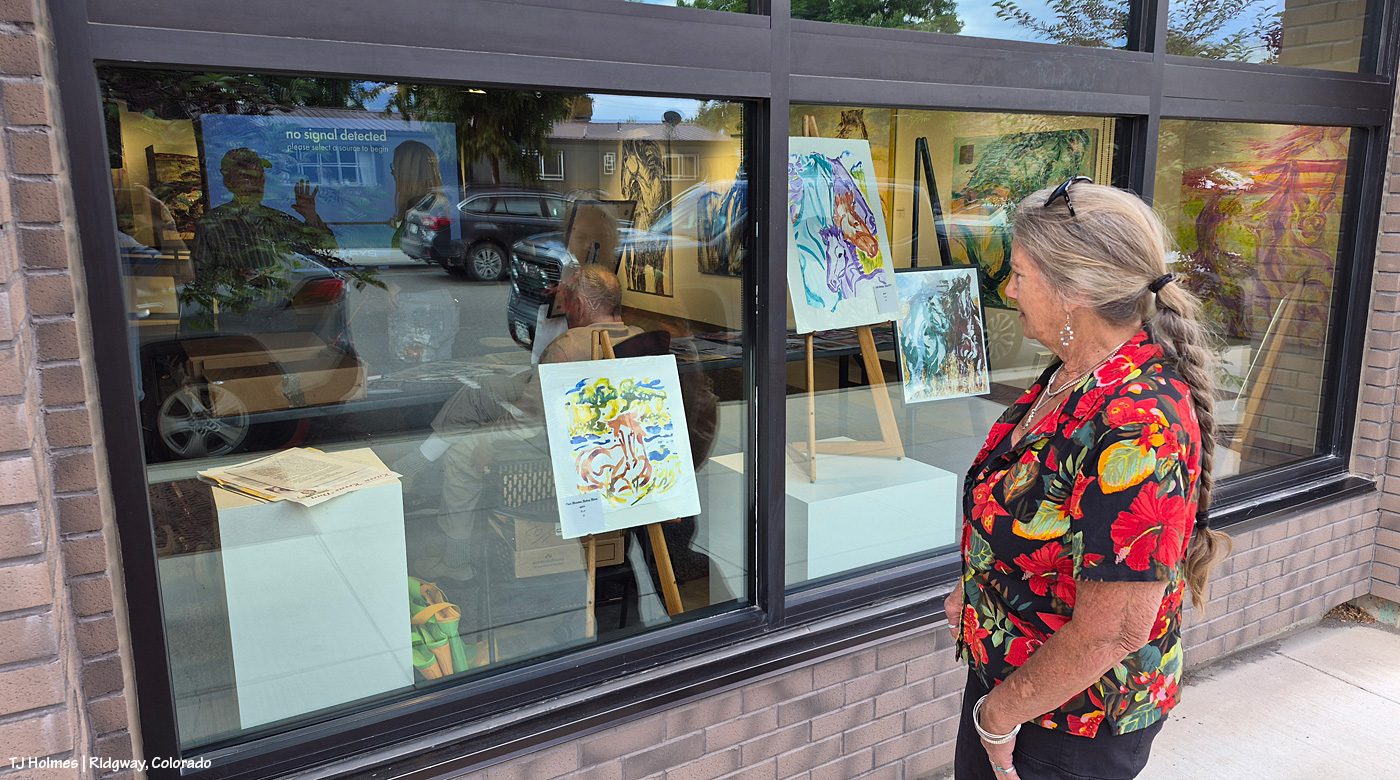
Durango photographer Claude Steelman donated a print of his outstanding photo of our handsome Traveler (left) and two of his photography books, including Wildshots, pictured. Bayfield artist Sarah Rose donated a print of her beautiful painting of Spring Creek Basin’s Aspen, right.

060313karenstraveler

NMA/CO board member Karen Keene Day donated this stunning painting of Traveler. It’s based on a photo she took of him and his band in 2004.

060313susant

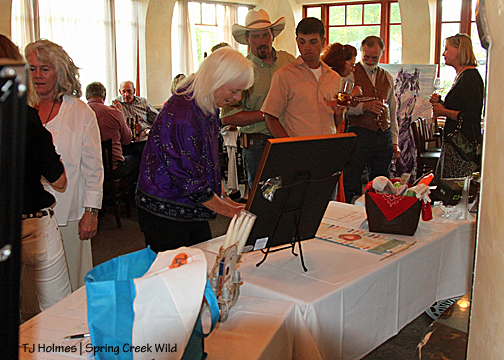
Susan Thomas and NMA/CO board member Nancy Schaufele (in purple) check out silent auction items.

060313nancys

Nancy marks the final bids at the end of the silent auction. Kennebec Cafe, one of Pati’s favorite restaurants, provided a really beautiful setting for our event; many thanks for the great food and wonderful setup!

060313katheh

Kathe Hayes with San Juan Mountains Association shows off Alice Billings’ donated painting of Temple, wild filly in Spring Creek Basin named in honor of Pati and David. Kathe was the high bidder on the painting!

In addition to Nancy and Karen, many thanks to NMA/CO board members Tif Rodriguez and Lynda Larsen – and, always, David Temple – as well as our event planner, Tina Roth, for making this such a memorable and successful event in Pati’s memory.

Pati was an exceptional woman who fought for the well-being of animals and people whenever she saw a wrong. We think she would have loved this party. The worst part of it was that she wasn’t there to enjoy it with us.


How does your donation to NMA/CO help the Spring Creek Basin mustangs?

28 05 2013

This question was asked recently, and answering it gives me another chance to let local folks know about the Pati Temple Memorial Benefit Bash we will hold next week, Monday, June 3, at the Kennebec Cafe in Hesperus, Colo. Follow that link for the details and to purchase tickets if you haven’t and plan to attend.

NMAPosterFinal3(100)

Now, on to an answer(s) to the question!

First, see this page, compiled last year by Pati, for a list of the National Mustang Association, Colorado chapter’s past accomplishments: http://www.nationalmustangassociationcolorado.org/nmaco-accomplishments.html

As it says, NMA/CO has spent nearly $100,000 to date on projects that directly benefit the mustangs of Spring Creek Basin! We rarely do fundraisers, relying mostly on memberships and donations. Administrative expenses are low, mostly what we put toward mailing newsletters. We had T-shirts and hats printed for the adoption in 2011, and we’ll soon have a link to purchase them through the website.

Fence repair and maintenance is ongoing through volunteer labor. As a result of their partnership with us as part of Disappointment Wild Bunch Partners, BLM received $25,000 last year through the Director’s Challenge grant, which purchased some materials to be used in a project on the basin’s southeastern boundary line (read about alternative spring break and University of Missouri students’ work here – https://springcreekwild.wordpress.com/2013/03/26/alternative-spring-break-day-1/ – and here – https://springcreekwild.wordpress.com/2013/03/27/12368/). I fix fences as needed while I’m in the basin doing documentation. Sometimes we use materials provided by BLM, other times by ourselves.

We also are continually encouraging BLM to look at water-enhancement projects. More than a decade ago, NMA/CO paid for a water catchment to be built in Spring Creek Basin, and it supplies the mustangs’ only clean source of water (all others being extremely alkaline, at least). We have a signed agreement from about 12 or 13 years ago with BLM to construct at least one more catchment, but it has never been built. I think the catchment cost about $10,000. Several years ago, we also started talking to BLM about water guzzlers (such as those installed on Pryor Mountain Wild Horse Range) to add to the horses’ quality of water. Those are about $8,000-plus. NMA/CO also has purchased parts for the catchment’s troughs, which work on floats.

NMA/CO contributes funds to combat noxious/invasive weeds in Spring Creek Basin (knapweed, tamarisk, musk thistle, etc.).

A decade or more ago, NMA/CO was able to purchase the cattle AUMs from one of the two ranchers who held permits in Spring Creek Basin. With the help of the National Mustang Association, we were able to retire those AUMs permanently. In the process, BLM conducted a grazing EA (not sure the exact reference) and then drastically reduced the remaining AUMs and changed the timing to dormant-season grazing only – Dec. 1 through Feb. 28. For the last several years, NMA/CO has been trying to buy or trade for the permit in Spring Creek Basin to also retire those AUMs, with the goal of no cattle grazing in the basin. As BLM itself says, managing wild horses is easier when the mustangs are the priority. The permittee is willing, so we are trying to work with BLM to accomplish this goal.

NMA/CO also is asking BLM to consider the use of bait trapping in the basin, instead of helicopter-driven roundups to complement the use of fertility control. We submitted a proposal for a program using native PZP that was implemented at the 2011 roundup. To bait trap requires the use of a facility in which to hold horses as they are trapped. This facility requires a chute and pens. We recently purchase a chute ($18,000) with donated funds from the National Mustang Association (of which we are a chapter). Our primary goal in fundraising currently is to purchase the required infrastructure for this facility so BLM won’t have only the option of using a helicopter and won’t need to transport one or two horses at a time – as they’re trapped – to Canon City, which is full, as most/all of BLM’s facilities seem to be. NOTE: NO ROUNDUP CURRENTLY IS PLANNED FOR SPRING CREEK BASIN. We are planning this now to have the facility in place so a future EA can include it in the planning process. As BLM said in 2011, bait trapping was not considered because it wasn’t in the EA. It wasn’t in the EA because no facility was available. However, note that we started asking specifically for bait trapping in 2008.

Enhancing water sources, retiring the remaining cattle AUMs, establishing a fertility control program and making bait trapping the priority for roundups all were Pati Temple’s goals for the Spring Creek Basin herd. In addition to the accomplishments made for the mustangs during Pati’s lifetime, we plan to accomplish these goals in her honor.


Pati Temple

5 02 2013

012113temple-72

Mustang angel and lover of all wild life Pati Temple passed away yesterday evening.

Look out, God, whirlwind coming your way!

Pati was one of the most influential people in my life, despite having known her for just the last few years. Words cannot come close to describing the dynamo that was Pati, and at this point, the heartbreak is too raw to try.

God speed, Pati, on the wings of your beloved mustangs. You are much loved and will be most incredibly missed.