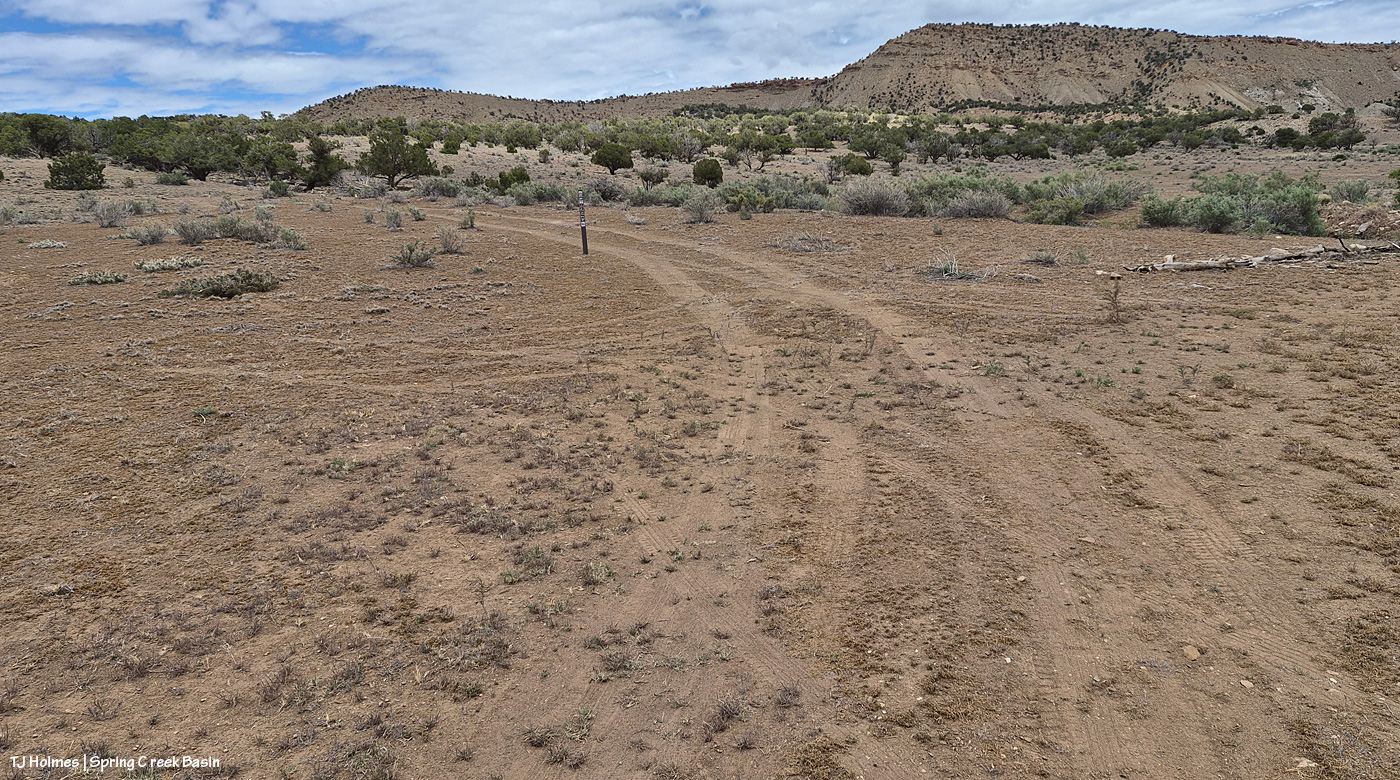
Welcome rain

15 09 2026

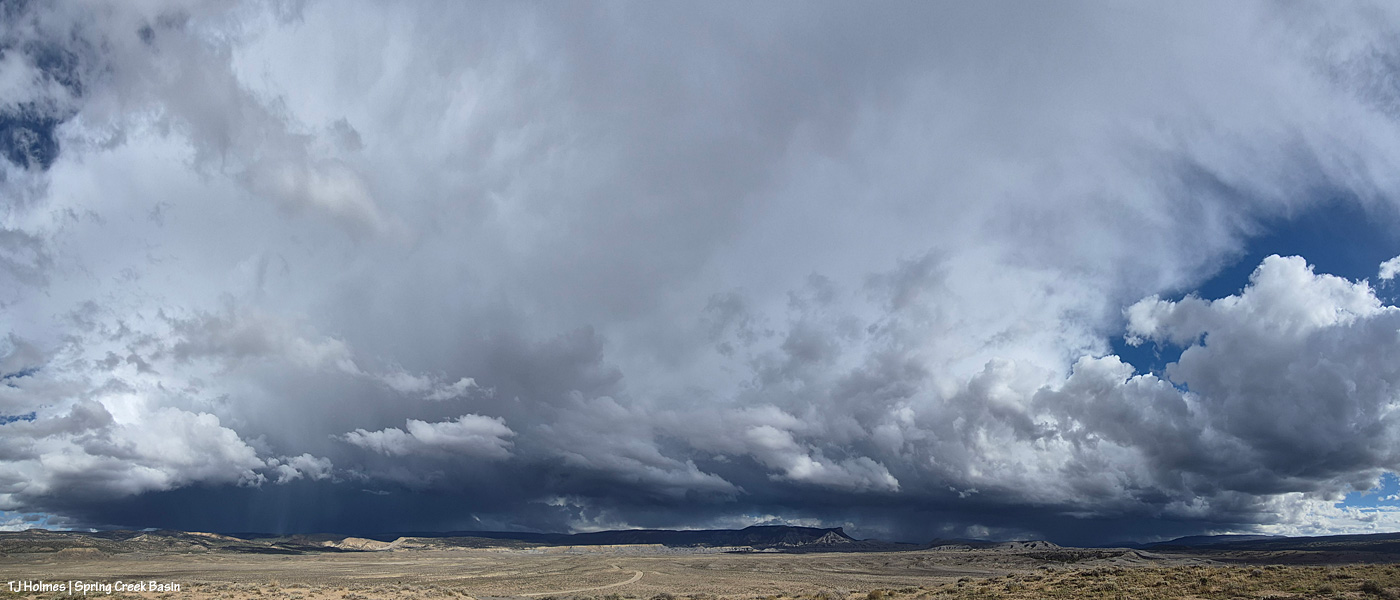
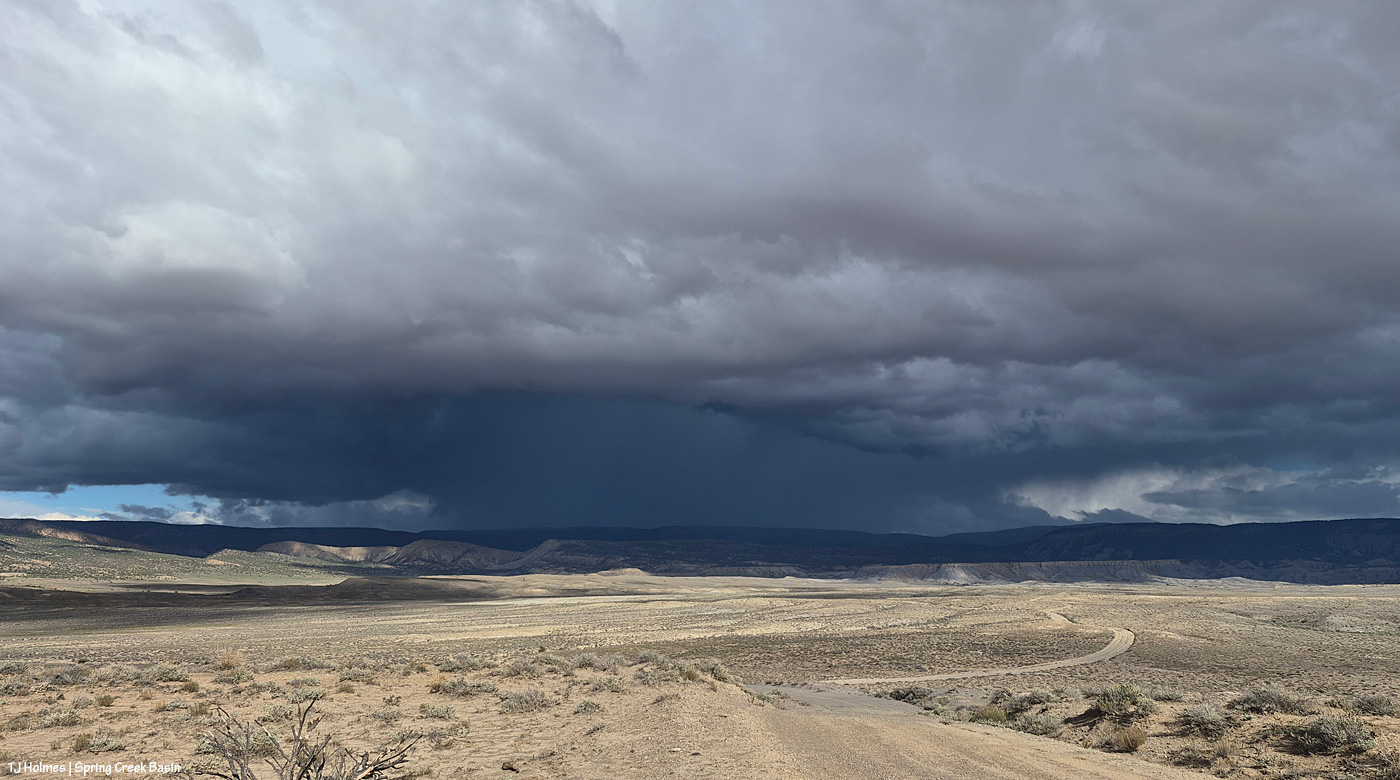
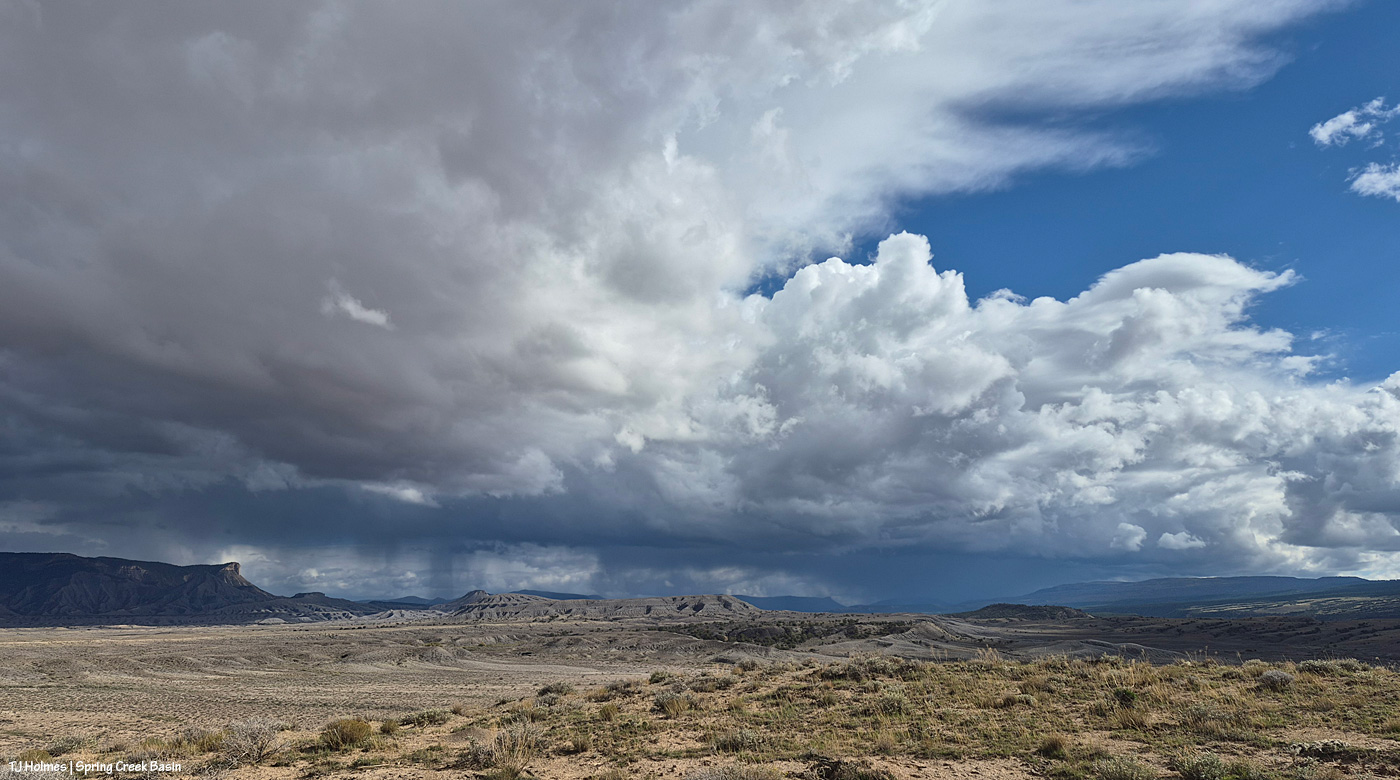
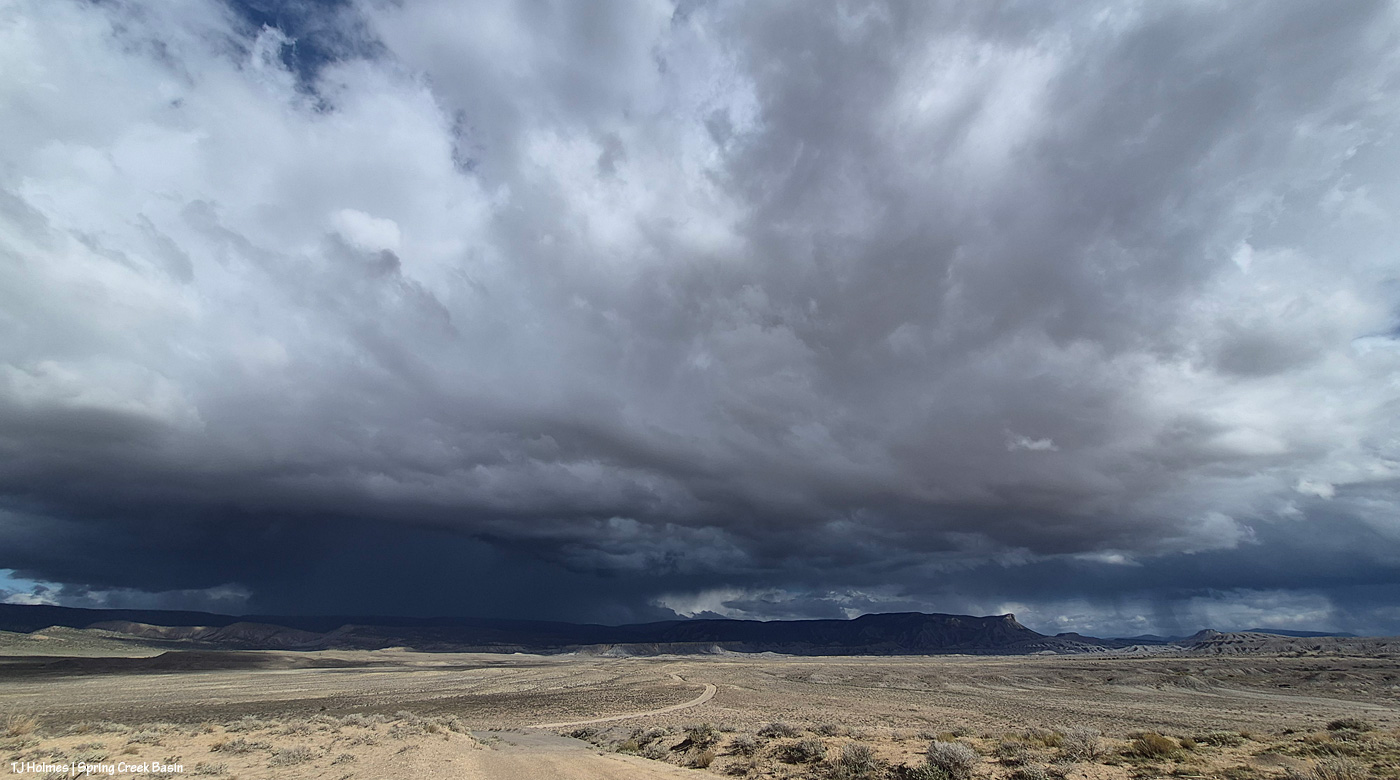
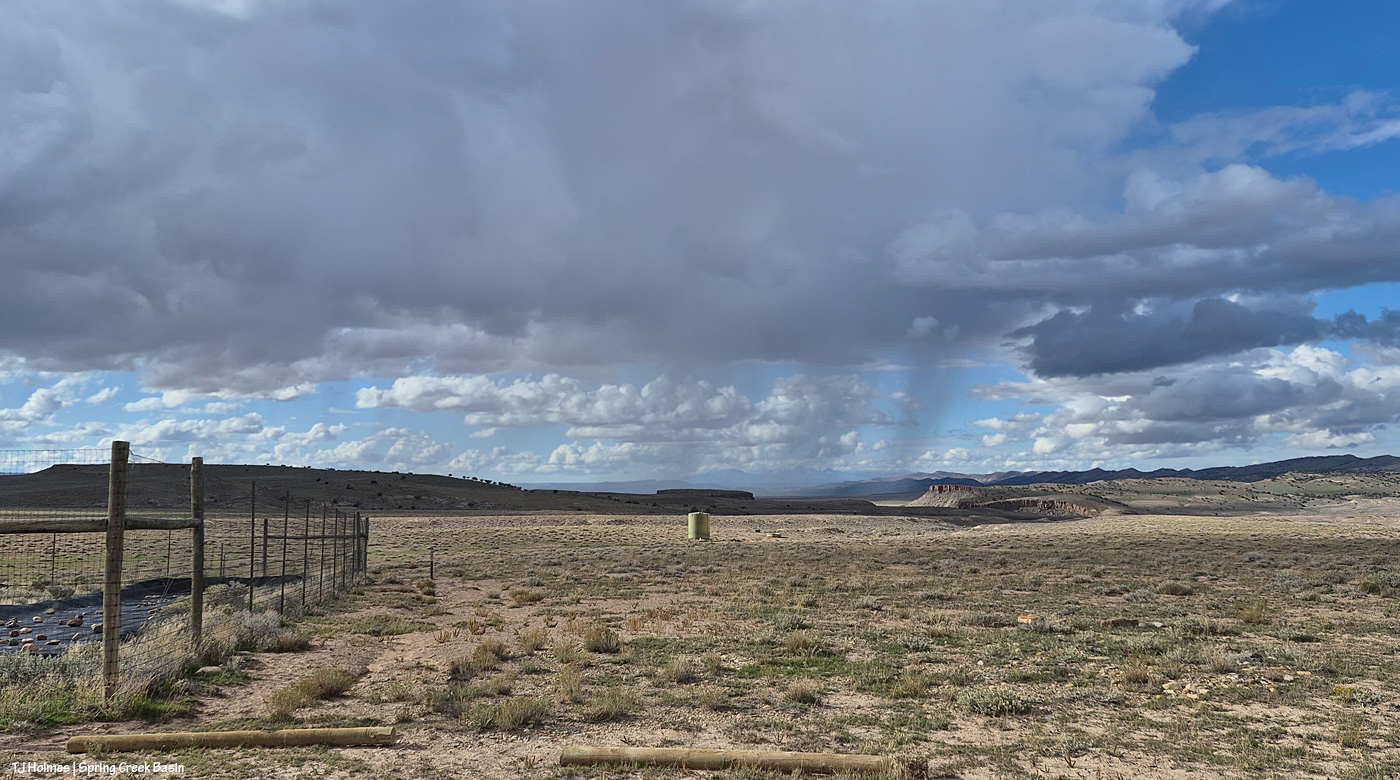
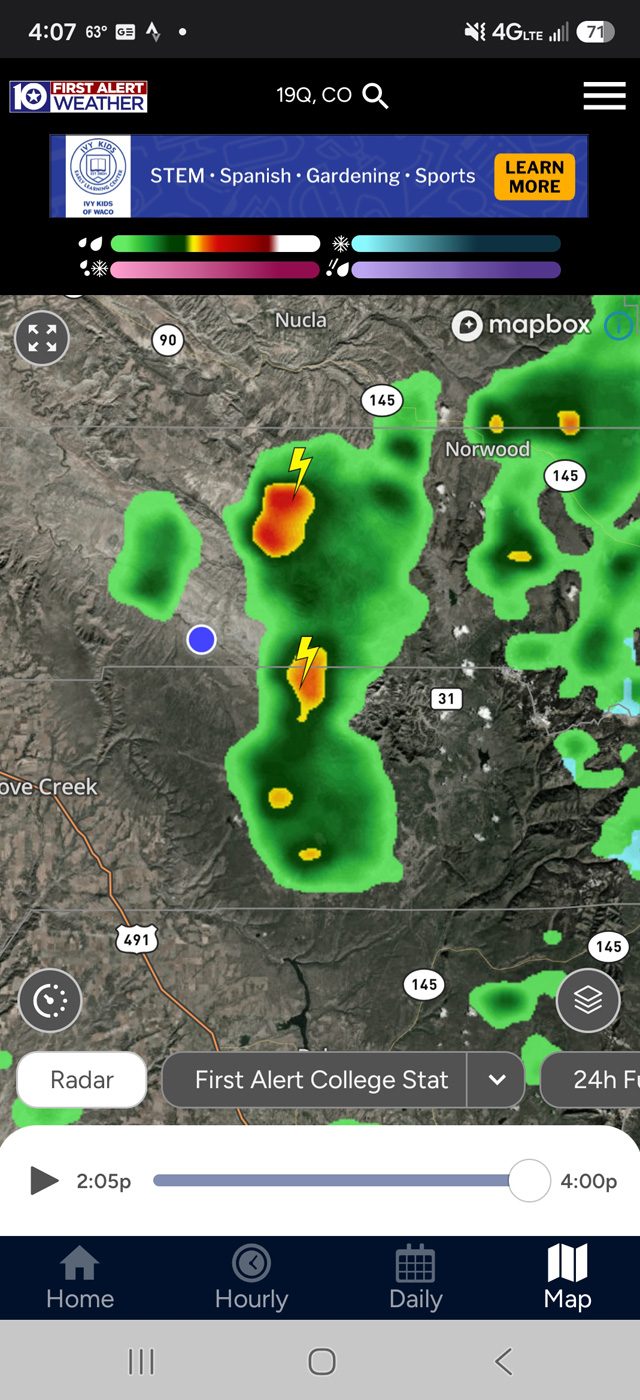
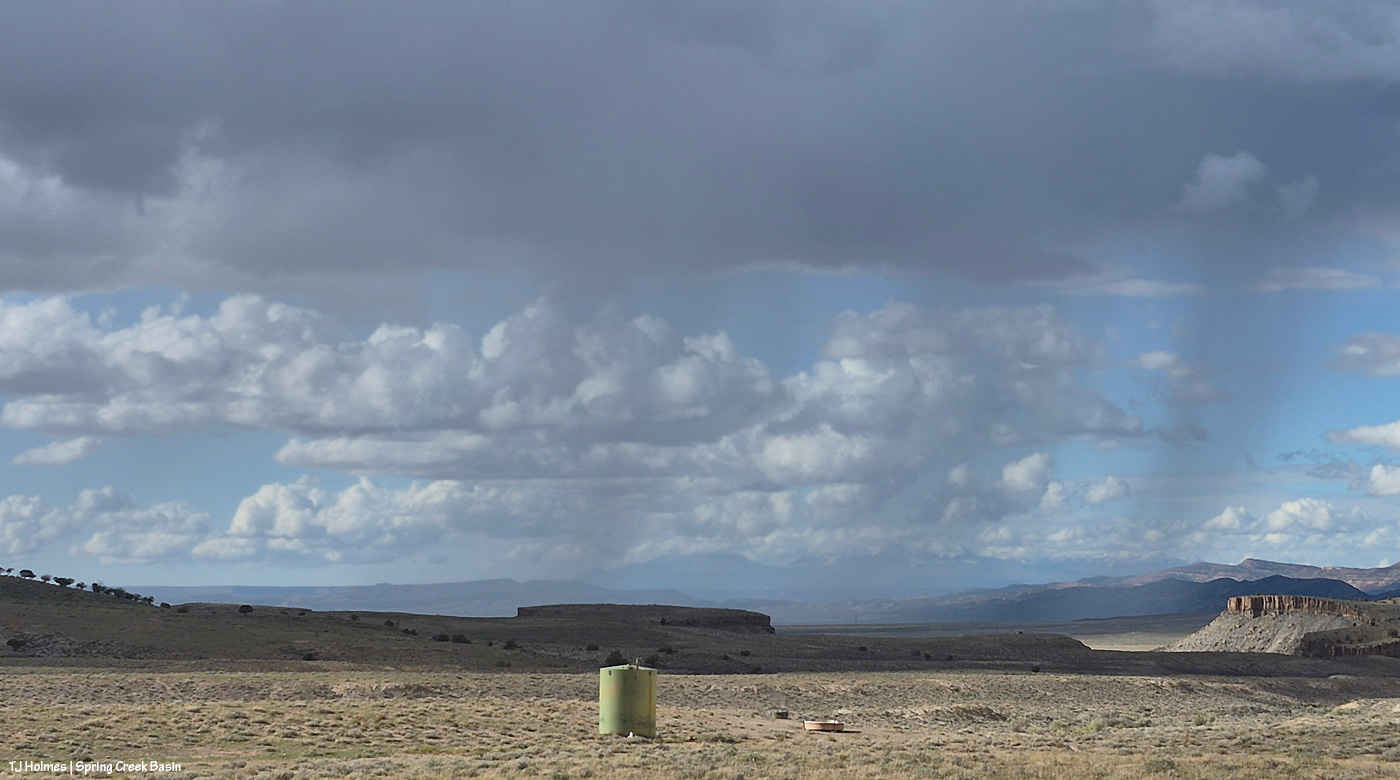
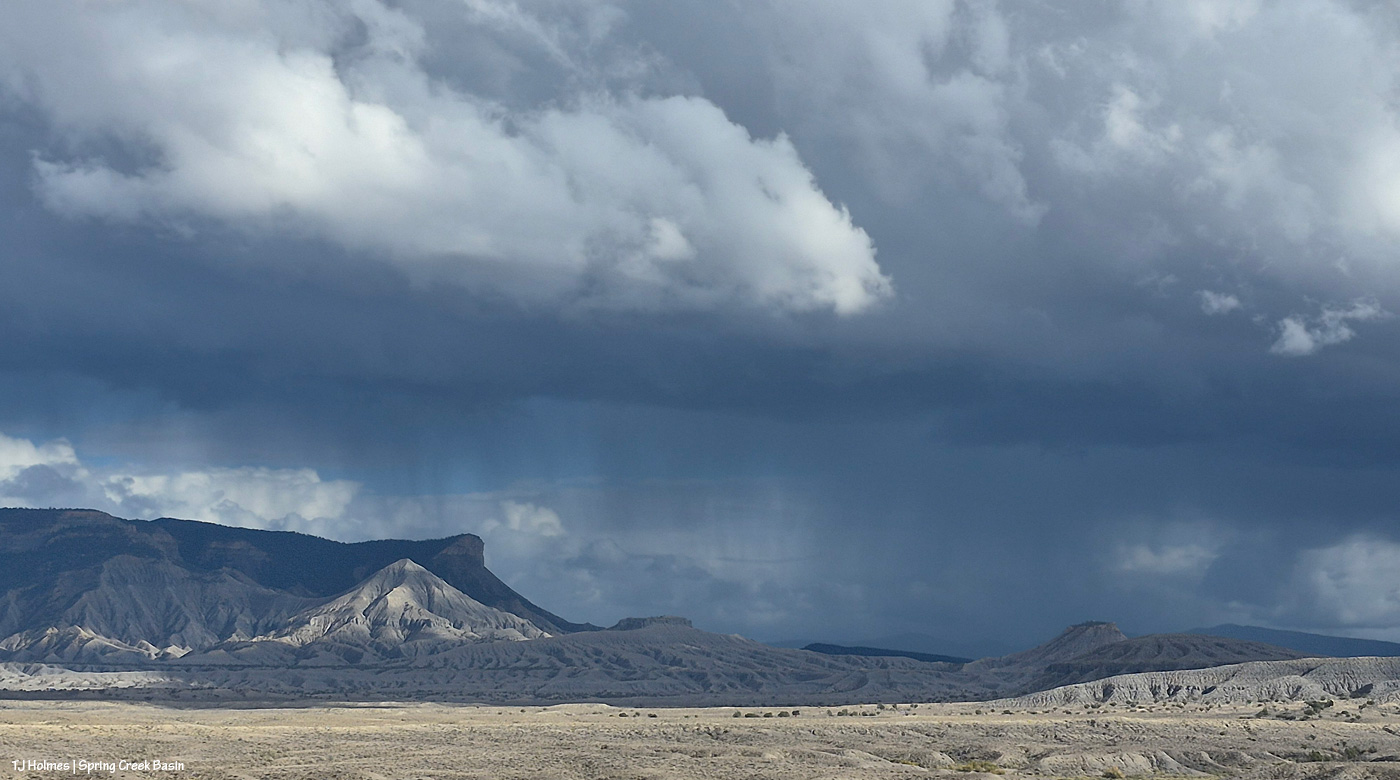
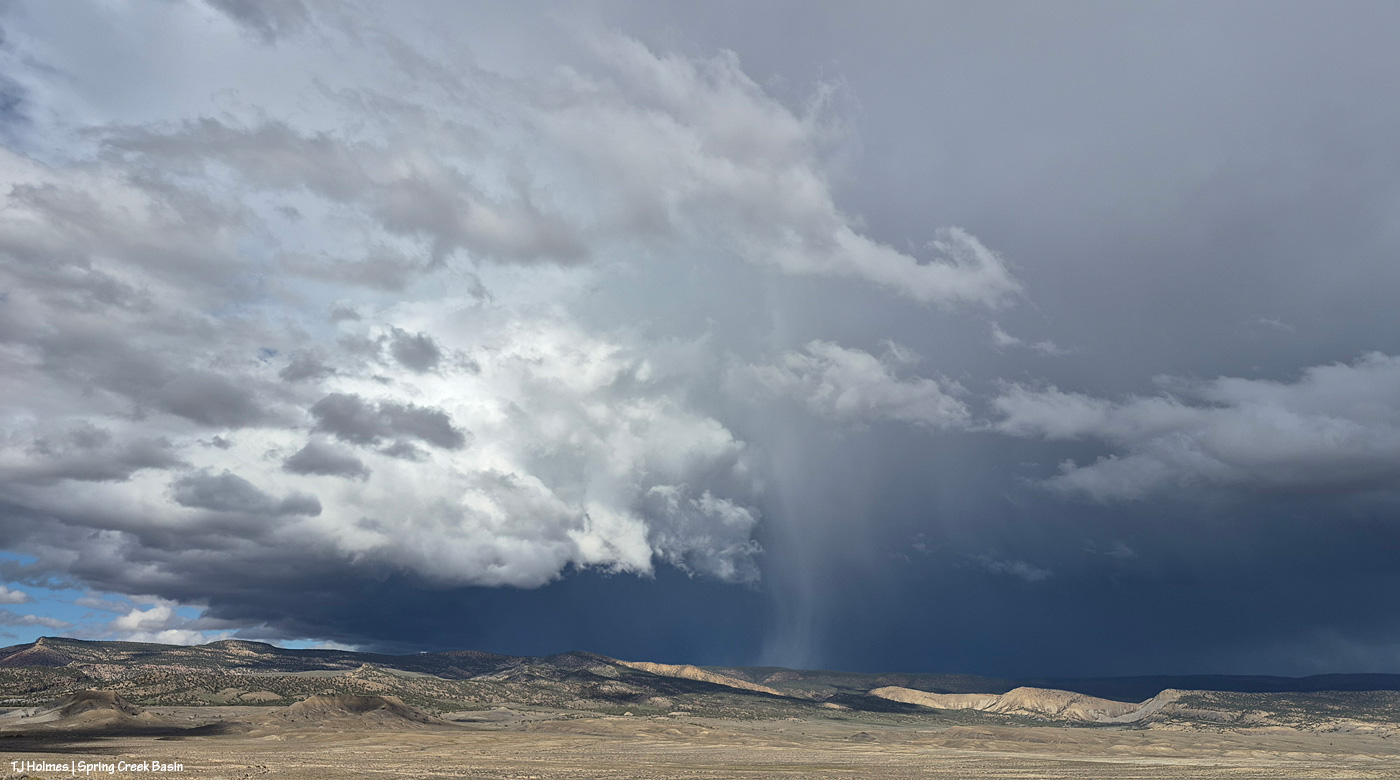
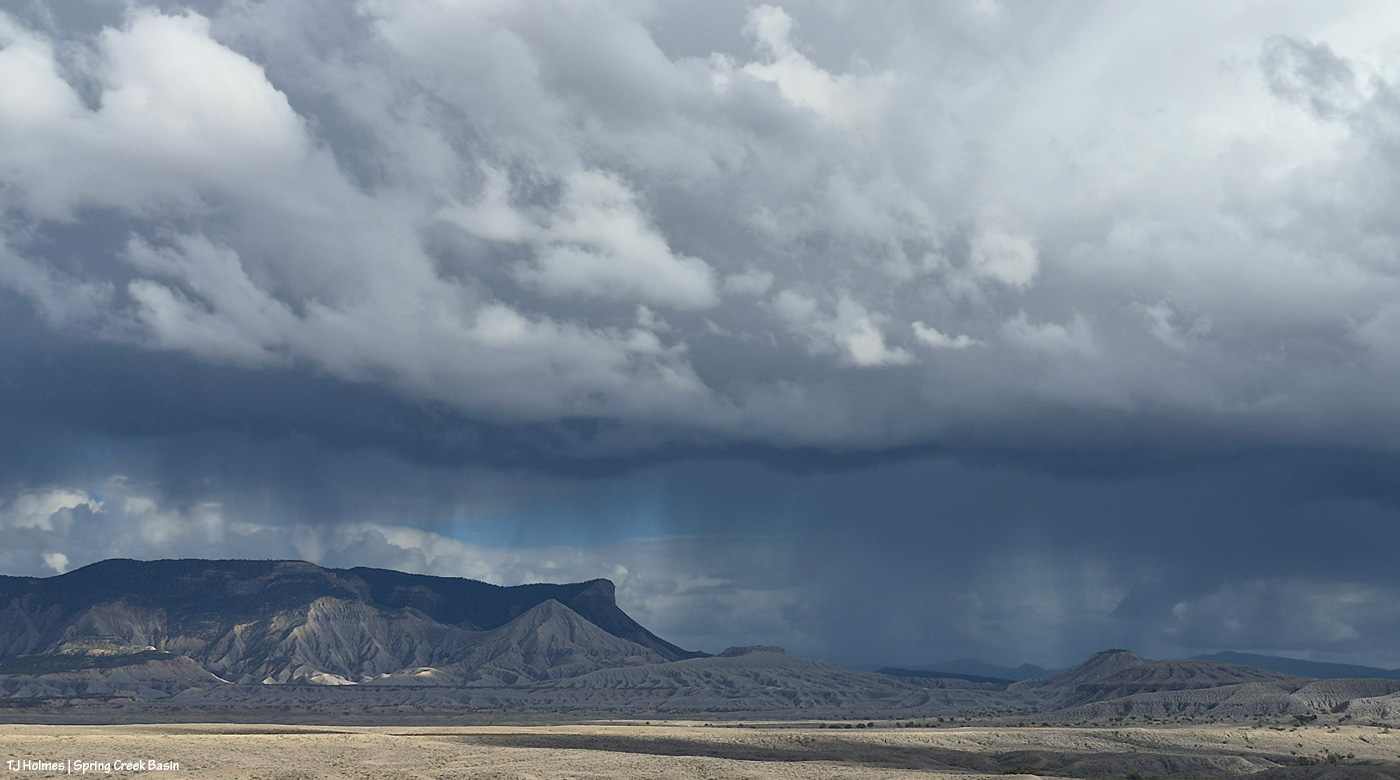
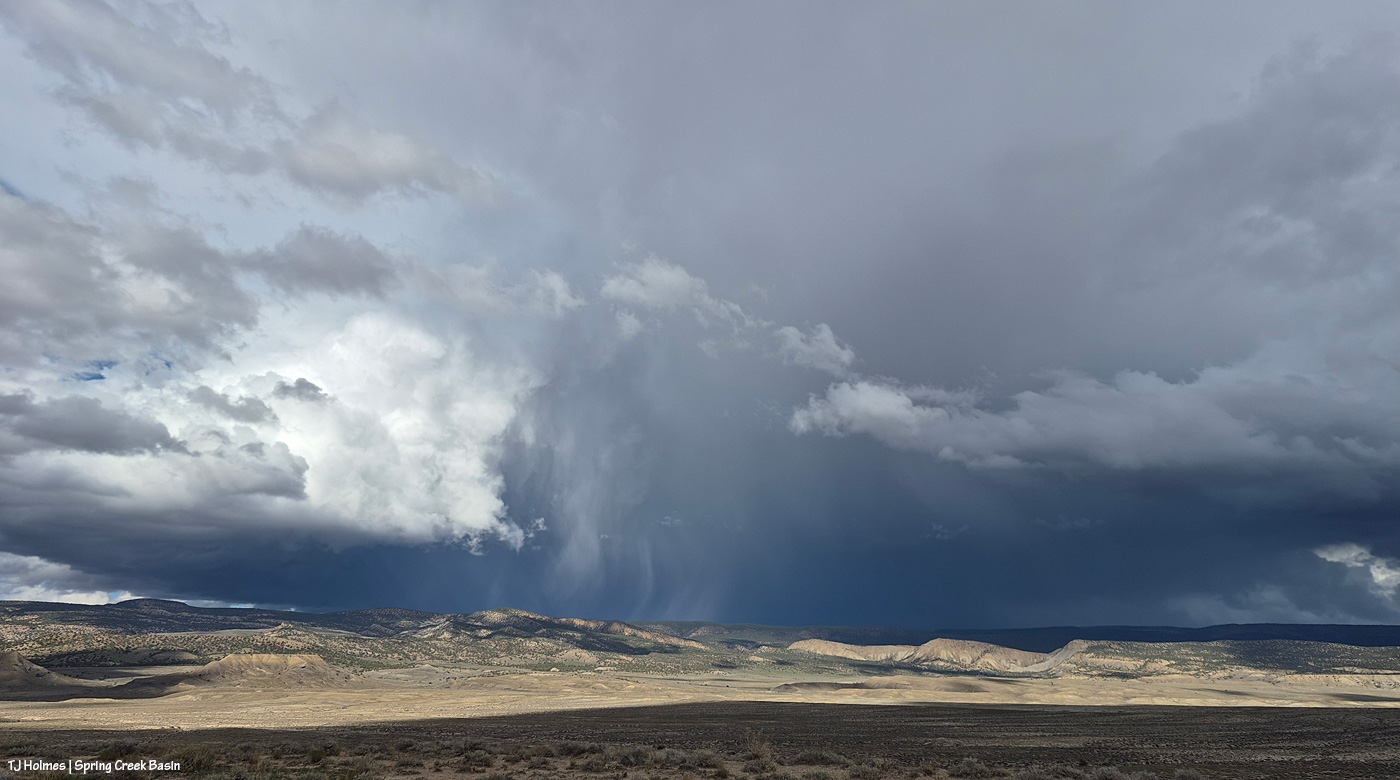
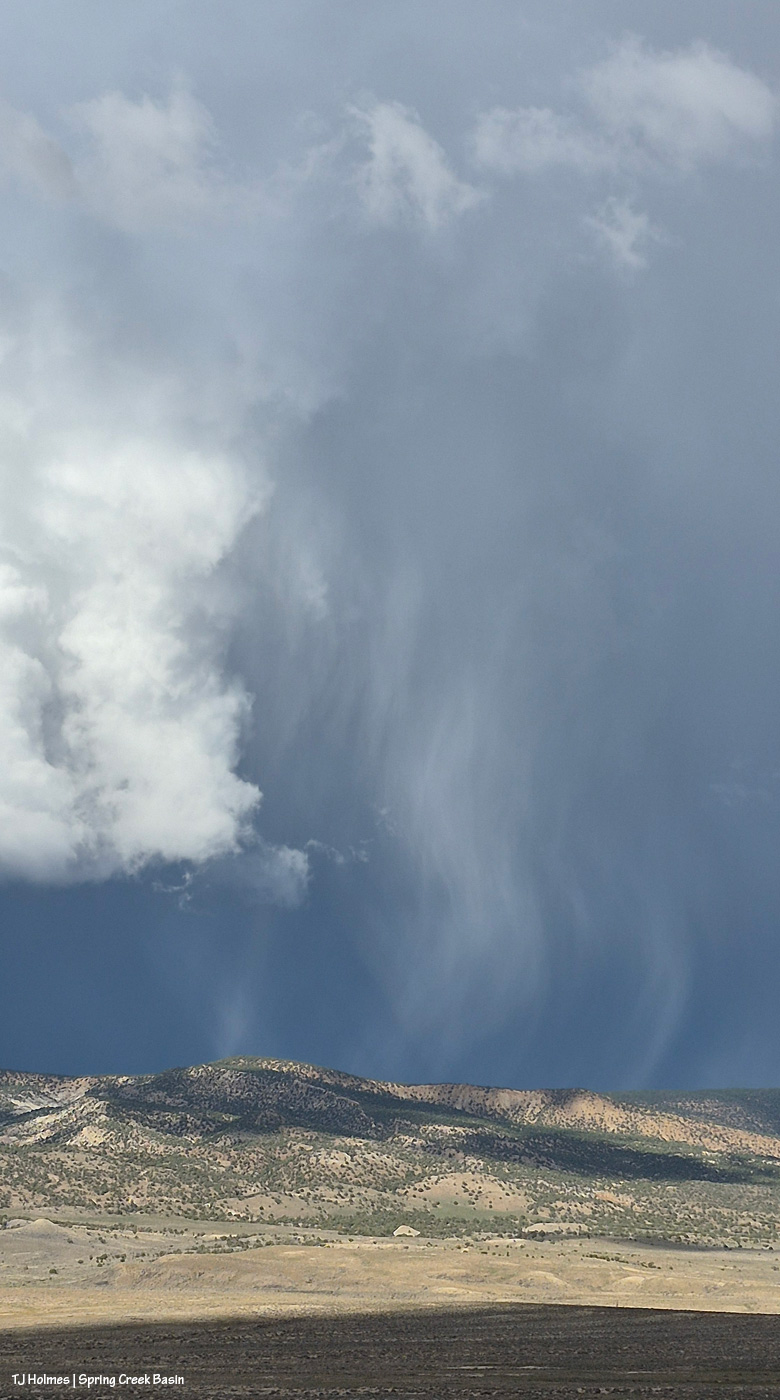
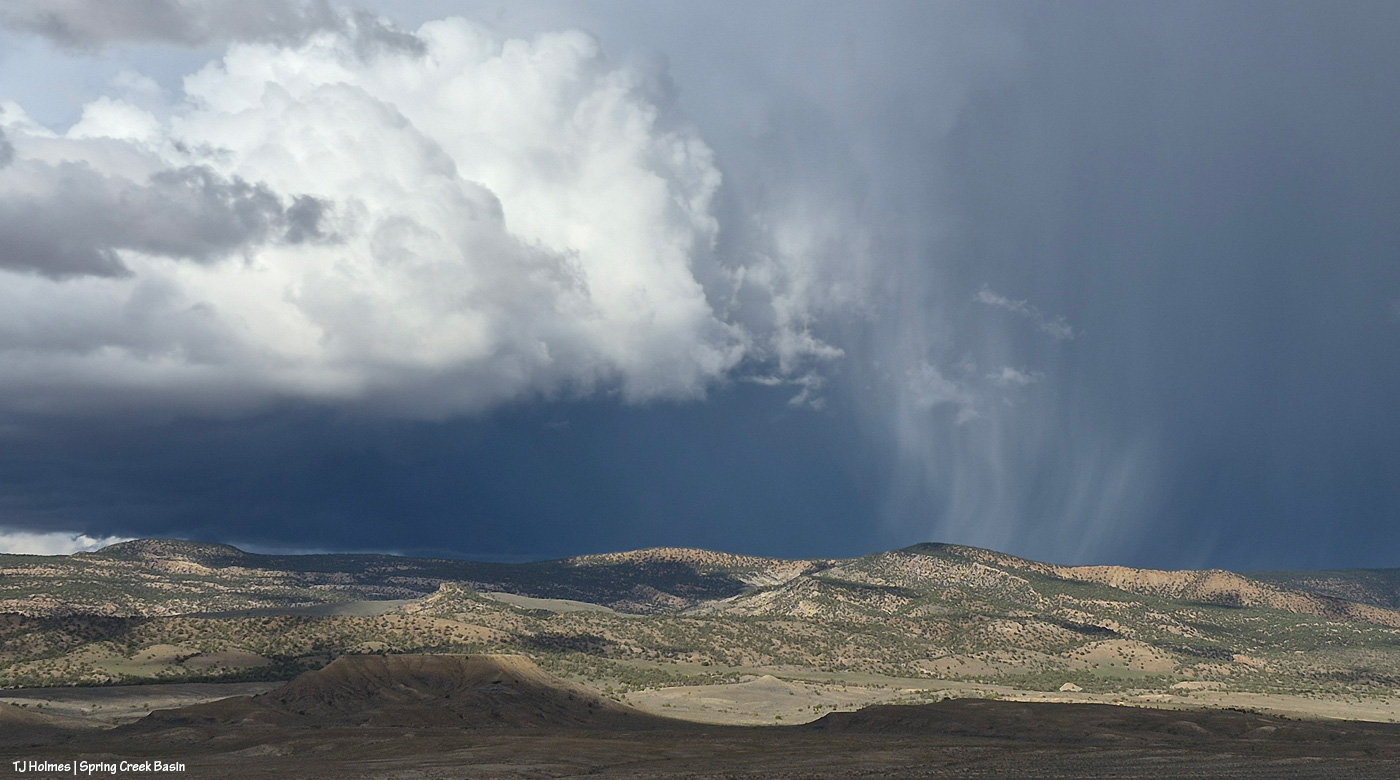
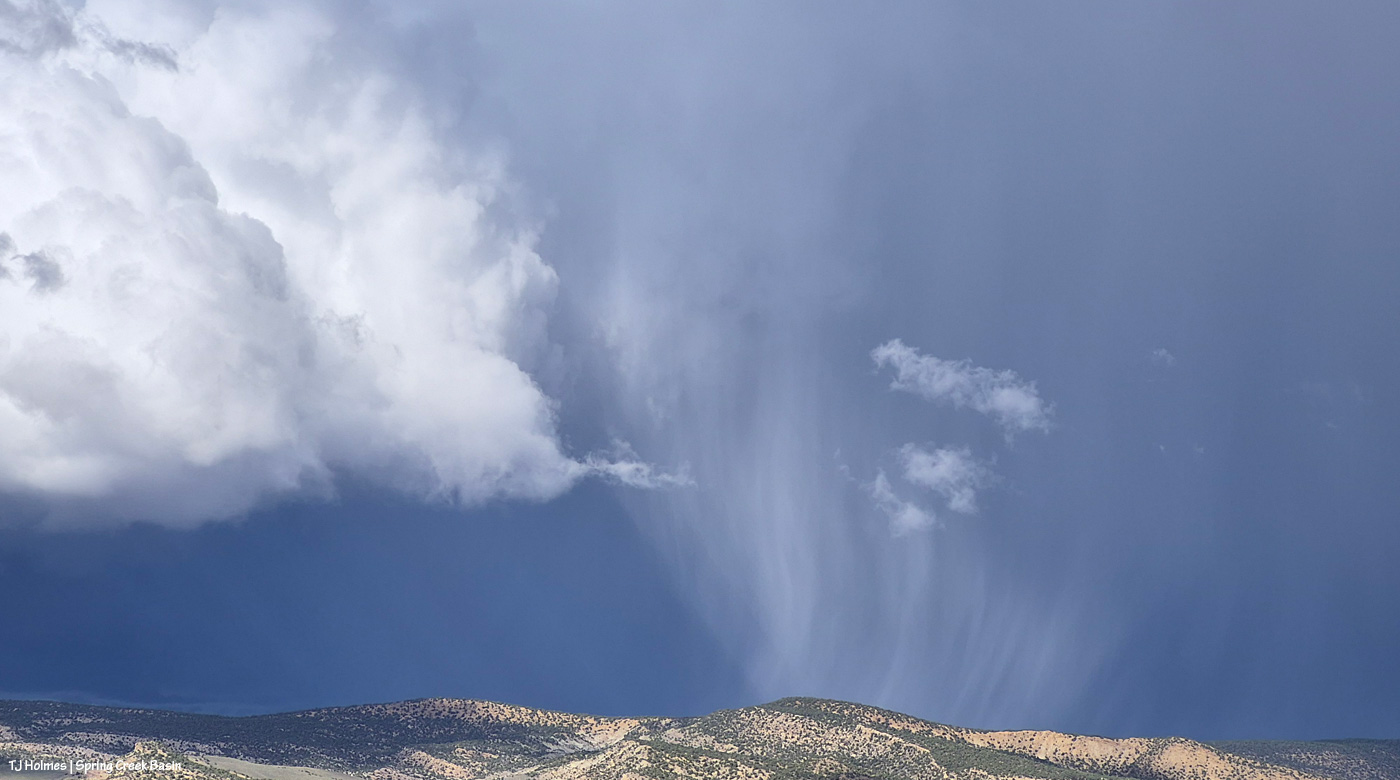
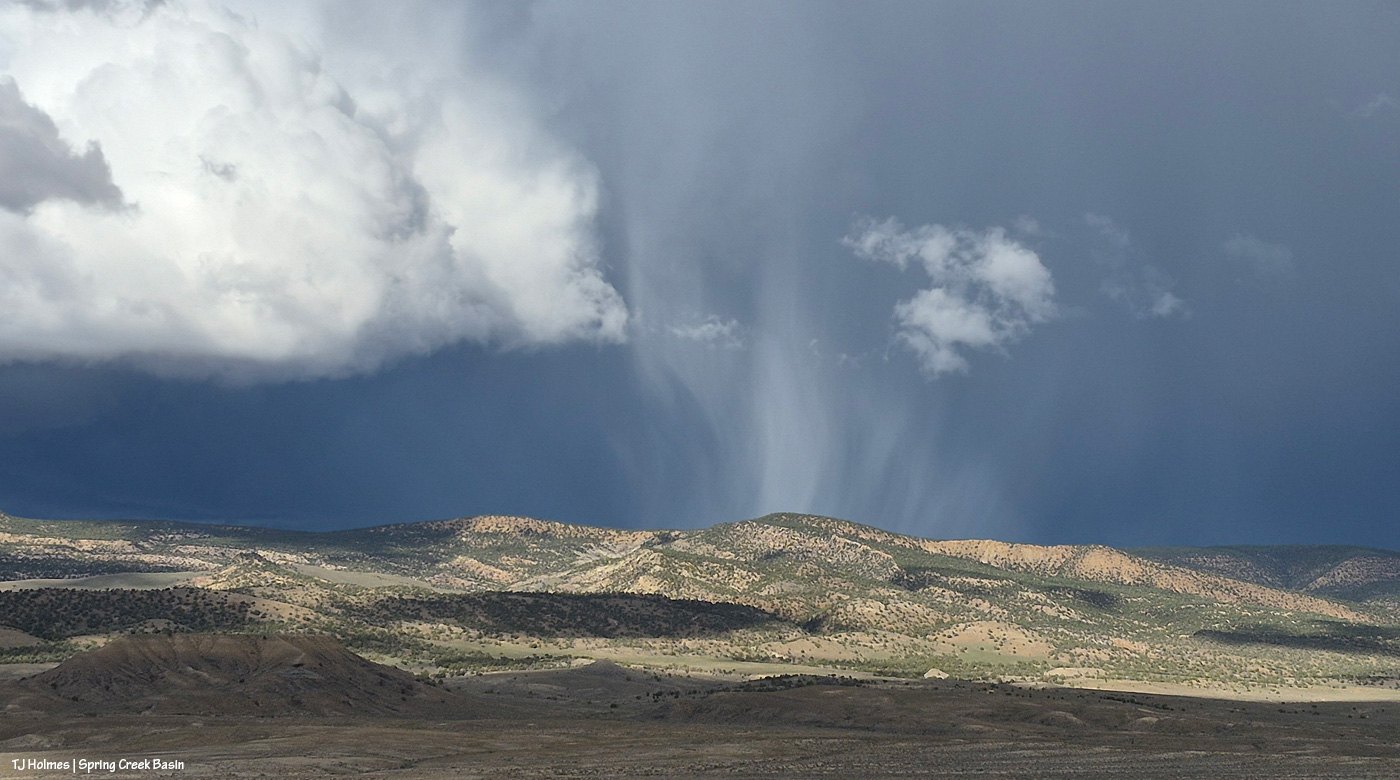
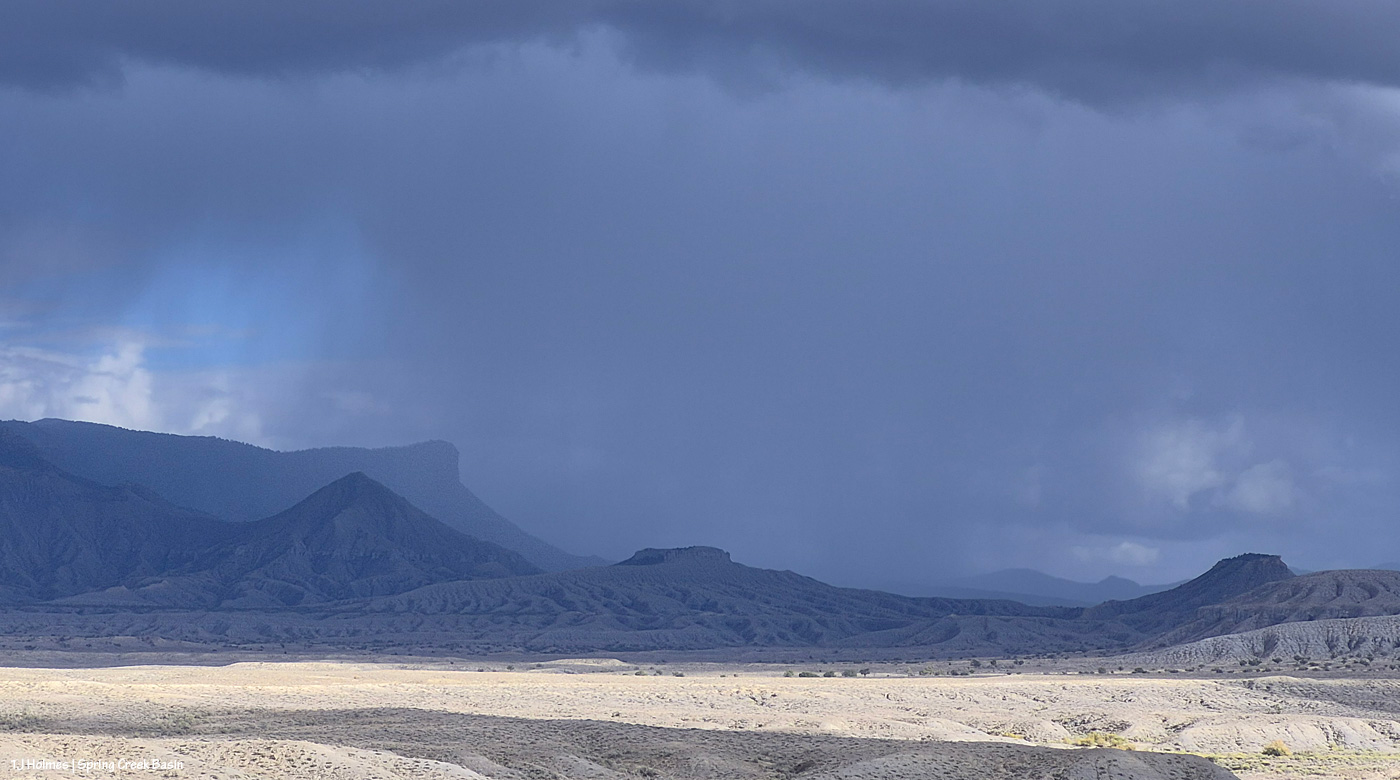
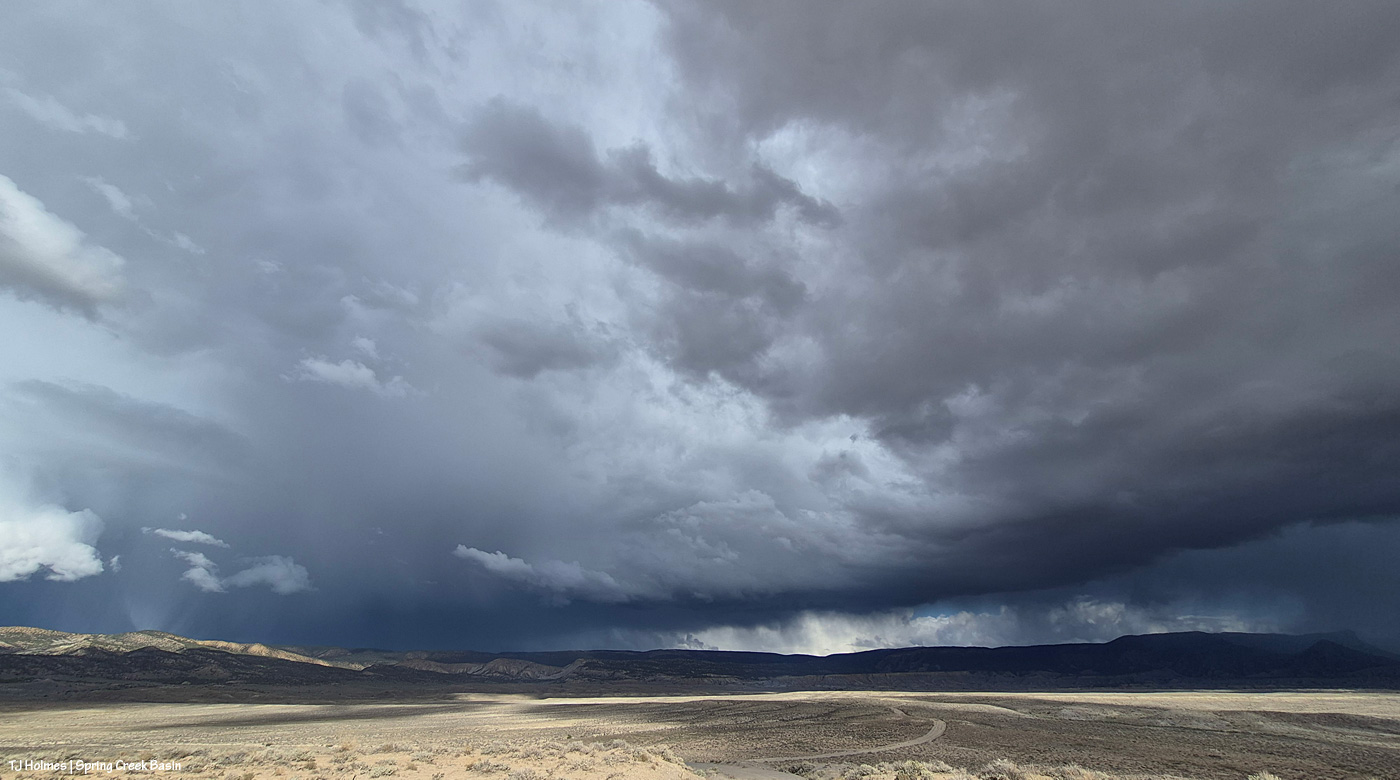
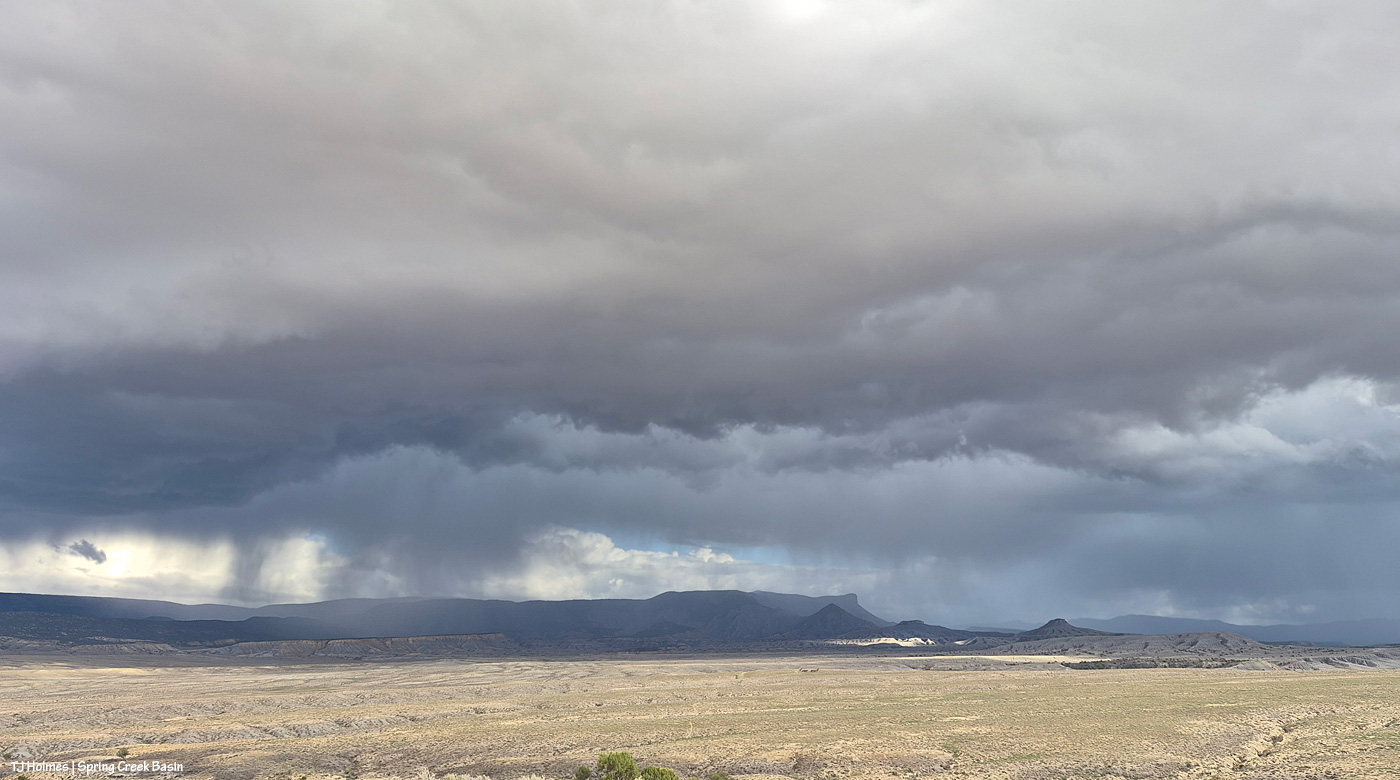
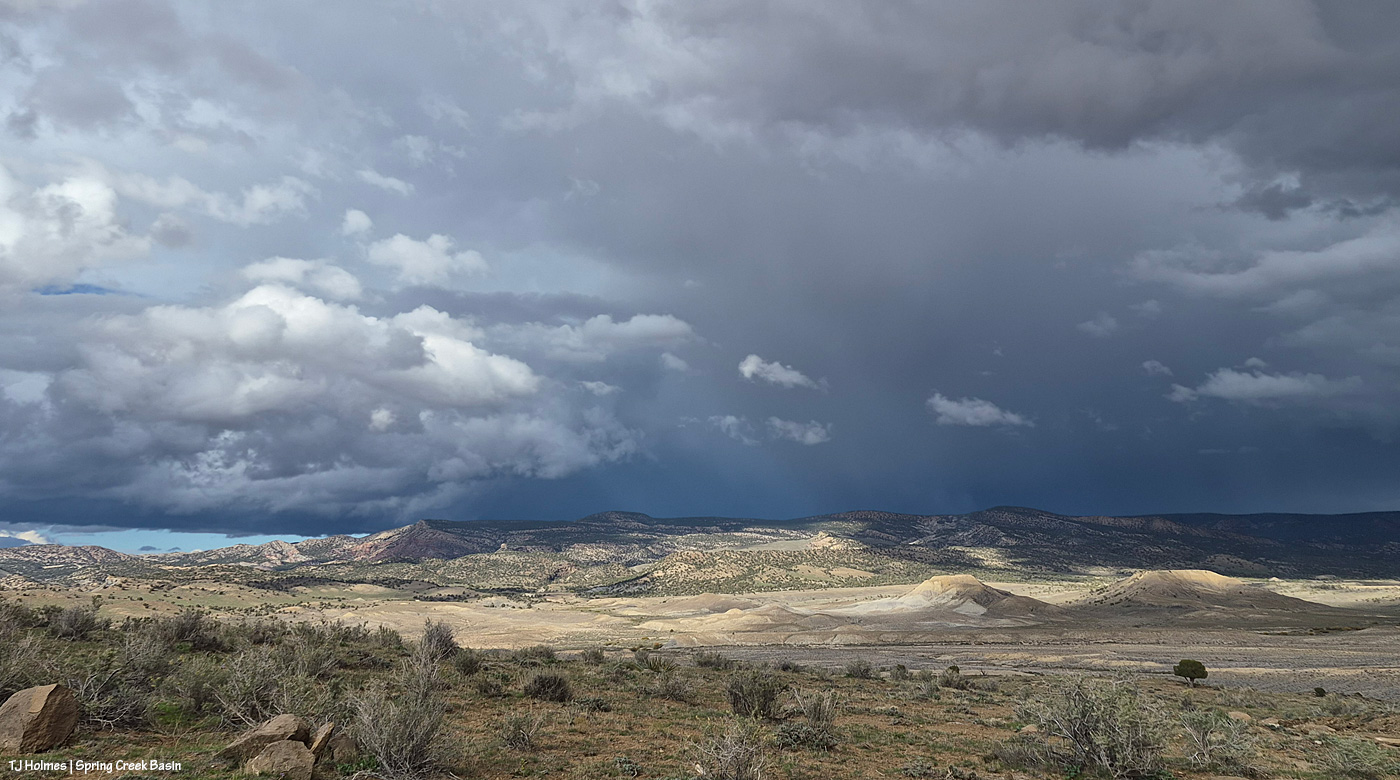
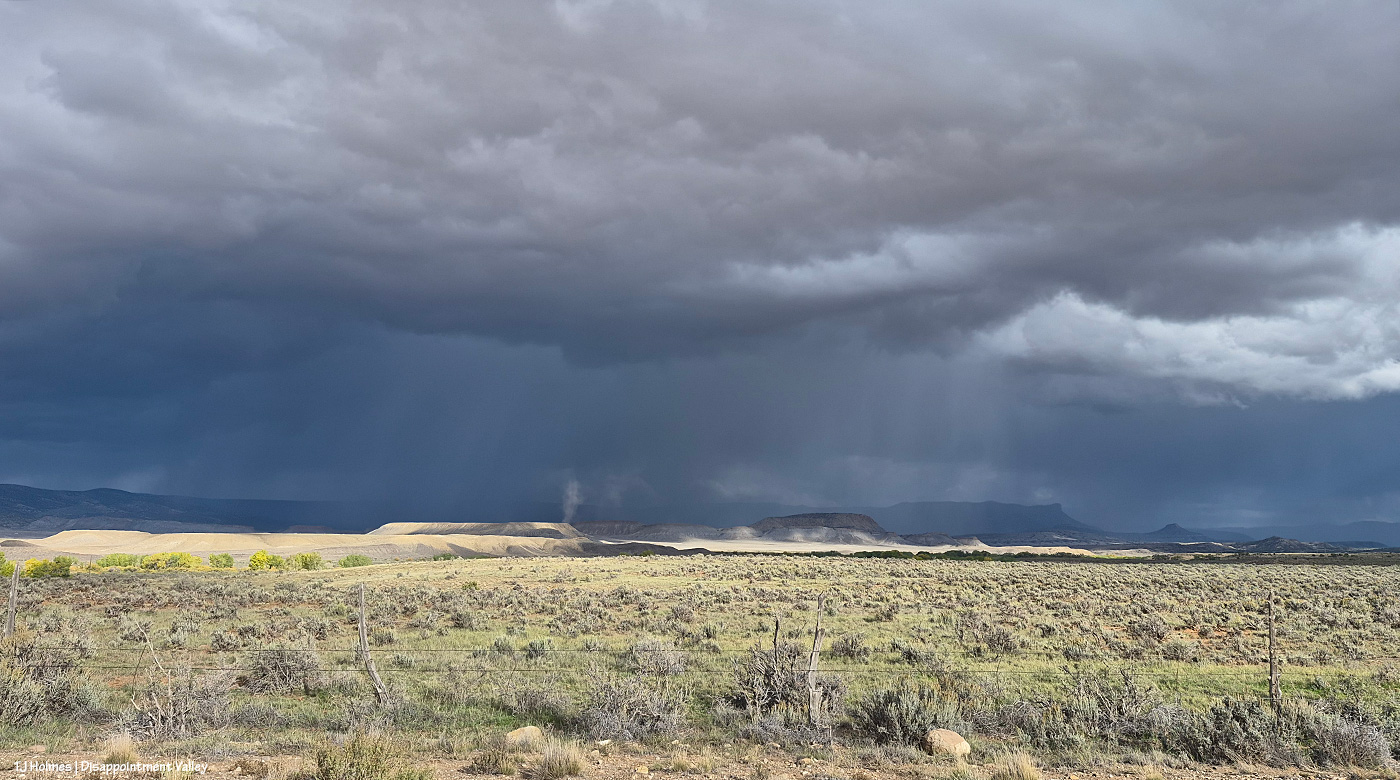
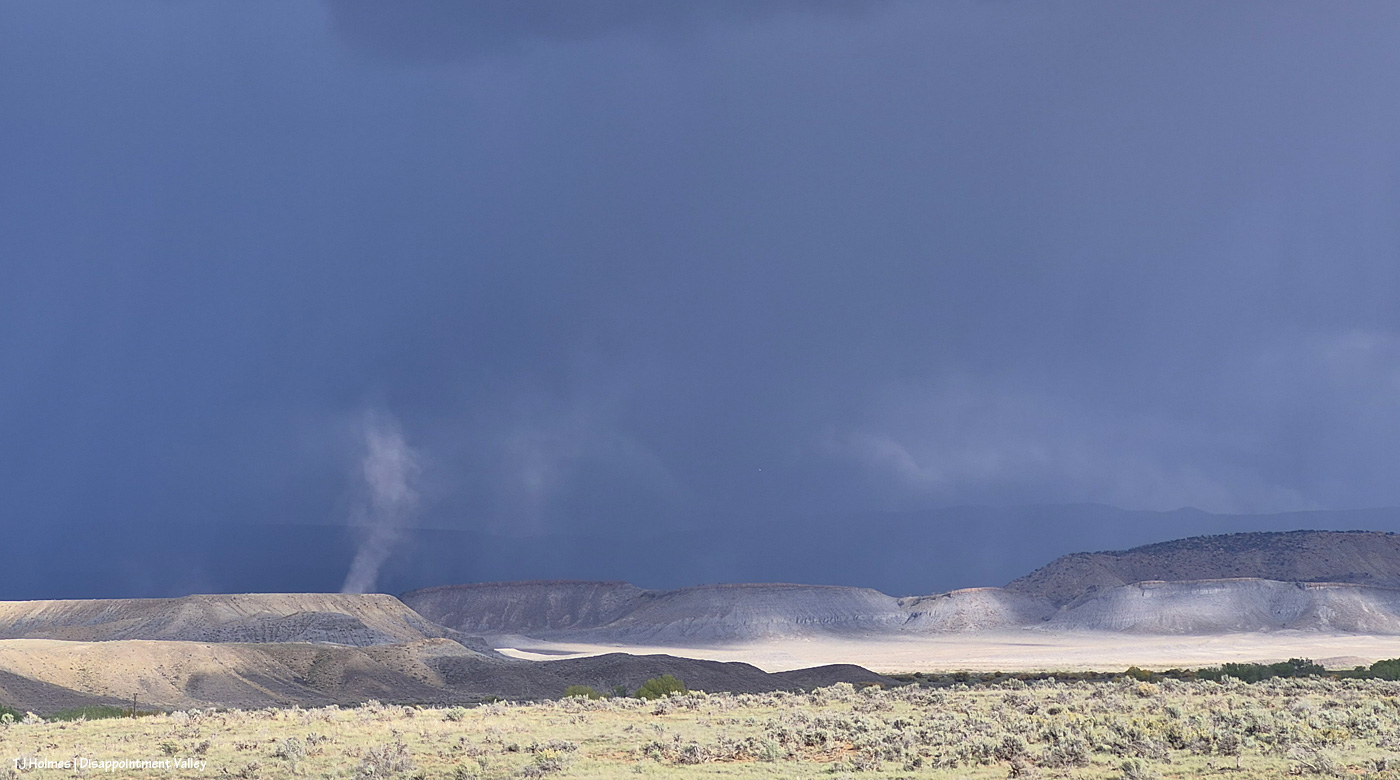
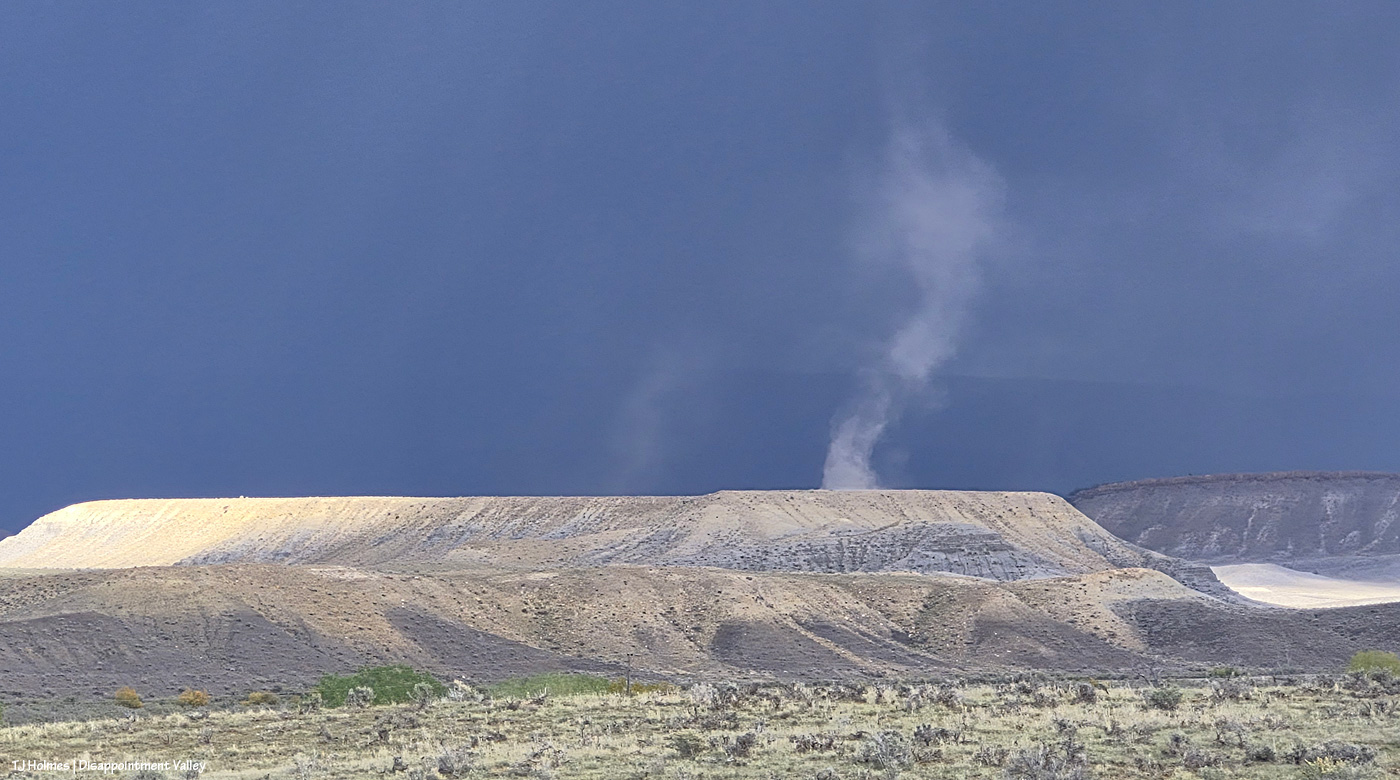
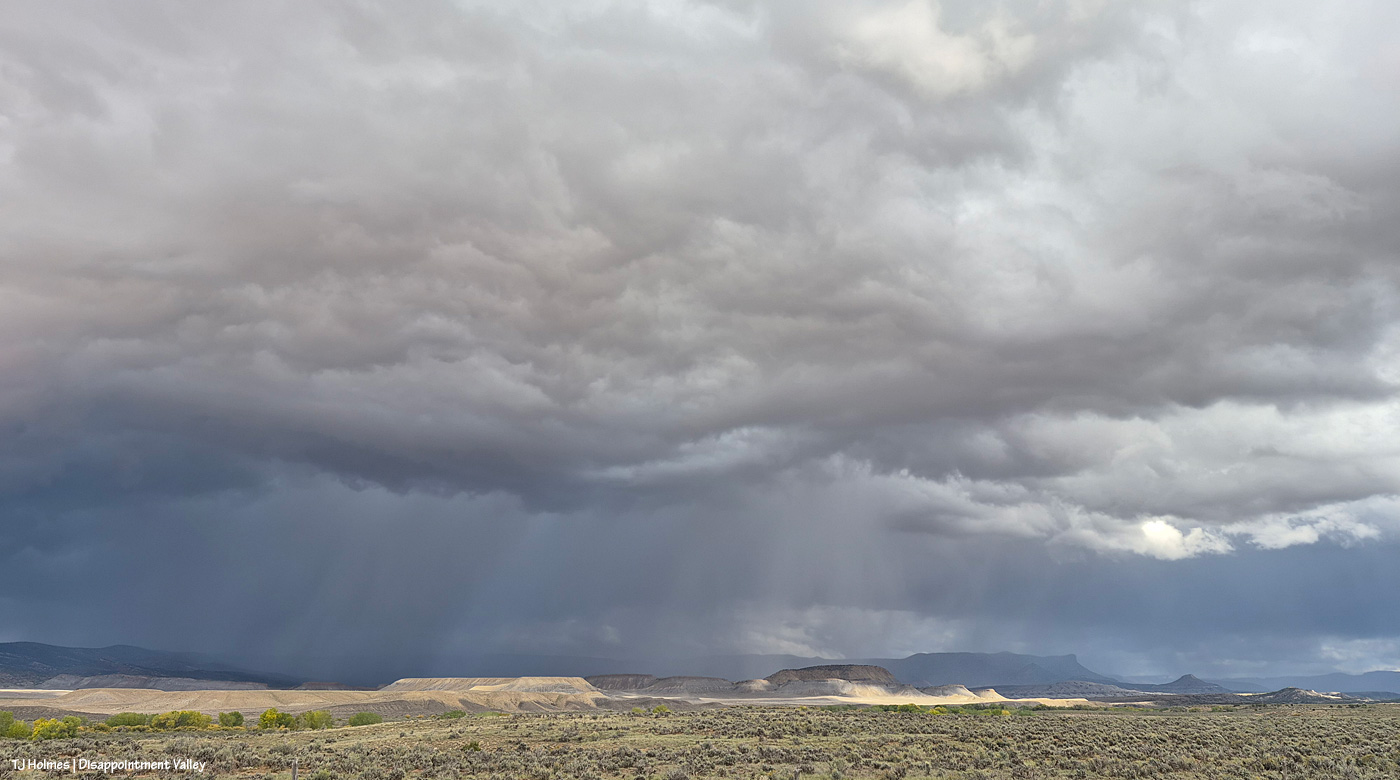
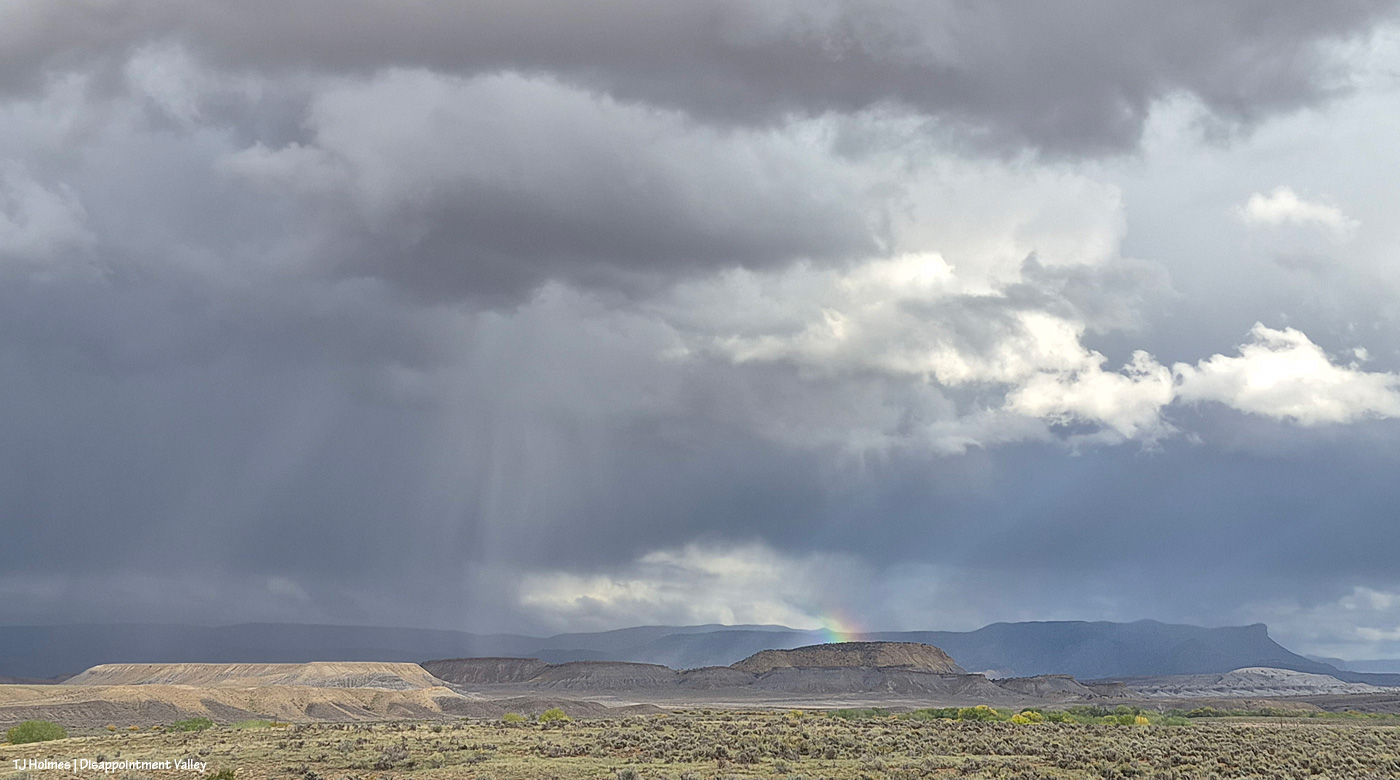
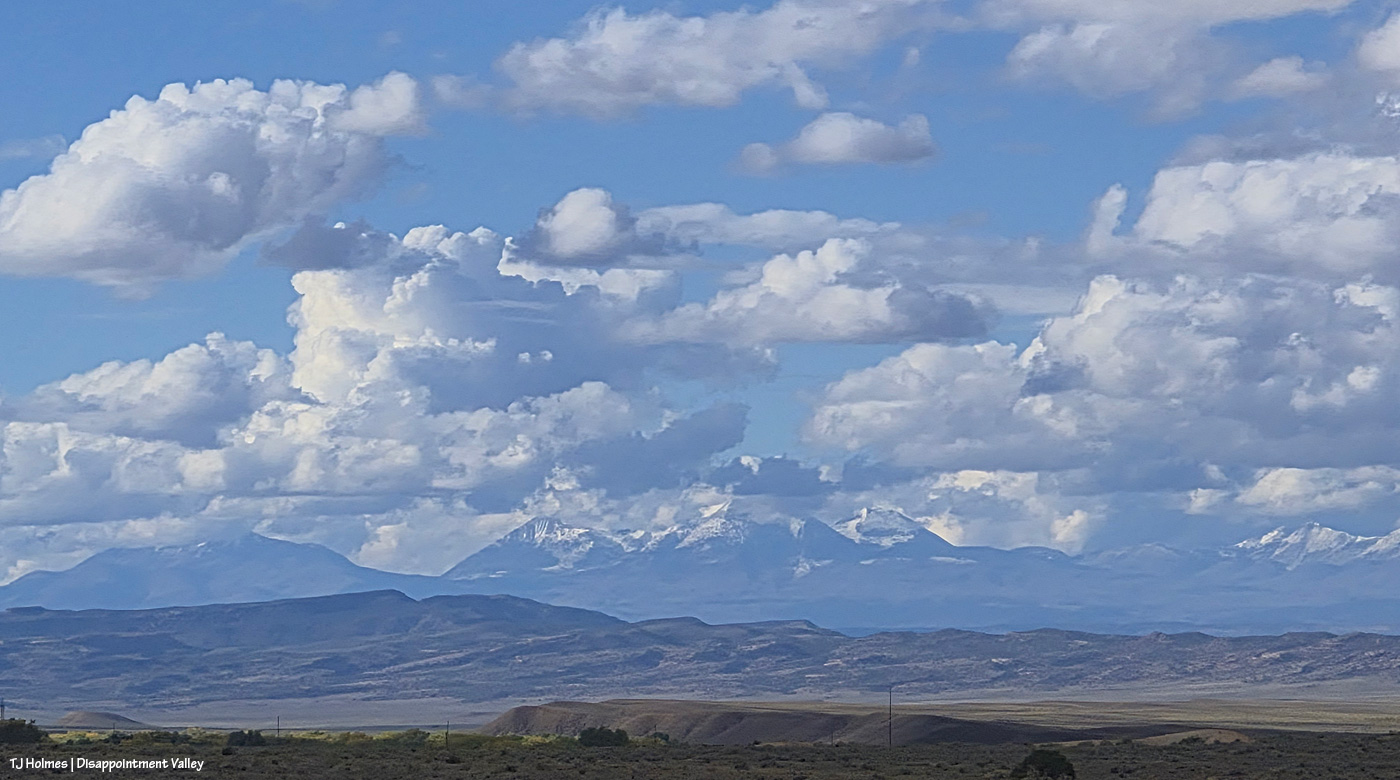
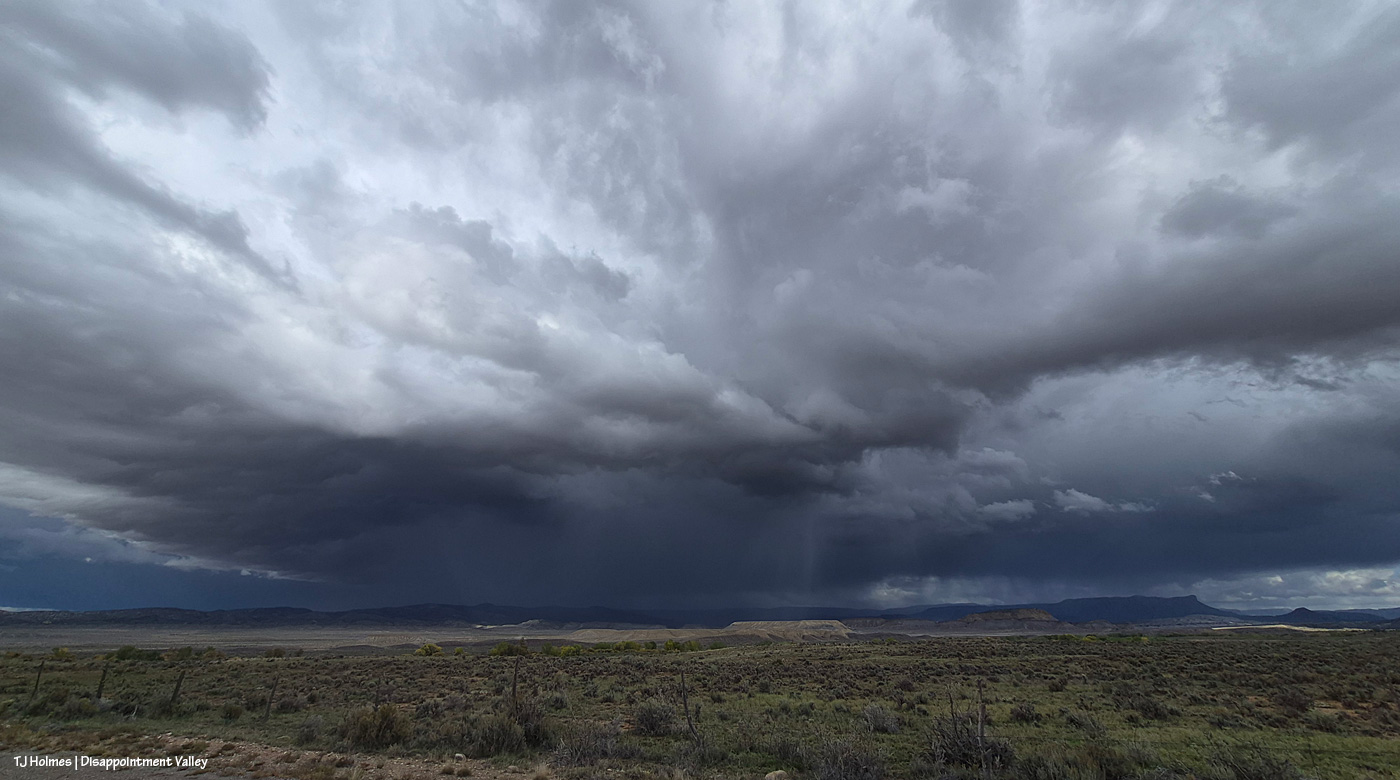
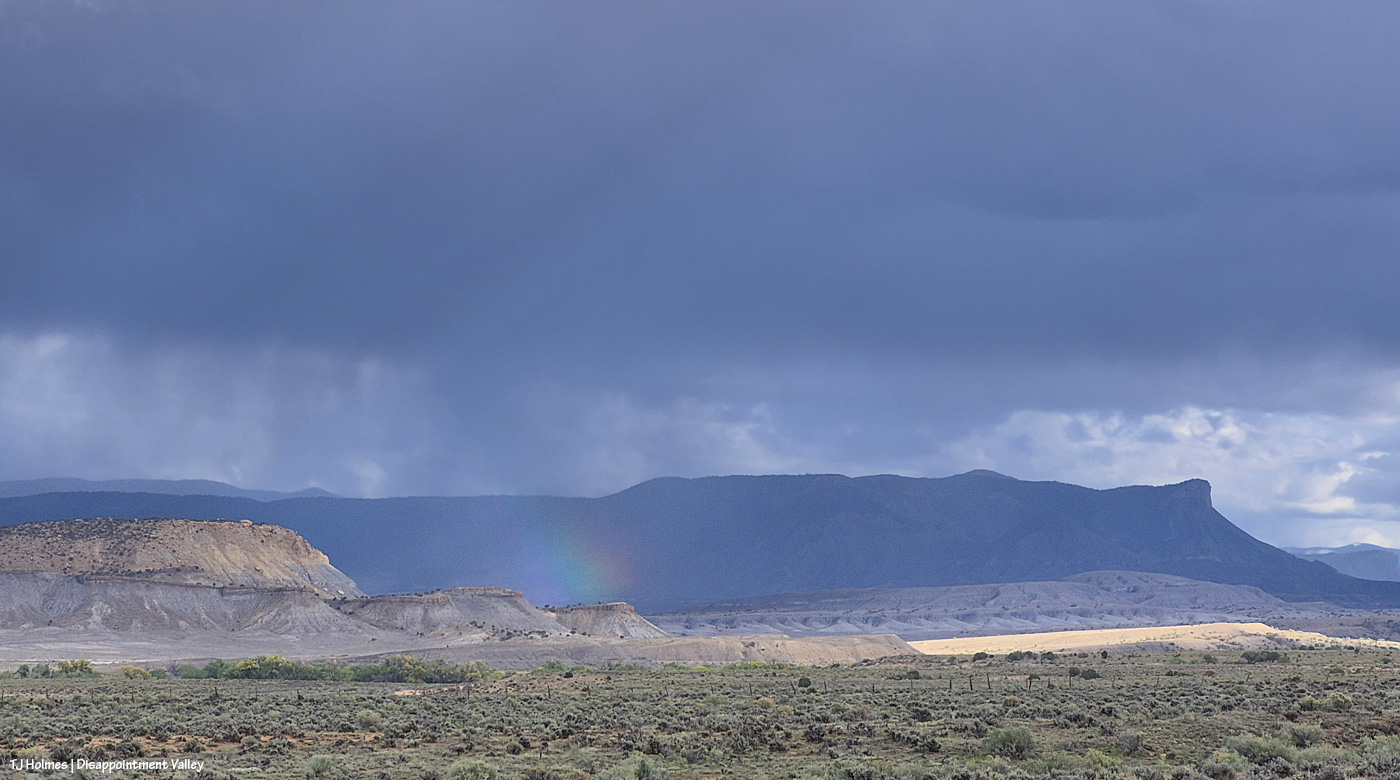
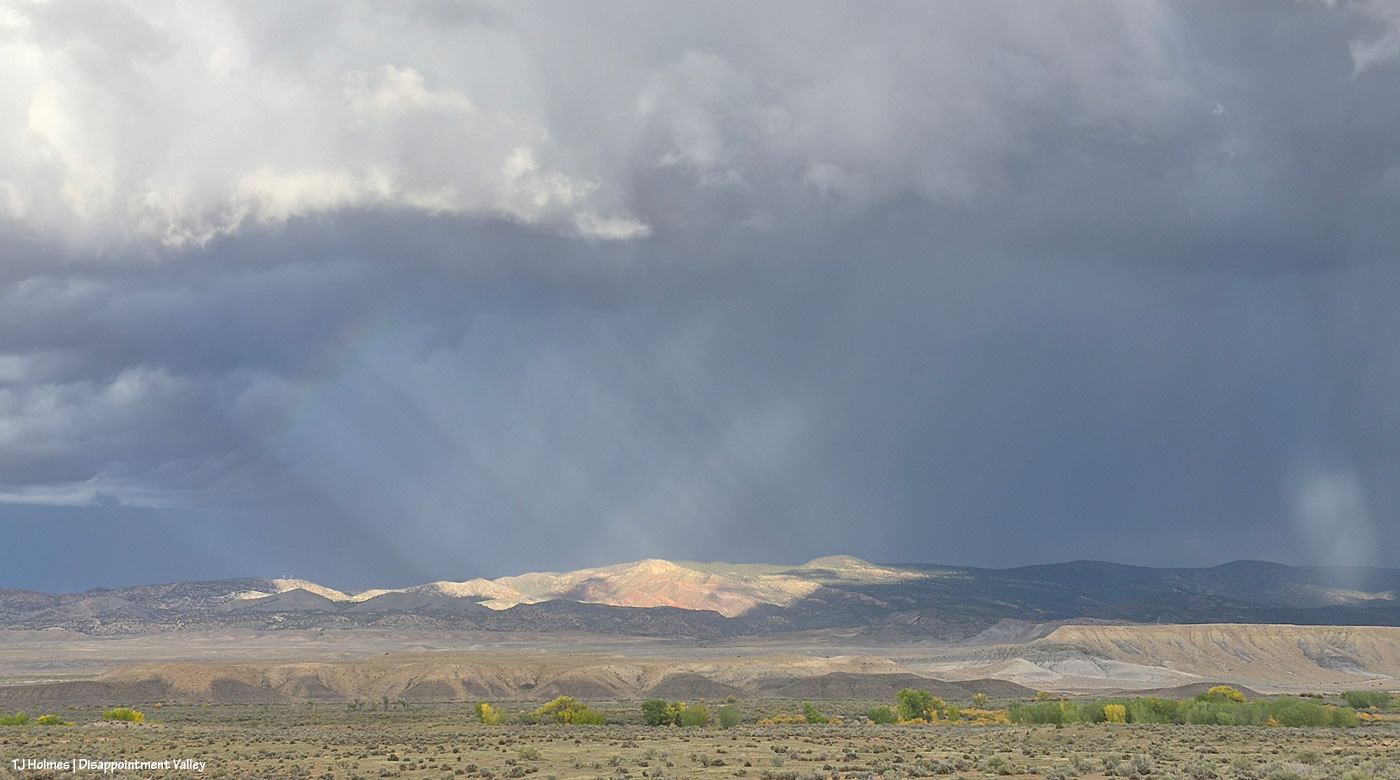
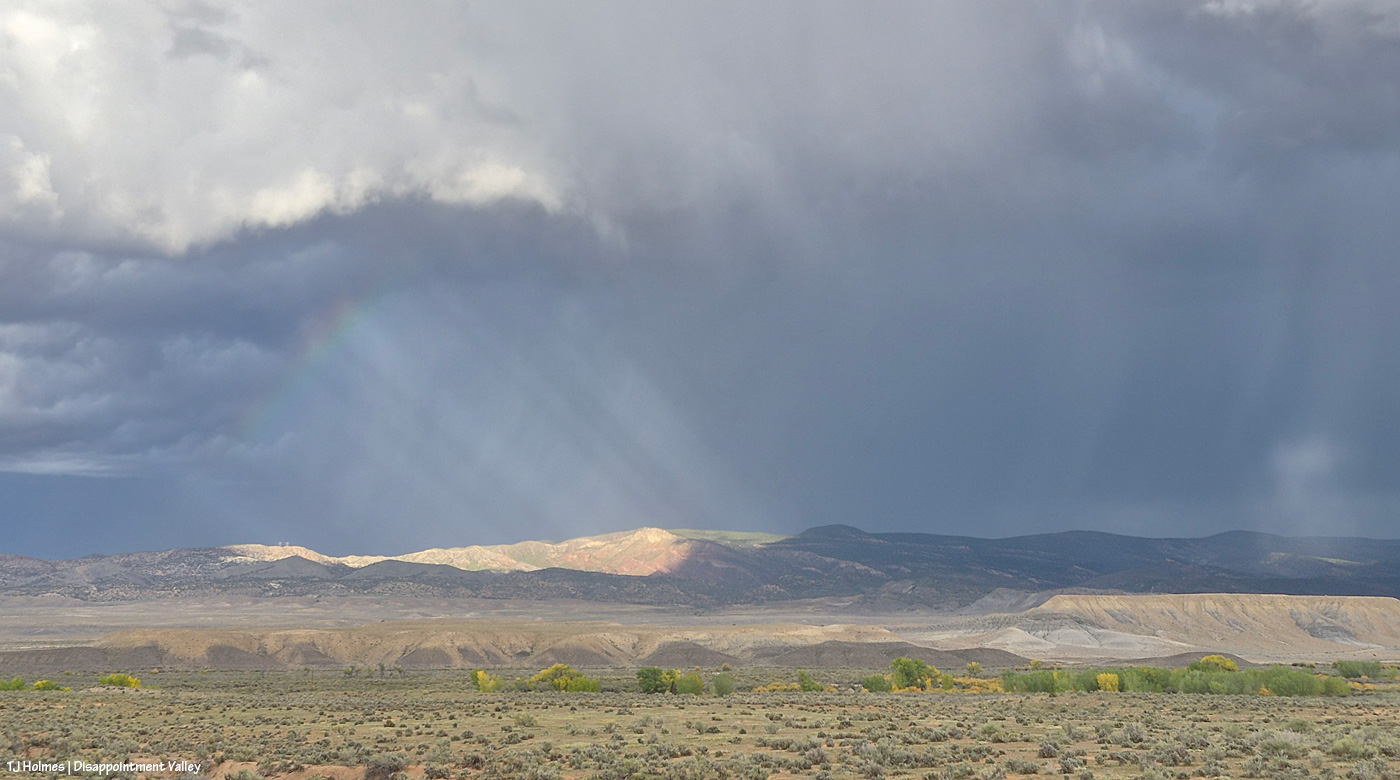
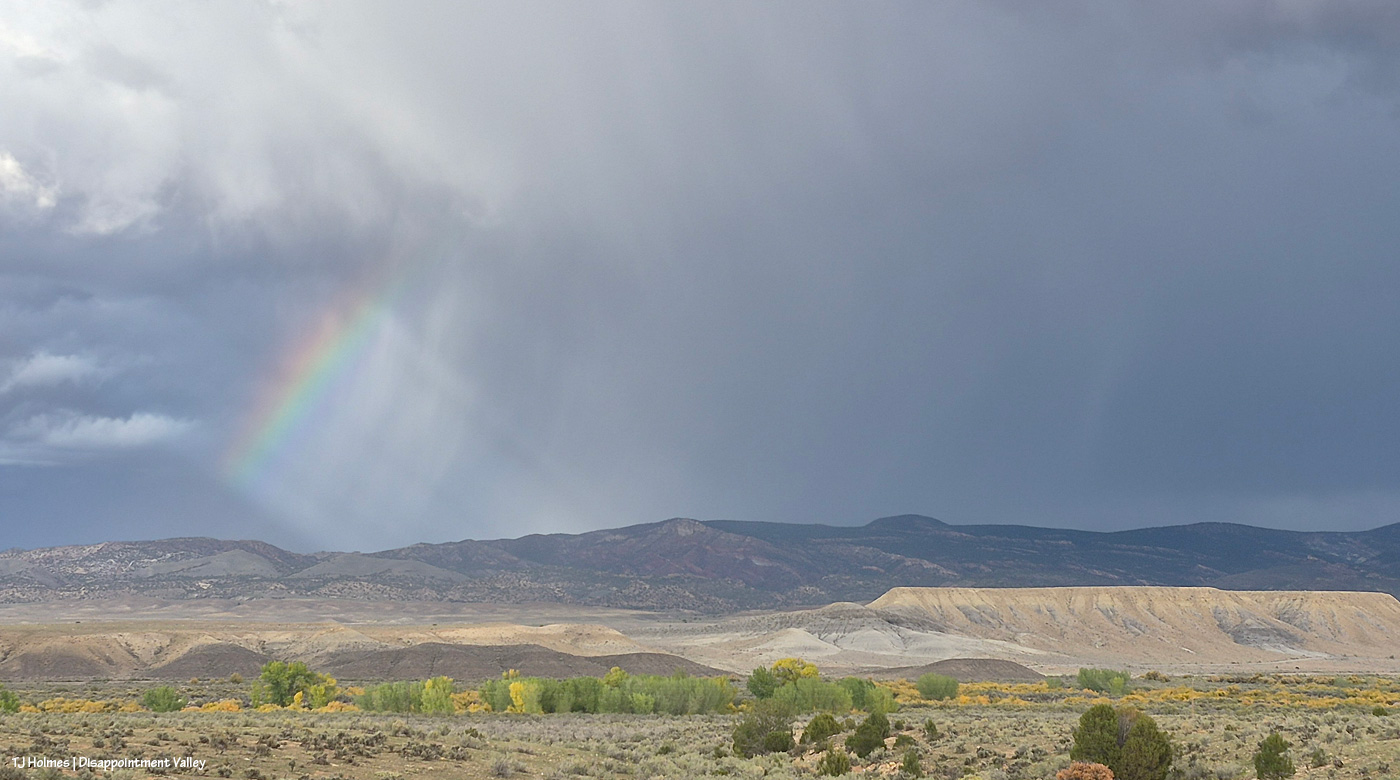
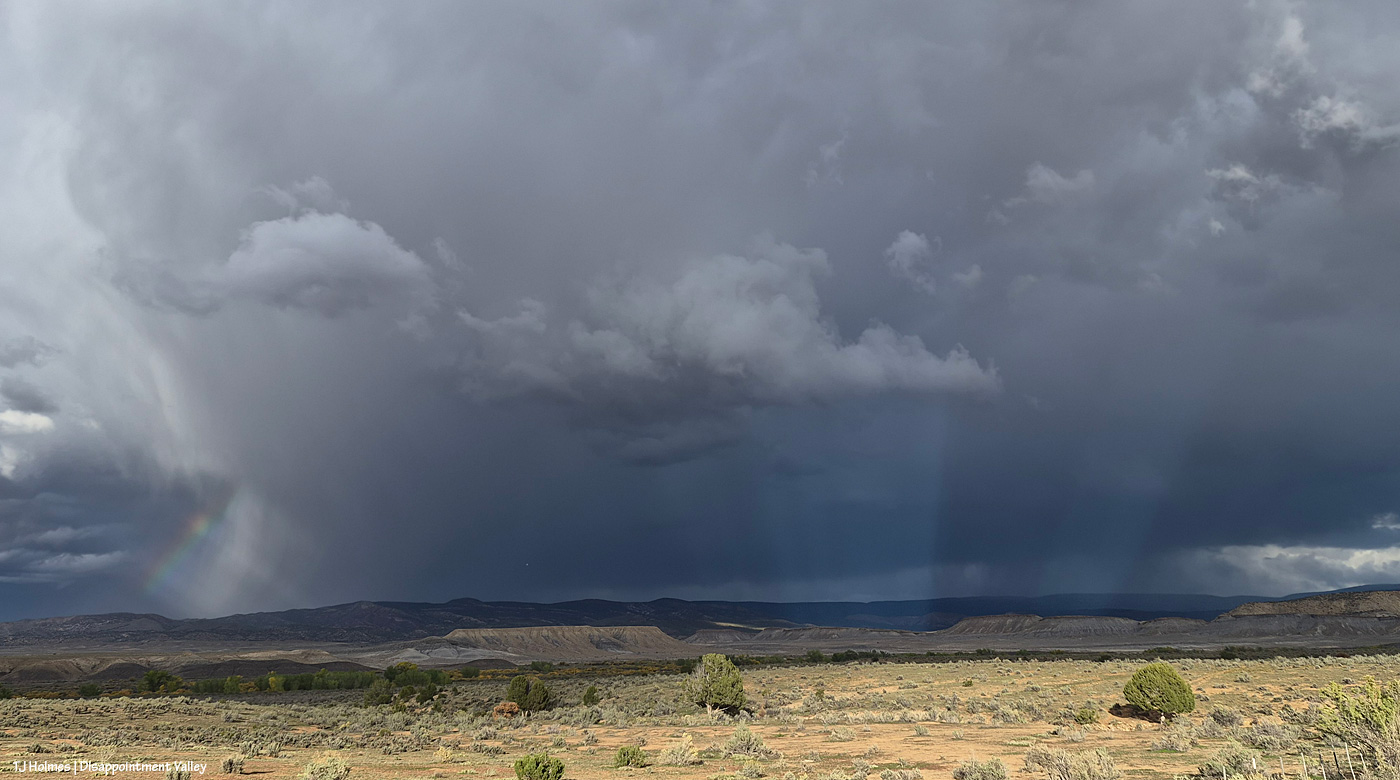
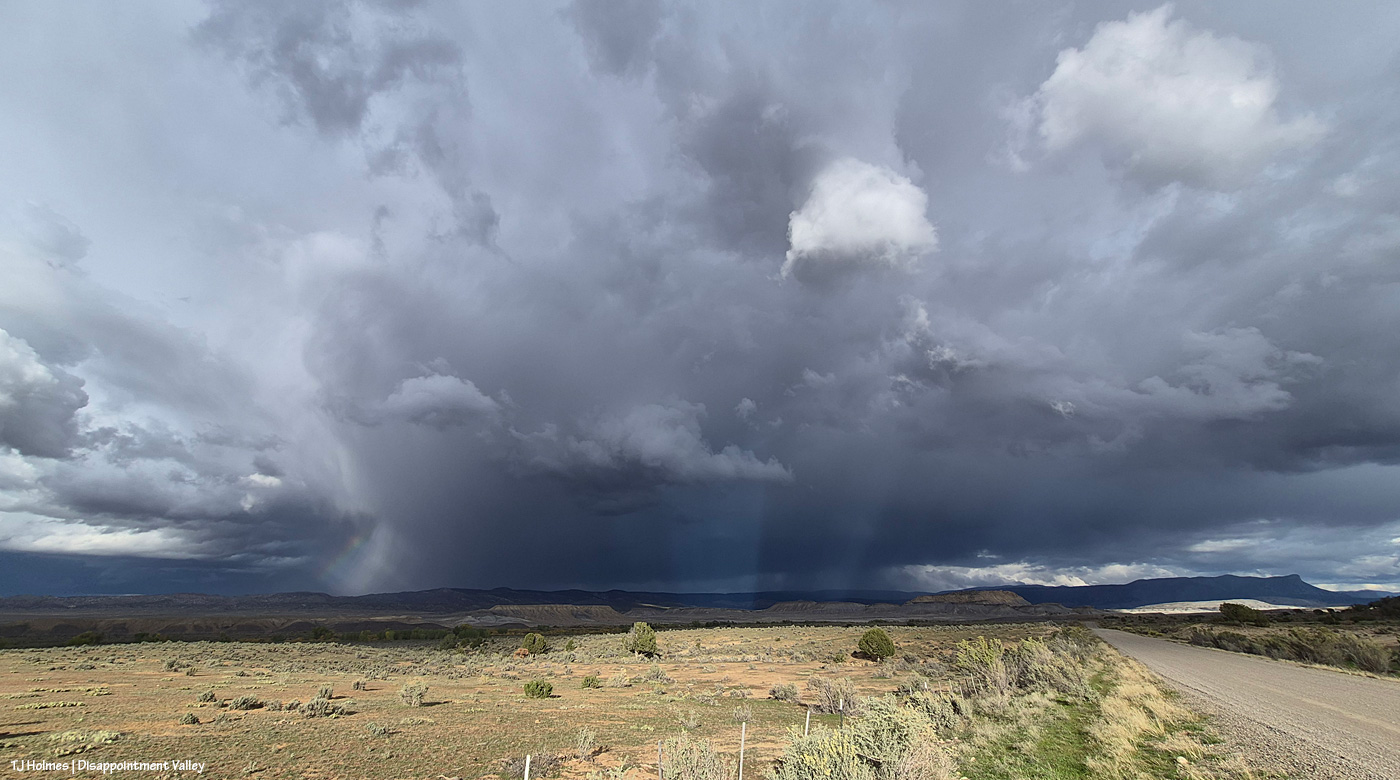
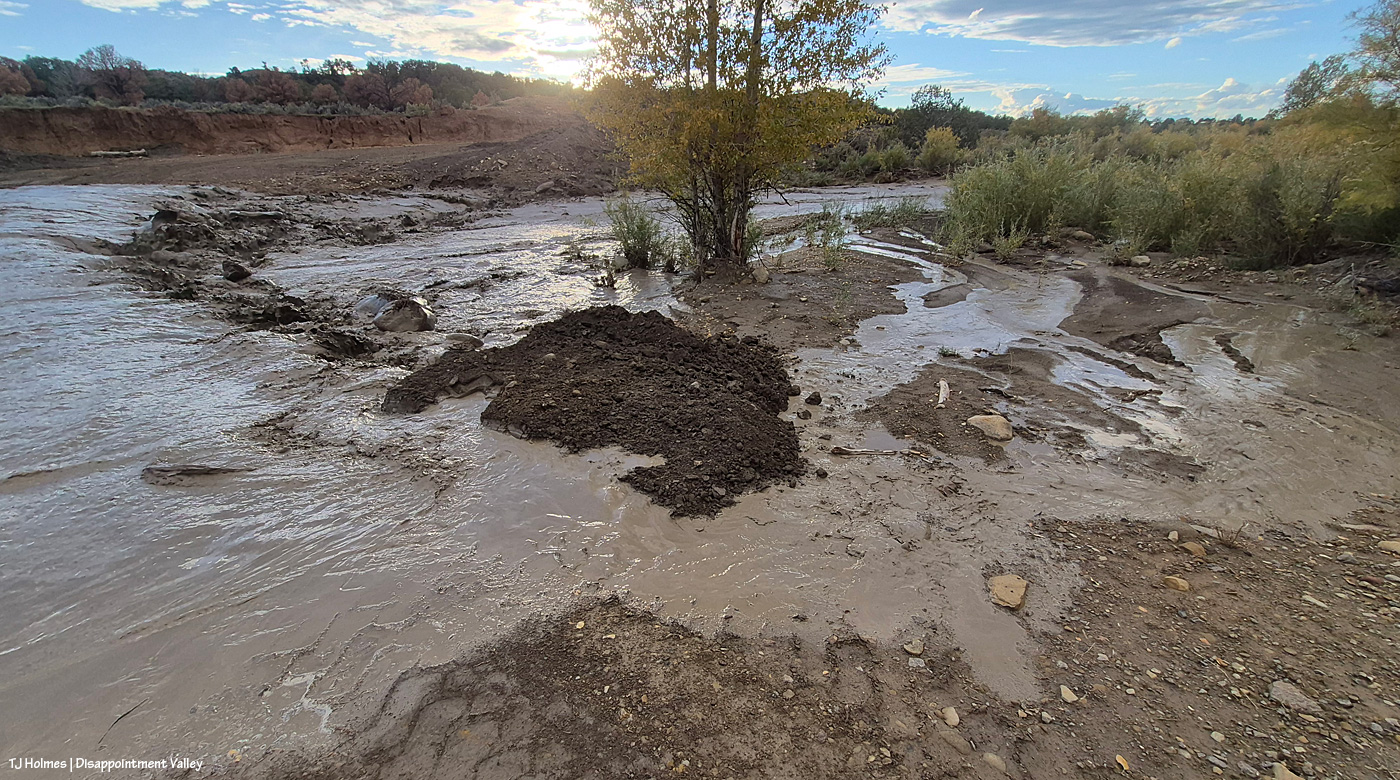
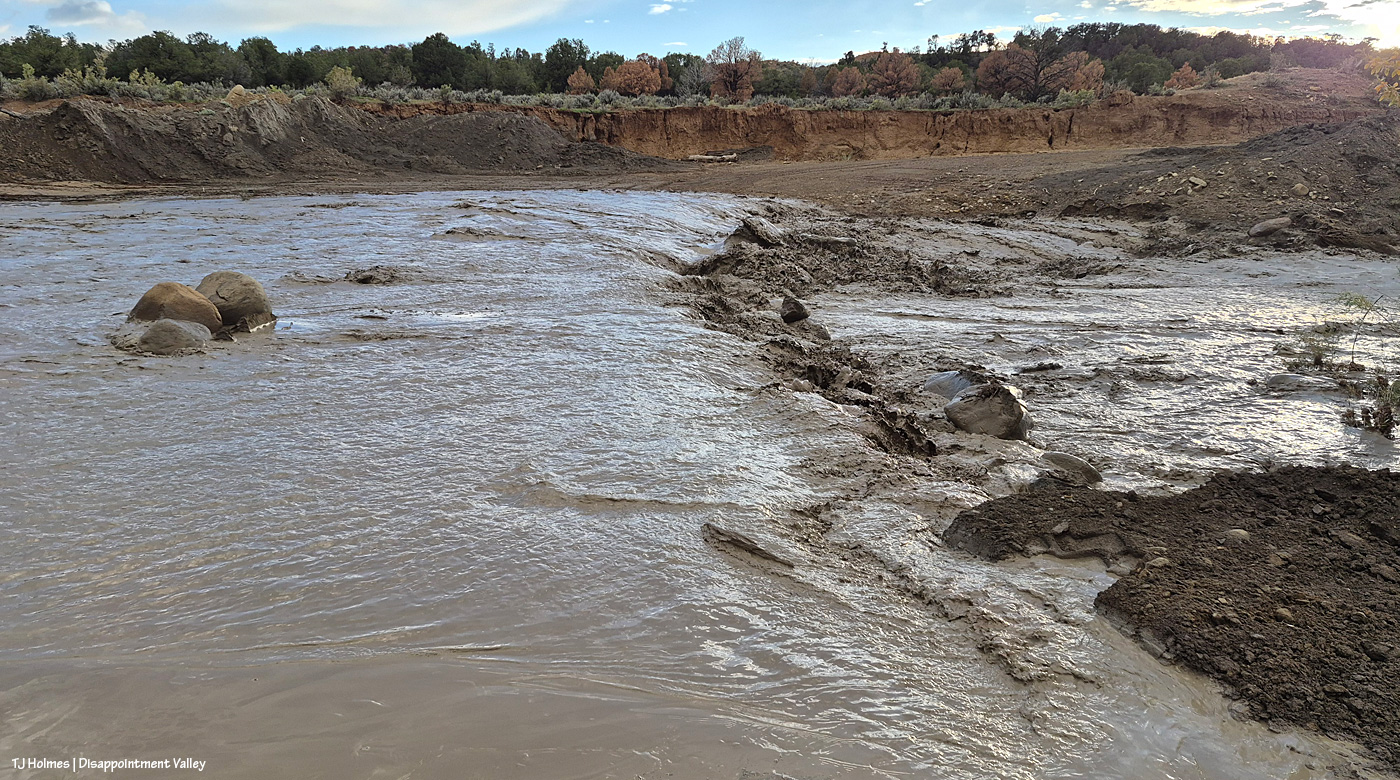
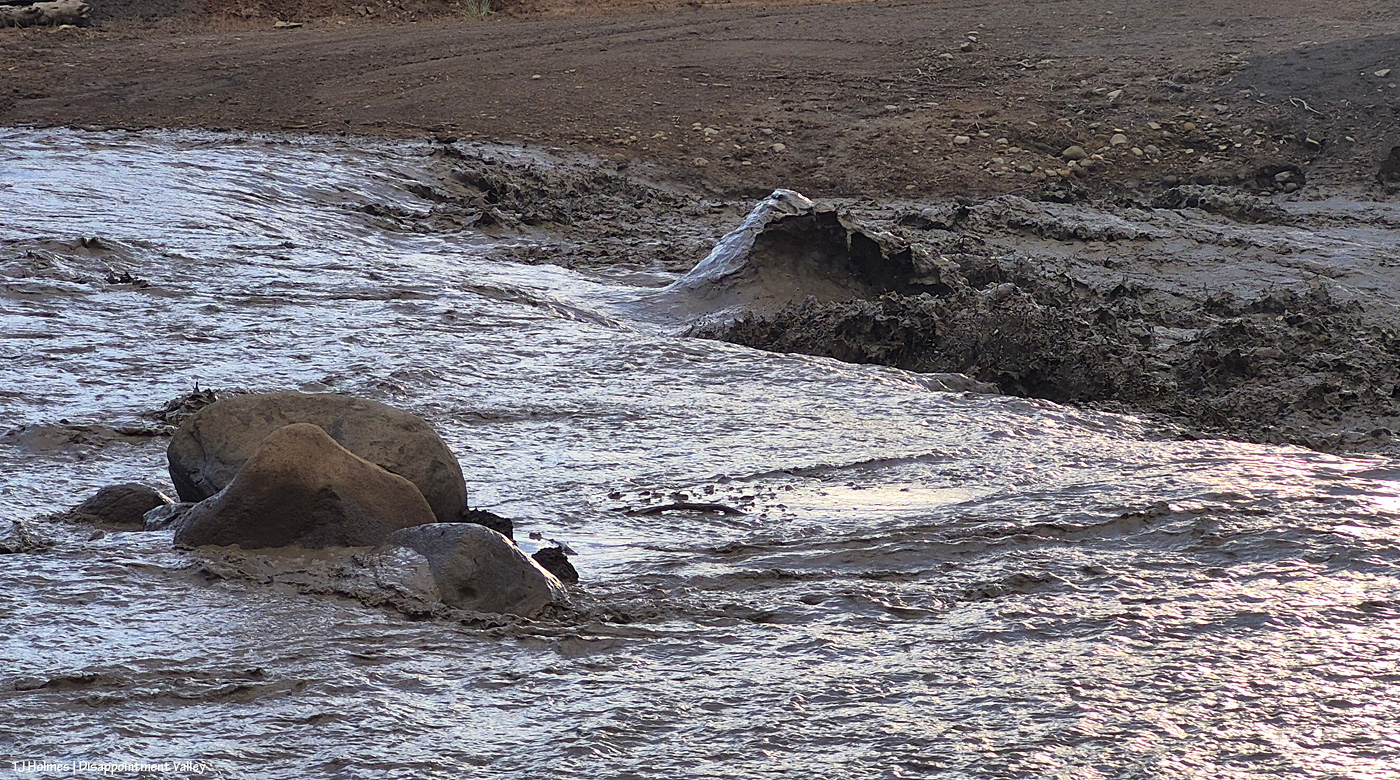
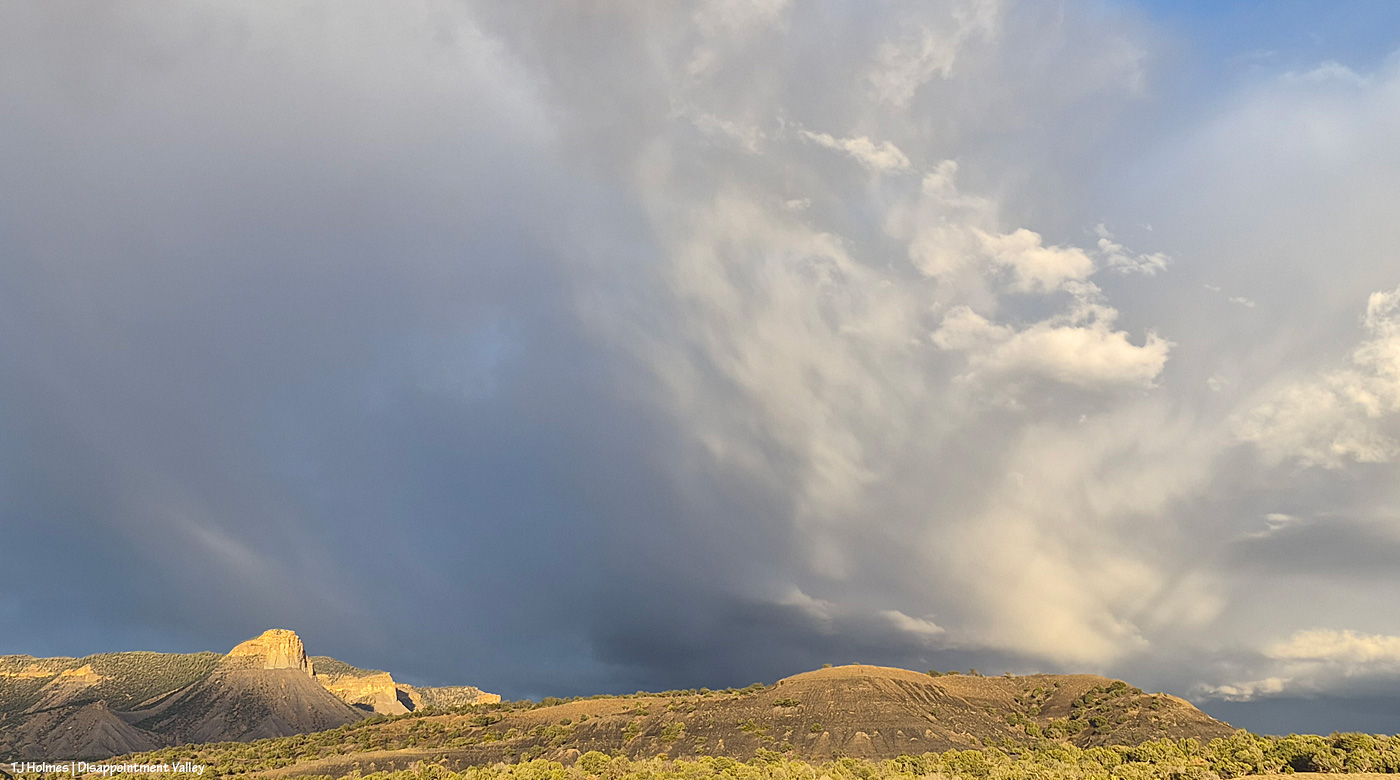
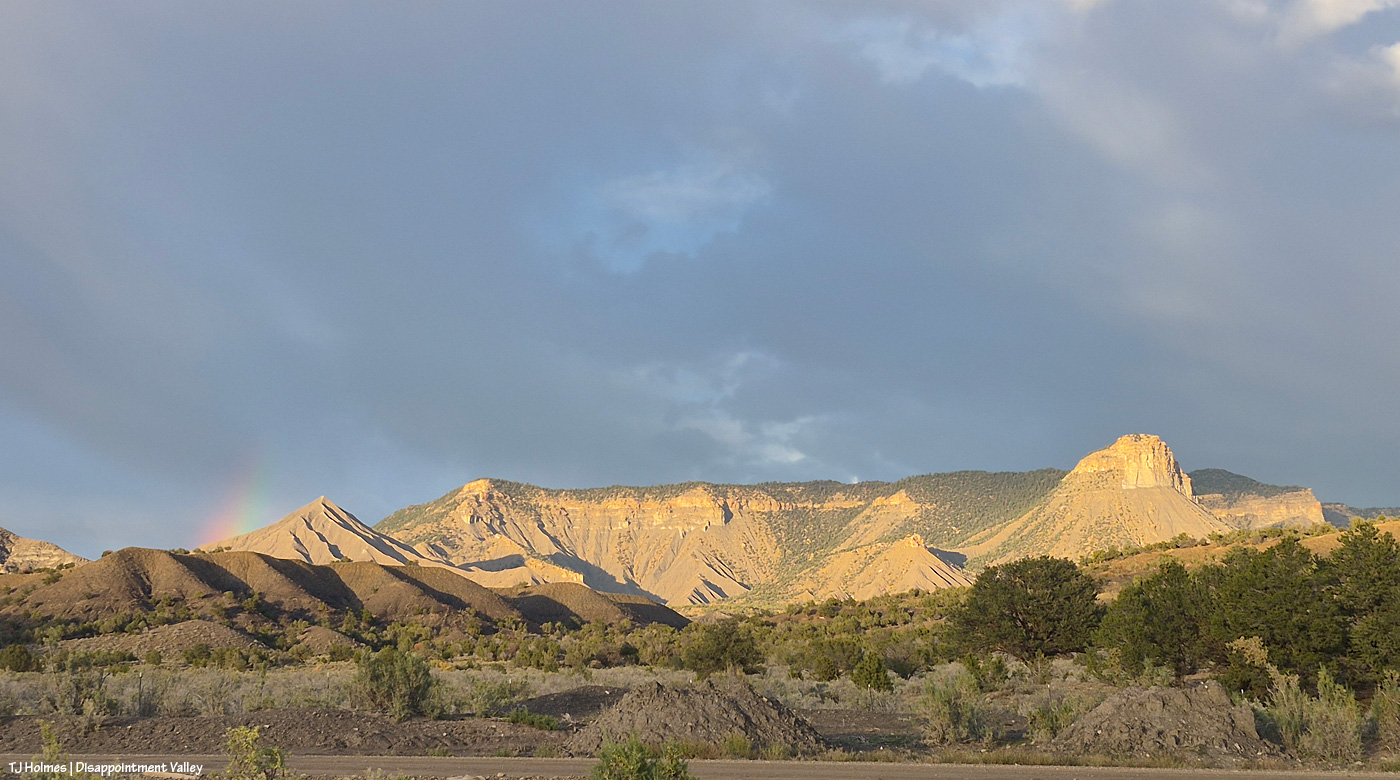
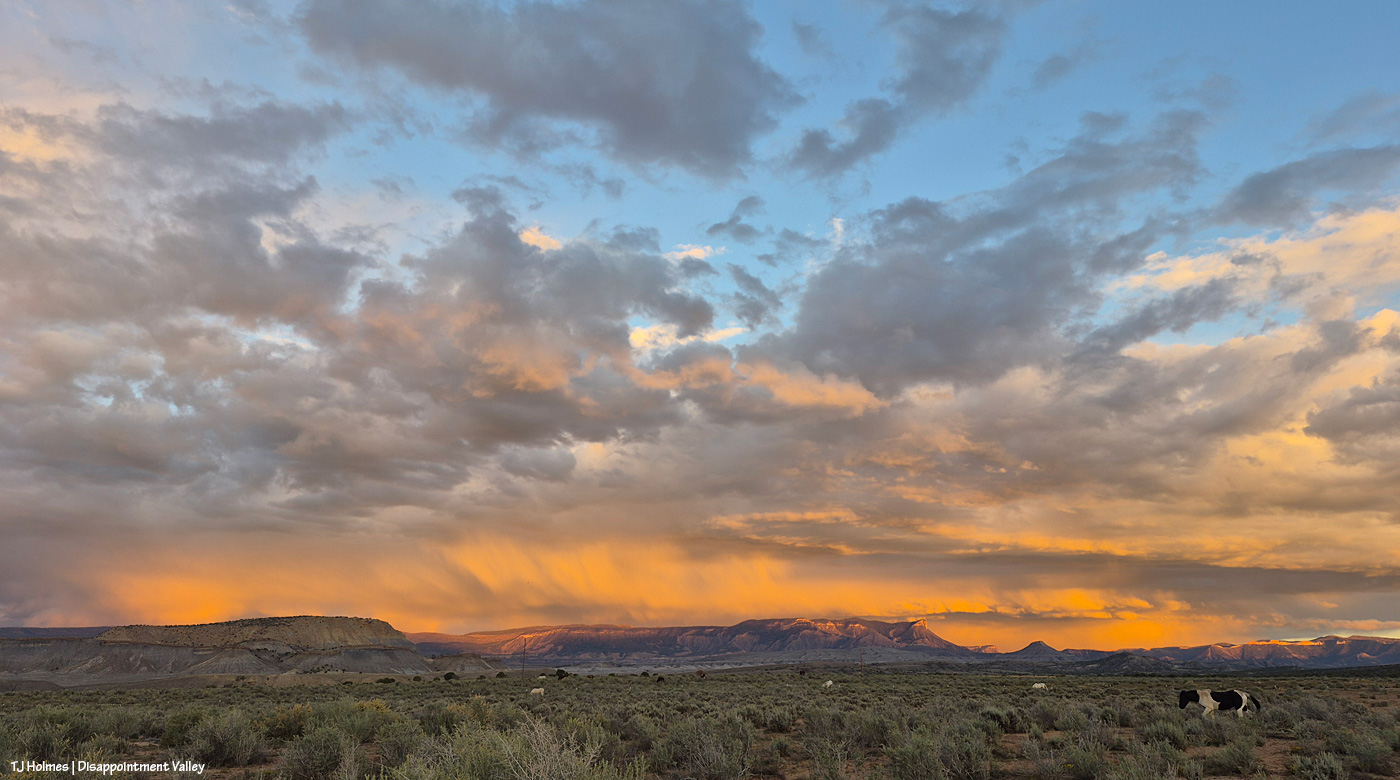
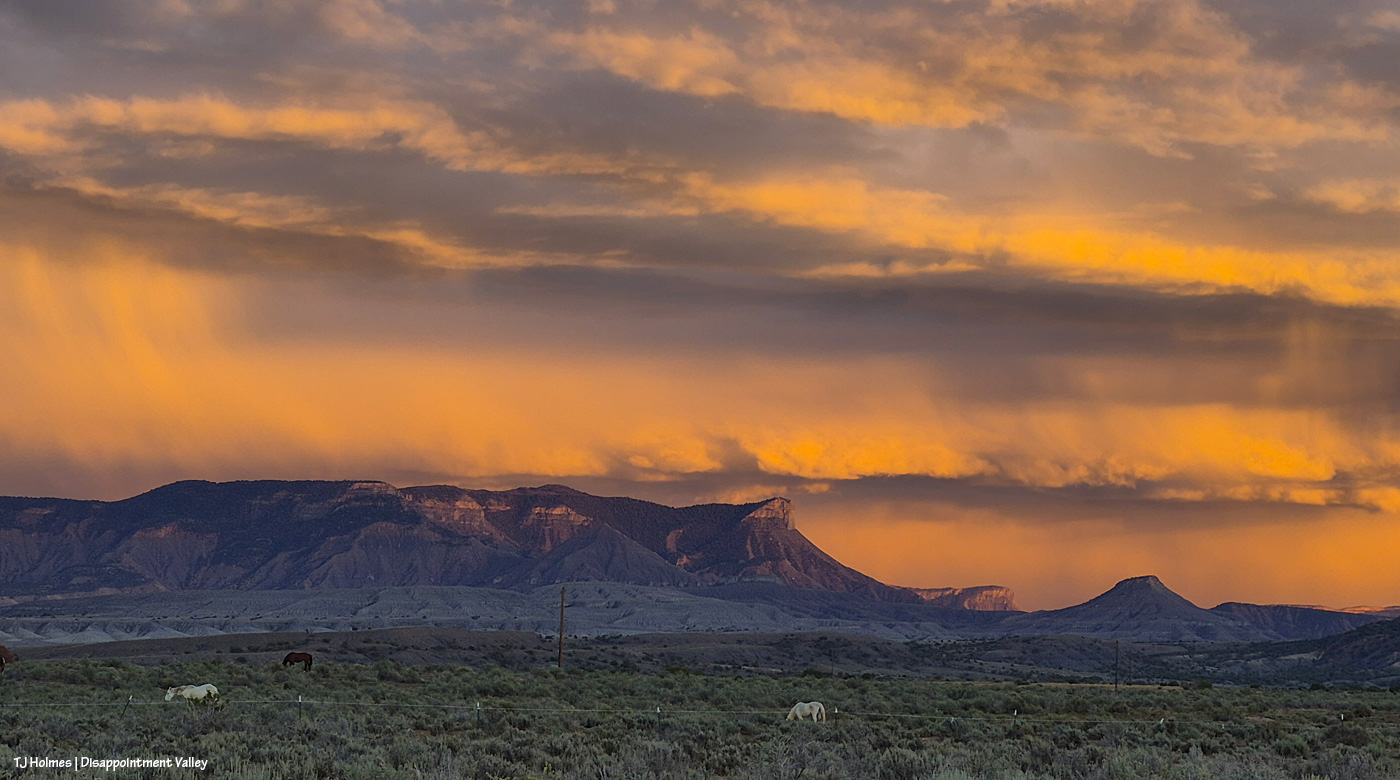
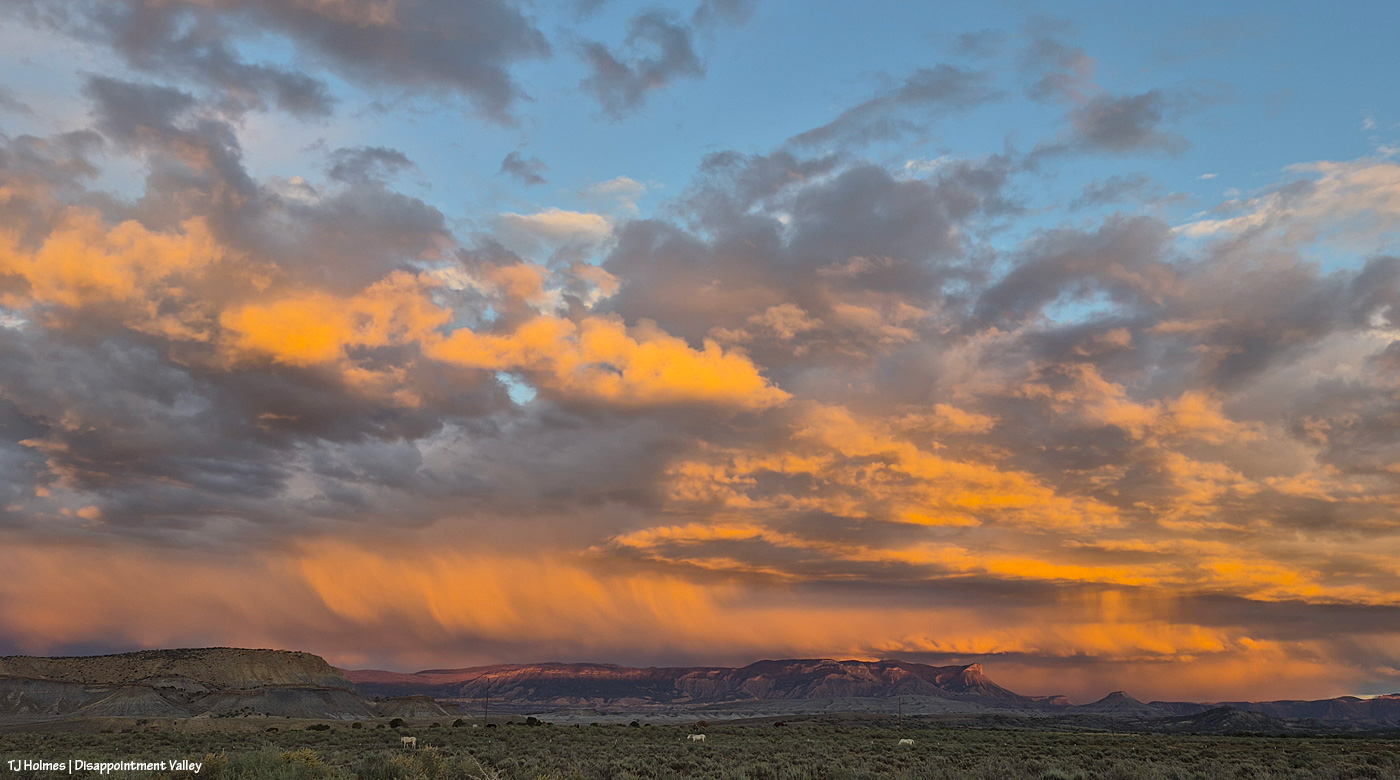
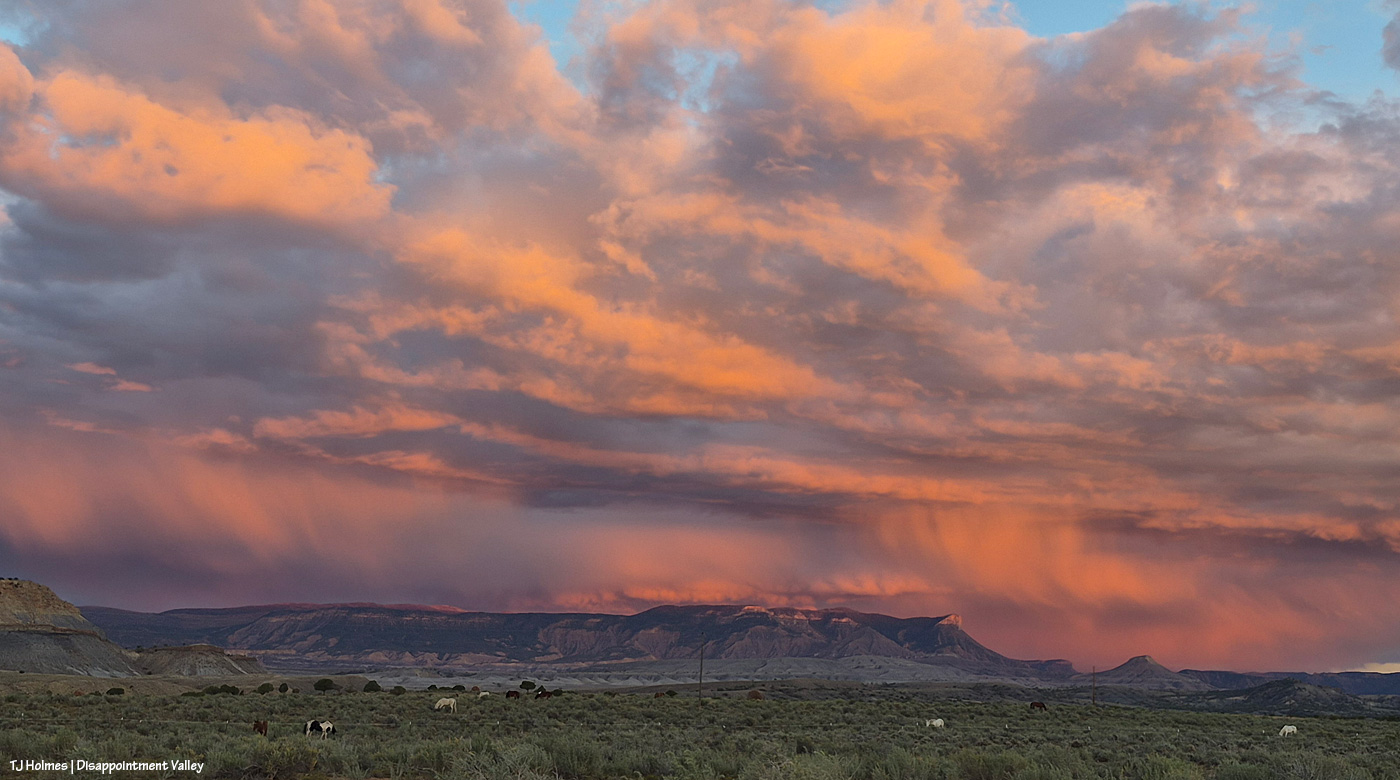
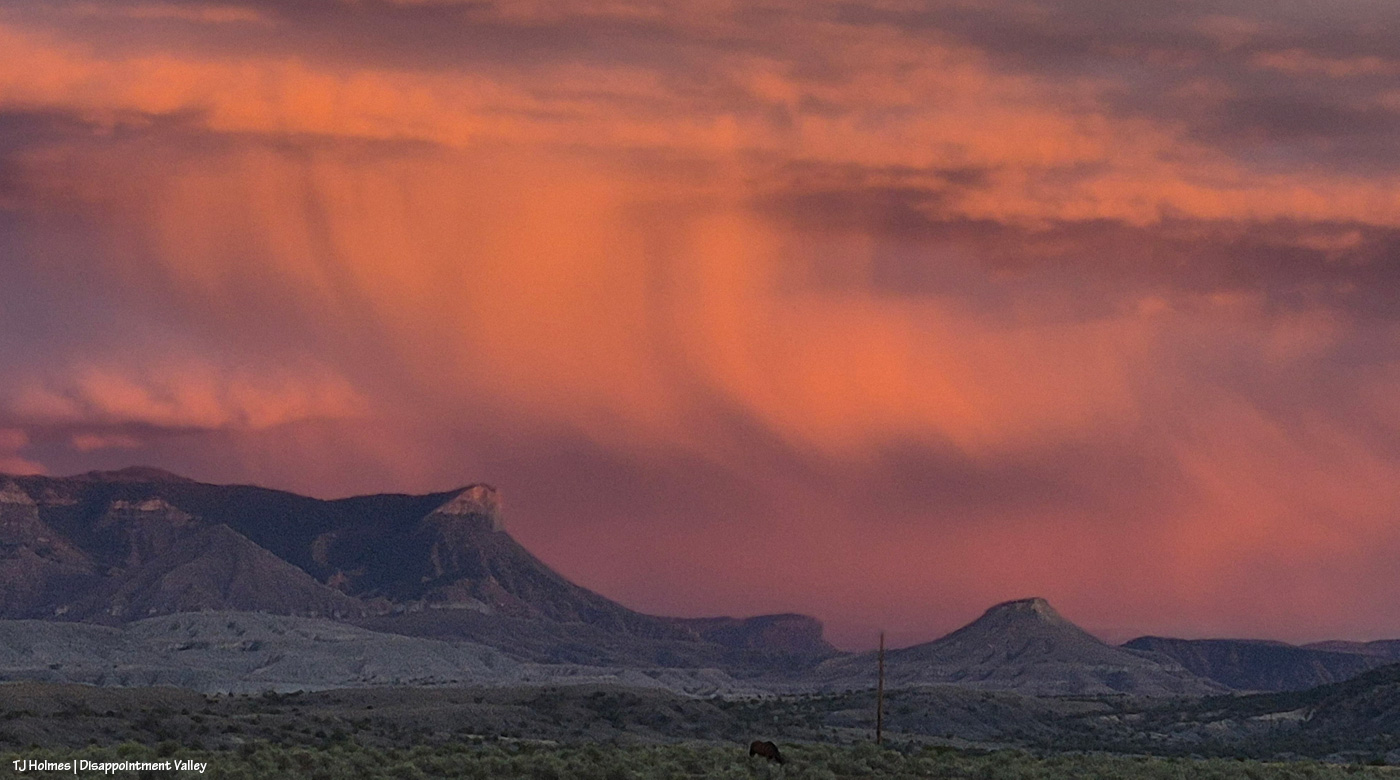
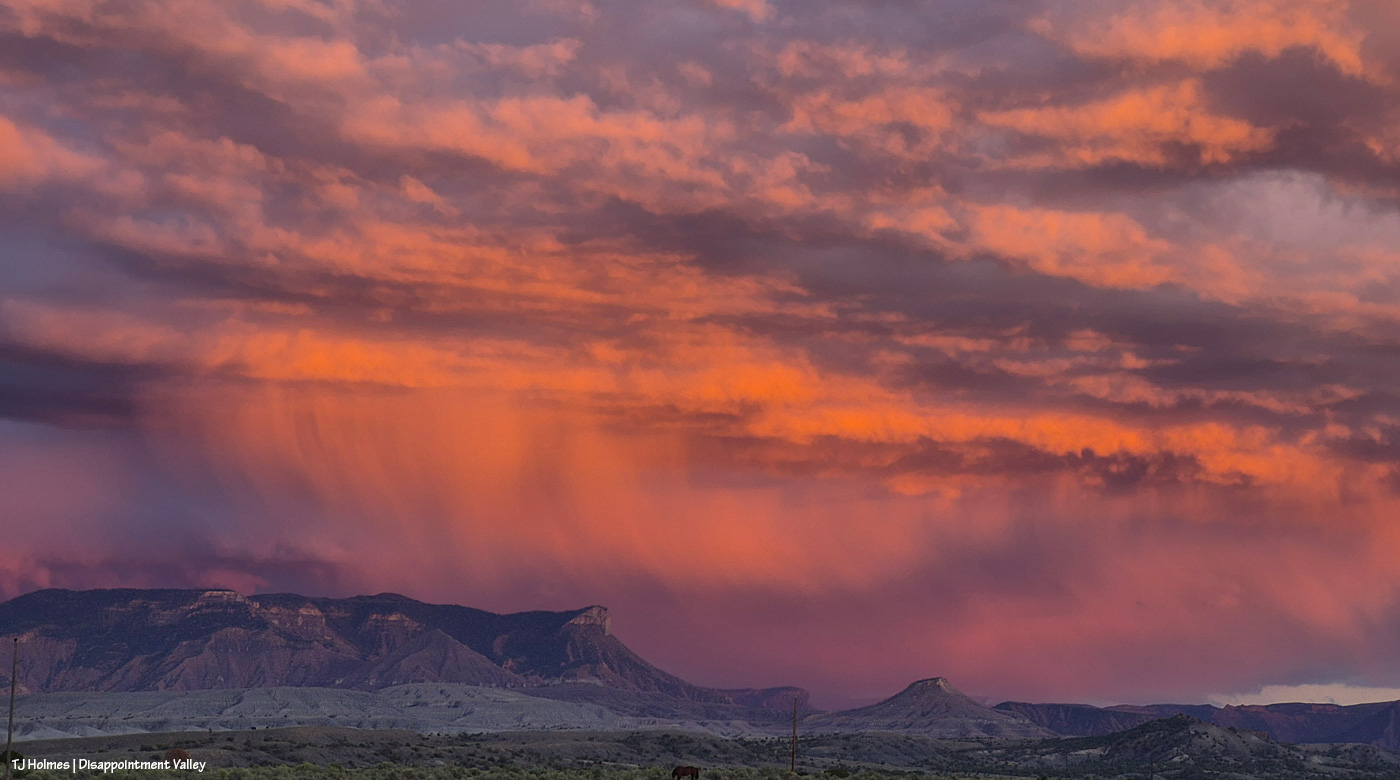
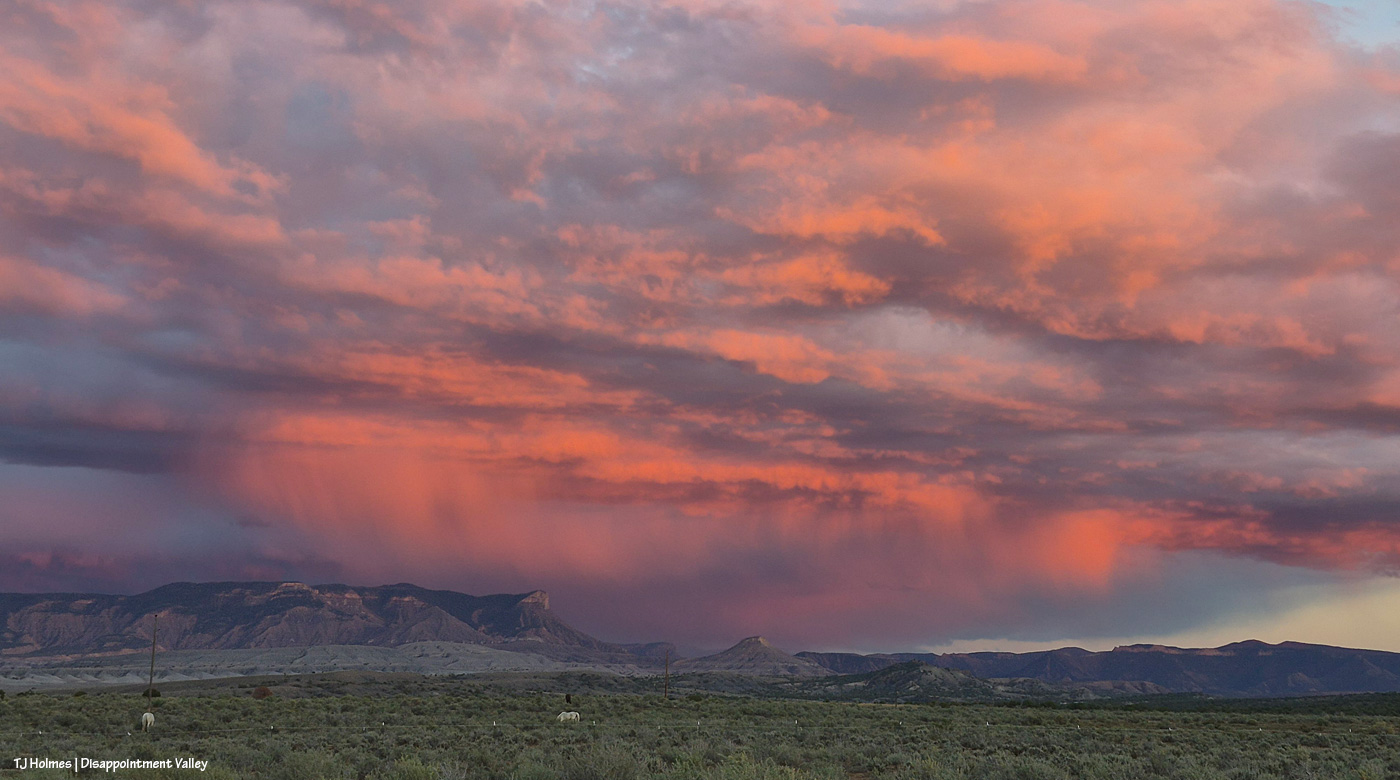
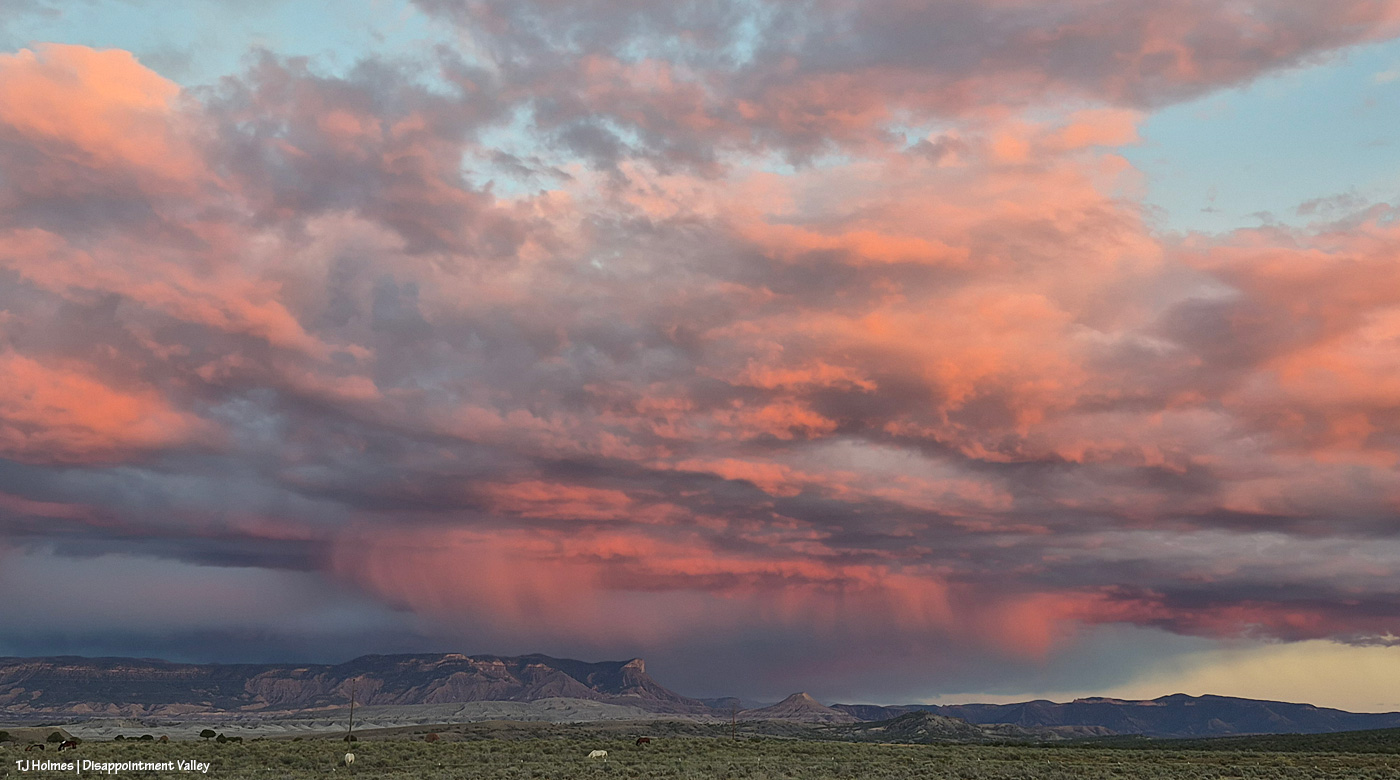
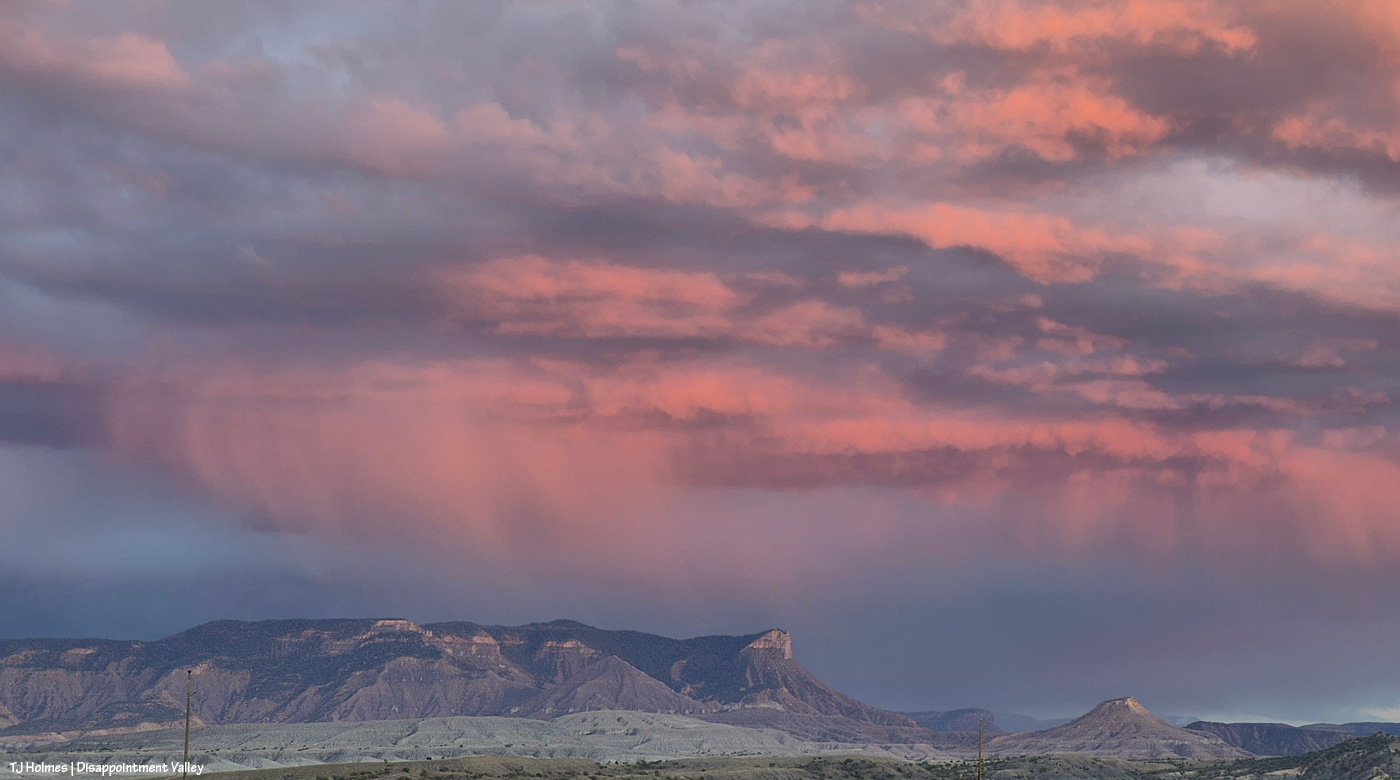
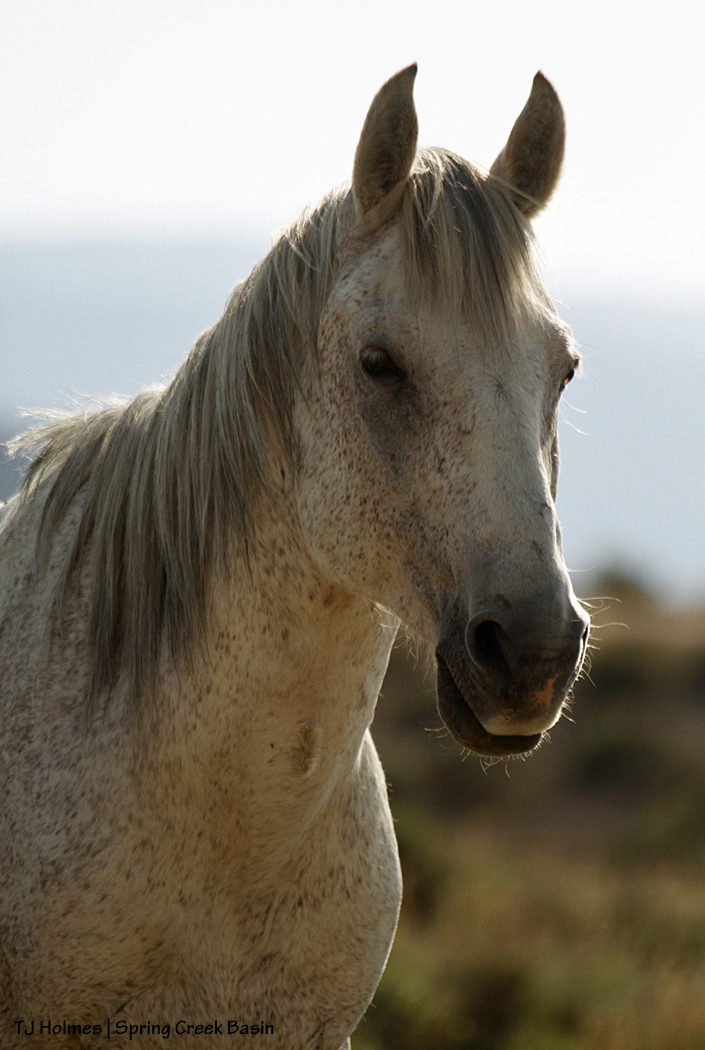
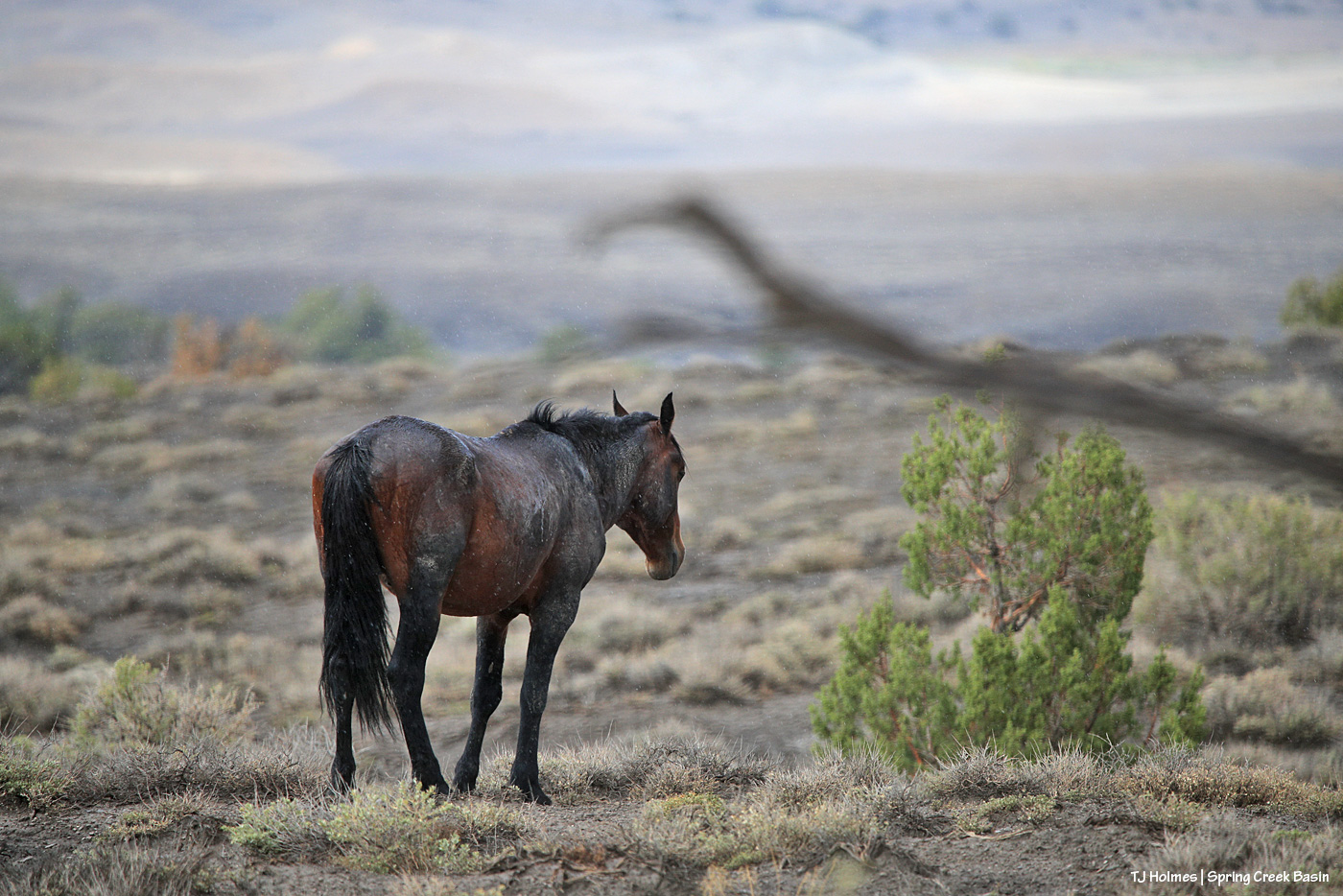
We got some rain. 🙂 (Zoom in to see actual drops of actual, falling rain!)
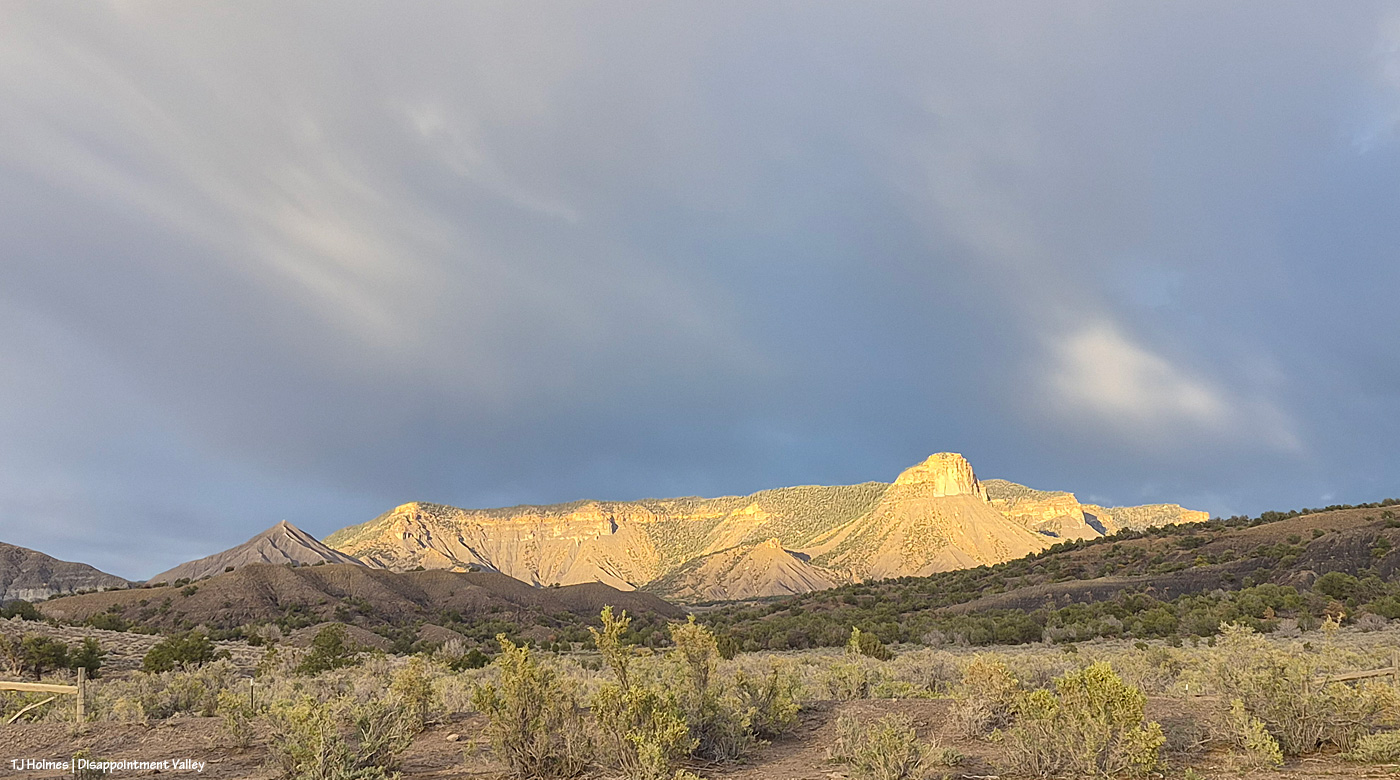
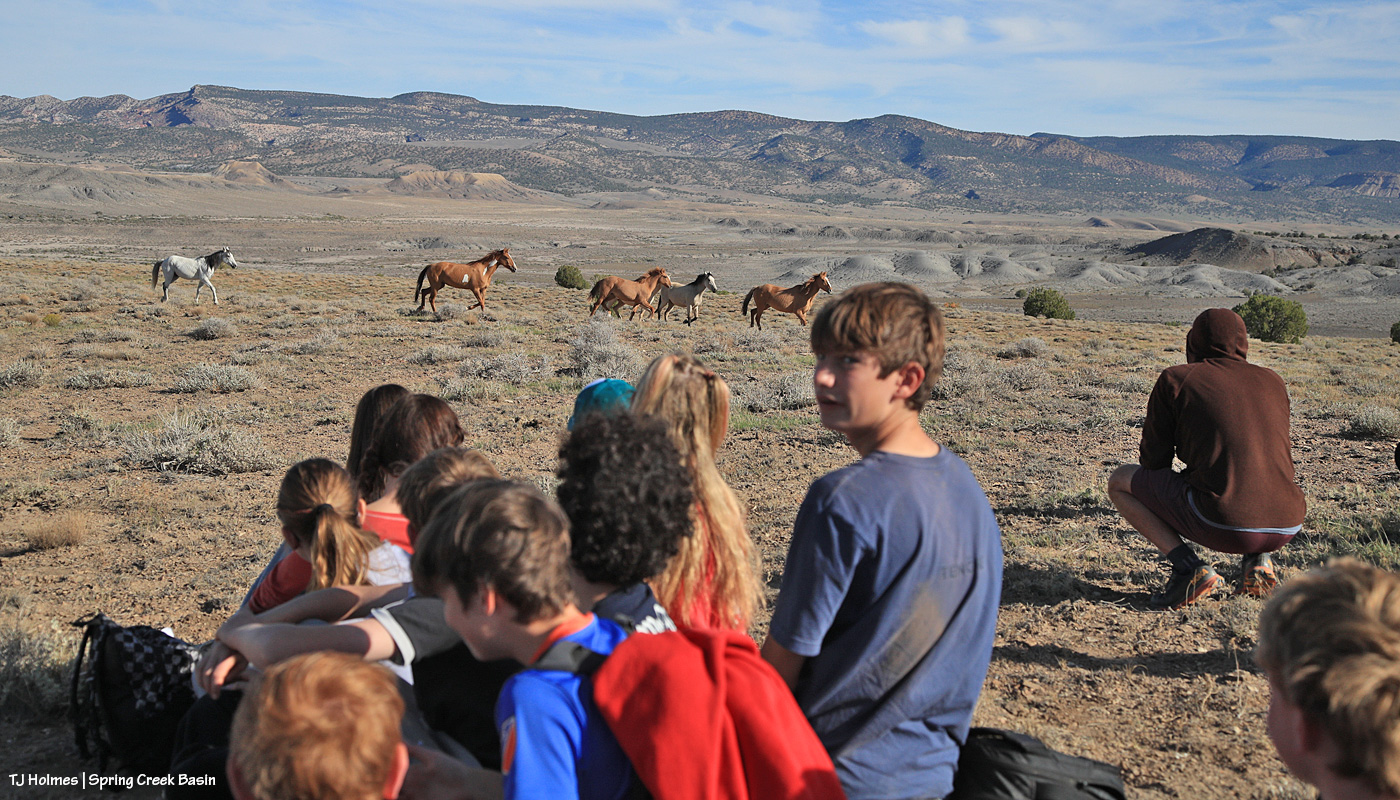
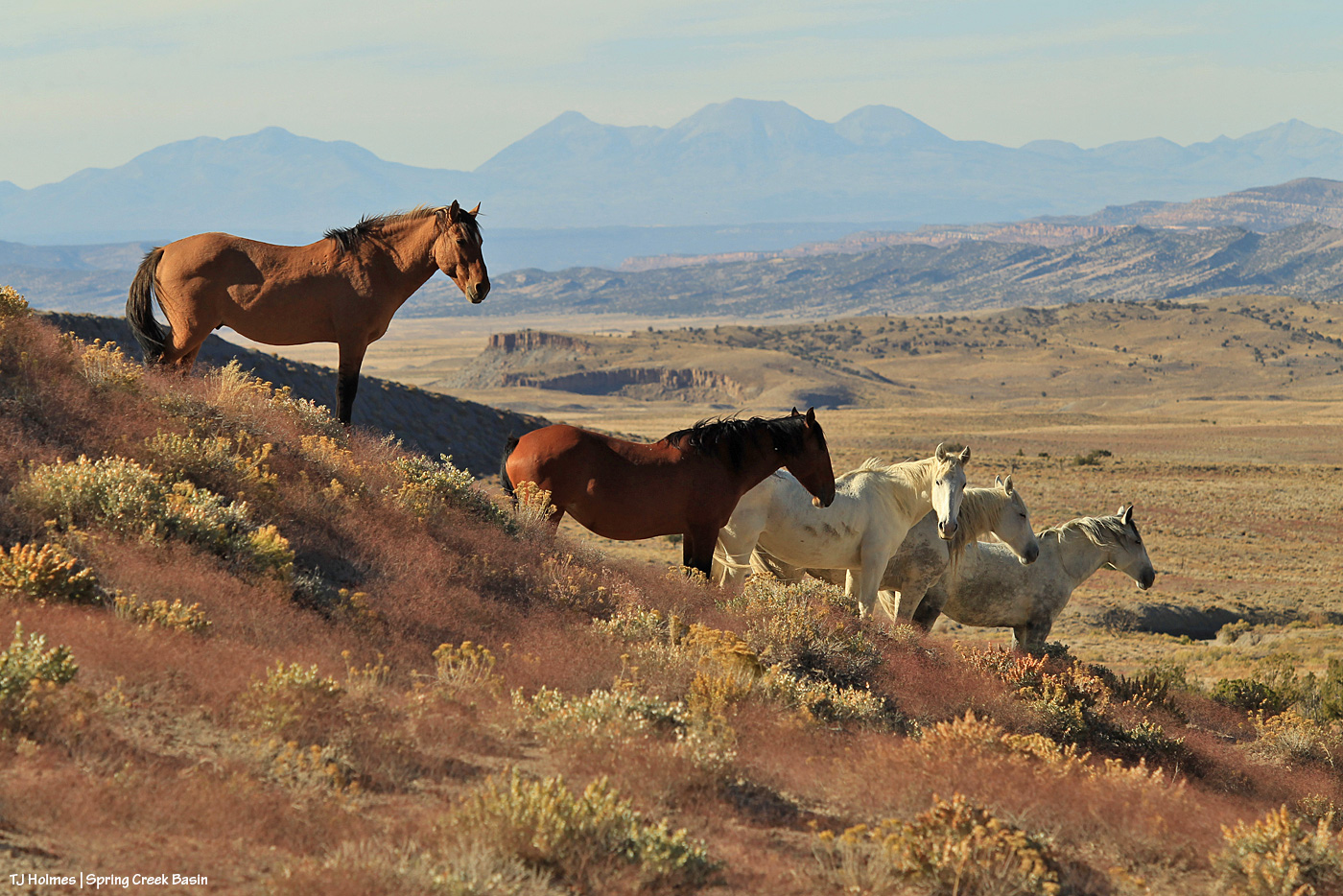
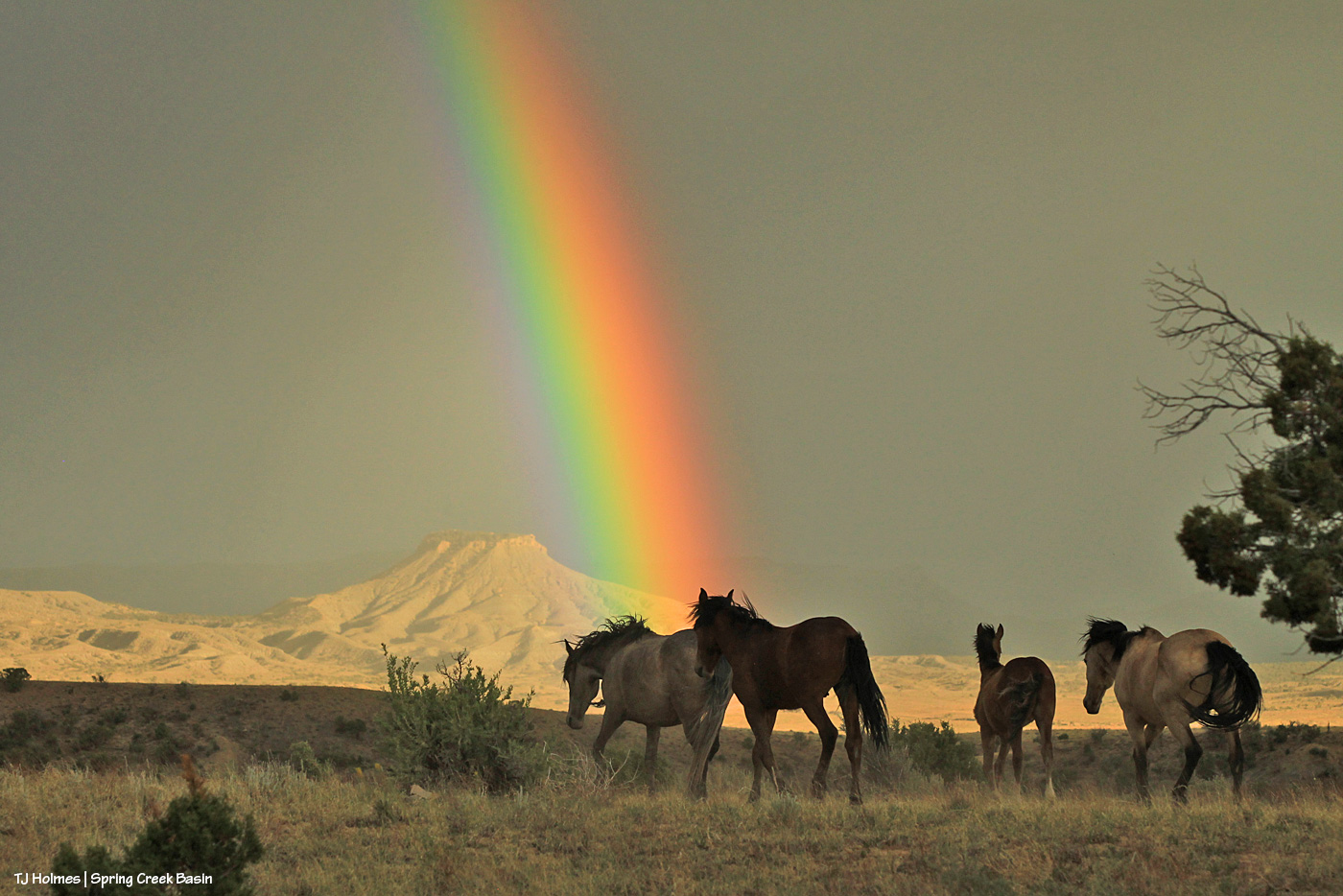
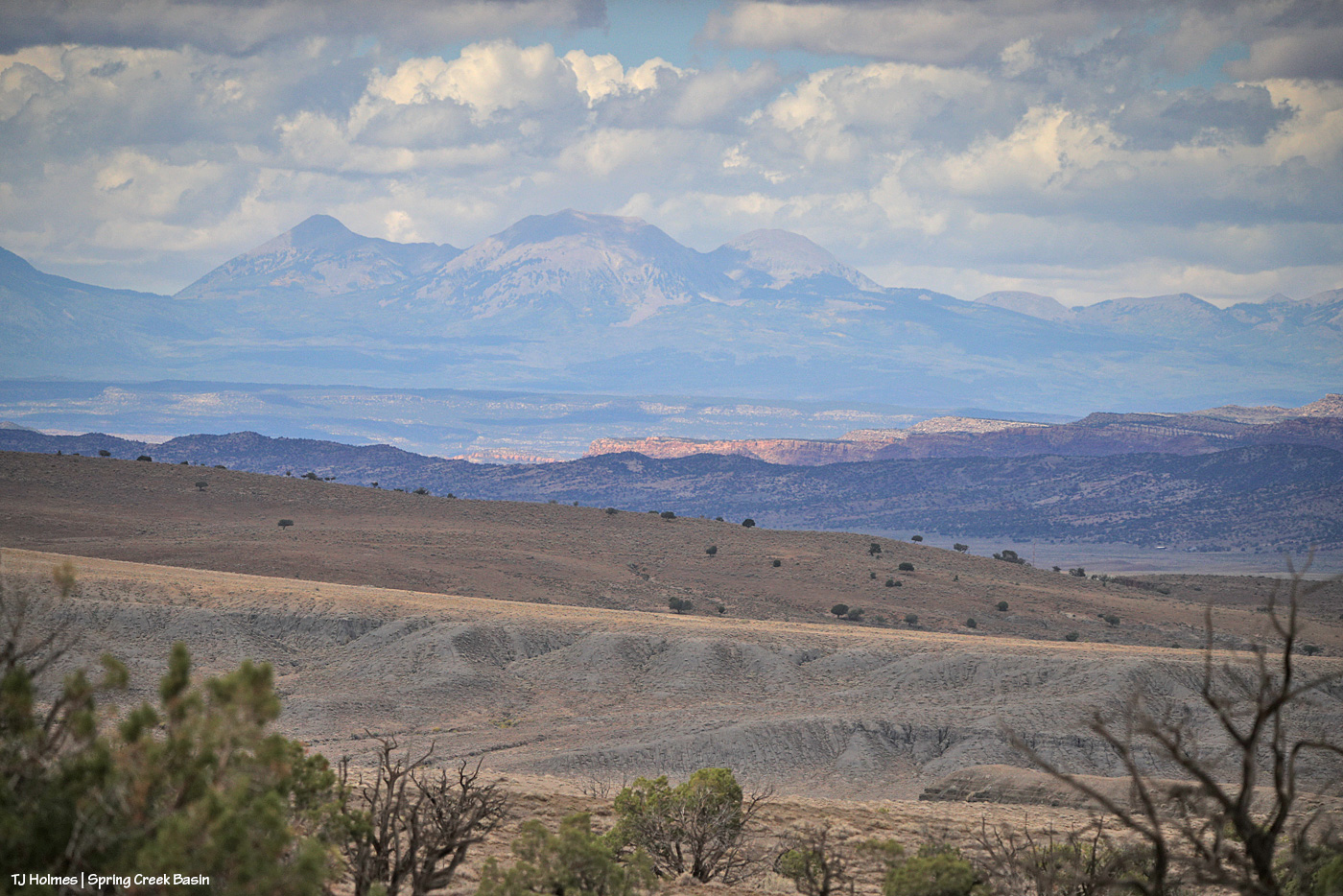
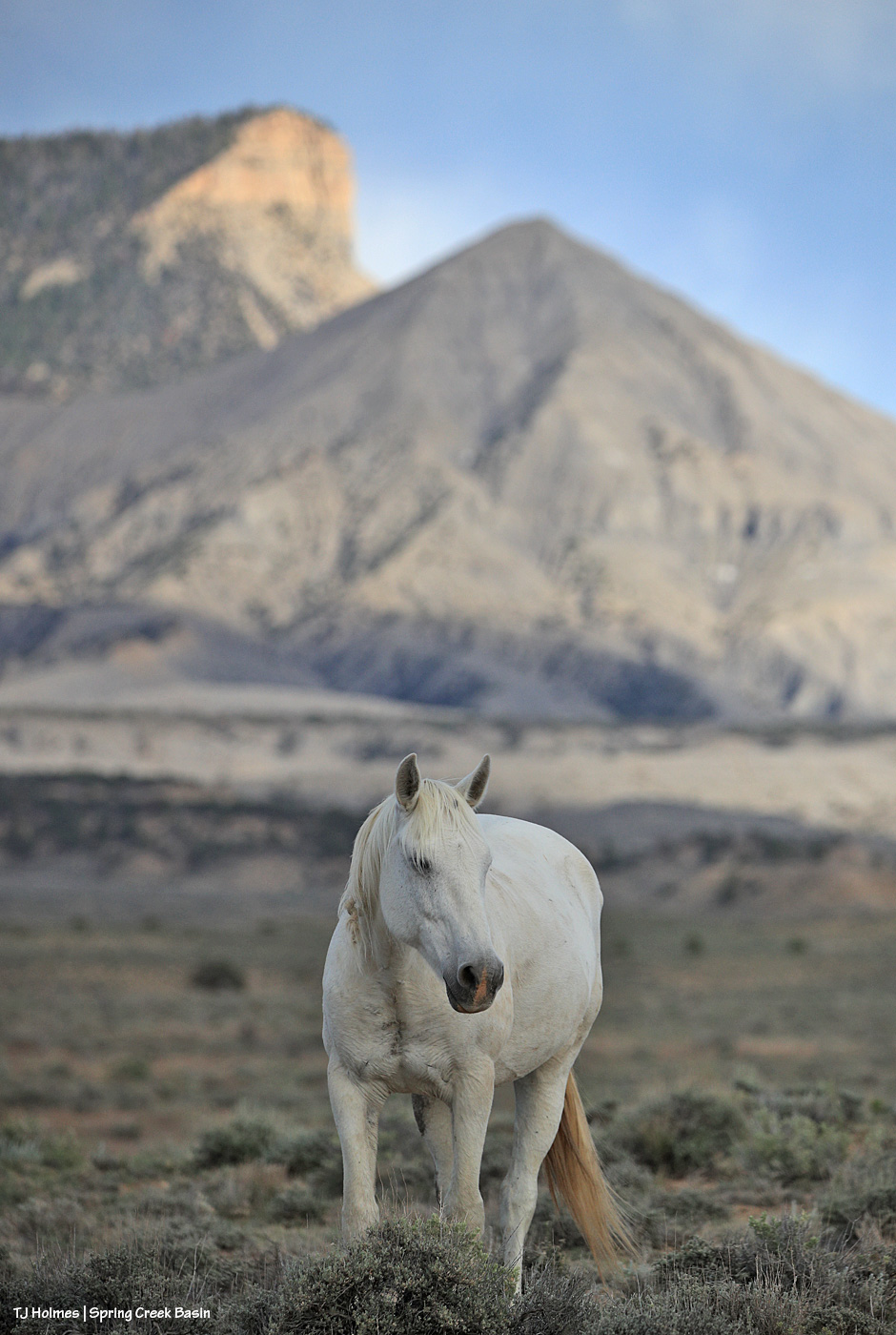
A proper toad-gagger across Disappointment Valley and across Spring Creek Basin. Zoom in above to see rain drops. … This, pictured, was NOT the toad-gagger; that happened much earlier (before daylight). This was the third or fourth wave. A non-stop symphony of thunder banging the drums across the sky, and it was … *magnificent*.

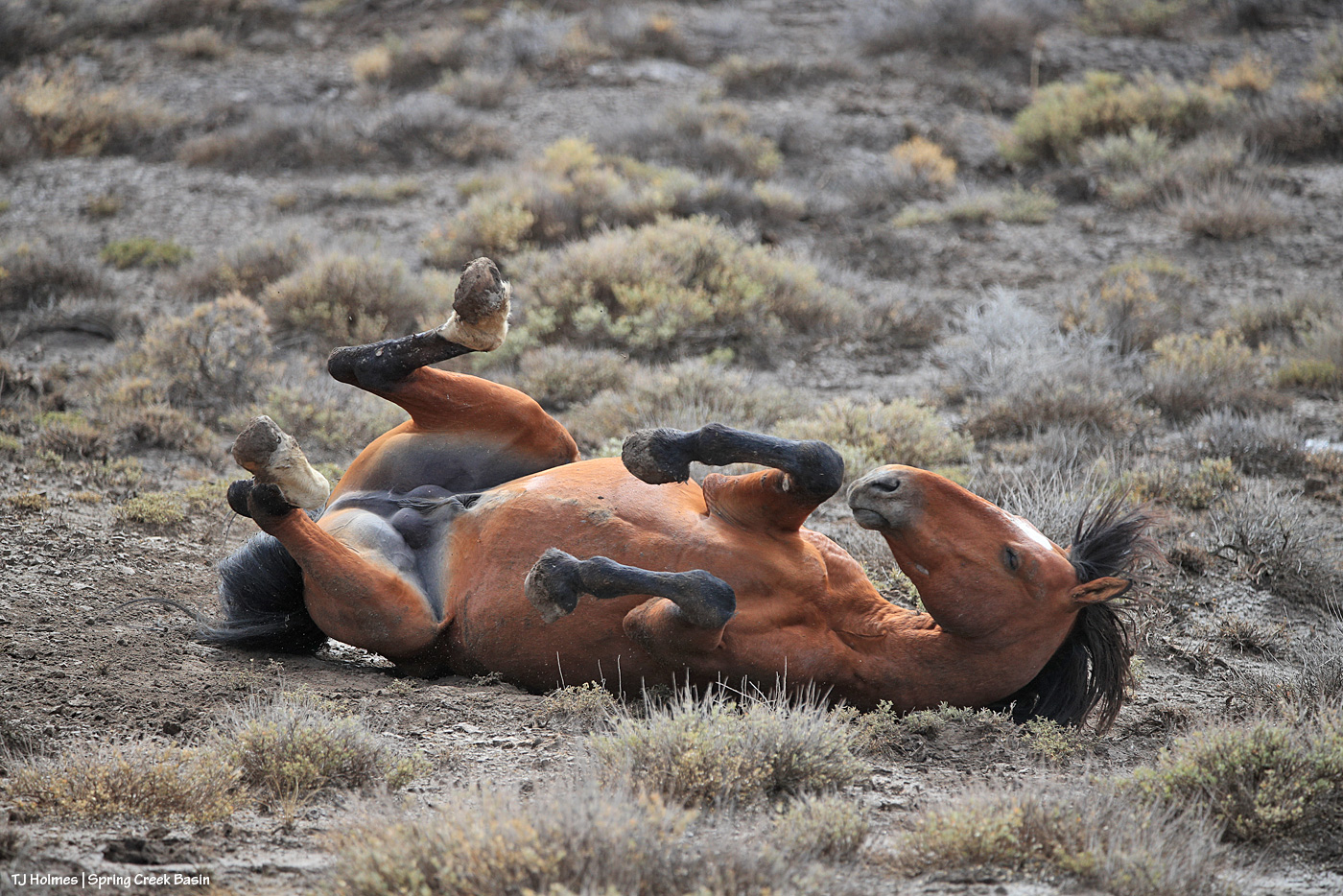
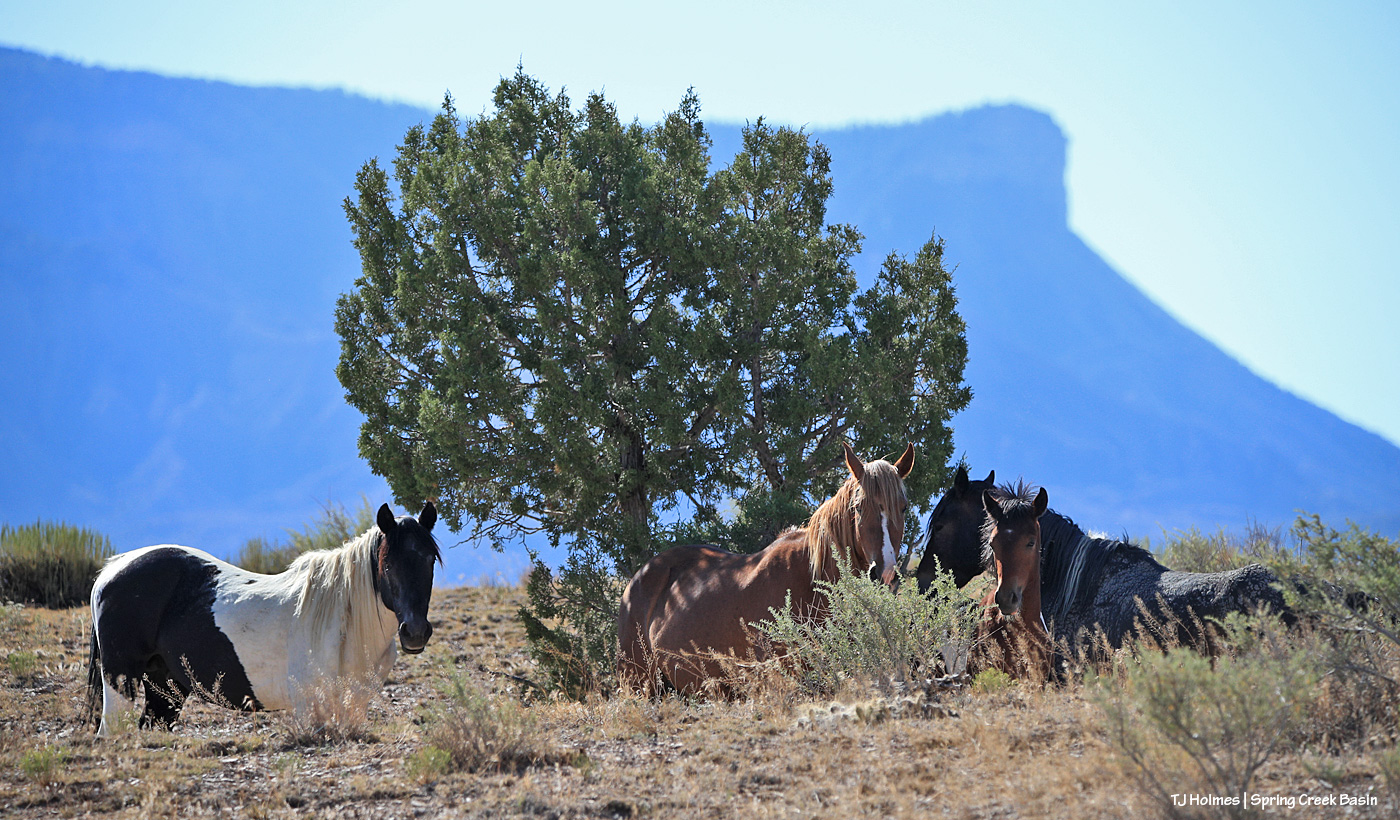
THE best thing to do after getting rained on? Roll! Almost all the horses rolled when the rain stopped and they wandered out to resume browsing.

Ahhhh. Fresh.

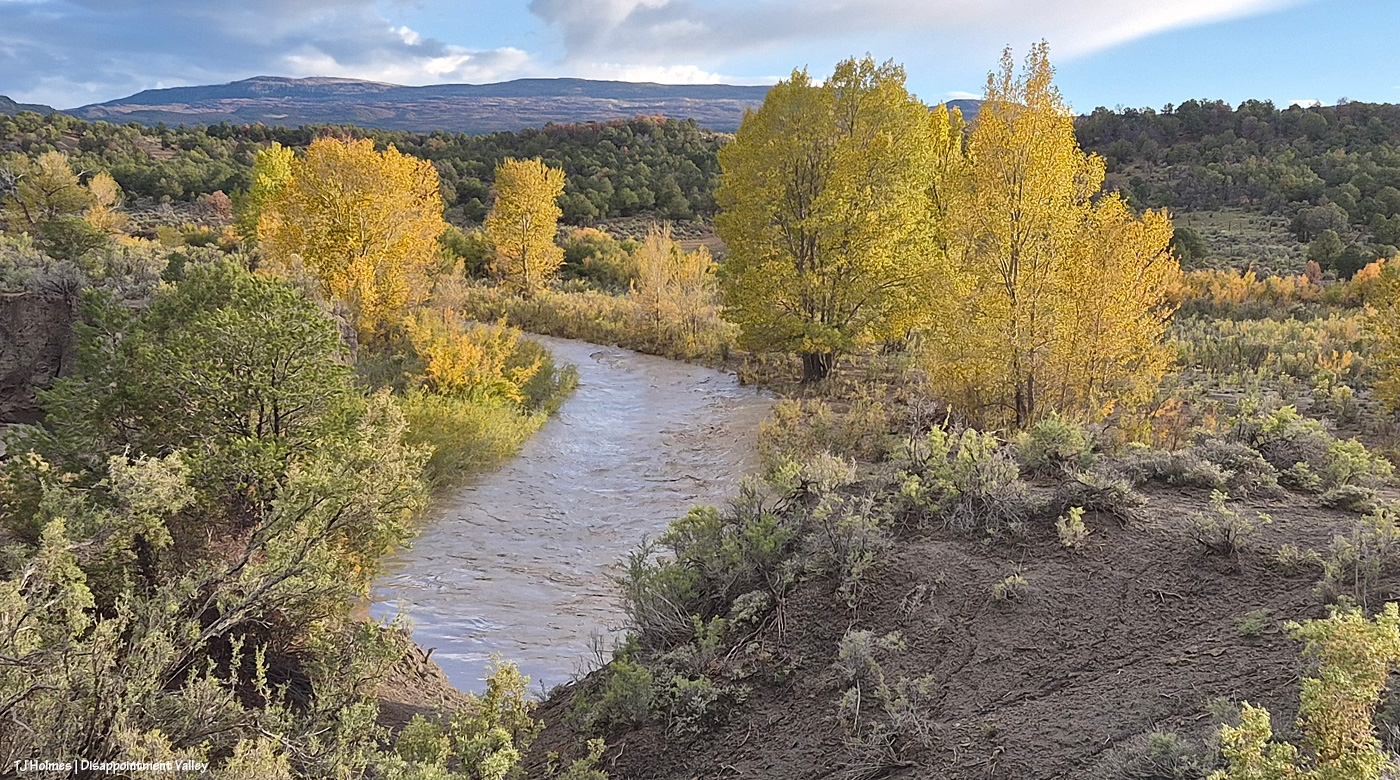
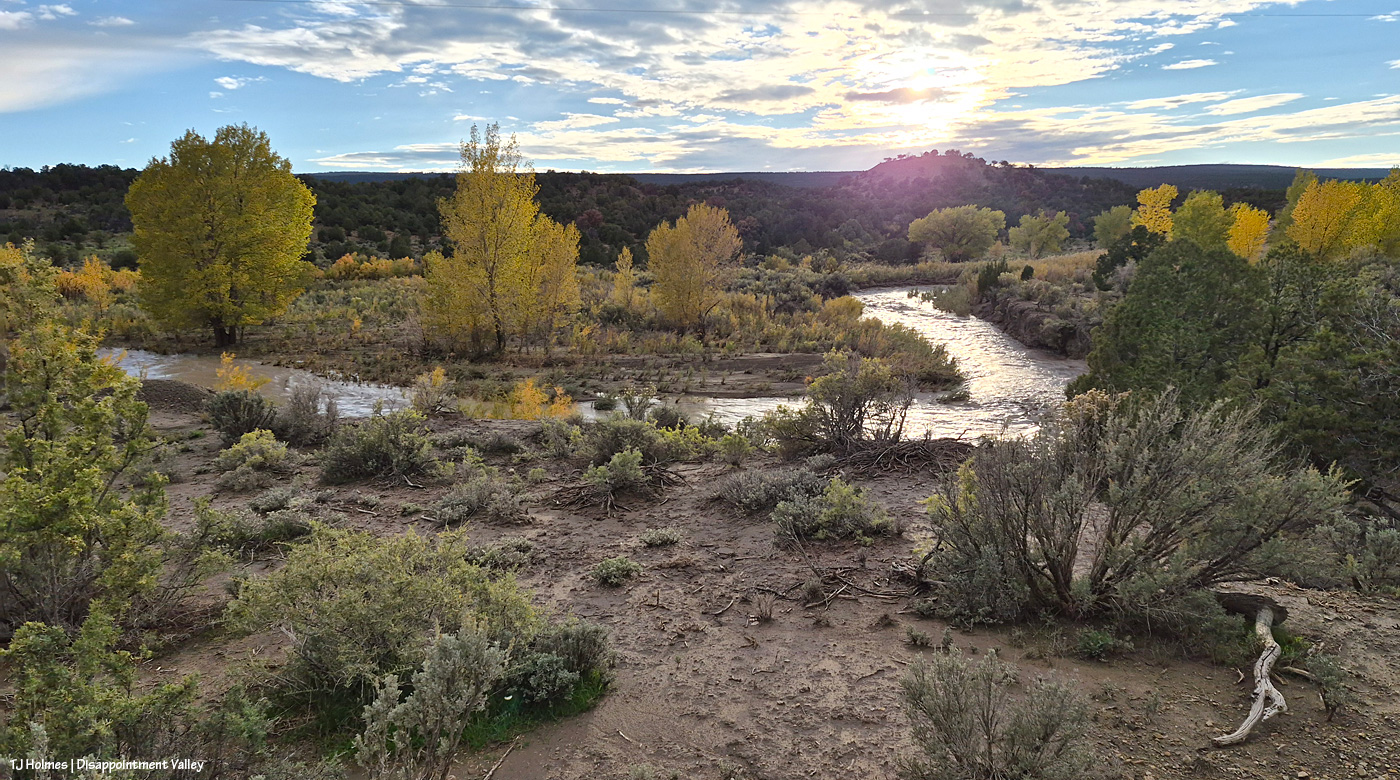
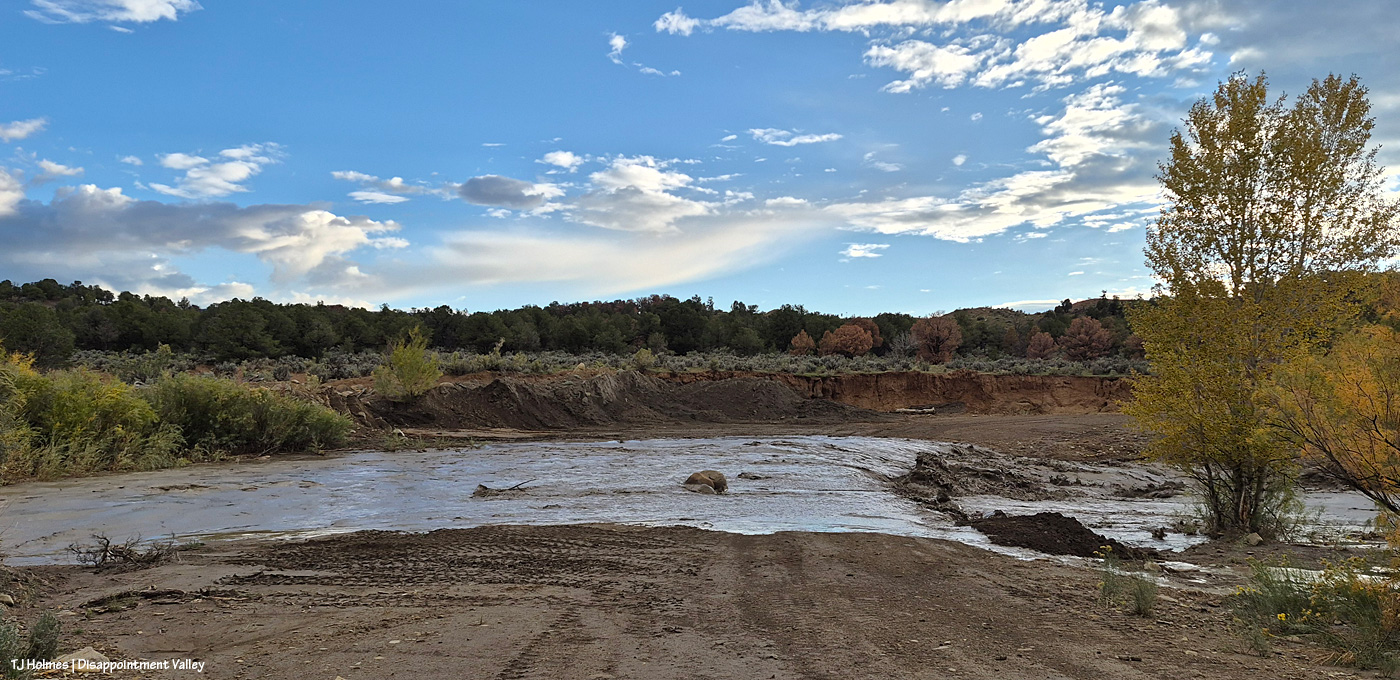
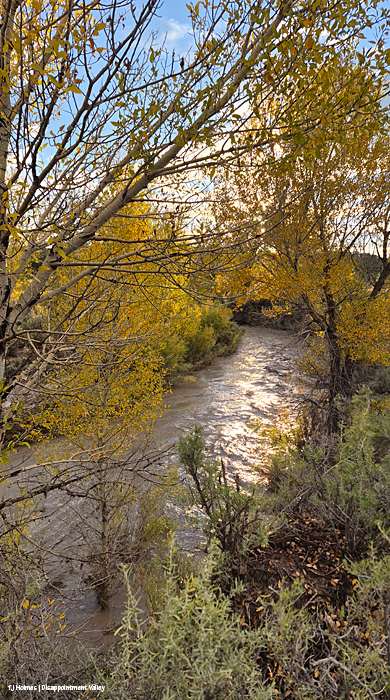
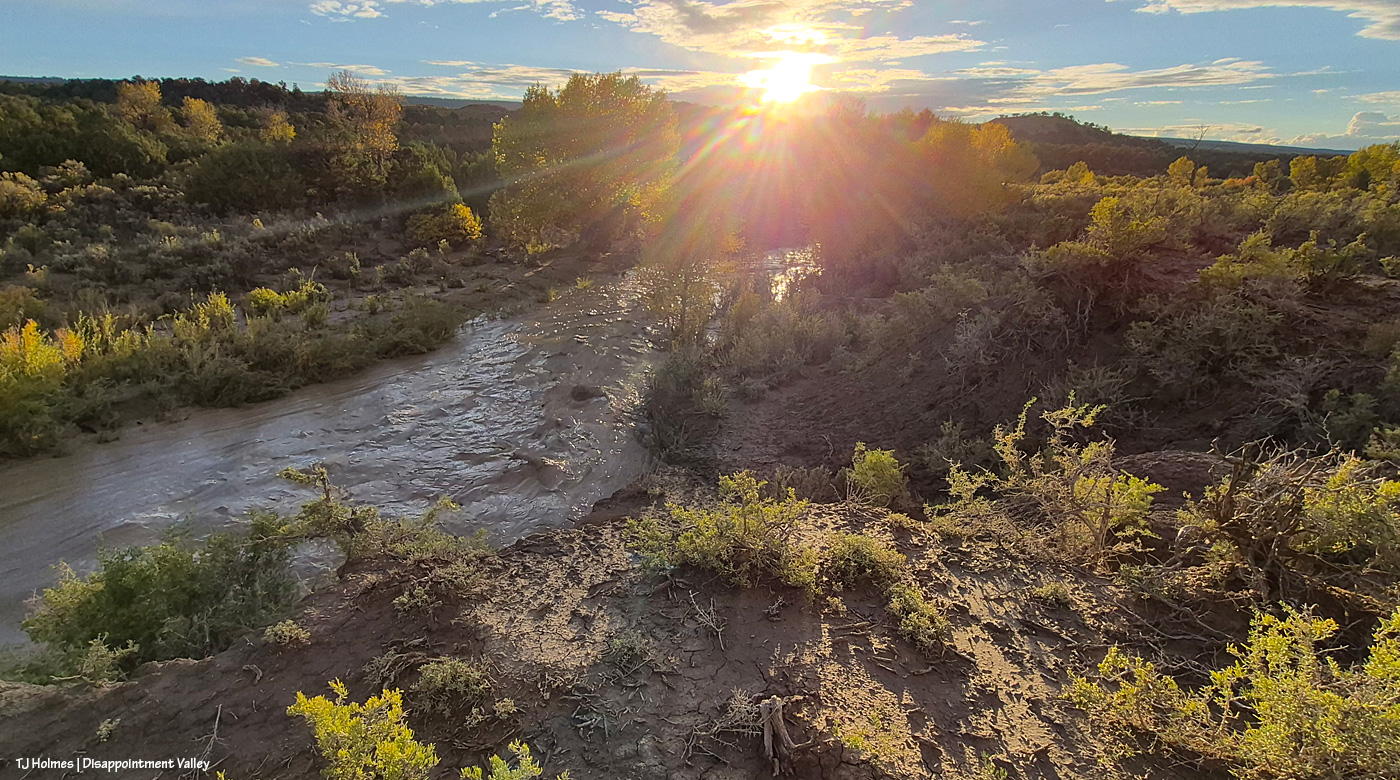
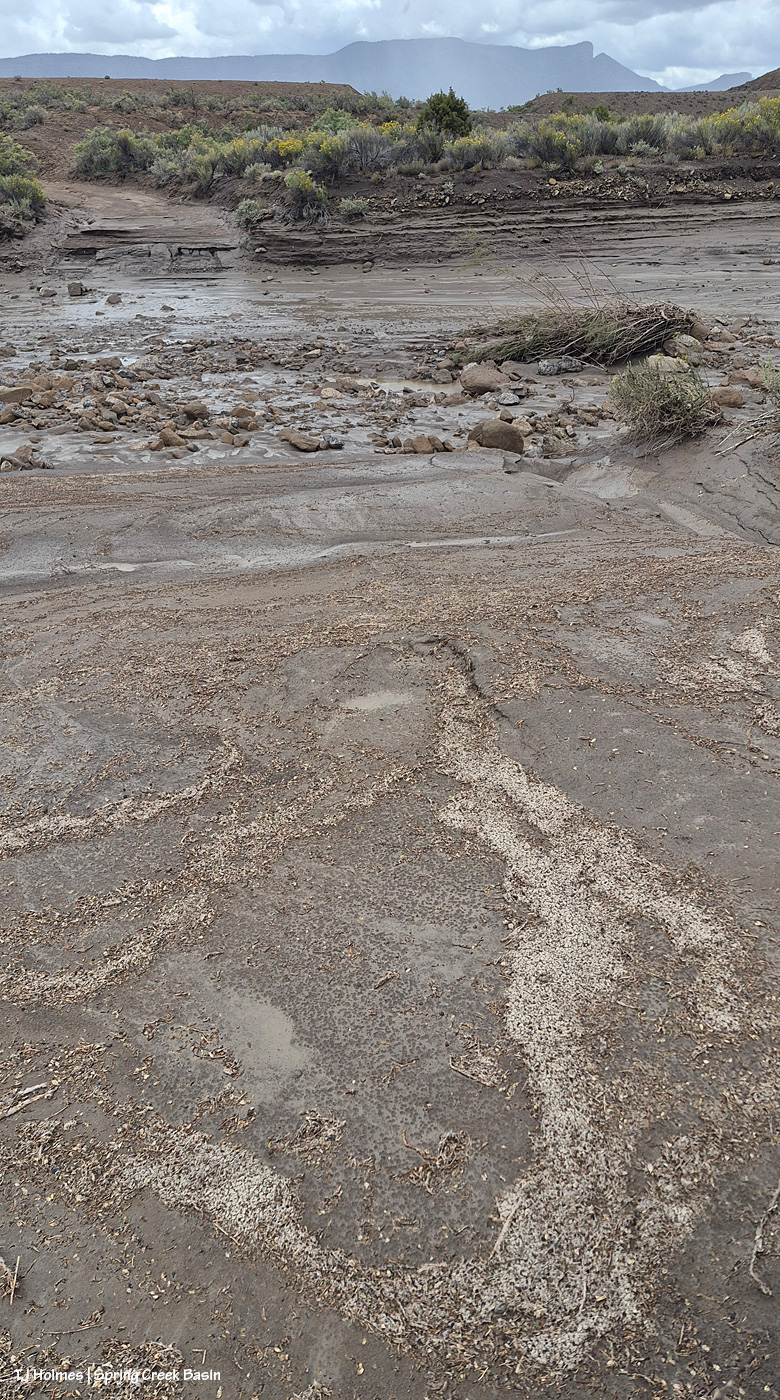
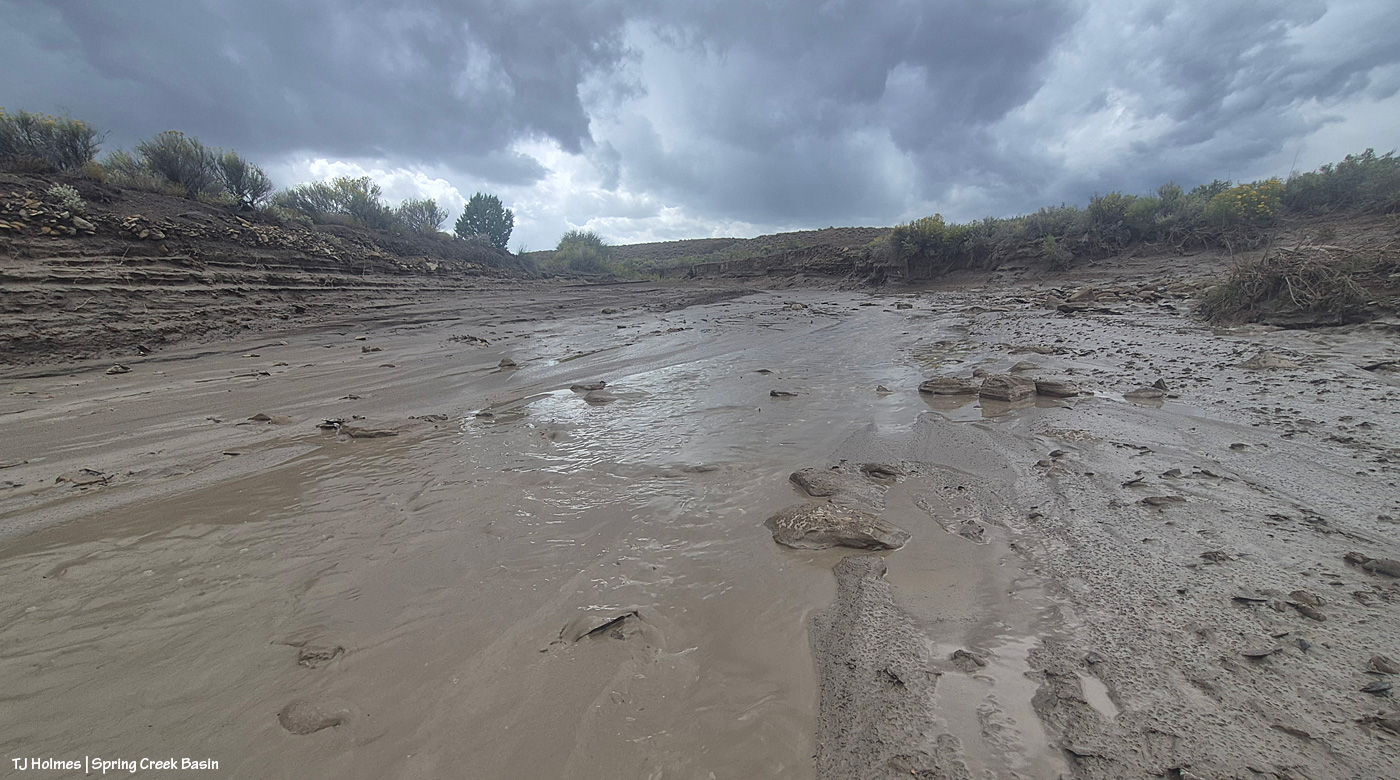
Spring Creek was still running, though low, at the first crossing, but clearly it had run high! By the time I got there, the water definitely was slowing. I’d gone first to where Spring Creek runs under Road 19Q (Disappointment Road), before I went to Spring Creek Basin, and it was rolling along then and there like a proper creek).

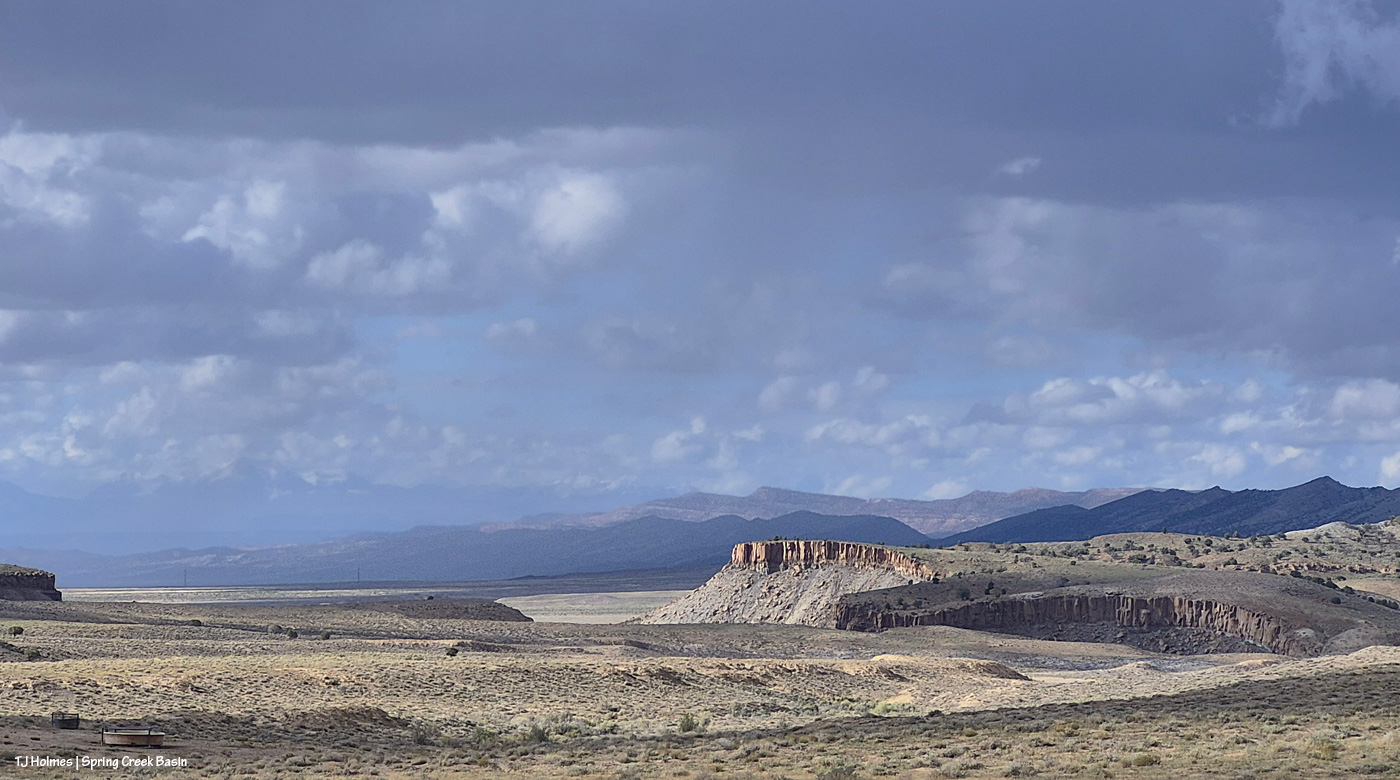
Toad’s-eye view of Spring Creek looking upstream. That sky brought the next wave of rain – and thunder rolls.

Absolutely, absolutely fabulous. 🙂 And the forecast is looking extra promising this week (as long as said forecast proves accurate and doesn’t just bomb, as it has so often this year). Dance, pray and cross everything for us. 🙂
**********

In other news, some of you may remember that I was a member of the Colorado Wild Horse Working Group a couple of years ago. That group was created by Senate Bill 23-275 (2023) as part of the Wild Horse Project to enable the state to provide support to BLM’s management of wild horses in Colorado. A second bill, House Bill 25-1283 (2025), created a program for wild horses within the Colorado Department of Agriculture, along with an advisory committee for that program. I’m now a member of this new committee.

The first bill came with $1.5 million, much of which was granted to Colorado’s boots-on-the-ground advocacy groups for range-improvement projects and fertility-control support. The second bill comes with no funding. Earlier this year, the Colorado Legislature approved a new license plate design, to join the 270 (!) current designs, to funnel funding to the state’s new wild horse program for further on-range fertility-control support as well as off-range (post-roundup) support of Colorado mustangs and adopters.

CDA has just released a survey with several license plate designs, and you, the public, are encouraged to vote for your favorite. As stated, if you participate in the survey, think about this: “Which design will help sell the most plates” … to offer the most financial support. Colorado’s campaign for wolf-related license plates – “Born to be Wild” – apparently generated around $1 million in its first year.

If you’re so inclined, please follow this link to get to the survey to vote for plates and describe what you like and don’t about each plate. Keep in mind that visibility and identifying *wild* horses as the subject are the main goals in order to encourage people to buy these plates for their vehicles to help support Colorado’s wild horses.

And if you’re a vehicle-driving Coloradan, the plates likely will be available next year.

Thank you!


9/11

11 09 2026

Never forget.

We are better united.


Bats, baby!

5 09 2026

Surveying bats by sound isn’t what most people would think of as exciting.

You hike out, put up a pole, do some techy stuff, lock the box and hide the wires from mouthy varmints and curious critters, and that’s it. You don’t actually SEE the bats (nocturnal/crepuscular as they are).

Ha! Those are the mechanics of it, but what BLM biologists and other biologists and scientists can learn from that type of little jaunt is SOOOOO cool!!

After BLM wildlife biologist Bridget Frederick returns for the pole and things, she’ll take the recording box back to the office and run it through the computer to find out what species of bats are fluttering around the night sky in that area of Spring Creek Basin (location mum to protect the ongoing coolness of future surveys). BLM folks have been monitoring this site since 2020, and altogether, Bridget (and other wildlife biologists?) monitors 21 sites across all of the half a million BLM acres in Southwest Colorado managed by Tres Rios Field Office. (And if you’re a BLM wildlife biologist who invited a recovering journalist along for the adventure (OK, OK, I may totally have invited myself along), you patiently (!) answer lots and lots of questions!)

She uses a program called “sonobat” to decipher the echolocation squeaks of the individual bats and identify the species of bats picked up by the recordings (like listening for and identifying the songs and calls and trills of birds), and it’s all part of the North American Bat Monitoring Program.

And you thought Spring Creek Basin was all about mustangs. 🙂

Hopefully I’ve done some work to dispel that notion, but I’m pretty sure I’ve never written about bats before! To know that we’re (Spring Creek Basin and Tres Rios) contributing to the overall knowledge of bats is just the sort of thing to make me giddy. Bridget said they’re basically surveying the overall population of bats in the area, including fluctuations in those populations because overall, bat numbers are declining, just like bees and songbirds. Part of that might be diminishing habitat, insecticides, challenges to migration corridors (just like with big mammal species like deer, elk and pronghorns) and a particular challenge: white-nose syndrome. That’s a deadly fungal disease affecting hibernating bats in North America, and NABat is tracking its devastating impacts across the continent. While BLM’ers and others haven’t found it particularly in our area, it has been found elsewhere in Colorado and in neighboring Utah.

As if The Colorado Sun knew I was just about to post about bats, it ran this article yesterday: “Colorado’s bats live in surprising places. Biologists, and volunteer observers, are trying to find them; From abandoned mines to high mountain slopes, biologists and volunteers with Colorado Bat Watch are searching for bats to better understand their populations as white-nose syndrome spreads.” Check it out; maybe it will inspire you to join a “bat watch” group in your area.

Bridget sent this about the multitude of different species they’ve heard in the last six years in that part of Spring Creek Basin:

Here is a list of bats that we have recorded at the site in Spring Creek Basin. We started this site in 2020:

Myotis californicus (MYCA | California bat)
Parastrellus hesperus (PAHE | Canyon bat)
Tadarida brasiliensis (TABR | Brazilian free-tailed bat)
Eptesicus fuscus (EPFU | Big brown bat)
Myotis ciliolabrum (MYCI | Western small-footed bat)
Idionycteris phyllotis (IDPH | Allen’s big-eared bat)
Lasionycteris noctivagans (LANO | Silver-haired bat)
Myotis yumanensis (MYYU | Yuma bat )
Myotis evotis (MYEV | Western long-eared bat)
Myotis thysanodes (MYTH | Fringed bat)

Can you even believe all those different species of bats? As anyone who has visited and been subjected to the dreaded gnats and biting flies can attest, we (should) love bats!

Before we go any further, I won’t hear a negative thing about bats because bats are bazinga-cool! (What’s a Batman reference?) Honestly, humans should be doing as much for bats as for butterflies and bees and cuddlier things (ha!). Other than the moon, I’m not real great at photographing things in the dark, but wow, I’d love to catch sight – and a photo – of any kind of bat. If I was confident it wouldn’t be messed with, I’d love to put a trail cam up at the water-catchment trough not too far away. Wouldn’t it be cool to see what critters use it other than the mustangs?

More from Bridget:

“Yes, that is the total list of bats that we have confirmed over the years at that site. It does vary a bit year by year what bats are detected. … We leave the detector up at least 4 nights, but sometimes longer because of weather or road conditions. We have 2 to 3 detectors out at the same time. This is the only site in Spring Creek Basin that we sample. We have 21 sites that we sample across TRFO …”

Now let’s join Bridget for our little excursion!

Off we go! The siting of the bat pole in the location where she places it pre-dates the water catchment, which was built by Mike Jensen, Garth Nelson, Daniel Chavez, Jim Siscoe and me in 2021. Just like we saw with the little bird friend drinking with the mustangs there, I hope it has encouraged use by bats! As Bridget said, the bats are likely to be drawn to the water just as much as the insects, their prey.

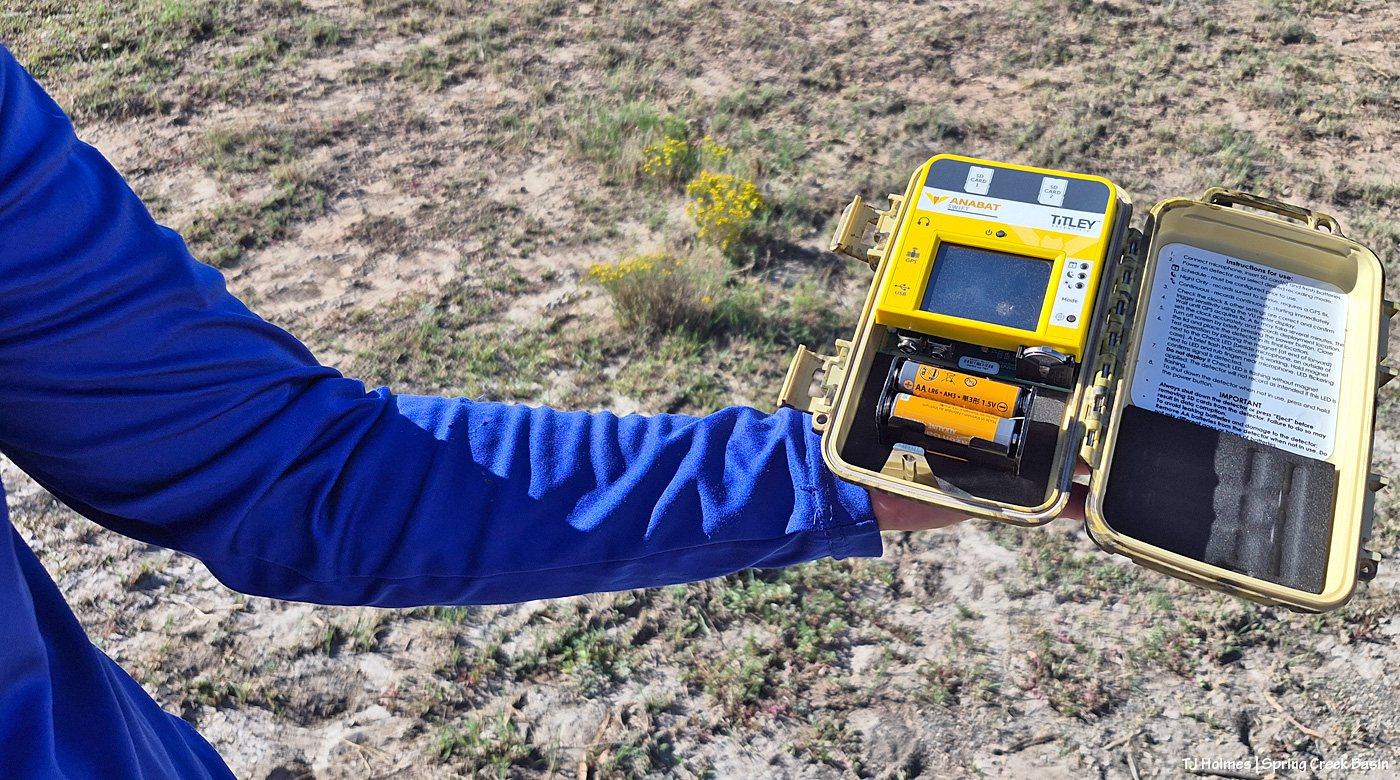
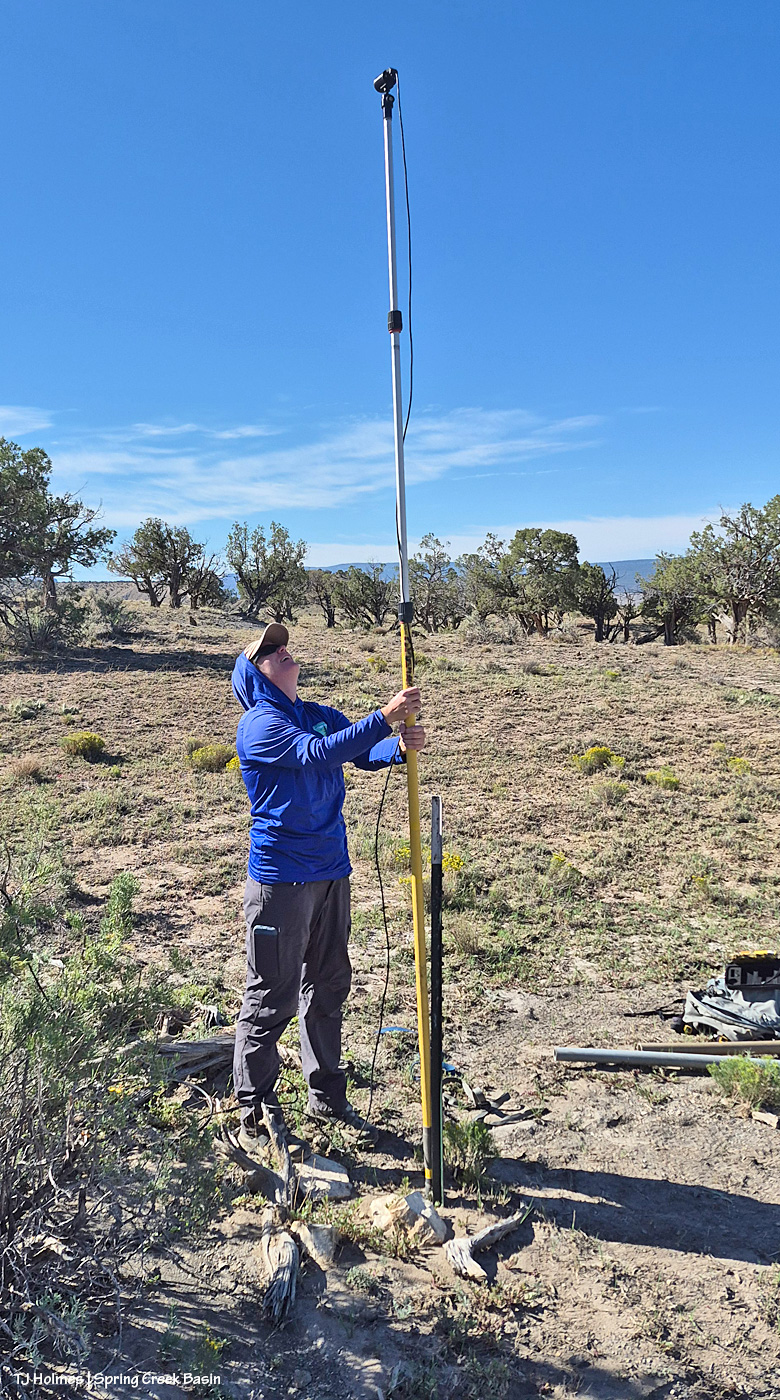
Nope, not a trail camera but a bat listener! I think it will catch the sounds of anything, and she can set it to listen at particular times. For the bats, which are the particular goal at this site, it’s set to record between sunset and sunrise. (I mean, how cool to listen to the quiet sounds of the night in what has to be one of the quietest places anywhere!)

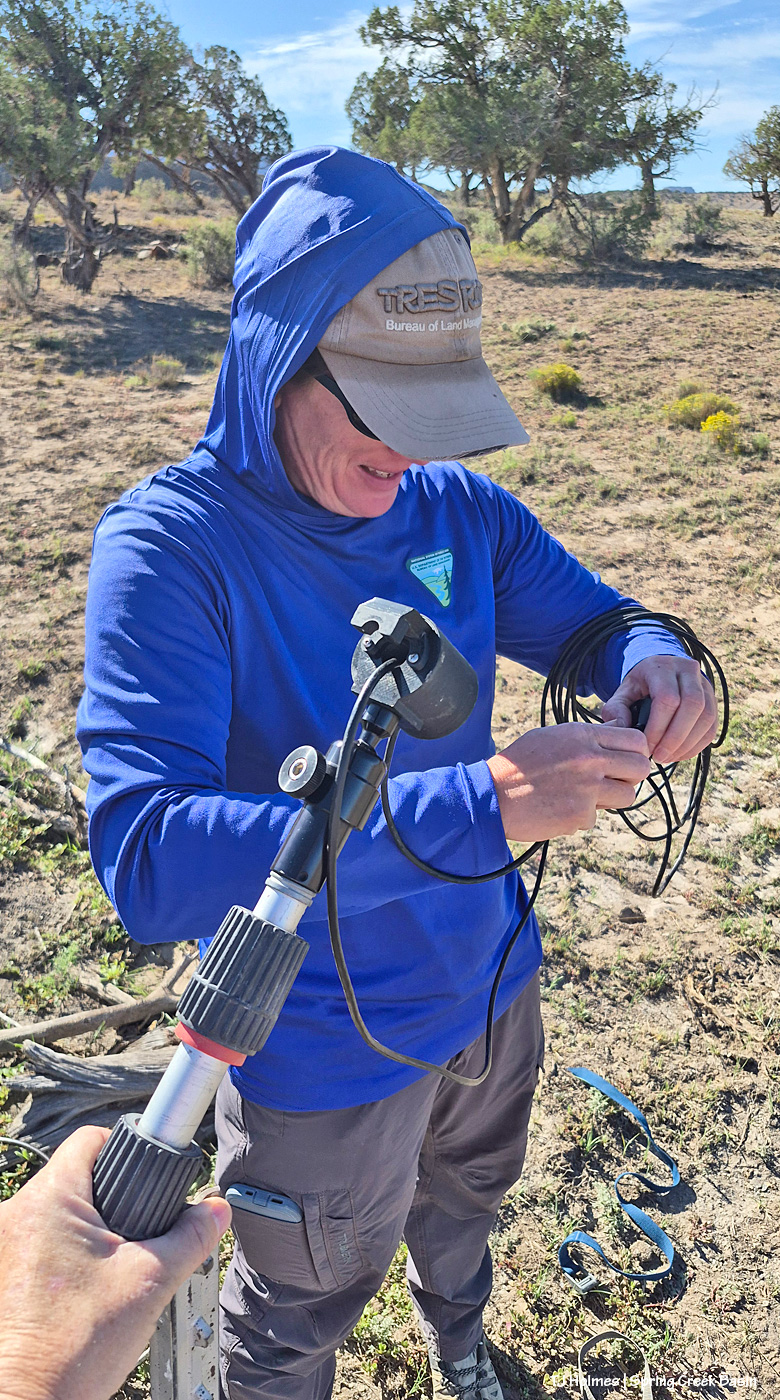
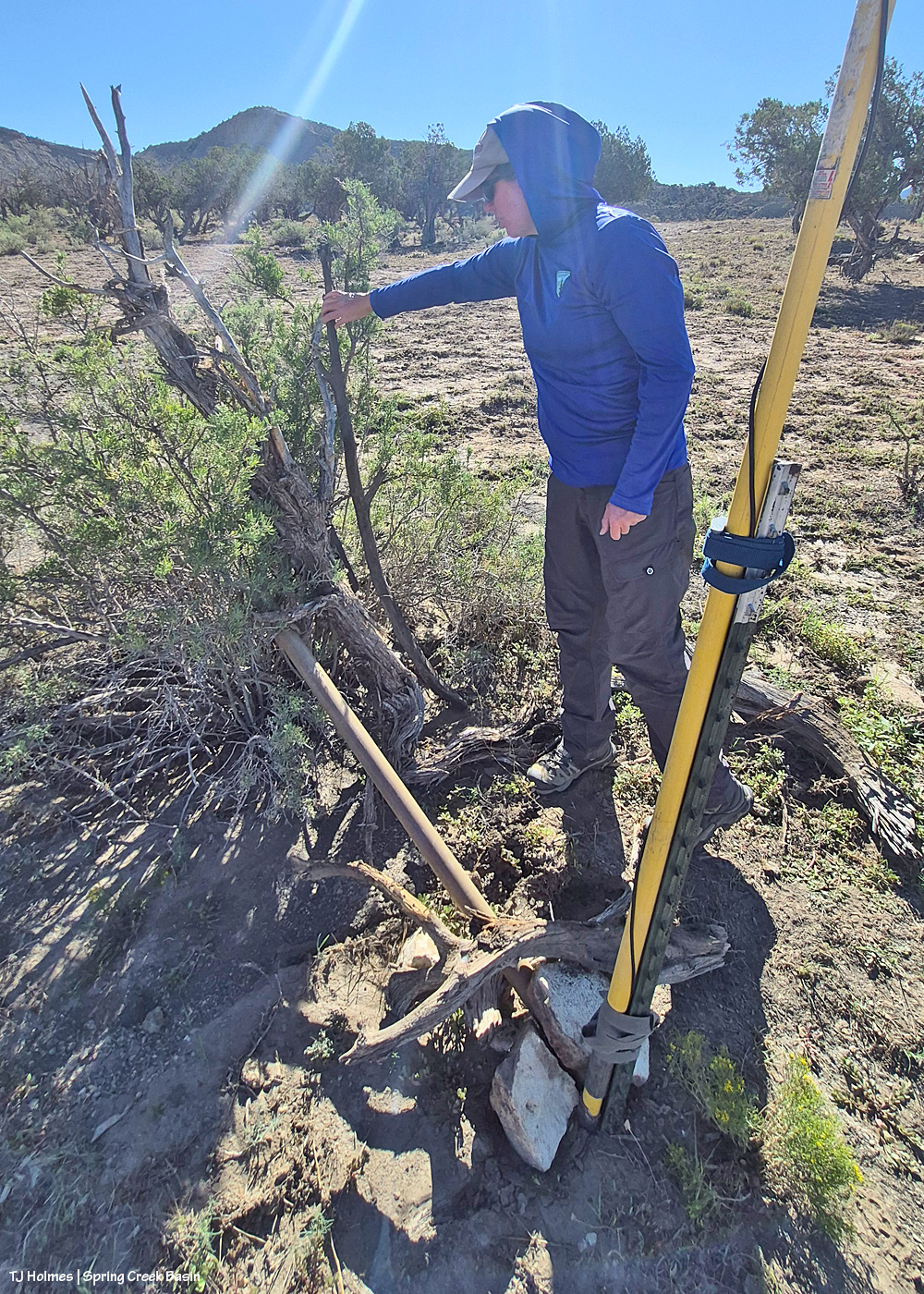
I got to hold the bat pole (!) while Bridget threaded the microphone and cord through the bit on the top (that’s what collects the sounds) and then the other little part that will plug into the listening box.

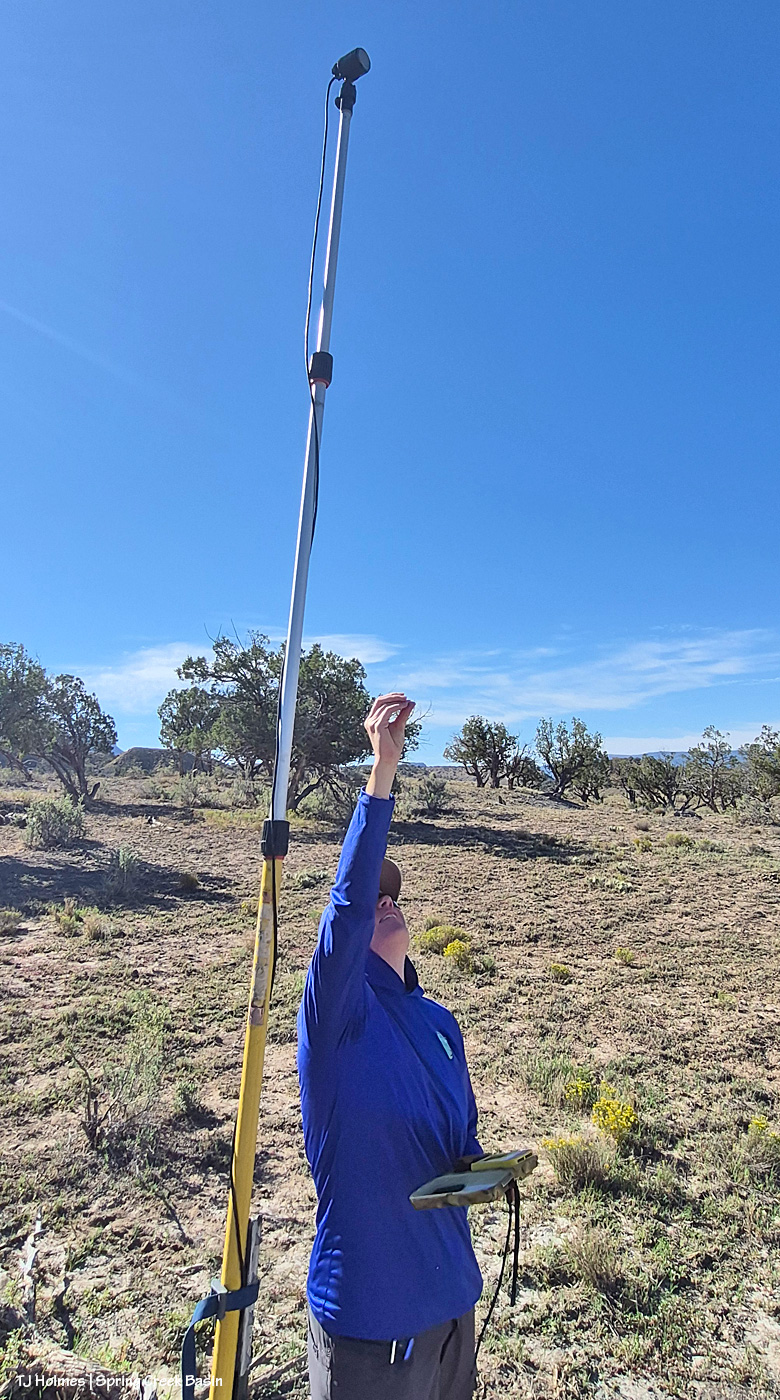
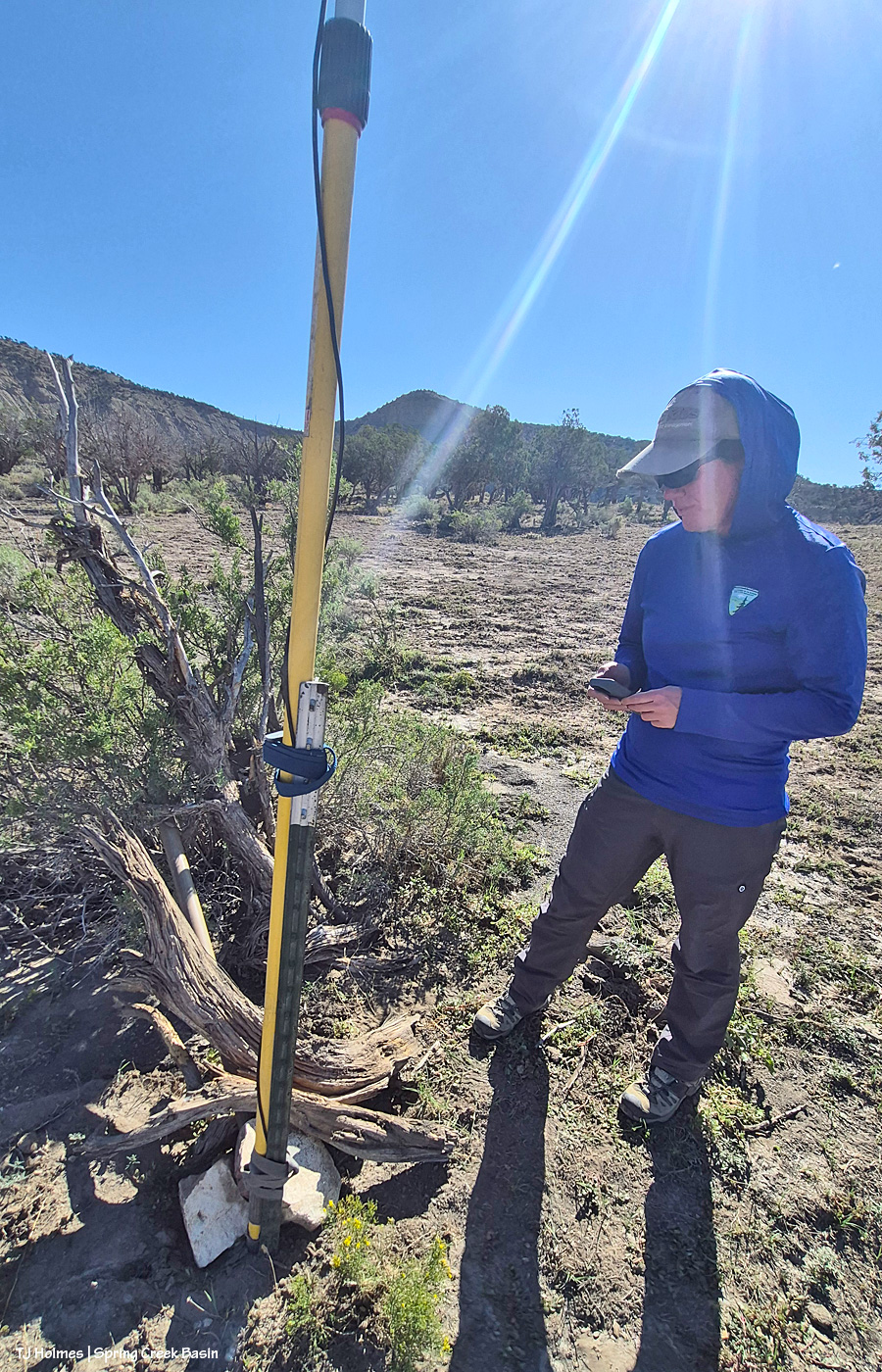
And it’s up! It extends between those black parts, much like the legs of a (really tall!) monopod.

Bridget sets the pole so the microphone – the part at the very top – is that what you call it? it’s not delivering sound but gathering it in! – is facing the big open area. Here, she’s testing to make sure it’s picking up sound.

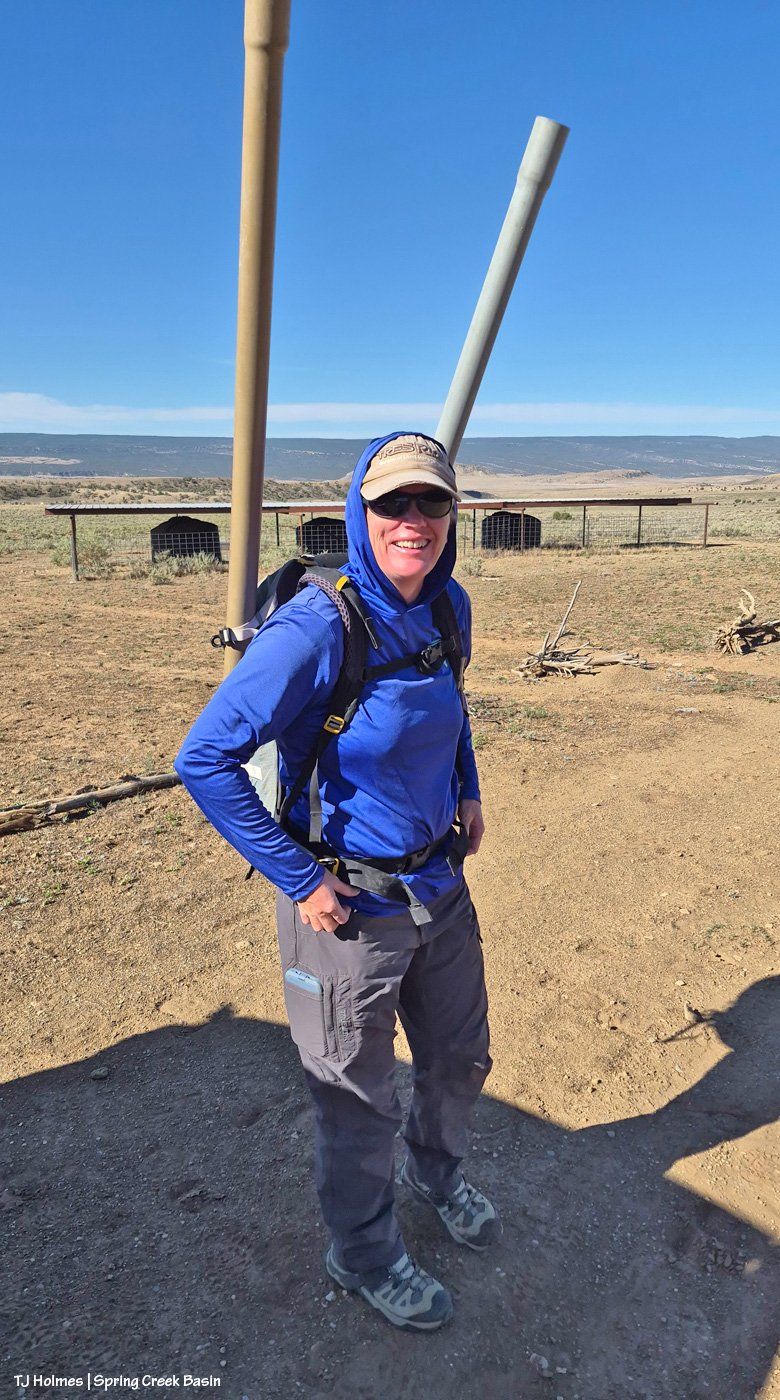
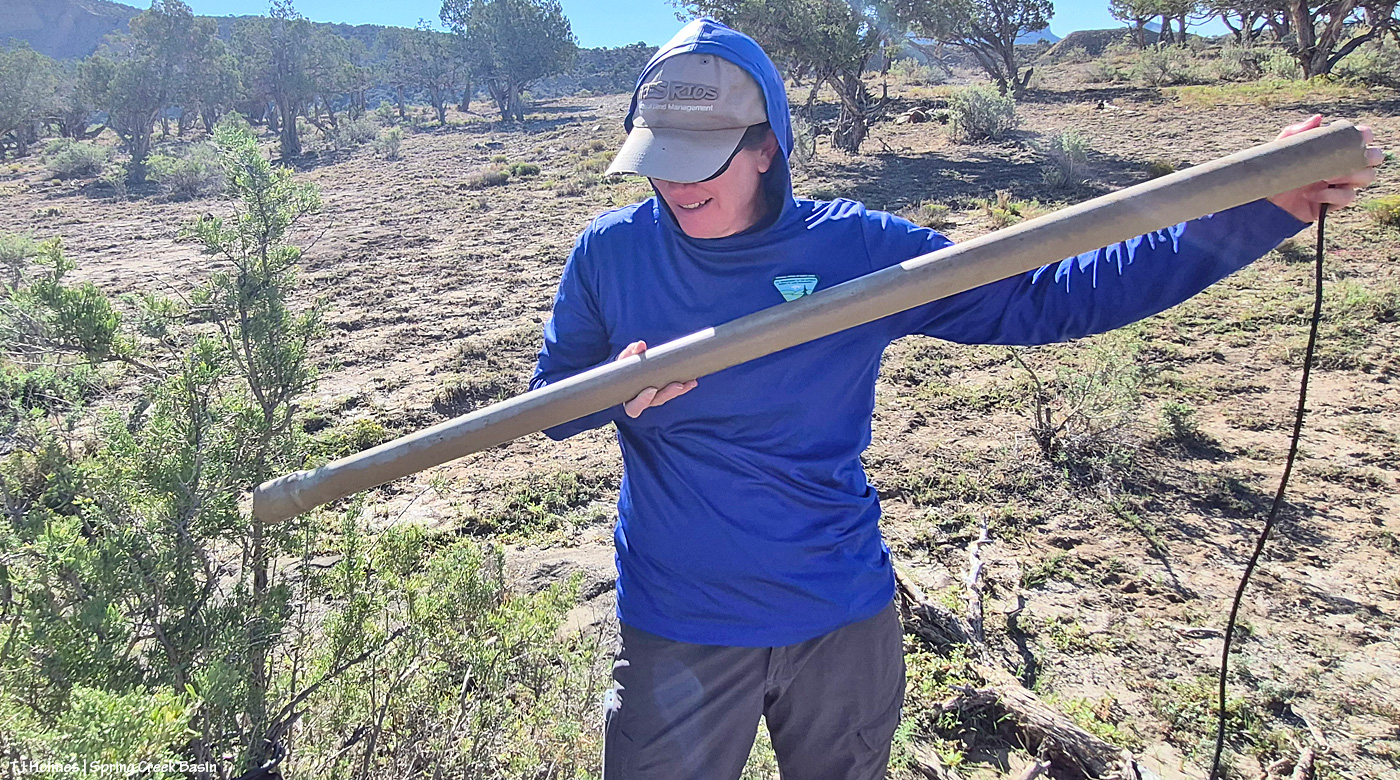
Did you wonder about the PVC pieces Bridget was carrying in the first pic? She runs the cord from the microphone down along the bat pole and then through the PVC piece (and possibly a second one, depending on distance to where she stashes the listening box) to deter curious critters and mouthy varmints! If you don’t already know, mustangs – and chipmunks and ravens and a variety of other wildlife – can be VERY curious critters. 🙂

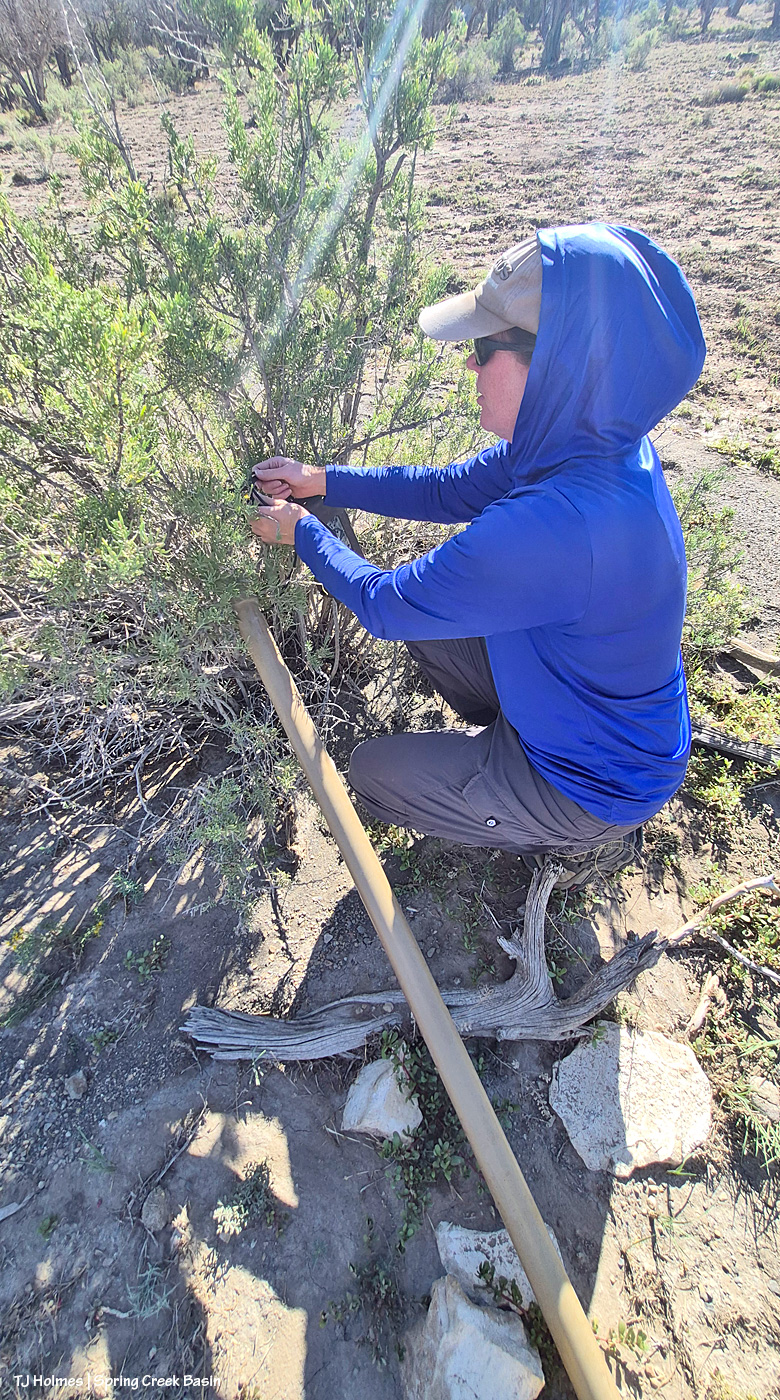
Then she coils up the excess wire between the PVC and the listening box in the (in this case) handy greasewood before …

… camouflaging it to try to keep passing critters from noticing and investigating (because they will if they do).

One last check that it synced with her phone, and the bat pole was ready for the business of listening for bats (well, as soon as the sun set)!

Bridget has retrieved the pole by now (she sets them out for about four days on average), and she’ll be listening for the bat squeaks to tell her what kinds of bats have been fluttering around Spring Creek Basin’s night sky! I’ll try to follow up with her to learn what kinds of bats the pole’s microphone and box picked up and recorded this time.

I’m telling ya’ll: Any/all kinds of “-ology” you want to study can be found in Spring Creek Basin (and, really, all of America’s public lands, of course). BLM scientists like Bridget are out there adding to the knowledge base we have of even the smallest critters like bats, and I find that so incredibly fascinating!

If you have any questions for Bridget, ask them in the comments, and I’ll get them to her (and then get the answers back to you). I’ve learned so much from her … from all the BLM folks I’ve been lucky enough to work with here in Southwest Colorado!

(Perk: Yes, we DID see mustangs on our way to place and leave the bat pole! And I’m pretty sure she and her partner for the retrieval saw more when they picked it up. 🙂 )


Makin’ it work

7 08 2026

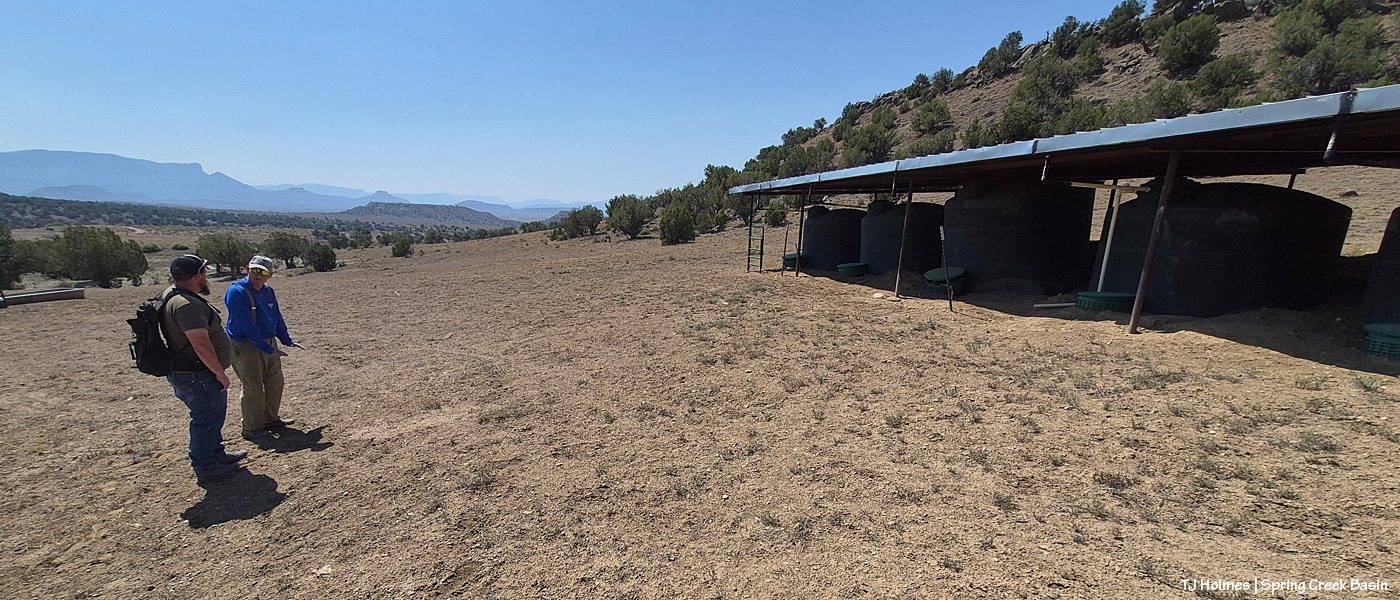
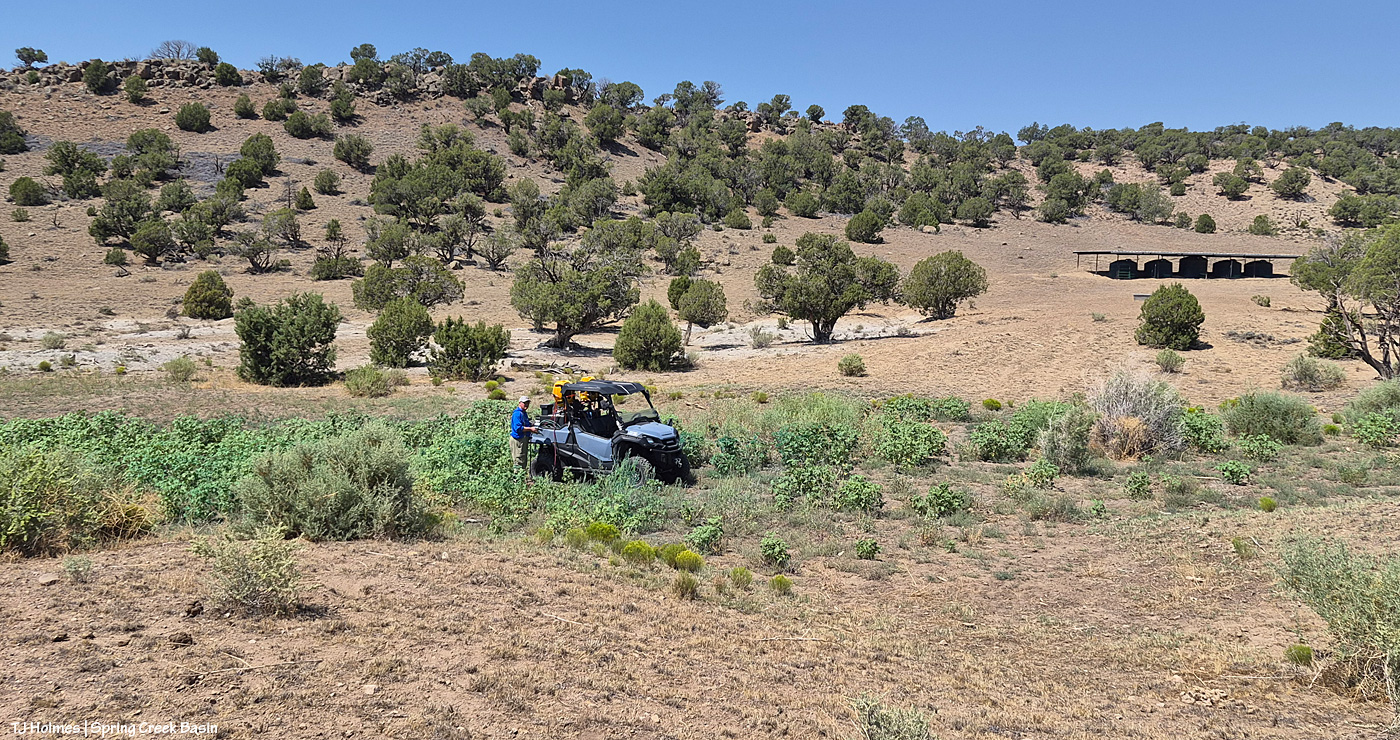
Mid-week in Spring Creek Basin, early morning to beat the 100-degree afternoon temps, a couple of *my* BLM guys gathered with me for some fixin’s. Not food; water-related.

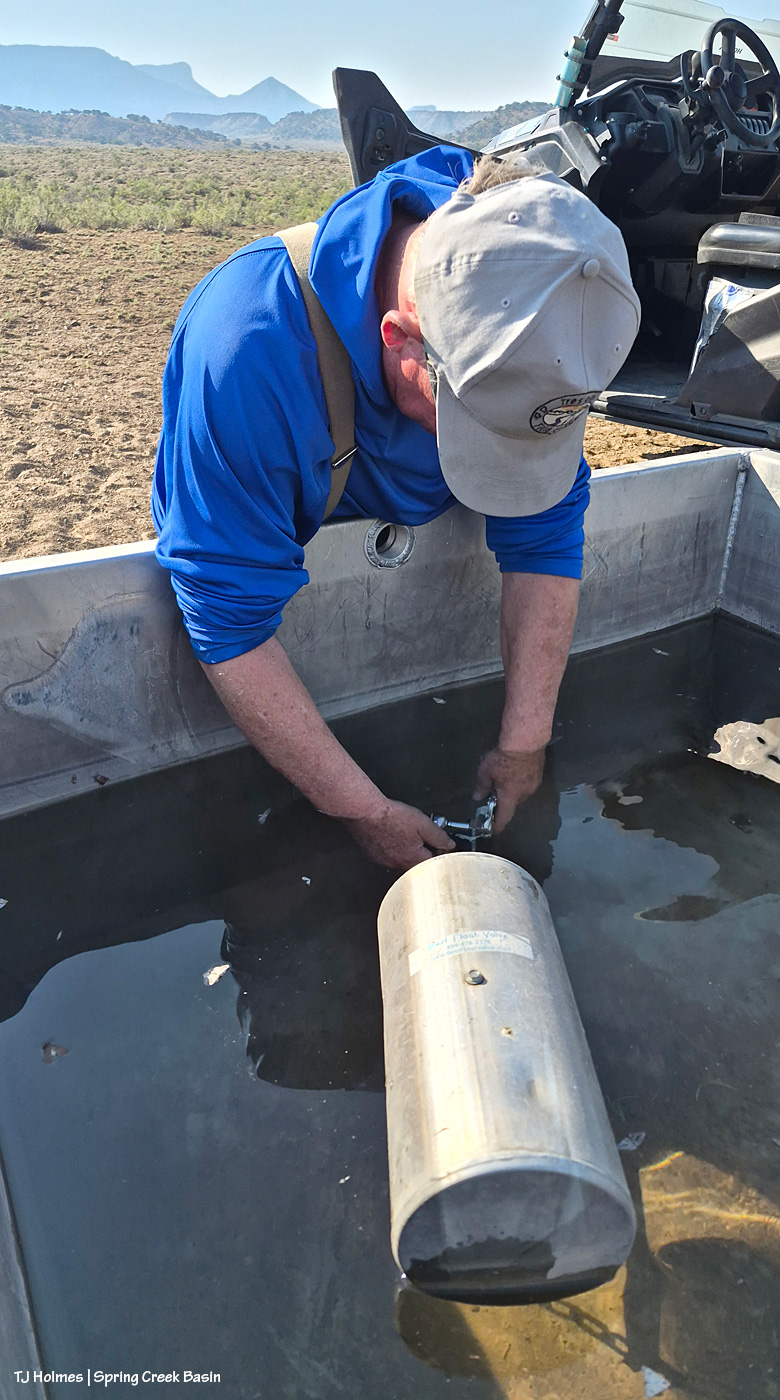
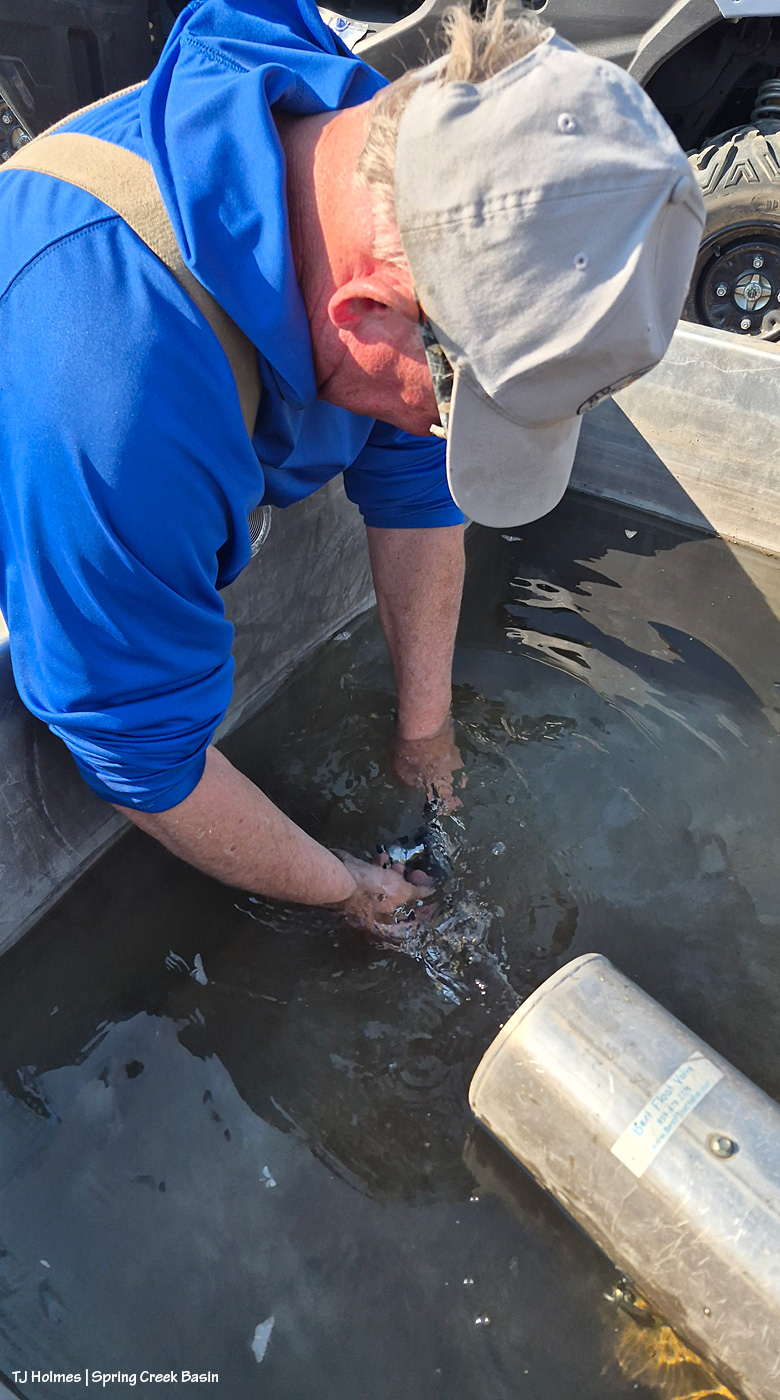
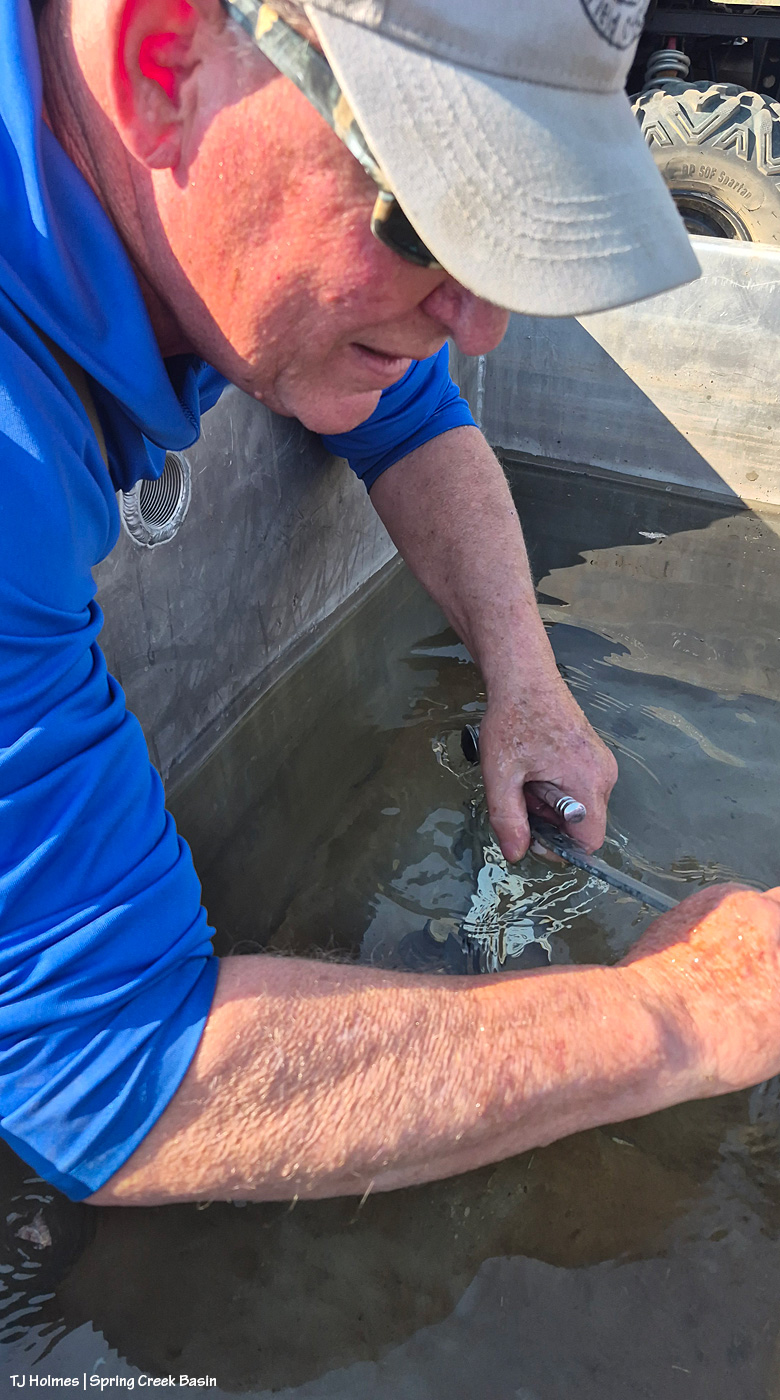
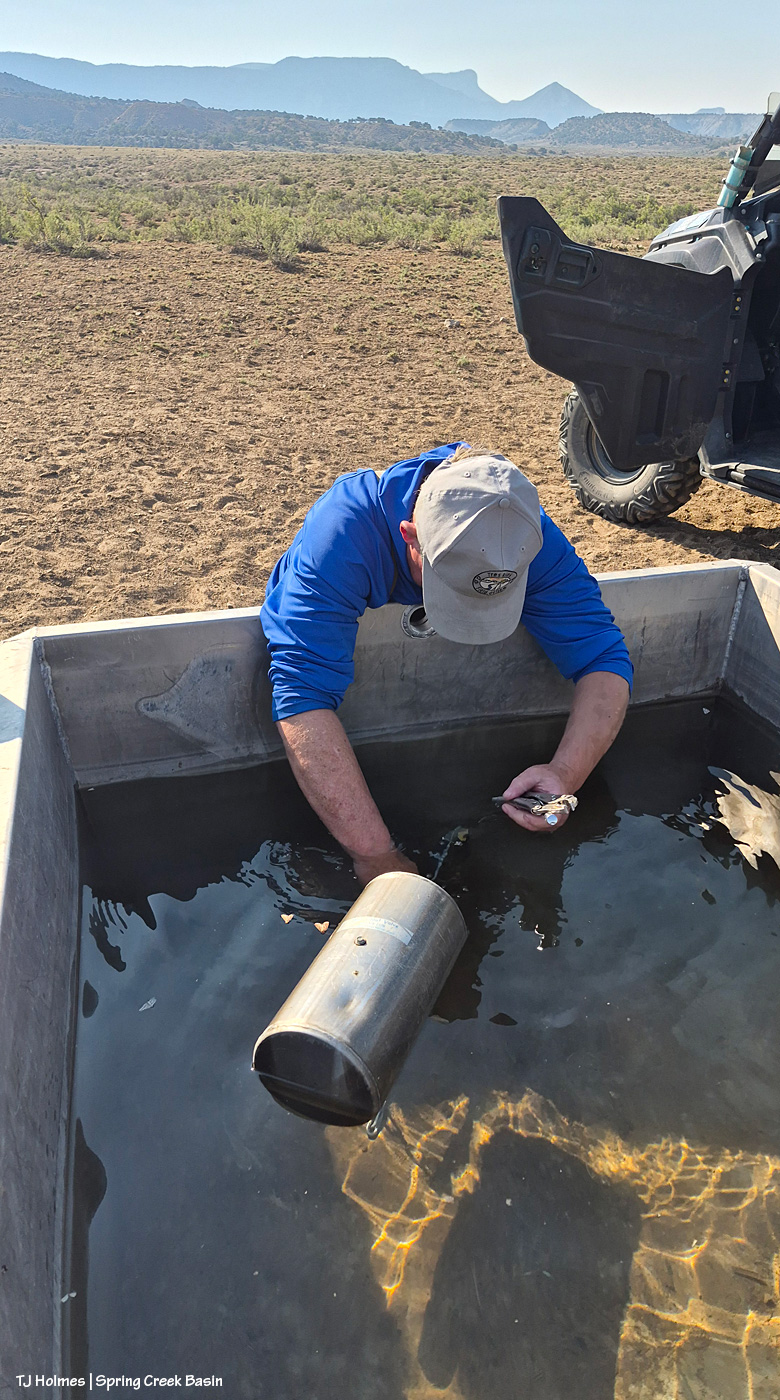
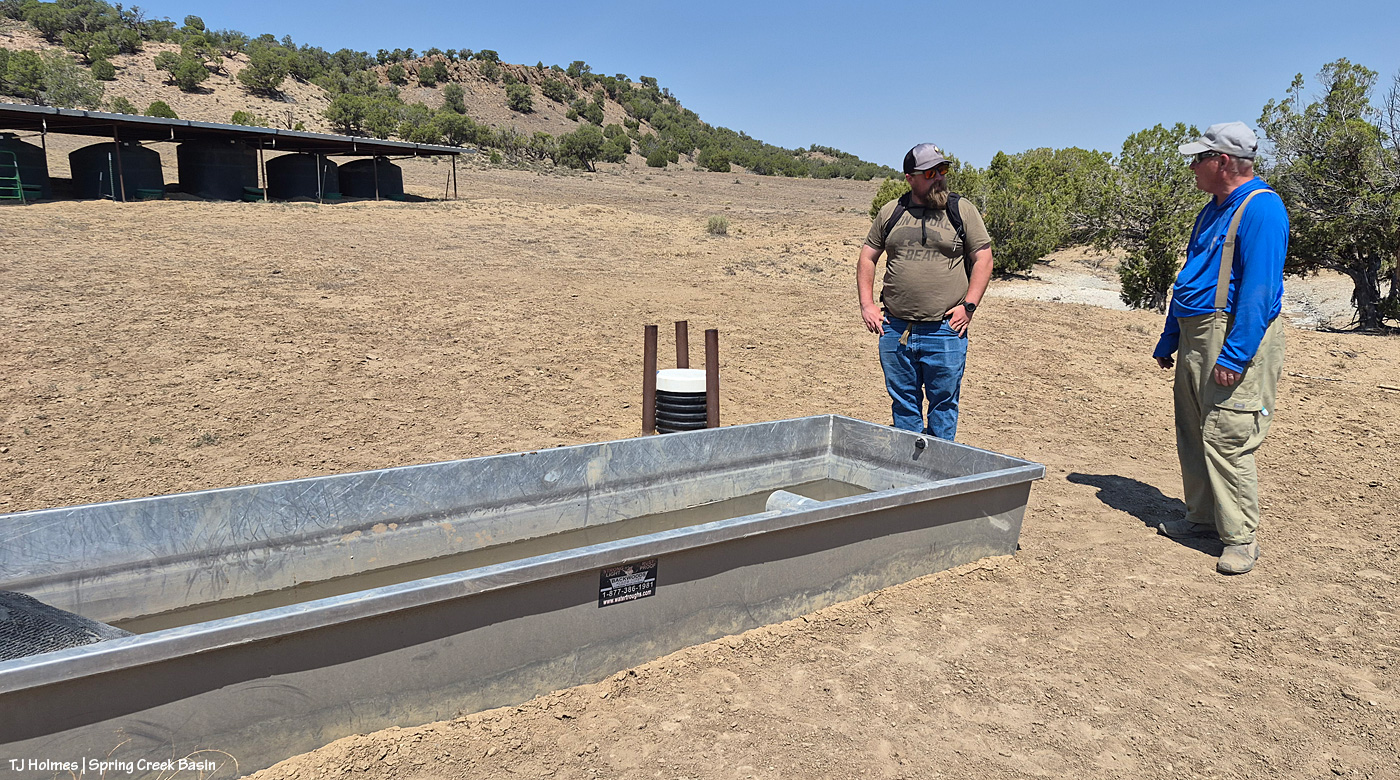
BLM seasonal range tech Jim Siscoe came out to fix/replace the broken piece in the wildcat valley water catchment trough! This means that I can leave the valve on for the water to fill the trough automatically as the horses drink it down without turning the valve on to fill the trough and off so it doesn’t drain all our precious water from the catchment tanks. If you were with us in 2021, you’ll recognize Jim as part of the dream team who built the first of two new water catchments in Spring Creek Basin (along with Mike Jensen, Garth Nelson and Daniel Chavez).

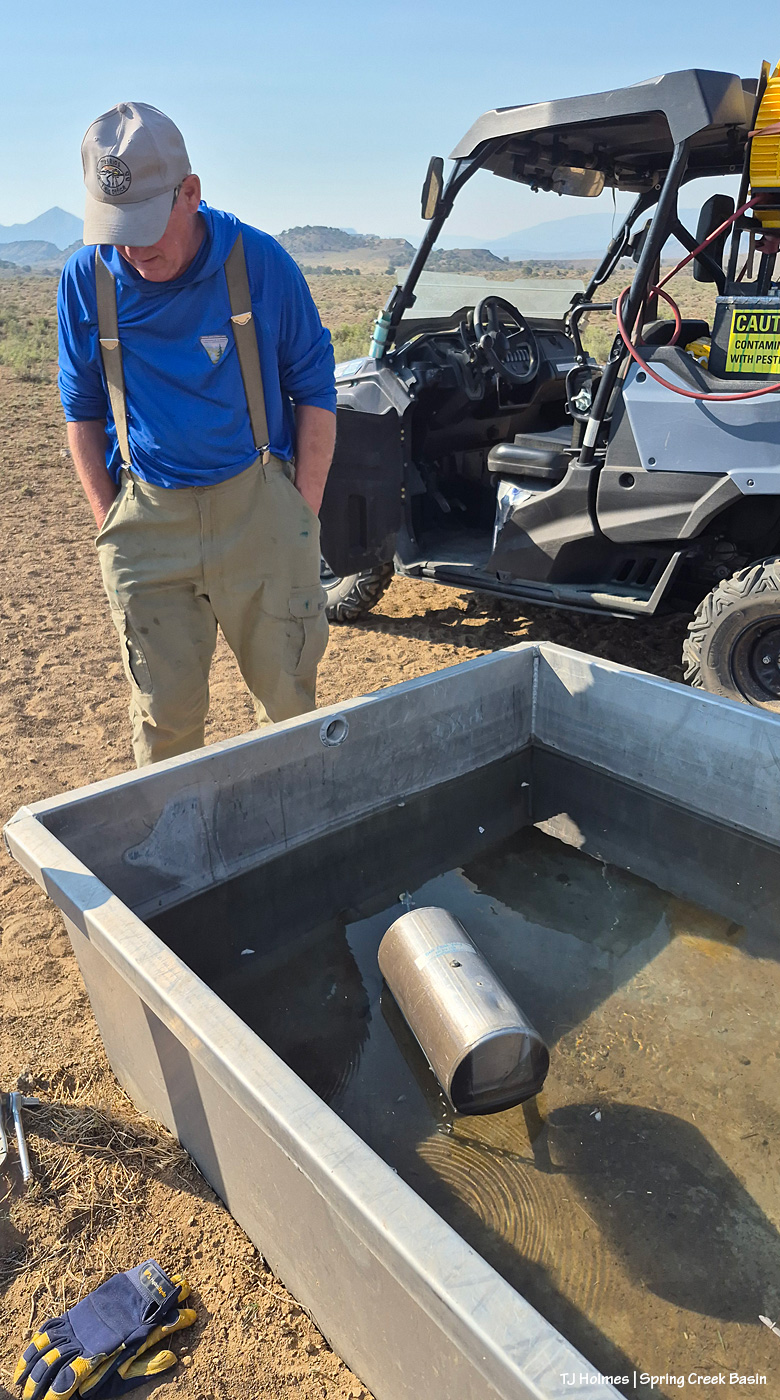
Jim had asked that the trough be dry for the work, as he wasn’t sure he’d be able to insert the new piece if the pipe was covered by water.

Obviously, the trough was still about half to three-quarters full! He did say the cool water felt great, and it didn’t hamper his fixit skills at all. 🙂

And really, I don’t think I can be blamed because I’d last filled the trough three days earlier, thinking that would be plenty of time for the horses to drink down the water. (Actually, I was a little worried about them not having water there when they’d gotten used to finding water there. … I needn’t have worried.)

What it means – because when I’ve been out there filling it with two, three, four bands visible nearby-ish – is that the horses have plenty of other water sources (many of which I’ve seen and know about), which, as you might imagine in these scary drought times, gives me a huge sense of relief. And Jim, awesome as he is, went with the flow (get it) and had the new piece inserted and the whole thing fixed in about five minutes flat. 🙂

That done, we went to the northwest valley to meet Anton Rambur (BLM rangeland management specialist). There followed discussion of what it will take to fix the pipe that connects the tanks, broken last fall when the basin got so MUCH rain that it flooded around the middle tank and literally popped it up out of the ground.

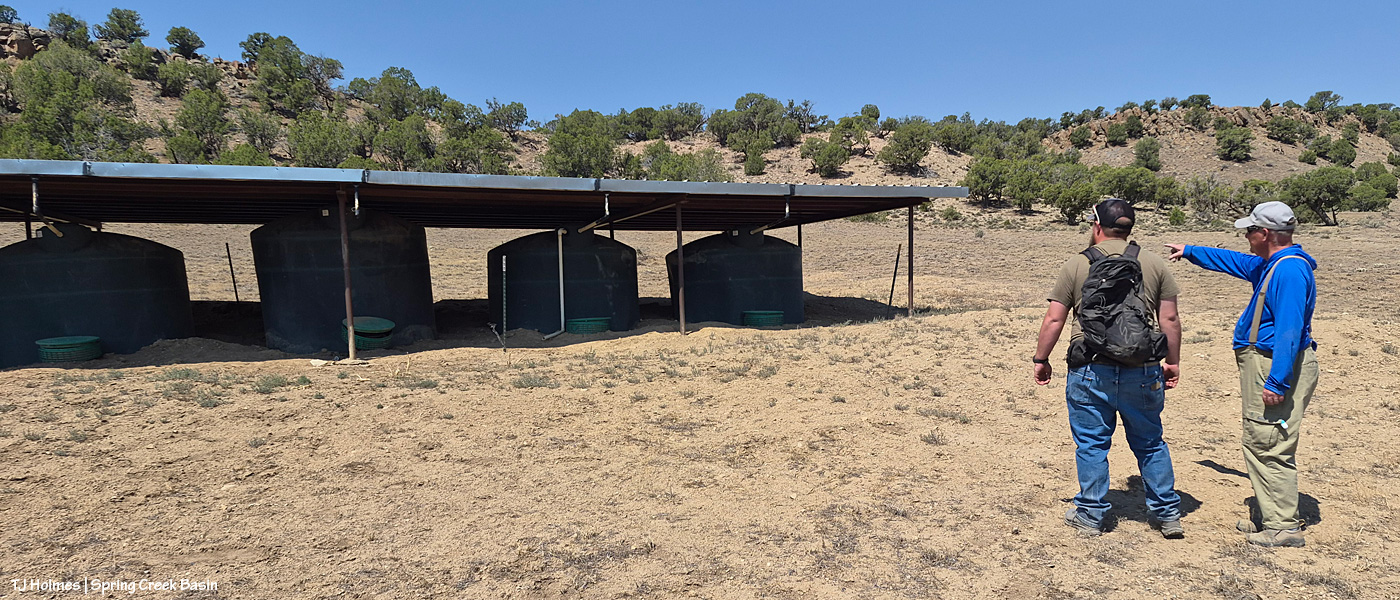
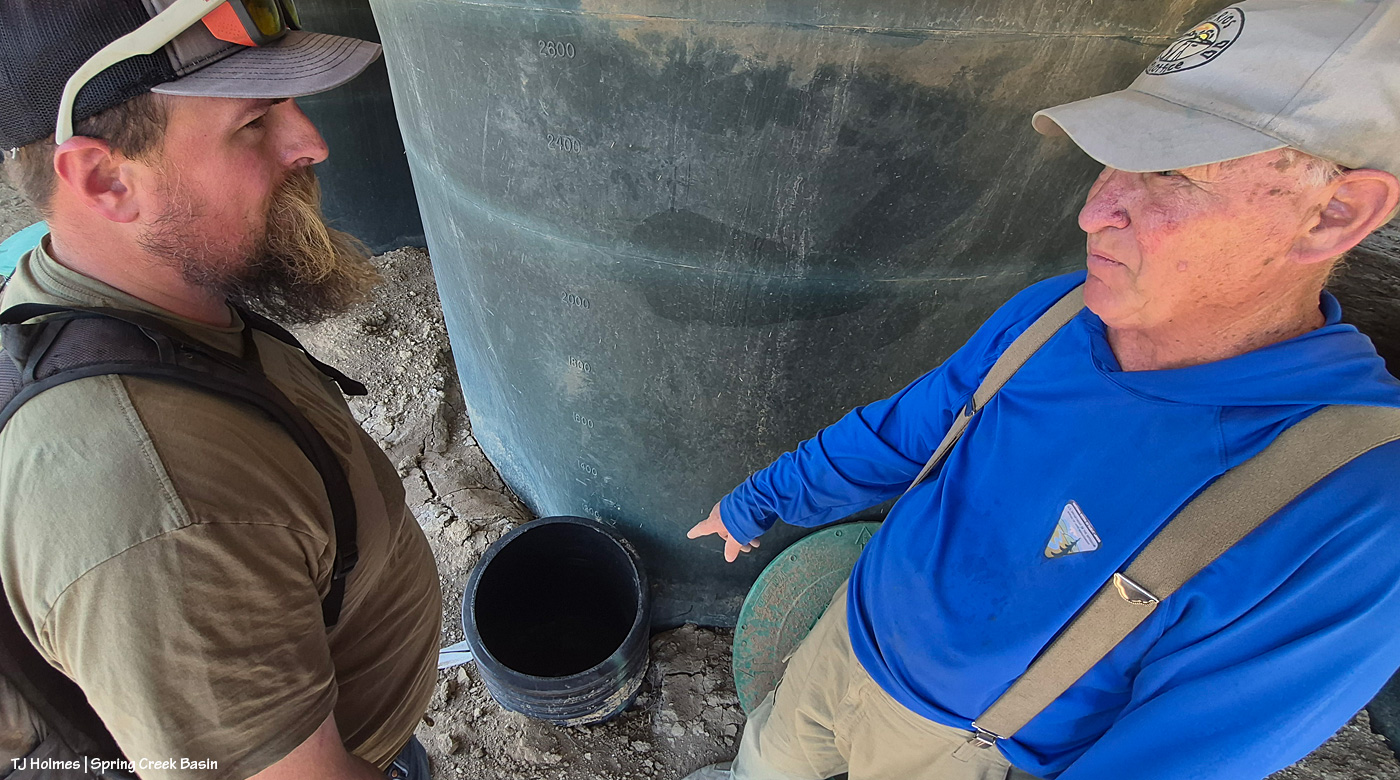
Jim points out where they’ll need to start digging to work their way up to that middle tank (as shown, it’s second from left) in order to get it out and get to the below-ground pipe.

See all the green discs at the front of each tank? Those top a vertical culvert that protects and allows access to the bottom of each tank. A pipe comes straight out from each tank and Ts at a pipe that runs horizontally across each each tank. At the far end, a pipe then runs down the hill to the trough, seen behind/beyond Anton and Jim.

Problem pipe. This is the tank that got popped up with the force of that flooding rain last fall. The pipes were no match for the force of that water, so they broke on each side of the T. The only thing that stopped the tank from being lifted right out of the ground was the roof overhead.

The fix: Rent a mini excavator again, use it to fix the road all the way back to the northwest valley, then dig out the pipe and tank. Replace the tank and fix/replace the pipe(s) and valve. We’re also going to put in a midway valve so I can turn it off if we have a problem again because right now, while we have a semi-fix, when I turn on the valves to the two end tanks, water runs down to the trough, but it also backs up and gurgles into that culvert Jim is pointing to. Last job for the mini ex: Build up the berm again at the back of the line of tanks and dig a trench to carry water around/beyond the tanks in the future when it, you know, floods again. Because in the desert, we have to prepare for both drought and the goodness of “too much” water (I mean, nobody ever considers any amount of water to be *TOO MUCH* water in the desert … but it can be destructive when it comes all at once).

Jim and Anton talk over the water cooler … err, water trough. 🙂 Beats an office any day (though it’s always nice to retreat to office AC when the heat is this bad!).

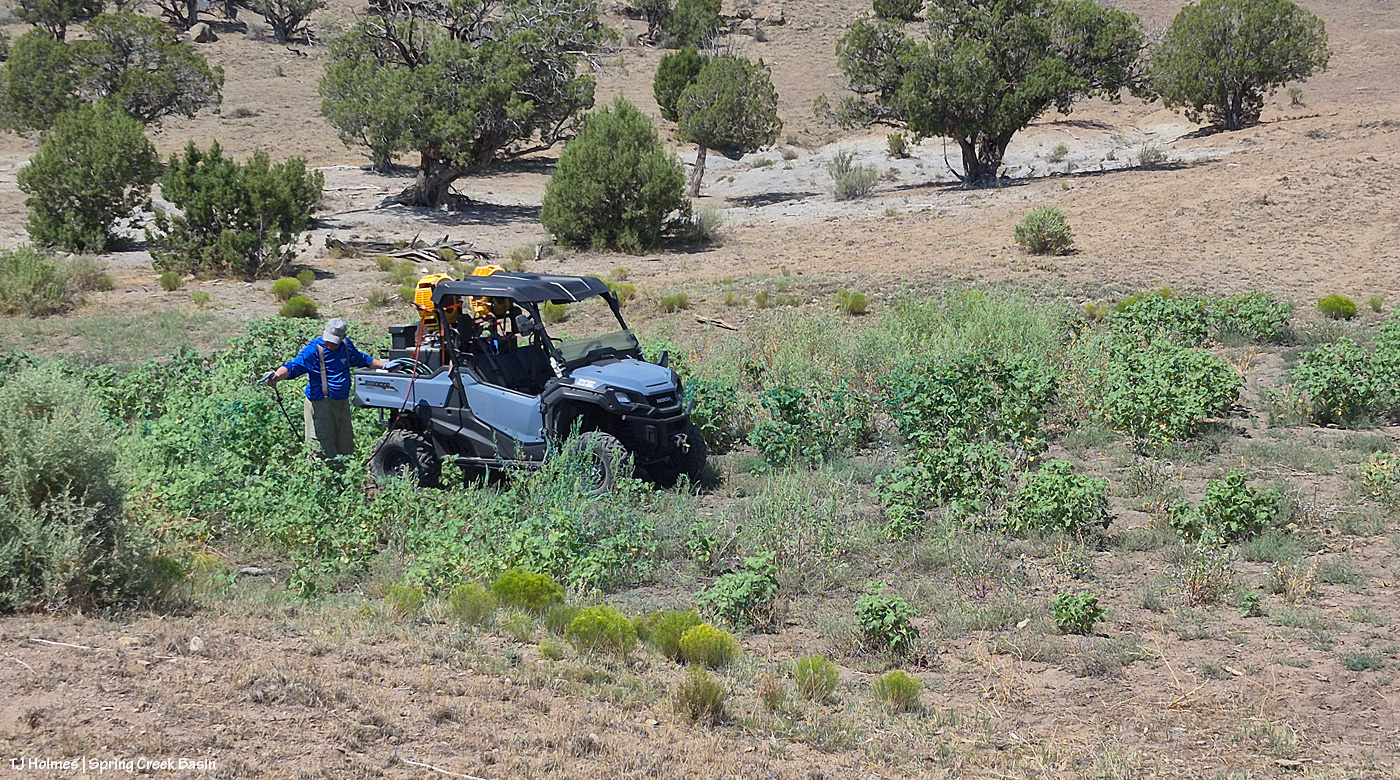
Jim is the resident “weed killer” at Tres Rios Field Office, and he does a great job. Here, he took advantage of being out in the basin to spray cockleburs, Russian thistle (tumbleweed) and Russian knapweed downhill of the catchment in the drainage that leads to the pond (left and dry).

Wider view that shows the catchment up to the left. The trough is barely visible behind that single juniper.

We were out early enough to beat most of the heat, make a good fix, run some water, talk about another fix, spray some weeds. No matter the conditions, we’re makin’ it work.


Happy birthday, Colorado

1 08 2026

Today marks Colorado’s official 150th birthday, “celebrated as the sesquicentennial of the Centennial State joining the Union in 1876.” (Interestingly, for this Aggie, also the year of the founding that October of Texas A&M University, known then as the Agricultural and Mechanical College of Texas. Yes, I know that has nothing to do with anything, but I *am* a Texas Aggie living in the Centennial State (and for much longer now than I lived in Texas).)

Sadly, today also marks the start of the roundup in Piceance-East Douglas Herd Management Area (needed but still incredibly sad that so many mustangs will be removed in the antiquated cycle of round-up-and-remove) and West Douglas Herd Area. More than 1,000 mustangs will be removed from these ranges, followed by nearly 250 more next month from Sand Wash Basin Herd Management Area. Please don’t make negative comments about this; it just needed to be noted. The advocates are intimately involved and working to ensure the safety and best treatment of those mustangs. Fertility-control programs hopefully will be stepped up, especially in Piceance-East Douglas, and I might have more information about that in the future.

In all the ways that Colorado’s statehood birthday is being celebrated, I haven’t seen anything about celebrating its mustangs, which, in my opinion, is a missed opportunity to uplift these remarkable animals and the giant roles they have played in this country as a whole, as well as the wilds of Colorado. So we’ll just have to do it ourselves. 🙂

I am thankful that we HAVE mustangs, still, in Colorado. And with hope and better management, they’ll be here another 150 years.


Mustangs in art

7 06 2026

You probably didn’t know this was the post you needed. Mustangs + art = fabulous.

The year 2007, the year of the first Spring Creek Basin roundup I attended, was a big year for me (more on this coming in mid-September). This post focuses on my friend and artist Karen Keene Day, whom I met that September, courtesy of Pati and David Temple. Karen and I forged a firm friendship then, and she has been out numerous/many/lots of times since then to see the mustangs. I started visiting Spring Creek Basin in 2002; Karen first visited in 2003. She visited the BLM/USFS office in Durango, and a woman there put her in touch with Pati. “I parked my car in the shade and called Pati … and she didn’t stop talking about the mustangs!”

A lot of us trace our Spring Creek Basin mustangs obsession back to Pati. Fondly so!

Karen has always been an artist … always been a horse lover, though she didn’t have her first horse until adulthood … and in 1999, after her first visit to Pryor Mountain Wild Horse Range (Wyoming and Montana), she focused her art, which had always included horses, including Andalusians in Spain, completely on wild horses.

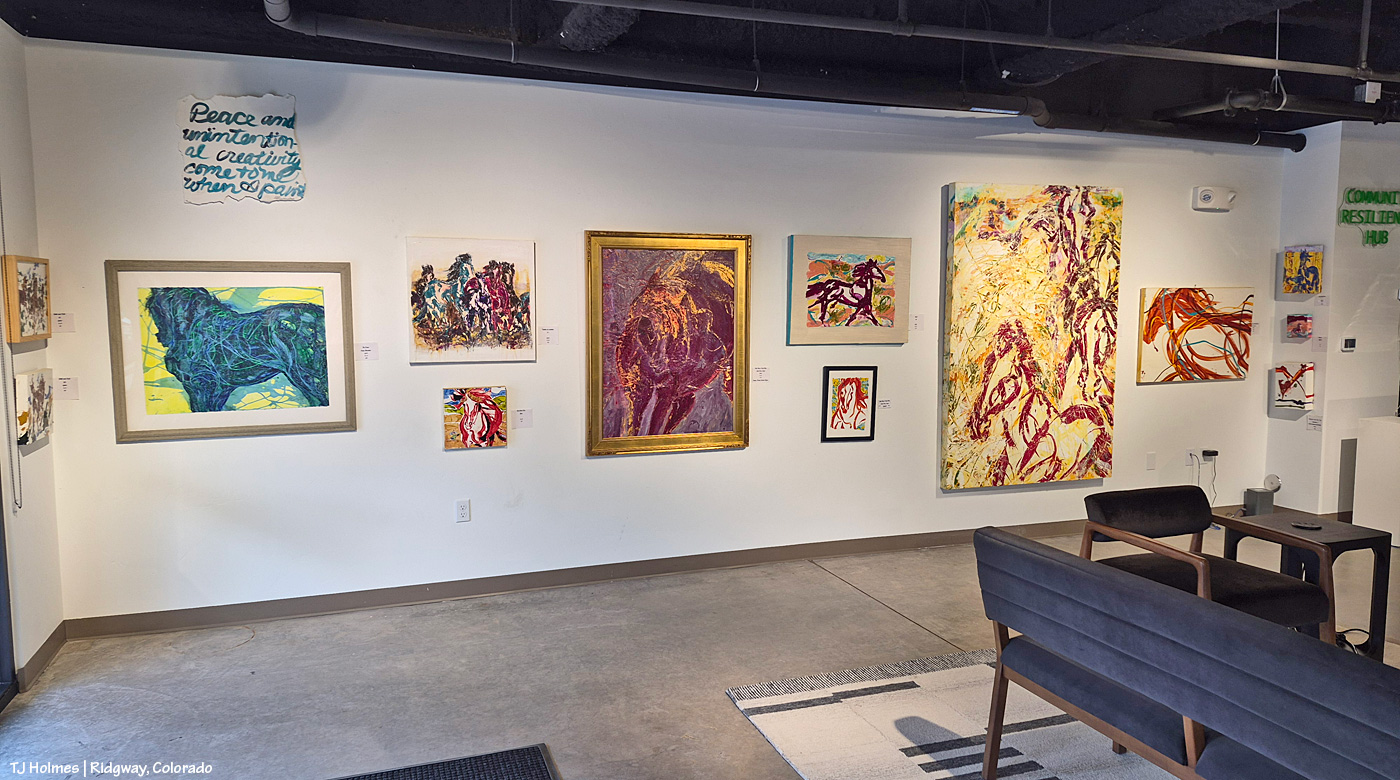
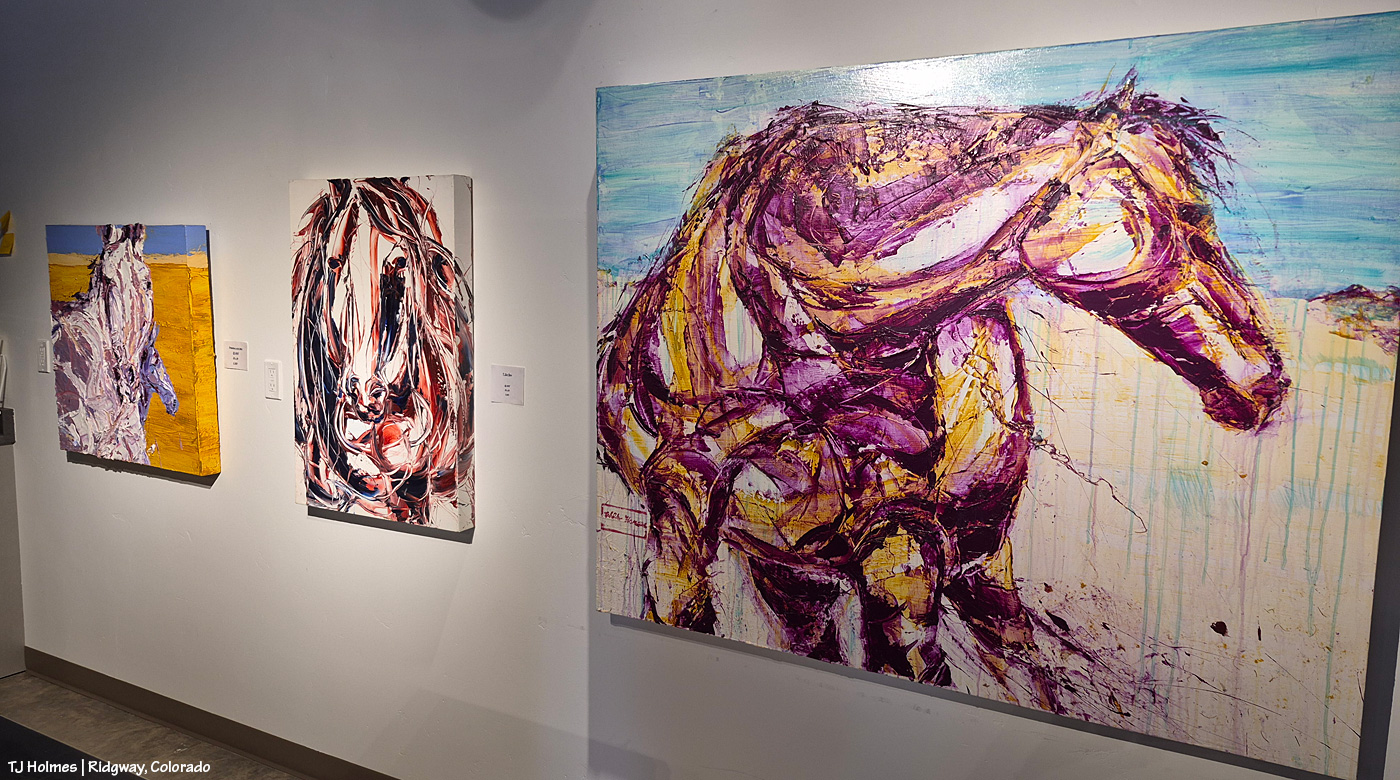
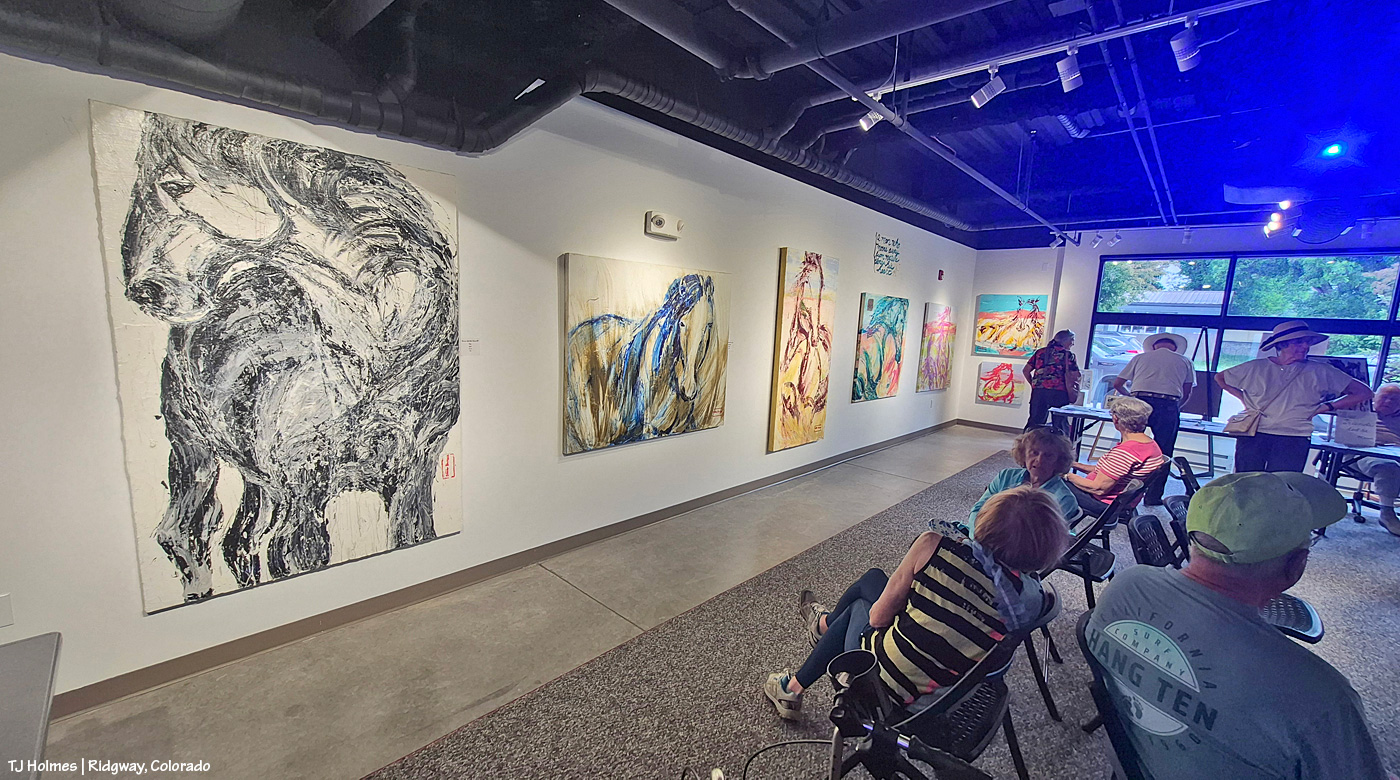
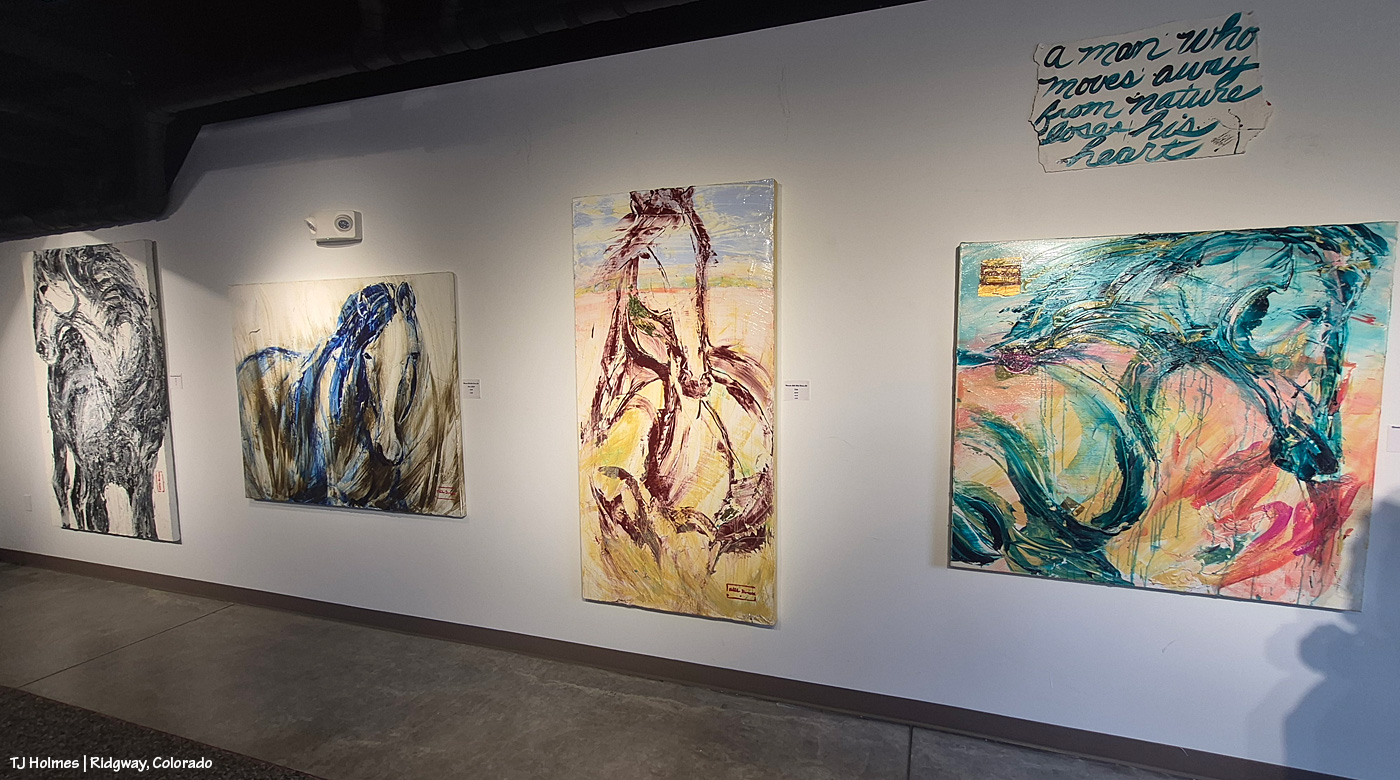
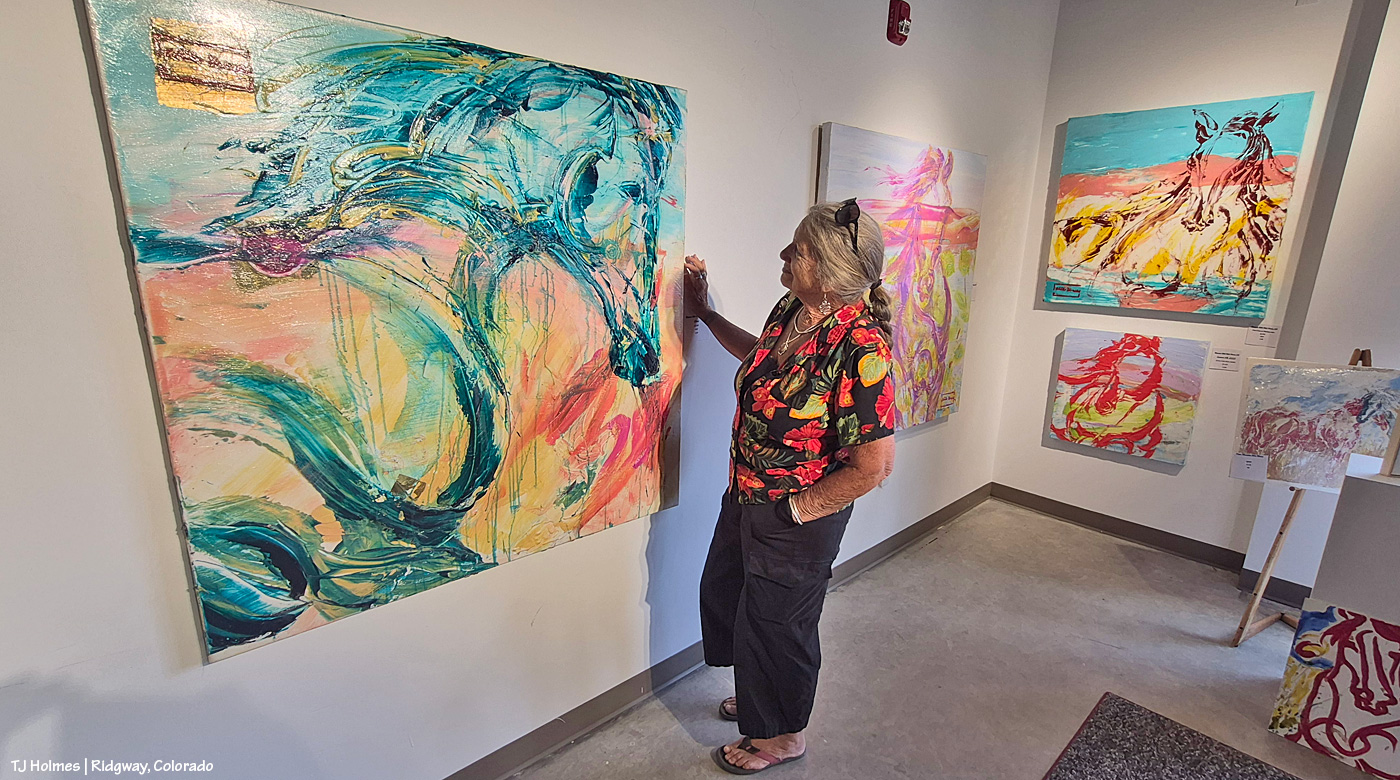
Fast forward from those years to this past Friday night: The opening event was held for Karen’s June art show at Decker Community Room in Ridgway, Colorado. Her absolutely amazing art fills the walls with color and movement and spirit and sheer beauty. And they span her amazing wild-horse-art career from 1999 to 2026. If you find yourself in Colorado, on Colorado’s Western Slope, in the quirky western town of Ridgway, even if you’re just passing through, do your heart and art-appreciating self a favor and stop in to view Karen’s art. The following photos can’t do justice to just how fantastic the entire exhibit looks.

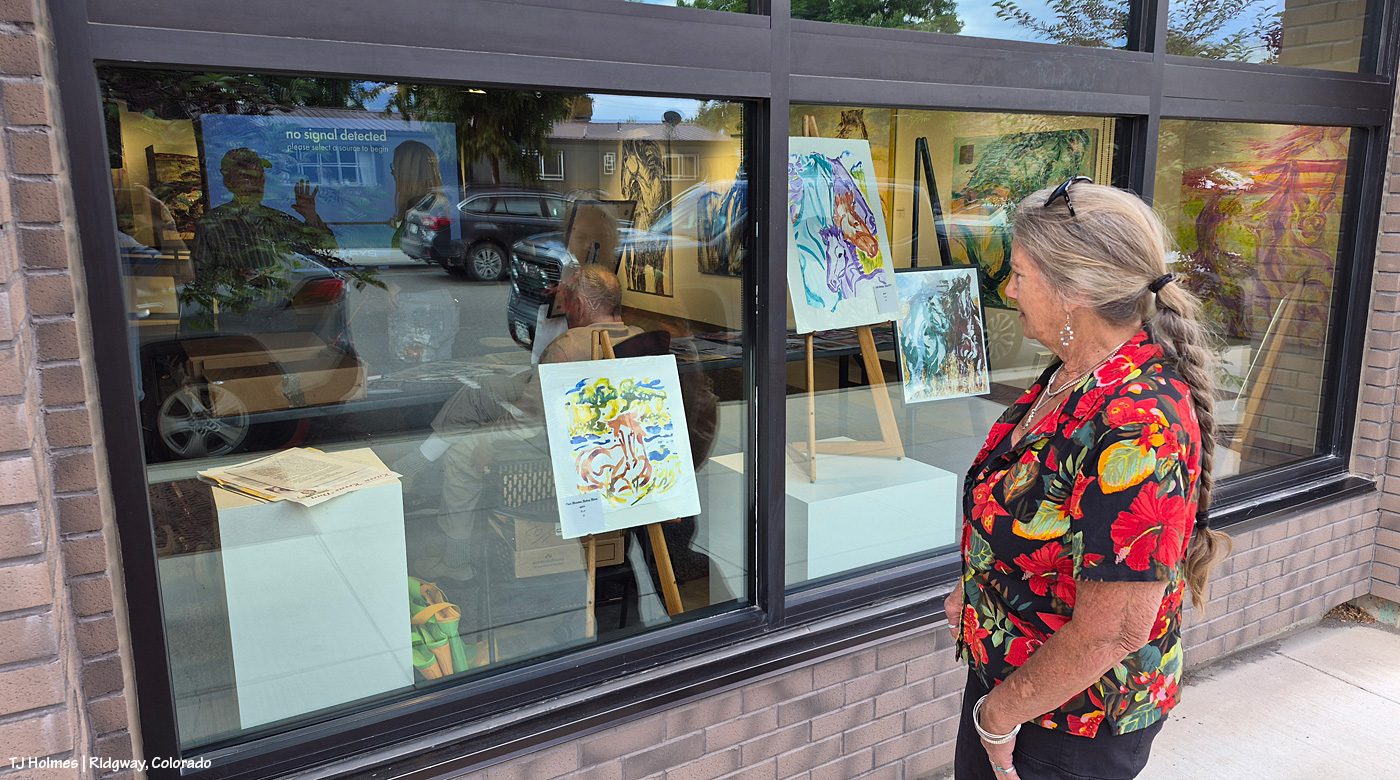
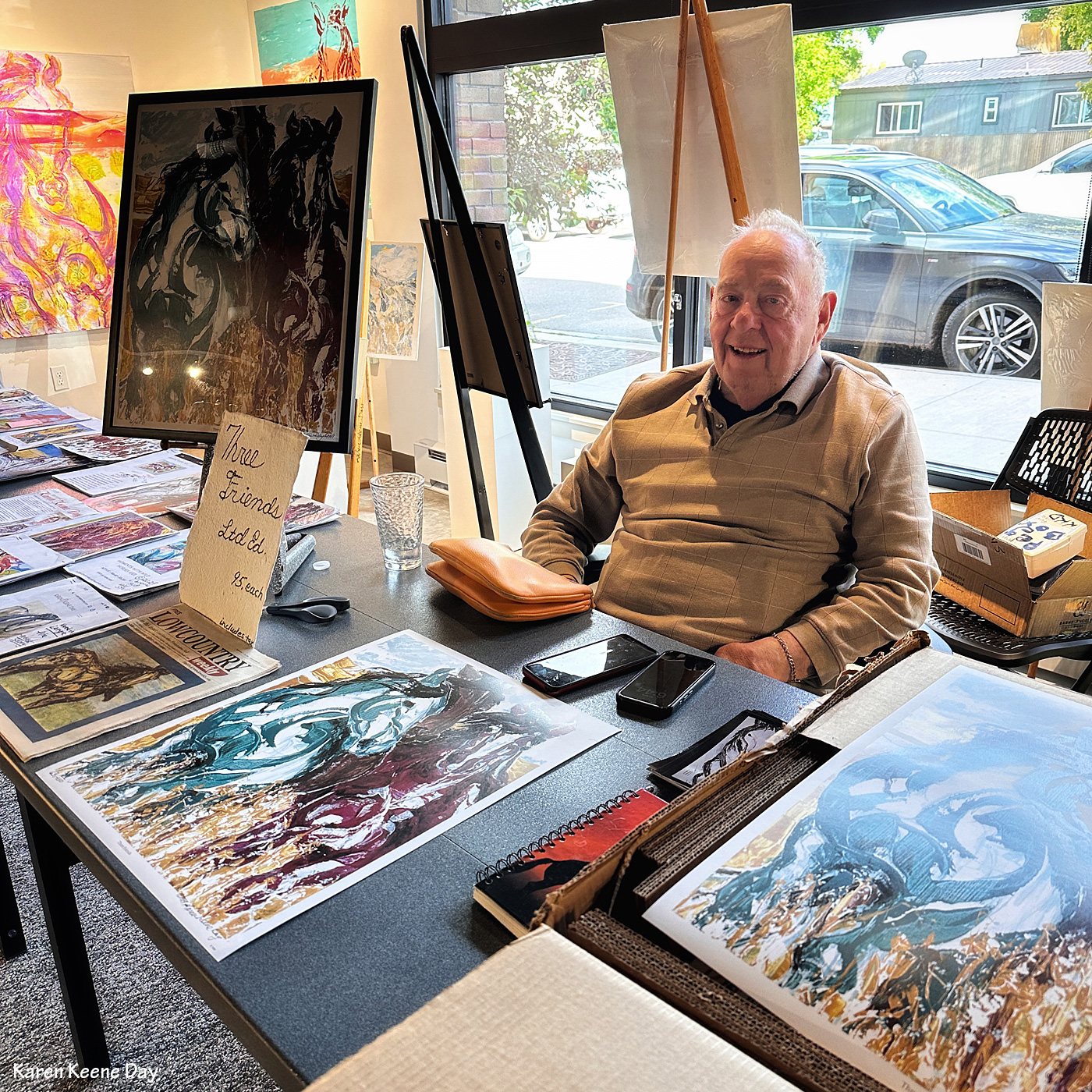
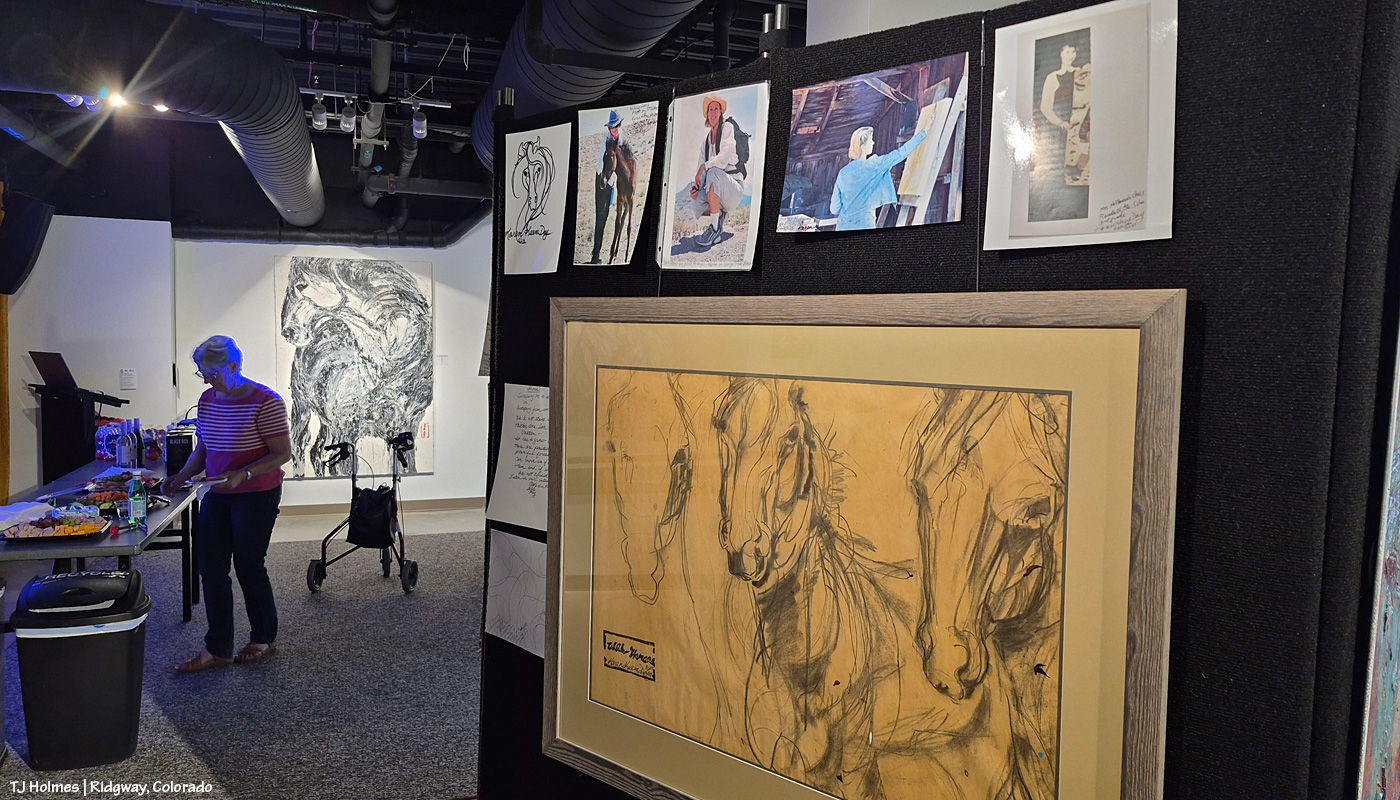
Writer Kathryn Wilder pauses to look at samples of Karen’s art upon arrival at Decker Community Room on Ridgway’s Clinton Street (a short, buzzing few blocks of galleries and restaurants just off the main drag).

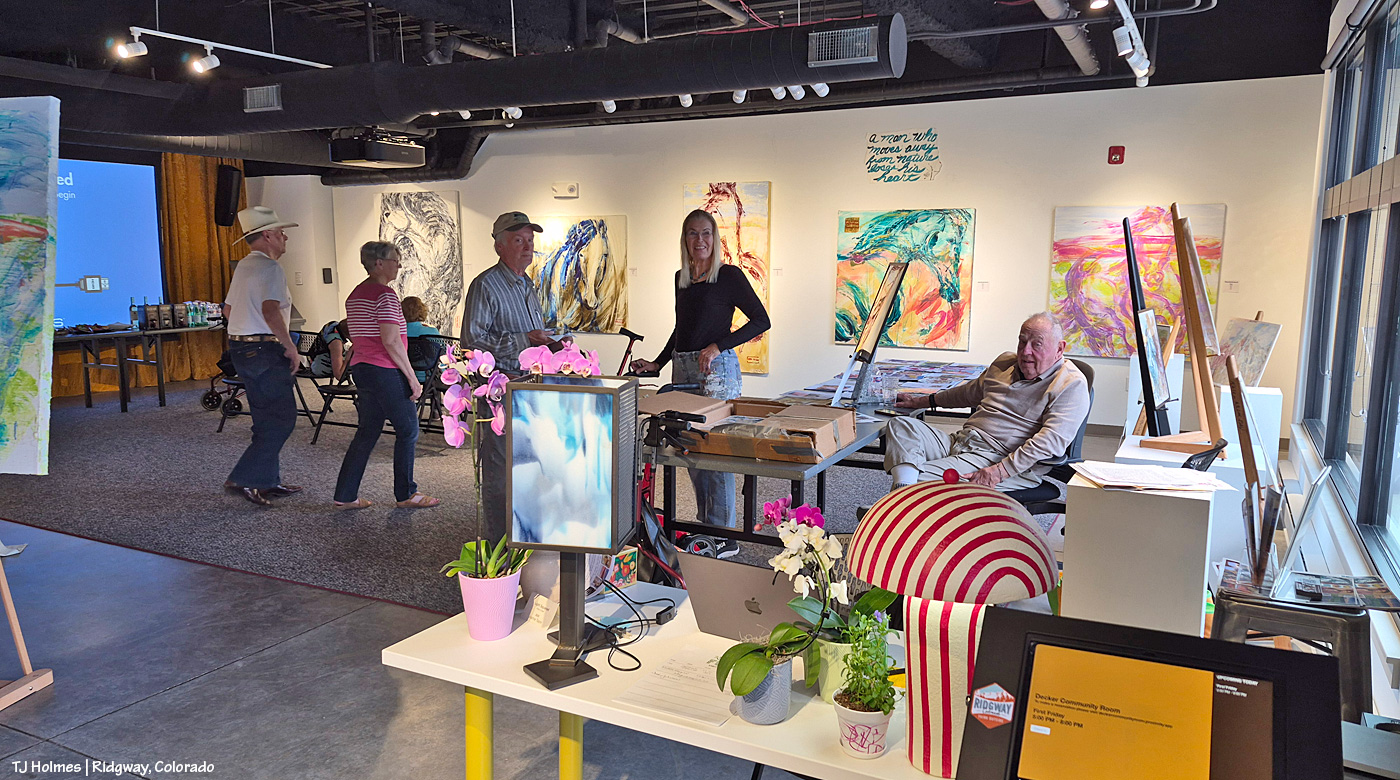
Karen (center, black shirt) and her husband, Floyd (seated at right), greeted visitors. We arrived right at the beginning of the opening, and the venue quickly became packed with appreciative art viewers!

Floyd, a retired engineer, is an artist in his own right and also has had showings of his art in Ridgway. His preferred subjects are the cows, calves and bulls that call the ranch country at the edge of the San Juan Mountains home.

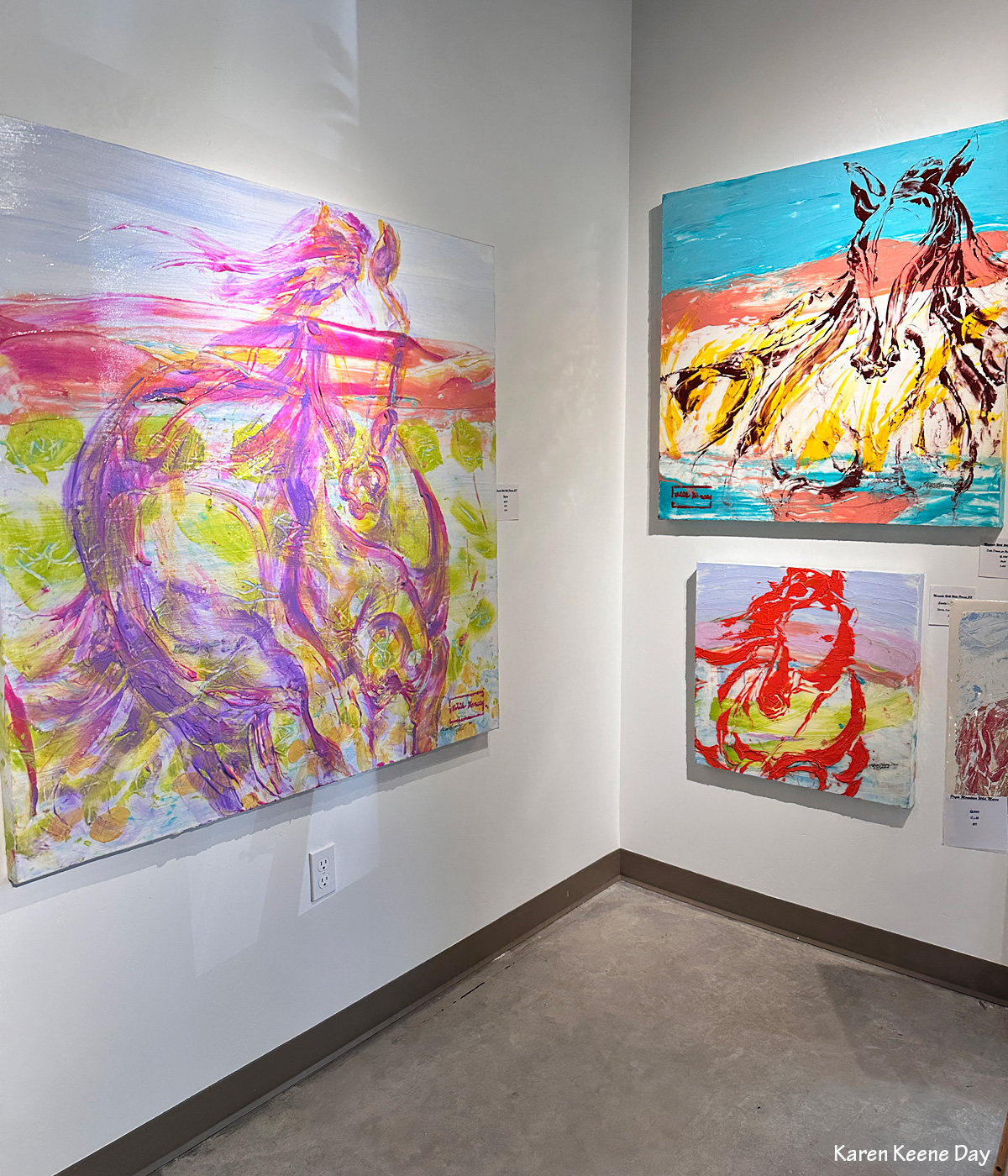
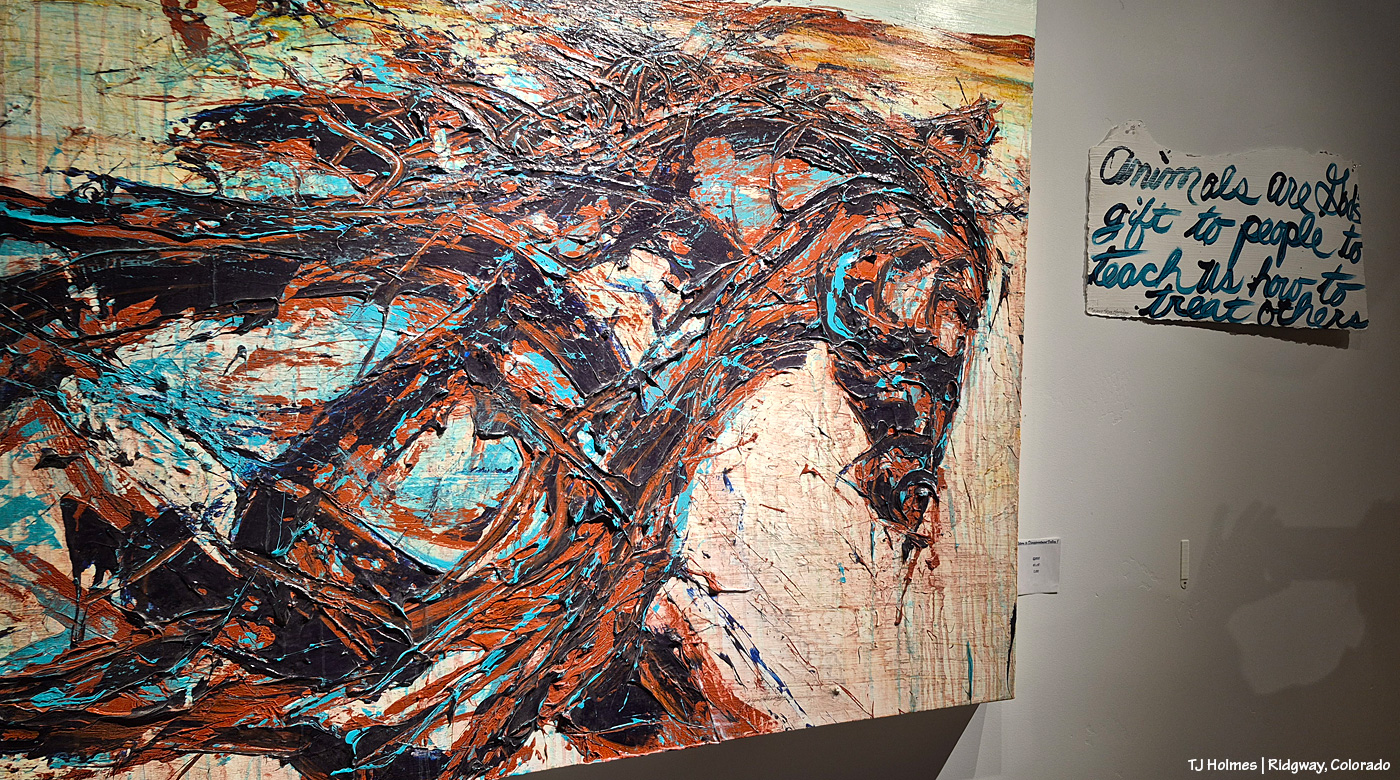
Karen’s art comes in many sizes and a variety of semi-similar abstract styles, showing her evolution as an artist. I have loved Karen’s art for nearly 20 years, since I first set eyes on it! I challenge you to be UNmoved by the spirit and movement and beauty illustrated by her vision of wild horses and the wild places they call home. Karen’s quote at upper left: “Peace and unintentional creativity comes to me when I paint.”

You thought mustangs came from drab, dry, desert-brown ranges, didn’t you? The colors she sees in the natural world absolutely inspires me.

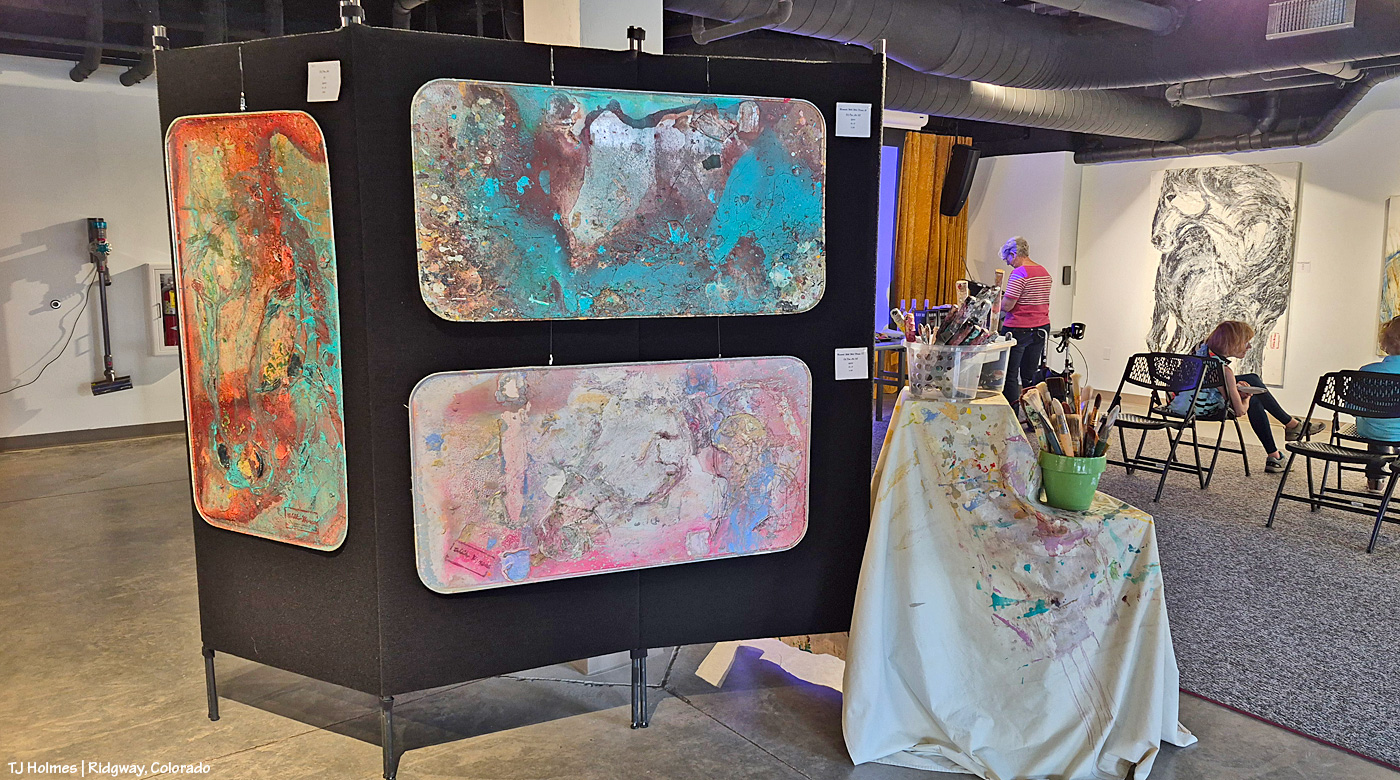
You see the faces of horses, don’t you? More proof of Karen’s unique creativity: These are pans she has used below her paintings to catch drips and drops of paint as she boldly creates her art … and then she made art of those very pans! At right are some of her own brushes and drop cloths that she has used while creating her art.

Absolutely gorgeous.

Karen’s exhibit also includes images of her painting and visiting various ranges and wild horse sanctuaries. I love the sketch below the pictures … those are Spring Creek Basin mustangs.

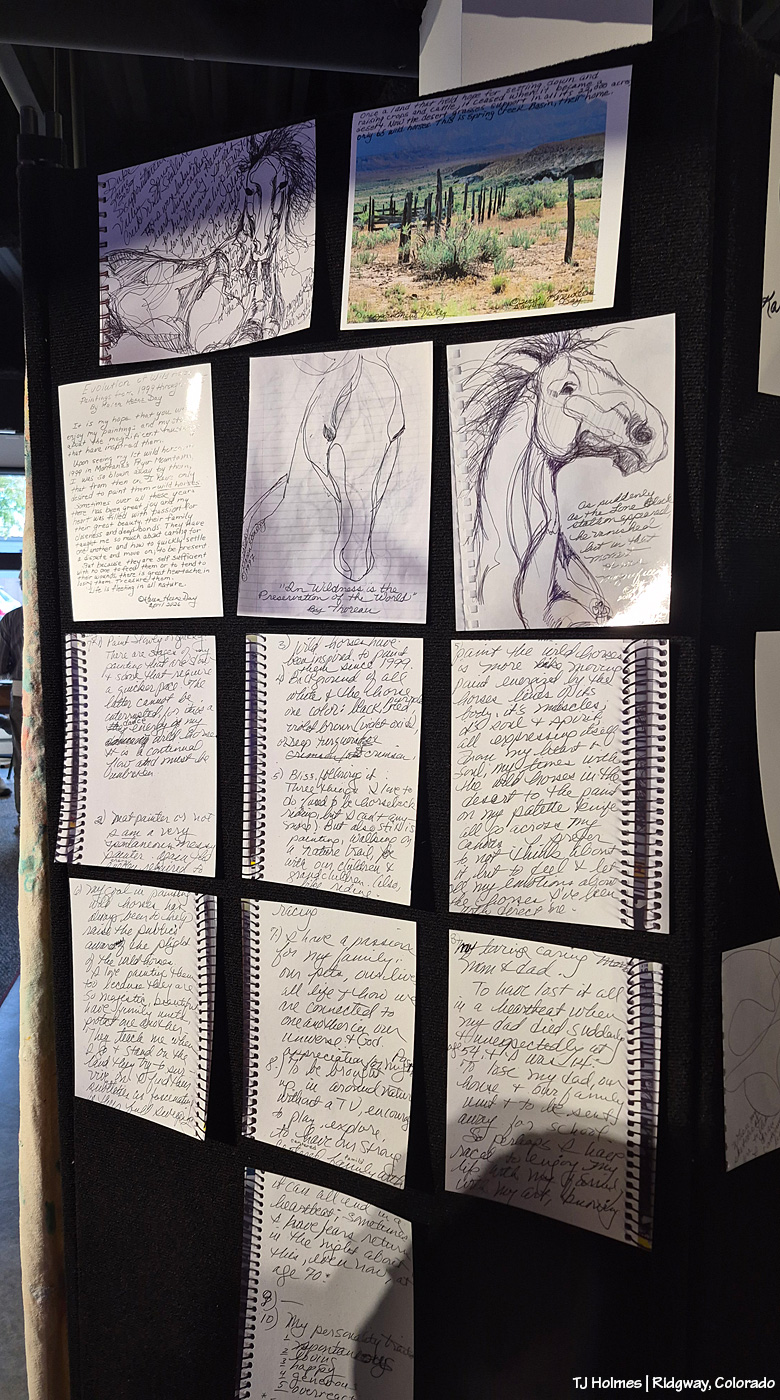
More sketches and journal entries from her visits to mustangs. In addition to Spring Creek Basin, she has visited Pryor Mountain, Little Book Cliffs (near Grand Junction, Colorado), Sand Wash Basin (near Craig, Colorado) and Piceance-East Douglas (near Meeker, Colorado), as well as various East Coast wild horse herds!

You might have noticed that the large black-and-white painting at left in the image above features in a few of the pix. I think that wasn’t necessarily conscious, but that’s Hope, and she is most gratefully mine, gifted to me by Karen many years ago. Karen wanted to include Hope in her art show, and I was thrilled to deliver her to Ridgway, though my wall looks awfully bare without her (I’ll get her back at the end of June). 🙂 Karen and Floyd both told me that many visitors had already told them she was one of their favorites of her paintings in the show.

At right is Chrome. Karen’s words above him read: “A man who moves away from nature loses his heart.”

Kat Wilder wrote “Desert Chrome: Water, a Woman, and Wild Horses in the West” (scroll down a bit), published in 2021. Yes, *that* Chrome.

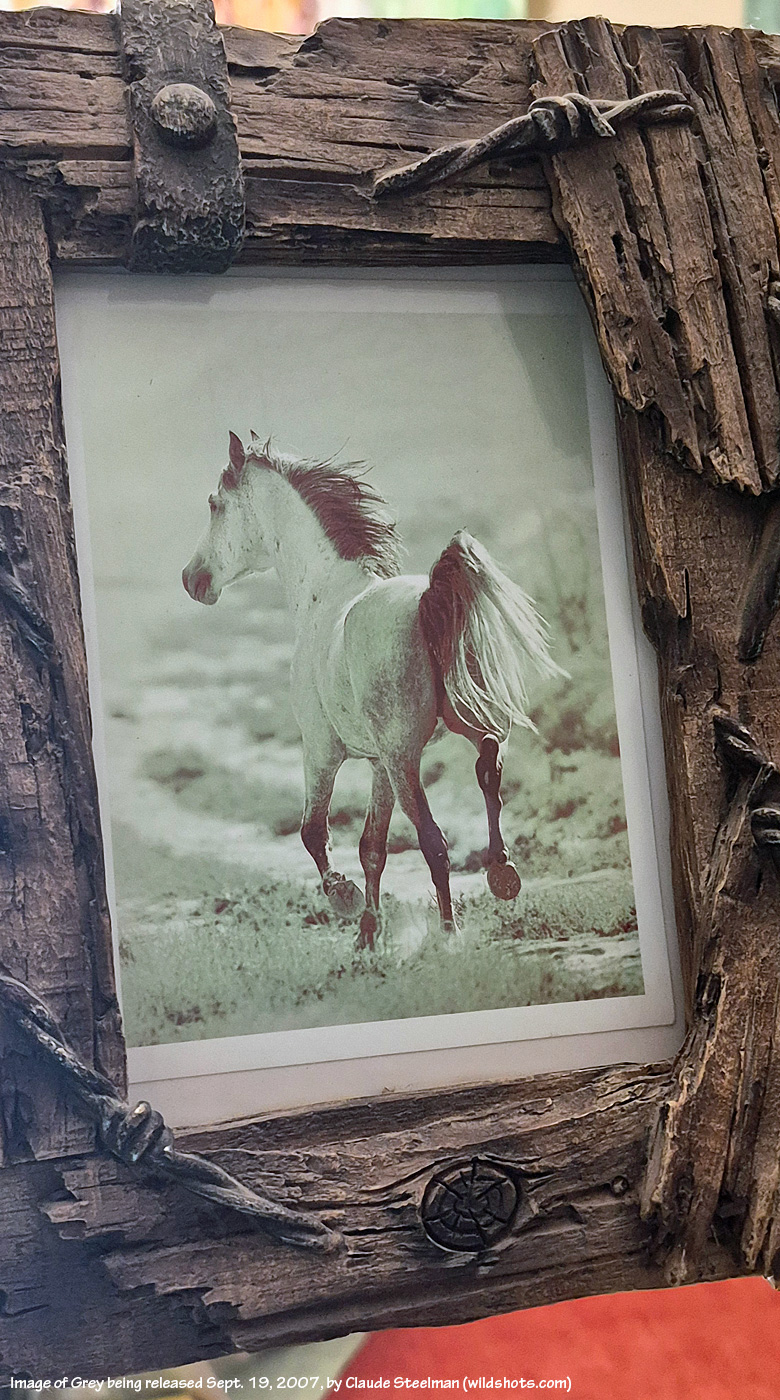
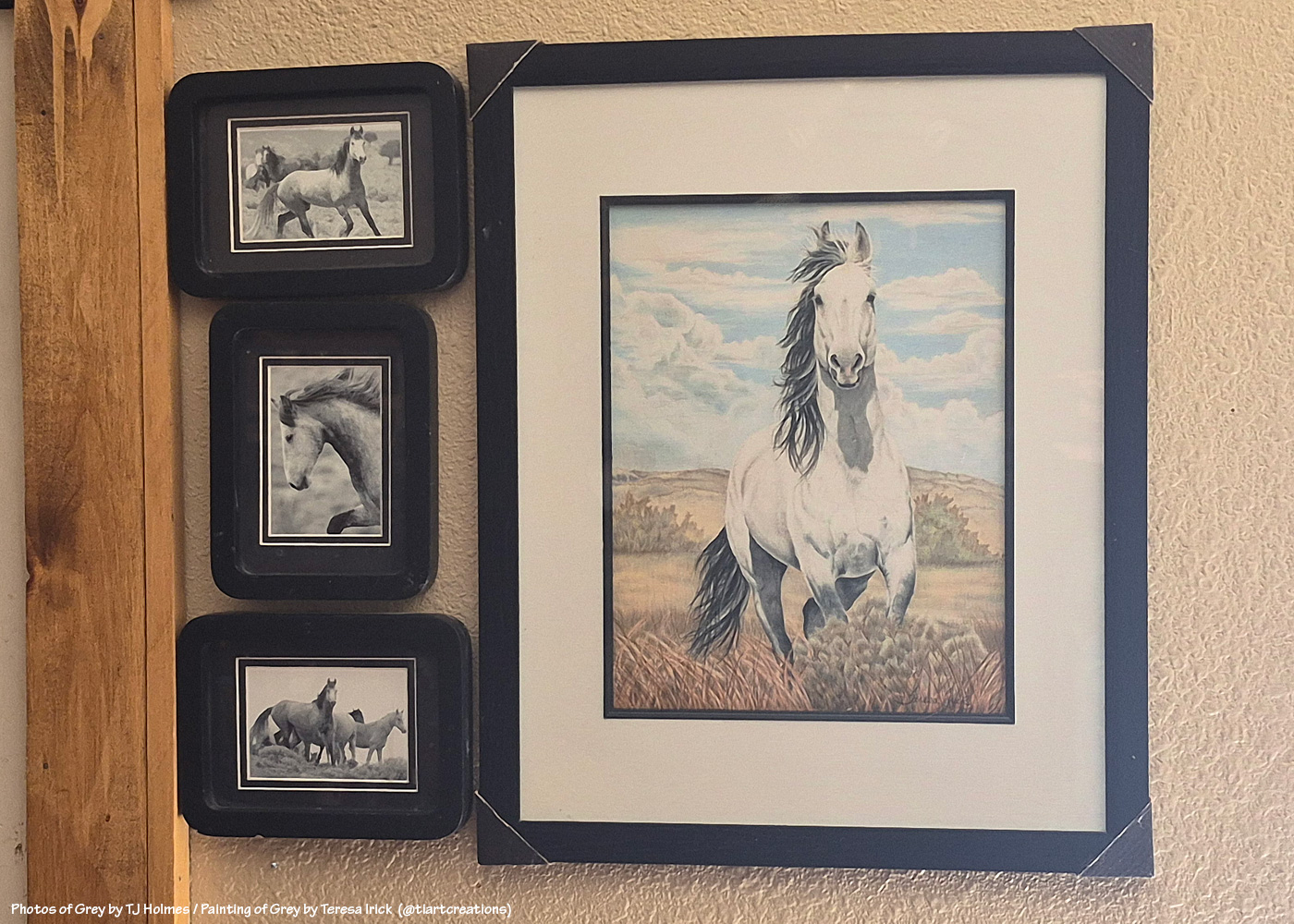
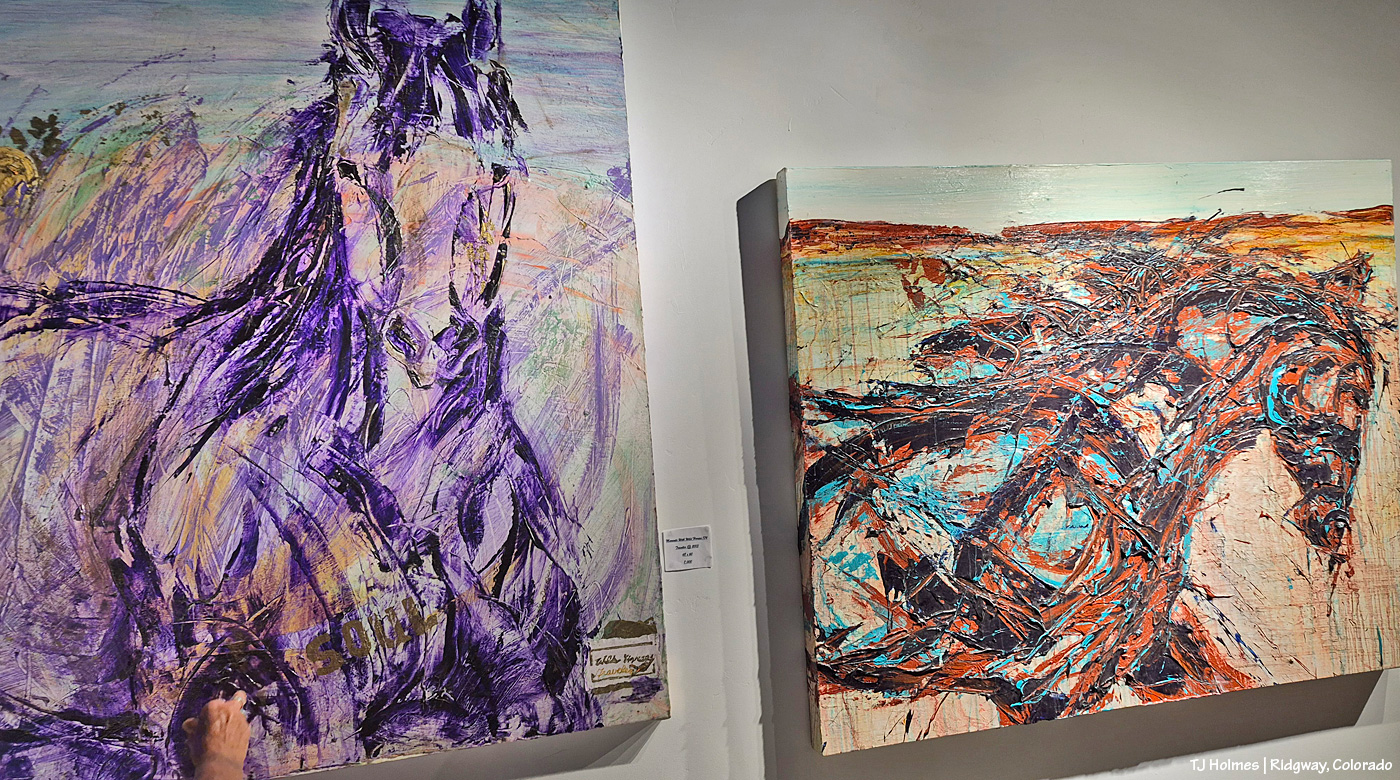
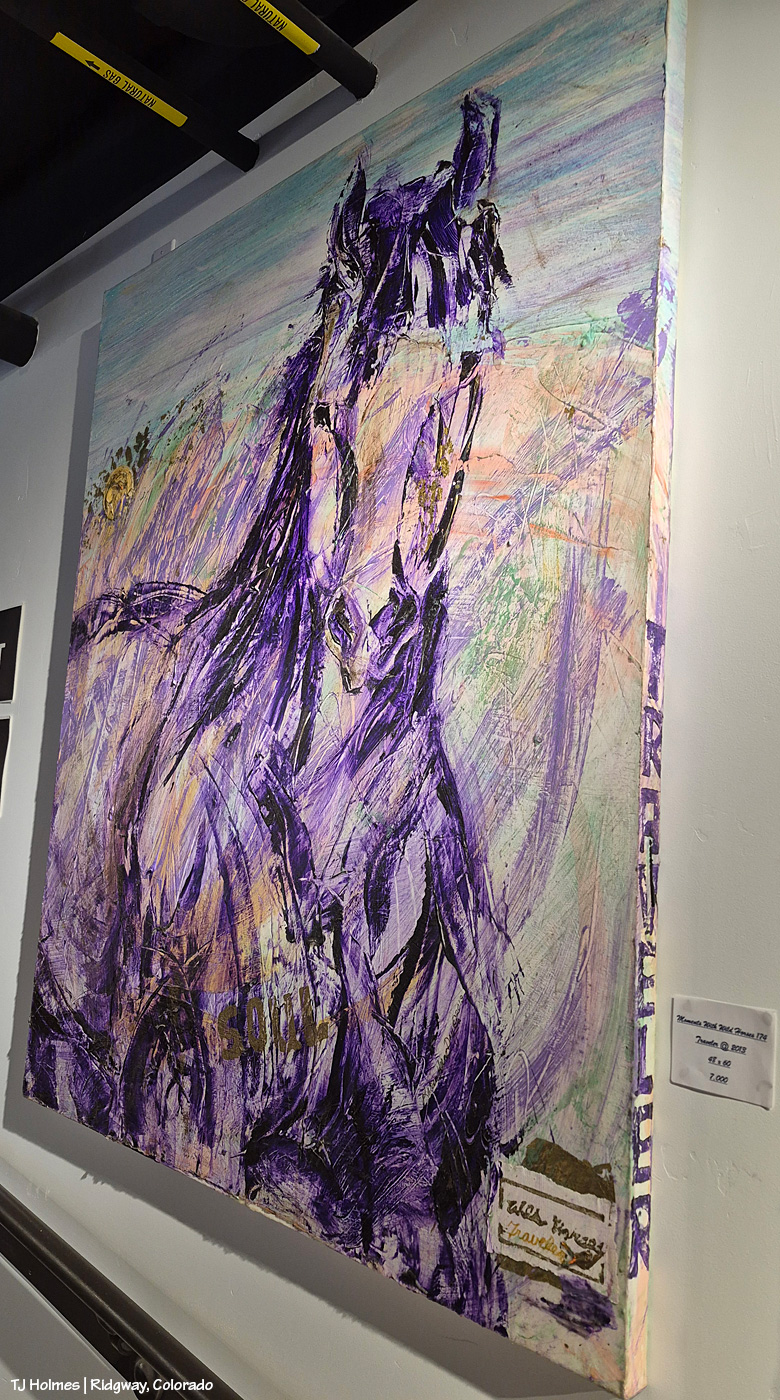
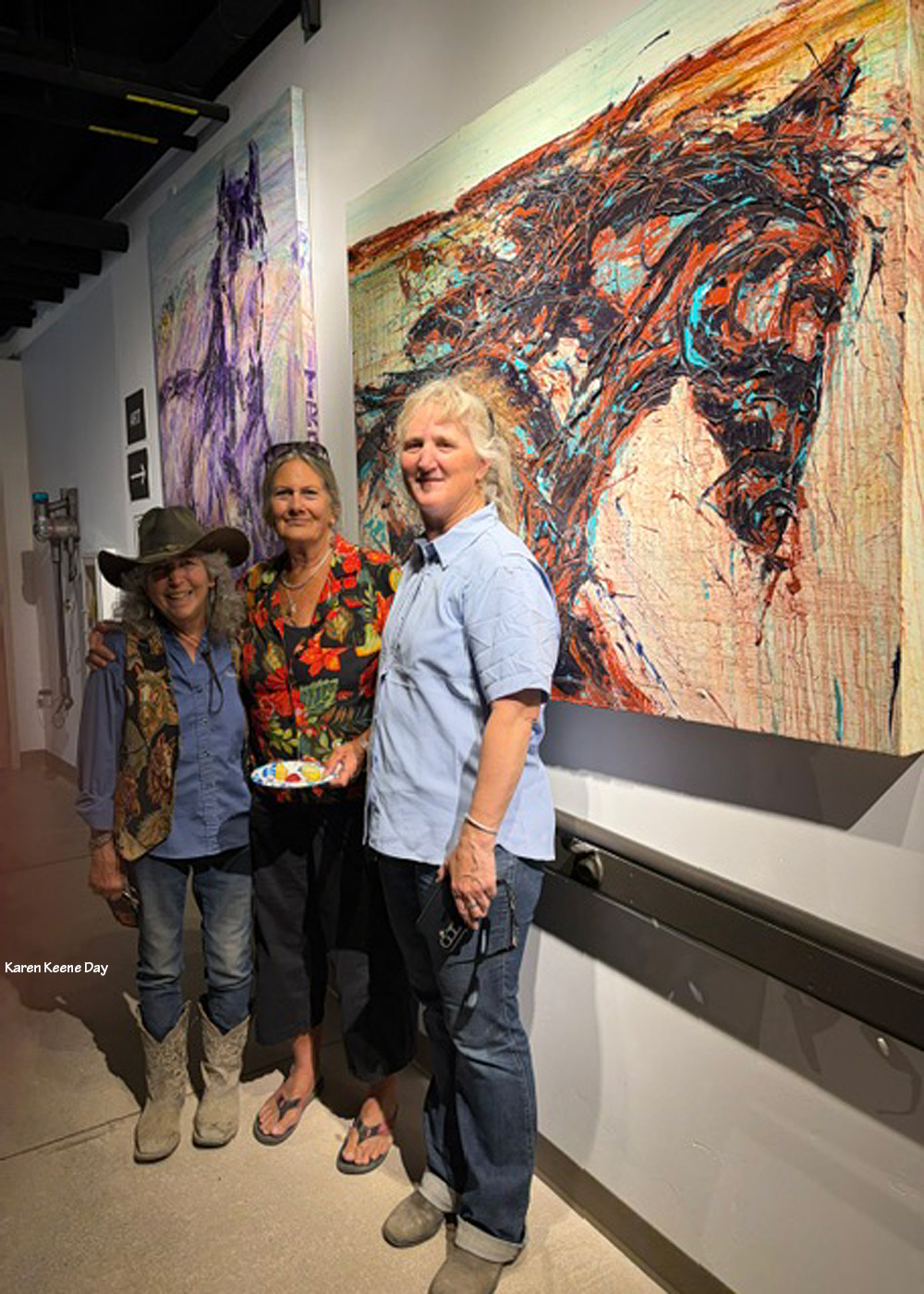
My most beloved Grey (also known as Traveler), memorialized and honored in Karen’s vivid vision and colors. I love that his image at left is in “royal” purple; Grey was short for Sir Grey, and by that, I mean(t) king of mustangs. That one was painted in 2013. At right, titled “Return to Disappointment Valley,” 2008: We’re certain that’s Grey after his return to Spring Creek Basin after he was erroneously removed from the basin during the 2007 roundup … and returned a month later, the day I started my documentation of Spring Creek Basin’s mustangs.

Love the detail of his name stenciled down the side of the canvas. And Kat pointed out the word “SOUL” at lower center on the front of Grey.

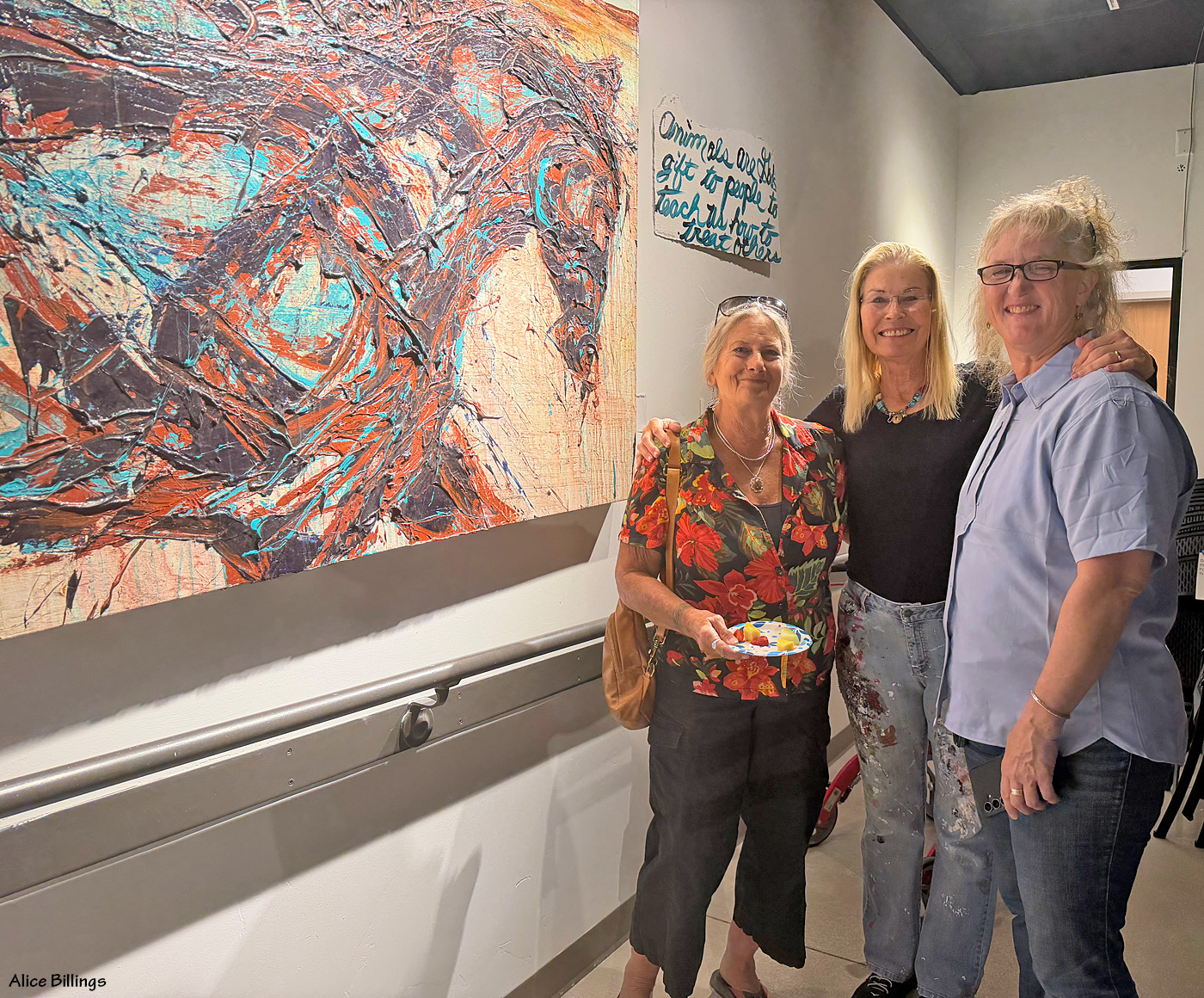
In Karen’s writing at right: “Animals are God’s gift to people to teach us how to treat others.”

Left to right: Fellow Ridgway resident (for 30-plus years), artist and mustang advocate and adopter (including of Spring Creek Basin mustangs) Alice Billings, Kat (also a mustang advocate and adopter) and yours truly (they made me stand on the downhill side of the ramp :)).

Kat and I with Karen – mustang chix all.

Karen’s art show runs through June 26. All the art comes down June 27. Visit while you can. You will NOT be disappointed (!). 🙂

Karen’s website: https://www.karenkeeneday.com/

Instagram: @karenkeenedayart

Facebook: Look for “Karen Keene Day”


Thanks … and request

27 05 2026

Big day in Spring Creek Basin yesterday, and I want to give a big shout-out to everyone who had a hand in the rescue of a young visitor from the Midwest.

The visitor had a Garmin In-Reach communication device and with that, was able to reach her mother, who contacted Tres Rios Field Office, who got the message to one of my awesome BLM folks, Ryan Schroeder, who was able to reach me. She also reached out to the fine folks at Colorado 4×4 Rescue and Recovery, who have assisted us previously with another stuck vehicle. San Miguel Sheriff’s Office personnel and BLM law-enforcement rangers also were notified and aware of the situation.

It’s worth noting that cell service in the basin, no matter what service you have (and if you don’t have AT&T, you’re pretty well toast), is spotty, and there’s nothing in the area where she got stuck.

Huge, huge thanks to neighbor Tyrell, who jumped into action with his daughter, Makena, and their big tractor to motor deep into Spring Creek Basin on rough roads where lesser vehicles might fear to roll (for good reason, really :)) to pull out the visitor’s vehicle and get her safely on the return path out of the basin.

Another note, and this is not a criticism of the visitor herself, who had never been to Spring Creek Basin: Please be aware of and HEED the “no motor vehicles” signs. Not only are those in place to protect the very fragile and incredibly drought-stressed soil and vegetation the mustangs depend on to survive, they’re placed where they are to protect humans as well. She missed the sign while following heavy tire tracks from other visitors – DIRECTLY PAST A SIGN. Those folks are going around an erosion-caused washout across the road, and while I understand the desire to explore farther, that illegal bypass route not only has destroyed the vegetation in that area, it led directly to someone getting her vehicle stuck miles and miles from help. If she hadn’t had her communication device, she would have had a LONG walk out to the main road, and as few people pass through Disappointment Valley on any given day, and she didn’t have cell service, help might have been a long time coming. I was planning a visit to the basin yesterday evening, but her vehicle wasn’t visible from the road, and *I* don’t pass that initial washout and sign, which I helped our BLM guys place last fall! I’d never have found her if I wasn’t actively looking for her.

That is NOT ground to be driven over! At least one person apparently heeded the sign and turned around. The water catchment is directly behind me from this image, and someone had literally driven directly over branches that I’ve dragged down the hill, along with old, dead tree trunks, and placed all along the other side of the road (I’m actually standing on the road, and the washout is directly to the right) to try to keep people from driving on THAT fragile soil and vegetation just because they’re too lazy to get out of the buggy or truck to walk down and look at the catchment system closer.

The sign and blockade had mostly worked. … Those tracks from before (see the above link to last November’s sign-posting) had semi-healed … until this recent spate of destruction. We shouldn’t have to pepper the basin with signs asking people to respect the land and wildlife. (And I haven’t even posted about all the wanton, deliberate destruction I’ve seen in other places this year, last year, every year, from multiple “poor apple” visitors. It makes me mad and sad in equal measure every time I see it.)

So two parts to this post:

BIG THANKS to all the people who came together to get this visitor and her vehicle safely out of Spring Creek Basin! You are all so very appreciated!

And please, *please*, consider the mustangs and other wildlife when you visit Spring Creek Basin. Your momentary “fun” has very real and lasting negative impacts. Please visit with respect.

We want you to enjoy the scenery and mustangs of Spring Creek Basin, and we want you to make it home … from our home.


Mother Earth

22 04 2026

She has some age on her. She’s a bit worn. She’s wild. She’s all about family. She’s dignified and wise.

We’re all in this life together, on this one planet Earth. She’s a beautiful ol’ gal, and she has a lot of life in her yet.

Gaia = Mother Earth, Earth Mother.

Home.

Happy Earth Day, ya’ll. Do something awesome!


Recap of 2025

31 12 2025

To remember how I did this post last year, I had to go all the way back to Valentine’s Day to find the post recapping the previous year (2024, then) in images. This year (for 2025), I’m happy to announce that for once, though I procrastinated, it wasn’t THAT long, and it was in plenty of time (OK, one day to spare) to make the Dec. 31 deadline.

Deep breath: This was a hard year. Last winter was rough (read: bad dry), which meant the rest of the year was rough (read: really bad horrible awful dry) in terms of drought. Monsoons didn’t hit their stride over Southwest Colorado, so we didn’t get much rain, either. Federal employees were hard hit, too, and one of our young BLM’ers was illegally fired from the new job he loved.

But we also had some good-news happenings: Thankfully, he was reinstated, and we have a strong range team in Ryan, Anton and Laura. We got some new signs installed, including the replacement of the old, sun-bleached, weather-beaten interpretive sign for the new information “kiosk” that greets visitors upon entering Spring Creek Basin. Fertility control (native PZP) continues to be an extraordinary benefit to our herd in terms of management and keeping roundups and removals at bay.

In wider Colorado mustang news, the BLM short-term holding facility at the Cañon City prison complex closed in November, BLM and Colorado Department of Corrections being unable to reach a contract agreement. That’s not-great news in terms of uncertainty for rounded up and removed Colorado mustangs. Where will they go? In semi-balanced decent news (?), all of the Colorado mustangs that were in holding there (about 100 at the time) were adopted or went to private sanctuary or are currently in foster situations for a planned adoption in March (and that all happened despite federal employees, including BLM’ers, being out of work (or working without pay) because of the government shutdown).

What follows is a pic from each month of the past year and a bit of reminiscence of what was happening when I captured the image of a mustang or mustangs. Many of these pix have been featured previously on the blog; some haven’t. If you make it to the end, there’s a bonus pic … one of my favorite of the past year.

This is one of my very most favorite pix of the entire year. I love it so much, it’s the background image on my computer. I’m aware that I likely post a lot of images of Buckeye’s family; you won’t be surprised to know that they’re among my most favorite mustangs. I considered this image as the *bonus* image … but it was one wildly beautiful day of snow (well, I was out with the horses, watching the snow coming for at least two hours before it finally reached us), and it didn’t match the otherwise very dry *year*. … So it gets the January title.

Did I say that I love Buckeye’s family? You can forgive me for singling them out, right? The three mares weren’t born here, but gosh, they are treasures from our sister herd in Sand Wash Basin, and I’m so grateful that we have them. And yes, that was February. Utah’s La Sal Mountains may not have been the *closest* snow, but we sure didn’t have much.

March is still fuzzy-coat weather with signs of approaching spring, especially in the high desert of Southwest Colorado. Fortunately, we had ponds early in the year. They’d all go dry before some rain this past fall put water back in a couple of them, including the one pictured above with Chipeta. This pond is nicely full currently – and has mustangs taking advantage of its water.

April found Sundance not far from the pond pictured above, and he still had his band at that time. Later in the year, he lost them, and he’s been by himself since then. He has wandered a bit, following vegetation and available water. The stately ol’ guy is still around … I see him now and then, napping in the sunshine or grazing on the side of a ridge.

This wasn’t especially the best pic I took in May, but I love both the perspective and the sort of inside joke that Cassidy Rain always likes to be the farthest away from the two-legged. That day was a pretty warm one, and the band was in an area of basin where I rarely find them. It’s not a place with a lot of trees (in fact, there are very few), but they had found a couple, and were comfortable together in the shade near sunset.

My best boy Storm made a brief appearance in the northern part of the basin in June … one of the first times I’d seen him since he’d lost his band the previous autumn. Bittersweet. I haven’t seen him since about July, when he was at a water source with another band as I was trying to shoot the rising moon.

Ah, July, the month the Deer Creek Fire at the base of Utah’s La Sal Mountains sparked. It wasn’t the biggest wildfire of the season, and it wasn’t even the biggest with smoke visible from Spring Creek Basin and Disappointment Valley, but it was uncomfortably close to home. It was a reminder (as if we need any more) that it’s hotter and dryer out there, and we all need to be super aware and careful.

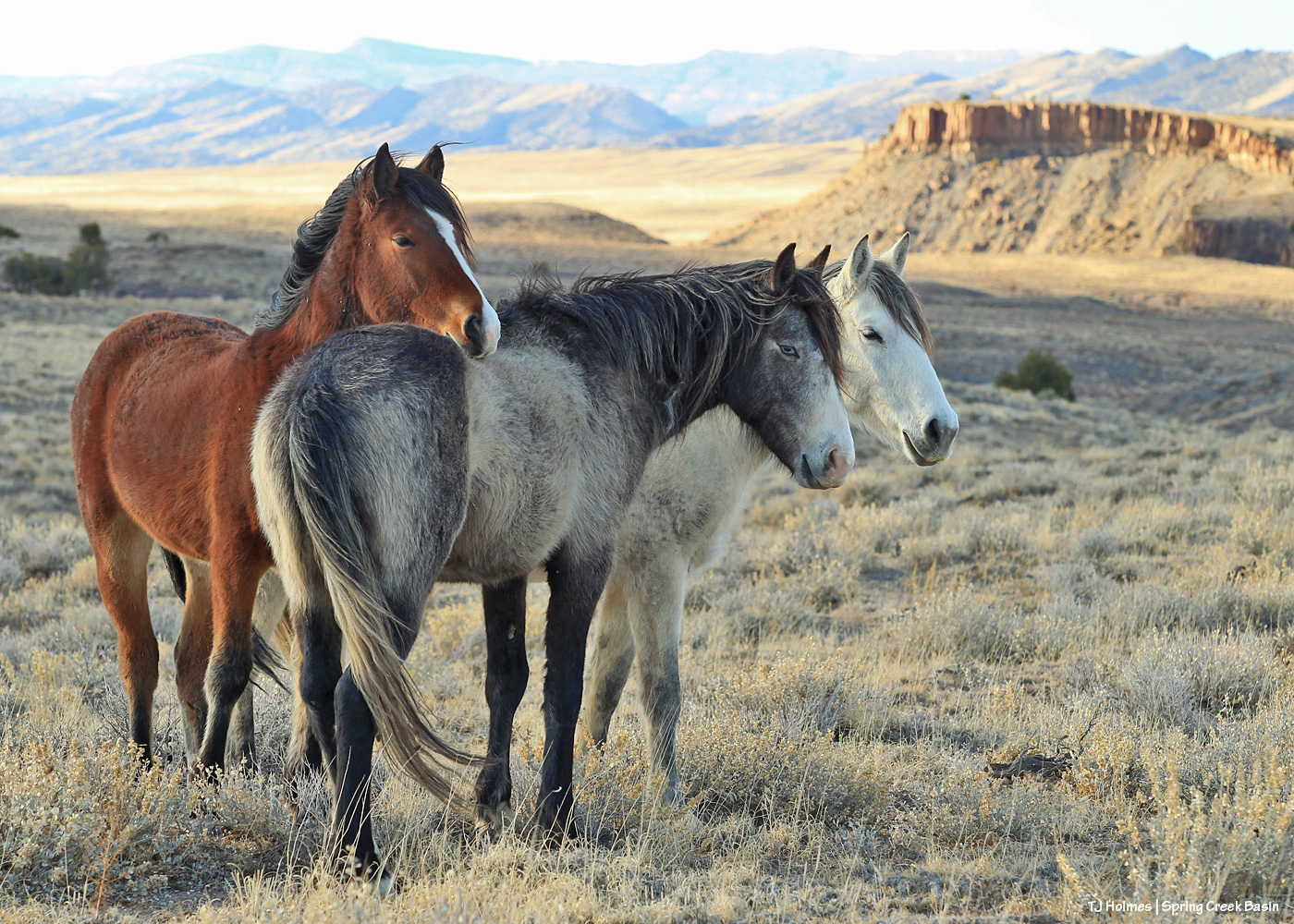
Fortunately, the mustangs live in the moment (while the humans obsess over the wildfire updates), and they still enjoyed peaceful days such as this: Three mares content with their world and each other.

Finally, as summer gave way to fall, Mother Nature cried her best tears and filled some ponds for the mustangs. THAT brought huge relief to us all (if I may speak for my four-legged friends as well as myself). Interestingly, visible at upper left in this image is Benchmark Lookout, a U.S. Forest Service wildfire-watch tower staffed during the critical seasons of the year (which includes September). In this backcountry, we are massively grateful for those who watch for and provide critical information about wildfires, as well as those who work to contain them, allowing them to provide some benefit in some cases while trying to keep property and lives intact.

It might be about now in the list that you’re thinking, “for talking about dry it was, she sure included a lot of pix of ponds.” It’s not because we had so much water; it’s because we’re massively grateful for the water we had.

There’s no water in this image – and it was November, before snow graced the peaks on our northwestern horizon – but the ponies are lined out on their way out to graze after drinking at a little place I call the marsh. This is post-sunset, but wow was it gorgeous under the autumn light. … And it’s not UNgorgeous at blue hour.

You’ve just seen this image of Temple with Temple (yes, the same) Butte and McKenna Peak in the background under a stream of stormy-looking (they didn’t produce a drop over us) clouds. I decided not to choose a pic from the bit of snow we got at the very beginning of December because the above is what we saw the whole rest of the month. The weather has been warm and dry … and that’s awfully nice for getting around and playing outdoors (60s! in Colorado!! in December!!?!) … but if things don’t change in the next few months, I’m going to be singing the same ol’ why-won’t-it-snow song that seems to be stuck on repeat.

And your bonus:

This was an evening in June. Nobody wanted to pose much, and I was going bananas, trying to get somebody – anybody – in front of that background in that subtle, delicious light. Finally, this young stallion obliged. And it seems to sum things up a bit: Hot this year? Yes. Dry? Gosh, yeah. Anxiety-inducing? Pretty much like always … with an extra edge. But! Beautiful, peaceful, a place of escape from the world’s ills (at least the headline type). Kind of a promise that it’s there … out there … and sometimes we don’t have to search all that far for it.

And there you (kinda) have it: 2025 in the rearview. It’s always hard to select just one pic for each month (plus a bonus!), but I hope you enjoyed this little recap.

In best-of-all news, I spent a lot of time (again) with my beloved mustangs in the best place on Earth (in my ever-so-humble opinion). 🙂

And close to that is my gratitude for all of you readers who follow the mustangs and our pictorial journal of peaceful, wild, beautiful life here in Spring Creek Basin. Thank you so much, and I hope you all have a peaceful, wild, beautiful 2026 (with lots more moisture!!!!!!!!!!!!!)!

Be kind to each other! 🙂


Remembering a giant

16 12 2025

Today is the 10th anniversary of the passing of Dr. Jay Kirkpatrick, beloved fertility-control advocate (and so much more) for wild horses and burros (many species of wildlife, actually). I remember that when I got the news in an email from a friend, though it was December, I thought it was some kind of cruel April Fool’s joke.

I met Dr. Jay in August 2010, when I showed up at the Science and Conservation Center in Billings, Montana, for a PZP training course. I also remember that it took me a long time to work up the courage to follow the advice of a couple of friends and contact him; he was a rock star to me. Legendary. Untouchable. Unapproachable!

Except that neither of those last two words was true.

I finally worked up the gumption to email him … and sign up for training – BEFORE we got approval to implement a PZP program in Spring Creek Basin. I tentatively approached the lab, on the grounds of ZooMontana, the day before the class officially started, to see what I was getting myself into. When Jay appeared, I didn’t ask for an autograph (!), I asked if I could give him a hug. I still remember that, while he laughed, he indulged me. … Wow, I miss him.

Jay was one of the friendliest, most down-to-earth people I’ve ever met, all the more amazing because he was also one of the very most obviously crazy-intelligent people I’ve ever met (to this day). He had this way of making everyone welcome and like you were IN ON IT with him, even as he explained his “why wouldn’t you do it this way” philosophy surrounding better management … some of which you might never quite have thought of but was so wonderfully simple – and, according to his same philosophy, attainable.

Dr. Jay was one of the best, most inspiring, most humble, most committed and dedicated people I’ve ever known, and I feel so blessed to have known him, even briefly. He trained me not only to mix and dart with PZP, the *why* behind doing it, the keeping of records (back at a time when it was particularly challenging for us in Spring Creek Basin) but also the importance of having optimism and a plan … and persevering.

I got to know him for five years, and he encouraged me through the sometimes rocky start of Spring Creek Basin’s PZP program. Even now, 14 years and only one roundup later (in 2011, when we started our PZP program), I think of him quite a lot. He’s one of the three (at least) angels watching over Spring Creek Basin, and I hope he’s proud of what we’ve accomplished here.

Friends Celeste Carlisle and Kayla Grams, along with Melissa Esser (whom I haven’t yet met but already greatly respect) visited Rocky Mountain National Park during their trip to Colorado for the Pathways 2025 Human Dimensions of Wildlife conference. Celeste wrote this blog post for Return to Freedom.