Jif

5 08 2011

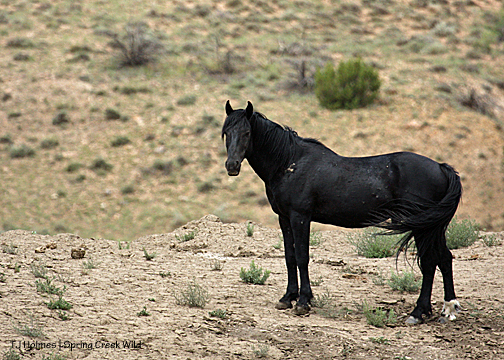
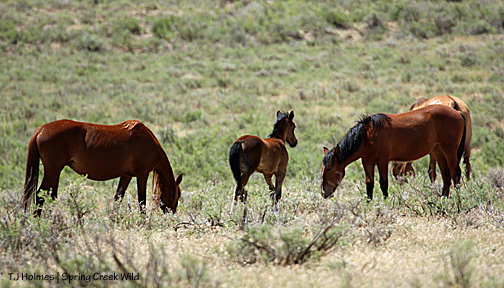
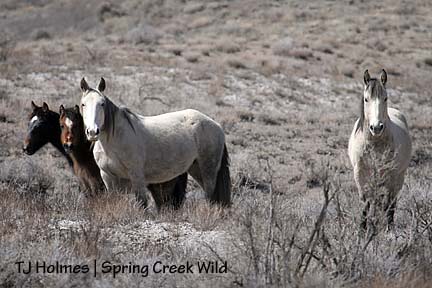
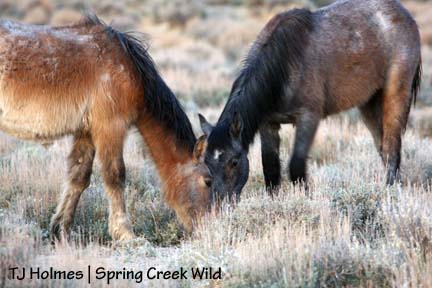
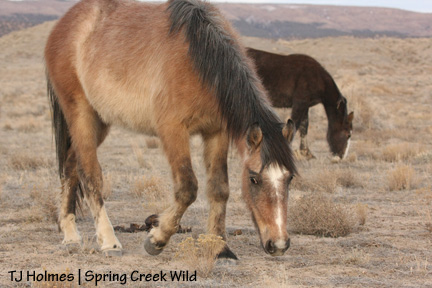
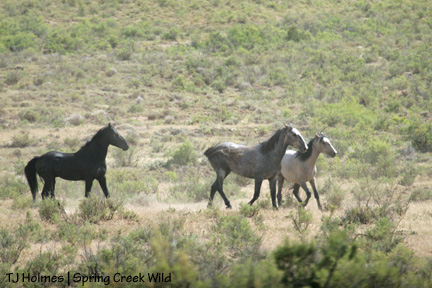
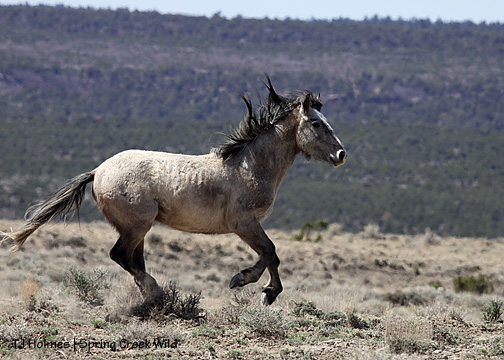
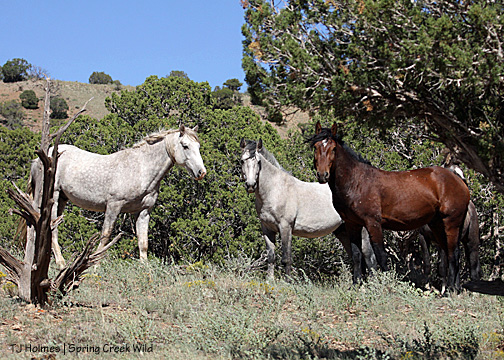
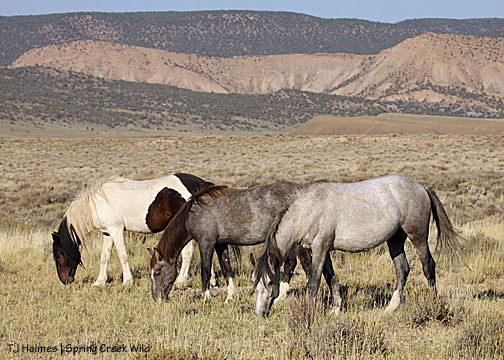
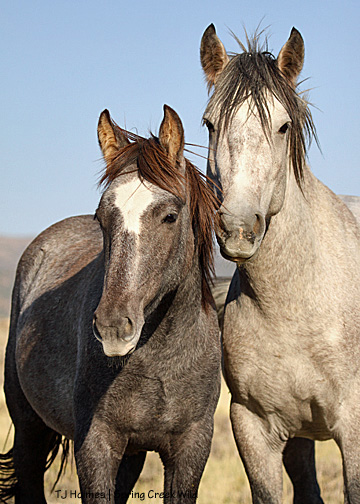
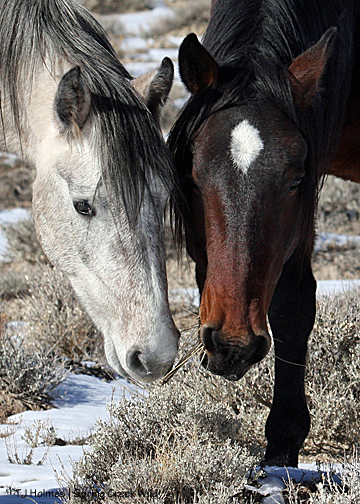
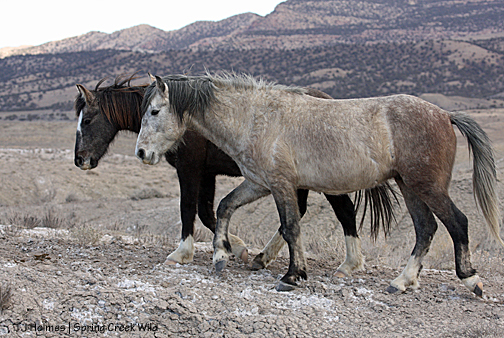
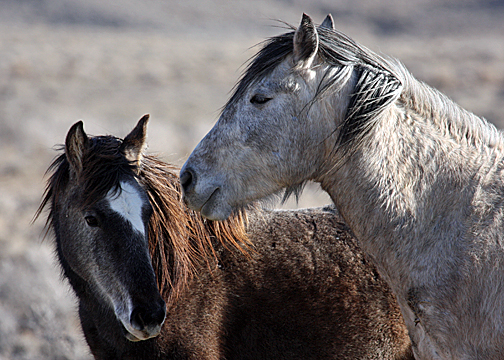
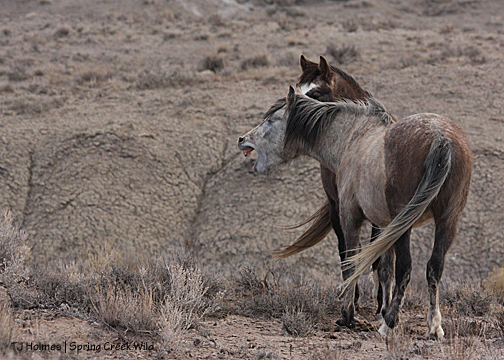
Jif seems to have done it again … had a foal and then lost it before I ever saw it.

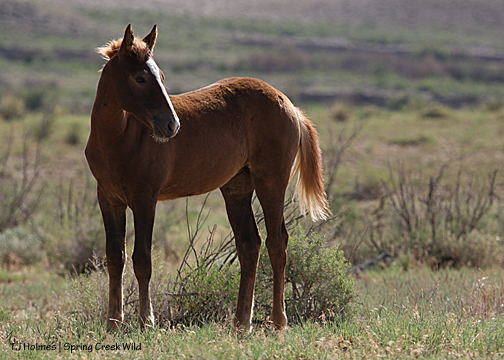
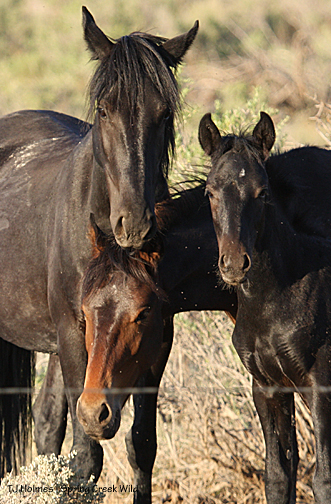
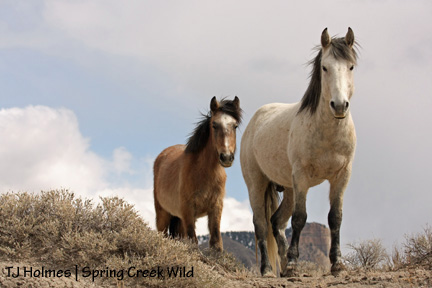
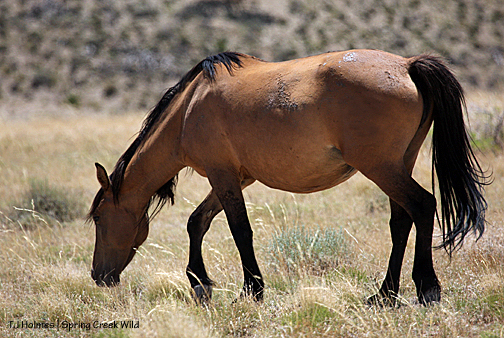
These two pix were taken July 6. I think she’s pretty obviously pregnant, and by her udder, I was thinking it was possible she’d foal by the end of the month.

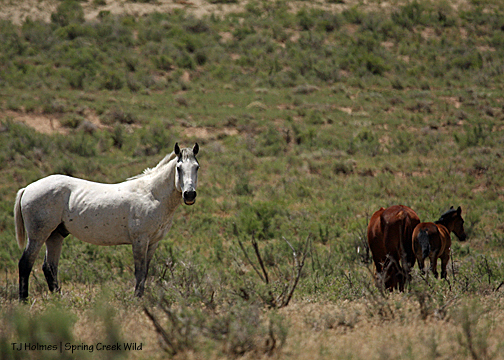
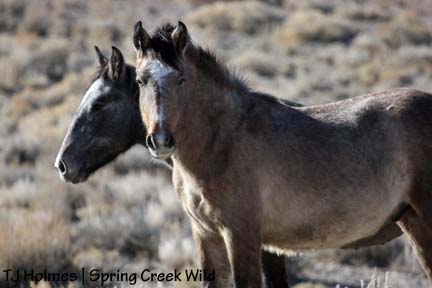
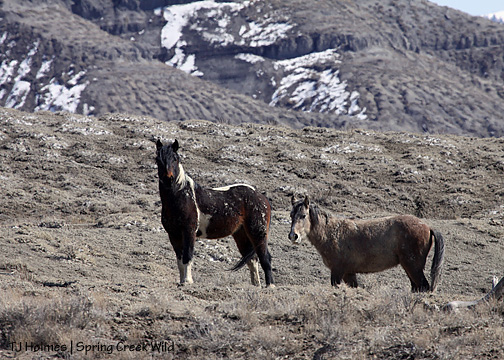
This was taken July 14.

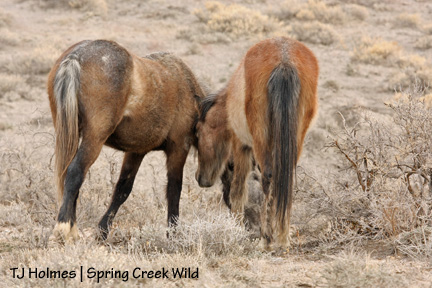
I saw her the week of the tour but didn’t take any pix. She was pregnant then.

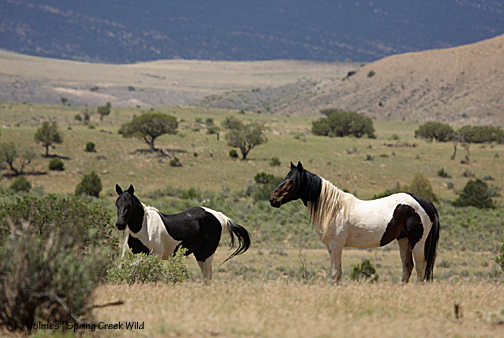
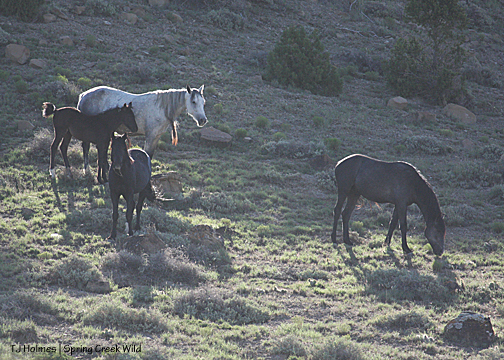
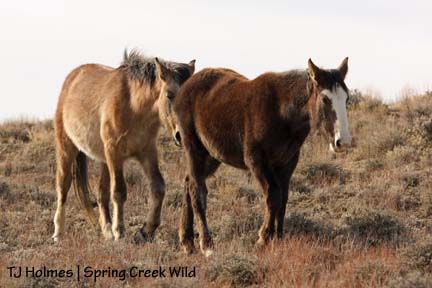
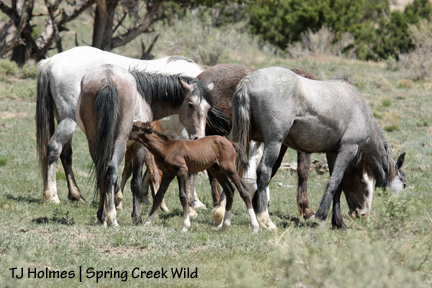
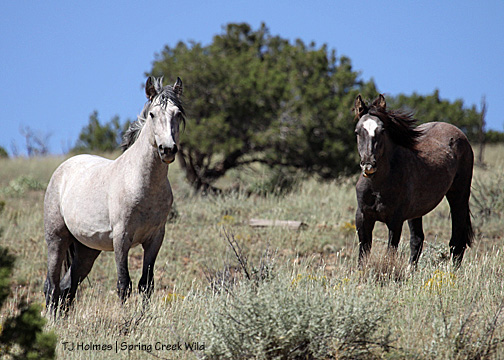
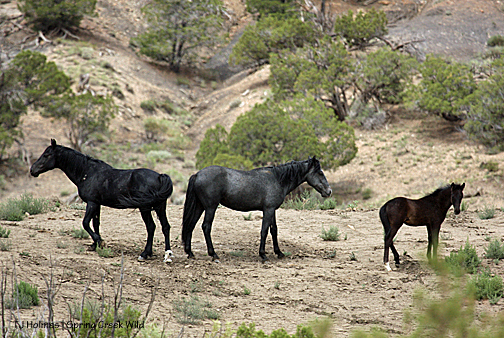
This was taken yesterday, Aug. 4. That’s Boreas in the background, Two Boots’ almost-3-month-old colt.

I really have no idea why she’s lost either of her last two foals. It’s unlikely predator-caused; they’re in an area almost completely devoid of trees or other cover for a mountain lion, and I just don’t think even a couple of coyotes would be able to get to a foal in a band this size. Just another mystery. The band is isolated and has been hanging out in the same general area for quite a while now.

This makes six foal mortalities this year (we’ve also had more foals this year), and three mares are yet expecting. Chipeta is due Sept. 1, and Mona is due Sept. 15. Kootenai’s due date is unknown because this will be her first foal. She’s getting big but has no udder to speak of, so I’m guessing she’ll push into September also.

I have made sure BLM is well aware of these mares with regard to the roundup. Neither Mona nor Kootenai will be targeted because of their introduced status (let alone the fact that they’ll have very young foals), and Chipeta will likely be passed over both because of her location (deep in the southwest end of the basin – far from the trapsite) and because of her young foal.


Heaven in a meadow

4 08 2011

The northwest “meadow” is the new east pocket.

There’s grass. There’s water.

Horses are there.

Four beautiful bands … and Kreacher’s – and Duke – were just to my left.

Beautiful day. How could I have thought he wouldn’t still be there?


Pictures from a tough day

3 08 2011

It felt like a betrayal to even lift my camera to take pictures after what happened to Twister … though, when I saw the BLM truck leave the basin, I felt unmistakable relief. Like when I drive by Bones Valley, I think of Bones and her foal … I’ll probably always now think of that hill above Wildcat Spring as Twister’s Hill. This is what attachment and memories and love do to us, I suspect. Life.

It wasn’t until I walked out to Iya’s band later in the day, though, that the guilt of continuing seemed OK, better than OK … what I still need to do. I’ll have those pix in a separate post.

Bounce with his kids: 2-year-old son Whisper and baby daughter Aurora. Whisper had just risen from rolling – and Bounce was rolling earlier – you can see the ground right under them. Is it just me or does young Whisper look bigger than his daddy? He gets that from his mama. Aurora and Whisper are very close, despite their ages, and I suspect Whisper gets that from his big sister, Gaia. A few weeks ago, I found Alegre, seemingly alone. She looked up from her grazing, regarded me for a moment as I sat in the Jeep, then returned to grazing. Bounce appeared to see what was up, and a few moments later, Whisper came trotting out of the trees, Aurora stuck to his side like glue. I wonder how many older siblings are mistaken by observers for mothers in those kinds of situations.

Perfectly proportioned.

Zoomed out to show him on the bank of a pond that recently went from dry to water (it was dug out last year).

Mama Alegre had already left the pond and was grazing among the greasewood when ‘Rora found her for her own mid-morning snack.

Those were all taken from the Jeep.

Back around under the north hills, I found Seven’s and Spook and Bruiser where they had been the day before. They like this area because of the proximity of water (Wildcat Spring) and the grazing and the trees to seek when the gnats are just too much. I parked the Jeep almost exactly where I had the day before with Grey/Traveler’s band and just watched them for a while. Seven’s band were immediately off the road, and Spook and Bruiser eventually crossed the road.

Roja, Killian, Shane and Mona

Seven, Mona and Killian. They drifted farther from the road when Spook and Bruiser crossed, and I took this as I drove by. Roja grazing while I’m near represents a major leap in her behavior. Seven still watches for quite a while before he goes back to grazing.

Spook, one of only three true black-and-white pintos in the basin (Raven, from Sand Wash Basin, and Corazon are the others).

Bruiser

Spook and Bruiser. Seven’s are actually closer to me – they’re what Bruiser’s looking at.

Iya’s turned up deeper in the valley, on the north side of the arroyo that runs along the base of the north side of the east-west hill – basically down left-ish of Spook and Bruiser. Quite a distance from their normal territory. Unlike most of the horses, Poco and Roach have mostly stuck to a particular location in the basin, though they occasionally go wandering. And it may be Iya’s influence that has them wandering here, though both double ponds had water (both had gone dry; one was dug out in 2009).

Twister is up, way up, to the right … a guardian now, joining the others that have gone before.


Spring Creek Basin roundup EA

2 08 2011

Spring Creek Basin Wild Horse Herd 2011 Gather Plan Environmental Assessment   

The Bureau of Land Management issued the final environmental assessment and decision record for its gather plan for the wild horse population in the Spring Creek Basin Herd Management Area southwest of Norwood, Colo.

Beginning about Thursday, September 15, BLM will gather approximately 60 wild horses in the Herd Management Area, which is a 21,932 acre area managed for a healthy wild horse herd that is in balance with other resources and uses. The current estimated population of wild horses in the HMA is about 90. This number is based on ground survey completed in May 2011 by volunteers with the Four Corners Backcountry Horsemen and includes the 2011 foal crop.

The appropriate management level identified for the population in this HMA is between 35 to 65 wild horses. Up to 10 of the captured adult horses will be released to maintain herd population within the established appropriate management level. The application of the contraceptive porcine zona pellucida will be administered to the mares upon release.

Wild horse numbers have increased an average of 23 percent per year since the HMA was gathered in 2007, thereby reducing the frequency of gathers.

25 of the wild horses gathered will be available for adoption through BLM’s wild horse and burro program.  The adoption will be held at the Montezuma County Fairgrounds, east of Cortez, CO on Saturday, September 24th beginning at 9AM. Individuals interested in adopting a horse must meet corral and shelter requirements. These standards can be found by visiting the following website: https://www.blm.gov/adoptahorse/requirements.php

The wild horses not adopted will be placed in long-term pastures.

Link to the above information can be found at this website.

Link to the EA in PDF version can be found here: http://www.blm.gov/pgdata/etc/medialib/blm/co/field_offices/san_juan_public_lands/pdf.Par.10445.File.dat/DOI-BLM-CO-S010-2011-0062EA_7252011.pdf


Return …

2 08 2011

I realize that by the time I publish this, I’ve already published my “education” post, that you’ll read it – if you wade through it at all – after you look through these. Nonetheless, I’m calling this post “return” because hopefully it marks a return to photos of the horses and place I’m so passionate about.

Without further ado … These are from the day of the tour.

Bounce’s band, early morning before anyone else arrived, just west of the east pocket.

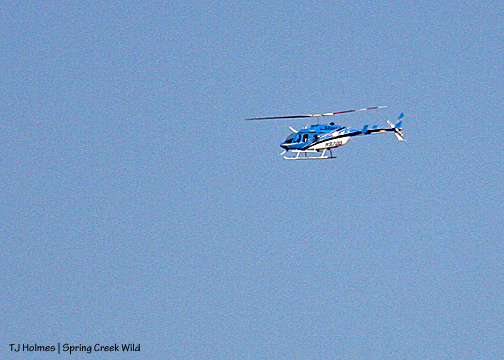
The helicopter. I never even took pix Grey’s band, just hung out while they napped.

Later in the day, after the tour … before I knew about Twister:

Comanche’s band was very near Hollywood’s – still – and had done a bit of traveling during the day (though I can’t comment definitively on the particular cause). Earlier in the day, we could see them north of Spring Creek Canyon; here, they were just off the road above the dugout (east of their earlier location).

Hollywood’s band

Piedra and Briosa. Comanche’s were just up the hill to the right. This was taken from just off the road.

Briosa. Isn’t she a stout big girl?

Eliana, Spring Creek Canyon in the background.

Comanche

Winona

Eliana

I so enjoyed visiting with them, taking these pix of the horses against the Colorado sky with the favorable clouds we’ve seen so little of this year. I didn’t want to leave, though I was headed to check on Twister. I wasn’t aware yet of what I would find with him.

After I’d finally gotten in touch with BLM about Twister, I couldn’t stay in the basin (I didn’t leave the area so I could lead BLM to Twister in the morning). Almost didn’t even stop to greet David’s band when I found them, just inside the fence along the Disappointment Road.

Shadow and Coal

Yearling Wind wiggling between mama and baby brother. You can see the fence strands in the foreground – that’s how close they were.

Handsome baby Coal

Horrible day … and yet a good day, too. Seems to be a contradiction that settles over my entire mustang experience. Can’t explain it … and I guess, overall, I really wouldn’t change it. The “good” is really just that phenomenal.


Moving on …

2 08 2011

Editor’s note (warning): This is a fairly long post – all words, no pix. It combines some realities with some hopes, and hopefully, the overall message is, in fact, one of optimism. It’s a little “news” and a little “response” to “just leave them alone.” Again, I am no particular expert. I hold no degree in the areas of wild horse or range management (though I was briefly a range mgmt major). And I certainly have no expertise whatsoever about herd management areas other than Spring Creek Basin. For Spring Creek Basin, however, I will defend my extensive knowledge of both the range and the horses, based on near-weekly visits for almost the last four years. Sometimes you preach to the choir … and sometimes you have visitors. I do hope this doesn’t come across as preaching but rather my continuing dedication to education. Perhaps in wanting to avoid “preaching,” I’ve slacked on education, as I’ve heard that some don’t understand what we’re trying to do here. That does seem to make me appear an “expert” – in my own mind, at least – but other than my own common sense and observations, I really can’t claim that moniker.

The Jeep, my chariot of freedom, had a two-day stint at the mechanic’s last week, but I don’t think I’d have gone to the basin if I could have. Some emotions still too raw, the nature of Twister’s injury too … just *too much,* maybe. How could I go back and enjoy the others, knowing he wasn’t part of the whole, that which I enjoy so fiercely?

For part of my part in the coming roundup, I’m working on an ID book for BLM, with photos of each horse and basic info. Having as many photos as I do of everybody, it seems like it would be an easy task, but although I started my documentation project (how formal a description that seems now) with the goal of getting full photos of each horse showing markings and mane orientations, my photos in more recent years have left that goal far behind – and become somewhat unnecessary as I know each horse on sight and can specify most even from a considerable distance. I’ve been saving particular photos as I go along in a particular file, but I’m not THAT organized, so the labor in this ID book is to go back through photos – mostly using my blog-photo files to jog my memory and then finding the original photo from the date taken.

The days I wasn’t in the basin, before I got back the almost-fixed Jeep (it IS 11 years old, and it does have 280K miles on it, and I can’t bear the thought of parting with it) and drove into the mountains out my back door (which I’ve done only once this year?), I worked on the “book,” and I went through photos, and I think that process – those reminiscences of not only the horses themselves but the times spent with the horses – was a bigger healing help than I could have anticipated. Pictures are worth so ever much more than simply 1,000 words.

Time marches on … The roundup is less than two months away. I thought I was preparing myself for that particular loss … and then unexpected Twister … We take what comes, we find the good, the positive, and we move on. The horses would understand that, if we can’t.

I want people to know – again – that the roundup and removal of some Spring Creek Basin mustangs is necessary: Because of past management, because of current conditions, because we hope to institute better – sustainable – management with this event that eases the future and provides more for the well-being of the horses than for the convenience of humans. Because a roundup now, while the horses are in good condition, is better for them than going to the point where they are NOT in good condition (such as was the case last time). It’s also better for the finite range that sustains them – that will continue to sustain them.

The day of the evening I found Twister was a big day in Spring Creek Basin. Twelve people toured the basin with me, all but four of us BLM or Forest Service (management of San Juan Public Lands is “Service First,” which includes both Forest Service and BLM). This cannot be other than public information, so I’m “announcing” it here (it’s in the preliminary EA): Jim Dollerschell, manager of the Little Book Cliffs herd – the roundup of which was CANCELED this year because of the successful annual PZP darting program there – will be in charge of our roundup, the “contracting officer,” I think, is the particular title. I can’t tell you how relieved I am about this. Also, Wayne Werkmeister, much-vaunted former Spring Creek Basin herd manager from about 1990 to about 2000, will be involved closely with the roundup. Wayne is currently the Grand Junction Field Office’s associate field manager, so knows and works closely with Jim. The acting manager/district ranger of the Dolores Public Lands Office/Dolores District is Connie Clementson – also coming from the Grand Junction Field Office. Her insights about the ponds in Spring Creek Basin mirrored my own uneducated thoughts, and I’m also glad to have her involved with the office and this roundup. And of course, Tom Rice, associate manager/deputy district ranger of the Dolores Public Lands Office/Dolores District, will be in charge of the overall roundup/adoption activities. We haven’t known him long, but he has proved caring and capable, and we are thankful to be working with him.

Those folks and more attended the basin tour almost two weeks ago, along with two of our NMA/CO board members (plus me, la presidente) and two other members of Disappointment Wild Bunch Partners. Another thing that I particularly want people to be aware of is that our group(s) is working specifically and directly with BLM – as they are welcoming our knowledge – to make this roundup as smooth-running and safe as possible. Following the precedent(s) set by Friends of the Mustangs (Little Book Cliffs), Pryor Mountain Wild Mustang Center (Pryor Mountain) and Friends Of A Legacy (McCullough Peaks) – at least – so is Disappointment Wild Bunch Partners (National Mustang Association/Colorado, Four Corners Back Country Horsemen, Mesa Verde Back Country Horsemen and San Juan Mountains Association) working with BLM to ensure the long-term protection of the Spring Creek Basin herd of wild horses.

Our biggest accomplishment to date is the coming implementation of an annual PZP darting program in Spring Creek Basin – along the lines of the programs in place in the above-mentioned herds.

Warning: Here’s where I might start to get a little preachy: If you think wild horses – particularly those on particularly small, fenced, finite parcels of dry, dusty, wind-blown geography with poor vegetation and even poorer water quality and quantity – should be “left alone,” please think about it again – and rationally. Not just one elderly, poor-condition horse starves from lack of forage and/or water – they all do. Not just one part of an originally-poor range suffers the effects of overgrazing and erosion – it all does. The horses are in great condition, with no need to remove some? Would you instead wish the roundup on horses in poor condition – as was the case in 2007, with nearly 120 horses on the range – some of which were apparently so desperate for water and/or forage that they pushed through/over fences in search of those things necessary to their survival? Would you instead wish an “emergency roundup” on even more horses, say, 130 – as was the case in the 1990s, when the horses were so stressed by lack of forage that the added stress of a roundup killed many of them? Wayne is haunted by that. I am haunted by his telling.

Our groups have worked – intensely and often with massive frustration – since early 2008 to effect change for the Spring Creek Basin herd (and NMA/CO and 4CBCH have been working much longer than that). Sustainable management is not unattainable. It does take work – and preparation. We couldn’t accomplish all we set out to do (mineral bait trapping was high on our list) … but now that IS high on the list – BLM’s list. Roundups are costly, high-profile affairs that don’t often produce “good” news. With our help, the Dolores Public Lands Office is saying it wants sustainable management for the Spring Creek Basin herd – and it’s willing to accept the help we offer to get there.

That, my friends, is progress.

And with every start and stop along the loop, horses here, horses there, we proved it – and BLM, by their very presence and invitation to us a reaching out, proved it back.

I will relate one particular incident that I believe captured BLM’s attention. Early in the morning, before anyone else arrived, a helicopter flew low over the basin. I was visiting with Grey/Traveler’s band, who were napping under trees near the road in the north hills. When the sound of the helicopter reached us, the horses bolted. That’s something I can tell people … but until they see it for themselves …

Early in the tour, an hour and a half or so later, we were standing above Spring Creek Canyon and the trapsite when the helicopter flew back over the basin. Low enough to see, comment on.

About midway through the tour, we paused in the east pocket to look out at Bounce’s band … and Grey’s. While our caravan was stopped. Grey’s took off running again. “Do you think they’re running because of us?” No, no, it must be the proximity of Bounce’s band. Bounce’s band was much closer to Grey than we were – both bands at a considerable distance from us on the road.

Other horses were on the old (and now illegal) WSA road past Sorrel Flats – Iya and Cougar with Poco and Roach. When we drove on, Grey’s appeared around the back side of the “tree island.” Hmm. Because of us? Because of the line of vehicles (four, including my Jeep)? Surely not. I’ve never seen him do such a thing (though I must say I’m almost never in the company of other vehicles, let alone three others). We got stopped at an arroyo; Grey’s kept running south.

Down past the double ponds, up onto the S saddle that returns the view of the rest of the basin … and there they were again – still running. And I finally had to admit it was us – and the helicopter. On they went toward Round Top. Not a comfortable view of the basin’s most famous stallion and his family. (The next day, I finally saw his band as I was leaving – they were all the way over on the west side of Flat Top. I know these descriptions won’t mean much to most of you, but the point is that his band traveled an enormous distance, and though they didn’t run at the sight of me, they were still moving …)

Does that change my mind about the coming roundup? No. In fact, it hardens me to the necessity of it. Because without a roundup this year, when the horses are in good condition, we’d have one next year, when they’d probably NOT be in such good condition (and back in the 120-130 population range) – and what good would that be for THEM or for the range? And without starting a program to limit reproduction among the basin’s mares, we’d see this scenario play out again in just another few years – like it has all the previous times. And THAT is what I am trying to prevent: helicopters chasing horses and families being torn apart with frequent regularity.

Little Book Cliffs STOPPED its roundup because of its program to limit reproduction. Spring Creek Basin can – will – do the same. And in the future, mineral bait trapping is an effective way to selectively remove horses that, because of the lengthy period between roundups, will hopefully come to have a particular market.

The preliminary EA states: “Population modeling reflects that the implementation of fertility control and selective removal would result in slightly reduced growth rates of the wild horse population in the Spring Creek Basin HMA, when compared to selective removal alone. The model indicates that growth rates would not be so low as to cause risk to the population should fertility control be implemented. …” It goes on to compare native PZP and PZP-22 with no real understanding of the actual differences of the two outcomes – as demonstrated by studies of both native PZP and of PZP-22. It also seems to forget that native PZP has been in use far longer than BLM has been using it – and working to great efficacy … definitely greater than the “model” used for this EA.

Fertility control – in the form of native PZP (and, eventually, mineral bait trapping to selectively remove fewer horses) – can actually quite effectively reduce the growth rate of the wild horse population in Spring Creek Basin – compared or not with “selective removal,” which in this case isn’t particularly selective at all, requiring the helicopter-driven capture of most of the horses to make good choices about who to remove and who to leave to carry on the herd’s legacy. PZP darting and mineral bait trapping, therefore, can drive a sustainable management goal of less-frequent roundups as well as the removal of fewer horses – becoming the preferred management process for BLM’s Wild Horse & Burro Program, and we are optimistically involved in helping that dream become a reality.

Relationships between civilian advocates and BLM can be and are proving successful. On behalf of NMA/CO and the Wild Bunch, I am thankful to our local government officials who think so, too.



Admiral & Kapitan

28 07 2011

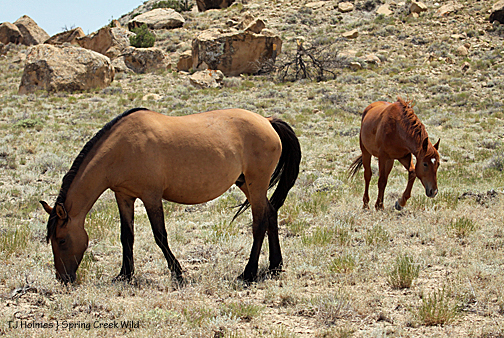
As most of you have heard, Pryor Mountain lost a great stallion, Admiral, and his son Kapitan recently when they were struck and killed by a driver suspected of being under the influence of alcohol.

http://pryorwild.wordpress.com/2011/07/25/july-25-2011-official-press-release/

Admiral, Kapitan, Hightail, Seneca and Jesse James were the last horses I saw in the Pryors last summer on my way to Billings for PZP training. Matt Dillon took me out to see the horses, and we picked up some other visitors as well who spent a beautiful morning marveling at the peacefully grazing horses. I am such a sucker for bays, and dark, rich glorious bays such as Admiral – as Admiral himself – are just stunning.

Admiral

Kapitan & Seneca (?)


Thoughts

25 07 2011

Life is full of changes, some good, some bad, some that happen, some that require a leap, whether it’s a push or voluntary.

Change of the forcible kind hit me last week when the world jolted off its reassuring axis and crashed.

I have a fantastic blue-sky pendant made by a local silversmith-artisan-beautiful-person that is stamped on the back: “Freedom lies in being bold.” I bought it last year after looking at it and thinking about it, right before my trip to Montana, during which I crammed in two drive-throughs of America’s oldest national park and a friend’s wedding in one of the perfect places on Earth and my PZP training.

I wear it to try to be bold … wishing I could be as bold as it suggests. Knowing I fall well short of the mark. I wear it for courage, to take in the power of sunshine in the heavens … and I needed every ounce last week. His was more than mine.

I simply cannot – and so often don’t try to – express my gratitude enough that so many people love and enjoy the mustangs of Spring Creek Basin. Through ups and downs, amazement and sorrow, pain and frustration and the greatest joy I’ve ever known, I am grateful to all of you for coming along on this journey with me. For those of you I’ve met, for those of you I’ve met only through comments and emails, for those of you I’ve never met but have met the horses, fallen for them, tumbled head over heels for these incredible beings that live so simply, that have stirred the national conscience about what’s right and wrong with how we treat animals, each other, all our neighbors on this big blue round rocket in the infinite every-sphere we call home.

I am a loner. Pure and simple, I am the lonest of lone wolves. After almost four years of visiting the horses almost weekly, I finally realized one day this spring during a peaceful pleasant daydreaming hill-time with Alegre’s family (before Aurora’s arrival) that I think of myself as neither lonely NOR alone (“alone but not lonely”). I mean, duh. I’m with the horses.

But I love sharing them. With people. With YOU. Whether I know you or not, that you know the horses brings me the most incredible joy. When I’m not ranting (to myself) about the ills and craziness of the world (Norwegian dude goes and bombs people, then spends an hour and a half shooting people –  KIDS?! – while dressed as a cop?!), near and far, I am thinking about how to share the beauty of their world, them, the beauty of a particular place and beings in the world that I have come to know so well, want everyone to love as much as I do.
Sometimes, bad, horrible, awful, hurtful things just happen. No one is at fault, the world won’t end, most of the world won’t even know about it. But he was here and real and living and breathing and traveling and touching my life (heart, with his, huge) and that of others and beautiful and doing what he did, and he is gone, and though my heart has shattered (again), it is already healing with the help of what is left behind – those he knew and who knew him – and thought of him: loved.
Not yet … not yet …

I am an independent sort, and one of my biggest frustrations in this life is the need to rely on others for certain things – things that rarely get done as well as I think I could do them – if I could. Physically? No. The “yes you may” kind of being able to do what needs to be done. Permission. Allowance.

Because that’s the way of it.

It comes full circle in waiting for bureaucracy.

But sometimes, even in the most bureaucratic of bureaucracies, things get done because they must – because to do the thing is the right thing to do. I witnessed that last week, and it gave – gives – me hope.

Remember that when I found Hook’s band without Ember’s new foal – Indy – Twister also was missing? I thought he’d turn up. I thought he’d be with the youngsters or with Duke or maybe Sundance. I thought he’d be fine.

He did turn up. He wasn’t fine.

He was way up the hill above Wildcat Spring – near the place where I first visited with Indy – and he was hurt. Badly, horribly, no-turning-back hurt. He had lost a lot of weight. I don’t know when he’d had his last drink of water.

Some would tolerate that suffering. Some would not, and they came in the morning and freed a beautiful wild soul in the last – best – compassionate act they could perform for him. For that, they have my eternal gratitude.

Sometimes, you do need someone else, who not only has permission but ability – and the compassion to do what must be done – and well.

I know this has been a rambling post, off-kilter with things seemingly unconnected. I could have listed the things I knew about Twister – orphan, maybe a sire, probably a brother, definitely a son, a young stallion looking for his own family. A fuzzy little odd-colored colt with a wonky knee who adored a filly named Two Boots who took his son/brother under his wing and who grew into a silver reflection of our great stallion Traveler.

But that’s only what I knew. He was so much more. They all are. And that’s why we fight for them – for what we k-n-o-w, for all that we don’t know anything at all.

Now he’s always free. Always home. Always with us. Always ours.

And for what we knew, I’ll keep bringing you the stories I know, theirs to share with the greater world, so we know a little more beauty, to counter a little more of the hell we read about every day.

Twister with Corazon and Cinch

Twister & Corazon & Cinch

Twister (far right) with Two Boots, Houdini & Seven

Grey (right), Houdini, Twister & Two Boots

Twister & Two Boots

Grey, Twister, Two Boots, Houdini

Twister & Two Boots

Twister & Two Boots

Twister, Grey, Houdini, Jif

Jif, Two Boots, Twister, Iya & Houdini

Iya, Two Boots & Twister

Jif, Twister & Grey

Twister & Iya

Twister & Two Boots

Jif & Twister

Grey & Twister

Iya & Twister

Houdini, Iya, Jif, Two Boots & Twister

Twister & Iya

Grey & Twister

Twister & Two Boots

Twister

Twister, Cuatro, Two Boots

Twister & Two Boots with Cuatro

Bounce, Hook & Twister

Twister & Hook

Twister & Storm

Cinch & Twister

Bruiser & Twister

Cinch, Bruiser & Twister

Twister

Twister & Cuatro

Cuatro & Twister

Sundance, Twister & Aspen

Twister, Cuatro & Duke

Twister

Twister, Cuatro & Bruiser

Cuatro & Twister

Twister

Cuatro & Twister

Twister

Twister & Duke

Twister & Cuatro

Twister & Cuatro

Twister & Cuatro

Twister & Storm

Twister & Storm

Twister, far left, with Hook's band

Twister

Twister

Fly now with angels …


On hold …

21 07 2011

Was having a really good time in the basin with some really important visitors … and then it was shattered. I’m not quite ready to post about it except to say Spring Creek Basin is less one beautiful soul … and that I am beyond grateful to BLM’s Tom Rice and Sean Wagner (sp?) for their kindness and compassion.

I beg your patience if the blog is quieter than usual for a little while.

*****************************************************************

Cougar and his stepdaddy, Poco – they’re just fine. After weeks of not seeing them, I saw their band both days and spent some healing time with them today.

The love I have for these horses has such power … to break … and to heal … my fragile little heart.


BLM seeks comments on Piceance-East Douglas Roundup EA

19 07 2011

Thanks to photographer Pam Nickoles for this heads-up about the environmental assessment now out for comment about the upcoming Piceance-East Douglas roundup scheduled for Sept. 20-30 (just after the one here in Spring Creek Basin, which is set for Sept. 15-18). She has been visiting this herd and has some awesome photos of these beautiful mustangs.

From the BLM website:

July 7, 2011

Contact: Tom Alvarez, public affairs specialist, (970) 244-3097

Environmental Assessment for Piceance-East Douglas Wild Horse Gather Available for Public Comment

Meeker, Colo. — The Bureau of Land Management, Northwest District, White River Field Office (WRFO) is releasing a preliminary Environmental Assessment (EA) for the Piceance-East Douglas Herd Management Area Wild Horse Gather Plan for public review and comment. The gather is needed to help balance wild horse populations with other resources, restrict wild horses from areas where they were not “presently found” at the passage of the Wild and Free-Roaming Horses and Burros Act and to manage wild horses within the area designated for long-term wild horse management.

The WRFO manages wild horses within the 190,130 acre Piceance-East Douglas Herd Management Area (HMA), located in Rio Blanco County, Colorado. The Appropriate Management Level (AML) in the HMA is 135-235 wild horses. The Proposed Action analyzes the impacts of gathering the current estimated population of 382 wild horses from inside and 78 wild horses from outside the HMA; to implement fertility control, sex ratio adjustments, and a selective removal of excess wild horses. If the Proposed Action is fully successful, the HMA will consist of approximately 135 wild horses; the lower range of the appropriate management level of 135 to 235 wild horses. The BLM would select the 135 wild horses to maintain a diverse age structure, herd character, body type (conformation) and implement a sex ratio adjustment of 60 percent studs to 40 percent mares. All mares, over two years of age, released back to the HMA would be treated with Porcine Zona Pellucida (PZP) immunocontraception (fertility) drugs. In addition, the BLM has fully analyzed three additional alternatives to the Proposed Action to address issues and concerns brought forward during the initial scoping process.

“The Bureau of Land Management is tasked with managing our rangelands for a variety of uses. Providing management for a healthy wild horse herd within the HMA so the thriving natural ecological balance is maintained for all plant and animal species on that range, in conjunction with all other resource uses, it is one of our most important responsibilities to the American public and public land users. The public’s participation in this analysis process is vital to the decision making process,” said Kent Walter, field manager for the White River Field Office.

The gather EA can be found on the BLM WRFO website at http://www.blm.gov/co/st/en/fo/wrfo/piceance_-_east_douglas.html, and selecting Preliminary Environmental Assessment DOI-BLM-CO-110-2011-0058-EA. All comments must be submitted in writing and received by the WRFO by the close of business on Aug. 8, 2011. Comments may be sent via email to mkindall@blm.gov with “Wild Horse Removal Plan” in the subject line of the email. Comments can also be sent by regular mail to the Bureau of Land Management, White River Field Office: attention Melissa Kindall, 220 E. Market St., Meeker, CO 81641. For more information, call James Roberts at (970) 878-3873 or Melissa Kindall at (970) 878-3842.

*********************************************************************

I went looking for information about the specific fertility control to be used … “two-year PZP contraceptive vaccine,” according to the EA, but the language seems to mean native PZP and/or PZP-22 interchangeably. (Page 94 of the PDF; Page 85 of the EA document.)

It seems odd that BLM would continue to use PZP-22 given the known timing problems from the HSUS studies in Sand Wash Basin and Cedar Mountains – and the EA acknowledges that it is best given between November and February (though I’ve also heard between December and March, and I think the Spring Creek Basin preliminary roundup EA pegs it at between December and February). This roundup is scheduled immediately after the Spring Creek Basin roundup.

PZP-22 is not “fairly inexpensive”; PZP-22 was about $200 a dose when it was allegedly administered to the Spring Creek Basin mares in 2007. Native PZP, however, is quite inexpensive – less than $30 per dose. Also, PZP-22 can be given “in the field” if that means at the roundup … but not (yet, that I know of) without a roundup – like native PZP can be given. The efficacy percentages are attributed to Dr. Kirkpatrick, who works with native PZP (and percentages are low for native PZP, which has at least an average 90 percent efficacy rate – also, native PZP is effective for one year, so the rest of that would seem to be moot)). Dr. Turner, attributed elsewhere, works with PZP-22.

Just some “hmms” I had when reading that part of the EA. I am not familiar with this herd at all and plan to seek more information from people who know those horses and that area.