Recap of 2025

31 12 2025

To remember how I did this post last year, I had to go all the way back to Valentine’s Day to find the post recapping the previous year (2024, then) in images. This year (for 2025), I’m happy to announce that for once, though I procrastinated, it wasn’t THAT long, and it was in plenty of time (OK, one day to spare) to make the Dec. 31 deadline.

Deep breath: This was a hard year. Last winter was rough (read: bad dry), which meant the rest of the year was rough (read: really bad horrible awful dry) in terms of drought. Monsoons didn’t hit their stride over Southwest Colorado, so we didn’t get much rain, either. Federal employees were hard hit, too, and one of our young BLM’ers was illegally fired from the new job he loved.

But we also had some good-news happenings: Thankfully, he was reinstated, and we have a strong range team in Ryan, Anton and Laura. We got some new signs installed, including the replacement of the old, sun-bleached, weather-beaten interpretive sign for the new information “kiosk” that greets visitors upon entering Spring Creek Basin. Fertility control (native PZP) continues to be an extraordinary benefit to our herd in terms of management and keeping roundups and removals at bay.

In wider Colorado mustang news, the BLM short-term holding facility at the Cañon City prison complex closed in November, BLM and Colorado Department of Corrections being unable to reach a contract agreement. That’s not-great news in terms of uncertainty for rounded up and removed Colorado mustangs. Where will they go? In semi-balanced decent news (?), all of the Colorado mustangs that were in holding there (about 100 at the time) were adopted or went to private sanctuary or are currently in foster situations for a planned adoption in March (and that all happened despite federal employees, including BLM’ers, being out of work (or working without pay) because of the government shutdown).

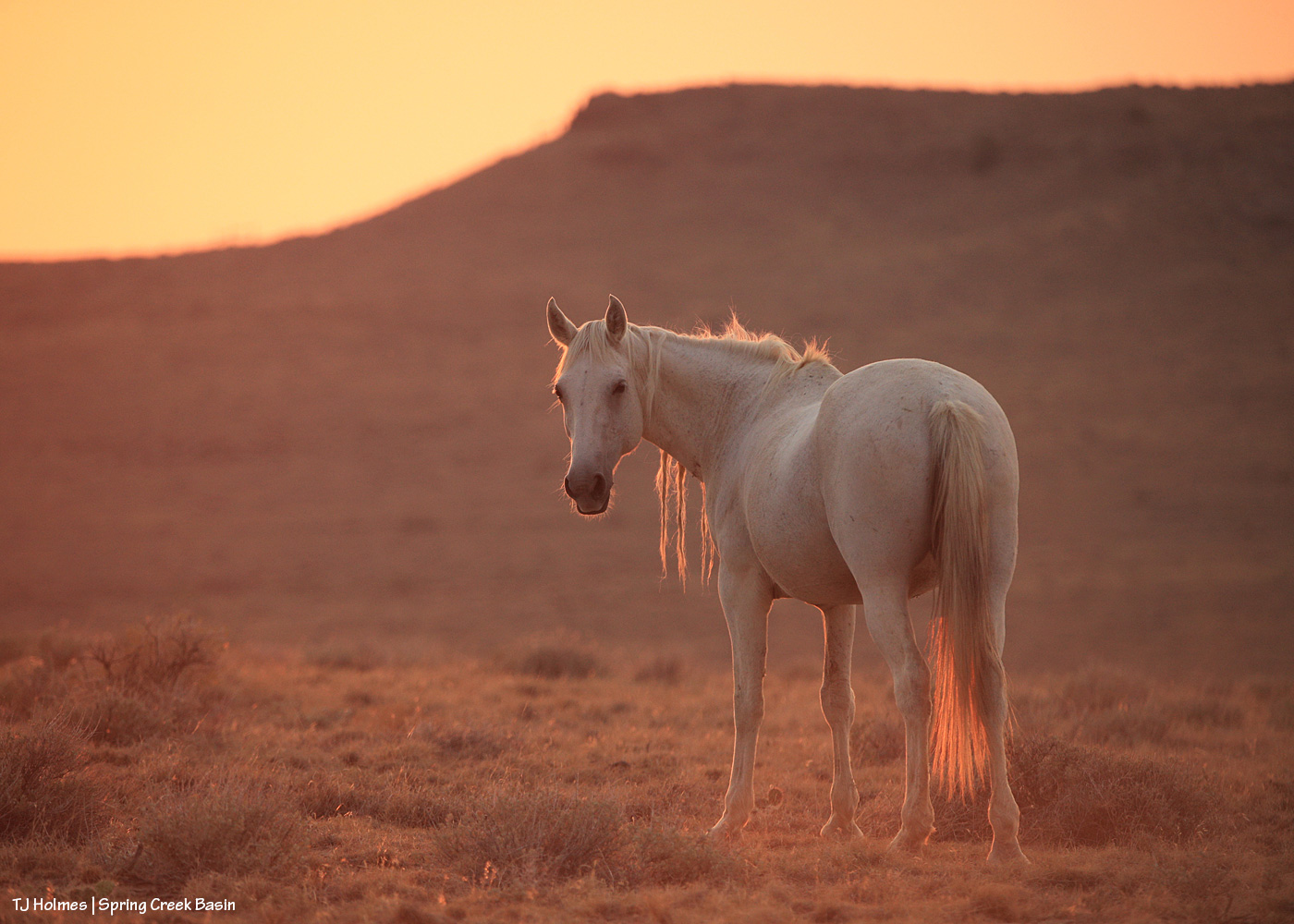
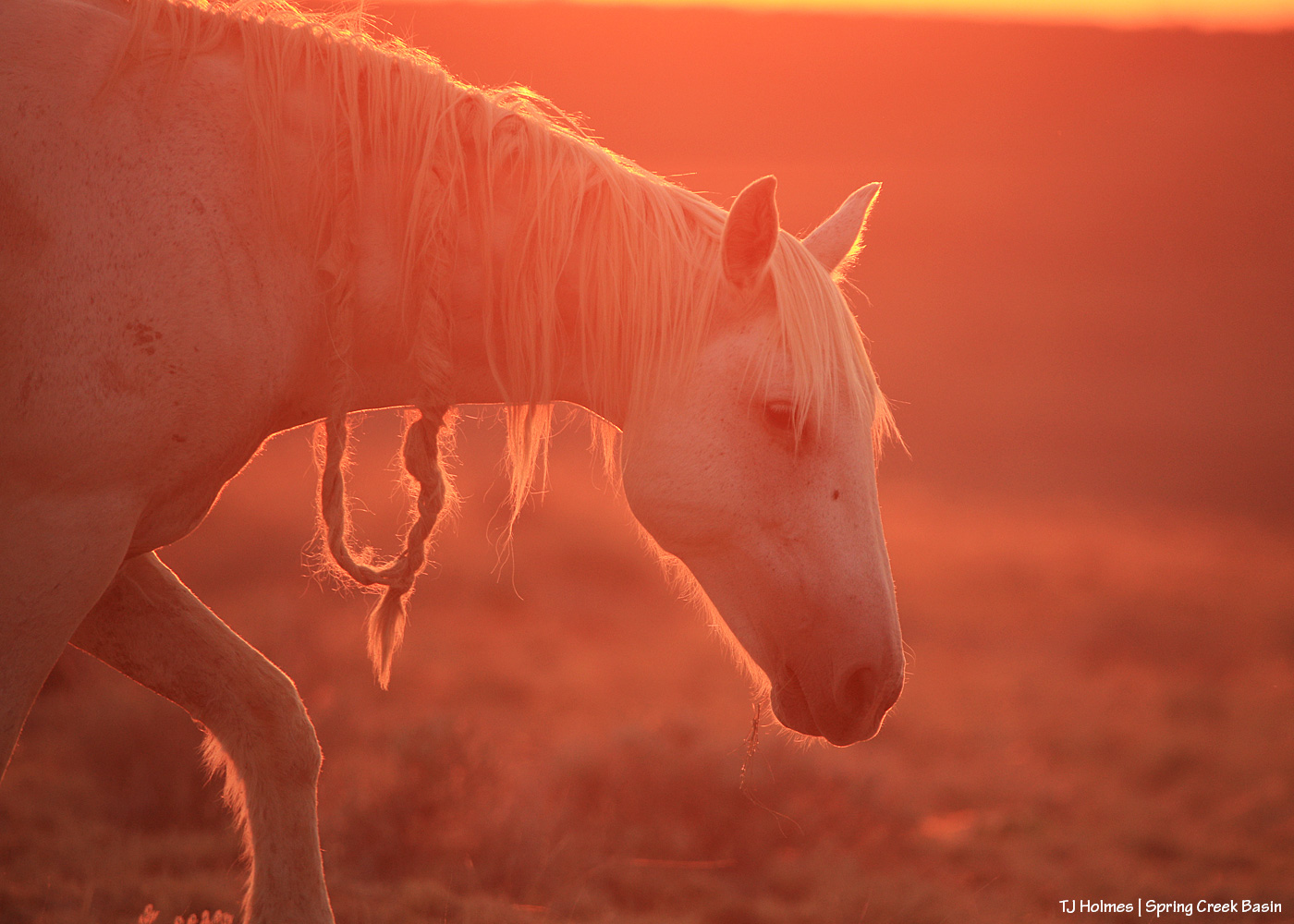
What follows is a pic from each month of the past year and a bit of reminiscence of what was happening when I captured the image of a mustang or mustangs. Many of these pix have been featured previously on the blog; some haven’t. If you make it to the end, there’s a bonus pic … one of my favorite of the past year.
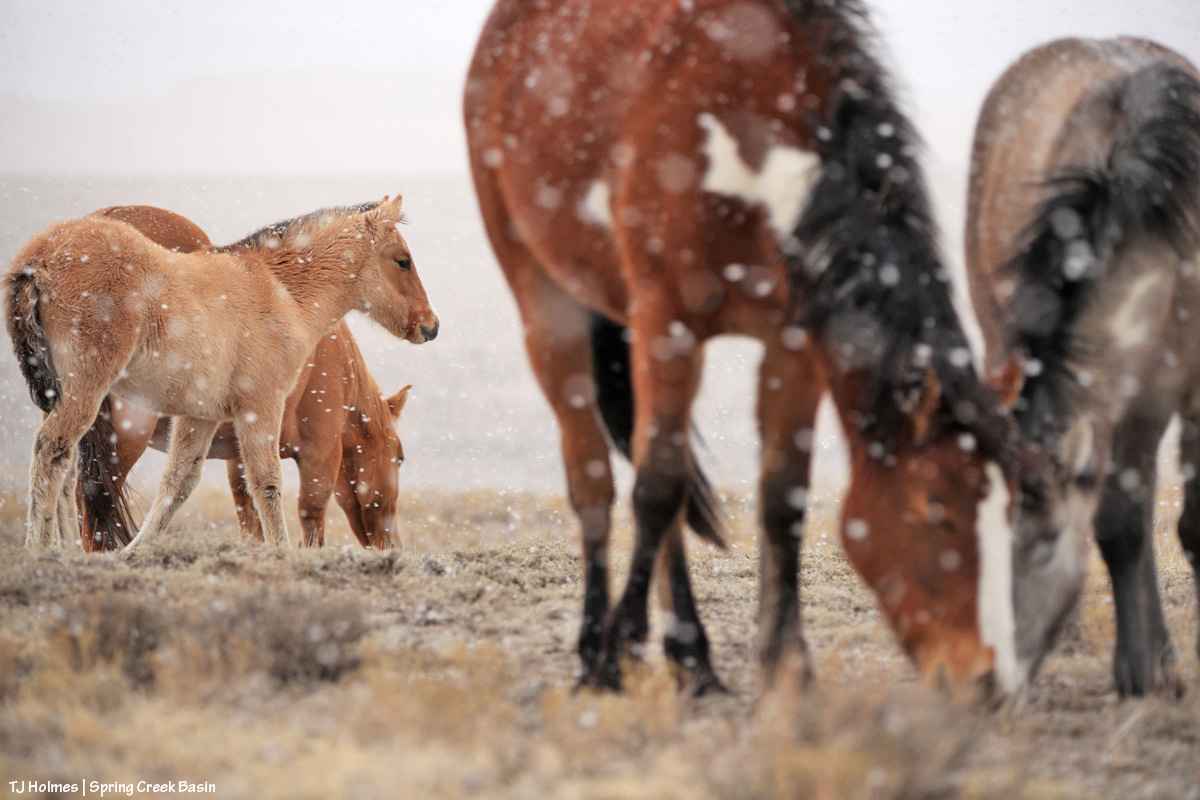
This is one of my very most favorite pix of the entire year. I love it so much, it’s the background image on my computer. I’m aware that I likely post a lot of images of Buckeye’s family; you won’t be surprised to know that they’re among my most favorite mustangs. I considered this image as the *bonus* image … but it was one wildly beautiful day of snow (well, I was out with the horses, watching the snow coming for at least two hours before it finally reached us), and it didn’t match the otherwise very dry *year*. … So it gets the January title.
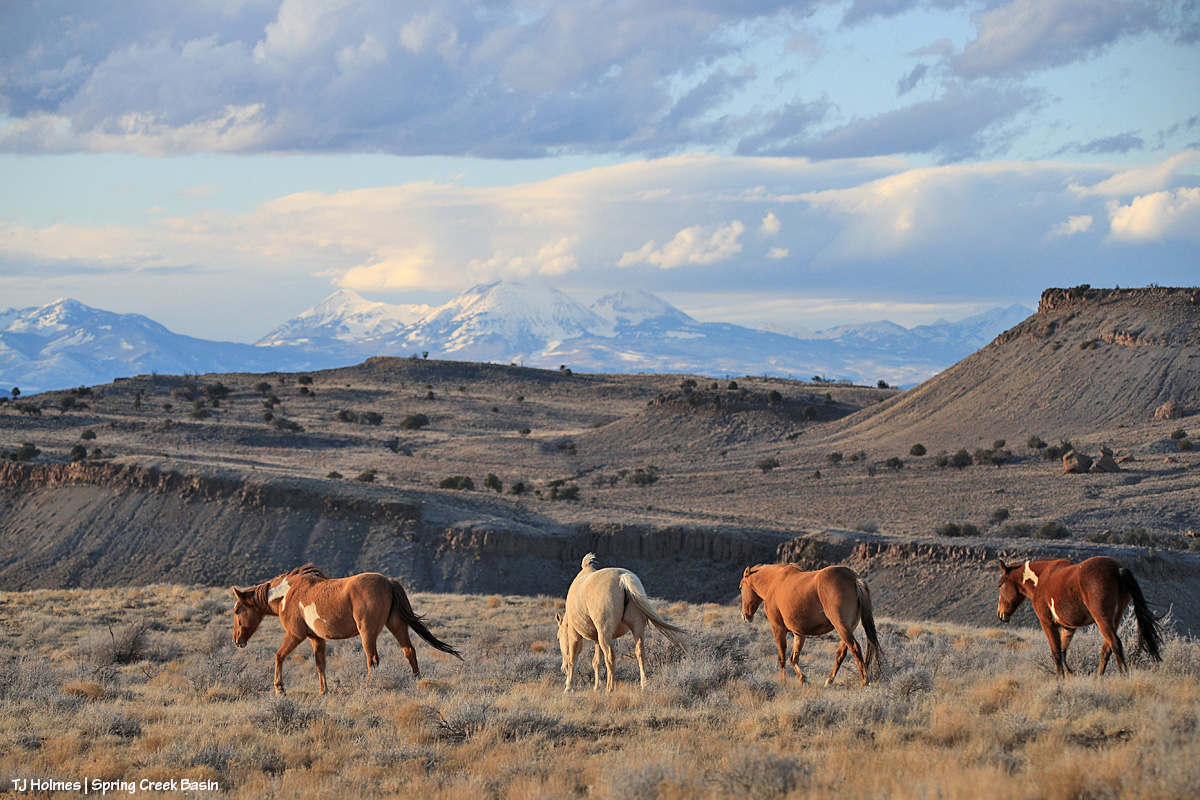
Did I say that I love Buckeye’s family? You can forgive me for singling them out, right? The three mares weren’t born here, but gosh, they are treasures from our sister herd in Sand Wash Basin, and I’m so grateful that we have them. And yes, that was February. Utah’s La Sal Mountains may not have been the *closest* snow, but we sure didn’t have much.

March is still fuzzy-coat weather with signs of approaching spring, especially in the high desert of Southwest Colorado. Fortunately, we had ponds early in the year. They’d all go dry before some rain this past fall put water back in a couple of them, including the one pictured above with Chipeta. This pond is nicely full currently – and has mustangs taking advantage of its water.
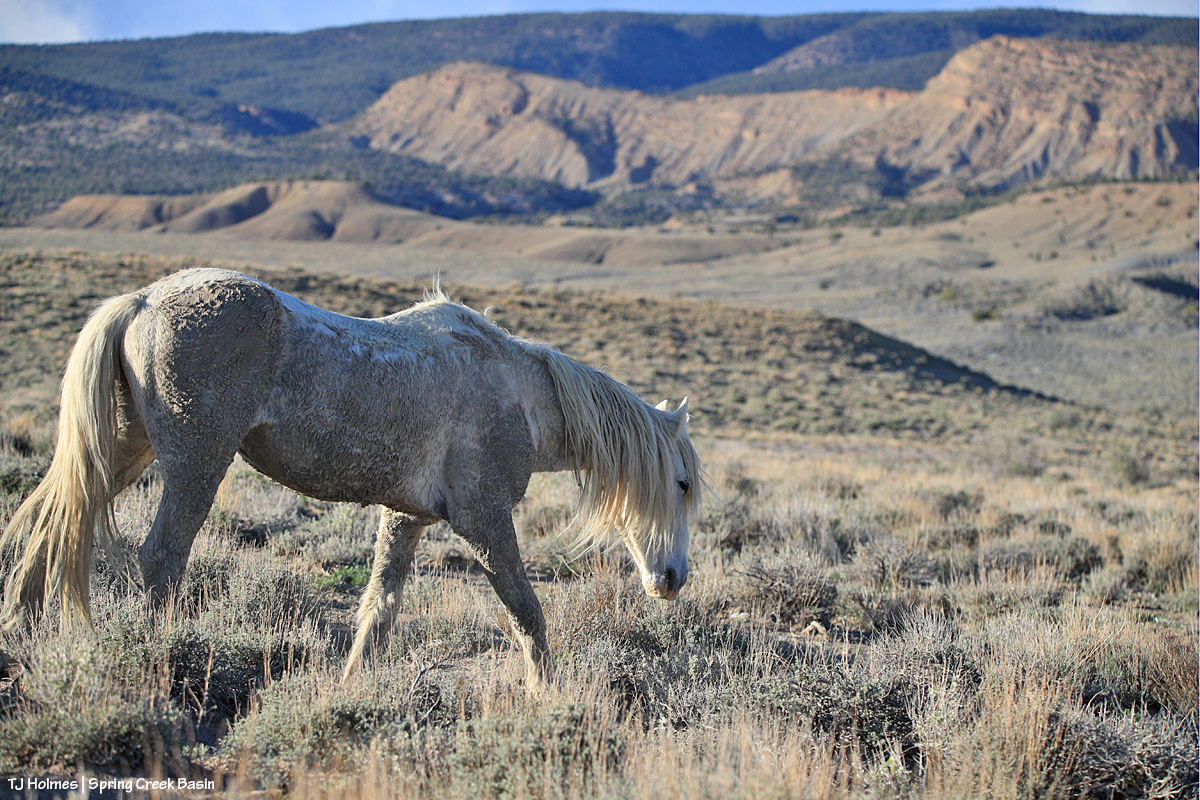
April found Sundance not far from the pond pictured above, and he still had his band at that time. Later in the year, he lost them, and he’s been by himself since then. He has wandered a bit, following vegetation and available water. The stately ol’ guy is still around … I see him now and then, napping in the sunshine or grazing on the side of a ridge.
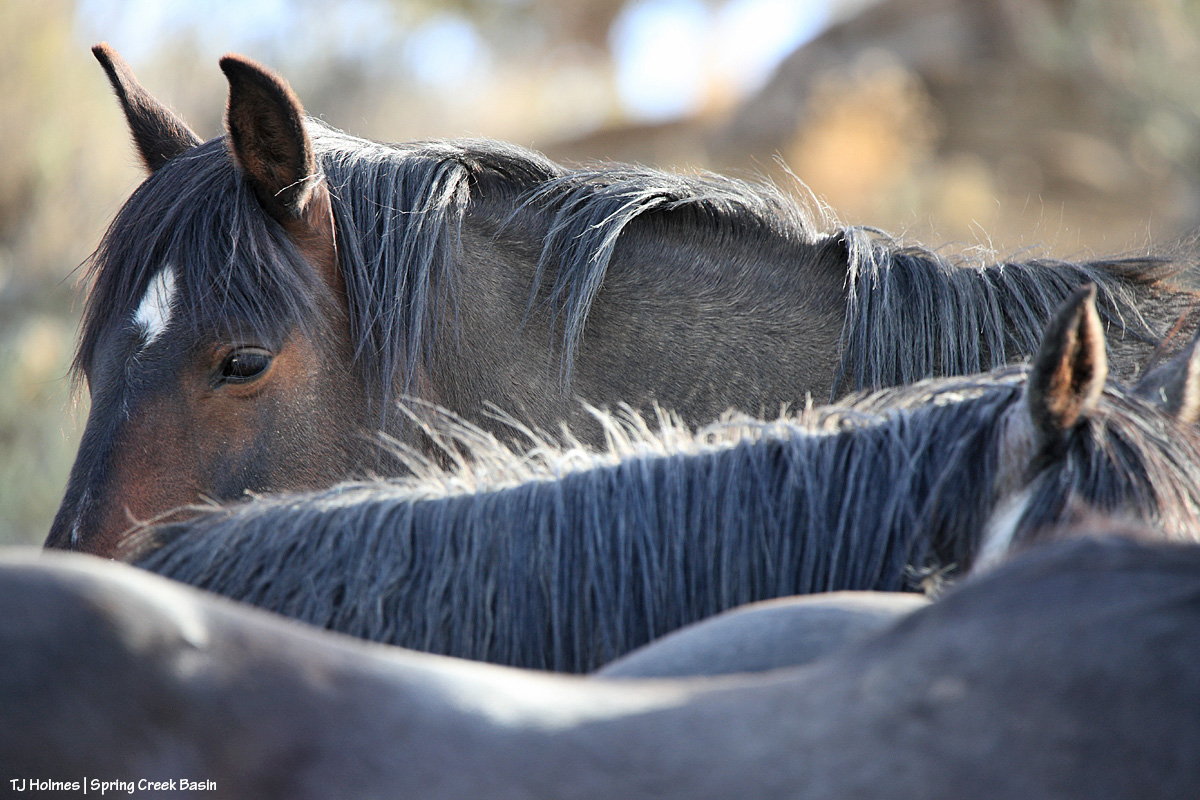
This wasn’t especially the best pic I took in May, but I love both the perspective and the sort of inside joke that Cassidy Rain always likes to be the farthest away from the two-legged. That day was a pretty warm one, and the band was in an area of basin where I rarely find them. It’s not a place with a lot of trees (in fact, there are very few), but they had found a couple, and were comfortable together in the shade near sunset.

My best boy Storm made a brief appearance in the northern part of the basin in June … one of the first times I’d seen him since he’d lost his band the previous autumn. Bittersweet. I haven’t seen him since about July, when he was at a water source with another band as I was trying to shoot the rising moon.
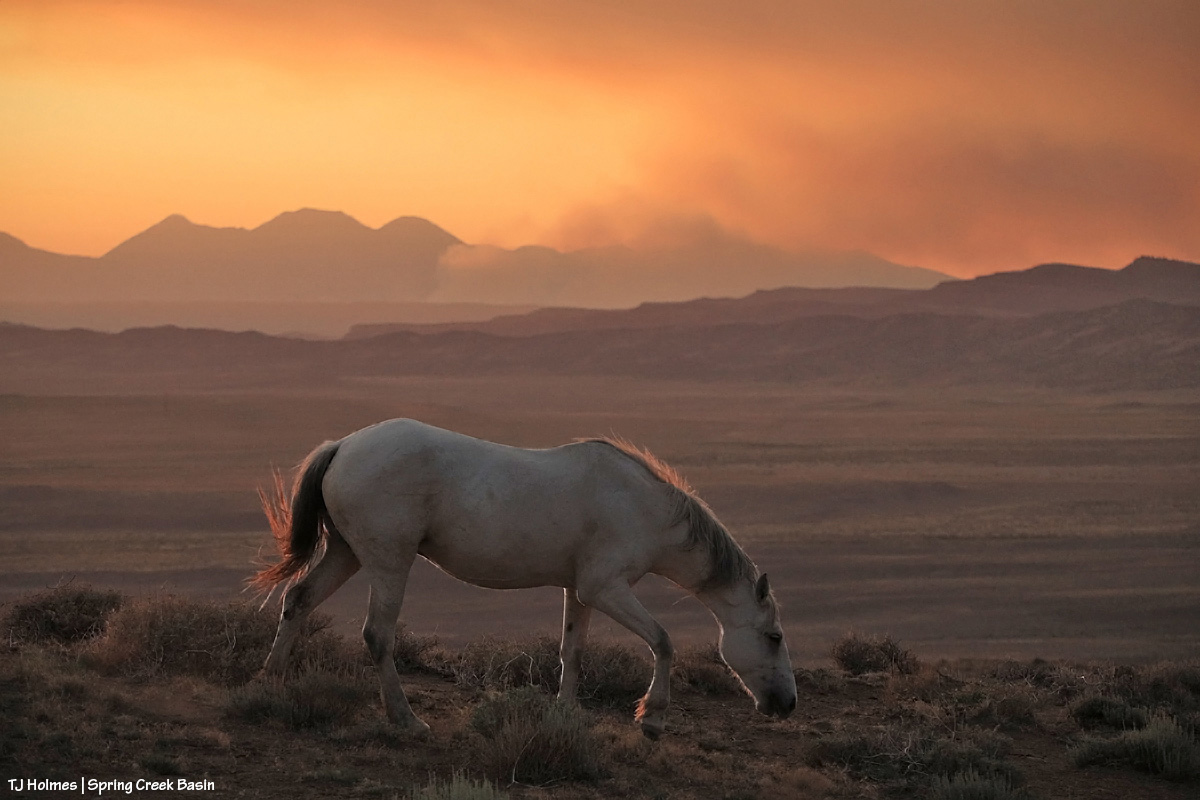
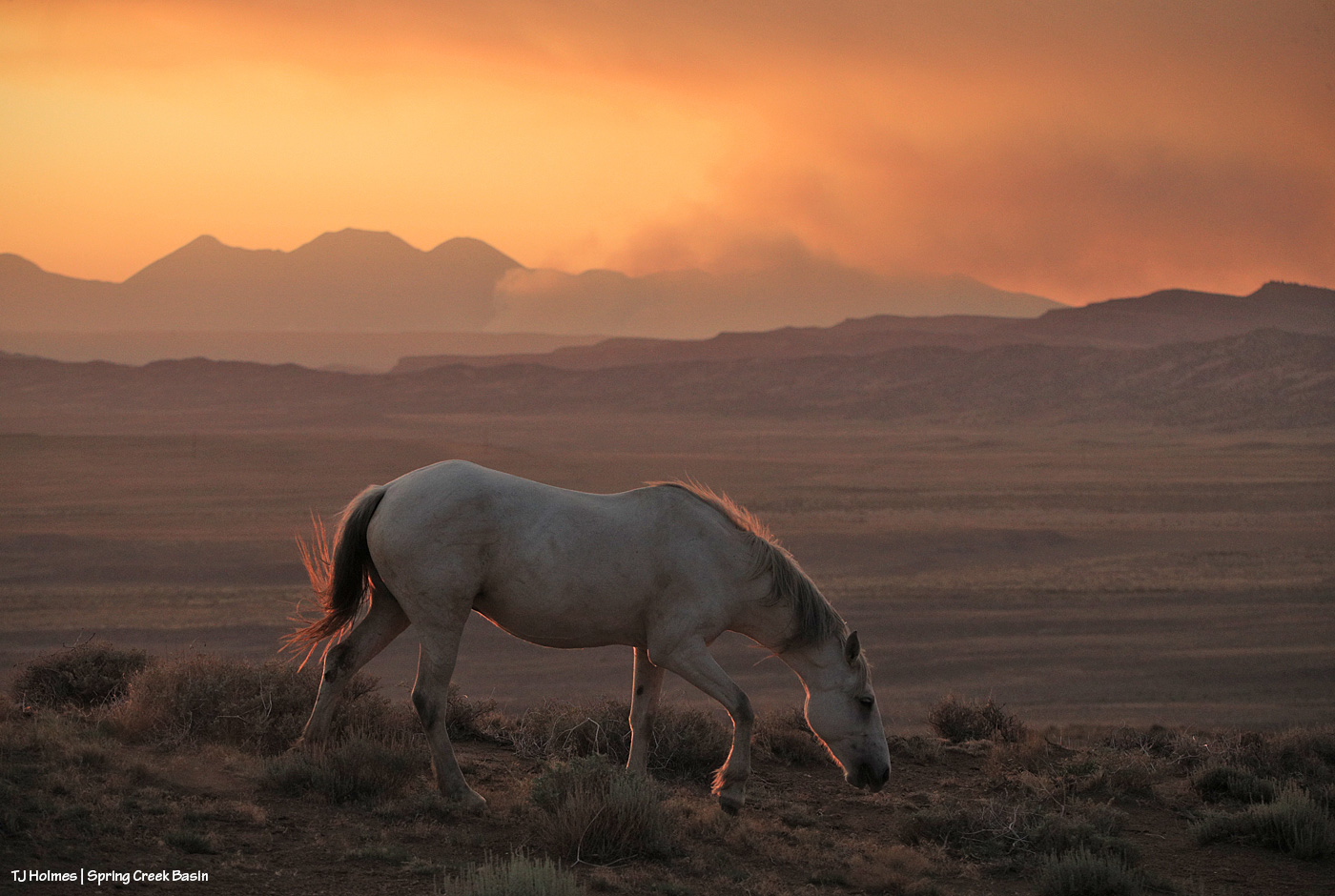
Ah, July, the month the Deer Creek Fire at the base of Utah’s La Sal Mountains sparked. It wasn’t the biggest wildfire of the season, and it wasn’t even the biggest with smoke visible from Spring Creek Basin and Disappointment Valley, but it was uncomfortably close to home. It was a reminder (as if we need any more) that it’s hotter and dryer out there, and we all need to be super aware and careful.
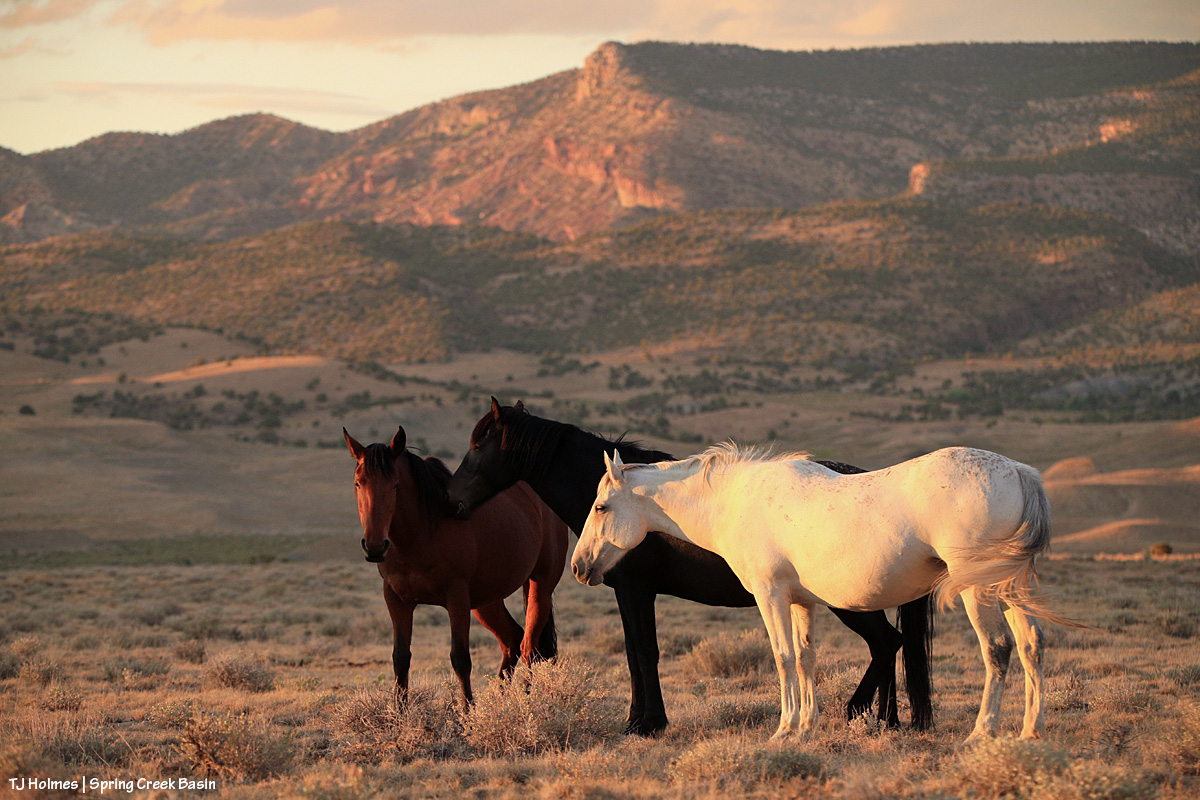
Fortunately, the mustangs live in the moment (while the humans obsess over the wildfire updates), and they still enjoyed peaceful days such as this: Three mares content with their world and each other.
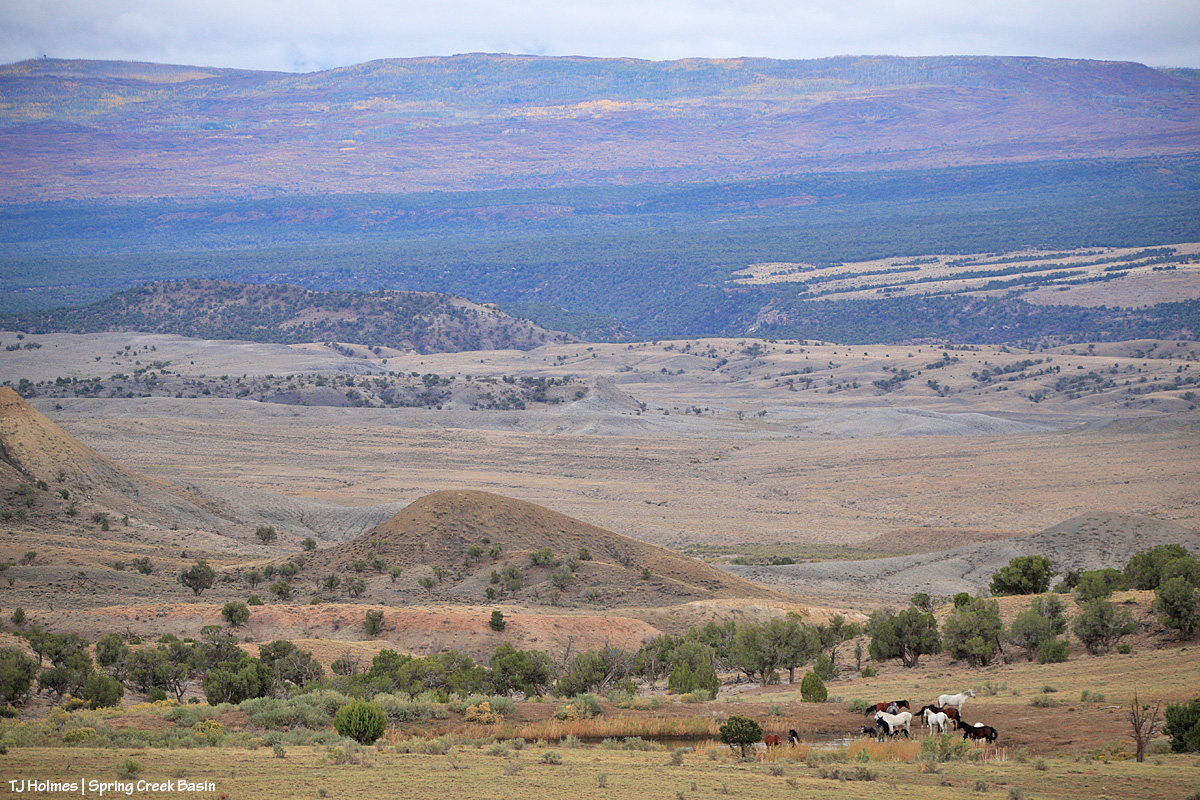
Finally, as summer gave way to fall, Mother Nature cried her best tears and filled some ponds for the mustangs. THAT brought huge relief to us all (if I may speak for my four-legged friends as well as myself). Interestingly, visible at upper left in this image is Benchmark Lookout, a U.S. Forest Service wildfire-watch tower staffed during the critical seasons of the year (which includes September). In this backcountry, we are massively grateful for those who watch for and provide critical information about wildfires, as well as those who work to contain them, allowing them to provide some benefit in some cases while trying to keep property and lives intact.
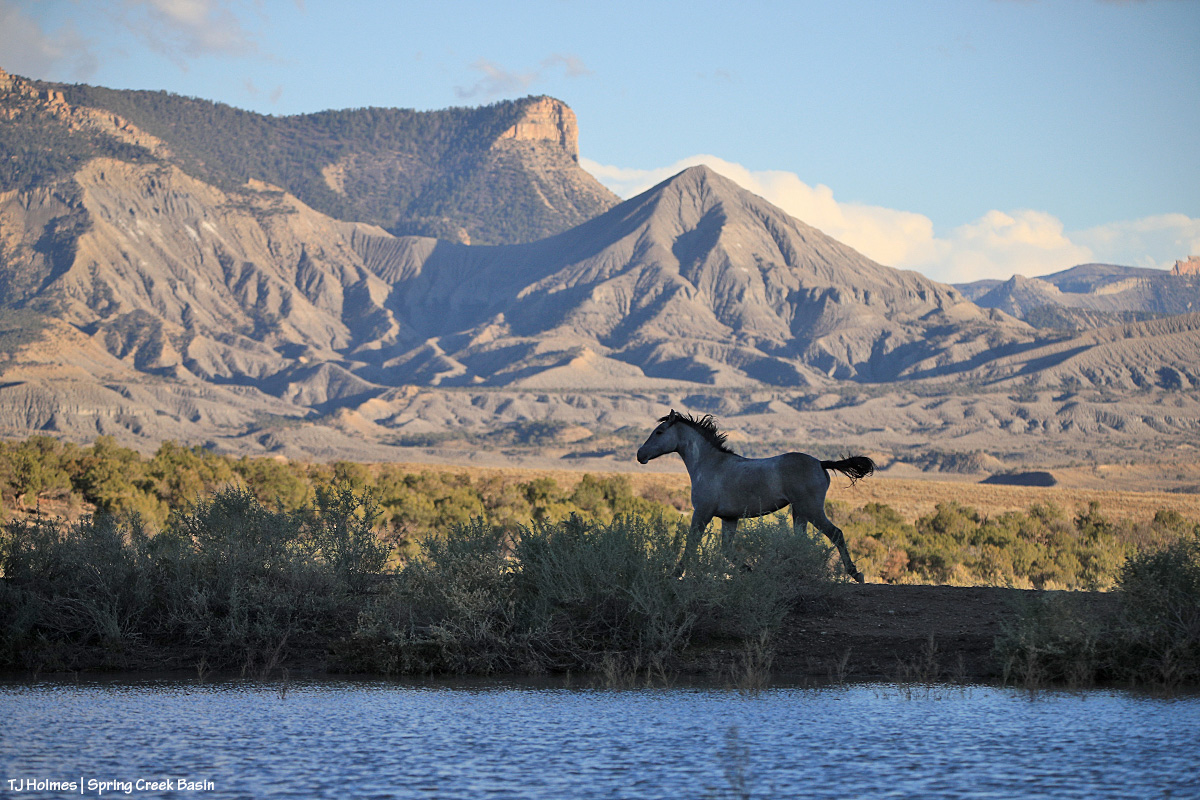
It might be about now in the list that you’re thinking, “for talking about dry it was, she sure included a lot of pix of ponds.” It’s not because we had so much water; it’s because we’re massively grateful for the water we had.
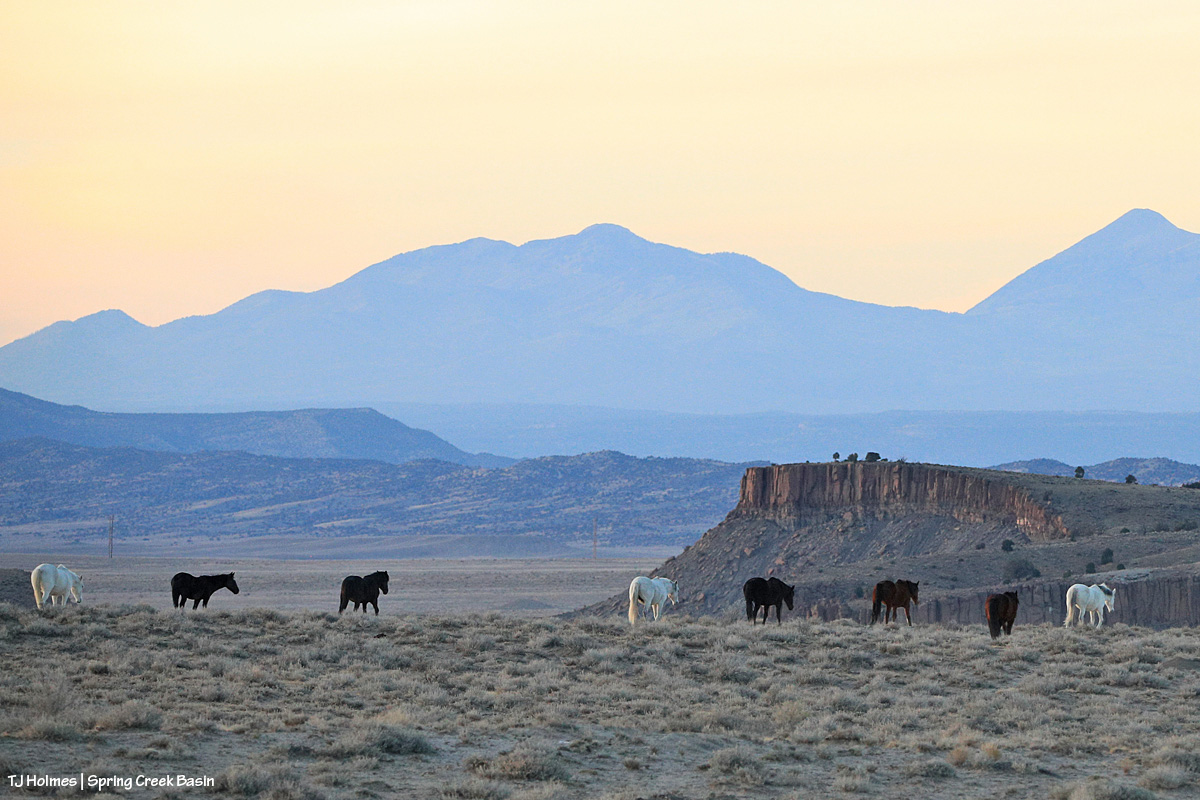
There’s no water in this image – and it was November, before snow graced the peaks on our northwestern horizon – but the ponies are lined out on their way out to graze after drinking at a little place I call the marsh. This is post-sunset, but wow was it gorgeous under the autumn light. … And it’s not UNgorgeous at blue hour.
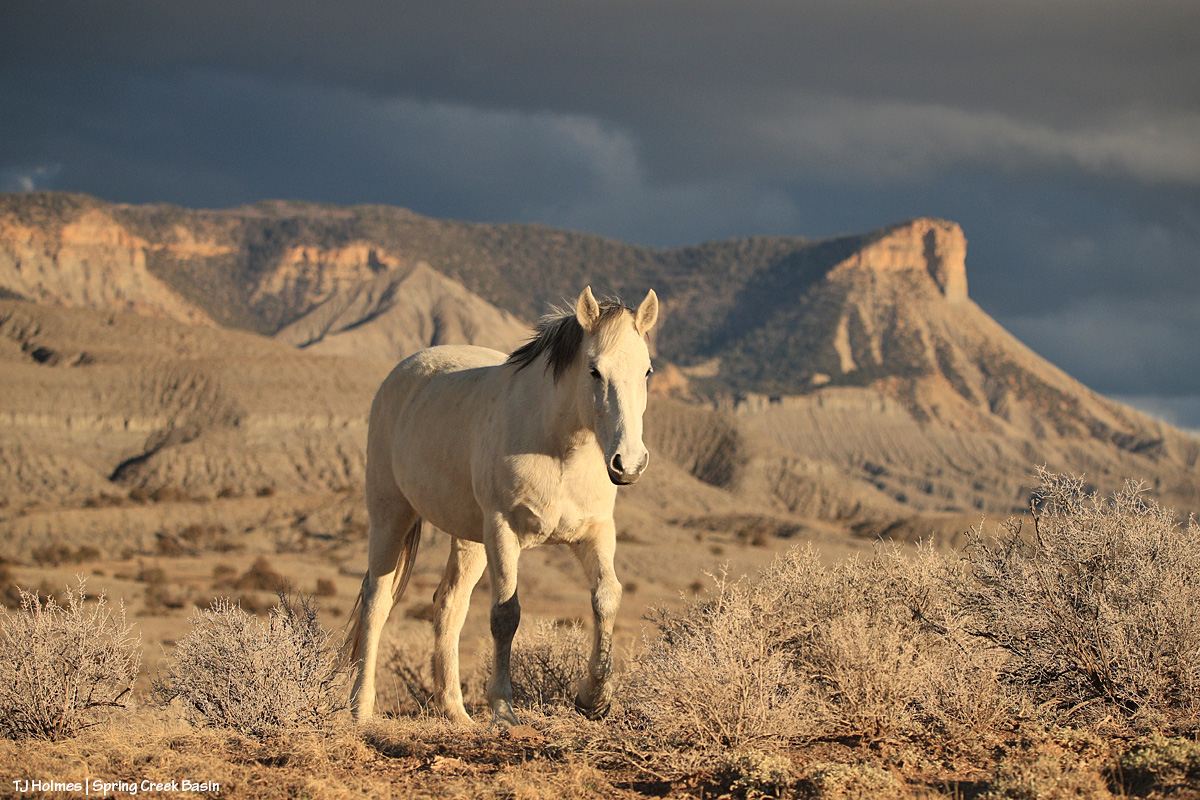
You’ve just seen this image of Temple with Temple (yes, the same) Butte and McKenna Peak in the background under a stream of stormy-looking (they didn’t produce a drop over us) clouds. I decided not to choose a pic from the bit of snow we got at the very beginning of December because the above is what we saw the whole rest of the month. The weather has been warm and dry … and that’s awfully nice for getting around and playing outdoors (60s! in Colorado!! in December!!?!) … but if things don’t change in the next few months, I’m going to be singing the same ol’ why-won’t-it-snow song that seems to be stuck on repeat.

And your bonus:
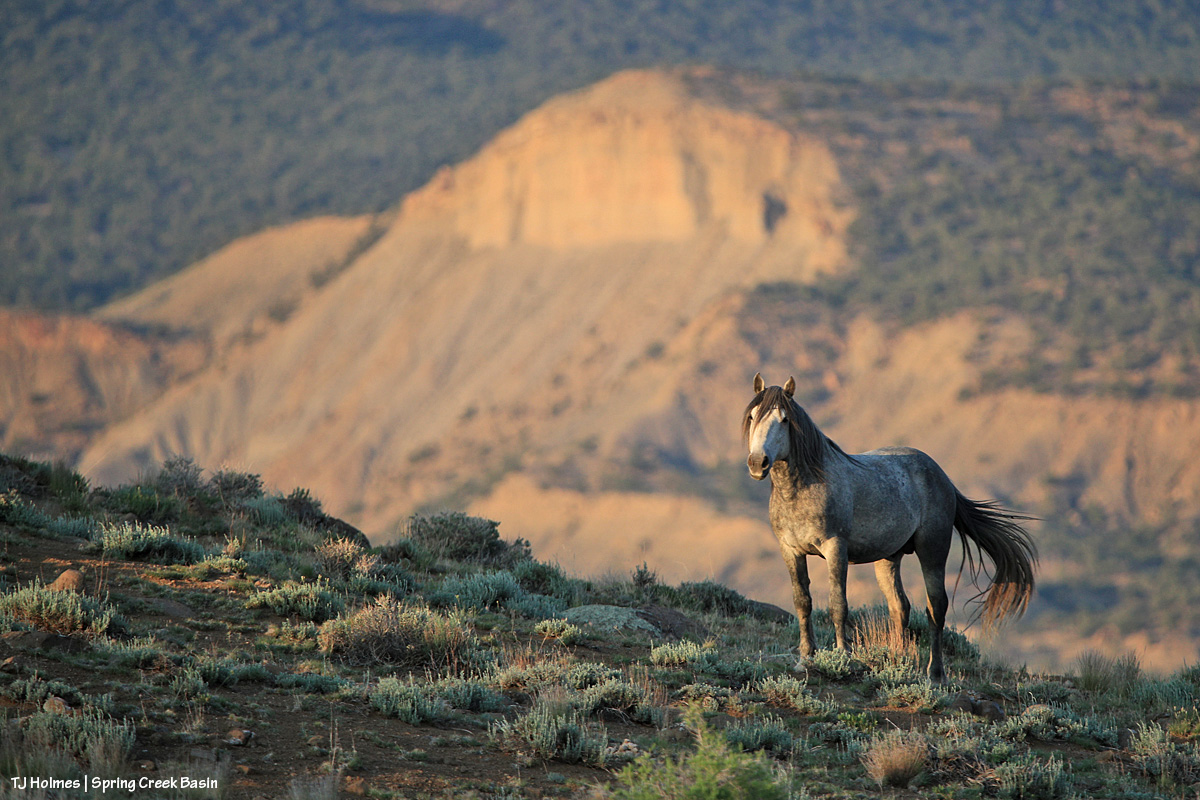
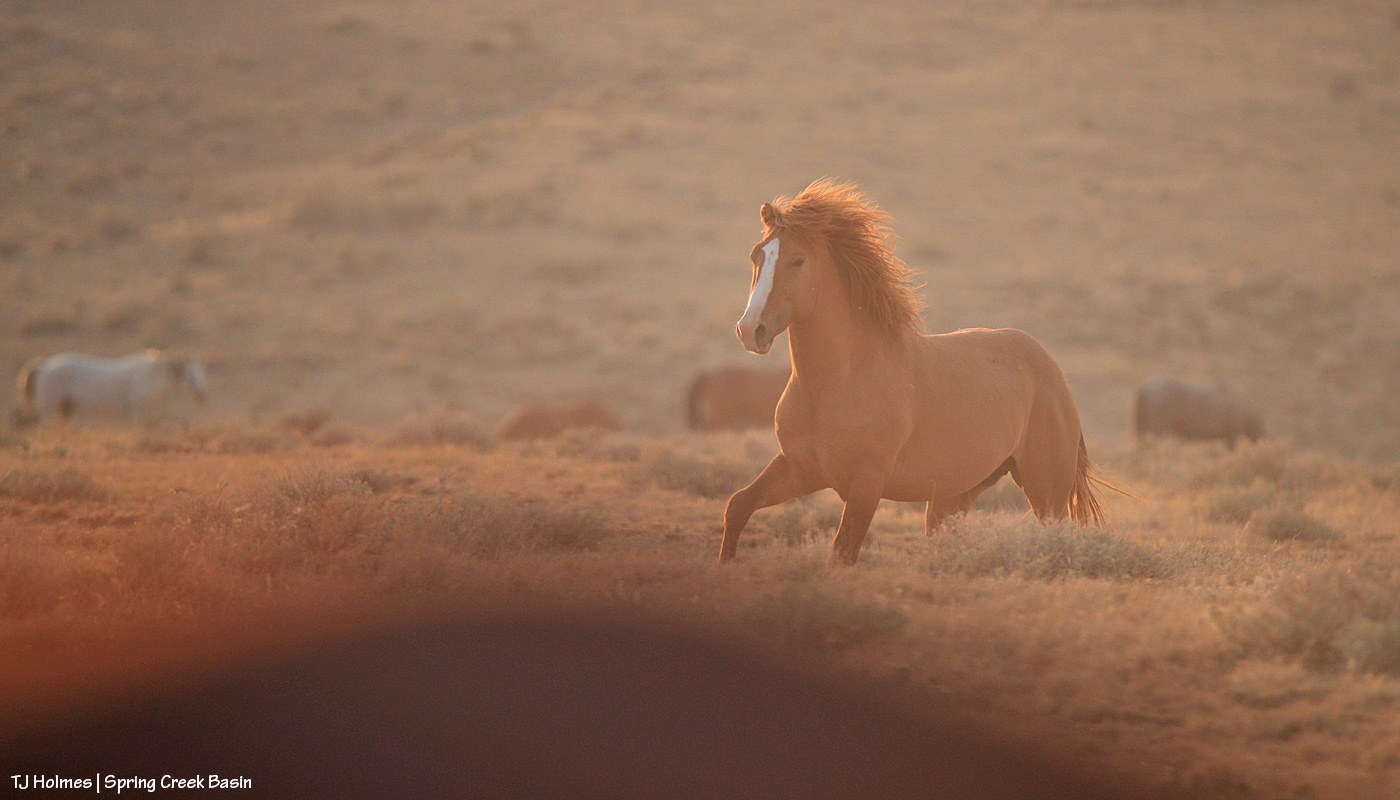
This was an evening in June. Nobody wanted to pose much, and I was going bananas, trying to get somebody – anybody – in front of that background in that subtle, delicious light. Finally, this young stallion obliged. And it seems to sum things up a bit: Hot this year? Yes. Dry? Gosh, yeah. Anxiety-inducing? Pretty much like always … with an extra edge. But! Beautiful, peaceful, a place of escape from the world’s ills (at least the headline type). Kind of a promise that it’s there … out there … and sometimes we don’t have to search all that far for it.

And there you (kinda) have it: 2025 in the rearview. It’s always hard to select just one pic for each month (plus a bonus!), but I hope you enjoyed this little recap.

In best-of-all news, I spent a lot of time (again) with my beloved mustangs in the best place on Earth (in my ever-so-humble opinion). 🙂

And close to that is my gratitude for all of you readers who follow the mustangs and our pictorial journal of peaceful, wild, beautiful life here in Spring Creek Basin. Thank you so much, and I hope you all have a peaceful, wild, beautiful 2026 (with lots more moisture!!!!!!!!!!!!!)!

Be kind to each other! 🙂


Dun days

16 08 2025

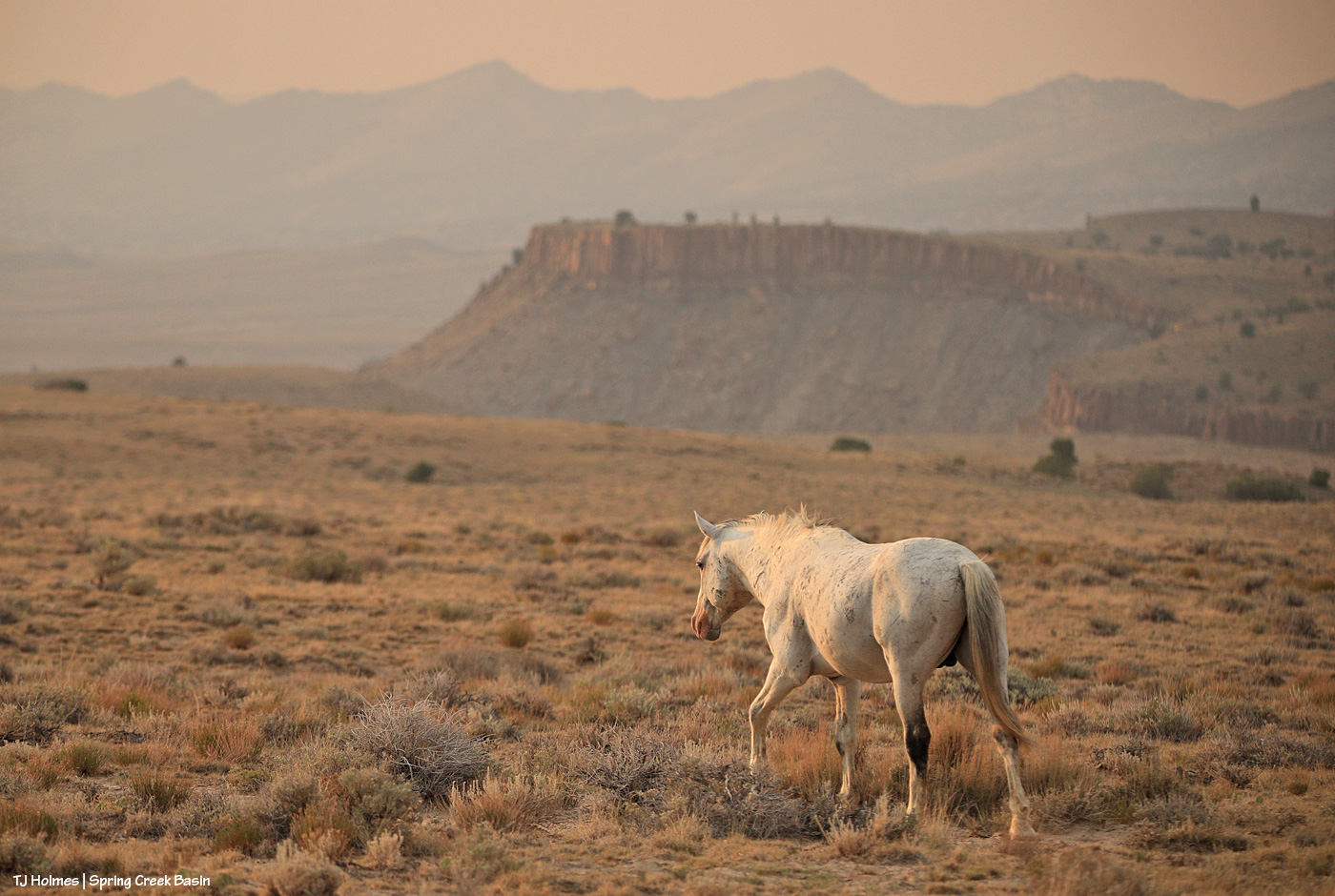
That haze is *smoke*. Odin was probably no farther away than about 150 yards (?), and it was SO smoky.

He had gone visiting a bit with another young bachelor between his family and another, and here he looks like he’s returning to his mama and aunties … but he stopped about halfway to graze … just in case there was another chance to visit. 🙂

Little mister is a big boy. He’s 2.5 now, but he’s stout – and still loves his mama Shane.

*****

I can’t believe time – and dates – got away from me; when I scheduled this post several days ago, I didn’t note the date!

HAPPY 56th ANNIVERSARY TO MY MOM AND DAD!!!!!!!!!!!!!!!! 🙂 Thank you SO much for giving me the gift of horses, from your own love of horses that led to your fortuitous meeting … 60-PLUS years ago! I love ya’ll and hope you have a wonderful anniversary day. 🙂


Braid columns

15 08 2025

Piedra likes to keep her braids simple.

Same evening that I took the pic of Alegre: bad smoky.


Red at night

14 08 2025

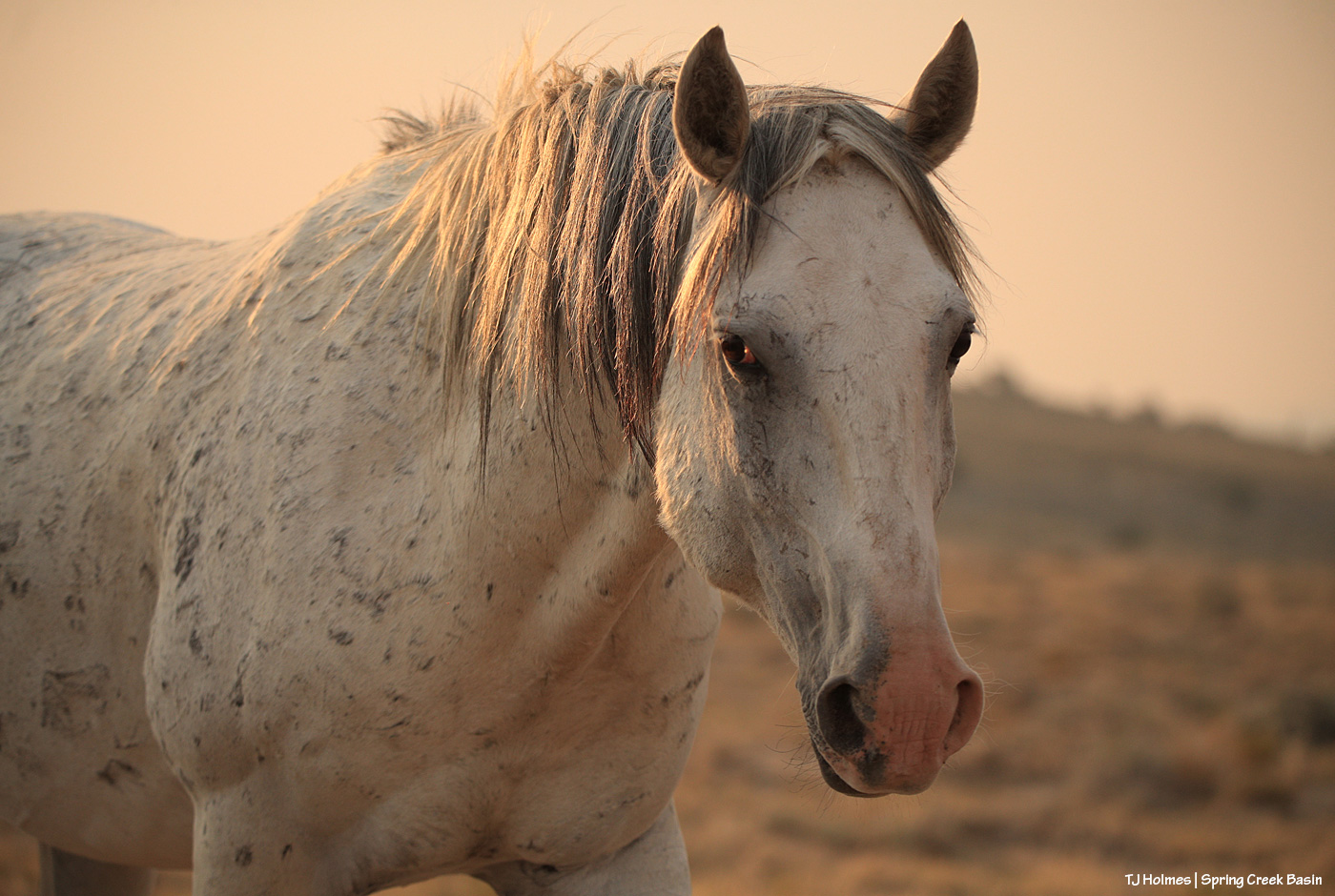
Alegre rocks her own fashion-forward braid style two nights ago in a very, very smoky Spring Creek Basin.

Changing wind directions mean that the terrible smoke we’ve experienced the past few days is coming from the Stoner Mesa Fire, to the southeast in Dolores County. To say that it’s yucky is a yucky understatement. (Cortez Journal article here.)

While we’re praying desperately for rain, we’re also praying for the safety of all those fighting the wildfires around the state. In particular, as mustang advocates, we’re praying for those fighting and affected by the giant Lee Fire, southwest of Meeker, which is immediately east of Piceance-East Douglas Herd Management Area.


And then … this

7 08 2025

Note: Images are from Tuesday, Aug. 5. Yes, I’m in Spring Creek Basin for the below (cell-phone) images, and yes, the fire is fairly close as the eagle soars (the next county south, which is Dolores County; the basin is mostly in San Miguel County but does extend south into northern Dolores County). However, the horses are not in danger; there’s actually a lotta country between there and and the basin.

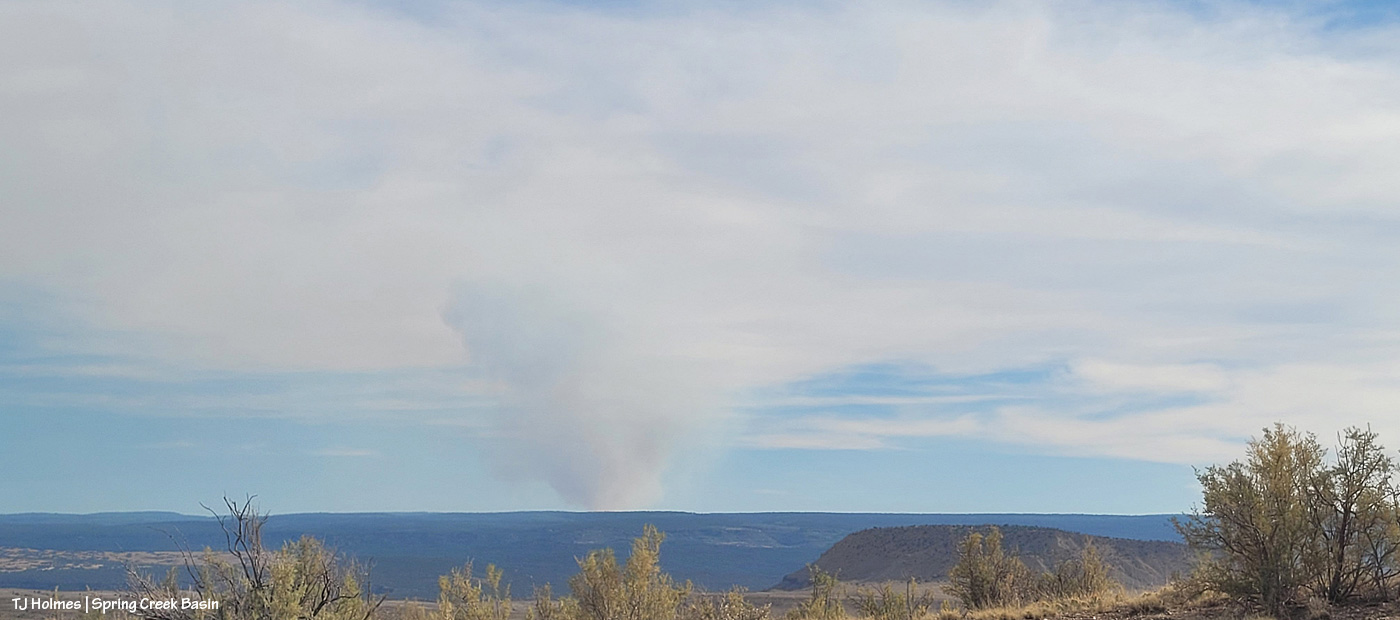
If you’ve visited Spring Creek Basin, you’ll recognize this cattle guard at the intersection of Road 19Q (Disappointment Road) and Road K20E. What you most likely and very fortunately have NOT seen as you head east toward Spring Creek Basin is a giant, nuclear-cloud-looking smoke plume. 😦 That’s the newly started Stoner Mesa Fire. (This is the Durango Herald link; you may hit a paywall, or you may get a free read of three articles (?).)

I won’t lie; I nearly had a heart attack when I saw that plume. Back in 2002, I was working at the aforementioned Durango Herald, and when I drove to work each afternoon (copy editor/page designer shift of 3 p.m. to midnight), the nuclear-plume of smoke from the Missionary Ridge Fire greeted me with heart-stopping awesomeness (and not in a good way) every time I topped Hesperus Hill to descend toward Durango.

This is from the area we call Chrome’s Point in western Spring Creek Basin, looking east-southeast. Yes, those dark-and-white spots at far left, left of the main/original water catchment aprons (looks like a tennis court) and tank are mustangs. Thankfully, they seemed completely and totally oblivious. The air was hot and smoky: Dragon Bravo Fire, Sharp Canyon Fire, Turner Gulch Fire (smoke still visible from it, too), Waters Canyon Fire … and who knows what other fires contributing to our air dis-quality (!?)) – more hazy than seems apparent from these images.

Moonrise over McKenna Peak and Temple Butte from farther north in the basin. Most of the smoke was blocked by the eastern horizon of ridges from this perspective.

Sunset through smoke. Pretty … but it is violently, dangerously dry out there.

This is a hot, bad, dry (and very-bad-dry) summer, folks. Please be mindful of anything that could spark a flame, stay safe, and support your firefighters … local, regional, state and national. And rain dances are *ALWAYS* appreciated. 🙂

(I went with my phone pix for this post, but I may have some from my big camera in coming days. … May …)


Season of fire ‘n smoke

6 08 2025

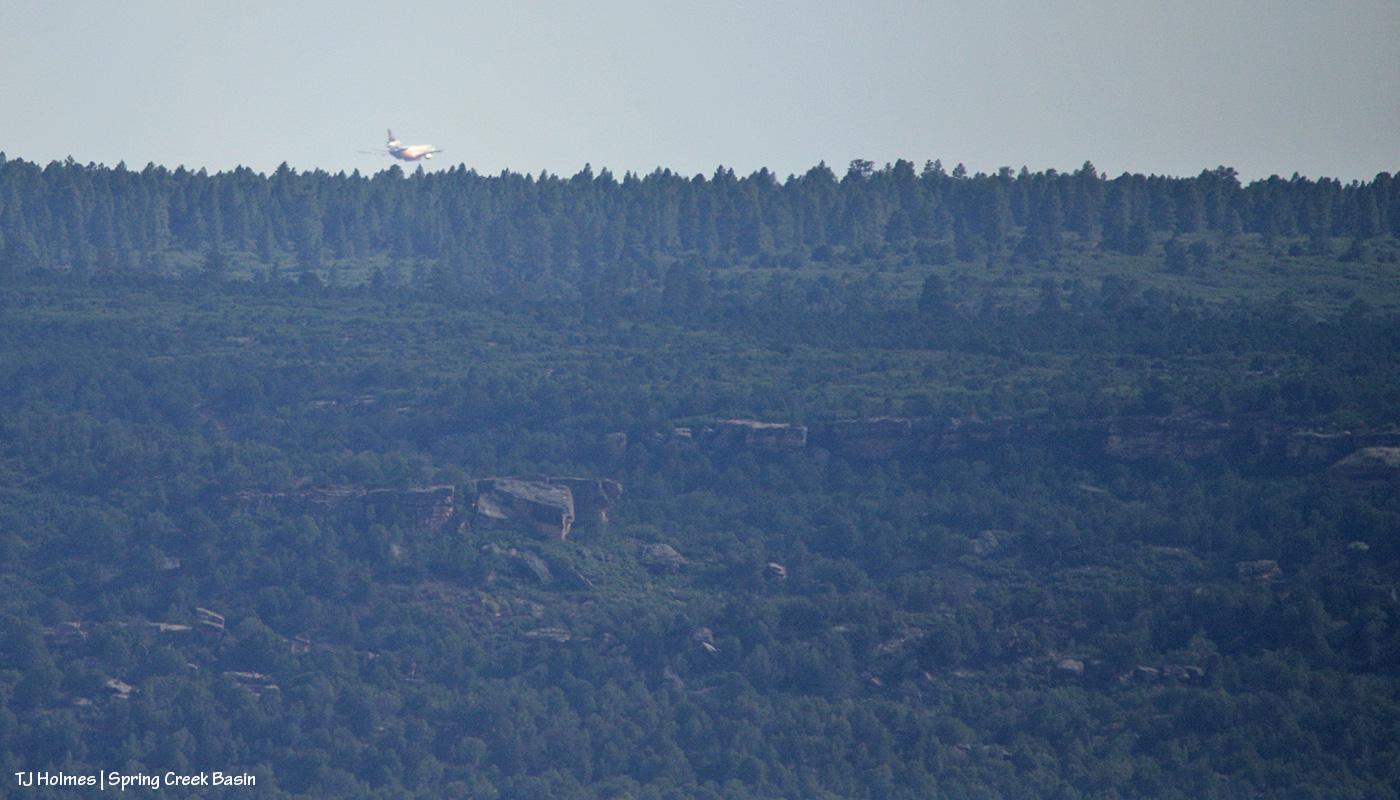
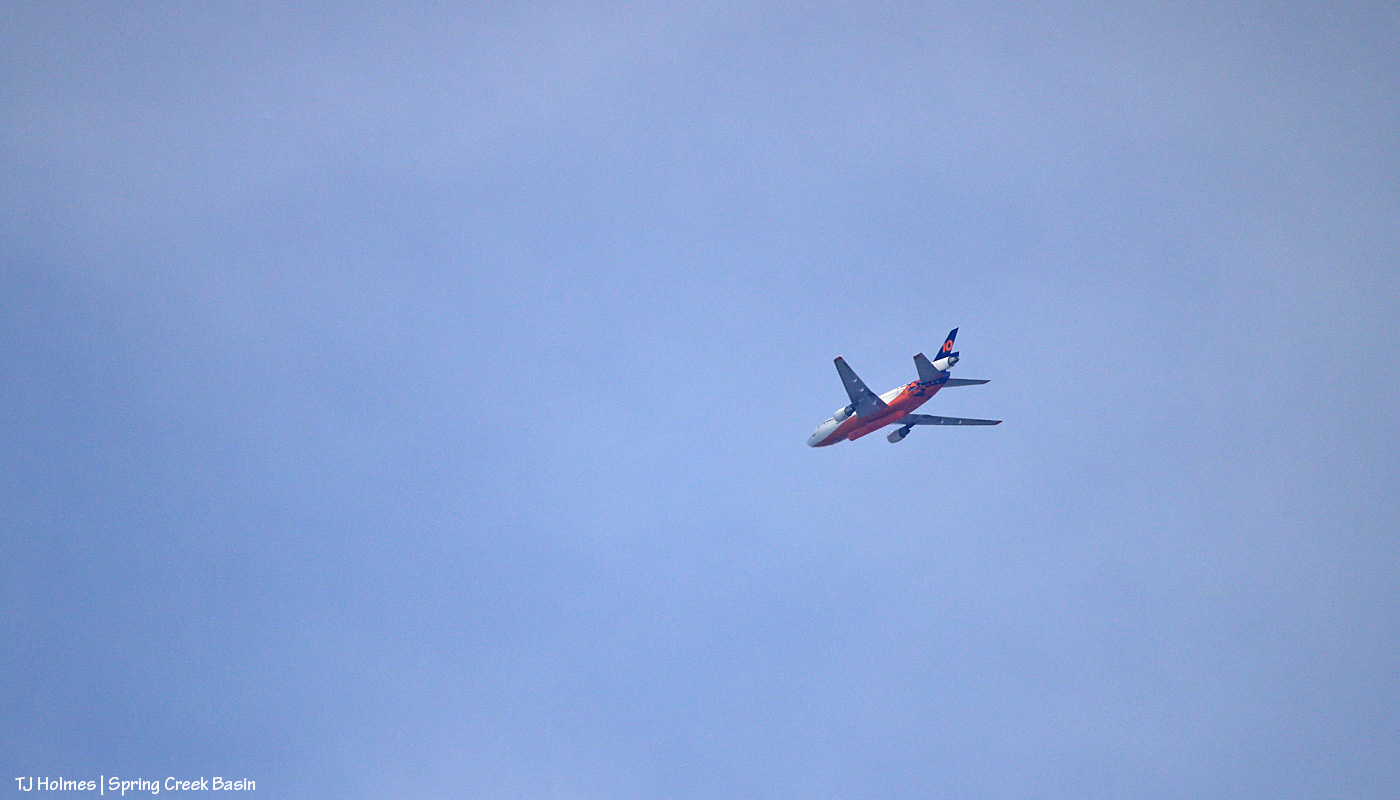
Uh oh. Another new fire (!), the Sharp Canyon Fire, started two days ago south-southwest of Disappointment Valley, north of the community of Cahone, and the plume was visible beyond the south valley ridge. I was in Spring Creek Basin when I saw the above-pictured air tanker fly over. It dropped out of sight toward the fire before I got to see it drop its load of slurry.

The Watch Duty app (which I just recently learned about and is *awesome*) alert showed the fire at 35 acres, but that was a BIG plume. Yesterday morning, it had been updated to 400 acres. As the eagle soars, it’s by far the closest current fire to Disappointment Valley and Spring Creek Basin, but it’s south of the Dolores River in its deep canyon, so the fire itself isn’t likely to endanger the mustangs. The pic is looking southish from the middle-ish (!) of Spring Creek Basin. Filly Peak at lower right is within the basin; the heavily treed ridge in the background is beyond the basin. Land goes from BLM to San Juan National Forest to private the farther south that eagle flies.

And the tanker flying back northeast over the basin to its base … possibly Montrose (?).

I looked up this handy website to identify the tanker, and it looks like it was a DC-10, or a VLAT! That’s a Very Large Air Tanker, and it was. From the website: “These airtankers, also referred to as VLATs, can deliver thousands of gallons of fire retardant at one time. Because of their size, they are less maneuverable than smaller airtankers. VLATs drop fire retardant at least 250 feet above the top of the vegetation.  

“The DC-10, which can be used to support wildland firefighters on the ground, can deliver up to 9,400 gallons of fire retardant at one time. The U.S. Forest Service is responsible for managing the VLAT contracts.”

With hope, the fire will be contained soon, but it is DRY out there – which is everywhere here. We’ve been under red-flag/fire-weather warnings/watches/advisories multiple days this summer (and are in a run of such days currently).

Huge support to all those engaged in fighting these wildfires across the West (and for our neighbors in Canada, too!), from the land and from the sky.


Smokin’

27 07 2025

This was (fortunately) several days ago now.

That was yucky.

I thought it was wildfire smoke from (at least) the Deer Creek (western Colorado and eastern Utah; northwest of Disappointment Valley at the base of Utah’s La Sal Mountains and above Colorado’s Paradox Valley) and Turner Gulch (northeast of Gateway, Colorado) fires because the wind was out of the north/northwest/west, but I read that it was from the Arizona fires (Dragon Bravo and White Sage). Look at a fire map of the western United States, and you’ll see that we’re likely getting smoke from … any/everywhere. 😦

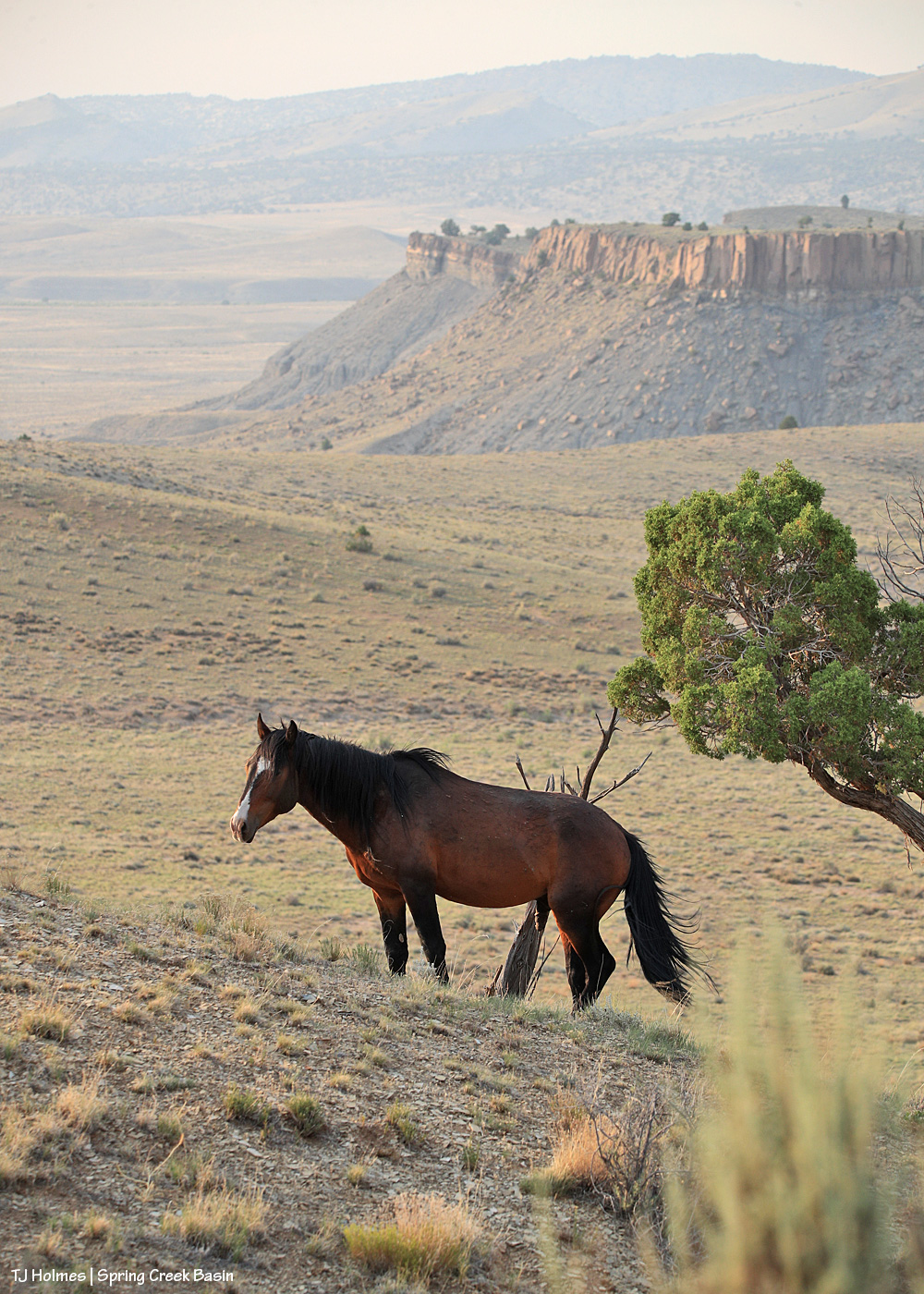
Skywalker on the flyby to give me a bit of a checkout as he moseyed with the band.

Several days now after the above images (I really couldn’t bear to post them at the time), our sky has returned to glorious Colorado-turquoise. The unfortunate part there is that we’d like to have some clouds. 🙂 For shade relief, let alone rain. … Never quite happy, are we? 🙂 (Please, please, please rain!!!!)


Diffused

21 07 2025

Another image of the pink sunset landscape through wildfire smoke, this one of Flash.

Fortunately, we’ve been relatively smoke-free for a coupla-few days, though the fires are still burning.


Where there’s smoke

15 07 2025

The Deer Creek Fire, burning at the southeastern base of Utah’s La Sal Mountains, just west of the state line with Colorado, is now at 10,000-plus acres with 0% containment. (Note: As of 10 p.m. Monday, it had grown to more than 11,000 acres.)

That’s the fire closest to us, and fires at Grand Canyon and Black Canyon of the Gunnison national parks have resulted in the destruction of the historic Grand Canyon Lodge (and other structures) and evacuations of visitors and National Park Service employees, not to mention people who live in affected areas nearby.

Many other fires are burning across the West’s drought-dry landscapes, as well as in Canada, while floods devastate other regions. My heart has a hard time taking it all in.

*****

I drafted the above post (showing Sancho in a very smoky Spring Creek Basin a few days ago) and scheduled it … and then I went out to Spring Creek Basin last night and saw that smoke from two more fires – Wright Draw and Turner Gulch fires near Gateway (about halfway-ish between Disappointment Valley and Grand Junction or about an hour and a half away as the vehicle motors) – is visible on our northern horizon. Argh.

Vantage point: above Spring Creek (mostly dry but with pockets of water from which at least a few bands of mustangs are drinking) in Spring Creek Basin looking north/northwest. The canyon is not far to my left. The obvious smoke starting at the left side of the image is from Utah’s Deer Creek Fire. Smoke from the Wright Draw and Turner Gulch fires shows as a yellowish line of smoke immediately above the bumpy-hills horizon just right of center.

Post-sunset from outside Spring Creek Basin. Utah’s La Sal Mountains are visible at left, and smoke from the Deer Creek Fire stretches across the entire horizon. … It looked like virga, which was completely wild and surreal.

We need “wetting rain” as I read recently. Hopefully it’s coming Friday/Saturday … along with thunderstorm chances (we do NOT need the lightning!!!). Please keep all those in the paths of the wildfires (everywhere), as well as those battling the blazes, in your prayers. And please, please, please, stay safe.


Deer Creek Fire

12 07 2025

The Deer Creek Fire started Thursday (cause is as yet unknown) at the base of Utah’s La Sal Mountains.

During the day, smoke settles over all of Disappointment Valley, and the mountains are obscured.

As evening settles, so does the smoke, and the mountains appear against the horizon … along with the smoke plume.

The above link lists the fire at 4,000 acres, but according to app Watch Duty, it has grown to 7,000 acres as of almost 10 p.m. Friday.

Be careful out there, folks, no matter where you live, work and/or recreate.