Fortunately, there were a few lucky deer after this anxiety-ridden last set of hunting seasons. And now that the two-legged predators seem to have (?) left, they’re much more visible, courting their dear does.
Isn’t he a handsome fellow?
(Again, we don’t have nearly that much snow in the area anymore.)
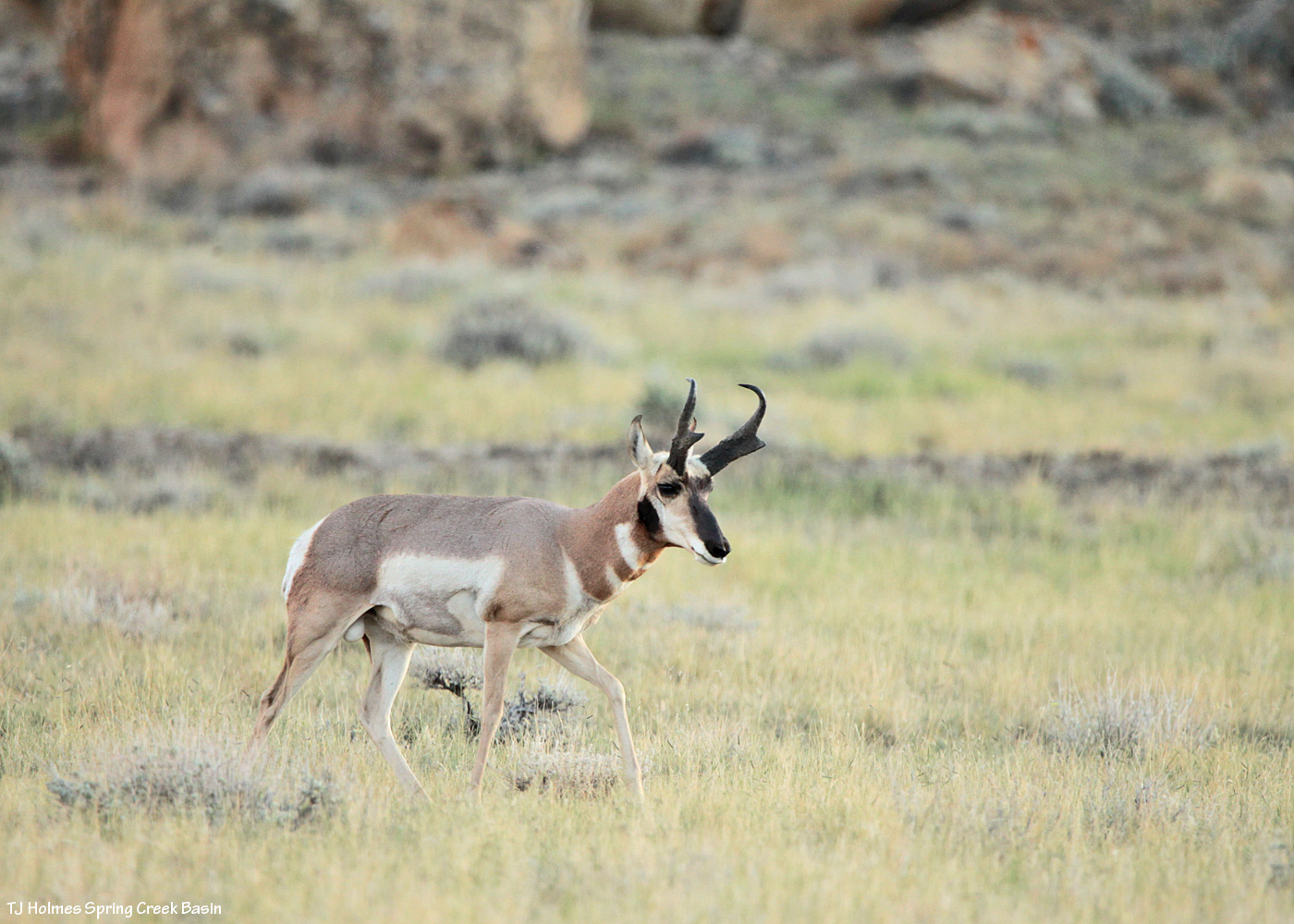
A few evenings ago in Spring Creek Basin, I was just sitting out in the grass, surrounded by a few bands of mustangs when … this lone pronghorn buck showed up, sashaying through the group like no big deal (and apparently it wasn’t, for either him or for them).
He didn’t seem to realize I was there at first, hanging out with the wildies as I was, just a lump in the grass. I think it was the clicking of my camera’s shutter that alerted him. He’s at a slow lope (if a pronghorn can be said to do anything as mundane as a *slow lope*!) in the pic above, but I think that was because he was between bands of mustangs at that point – and between me and bands of mustangs. When he first appeared to notice me, he just veered his course in that direction, still walking.
He ended up passing another band out in that direction and, as far as I know, went out around and beyond the western shoulder of Filly Peak.
Seeing these pix from that night, I was reminded that I’d seen a family of pronghorns a few nights (maybe a week) before THAT. Pronghorn bucks, like elk bulls and mule deer bucks, don’t stay with females of their species year-round – UNlike mustang stallions, who, of course, do. So I hesitate to call this little grouping a “family,” though it was clearly made up of a few does, a fawn and one determined buck (he was determined that they should go on, through/below/past the bands I was (again) watching, and the shes of the group were just as determined that they were not, under any circumstances, going past the little rock outcropping upon which perched the weird lump that was oddly clicking).
This was just after I’d become aware of them, after I’d sat down to watch a couple of bachelors who were grazing their way toward me. The doe at left is looking back at one of the stallions.
Ah, now the jig is up; they’ve heard my clicking and are aware of my presence. They didn’t come any closer (which was fine).
Riddle me this: Pronghorns are the fastest North American land mammal. But which are faster: does or bucks? The buck did manage to “corral” his girls (they also went in at least three different directions – at the same time), but THEY made the decision on where they were going and when. They finally moved in basically the direction he wanted them to go, but farther down the hill from below the road.
I can’t say for sure, but I think the horses found them as fascinating as I did.
Warning: If snakes give you the heebie jeebies, scroll no more and wait for tomorrow’s post.
Warning No. 2: Seriously.
Warning No. 3: I’m really not kidding.
Are you still reading?
(Hopefully this is enough lines of text to take up space on most phones or tablets or computer screens?)
You were warned.
After a summer of fastidiously watching where I step and kneel and sit and seeing most snakes alive or dead on the area roads (as opposed to where I’m out hiking), this little fellow/a surprised me as I did a turn-and-step move – before watching where my step would land after I turned.
It did NOT rattle; I caught just the motion of the slither and performed one of my patented levitation-slash-backward-step (it may have involved a bit of a jump) moves. I think we surprised each other.
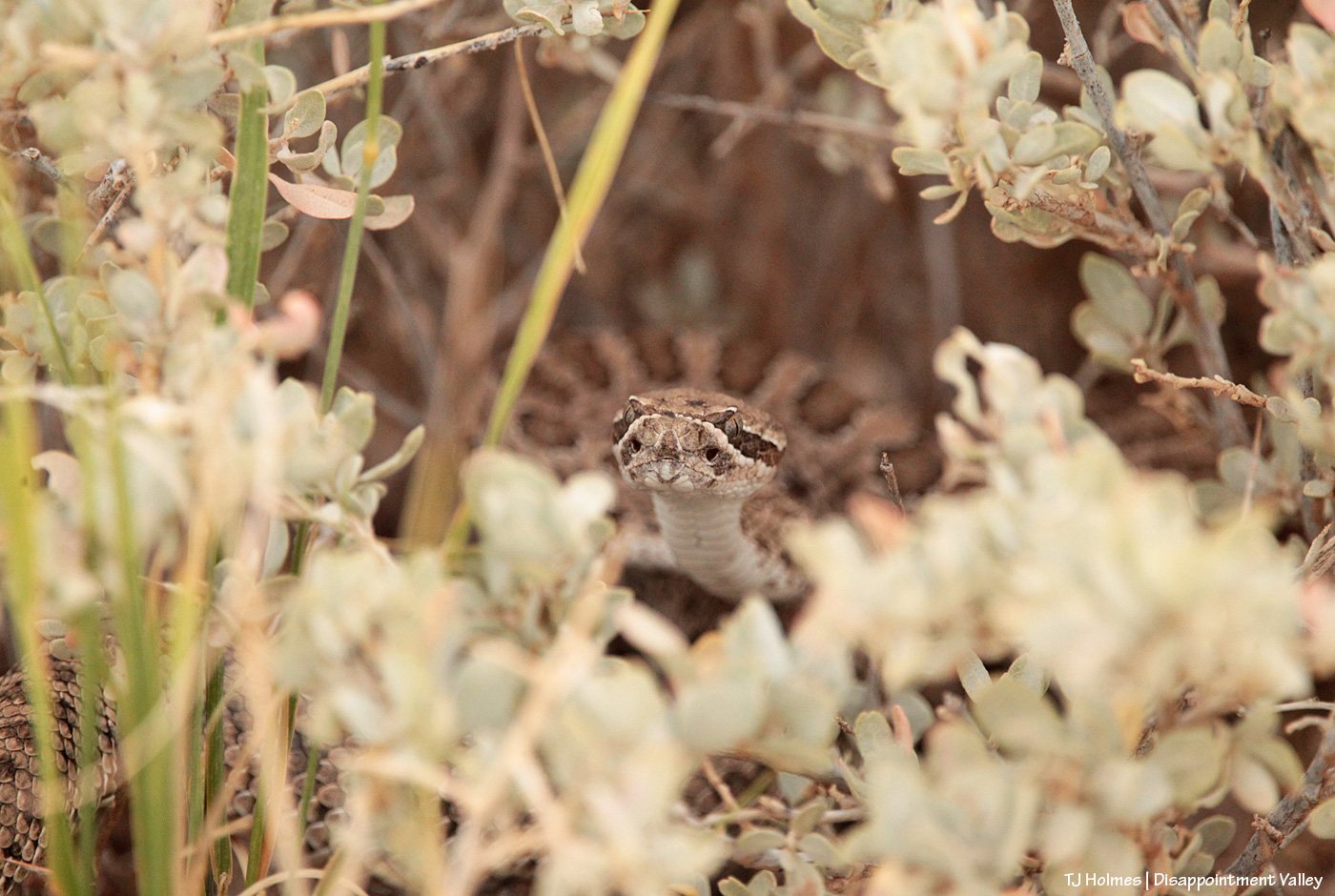
It quickly slithered into a nearby shadscale (one of our salt-desert shrubs) and loosely coiled around the inner stem with its head held up through a natural “window” in the vegetation – all the better through which to keep tabs on me … and allow me to photograph it from a lovely-safe distance (I do have a very long lens, after all).
Taken from a bit higher perspective, this (though soft as the focus was on that distinctive head) shows a bit of the pattern on its … back? Dorsal aspect, I suppose. 🙂 Another scaly critter with dorsal spots sted stripes!
And young. While it seemed healthy (read: it had some width/circumference to its body/length), it had only two tiny little rattles/buttons at the tip of its tail.
I went off in pursuit of other (safer) photographable things, and when I returned, snakey was gone. (I don’t think that made me any more relieved, not knowing where it went!?)
I’ve never known exactly what species of rattlesnakes we have here in Southwest Colorado. Ours are fairly short – no more than a couple of feet, generally (the ones I’ve seen) – even the ones with multiple rattles/buttons. While the one pictured above seemed “normal” in length, comparatively speaking, it had just a couple of little buttons (and unfortunately, I was too busy in my levitation mode to get pix of that end before it cozied up under the shadscale). This University of Colorado website has a good photographic listing of the state’s snakes, and what we apparently have are “midget faded rattlesnakes” – second-to-last slide.
This Colorado Parks and Wildlife site gives a lot more information about midget faded rattlesnakes – without the pix if you do, indeed, get the heebies just from looking at the critters (and if you do, how are you still reading this post?!). Having learned to levitate fairly late in life, I will say that while I appreciate their role in the ecosystem and always leave them alone – taking only pix and as quickly as I can so I can leave them to their snakey pursuits – they give yours truly the heebie big jeebies, too!
Warning: Extreme cuteness ahead (and no, it’s not any kind of equine).
In Spring Creek Basin the other day, I got some unexpected – and adorable – help when I found and dug up some old, buried beer/liquor bottles (past hunter camp, and yes, they actually *buried* their trash instead of hauling it out!? I’m not sure whether that’s better or worse than the glass bottles they tried to melt away in their stone-ringed fire pit?!).
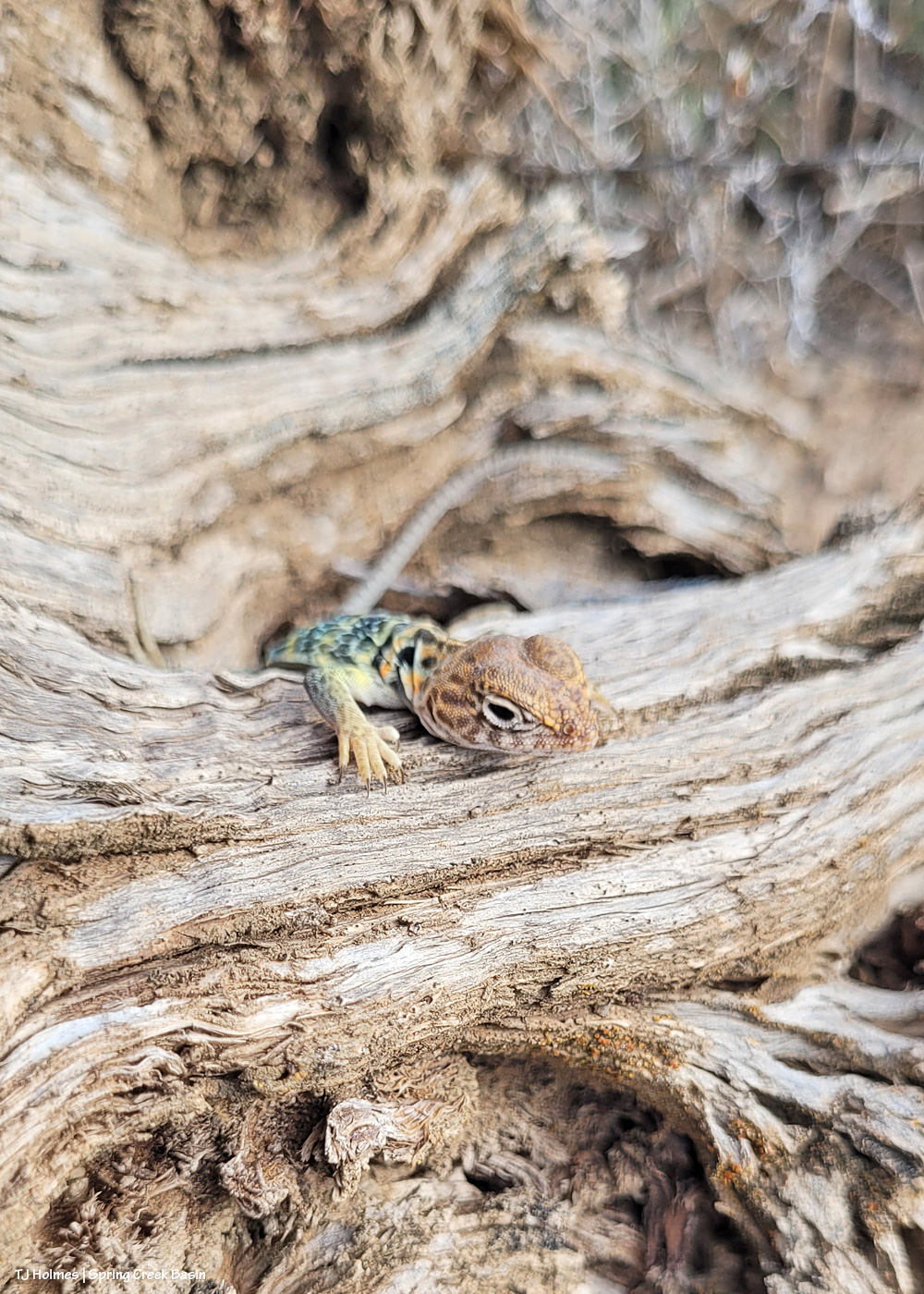
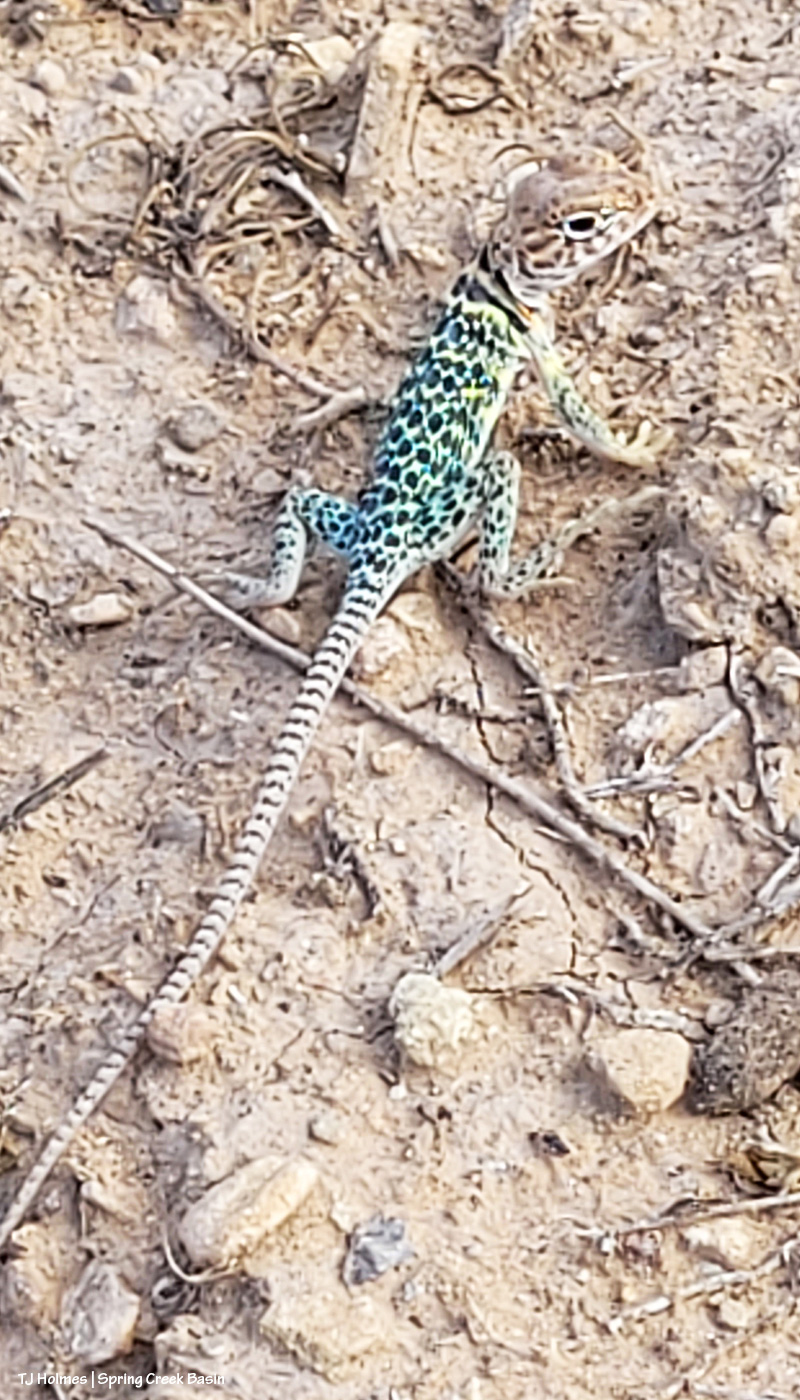
Forgive the painterly (read: out-of-focus) quality. I was focused on trash pickup, not ponies, so I didn’t have my big gun, just my phone. And this little guy/gal was TINY (how often do you get to capitalize a – literal – tiny word?) – and fast in his/her quest for ever-newer places from which to check me out.
Two brown-glass beer bottles, an old beer can (Budweiser) and a bigger liquor (?) bottle of some kind (being a non-drinker, I don’t know all the lingo). Does it give you an idea how teeny this little baby is? Not counting its very long tail, from snout to back legs, it wasn’t any longer than my pinkie finger – and probably about the same “roundness”!
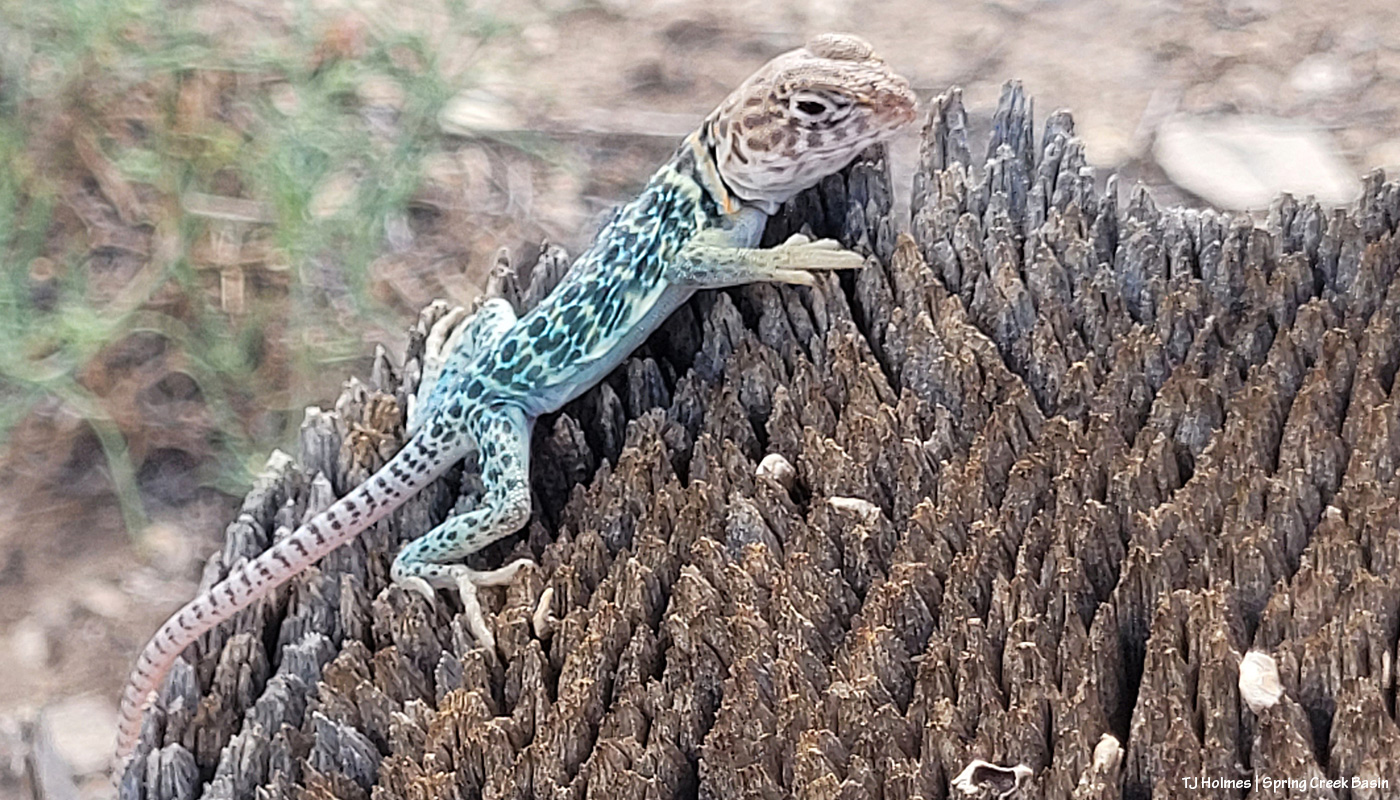
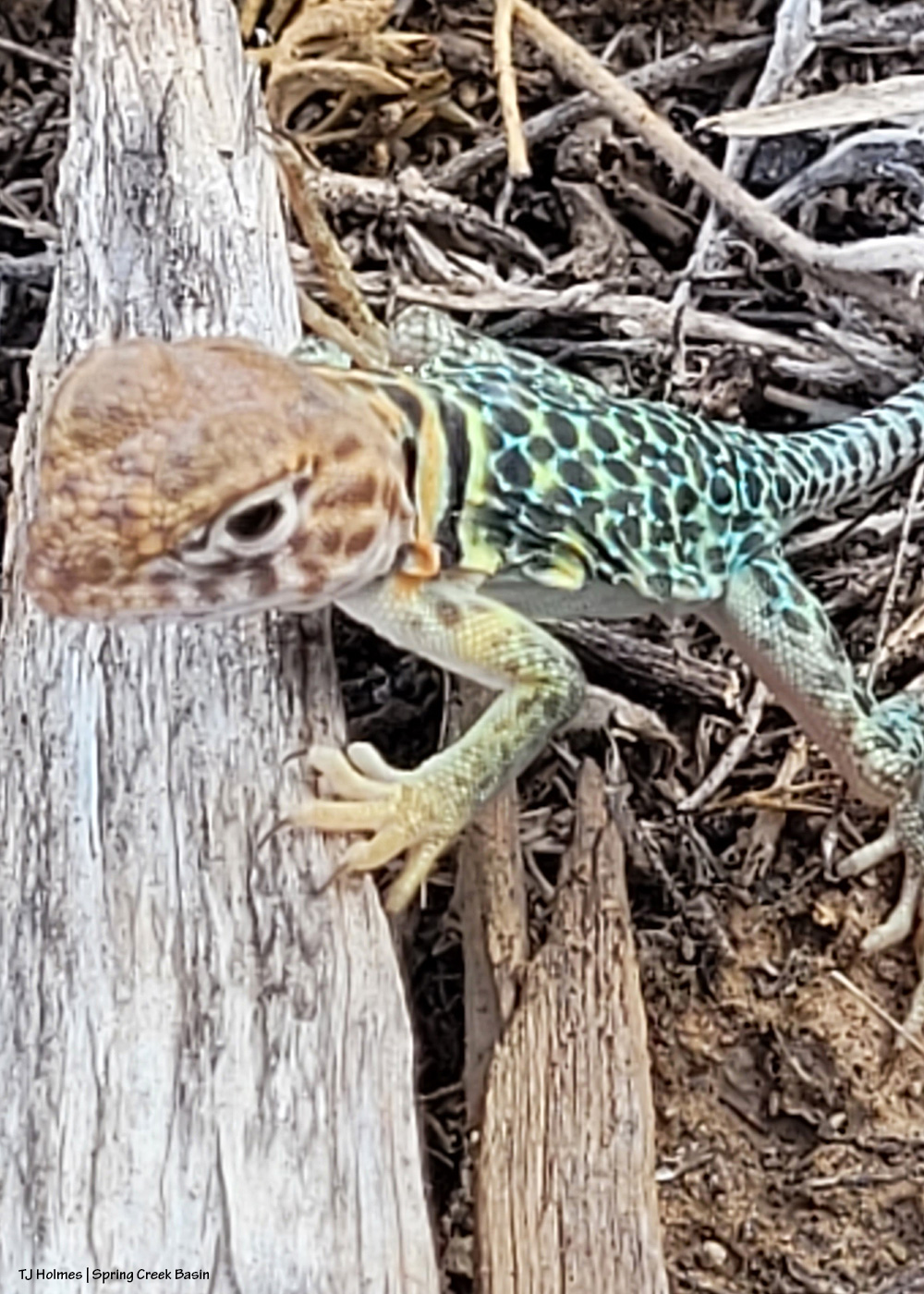
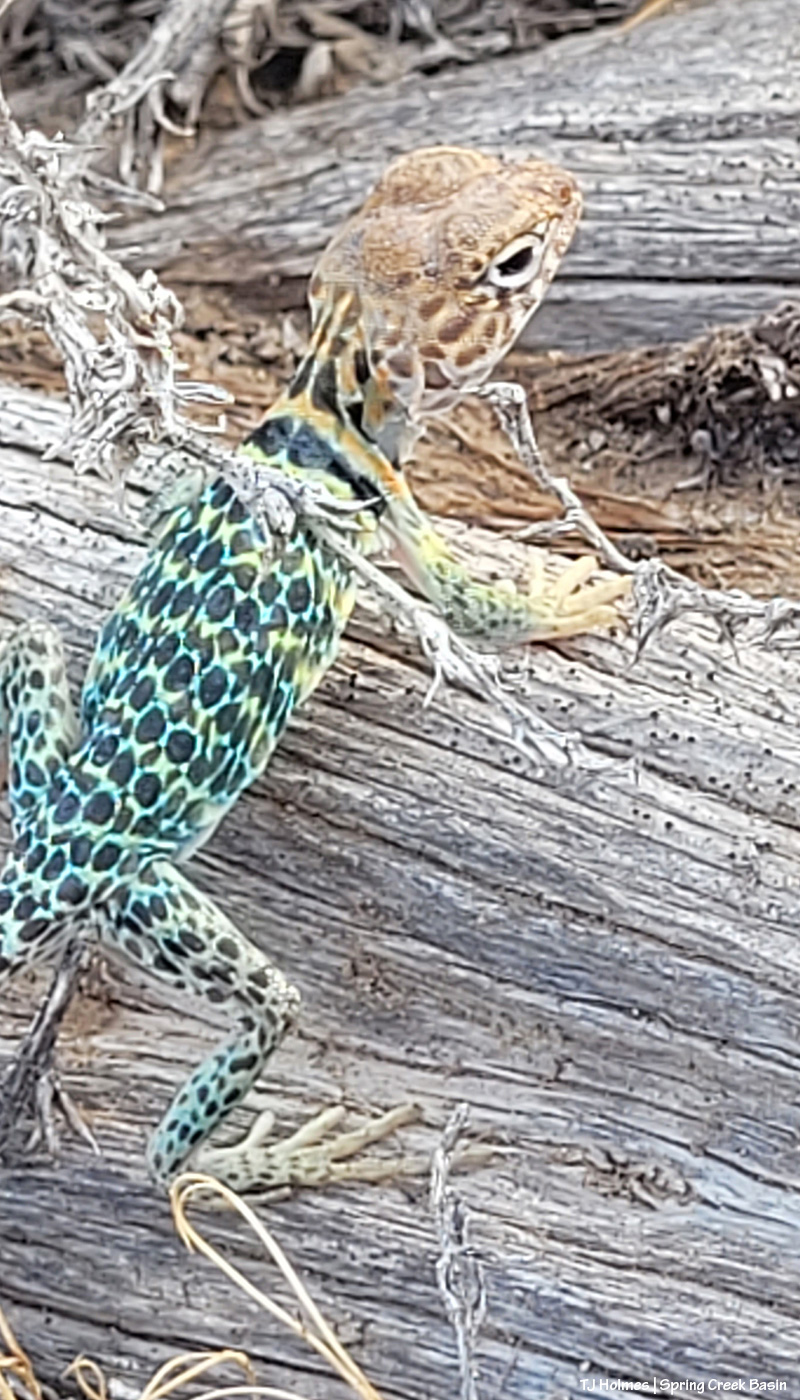
S/he had me at hello, but I’m completely in love with those dorsal – not stripe(s) – but spots! Stripes are reserved for the very long tail.
And like every other baby: curious, curious, curious!
Are you going crazy over those spots?!
I asked him/her to wait while I schlepped the bottles (and some old cans) down the hill to the road, but it took a while, and on my way back (schlepping my camera and another bag), I spotted – and spent a fair amount of time digging out – an old tent spike, and the critter had moved on to other (more) interesting lizard things.
I’ve shared some pix on the blog before of collared lizards, which I adore in general, but this little baby was my absolute very most bestest favorite!
And because the light was so scrumptious, a bonus pic:
Heavenly angel light over Storm’s band. Storms did rumble across the north that night but didn’t really reach the basin – until the next day. 🙂
On the rain front, let me illustrate the craziness: The past four to six days, we’ve had rain in our forecast, ranging from 30ish percent chances to a whopping (for us) 60 percent. We’ve heard the rumbles and seen the flashes. We’ve enjoyed the cooler weather (80s from 90s-near-100). We’ve marveled at the rain curtains around and beyond the valley.
The day we had the 60 percent chance? We got nada. The day we had zilch to 15 percent? Yeah, it rained. OK, for maybe 20 minutes tops (graupel, too!), but I’m expecting to see more in the rain gauge than the 0.03- to 0.12-inch (no more than a quarter of an inch total) drizzles we’ve gotten out of those “big” rain chances. It actually left puddles instead of a ground that wasn’t even left wet.
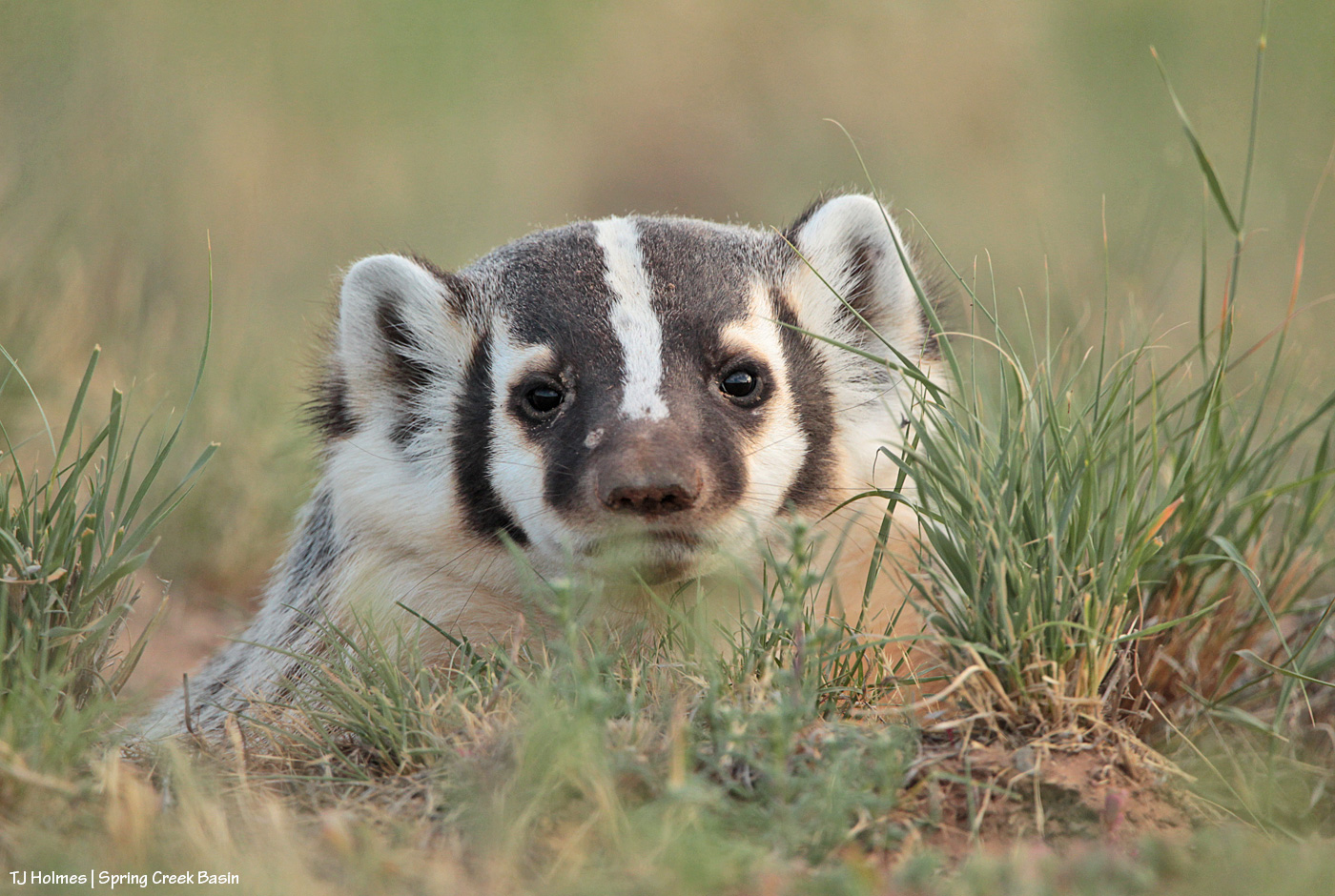
When I saw the giant hole at the side of the road as I passed, one of my favorite bands of mustangs just ahead, I thought, “hm … badger opened that hole.” And I didn’t think much more about it.
Until I stopped several yards away and was dithering around getting my camera out of my pack and ready to aim at ponies.
And I saw the low-to-the-ground scurrying grey-and-black-and-white critter. … !
It got to its hole before I got my camera to my eye, but then it proved to be wonderfully curious!
Badgers have quite a ferocious reputation, so I was glad of my long lens. I took several pix from different angles, and it watched me calmly from the safety of its burrow. Badgers commonly dig into the burrows of ground squirrels and prairie dogs to get at the critters inside (not so safe for them, eh?). See that pile of dirt? All fresh. I spent a few minutes with it, then moseyed on to finish the evening with mustangs.
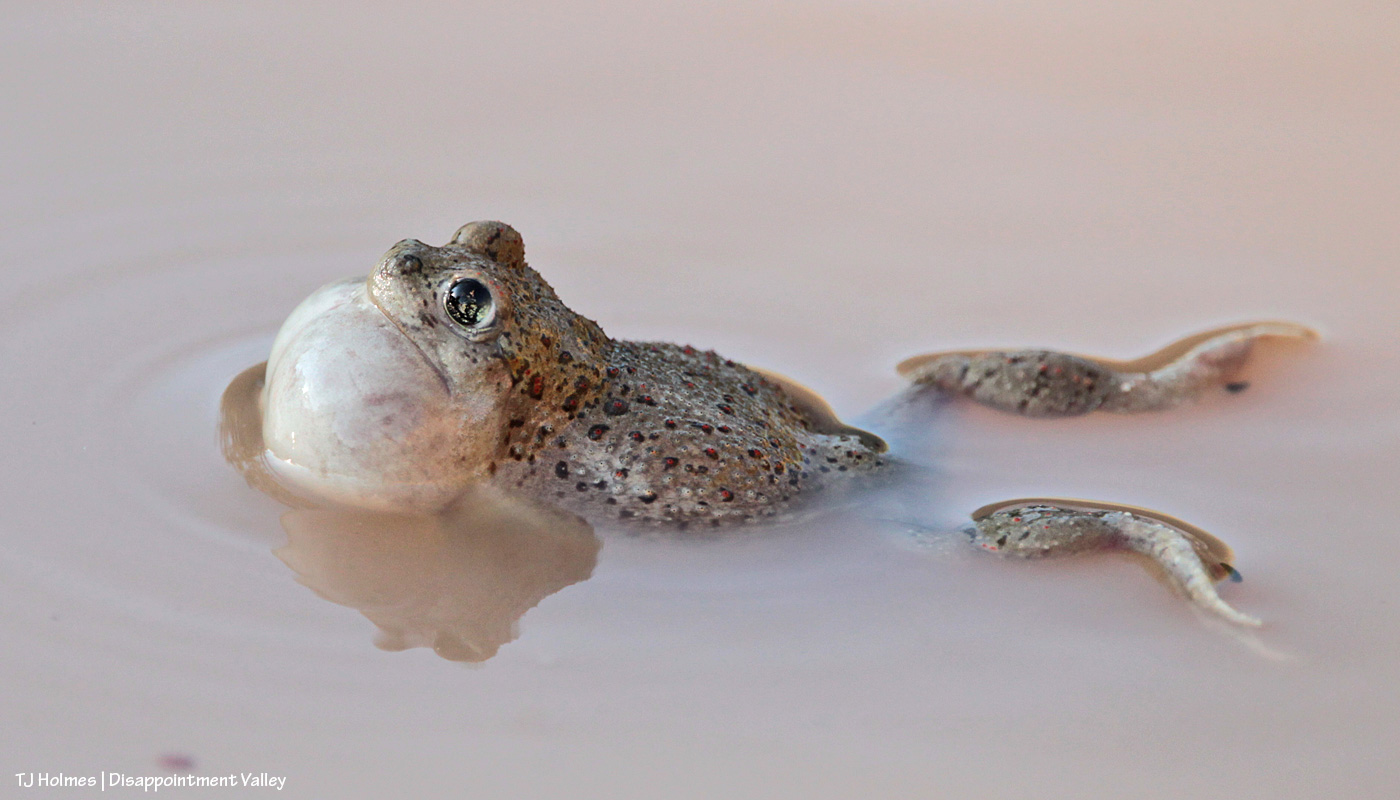
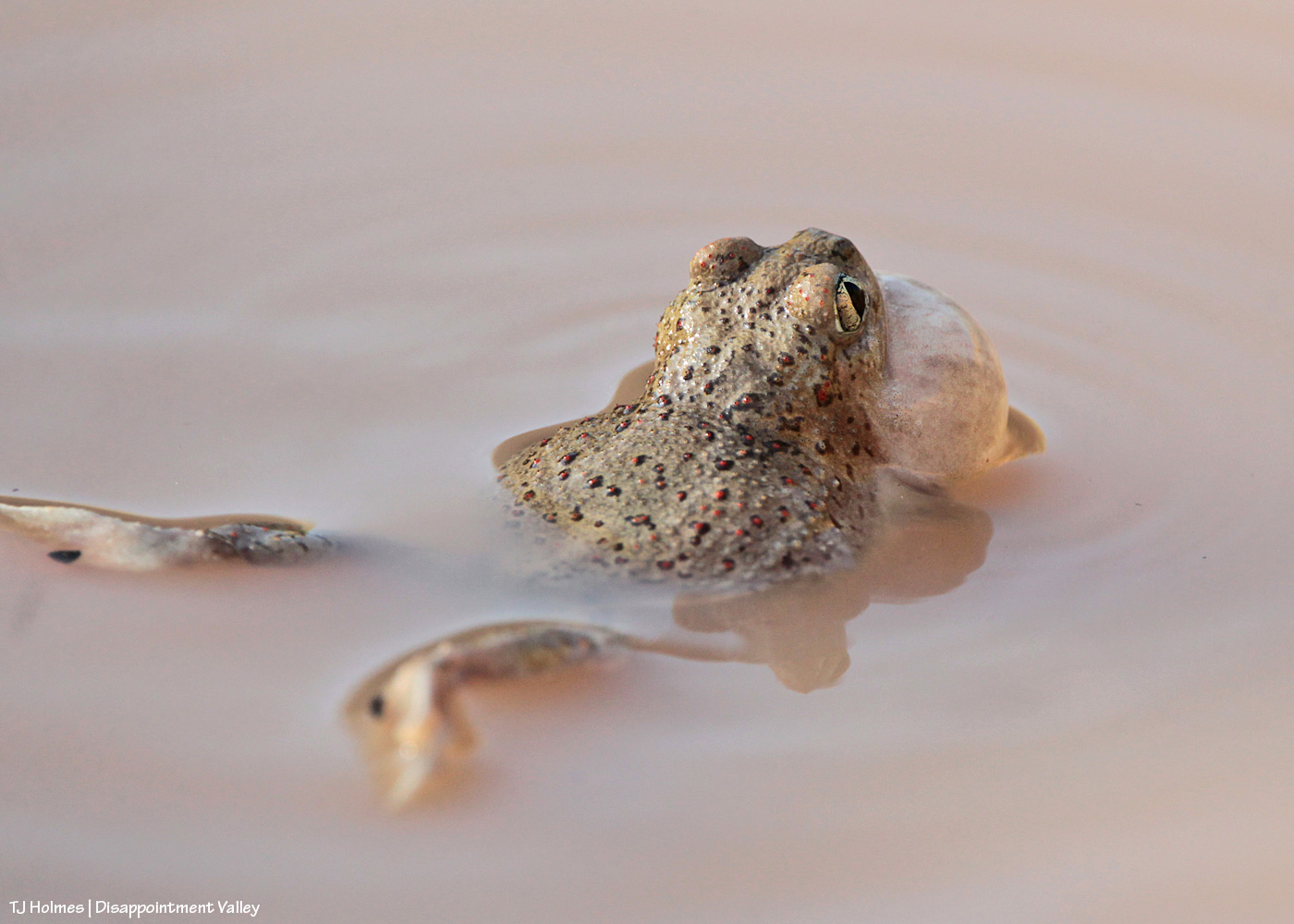
When you get only a bit more than half an inch in almost three months, then you get enough rain in two consecutive days to push that above an inch … THEN you get 1.66 inches of rain in four hours … the toads start thrumming their joy. Sure, sure, it’s mating season (dependent on water?!), but I’m pretty sure they’re happy to finally have some water.
*I’M* happy to have water, for the toads and the mustangs and all of the critters who depend on water in the desert.
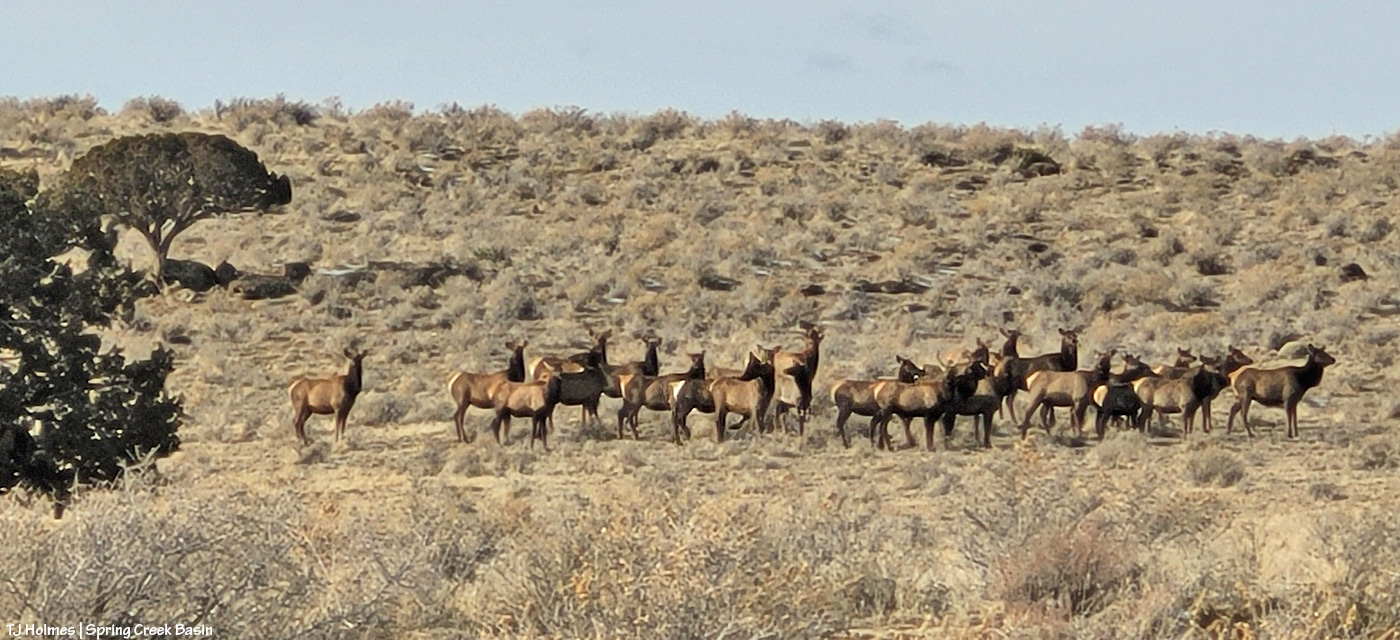
This nice group of healthy elk was in the western part of Spring Creek Basin yesterday. The basin is a wintering ground for elk and mule deer; they find it welcoming at a lower elevation and not much snow (as shown).
The evidence that we’ve had snow is in the muddy, muddy ground (not visible but felt while hiking around)! The last forecast snowfall (Wednesday) gave us zilch again, so we’re hoping for some moisture Sunday and Monday.
This holiday season, let’s remember compassion, tolerance and love for our fellow beings, whether they be human or animal or other … even – especially – different than ourselves. No matter your beliefs, the belief that every being deserves respect is – should be – universal.
Peace doesn’t come from denigrating our differences; it comes from celebrating those differences and acknowledging that all voices – even “silent” ones – have value.
On this night, of all nights, let’s be kind to each other. … Then let’s carry that forward into everything we do, in our interactions with everyone we meet, tomorrow and the next day and week and month and year.
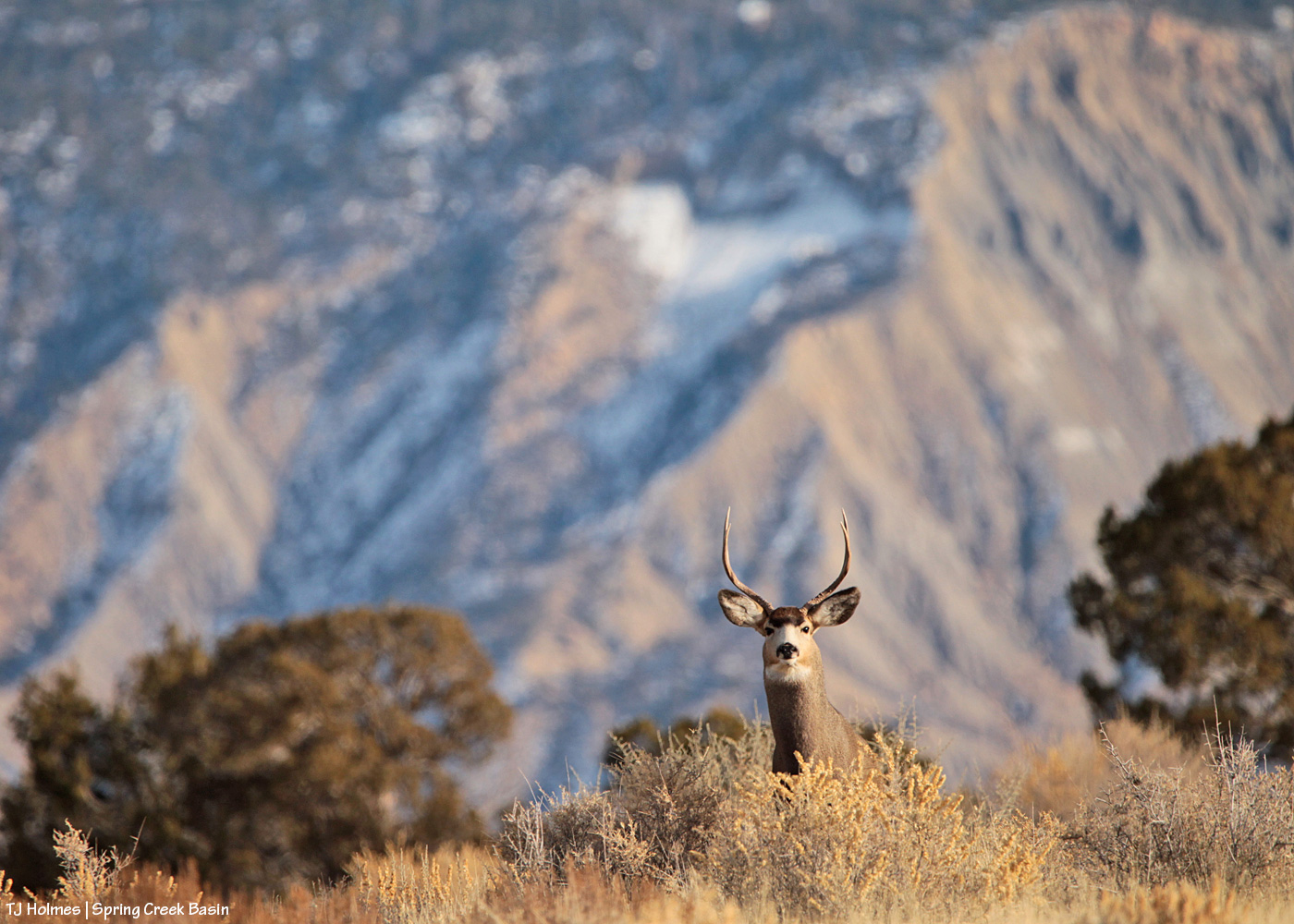
This handsome fellow was spotted a couple of days after the end of fourth rifle season. Some does were nearby. He wasn’t too interested in posing for pix. … I’m just glad he hid himself away the last couple of months.