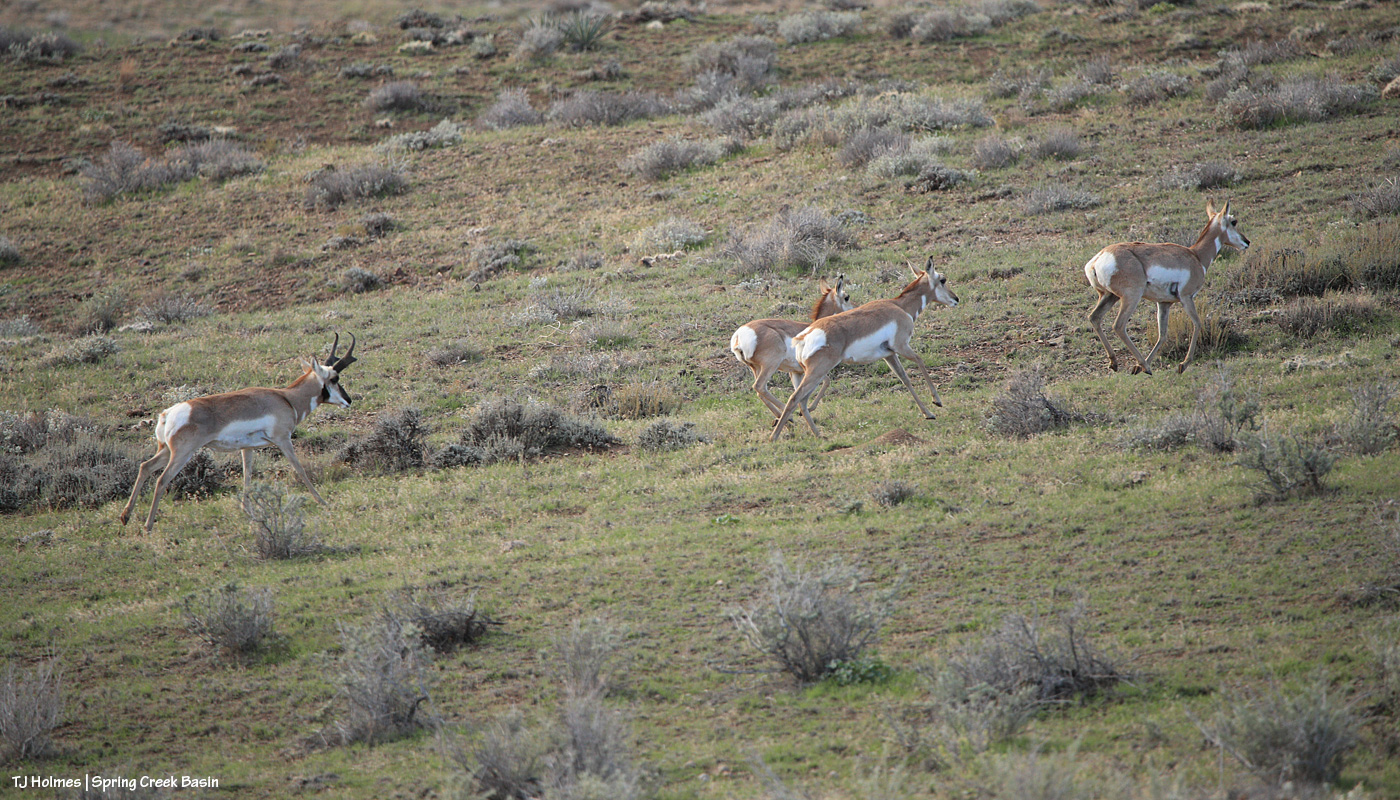
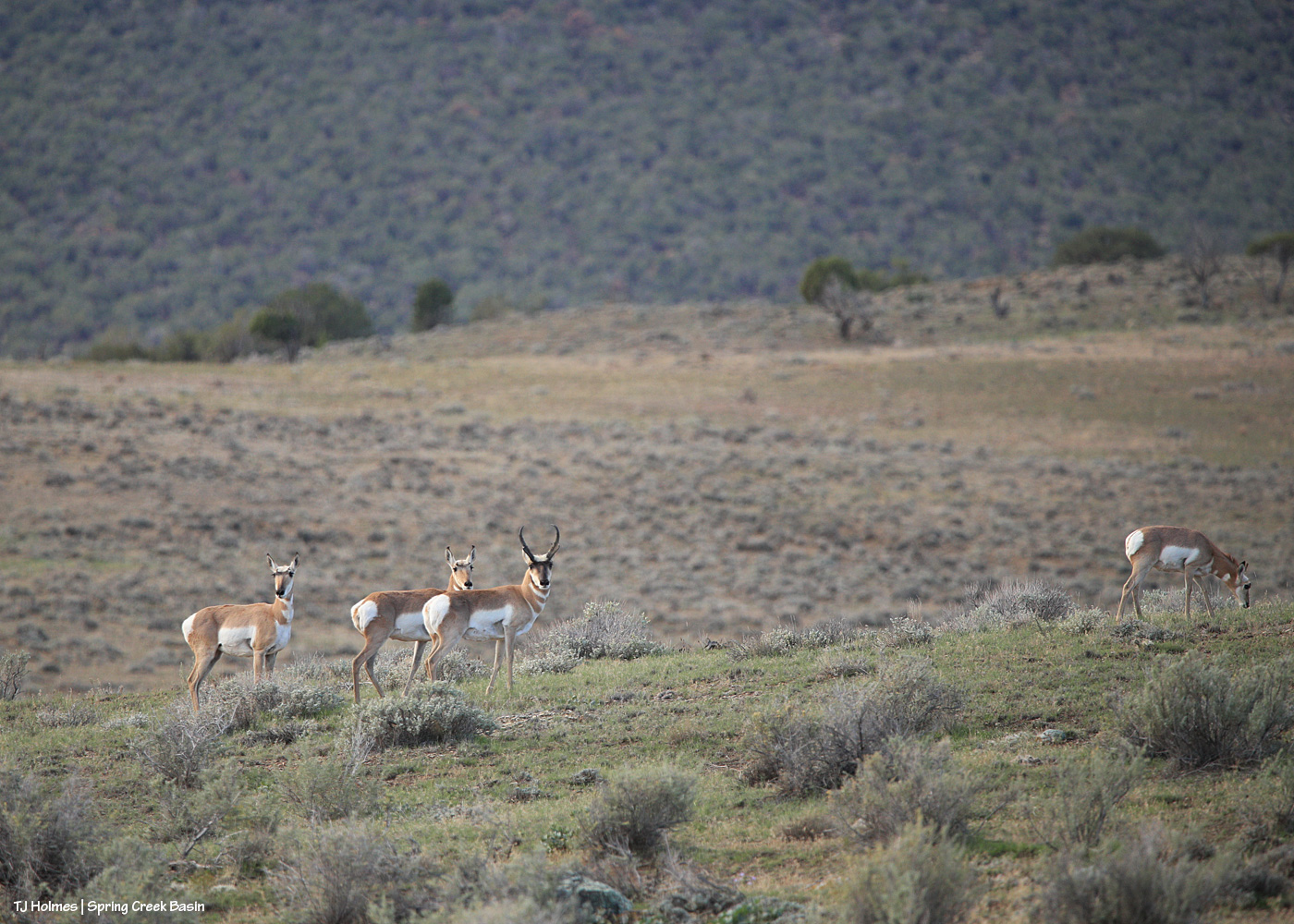
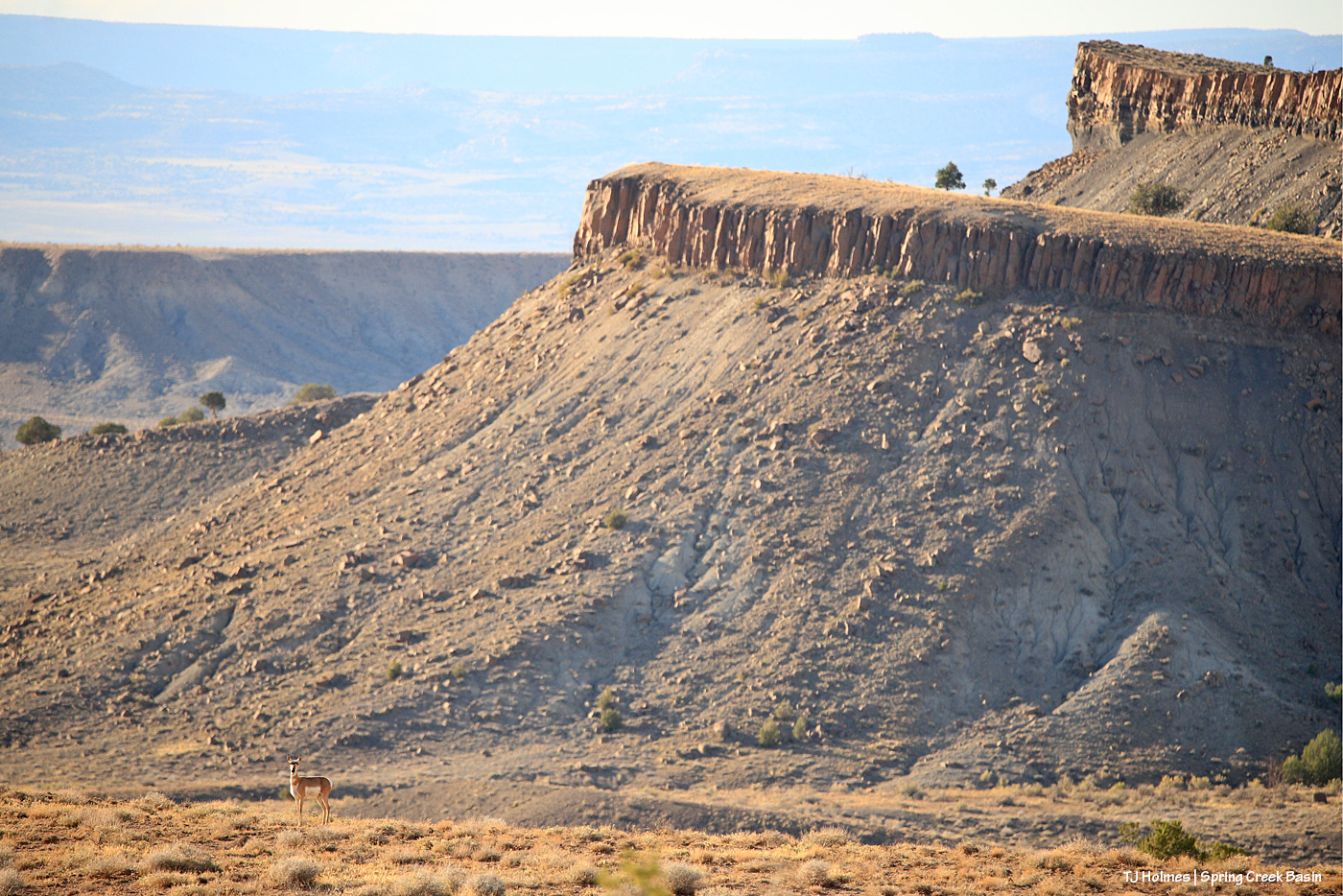
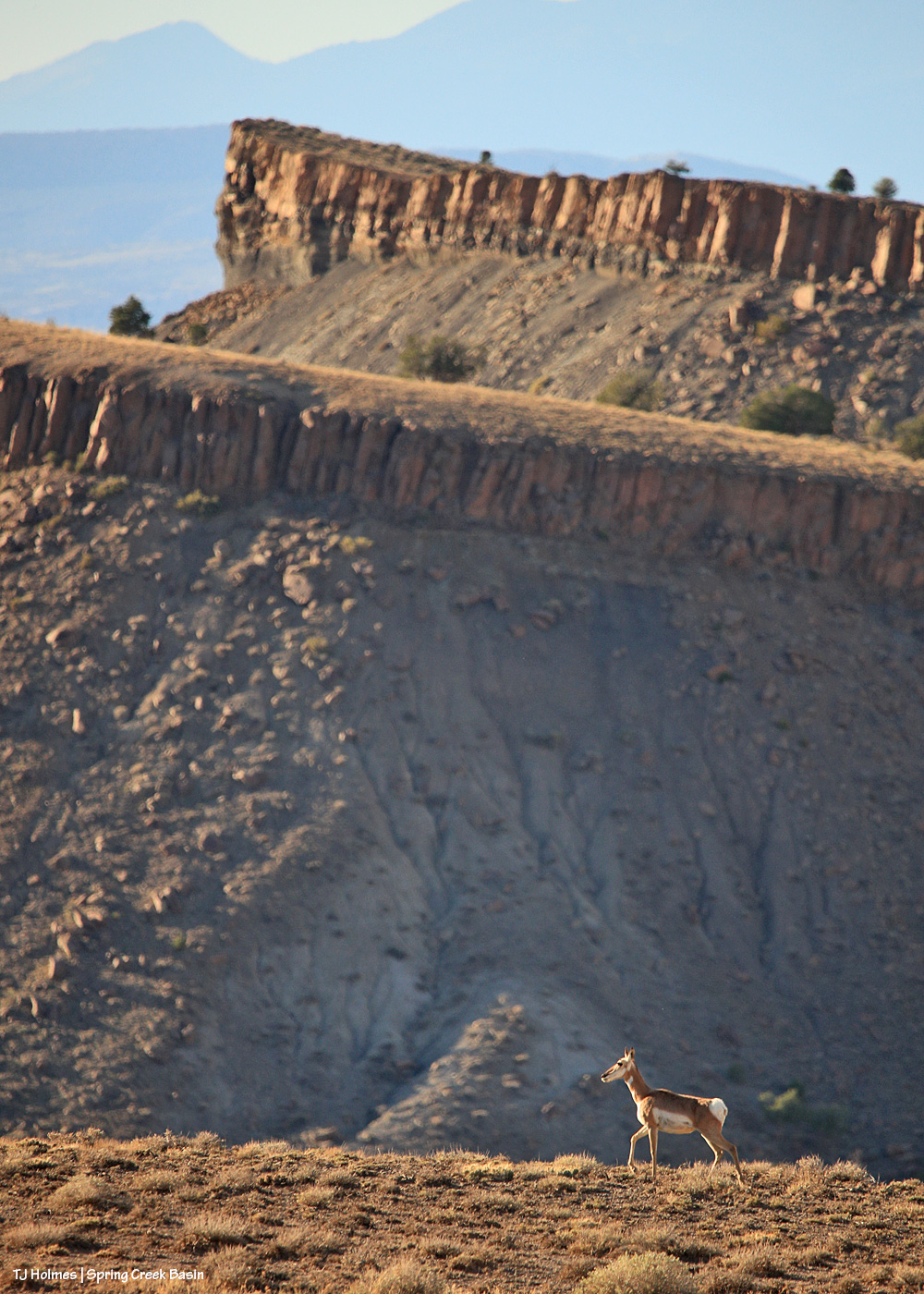
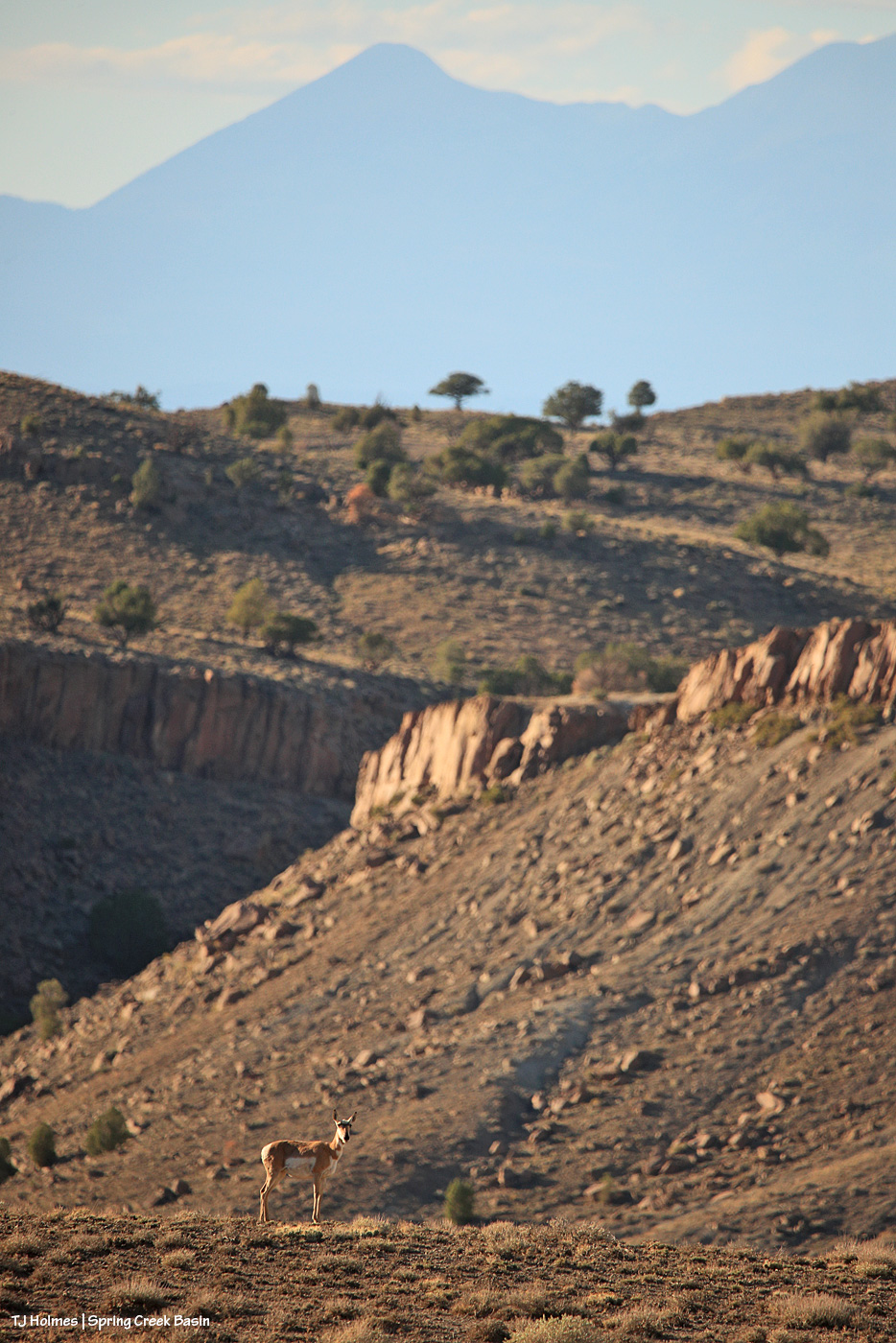
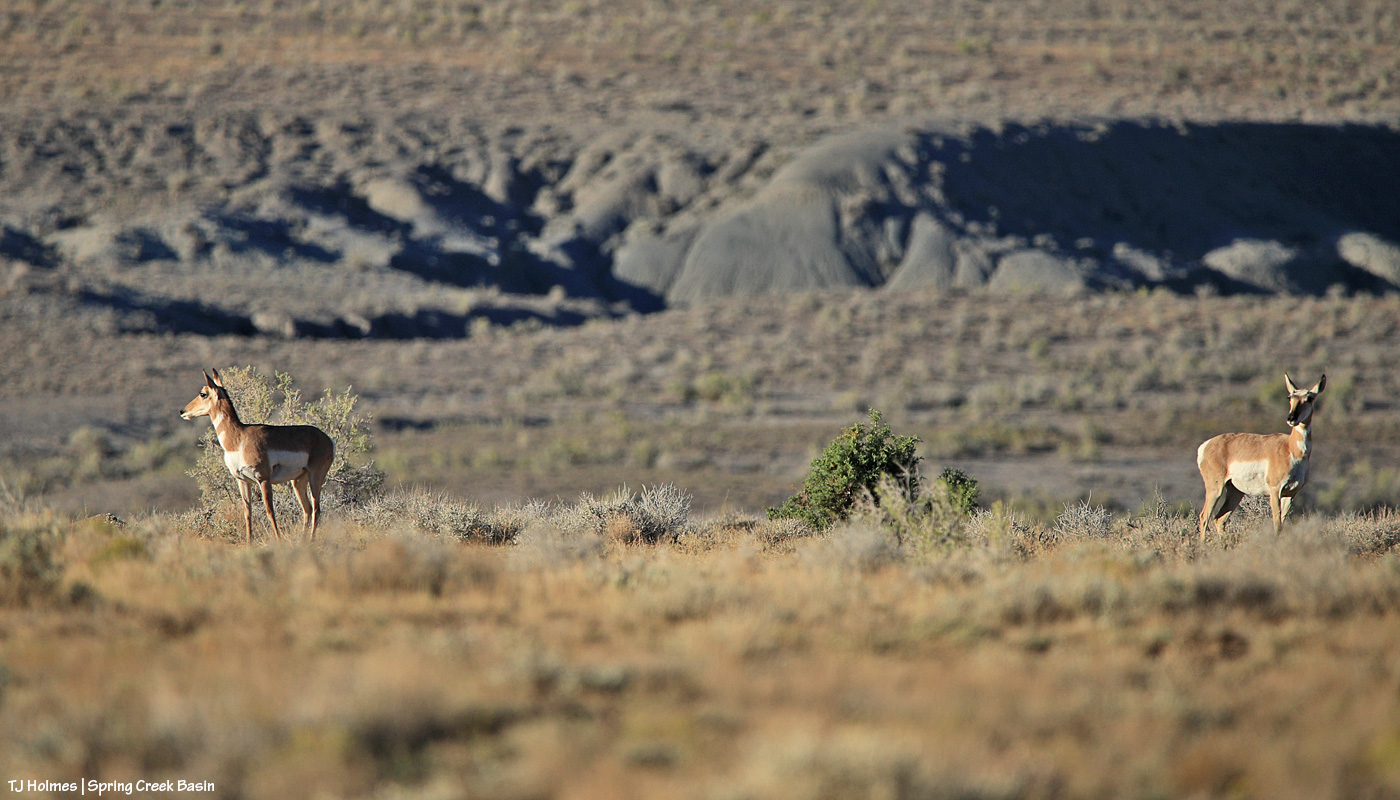
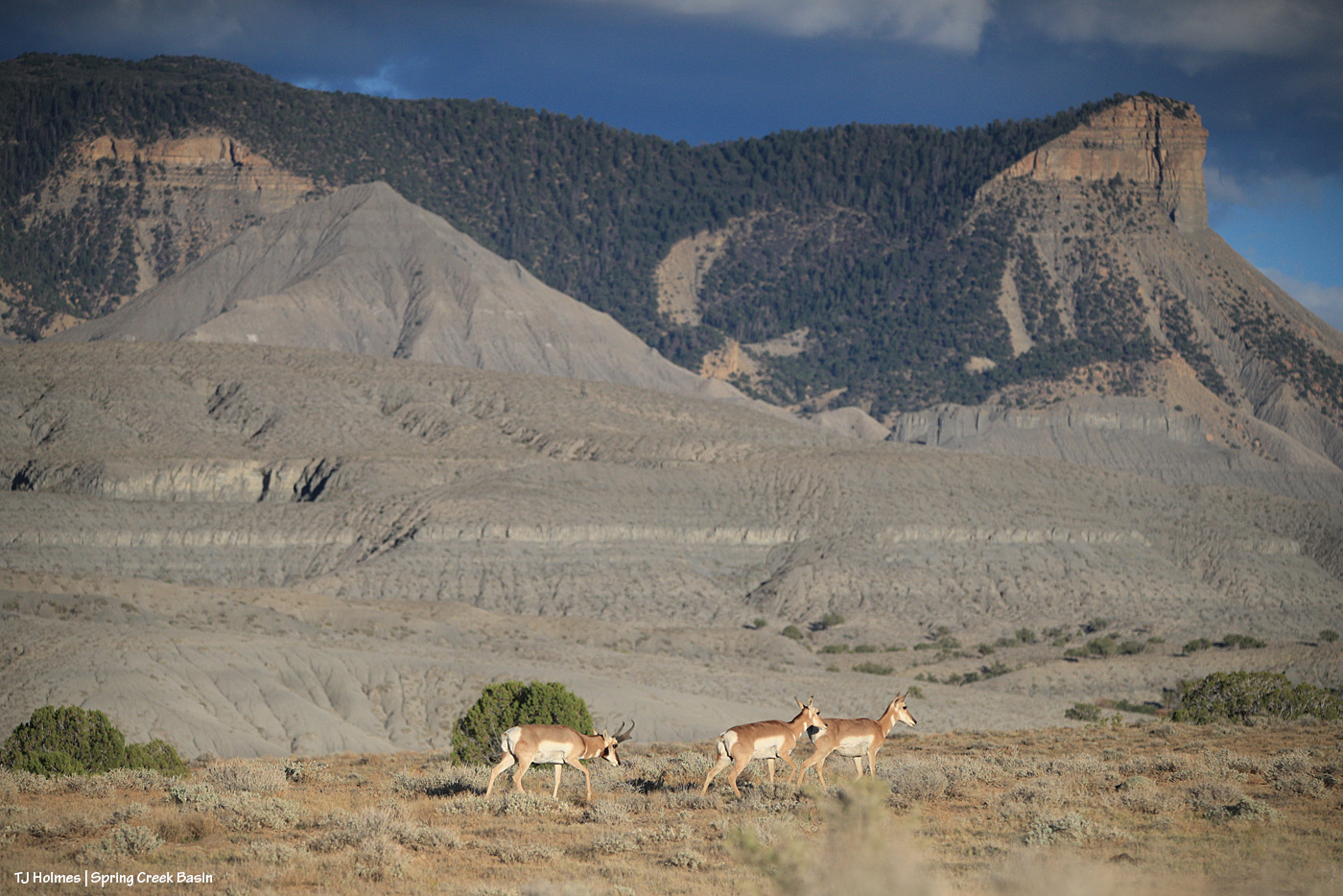
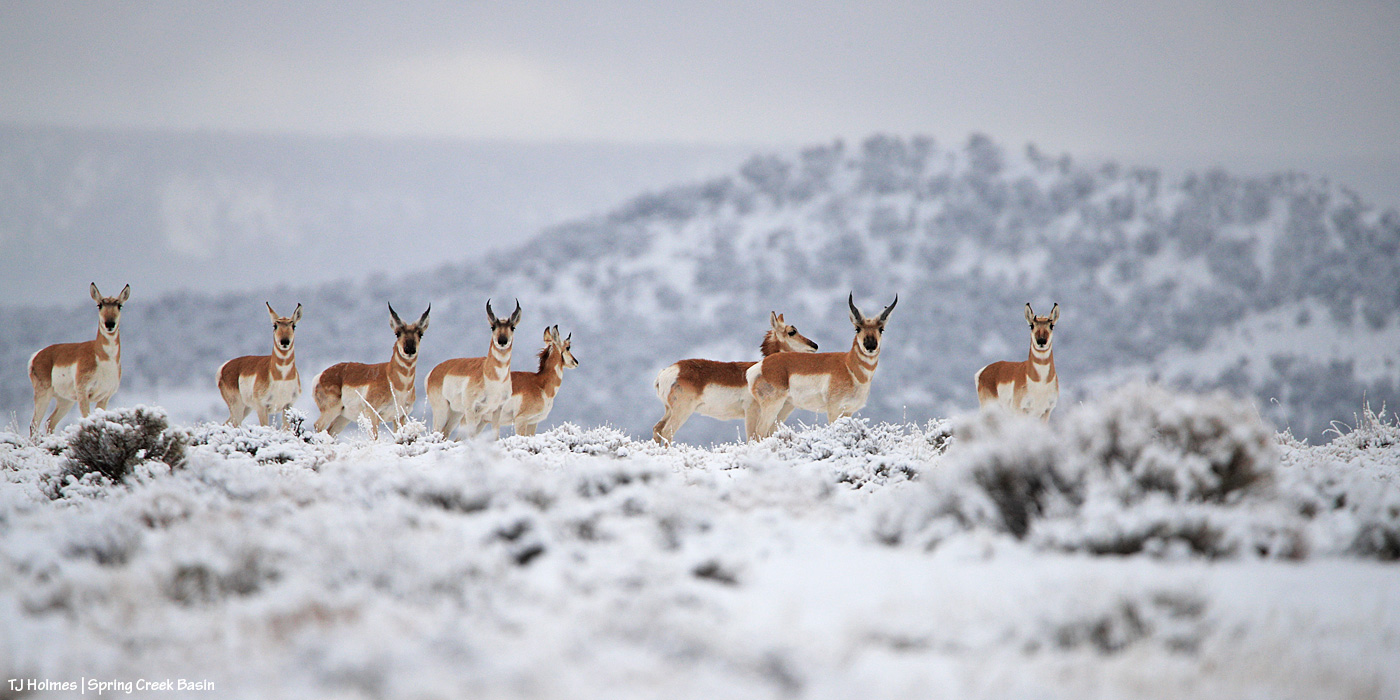
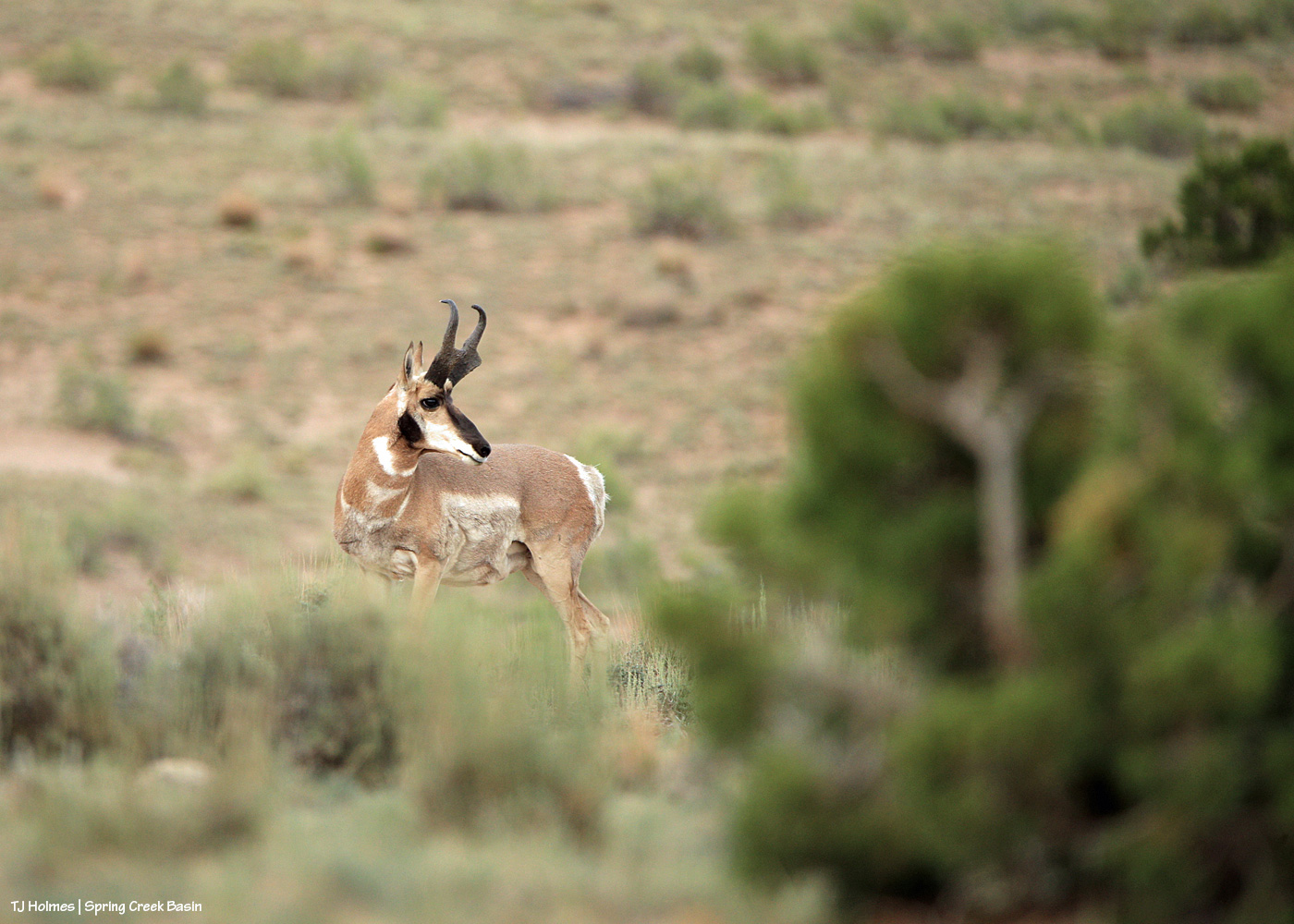
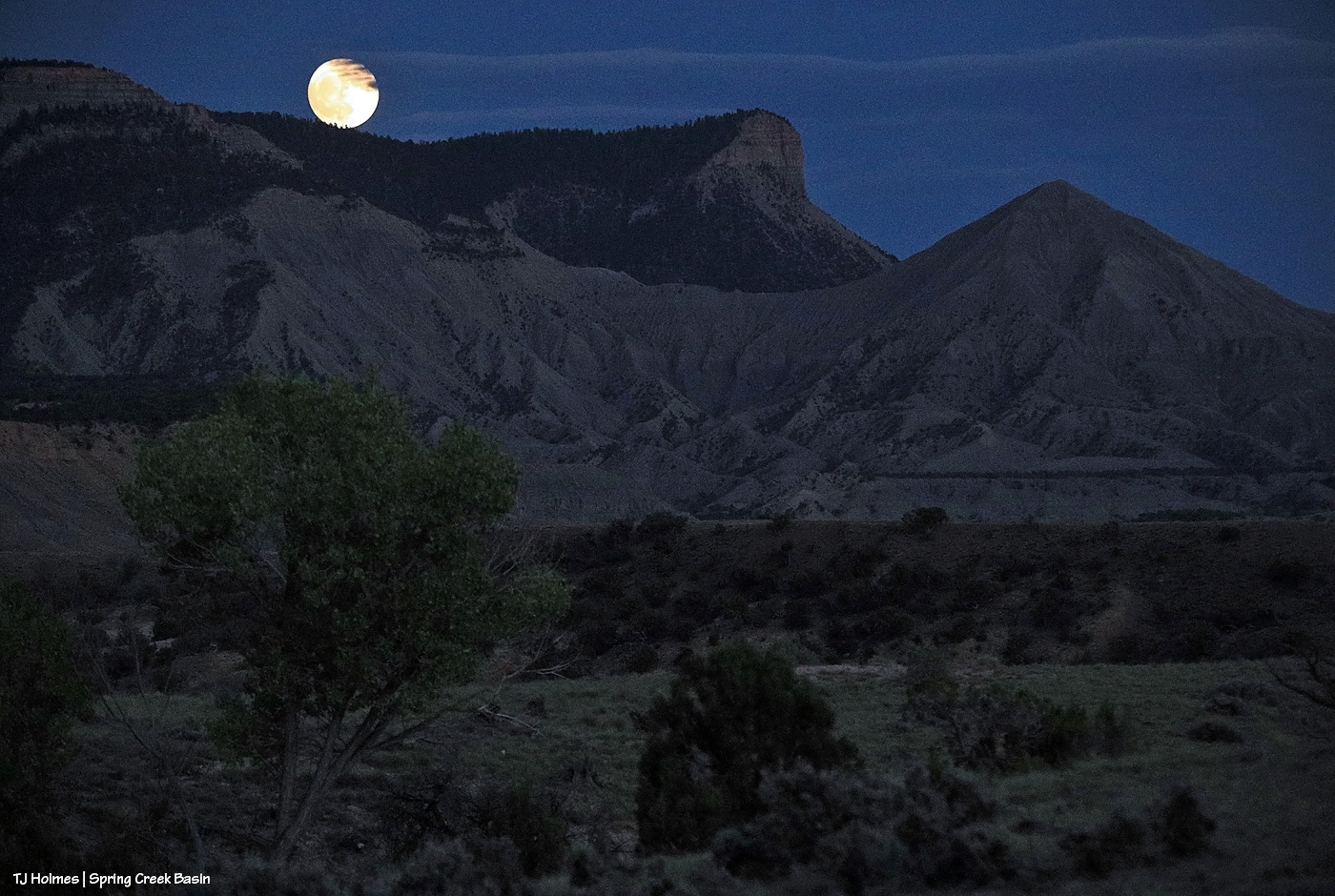
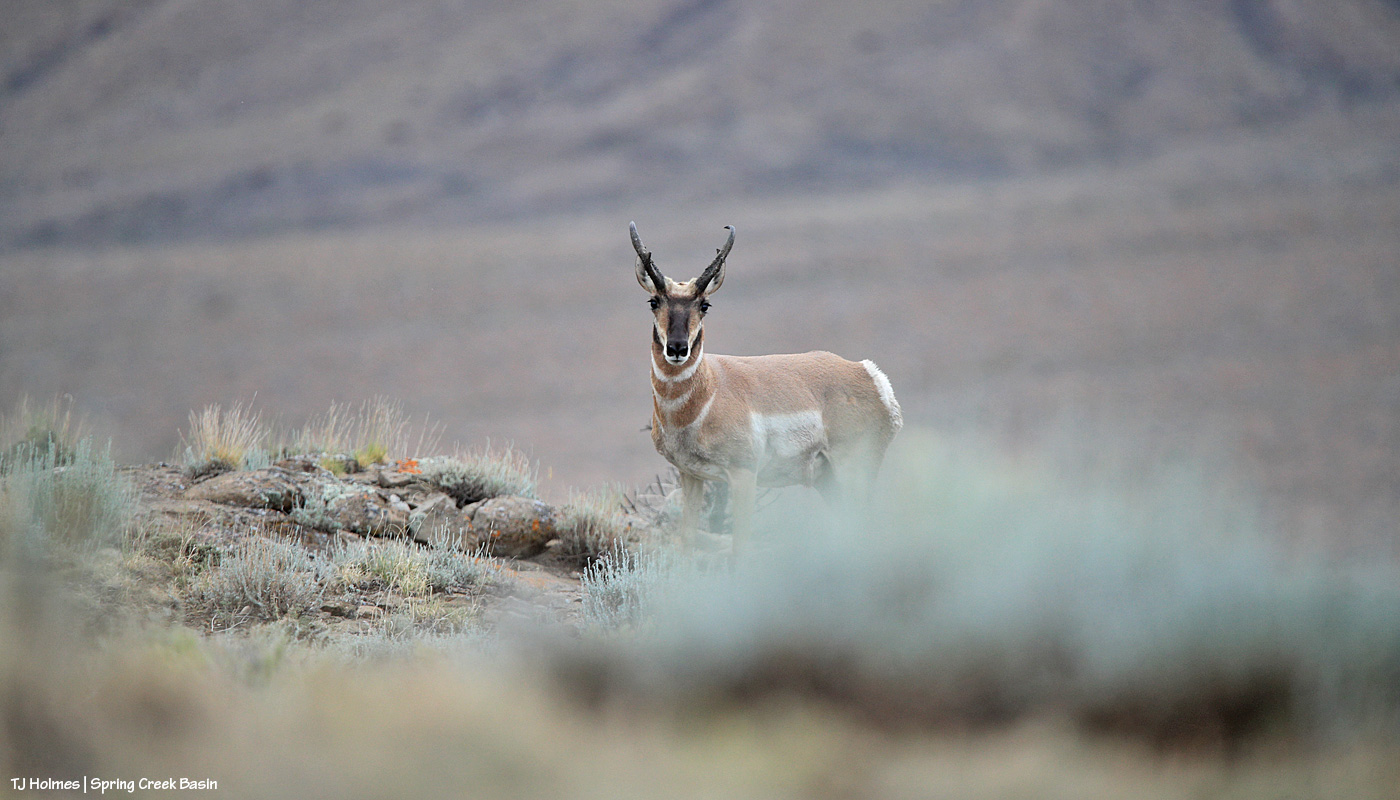
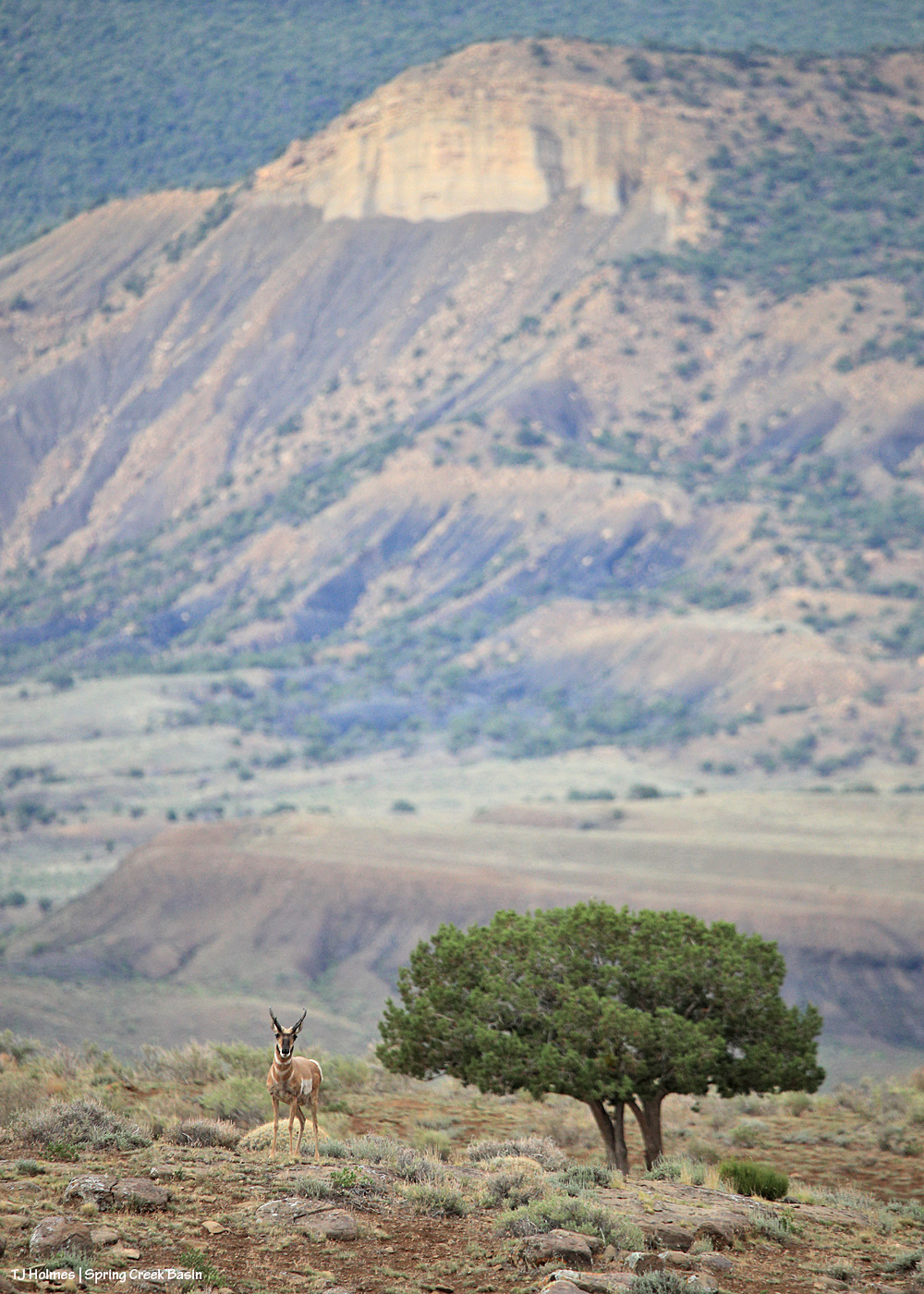
This, I think, is a different group of pronghorns than the ones I saw (and posted) a short while ago. At least three other pronghorn does scampered before I could fumble my pack off my back and my camera out of my pack. And, I think, the two middle pronghorns in the pic above are youngsters, though they may be a year apart (?).
Any time I can “catch” a group of speedgoats (aka pronghorns), I’m happy!
And look at that *green* … in the foreground, at least. It’s astounding how beneficial that rain was, just about immediately.
Heading up to one of the water catchments the other day, I was surprised to see a couple of pronghorn does heading on up past a band of horses that were already leaving the trough and also making their way to the top of the hill. I didn’t see them (any of them) drinking, but I *know* the horses had been, and I really hope the pronghorns are making use of the fresh rainwater, too.
No pix of the pronghorns and the horses together because they were far-ish, and I was still huffing and puffing my way up the hill, and I didn’t stop to offload and unload my pack. So what follows are sightings of the pronghorns after I was up and over the top, with another (second) band.
By the time I got atop the hill and was moving down toward a band of mustangs, I caught sight of one of the pronghorn does already down the broad other side.
My lens swung between horses and pronghorn, and I wondered where the other pronghorn had gone.
But for a while, only the one doe was visible, watching me watch the mustangs (and her).
She eventually went out of sight, and I figured that was the last I’d see of her. … Until she showed up with the second doe, walking not so much toward me but on a trajectory that was going to take them past me a lot closer than they had been. And then the second doe turned to look behind them – definitely NOT at the horses – and I started to wonder what SHE was looking at.
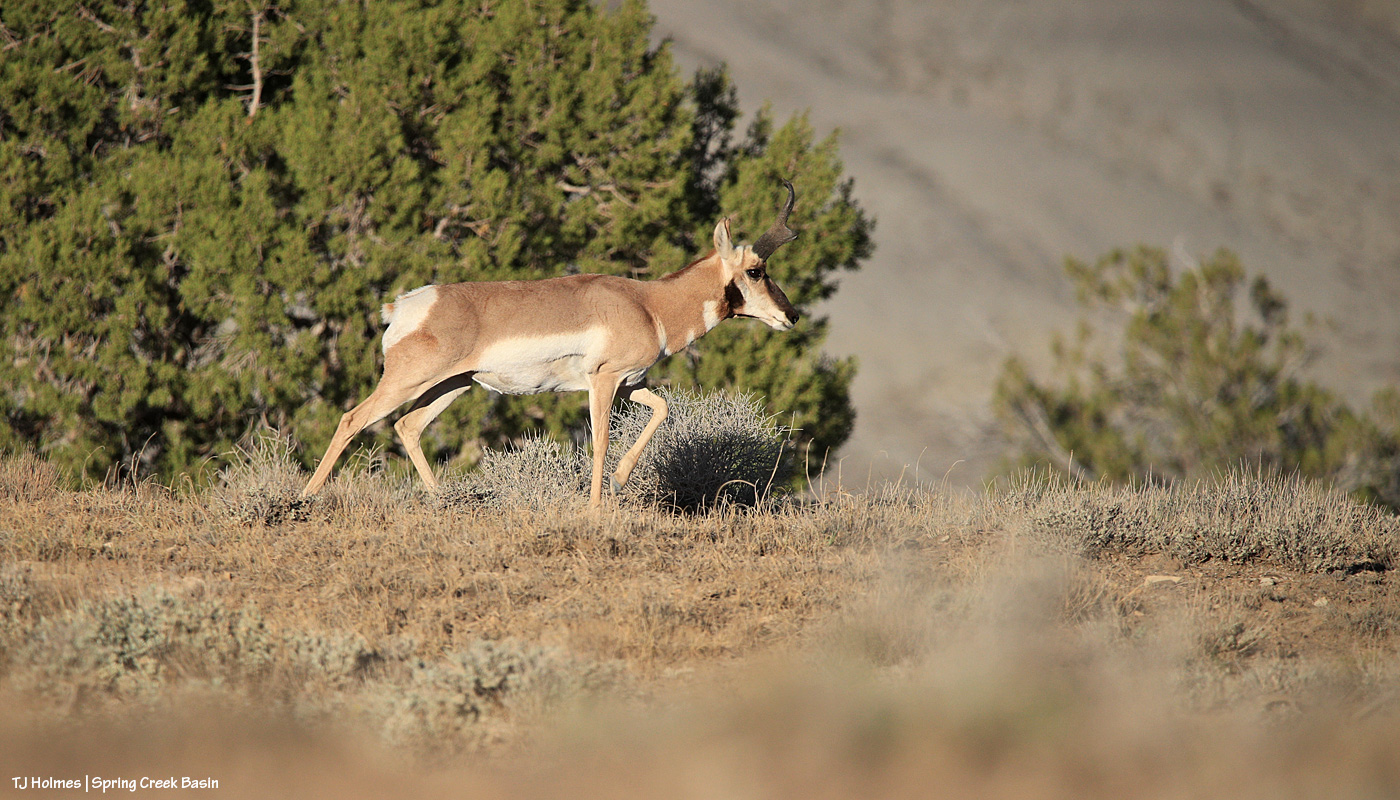
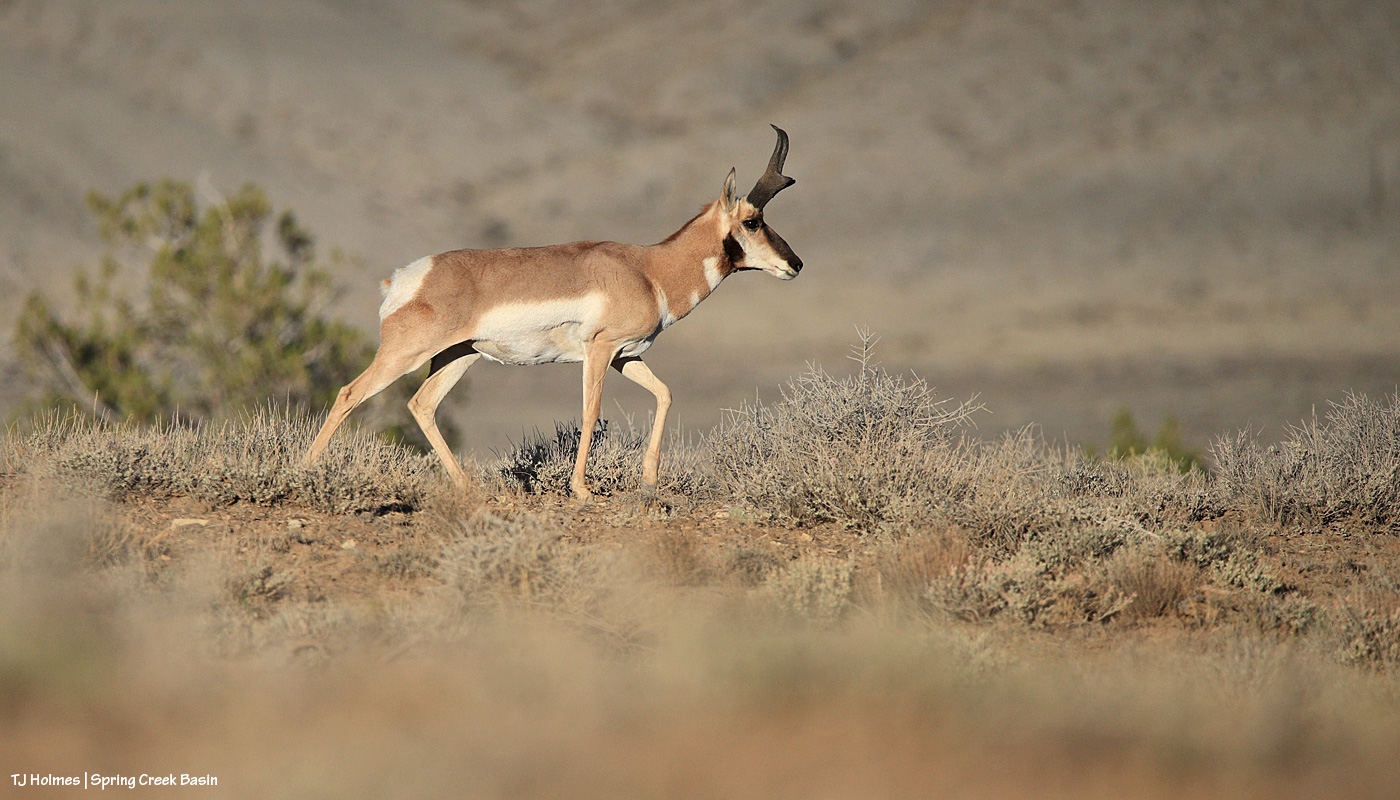
Ah ha! Mister handsome!
This shows his impressive horns better. And despite the fact that males shed the *outer* horns, they are horns, not antlers.
More from Google AI:
The Pronghorn (Antilocapra americana) is North America’s fastest land mammal, capable of reaching speeds up to 55–60 mph.
Physical Characteristics & Speed
Speed: Reaches top speeds of 55 to 60 mph, making it the second-fastest land animal globally (after the cheetah).
Anatomy: Features an oversized windpipe, heart, and lungs that process massive amounts of oxygen.
Horns: Possesses unique branched, pronged horns with a keratin sheath over a bony core that males shed annually.
Vision: Equipped with large eyes set high on the skull, providing a 320-degree field of vision to spot danger from miles away.
Habitat & Range
Geography: Endemic to the open plains, grasslands, and semidesert shrublands of western and central North America.
Local Presence: In Colorado Parks and Wildlife, they are commonly found on the eastern plains, mountain parks, and western shrublands.
Migration: Some herds migrate hundreds of miles seasonally to avoid deep winter snow that blocks access to food.
Diet & Behavior
Diet: Herbivores that primarily eat forbs (flowering plants), grasses, and shrubs like sagebrush (which they can digest despite its toxicity to other ungulates).
Reproduction: Mating occurs in early autumn (September), and females typically give birth to twin fawns in late May or June.
Predators: Vulnerable to coyotes, bobcats, wolves, bears, and golden eagles, which primarily target young fawns.
Pronghorns are fascinating critters. They’re not very widespread here, and there aren’t very many of them. Thankfully, there’s no hunting of pronghorns in our part of Colorado because there just aren’t very many. While I see them fairly often, I think there are only around 30ish. We do have coyotes and golden eagles, but in the open reaches of Disappointment Valley, those likely are their only predators. That said, there don’t ever seem to be *more* of them year to year.
From Wikipedia: “The pronghorn (UK: /ˈprɒŋ.hɔːrn/, US: /ˈprɔːŋ.-/)[4] (Antilocapra americana) is a species of artiodactyl (even-toed, hoofed) mammal indigenous to interior western and central North America. Though not an antelope, it is known colloquially in North America as the American antelope, prong buck, pronghorn antelope, and prairie antelope,[5] because it closely resembles the antelopes of the Old World and fills a similar ecological niche due to parallel evolution.[6] It is the only surviving member of the familyAntilocapridae.[7]“
“The pronghorn is the fastest land mammal in the Americas, with running speeds up to 55 mph (88.5 km/h).” And if you’re lucky enough to see them, you can easily believe that. Even at what pronghorns themselves might consider “an easy lope,” they are FAST.
Why am I showing you all this very-far-away image of a pronghorn doe in the middle of a vast, open, empty stretch of land in Spring Creek Basin – and again, from a very great distance?
Because it’s not empty.
There’s mama pronghorn, of course. I saw her as I arrived at my usual spot from which I scan as much of the basin as I can for mustangs and other interesting things.
What you *can’t* see is her baby, curled tightly up into the edge of one of the sagebrush or saltbushes you see dotting the landscape. *I* can’t see it, even zoomed in, and then I forgot exactly which one it curled up against. Nature’s camouflage, indeed!
🙂
I saw it only briefly, through the binoculars, when she was with it, and it folded those impossibly long legs, dropped and went into hiding right before my glued-to-the-glass eyeballs – and then I forgot which bush it was near as I watched mama start to walk away, clearly worried about the choice between staying with her baby and my presence on a not-far-enough-away-for-comfort hill.
*Note: Mama pronghorns, like deer and elk – and domestic bovines – tuck their very-new babies into hiding, and the babies’ inborn instinct is to stay there, scentless, until mama returns. Mustangs do NOT perform this behavior, keeping their babies with them always, and the entire band provides protection to any outside threat.
While scanning the basin for mustangs, I then noticed a group of five pronghorns much closer below me. I’d walked away a little distance to look at them without my camera (never leave your camera behind), so what follows are some cellphone pix after they noticed me and made a big circle away and then up and around me to where they were basically above mama prongs. (I think I use my cell phone these days for more than actually making calls; how crazy!)
Three of the five; see them? Sort of center, light dots. Across the bottom/foreground is the berm of the road, and in the FAR back distance (near the very top of the pic, a bit to the right of center), those white dots are mustangs.
The other two of the five, following the first three. What a great view of Spring Creek Basin, eh? Spring Creek arroyo is the dark line in the semi-middle of the pic, on its way to Spring Creek canyon, where all the water gathered in Spring Creek Basin runs across part of Disappointment Valley to join Disappointment Creek, which eventually joins the Dolores River on its way to the Colorado River.
A top-down view of the aforementioned Spring Creek canyon – that’s the south-facing north wall of the canyon, spread-eagled like a, well, eagle’s wings. 🙂 See the pronghorns? All five are in this pic. You bet I was kicking myself for having walked away from my camera, but I didn’t expect them to give me such a great view! In the first two pix, I was looking down to the eastish and northeastish; now I’m looking fairly northish.
Now I’m looking westish/southwestish up the hill “behind” me (from the direction I was facing when I first saw them downhill from me). From that vantage point, they stopped, and I was able to regain my big gun (I never left the immediate area where I’d stopped to glass the basin), and they graciously waited while I snapped off some pix. They could see the mama below – and she could see them – from this point. The road is down below them to the left.
Note that the doe immediately in front of the buck looks suspiciously round in the belly. 🙂 Soon-to-be more new life!
When they all went out of sight down the hill, I decided that they didn’t need any continuing paparazzi, and I didn’t need to visit farther into the basin that day, and I headed back out. Good luck, little prongs; I hope to see you running soon like the fastest land mammal in North America that you were born to be!
When I rounded the curve on the road and found the band of mustangs I’d seen from way far away, I was surprised to see two pronghorns right in among them. Naturally, by the time I fumbled through my backpack and got my camera out, they’d had enough of waiting for the two-legged to get her act together and had trotted away. … But then, the mother (at right above) came sort of straight back toward me before dashing off back past the horses, but lower, so I couldn’t get them all in frame. They stopped just short of the skyline, and she gave me that same impenetrable stare, while her yearling (I think) gave all the signs of wanting to move on. And so they did.
We’re approaching fawning (deer, pronghorns) and calving (elk) season, and my first thought was that maybe she’d left a newborn hidden somewhere close to where I stopped, but I think it’s still a bit early (tell me if you know??).
I do love the pronghorns, and I really love seeing them hanging out with the mustangs, who all look huge in comparison. 🙂
*****
Happy birthday shout to my brother, Jeff! Have a *wild* day, little brother!
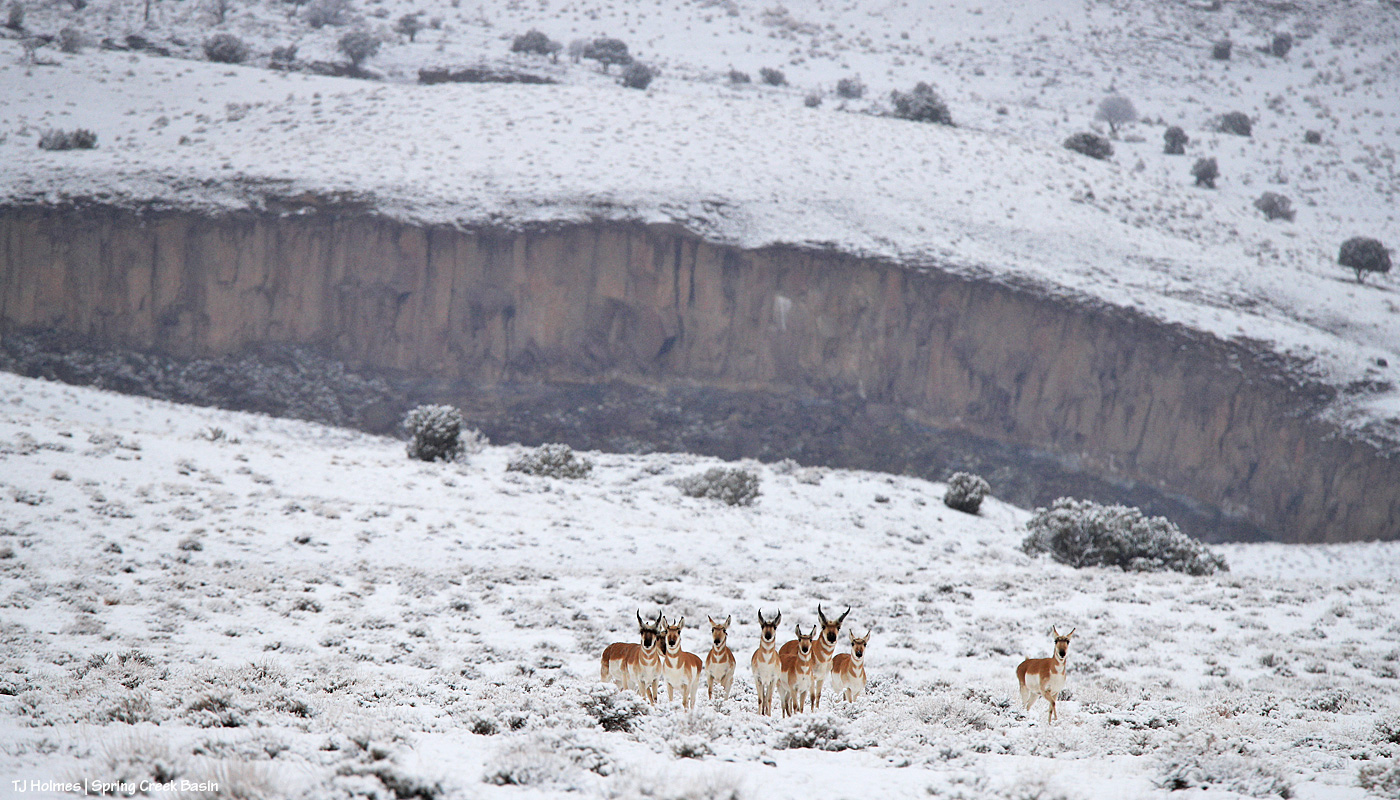
The snow Saturday morning lured me into Spring Creek Basin twice that day. The first time was shortly after sunrise, and while the mustangs were frustratingly far from any accessible areas, the pronghorns were fascinatingly cooperative! While that sort of looks like a giant cave opening behind them, that’s the north rim of Spring Creek canyon (viewed from the southeastish). The pic of Chipeta yesterday was taken much later in the day; compare the melting that had been at work.
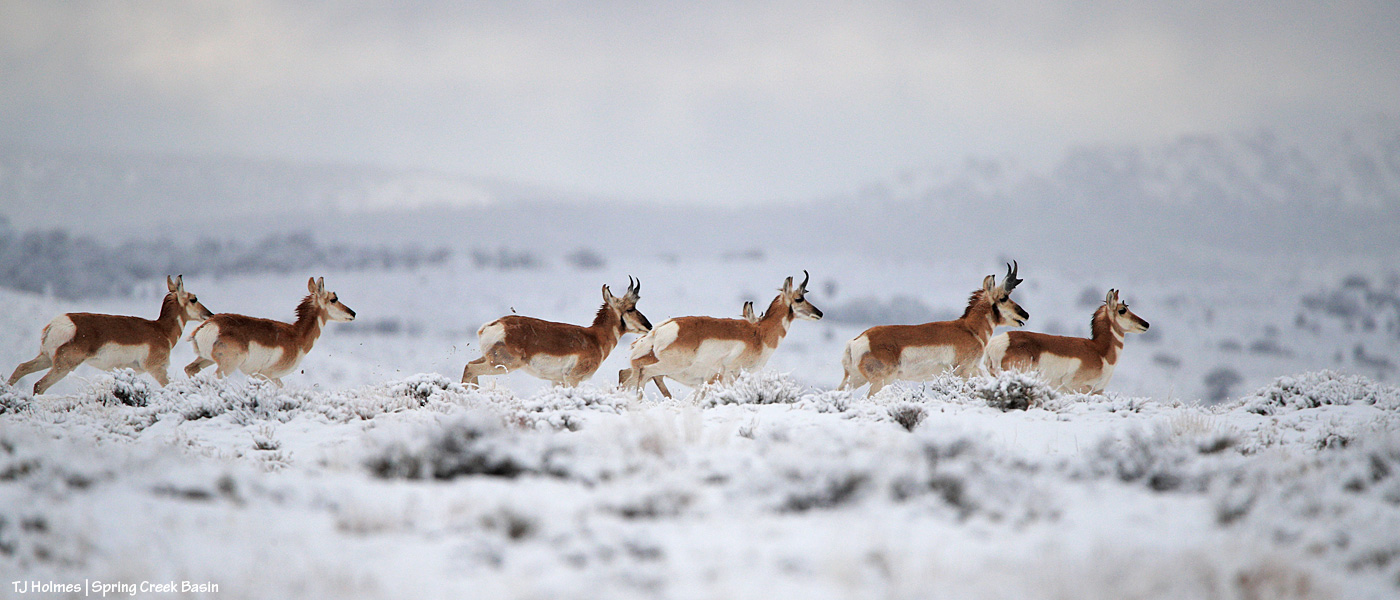
Pronghorns (not actually antelope) are North America’s fastest land mammals. Here, they were just moseying. When they *really* run, they are FAST!
They’re more sprinters than marathon runners … and thankfully for me and my camera, they’re wonderfully curious. 🙂
(Note that the landscape doesn’t look like that AT ALL by this morning (or even by yesterday morning). It was cold (high of 34F?), but in Colorado, sunlight means even more than temperature.)
… amid a bigger group! And these weren’t all of them. After the rains, they have plenty of roadside puddles (some of them decently large!) to drink from without ranging too far!
This handsome fellow is not the same handsome fellow from a couple of posts ago. He was near a small water source, and I happened upon him as he was walking away. Above, I *think* his attention was caught by a small band of mustangs away south and lower. He ended up turning all the way around to look at them, then watched them intently for several minutes before returning to his path away to nibble and browse.
A couple of hours later, this. 🙂
Hot, hot, hot. The temp hit 100 degrees in Spring Creek Basin yesterday. It’s not unusual as a summertime temp … but it’s still awfully miserable. There was some relief in the form of sunshine-blocking clouds, but not a drop of moisture did they produce.
By the time the moon rose, it was actually pleasant (if you don’t mention the gnats), and some little bird was singing its little heart out with a full medley of melody. I don’t know what it was, but it was a lovely serenade! 🙂
The pronghorn buck Chipeta and the other mustangs were very interested in. Here, he’s literally right at the rimrock’s edge (a band of rimrock cliffs forms most of Spring Creek Basin’s western boundary). I spotted him first, from the far side of a little hump of ground. Then he spotted me and decided that the mustangs must be warned of the “stranger” in their midst! Fortunately, though I was a stranger to him, I am not a stranger to *them*.