Sometimes the best images come right to your camera, just as you’re leaving Spring Creek Basin with no expectation of seeing horses right along the road in spectacular light. 🙂
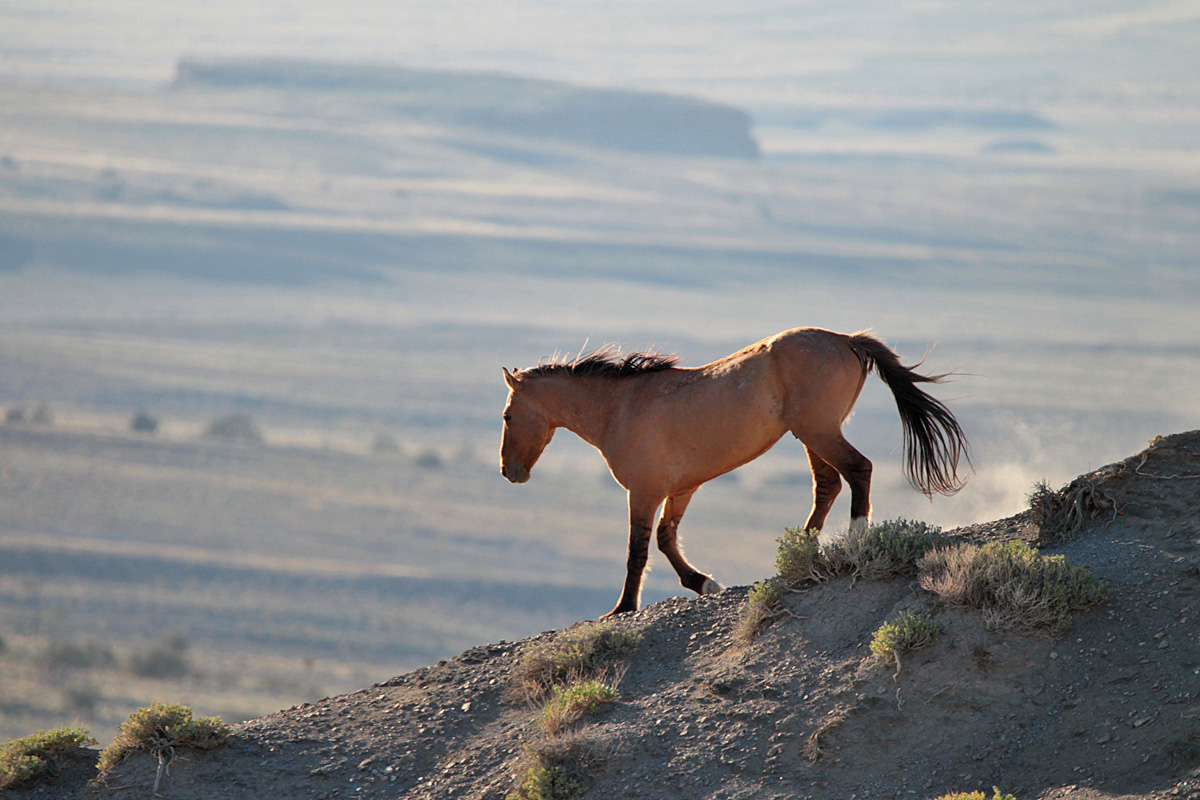
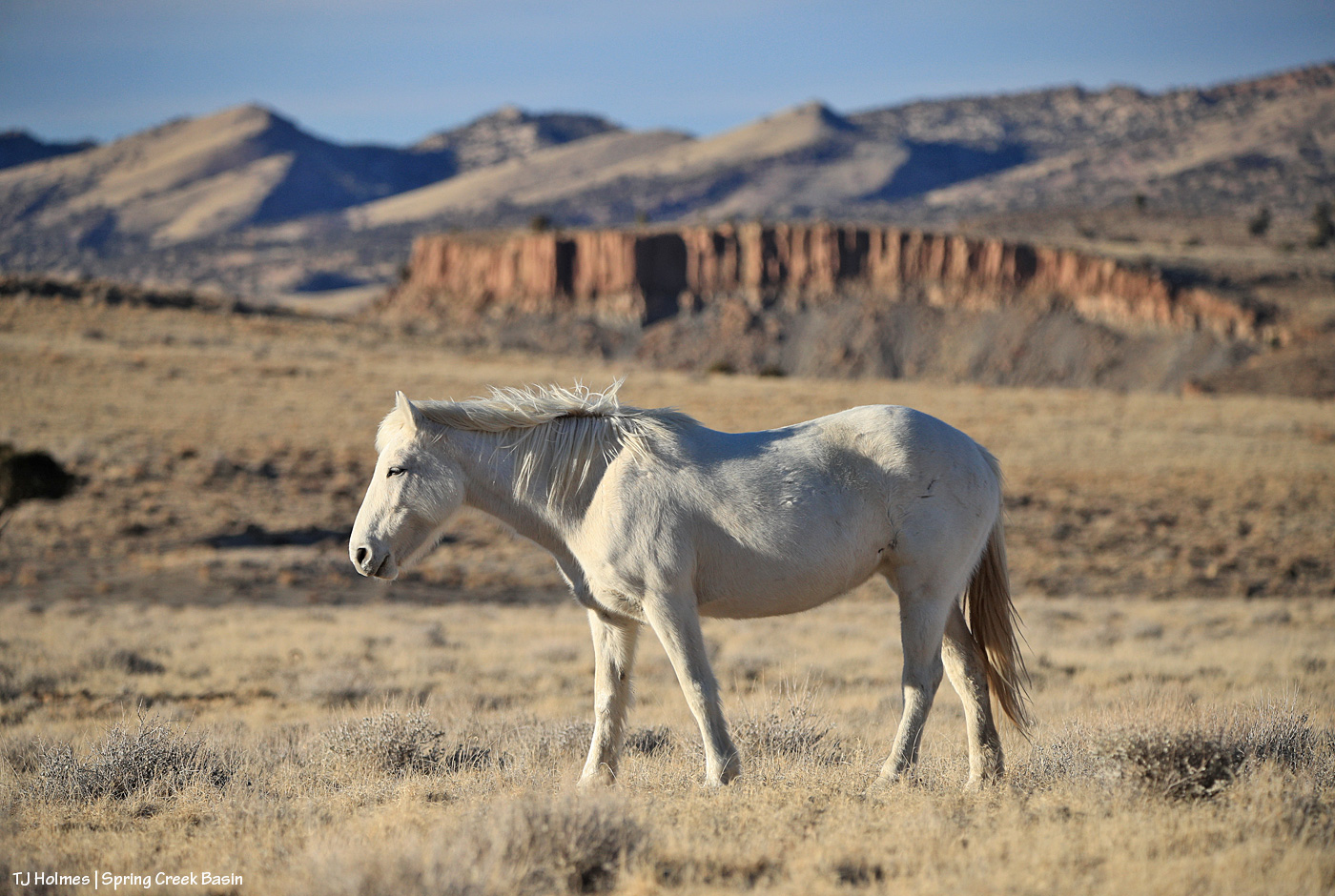
Temple-the-gorgeous was at her most-gorgeous while walking along catching up to the band, all of whom had already dropped low while grazing.
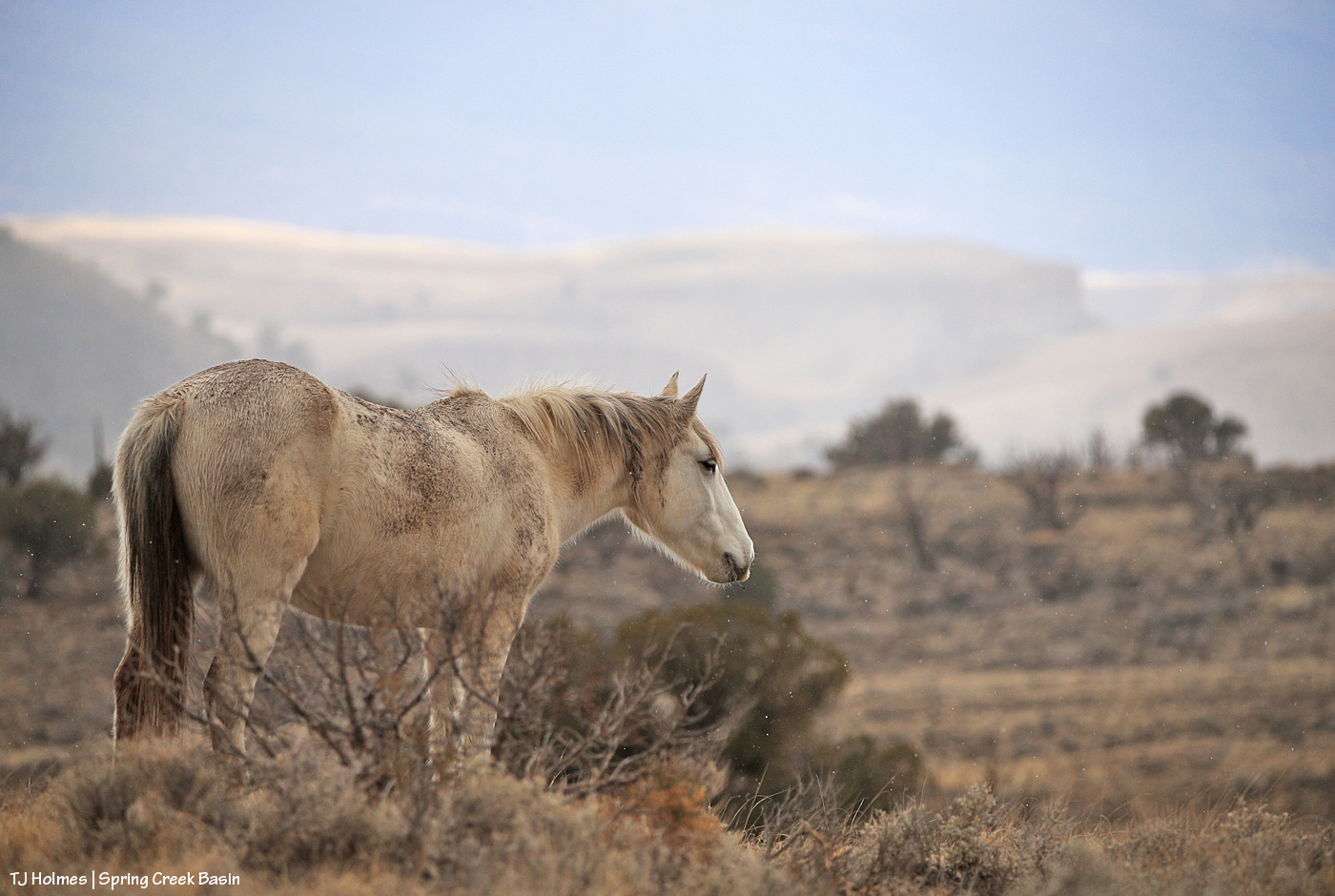
This image of Winona is one of those that doesn’t begin to do justice to the sheer, stunning gorgeousity of the actual scene.
If you look closely, you’ll see snowflakes. 🙂 And yes, that’s sunlight in the distance of the western basin.
It was one of the several waves of rain(ish)/snow(ish)/graupel(for sure) that flew wind-driven over Spring Creek Basin and greater Disappointment Valley yesterday, looking amazingly amazing and not leaving a *lot* of moisture (? I couldn’t believe how not-muddy it was). As we know in Disappointment country, ANY moisture is good-and-welcome moisture, and we’ll take every hard-won flake and drop.
Better late than never, and when I finally got my act together, I thought Valentine’s Day would be the best day for this rundown.
As usual, these are 12 (and a bonus) images from the last year that came from each month. This year, I think, most of these photos have been on the blog previously. A little reminiscence of the events surrounding each image will follow the photos. Sometimes it’s those emotions and memories that make a particular image special for the photographer, and these are no exception to that. Just being out with the mustangs, in Spring Creek Basin, no matter the weather, is the very best part of what is impossible to share.
Enjoy … and please consider this is my love letter to Spring Creek Basin and its mustangs from 2024. 🙂
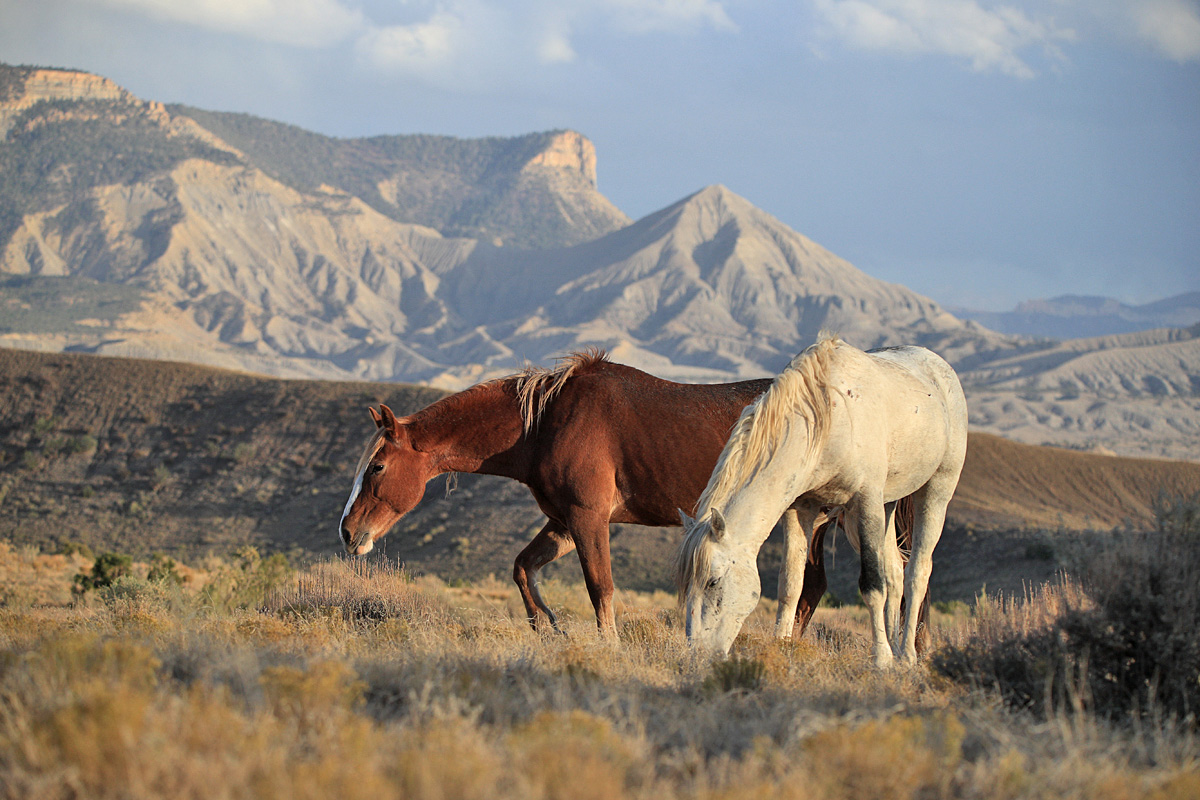
January last year was at least somewhat snowy (this year was very much NOT snowy). Skywalker had been a bachelor with a couple of bands until sometime last year, and here he is with some horses from one of those bands. Completing the composition is part of the Spring Creek canyon rimrocks in the near background and Utah’s La Sal Mountains in the far background. (I wish they were that snowy this year.)
This was a magical February visit with Mariah and her band. The low-angle sunshine made each snowflake a visible bit of earthly magic, and when she looked back at somebody – shazam. Magic captured.
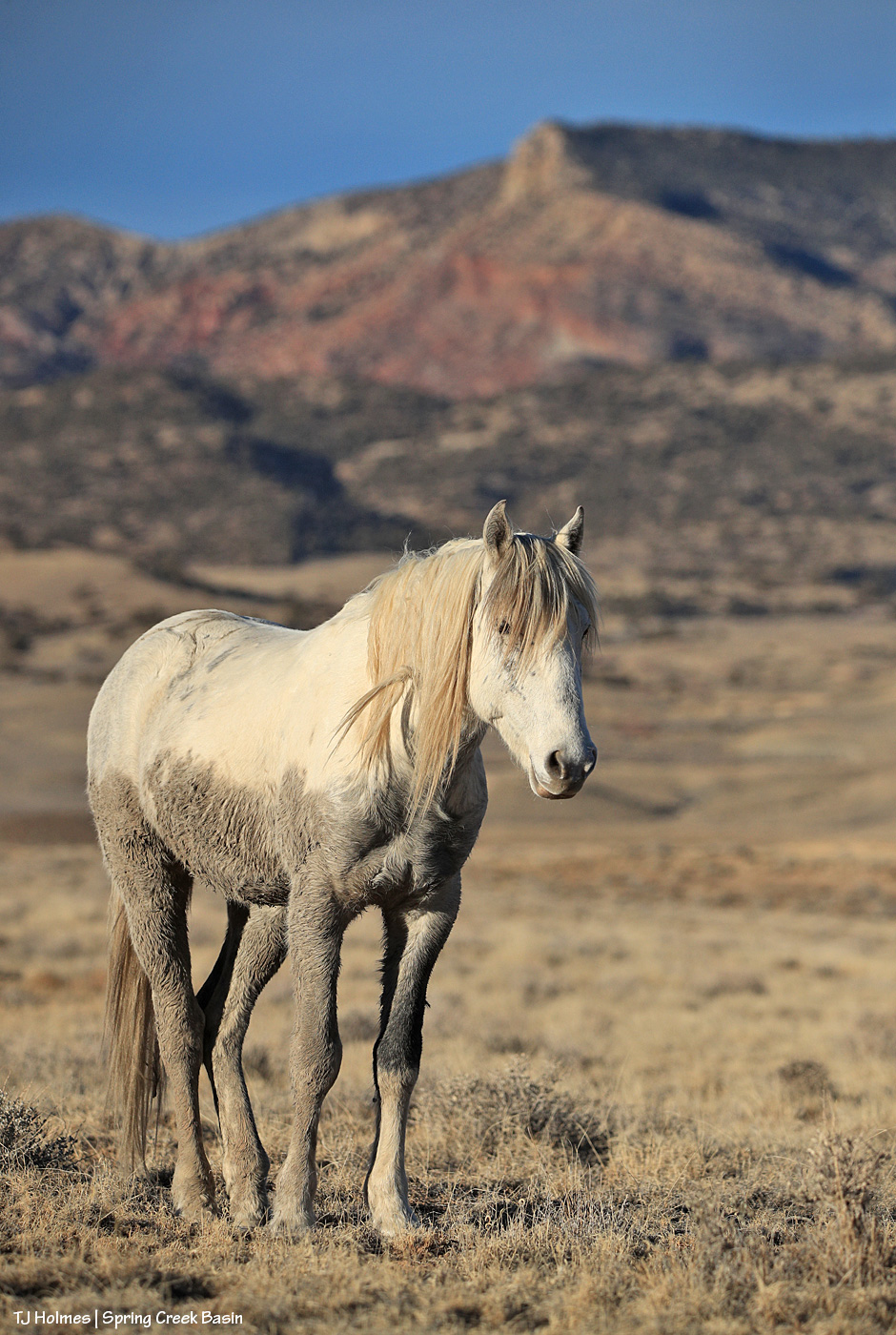
Couldn’t pass up this snowy March day in the basin with Temple! Clearly, she had been enjoying the moisture and excuse to roll in the mud. I love the sunshine on her and the falling snow blurring the background.
I had so many opportunities with the mustangs in April, but this image of Hollywood was just *the one*. You all know exactly what I mean. (To update, I haven’t seen him again since the image I posted earlier this winter. It doesn’t mean anything other than I haven’t seen him. …)
When Spring Creek is running with rainwater, that is a time not to miss photographing it because it doesn’t happen often and water doesn’t run in the arroyo bed for very long. When Skywalker moseyed to the edge of the creek in May, just upstream of the canyon, the scene came alive with story: mustang drinking from an ephemeral stream in the desert.
In June, I was lucky to catch Sundance’s band near Odin’s band … and luckier still to see Sundance and Odin having a friendly little chat! Elder stallion and growing young stallion; what a moment. I’d love to know what wisdom Sundance was imparting to young Odin.
Terra’s stallion adores her. And I mean *adores* her. They travel with another band, but Venture has eyes only for Terra. This image is from July, when it’s hot and dry and the horses just like to doze.
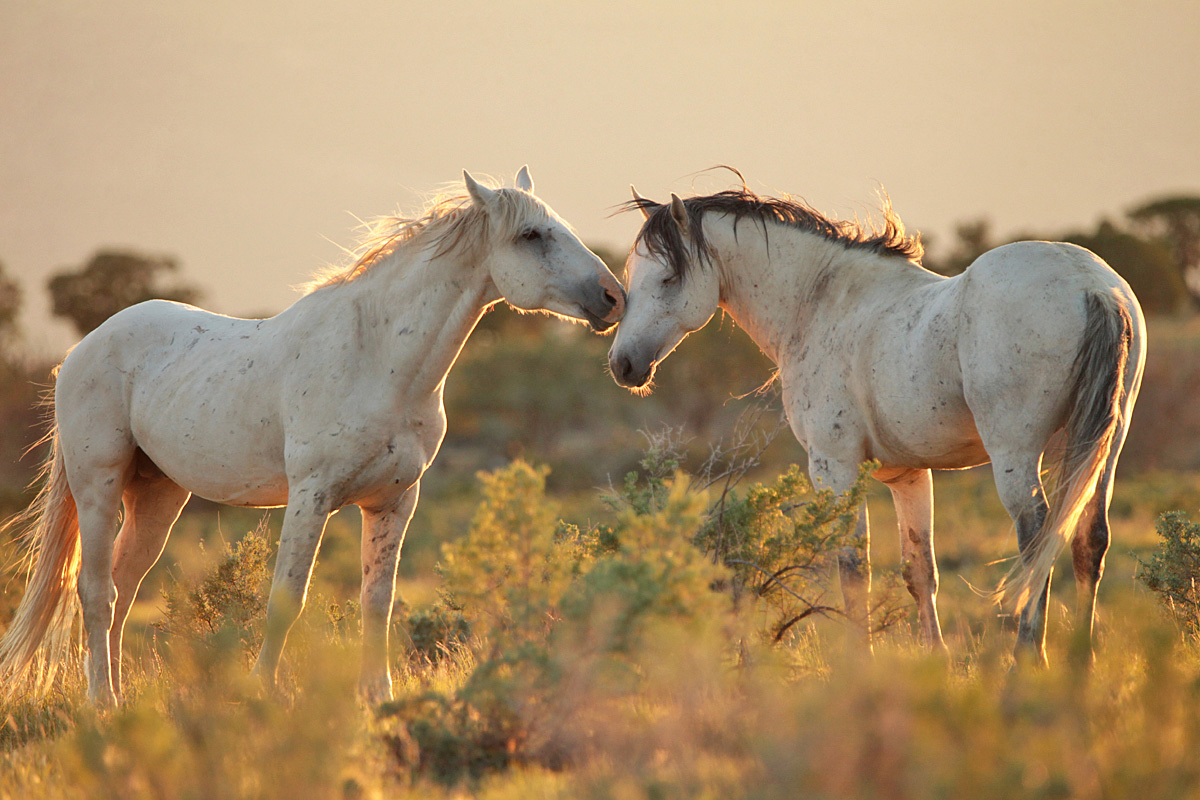
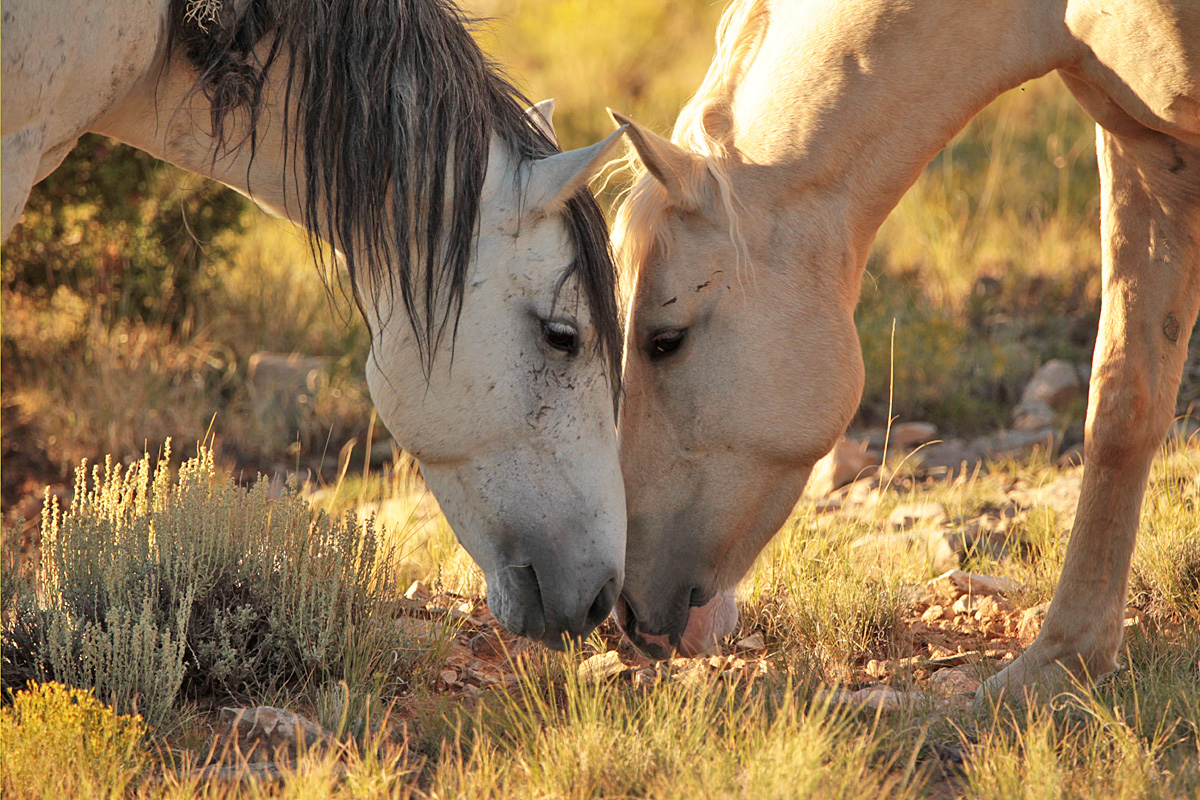
Personally, this is one of my favorite images of the year because those are two of my favorite stallions: Storm and Buckeye. With their bands grazing nearby on this warm August evening, the boys greeted each other quietly and respectfully before returning to their mares.
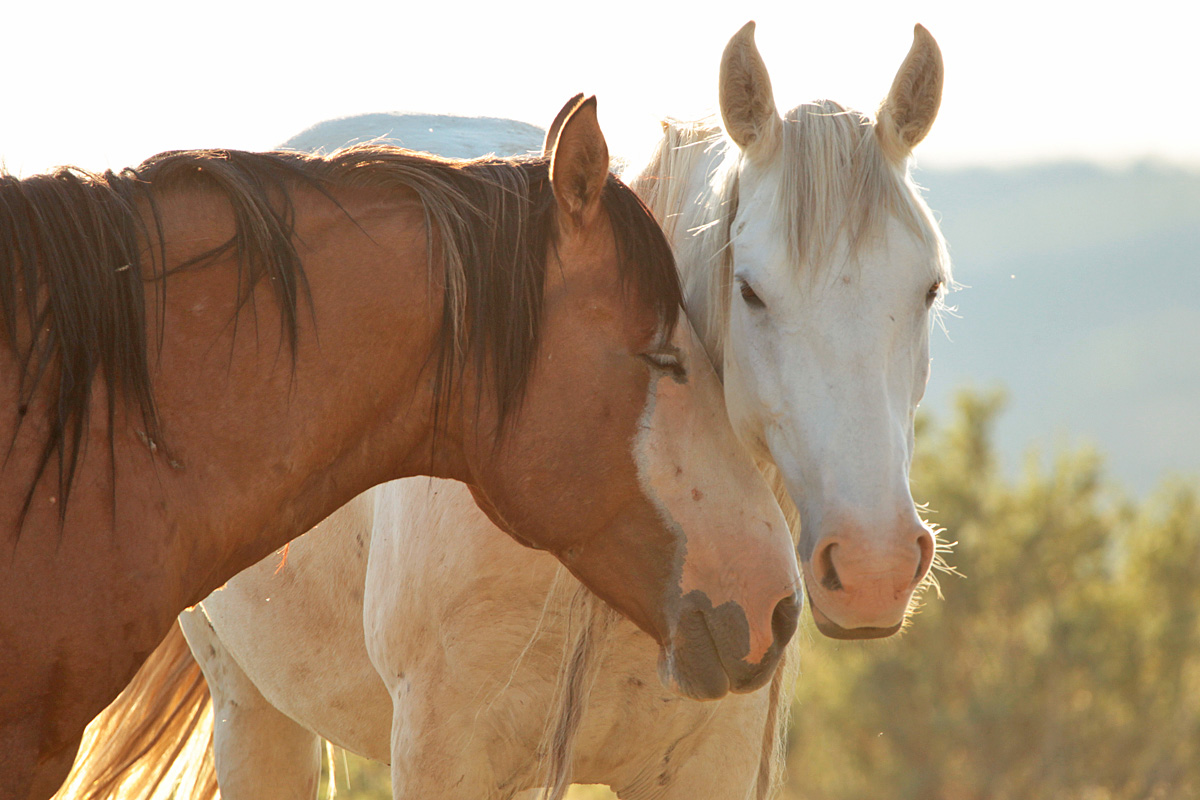
Here’s your Valentine’s Day image, taken last September. 🙂 Buckeye and Rowan, especially, seem to have a special fondness for each other.
After Storm lost his band in October, the mares went through a couple of younger stallions that couldn’t seem to keep them. Flash ended up with Gaia … then also with Mysterium. And finally, as you know now, he gathered all of Storm’s girls (which, I think, probably was due more to them wanting to be together and evading the youngster that had them than to any particular skill Flash had at stealing them!). (I’ve seen Storm just once since he lost the band, way deep in the southeastern part of the basin.)
Last November, we had some great snow, and we were so optimistic for the winter to come! … And that was pretty much it. Here it is February, and we’re desperate for moisture of any kind while we watch the dirt turn to dust, to powder. But in November, Terra was a gorgeous girl in the sunlit snow, and life was good.
We had more lovely light in December – as seen glowing around lovely Winona – but not a heckuva lot of snow.
And as usual, a bonus:
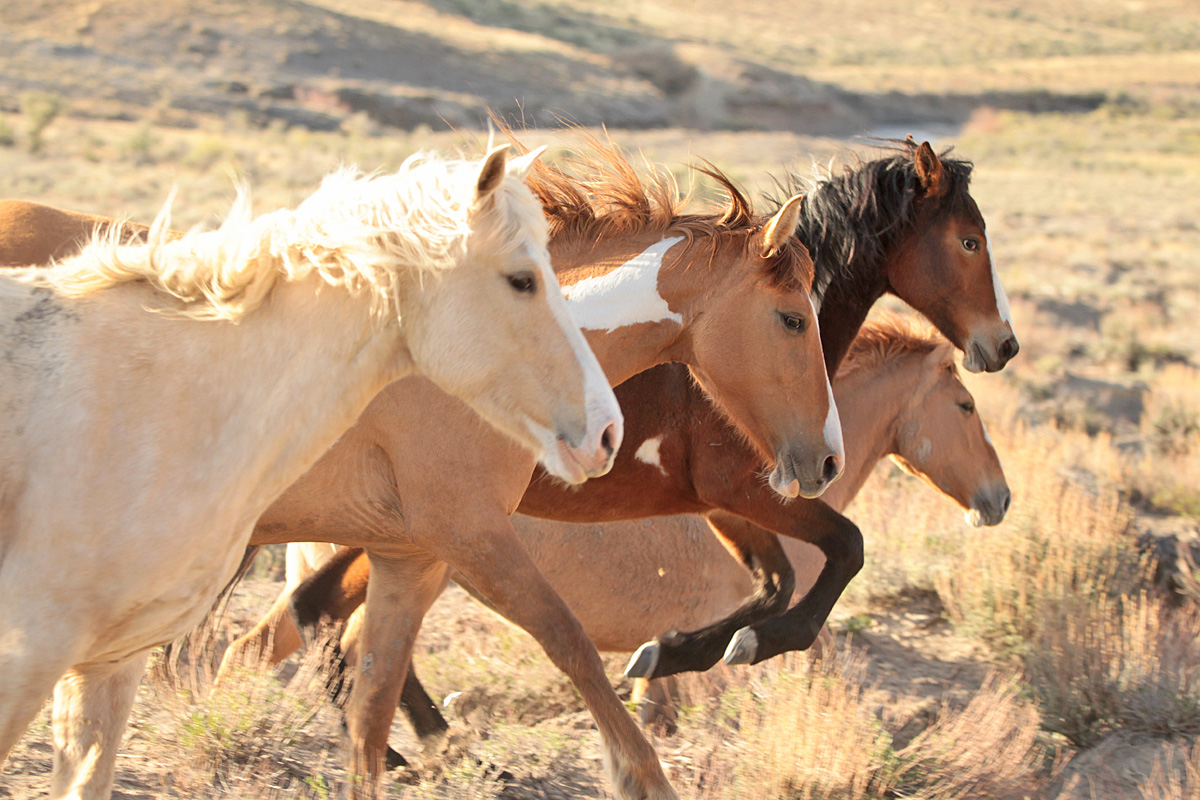
Buckeye’s girls. 🙂 I don’t remember what caused them to run right past me, but I was stoked to capture this image of them nearly in a row, especially just as Bia was leaping a bit of sage or saltbush!
Thanks for following along, happy Valentine’s Day to you and your loved ones, and if we can have a bit of a love(ly) wish … more snow, please! 🙂
*** Update Friday morning: Disappointment Valley is getting RAIN! Not snow, RAIN. In February. In Colorado. Well, you know we’re in desperate need of moisture, so I’ll take it. (But 38F is hard on the wildlife under rain.)
Piedra is a couple of years older than Kestrel, and they have known each other literally all of Kestrel’s life. Even when they were in different bands, with different stallions, their bands were close to each other. They were two of the first to teach me why some bands travel together (it’s the mares).
It’s amazing to me to see that level of dedicated friendship.
Mustangs are amazing.
Piedra and Kestrel both were named by me at the beginning of my documentation of the herd. Piedra was young and the brown-grey of a young horse born brown or bay and turning grey. I don’t remember the exact steps of thoughts I went through, but I loved the name of the Piedra River that flows out of the San Juan Mountains near Pagosa Springs. She had a simple star on her forehead, and I found that “piedra” means stone in English (“for example, una piedra preciosa means ‘a precious stone'”). That was good enough for me, and precious Piedra was named. 🙂
Kestrel was a weanling filly, still with her mother, Luna, after the 2007 roundup, and I have a particular love for kestrels, fierce small falcons that are abundant in Disappointment Valley. Basically, I just wanted to name a mustang “Kestrel,” and she was beautiful and deserving, and it stuck!
Warm days? Here’s another one. With the warm days have come a lot of wind. It’s already dry; why the drying wind?!
But you know the horses don’t mind, and they don’t look ahead and worry. So for them, some warm days in the middle of winter probably feel pretty nice.
Mysterium and her band surely seemed to be enjoying the sunny, warm grazing, and I mostly lounged along with them as they grazed.
Mysterium was born in 2011, the year of the last roundup. Her mother was Kootenai, one of the mares introduced in 2008. We didn’t know the timing of her due date, so I decided to have a blog-wide “guess “contest” about it. People submitted guesses, and I think there were two that were closest – one on either side of her August birthday. I wrote the names on slips of paper and then had a friend draw one out of a hat. The winner was a 14-year-old girl from Canada who was a reader at the time! The prize was to name the foal, and she chose Mysterium because of the mystery around her timing of her birth. (We were able to talk to both BLM and the contractor about the month-old foal at the time of the roundup, and he avoided targeting them, which was good because I think at least two of the three mares were still together, and they wouldn’t have been removed anyway.)
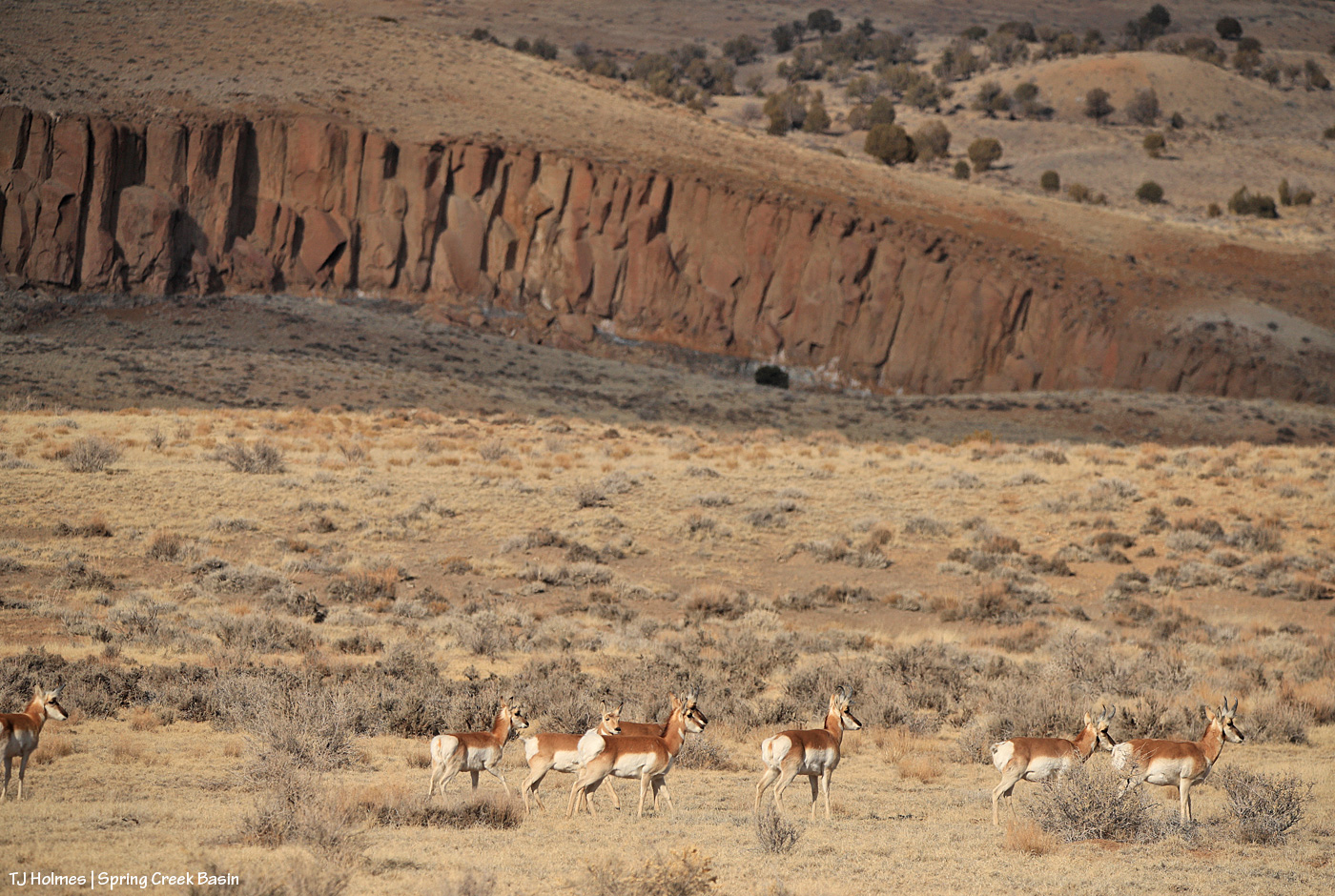
While the rest of Colorado (yes, we’re actually in Colorado) is complaining about their snow and ice and vehicle wrecks (OK, that part is never good), we’re dusty damn dry here in the southwestern corner of the state. The pronghorns maybe don’t mind the lack of snow; it’s easier to move, and they don’t have to paw under the snow for their food. Only we who look ahead are scared about the coming summer. There’s nothing we can do about it, for better or worse, of course, but we humans love to complain about the future. 🙂
This is the same group of 14 pronghorns that have made themselves right at home in the western part of Spring Creek Basin lately. They were very calm about me moving slowly past them, stopping a few times to take some pix as I went.
That’s the north rim of Spring Creek canyon in the background. It’s hard to tell, but I’m on the south side, facing north.
The temp hit at least 51F yesterday. As desperate as we are for snow, I have to say that temp felt awfully nice after several days of frigid cold (which, yes, is normal in January in Colorado!).
Mariah graciously stayed in place while I approached closer across the hills and drainages to get another pic with a different perspective. That’s the south side of Spring Creek canyon behind her.
While I was photographing Buckeye, walking up the hill with Temple Butte and McKenna Peak in the background, I looked in the opposite direction (always a great idea, no matter where you’re shooting) and found that we were being watched. 🙂
That’s looking west-ish, with Spring Creek’s namesake canyon – north and south rims – behind Mariah. Some of the cottonwoods lining Disappointment Creek are visible in the low background, and the southwestern ridges of Disappointment Valley stretch into the distance. The widest, most open and very lowest parts of the valley are off to the right, beyond Spring Creek Basin’s rimrocks.
Mariah was named by good friend Roy G., who will celebrate his 92nd birthday this summer. He grew up with his family in Disappointment Valley, and he returns twice a year to see the mustangs. I love to meet up with him and his significant other, Donna, in their camper overlooking Disappointment Creek and hear about how he rides his bike more than I ride mine. 🙂 It was a windy day when he spotted Mariah as a spindly-legged baby, and he called her Mariah, as “They Call the Wind Mariah.” (The original was spelled “Maria”; here’s an explanation of the pronunciation via Wikipedia.)
The day I took the pic fortunately was not windy, but the day before and the day after were sharply windy and cold!
Fuzzy Winona-girl is going to need that fluff the next few days as temps plunge with the incoming Arctic blast. Not as cold as elsewhere in Colorado – or even northern parts of the country! – but cold enough. Brrrrr! Stay warm!











 Spring Creek Basin Mustangs