Another other

18 01 2013

One of three:

011413eagle1

011413eagle2

Golden!
They were on a dead elk right outside the herd area along the road. Simply gorgeous – the eagles, not the poor elk.


Others

9 01 2013

The mustangs share Spring Creek Basin with other wildlife, including these beauties I saw during my last visit:

Elk in Spring Creek Basin

Elk in Spring Creek Basin

They were in a big group, too spread out to capture them all in one photo!

I came over the crest of a hill and saw them – and they saw me! – and off they went. Naturally, I took photos while I waited for them to put some distance between us! You can see the road in the background of the lower photo.

Disappointment Valley is a major wintering area for mule deer and elk. Seeing deer is nearly an everyday occurrence, but it’s pretty cool to see elk – and this many at one time!


Oh! Snow!

19 12 2012

Joy. 🙂

La Sal Mountains

The storm that blew over Colorado last night and this morning did NOT miss Disappointment Valley this time. Nor at least part of Utah, based on the above pic of the La Sal Mountains, which actually are northwest of us in the Beehive State. Close enough!

No pony pix (yet). Although it was cold (mid-20s), the snow was wet, and it did create mud of the earth beneath the snow, so I didn’t drive into the basin. After the snowstorm: clear blue beautiful sky. That promises a colllldddd night – and a frozen-road morning on which to (hopefully) access winter mustang paradise!


Congratulations!

2 12 2012

The Tres Rios Field Office in Dolores, Colo., has honored Pati and David Temple with an award that recognizes their dedication during the last 15 years to the mustangs of Spring Creek Basin.

In 1997, Pati and David joined the board of the newly formed Colorado chapter of the National Mustang Association. They have served continuously on the board since then.

Some major projects have been completed in Spring Creek Basin Herd Management Area at Pati and David’s urging:

* The water catchment in the basin was funded by NMA/CO – about $18,000. Although there are several ponds and seeps/springs, the catchment provides the horses with the only clean water source in Spring Creek Basin (the others being, at the least, very salty because of the alkaline soil).

* About a decade ago, NMA/CO raised $40,000 to buy cattle AUMs from a rancher who held grazing rights in the basin and, after a five-year struggle, succeeded in retiring those AUMs. Not only that, a grazing EA was prompted, which reduced the remaining AUMs and changed the grazing season to dormant-season grazing only (Dec. 1 until Feb. 28). The National Mustang Association, based in Utah, was instrumental in finally accomplishing this goal.

* Because of Pati and David, magazine subscriptions, horsemanship training videos and countless pairs of boots have been donated by NMA/CO to the inmate training program at the Canon City prison facility, where BLM has a short-term holding facility.

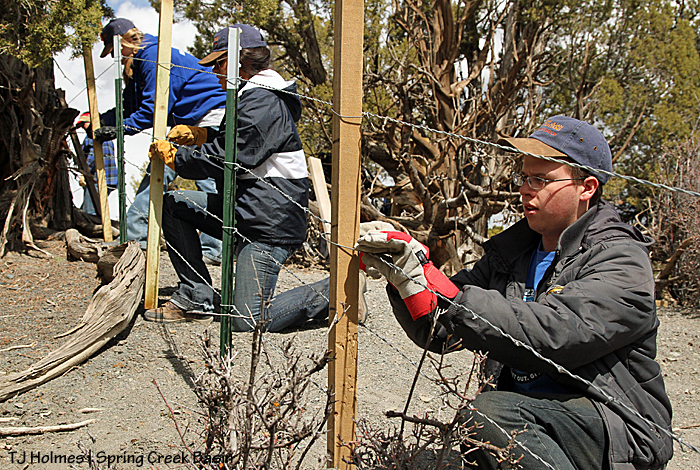
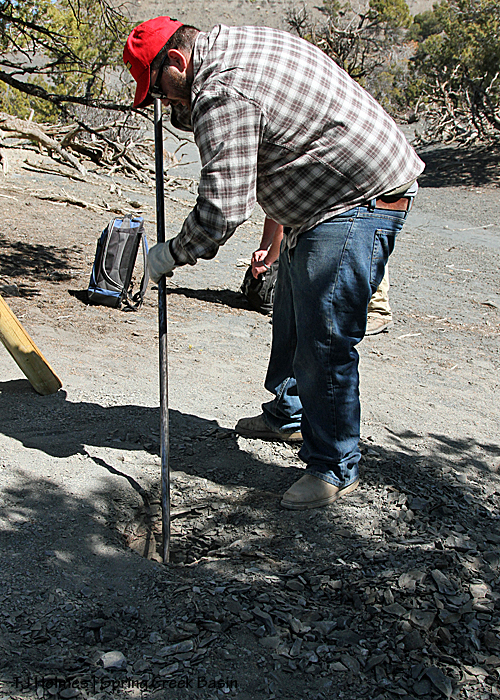
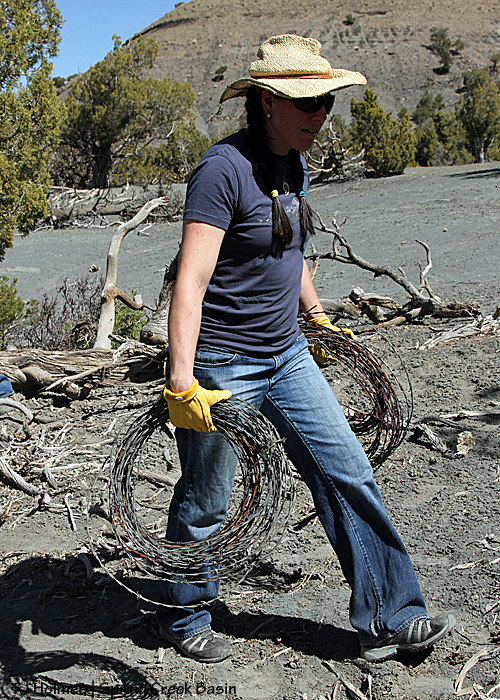
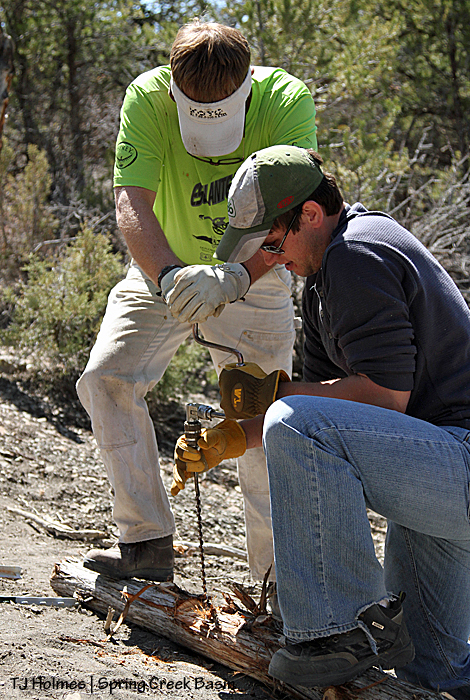
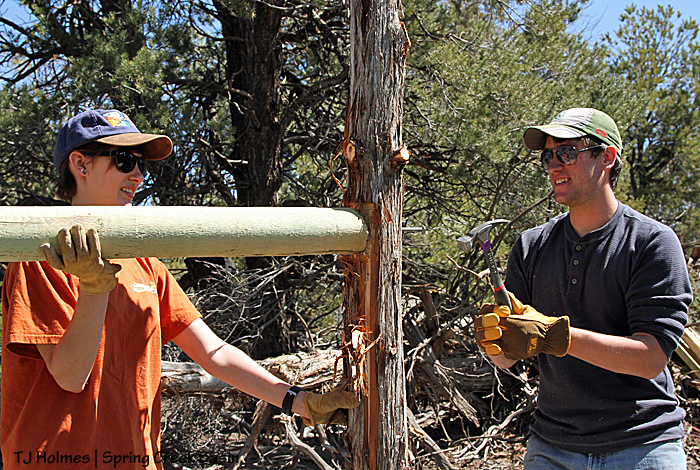
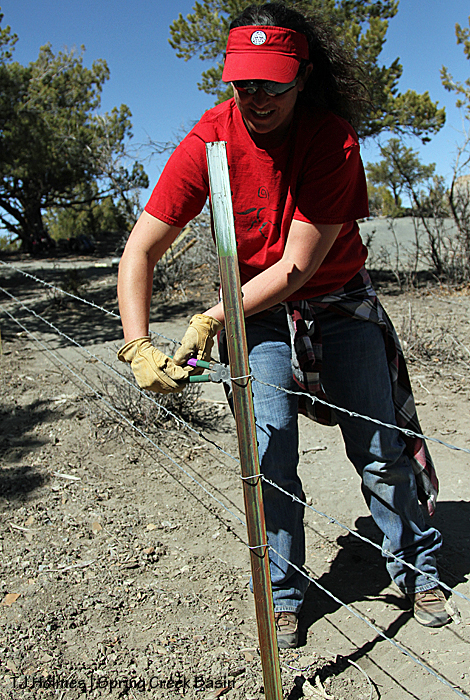
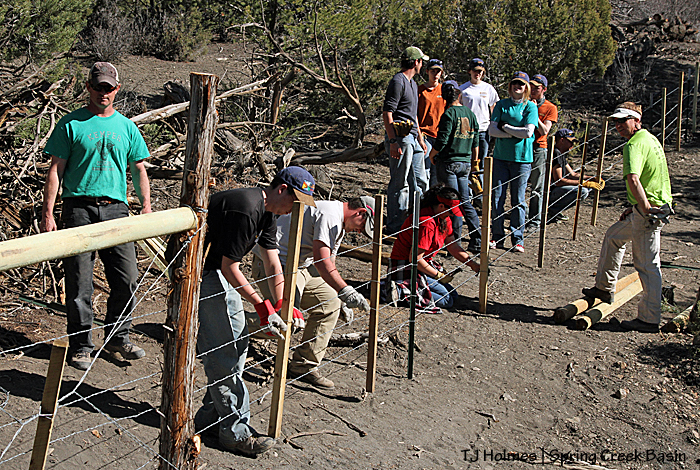
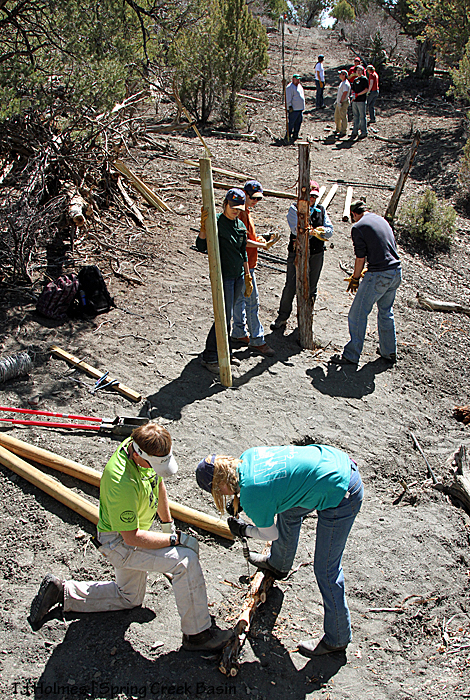
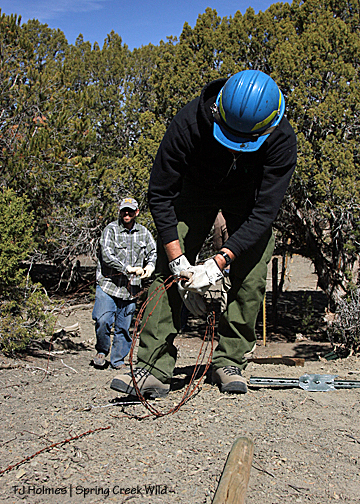
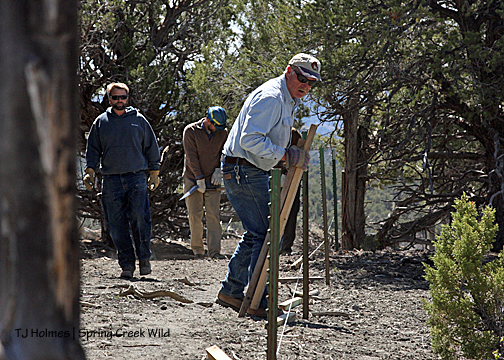
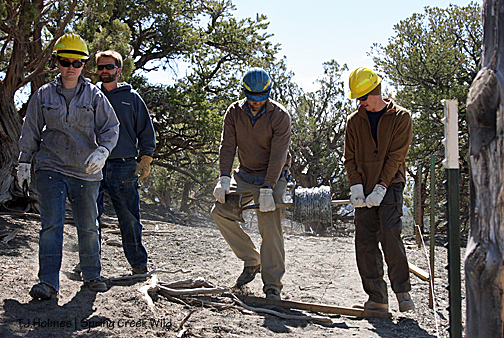
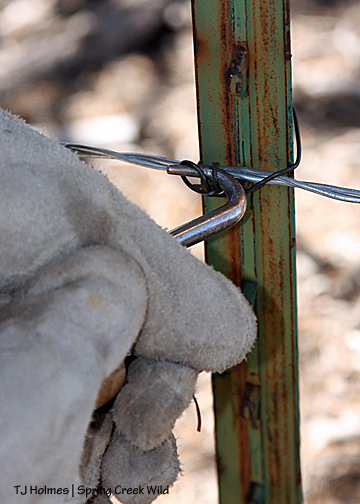
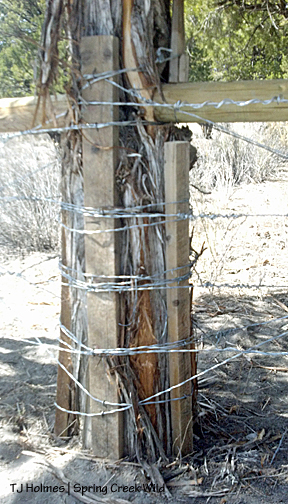
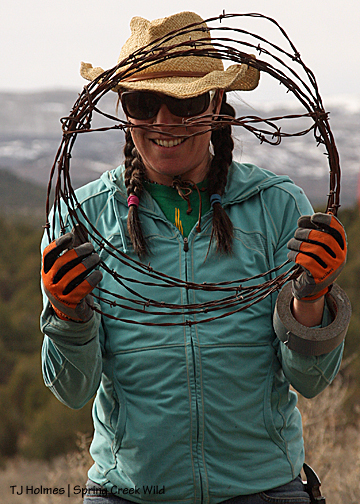
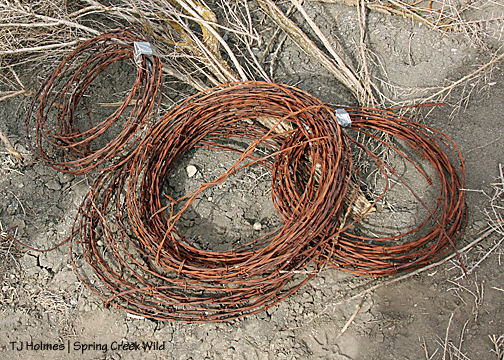
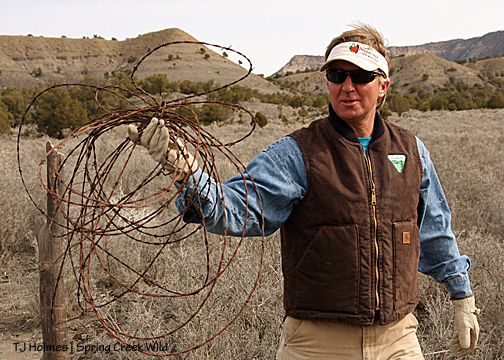
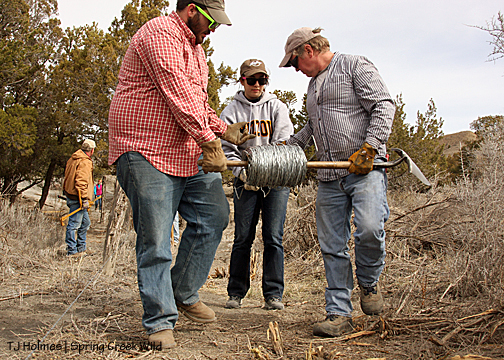
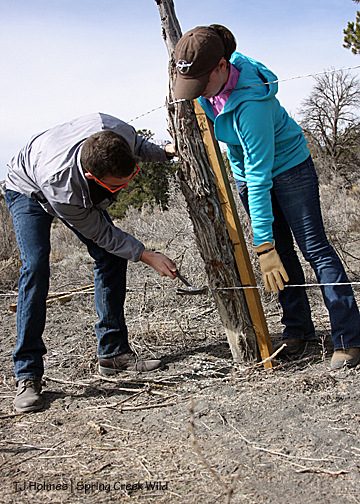
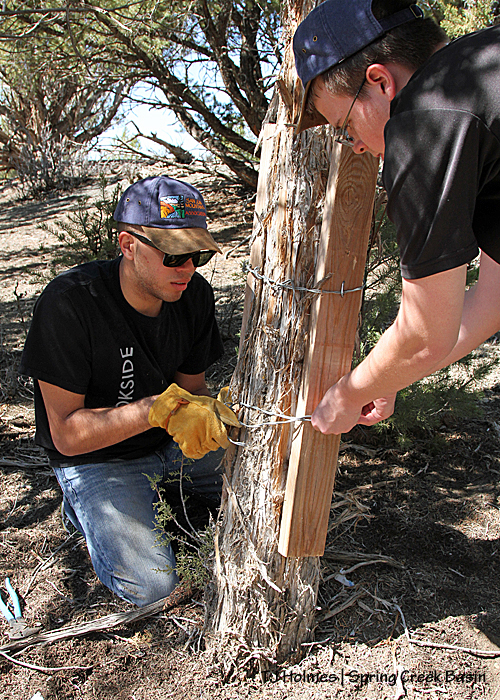
* Pati and David have assisted with the removal of old fences and wire from within the basin as well as construction of new boundary fences and the repair and maintenance of fences.

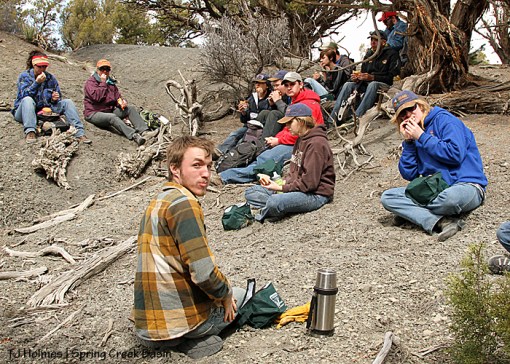
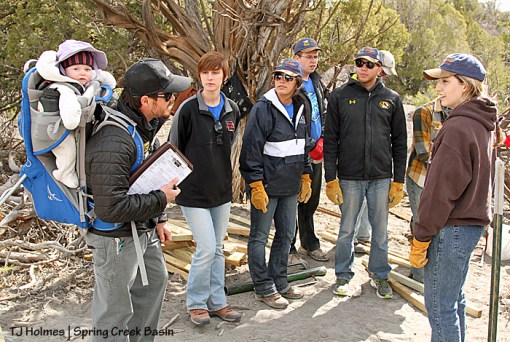
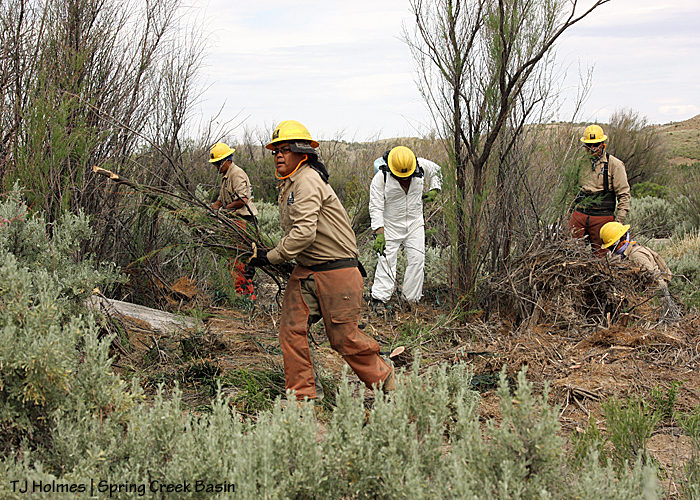
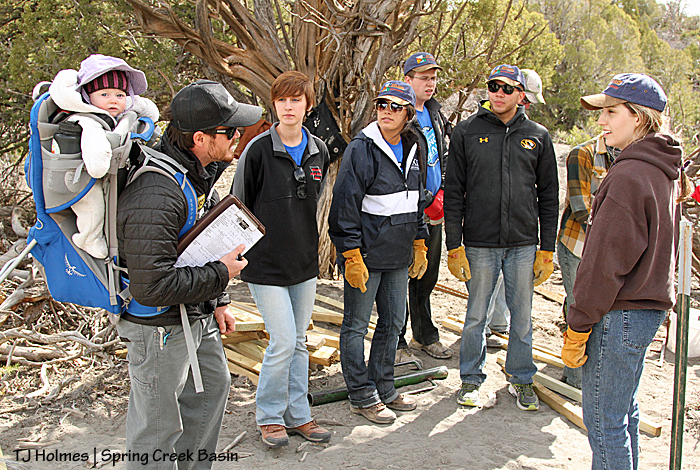
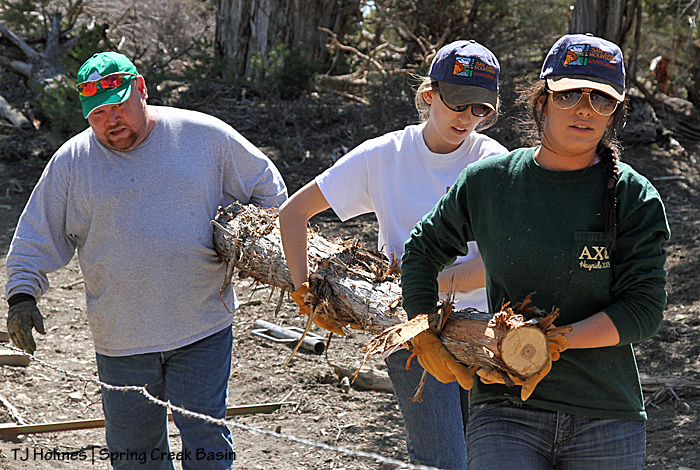
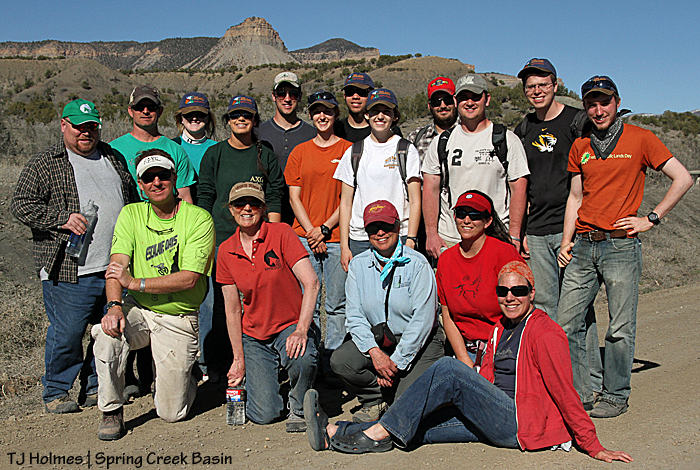
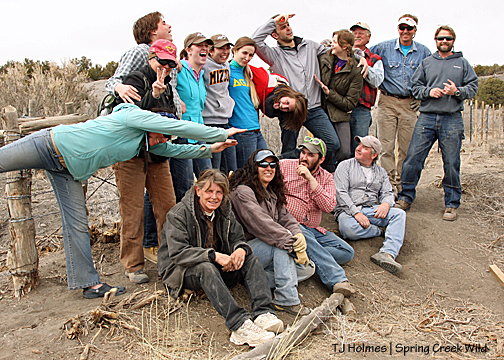
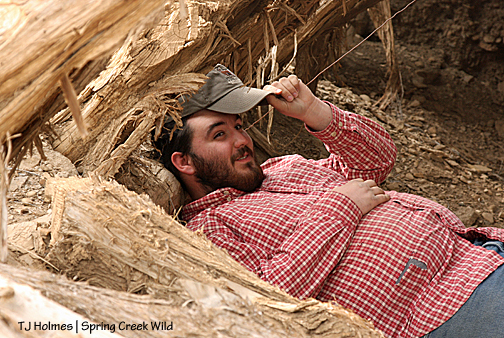
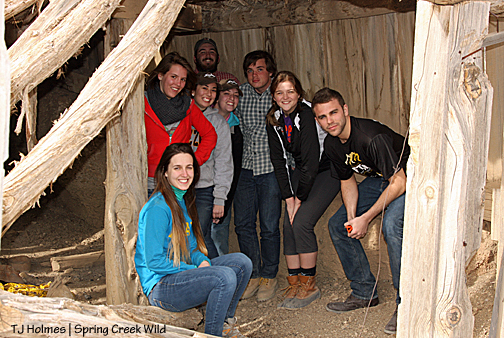
* For close to a decade, San Juan Mountains Association has hosted University of Missouri students during alternative spring break, which has included projects in the basin. David is an arborist, and NMA/CO regularly has funded chemical spray (Garlon) for tamarisk removal. David (pictured below at right) also has volunteered his time and expertise to help with eradication efforts.

0323asb-group

* Because of Pati’s single-minded determination and her refusal to give up on him, when Grey/Traveler was sent to Canon City at the end of the 2007 roundup, we got him back. Pati and David hosted him at their ranch for three weeks (quarantine) until he could be returned to Spring Creek Basin (pictured below). Long-time readers of this blog will know that he not only rebuilt a band, he has the largest band in the basin at the tender age of “aged,” as aged at the last (2011) roundup.

0919greygone

* Pati and David represent NMA/CO in our coalition advocacy group Disappointment Wild Bunch Partners. They bring to Wild Bunch – and BLM – all their historical knowledge of BLM management of Spring Creek Basin Herd Management Area, as well as modern visions that fit with our advocacy goals, which they use to encourage new projects to benefit the horses. With the previous herd manager, one project Pati and David suggested and we convinced BLM to undertake was digging out ponds to increase storage capacity. Some hadn’t been dug out since the 1980s. In 2009, two ponds were dug out. In 2010, three ponds were dug out. In 2012, three ponds were dug out. All but two ponds in the basin have been dug out, and at least one of those still is on the priority list to BE dug out. Currently, in a desperately dry year, all but three ponds have water. To further illustrate how impressive this is – how visionary – ranchers throughout the region are hauling water to their cattle because water sources on their grazing allotments are dry.

112112doublepond

* Also as members of Wild Bunch, Pati and David are an integral part of the partnership with BLM that resulted in the Tres Rios Field Office being awarded $25,000 as part of the Director’s Challenge this year.

* NMA/CO always has championed the use of fertility control. In 2007, NMA/CO paid for five doses of PZP-22 to be administered to the released mares. In 2010, NMA/CO signed on to the proposal submitted to BLM for the implementation of a program to use native PZP in Spring Creek Basin to slow population growth and reduce the need for frequent roundups. Also in 2010, NMA/CO paid for my PZP training at the Science and Conservation Center in Billings, Mont. Then they paid for the darting rifle. When fertility control using native PZP was approved for the Spring Creek Basin herd ahead of the 2011 roundup, we were ready to volunteer.

* Pati and David have adopted several mustangs over many years (including those they’re riding in the photo of the plaque above). In 2011, they adopted yearling Rio (Grey/Traveler or Twister x Two Boots) and renamed him Sherwood, in honor of one of the founding members of NMA/CO. Pati is a genius at groundwork, and at 2 years old, Sherwood loads readily into a trailer and accepts a cinched saddle, among other things.

sherwood2

* In 2012, Hollywood and Piedra had a filly. She was named Temple in honor of Pati and David.

Temple, foreground; Madison, background.

Pati and David are true mustang angels in every sense of the words. Their passion about and commitment to mustangs, particularly Spring Creek Basin mustangs, is legendary in our part of the world. Personally, I am grateful to Pati and David a million-fold for their support and friendship. Their work has laid the foundation for the excellent health of the herd today and into the future. This list hits just the highlights, but I hope it conveys how inspiring they are and should be to mustang advocates everywhere. In addition, they are two of the nicest, most generous people you’ll ever know.

The plaque reads: Presented to David and Pati Temple. Thank you for your many years of unselfish commitment and dedication to the Spring Creek Basin Wild Horses and the Herd Management Area. The support that you have provided to the BLM has been invaluable to the long-term goal of a sustainable and healthy herd area in Disappointment Valley. Without your devotion to the horses, advocacy, hard work and persistence, many maintenance, enhancement and fertility control projects would not have been accomplished. November 2012. Bureau of Land Management Tres Rios Field Office.

The photo on the plaque, taken by Durango photographer Claude Steelman and featured in his book Colorado’s Wild Horses, shows Pati on Bandolier and David on Concho, their Sulphur Springs mustangs.

With appreciation beyond words and always grateful for you both, thank you, Pati and David, for your generosity, commitment and passion. It is contagious and has infected us all! And thank you, Tres Rios, for honoring Pati and David for all they have done for our mustangs.


Rain: falling, filling

13 07 2012

Aspen against a rainy sky a few nights ago.

The recent rains DID, in fact, put water in some of the ponds. Some went from very shallow to quite a bit fuller. Some went from dry to this:

The Flat Top pond. It (likely) won’t get dug out this year, but it’s good to see it with water again.

The northwest pond, however, should get dug out next week – it’s still dry. Or was; the basin got rain again this afternoon after a dry spell of a few days.

The east-pocket pond has water again. The Sorrel Flats pond has way more water (it was getting pretty shallow). And those are just the ones I’ve looked at, being more concerned with pony doings. What can I say, I get distracted easily. 🙂

I should have – but didn’t – take pix of the first Spring Creek arroyo crossing. No more water flowing, but the rocks the water pushed along was awe-inspiring (as always). Water is a driving force in this “Disappointment Country” – and the lack of it just as much, if not more so.

And I’ll leave ya’ll with this pretty sunset over the La Sal Mountains (to the northwest of the basin, in Utah):

It’s good to have rain. 🙂


‘Female rain’

7 07 2012

It has been raining – softly and steadily – for about three hours now in Disappointment Valley. The rain ringed Spring Creek Basin all morning and afternoon, then hit the eastern side of the basin around 5:30 p.m.

Heavenly.

Divine.

Something so simple, so wonderful. So longed for. So grateful for.

“Female rain” is this very type of slow, gentle, nurturing rain. “Male rain” is heavy with lightning and thunder and bravado.

I can’t remember whether that’s attributable to the Navajo? But I’ve always loved it. Perfect.

Just think how Spring Creek must be flowing now! 🙂


Golden

19 06 2012

Oooh …

la …

la!

This gorgeous big bird was right off the road. After fumbling for my camera, I managed to fire off these shots when s/he took off.

Simply stunning.


Water for mustangs

16 06 2012

It’s dry out there, folks.

That’s neither new news nor surprising news.

We haven’t had any rain since late April, and the forecast for the forseeable future shows perfect yellow balls of sunshine and highs in the 90s. On July 1, we’re supposed to hit 99.

Bleak. That’s what I call that forecast.

Three ponds have water. Wildcat Spring has water. The trickle is trickling. There are random seeps and springs around in arroyos – all small, all not-so-good to poor quality. The ponds all have gone dry in previous years – last year, the year before, that I’ve documented – but the monsoons always come. Some years better than others, but they always come. This year promises to get worse before we get those monsoons.

Our BLM folks at the Tres Rios Field Office in Dolores are well aware of the drought conditions and are taking steps to ensure the horses have water to get through the worst of the dry season.

Among the things our recently awarded Director’s Challenge grant money will fund here: water enhancement projects. From 2009 to 2010, five ponds were dug out (made deeper; they silt in – get shallow – because of the erodable soil), and two more are scheduled to be dug out this year (hopefully before the monsoons come!). We’re talking about water guzzlers, solar pumps on wells (something we’re looking at to enhance “the trickle” into something with a bit more flow) and possibly a second water catchment.

I get a lot of questions about our water catchment. What it is, how it works, how it benefits the horses.

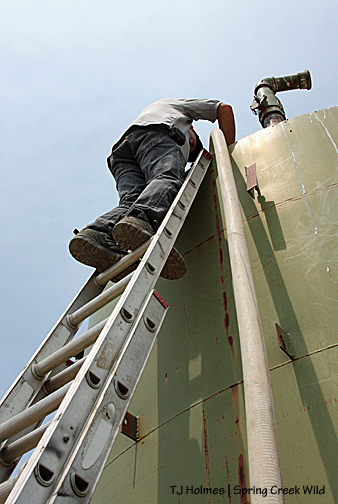
Two aprons are laid out on a slope and fenced (to keep sharp-hooved wildlife out). Water in the form of rain or snow falls on the aprons and drains down to filters, then into a pipeline that runs down to a 16,000-gallon storage tank. From there, lines carry water to two troughs, which hold water controlled by floats. I turn the valve on when the weather starts warming up in early spring, and I turn it off when it starts to freeze at the start of winter (so the lines don’t freeze and break).

This is the only clean water to which the horses have access.

Because of the alkaline quality of the soil, the water is highly saline. I also get questions about the “white soil.” That’s salt on the surface of the soil. Crazy but true. The horses, of course, have adapted. It’s also muddy, and at times like this, sure, there are seeps – where the water comes up and fills salty, muddy hoof-print-size puddles. Not a lot of quantity, let alone quality.

Are you still with me?

This weekend, BLM ordered the first delivery of 4,000 gallons (what the truck holds; more coming) to the catchment, which is about a quarter full after the mild winter and no rain since April and horses drinking.

Can I get a yahooooooooooooooooooooooo? 🙂

Here’s Cecil Foster of Foster’s Water preparing to drain water onto one of the aprons. Cecil has been hauling water to the catchment for years. In recent years, deliveries were paid for by the National Mustang Association, Colorado chapter. NMA/CO paid for the water catchment to be built more than a decade ago, and there are a couple of signs on the fence that say so. (Remember Pati and David Temple, for whom baby Temple is named? This is one of many projects they have honcho’d over the years through NMA/CO.)

Water starting to flow. This pic shows both aprons.

In this pic, you can see the green storage tank and the drinking troughs (very small in this image, barely visible – they’re to the right of the tank) in the background.

This is the perspective from the lower end looking up toward the road. The filters are apparently a little clogged; the water shouldn’t pool so much before draining. We need to get them cleaned out before the rains DO hit. The rocks on the aprons are just to hold it down.

Looking across the aprons to the northwest. One of the troughs is a little more visible in this image.

And a better view of the tank and troughs.

The two aprons of the catchment, side by side.

So that’s what they are, how they work and how they benefit the horses. One slight negative is the location – most of the horses are not in this area. Chrome’s band has consistently called this area home for the last couple of years, and they’re the only ones I know of that drink here consistently. That’s good, but it’s also one of the reasons we’re looking at potential locations for a second catchment (and have been the last several years).

Good water benefits more wildlife than just the horses. 🙂 This little guy (gal?) is perched on a rock on one of the aprons. In the foreground is the blurred berm of the apron; just behind the lizard’s rock is the water from Cecil’s truck flowing down to the filter on its way to the tank to become drinking water for the horses.

Good stuff. Thanks, BLM. 🙂


Panorama

31 12 2011

A long view, three photos merged in Photoshop …

From the east end of what I call the corral hill looking northwest-ish. The La Sal Mountains are hidden from this perspective behind Filly Peak (far left). You can see the graceful curve of the rimrocks above Spring Creek Canyon slightly right of center in the distance. Closer – about middle distance – is the big open area north of Filly Peak where Chrome’s have liked to hang out most of the year. The flats below that. To the right slopes up to what I call bachelor ridge. If you could see far enough, you might see Duke and Kreacher out there above the western end of Spring Creek. Flat Top is to the right – Hollywood’s and Comanche’s band just northwest of the hill; Round Top behind my right shoulder. The ragged hills stretching off across the top of the photo in the distance edge Disappointment Valley.

Just something a little different showing the horses’ home. 🙂


Back to work

27 09 2011

Prepare yourselves for information overload. You want it, and I have a good bit to share.

But first, I know people are crazy to know about this little girl, especially:

Mysterium is right as rain. Taken this morning.

Daddy Kreacher, however, has lost the band to Sundance. This happened right before the roundup. The last I saw them, Kreacher was trailing Sundance – and Chrome. I saw Kreacher today and yesterday, and this morning, he was fairly close to Duke.

Lots of photos to go through to illustrate the info I have, but here are some tidbits to tide you over:

* Mona is still pregnant. At this point, I don’t expect her to foal before October. Yep, that’s late. Naught to do but watch. (Interestingly, Roja also was a month “late” this year … ‘course, for her, “late” was May instead of April.) We’re supposed to have another La Niña winter in this part of Colorado …

* Almost all the stallions and mares that were together before the roundup have returned to each other. The exception is Bounce, who lost Houdini to Traveler in the last week … but hasn’t (yet?) gotten Alegre from Traveler.

* Grass looks really great in some areas, and most of the ponds are brimming with water after that rain we got.

* The horses look amazing and are headed into winter in just about the best possible condition.

* I found all but three horses (stallions): David, Poco and Roach.

++++++++++++++++++++++++++++++++++++++++++++++++++++++

Things are still up in the air about the horses at Canon City, but some people are working to provide all of them with great homes. If you’re interested in helping with that effort (looking for monetary donations for equipment/hay/board, etc.), please let me know {mtbgrrl (at) fone (dot) net}, and I will put you in touch with the appropriate people. Thank you!