
Three days down, four days to go.
Three days down, four days to go.
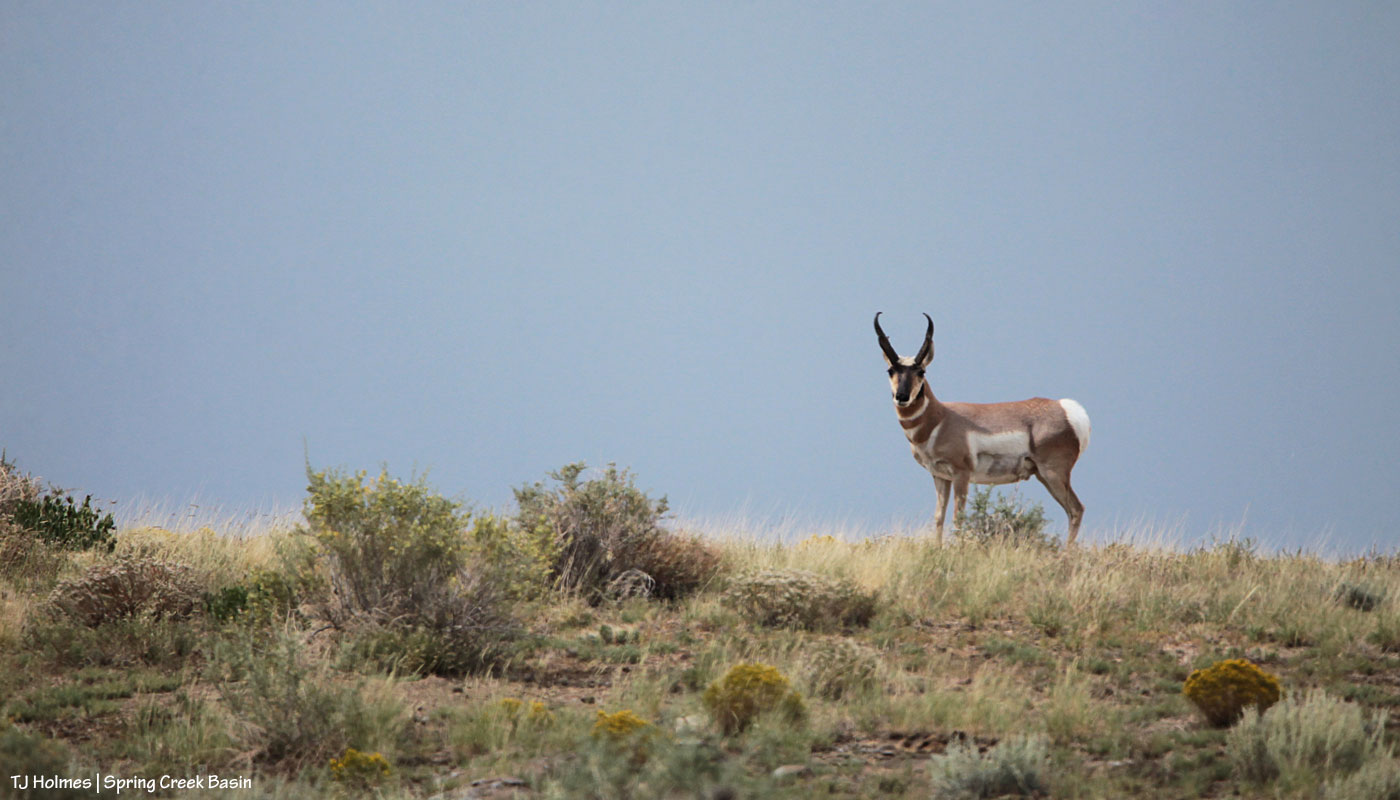
Thinking about that handsome neighbor next door … 🙂
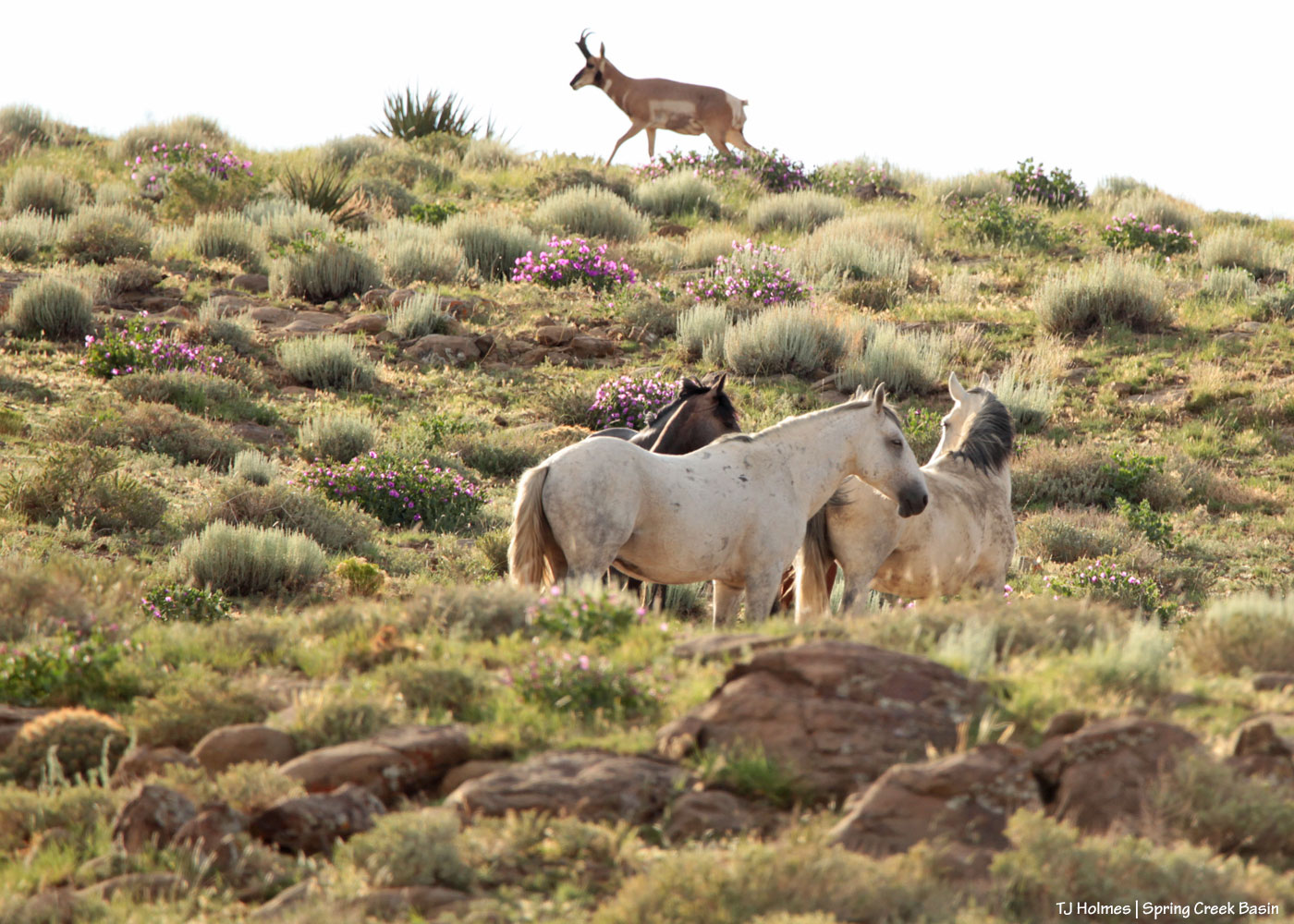
Temple and some pals watch a pronghorn buck following his little group of does and fawns up on the western edge of Spring Creek Basin amid glowing 4 o’clock.
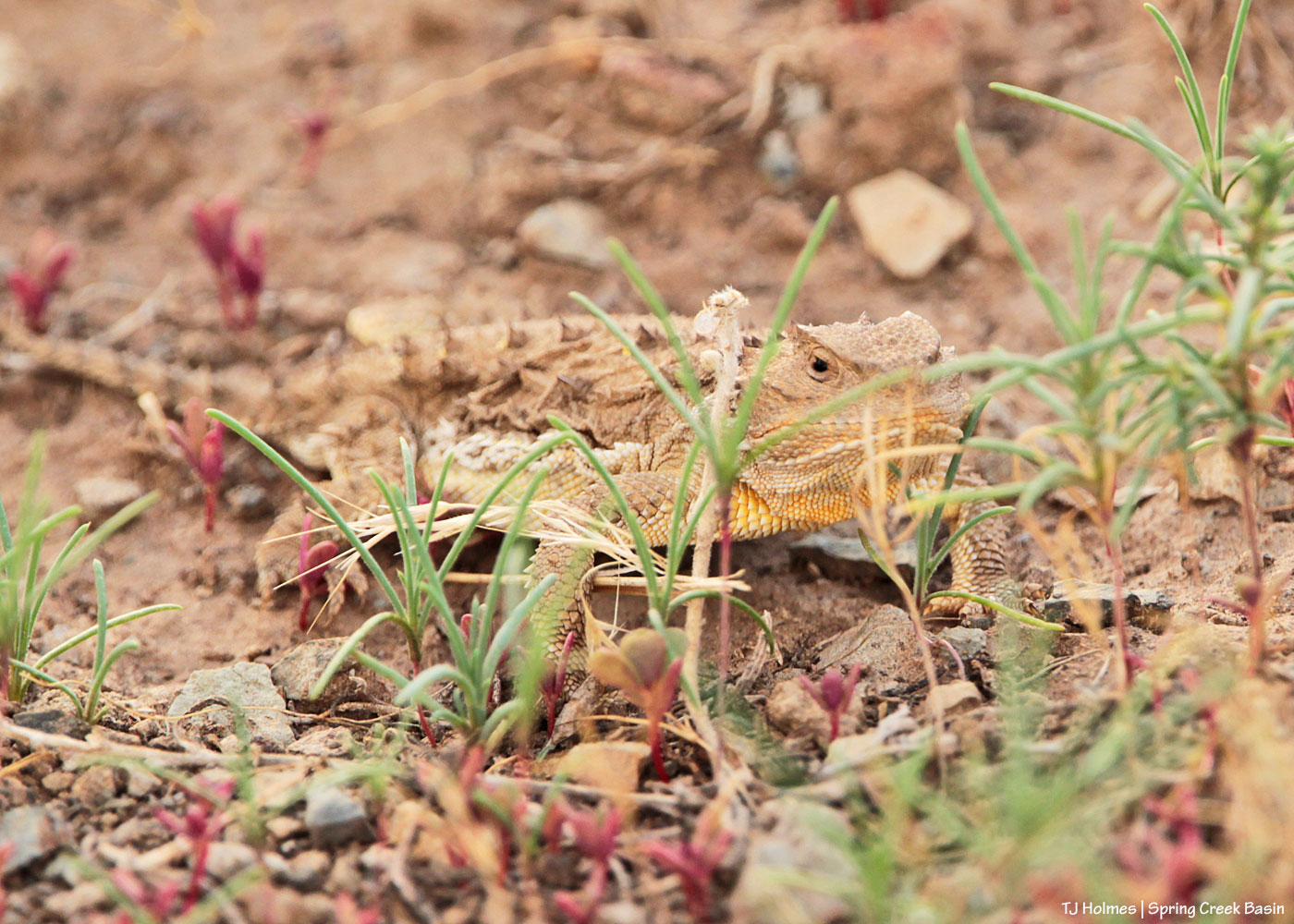
Why do they always look so grumpy … or like they know things you wish you did, if only you could imagine them?
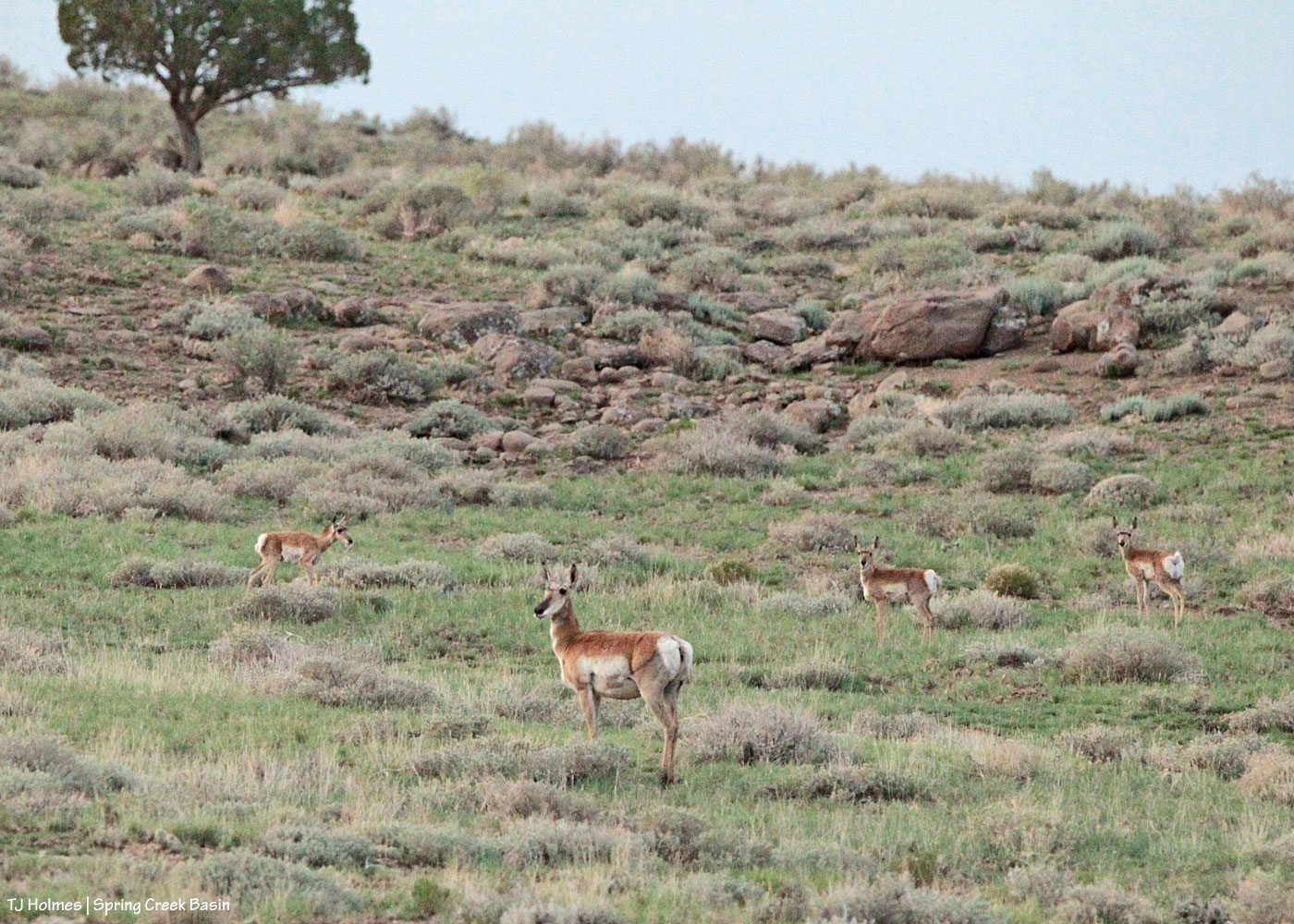
When I first saw the pronghorns as I was heading out of Spring Creek Basin, post-sunset under clouds (before I got my camera yanked out of my backpack and brought to bear at eye level and before this photo), I thought the doe shepherding three littles ahead of her had triplet fawns.

Then I realized that there was at least another doe with the group (in addition to the buck I also initially saw).
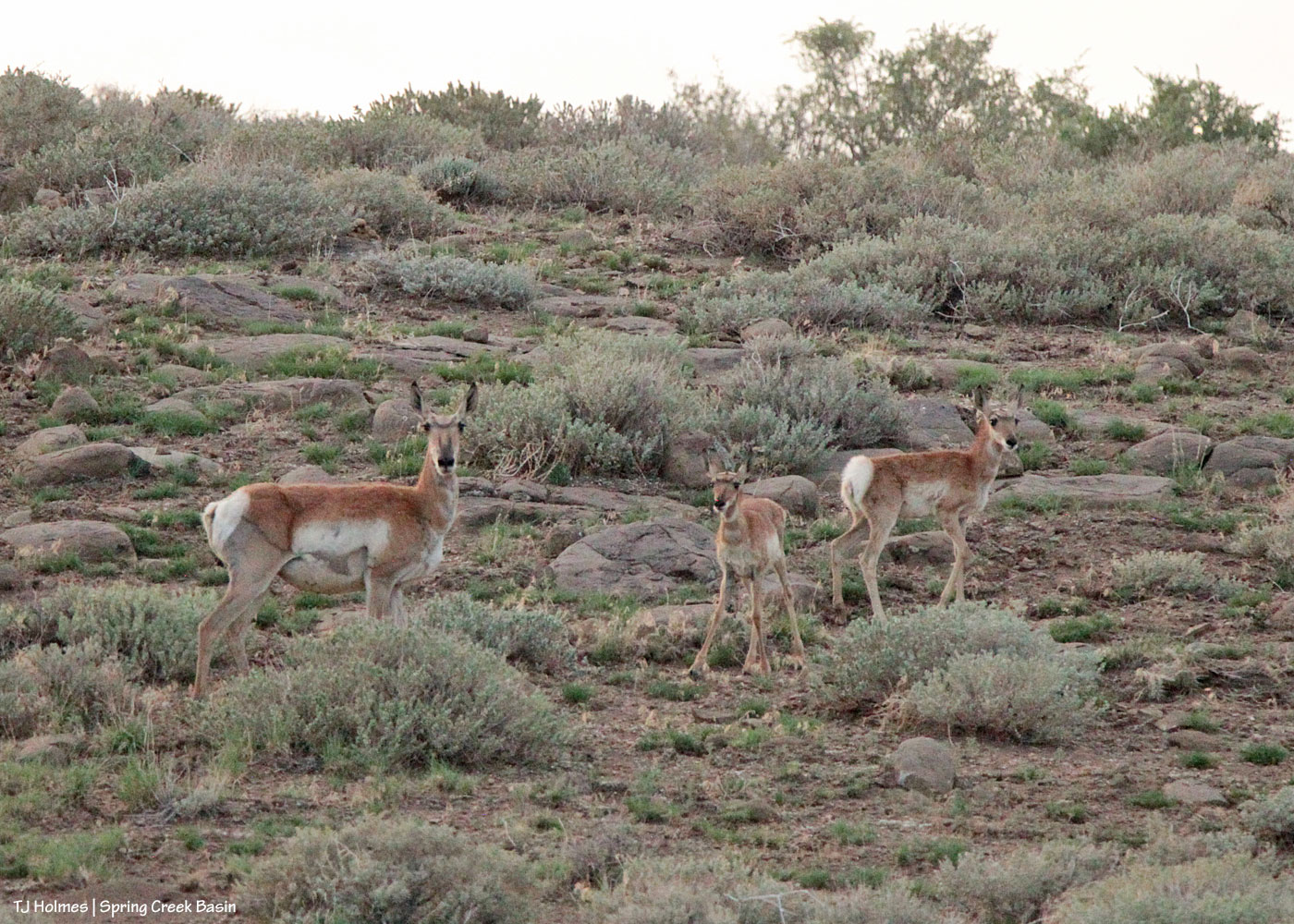
But I do think at least two of the little critters were twins.
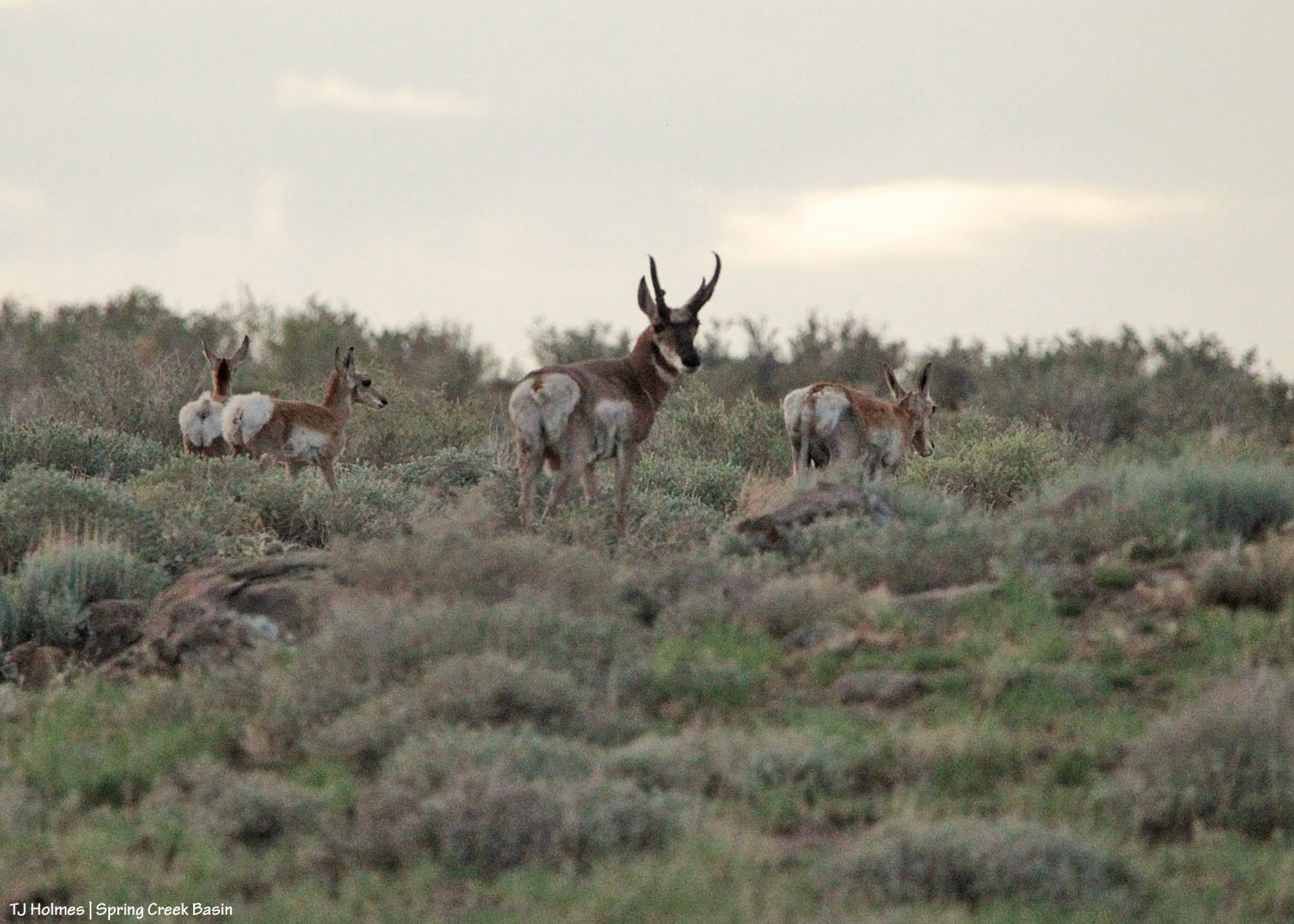
Not sure he’s daddy, but he *was* protective of his little family.
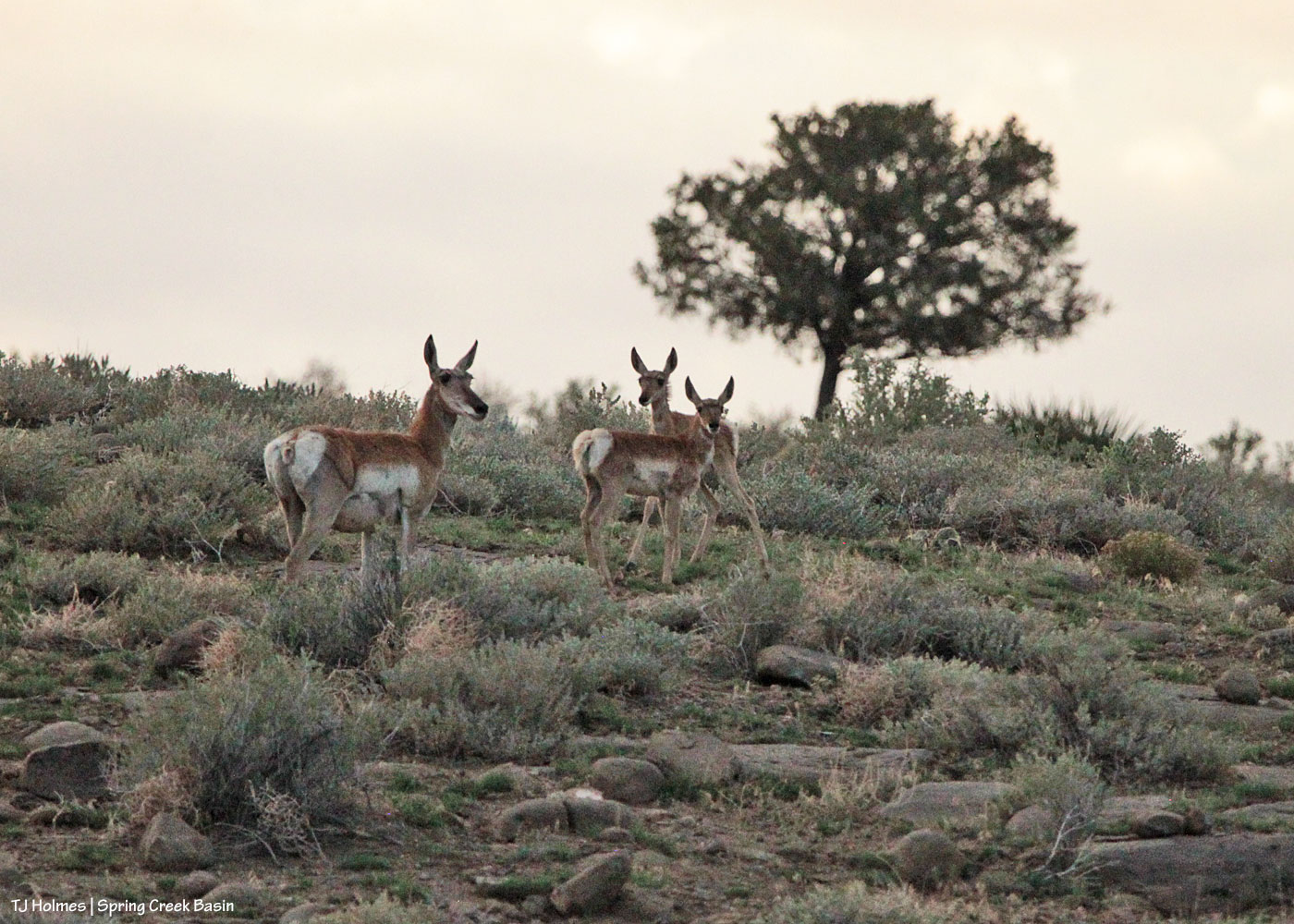
Another beautiful end to another beautiful day in Spring Creek Basin, Disappointment Valley, Western Slope, Colorado, America, planet Earth. 🙂 (And as if this weren’t enough, two bands of mustangs were very nearby.)
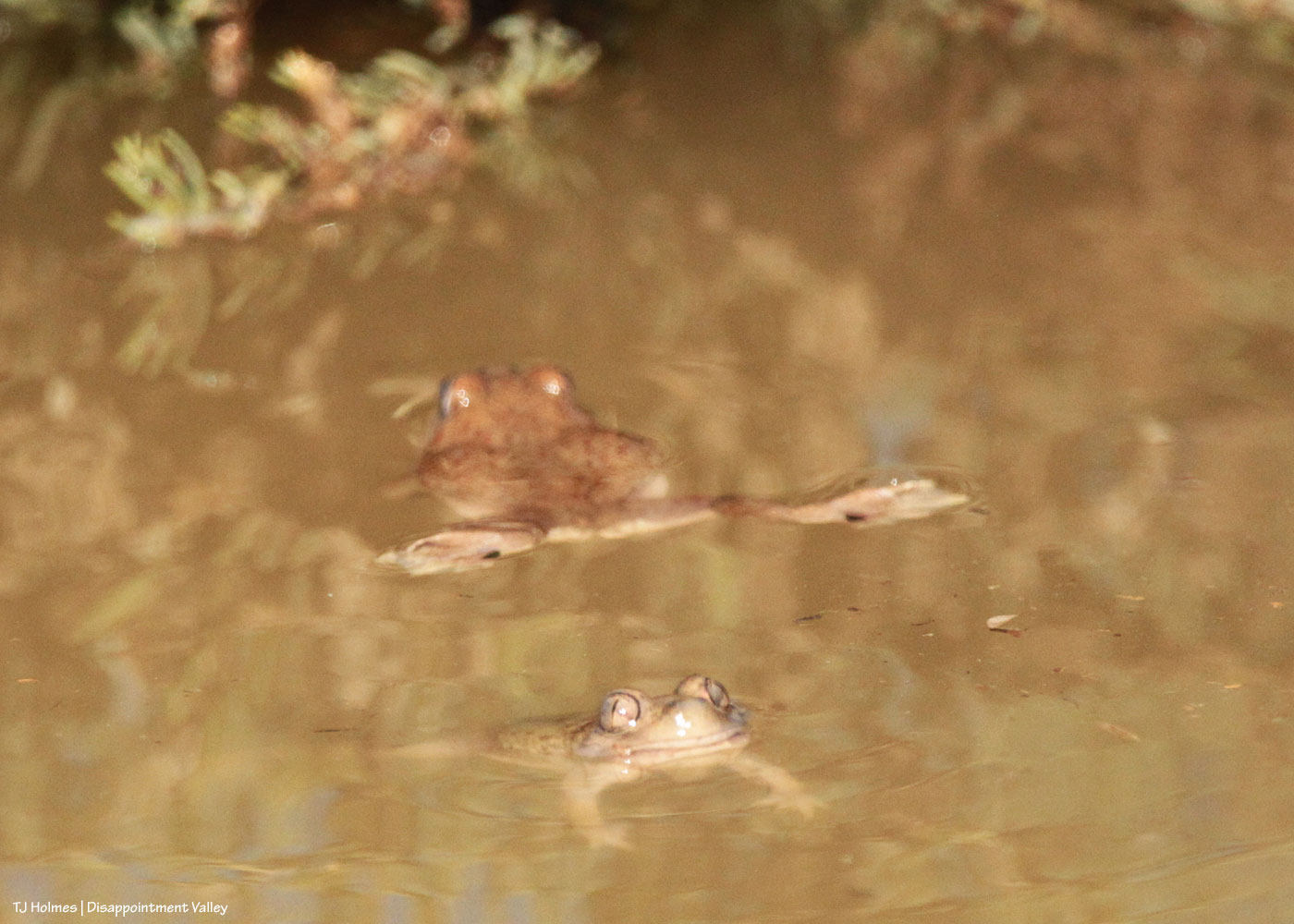
When we get enough rain to fill roadside ditches (which is infrequent to rarely occurring), the frogs/toads start singing! I’ll be the first to admit that I know *nothing* about frogs and/or toads, including how to tell which is which. I think these probably are toads. …
Ah, scratch that. Now I think they might be a variety of “spadefoot” (is that a toad or a frog? apparently, it’s something else altogether). One of the characteristics is “a vertical pupil like a snake, while toads have horizontal pupils.” Very clearly, the critters I saw have very vertical pupils, though the pix I saw showed them rather round (!). Also, “their skin is much smoother and has very few or no warts.” And “their back feet have bony, sharp spades that are used for burrowing into soil, sand, or loose gravel.” I couldn’t see their feet very well – they were in a nice bit of water that must have seemed extravagant to them – but surely they ought to be able to burrow into something during the (mostly) dry times that we (mostly) have? This is the website where I found the above information, and I think they might be Mexican spadefoot.
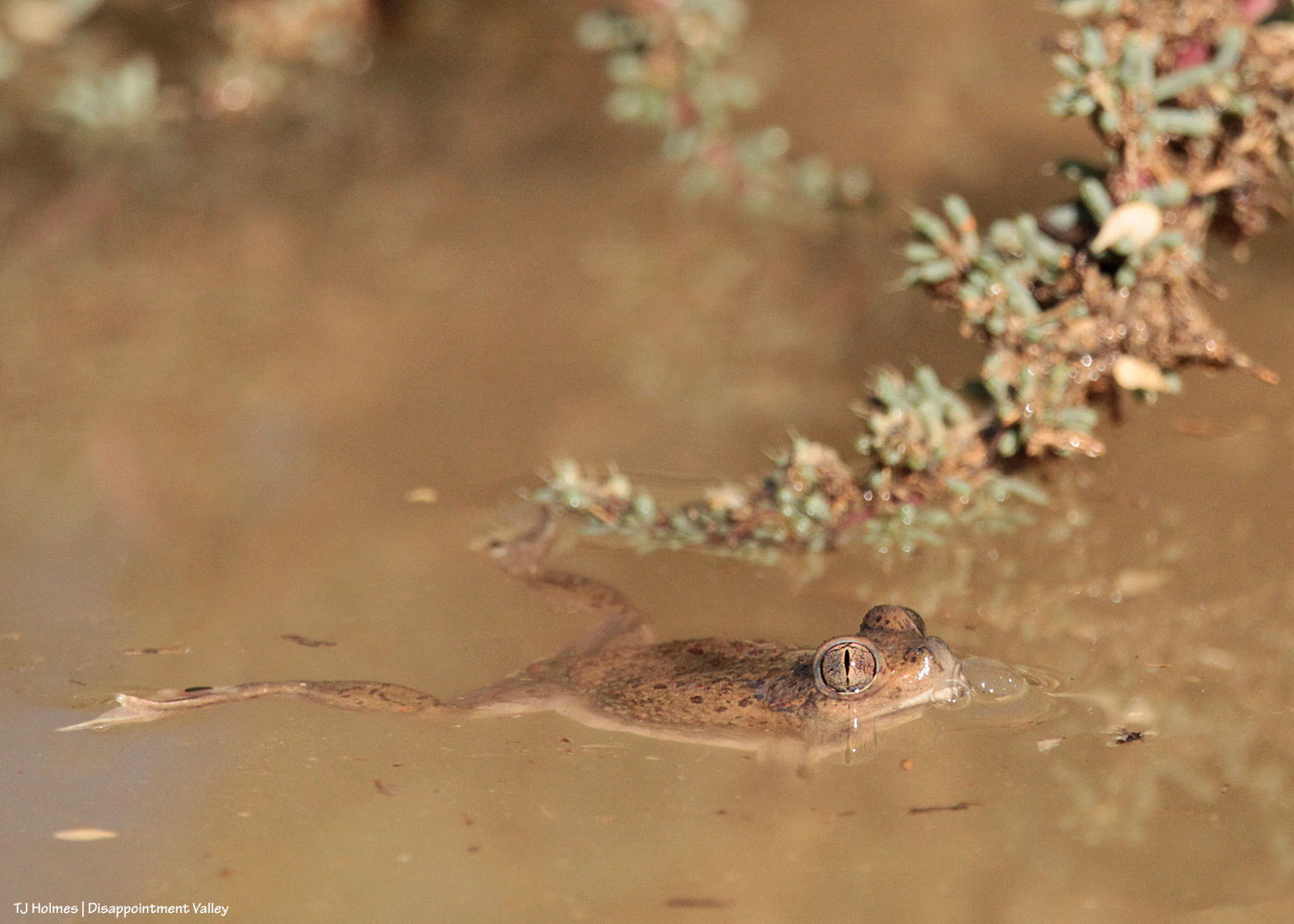
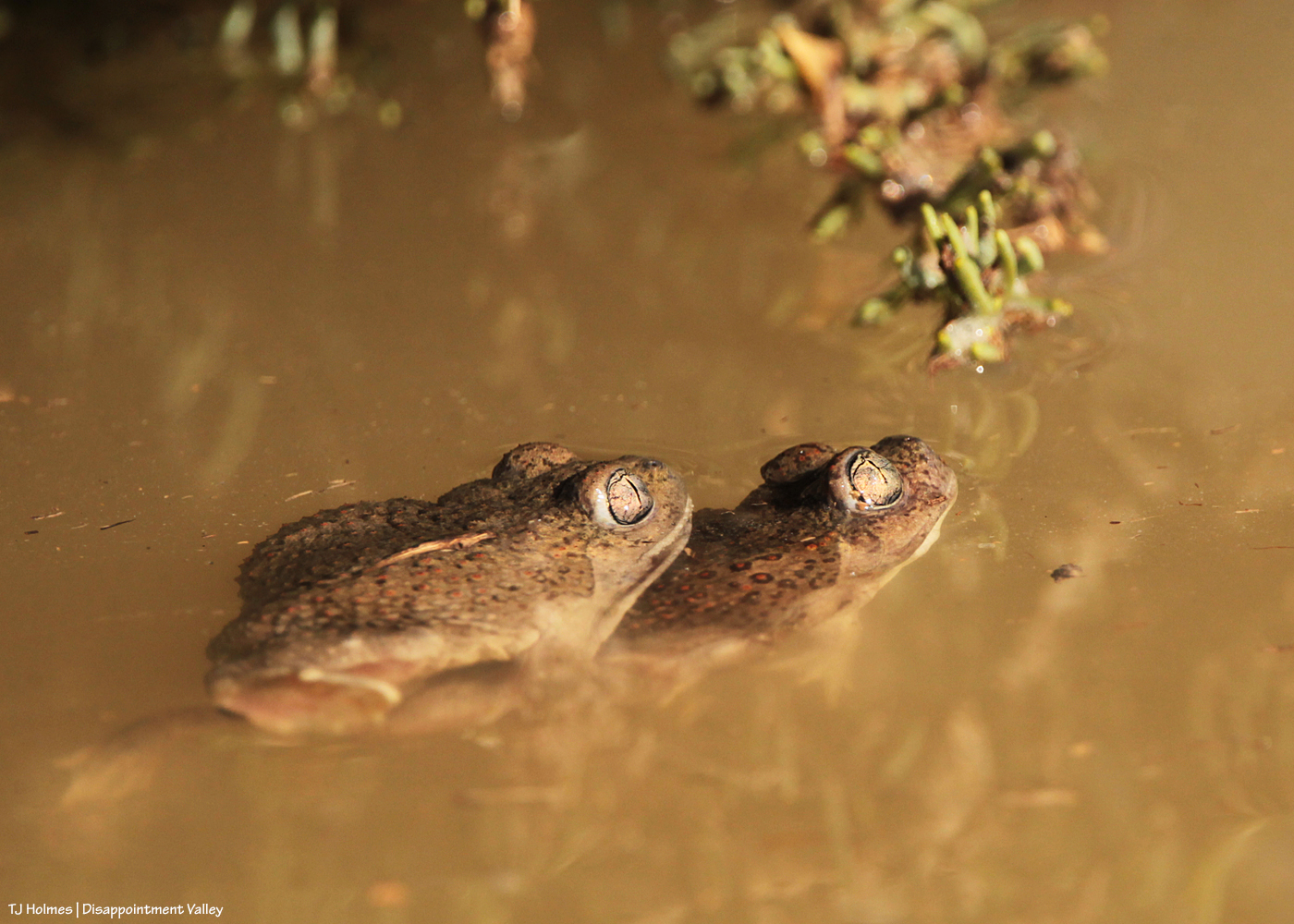
These two were feeling amorous. 🙂
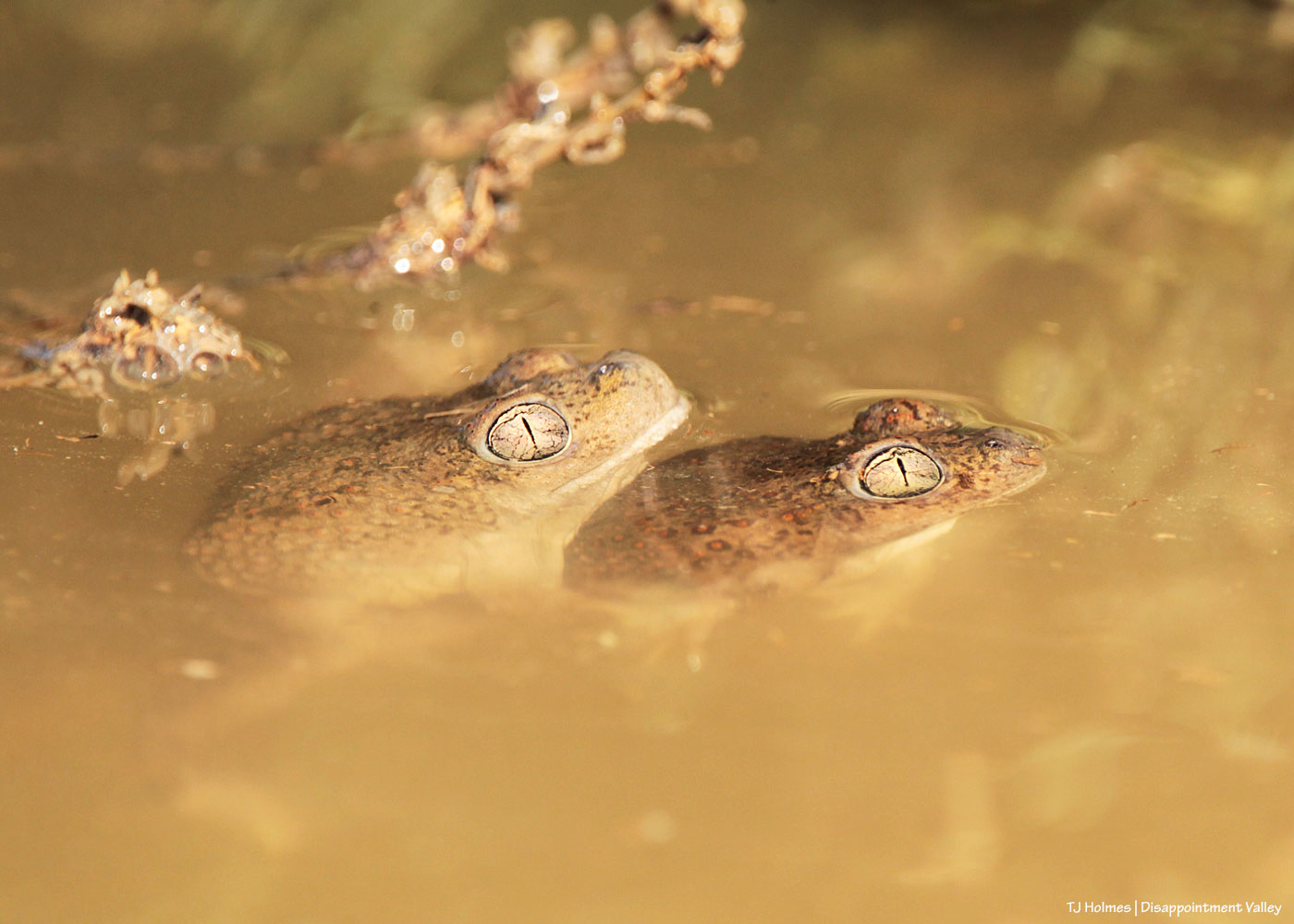
Those eyes!!
It’s pretty nice to have water around again. 🙂

This may have been the healthiest horny toad I’ve ever seen. S/he’s a big granddaddy/mama; I think his/her body would almost have filled the palm of my hand.

Look at that belly! And that tongue!
This is a wonderful Navajo legend about the relationship between the Diné and horned lizards.
This link talks about the symbolism of horned lizards. According to the site, “Na’ashǫ́’ii dich’ízhii (horned toad) is called Cheii (Grandfather) by the Diné (Navajo). Grandfather Horned Toad possesses great spiritual power that enabled him to triumph in a contest with lightning, an incredibly powerful force. The Diné use his songs and prayer for protection from the dangers of the world and the evil intentions of other people.”
And we can all use songs and prayers for protection from the dangers of the world and the evil intentions of other people, eh? 🙂 I didn’t have even a sprinkle of corn pollen or any other offering, but I did endeavor to protect the critter from stout hooves as s/he scuttled between sagebrush.

Who couldn’t love that face!?

More pronghorns have visible recently. I love to see these fleet-footed “speed goats.”
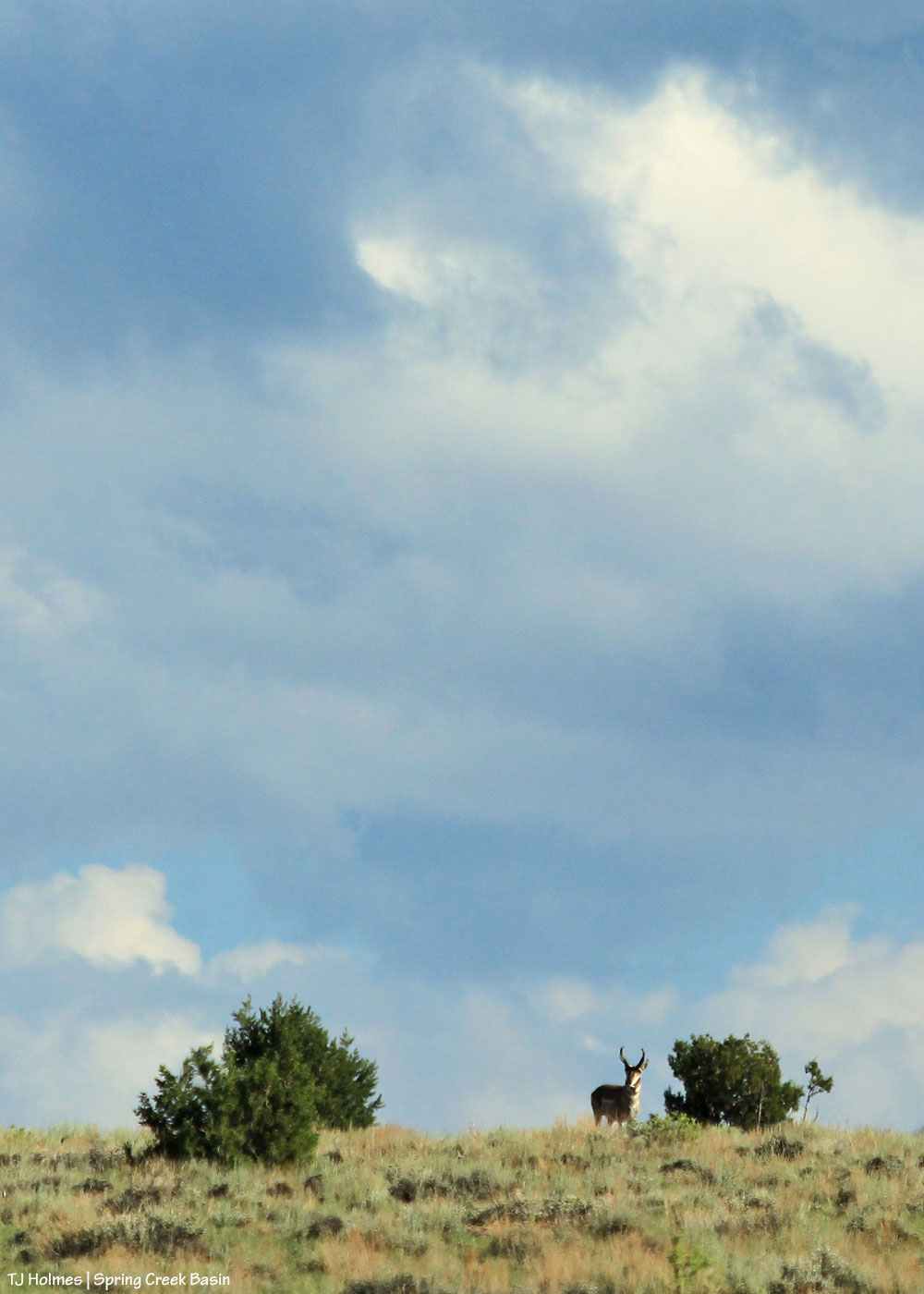
When this critter crossed the horizon line above a band of horses a week or so ago, they took notice but weren’t alarmed. He stopped a couple of times to look toward us, but he kept moseying on.
Trivia: In Wyoming, pronghorns are affectionately (!?) called speed goats.
They are North America’s (the Western Hemisphere’s, according to Wikipedia) fastest land animal.
They are not true antelope. This is a great site about them: San Diego Zoo.
A fantastic book about pronghorns is “Built for Speed; A Year in the Life of Pronghorn,” by John A. Byers.
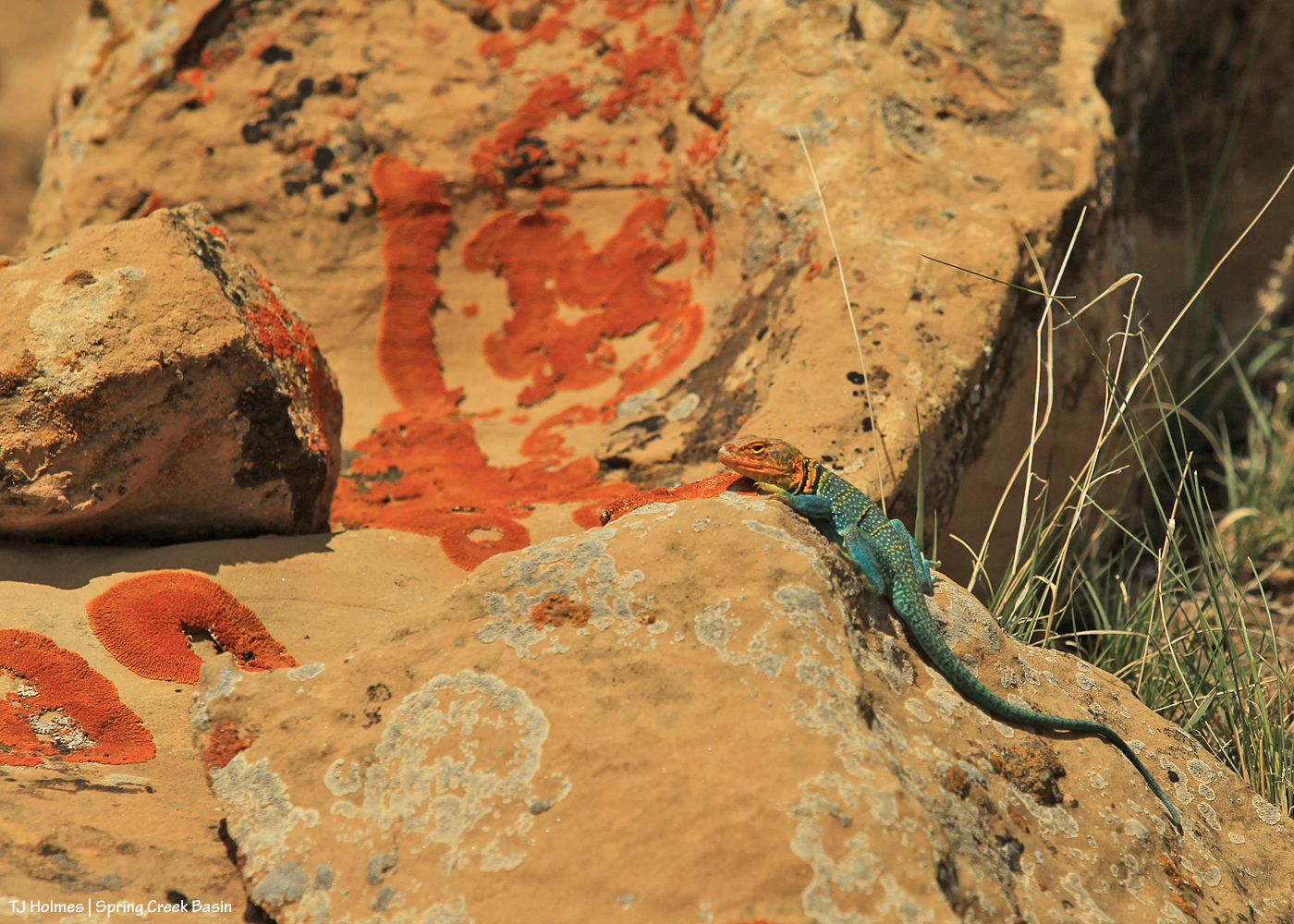
Kudos to eagle-(lizard?!-)eyed friend Pat Amthor for spotting this collared lizard on a rock as we drove by on a gorgeous afternoon in Spring Creek Basin! And she didn’t see it from this angle; she saw it from the left (I’ve backed up here when she shouted “lizard”!), where only the head was visible – almost the same color as the rock.
I LOVE these bright, awesome little dinosaurs!
P.S. We got around 0.21 inch of rain early Monday morning. The green is noticeable, and the wildflowers loved the infusion of moisture. 🙂
P.P.S. I’ve been trying to attach the pic to this post for hours without success; hopefully WordPress or my Internet will allow it in the morning, when I’ll try again.

