More water for mustangs in Colorado

22 06 2012

June 20, 2012

Contact: Christopher B. Joyner, Public Affairs Specialist, (970) 210-2126

BLM conducts emergency water operations; closes public lands for drought stricken wild horses

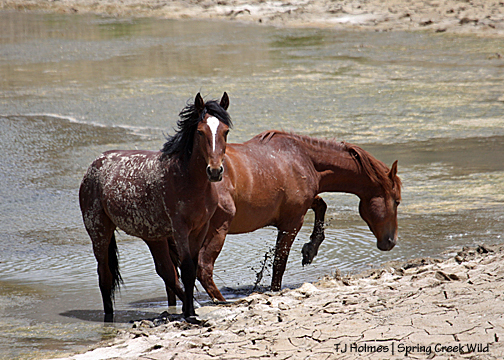
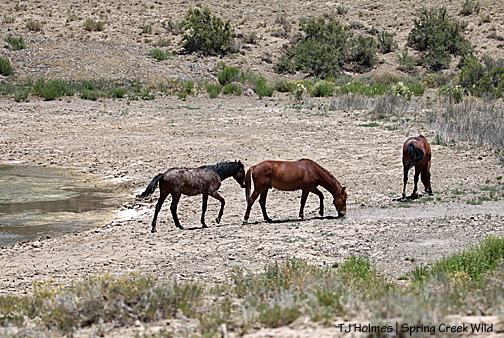
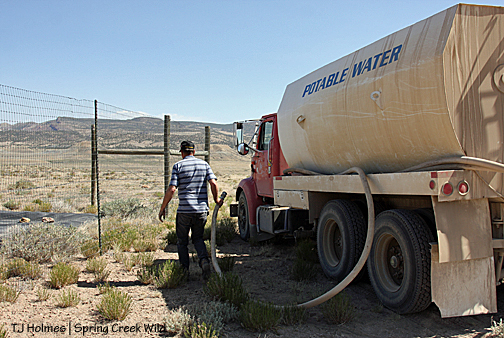
MEEKER, Colo. – The Bureau of Land Management recently began delivering water to wild horses in several areas in western Colorado in response to extreme drought conditions. Today BLM also issued an emergency closure for areas in the vicinity of Texas Mountain south of Rangely to further protect wild horses where the situation is particularly severe.

BLM is closely monitoring the wild horse herds it manages in Colorado and has begun supplementing natural water sources in three of the four wild horse herd management areas in the state, including the Piceance-East Douglas southwest of Meeker, the Sand Wash near Maybell, and the Spring Creek outside of Dolores. These are areas BLM manages specifically to maintain healthy wild horse herds in balance with other uses of the land. BLM is also closely monitoring the water situation in the Little Books Cliffs Wild Horse Range outside of DeBeque, which currently is not requiring supplemental water.

BLM issued the closure prohibiting public access south of Rangley in the West Douglas Herd Area, which is an area not planned for continued management of wild horses because it is not as suitable an area. BLM recently discovered a group of approximately 40 to 50 wild horses completely lacking any natural source of water. In addition to providing a large, temporary water tank and three water troughs, BLM is closing this area to reduce disturbance while the horses adjust to a new water source. The affected closed area is on or near Texas Mountain east of BLM Road 1214 and east of BLM Road 1063. Livestock are not currently in this specific area or using this water source.

BLM is closely monitoring the situation in the closure area and in the remainder of the West Douglas area, which holds an estimated 135 additional wild horses.

“BLM is committed to maintaining healthy wild horses in the White River Field Office and in Colorado,” said Kent Walter, White River Field Office manager. “We will continue to monitor the situation here and elsewhere, and may need to take additional steps to ensure the wild horses are cared for humanely.”

According to Walter, hauling water to such a remote location is not likely a sustainable, long-term solution.

*******************************************************
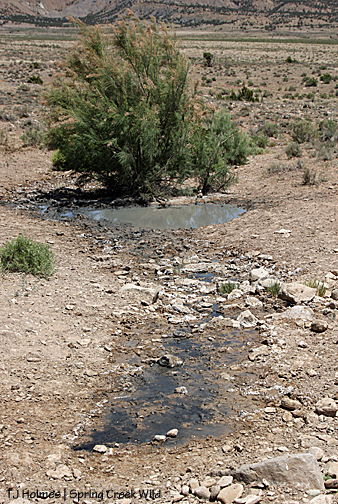
This is what I call “the trickle” in Spring Creek *Basin* (why do people always leave out the “basin” part?). Right above the S in Spring in my signature (and yes, I know, but Spring Creek Basin Wild was a long URL) is a pipe out of which water flows from an old well. It’s not much, it’s salty, it smells like sulphur. But the horses drink here when the drinking gets scarce. By the end of next week, we plan to install a pipeline and a drinking trough. The new line will run downhill to the new trough, which will sit where the pool of water currently is accumulating, right in front of the big tamarisk. Water will be controlled by a float instead of trickling on down into oblivion.

In addition to BLM’s green light (Tres Rios Field Office, Dolores), Disappointment Wild Bunch Partners partnership and (BLM) Director’s Challenge funding, the project involves Forest Service labor from the Dolores Public Lands Office. Thank you to all involved! (And many thanks to the Forest Service’s HP, who brought handsome Jammer for me to ride while we GPS’d water seeps in the Spring Creek (arroyo) and another main arroyo this week in the basin – and more next week!)


Solstice morning

22 06 2012

Wild girls Alegre and Maia, Mariah and Houdini at sunrise, solstice morning.

Mariah is very clearly shedding her red baby coat and revealing her true grey. Hard to tell yet with Maia, but her little muzzle has a hint of brown to it.


Together again

21 06 2012

Kestrel’s family is reunited.

Juniper looking, mama Kestrel and baby Madison grazing, daddy Comanche in the back.

Kestrel crossed a good part of the basin and got away from David to reunite her family. Never underestimate the power of a mare.

Still close to Hollywood’s band.

Comanche’s band in the foreground, Hollywood’s band in the background. Baby Temple is lying on the ground in front of Piedra.


Summer solstice sunrise

20 06 2012

Cassidy Rain with mama Gaia at sunrise.

I spent sunrise with my favorite band, then visited Hollywood’s band. Good news: Kestrel got Comanche back. And yes, I mean it just like that.

Divine morning. Sometimes I’m reduced to happy tears to feel the blessings of this life. You can’t witness moments like these and not believe in the beauty of the world, that it’s something worth fighting for. Glorious.


Golden

19 06 2012

Oooh …

la …

la!

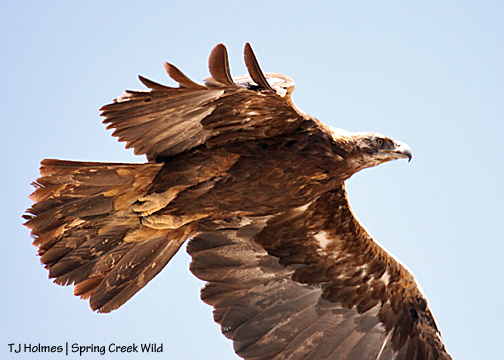
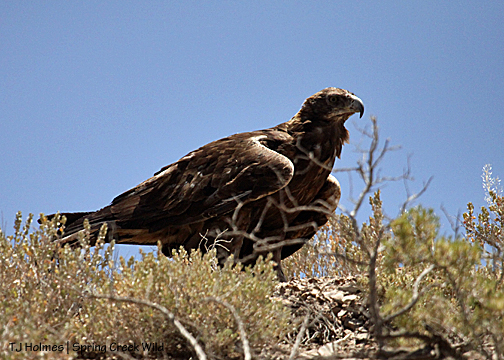
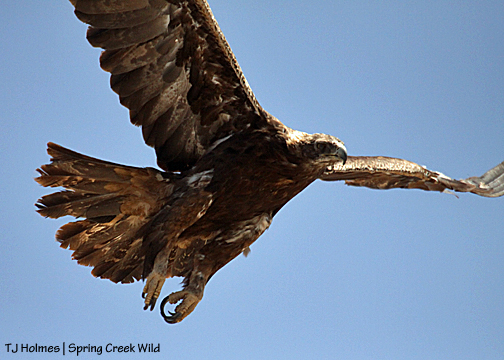
This gorgeous big bird was right off the road. After fumbling for my camera, I managed to fire off these shots when s/he took off.

Simply stunning.


Seeing spots

19 06 2012

Reya and S’aka.

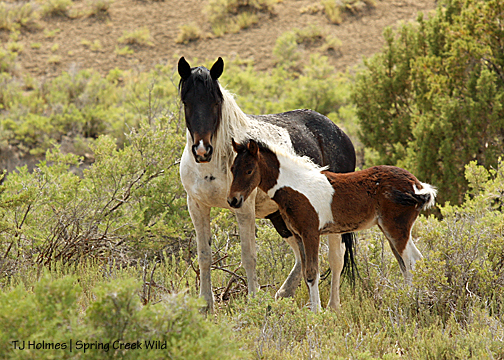
Interesting dynamic going on with the pinto band. Corazon seems to have Reya and her colt, but he doesn’t seem interested in Chipeta and Puzzle … but Ty stays on the outskirts … but is still higher ranking than Copper. The cut on his knee is healing, but it’s still pretty swollen.


Water delivery, part 2

18 06 2012

Today was the second delivery of water to the catchment – and this time, it went directly into the storage tank.

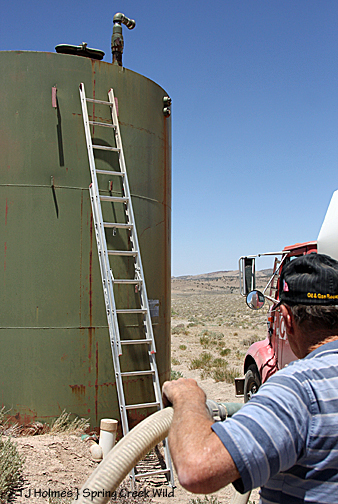
Cecil Foster of Foster’s Water prepares to carry his water hose up his ladder to pump water into the tank.

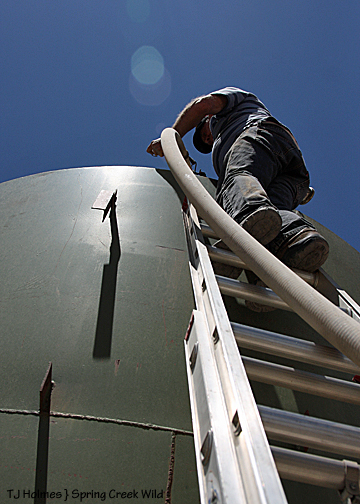
Cecil at the top of the ladder.

A closer look at the drinking troughs.

View at the top: the water hose inside the hatch on top of the storage tank. See the glitter? That’s the water! The tank is now nearly full!

I should have taken pix of Chrome’s band on our way in; they were right off the road. They had moved away by the time we headed out. But close enough to take advantage of this good water.


Happy Father’s Day

17 06 2012

For all fathers who care for children of their blood or children of their hearts, you are blessed and loved.

Sundance greeting stepson Skywalker.

Happy Father’s Day to all you great dads!


Playing in water

16 06 2012

And now some light-hearted water fun. 🙂

Apollo gets ready to walk out of the pond while Hayden tests the splashability. I’m taking this from my Jeep up on the road. This is the Sorrel Flats pond back in the eastern part of the basin.

Zoomed out to show more of the pond. As part of my documentation of the horses these last few years, I keep track of how much water the ponds have and when they go dry – and when they fill back up with the summer rains. Now that we have a herd manager who is interested, I share that information with him. The pond just north of here – the east-pocket pond – went dry just a week or so ago, just a few days after our herd manager saw it with very shallow water.

Apollo, Hayden and Tenaz grazing on the flats just above the pond. I should have some better photos of these boys soon tweaked and posted.There’s not a lot of surface area here, but the middle is a little deeper than it seems.

Storm has hooked up with the boys (though possibly not permanently; he wasn’t with them the other day). He followed them out of the wooded “island” and down to the pond to drink. I’ll have more pix of him soon, too.


Water for mustangs

16 06 2012

It’s dry out there, folks.

That’s neither new news nor surprising news.

We haven’t had any rain since late April, and the forecast for the forseeable future shows perfect yellow balls of sunshine and highs in the 90s. On July 1, we’re supposed to hit 99.

Bleak. That’s what I call that forecast.

Three ponds have water. Wildcat Spring has water. The trickle is trickling. There are random seeps and springs around in arroyos – all small, all not-so-good to poor quality. The ponds all have gone dry in previous years – last year, the year before, that I’ve documented – but the monsoons always come. Some years better than others, but they always come. This year promises to get worse before we get those monsoons.

Our BLM folks at the Tres Rios Field Office in Dolores are well aware of the drought conditions and are taking steps to ensure the horses have water to get through the worst of the dry season.

Among the things our recently awarded Director’s Challenge grant money will fund here: water enhancement projects. From 2009 to 2010, five ponds were dug out (made deeper; they silt in – get shallow – because of the erodable soil), and two more are scheduled to be dug out this year (hopefully before the monsoons come!). We’re talking about water guzzlers, solar pumps on wells (something we’re looking at to enhance “the trickle” into something with a bit more flow) and possibly a second water catchment.

I get a lot of questions about our water catchment. What it is, how it works, how it benefits the horses.

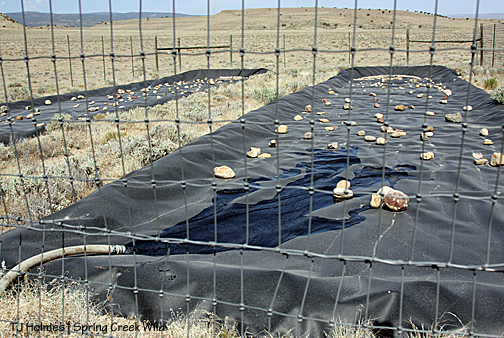
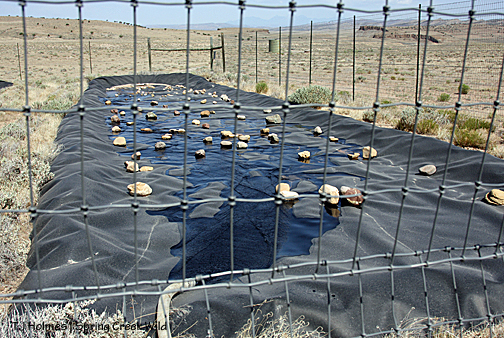
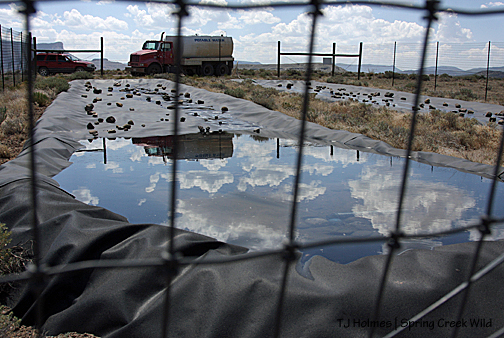
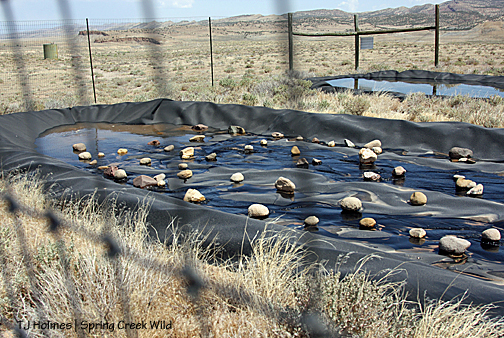
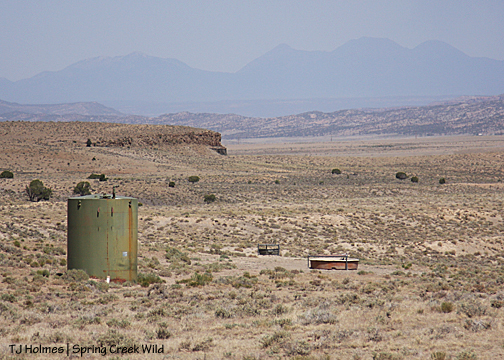
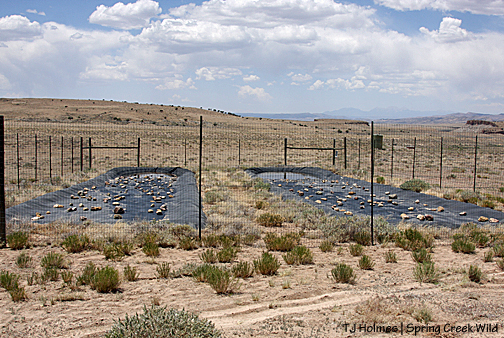
Two aprons are laid out on a slope and fenced (to keep sharp-hooved wildlife out). Water in the form of rain or snow falls on the aprons and drains down to filters, then into a pipeline that runs down to a 16,000-gallon storage tank. From there, lines carry water to two troughs, which hold water controlled by floats. I turn the valve on when the weather starts warming up in early spring, and I turn it off when it starts to freeze at the start of winter (so the lines don’t freeze and break).

This is the only clean water to which the horses have access.

Because of the alkaline quality of the soil, the water is highly saline. I also get questions about the “white soil.” That’s salt on the surface of the soil. Crazy but true. The horses, of course, have adapted. It’s also muddy, and at times like this, sure, there are seeps – where the water comes up and fills salty, muddy hoof-print-size puddles. Not a lot of quantity, let alone quality.

Are you still with me?

This weekend, BLM ordered the first delivery of 4,000 gallons (what the truck holds; more coming) to the catchment, which is about a quarter full after the mild winter and no rain since April and horses drinking.

Can I get a yahooooooooooooooooooooooo? 🙂

Here’s Cecil Foster of Foster’s Water preparing to drain water onto one of the aprons. Cecil has been hauling water to the catchment for years. In recent years, deliveries were paid for by the National Mustang Association, Colorado chapter. NMA/CO paid for the water catchment to be built more than a decade ago, and there are a couple of signs on the fence that say so. (Remember Pati and David Temple, for whom baby Temple is named? This is one of many projects they have honcho’d over the years through NMA/CO.)

Water starting to flow. This pic shows both aprons.

In this pic, you can see the green storage tank and the drinking troughs (very small in this image, barely visible – they’re to the right of the tank) in the background.

This is the perspective from the lower end looking up toward the road. The filters are apparently a little clogged; the water shouldn’t pool so much before draining. We need to get them cleaned out before the rains DO hit. The rocks on the aprons are just to hold it down.

Looking across the aprons to the northwest. One of the troughs is a little more visible in this image.

And a better view of the tank and troughs.

The two aprons of the catchment, side by side.

So that’s what they are, how they work and how they benefit the horses. One slight negative is the location – most of the horses are not in this area. Chrome’s band has consistently called this area home for the last couple of years, and they’re the only ones I know of that drink here consistently. That’s good, but it’s also one of the reasons we’re looking at potential locations for a second catchment (and have been the last several years).

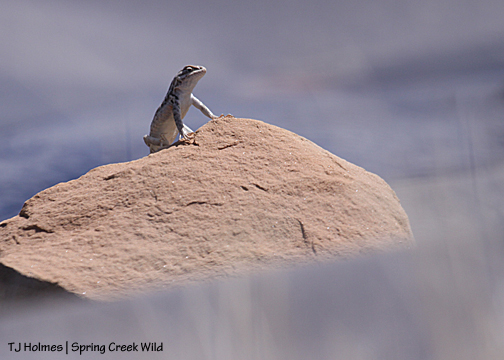
Good water benefits more wildlife than just the horses. 🙂 This little guy (gal?) is perched on a rock on one of the aprons. In the foreground is the blurred berm of the apron; just behind the lizard’s rock is the water from Cecil’s truck flowing down to the filter on its way to the tank to become drinking water for the horses.

Good stuff. Thanks, BLM. 🙂