
This was Storm’s reaction to the attention-getting pronghorn buck in yesterday’s post. He didn’t expend too much energy, watching it with his family, all napping in the shade of some pinon trees.
This was Storm’s reaction to the attention-getting pronghorn buck in yesterday’s post. He didn’t expend too much energy, watching it with his family, all napping in the shade of some pinon trees.
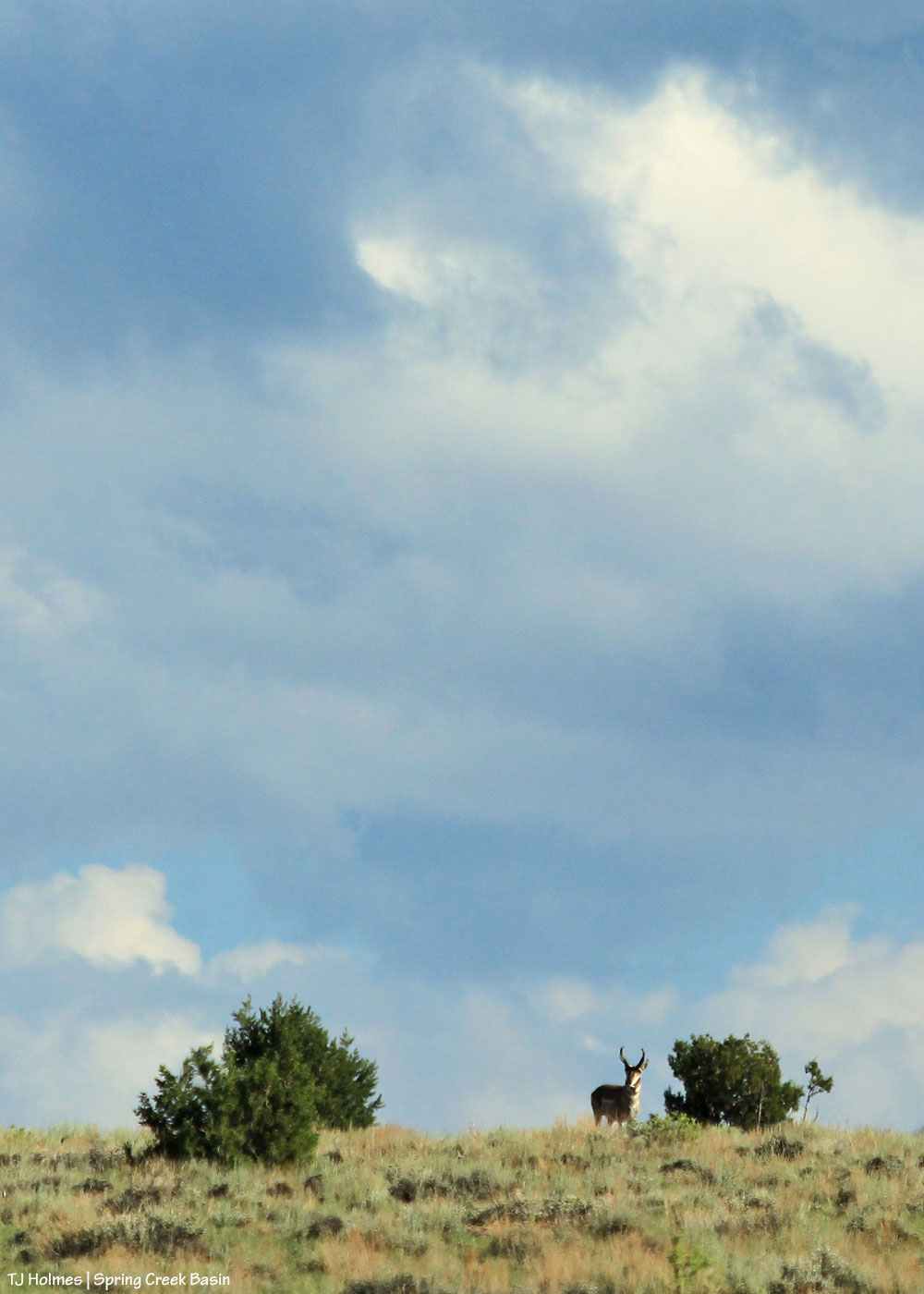
When this critter crossed the horizon line above a band of horses a week or so ago, they took notice but weren’t alarmed. He stopped a couple of times to look toward us, but he kept moseying on.
Trivia: In Wyoming, pronghorns are affectionately (!?) called speed goats.
They are North America’s (the Western Hemisphere’s, according to Wikipedia) fastest land animal.
They are not true antelope. This is a great site about them: San Diego Zoo.
A fantastic book about pronghorns is “Built for Speed; A Year in the Life of Pronghorn,” by John A. Byers.
To catch you up, dear readers, this is where we last left off in the ongoing project that is Spring Creek Basin’s newest water catchment for the mustangs:

None of the purlins had been welded to the steel pipes yet in the photo above, but you can see the front three purlins resting atop the pipes (left side, which is the downhill side). It looks a lot different now, in reality, because in reality, if not in blog-time, we’re up to phase 4 now.
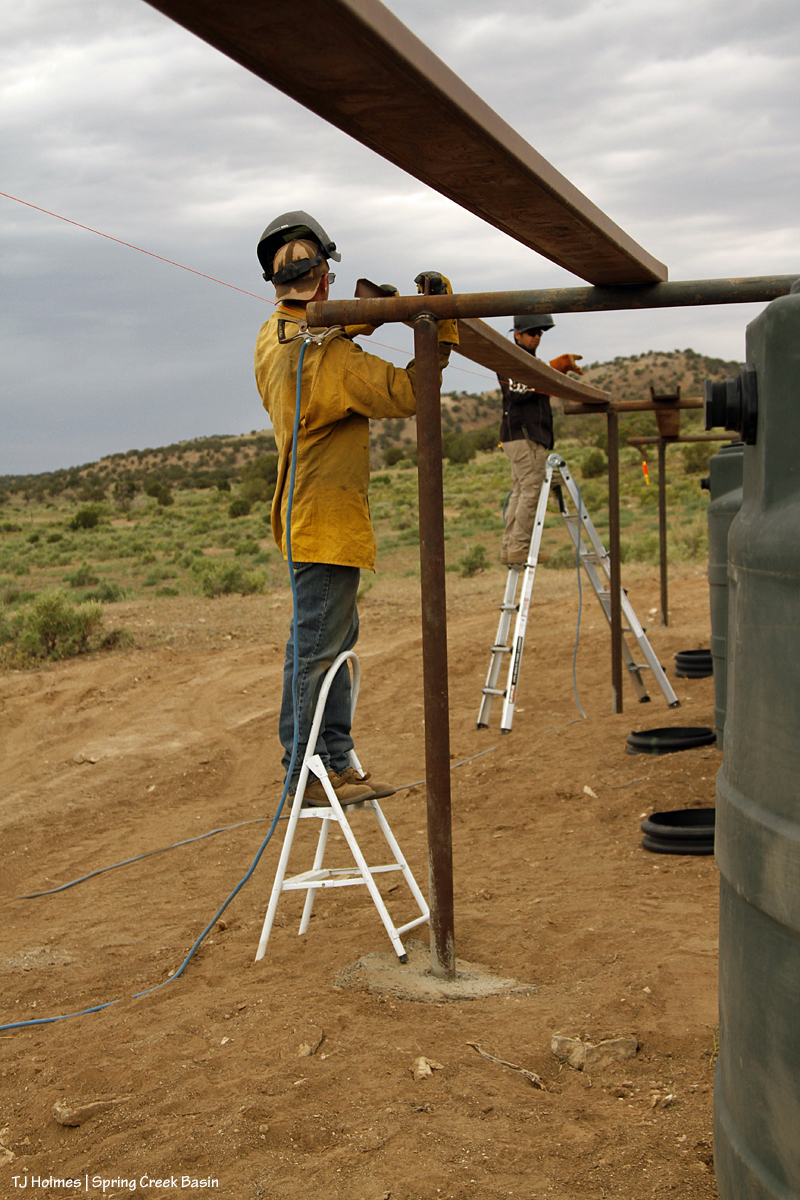
Here, Garth and Daniel are about to turn the first purlin on its edge to start welding it in place across the front of the roof structure. Eventually, the gutter will run along the length of it.
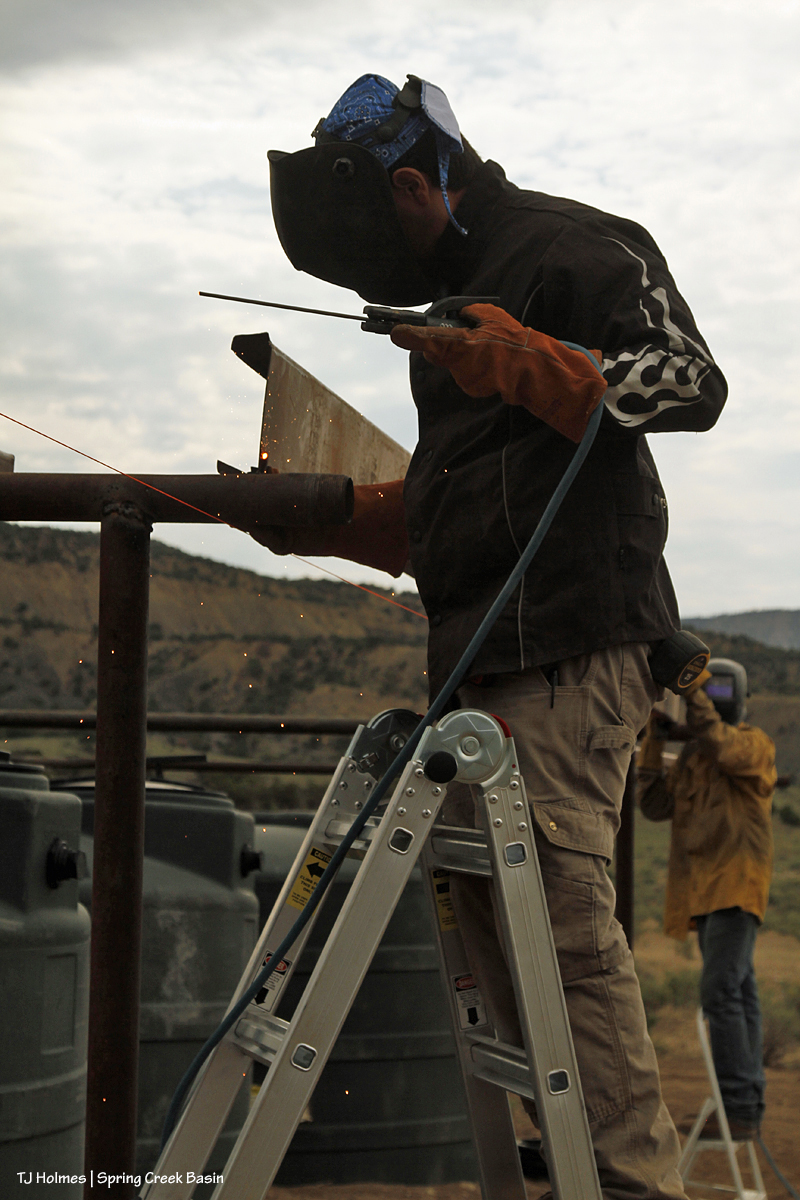
Daniel is the range department’s chief welder (!), and both he and Garth did welding on the purlins – one at each end – which made the project go a lot faster.

No pic of any work in the basin would be complete without two of our most iconic landmarks: McKenna Peak and Temple Butte. Fortunately, this location has great views.

Garth welded the third purlin into place across the front of the roof structure, and then it was weld, weld, weld, all the way up the east section of the roof structure!
How’d they get those heavy steel purlins up there anyway?
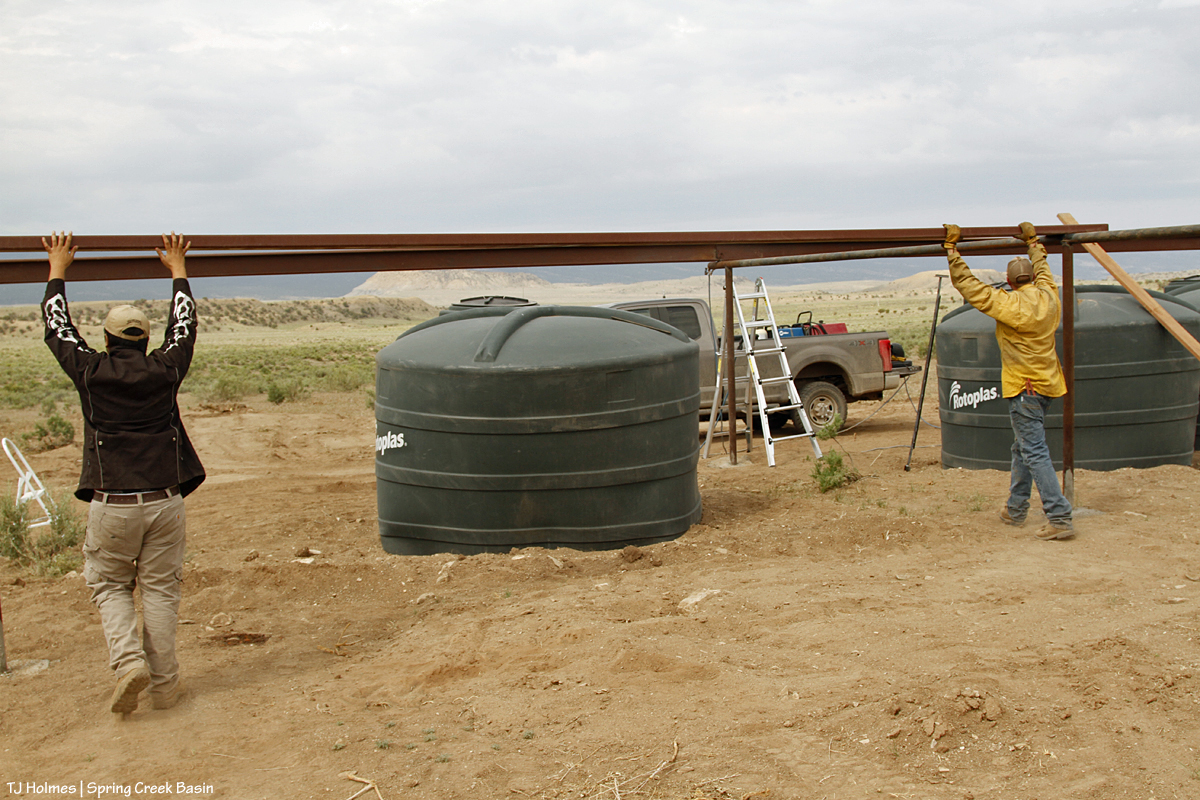
A little like this …

… and a bit more like this. 🙂

Once they got the first line of purlins up, we got into a rhythm, and they got the rest (on the east end) welded pretty quickly. Their measurements of where they placed all the steel pipes was spot on. I was impressed. 🙂

And pretty soon, it was looking like this!

Here’s a bit wider view. This east end has all the purlins welded now (in reality-time), and the middle section (over the two middle tanks) has a few purlins welded across. This east end also now has all the propanel (metal) sheets in place and screwed down. The guys needed more purlins and maybe more propanel sheets, which they get in Durango. The Durango supplier was out (it’s that steel-is-limited thing), so they were going to get more this week and come back out. With the mercury creeping higher again, please say a prayer and give a wish for clouds for our hard-working BLM guys!
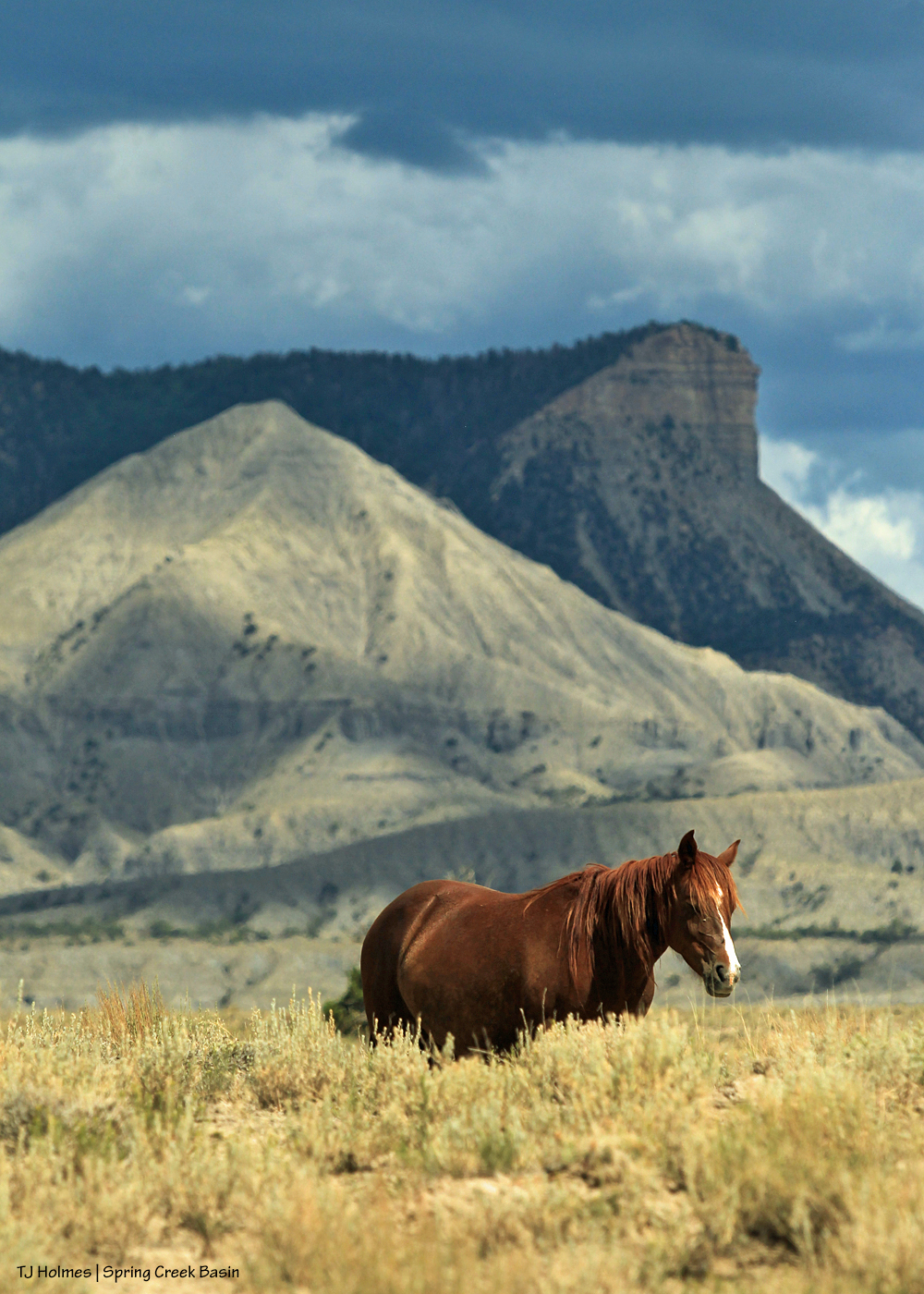
The heat makes ya just wanna take a nap.
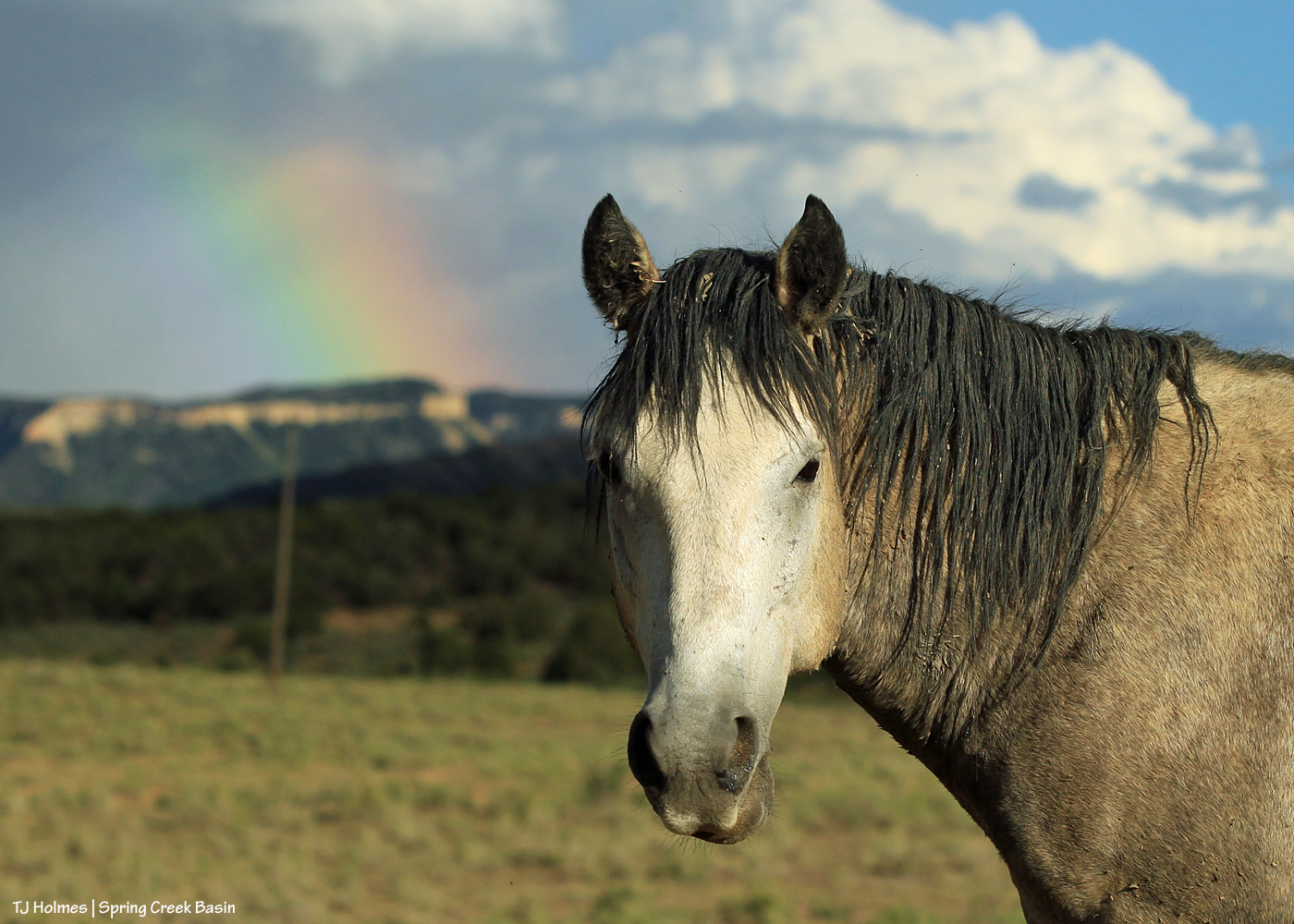
Killian also took the very briefest of moments to look up with a rainbow far southeast of Spring Creek Basin, just peeking out of a corner of cloud as rain fell farther north.
How’s that for some “fireworks” on our Independence Day!?
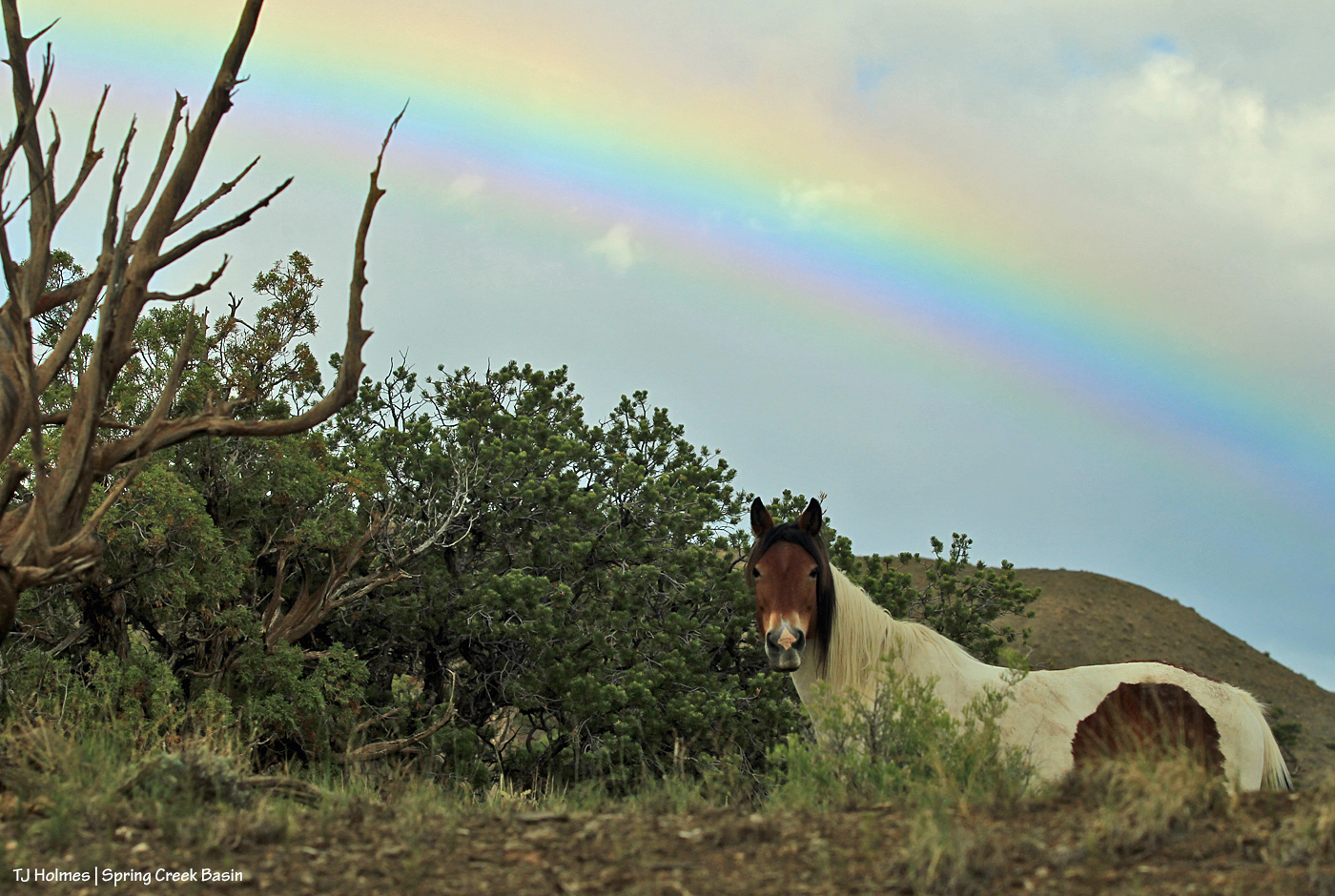
Ms. Chipeta looked up at just the right time to pose under a low rainbow over Spring Creek Basin a couple of nights ago. We *did* get rain before that rainbow … maybe an hour earlier, gentle sprinkles. Relief, in so many ways.
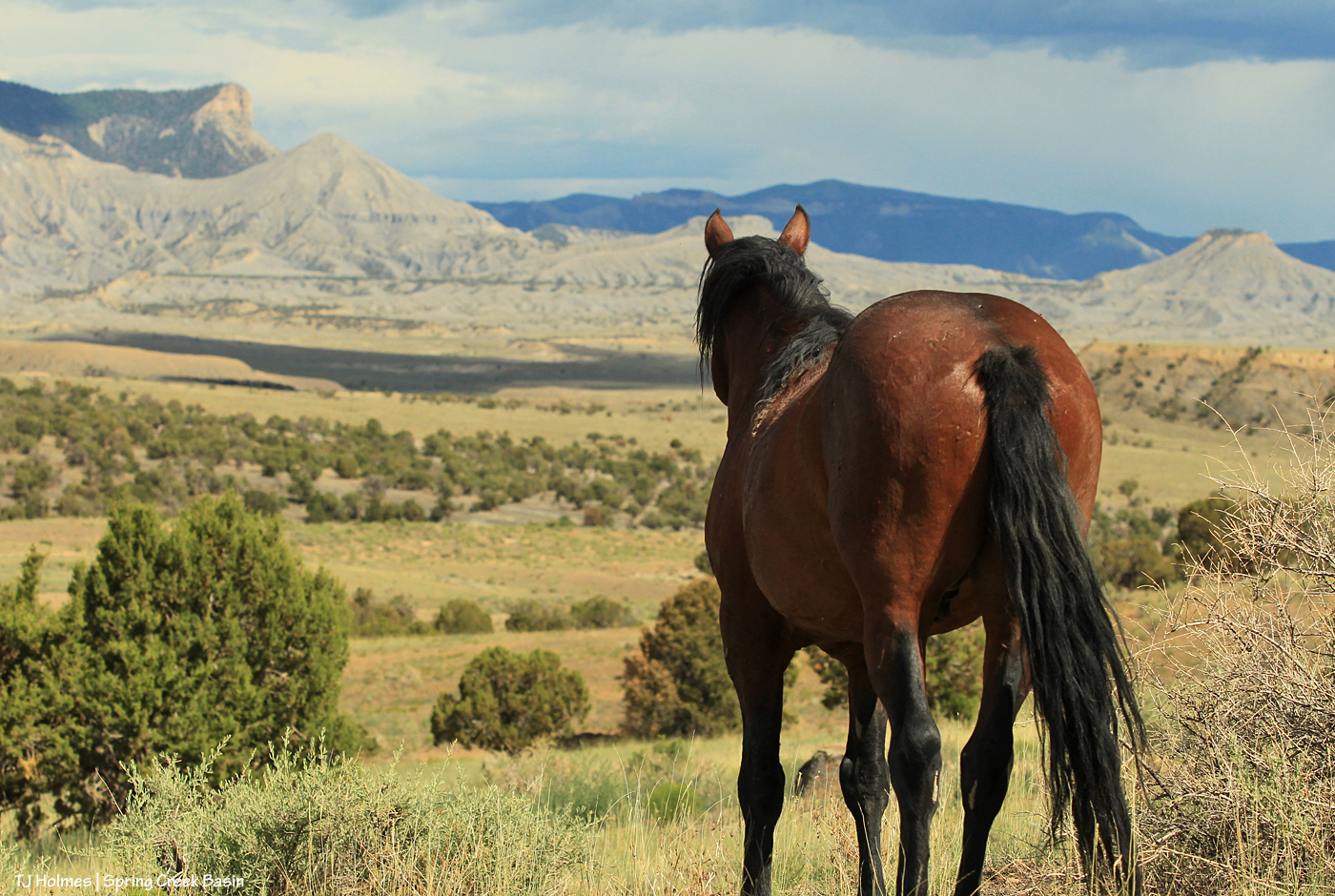
Just about everything is shown in this one pic – just about everything I love: Mustang (and there are more in the yonder) and that horizon that always lets me know I’m home after any amount of time away.
As always, I wonder what the horse sees/thinks as he looks out on that view, those places he knows intimately as a true, wild resident of that vast, wild land.

Skywalker drinks from a tinaja in a rocky drainage in Spring Creek Basin. The water must have collected from the last rainfall, last week, and this clever boy has found it.
“Tinaja is a term originating in Spain (Spanish for clay jar) and used in the American Southwest for surface pockets (depressions) formed in bedrock that occur below waterfalls, are carved out by spring flow or seepage, or are caused by sand and gravel scouring in intermittent streams (arroyos). Tinajas are an important source of surface water storage in arid environments.
“These relatively rare landforms are important ecologically, because they support unique plant communities and provide important services to terrestrial wildlife.” ~ from Wikipedia
What in Spring Creek Basin have our wily and handy BLM’ers been up to lately?
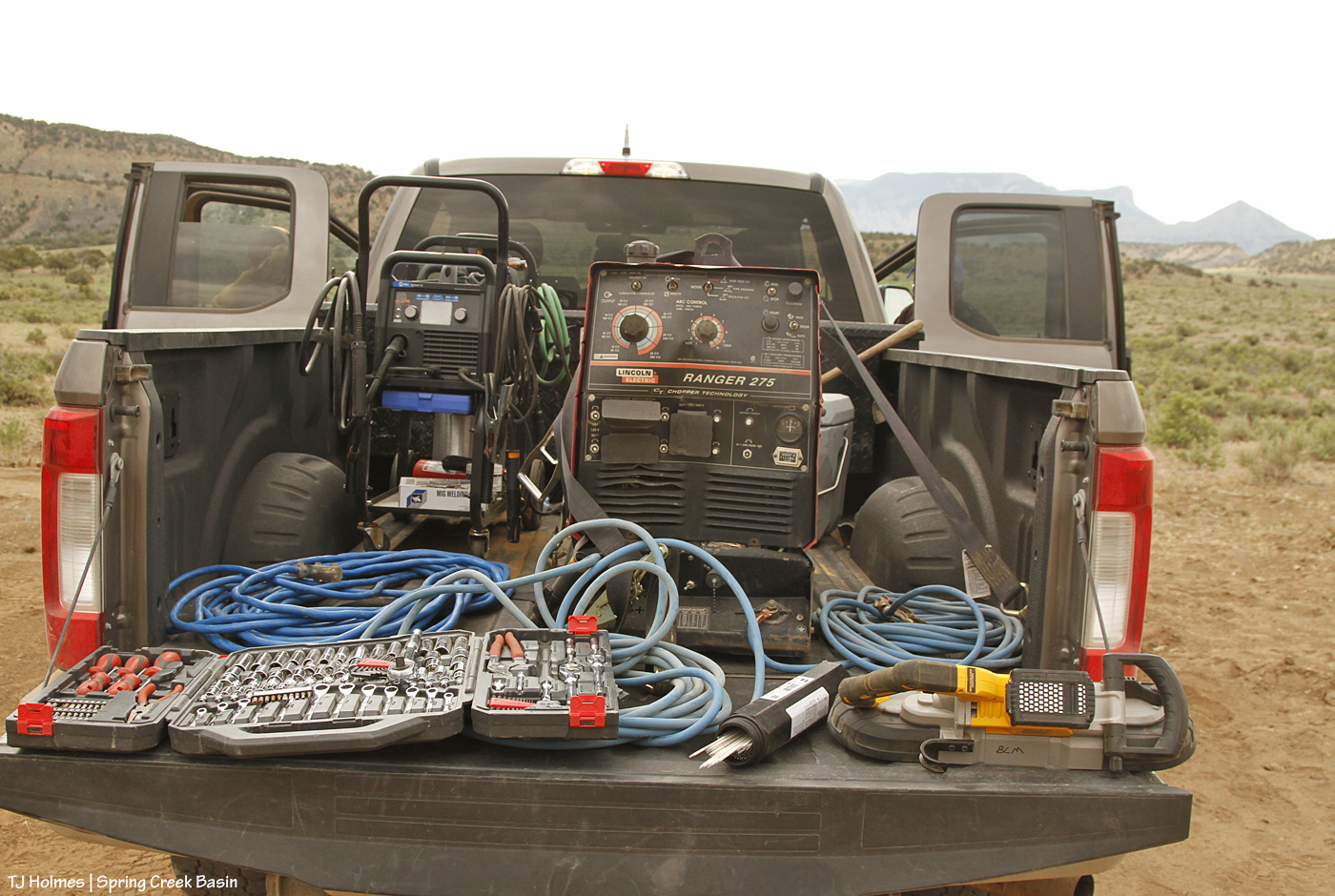
I’d been out of the valley for a little while, visiting my folks for the first time since the pandemic started (they had visited me just *before* the pandemic started), and I came back to find two of my favorite BLM guys wandering toward the basin one morning with a little tractor in tow! I had some chores to catch up on, so I didn’t meet up with them until their last day of work last week. There was a little crowding of tools and things in the bed of their pickup.

After stretching a string from one end of the roof structure to the other (new horizontal steel-pipe post pieces had appeared since I’d been there last!), Daniel Chavez (pictured) and Garth Nelson got to work welding purlins to those pipes.

They welded three purlins over the three sections of roof structure over the four tanks. As they said, that line of purlins was critical to get straight because the gutter will go under the roof under those purlins. Into that gutter will go the rainwater and melted snow … life-giving water from heaven … into pipes into the tanks into the trough for the mustangs!

Because of my slow-Internet issues that make drafting blog posts a long-term commitment these days (!), this is a short teaser post about what they’ve been doing. I do promise at least another post to show the progression of purlin welding (because it’s fascinating and shows how handy our guys are!)! This last-for-now pic shows water dripping out of the steel pipe at one end of the roof structure after Garth poured some of his water in from the top end. When the project is all done and the roof is on, water will NOT flow through these steel-pipe posts; it’ll hit the roof and flow to the gutter and thus to the tanks. But he and Daniel illustrated that there IS a slope to the roof (though it deceivingly looks fairly flat), and you can see the now-welded-in-place purlins across this section of roof structure and Garth grinning in the background, and it’s never a bad sight to see water dripping from above in the desert. 🙂
More to come. Promise.
Another highlight of note: Did you notice the cloudy sky in some of the pix? Thankfully for Daniel and Garth, it was cloudy and relatively cool most of the day while they were in their welding jacket and Nomex (?) shirt for welding. I wore my headnet to keep the gnats at bay (they were worse some times than other times) while I helped hold purlins in place with my great and amazing strength (!) until the welds held (!). The previous two days – and the whole of the previous week! – had been HOT (like, 100-degrees hot). … And at the end of this day and the evening after the next day, we got some sprinkles from Mother Nature. Welcome relief. 🙂
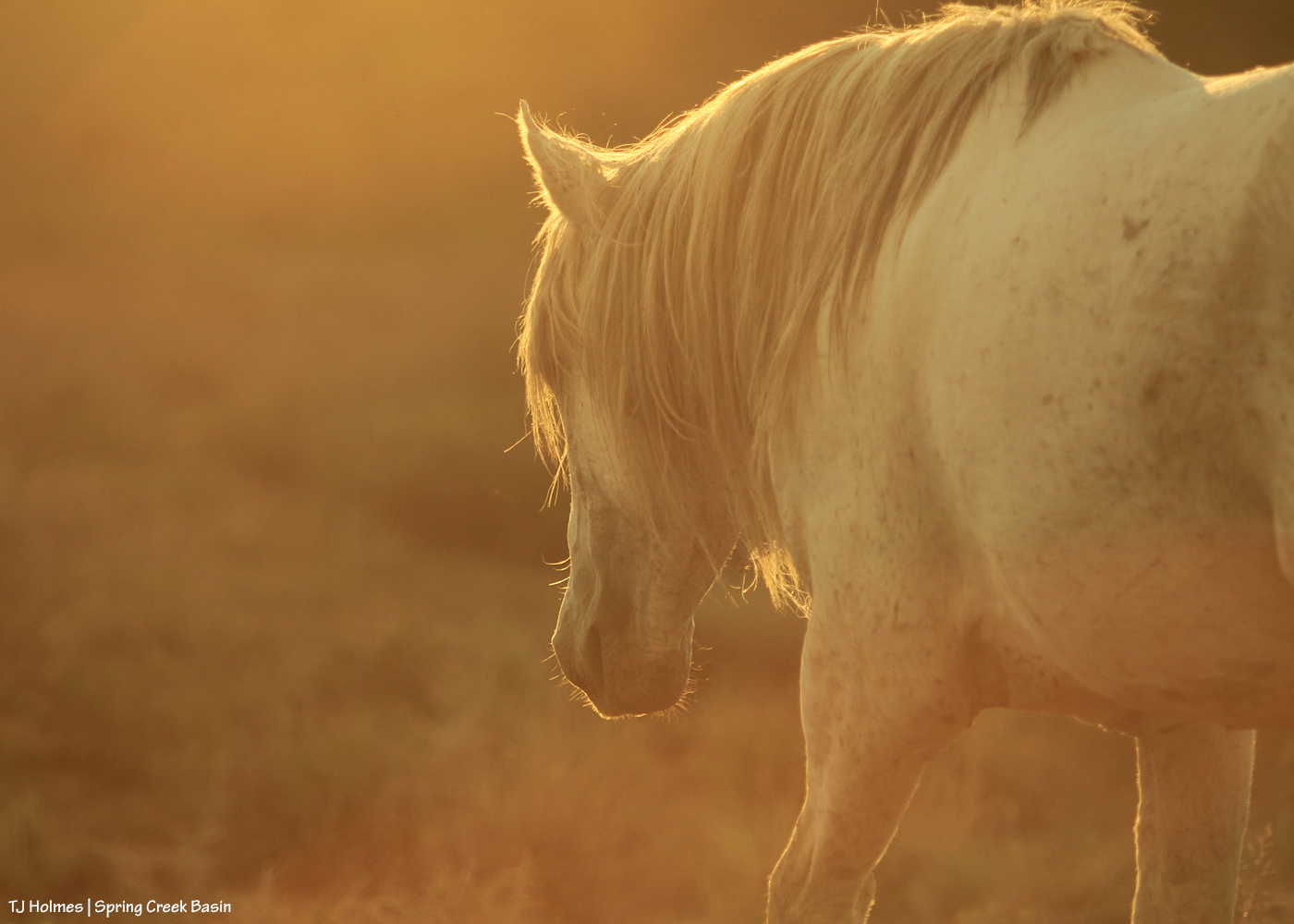
Even walking away, that soft light makes every mustang look handsome.
I adore that light! … And those mustangs. 🙂
 Spring Creek Basin Mustangs