I think – I hope – that these pix truly are worth 1,000 (or more!) words … but I’m going to give you a few more anyway. 🙂
This is the east-pocket pond, aptly named as it’s located in Spring Creek Basin’s east pocket. This isn’t the only pond that suddenly has water after Thursday’s tremendous downpour, but it’s the only one of which I have a “before” pic.
“Before” was a little after noon on June 27, a few hours before the four-hour deluge. “After” was about 26 hours later on June 28.
Maybe, if you look closely, you can see a band of greys at far distant left in the pond-now-full pic. Fortunately, the horses have multiple sources of water now. It’s amazing how quickly things change (for the better, in this case!).
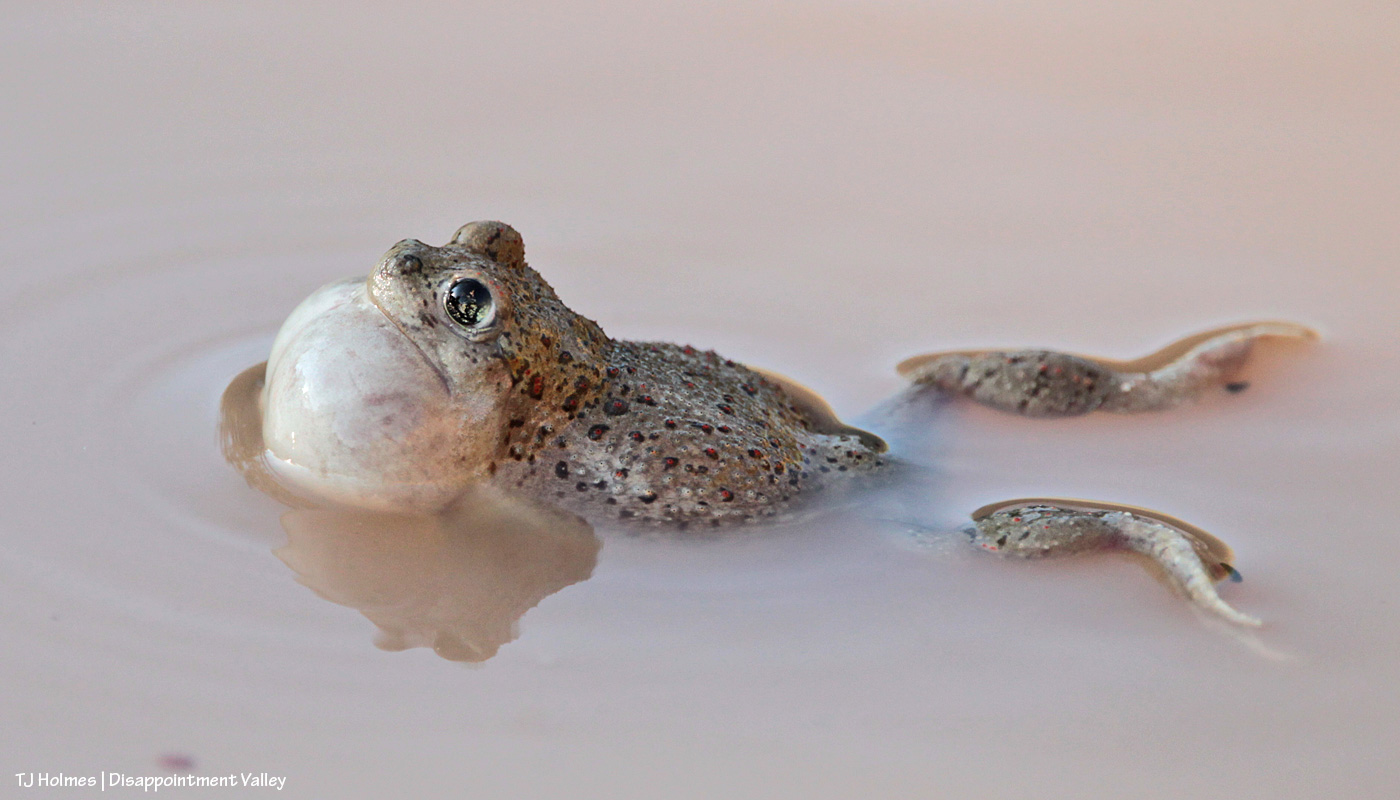
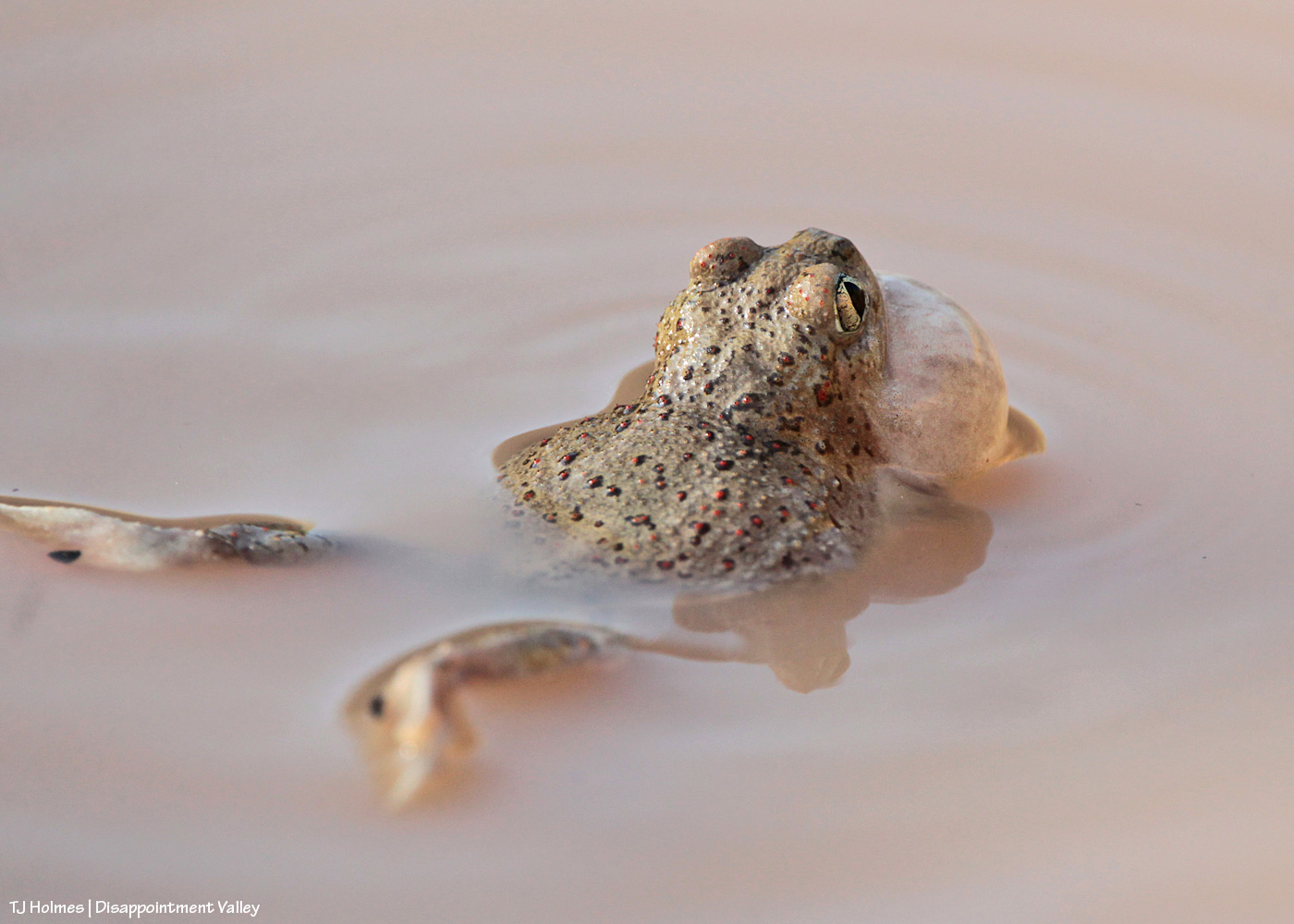
When you get only a bit more than half an inch in almost three months, then you get enough rain in two consecutive days to push that above an inch … THEN you get 1.66 inches of rain in four hours … the toads start thrumming their joy. Sure, sure, it’s mating season (dependent on water?!), but I’m pretty sure they’re happy to finally have some water.
*I’M* happy to have water, for the toads and the mustangs and all of the critters who depend on water in the desert.
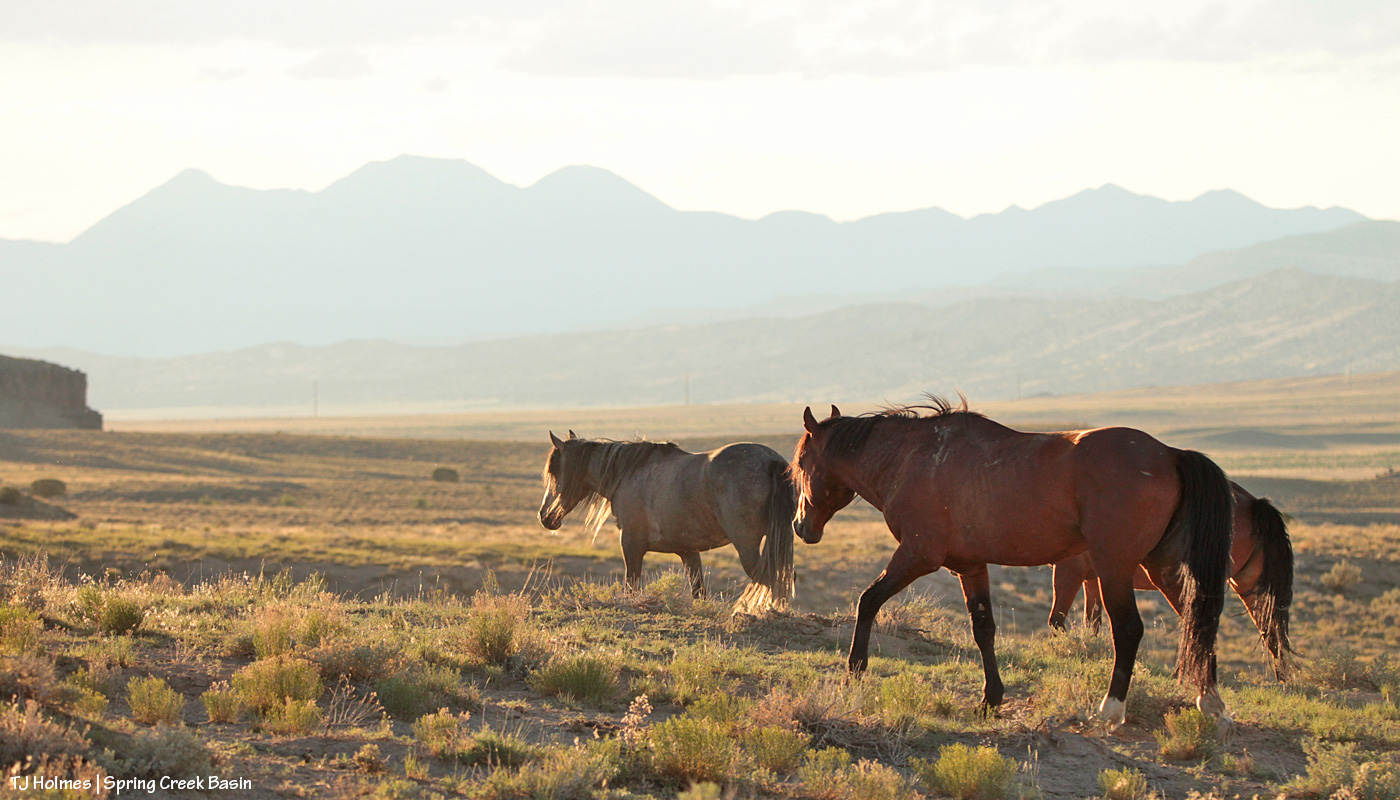
Tenaz and his young mares head out to graze after a session at one of the water catchments (the trough is full after last week’s rains if not the tank) in the day’s last glorious light (and not-so-welcome heat).
Distance and heat waves and a long lens make this image unfortunately soft, but I loved the hint of light on Skywalker and Flash as they greeted each other between bands (that’s Maiku in the distance at the top of the frame). Flash’s spots are fading by the day, it seems. The most visible splotches are mud!
Kestrel in the sprinkles last week. Her band was high in the north hills, and the perspective is looking back toward the basin’s west entrance, where rain is approaching across the southwestern ridges of Disappointment Valley. If you zoom in, you might be able to see the sprinkles that fell over us, but the *rain* didn’t make it.
We do have more rain chances this week, and as always, we’re crossing fingers and toes and dancing for the hope of it!
Readers of this blog know that I/we have enjoyed a particularly good partnership with our BLM folks for the last nearly decade, in huge part because of rangeland management specialist and Spring Creek Basin herd manager Mike Jensen.
Our PZP program was implemented during the 2011 roundup, before Mike returned to herd manager duties (he was herd manager here first in the early 2000s), but Mike has been an absolutely staunch supporter of the program. It was under Mike’s leadership that we were able to get bait trapping solidified as the capture method of choice (when the time comes), and because of Mike’s dedication to vegetation monitoring, for the 2020 herd management area plan update, we had the data necessary to allow the increase in AML (appropriate management level) from 35 to 65 adult horses to 50 to 80 adult horses. That, combined with the very successful PZP program, has meant an astounding 13 years to date since the last roundup and removal of any Spring Creek Basin mustangs.
Mike is the BLM partner every advocate wishes for and we have been so very fortunate to have.
Under Mike’s leadership, Spring Creek Basin Herd Management Area is a model that other BLM managers and advocates can aspire to. (That’s not arrogance; that’s pure gratitude.)
As I described in yesterday’s post, last week, Mike and Tres Rios Field Office Manager Derek Padilla came to Spring Creek Basin for the field trip with Colorado Wild Horse Working Group members. I take every opportunity offered to describe Mike’s work ethic, partnership and support of our mustangs to anyone who will listen, but this was the first opportunity for group members and our Colorado advocates to see him in action as he talked about the history of Spring Creek Basin as a herd management area and our accomplishments in both herd management and the projects we’ve completed for the benefit of the mustangs. Naturally, everyone wants a Mike clone for their areas. 🙂
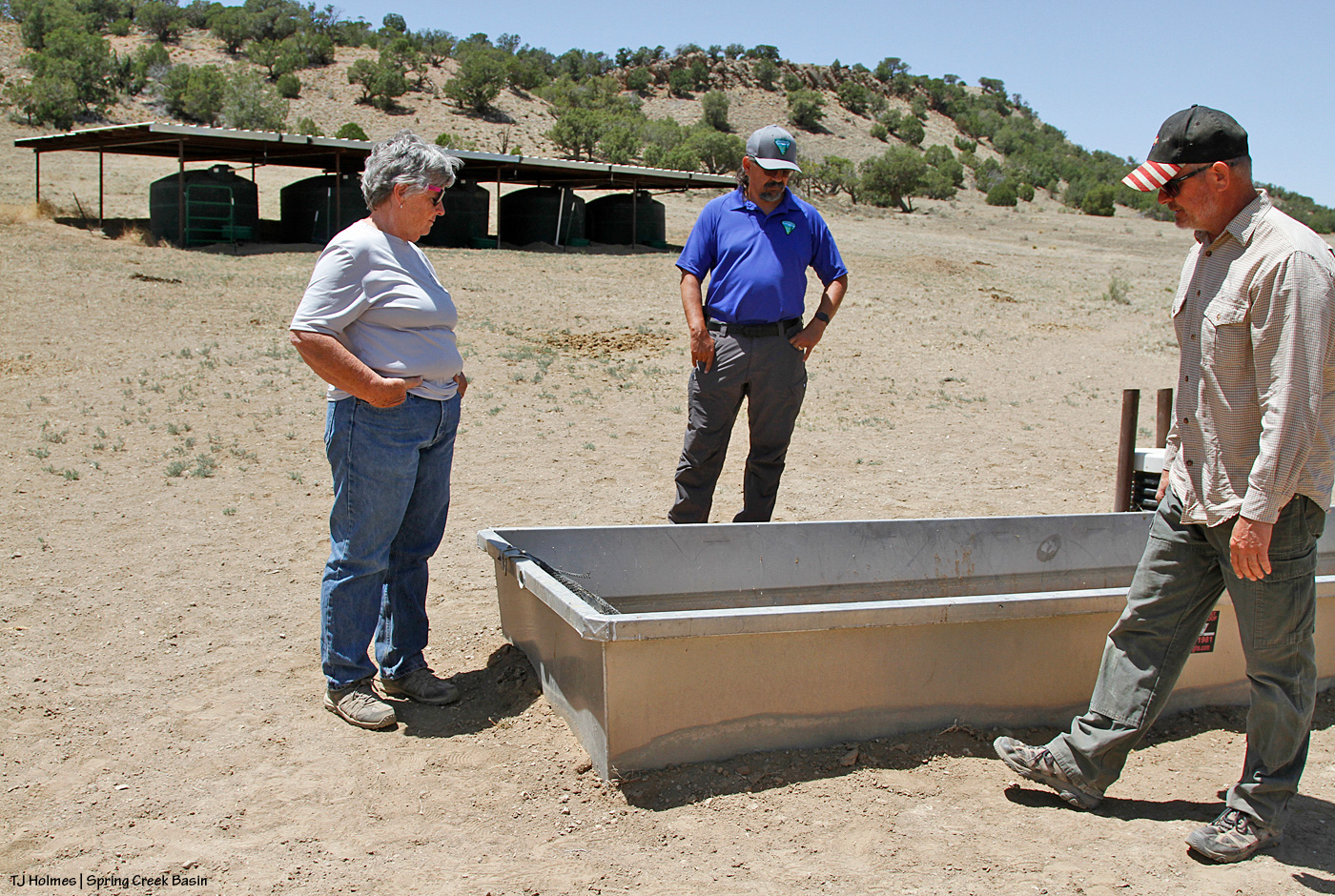
By the time we reached the day’s end goal and turnaround spot – the northwest-valley water catchment we built in 2022 – we were down to our local advocates and a Jeep-full of advocates from the other herds.
And because Mike retires Friday from a long (30 years) career with the Bureau of Land Management, we local advocates wanted to take advantage of the last opportunity we’d likely have Mike in Spring Creek Basin to mark the occasion, wish him well and give him a token of our appreciation.
Left to right: Mike Jensen, Frank Amthor, Tif Rodriguez, Pat Amthor and yours truly.
Thank you, Mike, for being such a champion for wild horse management here in Spring Creek Basin, for being a true partner, for being one of the people I respect most in this world. We wish you well in retirement! Don’t be a stranger. 🙂
Six vehicles. One ATV. Twenty-six bipedal humans. Most bands in Spring Creek Basin.
Crazily excellent weather (temps in the comfortable 80s, not blistering 90s or sizzling 100s). Perfect breeze. … NO GNATS (how that’s even possible, I don’t begin to know).
Earlier this week, I was joined in the basin by several members of the Colorado Wild Horse Working Group and associated people, including BLM herd manager Mike Jensen and Tres Rios Field Office Manager Derek Padilla, and (very) long-time Spring Creek Basin advocates and amazing friends Pat and Frank Amthor and Tif Rodriguez.
Some background: In May 2023, Colorado Gov. Jared Polis signed Senate Bill 23-275 into existence. In a nutshell, “in 2023 the Colorado legislature passed Senate Bill 23-275 to provide resources and support efforts to ensure the long-term sustainability of Colorado’s wild horse herds and rangelands.”
Among other things, the bill created this working group, made up of a wide variety of “stakeholders,” to share information and consolidate that knowledge into specific recommendations to legislators in the Colorado Legislature and to the governor. To that end, the working group started meeting last October, and members will offer a first (draft?) report of recommendations by Nov. 1, 2024. Among other folks from other groups and state and federal agencies, representatives of each of Colorado’s herd management areas and wild horse range are members of the group: Stella Trueblood with Sand Wash Advocate Team (Sand Wash Basin Herd Management Area); Cindy Wright with Wild Horse Warriors for Sand Wash Basin; Judy Cady with Friends of the Mustangs (Little Book Cliffs Wild Horse Range); Kathy Degonia with Piceance Mustangs (Piceance-East Douglas Herd Management Area); and yours truly for Spring Creek Basin (and you know that I truly took advantage of the geographic field trip to hammer the difference between Spring Creek and Spring Creek Basin!).
At our meeting in swanky Telluride the day before, our group members, excellently facilitated by Heather Bergman with Peak Facilitation Group, started to more narrowly define what we would like to present to legislators and the governor as recommendations to best support BLM’s management of wild horses on federal lands in Colorado … AS WELL AS populations of wild/feral/trespass horses in the San Luis Valley in south-central Colorado, the Southern Ute Reservation, the Ute Mountain Ute Reservation and Canyons of the Ancients National Monument, where horses from both the Ute Mountain Ute Reservation and the Navajo Nation are crossing state, tribal and monument lines drawn (by humans) in the desert rock and sand to roam without benefit of legal protections or management.
These include the creation of a state-funded and staffed wild horse program, possibly within the Colorado Department of Agriculture (through which the working group is currently led by Wayne East, ag/wildlife program manager with CDA); staff/monetary support for fertility-control efforts and the same for adoptions and adopter success with their mustangs; an advisory board for the aforementioned wild horse program within the state; and the potential creation of a state wild horse preserve.
To quote a BLM manager at a different event, the wild horse (and burro) situation is … prickly. It’s thorny. It’s controversial. It’s complicated. It is surrounded by passionate folks. Seemingly, there’s not a lot of (noticeable?) compromise. I think that at its base, our goal is collaboration supported by the compromises that are essential. Colorado probably leads the nation (or at least the 10 Western states that have herds of wild horses and burros) in support of our mustangs. Each of our herds has an associated advocacy group working for the long-term good, successful management of those herds and their ranges. That’s not to say there aren’t challenges or that more support wouldn’t be welcomed and isn’t essential. It’s a big issue, folks, and “black and white” doesn’t begin to describe the myriad of other issues involved and necessary to consider. I will say that this Colorado Wild Horse Working Group is the among the best I’ve been part of in working toward compromises and collaborations – and best management practices – for our mustangs. And I’ve been in this world for a very long time (nearly 17 years).
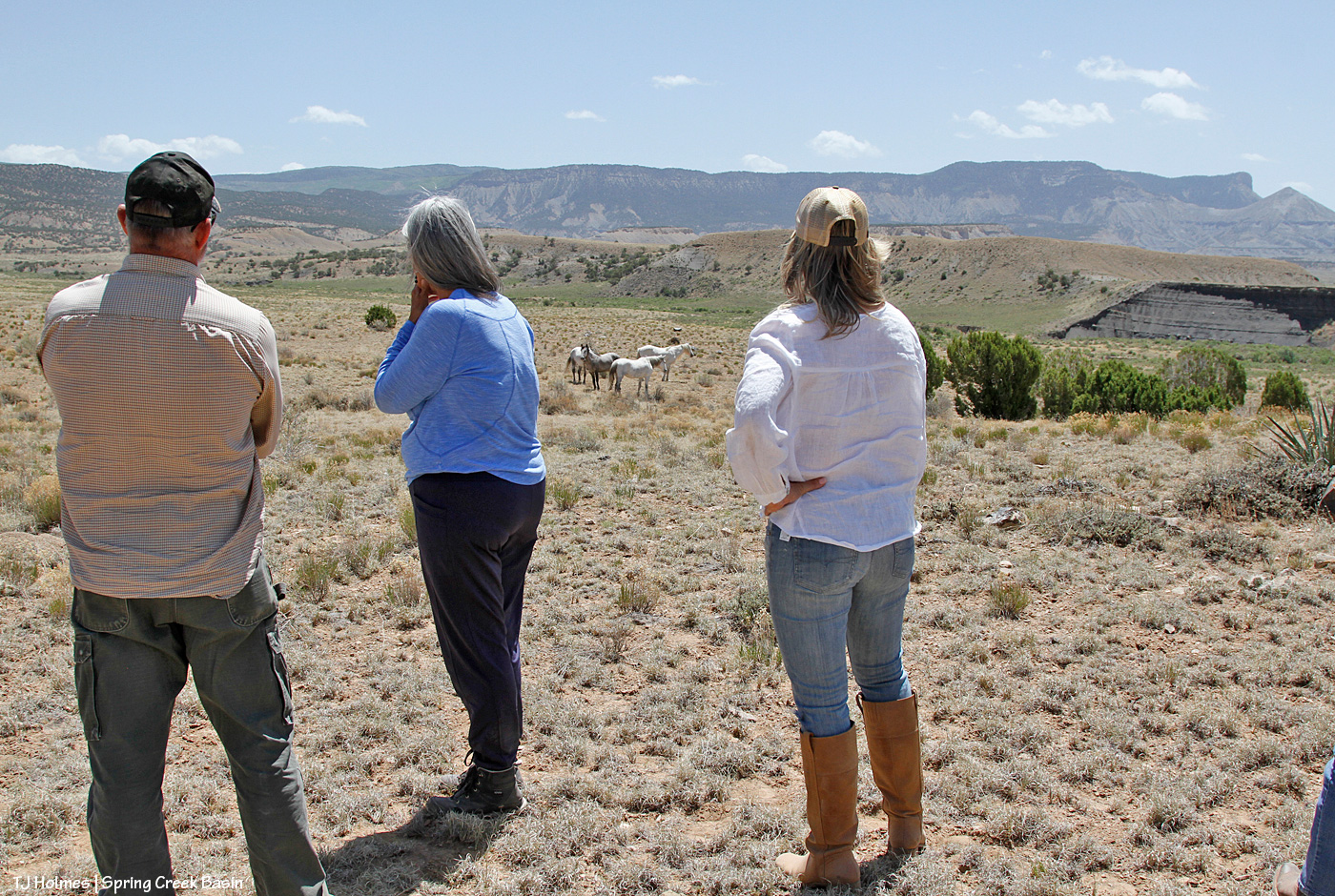
I was happy – and also nervous – to welcome folks to my sacred space, my happy place, my HEART place … to see the valley and basin I call home and the horses that are the loves of my life. Spring Creek Basin is so very dry right now, but Mother Nature cooled the air and brightened our vistas (red-flag warnings the previous three days in a row meant the dust level was high) and – amazingly – quelled the gnats (!). And the horses. … I can’t tell you how many people thought I was “communicating” with my mustangs to present the very best wild horse experience imaginable. 🙂
Those weren’t all the folks present, just those associated with the working group. At the end of the field trip, my advocate friends and I had a little something special for Mike Jensen, who retires at the end of this month after 30 years with the Bureau of Land Management. To say we are losing someone respected and essential is to do a grave injustice to the end of an era and his partnership and leadership. That’s for another post.
Thank you, everyone. I hope you enjoyed your visit with our mustangs in the very best place (if one of the driest?! (and I don’t mean to overlook or disparage other places in even worse drought than we’re in)) in the universe.
Pictured in the first image at the top of this post (with titles as accurate as I can remember or look up), left to right: Derek Padilla, Tres Rios Field Office manager; Lynae Rogers, on-range wild horse lead for BLM in Colorado (she also juggles a lot of off-range duties); Kathy Degonia, Piceance Mustangs; Tracy Scott, Steadfast Steeds; Sandra Solin, American Wild Horse Conservation; Judy Cady, Friends of the Mustangs; Stella Trueblood, Sand Wash Advocate Team; Tessa Archibald, Homes for Horses Coalition; Abe Medina, Colorado State Board of Land Commissioners; Will Benkelman, Peak Facilitation Group; Mike Jensen, BLM rangeland management specialist and Spring Creek Basin herd manager; Elise Lowe-Vaughn, Rewilding America Now; TJ Holmes, Spring Creek Basin darter and documenter; Wayne East, ag/wildlife programs manager, Colorado Department of Agriculture and leader of the working group; Maggie Baldwin, Colorado state veterinarian with CDA; Tim Brass, Colorado Department of Natural Resources; Lucy and Trish Menchaca, alternative livestock & special permits coordinator, CDA; Emily Blizzard, acting director (?), APHIS, U.S. Dept. of Agriculture.
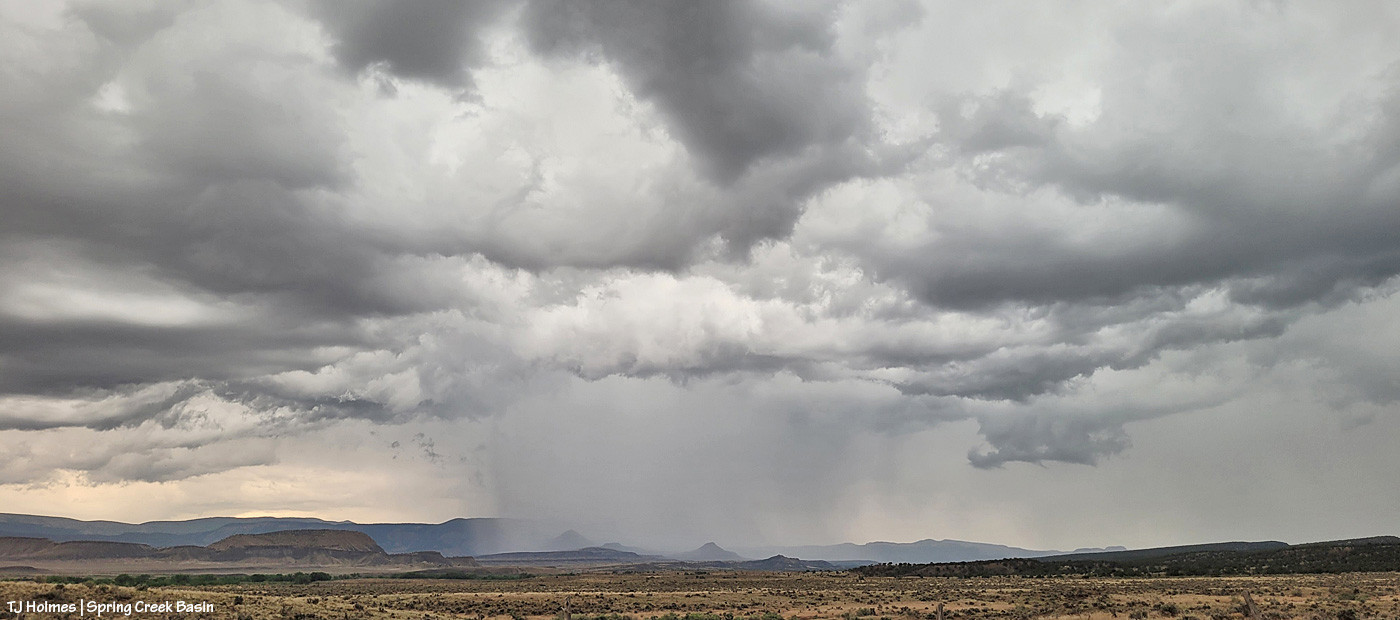
This targeted downpour over southeastern Spring Creek Basin and upper-ish Disappointment Valley was by no means the only rain we got in the last couple of days. And it probably wasn’t even the most dramatic. But it sure was cool. 🙂
Depending on the part of the valley, we got anywhere from half an inch to probably at least an inch of rain between Thursday afternoon and Friday evening. Every drop is so very welcome.
I wish I had a pic of rain … because we’re getting it (as of the drafting and scheduling of this post Thursday night). Finally. 🙂
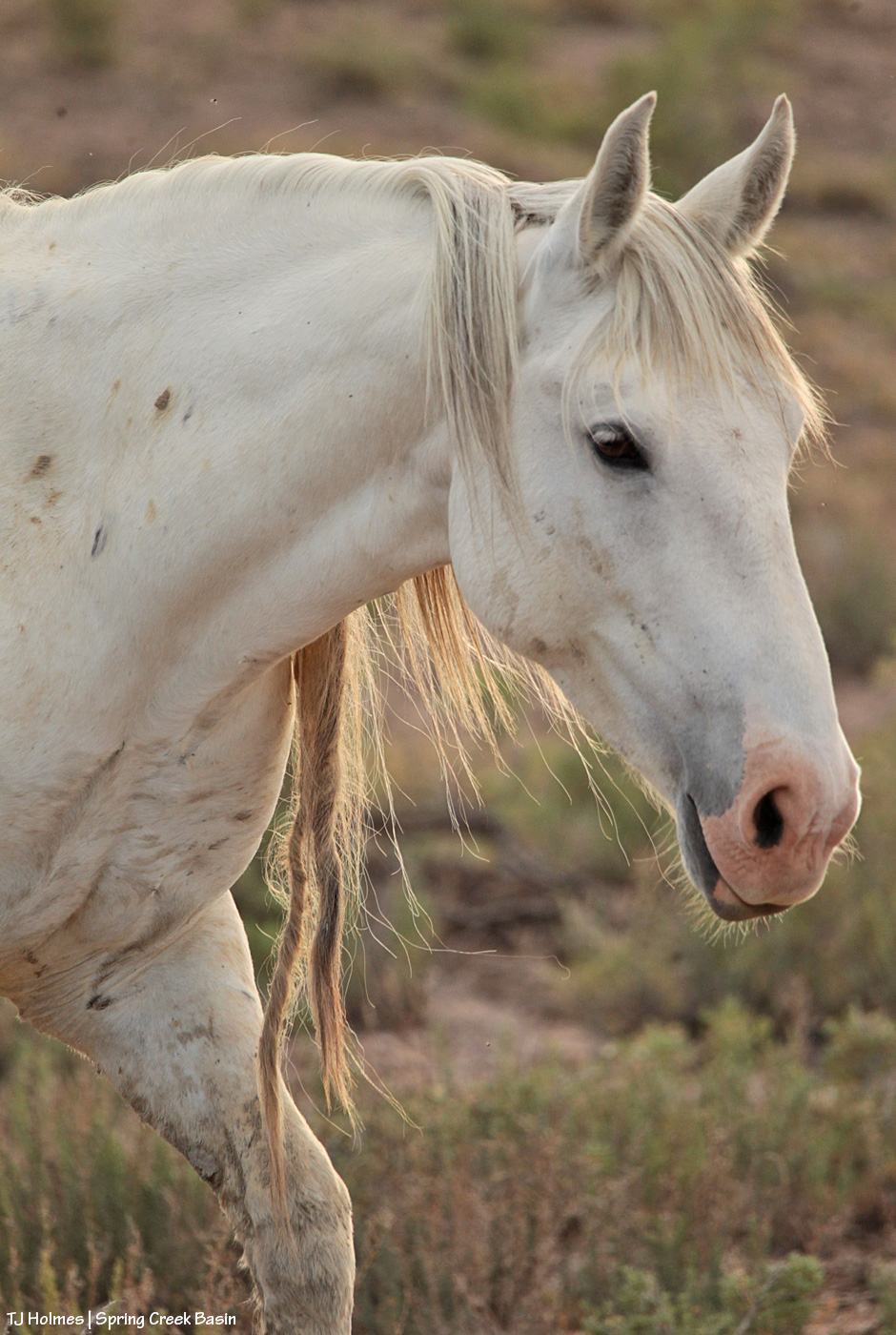
Meanwhile, enjoy a pic of Chipeta moseying along with her band on a windy-dry day above Spring Creek canyon with Utah’s La Sal Mountains dim in the background.









 Spring Creek Basin Mustangs