Mamas and babes

13 09 2010

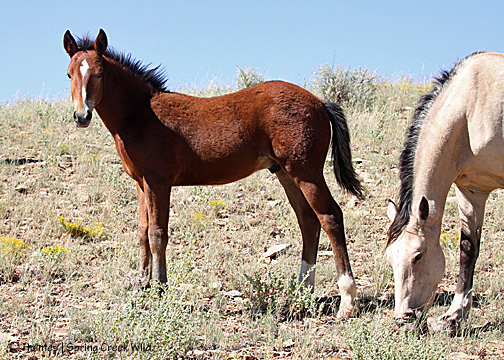
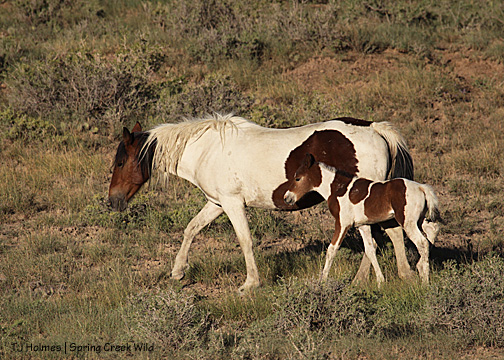
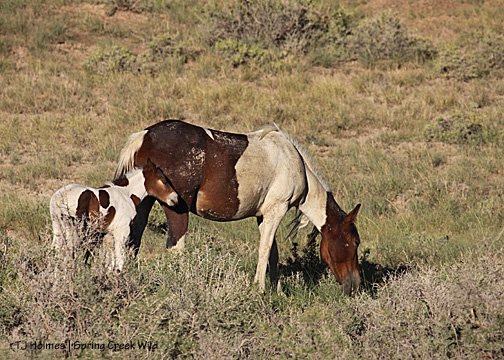
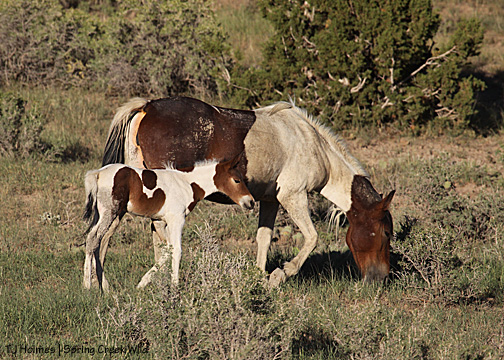
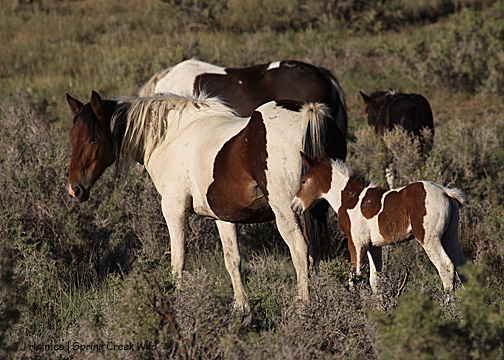
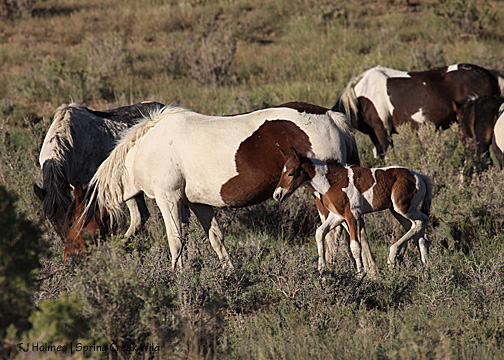
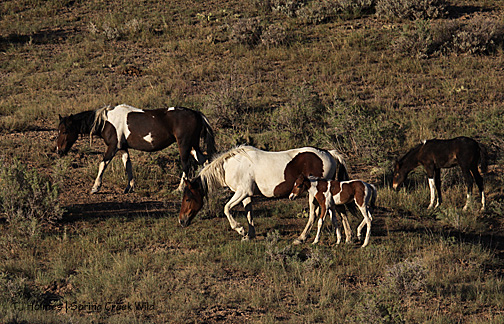
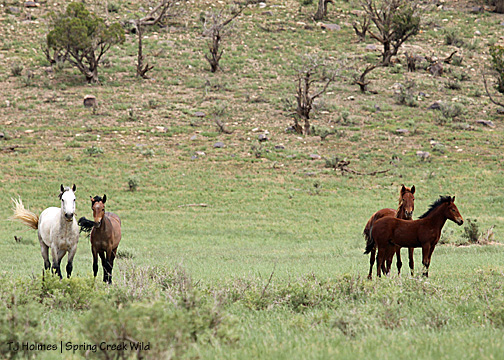
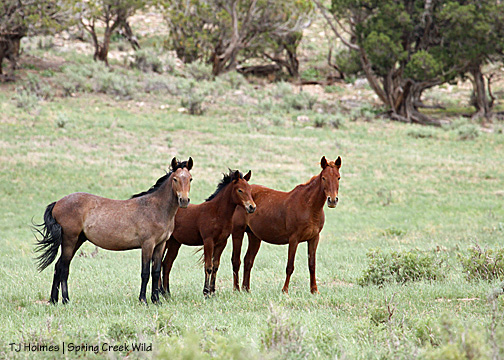
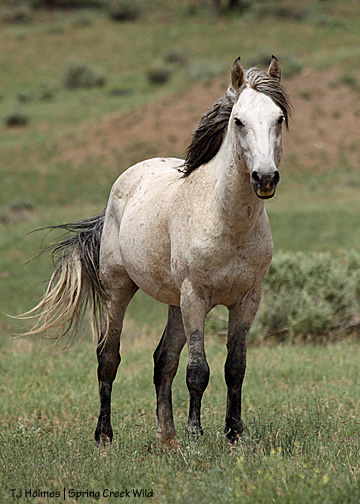
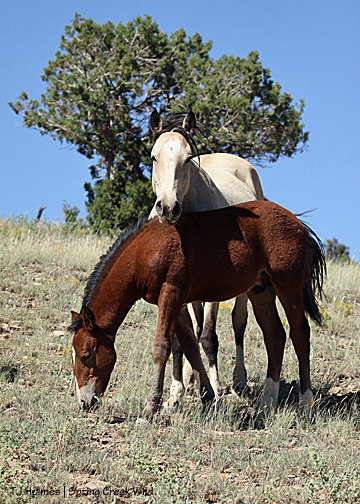
While we were watching the boys, it was fun to also watch the mamas and their babies – the little baby as well as the big baby!

Luna and her baby boy, Gideon

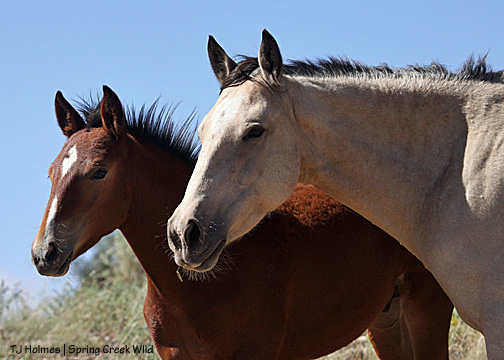
Alpha was giving Storm a motherly scratch on the withers while they – and Gideon – watched the goings-on among some of the boys.

Alpha and her (big) baby, Storm

Luna and Gideon and Alpha

Lovely and handsome!

Lovely Alpha

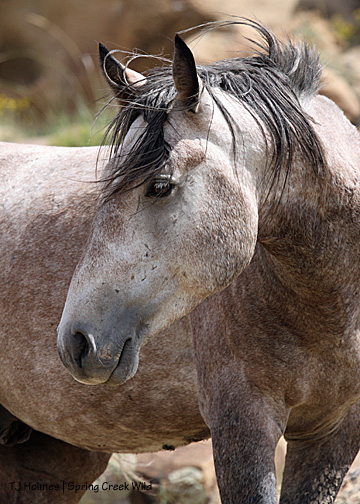
More handsome and lovely!

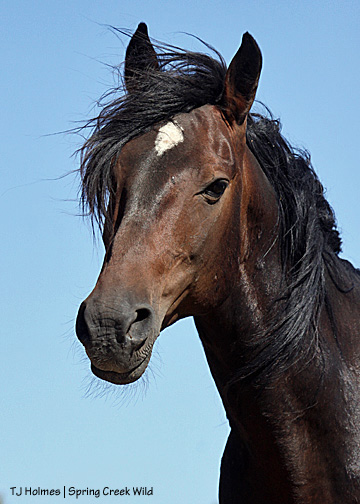
Growing up handsome!

Luna and her little man, Gideon.


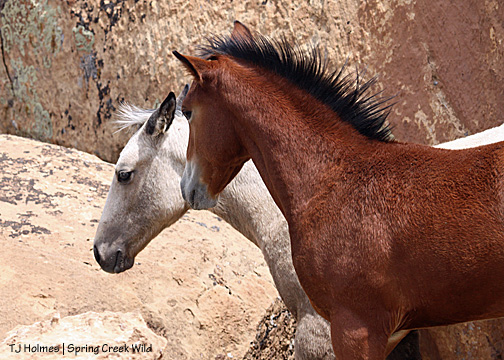
A few cute boys

11 09 2010

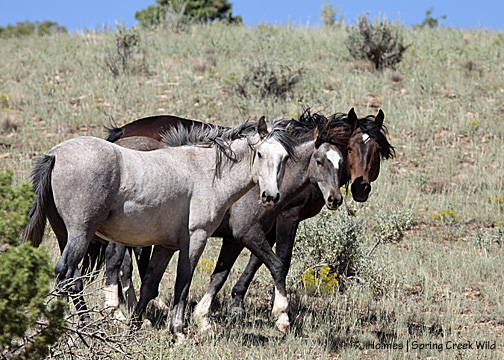
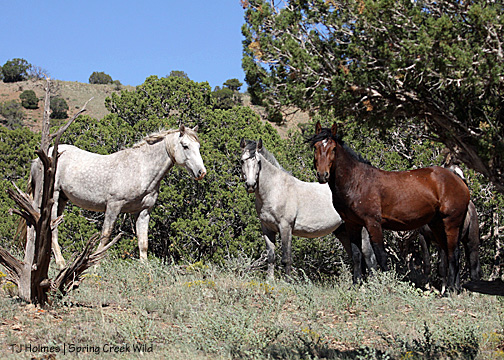
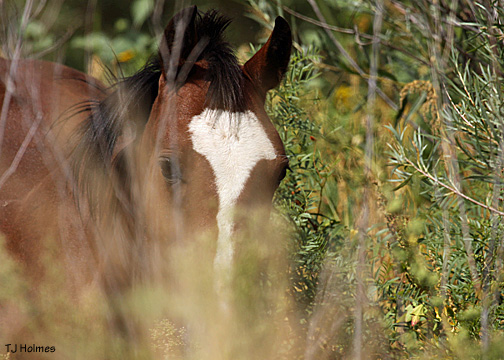
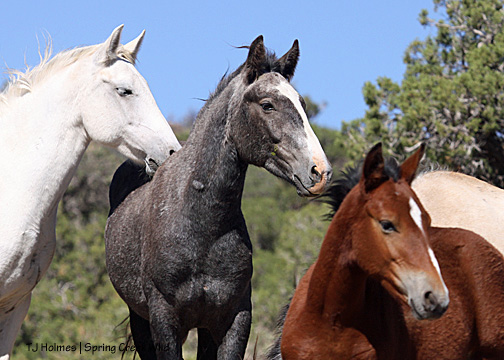
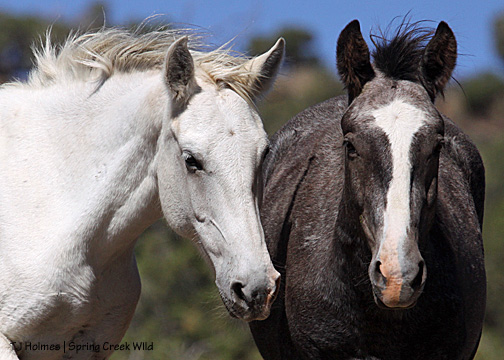
Look who we found, speaking of good-looking boys! I visited the basin with friend and artist Karen Keene Day, and what a wonderful visit it was. When we walked up to visit Steeldust’s band (Comanche’s have split away again), we had the great luck of finding youngsters Twister and Cuatro with them, as well as Duke!

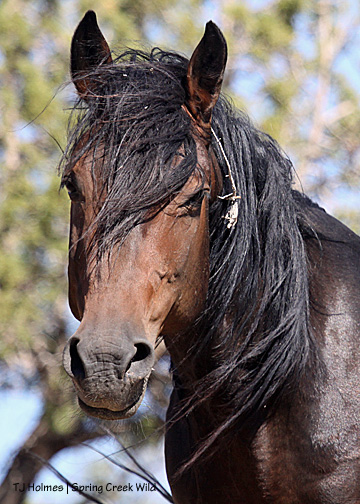
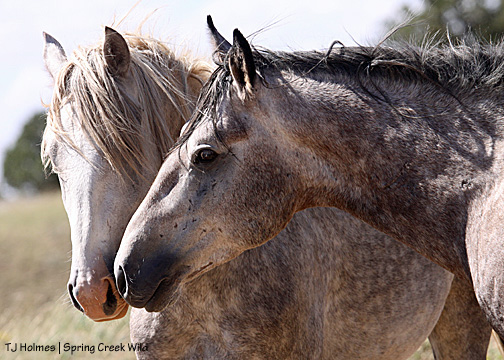
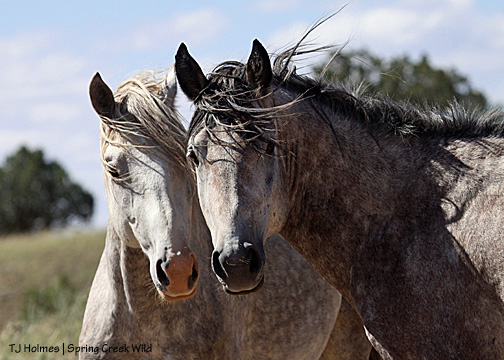
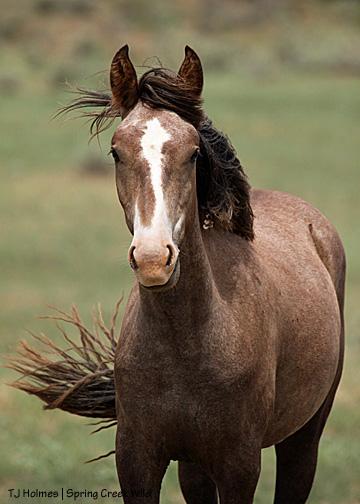
Cuatro is the son of Grey/Traveler or Twister. Which one? I don’t know, though earlier, I thought I saw a resemblance to Twister, adored yearmate of mama Two Boots. While watching Twister and Cuatro, I saw a striking resemblance, all right, but it wasn’t between Cuatro and Twister …

Do you see it? I wasn’t trying to see it, wasn’t even thinking about it.

In those big eyes, the broad, intelligent forehead, the tapering muzzle? The color doesn’t hurt.

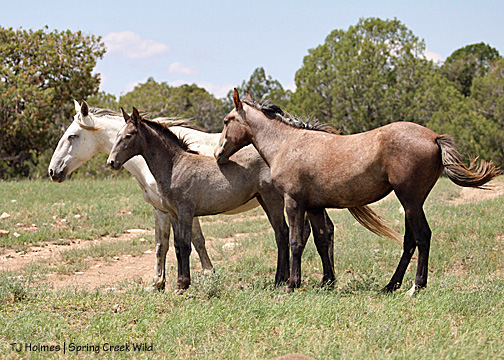
Twister, Cuatro and Duke … the younger with the elder …

Sundance, Twister and Aspen

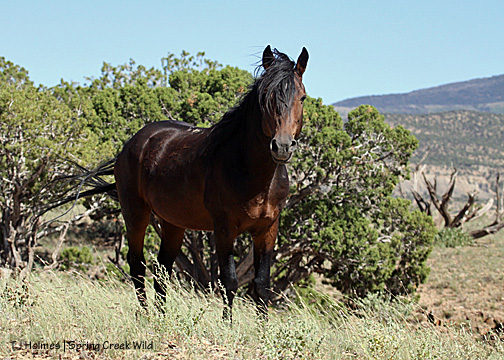
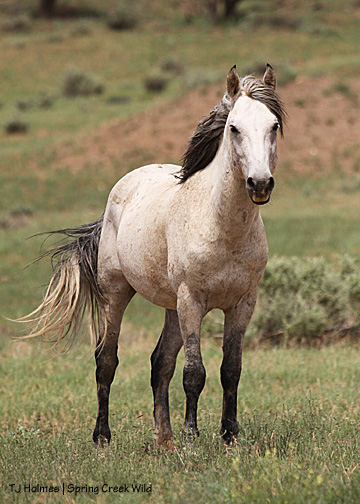
Handsome Duke

I’d rather see more of Twister – or less – but this was too nice of Duke to pass up. Such a lovely boy.

Mouse and Sundance …

A few seconds later. 🙂

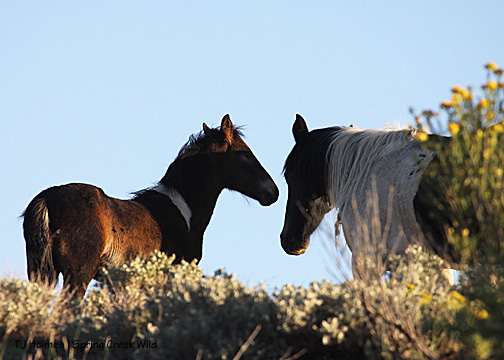
Sundance in the foreground, Mouse at right, Aspen at back left. Three handsome boys against the blue wild sky.

Cuatro and Twister – son and sire … or brothers?

So have you wracked your brains as to resemblance?

Is it there? Do you see it? Or is it just me, something I hope to see?

I’ll leave you with one more of handsome boys, forever cast on a hillside of late-summer green light and golden grasses.


Whisper, and they will come

11 09 2010

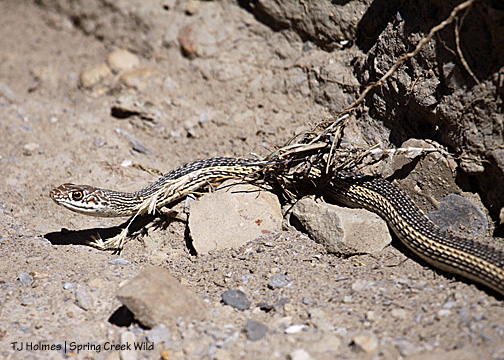
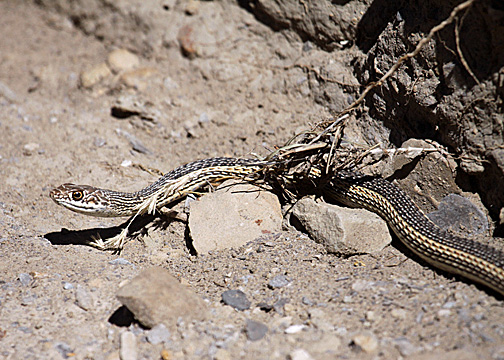
Just call me the snake whisperer …


This guy/gal was in a shallow little runoff ditch below the road – shot through the driver’s side window just so I didn’t scare him/her away. S/he held this pose as long as we were stopped (at least). Bull snake? Not very thick but pretty long – 2.5-3 feet? Very cool. Love its snakely little smile.

A couple more (not of the snake):

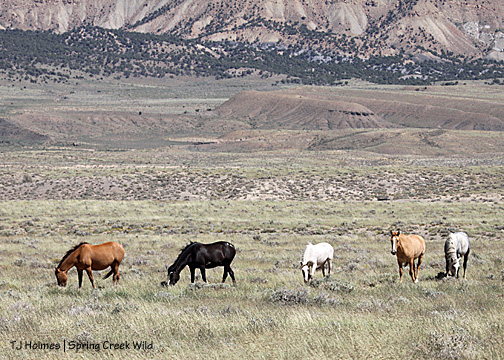
Kreacher’s band: Mona, Raven, Corona, Kootenai and Kreacher

Almost all in a row – Corona was lagging between mama Raven and Kootenai.


Baby girl

9 09 2010

Who is this gorgeous little filly??

She’s curious and has a very new baby’s joy in absolutely everything!

She’s Chipeta’s girl, of course!

How cute is she!?

Proud mama

Look at those gorgeous long legs!

Chipeta and baby with Kiowa and baby Maiku

Welcome to your beautiful world, baby girl!


Baby love

6 09 2010

There’s a theme … really …

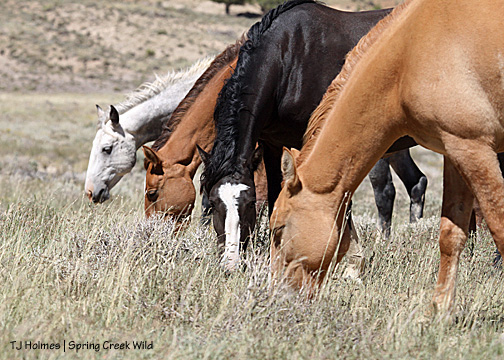
The horses were just going crazy with bugs or flies or … I think it’s the wetter-than-usual conditions (although it was fairly windy and dry right at the moment) because usually we’re past the bugs by now – and they weren’t going for me at all. Alpha was seeking a little protection under Storm’s neck and got the double benefit of Luna’s tail; Gideon in the foreground. He’s 2 … but still her baby.

I am completely in love with these two – yep, with Comanche, “back” with “Steeldust’s band.” Love how they’re “sharing” an eye in this image.

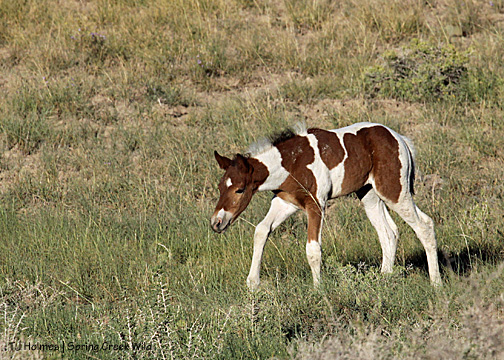
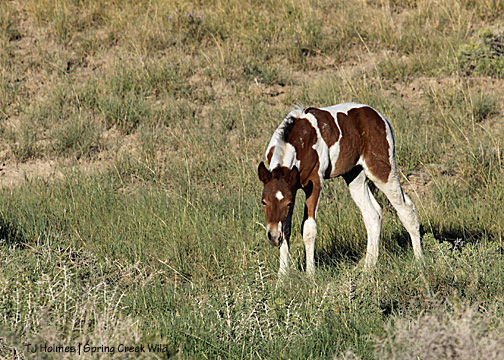
Baby ‘Nona is a knockout, and I’m not the only one who thinks so …

She loves me!

Err … she loves me not? Or: Gideon gets his first lesson in the mystery of the opposite sex.

She loves me – I think?!

Oh, that little ‘Nona … 😉

OK, not a baby, but I can’t resist that sweet baby-face – bachelor Mouse.

WARNING FOR SNAKE-O-PHOBES!

Depending on how you scroll and the size of your monitor, that warning may not help …

Are you ready?

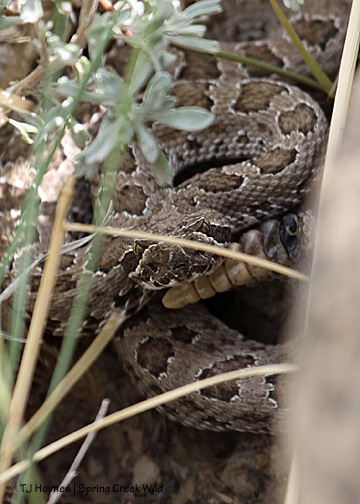
You’re wondering how this could POSSIBLY fit the theme – I know you are. When I first saw “this” snake, it was little, and I identified by the very teeny tiny tip of its testy tail that it was a rattler. Look at the rattle in this picture. Not very teeny, eh? The out-of-focus blur at right is the rock the teeny tail disappeared behind as I came walking up. Disclaimer: I’m not nearly as close as this photo – cropped after being shot at 400 mm – would have you believe. Impact is everything, after all. Because of the grass and distance, I couldn’t really see much detail through the viewfinder, but I knew enough that I didn’t want to hang around. Theory: This is mama snake, after baby snake of the teensy rattle crawled back to the “home hole” for safety.

Baby love, indeed. 🙂


Some spots and not

4 09 2010

Some pix from my last trip to the basin:

Little Maiku, growing fast, loves the first rays of the sun.

And he loves big sister Reya!

Big brother Milagro struts his stuff on top of the world.

Corazon, left, and Mesa have a friendly chat among friends.

Baby Maiku with his mama, Kiowa.

The light was just gorgeous, not a cloud in the sky to diminish its golden waves. Still green but dry. Autumn almost here. Beautiful.


‘We strongly urge …’

31 08 2010

“We strongly urge you to refrain from any further action until a clear plan is in place to sustainably manage and protect our wild herds. Only then can we move forward with a more informed, open and deliberate process, based on input from all who are concerned with the health, well being, and conservation of this animal which embodies the spirit of our American West.”

Is it enough?

Here’s a link to the letter written in 2008 and signed by Rep. Nick Rahall, D-W.Va., chairman of the Committee on Natural Resources, and Rep. Raul Grijalva, D-Ariz., chairman of the Subcommittee on National Parks, Forests, and Public Lands: http://wildhorsepreservation.com/pdf/EuthanasiaBLM_letter.pdf

And here is the link to the July 30, 2010, letter, with the congressmen’s call to other members to sign on (thus far, it has been signed by 54 members of Congress): http://www.wildhorsepreservation.org/news/?p=1456

July 30, 2010

The Honorable Kenneth L. Salazar
Secretary of the Interior
U.S. Department of the Interior
1849 C Street NW, Washington, DC 20240

Dear Secretary Salazar,
Recent media accounts have documented still more deaths of wild horses during Bureau of Land Management (BLM) roundups. Just this month, 12 horses, including three foals, died during the Tuscarora Complex roundup in northeastern Nevada as a result of deeply flawed methods. This tragedy was only the most recent in a string of reports of wild horses dying during BLMroundups this year.

We are concerned by the inability of your agency to acknowledge these disturbing outcomes, change what seems to be deeply flawed policy, and better manage the gathers so as to prevent the unnecessary suffering and death of these federally protected animals.

Specifically, on Saturday, July 10, with temperatures hovering near 100 degrees, the BLM, in a time-span of two and half hours, captured and corralled more than 228 wild horses after running them more than 8 miles. During this time, public observation of BLM activities was prohibited. This ill-advised plan resulted in the deaths of 12 protected American Mustangs, most due to water intoxication; three of the dead were foals less than six months old. By the time the roundup was halted, 17 horses had died.

While we applaud the speed with which you temporarily halted the Tuscarora roundup after these deaths, the roundup has now resumed. Apparently, BLM continues to bar public observers, despite a court order affirming the right to “reasonable access.” So far, 410 more horses have been gathered and, according to BLM’s own account, the death toll has risen to 21.

The BLM is repeating the mistakes made during the deadly round up in the Calico Mountain Complex last winter. That roundup resulted in the deaths of over 105 horses, along with the stress-induced late term abortions of at least 40 mares.

Given this pattern, and the continued threat of death and suffering to these animals, we request that the Tuscarora Complex roundup be suspended, along with any pending gathers, until the agency demonstrates that it has addressed the failings of the current program and can ensure the safety and well-being of the animals you are charged with protecting.

Specifically, the BLM must account for temperature extremes and the impacts of stampeding young, elderly or injured animals across long distances when planning roundups. The BLM needs to ensure transparency by allowing members of the public to observe agency activities. Further, we remain concerned that roundups are conducted at great expense to the taxpayer. As we have pointed out in the past, BLM’s aggressive use of roundups has resulted in unsustainable increases in the number of horses in holding facilities (now at 38,000) and continues to undermine the BLM’s overall budget. Unfortunately, the frequency of roundups has only increased under this administration.

To address these and other flaws, we recommend an independent analysis of the National Wild Horse and Burro program, conducted by the National Academy of Sciences. This analysis will provide a clear determination of the most accurate, science-based methodologies to estimate wild horse and burro populations, provide an assessment of Appropriate Management Levels based on the goal of maintaining sustainable herds and provide an assessment of practical, effective, nonlethal and publicly acceptable management alternatives to current BLM policies.

We strongly urge you to refrain from any further action until a clear plan is in place to sustainably manage and protect our wild herds. Only then can we move forward with a more informed, open and deliberate process, based on input from all who are concerned with the health, well being, and conservation of this animal which embodies the spirit of our American West.
Sincerely,
Member


‘Deeply flawed policy’

31 08 2010

http://www.seattlepi.com/local/6420ap_nv_wild_horses_study.html

BLM seeks independent review of wild horse program

By MARTIN GRIFFITH
ASSOCIATED PRESS WRITER

RENO, Nev. — At the urging of a bipartisan group of House members, the U.S. Bureau of Land Management is asking for an independent review of its wild horse and burro program by the National Academy of Sciences.

BLM officials said the two-year, $1.5 million study would determine whether the agency is using the best science available in managing wild horses and burros on Western rangelands. BLM managers estimate that 38,000 mustangs and burros roam 10 Western states, and half are in Nevada.

The study tentatively set to begin Jan. 1 would focus on population estimation methods, annual herd growth rates and population control measures, agency officials said in a statement released Friday.

The announcement came a month after 54 House members signed onto a letter that Rep. Nick Rahall, D-W.Va., chairman of the House Natural Resources Committee, sent to Interior Secretary Ken Salazar pleading with him to halt a series of wild horse roundups under way in the West.

The letter recommended that the National Academy of Sciences be assigned to review the BLM’s plan to cull about 12,000 of 38,000 mustangs and burros from the range and either send them to long-term holding facilities or put them up for adoption.

Nevada Democratic Reps. Shelley Berkley and Dina Titus were among those who signed the letter that maintains the gathers are based on a “deeply flawed policy.”

“Nevada’s wild horses and burros are a treasured part of our Western heritage, but we continue to struggle with the management of these herds on public lands,” Berkley said Saturday. “My hope is that this study will provide a new blueprint for addressing the many challenges we face in protecting wild horse and burro populations in Nevada and other Western states.”

Titus said she was pleased the BLM acted quickly in response to House members’ request for the study.

“In the meantime, I again urge the BLM to halt roundups until the failings of the current program are addressed,” she said Saturday.

Activists said they support the independent review but only if it’s coupled with an immediate moratorium on all BLM roundups of mustangs from the range. There will be too few genetically viable herds left to study at the present rate of roundups, they said.

Activists said they support the independent review but only if it’s coupled with an immediate moratorium on all BLM roundups of mustangs from the range. There will be too few genetically viable herds left to study at the present rate of roundups, they said.

“I expect the NAS report to be enlightening regarding the lack of science in BLM’s decisions aimed at ridding the West of our wild horse and burro heritage,” said Ginger Kathrens, director of the horse advocacy group Cloud Foundation based in Colorado. “A moratorium right now is essential so that NAS will have a few viable herds left to study.”

The National Academy of Sciences is a nonprofit source of scientific advice that enlists the nation’s top experts to address a wide range of problems.

BLM’s news release:

http://www.blm.gov/wo/st/en/info/newsroom/2010/august/NR_8_27_2010.html

BLM Proposes National Academy of Sciences Study

The Bureau of Land Management has asked the National Academy of Sciences/National Research Council (NAS/NRC) to make an independent technical review of the Wild Horse and Burro Program to ensure that the BLM is using the best science available in managing wild horses and burros on Western public rangelands.

The NAS/NRC has previously reviewed the BLM’s management of the Wild Horse and Burro Program and produced three separate reports; however, these reports are now 20 to 30 years old.  In those reports, the NAS/NRC summarized what was known about wild horses and burros and made recommendations to the BLM for wild horse and burro management, population estimation, and further research.

In the proposed effort, many of the topics discussed in the earlier reports would be included, such as population estimation methods, annual herd growth rates, population control measures, and whether populations will self-limit, as well as other subjects needing new research.

To sort through the many diverse and often conflicting opinions about how wild horses and burros should be managed, the BLM must continue to base its decisions on the best available science and involve the public in its decisionmaking process.  Commissioning the NAS/NRC to review their three earlier reports and the current available information and research about wild horses and burros is a first step.  A second step is to ask the NAS/NRC to make recommendations about future wild horse and burro management and needed research.  A third step is to take the NAS/NRC findings and recommendations and make them available to the public in a variety of ways, perhaps to focus groups or science forums.

Both the BLM and NAS/NRC will negotiate the terms and outline for the research study.  The proposed study would tentatively begin about January 1, 2011, and would cost the BLM approximately $1.5 million and take about two years to complete.

Congress created the NAS/NRC to be a non-Federal, not-for-profit source of scientific advice.  The NAS/NRC enlists the nation’s foremost scientists, engineers, health professionals, and other experts to address the scientific and technical aspects of society’s most pressing problems.  Each year, thousands of these experts are selected to serve, without pay, on hundreds of study committees.
The BLM manages more land – more than 245 million acres – than any other Federal agency. This land, known as the National System of Public Lands, is primarily located in 12 Western states, including Alaska. The Bureau, with a budget of about $1 billion, also administers 700 million acres of sub-surface mineral estate throughout the nation. The BLM’s multiple-use mission is to sustain the health and productivity of the public lands for the use and enjoyment of present and future generations. The Bureau accomplishes this by managing such activities as outdoor recreation, livestock grazing, mineral development, and energy production, and by conserving natural, historical, cultural, and other resources on public lands.

–>The Bureau of Land Management has asked the National Academy of Sciences/National Research Council (NAS/NRC) to make an independent technical review of the Wild Horse and Burro Program to ensure that the BLM is using the best science available in managing wild horses and burros on Western public rangelands.

The NAS/NRC has previously reviewed the BLM’s management of the Wild Horse and Burro Program and produced three separate reports; however, these reports are now 20 to 30 years old.  In those reports, the NAS/NRC summarized what was known about wild horses and burros and made recommendations to the BLM for wild horse and burro management, population estimation, and further research.

In the proposed effort, many of the topics discussed in the earlier reports would be included, such as population estimation methods, annual herd growth rates, population control measures, and whether populations will self-limit, as well as other subjects needing new research.

To sort through the many diverse and often conflicting opinions about how wild horses and burros should be managed, the BLM must continue to base its decisions on the best available science and involve the public in its decisionmaking process.  Commissioning the NAS/NRC to review their three earlier reports and the current available information and research about wild horses and burros is a first step.  A second step is to ask the NAS/NRC to make recommendations about future wild horse and burro management and needed research.  A third step is to take the NAS/NRC findings and recommendations and make them available to the public in a variety of ways, perhaps to focus groups or science forums.

Both the BLM and NAS/NRC will negotiate the terms and outline for the research study.  The proposed study would tentatively begin about January 1, 2011, and would cost the BLM approximately $1.5 million and take about two years to complete.

Congress created the NAS/NRC to be a non-Federal, not-for-profit source of scientific advice.  The NAS/NRC enlists the nation’s foremost scientists, engineers, health professionals, and other experts to address the scientific and technical aspects of society’s most pressing problems.  Each year, thousands of these experts are selected to serve, without pay, on hundreds of study committees.

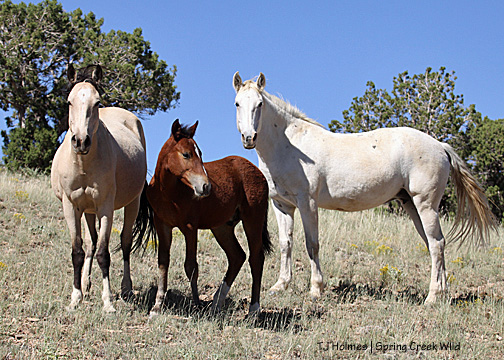

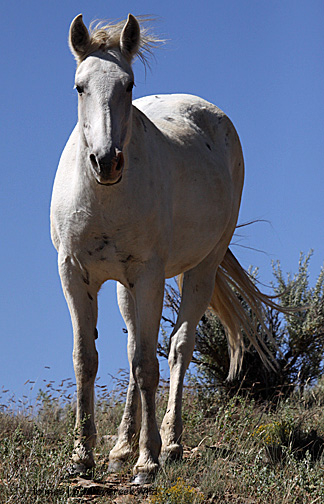
In the jungle

23 08 2010

Guess where I am. 🙂

OK, where I was. It was a too-short visit, and I know you don’t usually (ever) associate mustangs with the deepest, densest jungles. And yet, today, there I was.

The mister

The mister’s mother

The mister’s son

The mister’s other son (he liked to play peek-a-boo)

The mister’s (other) mare

Cutie!

And playful, too!

Where on Earth am I?

Hint:

These sweet babies also call this range home.

Too-too short, the visit; well worth the visit. Many thanks to my wonderful friend who shared the visit. 🙂

Update note: My wonderful friend is, of course, Matt Dillon, director of the Pryor Mountain Wild Mustang Center in Lovell, Wyo. He keeps the Pryor Wild blog – was my inspiration in starting this blog – and knows the Pryor Mountain horses better than anyone (just ask him about kinship!). We also saw Blizzard’s band (one of my favorites, and I had a wonderful visit with them last fall) from a great distance (if you take a trip with Matt, you’ll be amazed at his eagle eyes!), as well as the bighorn sheep family (two ewes, mothers of the babes in the photo above, and a yearling). I wish I’d had longer to visit!


Green and grey

15 08 2010

And sorrel and bay and turning-grey.

Grey/Traveler’s band and Seven’s band were grazing/napping companionably close to each other when I saw them and walked out for a visit. My “goal” was Grey/Traveler’s band, and my path took me first toward Seven’s. Always a thrill to visit with these horses, as shy and wary as they are.

Daddy and Ze and Spring and mama. Spring had just nursed, and Roja had just turned to watch my angled approach – Grey/Traveler’s band was to the left.

Interestingly, I had nearly crossed their viewpoint on my way to the other band when Roja decided that as I was going away, it was now time for her to lead the way away as well. I think I’m growing on her. 😉 Here, Seven and Ze are walking their long-strided walks to catch up to where she and Spring wait, just a bit to the right.

Every so often I get glimpses of horses that reveal their resemblance to other horses. Roja here – except her color, which she gave her daughter – is the spitting image of Molly. And look what a big, strapping boy Ze is. Good forage and less competition these last couple of years.

Hold this image of Seven in your minds … wait till you see Grey/Traveler.

They’re standing below the level of the foreground-ground, but I love the vision of them seeming to stand in grass up to their knees.

Now …

Tell me Seven is not related to Grey/Traveler.
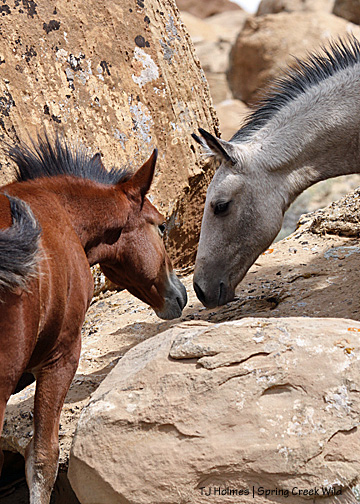
Almost certainly his sire, don’t you think? Seven is chunkier. 🙂

Daughter Terra

Daughter Gemma with mama Houdini

Grey’s girls: Terra, Gemma and Houdini

I adore this girl!

Napping at the edge of the road … Terra loves her baby sister.

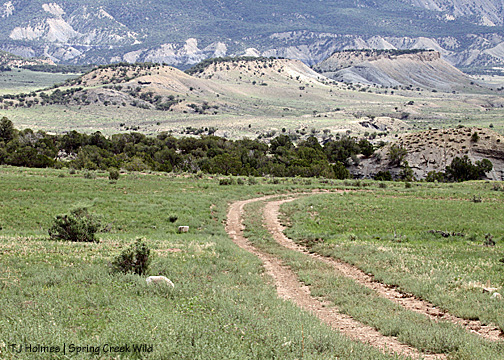
Road to paradise: Lizard Mesa in the background

Three grey girls

Grey/Traveler with his girls – he does throw beautiful babies, doesn’t he?

With all his girls …

Terra sees a visitor, the one whose approach earlier caused Houdini to head toward the road before she decided to go back to grazing in the meadow. But this time, he came all the way down, and that was the end of my visit with Grey’s family and the beginning of a wonderful sighting of …

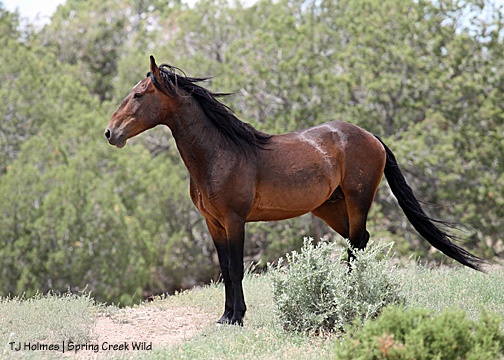
Duke!

Doesn’t he just shine with vim and vigor??

Houdini was long gone by now, and he’s stopped to watch. Looks almost wistful, doesn’t he? His trend has been to seek company … then shun it again … then seek it … for reasons known only to him.

Loved-loved-loved seeing him … bittersweet to see him alone again. He was with Twister and Cinch the last time I saw him, as they were kind of hanging out with Hollywood’s band. Those youngsters – Twister and Cuatro now – could learn a lot from this elder statesman.

When I headed back toward the Jeep, he followed me at a distance … but then I lost him in the rolling folds, and I didn’t see him again this trip. Always happy to see my boy Duke. 🙂