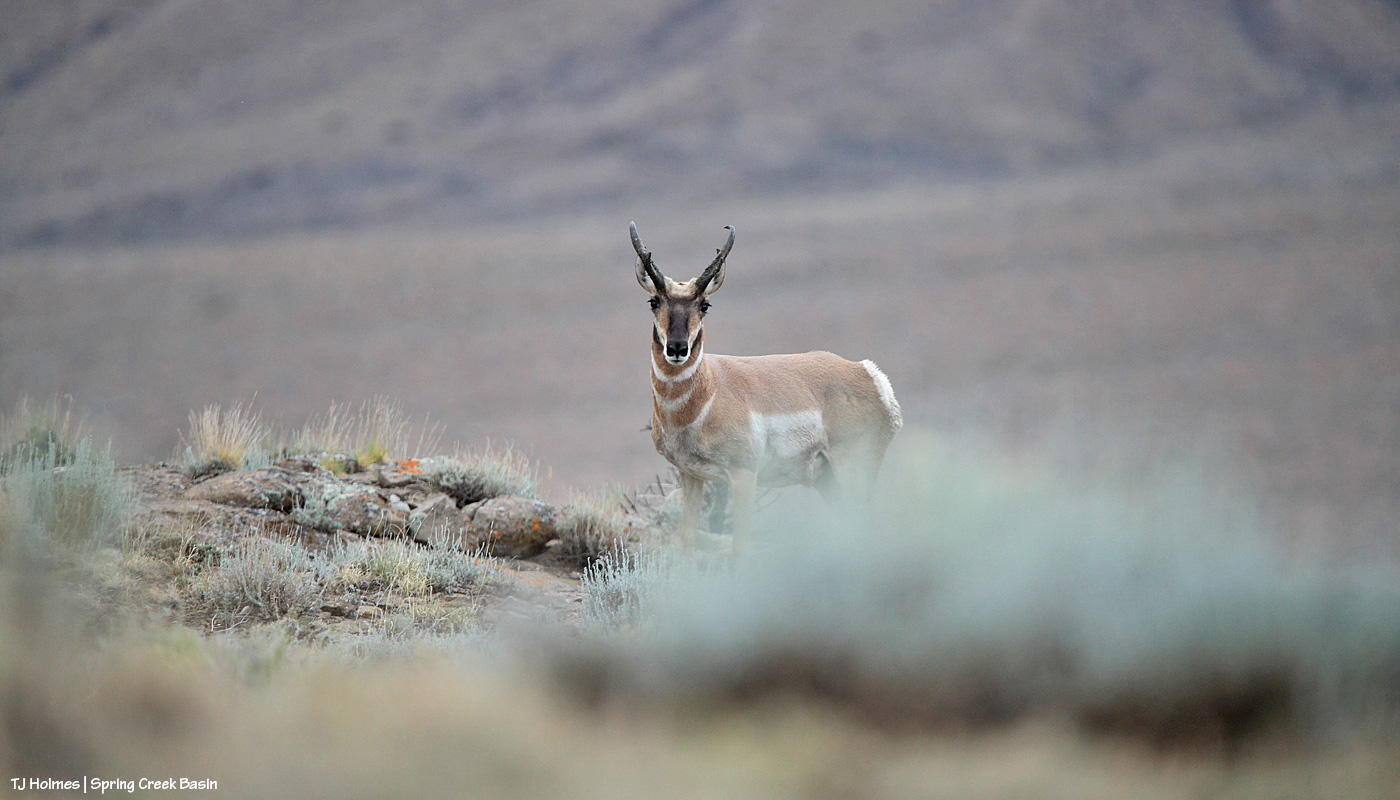
The pronghorn buck Chipeta and the other mustangs were very interested in. Here, he’s literally right at the rimrock’s edge (a band of rimrock cliffs forms most of Spring Creek Basin’s western boundary). I spotted him first, from the far side of a little hump of ground. Then he spotted me and decided that the mustangs must be warned of the “stranger” in their midst! Fortunately, though I was a stranger to him, I am not a stranger to *them*.
We interrupt your regularly scheduled mustangs for an important news update:
WE GOT RAIN!!!!!!!
When you don’t get rain for weeks and weeks, even a little rain is newsworthy. When Mother Nature unleashes a direct hit over Spring Creek Basin, well, that’s major news, that is!
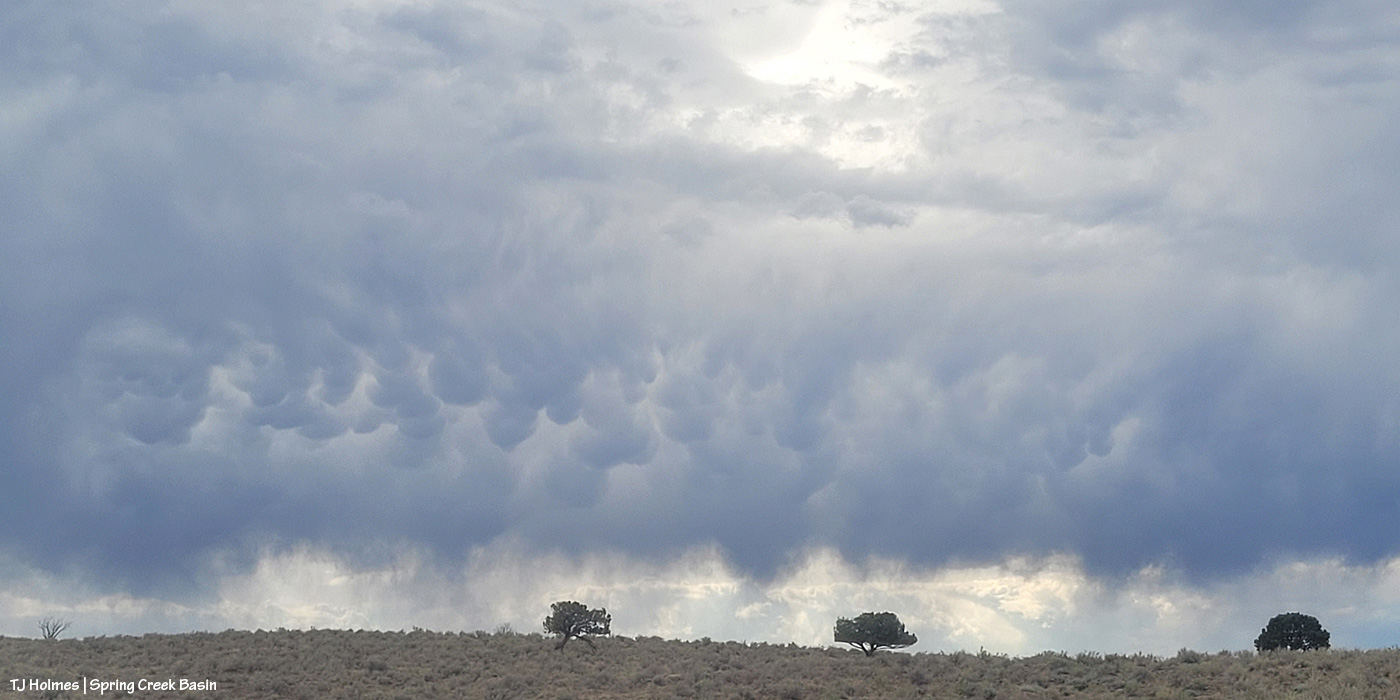
This crazy sky (please tell me the name of those clouds if you know? mammatus or something similar? I read an article about them recently, but I can’t remember the name) was AFTER the rain. Upon entering Spring Creek Basin, I had seen some silver slivers in the distance that had me very excited … but first I saw this sky, and then I saw mustangs, so I had to stop (I ran out of time and patience to choose and process any mustang pix, but they’ll be coming; nothing super exciting as they weren’t super cooperative with that sky above them, chasing the rain-fresh grass!).
Then … THIS:
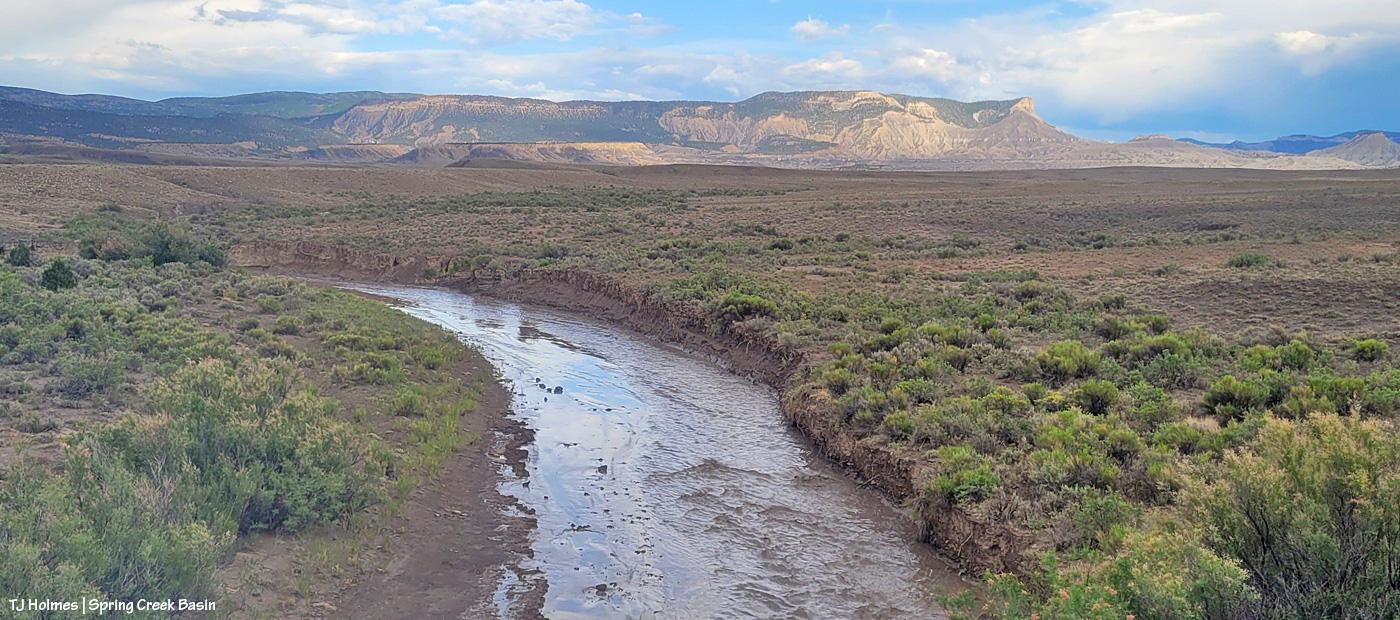
SPRING CREEK!!!!!
Can you tell that straight across (left side of the pic) is the road? At far right is the curve just after the water passes through the old breached dam (I did a post about it a little while ago). The water is flowing from right to left – and it was loud and muddy and glorious. 🙂 You can see how high it was when it first ran; already it was feet lower by the time I got out there.
Many (most? all?) of the rocks in the foreground are from previous floods. That, my friends, is the power of water in the desert.
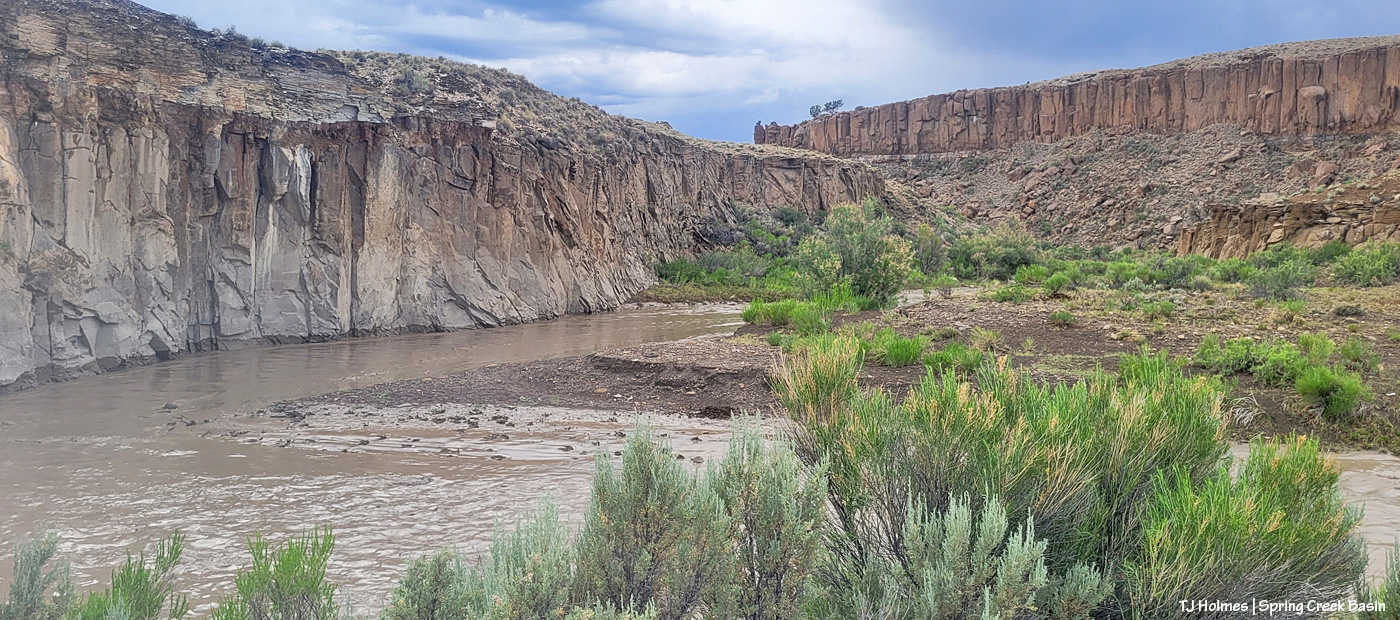
Then I rolled around back downstream to just upstream of Spring Creek canyon, through which Spring Creek runs on its way out of Spring Creek Basin. All of the basin’s arroyos feed into the big arroyo that is Spring Creek. This is looking eastish toward that iconic horizon. The canyon is right behind me:
The water flows from right to left, around the curve on downstream, through the short stretch of zigzagging canyon and on across Disappointment Valley to join Disappointment Creek, which ALSO was flowing with rainwater (the flow of the creek ended around solstice weekend), and eventually to the Dolores River way out there where the sky is particularly (and still) dark with rain.
Mammatus (also called mamma [1] or mammatocumulus, meaning “mammary cloud”) is a cellular pattern of pouches hanging underneath the base of a cloud.
People also ask
What does it mean when you see mammatus clouds?
AI Overview
Mammatus clouds, with their distinctive pouch-like or udder-like appearance, often signal the presence of severe weather, particularly thunderstorms, though they can also appear after the storm has passed. While they don’t directly cause storms, they are a visual indicator of unstable atmospheric conditions and can be associated with heavy rain, hail, lightning, or even snow in winter.
Here’s a more detailed explanation:
Formation: Mammatus clouds form when sinking air creates pouch-like structures hanging from the base of other clouds, most commonly the anvil of a cumulonimbus cloud (thunderstorm cloud).
Significance:
They are often seen before, during, or after a thunderstorm, indicating the turbulent and unstable air within the storm system.
Severity:
While not a direct sign of severe weather, their presence suggests the possibility of other dangerous weather conditions like lightning, hail, or strong winds.
Pilot Caution:
Pilots are often advised to avoid cumulonimbus clouds with mammatus formations due to the potential for turbulence.
Not Always Dangerous:
It’s important to note that mammatus clouds don’t always guarantee severe weather. They can also appear after a storm has weakened or dissipated.
Visual Cue:
Despite their potential association with storms, mammatus clouds are known for their striking appearance and are often photographed by weather enthusiasts and meteorologists. –> including this photographer! 🙂
A warning if you’re squeamish about snakes: Pix below. Very good snakes, these (Colorado Parks and Wildlife info says they’re an “invaluable species to have around homes and in gardens” for rodent control (and, some say, for rattlesnake deterrence, though I have no experience to back this up, and some experience to negate it)), but still, if you’re looking for a pic of a mustang this morning, a scaly slitherer might be a bit of a shock. …
Ready?
Here we go:
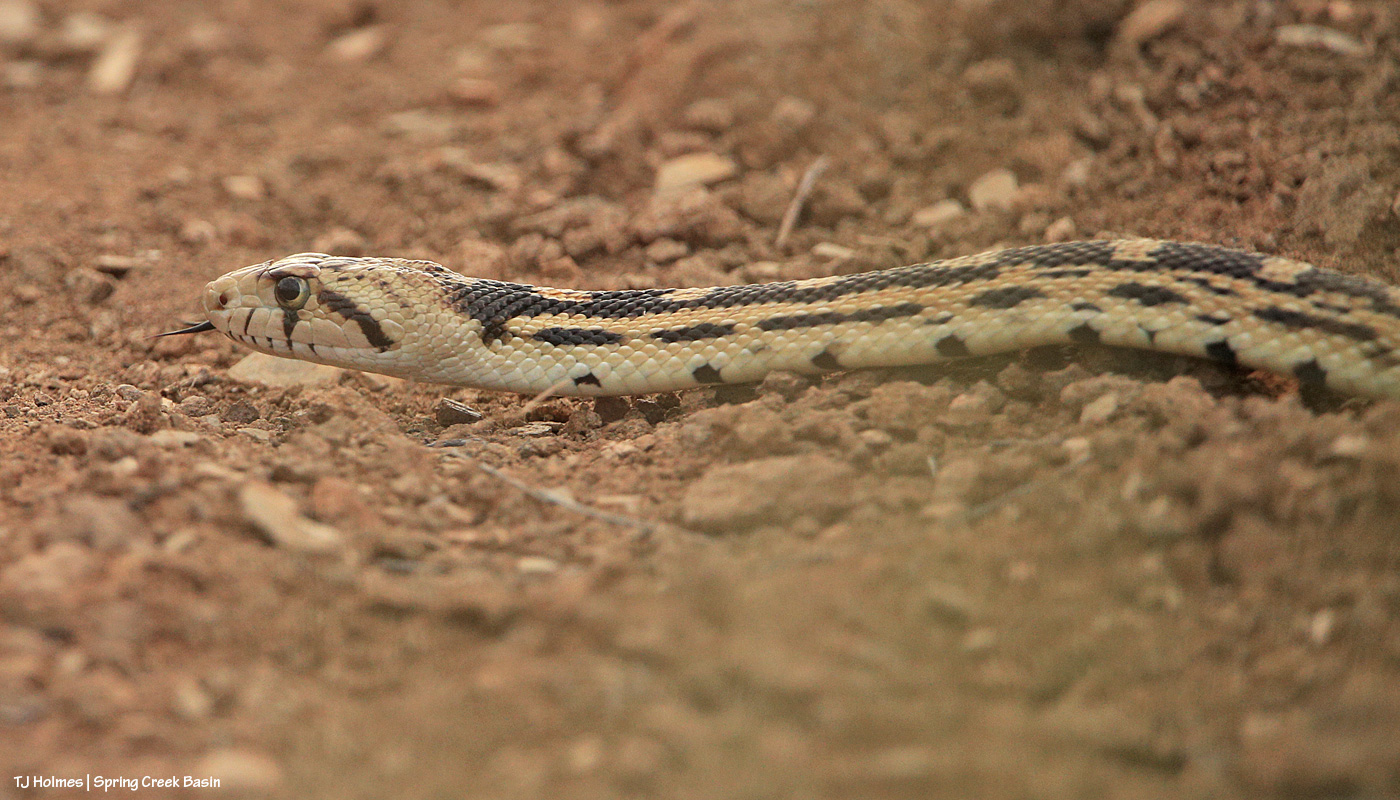
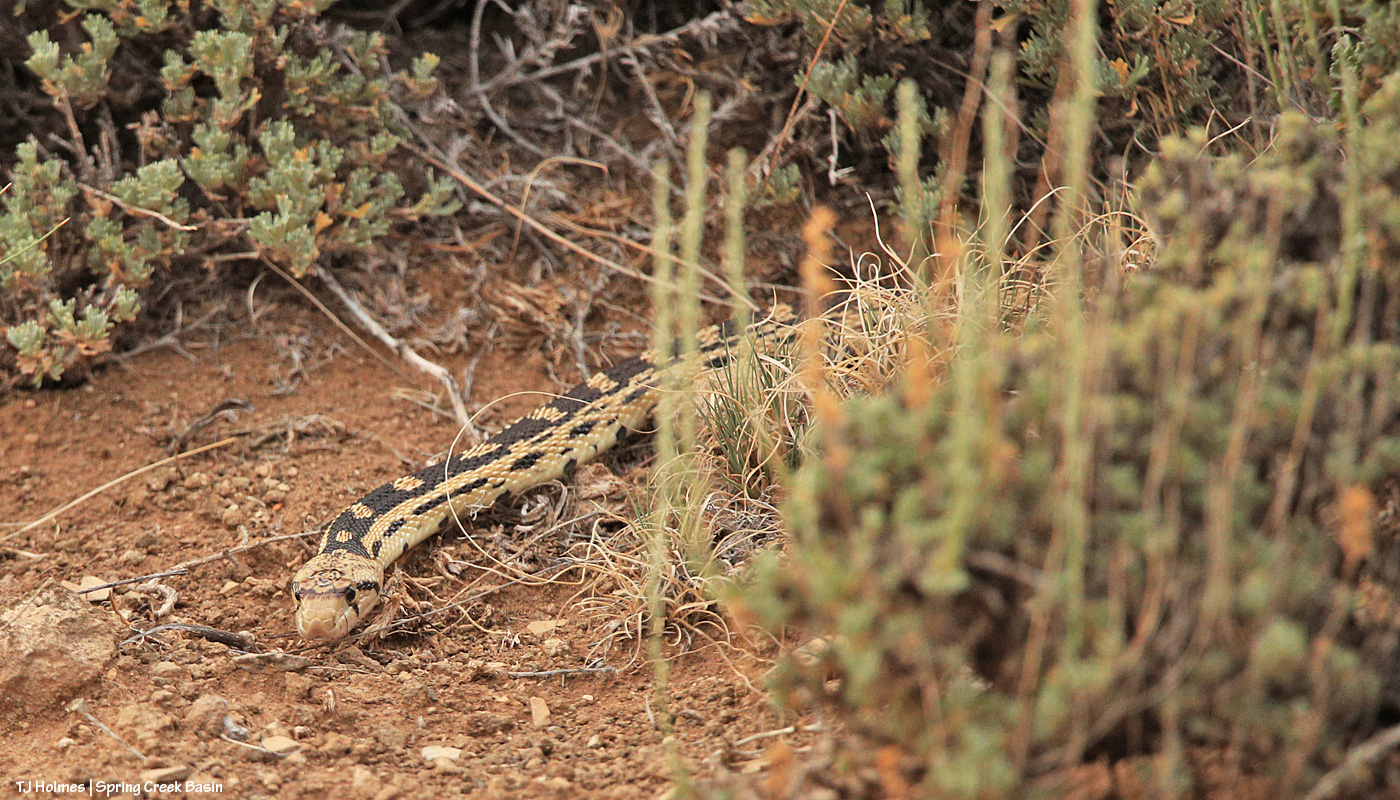
This is (I think) a bullsnake (one word, says Colorado Parks and Wildlife), found very close to sunset, very close to the basin’s western fenced boundary above the rimrock. I was following a band of mustangs toward lower ground when I caught sight of the movement of this little guy or gal, far enough away from my path through the shadscale, sage and bunchgrasses that my world-renowned (or maybe that’s just me) ability to levitate did NOT engage.
Actually, though, according to Colorado Parks and Wildlife: “While all snakes of this species are called bullsnakes in Colorado, they are actually subspecies of gophersnake. There are two species of gophersnake in Colorado: the Pituophis catenifer sayi, or bullsnake, and the Pituophis catenifer deserticola, or Great Basin gophersnake. The bullsnake is mostly found on the eastern plains of Colorado and the Great Basin gophersnake is on the western slope, but they do intermix in southern central Colorado, especially in the San Luis Valley.”
So technically, according to the above, what we have here is a Great Basin gophersnake. (Again, I think; my pix of my little friend don’t look exactly like the pic on the CPW website.)
Is it just me, or is there a smiley face on top of this critter’s head?
S/he was completely uninterested in either me or the mustangs, and we went our separate ways with respect and appreciation (at least on my side).
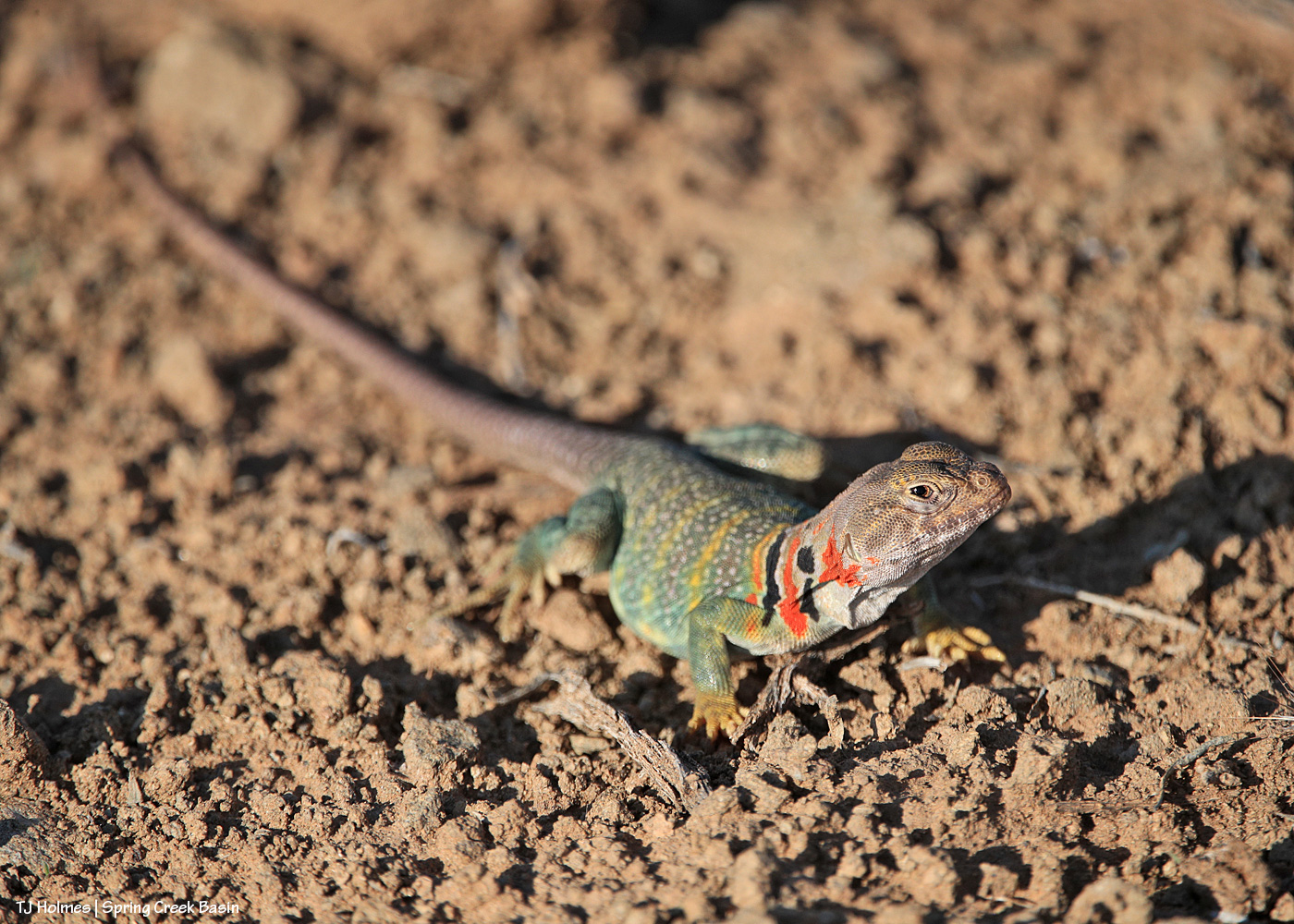
Remember our last little collared lizard friend? Very bright turquoise, and I’m pretty sure that one was a male. THIS one, pictured above and throughout this post, is a female, I’m pretty sure.
And I also think she’s pregnant. 🙂 Look at that belly!
From Google:
A pregnant female collared lizard can be identified by the presence of naturally occurring orangish spots, similar in color to chigger mites, on her body. These spots develop when the female is gravid, meaning she is carrying eggs. The spots are a visual indication of her reproductive state.
Female collared lizards develop these distinctive orange spots when they are carrying eggs.
Mating Behavior: . During mating season, males will approach females and may engage in head bobbing and wrestling.
Egg Laying: . After mating, the female will lay her eggs, often burying them in sand or soil.
Egg Care: . Some females may guard their eggs for a few days, while others will leave them immediately.
Hatching: . Hatching typically occurs within 40-55 days.
Post-Hatching:. Newborn lizards will have their yolk sacs attached for a couple of days and then begin to feed on small crickets dusted with supplements.
She was super calm while I took photos of her from all kinds of angles.
Super cool little dragon-dinosaur-lizard soon-to-be-mama (!?) girl. 🙂
A couple of nights ago, as I was walking away from mustangs to leave the basin post-sunset, I saw, for the THIRD time, a hummingbird on a cluster of wild flowers!
The first time was a hummer on claret cup cacti flowers a couple of weeks or so ago.
The second time was a hummer on a gorgeous bouquet of prickly pear flowers (this is the year of the prickly pear flowers; I am NOT kidding) a few days ago.
The third time was a hummer on a beautiful bunch of 4 o’clock flowers (which are just coming out with the rain/moisture of the last week) just a couple of days ago. All of these were in Disappointment Valley; the last/most recent one was in Spring Creek Basin.
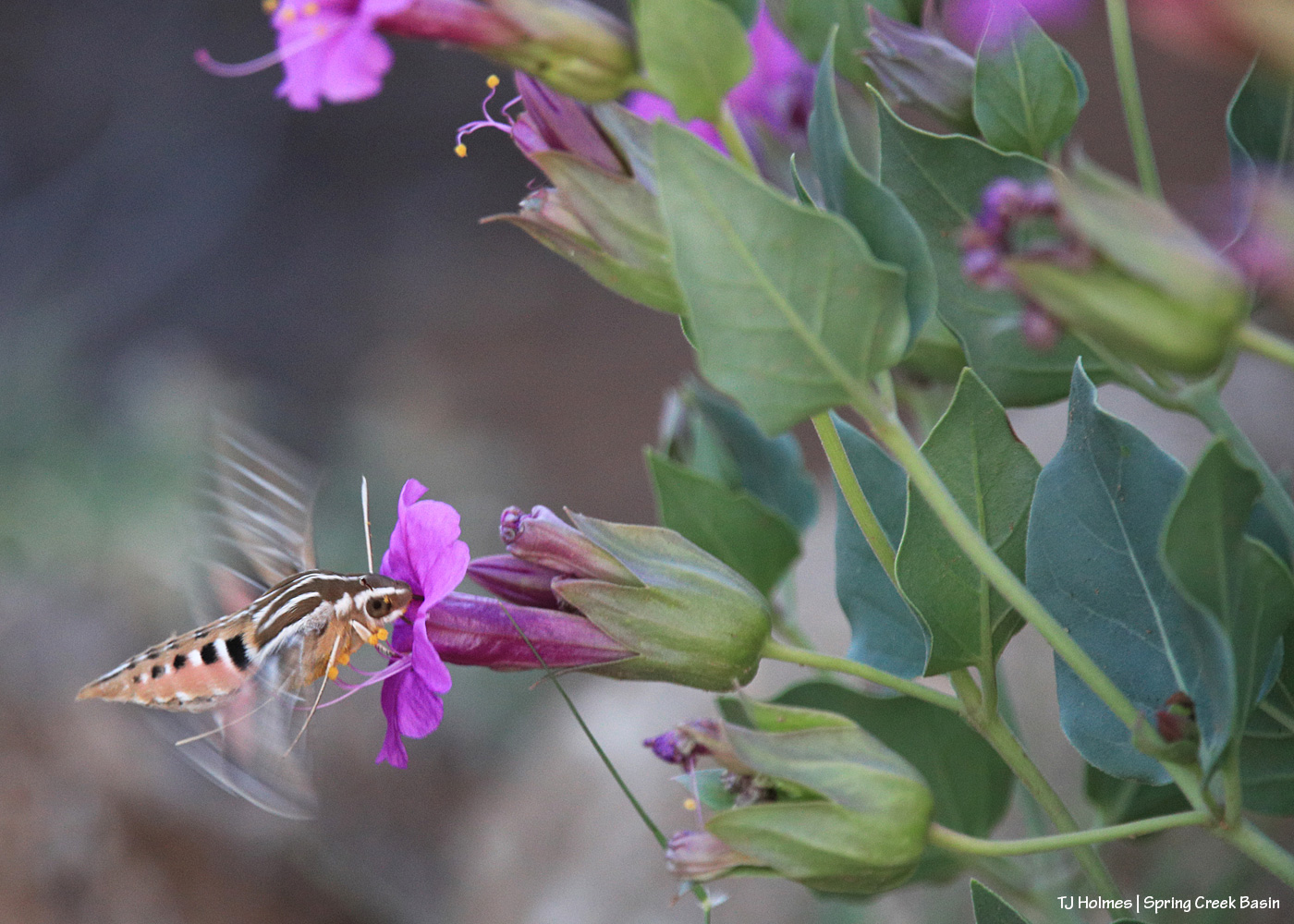
Note: The above moth (?!?!) is NOT a hummingbird. 🙂 That hummer, like the two previous ones, had no patience for a silly photographer who either didn’t have her camera, didn’t have her camera ready and/or didn’t have her camera in-hand because “the good light” had slipped over the west hill from evening toward night and she (I) was already packed away. DOH. (Note to self: “You miss 100 percent of the shots you don’t take.” I don’t remember who said that, but it’s so true.)
The moths were particularly hard to photograph. (There ended up being at least two that came back to the 4 o’clock, but the above is the same moth.) They were fast. They were the very definition of flutter-bys – impossible to predict their flight patterns (and focus). The light was very low.
I am holding high hopes to be READY for the fourth hummingbird visitor – on any kind of flower – and you can be sure that I will share if I *catch* that, I will share that moment with all of you. 🙂
If you know what kinds of moths these are, please let me know? They were REALLY large, and I’m not at all sure they’re a “moth,” though they’re some kind of insect.
*** Update: ChicoRey left a comment about the bee a couple of posts ago that made me look up “sphinx moth,” and sure enough, I got a hit that makes me think what I saw were “white-lined sphinx moths.” Thanks, Maggie, for IDing these moths before I’d even posted! (This post was scheduled a few days ago. :))
Sometimes, you never know who’s watching you when you think you’re all alone but the mustangs.
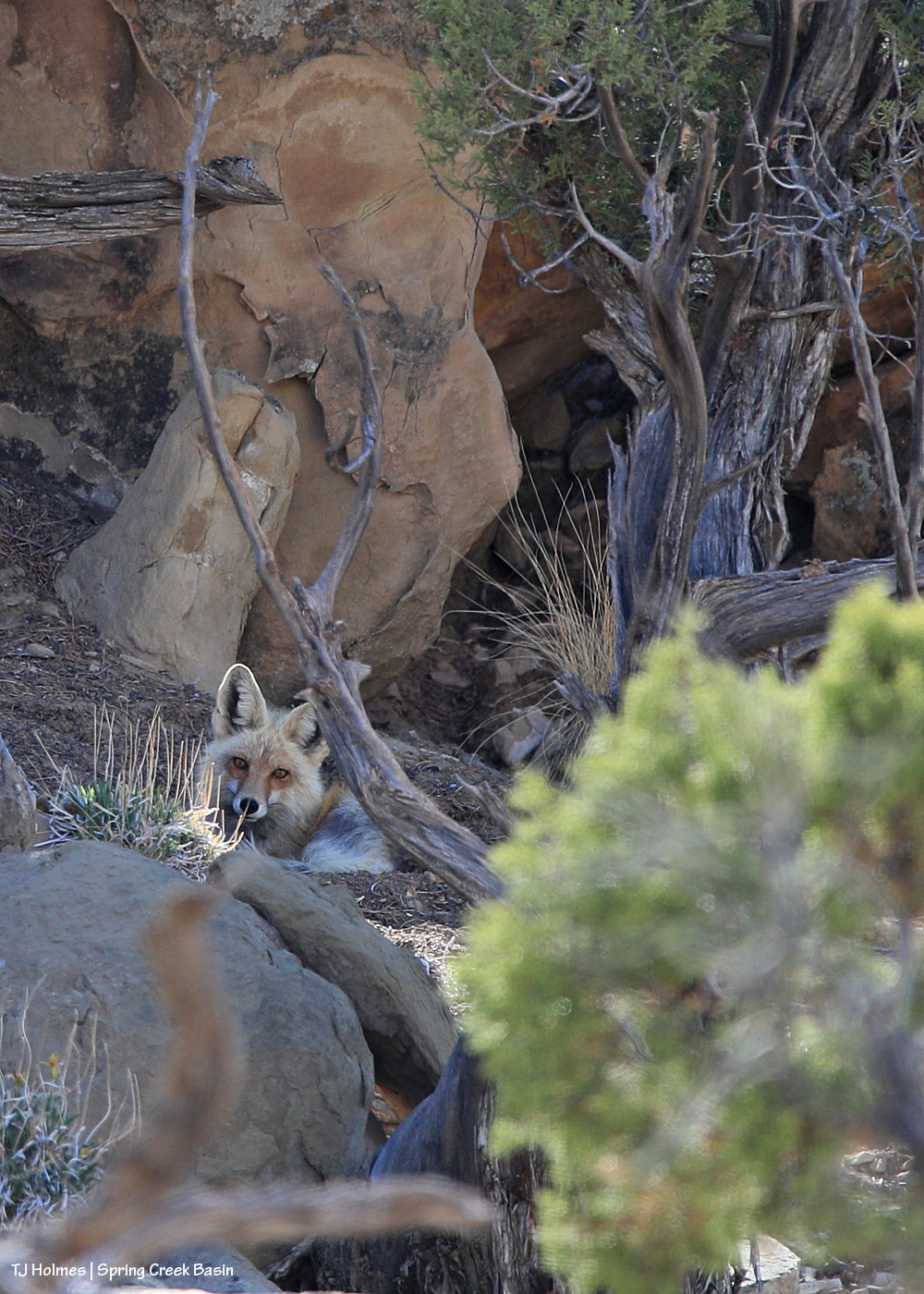
This red fox was a super cool sighting. I’ve seen them absolutely rarely, and I’m not sure I’ve seen (m)any in Spring Creek Basin before. I saw this handsome fellow or gal only because I caught some movement before s/he curled up in a ball to keep a bright eye on me as I was photographing some nearby mustangs.
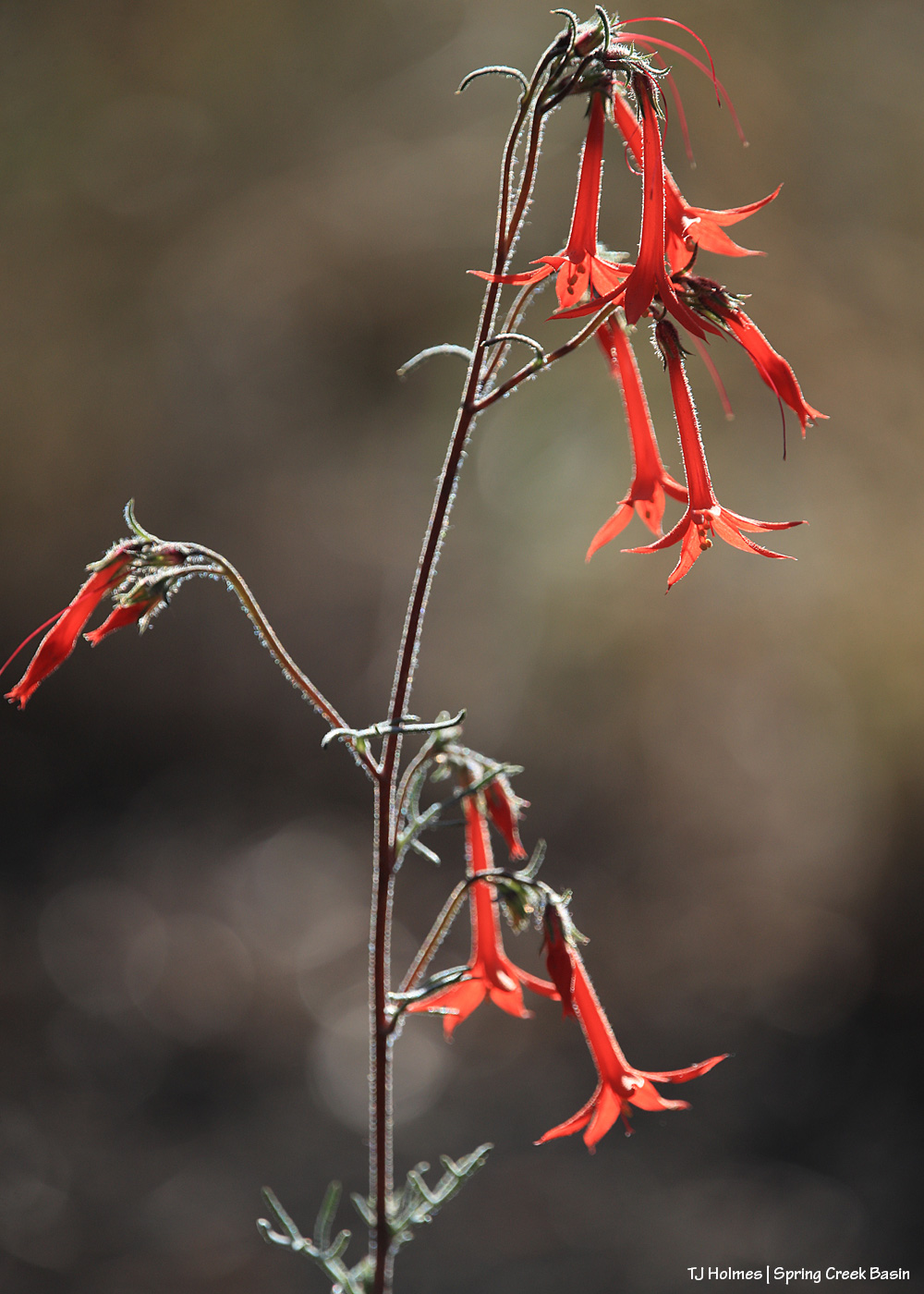
I was surprised and delighted to see four (seriously, just four) scarlet gilia flowering plants the other day in Spring Creek Basin.
The Southwest Colorado Wildflowers website says they’re in the phlox family, interestingly. Our phlox are always THE first things to bloom in the spring in the basin. They are very low-growing and small, and very widespread. They usually have white petals, but they can also be a soft pink or even purplish color. I would say that by sight, anyway, they don’t resemble at all their scarlet gilia … cousins? 🙂
I’ve only ever seen scarlet gilia at higher elevations in the San Juan Mountains, but apparently, they’re quite widespread over a variety of elevations, happily for admirers of these pretty, bright red flowers!
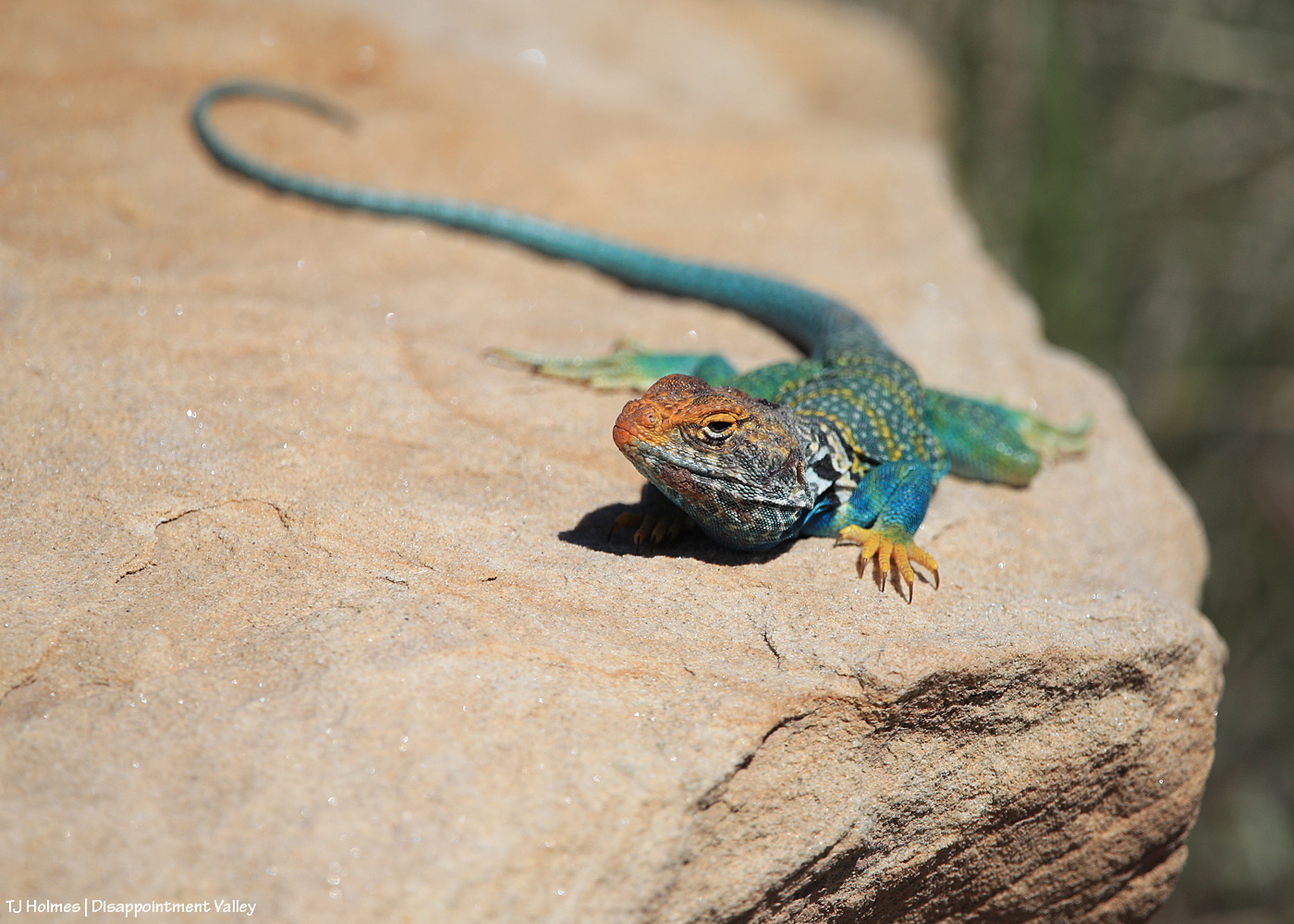
All the birds (OK, many) and all the flowers (again, many) and all the mustangs (really) may be my favorites, but when I tell you that collared lizards are my *favorite* lizards, they really are. While I adore horny toads (aka horned lizards), the bright turquoise collareds really are my very favorites of the reptile world (which might not be saying much as I’m really not a reptile kinda gal).
This handsome mister was sunbathing on a very pleasantly warm morning in Disappointment Valley. When I first encountered him, I had only my cell phone, so I returned with the big gun. He was much happier with me at a distance necessary with a long lens. I was happy that it allows me much more precise focusing on his amazing details.
We photographers like the eye-to-eye approach, but I had to rise a little to get that magnificent tail all in view.
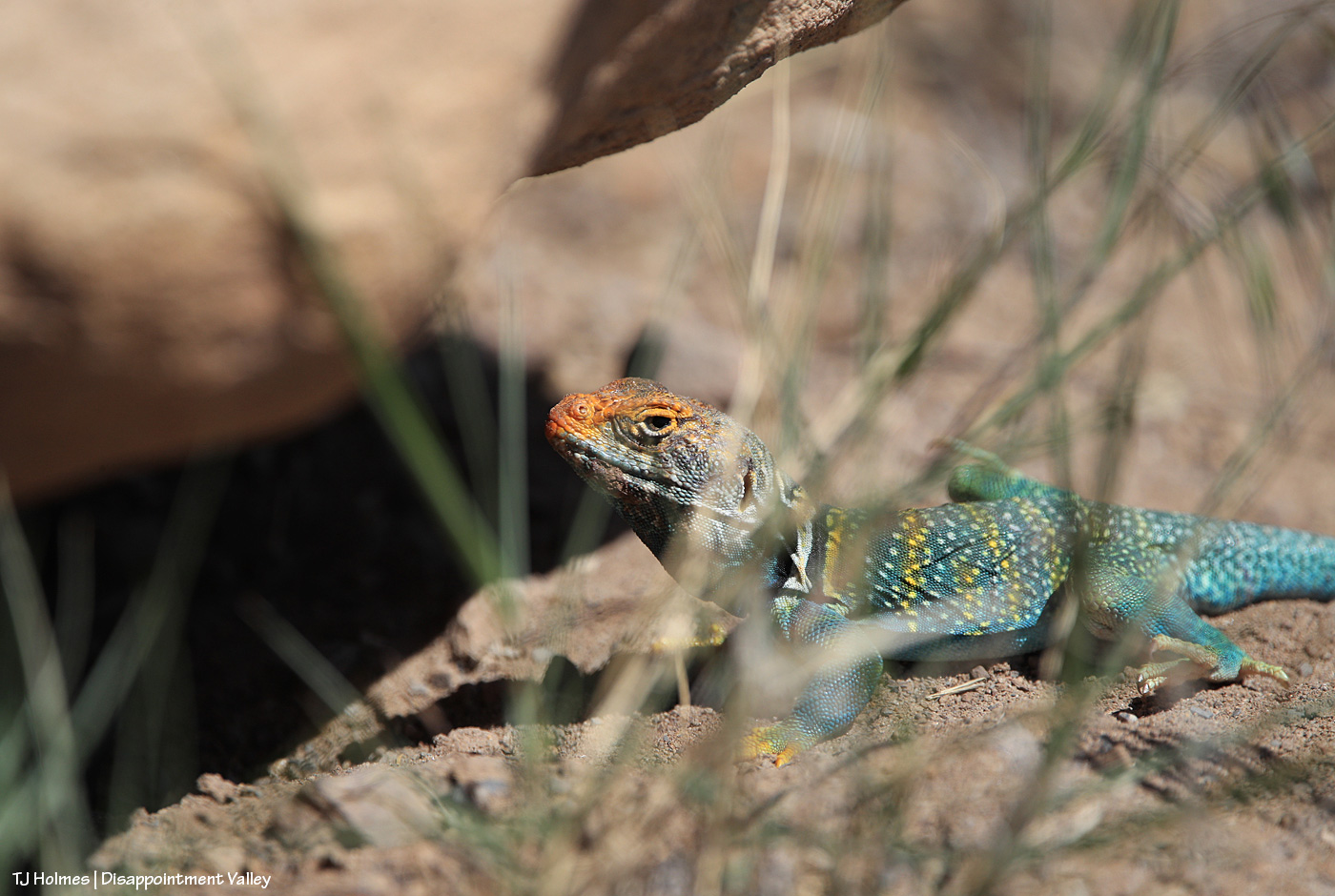
After a bit, he thought he’d seek his shelter’s shade (I don’t think he’d been the only occupant; there was quite a lot of room beneath the overhang of his boulder, and I think something else may have done the initial excavation).
And then I appreciated how the shade allowed more details of and around his eye.
What a super handsome little dinosaur! So glad to see this bright fellow – first of the year for me. 🙂










 Spring Creek Basin Mustangs