I thought it was wildfire smoke from (at least) the Deer Creek (western Colorado and eastern Utah; northwest of Disappointment Valley at the base of Utah’s La Sal Mountains and above Colorado’s Paradox Valley) and Turner Gulch (northeast of Gateway, Colorado) fires because the wind was out of the north/northwest/west, but I read that it was from the Arizona fires (Dragon Bravo and White Sage). Look at a fire map of the western United States, and you’ll see that we’re likely getting smoke from … any/everywhere. 😦
Skywalker on the flyby to give me a bit of a checkout as he moseyed with the band.
Several days now after the above images (I really couldn’t bear to post them at the time), our sky has returned to glorious Colorado-turquoise. The unfortunate part there is that we’d like to have some clouds. 🙂 For shade relief, let alone rain. … Never quite happy, are we? 🙂 (Please, please, please rain!!!!)
Caution: Fluffy wild cuteness ahead. You were warned! 🙂
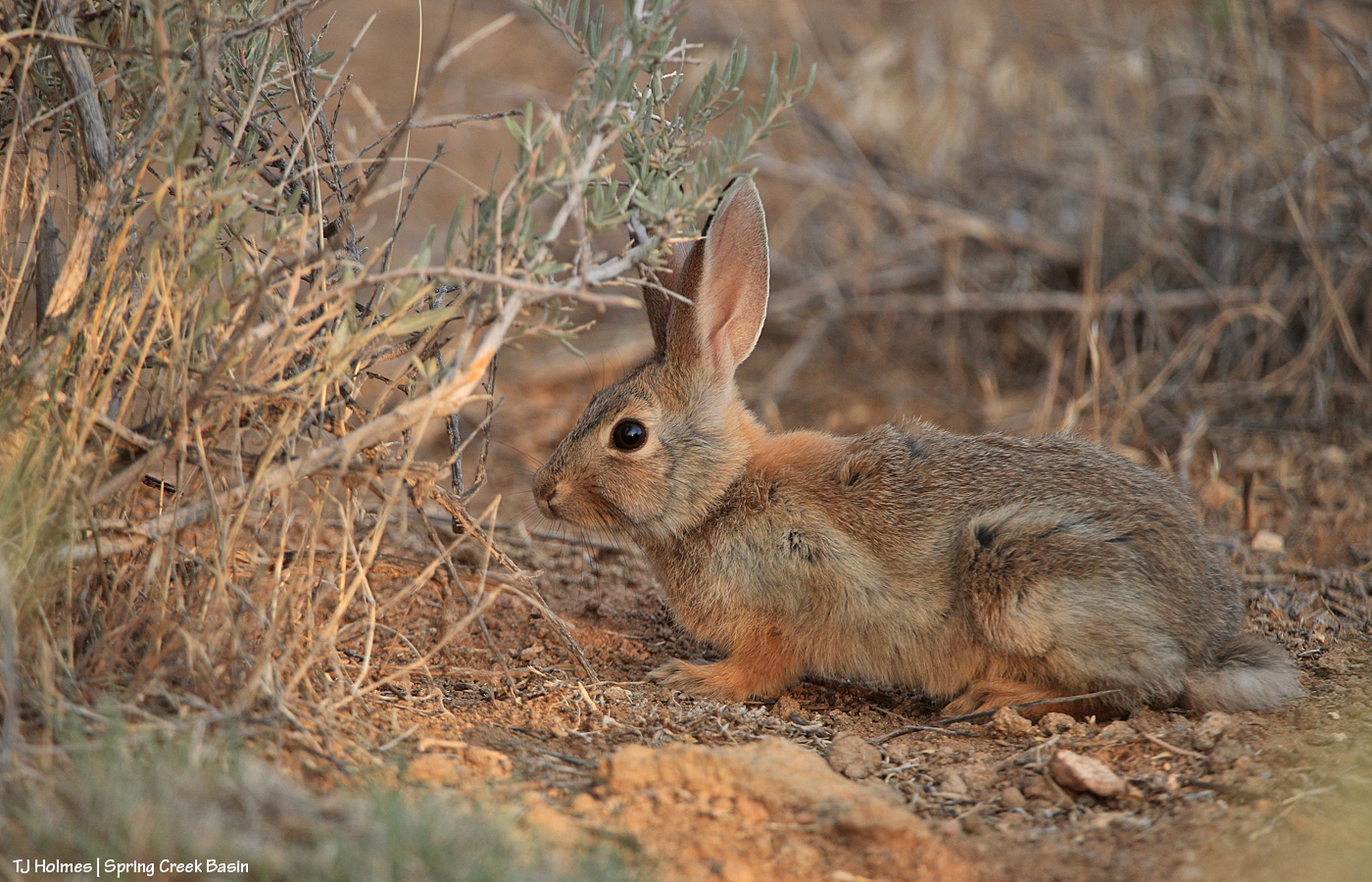
While following a couple of bands of mustangs through the smoke while they grazed a few evenings ago, this little critter broke its camouflage to pose for me.
I think it’s young.
And I think that’s why it stayed put rather than galloping away.
Every time I thought to leave, taking more steps up the hill around its “hiding” spot among the lichen-covered boulders, taking another few pix of ever-increasing cuteness, I’d see another angle of even *more* cuteness!
Are you overloaded??
But wait! There’s more!!
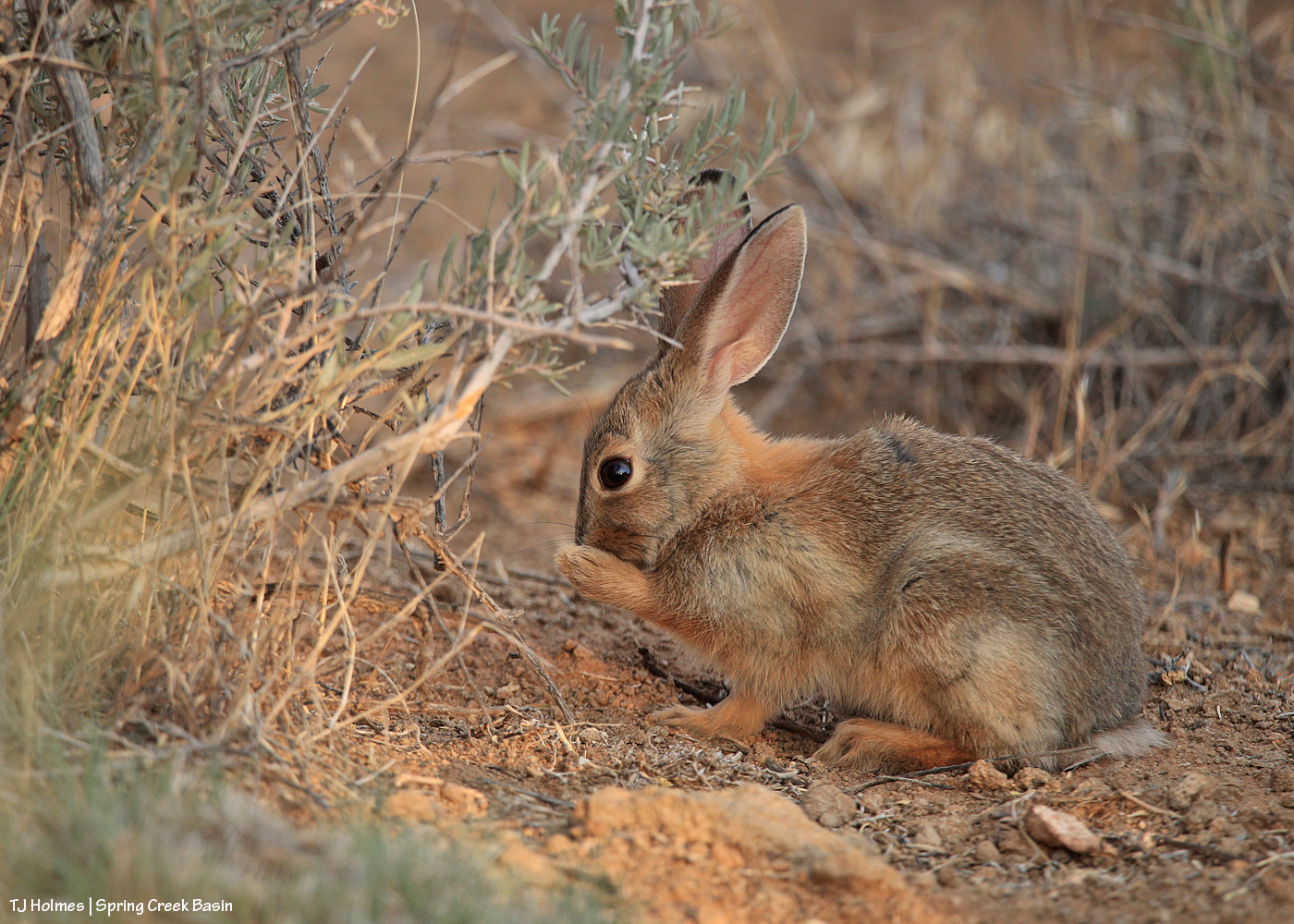
Not long later, as I followed the mustangs uphill through the four-wing saltbush and sage, another young cutie broke camo to sit with me for a brief while.
S/he even had time for a quick little touchup to the whiskers. 🙂
Cuuuuuuuuuuuuuuuuuute!
I believe both Jack (Jacqueline?) rabbit and Peter (Petra?) cottontail were youngsters and that’s likely why they didn’t immediately leave when my blundering flushed them from their respective covers. Also, they both *looked* young. … Either that, or it was just too damn hot and smoky to move much for a harmless-looking two-legged who made just oohing and ahhing and clicking sounds. 😉
The Deer Creek Fire, burning at the southeastern base of Utah’s La Sal Mountains, just west of the state line with Colorado, is now at 10,000-plus acres with 0% containment. (Note: As of 10 p.m. Monday, it had grown to more than 11,000 acres.)
That’s the fire closest to us, and fires at Grand Canyon and Black Canyon of the Gunnison national parks have resulted in the destruction of the historic Grand Canyon Lodge (and other structures) and evacuations of visitors and National Park Service employees, not to mention people who live in affected areas nearby.
Many other fires are burning across the West’s drought-dry landscapes, as well as in Canada, while floods devastate other regions. My heart has a hard time taking it all in.
*****
I drafted the above post (showing Sancho in a very smoky Spring Creek Basin a few days ago) and scheduled it … and then I went out to Spring Creek Basin last night and saw that smoke from two more fires – Wright Draw and Turner Gulch fires near Gateway (about halfway-ish between Disappointment Valley and Grand Junction or about an hour and a half away as the vehicle motors) – is visible on our northern horizon. Argh.
Vantage point: above Spring Creek (mostly dry but with pockets of water from which at least a few bands of mustangs are drinking) in Spring Creek Basin looking north/northwest. The canyon is not far to my left. The obvious smoke starting at the left side of the image is from Utah’s Deer Creek Fire. Smoke from the Wright Draw and Turner Gulch fires shows as a yellowish line of smoke immediately above the bumpy-hills horizon just right of center.
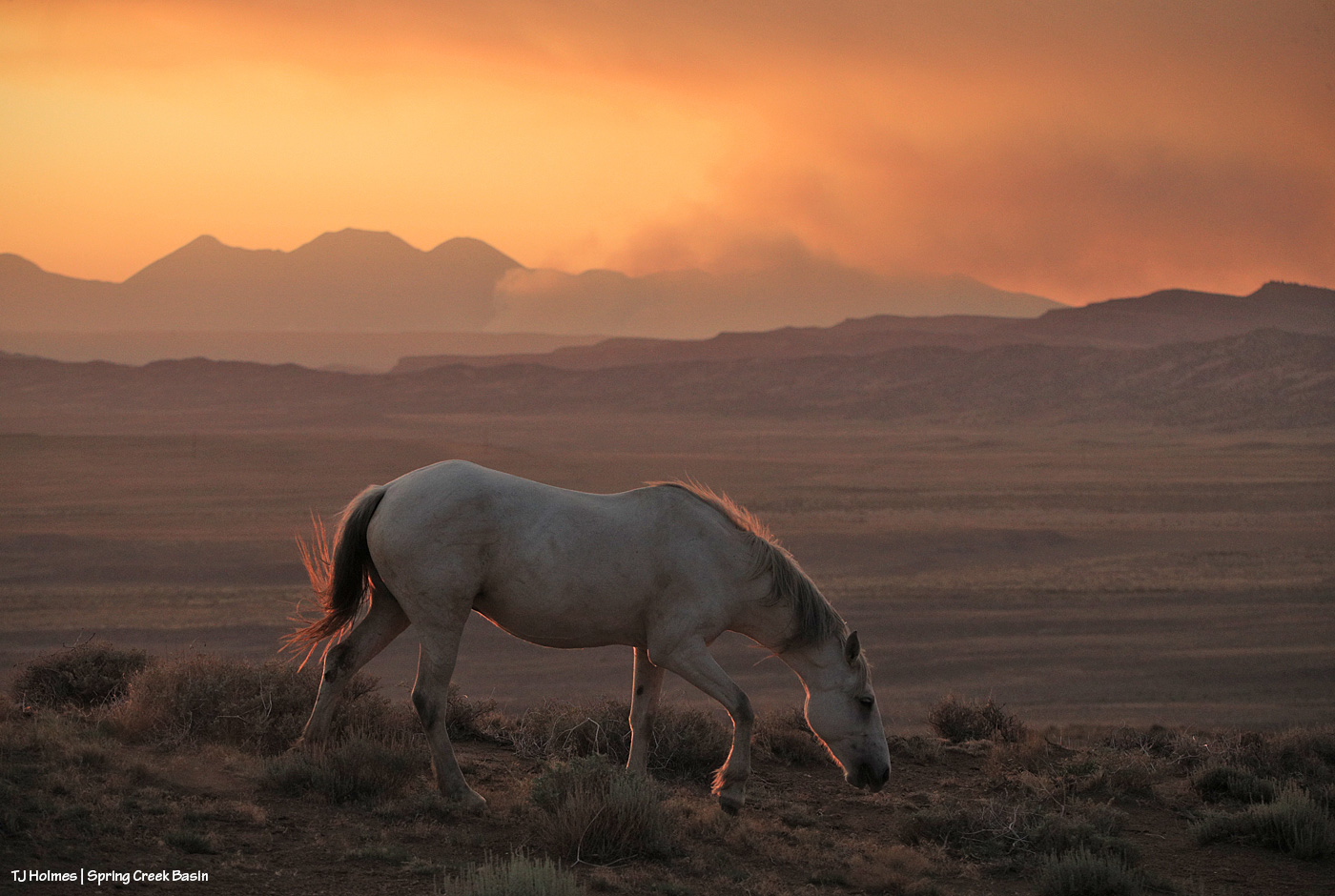
Post-sunset from outside Spring Creek Basin. Utah’s La Sal Mountains are visible at left, and smoke from the Deer Creek Fire stretches across the entire horizon. … It looked like virga, which was completely wild and surreal.
We need “wetting rain” as I read recently. Hopefully it’s coming Friday/Saturday … along with thunderstorm chances (we do NOT need the lightning!!!). Please keep all those in the paths of the wildfires (everywhere), as well as those battling the blazes, in your prayers. And please, please, please, stay safe.
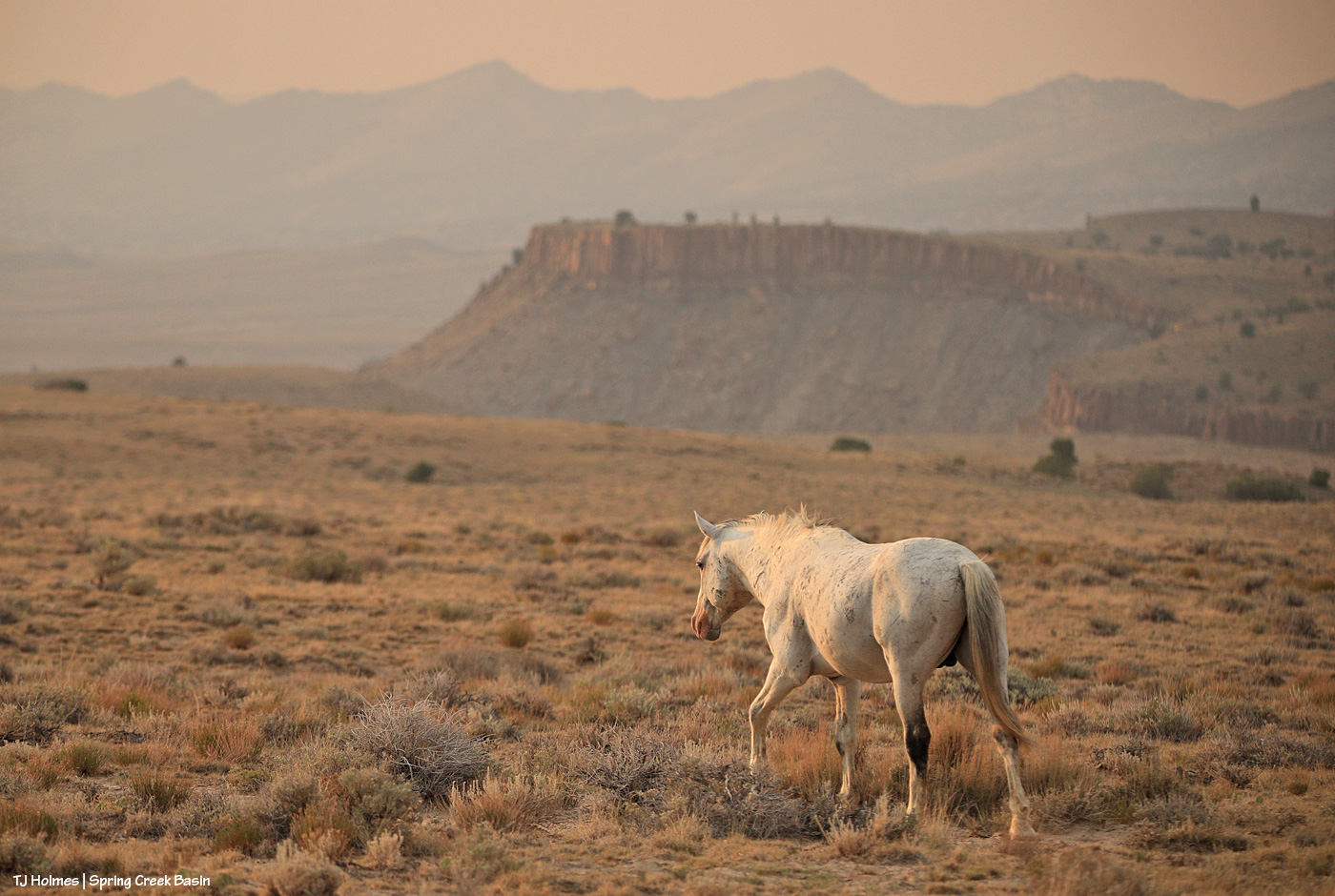
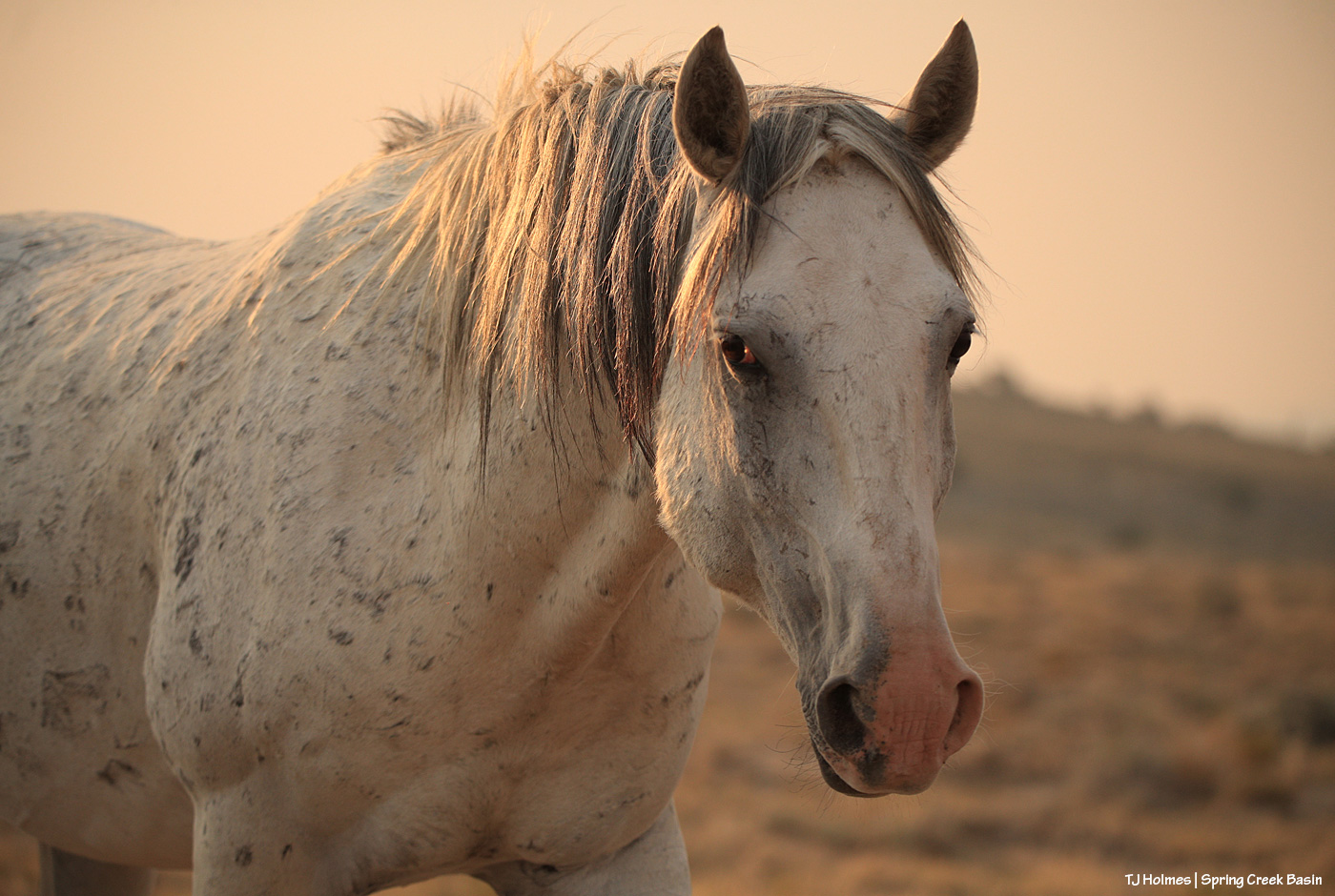
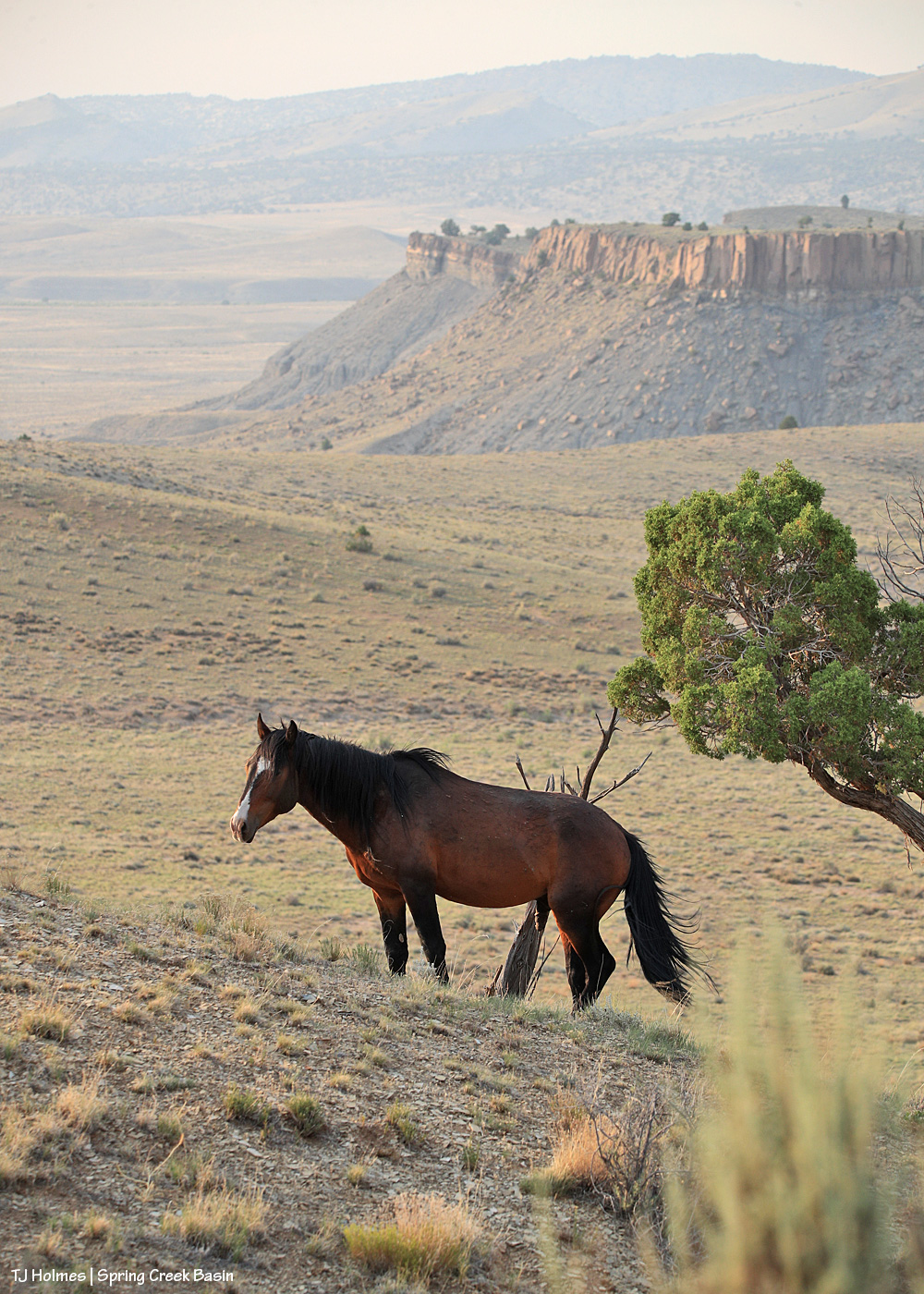
This handsome fellow is not the same handsome fellow from a couple of posts ago. He was near a small water source, and I happened upon him as he was walking away. Above, I *think* his attention was caught by a small band of mustangs away south and lower. He ended up turning all the way around to look at them, then watched them intently for several minutes before returning to his path away to nibble and browse.
A couple of hours later, this. 🙂
Hot, hot, hot. The temp hit 100 degrees in Spring Creek Basin yesterday. It’s not unusual as a summertime temp … but it’s still awfully miserable. There was some relief in the form of sunshine-blocking clouds, but not a drop of moisture did they produce.
By the time the moon rose, it was actually pleasant (if you don’t mention the gnats), and some little bird was singing its little heart out with a full medley of melody. I don’t know what it was, but it was a lovely serenade! 🙂
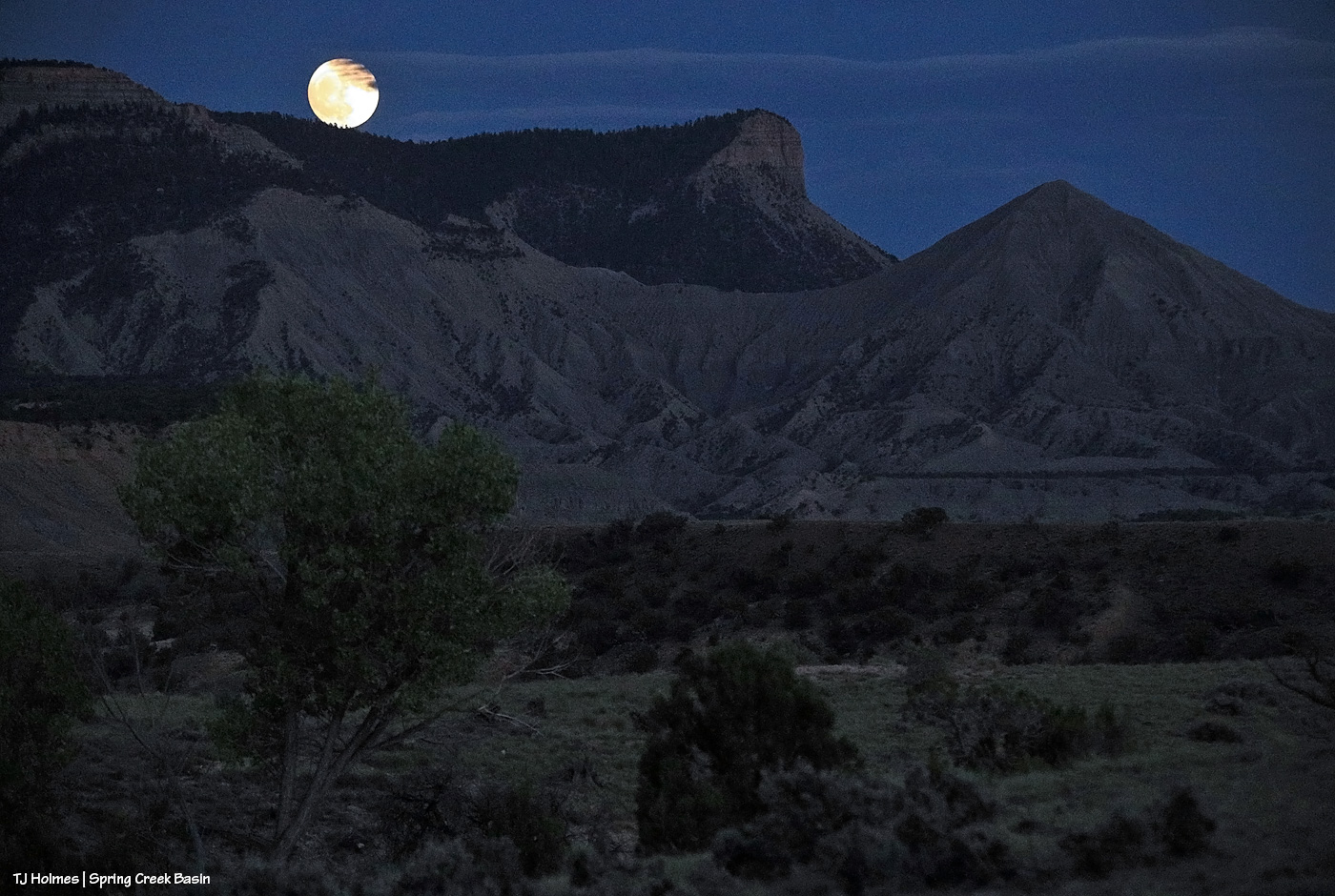
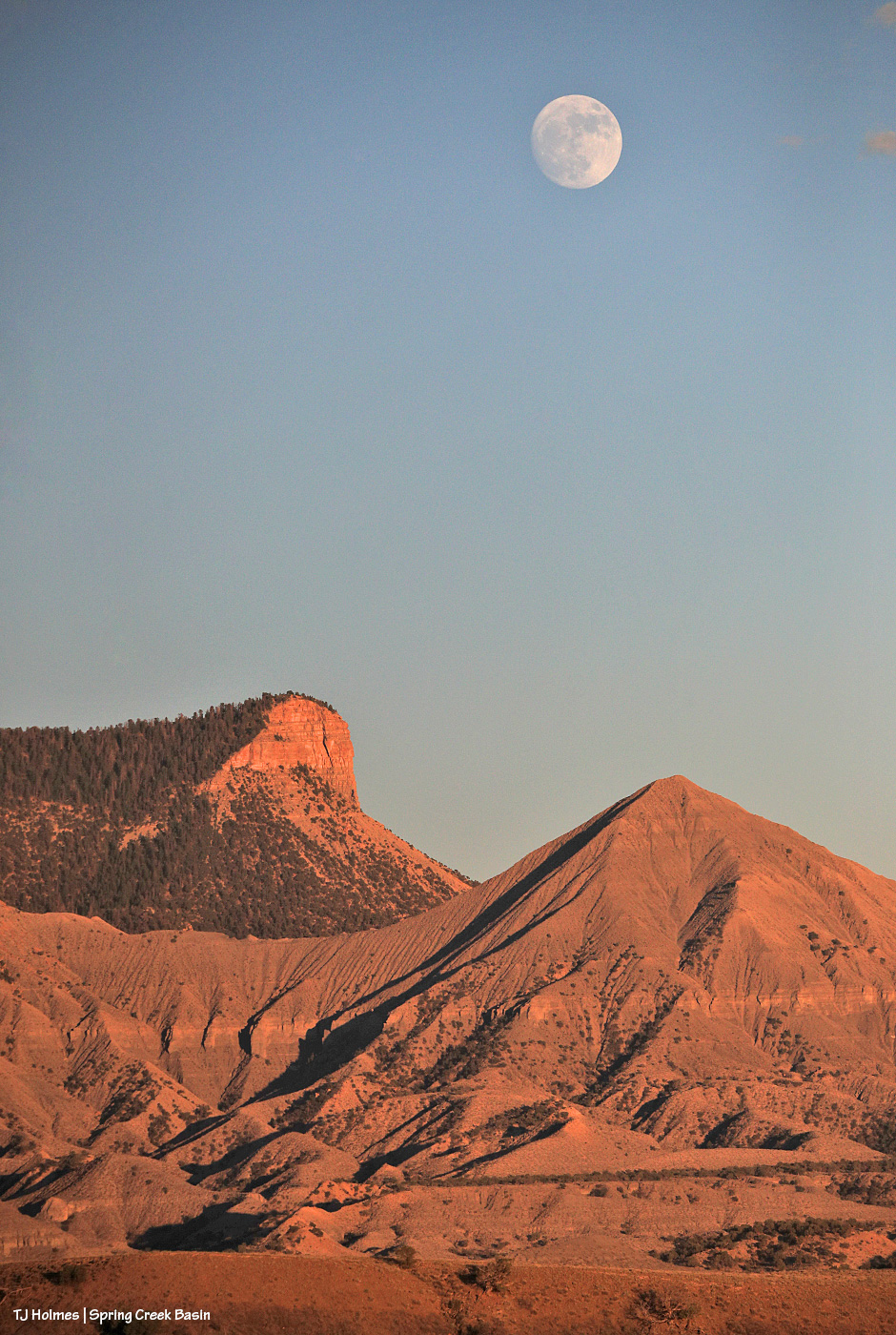
In the basin the night before last, I realized I might be able to catch the moon rising from the space between McKenna Peak and Temple Butte if I could get myself into the right position in Spring Creek Basin.
I didn’t, but it was still cool (as it always is?!) to watch the almost-full “Buck Moon” rising in the very warm (the mercury hit at least 98F) July sky last night over the basin.
We interrupt your regularly scheduled mustangs for an important news update:
WE GOT RAIN!!!!!!!
When you don’t get rain for weeks and weeks, even a little rain is newsworthy. When Mother Nature unleashes a direct hit over Spring Creek Basin, well, that’s major news, that is!
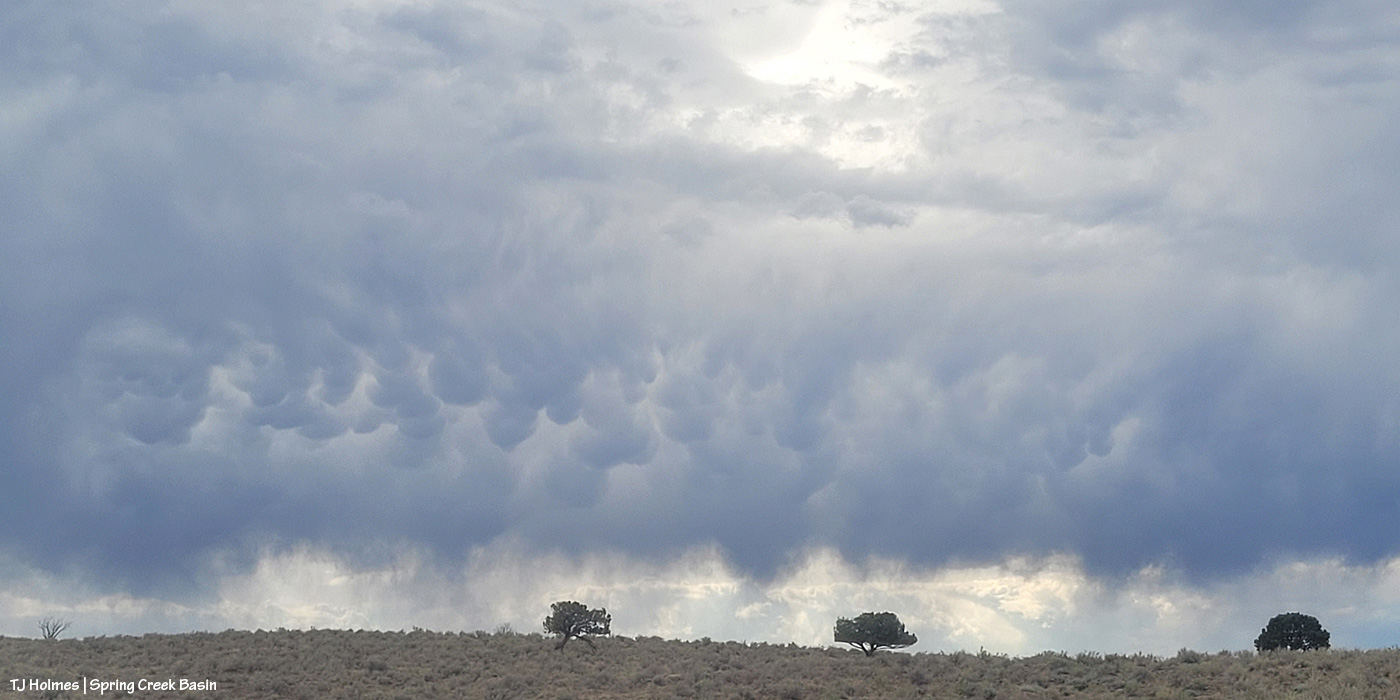
This crazy sky (please tell me the name of those clouds if you know? mammatus or something similar? I read an article about them recently, but I can’t remember the name) was AFTER the rain. Upon entering Spring Creek Basin, I had seen some silver slivers in the distance that had me very excited … but first I saw this sky, and then I saw mustangs, so I had to stop (I ran out of time and patience to choose and process any mustang pix, but they’ll be coming; nothing super exciting as they weren’t super cooperative with that sky above them, chasing the rain-fresh grass!).
Then … THIS:
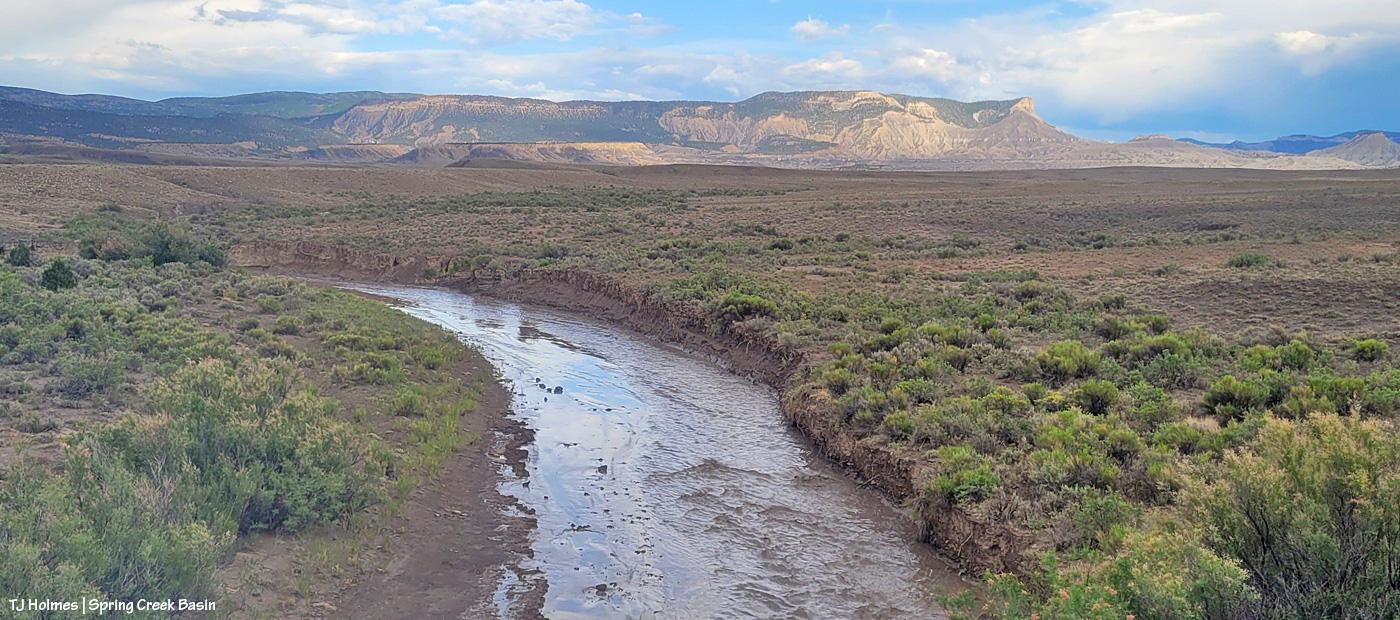
SPRING CREEK!!!!!
Can you tell that straight across (left side of the pic) is the road? At far right is the curve just after the water passes through the old breached dam (I did a post about it a little while ago). The water is flowing from right to left – and it was loud and muddy and glorious. 🙂 You can see how high it was when it first ran; already it was feet lower by the time I got out there.
Many (most? all?) of the rocks in the foreground are from previous floods. That, my friends, is the power of water in the desert.
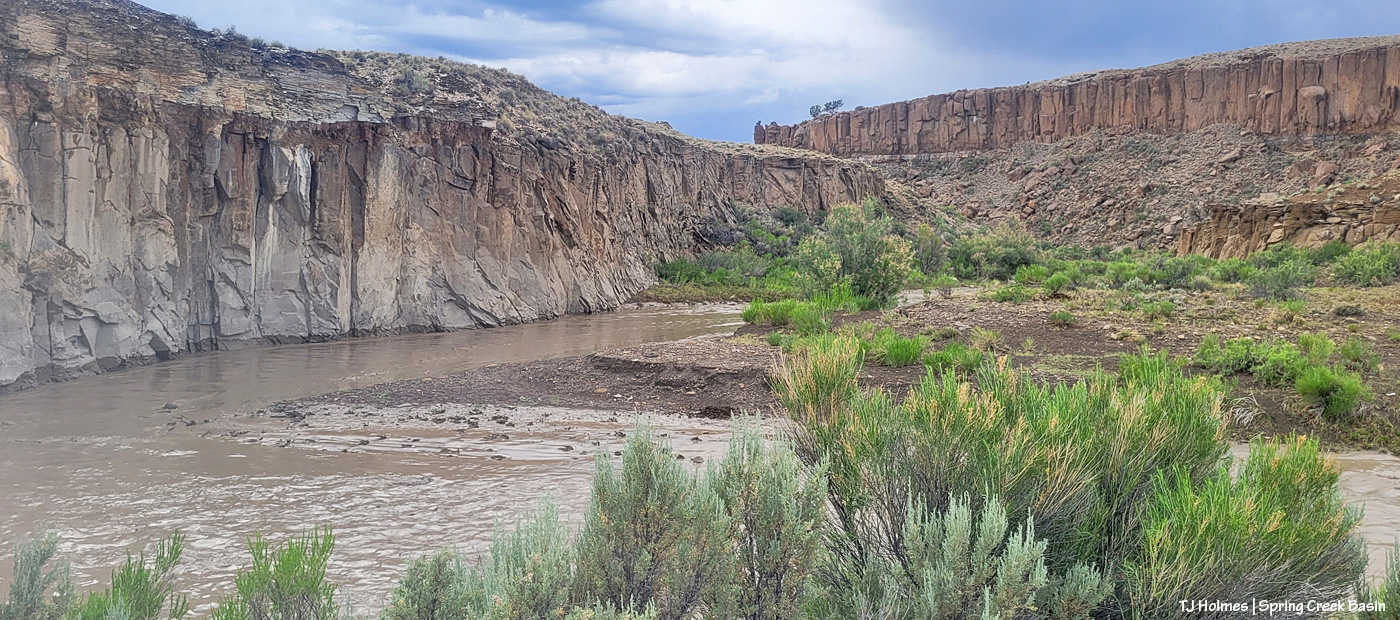
Then I rolled around back downstream to just upstream of Spring Creek canyon, through which Spring Creek runs on its way out of Spring Creek Basin. All of the basin’s arroyos feed into the big arroyo that is Spring Creek. This is looking eastish toward that iconic horizon. The canyon is right behind me:
The water flows from right to left, around the curve on downstream, through the short stretch of zigzagging canyon and on across Disappointment Valley to join Disappointment Creek, which ALSO was flowing with rainwater (the flow of the creek ended around solstice weekend), and eventually to the Dolores River way out there where the sky is particularly (and still) dark with rain.
Mammatus (also called mamma [1] or mammatocumulus, meaning “mammary cloud”) is a cellular pattern of pouches hanging underneath the base of a cloud.
People also ask
What does it mean when you see mammatus clouds?
AI Overview
Mammatus clouds, with their distinctive pouch-like or udder-like appearance, often signal the presence of severe weather, particularly thunderstorms, though they can also appear after the storm has passed. While they don’t directly cause storms, they are a visual indicator of unstable atmospheric conditions and can be associated with heavy rain, hail, lightning, or even snow in winter.
Here’s a more detailed explanation:
Formation: Mammatus clouds form when sinking air creates pouch-like structures hanging from the base of other clouds, most commonly the anvil of a cumulonimbus cloud (thunderstorm cloud).
Significance:
They are often seen before, during, or after a thunderstorm, indicating the turbulent and unstable air within the storm system.
Severity:
While not a direct sign of severe weather, their presence suggests the possibility of other dangerous weather conditions like lightning, hail, or strong winds.
Pilot Caution:
Pilots are often advised to avoid cumulonimbus clouds with mammatus formations due to the potential for turbulence.
Not Always Dangerous:
It’s important to note that mammatus clouds don’t always guarantee severe weather. They can also appear after a storm has weakened or dissipated.
Visual Cue:
Despite their potential association with storms, mammatus clouds are known for their striking appearance and are often photographed by weather enthusiasts and meteorologists. –> including this photographer! 🙂
A warning if you’re squeamish about snakes: Pix below. Very good snakes, these (Colorado Parks and Wildlife info says they’re an “invaluable species to have around homes and in gardens” for rodent control (and, some say, for rattlesnake deterrence, though I have no experience to back this up, and some experience to negate it)), but still, if you’re looking for a pic of a mustang this morning, a scaly slitherer might be a bit of a shock. …
Ready?
Here we go:
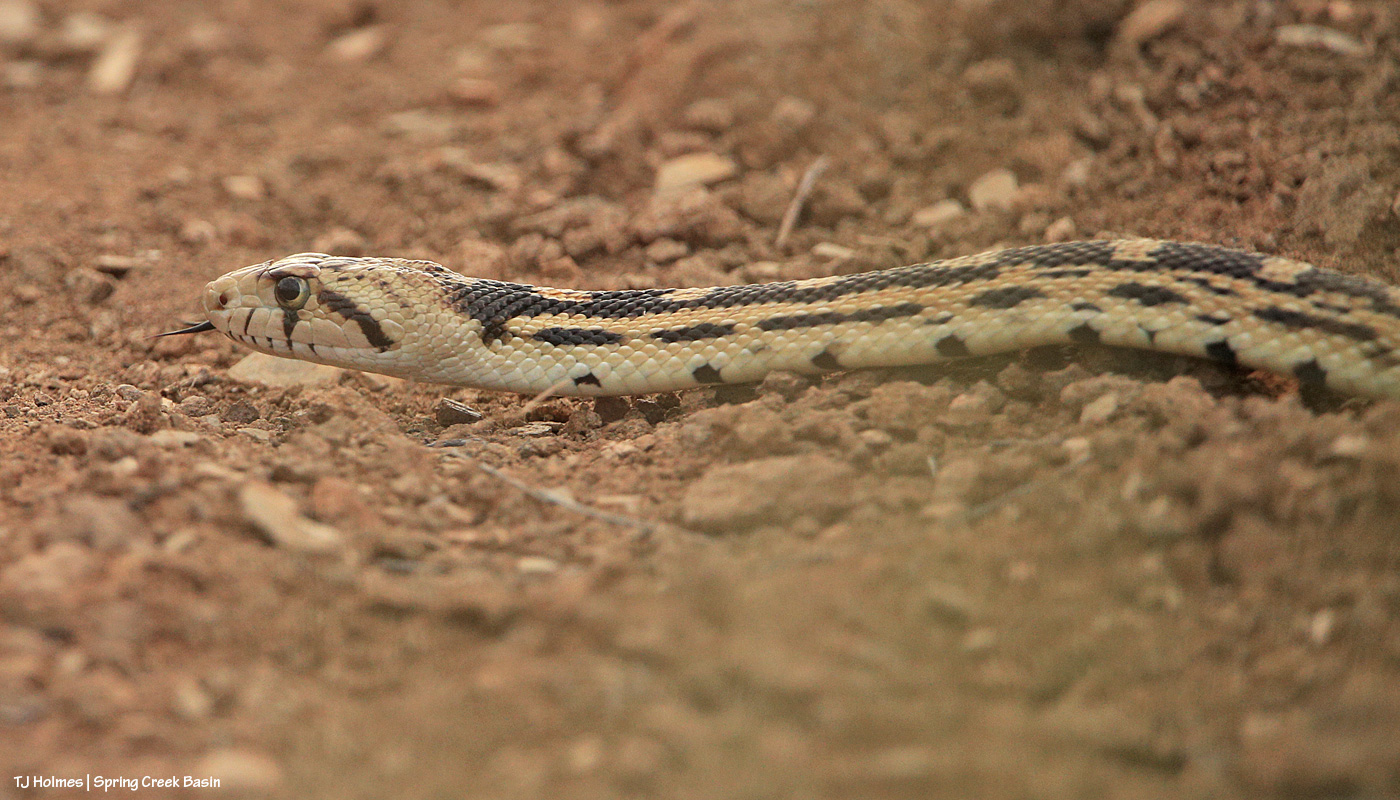
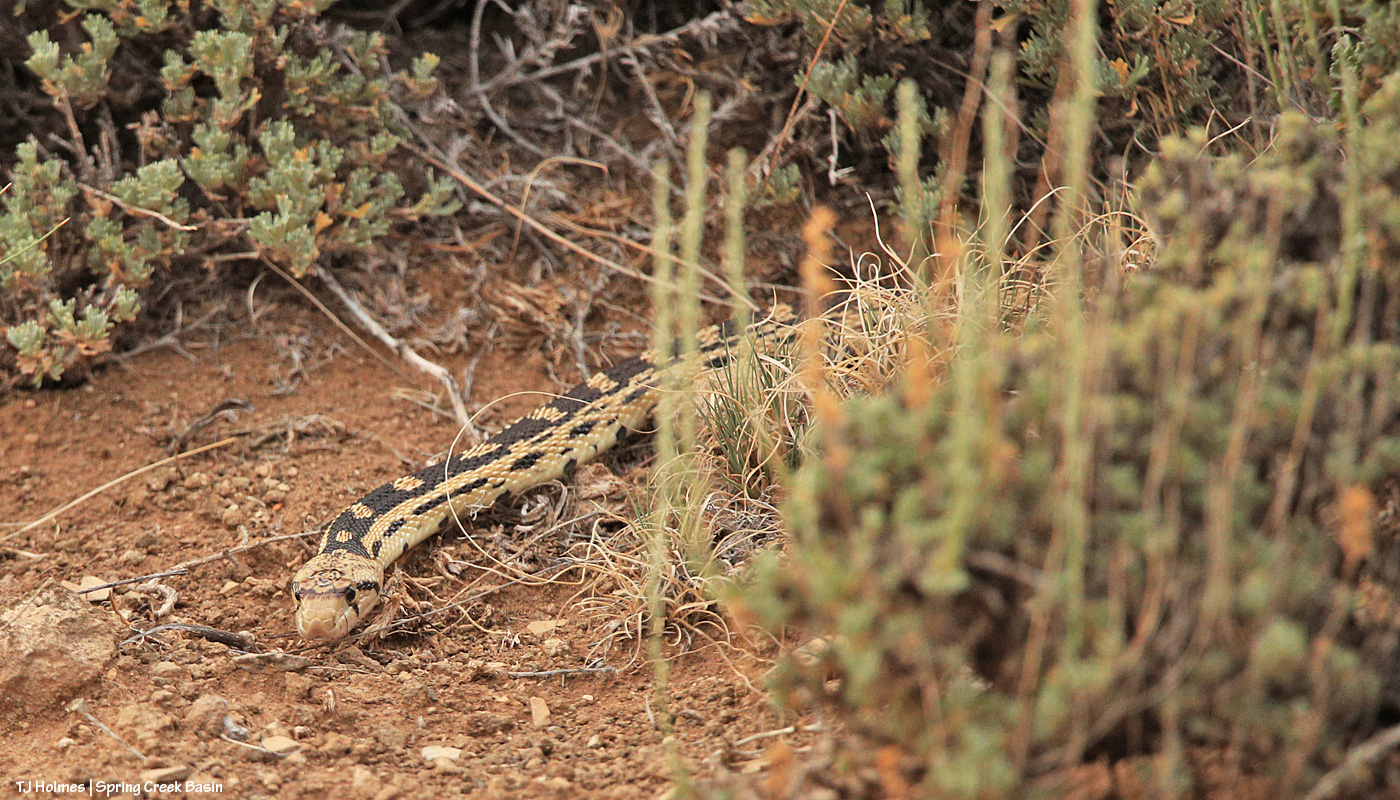
This is (I think) a bullsnake (one word, says Colorado Parks and Wildlife), found very close to sunset, very close to the basin’s western fenced boundary above the rimrock. I was following a band of mustangs toward lower ground when I caught sight of the movement of this little guy or gal, far enough away from my path through the shadscale, sage and bunchgrasses that my world-renowned (or maybe that’s just me) ability to levitate did NOT engage.
Actually, though, according to Colorado Parks and Wildlife: “While all snakes of this species are called bullsnakes in Colorado, they are actually subspecies of gophersnake. There are two species of gophersnake in Colorado: the Pituophis catenifer sayi, or bullsnake, and the Pituophis catenifer deserticola, or Great Basin gophersnake. The bullsnake is mostly found on the eastern plains of Colorado and the Great Basin gophersnake is on the western slope, but they do intermix in southern central Colorado, especially in the San Luis Valley.”
So technically, according to the above, what we have here is a Great Basin gophersnake. (Again, I think; my pix of my little friend don’t look exactly like the pic on the CPW website.)
Is it just me, or is there a smiley face on top of this critter’s head?
S/he was completely uninterested in either me or the mustangs, and we went our separate ways with respect and appreciation (at least on my side).











 Spring Creek Basin Mustangs