
Cute, cute, cute!
Cute, cute, cute!

Remember our last little collared lizard friend? Very bright turquoise, and I’m pretty sure that one was a male. THIS one, pictured above and throughout this post, is a female, I’m pretty sure.

And I also think she’s pregnant. 🙂 Look at that belly!
From Google:
A pregnant female collared lizard can be identified by the presence of naturally occurring orangish spots, similar in color to chigger mites, on her body. These spots develop when the female is gravid, meaning she is carrying eggs. The spots are a visual indication of her reproductive state.
Here’s a more detailed look:
Female collared lizards develop these distinctive orange spots when they are carrying eggs.
Mating Behavior: . During mating season, males will approach females and may engage in head bobbing and wrestling.
Egg Laying: . After mating, the female will lay her eggs, often burying them in sand or soil.
Egg Care: . Some females may guard their eggs for a few days, while others will leave them immediately.
Hatching: . Hatching typically occurs within 40-55 days.
Post-Hatching: . Newborn lizards will have their yolk sacs attached for a couple of days and then begin to feed on small crickets dusted with supplements.


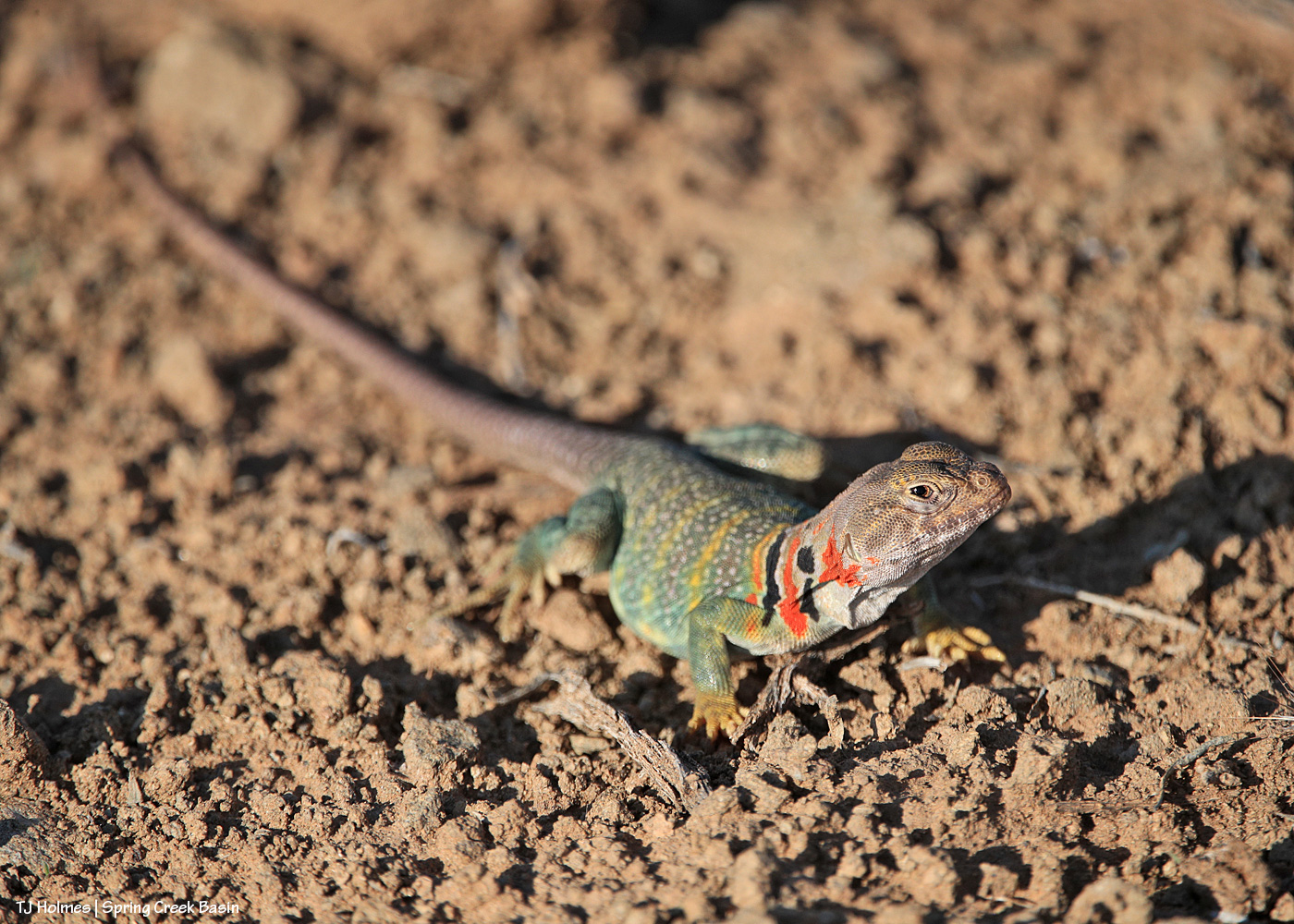
She was super calm while I took photos of her from all kinds of angles.
Super cool little dragon-dinosaur-lizard soon-to-be-mama (!?) girl. 🙂
The scenery to be seen around Disappointment Valley is NEVER a disappointment!!!!!!!!!

Rainbow over Spring Creek Basin from the Disappointment Valley road. … See the double? Unfortunately, we didn’t get any rain out of this one.

Sunset was just about (or more?) dramatic! This is looking eastish; the cloud-glow is from sunset behind me.

And this pudgy little jackrabbit posed for me right near the road with some reflected sunset light giving him/her a lovely glow. 🙂

A couple of nights ago, as I was walking away from mustangs to leave the basin post-sunset, I saw, for the THIRD time, a hummingbird on a cluster of wild flowers!
The first time was a hummer on claret cup cacti flowers a couple of weeks or so ago.
The second time was a hummer on a gorgeous bouquet of prickly pear flowers (this is the year of the prickly pear flowers; I am NOT kidding) a few days ago.
The third time was a hummer on a beautiful bunch of 4 o’clock flowers (which are just coming out with the rain/moisture of the last week) just a couple of days ago. All of these were in Disappointment Valley; the last/most recent one was in Spring Creek Basin.
Note: The above moth (?!?!) is NOT a hummingbird. 🙂 That hummer, like the two previous ones, had no patience for a silly photographer who either didn’t have her camera, didn’t have her camera ready and/or didn’t have her camera in-hand because “the good light” had slipped over the west hill from evening toward night and she (I) was already packed away. DOH. (Note to self: “You miss 100 percent of the shots you don’t take.” I don’t remember who said that, but it’s so true.)
The moths were particularly hard to photograph. (There ended up being at least two that came back to the 4 o’clock, but the above is the same moth.) They were fast. They were the very definition of flutter-bys – impossible to predict their flight patterns (and focus). The light was very low.
I am holding high hopes to be READY for the fourth hummingbird visitor – on any kind of flower – and you can be sure that I will share if I *catch* that, I will share that moment with all of you. 🙂
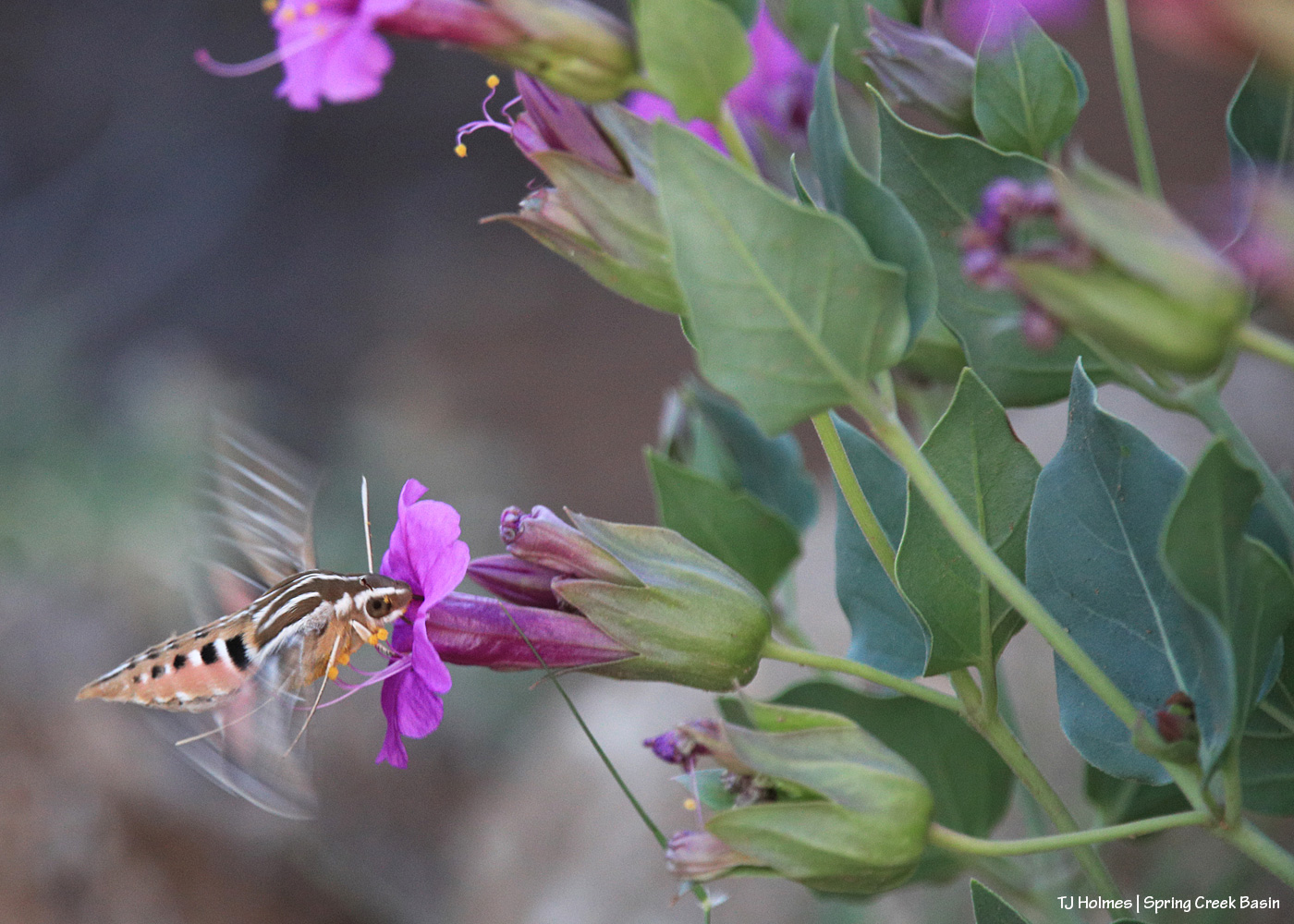
If you know what kinds of moths these are, please let me know? They were REALLY large, and I’m not at all sure they’re a “moth,” though they’re some kind of insect.
*** Update: ChicoRey left a comment about the bee a couple of posts ago that made me look up “sphinx moth,” and sure enough, I got a hit that makes me think what I saw were “white-lined sphinx moths.” Thanks, Maggie, for IDing these moths before I’d even posted! (This post was scheduled a few days ago. :))


This handsome pronghorn buck and his ladies have been in and around Spring Creek Basin lately. I haven’t seen any fawns yet, but they’re either hidden out of sight, or they’re almost ready to make their entrance to the world!
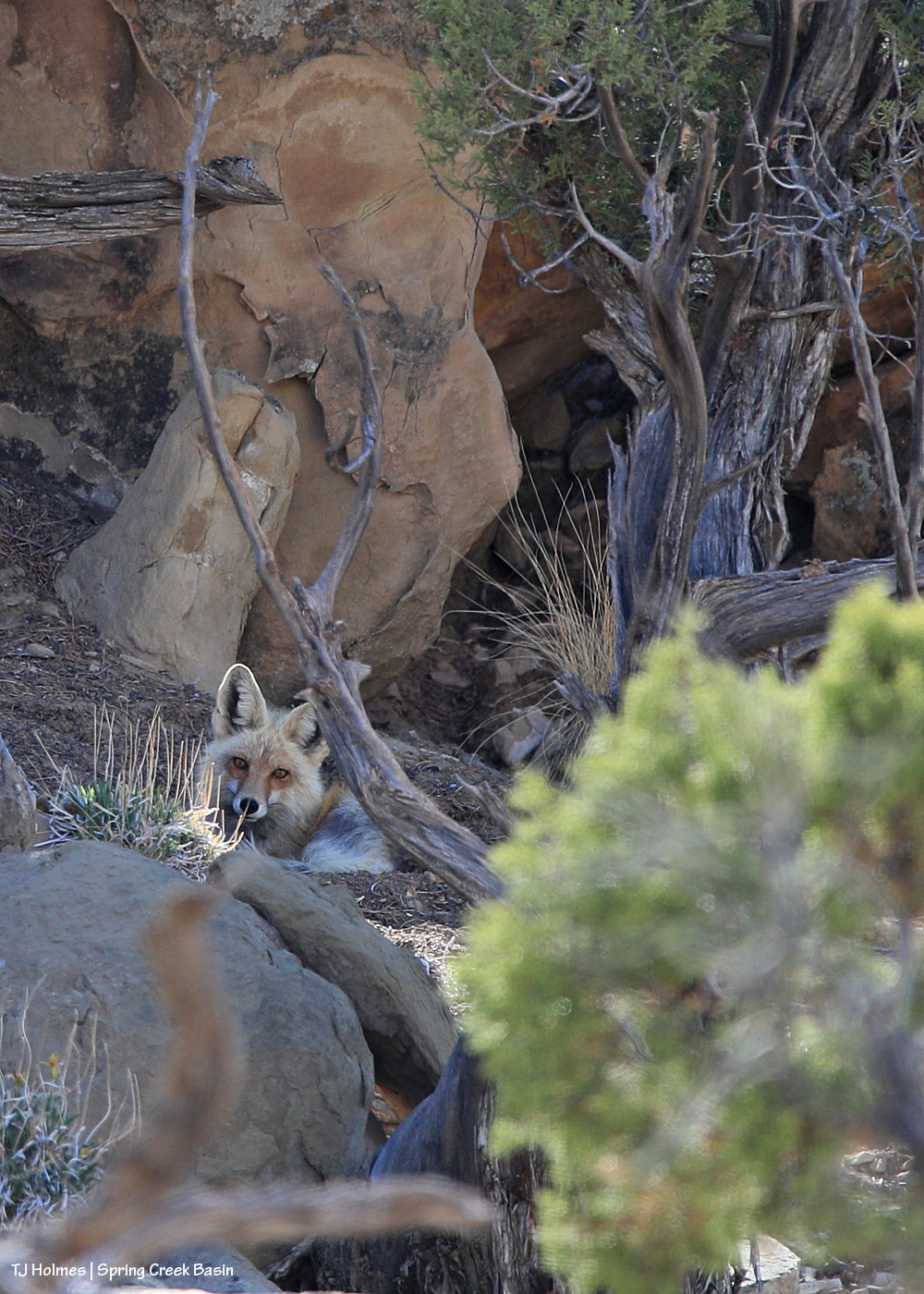
Sometimes, you never know who’s watching you when you think you’re all alone but the mustangs.
This red fox was a super cool sighting. I’ve seen them absolutely rarely, and I’m not sure I’ve seen (m)any in Spring Creek Basin before. I saw this handsome fellow or gal only because I caught some movement before s/he curled up in a ball to keep a bright eye on me as I was photographing some nearby mustangs.
I love foxes!
All the birds (OK, many) and all the flowers (again, many) and all the mustangs (really) may be my favorites, but when I tell you that collared lizards are my *favorite* lizards, they really are. While I adore horny toads (aka horned lizards), the bright turquoise collareds really are my very favorites of the reptile world (which might not be saying much as I’m really not a reptile kinda gal).

This handsome mister was sunbathing on a very pleasantly warm morning in Disappointment Valley. When I first encountered him, I had only my cell phone, so I returned with the big gun. He was much happier with me at a distance necessary with a long lens. I was happy that it allows me much more precise focusing on his amazing details.
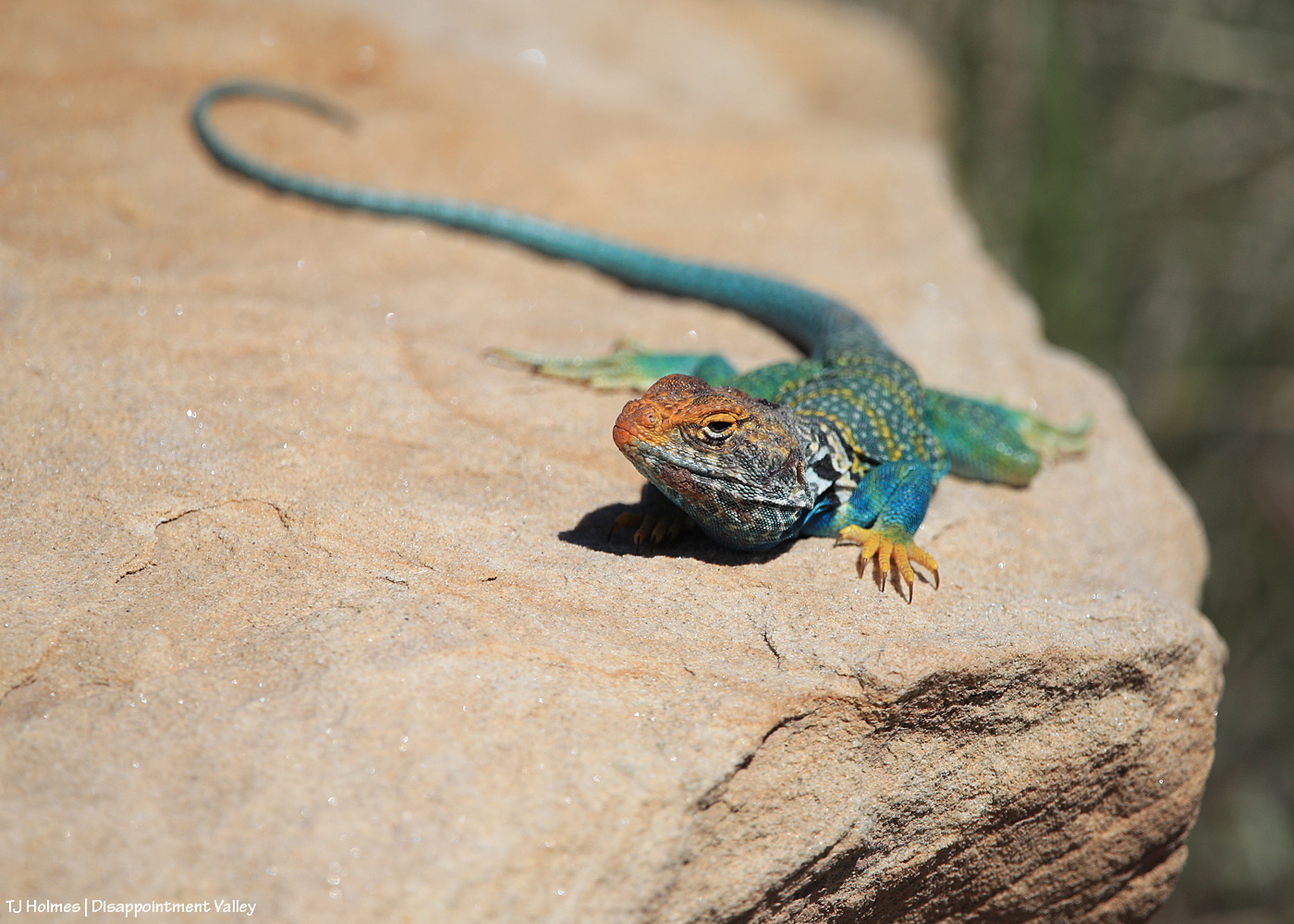
We photographers like the eye-to-eye approach, but I had to rise a little to get that magnificent tail all in view.
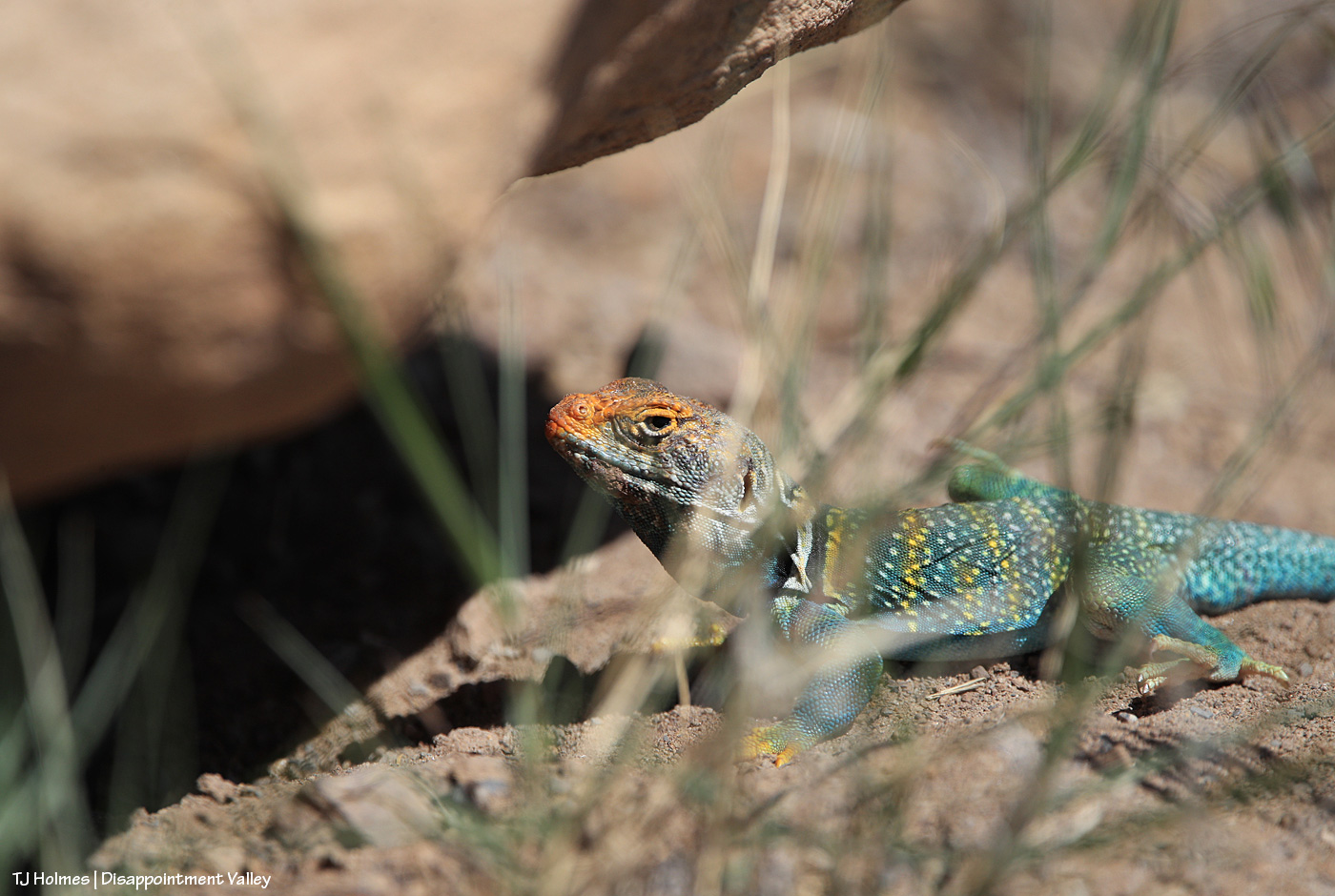
After a bit, he thought he’d seek his shelter’s shade (I don’t think he’d been the only occupant; there was quite a lot of room beneath the overhang of his boulder, and I think something else may have done the initial excavation).

And then I appreciated how the shade allowed more details of and around his eye.
What a super handsome little dinosaur! So glad to see this bright fellow – first of the year for me. 🙂
After posting the information about Kathryn Wilder’s forthcoming (in November) book, The Last Cows, I thought I’d do a “pay it forward” post and recommend another couple of books that I’ve recently added to my library.

I’ve been lucky enough to know Barb Kiipper for many years during our mustang advocacy journeys. She’s the founder and director of Jicarilla Mustang Heritage Alliance, a group that advocates for the mustangs of the Carson National Forest’s Jicarilla Wild Horse Territory in northwestern New Mexico. She has poured heart, sweat, blood and tears into the challenge of working toward good management for that herd, getting many, many mustangs adopted to good homes along the way. I met Michele Bell only recently and have been inspired about her approach to taming and training mustangs from a variety of places (the Jicarilla, BLM-managed herds and Mesa Verde National Park).
Why A Mustang is part memoir of their journeys, part philosophy about working with mustangs and what these amazing horses have taught these women about themselves and mustangs, specifically and in general. It’s a bit of an addictive read (and if you’ve been involved with horses and/or mustangs as long as I have, absolutely fascinating with insights about behaviors and taming/training techniques), and I highly recommend it.
Also …
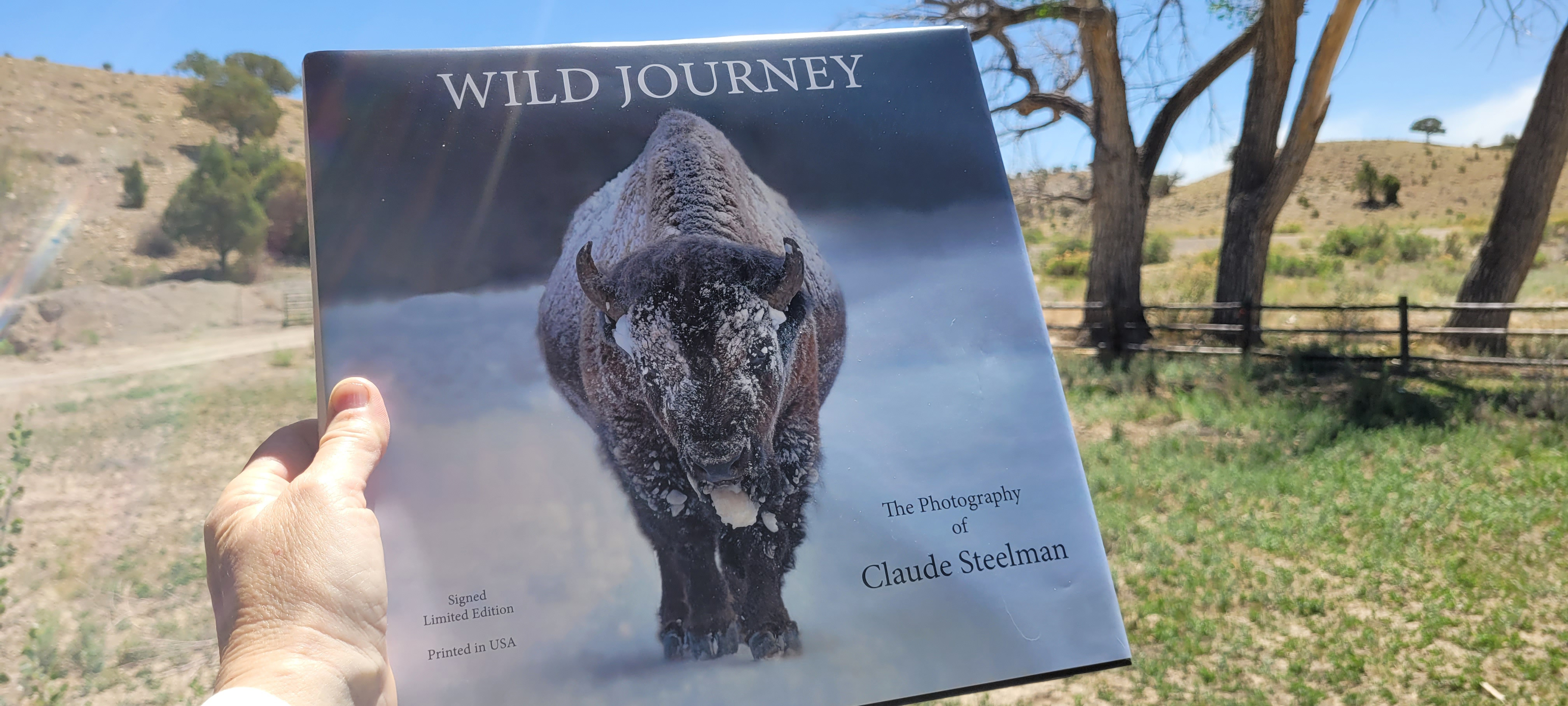
Long-time friend and amazing nature/wildlife photographer Claude Steelman visited the other day on his way to Spring Creek Basin, and he gifted me a copy of his newest book, Wild Journey: The Photography of Claude Steelman. I don’t see this book on his website, so I’m not sure of its availability. Claude had a gallery in Durango for a number of years and currently has downsized to a studio just above Main Avenue – so he can be out shooting more! This wonderful book is a sort of compendium of his travels and experiences across the West (and beyond) during his 40-plus years (!) as a photographer chasing natural light and wildness. Mostly images, only a little text; his photography truly speaks volumes.

As you would expect from the photographer who published Colorado’s Wild Horses, there’s a section in this book about mustangs, which includes images from Spring Creek Basin, including the above gorgeous scene. 🙂
Claude says people ask him when he’s going to retire, and I love his phrase at the end of the book that indicates that if he retired, he’d “just go take pictures, so why bother” retiring!? Find your passion, indeed!
I have been so fortunate along this journey to not only meet and spend time with “my” own mustangs but also many like-minded humans. The mustangs and these people keep me grounded on my own path.
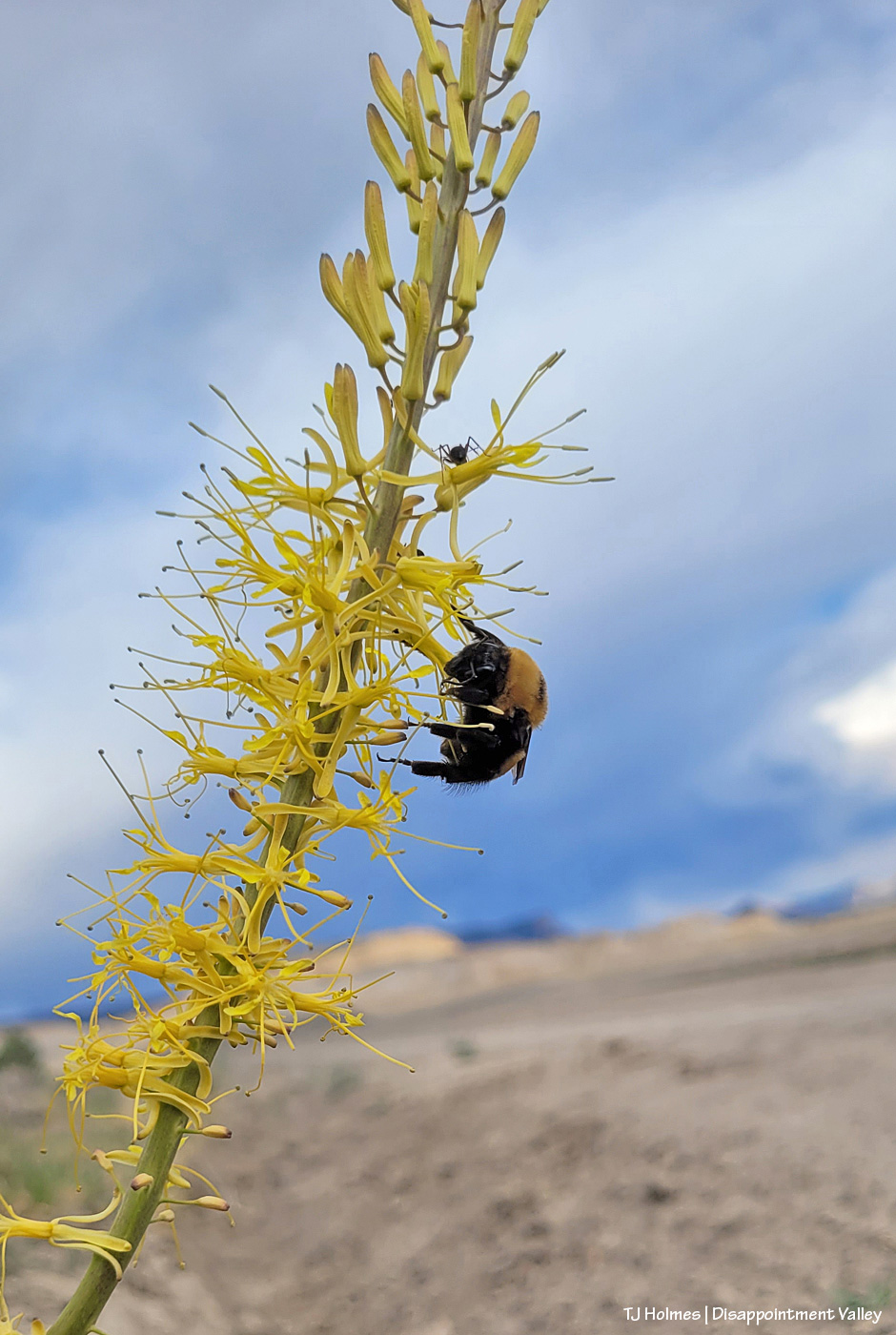
Speaking of prince’s plume … !
Just between Sunday and Tuesday, the number of plants I saw probably doubled (which isn’t saying much as I didn’t see many on Sunday). But they’re definitely budding and blooming and raising their blossoms (I don’t really know the nomenclature for blooming or blossoming plants?), and the bees (and ants) are taking notice.
Proudest moment about the above pic? I think I actually have a catchlight in the bee’s eye. 🙂
The bee, by the way, was huge, probably at least the size of my middle finger’s middle knuckle.

A young bull elk and a cow elk check me out from right above Disappointment Creek, which still is not running yet this year. They still look awfully fuzzy don’t they? The temp was at least 67F in the valley yesterday. Spring is here.
 Spring Creek Basin Mustangs