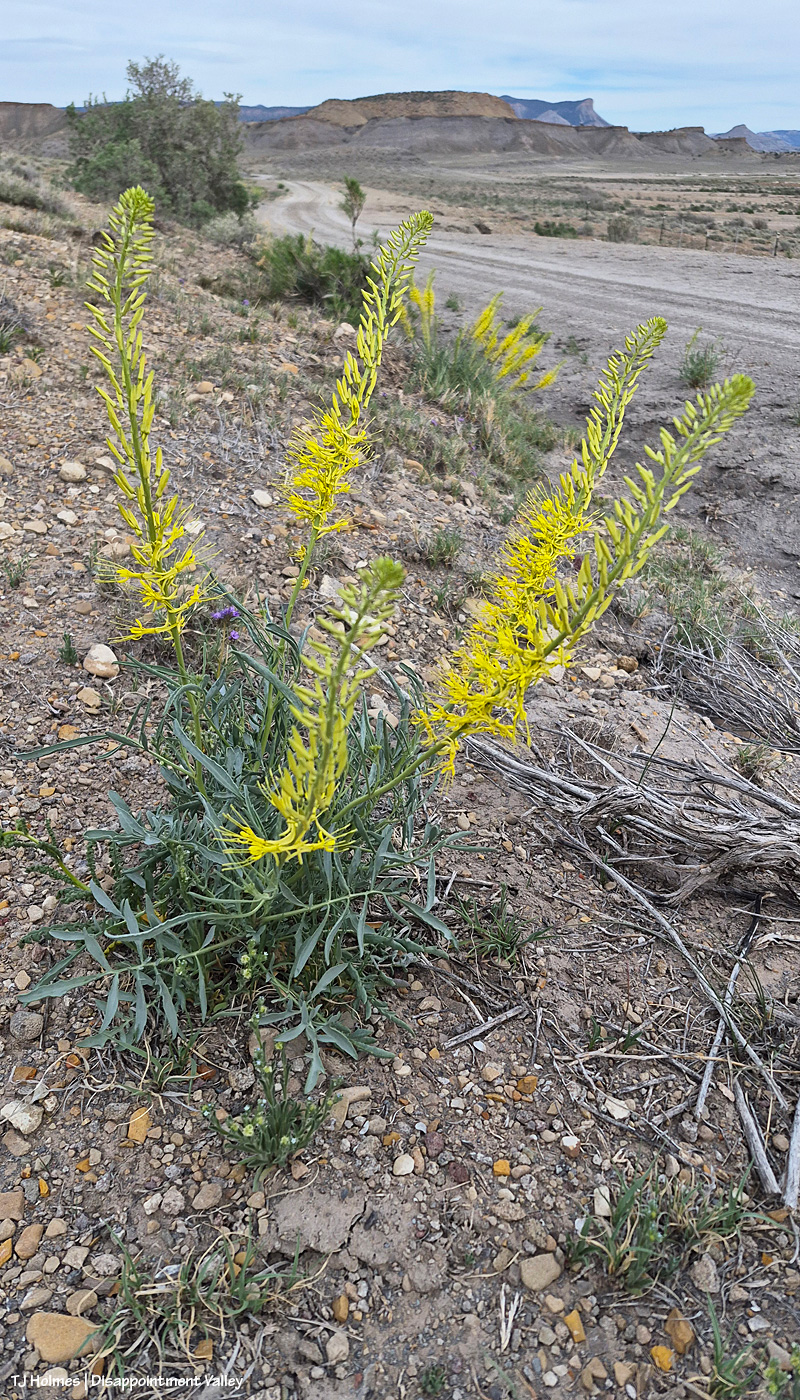
Heading TO Spring Creek Basin, I found the prince’s plume plants in full, crazy bloom. Why is this crazy, I hear you asking? Because they don’t usually bloom until May. IN Spring Creek Basin, the prince’s plumes I saw were a little behind these along Road K20E toward the basin, which makes sense as the basin is a bit higher elevation than along this road.
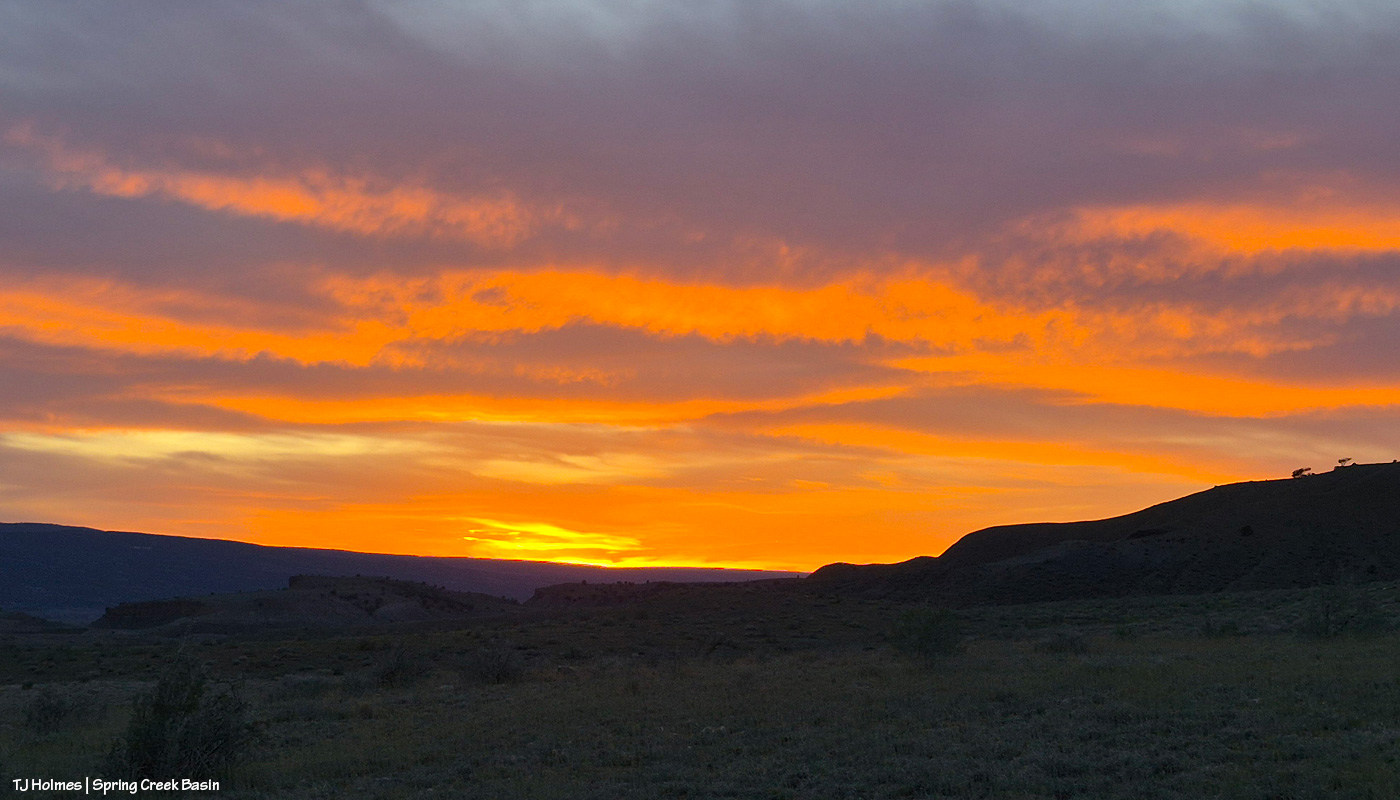
Heading OUT of Spring Creek Basin, the grey sky exploded with color at and post-sunset! Wowza. The weather wizards are giving us a whopping NINETY PERCENT chance of rain Wednesday. Do you know what Wednesday is? Wednesday is April 1, otherwise known as April Fools’ Day. Call me a fool a million times over, and please, please, PLEASE, let it RAINRAINRAIN!!!
If I’d been on the ball realizing the date and the holiday-tomorrow – when it was yesterday – I’d have stopped to take some pix of the budding greasewood. But I never know what day it is, let alone what holiday is near and/or almost upon us, so instead, for some St. Patrick’s Day greenery, enjoy these early(!)-blooming wildflowers that I took pix of late last week:
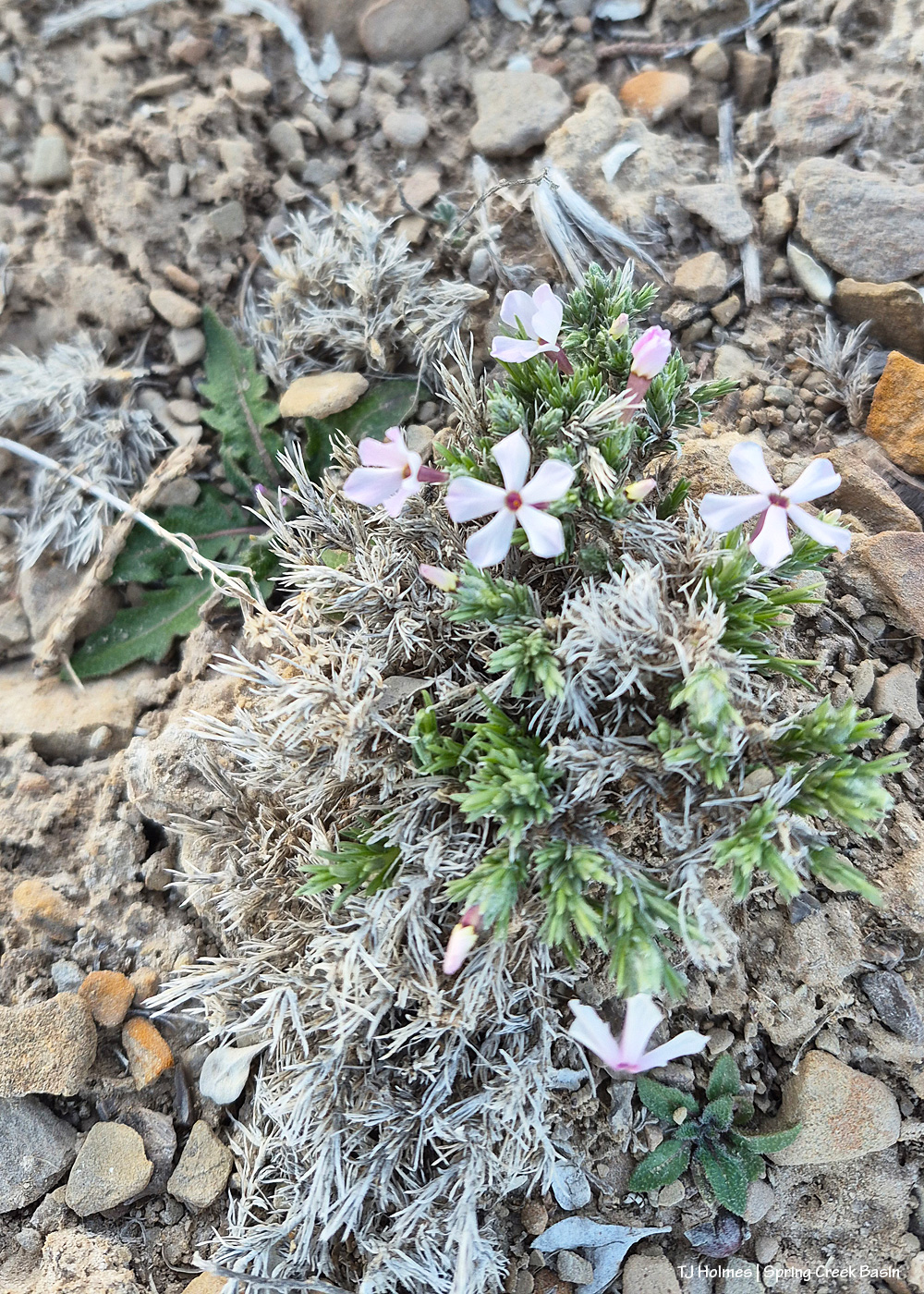
This is phlox (don’t ask me the specific kind or the scientific name). It’s almost always the very first little wildflower we see every year.
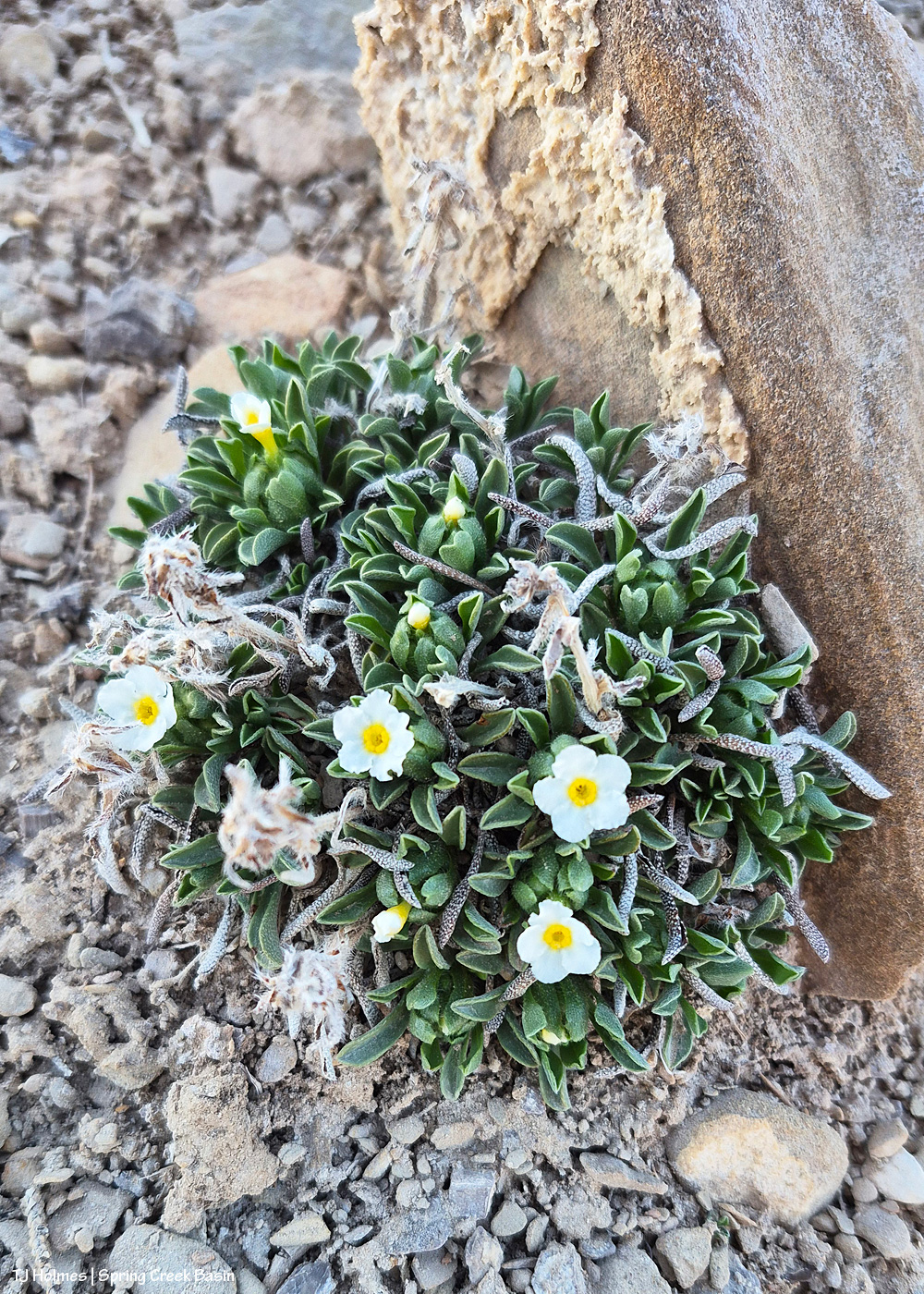
And (they were very near each other) this is a cat’s eye. Not any ol’ cat’s eye but a special kind that may be found only in this relative area of Southwest Colorado. I can’t remember exactly, but BLM range/plant guy Ryan Schroeder has confirmed it with the state BLM plant people. It is *special* and was the cause of great excitement last year when they realized we not only have it in Spring Creek Basin but it’s maybe not as rare-ish as they thought it was. In my wanderings, I see it everywhere, but I’ve also since realized that we have at least a couple of other types of cat’s eyes, too.
There’s just the faintest hint of a super-slight green blush across the basin. … C’mon, March rains!
And happy St. Paddy’s Day to all who celebrate your Irish. 🙂
A couple of nights ago, as I was walking away from mustangs to leave the basin post-sunset, I saw, for the THIRD time, a hummingbird on a cluster of wild flowers!
The first time was a hummer on claret cup cacti flowers a couple of weeks or so ago.
The second time was a hummer on a gorgeous bouquet of prickly pear flowers (this is the year of the prickly pear flowers; I am NOT kidding) a few days ago.
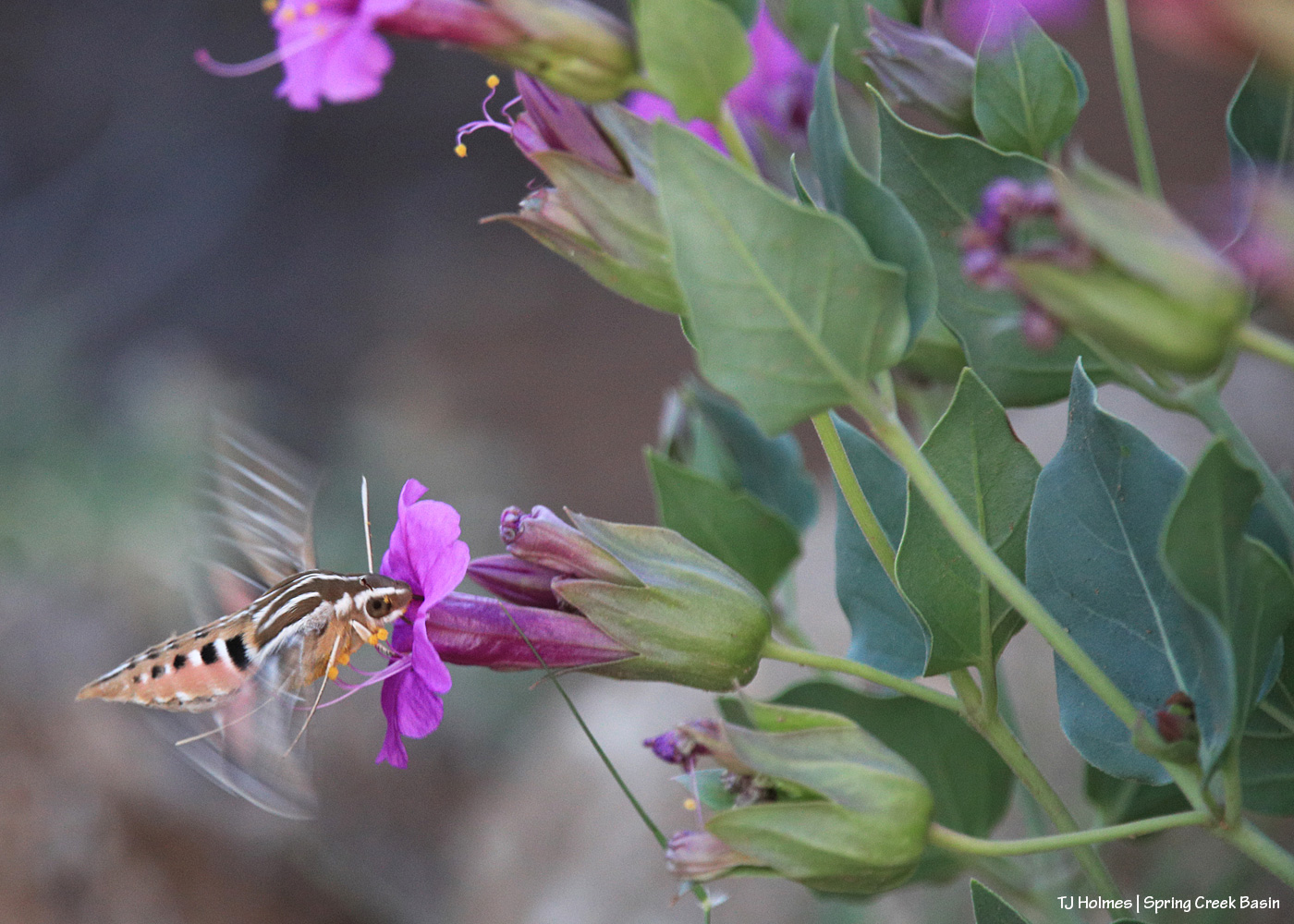
The third time was a hummer on a beautiful bunch of 4 o’clock flowers (which are just coming out with the rain/moisture of the last week) just a couple of days ago. All of these were in Disappointment Valley; the last/most recent one was in Spring Creek Basin.
Note: The above moth (?!?!) is NOT a hummingbird. 🙂 That hummer, like the two previous ones, had no patience for a silly photographer who either didn’t have her camera, didn’t have her camera ready and/or didn’t have her camera in-hand because “the good light” had slipped over the west hill from evening toward night and she (I) was already packed away. DOH. (Note to self: “You miss 100 percent of the shots you don’t take.” I don’t remember who said that, but it’s so true.)
The moths were particularly hard to photograph. (There ended up being at least two that came back to the 4 o’clock, but the above is the same moth.) They were fast. They were the very definition of flutter-bys – impossible to predict their flight patterns (and focus). The light was very low.
I am holding high hopes to be READY for the fourth hummingbird visitor – on any kind of flower – and you can be sure that I will share if I *catch* that, I will share that moment with all of you. 🙂
If you know what kinds of moths these are, please let me know? They were REALLY large, and I’m not at all sure they’re a “moth,” though they’re some kind of insect.
*** Update: ChicoRey left a comment about the bee a couple of posts ago that made me look up “sphinx moth,” and sure enough, I got a hit that makes me think what I saw were “white-lined sphinx moths.” Thanks, Maggie, for IDing these moths before I’d even posted! (This post was scheduled a few days ago. :))
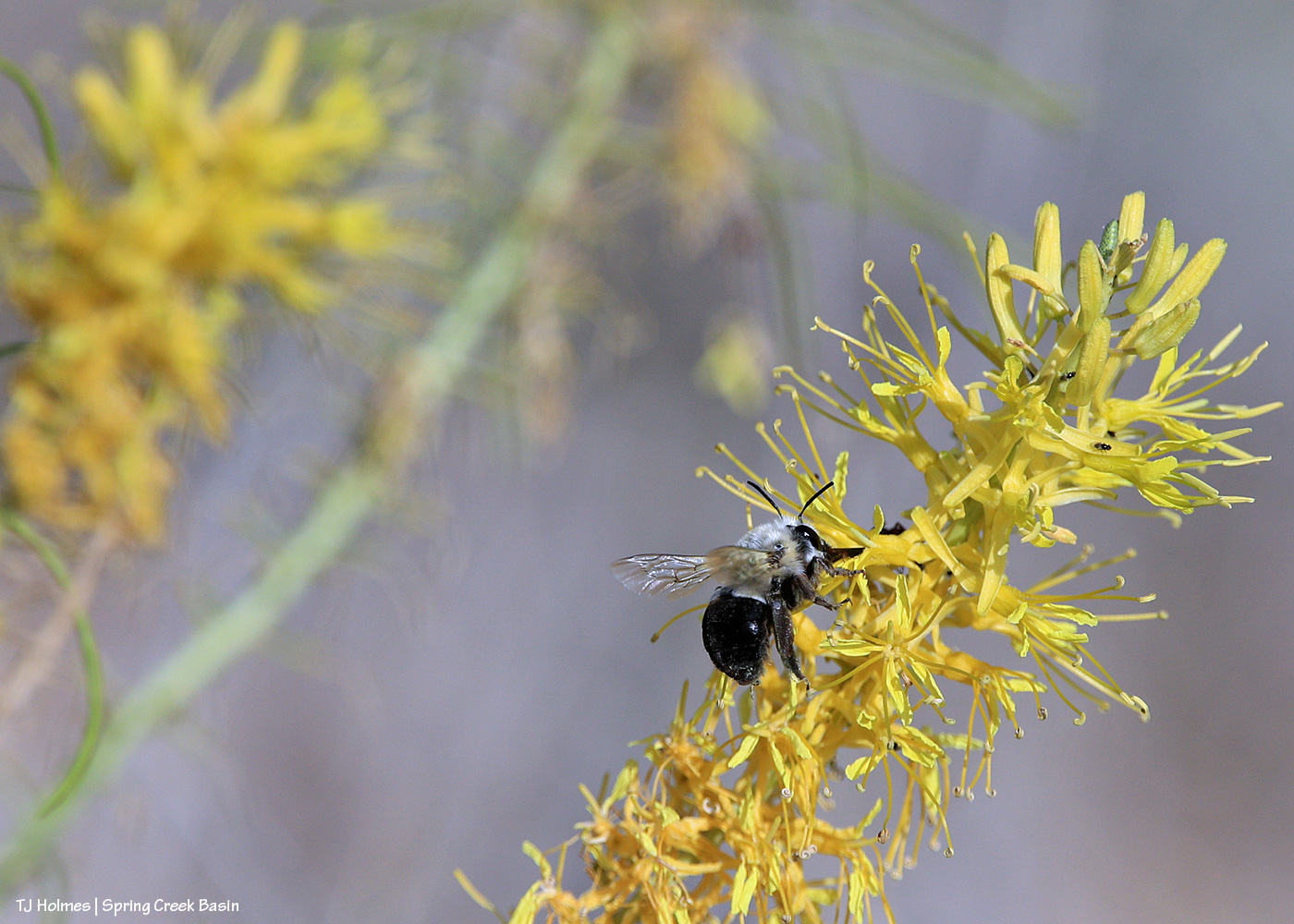
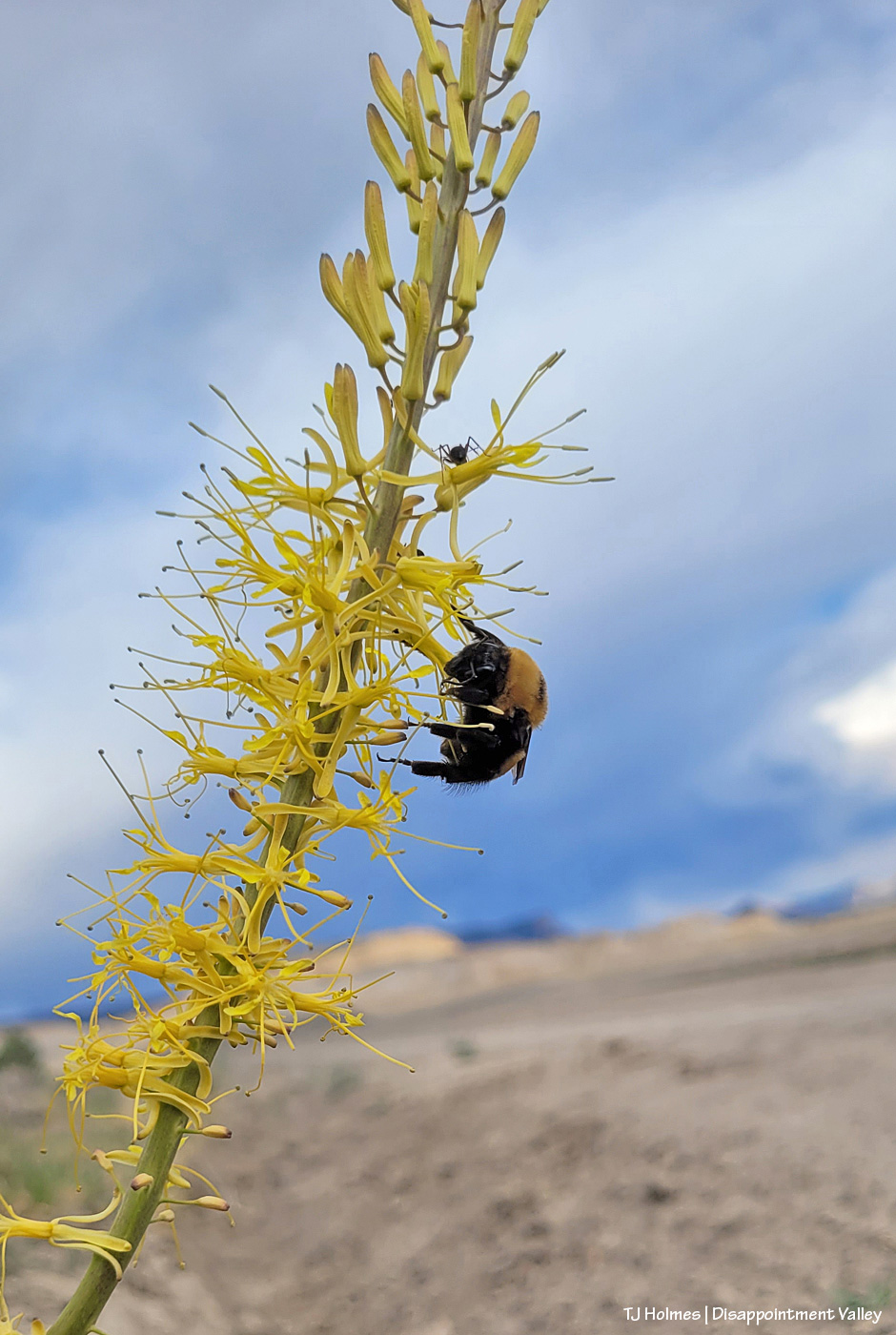
In all my excitement about the rainbow over the mustangs that came at the end (nearly) of my visit in Spring Creek Basin a few days ago, I nearly forgot about this busy little buzzer that I spent a fair time focused on (trying, anyway) as it buzzed around some rain-reinvigorated prince’s plume in the northern part of the basin. There were big ants on several of the plumes, along with much tinier little bugs (dreaded gnats?).
There were several smallish plumes growing from this one plant, and the bee diligently visited them all.
If you’re not a fan of bees on pretty spring desert flowers, I assure you that mustangs will return tomorrow. … I was quite fascinated with this little bee, and (to nerd out for a minute) I’m stoked at how well my camera and lens captured all its little details! I mean … NATURE! Am I right?! 🙂
You already know that I’m going to say that these flowers – such delicate beauty surrounded by such fierce thorns! – are one of my favorite signs of spring. 🙂 Even as temps soar into the lower 90s (argh).
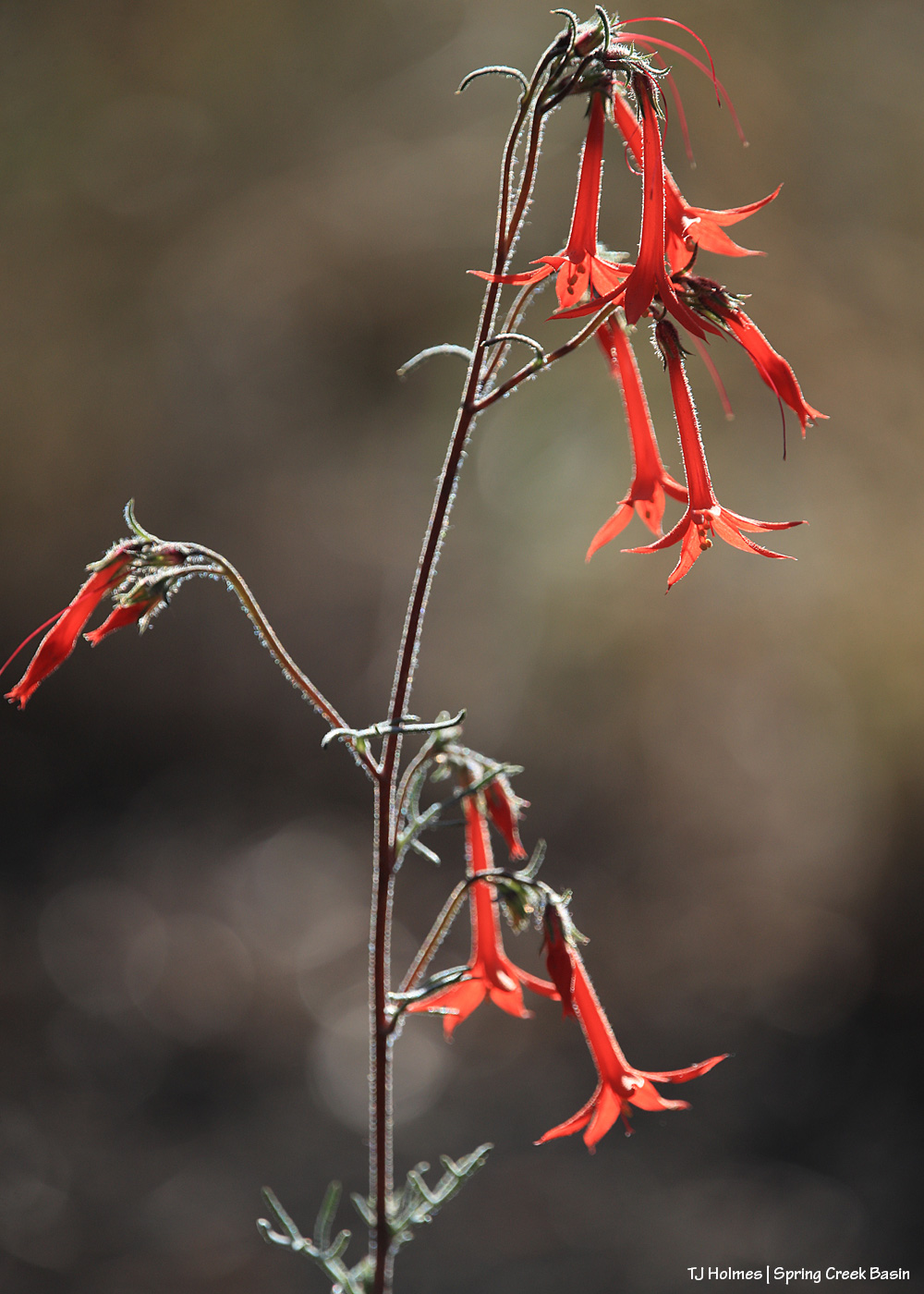
I was surprised and delighted to see four (seriously, just four) scarlet gilia flowering plants the other day in Spring Creek Basin.
The Southwest Colorado Wildflowers website says they’re in the phlox family, interestingly. Our phlox are always THE first things to bloom in the spring in the basin. They are very low-growing and small, and very widespread. They usually have white petals, but they can also be a soft pink or even purplish color. I would say that by sight, anyway, they don’t resemble at all their scarlet gilia … cousins? 🙂
I’ve only ever seen scarlet gilia at higher elevations in the San Juan Mountains, but apparently, they’re quite widespread over a variety of elevations, happily for admirers of these pretty, bright red flowers!
Across the little valley from Flash and his mares, I found these beautiful little flowers. Actually, the sort of yellow and soft-red/pink bud of another plant caught my eye before I found a few clusters with some rather wind-battered blooms open. There were maybe a dozen plants in one area … and nowhere else.
I’m not entirely sure whether I’ve seen these before; the sight of them rings a dim bell … but I know for sure that if I have seen them before, I never identified them. They have the curiously long name of lavenderleaf sundrops! Length aside, what a pretty name!
I found/identified it first through my Southwest Colorado Wildflowers app, where it calls them the above-referenced lavenderleaf sundrops, then went to the website, where it’s identified as Oenothera lavandulifolia (Sundrops).
As I was walking back down the hill, thinking about the pretty flowers, I thought they looked a bit like evening primrose, which are larger and have white petals and are ubiquitous around the high desert (in probably most western states). I must be gaining *some* kind of plant knowledge, as the site identifies them further as being “Onagraceae (Evening Primrose Family)”. 🙂
I especially liked this reference at the very bottom of the information:
“This is such an attractive plant, whether in isolated clusters or in magnificent displays over broad areas. Even the buds have their own special attractiveness.” I had been thinking *exactly* the same thing when I first saw the pretty yellow-and-red buds!
When I’m taking pix of tiny little things like flowers with my phone, I never know where the focus is going to be, whether I try to make it in a certain place or another certain place. I got the focus on the top flowers in one pic and the bottom flower in the next pic, and I like them both!
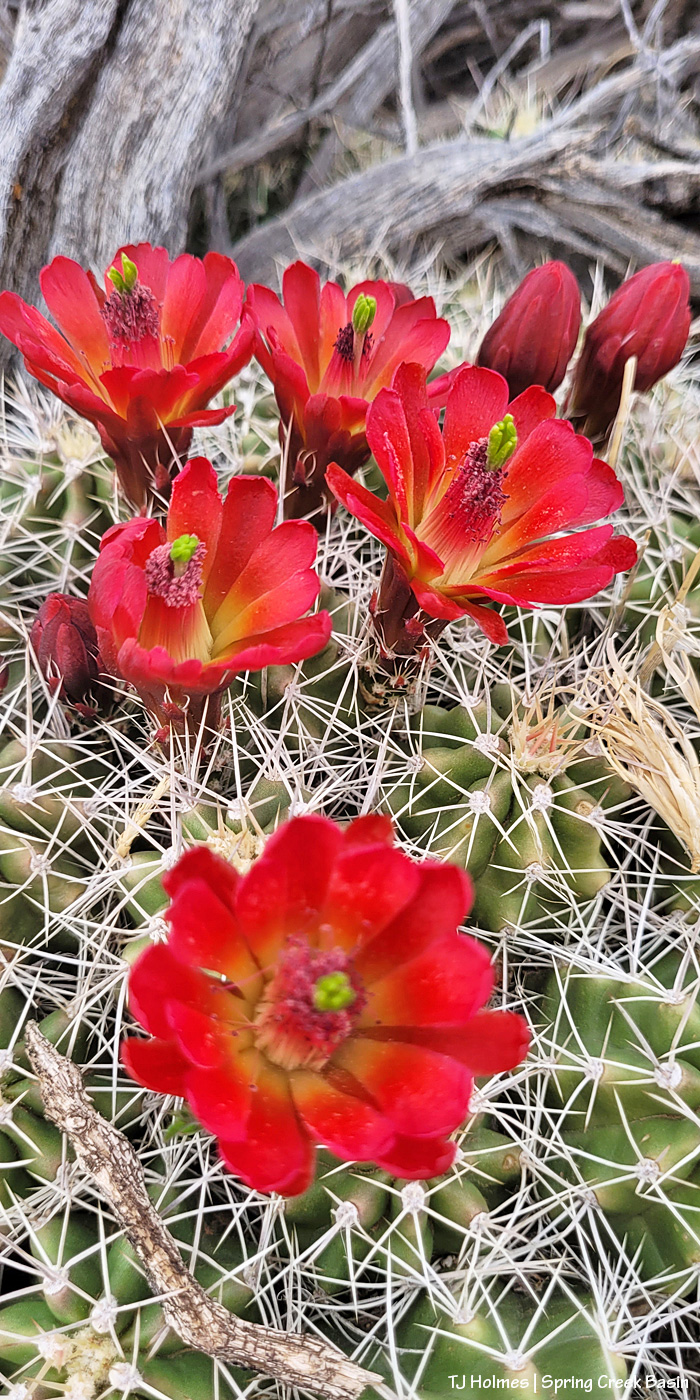
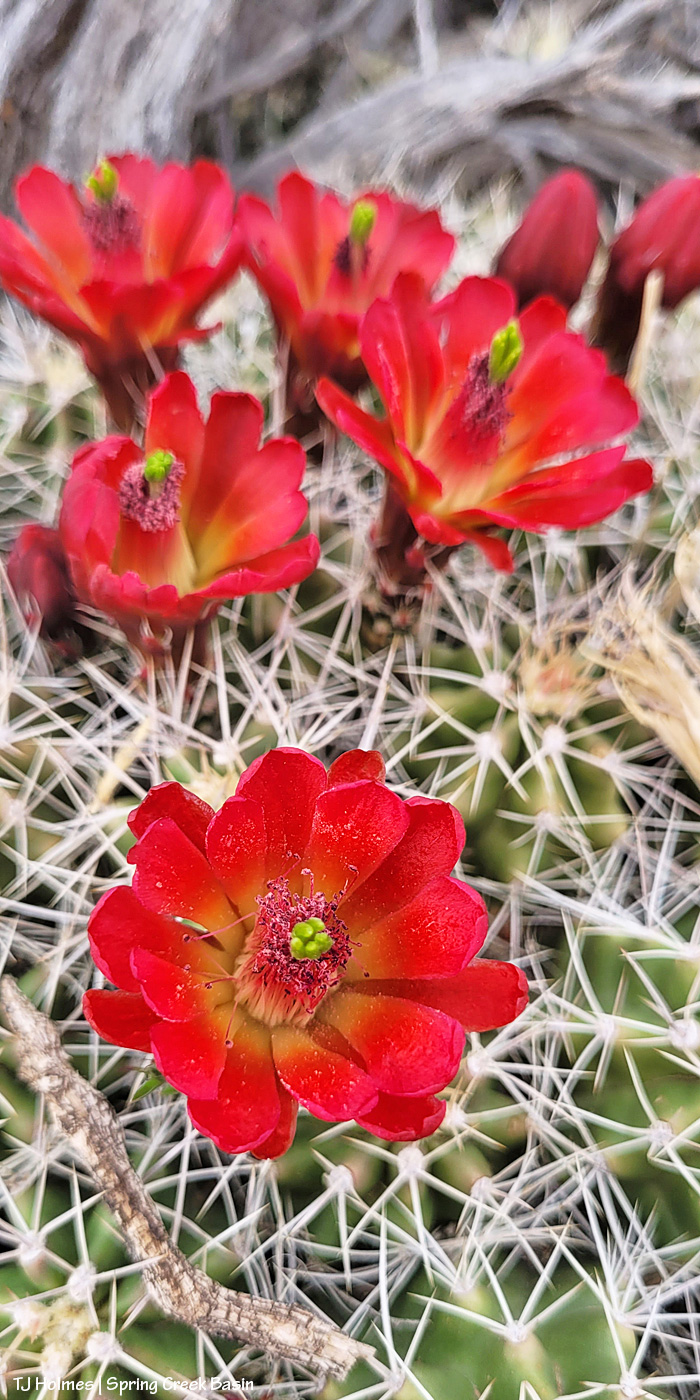
The claret cup cacti are now blooming – all of a sudden! – in Spring Creek Basin. They make me so happy. 🙂
Just between Sunday and Tuesday, the number of plants I saw probably doubled (which isn’t saying much as I didn’t see many on Sunday). But they’re definitely budding and blooming and raising their blossoms (I don’t really know the nomenclature for blooming or blossoming plants?), and the bees (and ants) are taking notice.
Proudest moment about the above pic? I think I actually have a catchlight in the bee’s eye. 🙂
The bee, by the way, was huge, probably at least the size of my middle finger’s middle knuckle.
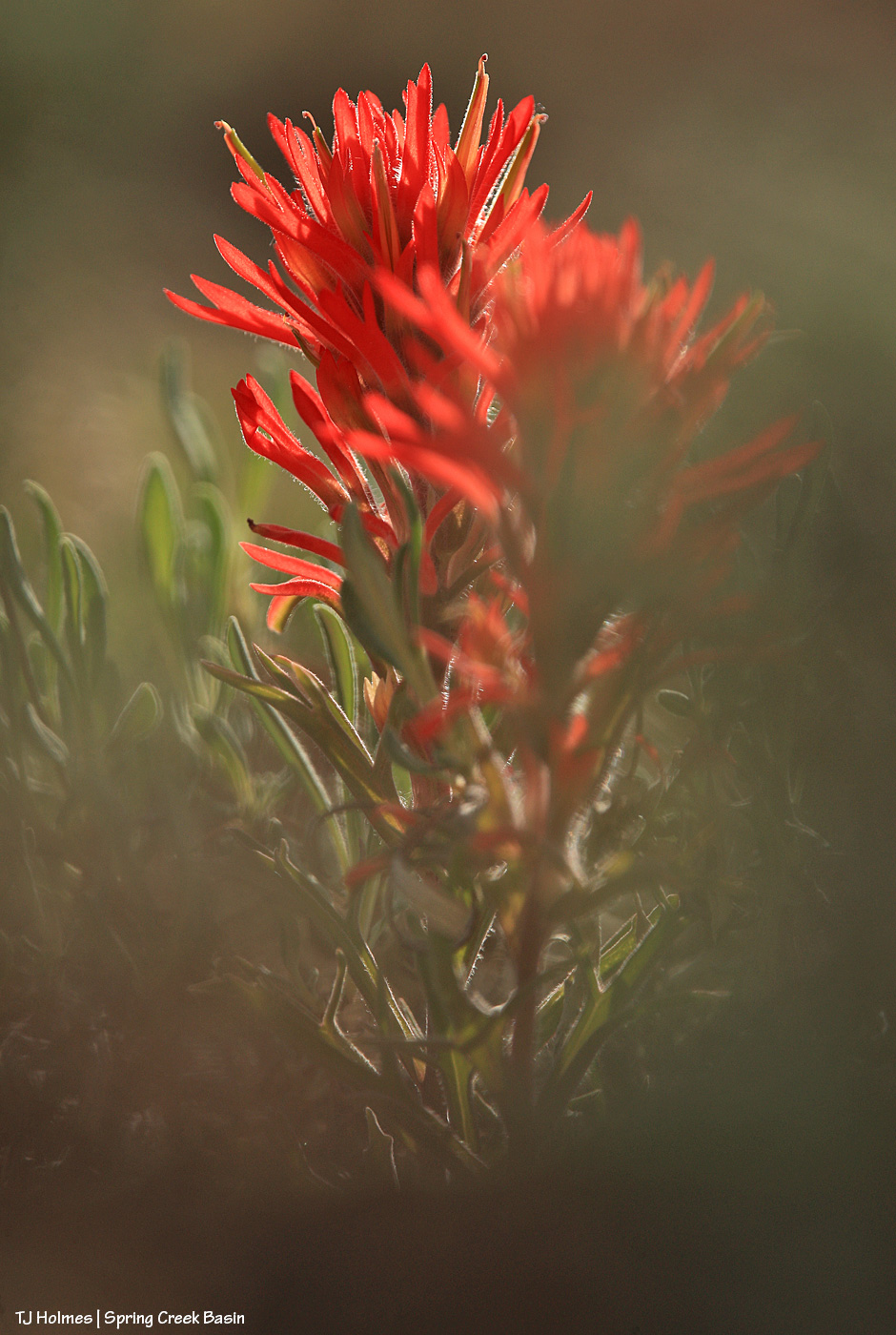
I always forget how BRIGHT and vibrant they are … until the next spring rolls around and they blaze with color in the basin’s brown ground and green sage (and greasewood and shadscale and sage and other bits). Wildflowers this year are tiny and hugging the ground. The first prince’s plumes have started to stand tall … always a good sign.





 Spring Creek Basin Mustangs