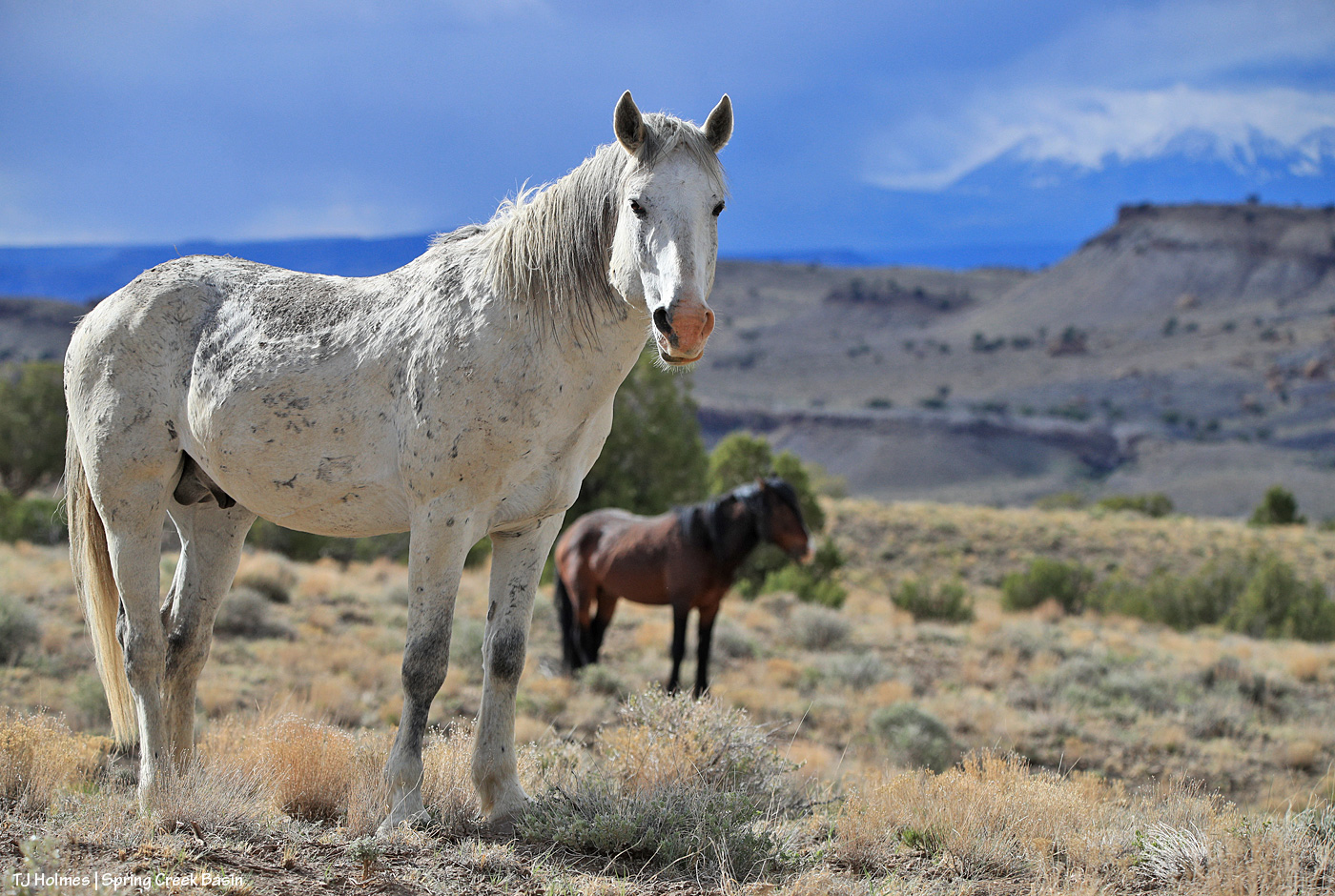
Skywalker, who has been wandering mostly on his own, sometimes with a couple of bachelor pals, most recently has been back with his former band (still as a bachelor) and buddy (maybe not quite anymore) Sancho.
He seemed fairly grumpy, but I finally caught him looking mildly interested as he looked up from snoozing, saw me sitting nearby … and went back to sleep. Nothing to see here!
But everything to see *there*!
We had rain Sunday and Monday, and we had great storm clouds Tuesday and Wednesday. Unfortunately, we got only a trickle-drip of “rain” from those clouds those days, but the light has been incredible.
Most unfortunately, I had already hiked down from the hill and the band by the time sunset and THIS happened (a couple of hours later):
Those mountains, in all three pix, are southeastern Utah’s La Sal Mountains.
Absolutely, breathtakingly spectacular. Scenery and mustangs brought to you by Mother Nature’s magic. 🙂
Mariah grazes on greens while Mr. and Mrs. Mallard peruse the shoreline for any duck-lightful edibles.
By this time, I had moved to the west end of the pond, on the opposite side from the horses. I really was delighted when the ducks landed where they did. They were still probably 20 or so yards from the horses, most of which ignored the ducks, but a couple of which paid rapt attention!
Our feathered friends Mr. and Mrs. Mallard are still on the one pond in Spring Creek Basin that has water (or they may be a different pair?).
Mrs. (I think) American Wigeon is with them (might also be a different individual), but Mr. Wigeon was not present.
Mr. and Mrs. Mallard were practicing their synchonized diving, and this judge awards them a near perfect 9.5! 🙂 (Also, though, I think this illustrates how shallow the pond is, though it still covers a fair bit of area.)
Mustangs had already been to the pond to drink and were lingering over some fresh greens to the left (eastish). Later, the ducks all few off the pond, and Mrs. Wigeon circled and returned to the water, but Mr. and Mrs. Mallard explored terra firma – right near some horses! At least a few of the horses were interested in their little waddling friends, but nobody approached too closely.
Spring Creek Basin and at least part of Disappointment Valley got about half an inch of rain (total) Sunday and Monday. Upper and lower areas of the valley likely got more and less, respectively. We needed it badly, and I think the grasses are already growing, and it’s already a bit more green. *Grateful*!
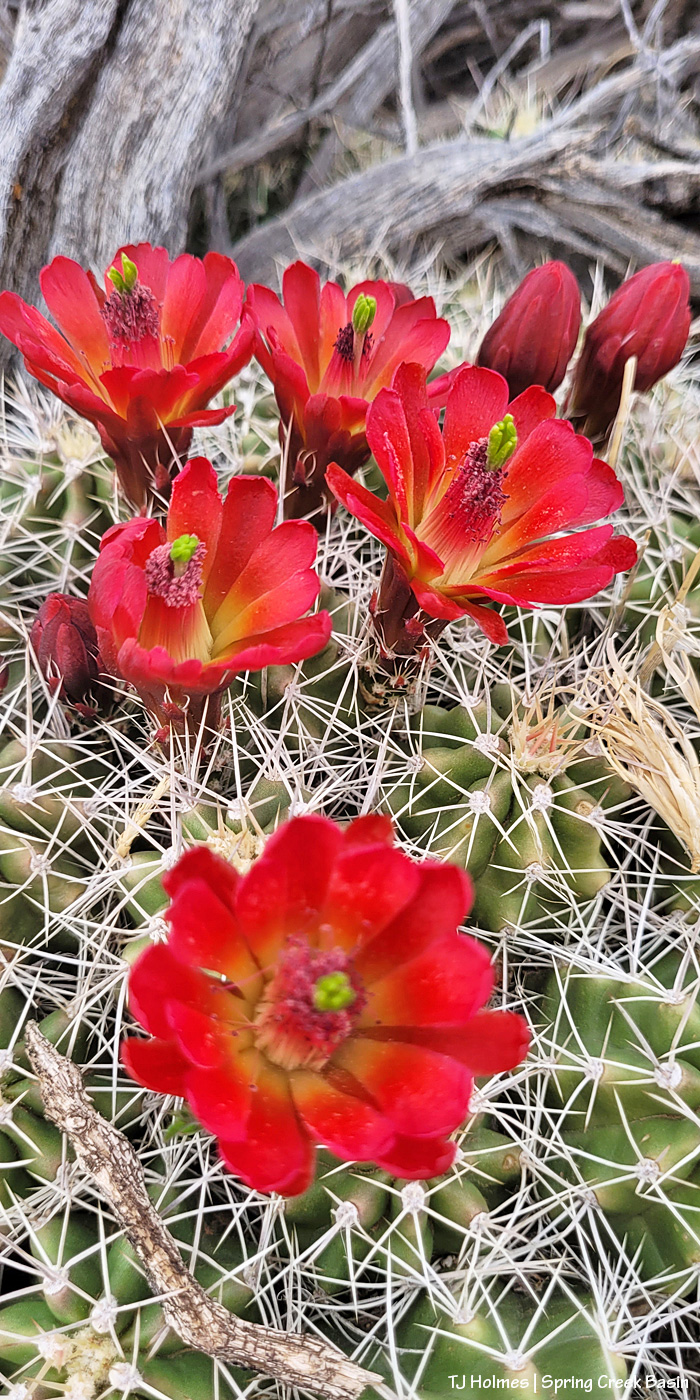
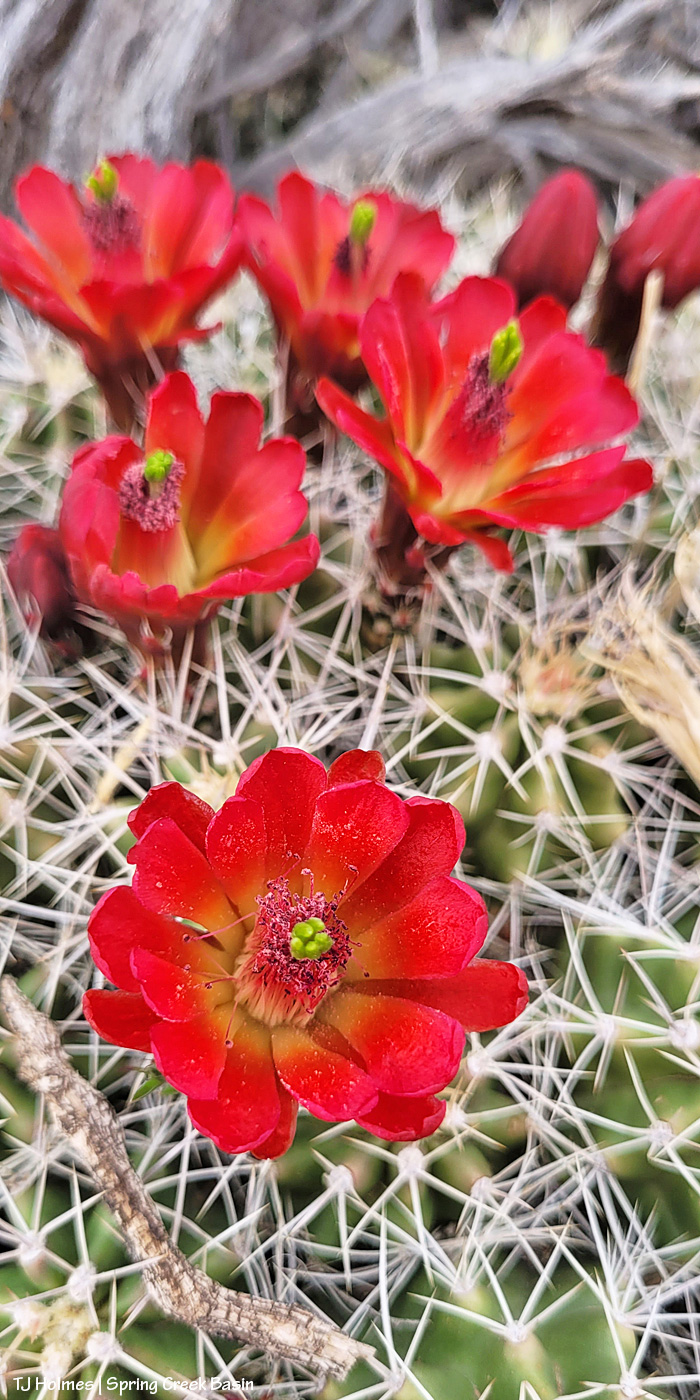
When I’m taking pix of tiny little things like flowers with my phone, I never know where the focus is going to be, whether I try to make it in a certain place or another certain place. I got the focus on the top flowers in one pic and the bottom flower in the next pic, and I like them both!
The claret cup cacti are now blooming – all of a sudden! – in Spring Creek Basin. They make me so happy. 🙂
There are no mustangs in this post (crazy, I know, with a title like that), but mustangs were SEEN.
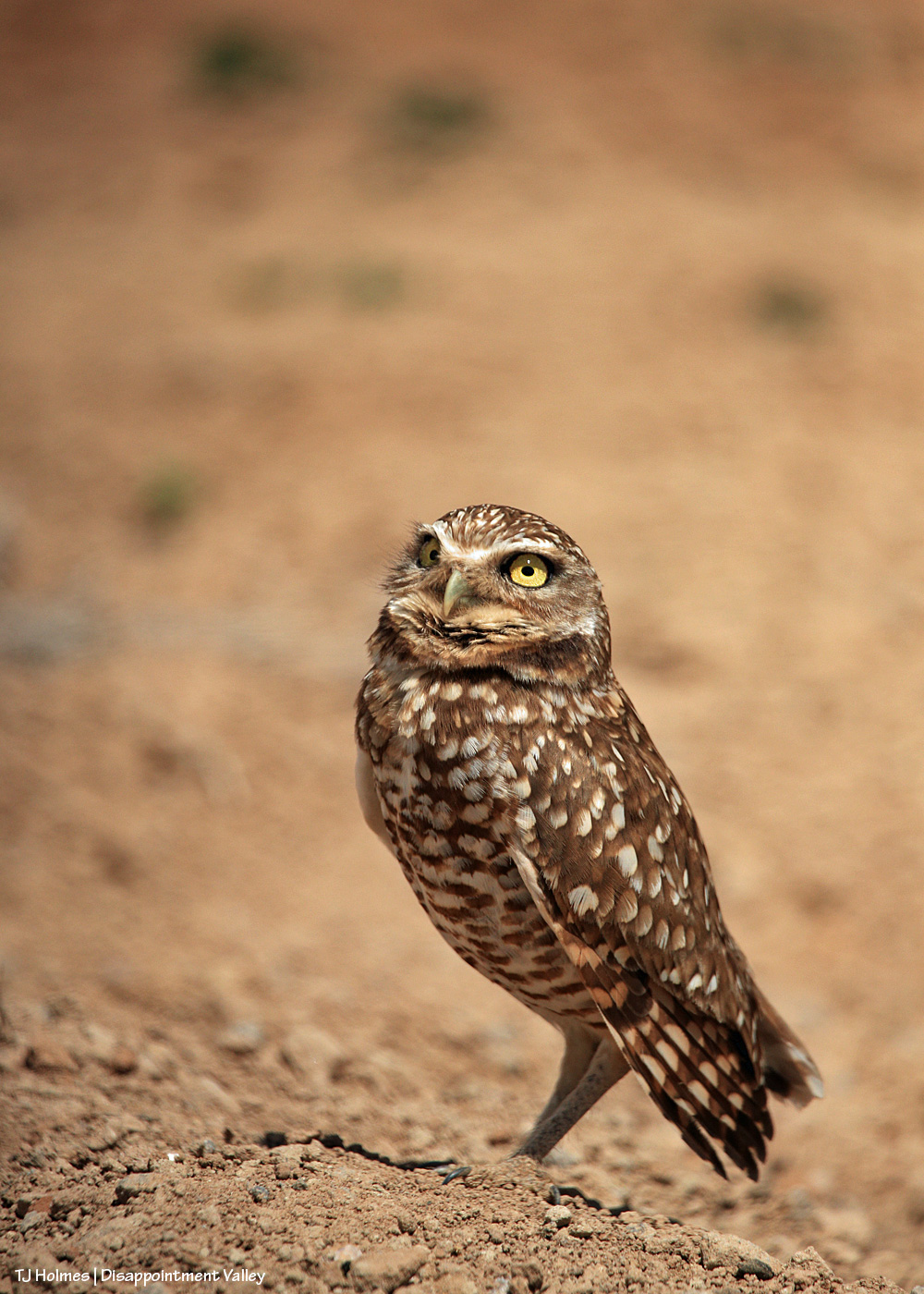
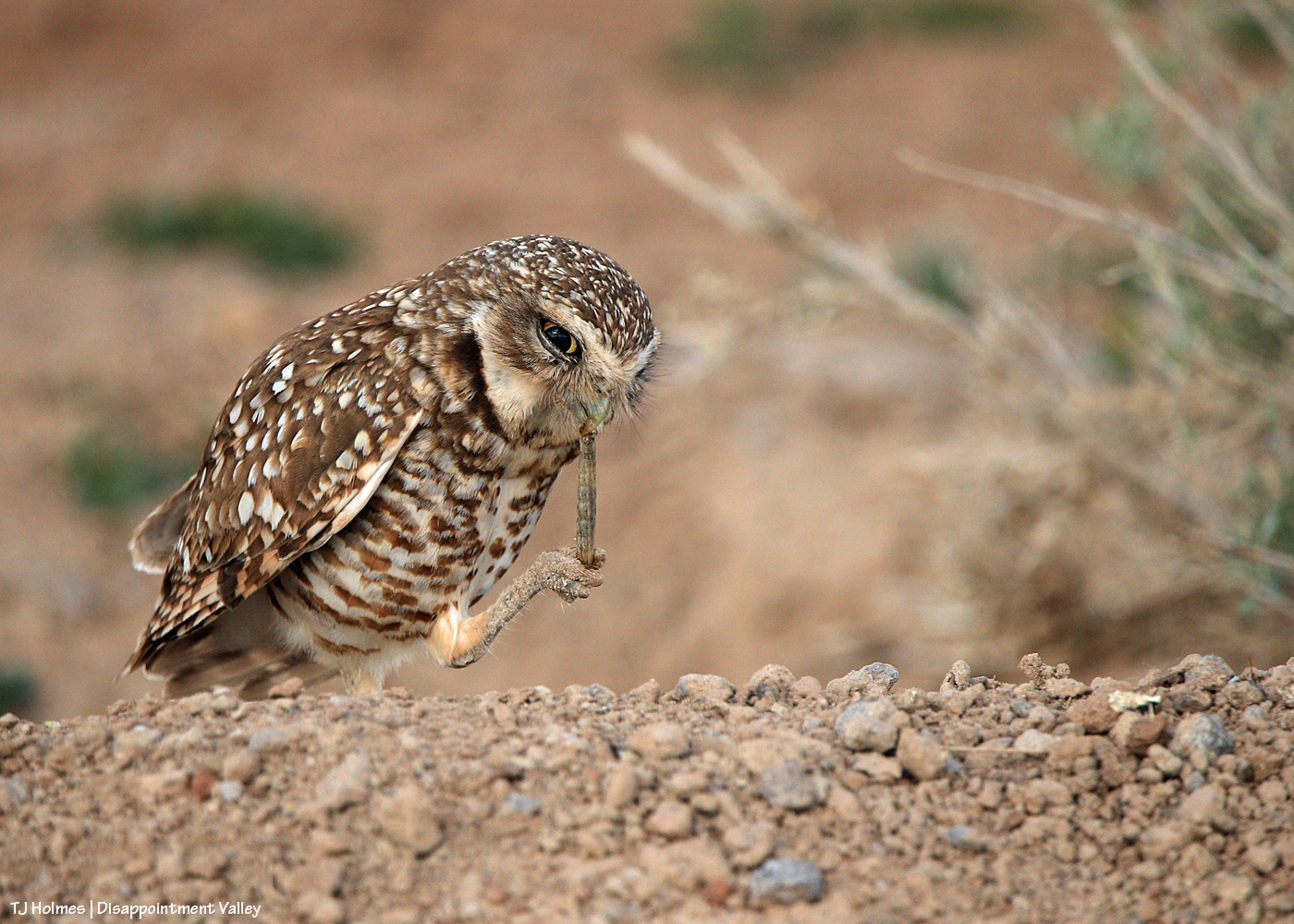
This, my friends and fans of wild things and wild places, is a burrowing owl. Possibly one of THE – I’m gonna say (type) it – *cutest* birds on the planet. You know how I adore kestrels. … I see them all the time. But burrowing owls?!?!?!?! This might be the third I’ve ever seen in Disappointment Valley.
Huge shout-out to friend Mary, who not only was driving but spotted this marvelous beauty along the road. She casually asked if I’d seen the owl – she thought it was an owl? – and obliged my horizon-gazing self by backing up to where – sure enough – this burrowing owl was standing on a burrow (possibly/likely previously the home of a prairie dog family) right alongside the road. The owl him/herself (?) obliged us by being its beautiful, gorgeous, adorable self so we could take a minute or two’s worth of photos before driving on to not disturb its … burrow guarding? We never saw another bird, and this one seemed pretty comfortable.
Who needs opposable thumbs when one has feet/talons perfectly capable of gripping dinner? (I think this might be a carpenterworm? Though it’s much earlier than I’ve ever seen them. Eat all you want, friend owl!)
Like … WOWOWOWOWOWOWOW! 🙂
And as if that weren’t enough, this was the end-of-day, sunset-lit, alien-mothership/stormcell cloud (one or the other … right?!) visible over upper Disappointment Valley just beyond (?) Spring Creek Basin:
Because … our planet Earth really is that gorgeous. 🙂
Notes: Owl pix taken with a 600mm lens from inside a vehicle. Crazy storm-cloud pic (and yes, the rest of the sky was basically blue and nearly clear) taken with my phone because a long-mustang-owl lens just could not capture the entirety of the above scene. Very last light of day. I sized the image and gave it a touch of sharpening, but otherwise, that is straight out of the camera, err, phone.
It really was a WOW kinda day. 🙂 “*Grateful*” doesn’t even begin to describe how I feel about this glorious little part of our great, wide, wild, wonderful world.
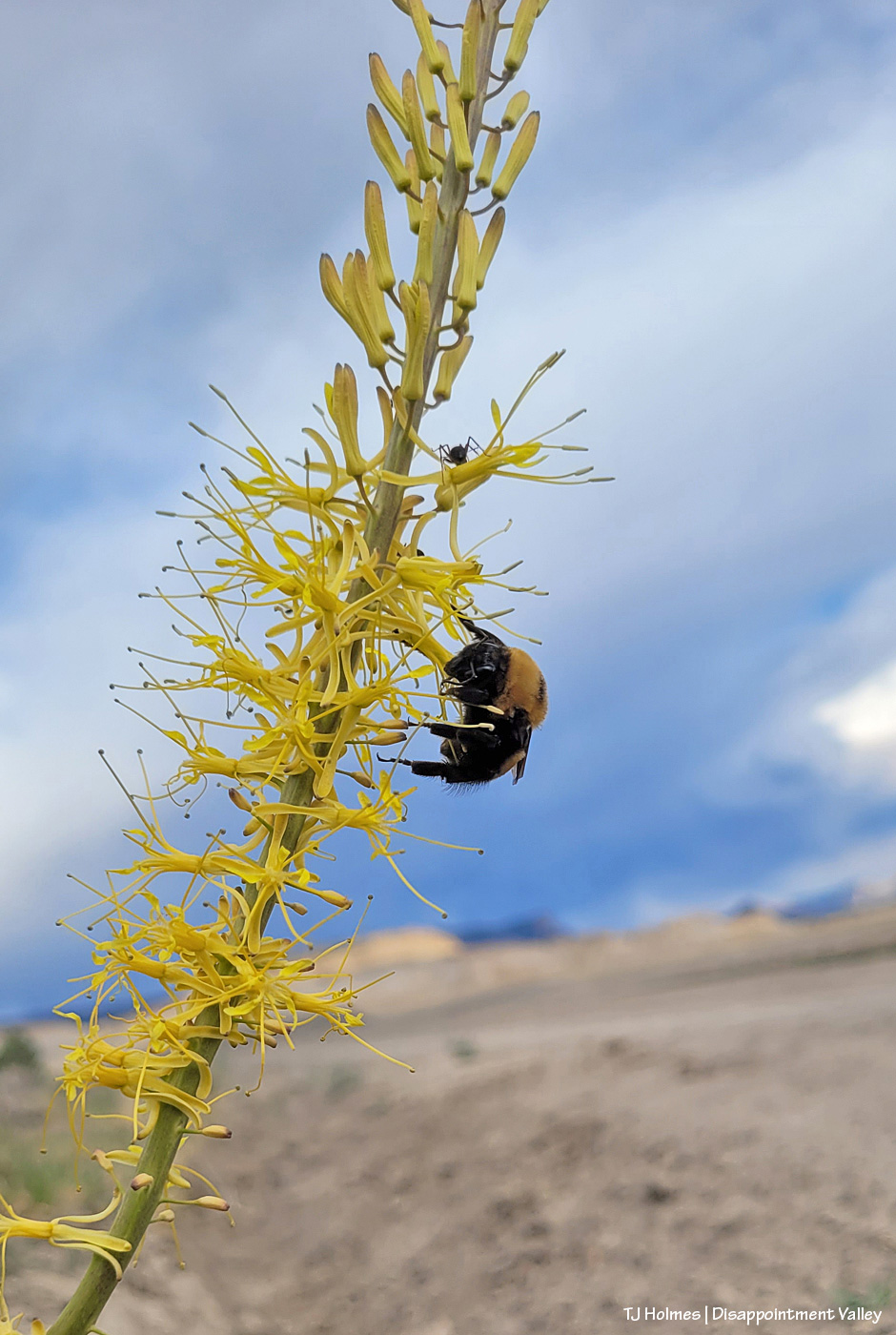
Just between Sunday and Tuesday, the number of plants I saw probably doubled (which isn’t saying much as I didn’t see many on Sunday). But they’re definitely budding and blooming and raising their blossoms (I don’t really know the nomenclature for blooming or blossoming plants?), and the bees (and ants) are taking notice.
Proudest moment about the above pic? I think I actually have a catchlight in the bee’s eye. 🙂
The bee, by the way, was huge, probably at least the size of my middle finger’s middle knuckle.
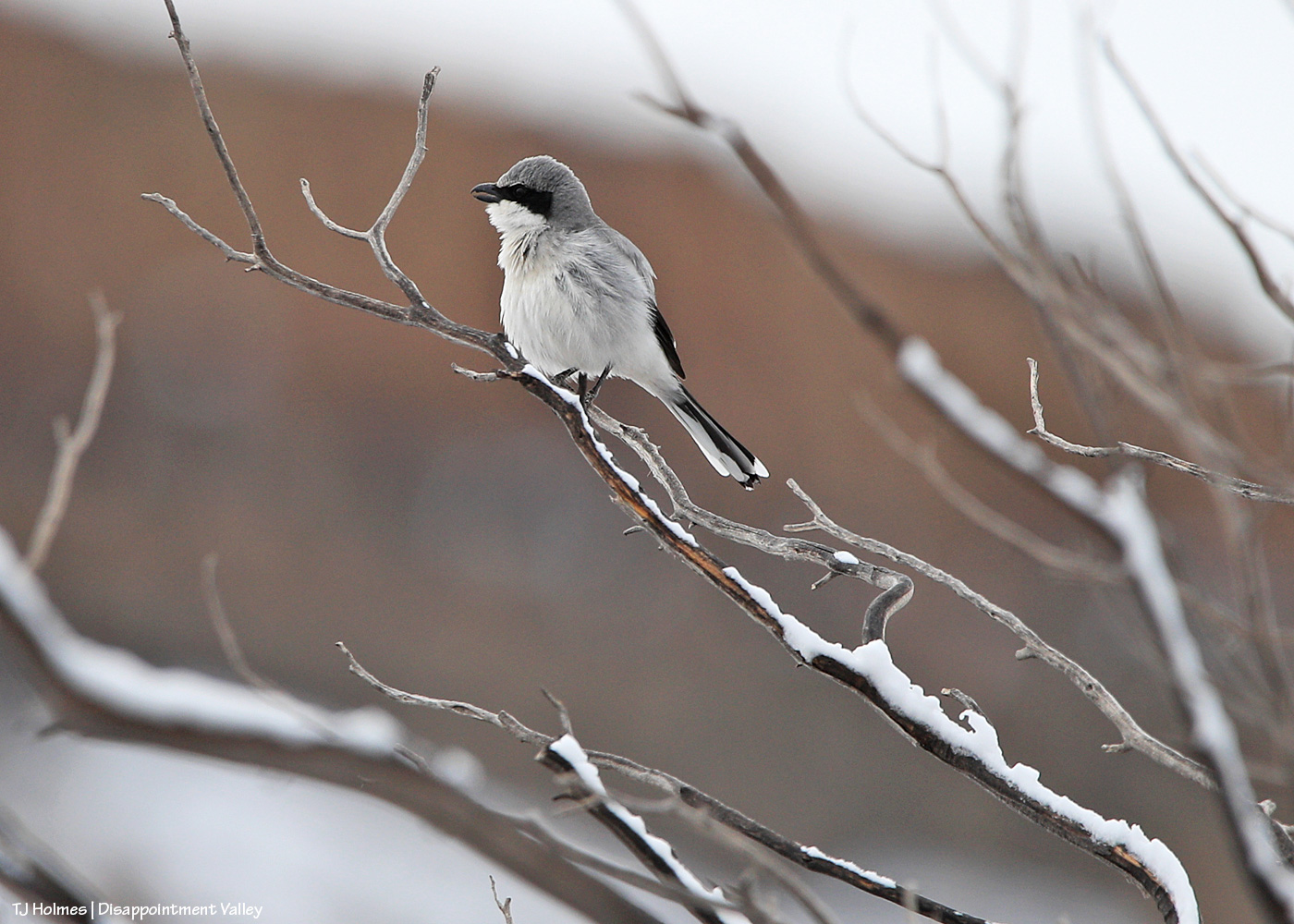
The morning of the snow, this little loggerhead shrike was calling from a bare tree just outside Spring Creek Basin (the dark band in the background is the rimrock that forms the basin’s western boundary). The cold didn’t seem to bother him/her much, and s/he allowed me to approach fairly closely to capture his/her lovely portrait.
*****
Happy Earth Day! More than ever, we need to cherish, protect and honor our planet.
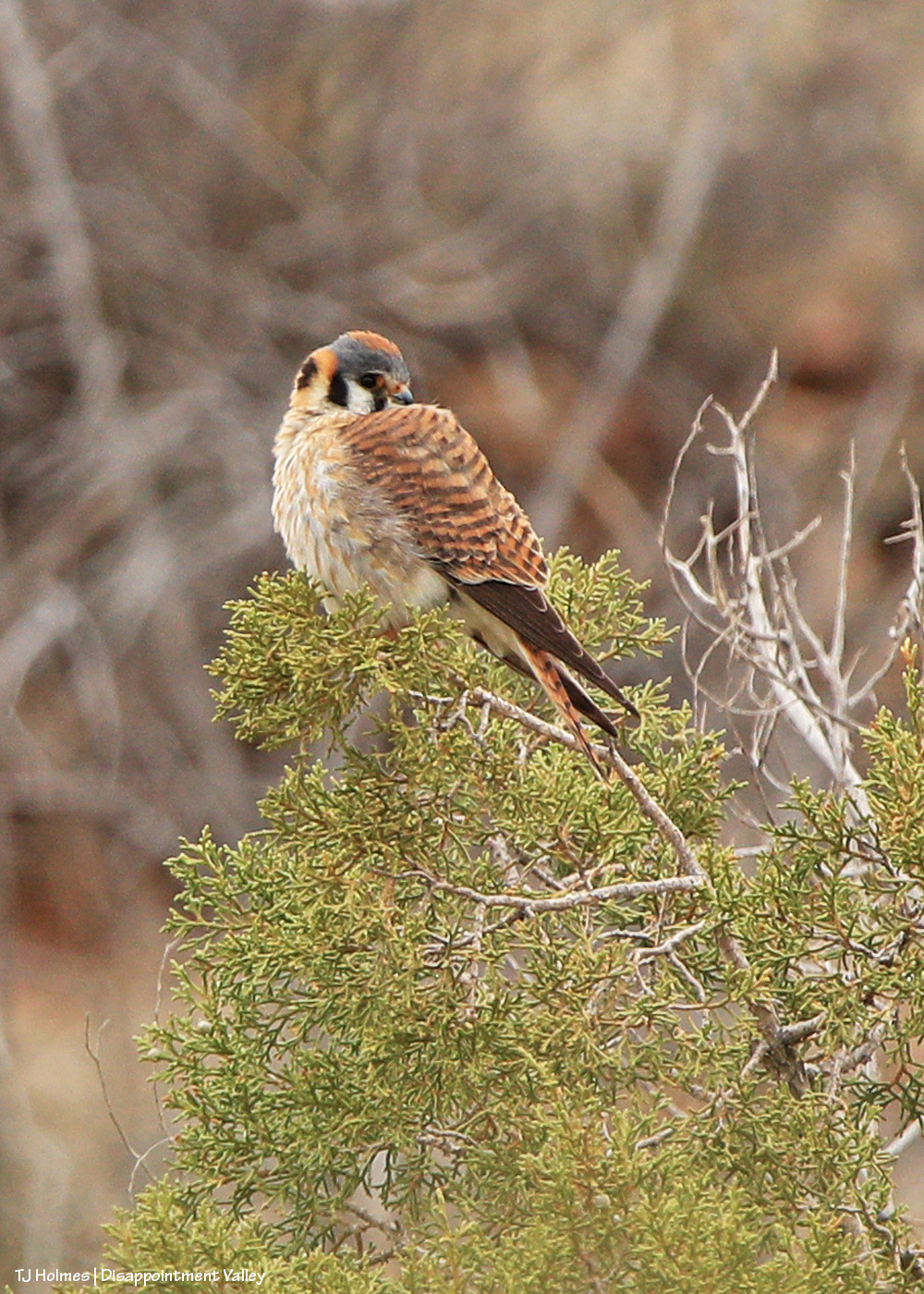
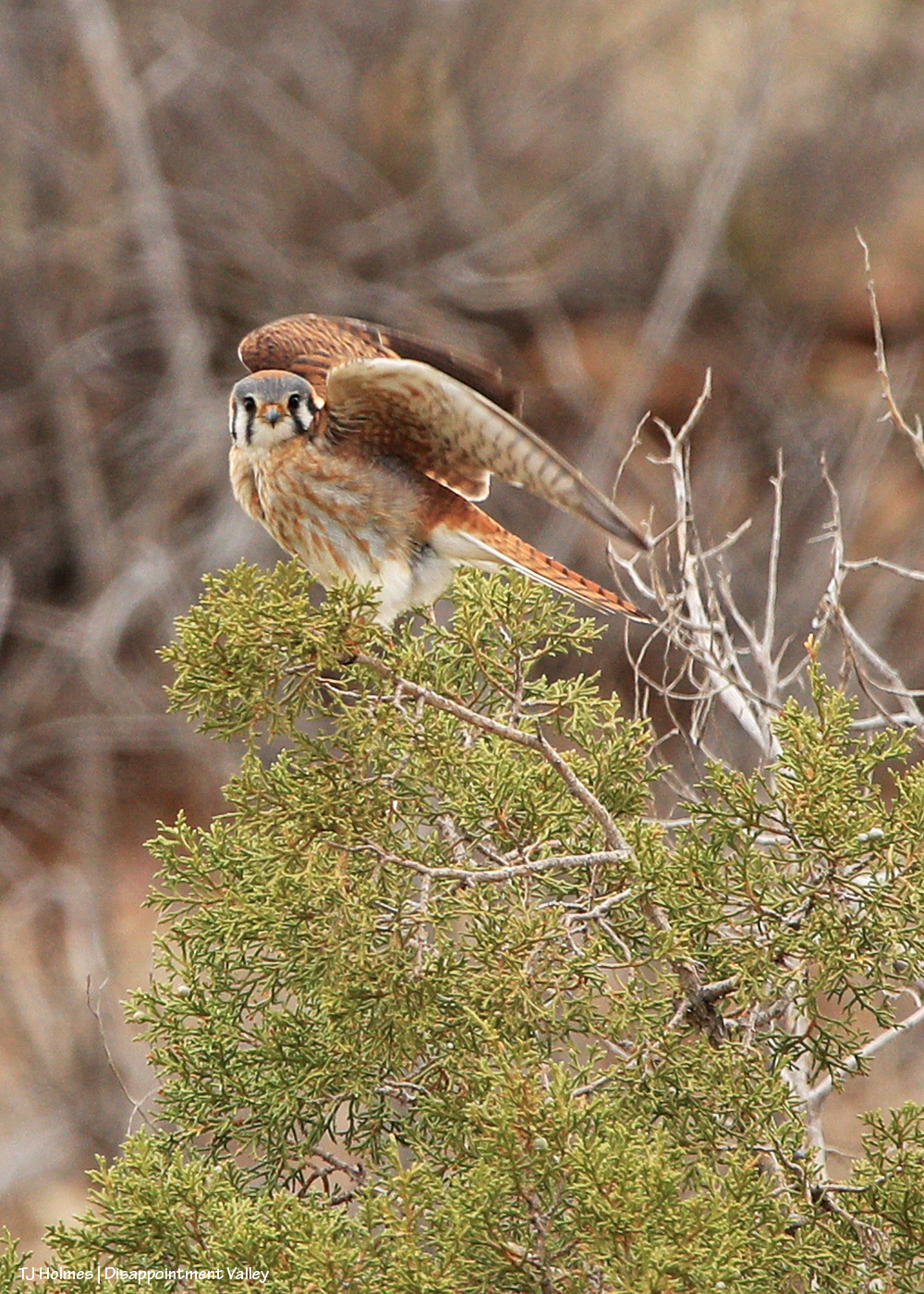
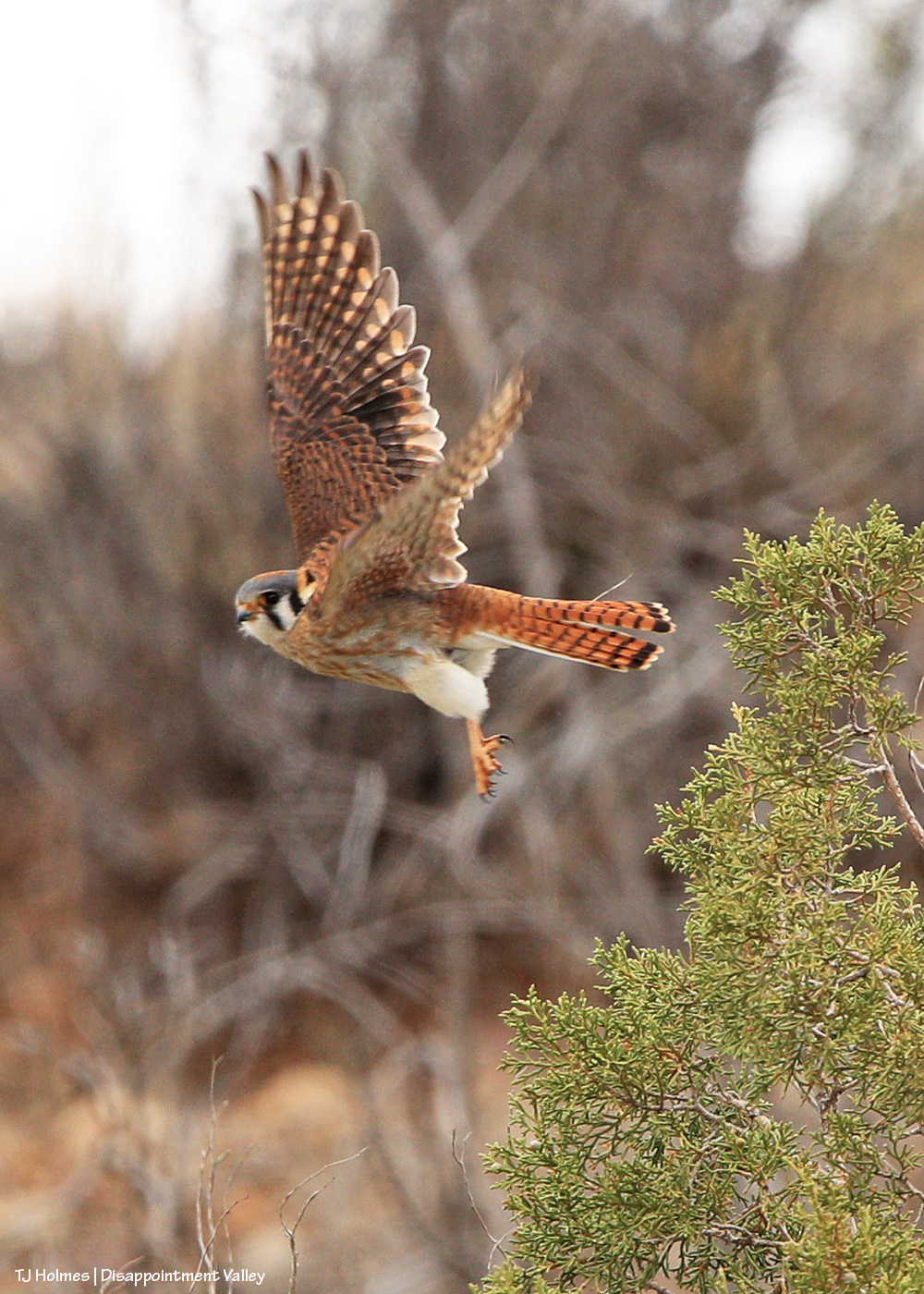
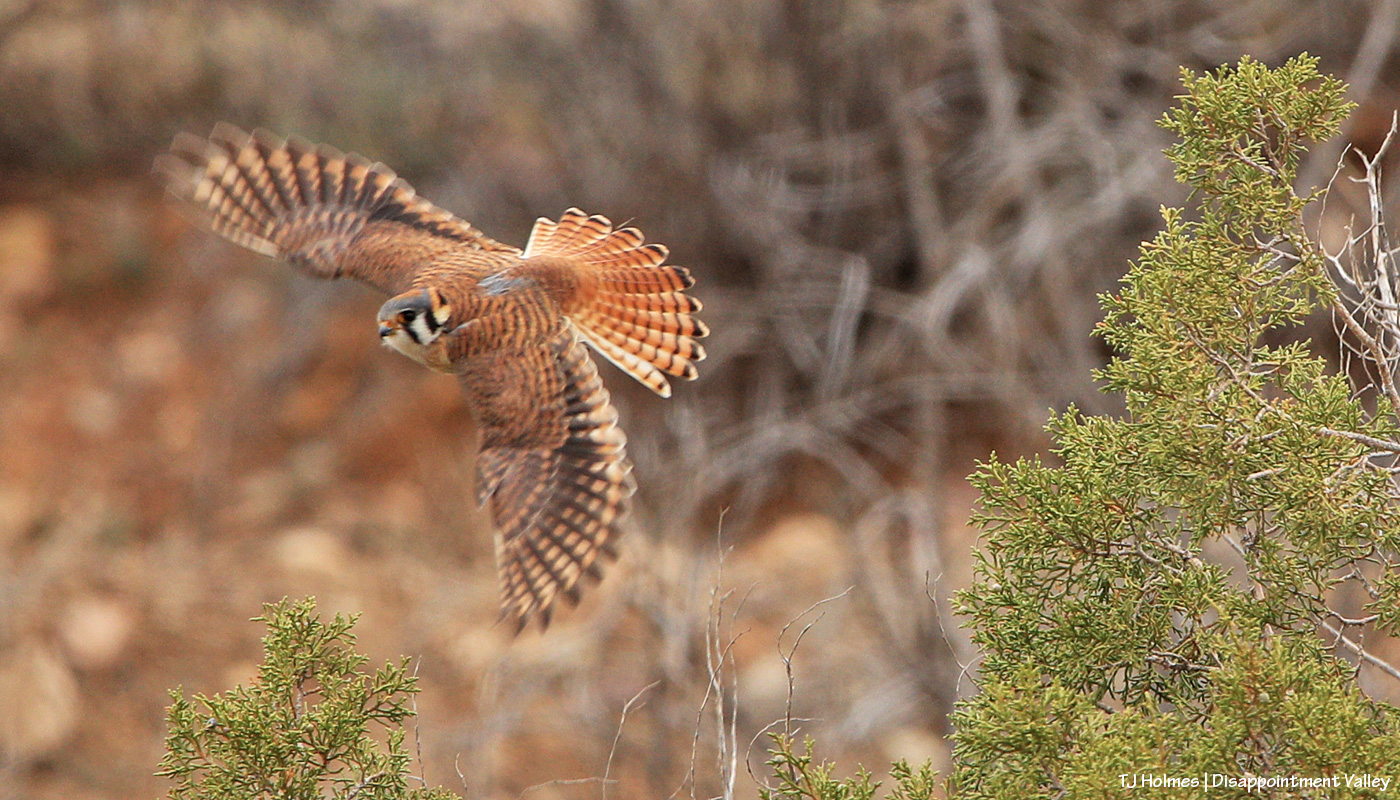
These pix all are significantly cropped, and as previously mentioned, I am no bird photographer! But wow. I’m extremely grateful to this extraordinarily handsome gentleman for perching close enough and giving me enough time to get several sharp shots before he took off (he dodged off to the (my) right, despite the fact that he launched first to the left).
This is what the original interpretive sign looked like (I know you were wondering!), courtesy of Kathe Hayes, who retired a few years ago after working many years for San Juan Mountains Association as the volunteer coordinator. Long-time readers will remember Kathe’s name associated especially with the alternative spring break program, which brought in college students from the University of Missouri every year to work on various projects in Spring Creek Basin and other public lands (both BLM and U.S. Forest Service) around Southwest Colorado.
When Kathe read about the new kiosk installation, she sent me a text and some emails about the history of the FIRST sign installation at the west basin boundary:
“Excited to see that Laura [Heaton] was involved in the installation of the new sign in Spring Creek Basin. As you know as a child, she was involved in the installation of the first sign along with a group of college students from the University of Missouri and Ranger Rick from BLM. I remember Laura and I climbing up the side of the hill and rolling large rocks down so that we could surround the sign so cars would not drive over the sign. A lot of hard work and dedication went into the original sign, and I was sad to see that it had disintegrated. But I am grateful for the new sign and the information it portrays about the wonderful Spring Creek Basin. Thanks for your help in this, TJ.”
Also:
“I was really excited to read about the installation of the new sign. I believe the old one was installed around 2008. It prompted me to resurrect a photo of the original. Laura was involved in the installation of the original sign, as a young kid working alongside the University of Missouri students and Ranger Rick Ryan (BLM). Wow, such good memories for me.
“Attached is the original sign photo. It was a lot of work back then, getting that sign created and approved.”
Not much has changed in that respect. 😉 I asked Kathe if I could share the image of the original sign and her words about the history of it.
“I remember this about installing the original sign. Rick Ryan (Ranger Rick) had been mixing cement in a wheelbarrow and then pouring it into the hole to secure the base of the sign as we all watched curiously as to how this was all going to work. Laura said that that’s not how my dad would do it [Laura’s dad is well-known rancher Al Heaton; their family is well respected in the entire region of Southwest Colorado. She is, quite literally, a local!] and I just laughed. Laura‘s family was instrumental in the success of the Alternative Spring break program. I doubt I would have continued without their support. And Laura was my little shadow since she was about 6 years old. Her parents let me drag her all over the place. She loved being with the college students who loved playing games especially spoons.”
Wild and crazy how things come back around full circle, eh? 🙂
Thanks so much for the history, Kathe! We miss the alternative spring break program (I think it lasted almost 20 years with Kathe’s guidance?), but we sure loved each year’s crop of students and all the work they did for us in Spring Creek Basin! And we now have Laura as one of our BLM range team members, carrying on that good work!
[Nate West, Brian Yaquinto, Jon Whitehead, Laura Heaton, Anton Rambur, Ryan Schroeder, TJ Holmes]
I cannot begin to tell you all how much I *LOVE* this new information/map sign kiosk JUST installed at the western entrance/boundary of Spring Creek Basin.
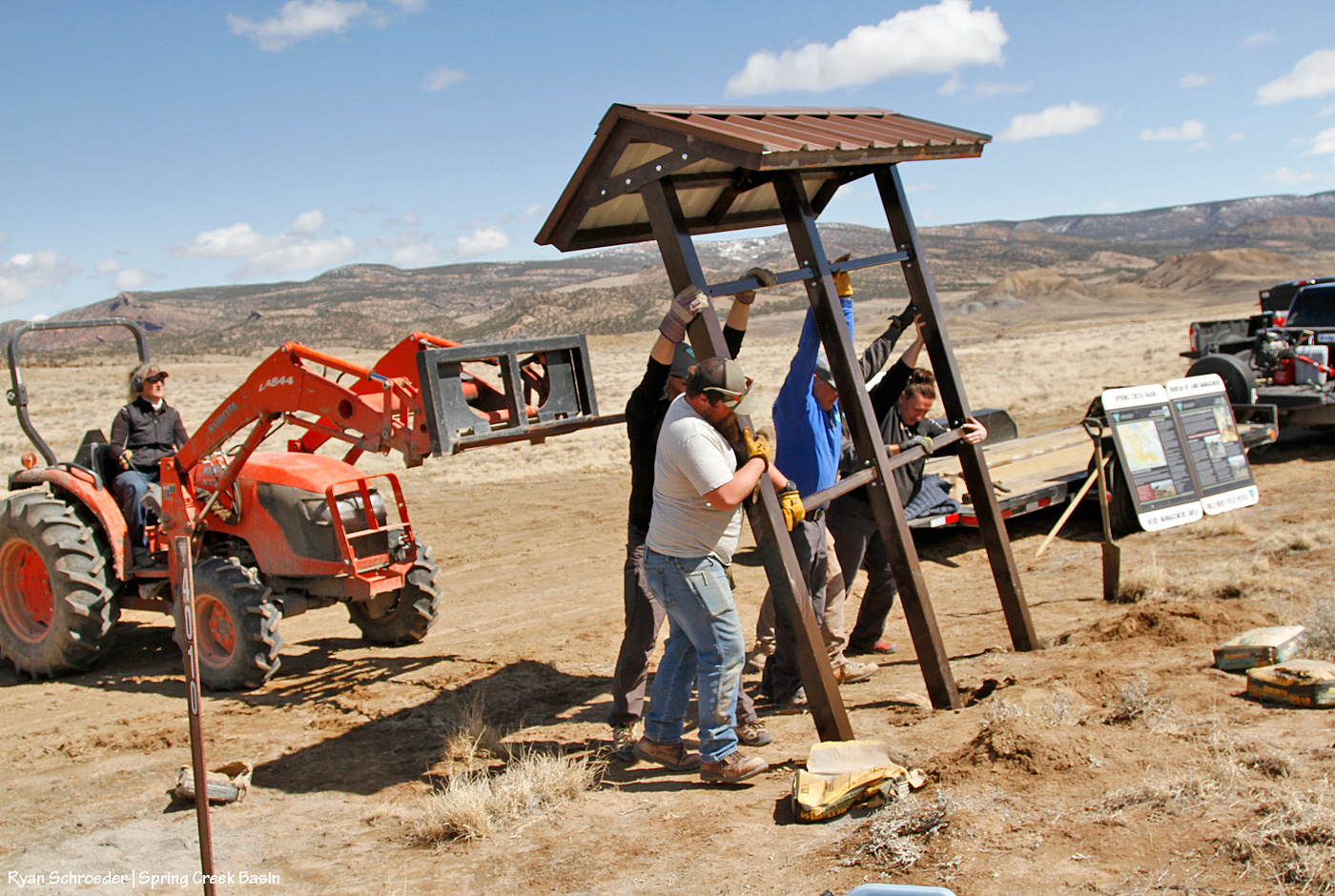
It has been in the works for at least the last year. On April Fool’s Day, rangeland management specialists Ryan Schroeder and Anton Rambur came out to augur and dig out the holes for the three posts for the kiosk (in the snow and greasy-muddy road, I might add). The day after April Fool’s Day (gorgeous but nippy), we were joined by Laura Heaton (range tech), Nate West (wildlife biologist), Brian Yaquinto (archaeologist) and Jon Whitehead (recreation) to put the whole thing together and set it upright in the holes (shout-out to my awesome little Kubota tractor!) and cement it in place.
Let me also mention that this was Ryan’s third day back to work. I never anticipated that I’d be RE-introducing him when I introduced our new range team, but there it is, and here they are. 🙂 I’m so stoked to be working now – again – with all three of them.
A couple of (OK, several) images of the construction and installation of our brand-spanking-new, kick-ass kiosk in Spring Creek Basin:
Actually, let’s start with the old interpretive sign, familiar to anyone who has driven into Spring Creek Basin. You might think the sign looks white because of glare or overexposure by the camera. …
But no. It really is that blank. The high-elevation, Southwest Colorado sunshine will do a number on just about anything. … Hence the new sign. 🙂 (Note the scratches at the top and (at least) left side. What made those scratches, you ask? Horse teeth, I tell you.)
Laura and Ryan check out the new map and info signs. OMG! They are SOOO COOL!
Who took the images for the signs? I’m so glad you asked. 🙂 I am BEYOND proud! (While all of the BLM folks were gathered around to look at the signs, I ID’d for them all the mustangs in the pix. Above: Hollywood, Shane, Houdini, Alegre and Maia. I’m also hugely grateful that our dearly retired herd manager, Mike Jensen, and the BLM’er who put the signs together, Jason Byrd, allowed me to dust off my copy-editing skills in service of both the info panel and the map. I realize now that I didn’t take a close-up pic, but Temple Butte is noted on the map, the first time I’ve seen the name on any map since we got it officially named by USGS in late 2018.)
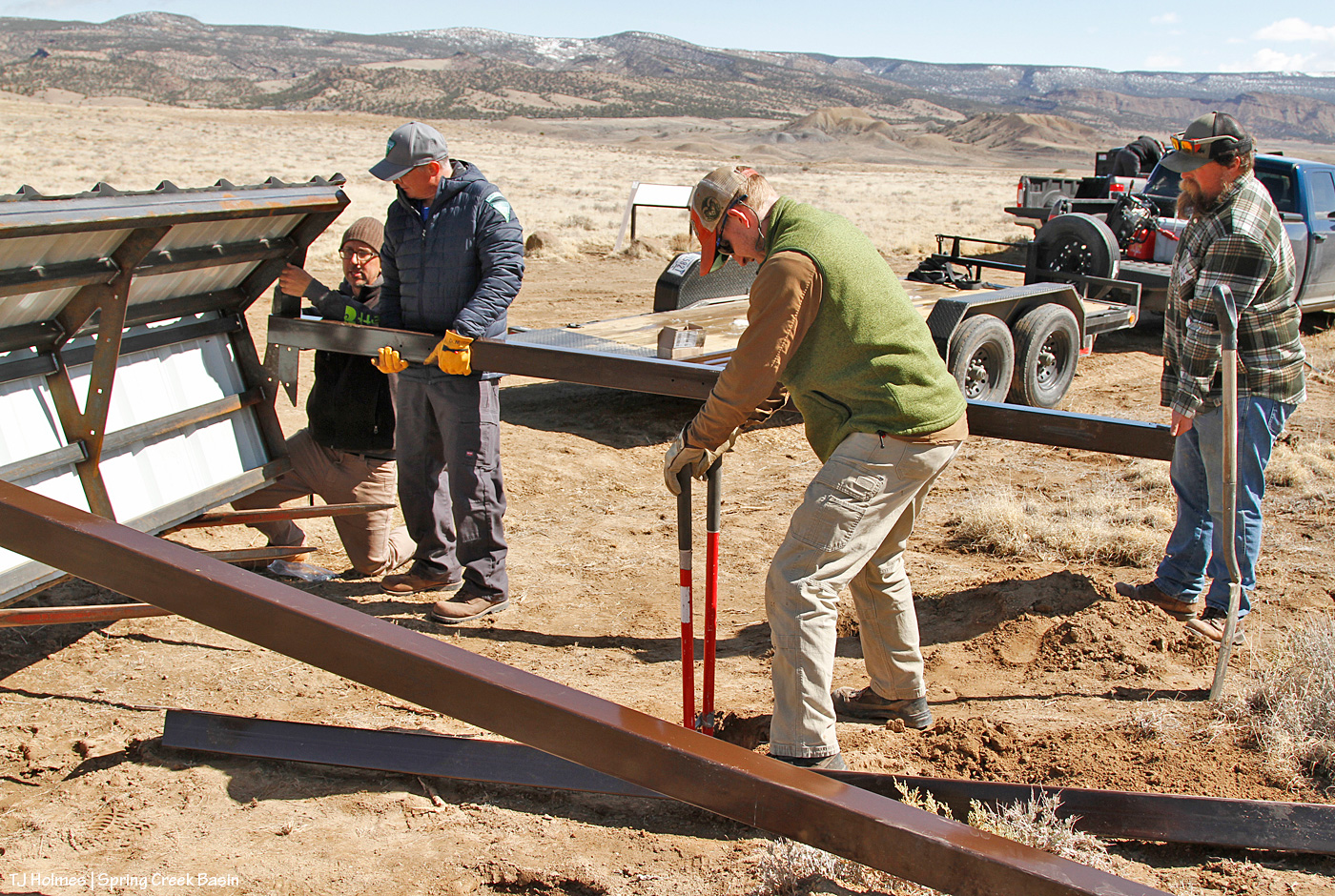
While Ryan digs out the edges of the middle post hole just a little bit more, Brian, Nate and Anton started attaching the posts to the roof structure, resting on the forks of the tractor.
With all the vertical posts attached to the roof structure and the cross pieces (to which the sign boards would bolt), Jon arrived with the Qwikcrete and water to mix into a slurry in the post holes to help support the posts for a very long time to come.
And up she goes! OK, this doesn’t really show the tractor doing the heavy lifting, but it did. 🙂 Thanks, Ryan, for taking the camera while I worked the tractor!
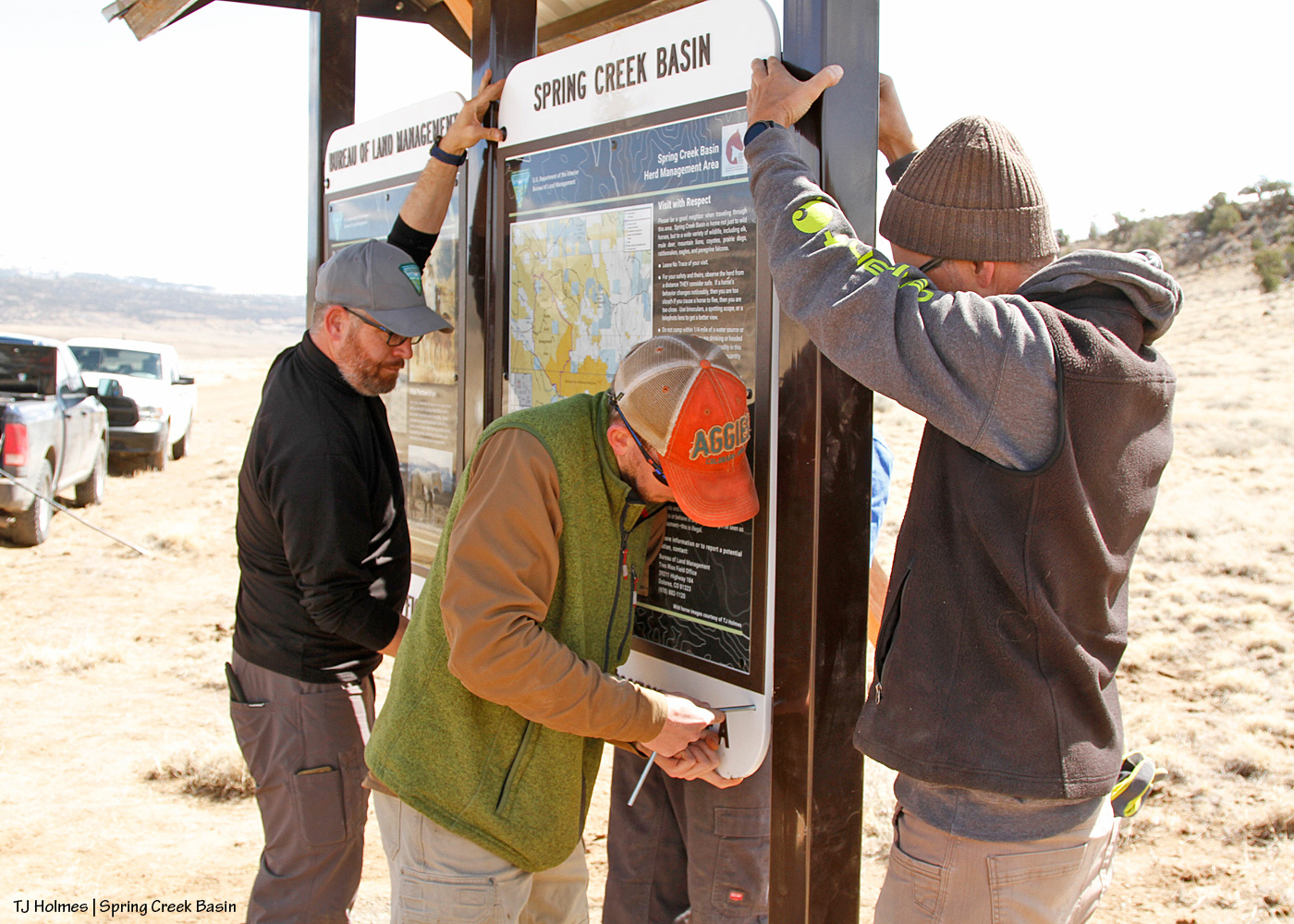
In go the bolts for the first sign panel! (Yes, we did joke about how many BLM’ers it takes to screw bolts into a sign. 🙂 You almost can’t see him, but Jon is holding the sign behind Brian while he and Ryan thread the first bolts and Anton holds the left side of the sign.)
Anton holds the second panel while Jon (left) and Brian insert bolts to attach the sign to the frame.
Eagle-eyed readers will note that the sign very correctly welcomes visitors to Spring Creek *Basin*!
I want to express my enthusiastic gratitude to our particularly awesome BLM’ers for making this new info/map kiosk come to life in Spring Creek Basin. It has been, I think, a little more than a year from conception to standing tall at the west basin boundary to greet visitors to Spring Creek Basin, magical home of our mustangs. Pictured, left to right: Nate West, Brian Yaquinto, Jon Whitehead, Laura Heaton, Anton Rambur, Ryan Schroeder and yours truly (I actually brought my tripod so I could be part of the picture record!).
Huge gratitude also to Mike Jensen (retired but never forgotten), who offered me the opportunity to share some of my favorite images of the mustangs and my copy-editing skills (and texted this in reply to telling him about the new sign: “Wow awesome that looks great. See no worries I left you in good hands.” :)); Doug Vilsack, Colorado BLM director, who agreed that we needed a new sign when he first visited Spring Creek Basin in 2023; Derek Padilla, Tres Rios Field Office manager, who has been super supportive of Spring Creek Basin from the get-go; Joe Manning, TRFO assistant manager, also incredibly supportive and who agreed that it was a project worthy of funding; and Jason Byrd, recreation specialist (?) at TRFO who designed the signs with my images and all my edits and made the most gorgeous informative panels in all of BLM-dom.
Thank you, ALL! And now, when any of you visit Spring Creek Basin, you know the story of how our fabulous mustang kiosk came to be!









 Spring Creek Basin Mustangs