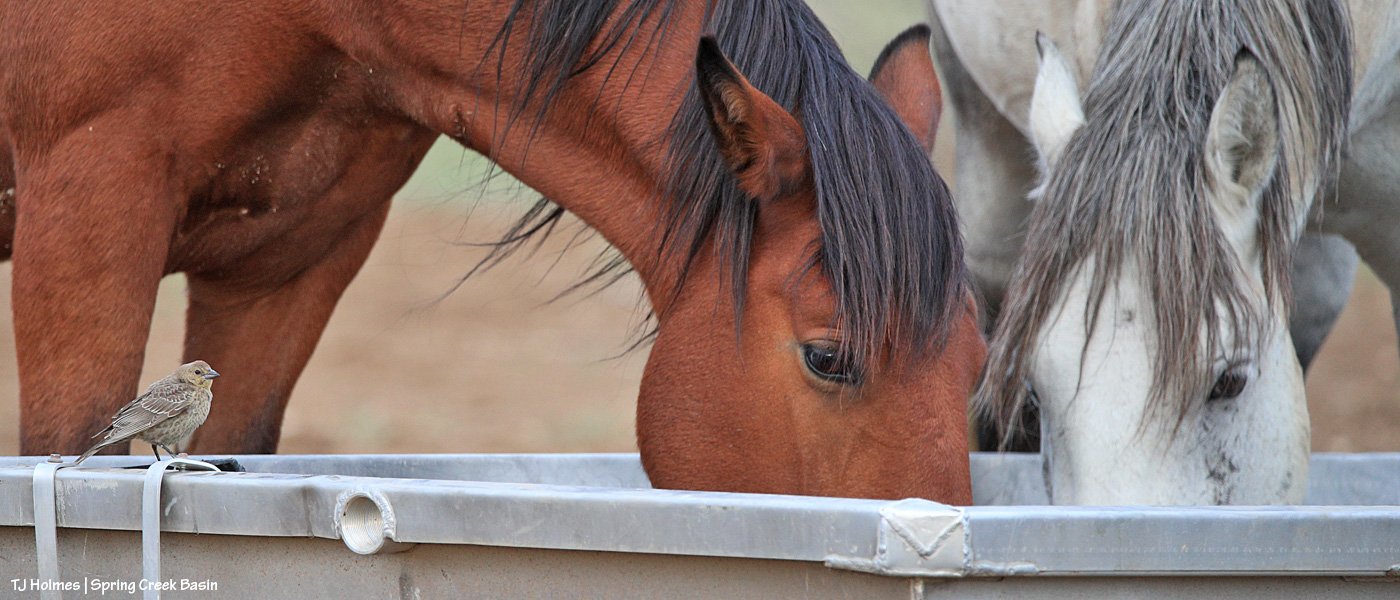
Merlin couldn’t identify the teeny little bird, but it might be some kind of sparrow (if you know, let me know!). It’s standing at the top of the “critter ladder” at the end of a water-catchment trough. It first looked at the water from the other end of the trough, then across from the horses, then fluttered over to this end and disappeared. Although I couldn’t see it from my distance away, I knew it was getting to the water level from the specifically placed critter ladder (it’s really more like a ramp with a sort of mesh over it for little toes to grip).
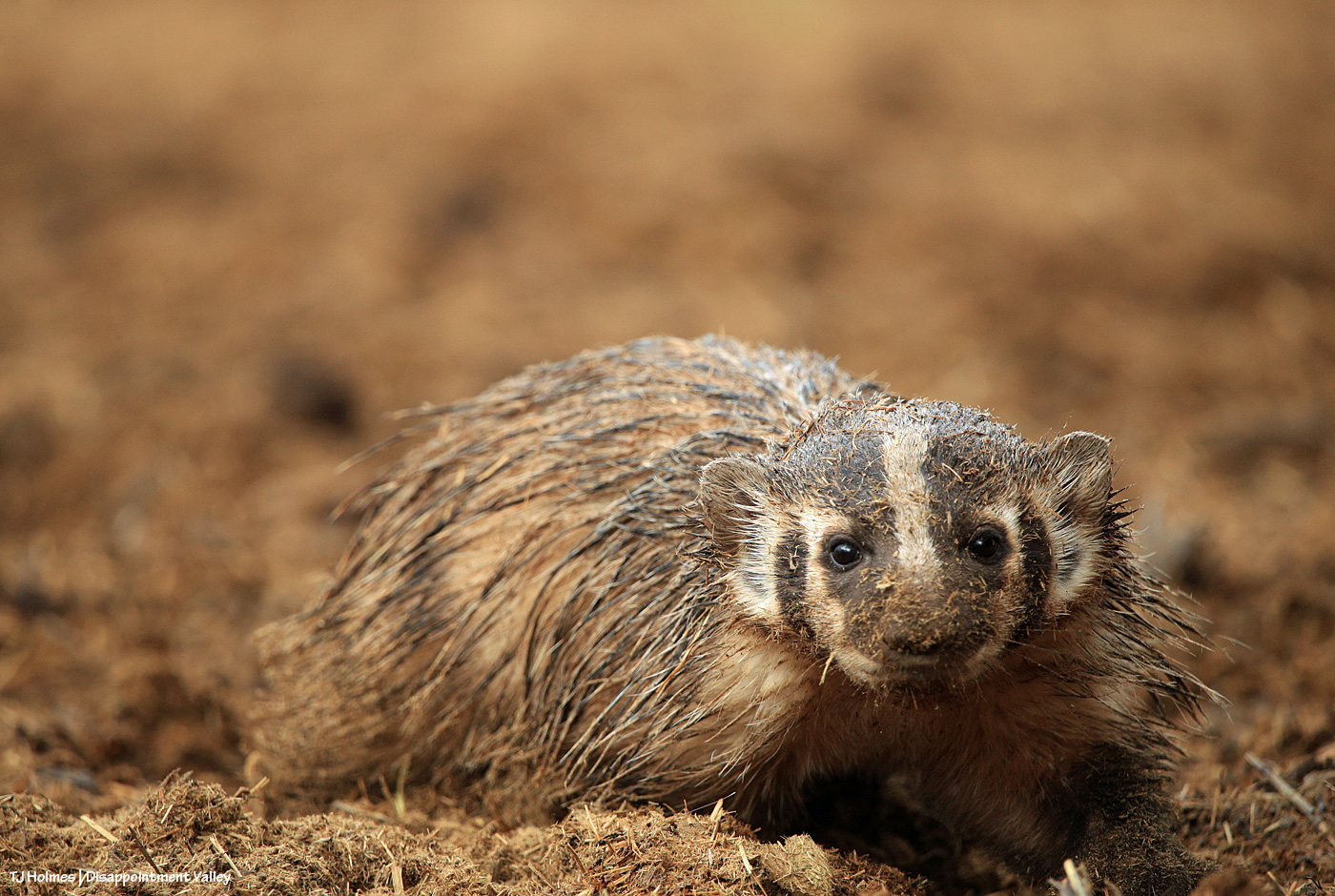
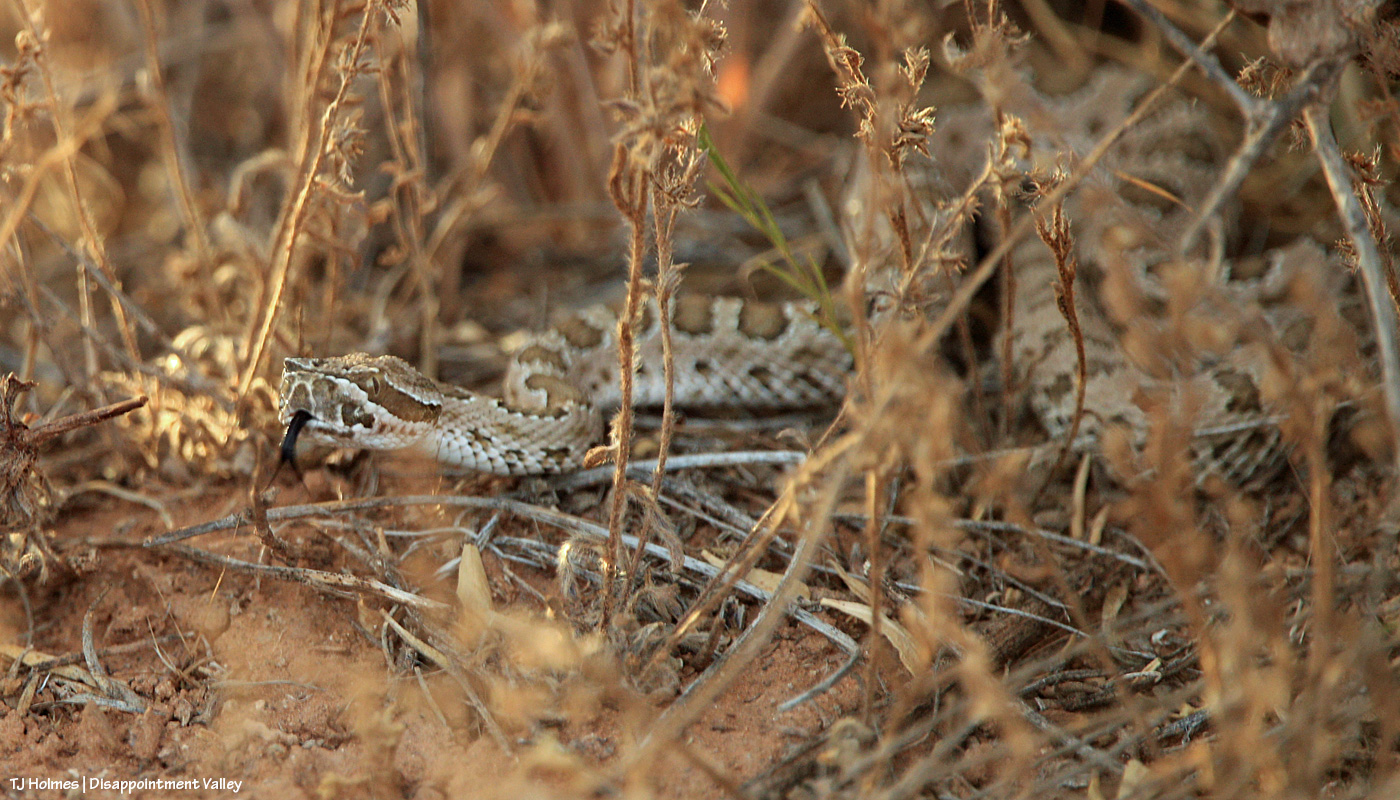
I treat badgers like I treat rattlesnakes: carefully and with respect.
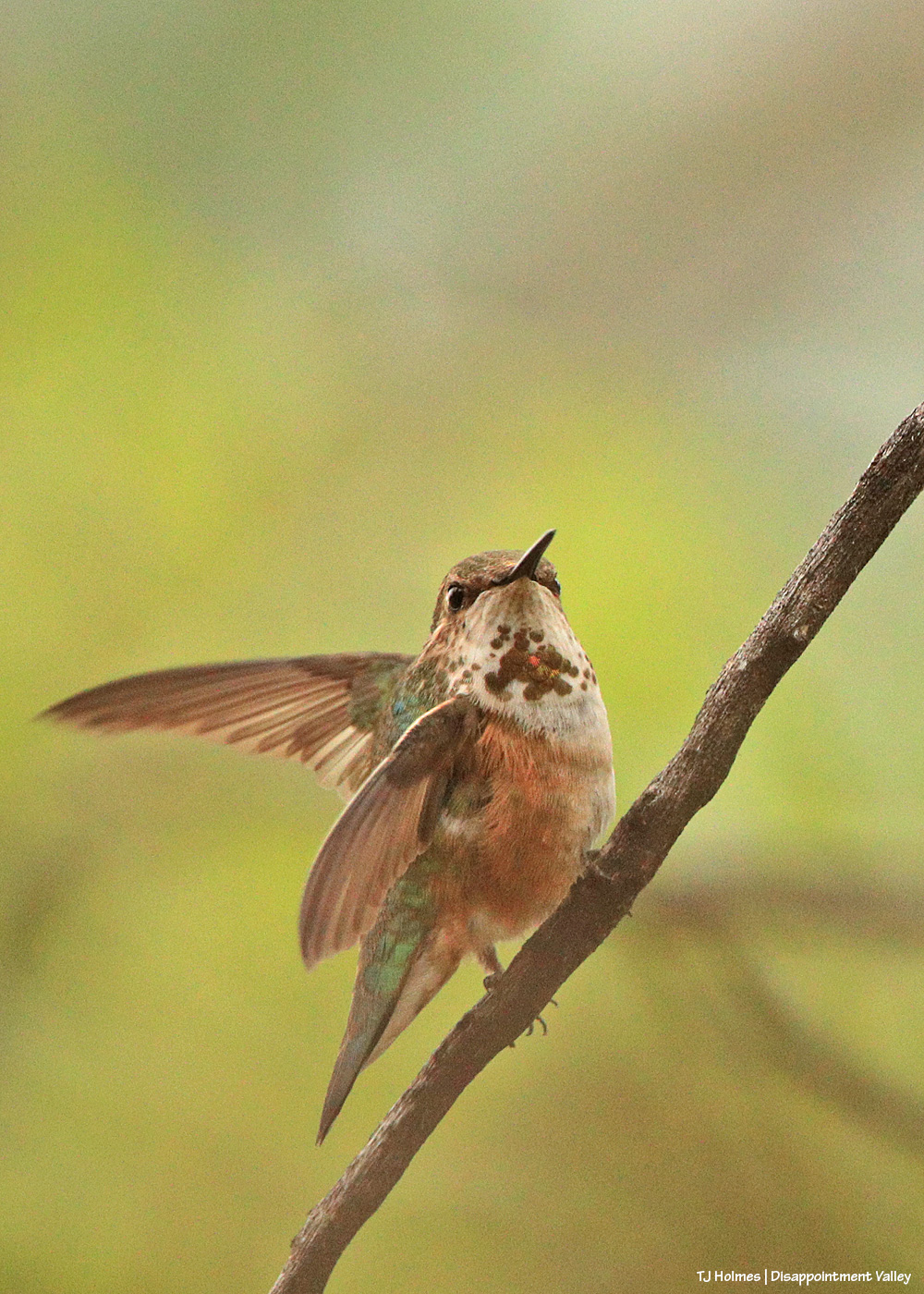
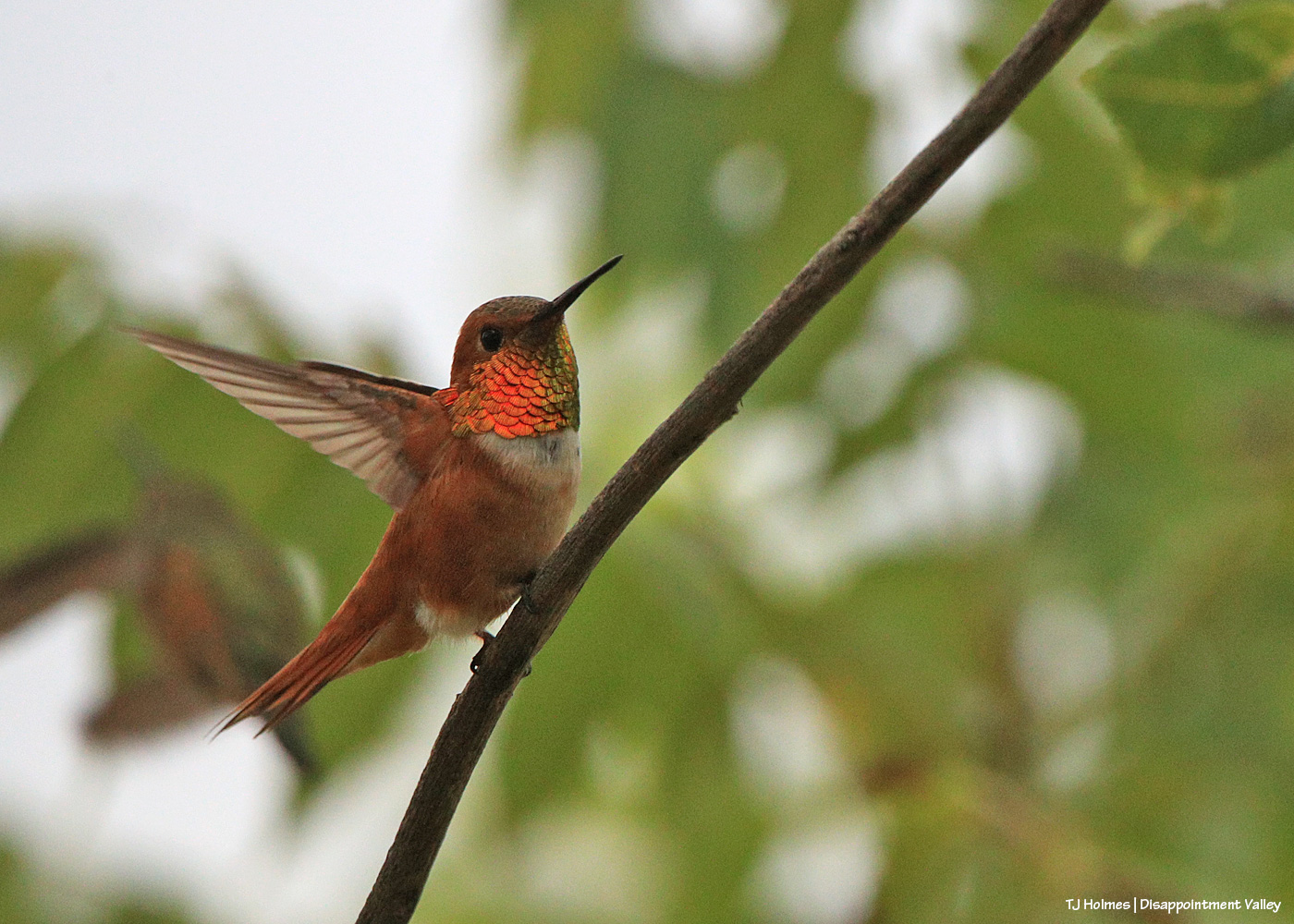
Pretty little ball of energy. Does anyone know what kind of hummingbird this is?
Rufous hummingbird? That orange! When it turned its (his?) head even slightly away, that glittering orange completely disappeared.
Did someone mention rattlesnakes? … Carefully … and with respect. 🙂
Not all from the same day or same areas of Disappointment Valley.
In big news: We’ve had rain! Finally, Mother Nature is shedding some tears of pity over us, and Tuesday night, there was (I think) pretty widespread rain over the valley. Because of intermittent rain throughout the day (!), I didn’t make it into Spring Creek Basin, but I look forward to soon documenting the run of water through Spring Creek. Hallelujah!
As of Thursday afternoon, there are currently NO evacuations active for the 64,881-acre, 59-percent-contained Ferris Fire, though several areas – including in or near Disappointment Valley – are still at “ready” status (that means exactly what it sounds like: Be alert, prepared and ready to move should conditions call for it). Various BLM and U.S. Forest Service closures exist in the region. As far as I know, the middle section of Disappointment Road remains closed, though that could (likely will?) open soon.
Two words: FIREFIGHTERS and RAIN.
From Watch Duty: “Team 7 wishes to thank the communities around the Ferris Fire for their welcome and generosity.”
For the strength, endurance, skill and courage of the firefighters – on the ground, in the air, on the line, acting as support – I am sure the gratitude from our side is massive and total. I’ve done a lot of “thank you, thank you, thank you!” the last couple of weeks. And that includes BLM range guy Ryan Schroeder, San Miguel County Undersheriff Nick Xavier and all of his deputies, including Dolores County Deputy Branson Smith. We ARE community, and yours thanks you all.
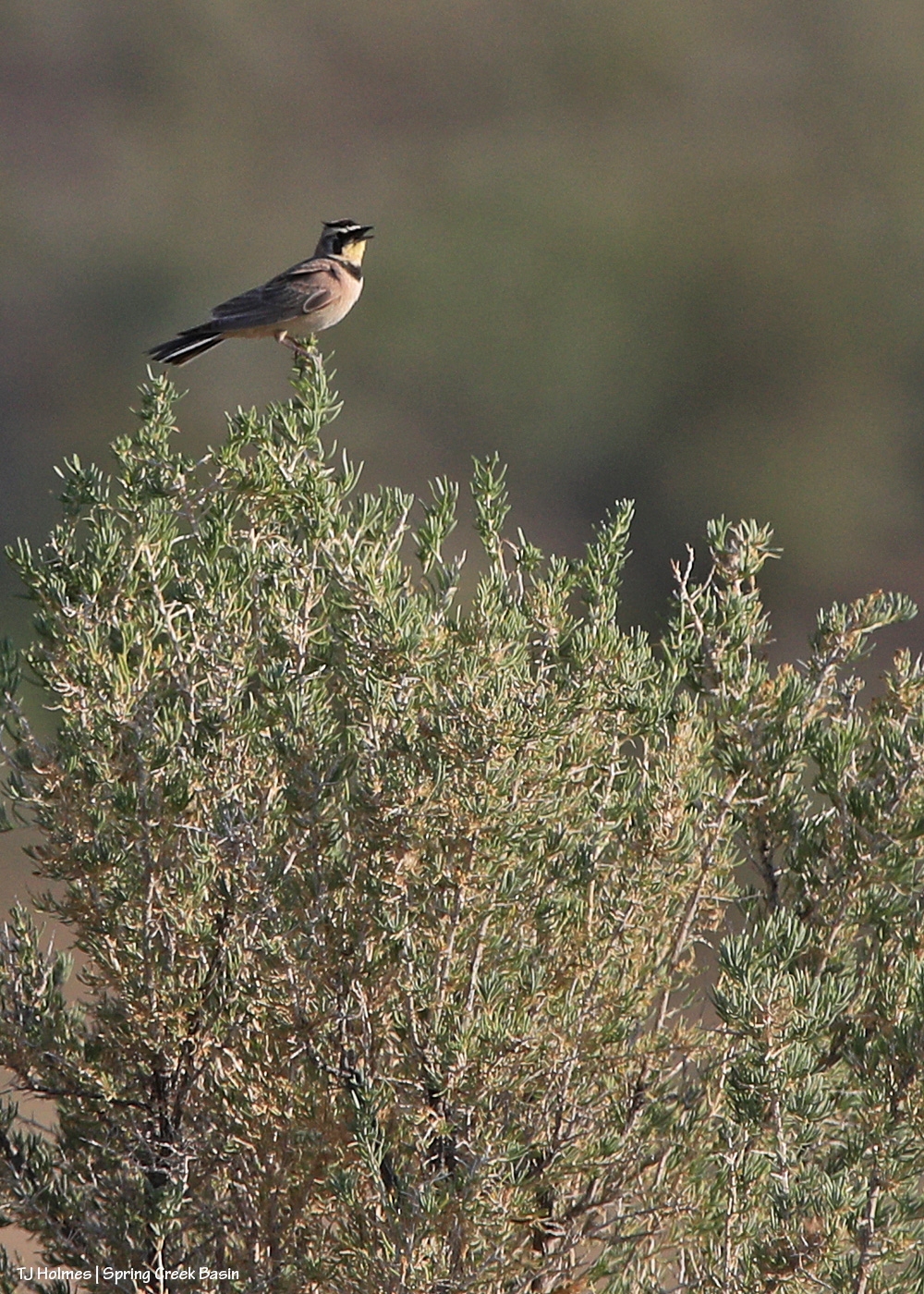
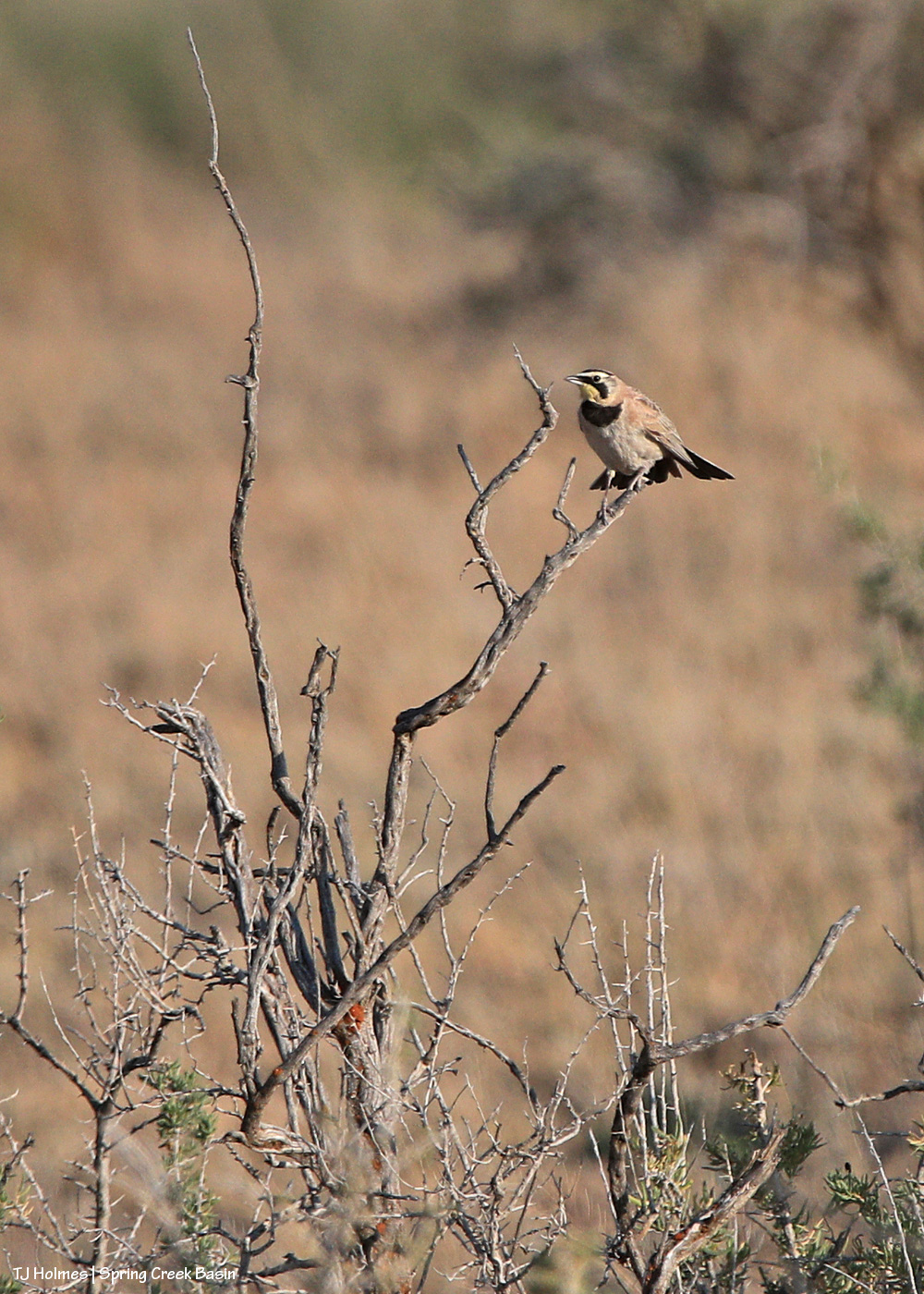
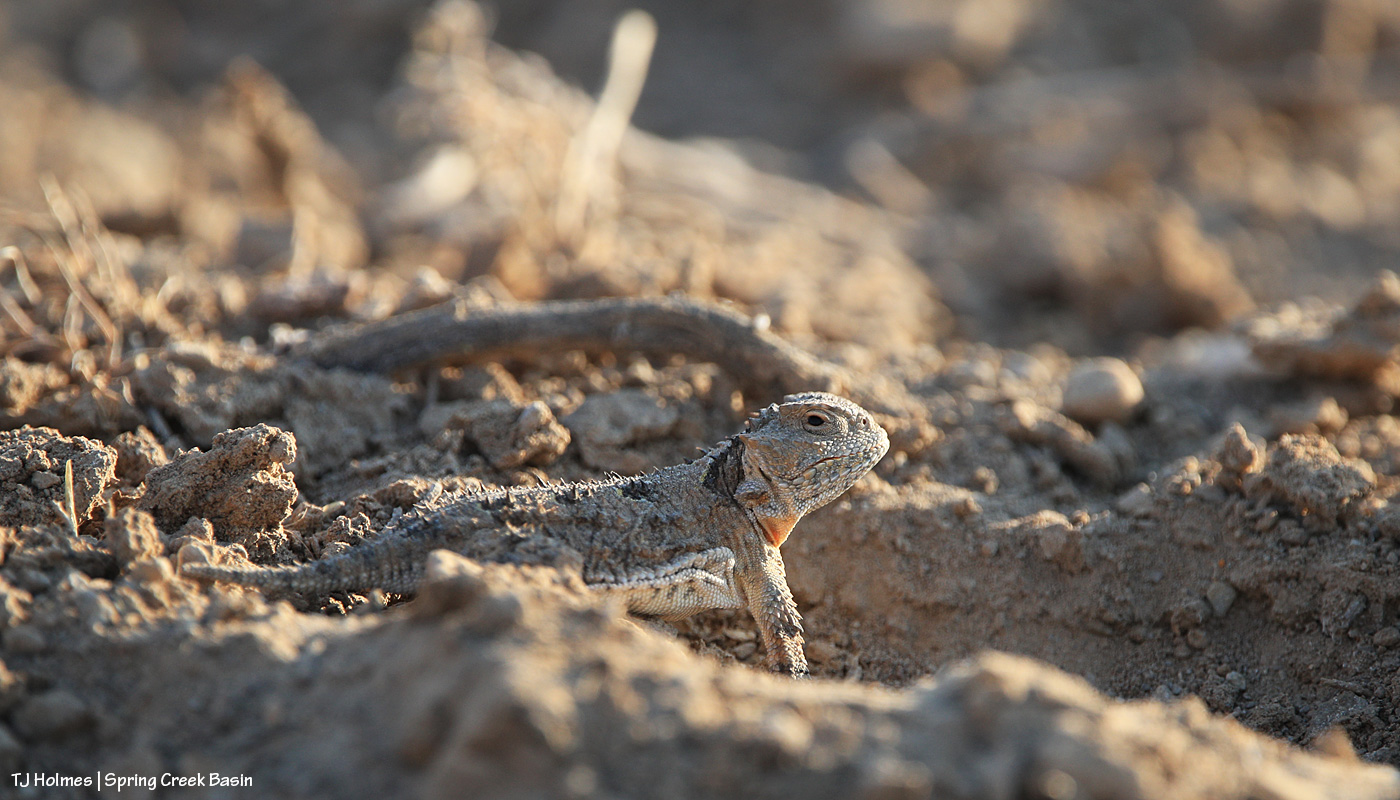
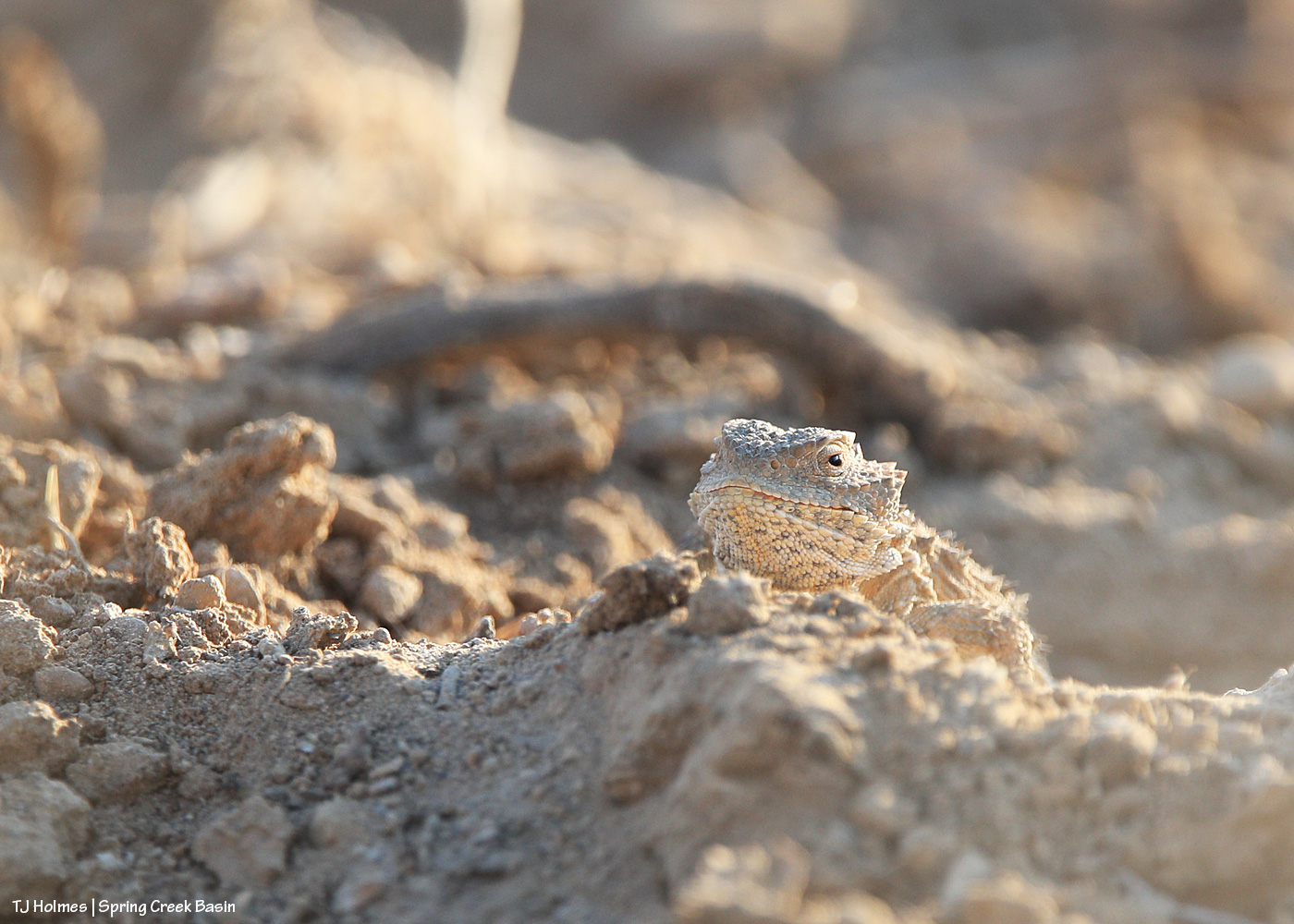
Both of these critters were seen on the evening of summer solstice. Both are named for their “horns.” One has feathers; one has scales. Both are desert beauties.
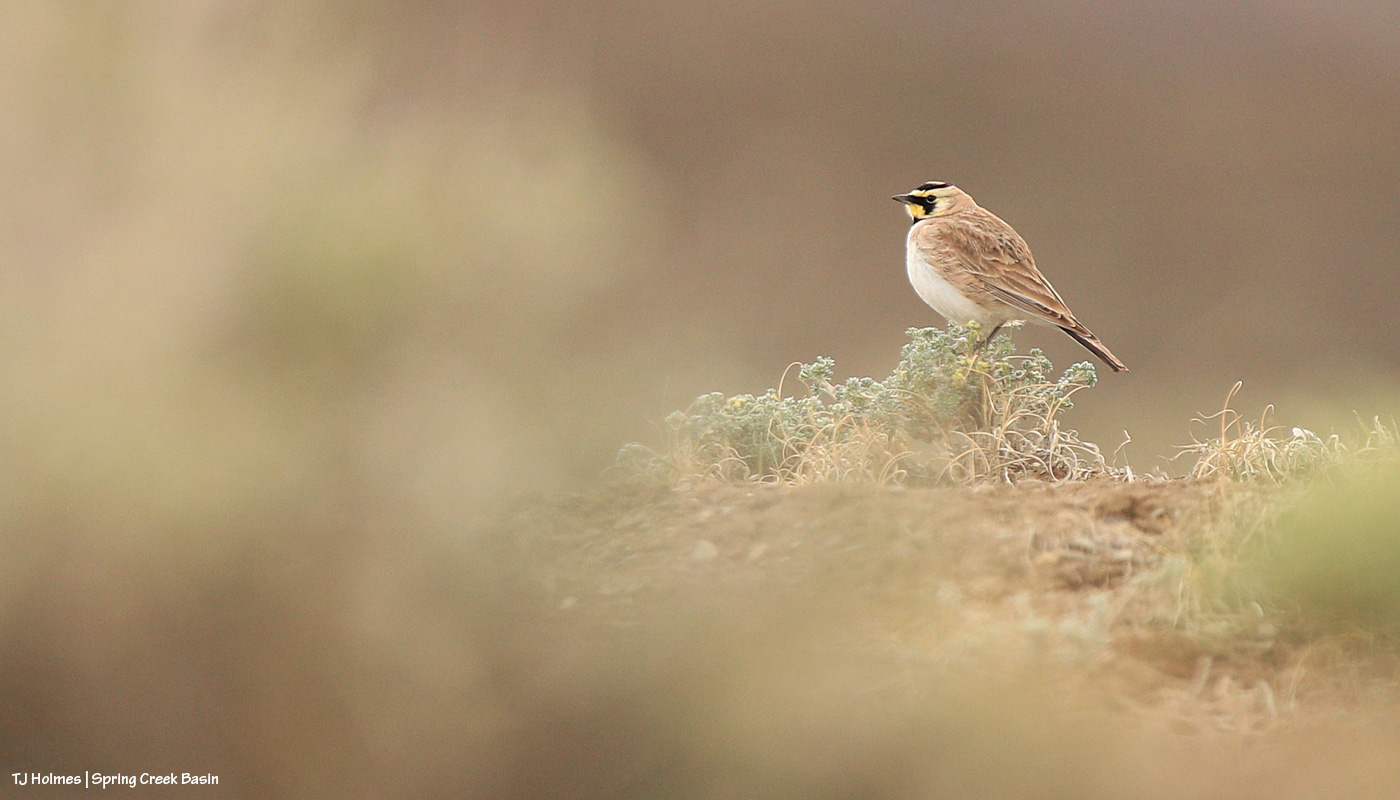
Horned larks are one of the first birds I learned to identify. Lots of them seem to call Spring Creek Basin home. See his little “horn” tufts?
Same lark. Maybe it was the presence of the mustangs behind me that made him feel comfortable enough to land on nearby greasewood to check me out.
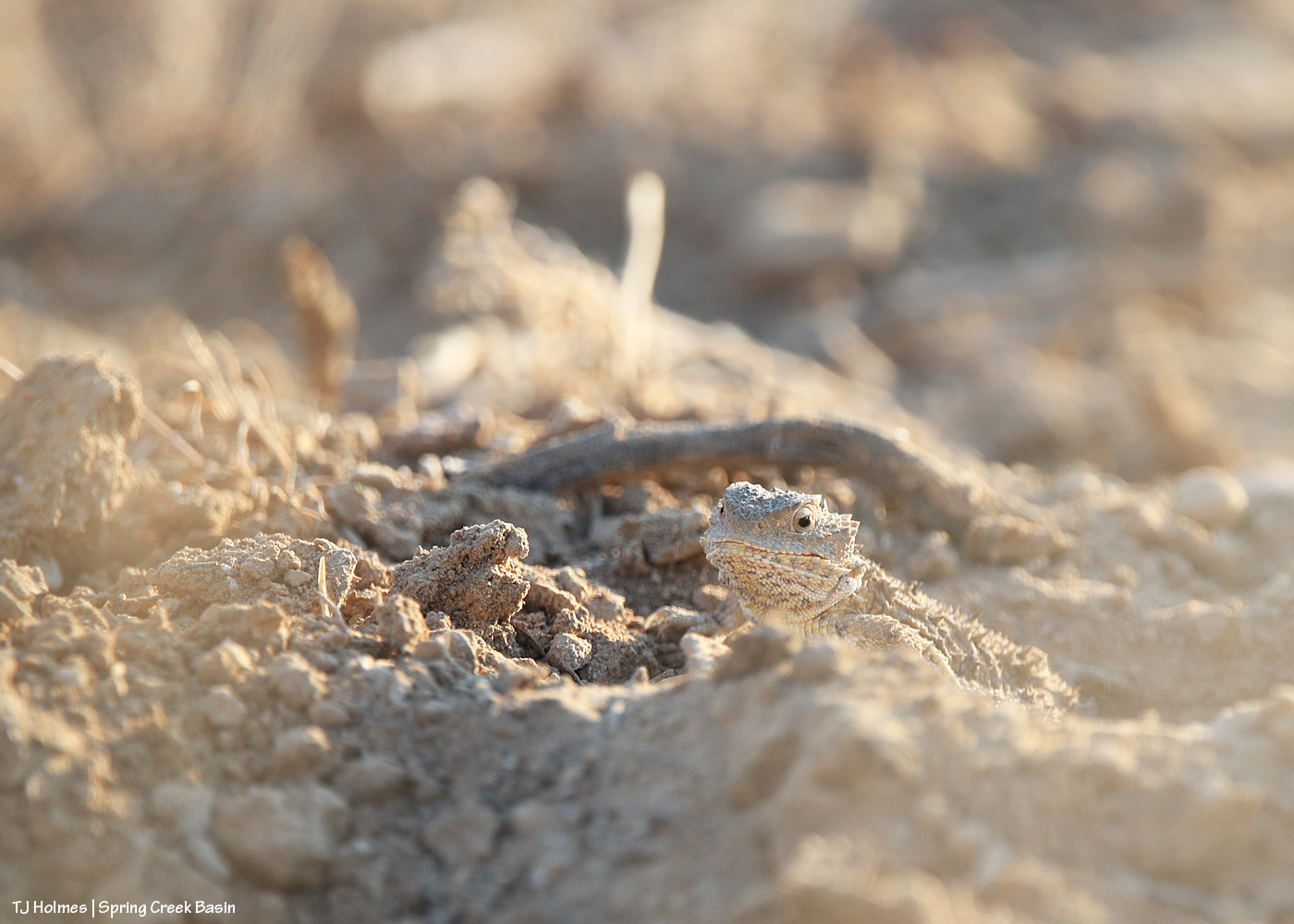
While following those same mustangs away from the road, this little fellow (fellarina?) caught my eye. (Much nicer to see a horned lizard scuttle away underfoot than the longer, more slithery kind!)
I didn’t realize it at first, but it was hunting around an ant hill.
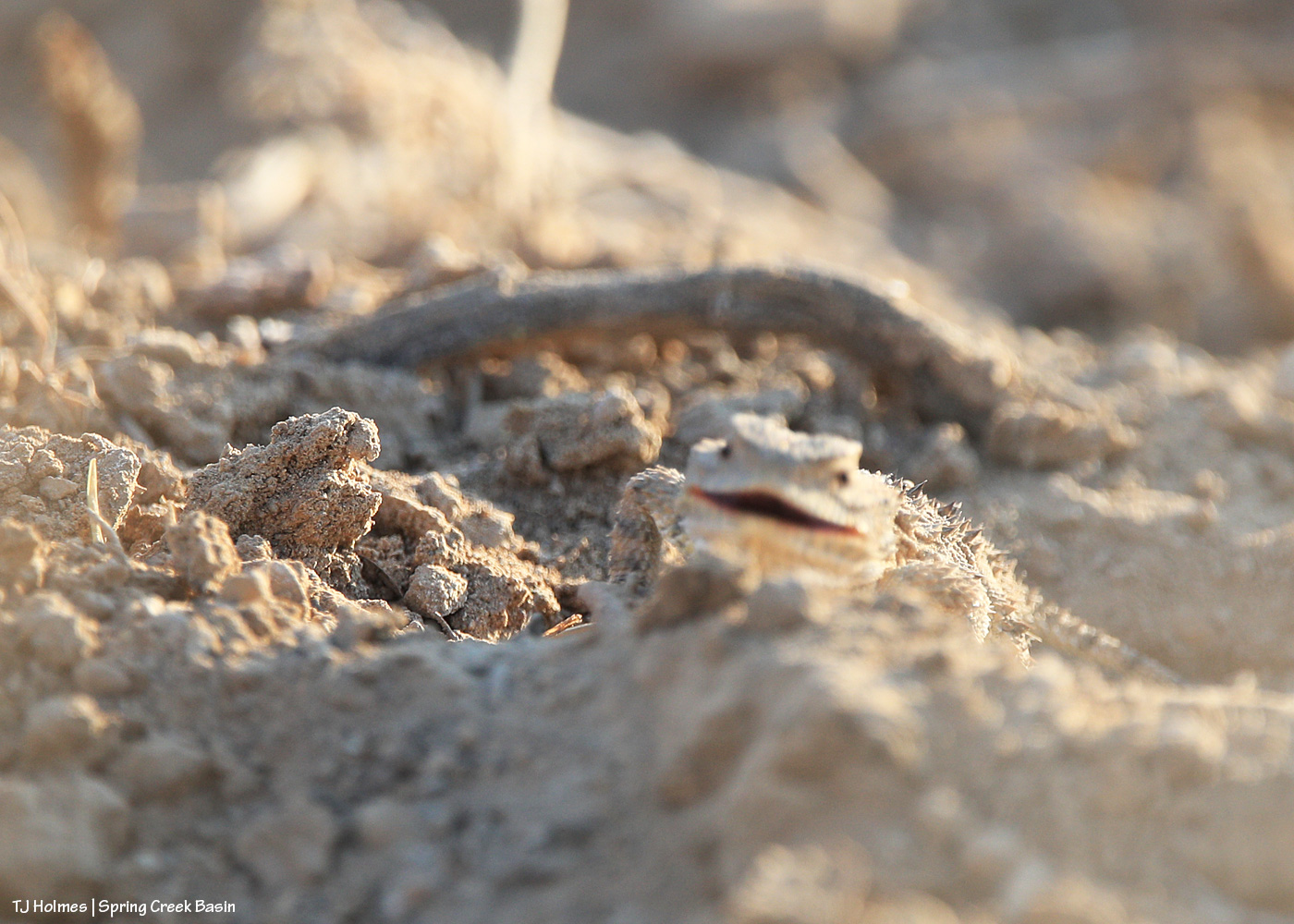
I started to see it darting forward, and that’s what alerted me that it was going after something on the ground, presumably insects. Too bad it’s out of focus, but it helps the story!
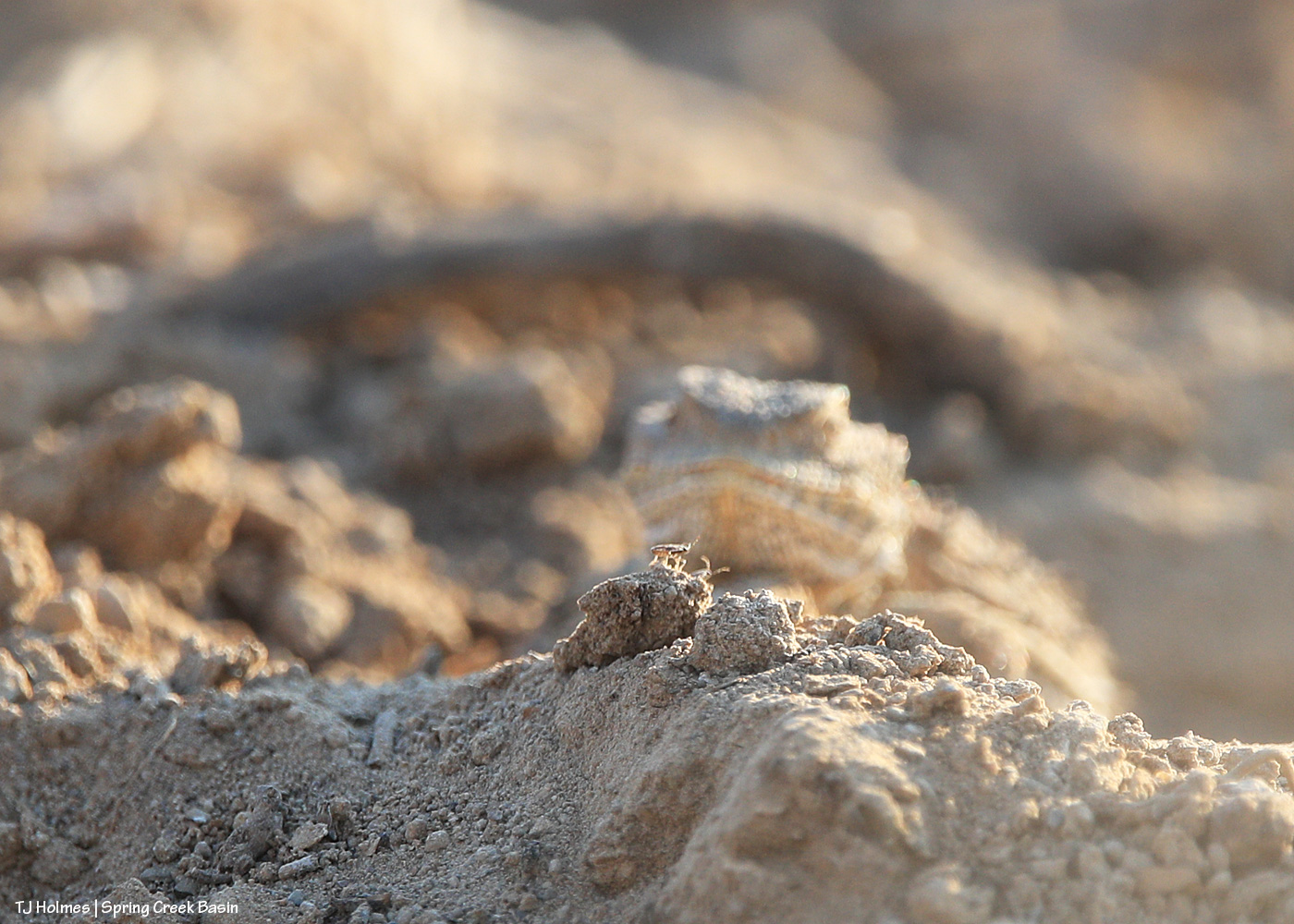
You might think this one is out of focus – I did, too – but look at that little dirt ball in front of the lizard. See the bug? It didn’t last long!
Is it just me, or does that look like a satisfied little lizard? 🙂
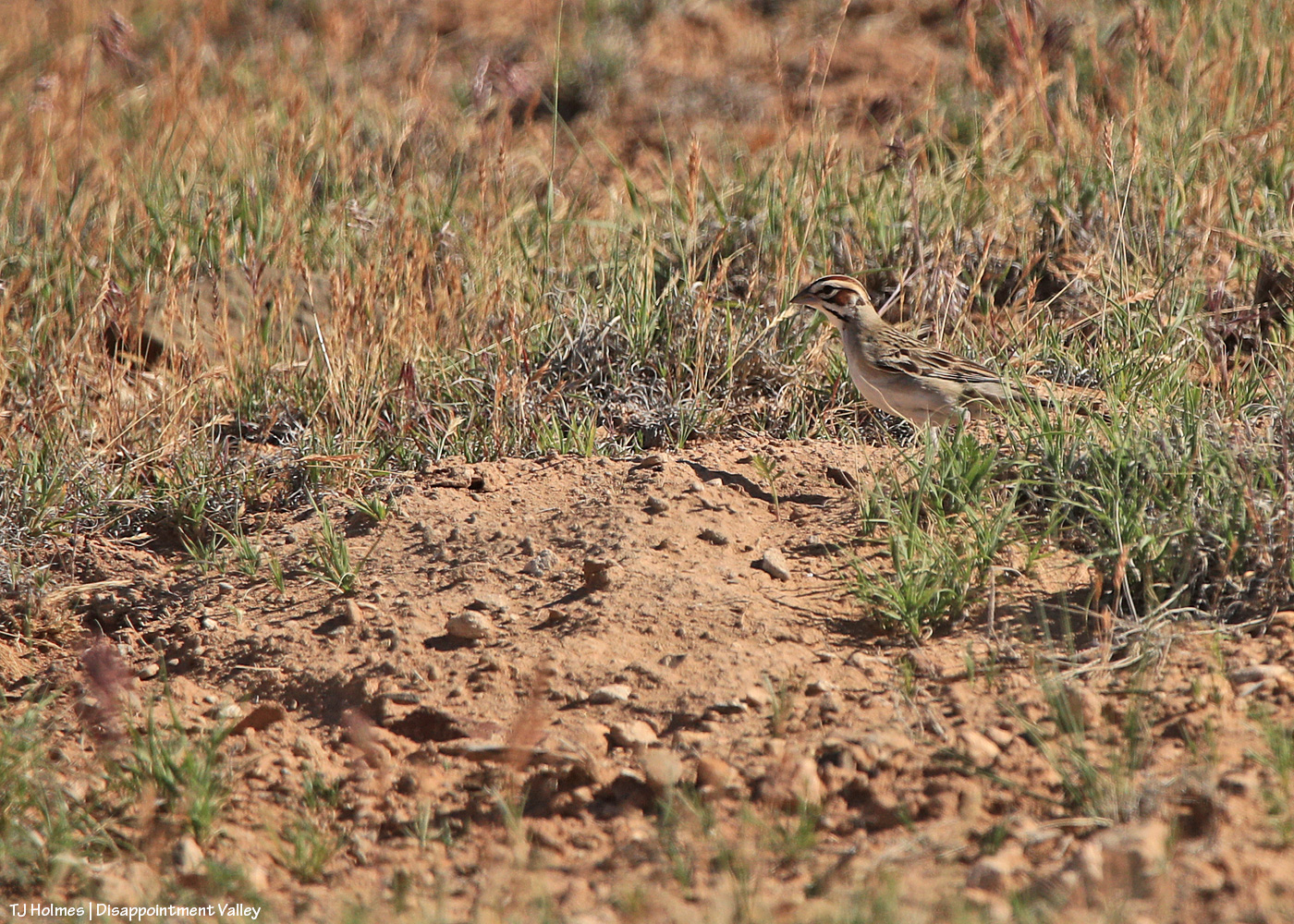
Yesterday morning, I spotted this handsome lark sparrow foraging on the ground near a road. Merlin helped me identify it by its song (and that of others nearby), and isn’t it a lovely little bird! I particularly love this description from Cornell’s All About Birds website: “This large sparrow may be brown, but its harlequin facial pattern and white tail spots make it a standout among sparrows. Males sing a melodious jumble of churrs, buzzes, and trills reminiscent of an Old World lark.” I’m not sure what an “Old World lark” sounds like, but I did enjoy listening to the variety of trills from a variety of birds!
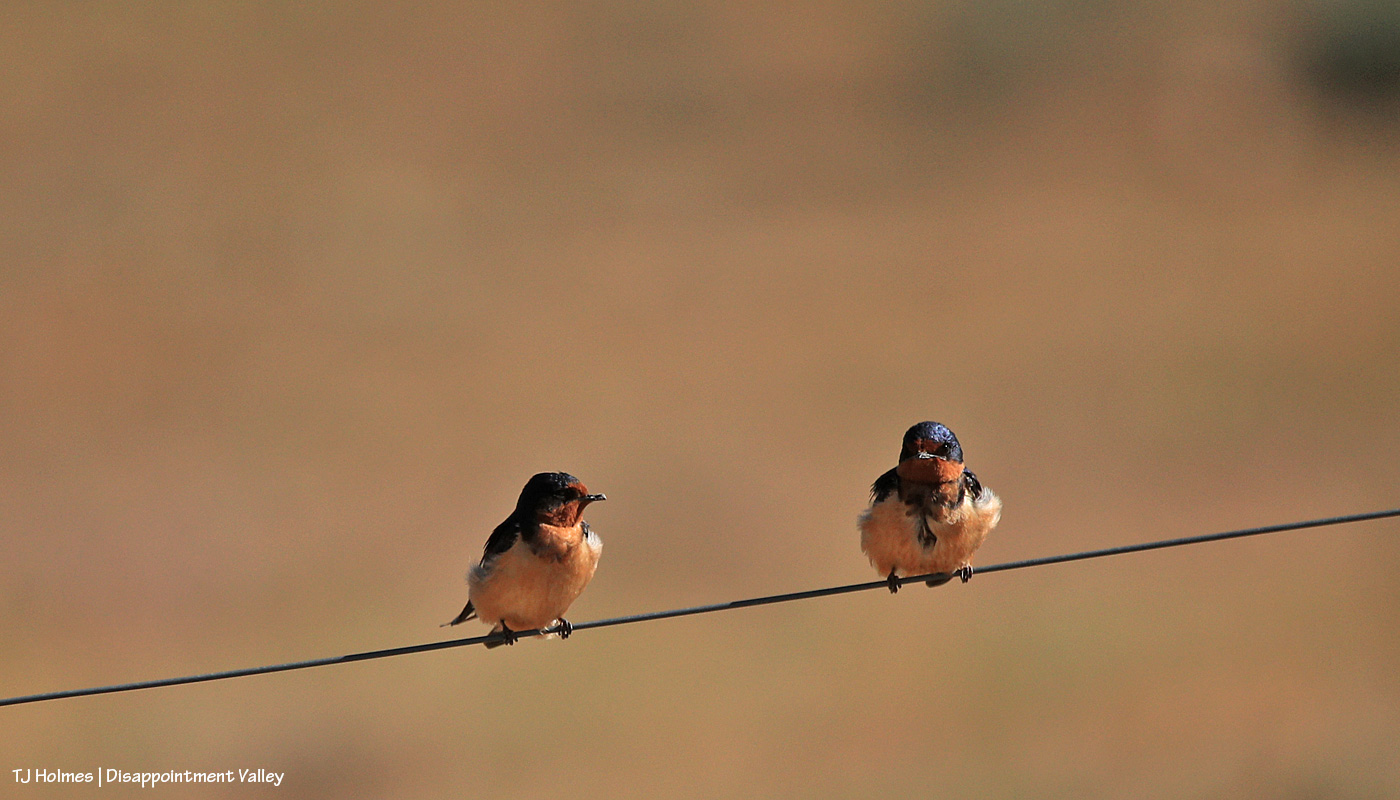
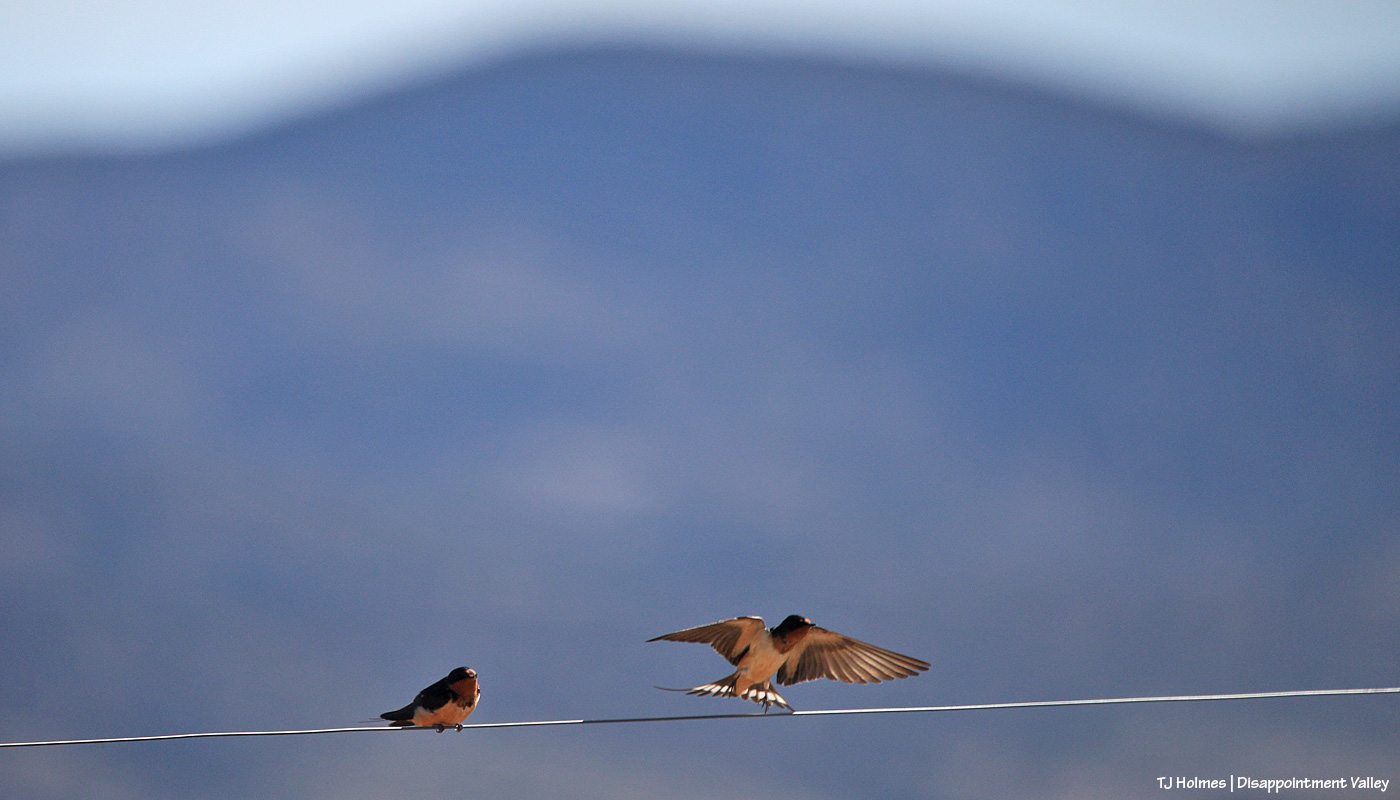
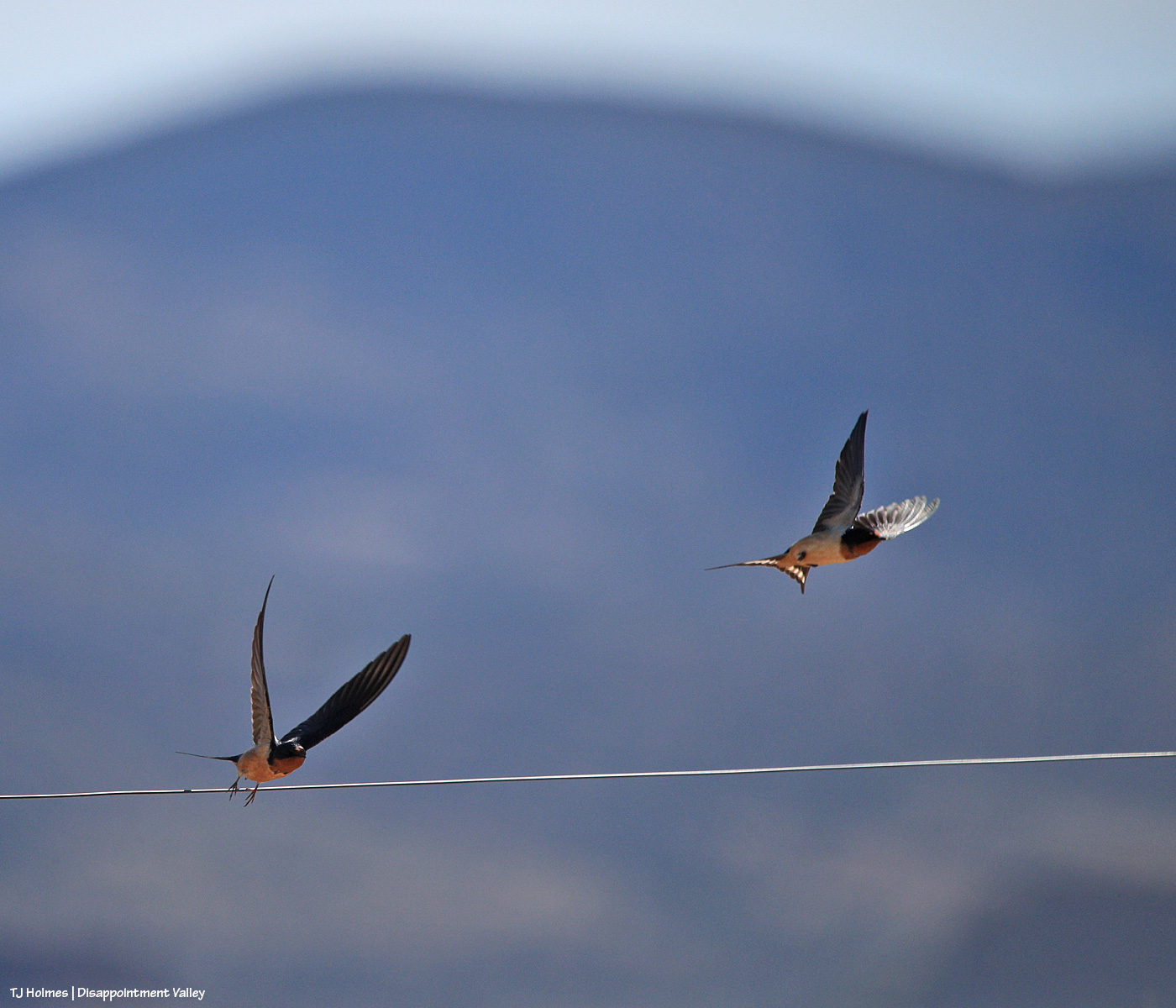
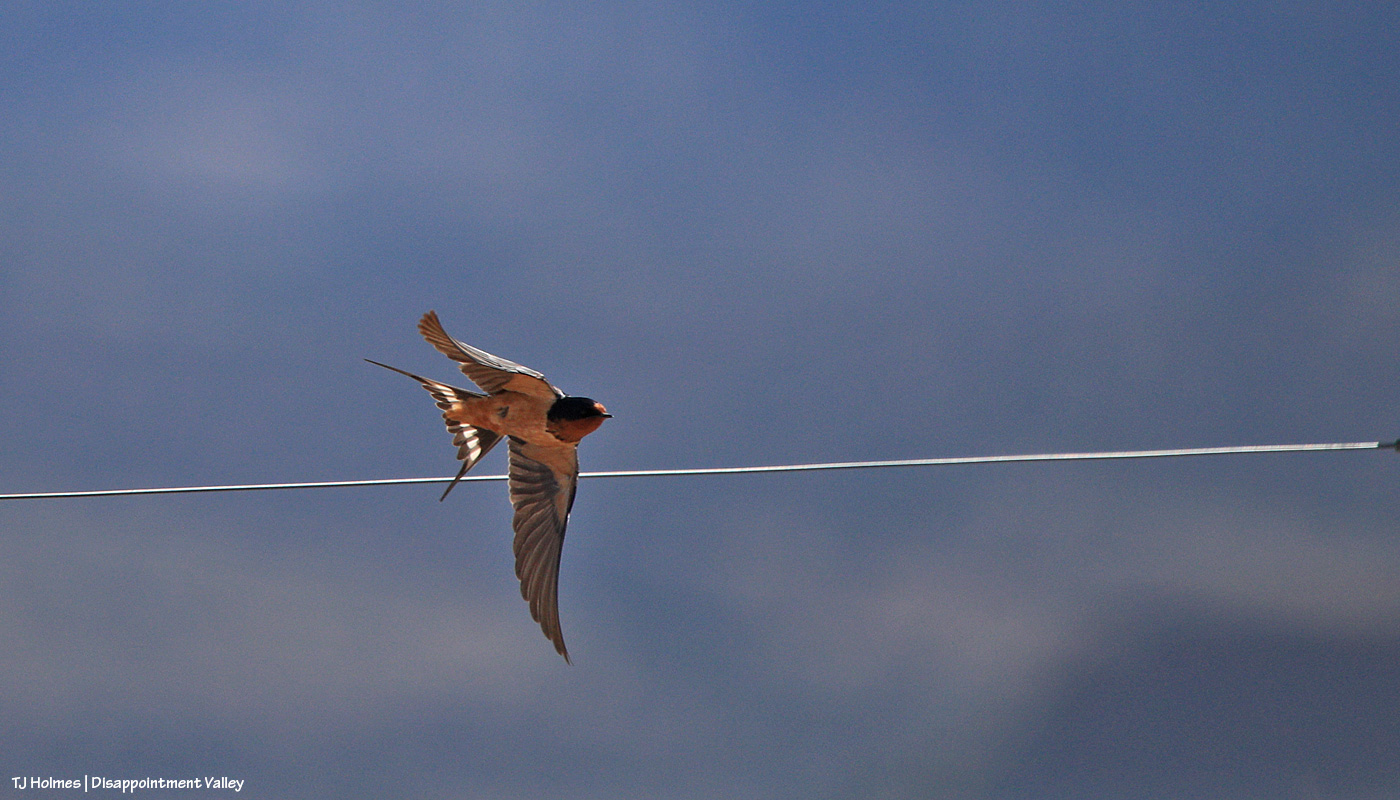
I also saw these lovelies swooping and soaring and preening on a fence wire:
I wish I’d caught the “sidle closer” steps as the bird on the right moved closer to its friend. (I *think* these are both males, but I’d love to be corrected?)
All About Birds says this about them: “You can find the adaptable Barn Swallow feeding in open habitats from fields, parks, and roadway edges to marshes, meadows, ponds, and coastal waters. Their nests are often easy to spot under the eaves or inside of sheds, barns, bridges and other structures.”
They use mud to build their nests, and we’re a bit in short supply of mud at the moment. Though Disappointment Creek wasn’t too far away as the sparrow dives, so hopefully that mud is close (enough) at hand (err, wing).
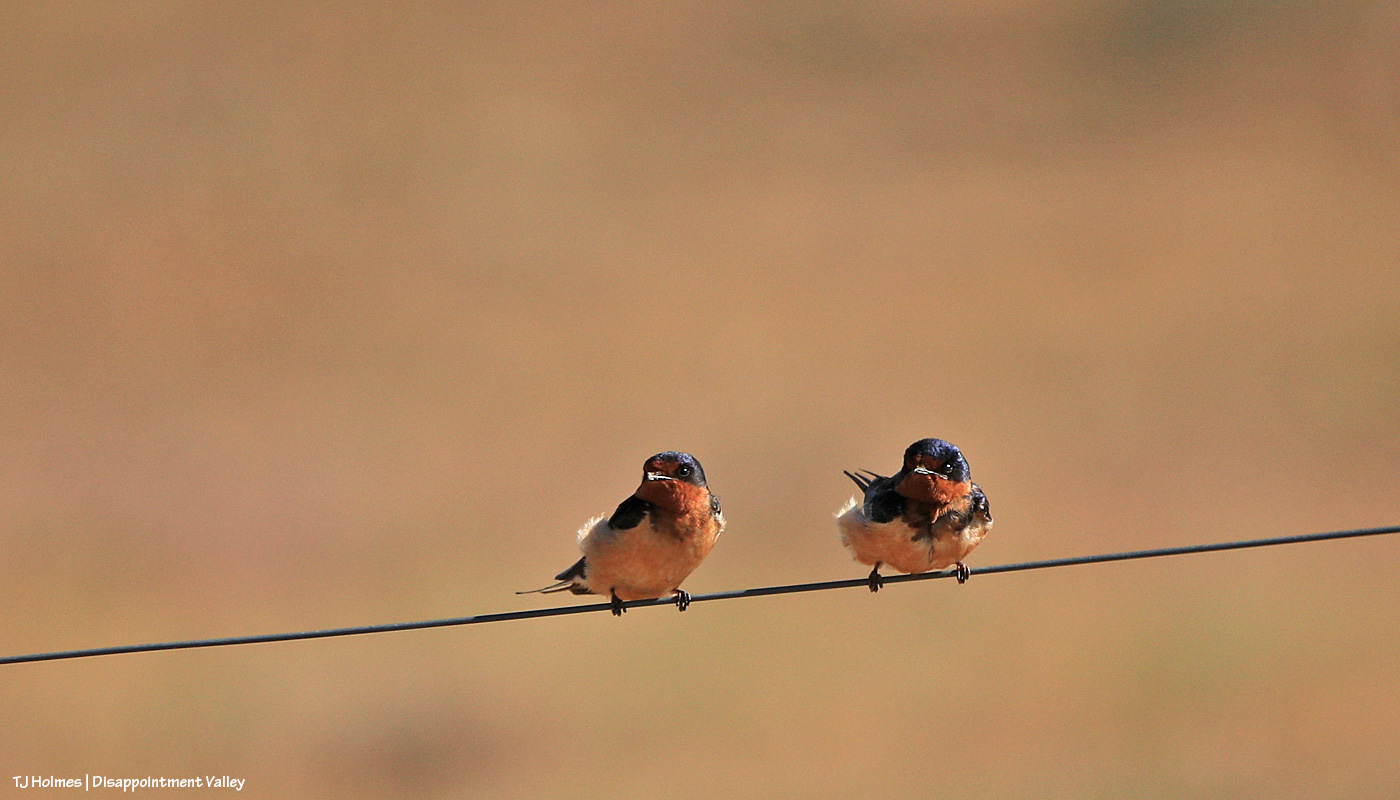
A different pair, taken from the same place just a bit farther along on the same fence wire.
Aren’t they magnificent? Cornell says they’re the most abundant and widely distributed swallow species in the world, but that doesn’t stop them from being simply stunning little birds.
A couple of interesting facts (among a few), also from All About Birds:
Although the killing of egrets is often cited for inspiring the U.S. conservation movement, it was the millinery (hat-making) trade’s impact on Barn Swallows that prompted naturalist George Bird Grinnell’s 1886 Forest & Stream editorial decrying the waste of bird life. His essay led to the founding of the first Audubon Society.
According to legend, the Barn Swallow got its forked tail because it stole fire from the gods to bring to people. An angry deity hurled a firebrand at the swallow, singeing away its middle tail feathers.
What do they eat? “Barn Swallows feed on the wing, snagging insects from just above the ground or water to heights of 100 feet or more.” With gnat season upon us, feed, swallows, feed on those wings! 🙂
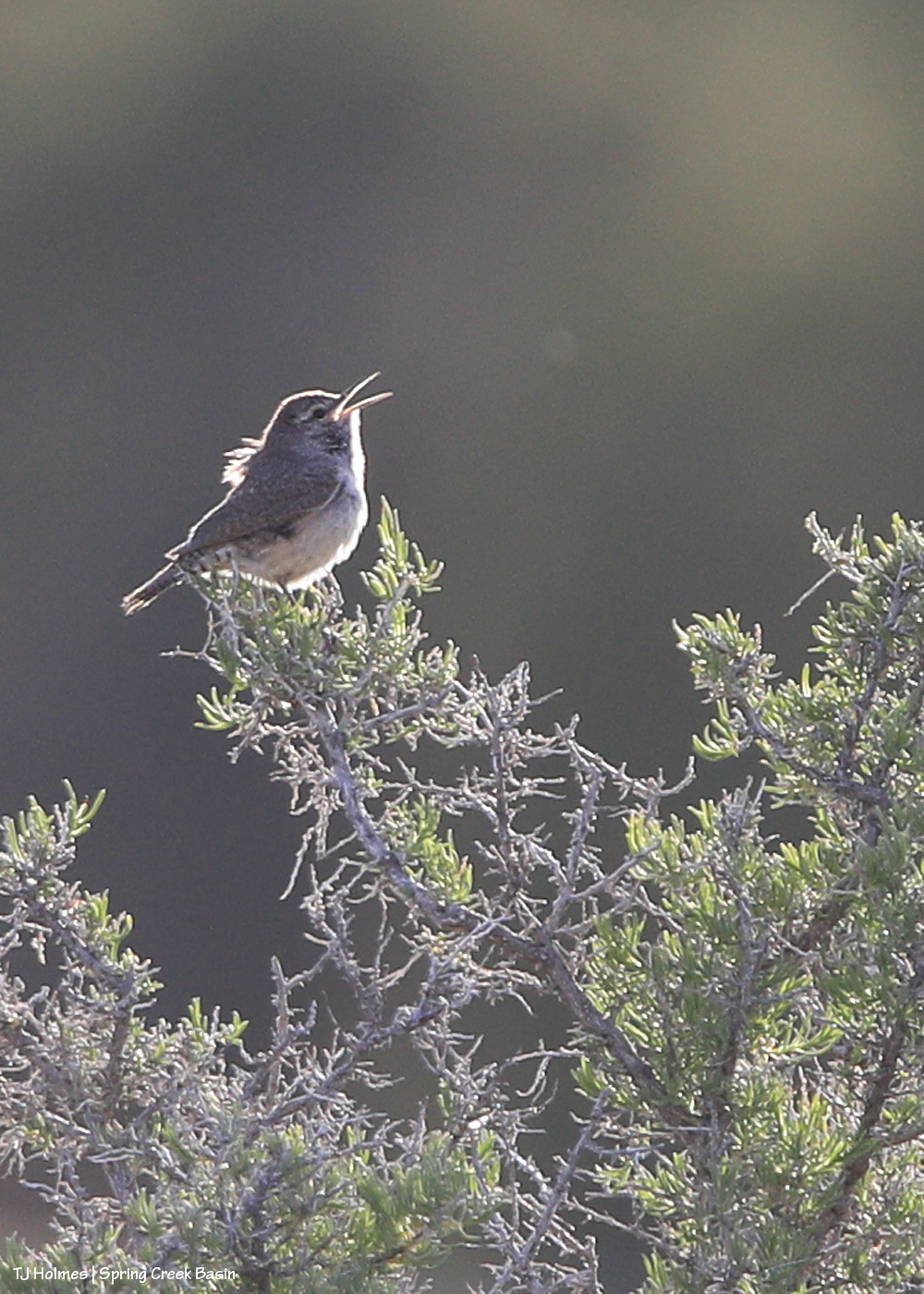
This little chubster was singing his heart out on top of a greasewood the other day when I was wandering along with a band of mustangs. I found out later that he’s a rock wren.
I know I just wrote on a previous post that I’m not an app person, but if you like birds and you don’t have the free Merlin bird-identification app on your phone, get it! I’ve had it for a while, but I’ve been slow to adopt some of the features – like recording bird songs in the area and seeing what Merlin says I’m listening to. I’ve done that when I can hear birds but not see them, and that’s how I first heard/identified rock wrens, when I was above the (dry) Spring Creek arroyo (in Spring Creek Basin) a couple of weeks ago. This is not an ad for Merlin, but I do use it a fair bit, and it’s one that I find super useful, so I thought I’d share (also, it’s specifically the only way I know what that little bird IS!).
For the pic above, I uploaded that to my app, and it gave me the ID, just like that. 🙂 Little brother was LOUD and enthusiastic. Apparently, this is part of their breeding grounds, so no wonder he was singing his heart out!
The meadowlarks are singing (my very favorite birdsong). LOADS of birds all think it’s spring, and they’re doing their springtime things. The pic above shows a horned lark, and they’re also very common around Spring Creek Basin and Disappointment Valley in the spring. They have a bit of a different song from meadowlarks, but while I was out with a band of mustangs, I heard the similar song and started looking around, and this handsome fellow was pretty nearby. His distinctive, namesake “horns” aren’t really visible, here, hopefully because he was fairly relaxed (?).
The rain brought the green, and it’s noticeable to your eyes as you look across the landscape that has been SO brown, but I’ve been disappointed that it’s not as visible in images. This pic seems to show a bit of that new growth (baby greasewood, I think; you can just see some of the tiny yellow flowers).
Meadowlarks have eluded me for getting a favorite image, but I kinda love this one of the horned lark. I really appreciated that he graced us with his song and his presence for a few moments!
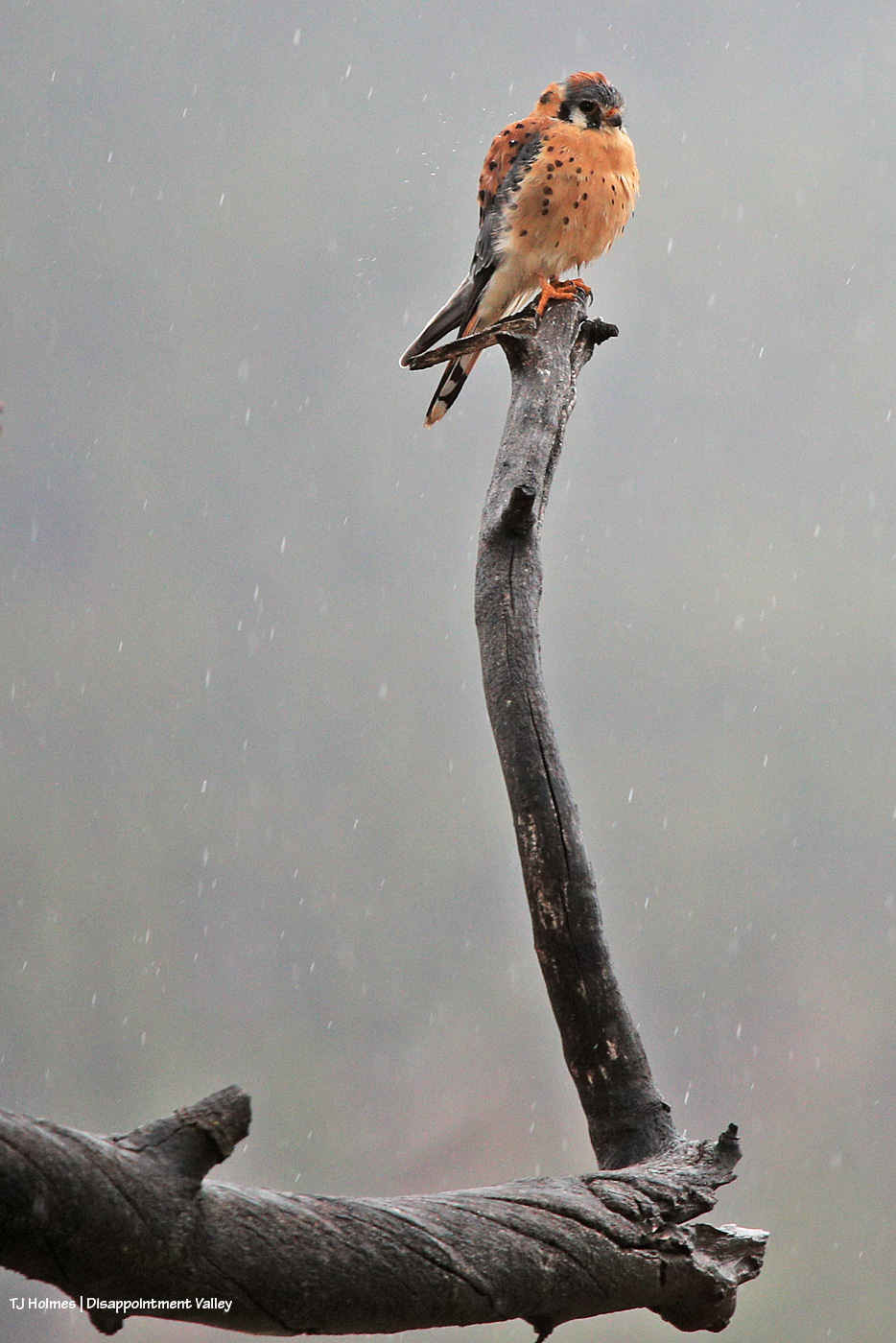
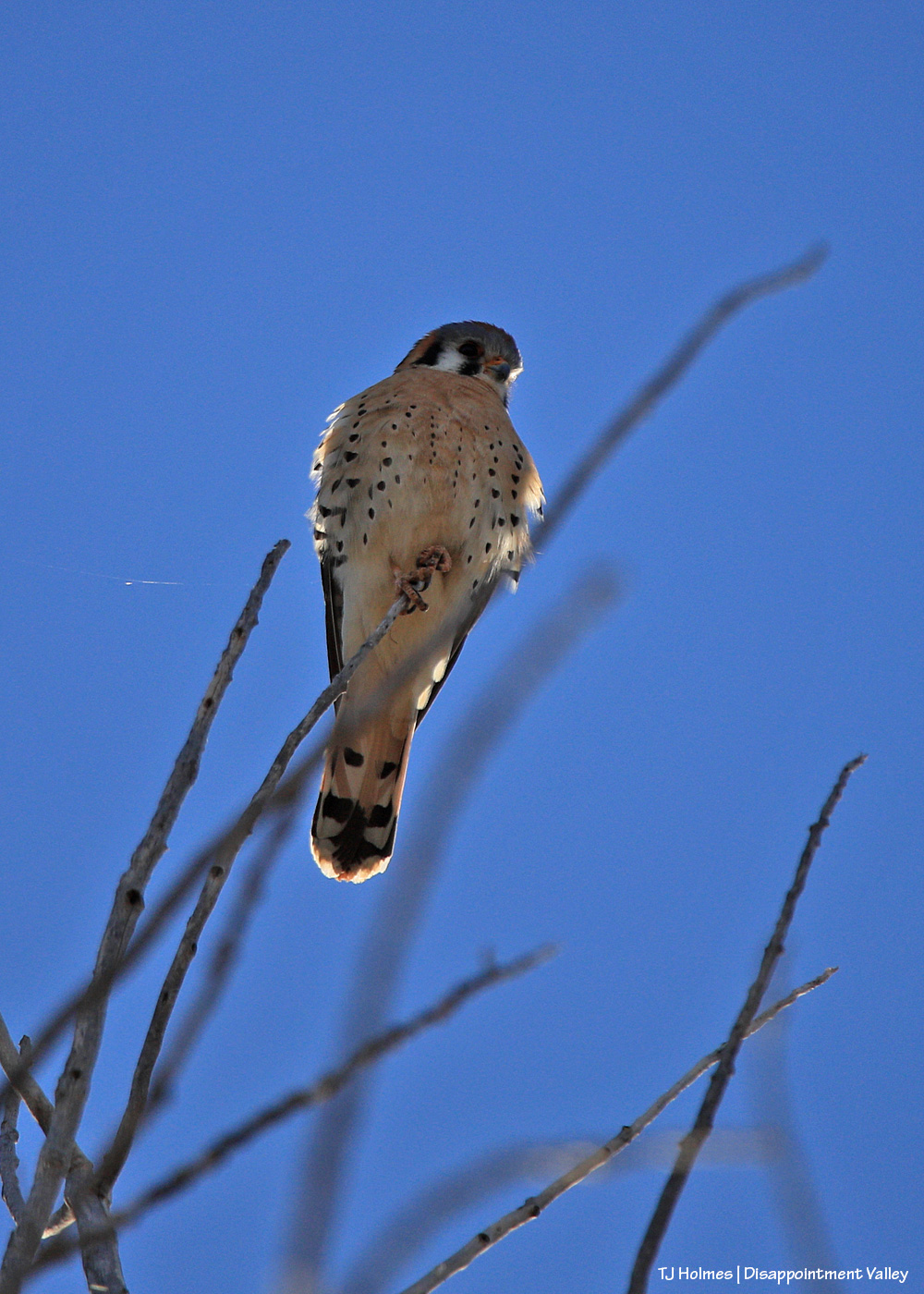
This fierce little guy was at the top of a tree with his mate (I’m not sure whether they’ve started a nest nearby), keeping an eye on other birds (and me). I love them so. 🙂
(The strange white line at left below the kestrel is a strand of spider silk glowing in the morning sunlight!)
It has been an incredibly busy fall season already. Third rifle season descends on Disappointment Valley (and every other bit of public land in Colorado) today. Apologies to good, ethical hunters, but it is THE WORST week of my year. So partly to set the tone for a hopefully OK week (and a safe one), and partly because I mostly forgot these images (!), let’s start it with some golden eagles.
The above image was taken more than a week ago (on my mom’s birthday, actually!), as you can see by the phase of the moon (wow, has it been BRIGHT!). But see that little speck right of center? That’s an eagle, and THAT is what I spotted that made me stop and scramble to get my camera out of its pack.
Two of the three eagles I saw were flying (cavorting?!) together above Spring Creek Basin’s western rimrocks. I like to think they came flying overhead to see what the crazy two-legged was doing, and I was glad to see them so close in all their majesty.
I thought maybe a group of ravens was called a “cacophony” (if you know ravens, you know why I might have thought that). But no. A group of ravens is called an *unkindness*. How unkind is that?
Ravens actually are quite intelligent and very social. This website explains the early misunderstanding about their behavior that led to that term. They can also be called a “conspiracy” of ravens, a “treachery” of ravens and – perhaps my favorite, just because I’m a fan of alliteration – a “rave” of ravens! Also (boringly), a flock.
While the two pictured were engaged in an aerial disagreement (?!) across a large swath of ridge and sky, a third followed … maybe ready to console the loser or congratulate the winner? (There’s my own misunderstanding, shining through!) In any case, I was kinda stoked to see the above pic show up on my computer monitor. And very glad to get the lower raven’s wingtip juuuuuust within the frame of the original image (I did crop out a length of sky above them).