Heading up to one of the water catchments the other day, I was surprised to see a couple of pronghorn does heading on up past a band of horses that were already leaving the trough and also making their way to the top of the hill. I didn’t see them (any of them) drinking, but I *know* the horses had been, and I really hope the pronghorns are making use of the fresh rainwater, too.
No pix of the pronghorns and the horses together because they were far-ish, and I was still huffing and puffing my way up the hill, and I didn’t stop to offload and unload my pack. So what follows are sightings of the pronghorns after I was up and over the top, with another (second) band.
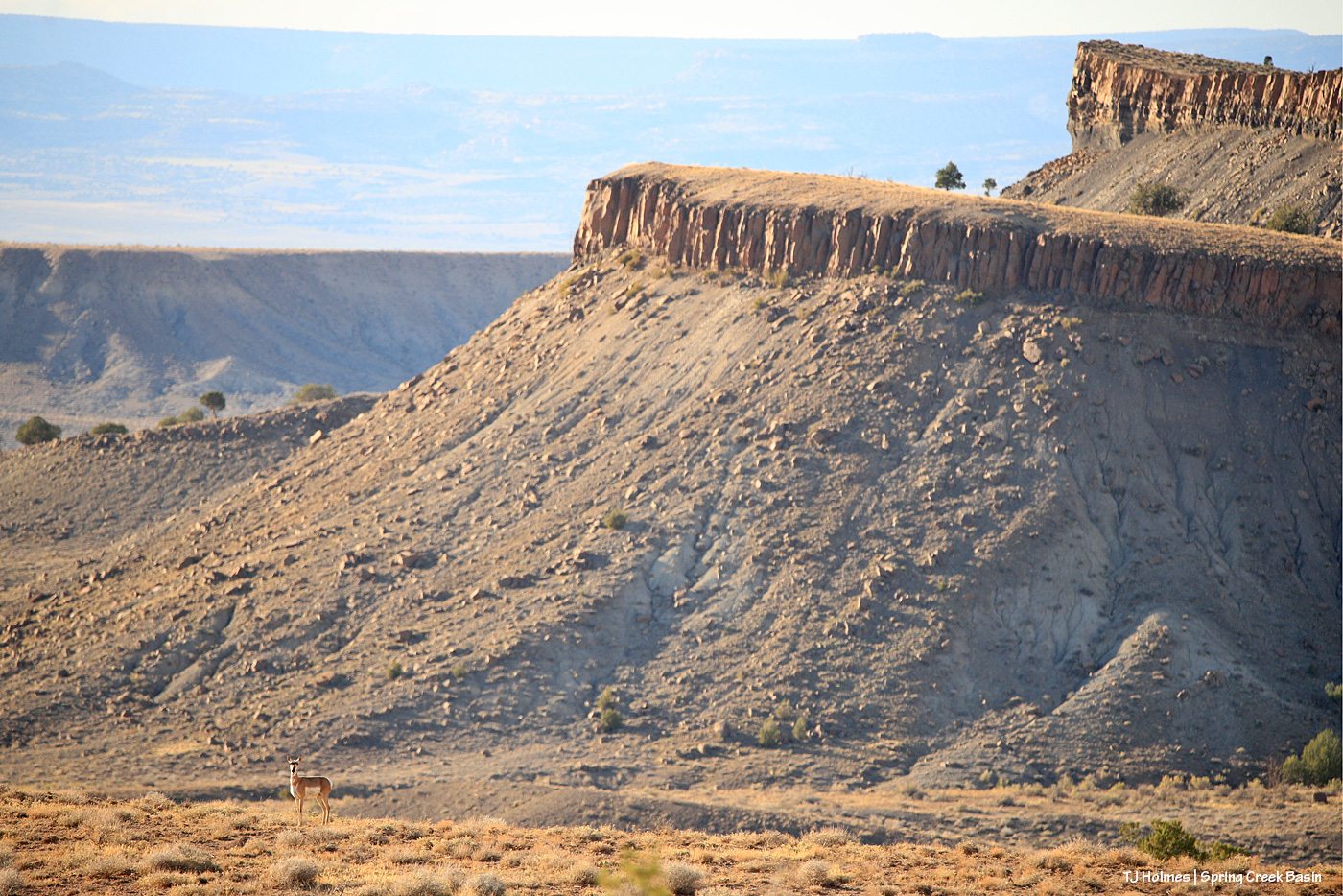
By the time I got atop the hill and was moving down toward a band of mustangs, I caught sight of one of the pronghorn does already down the broad other side.
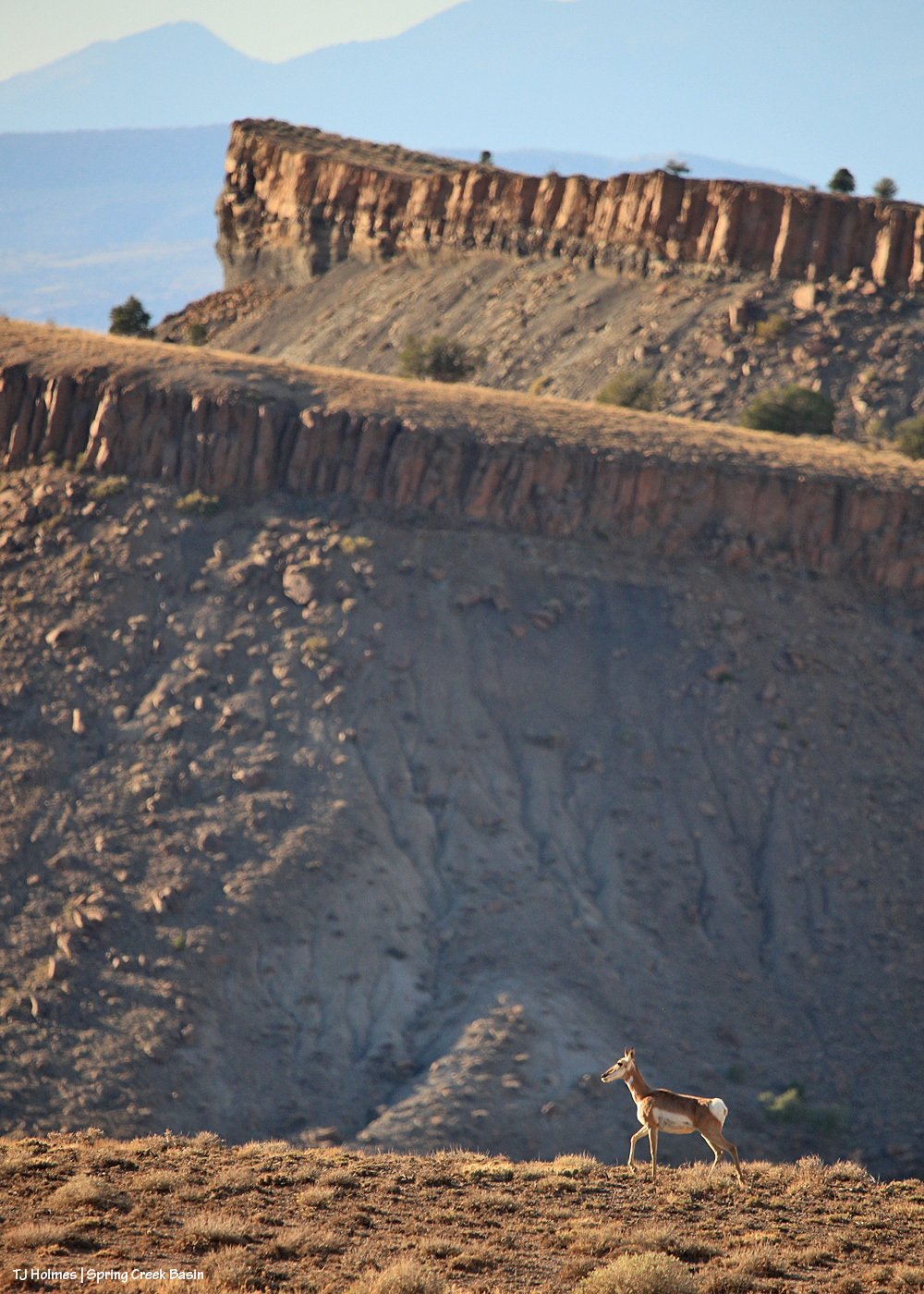
My lens swung between horses and pronghorn, and I wondered where the other pronghorn had gone.
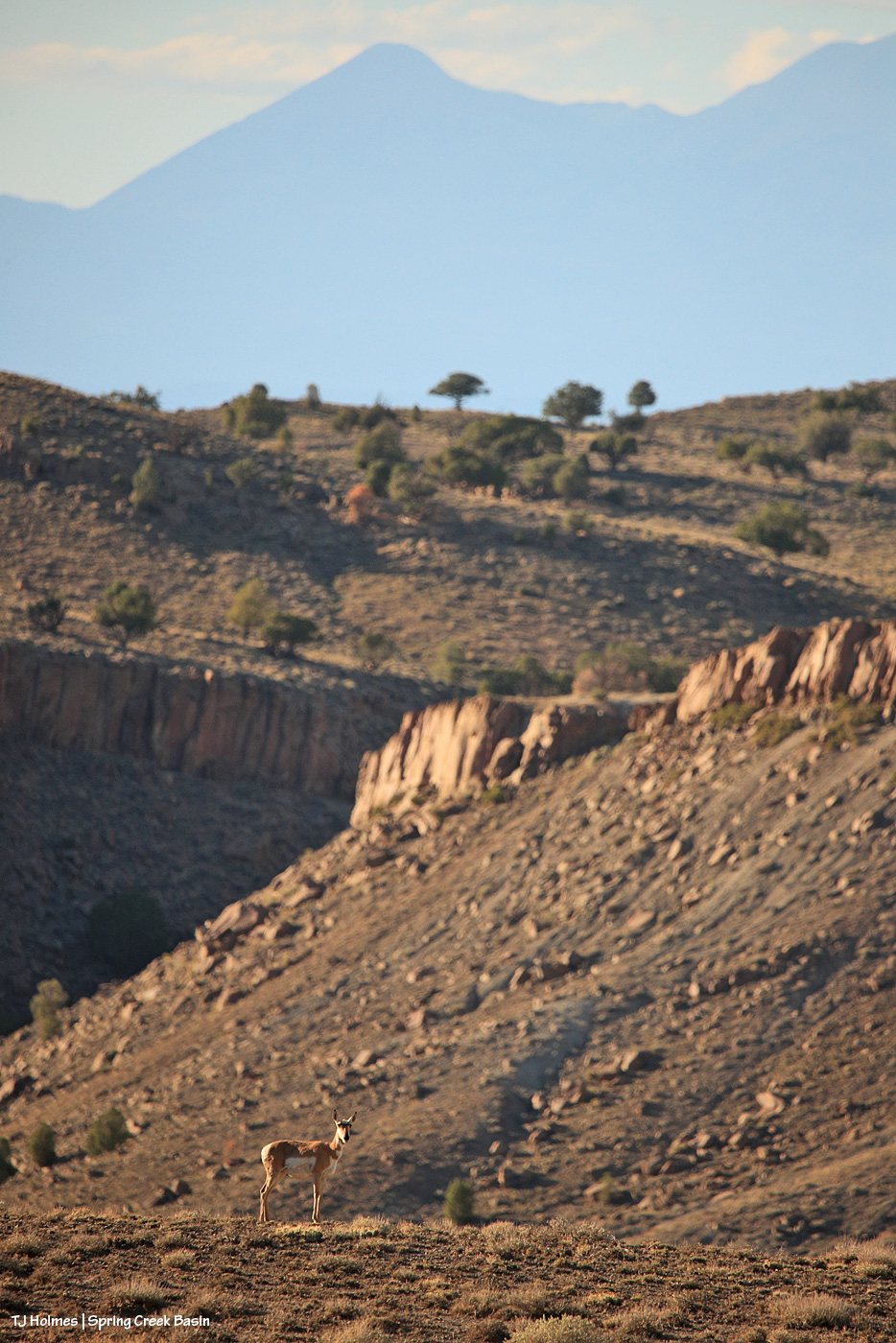
But for a while, only the one doe was visible, watching me watch the mustangs (and her).
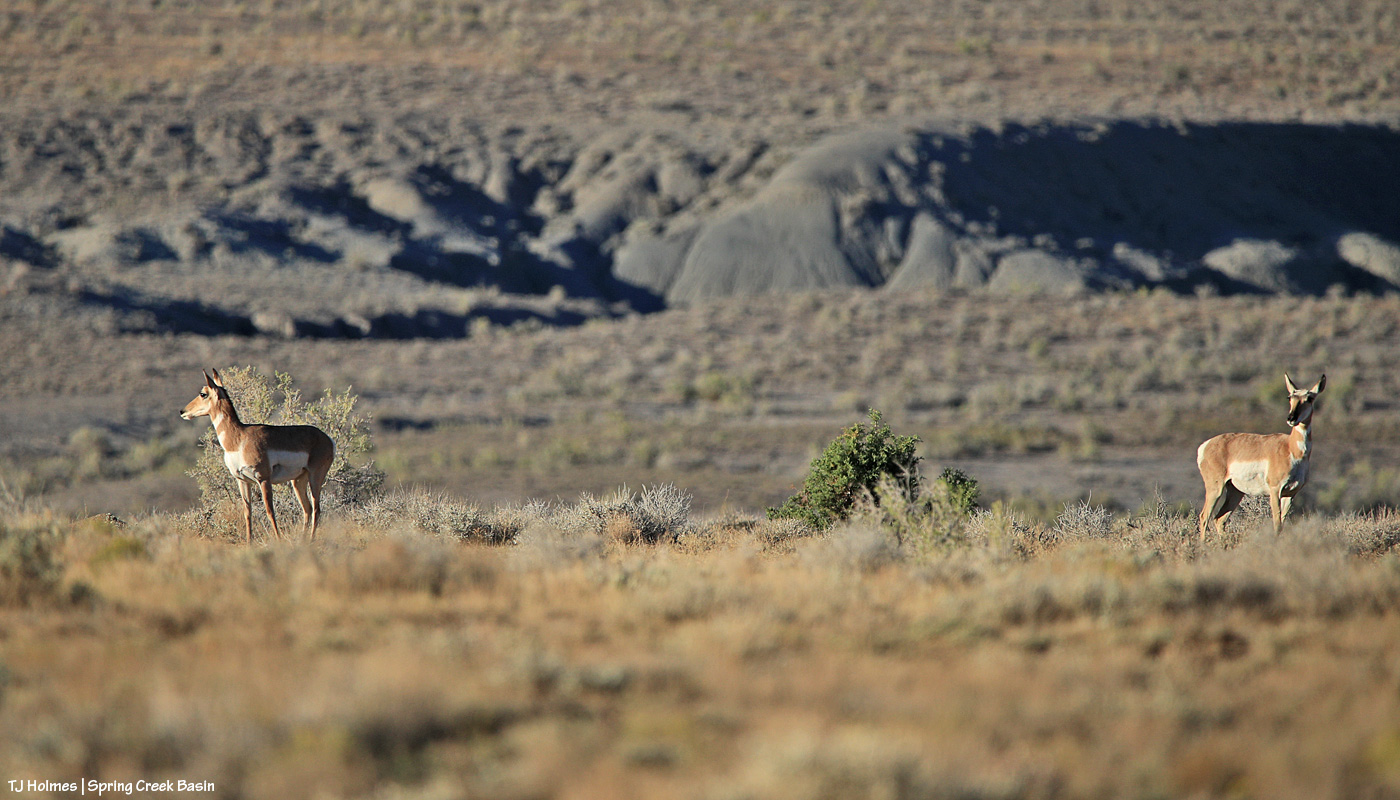
She eventually went out of sight, and I figured that was the last I’d see of her. … Until she showed up with the second doe, walking not so much toward me but on a trajectory that was going to take them past me a lot closer than they had been. And then the second doe turned to look behind them – definitely NOT at the horses – and I started to wonder what SHE was looking at.
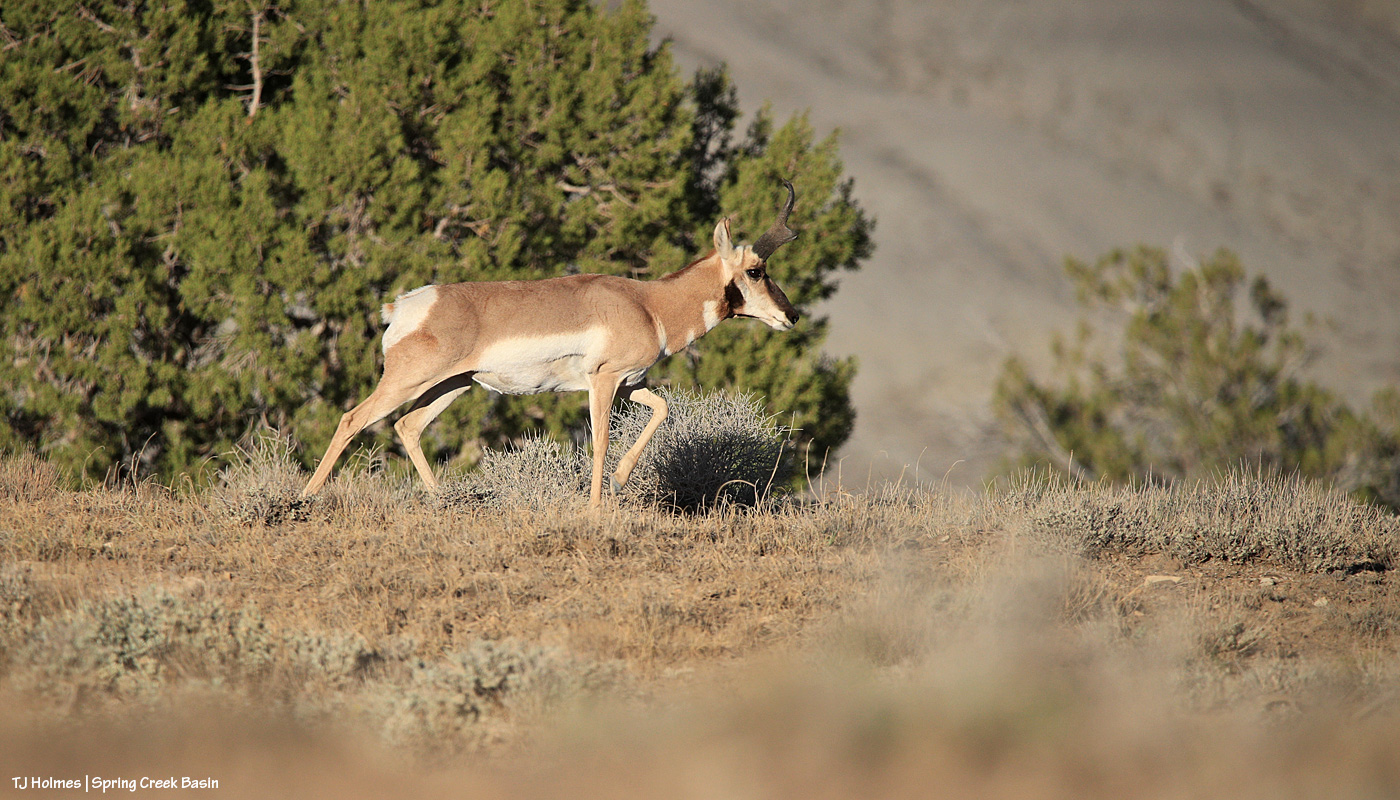
Ah ha! Mister handsome!
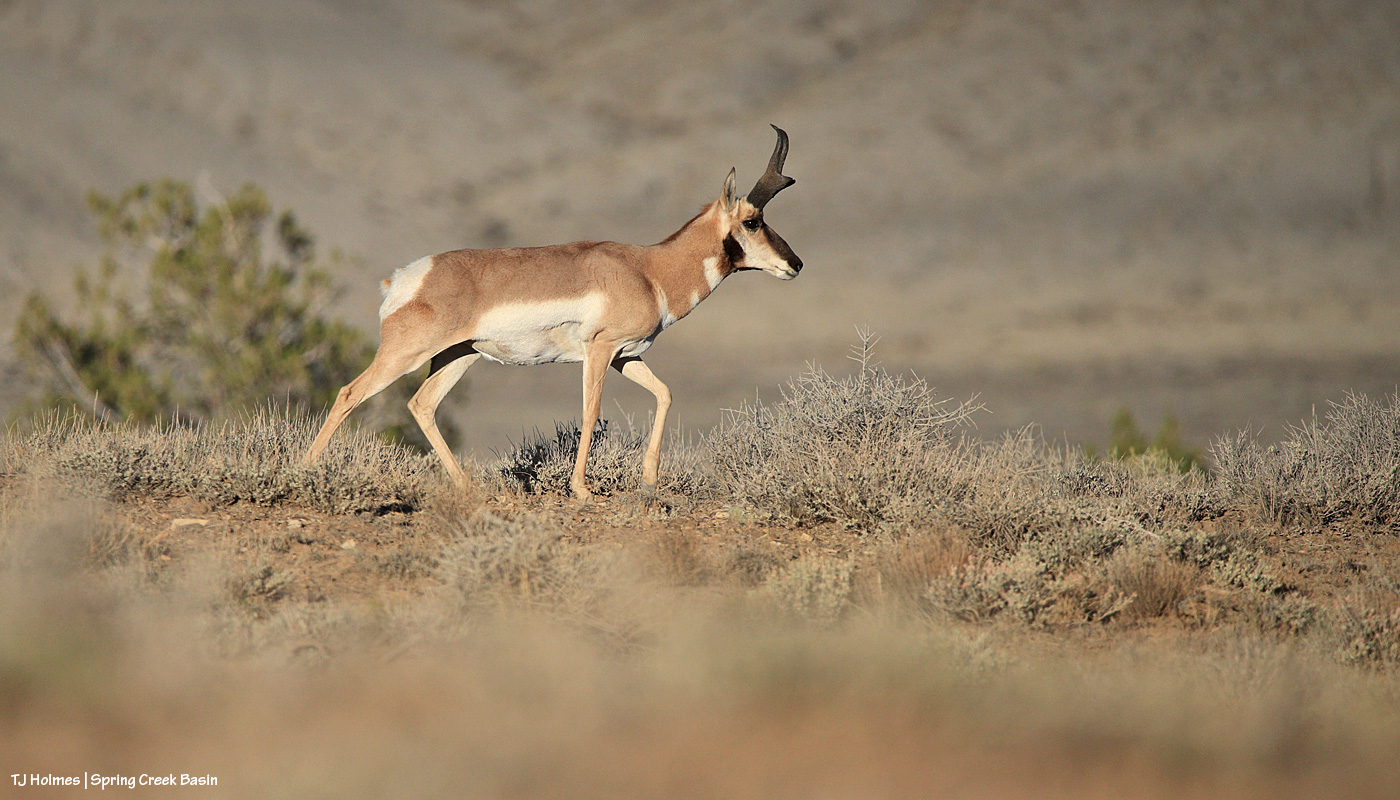
This shows his impressive horns better. And despite the fact that males shed the *outer* horns, they are horns, not antlers.
More from Google AI:
The Pronghorn (Antilocapra americana) is North America’s fastest land mammal, capable of reaching speeds up to 55–60 mph.
Physical Characteristics & Speed
- Speed: Reaches top speeds of 55 to 60 mph, making it the second-fastest land animal globally (after the cheetah).
- Anatomy: Features an oversized windpipe, heart, and lungs that process massive amounts of oxygen.
- Horns: Possesses unique branched, pronged horns with a keratin sheath over a bony core that males shed annually.
- Vision: Equipped with large eyes set high on the skull, providing a 320-degree field of vision to spot danger from miles away.
Habitat & Range
- Geography: Endemic to the open plains, grasslands, and semidesert shrublands of western and central North America.
- Local Presence: In Colorado Parks and Wildlife, they are commonly found on the eastern plains, mountain parks, and western shrublands.
- Migration: Some herds migrate hundreds of miles seasonally to avoid deep winter snow that blocks access to food.
Diet & Behavior
- Diet: Herbivores that primarily eat forbs (flowering plants), grasses, and shrubs like sagebrush (which they can digest despite its toxicity to other ungulates).
- Reproduction: Mating occurs in early autumn (September), and females typically give birth to twin fawns in late May or June.
- Predators: Vulnerable to coyotes, bobcats, wolves, bears, and golden eagles, which primarily target young fawns.
Pronghorns are fascinating critters. They’re not very widespread here, and there aren’t very many of them. Thankfully, there’s no hunting of pronghorns in our part of Colorado because there just aren’t very many. While I see them fairly often, I think there are only around 30ish. We do have coyotes and golden eagles, but in the open reaches of Disappointment Valley, those likely are their only predators. That said, there don’t ever seem to be *more* of them year to year.
From Wikipedia: “The pronghorn (UK: /ˈprɒŋ.hɔːrn/, US: /ˈprɔːŋ.-/)[4] (Antilocapra americana) is a species of artiodactyl (even-toed, hoofed) mammal indigenous to interior western and central North America. Though not an antelope, it is known colloquially in North America as the American antelope, prong buck, pronghorn antelope, and prairie antelope,[5] because it closely resembles the antelopes of the Old World and fills a similar ecological niche due to parallel evolution.[6] It is the only surviving member of the family Antilocapridae.[7]“
“The pronghorn is the fastest land mammal in the Americas, with running speeds up to 55 mph (88.5 km/h).” And if you’re lucky enough to see them, you can easily believe that. Even at what pronghorns themselves might consider “an easy lope,” they are FAST.
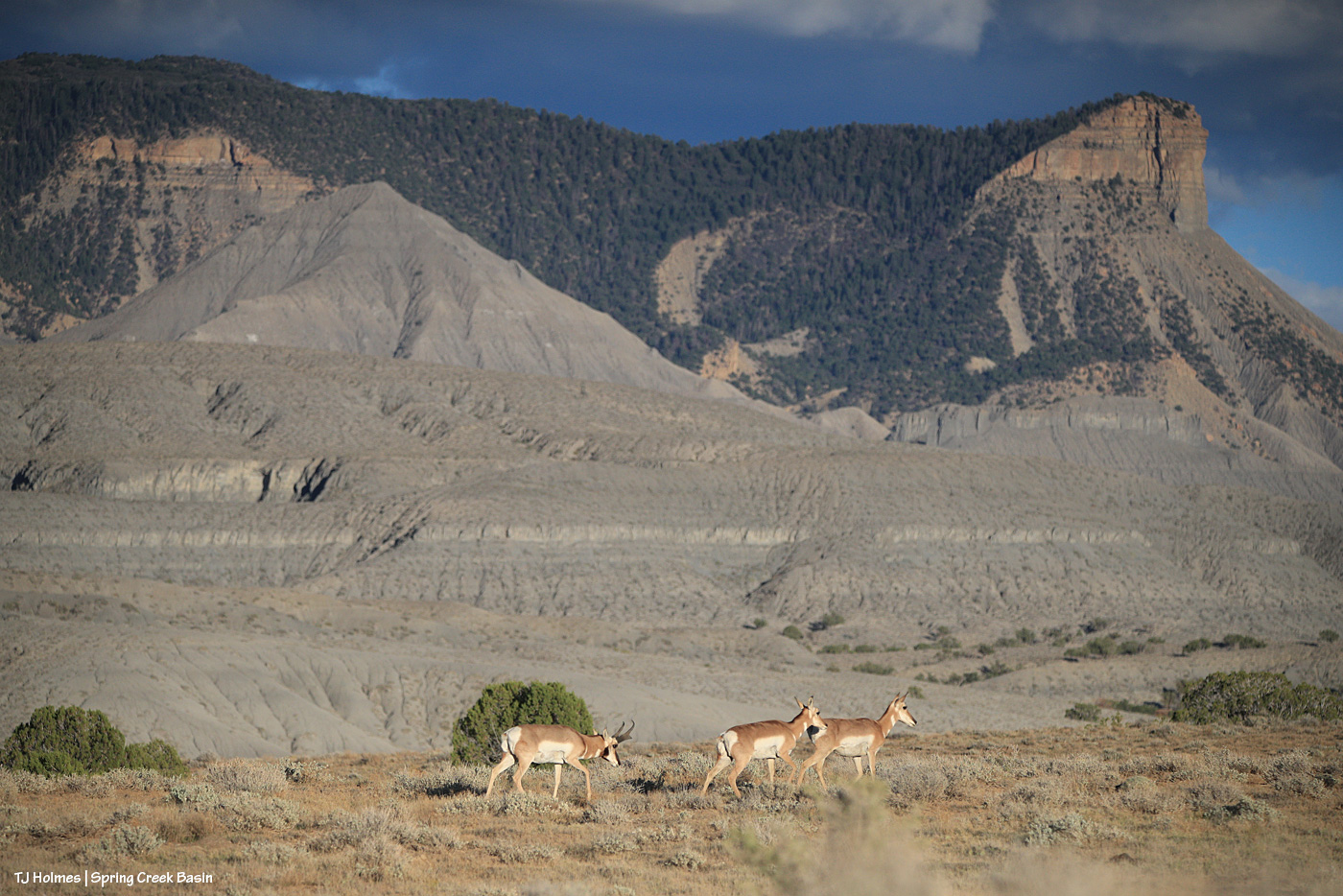
Pronghorns are awesome. 🙂


Pronghorns ARE awesome! Good photos, TJ, and thank you for all the cool info – some of it I didn’t know yet. The fast part I did know – and they are. Seems they like to show up in the Basin in the fall and I’m glad you’re there to catch them once in awhile. 🙂
They’re here in Disappointment Valley/Spring Creek Basin year-round. I always hope to catch sight of the fawns in the spring, but they’re usually too far and too fast. 🙂 I always love to see them, no matter the season!
They really are good looking! I didn’t know they could run that fast!
Yep. When I say they’re fast, I mean it – they are FAST! 🙂 It’s actually amazing that they have any predators … only when they’re very little, I think.
Thanks for the pronghorn education.
I needed that. I agree.
Pronghorns are awesome!
🙂 Yes, they are! 🙂
I love these guys — I get to see them in summer and I love it.
So cool that you have them in your valley, too! 🙂