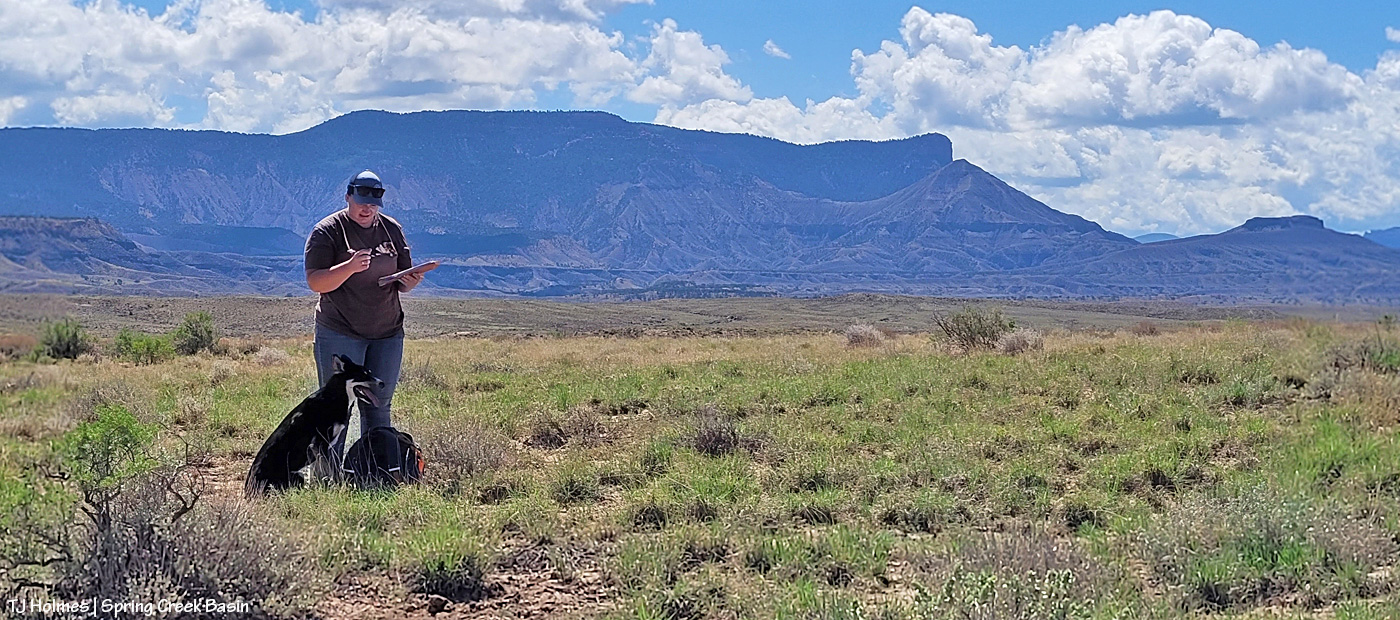
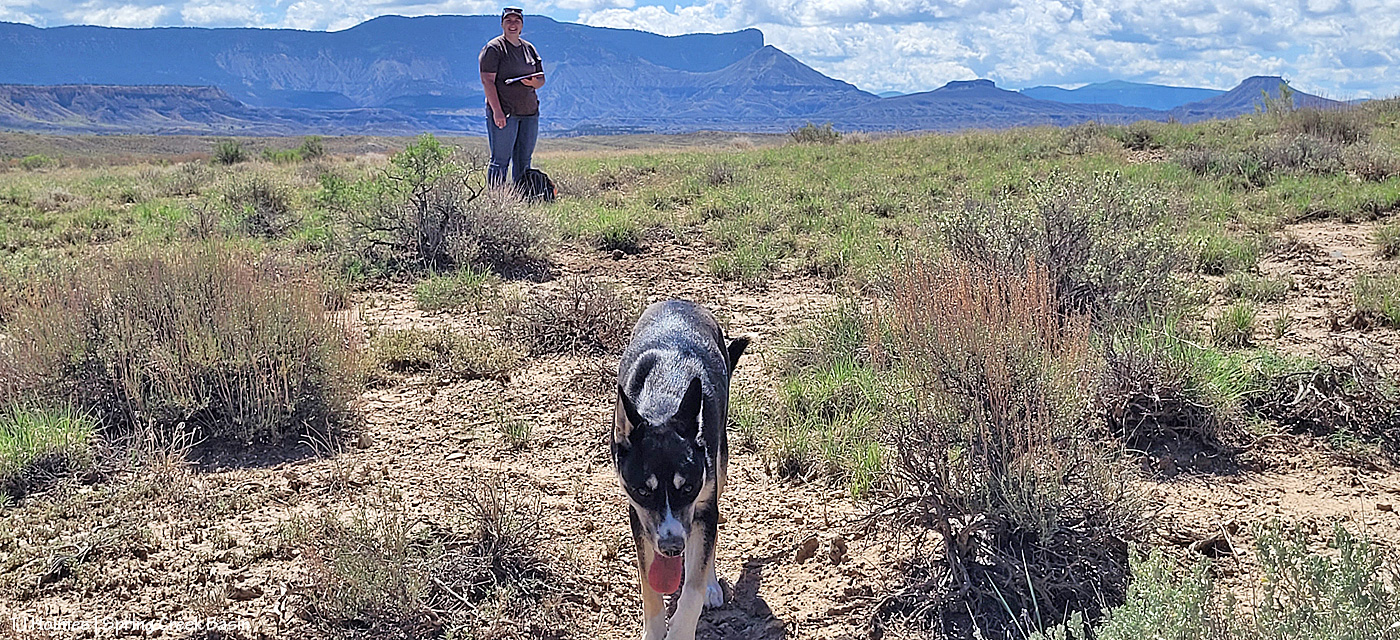
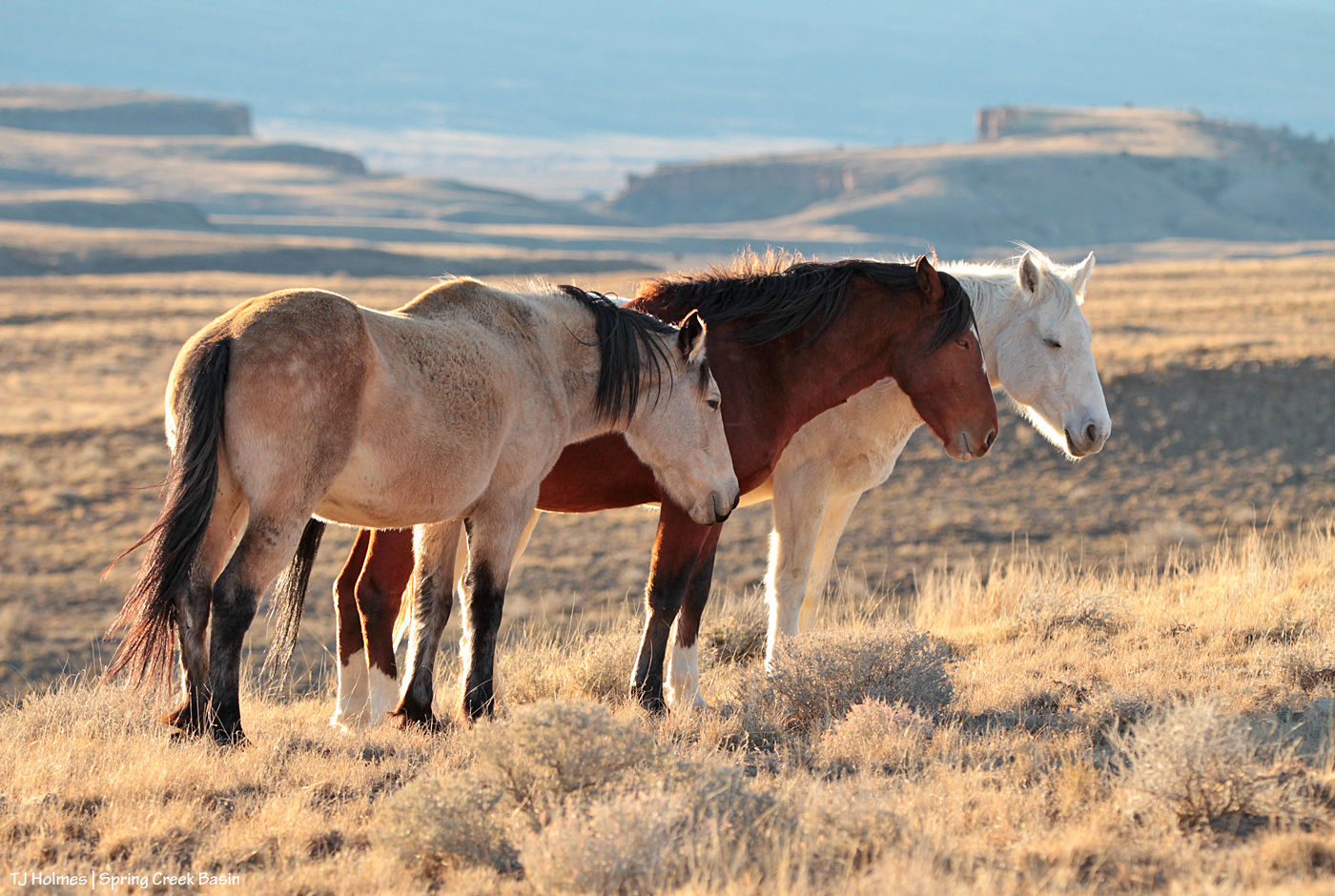
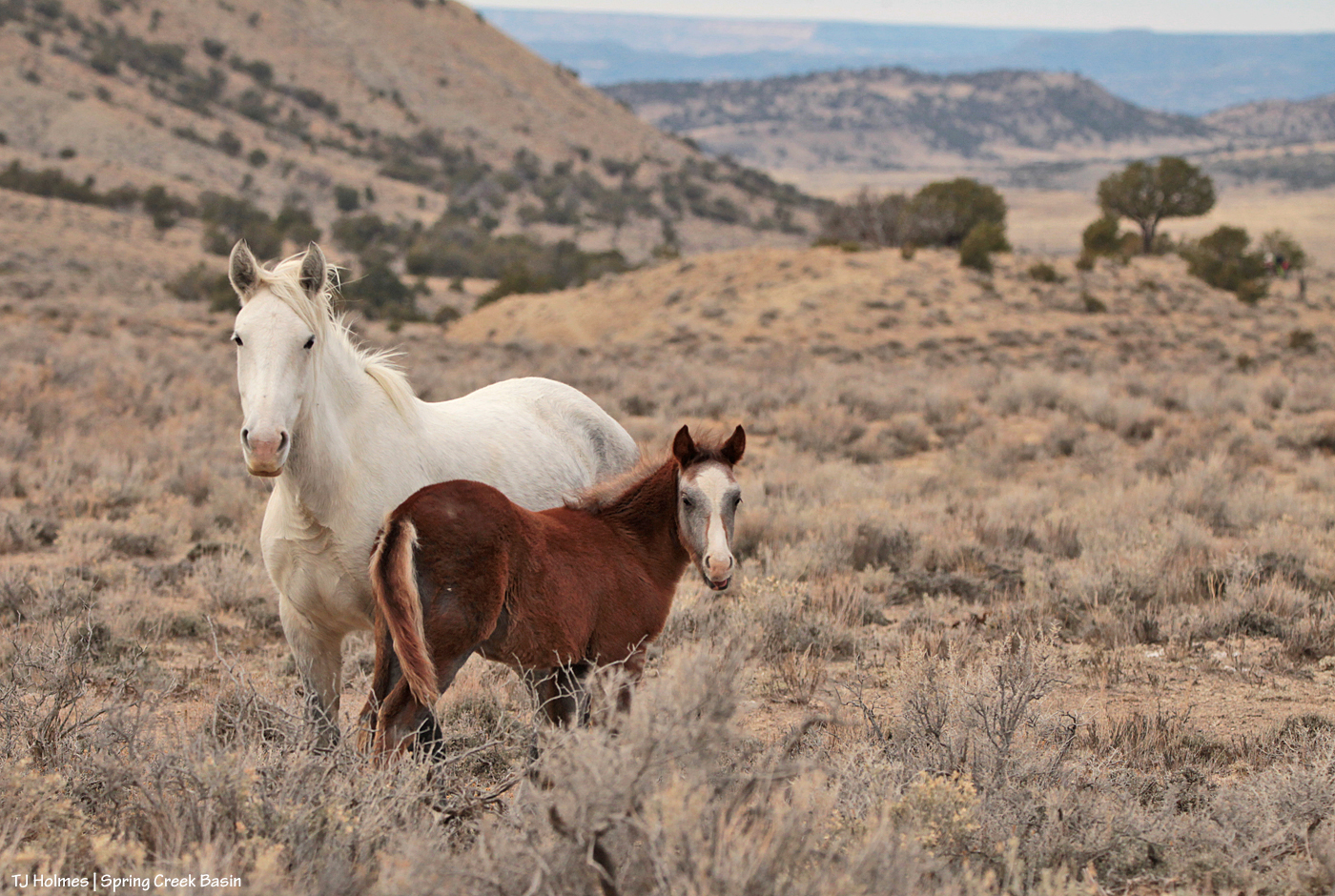
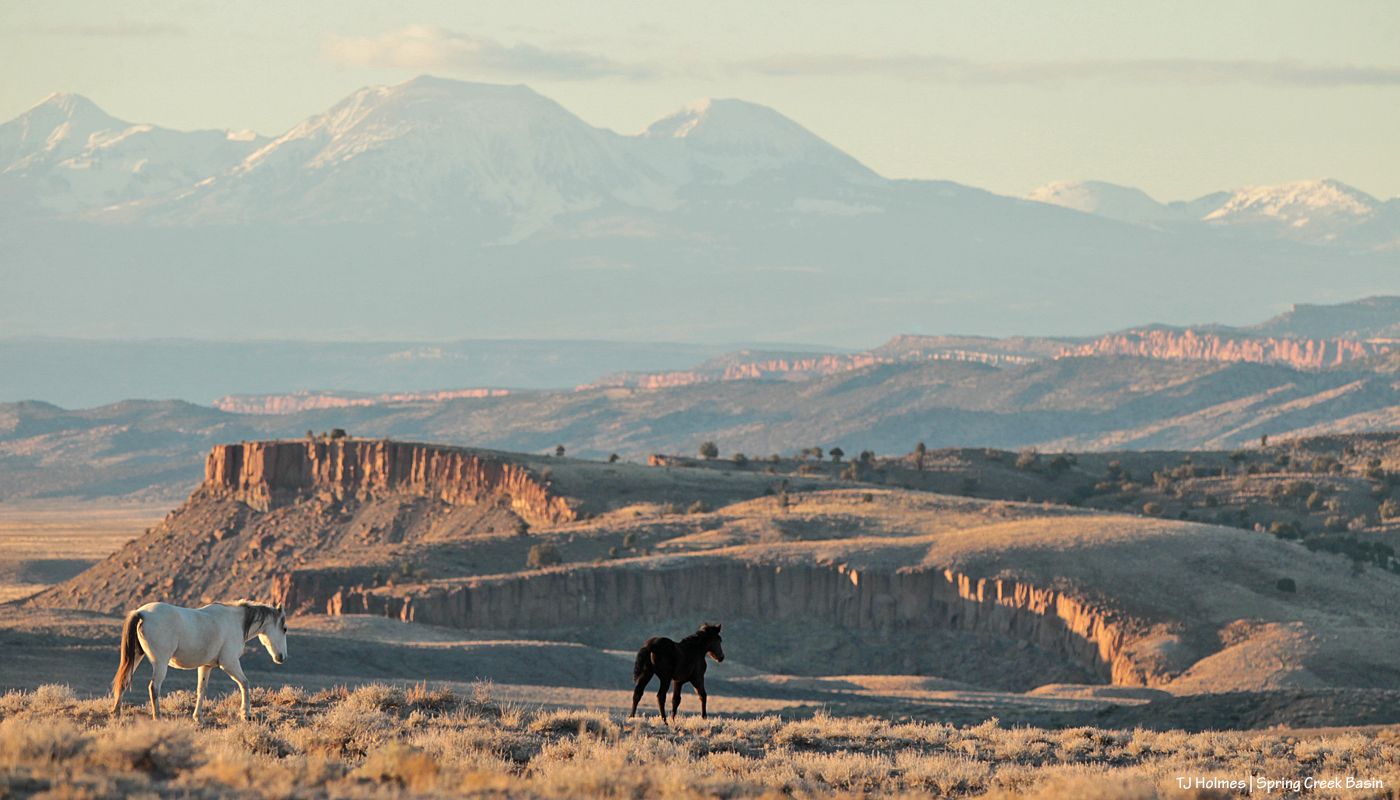
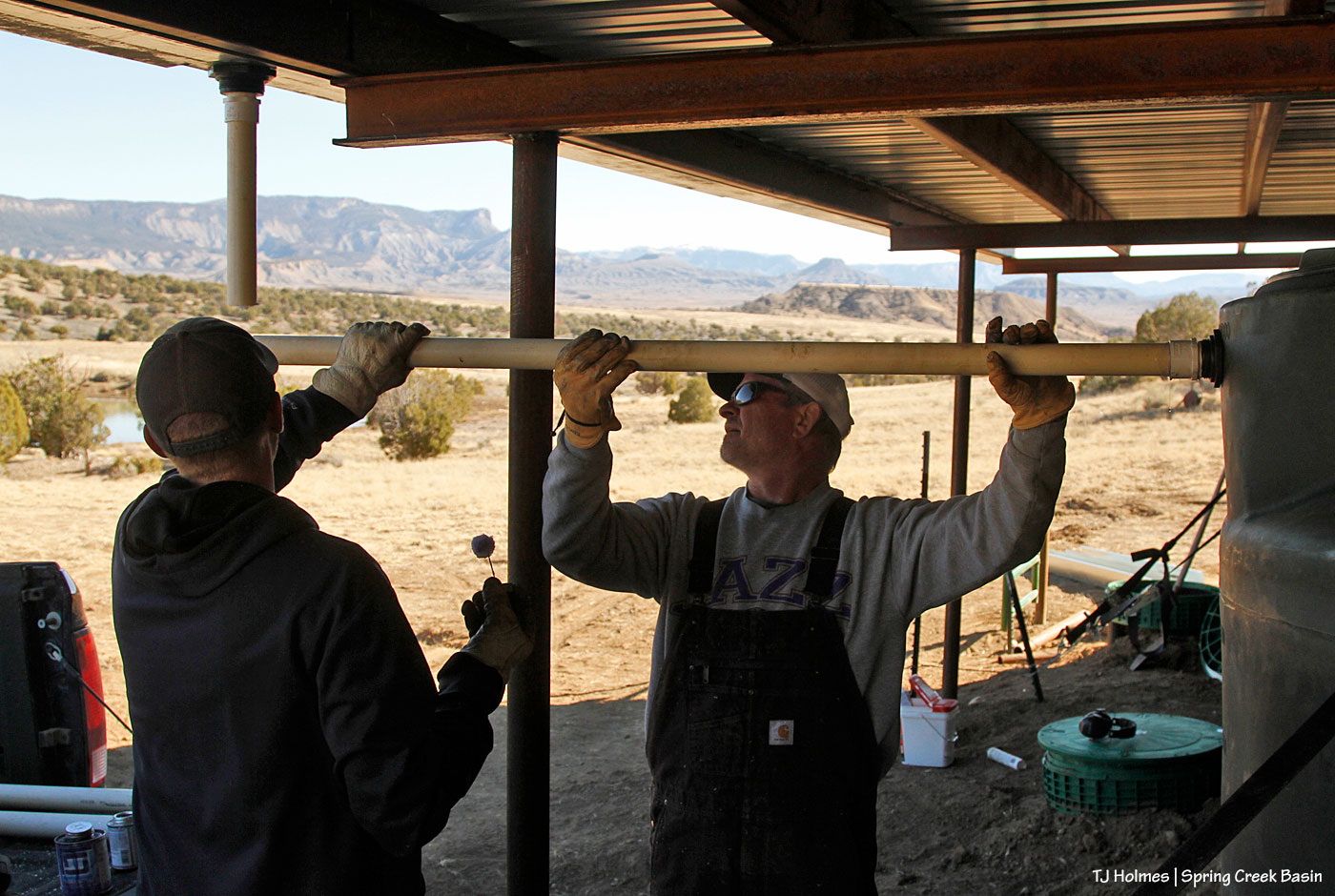
Our BLM range tech, Laura Heaton, was out in Spring Creek Basin last week doing some utilization (of vegetation) monitoring with her lovely assistant, Roo!
Do you see how GREEN it is?! We both think the grass is growing inches per day. It’s awesome to have finally gotten rain (now a stretch of hot, dry days looms).
Readers of this blog know that I/we have enjoyed a particularly good partnership with our BLM folks for the last nearly decade, in huge part because of rangeland management specialist and Spring Creek Basin herd manager Mike Jensen.
Our PZP program was implemented during the 2011 roundup, before Mike returned to herd manager duties (he was herd manager here first in the early 2000s), but Mike has been an absolutely staunch supporter of the program. It was under Mike’s leadership that we were able to get bait trapping solidified as the capture method of choice (when the time comes), and because of Mike’s dedication to vegetation monitoring, for the 2020 herd management area plan update, we had the data necessary to allow the increase in AML (appropriate management level) from 35 to 65 adult horses to 50 to 80 adult horses. That, combined with the very successful PZP program, has meant an astounding 13 years to date since the last roundup and removal of any Spring Creek Basin mustangs.
Mike is the BLM partner every advocate wishes for and we have been so very fortunate to have.
Under Mike’s leadership, Spring Creek Basin Herd Management Area is a model that other BLM managers and advocates can aspire to. (That’s not arrogance; that’s pure gratitude.)
As I described in yesterday’s post, last week, Mike and Tres Rios Field Office Manager Derek Padilla came to Spring Creek Basin for the field trip with Colorado Wild Horse Working Group members. I take every opportunity offered to describe Mike’s work ethic, partnership and support of our mustangs to anyone who will listen, but this was the first opportunity for group members and our Colorado advocates to see him in action as he talked about the history of Spring Creek Basin as a herd management area and our accomplishments in both herd management and the projects we’ve completed for the benefit of the mustangs. Naturally, everyone wants a Mike clone for their areas. 🙂
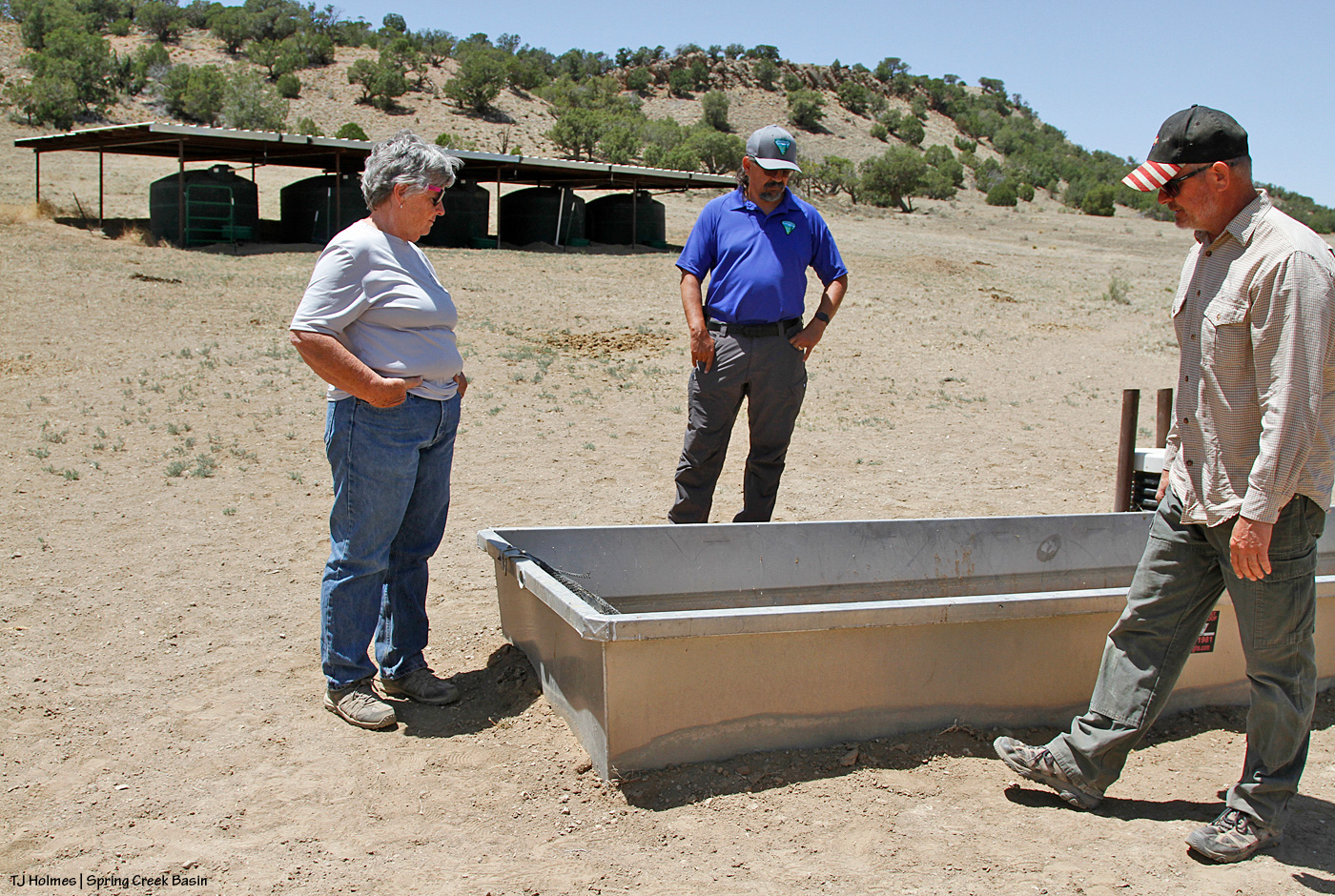
By the time we reached the day’s end goal and turnaround spot – the northwest-valley water catchment we built in 2022 – we were down to our local advocates and a Jeep-full of advocates from the other herds.
And because Mike retires Friday from a long (30 years) career with the Bureau of Land Management, we local advocates wanted to take advantage of the last opportunity we’d likely have Mike in Spring Creek Basin to mark the occasion, wish him well and give him a token of our appreciation.
Left to right: Mike Jensen, Frank Amthor, Tif Rodriguez, Pat Amthor and yours truly.
Thank you, Mike, for being such a champion for wild horse management here in Spring Creek Basin, for being a true partner, for being one of the people I respect most in this world. We wish you well in retirement! Don’t be a stranger. 🙂
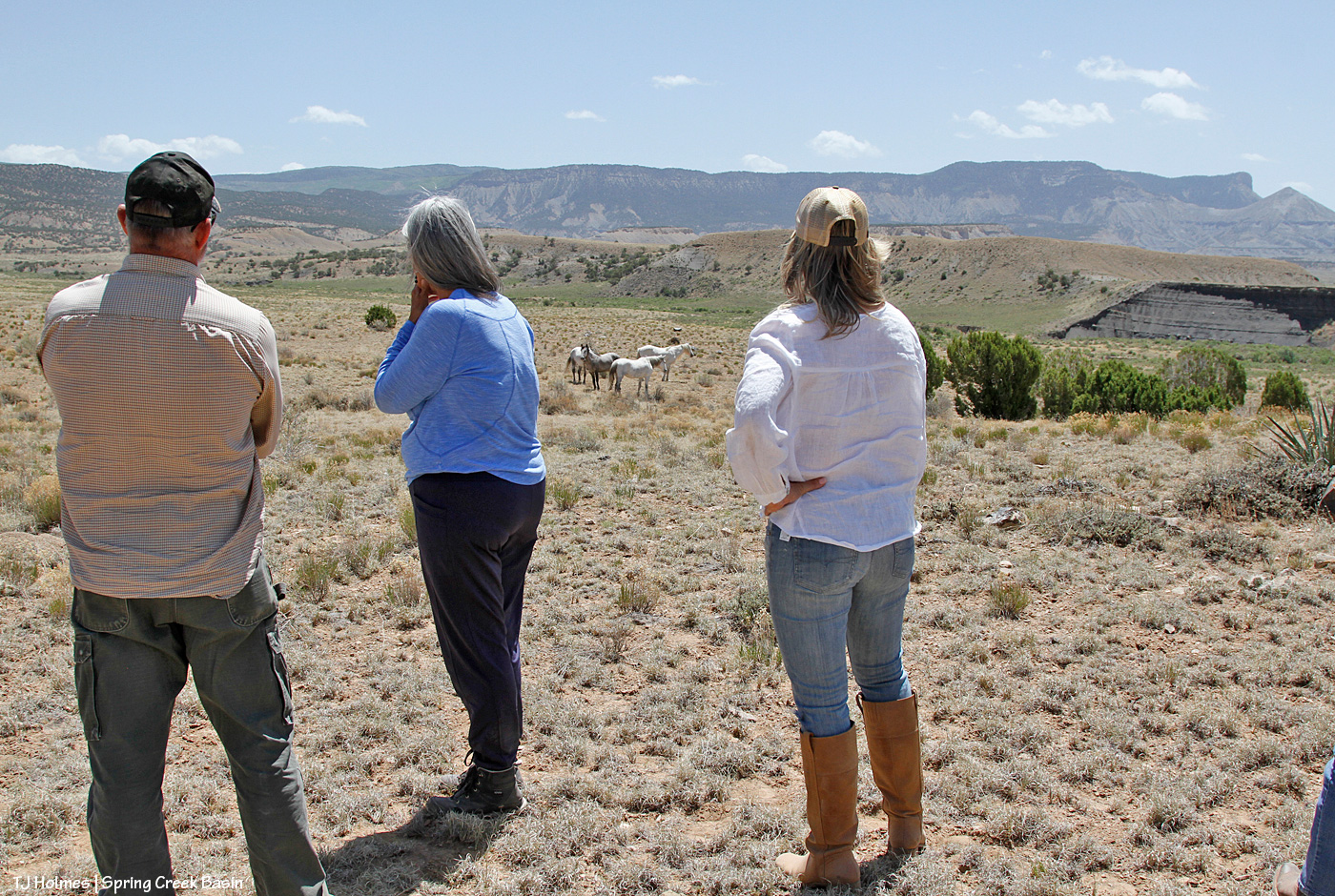
Six vehicles. One ATV. Twenty-six bipedal humans. Most bands in Spring Creek Basin.
Crazily excellent weather (temps in the comfortable 80s, not blistering 90s or sizzling 100s). Perfect breeze. … NO GNATS (how that’s even possible, I don’t begin to know).
Earlier this week, I was joined in the basin by several members of the Colorado Wild Horse Working Group and associated people, including BLM herd manager Mike Jensen and Tres Rios Field Office Manager Derek Padilla, and (very) long-time Spring Creek Basin advocates and amazing friends Pat and Frank Amthor and Tif Rodriguez.
Some background: In May 2023, Colorado Gov. Jared Polis signed Senate Bill 23-275 into existence. In a nutshell, “in 2023 the Colorado legislature passed Senate Bill 23-275 to provide resources and support efforts to ensure the long-term sustainability of Colorado’s wild horse herds and rangelands.”
Among other things, the bill created this working group, made up of a wide variety of “stakeholders,” to share information and consolidate that knowledge into specific recommendations to legislators in the Colorado Legislature and to the governor. To that end, the working group started meeting last October, and members will offer a first (draft?) report of recommendations by Nov. 1, 2024. Among other folks from other groups and state and federal agencies, representatives of each of Colorado’s herd management areas and wild horse range are members of the group: Stella Trueblood with Sand Wash Advocate Team (Sand Wash Basin Herd Management Area); Cindy Wright with Wild Horse Warriors for Sand Wash Basin; Judy Cady with Friends of the Mustangs (Little Book Cliffs Wild Horse Range); Kathy Degonia with Piceance Mustangs (Piceance-East Douglas Herd Management Area); and yours truly for Spring Creek Basin (and you know that I truly took advantage of the geographic field trip to hammer the difference between Spring Creek and Spring Creek Basin!).
At our meeting in swanky Telluride the day before, our group members, excellently facilitated by Heather Bergman with Peak Facilitation Group, started to more narrowly define what we would like to present to legislators and the governor as recommendations to best support BLM’s management of wild horses on federal lands in Colorado … AS WELL AS populations of wild/feral/trespass horses in the San Luis Valley in south-central Colorado, the Southern Ute Reservation, the Ute Mountain Ute Reservation and Canyons of the Ancients National Monument, where horses from both the Ute Mountain Ute Reservation and the Navajo Nation are crossing state, tribal and monument lines drawn (by humans) in the desert rock and sand to roam without benefit of legal protections or management.
These include the creation of a state-funded and staffed wild horse program, possibly within the Colorado Department of Agriculture (through which the working group is currently led by Wayne East, ag/wildlife program manager with CDA); staff/monetary support for fertility-control efforts and the same for adoptions and adopter success with their mustangs; an advisory board for the aforementioned wild horse program within the state; and the potential creation of a state wild horse preserve.
To quote a BLM manager at a different event, the wild horse (and burro) situation is … prickly. It’s thorny. It’s controversial. It’s complicated. It is surrounded by passionate folks. Seemingly, there’s not a lot of (noticeable?) compromise. I think that at its base, our goal is collaboration supported by the compromises that are essential. Colorado probably leads the nation (or at least the 10 Western states that have herds of wild horses and burros) in support of our mustangs. Each of our herds has an associated advocacy group working for the long-term good, successful management of those herds and their ranges. That’s not to say there aren’t challenges or that more support wouldn’t be welcomed and isn’t essential. It’s a big issue, folks, and “black and white” doesn’t begin to describe the myriad of other issues involved and necessary to consider. I will say that this Colorado Wild Horse Working Group is the among the best I’ve been part of in working toward compromises and collaborations – and best management practices – for our mustangs. And I’ve been in this world for a very long time (nearly 17 years).
I was happy – and also nervous – to welcome folks to my sacred space, my happy place, my HEART place … to see the valley and basin I call home and the horses that are the loves of my life. Spring Creek Basin is so very dry right now, but Mother Nature cooled the air and brightened our vistas (red-flag warnings the previous three days in a row meant the dust level was high) and – amazingly – quelled the gnats (!). And the horses. … I can’t tell you how many people thought I was “communicating” with my mustangs to present the very best wild horse experience imaginable. 🙂
Those weren’t all the folks present, just those associated with the working group. At the end of the field trip, my advocate friends and I had a little something special for Mike Jensen, who retires at the end of this month after 30 years with the Bureau of Land Management. To say we are losing someone respected and essential is to do a grave injustice to the end of an era and his partnership and leadership. That’s for another post.
Thank you, everyone. I hope you enjoyed your visit with our mustangs in the very best place (if one of the driest?! (and I don’t mean to overlook or disparage other places in even worse drought than we’re in)) in the universe.
Pictured in the first image at the top of this post (with titles as accurate as I can remember or look up), left to right: Derek Padilla, Tres Rios Field Office manager; Lynae Rogers, on-range wild horse lead for BLM in Colorado (she also juggles a lot of off-range duties); Kathy Degonia, Piceance Mustangs; Tracy Scott, Steadfast Steeds; Sandra Solin, American Wild Horse Conservation; Judy Cady, Friends of the Mustangs; Stella Trueblood, Sand Wash Advocate Team; Tessa Archibald, Homes for Horses Coalition; Abe Medina, Colorado State Board of Land Commissioners; Will Benkelman, Peak Facilitation Group; Mike Jensen, BLM rangeland management specialist and Spring Creek Basin herd manager; Elise Lowe-Vaughn, Rewilding America Now; TJ Holmes, Spring Creek Basin darter and documenter; Wayne East, ag/wildlife programs manager, Colorado Department of Agriculture and leader of the working group; Maggie Baldwin, Colorado state veterinarian with CDA; Tim Brass, Colorado Department of Natural Resources; Lucy and Trish Menchaca, alternative livestock & special permits coordinator, CDA; Emily Blizzard, acting director (?), APHIS, U.S. Dept. of Agriculture.
As usual, it’s hard to believe that another year has come to an end and another is starting.
As usual, there’s been good news and bad. … Much of the time, it seems like bad news is all the news that is news.
We need to know what’s going on in the world – from our local communities to the wider global community – but the constant onslaught very often has the effect of hurting the heart (as an understatement). Wouldn’t it be crazy if good news so dominated the headlines that bad news was relegated to the “inside pages” – or not at all? A good kinda crazy, for sure.
With this blog, I strive (in part) to provide a positive counter to the negativity that’s so easily found. If you’re here, reading, you’re looking for that positivity, and I’m so glad you’ve found it with our Spring Creek Basin mustangs. 🙂 If you get to visit the basin for yourself, so much the better. There’s truth in the phrase that the outside of a horse is good for the inside of a … let’s say human.
What follows is one photo for each month of the past year. Some have been on the blog previously; others have not. All pix were taken in the month they represent. Onward.
January
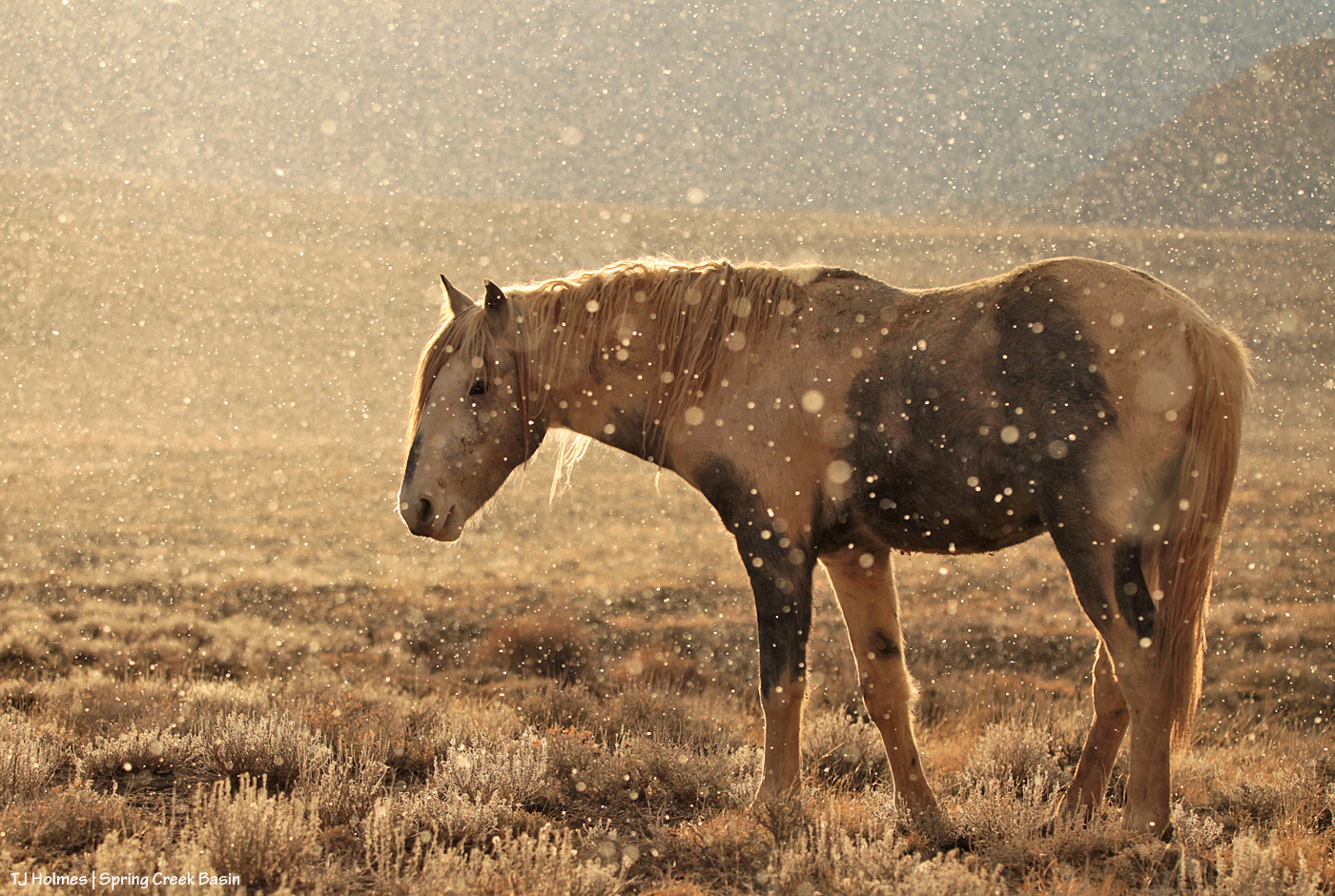
While photographing Flash and some bachelor pals, snow started floating through the air while the sunshine illuminated every single flake. I mean, GORGEOUS! The bachelor boys are famous for mostly ignoring me, but that light and those flakes demanded photographic proof. Fortunately, Flash paused his grazing – and chewing – just long enough to look at his pals, and I snapped the shutter on a magical moment. The snow ended very soon after I did so – or maybe it was the light on the snow.
*****
February
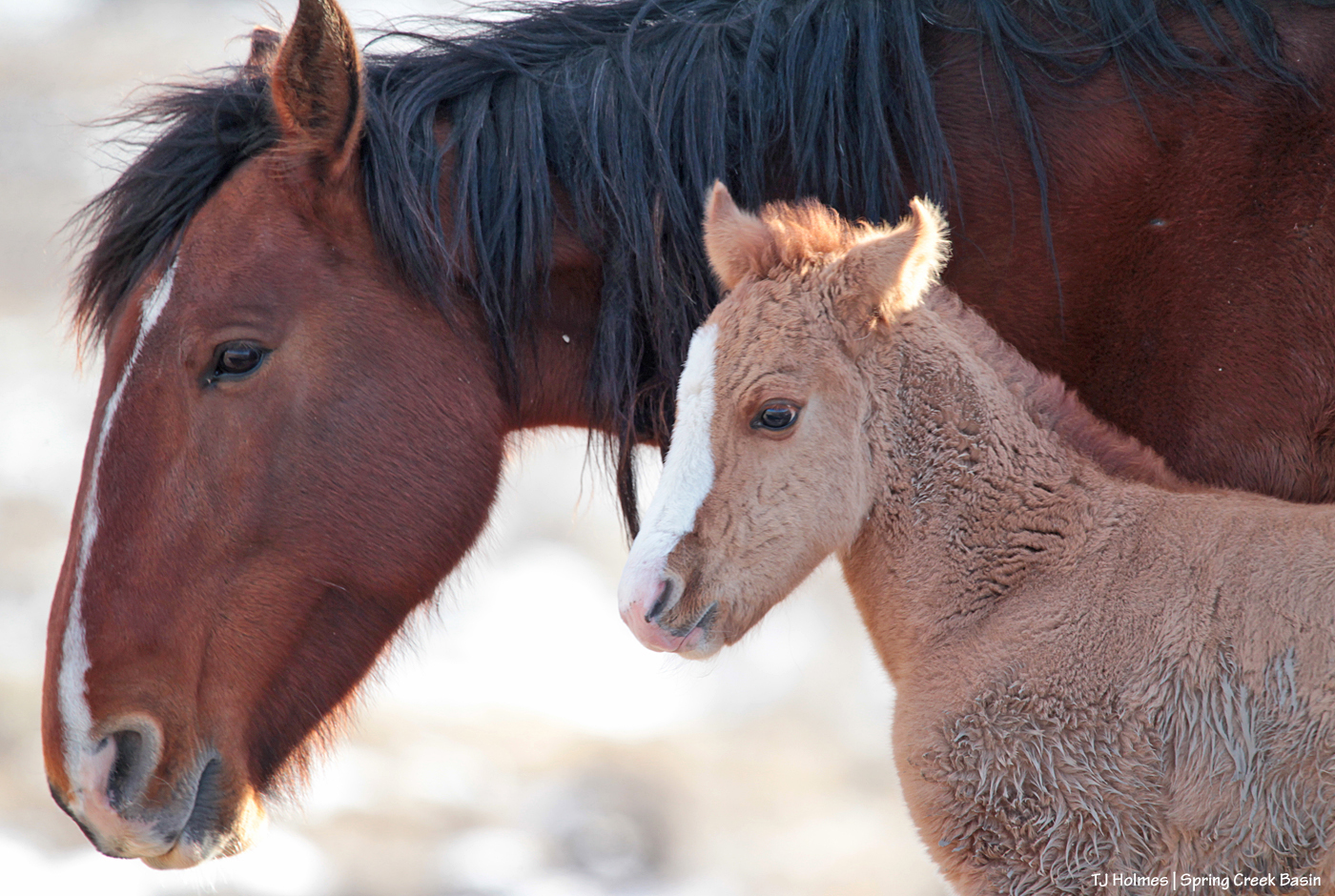
In February, we welcomed a long-awaited addition: Hollywood’s and Shane’s son, Odin. He was at least a week old when I found him and just as cute and fuzzy and stout as I could have hoped. He is growing so well and is as cute and stout – and fuzzy, again! – as can be! Hollywood no longer has his band, but his legacy continues in his son. This is still one of my very favorite pix of Odin and Shane.
*****
March
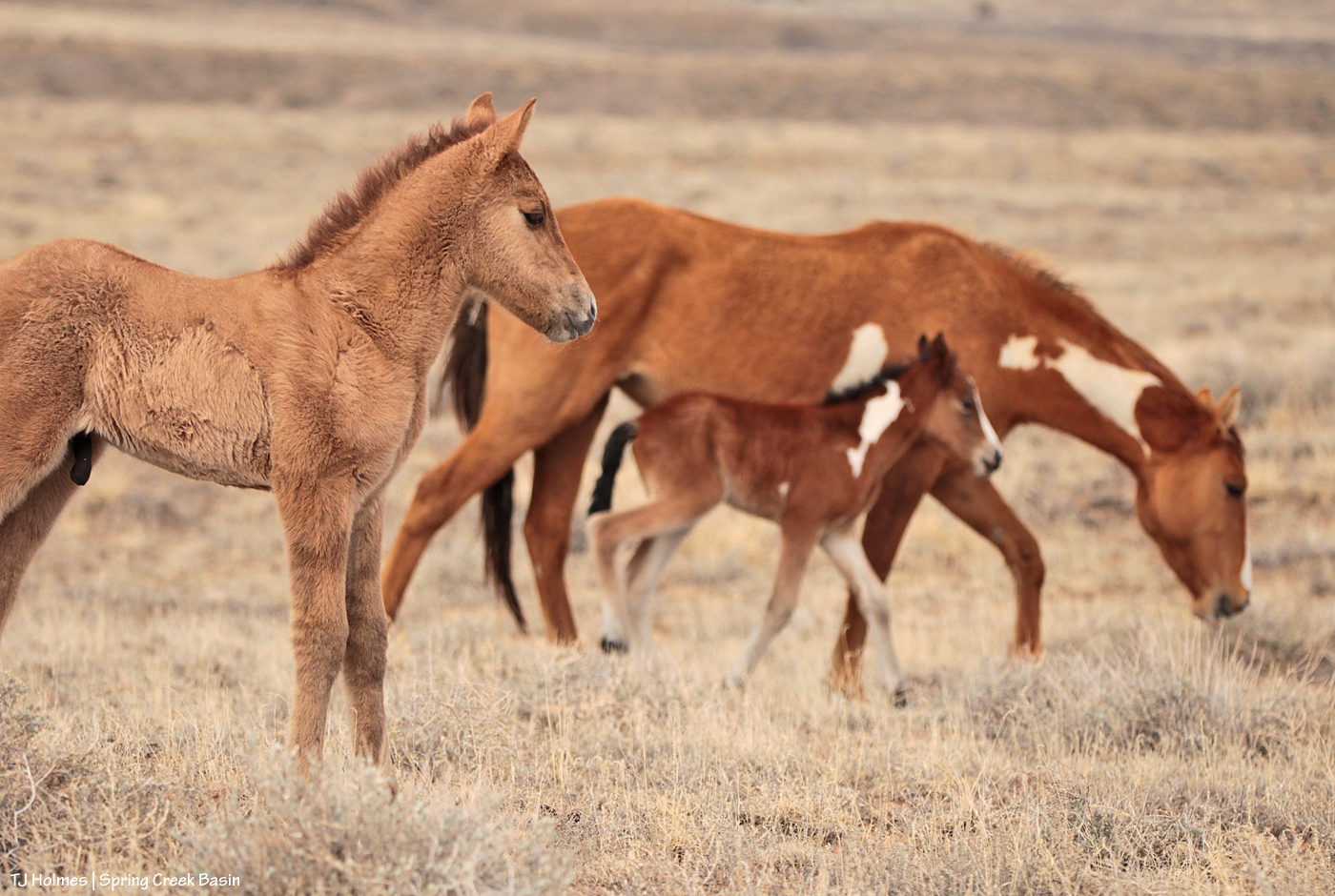
I couldn’t have been more thrilled when Dundee, one of the three introduced mares from Sand Wash Basin, had her very big first colt by Buckeye: Ranger. A couple of weeks later, Aiyanna delivered her delicate little filly – also by Buckeye – Bia. Unfortunately, we lost Ranger at about a month and a half old to unknown circumstances. Bia continues to do very well and is growing into a very lovely filly. She’s the spitting image of her mama – though she’s bay and mama is dun. She is adored by her entire band.
*****
April
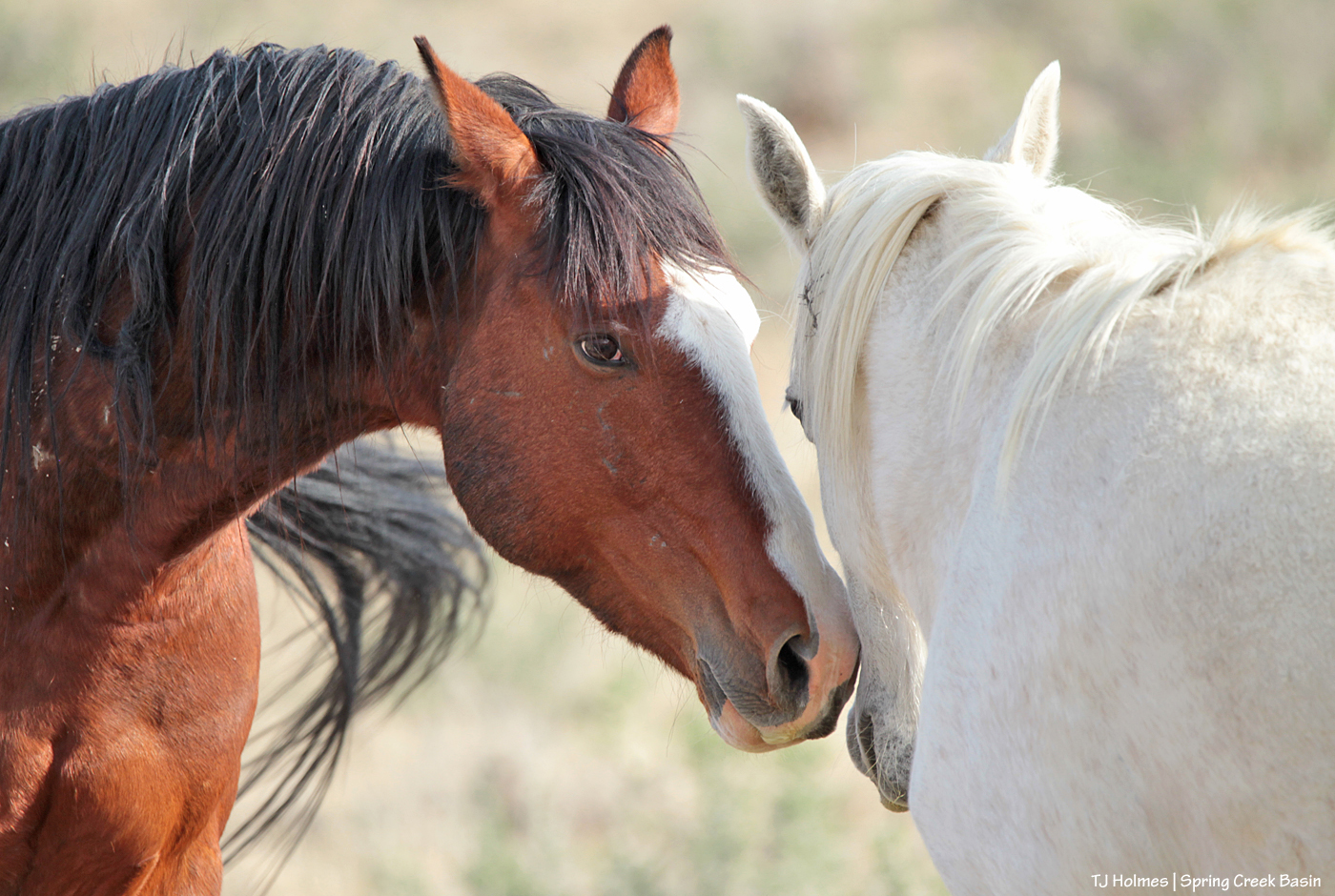
As I remember, we had a nice, lingering spring. As spring was springing, love was in the air. Above, one of our young(ish) stallions, Zeb, was flirting with one of his mares. Really, who can resist his handsomeness or the flirty swish of his tail?!
*****
May
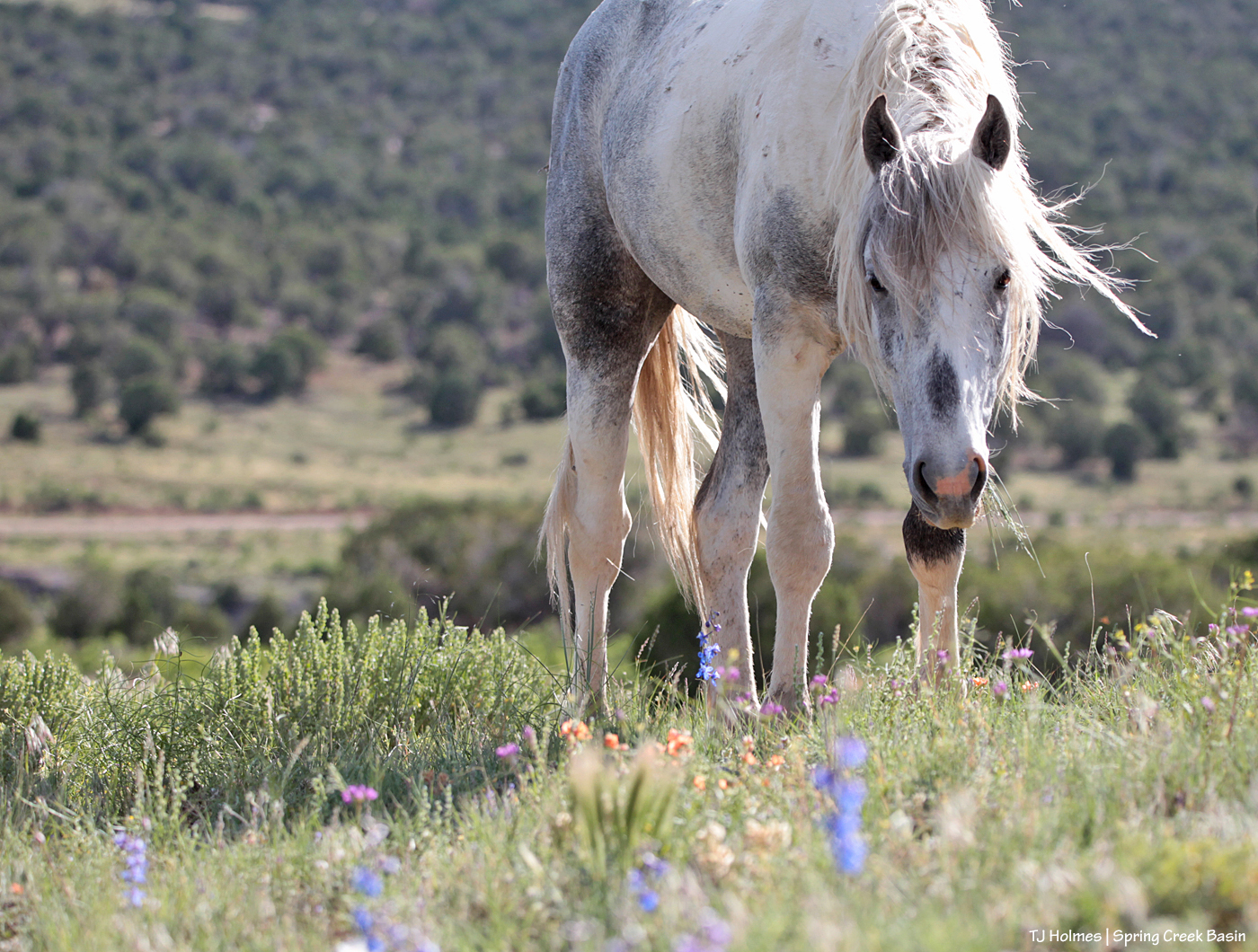
With the decent winter, we had a nice wildflower season, but it sure took its sweet time in arriving (or so I thought at the time, being, as usual, impatient). I visited my parents for Mother’s Day and left Disappointment Valley still brown and drab. When I returned, holy green! And then came the wildflowers. And once again, Flash proved a fabulous model among the larkspur (it was a bad larkspur year for the cattle folk), globemallow, wild onion and other lovelies. And the grass, of course. Green is my favorite color. 🙂
*****
June
That light! That grass! Those pinto girls! I saw Reya’s band only rarely this year, but they make every visit worthwhile. Mama and daughter Chuska: lookalike girls!
*****
July
That. LIGHT! Terra and her stallion, Venture, enjoyed a quiet moment during the height of summer. I think he adores her, and I think this moment in time illustrates that perfectly.
*****
August
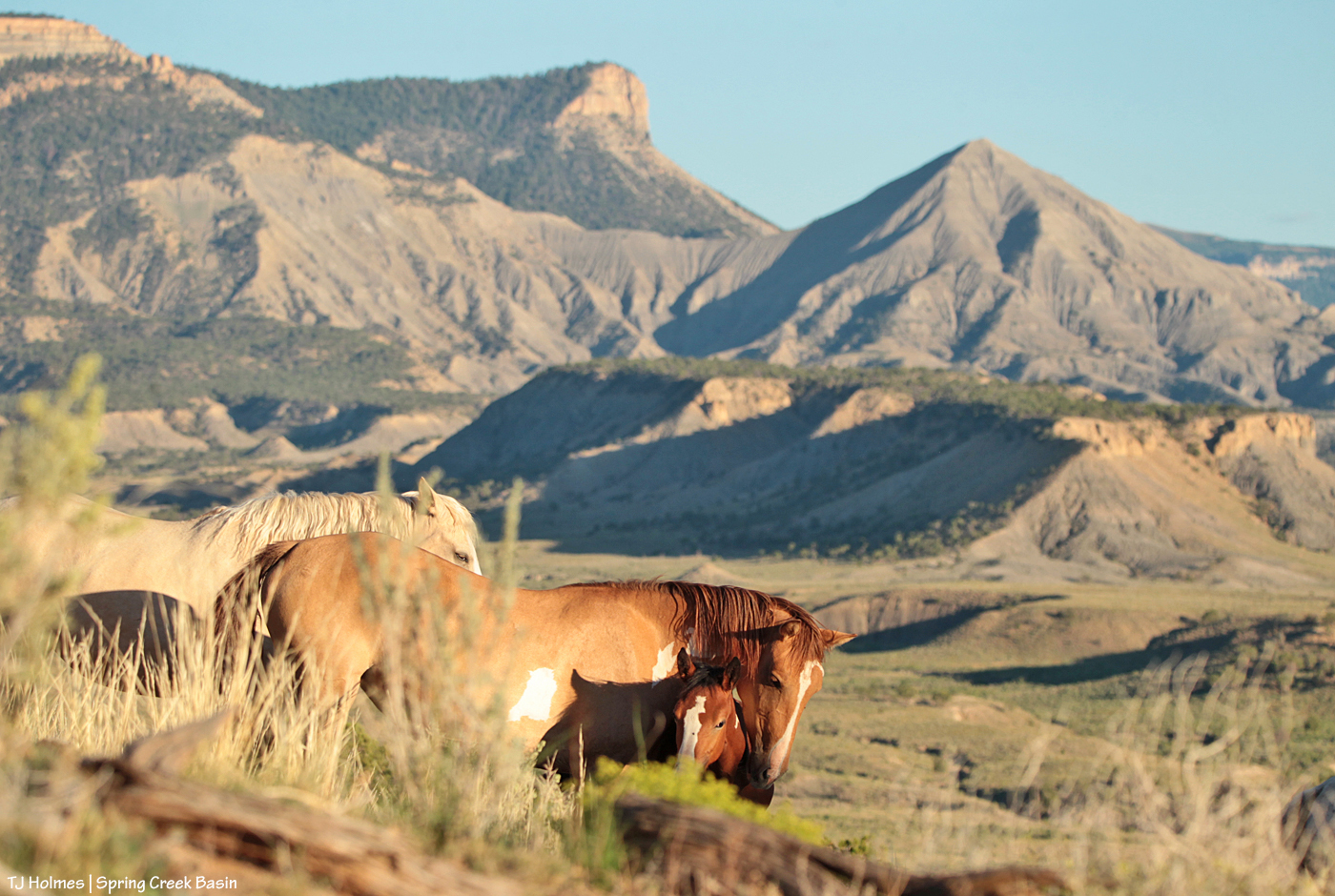
Oh, this was another of those beautiful evenings in Spring Creek Basin. Buckeye’s band was napping on a hillside in an area that wasn’t usual for them. Another band was grazing down in a little cove among the hills. I walked up to take advantage of the view, then waited. Baby Bia had been napping between her auntie Rowan and mama Aiyanna. My waiting paid off when Bia ducked under mama’s neck on her way to nurse, and Aiyanna gave her a quick little casual “hug” as she did. Click went the shutter on one of those moments you never forget.
*****
September
On a stormy evening that didn’t bring rain (to us), Buckeye was guarding his band from a nearby band on the flanks of Filly Peak. (He appears to be napping, but he was alert, I assure you.) His band is to my left – and they really were napping, secure in his watchfulness. Beyond him is his mother, Winona. Her band was mostly out of sight in a little low place between here and there. The photo for this month was a tossup between this one and another photo from that same evening. Quiet, peaceful, lovely.
*****
October
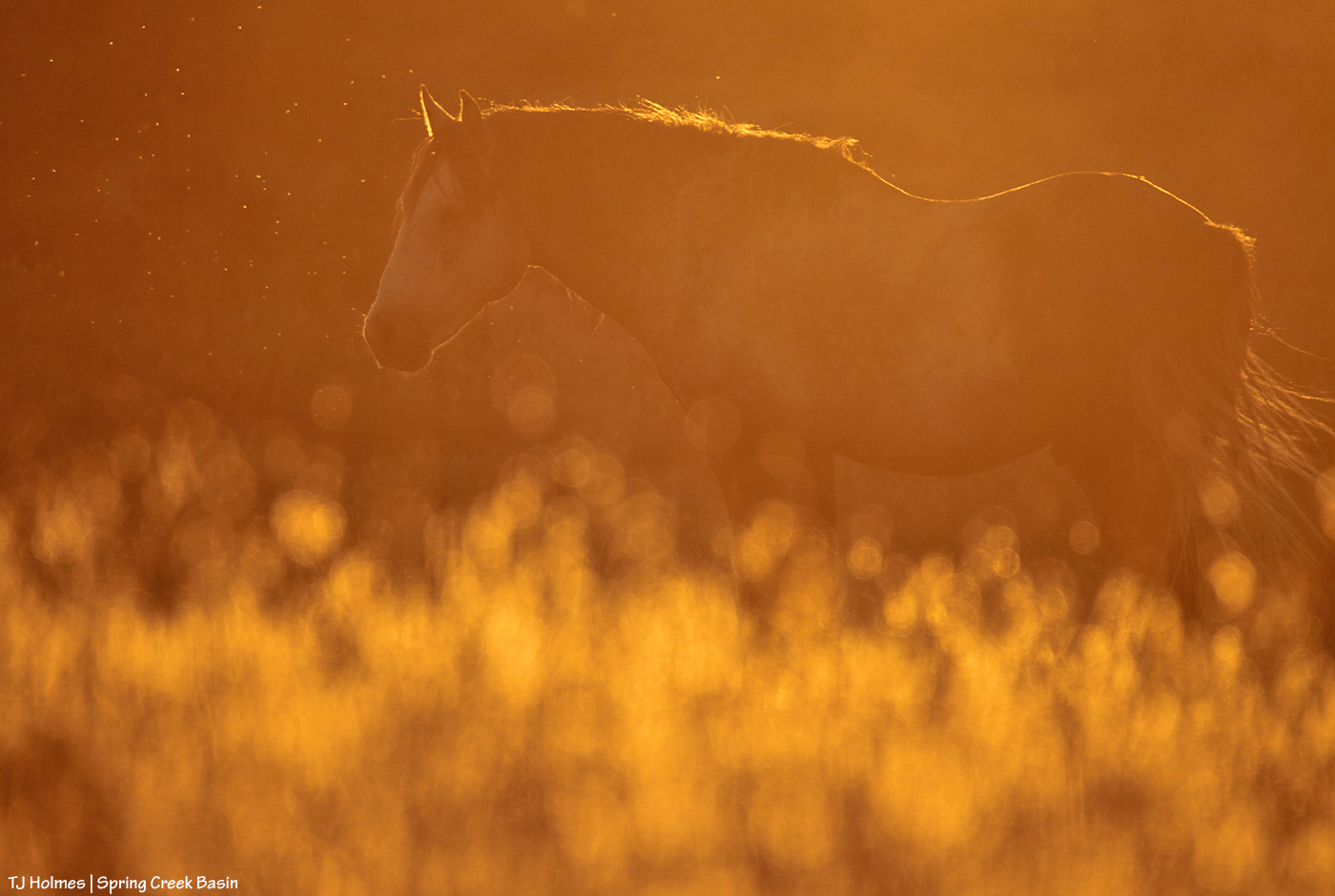
Young stallion Cheveyo was in just the right place at just the right time for the very low sun to highlight him against the far, shadowed, hill and turn the foreground grasses to dancing flames of light. I’ve said it before, but it bears repeating: I adore backlighting!
*****
November
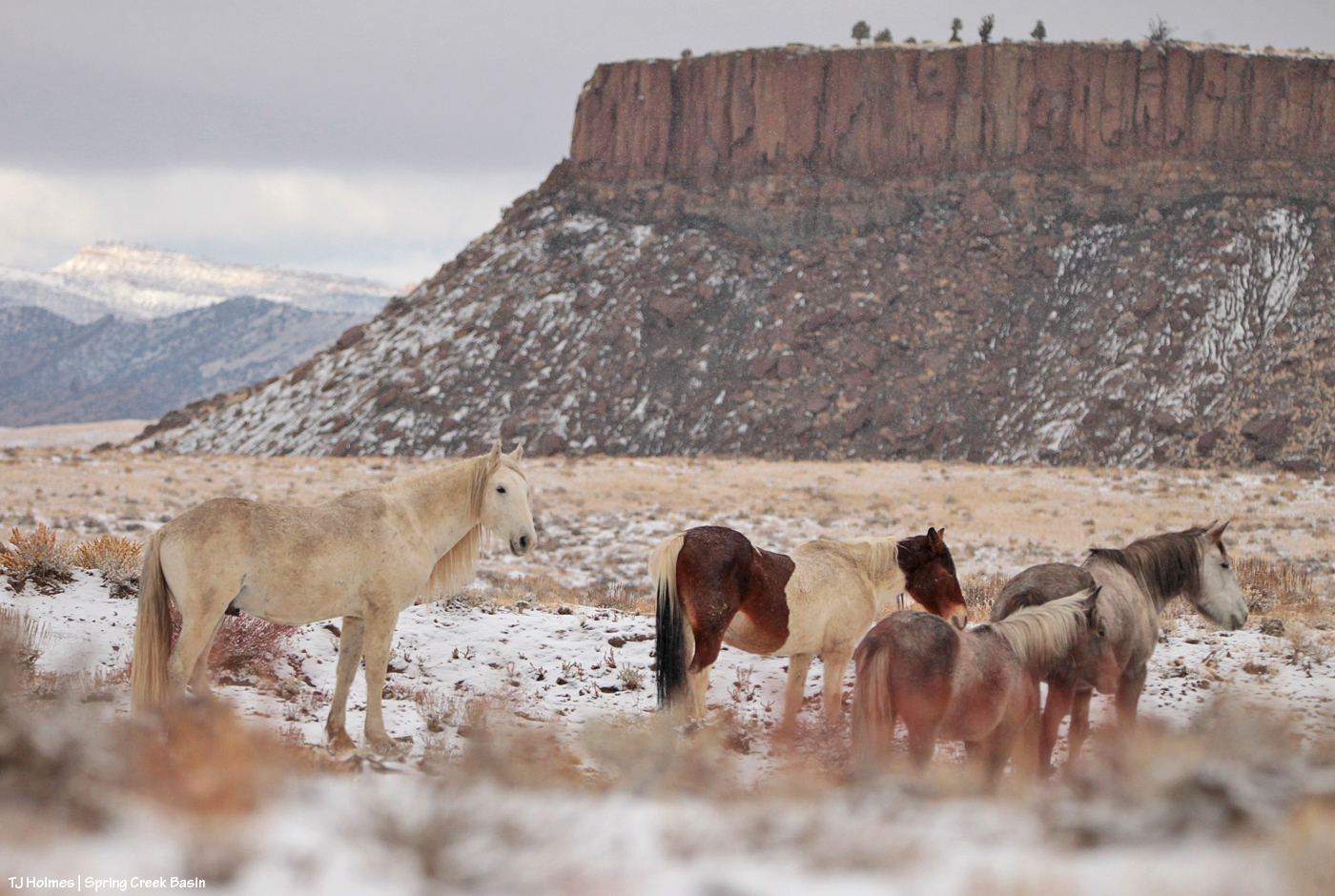
This was the first snowfall of the season, and I was happy to find Remy’s band grazing in the western part of the basin. The sun was flirting with the clouds. A great wave of light would sweep across Disappointment Valley, followed quickly by the greyer light – the kind of light that keeps photographers hopping (and hoping). Light snow also was falling and stopping and drifting and stopping and floating and stopping. A small band of young bachelors was nearby, but they weren’t too interested in Remy’s girls. Remy took his band to water in Spring Creek canyon (the rimrocks are seen in the background), and I called it a (beautiful) day.
*****
December
Our Hollywood, beloved and storied elder stallion, rounds out the year. This was the second snowfall of the season (and our last to date, as it happens). The snow was a little deeper, and it stayed pristine a little longer, than the first. The day was glorious for a hike, and that’s how I found Hollywood – originally drinking at a nearby pond. Here, he’d walked away from the pond before he stopped for a nap. As hard as it is to see the aging process at work on him, and missing his loyal mares, it’s always good to see this wonderful wild stallion.
*****
Bonus
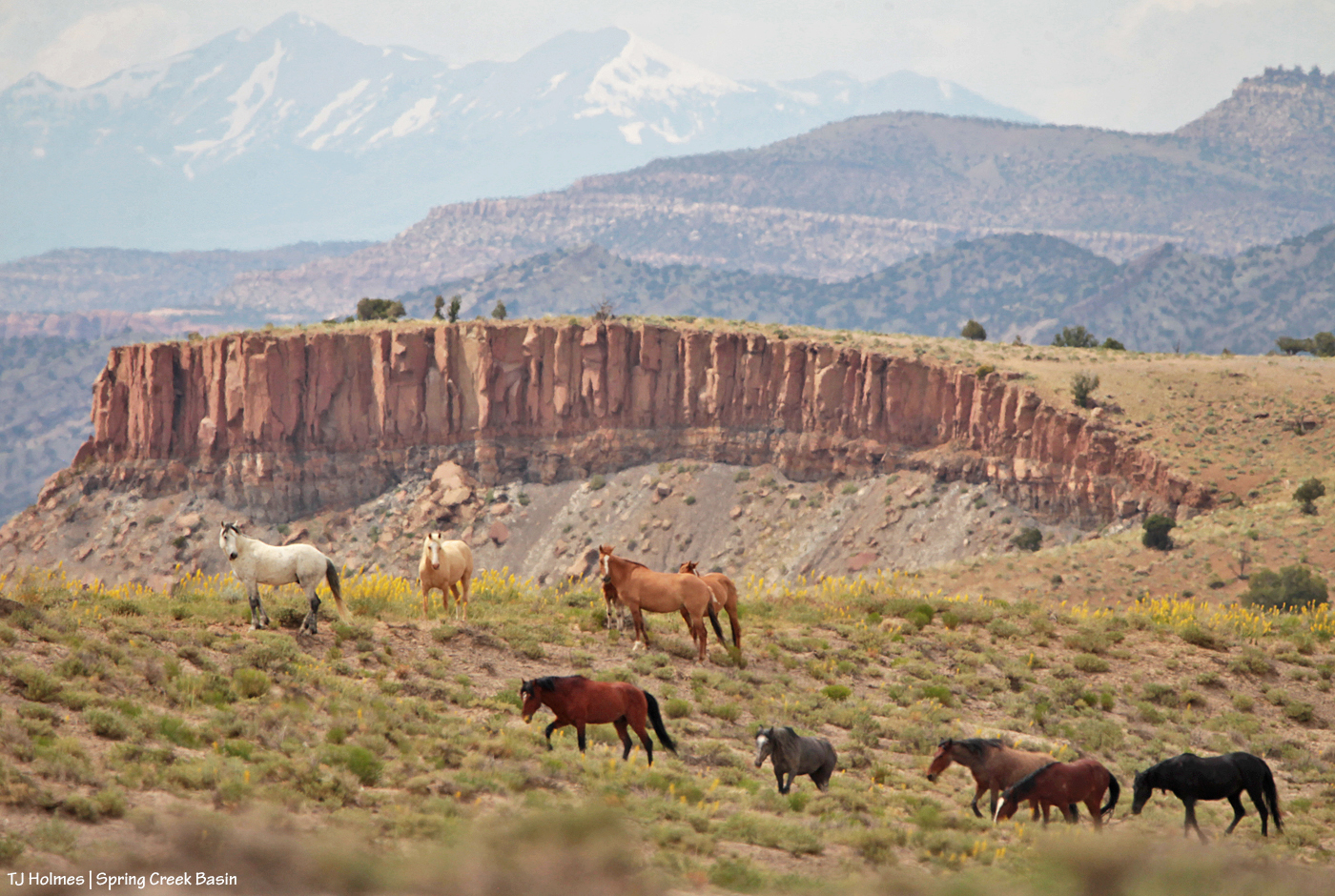
Taken from very far away, I love all the layers in this image of Buckeye’s band – with prince’s plume! – and Tenaz and the band he escorts. A dear friend was with me at the time, and the enjoyment was doubled to have her along for the visit.
*****
Happy New Year’s Eve, everyone! Best wishes to you all for a happy, healthy and positive 2024!
Looking back helps us look forward (*when* it helps? sometimes I think looking forward is the only way to go … though I’m not very good at this myself). I think this is the third year of the (admittedly borrowed, in my case) tradition of posting 12 pix at the end of the year that represent each of the previous months. It has been a good year in Spring Creek Basin. After another less-than-positive winter and a dry spring, we had a second-in-a-row summer monsoon season and a relatively rainy early fall. Then things got dry again before we finally started to get snow a couple of weeks before Christmas.
Our excellent BLM partners – Mike Jensen, Garth Nelson and Daniel Chavez – put their enviable skills to work and built a second water catchment in the basin, starting in early summer and finishing in the fall. It’s another (our fourth) such project to catch and store liquid gold and bank it against continuing drought conditions; with the newest catchment, we have the storage capacity for 50,500 gallons of water. That’s really quite enormous (!). (Of course, we need Mother Nature’s continuing help in the form of snow and rain!)
We lost some horses (as we do every year), and we had some foals (as we do every year), and the herd and the range are in excellent and very good condition overall. In September, we celebrated our 11th anniversary since the last roundup. Fertility-control treatments continue apace, and because of the efficacy of the native PZP that we use, and the aforementioned good condition of horses and range, there’s (thankfully) nothing (no removals) on the horizon.
Without further ado, as 2022 comes to an end, let’s remember some scenes of Spring Creek Basin and its fabulous mustangs to carry us ahead into 2023 (some have been previously published here; others are new to the blog):
Tenaz (showing off his rarely-seen generous star with wind whipping aside his forelock) and the mustangs rang in the first day of 2022 with fresh snow! A handsome bay mustang does look rich and supremely healthy in new snow. I know I write that a lot with regard to bay mustangs, but really, have you ever seen a better color combination!? OK, OK … all of the other equine colors look pretty fabulous, too. 🙂
******
Even baby horses like Lluvia love to catch fluttering snowflakes on their lips! They do make me laugh, these ponies (see yesterday’s post about laughing with friends!). 🙂 With their thick, insulating coats, mustangs are well adapted to winters in high desert areas such as Spring Creek Basin. Our winters are fairly mild, though we do have some frigid days … and snow!
******
Dundee, Rowan and Aiyanna came from Sand Wash Basin in September 2021 and were welcomed here with monsoon-grown grasses. They filled out nicely that fall, but by March, they were a bit on the lean side. I think that had to do with their youth: Dundee was 2, and Rowan and Aiyanna were yearlings – all three still growing. They all blossomed throughout this year, as you’ve seen from recent pix of the girls. On this particular evening, they were high on a ridge on the west side of Filly Peak when another band appeared below, sending them into a gallop that I was thrilled to “capture” in that glorious golden light!
******
We may not have gotten much snow last winter and not much rain in the spring, but because of the previous summer’s monsoon rains – which, after a period of tense waiting, filled all the ponds – we came through winter and into spring with full ponds, which meant fantastic water in April. One of the greatest joys of watching mustangs is seeing them splash and play in water in nearly-belly-deep ponds – and then drink long, thirst-quenching draughts. Again, these ponies do make me laugh!
******
Corazon works his classic mustang-silhouette-at-sunset pose. He has really come into his own as a steady band stallion these last few years, and his son and daughter adore him. His son, in particular, is a mini-me who inherited both his black-and-white coat and his flank heart. Though Corazon’s namesake heart isn’t visible in this image, I think it’s one that does cause one’s heart to soar, just to see a mustang free in the wild, the glowing horizons fading into infinity.
******
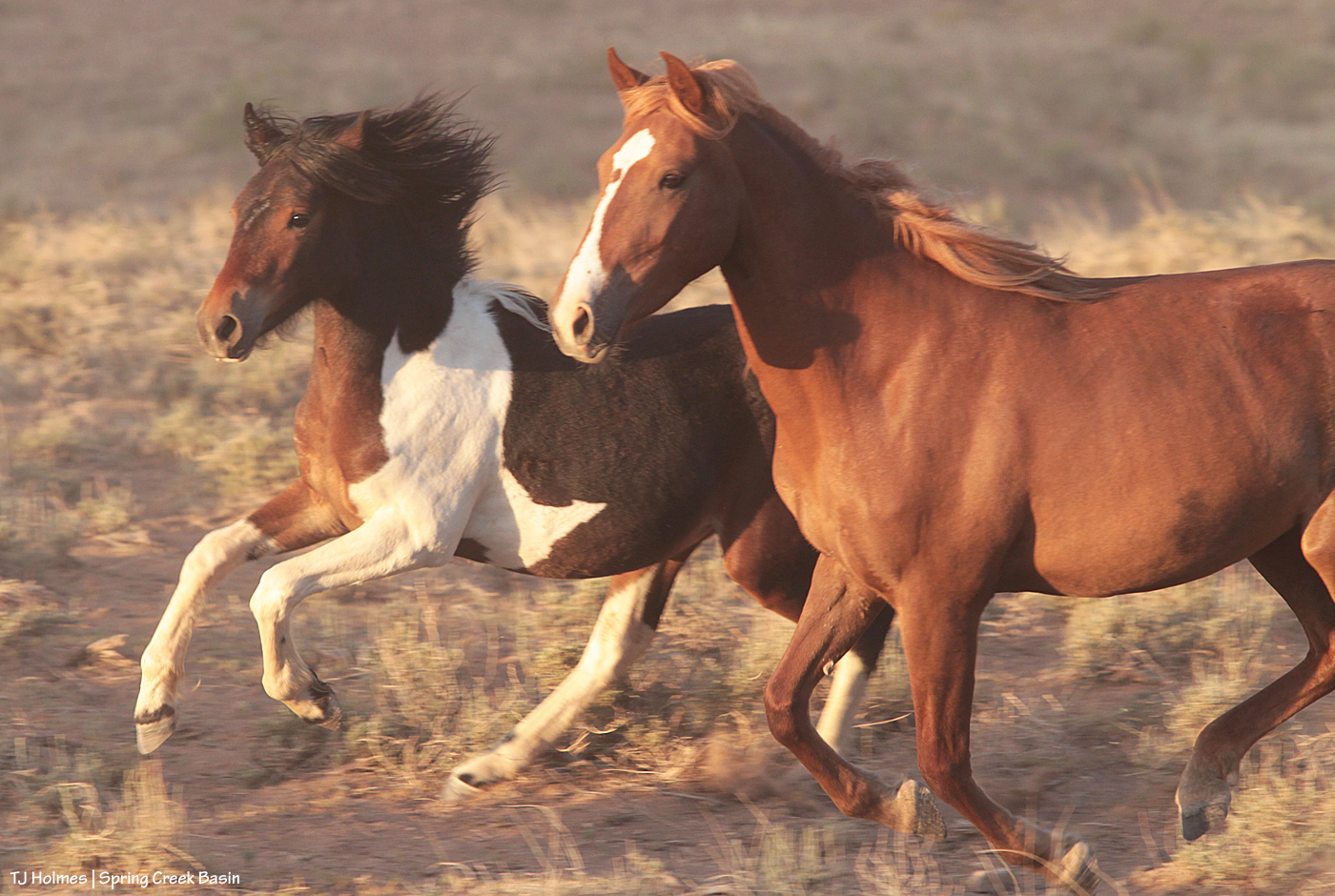
You’d never know it to look at them, but these sprightly creatures are sisters! Their mama was lovely Tesora, whom we sadly lost in February. She lives on in their spirit and beauty. Lluvia sticks close to big sister TaylorK, whom she knows more as an auntie. Family is – always – everything. (As they run, do you see the soaring bird in the pattern on Lluvia’s shoulder? She has another on her right shoulder.)
******
With green all around him as the summer days advanced through July, Sundance made clear to another stallion, who was a bit closer than Sundance thought was appropriate, that his proximity was NOT appropriate. He does look rather intimidating, doesn’t he? Sundance is one of the most laid-back stallions out there (and really, they’re all fairly easy going, most of the time), and he’s also very protective – just like all of them. All it usually takes is a bit of posturing, sometimes some sniffing and nudging and squealing, and points are made! Successful conversation … without a word spoken.
******
Speaking of proximity issues … ! These two boys are former longtime BFFs, with the sorrel previously the lieutenant of the grey. But then those roles reversed, and sorrel Braveheart wasn’t so generous as to allow Pitch to be HIS lieutenant. The more things change … eh?! Our bands are generally very stable, but the horses are wild, after all, and young stallions do grow up and seek families of their own – as do the fillies.
******
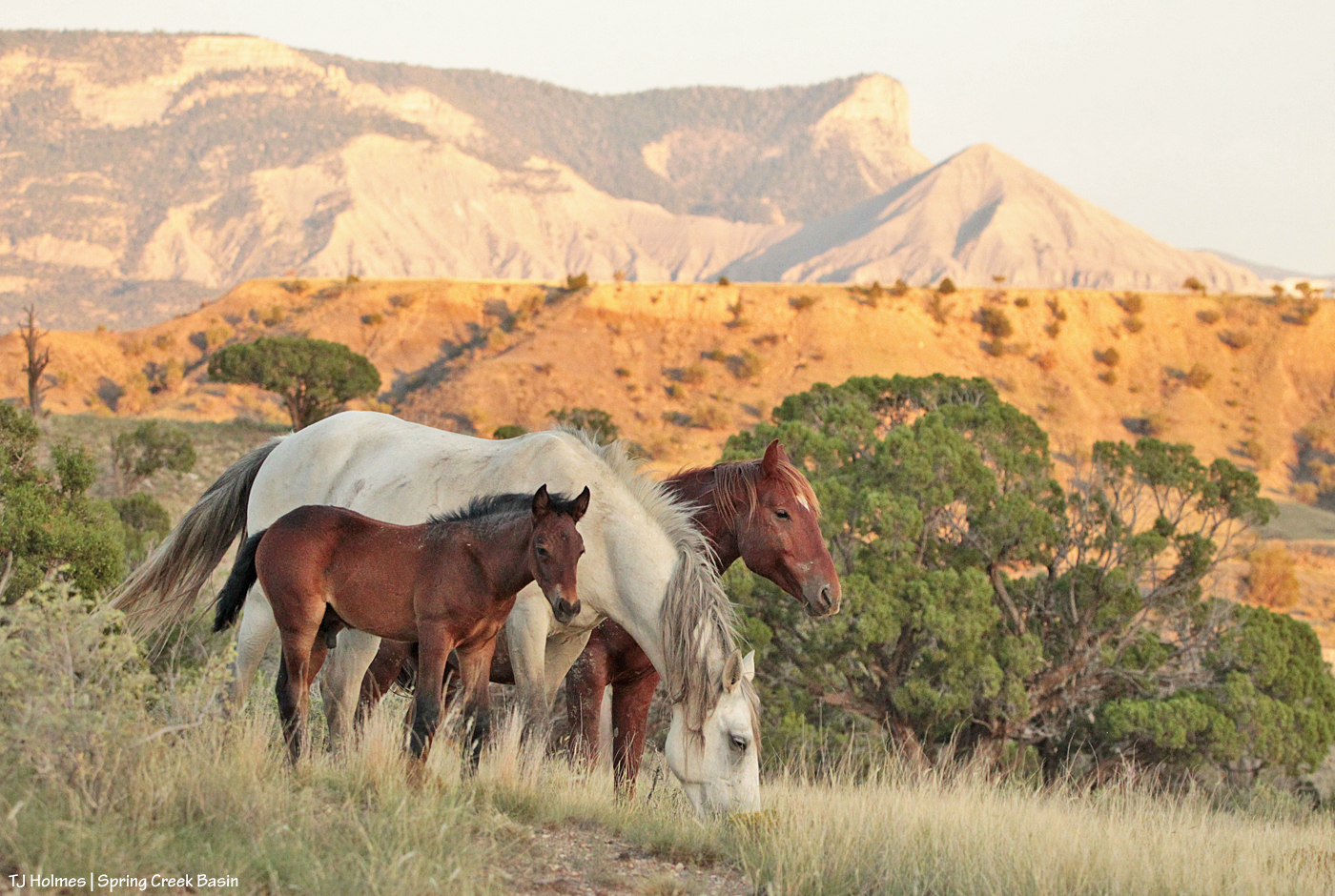
Stepdaddy Braveheart is quite proud of and protective of his family of Winona and Reuben. (Remember that amazing grass this fall after the monsoon rains?!) This was a beautiful, warm evening when a few bands had gathered together (but not *too* close together), and I moseyed along with them as they grazed and moved from the northwest valley toward Spring Creek canyon. When the little threesome paused in the most photogenic spot possible, with iconic McKenna Peak and Temple Butte in the background, I couldn’t press the shutter fast or long enough! This is the photo I gave Connie Clementson upon her retirement as manager of Tres Rios Field Office in Dolores.
******
In October, BLM wildland firefighters along with some Forest Service (San Juan National Forest) partners from around the region (including a crew from Monticello, Utah (Manti-La Sal National Forest)), conducted a prescribed burn to help maintain wildlife habitat on the ridge south of Spring Creek Basin that forms part of the southern reach of Disappointment Valley. Because of the moisture we had earlier in the summer, the three-day burn moved slowly and was well monitored by at least 30 firefighters. I don’t know what the total acreage was, but it wasn’t a huge area, and it mainly consisted of burning piles of old, fallen pinon and juniper trees so grasses can grow. To clarify, the burn was NOT in the basin. But the slowly drifting smoke – which was visible from the basin but didn’t blow over the basin – made for some dramatic scenes. As I remember, it rained a couple of days after the end of the burning, and our sky returned to its usual clear turquoise.
******
Napping with pals is just about the best, most peaceful way to spend a lovely fall day in November. There were two bands and a group of young bachelors in fairly close proximity to each other when I hiked out to visit with them all, and it was such a soft, quiet, gentle evening among friends. The horses draw such comfort from each other … and I gain such amazing comfort from them. On these days, especially, I wish such peace was something that could be bottled and shot into space to rain down on people and places less fortunate than us.
******
In early December, we were still pretty dry in the basin, but we had this little cherub to brighten the days. 🙂 She’s a classic example of grey foals being born a color (sorrel, bay, black, etc. – my family even has a grey Quarter Horse mare that was born palomino) and *greying out* – though our grey foals don’t often grey out as fast as this little girl. Mama Echo was born black. I think I’ve mentioned before that grey is the dominant color among the mustangs of Spring Creek Basin. In that way, too, these two are classics. 🙂
******
As in years past, how about a bonus pic?
Winona and her son Reuben and one of the many amazing views from Spring Creek Basin, looking out across far lower Disappointment Valley to Utah’s La Sal Mountains, snowclad once again from fall onward. If that scene doesn’t scream (ever so quietly, of course) *peace*, I’m not sure what could. Their band and a couple of others had gathered at a pond, and they were walking away. I was trying to anticipate horses walking *across* that view, but mostly, they were lined straight out away from me as they left the water to return to their evening grazing. When I saw Winona – with confident baby Reuben leading the way – I was somewhat disappointed that they were so far away. … Then I realized that, to capture *that* view, my long lens needed the space of distance. Truly, sometimes it really *does* all come together!
******
Thank you all for reading about and enjoying our Spring Creek Basin mustangs this year. Many special thanks to those of you who faithfully come up with comments every day (sometimes, it must be nearly as hard as it is to come up with blog-post titles)!
Here’s to a coming year with plenty of moisture (!), and full ponds and catchments, and forage that grows ’em up strong and healthy. To take to heart a lesson from the mustangs and other wildlife: Be present in the moment! Some times (sometimes? many times?), that’s ever so much better than looking back or worrying about what’s ahead. 🙂
As previously announced, our newest water-catchment project is finished! Now we just need snow (which, according to the forecast, is coming Monday night/Tuesday). And to continue the theme of gratitude this Thanksgiving weekend, we couldn’t be more grateful!
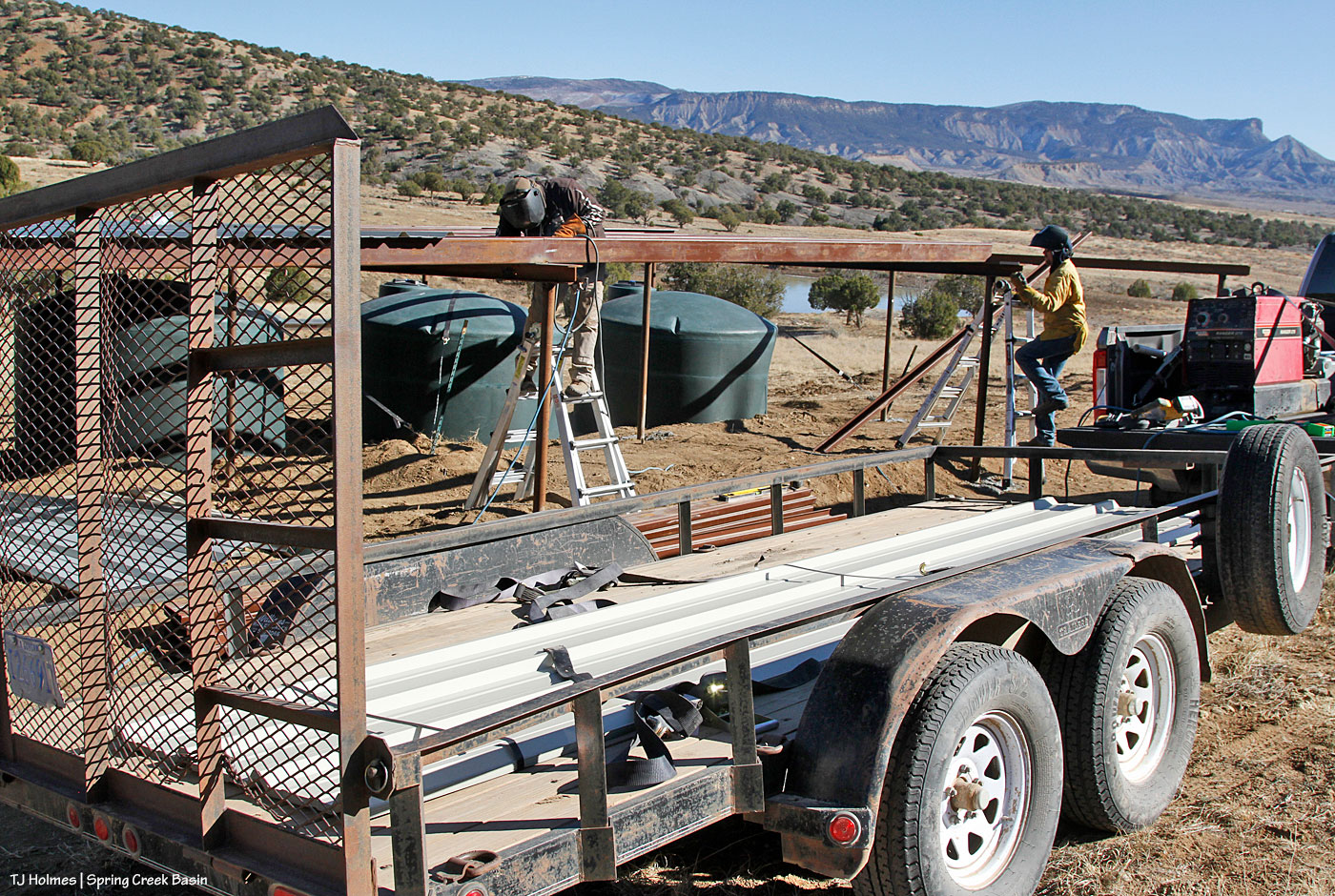
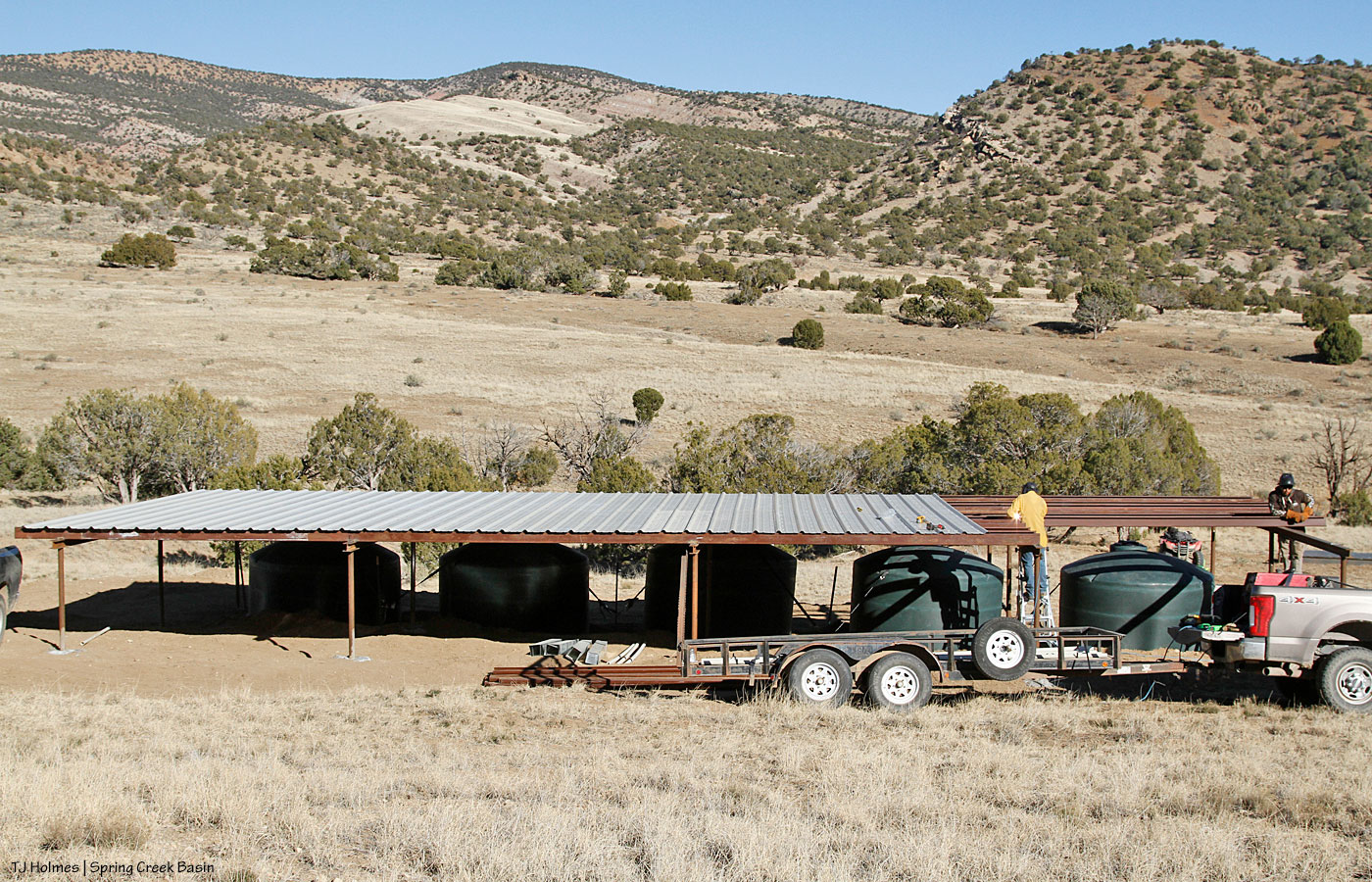
Last Thursday (exactly a week before Thanksgiving), this was about all that remained to finish the roof: Garth Nelson and Daniel Chavez had a few more purlins to weld to the I-beams, and Mike Jensen and I had a few more propanel roof sheets to screw down to the purlins.
One reason I love to highlight these work projects our BLM guys do in Spring Creek Basin is, of course, to highlight the work they do for our mustangs. Another, related, big reason, is to highlight our partnership in doing so. … And because these three guys – Mike, Garth and Daniel – work as well or better together than any three people I know. It’s pretty amazing to be around their creativity and can-do attitudes. So my photographer’s heart was really stoked when a particular purlin required Garth (right) and Daniel to literally put their heads together to get it welded to the I-beam.
Again, you really can’t beat our “office” scenery.
The unmasking. 🙂
All three guys working together. 🙂 After we finished the roof, it was time to put the gutter up along the front of the structure!
When the gutter was in place all along the front of the structure and secured, we switched up our pairings: Mike and Garth got to work on measuring and cutting and gluing the pipes from holes drilled in the bottom of the gutter to each of the tanks, and Daniel and I worked to put more spacers and long screws through the gutter to the front beam (Daniel handled the measuring and drilling; I did the handing of spacers and screws … and photo documentation :)). I didn’t take a pic of those “spacers,” but they were about 6-inch long pieces of small-diameter metal tubing, through which the screws ran, the function of which was to keep the sides of the gutter from collapsing when the screws were run through the gutter.
Gotta make sure all the pieces fit together tightly!
I didn’t get Mike’s face in this one with Garth and Daniel because he was holding the part of the fitting inside the gutter while Garth tightens it at the underside of the gutter, but I still like this shot of all the guys working together. Mike and Garth were working from the northwest to the southeast side of the gutter and tanks, and after we got the gutter up with a minimum number of spacers and screws, Daniel and I were working back from southeast to northwest – this is where we met “in the middle.”
Measuring the pipes before gluing.
Great work in the foreground. Great scenery in the background. 🙂
Moving toward conclusion.
The gutter comes in pieces that overlap, so Mike and Garth caulked each seam as well as under the fittings for the pipes inside the gutter.
And they also used a spray-on sealant along the outer seams of the gutter pieces and to coat the outer parts of the pipes. That will help protect the PVC pipe as well as give it a little more help in absorbing the sun’s warming rays during the winter.
The green things seen in front of each tank are two pieces: One is a ring that goes around the top, exposed part of the culverts that protect the below-ground valves for each tank, and the other (see it leaning against the farthest tank?) is the lid to keep critters (like snakes) out of the holes.
One final piece to show you readers (in two pix):
Garth welded his name onto the top of one of the I-beams, and …
… Daniel welded “2022,” “TJ,” “MLJ” and “D. Chavez” into the southeast-end beam of the structure. 🙂 Last year, he welded “BLM 2021” into one of the end-facing pipes.
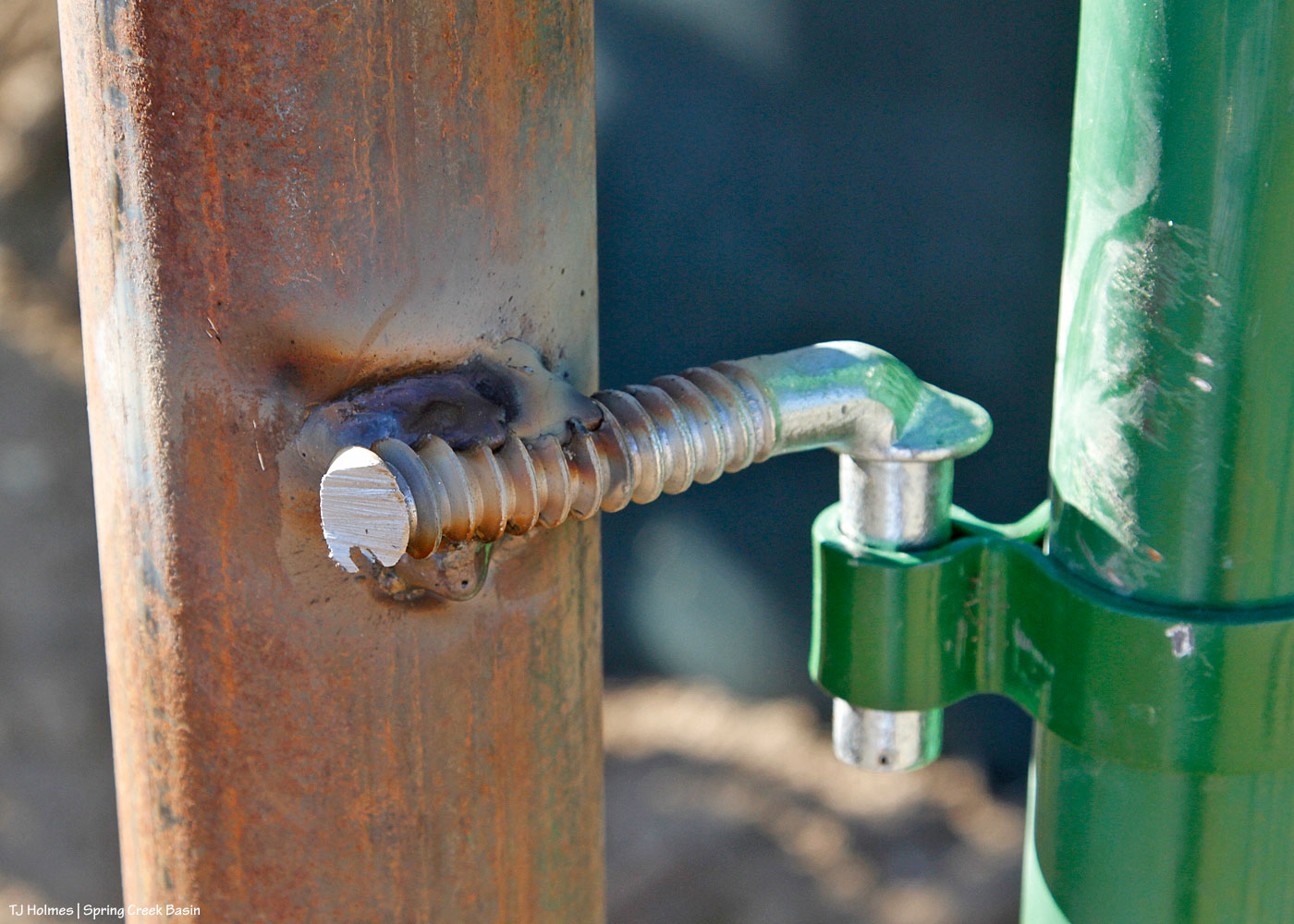
When we finished the new water catchment, before we left Spring Creek Basin, we went over to last year’s new catchment and welded that little walk-through gate to the pipe (see the post about the previous day of work). Until then, it was secured with wires and didn’t swing. Now, access is as easy as unchaining the gate and swinging it open. Panels like those pictured eventually will enclose the newest structure to keep the horses from rubbing on the tanks or messing with the culvert caps.
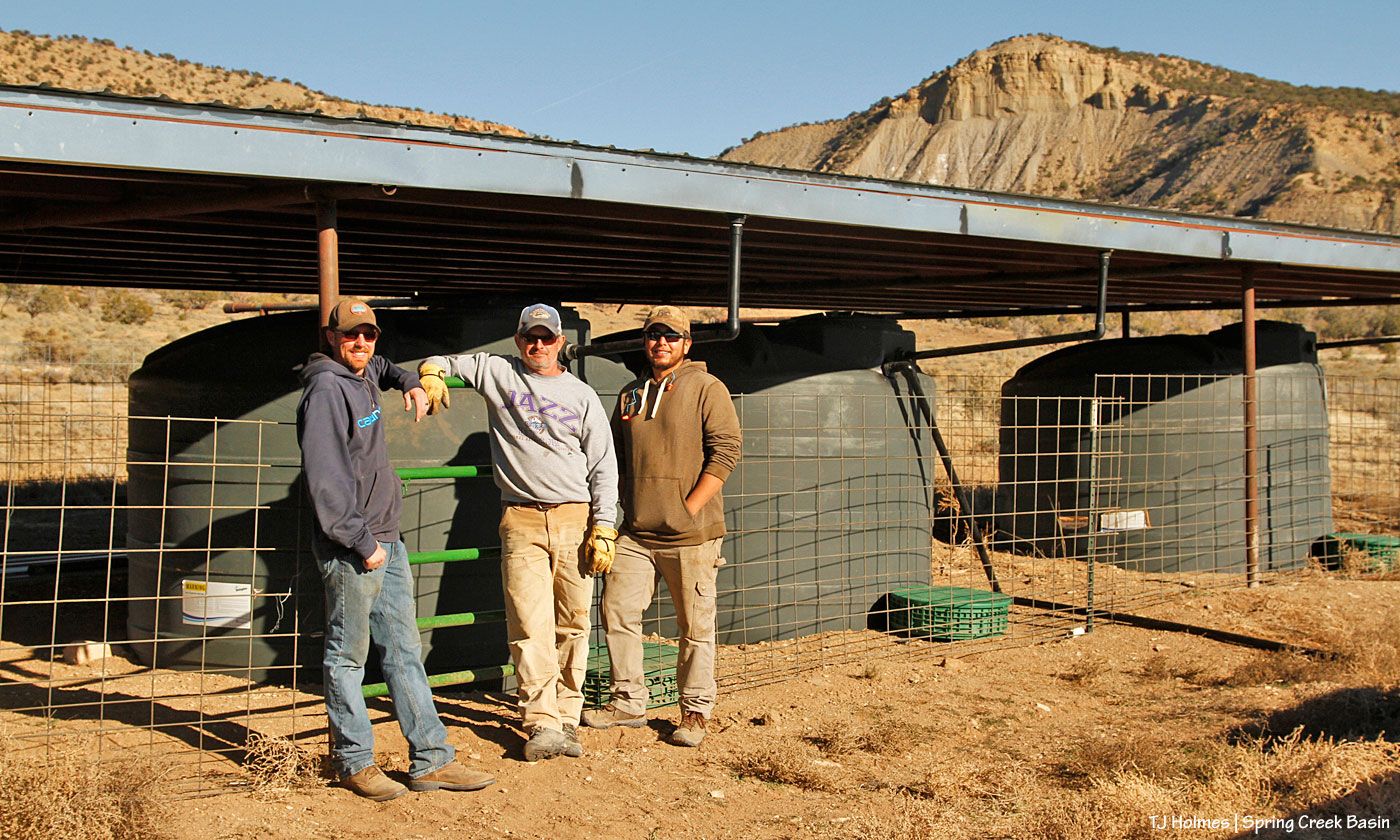
Best of all, this pic of Garth, Mike and Daniel shows some hard-working BLM guys who put a lot of thought and effort into ensuring that our mustangs have good water (quantity and quality) in Spring Creek Basin! With the addition of these two new water catchments in the last two years, our ability to store water that is clean (not salty or silty) and not subject to evaporation increases from 24,000 gallons (two 12,000-gallon tanks for each of the other two catchments) to 50,500 gallons!
This Thanksgiving weekend, especially, we are SO thankful. 🙂 Thanks to our amazing BLM partners for all they do for our mustangs!
In terms of pix and storytelling, that’s jumping the gun a bit, but I am so excited and proud of this project (as I am of all the projects we do in Spring Creek Basin for our mustangs), that it seemed appropriate to start with the best part of the news.
What follows – in this post and one more future post – are pix of the last two days of work that take this water-catchment project from nearly done to ready to catch snow and rain!
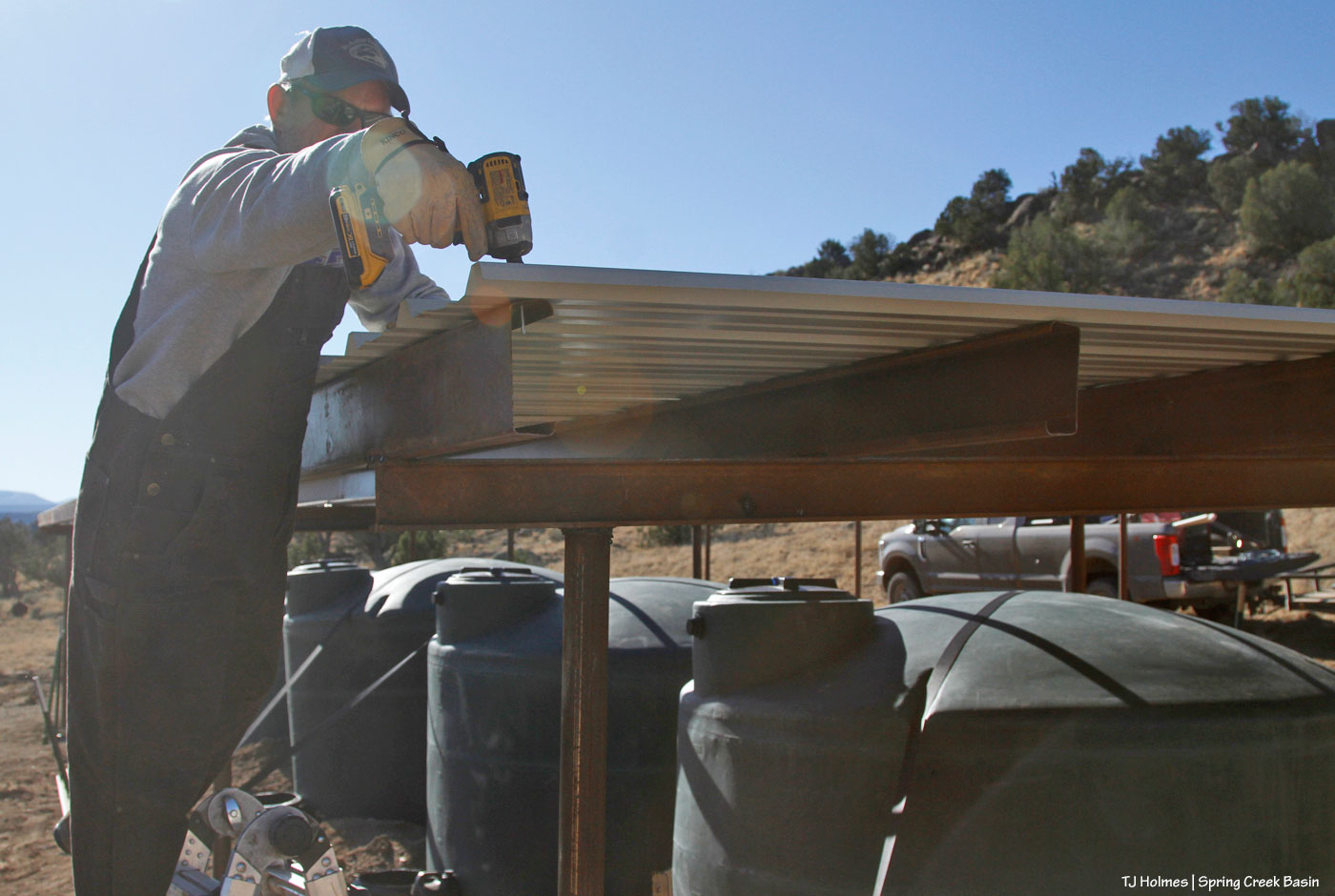
Early last week, Garth Nelson and Daniel Chavez sneaked out to the basin with the purlins needed to weld onto the I-beams and got started welding them into place. Wednesday – the day featured in these images – Mike Jensen and I joined them to start putting the propanel (metal) roof sheets into place and screwing them into place atop the purlins. Above, Mike puts the first screws in place to hold the first sheet down!
Garth and Mike align the front edges of the roof sheets – which will just overhang the gutter – and screw them into place while Daniel watches.
As the first roof sheets were laid down, Daniel and Garth returned to their partnership of setting the purlins in place and welding them to the I-beams.
Mike and I got the roof sheets up and screwed down pretty quickly and then would wait while Garth and Daniel methodically welded each purlin in place.
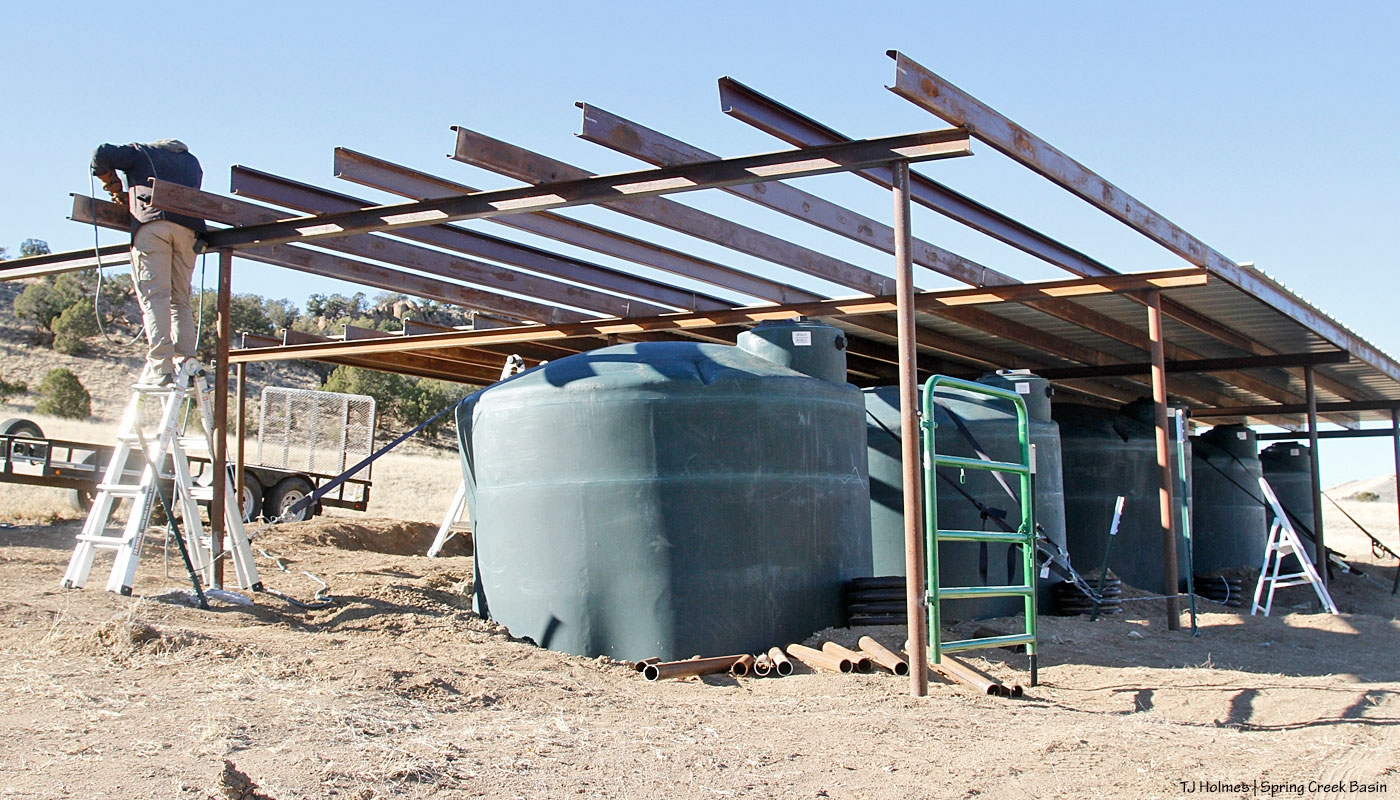
Mike had the yellow drill, and I had the red. … I was pretty fond of that little tool over the two days. 🙂 Note how the purlins face in different directions. Garth and Daniel did that on purpose. Because the purlins had some “bend” to them, they reasoned that alternating the directions of the purlins would increase stability. Mike and I, walking about and drilling on that roof, can attest to the stability!
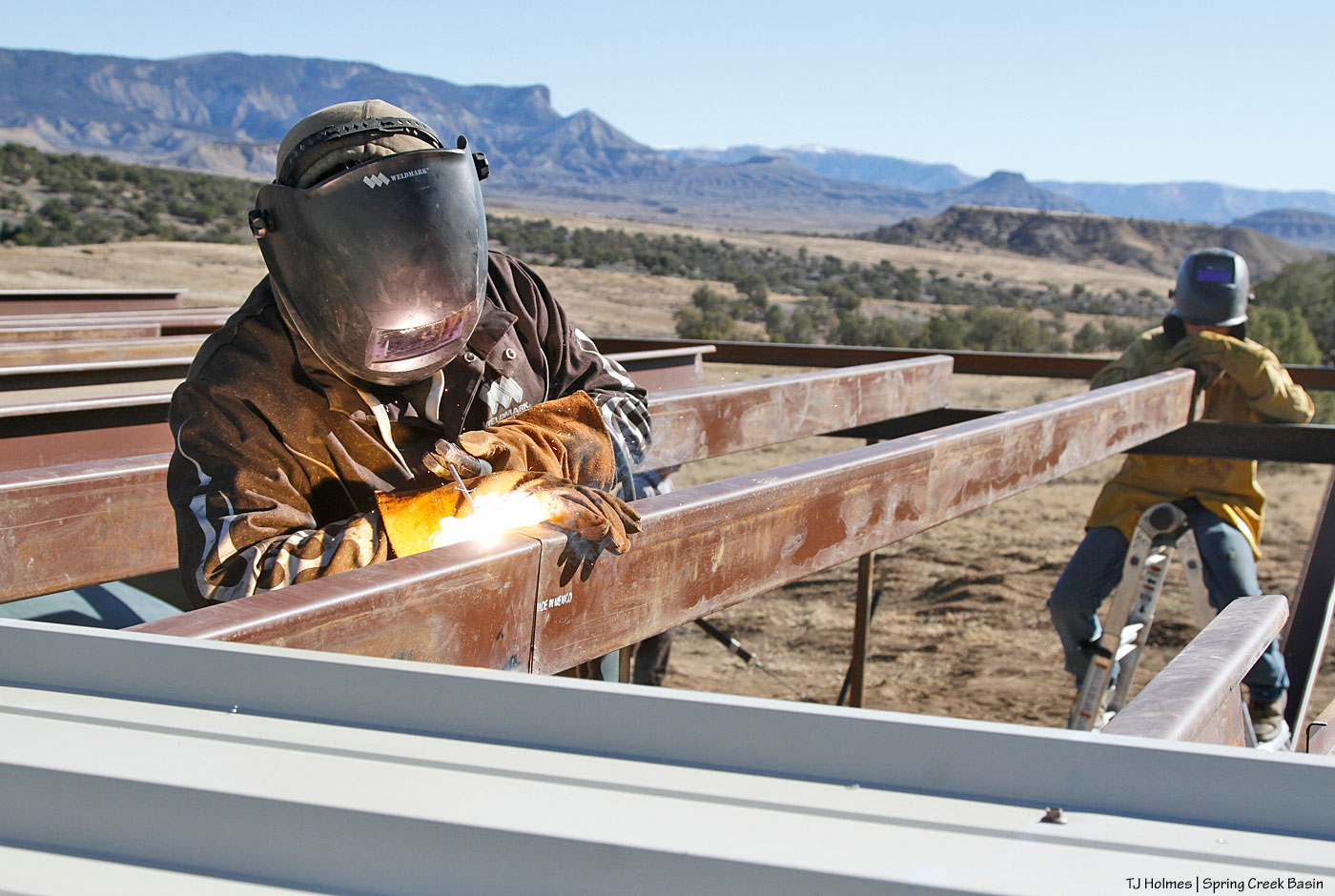
The purlins met atop the I-beams, to which Daniel and Garth welded them.
As Daniel welded, Garth held his end of the purlin in place, and vice versa, as you can see a couple of pix above.
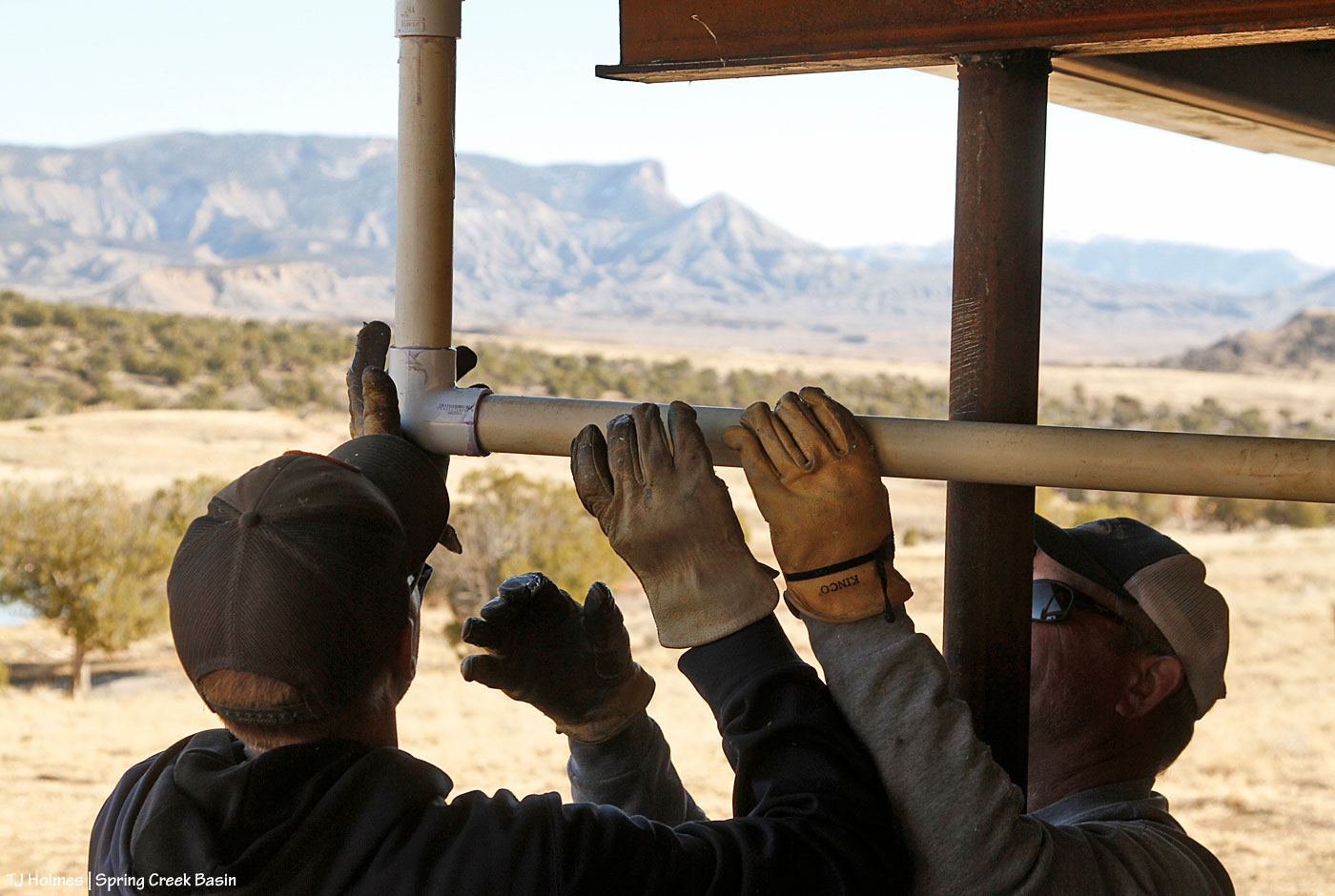
As always, the guys used their portable welder on the back of the truck. The propanel roof sheets were on the flatbed trailer, and Mike and I would lift a few of those to the roof at a time, then climb back up on the roof (using their second truck as our “ladder”) and screw them down.
Closing in on the end of the roof!
I was happy to grab photos while Mike and I waited for Garth and Daniel to weld their purlins.
And we found ways to fill our time and stay busy. That little walk-through gate will eventually allow us to access the “interior” of the water catchment – under the roof – to do any maintenance or attend to valves at the tanks, etc. The panel “fencing” will go up later. How do you attach hinges to round steel pipe?
The welders weld the hinges to the pipe, of course!
And so the ends wouldn’t stick out to catch an unwary mustang, Mike sawed them off. 🙂 Always thinking about the horses, these guys!
This view is from up the hill, “behind” the water catchment, looking down the hill. You can juuuuust see the trough at far right behind Daniel.
And about here is where Wednesday’s work ended.
Our weather has been sunny and cold (teens) in the early mornings, followed by highs in the 40s or so – warm enough when you’re working! And among the benefits, remember: No gnats! 😉
As Paul Harvey used to say – at the end of the story – “the rest of the story” will be coming soon!
As promised a few days ago, here are some more pix of the work on the newest water catchment in Spring Creek Basin. 🙂
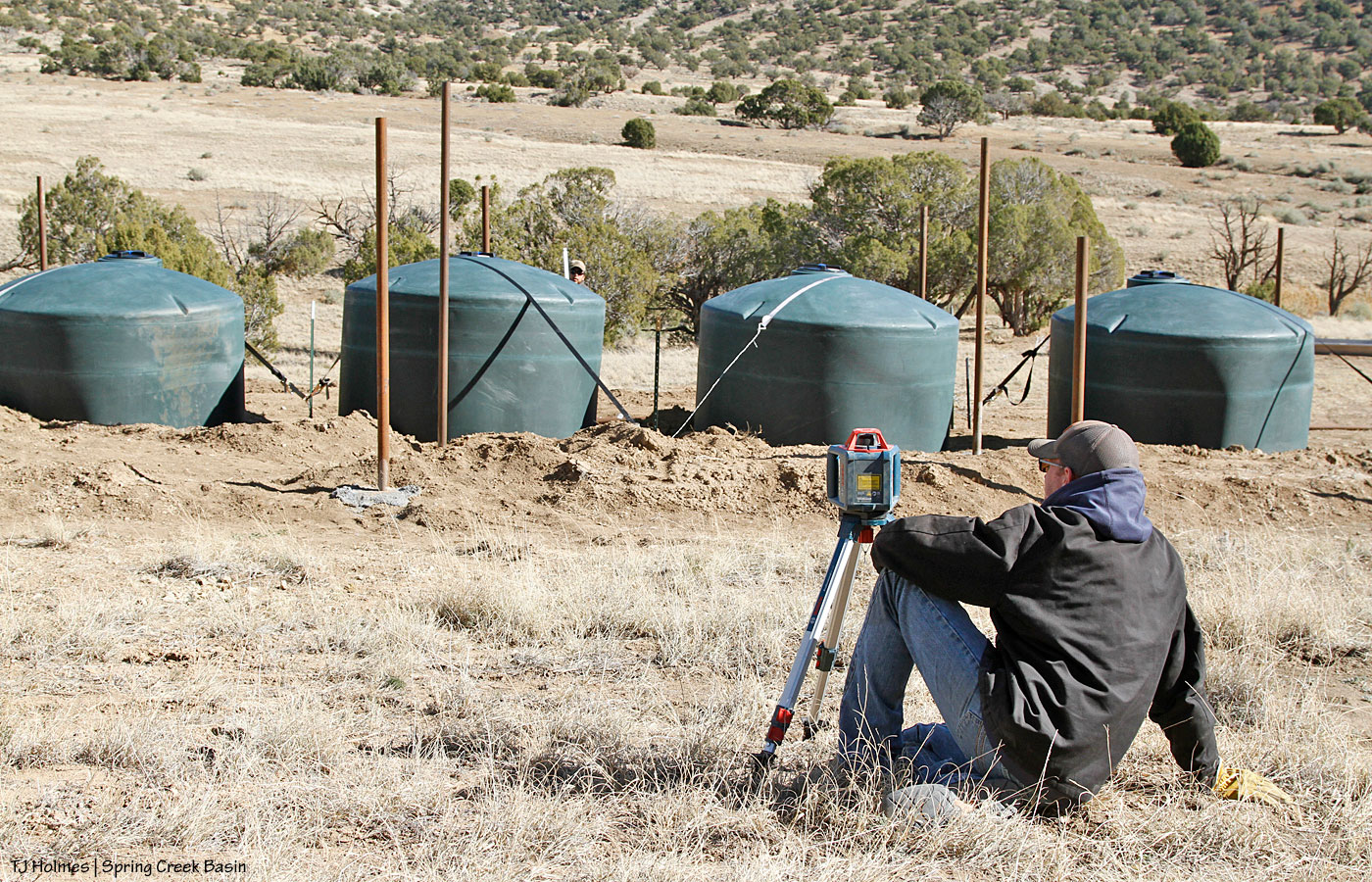
You won’t ever catch our BLM guys sitting down on the job! As I mentioned in the last post about the project, the guys started by setting up the laser level to mark the heights of the steel pipes that will hold the I-beams, which will support the purlins, which will be topped by the roof, which will catch the rain and snow to fill the tanks to water the mustangs! So here, Garth Nelson is setting the laser in a place where it will be high enough to shoot over the tops of the tanks so the pipes can all be marked. Not sitting down so much as getting the eyeball view!
While Garth set up the laser level, Daniel Chavez held the little doohickey that caught the laser at the right height at all the pipes and marked the appropriate levels.
Measure many times and many ways before the final cut, goes the saying? Garth and Mike Jensen also ran string lines to ensure the levels.
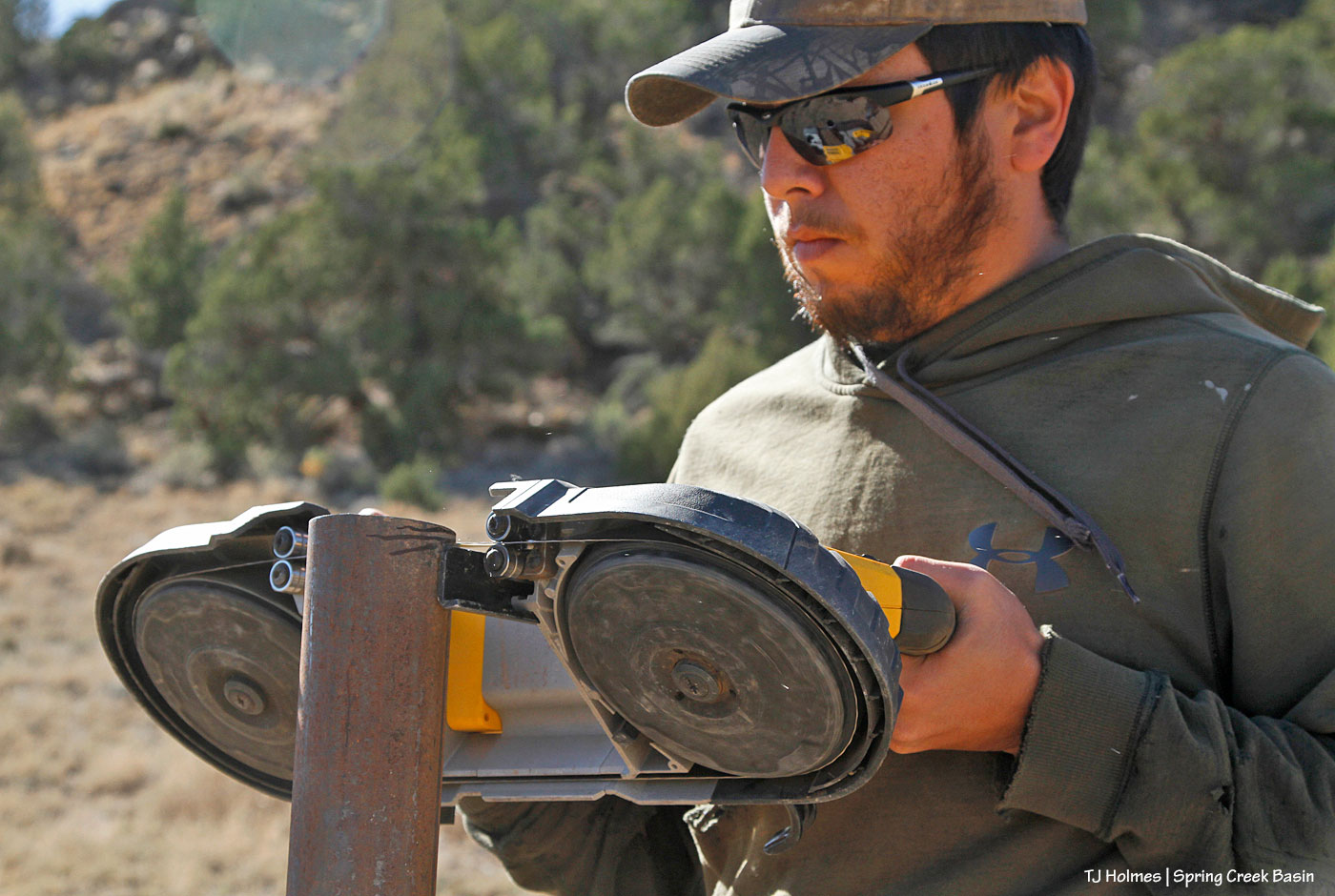
Most of the pipes required a fair bit to be cut off, but this one needed just a little sliver. … It also was the pipe that started to alert the guys that something was amiss with the blade(s) on their nifty little saw – and this pic of Daniel using it gives a little better glimpse of that tool.
For those of you interested in such things, here’s another angle of one of the guys’ favorite tools. The “blade” is a band that goes around those black wheels on the underside of the tool. Usually, it saws through heavy “stem pipe” almost like a hot knife through butter (a bit slower, but steel is, after all, steel!), but the first couple-few blades they tried – brand new out of the package – were just dulling the teeth on the blades within minutes. NOT working. That’s what led to the double-tool whammy of using the grinder tool as well as this tool – and then finding the blade that worked, which worked for all the rest of the pipes.
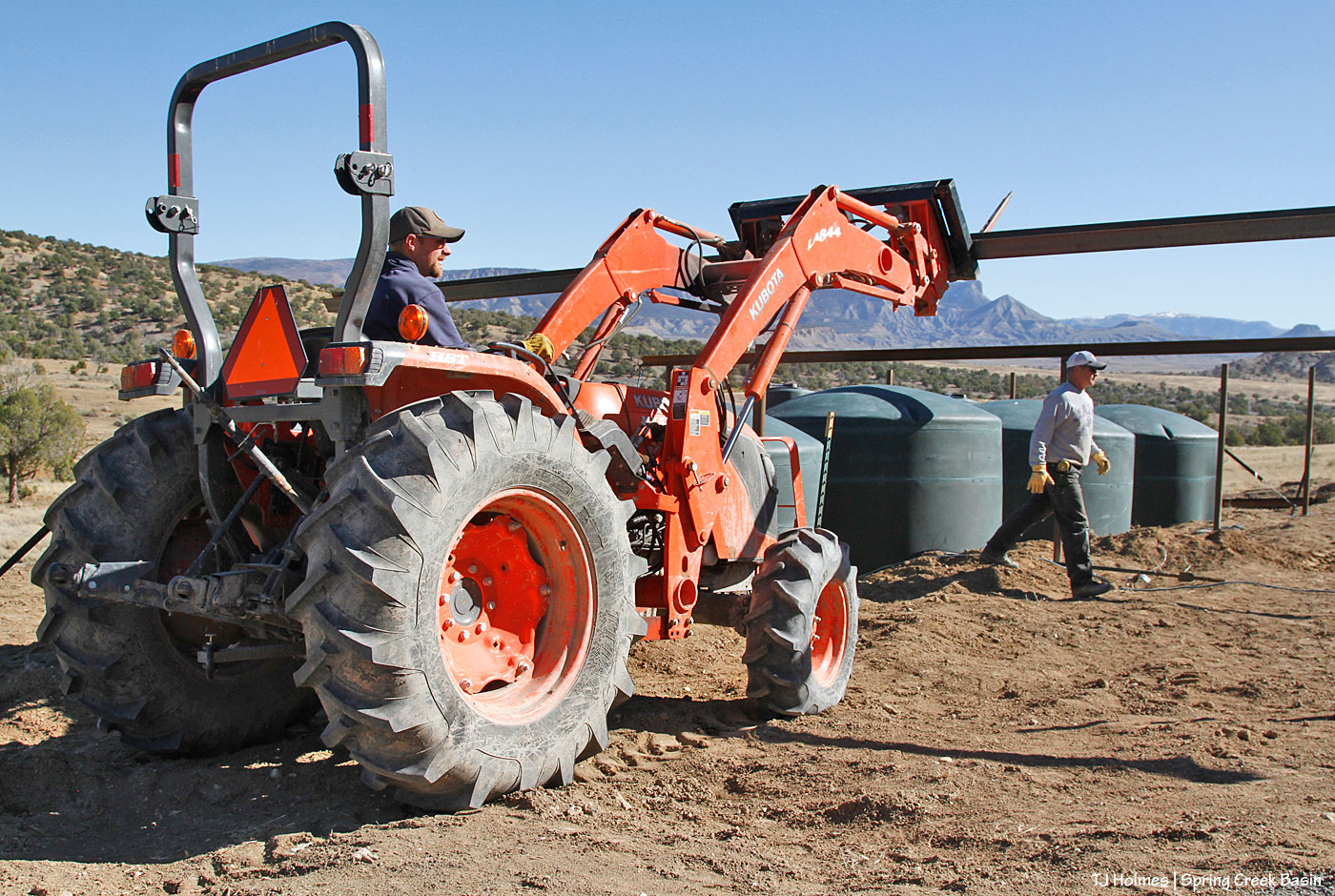
Using the tractor to carry the heavy I-beams to set atop the pipes.
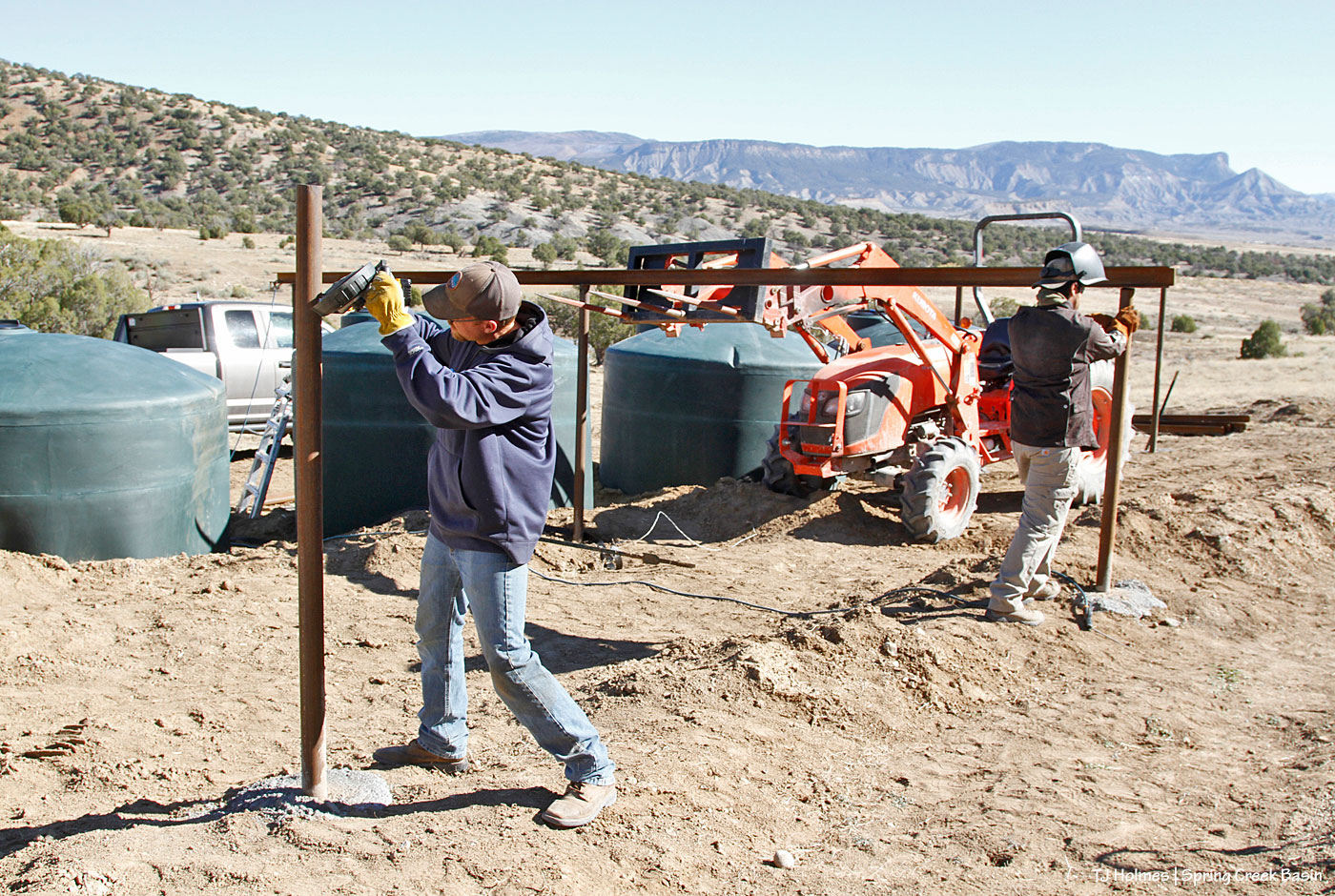
While Daniel got started welding the first I-beam to the pipes in the middle of the catchment structure, Garth finished cutting the pipes to height/length.
The welding process fascinates me …!
The A-team!
Sparks flying – another good reason to wait till cooler weather for the completion of the project. 🙂
Garth holds the I-beam steady and level while Daniel makes the first weld to hold it in place.
Garth finished the welding on the last beam.
Working in Spring Creek Basin does have the perks of fabulous scenery. 🙂
Next up should be welding the purlins atop the I-beams!
Well, we outlasted the summer heat, the gnats, the dust, the wind, the dust, the gnats, the heat, the dust (you get the picture), and it’s time to finish our second new water-catchment project for our mustangs of Spring Creek Basin!
Last week, after waiting out the drying roads and before the next round of moisture (soaking rain and big, fat flakes of snow that didn’t stick but added to the moisture), Mike Jensen, Garth Nelson and Daniel Chavez – our BLM range heroes! – came out with tools and supplies, and we got started on phase 2 to get the catchment finalized to take advantage of hoped-for winter snow.
If you need a quick refresher about our work to install the tanks and piping and trough, click on June 2022 over on the right under Archives, then scroll down to find the posts about that work.
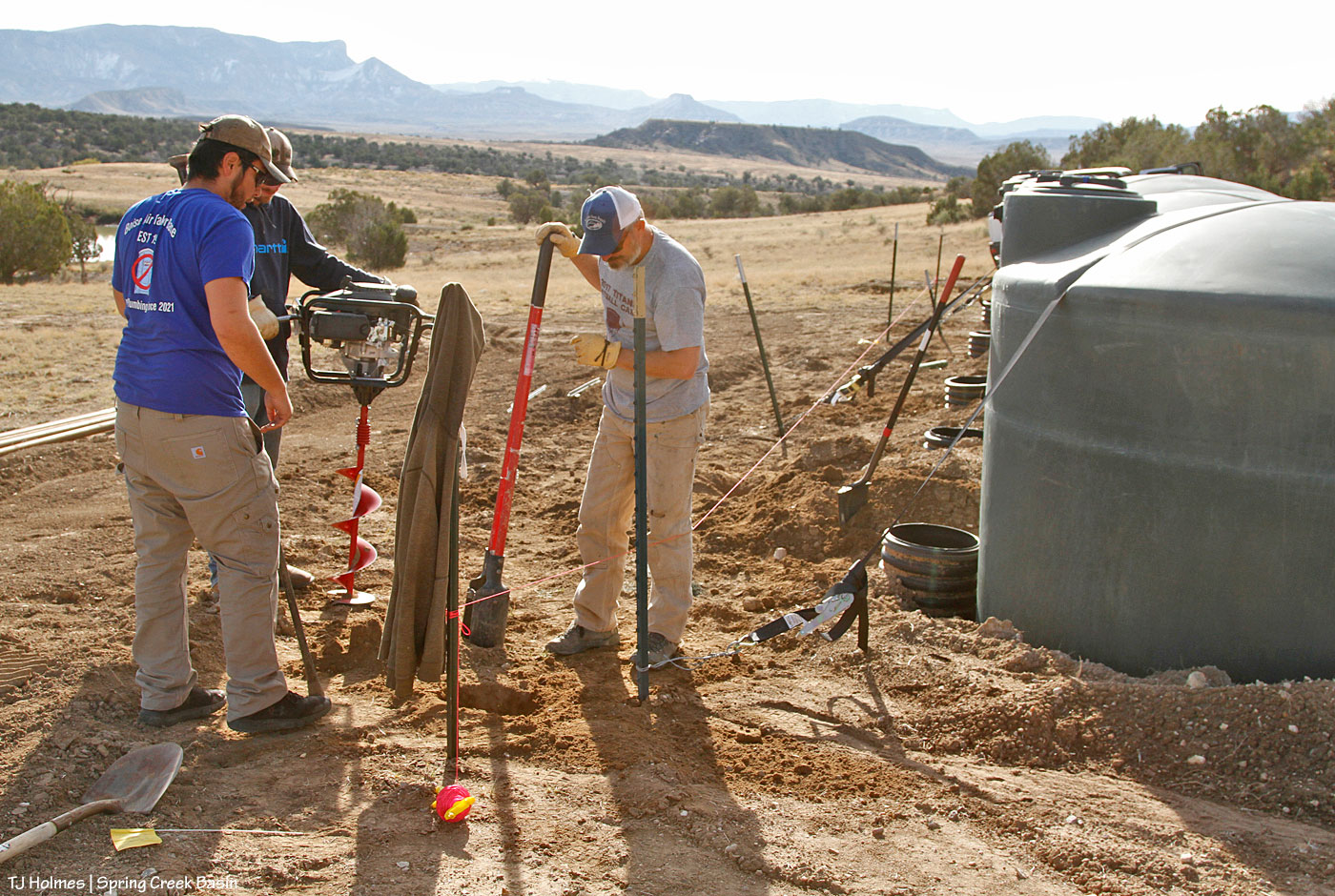
It all starts with the first post (pipe) hole! Well, it really all starts with running a string (see the pink line across the tanks?) to dig the holes so the line of steel pipes – to support the roof structure – will be in a straight line. Garth (left) and Daniel are on the gas-powered augur (what a difference that makes to digging holes! especially as many as this project requires), and Mike supervises. He would later do the lion’s share of work with the post-hole digger (far left) and tamp bar when the augur wasn’t quite enough to break through the calcium layer of soil.
Moving right along. You can see by their bodies that Garth and Daniel are putting their weight and strength over the augur to dig deep into the soil.
This was the last hole across the front line of the tanks.
Have you noticed the black straps over the tops of the tanks? As you might remember, we had another good monsoon year (heck, we HAD monsoons again this year after *not* for a few years). After the tanks were in the ground (in June) – piped together at the bottom, the dirt covered back over – at least one of those big rains poured off the hill behind and above the tanks and ran across the not-so-settled dirt around them … and sort of UPROOTED at least two of the tanks – and broke at least one pipe connection! The BLM guys had to come back and fix that little issue (no pix of that because the designated photographer/documenter (that’s me) was on vacation in Wyoming at the time). The straps over the tanks – snugged to T-posts driven into the ground – were to hold them in place in case of another gully washer – which seems to have worked.
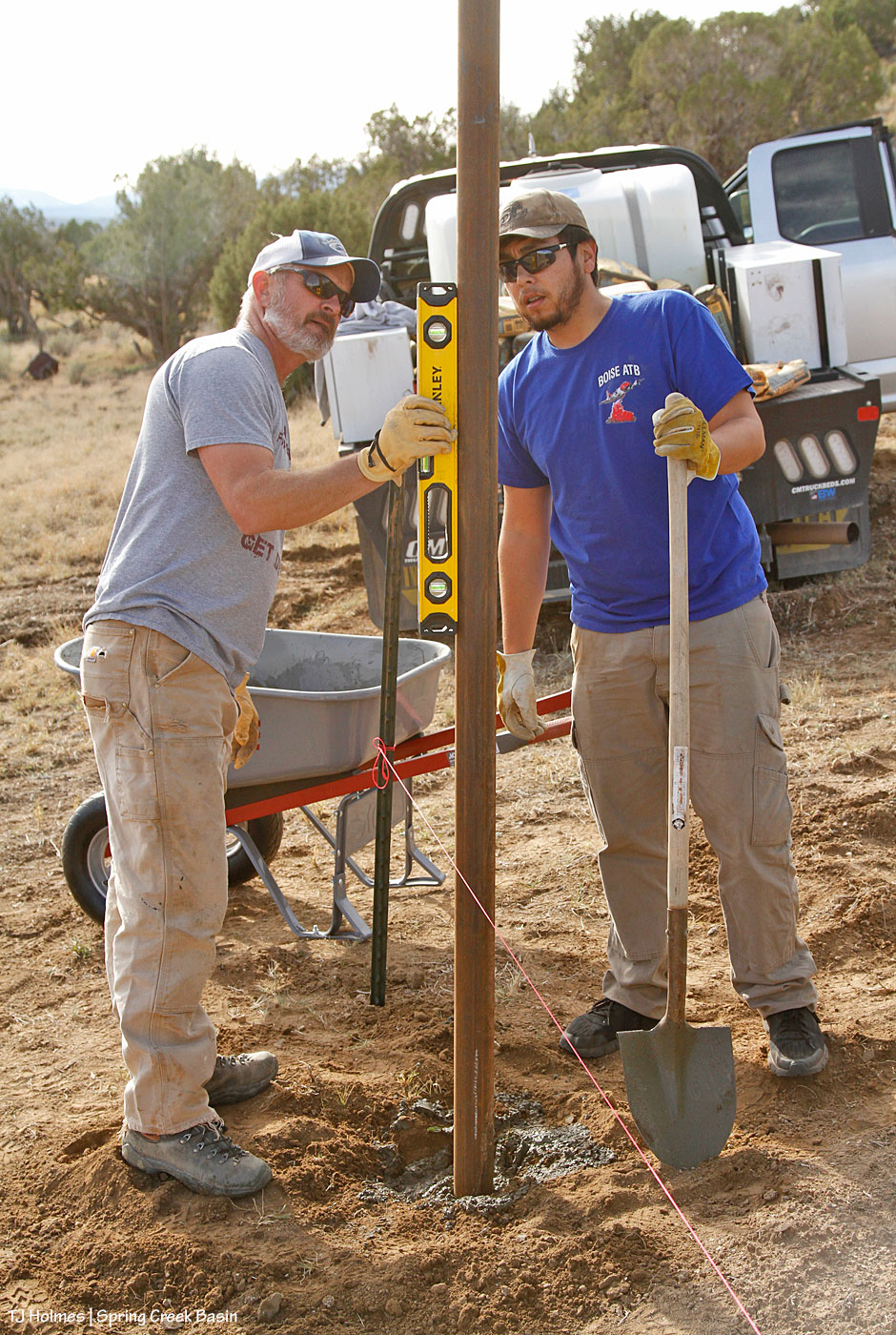
Mike checks the level of the pipe while Daniel finagles the concrete to straighten the tilt.
Right on the money! These pipes will be holding an immense weight to support the propanel roof sheets, so the guys filled all the holes with concrete to ensure the longevity of the pipes in our erosion-prone soil.
While Mike and Daniel were mixing and pouring the concrete, Garth was cutting the pipes into sections to place in the holes that the guys had dug with the augur. I went back and forth, lending a hand wherever needed and taking pix of the work (because all good work should be documented!).
The guys work together to shovel the concrete into one of the holes to stabilize one of the pipes.
Getting close to end end of hole-auguring on the back side (uphill side) of the tanks. Of note: The white on the far ridges, including McKenna Peak and Temple Butte, IS, in fact, snow. That seems at odds with the guys wearing T-shirts, but it was warmish until the wind picked up. And did I note that it wasn’t HOT, and there were no gnats and no dust?
Here, you can see the pipes that we’ve already placed – and concreted in place – that will serve as supports for the roof.
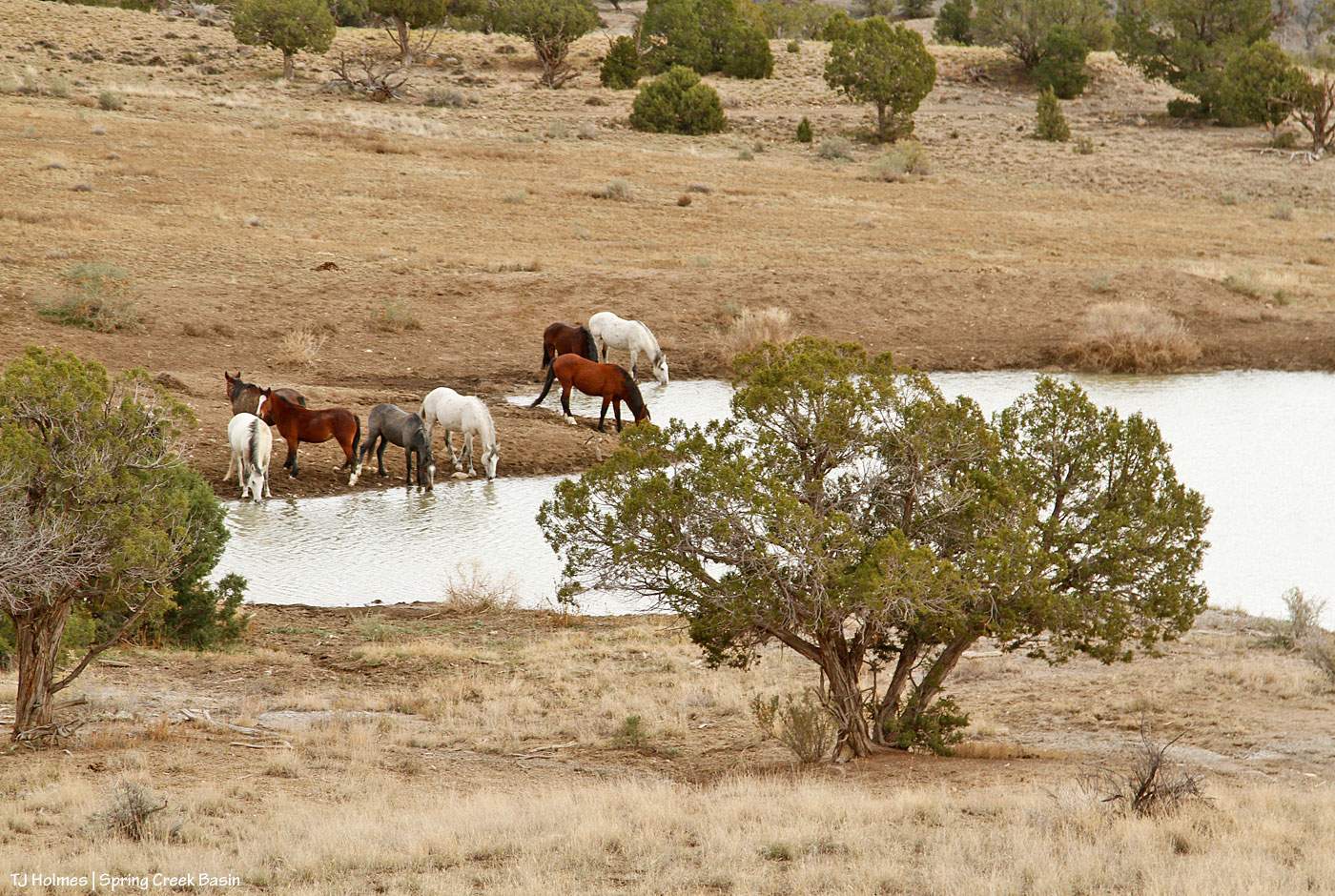
And then, as we were getting close to placing the last pipes, THIS happened: A couple of bands came down the hill from the northwest bowls (little “swales” in the northwestern part of Spring Creek Basin, above Spring Creek canyon) to drink at the pond in this area that I call the northwest valley. Why are we building a water catchment in an area that has a pond, you ask? Because, other than this year (of course), that pond only rarely has water in it, which meant that this area – usually dry – is a really GOOD location for a water catchment. And it has proved to be a good location – this year – for showing us that the horses will use this area – and graze it – when there’s water there to drink!
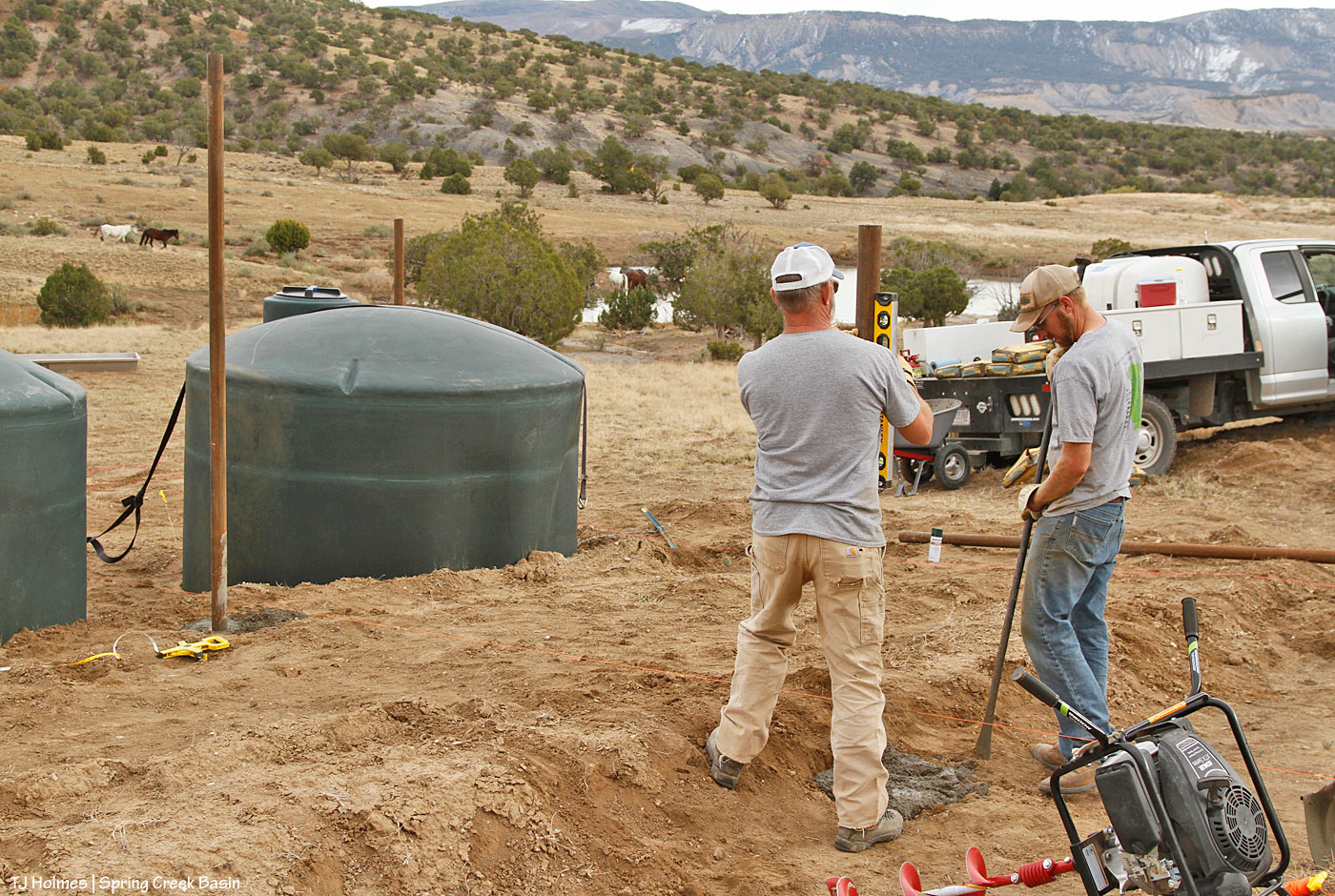
The guys used a couple of methods to ensure straightness of the posts (not just the straightness of each individual pipe but all of them related to all the others in lines up and across), including the string line (pink, tied to the short bit of rebar between Mike and Garth); measuring distance with a tape measure between the posts pictured, as well as those to the left, out of sight; and Daniel, shown here employing the eyeball method – sighting along the three pipes.
Mike and Garth level the pipe while the horses decide there’s not much to worry about and go on to the pond.
Peace on both sides, horse and human.
More of the same. I so loved that the horses, after their initial shock at seeing us at their watering hole, pretty quickly decided that we weren’t doing anything upsetting at all.
And the last pipe is in place!
It’s a good-size pond, and when it holds water, it holds a fair quantity!
Shortly after this, we were done with all the pipe placement and started cleaning up tools and supplies. The horses drank and wandered off to graze in the little valley. Even when the guys rumbled out in their trucks, the horses weren’t bothered. I stayed to take some pix. Before I left, two trucks with sightseers (importantly, not hunters (the end of today marks the end of the second rifle season … two more to go …)) drove up into the northwest valley. The horses had drifted and were grazing right along the road, but the visitors moved super slowly and respectfully, and the horses gave them a marvelous view for pictures right through their passenger-side windows!
We’ll continue work on the roof structure over the tanks as weather allows. Another moisture-bearing system is headed our way by Tuesday night. 🙂
Connie Clementson, manager of Tres Rios Field Office in Dolores, is retiring after 37 years of public-lands service. For the last 11 years, she has been the head of BLM public lands in Southwest Colorado. We first met her at the 2011 Spring Creek Basin roundup when she was still with the Forest Service and served here as the then-acting district ranger for the Dolores District of San Juan National Forest. We’re glad she was able to finish her three-plus decades of service here in our corner of Colorado.
Our herd manager, Mike Jensen, gets a lot of the well-deserved credit for our recent management accomplishments in Spring Creek Basin, and we know that’s because he has had the support of the top boss – Connie – and her confidence that he was making best decisions for our herd.
Monday, Tif Rodriguez, long-time advocate for Spring Creek Basin mustangs as well as for protecting rights and rights-of-way for horsemen and horse (and other pack stock such as mules) use on public lands, and I went to Tres Rios Field Office, where Joe Manning, assistant field office manager (who also has a lot to do with our confidence-inspiring herd management), had scheduled us into a rare gap in Connie’s last-week schedule. Daniel Chavez, range tech who works with Mike (and Garth Nelson), joined us in Mike’s absence (he was returning from a trip with his daughter).
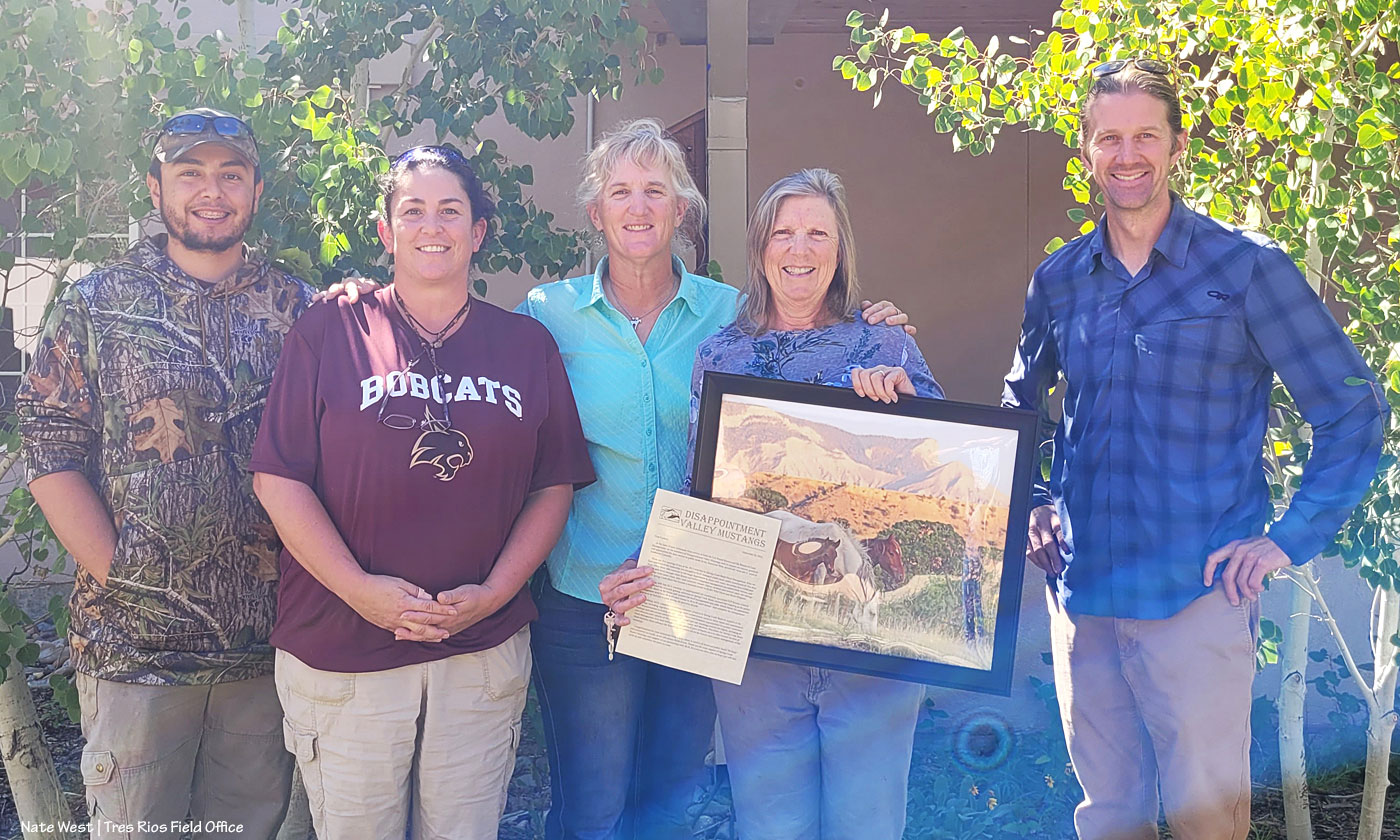
We presented Connie with a photo of Spring Creek Basin mustangs and a letter from our Disappointment Valley Mustangs group (which includes Pat and Frank Amthor, David and Nancy Holmes, and Kathryn Wilder, in addition to me and Tif) in appreciation for her years of service – specifically here and especially for our mustangs. While we chatted, she reminded us that she said 11 years ago at the roundup that she didn’t ever want to do that again in Spring Creek Basin. And because of her 100 percent support of the PZP fertility-control program in the basin, we haven’t.
In the photo above, from right to left: Joe Manning, Connie Clementson, yours truly, Tif Rodriguez and Daniel Chavez.
We’re so grateful for Connie’s leadership and partnership these many years, and we wish all the best to Connie (and her family) during her well-earned retirement!