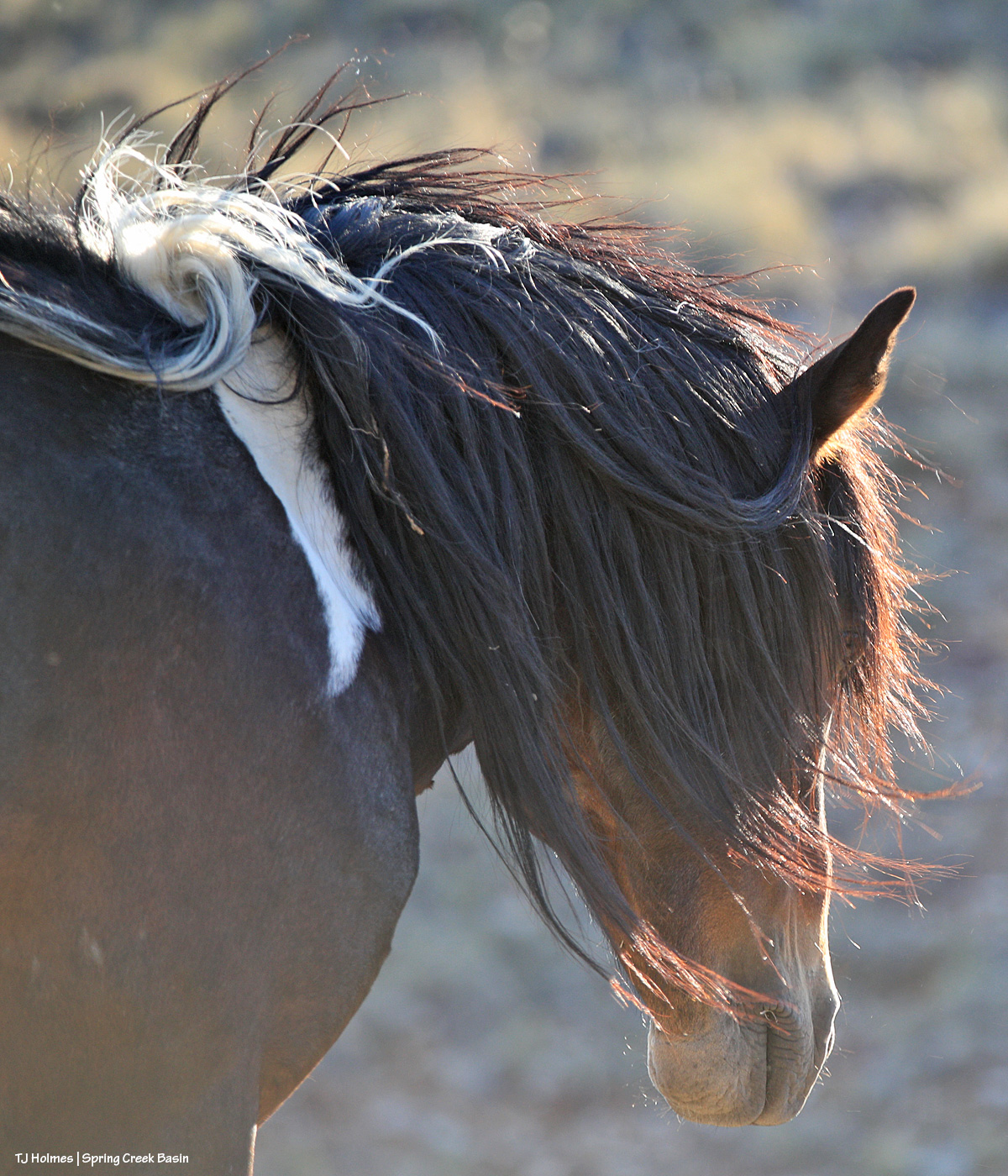
Peek
26 07 2025Comments : 8 Comments »
Categories : Spring Creek Basin Herd Management Area, Spring Creek Basin mustangs
Gotcha
25 07 2025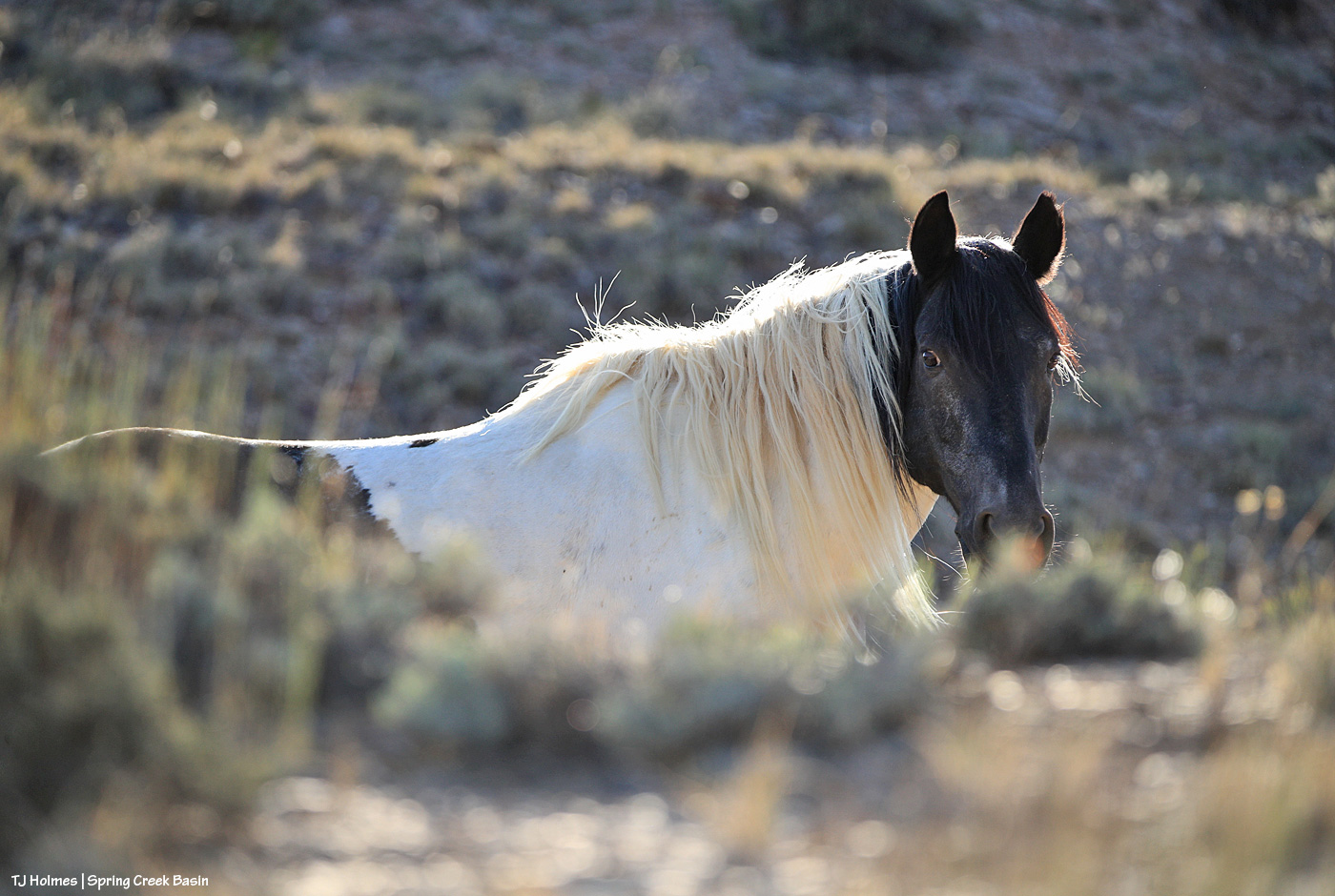
Corazon, old as he is and as long as he’s known me (most of his life), still likes to act surprised to see me.
As much as I *love* these mustangs and find them the most beautiful of all creatures upon the planet, I do wonder now and then (often) what they think of us crazy two-leggeds. … I don’t think there’s much appreciation there (though I’m glad there’s a lot of tolerance). 🙂
Comments : 8 Comments »
Categories : Spring Creek Basin Herd Management Area, Spring Creek Basin mustangs
Pretty as a picture
24 07 2025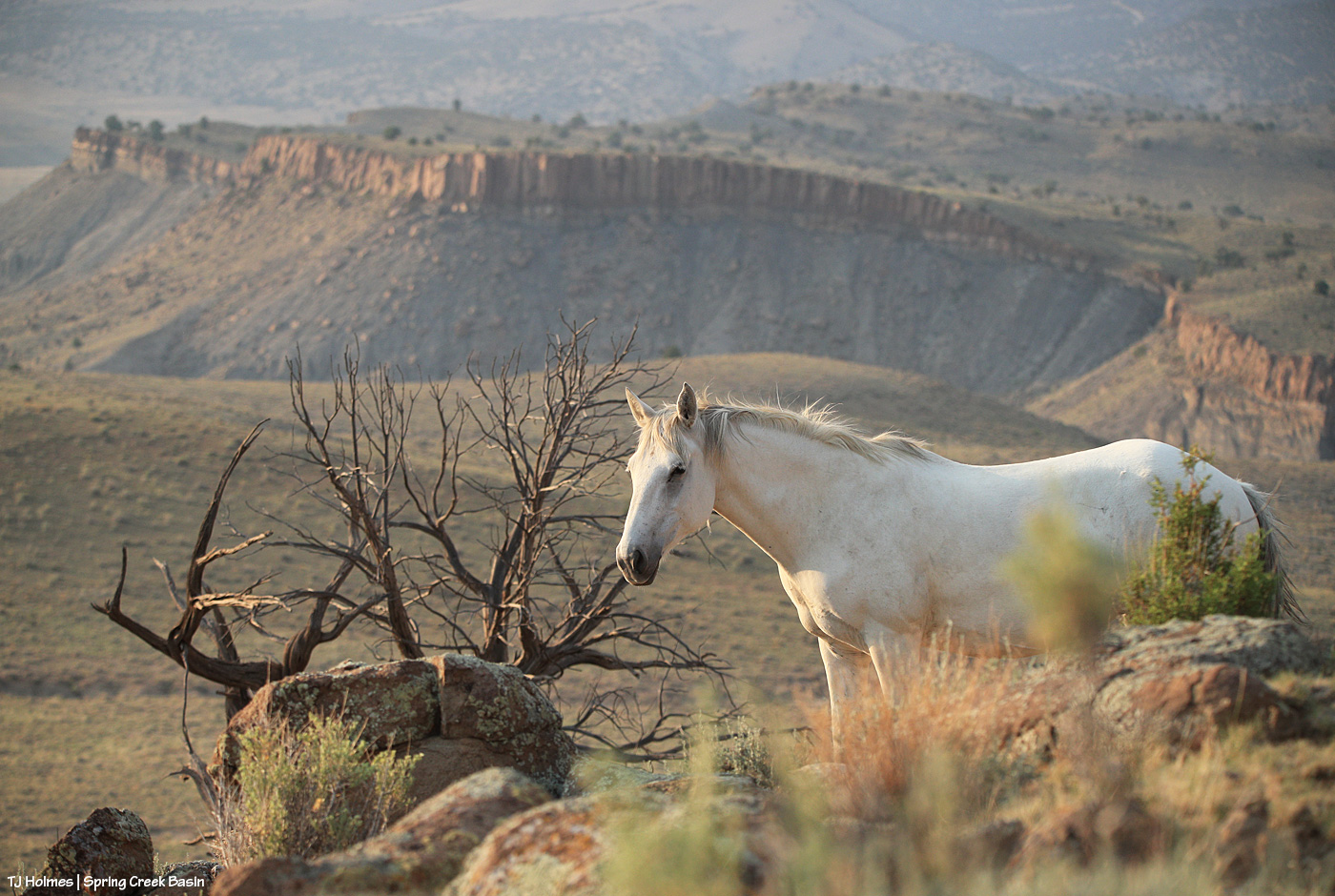
Winona paused for a brief little catnap on a ridge above Spring Creek canyon while moseying/grazing with the band. I just happened to be moseying along with them – happily, gratefully! – and caught her looking beautiful as always.
Comments : 7 Comments »
Categories : Spring Creek Basin Herd Management Area, Spring Creek Basin mustangs, Spring Creek canyon
Almost friends
23 07 2025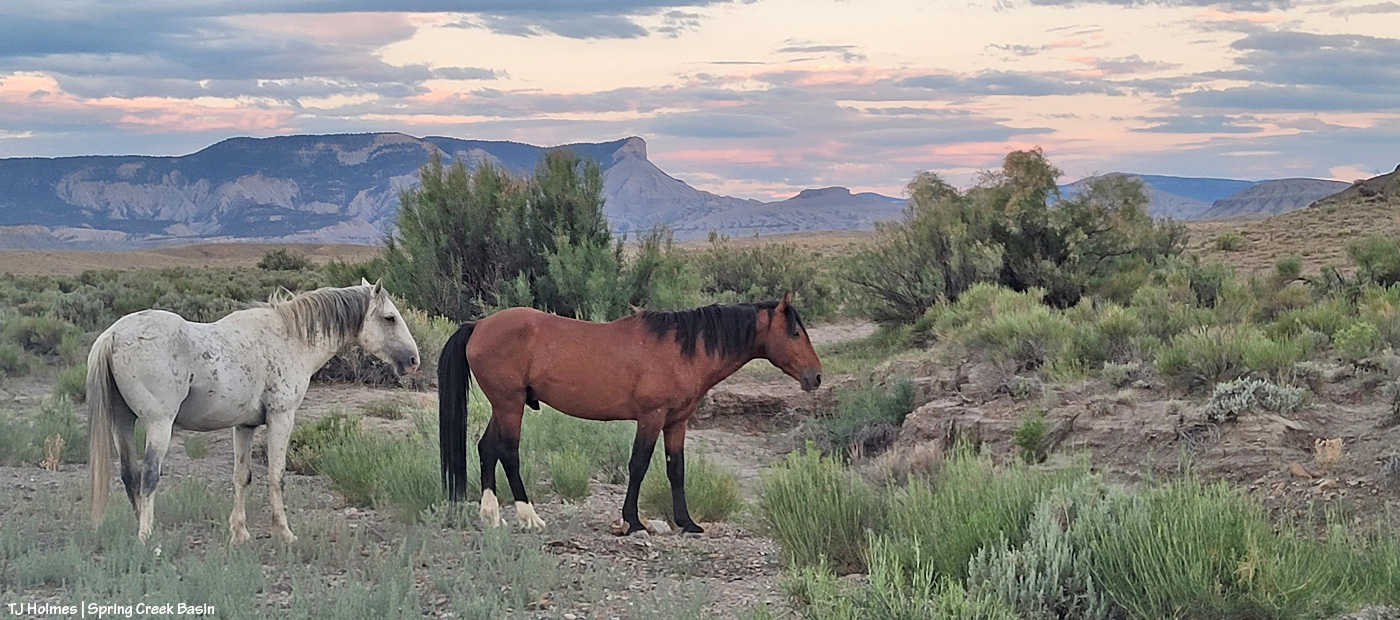
Skywalker might be considered Tenaz’s lieutenant, though I don’t think he would mind my translation that it’s not a title he likes or plans to use for long (!). Tenaz has two young mares, and Skywalker does keep Tenaz on his toes. They’re part of a bigger group of horses that’s basically two separate bands – one mostly happy family. 🙂
Above, the mares have gone ahead (to the right), and they’re waiting for their turn at the water cooler … err, pools of water that gather in the creek bed just above/upstream of Spring Creek canyon. A couple of other bands beat them to it, so they were politely waiting their turn.
The arroyo actually comes from beyond/above where Skywalker and Tenaz are standing, passes by us on the left, makes a big curve behind me as I’m facing them, runs a short distance, then makes another big curve to enter the canyon. Another few curves later, it empties below the rimrock cliff band that forms the basin’s western boundary into lower, wide-open Disappointment Valley on its way to join Disappointment Creek (which also is dry but for pockets of water) … and on to the Dolores River.
The mustangs definitely rely on these seeps in Spring Creek and its tributary arroyos as the summer gets drier and drier before the hoped-and-prayed-for monsoon rains. The forecast is showing an uptick of chances next week, and we’re crossing fingers, toes and hooves (!) that some rain actually pans out for us from those chances!
Comments : 4 Comments »
Categories : McKenna Peak, Spring Creek, Spring Creek Basin Herd Management Area, Spring Creek Basin mustangs, Spring Creek canyon, Temple Butte
Diffused
21 07 2025
Another image of the pink sunset landscape through wildfire smoke, this one of Flash.
Fortunately, we’ve been relatively smoke-free for a coupla-few days, though the fires are still burning.
Comments : 6 Comments »
Categories : Colorado, Disappointment Valley, McKenna Peak, Spring Creek Basin Herd Management Area, Spring Creek Basin mustangs, Temple Butte, Wildfire
Four for beauty
20 07 2025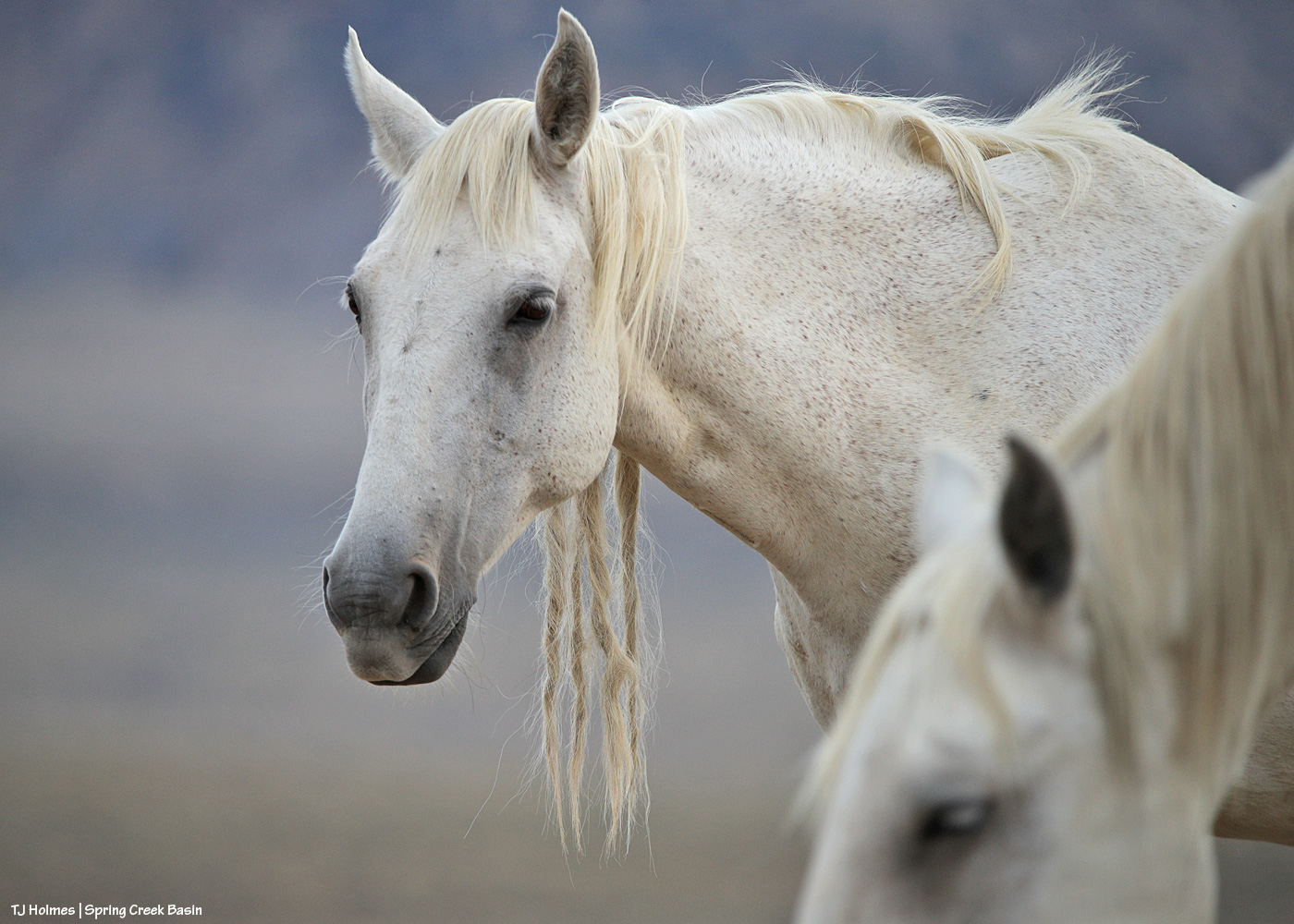
Four braids are better than one, knows every fashion-forward mustang. 🙂 Piedra and Maia.
Comments : 9 Comments »
Categories : Spring Creek Basin Herd Management Area, Spring Creek Basin mustangs
Highlights
19 07 2025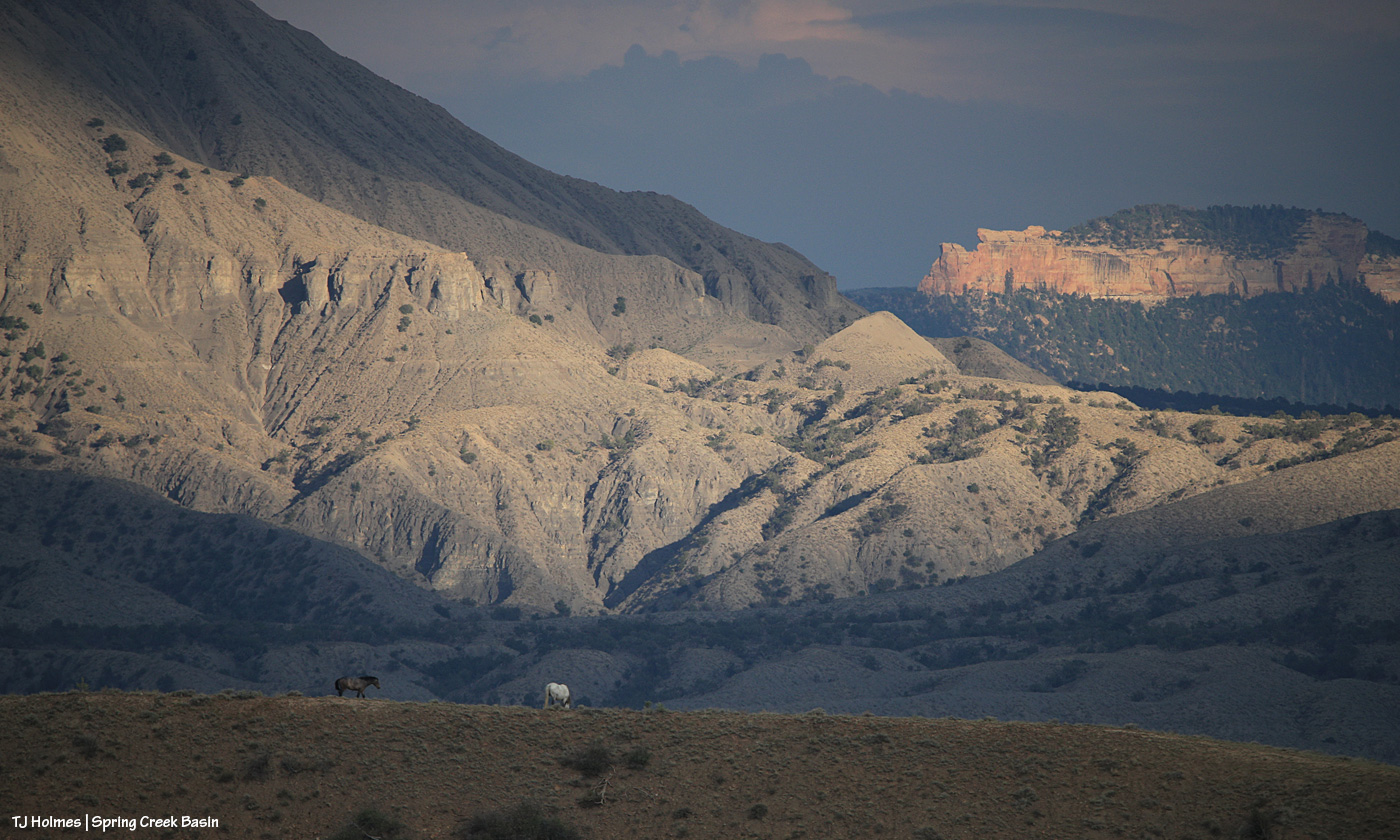
Still waiting on the clouds and Mother Nature to bring us any rain, but dramatic, spotlight cloudlight is my faaaaaaaaaaaaaavorite! That’s actually part of McKenna Peak at far left. The lit ramparts far to the right are well beyond and up-valley from Spring Creek Basin.
Comments : 8 Comments »
Categories : McKenna Peak, Spring Creek Basin Herd Management Area, Spring Creek Basin mustangs
Help wanted
18 07 2025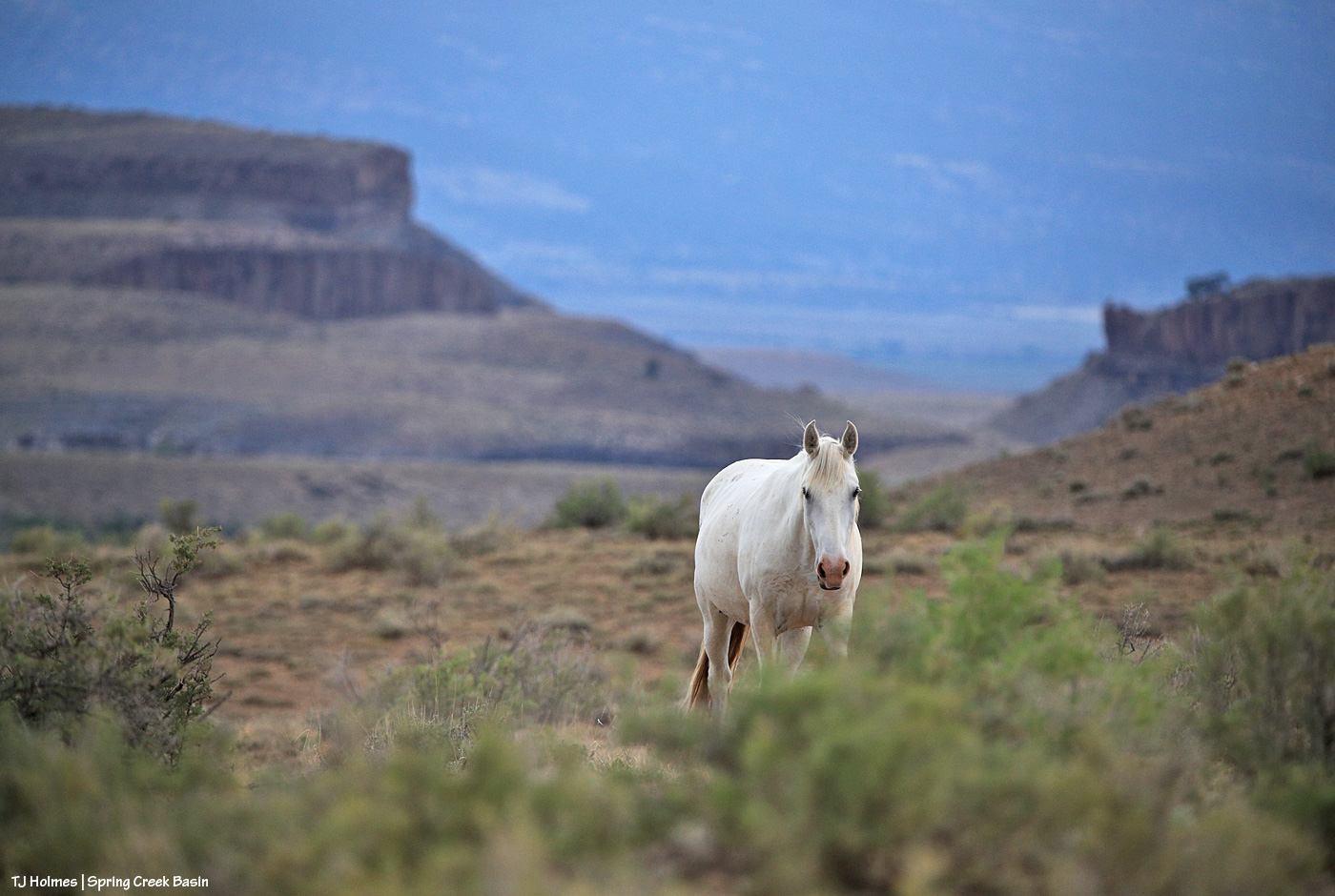
The Deer Creek and Turner Gulch fires both now have burned through more than 15,000 acres. Smoke wasn’t nearly as visible yesterday as previously, and it has been weirdly (eerily?) not very windy. Rain has been in and out of the forecast (mostly out … and it hasn’t rained), but we could sure use some actual “wetting rain” that actually makes landfall and drenches the land and its vegetation AND its fires.
Terra, above, and her band had just come up from a water seep in the Spring Creek arroyo and were grazing their way peacefully toward (potentially) another little water source. They know where to find water, and fortunately the water sources in the basin are holding steady. Any little (or lotta) bit helps.
Comments : 9 Comments »
Categories : Spring Creek Basin Herd Management Area, Spring Creek Basin mustangs, Spring Creek canyon
Copper pink
17 07 2025
Knife Edge (right) and Valentine Mesa (left) and the eastern ridges of Spring Creek Basin (including McKenna Peak and Temple Butte) usually glow a sort of purplish orange at the very end of most days, but the vivid almost-*pink* in this pic was from late sunlight diffused through wildfire-smoke haze.
The smoke wasn’t too bad over us, but plumes from the Deer Creek, Wright Draw and Turner Gulch fires northwest and north of us were clearly visible beyond the horizon of our peaceful little enclave.
Gaia and mares from another band nearby weren’t at all bothered … but those smoky drifts drew my eyes constantly.
Comments : 8 Comments »
Categories : Spring Creek Basin Herd Management Area, Spring Creek Basin mustangs
Youngsters
16 07 2025Caution: Fluffy wild cuteness ahead. You were warned! 🙂

While following a couple of bands of mustangs through the smoke while they grazed a few evenings ago, this little critter broke its camouflage to pose for me.

I think it’s young.

And I think that’s why it stayed put rather than galloping away.

Every time I thought to leave, taking more steps up the hill around its “hiding” spot among the lichen-covered boulders, taking another few pix of ever-increasing cuteness, I’d see another angle of even *more* cuteness!

Are you overloaded??
But wait! There’s more!!
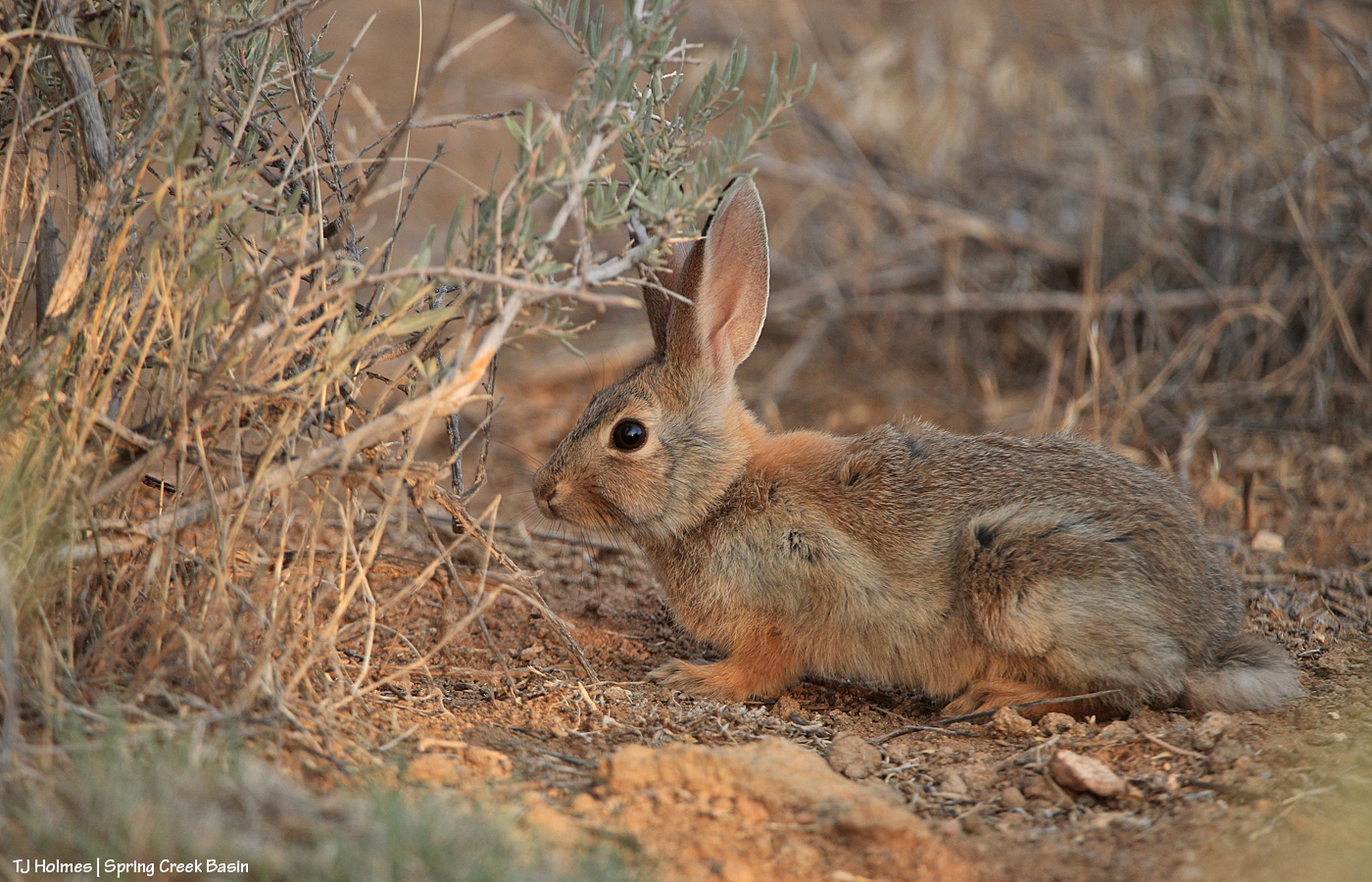
Not long later, as I followed the mustangs uphill through the four-wing saltbush and sage, another young cutie broke camo to sit with me for a brief while.
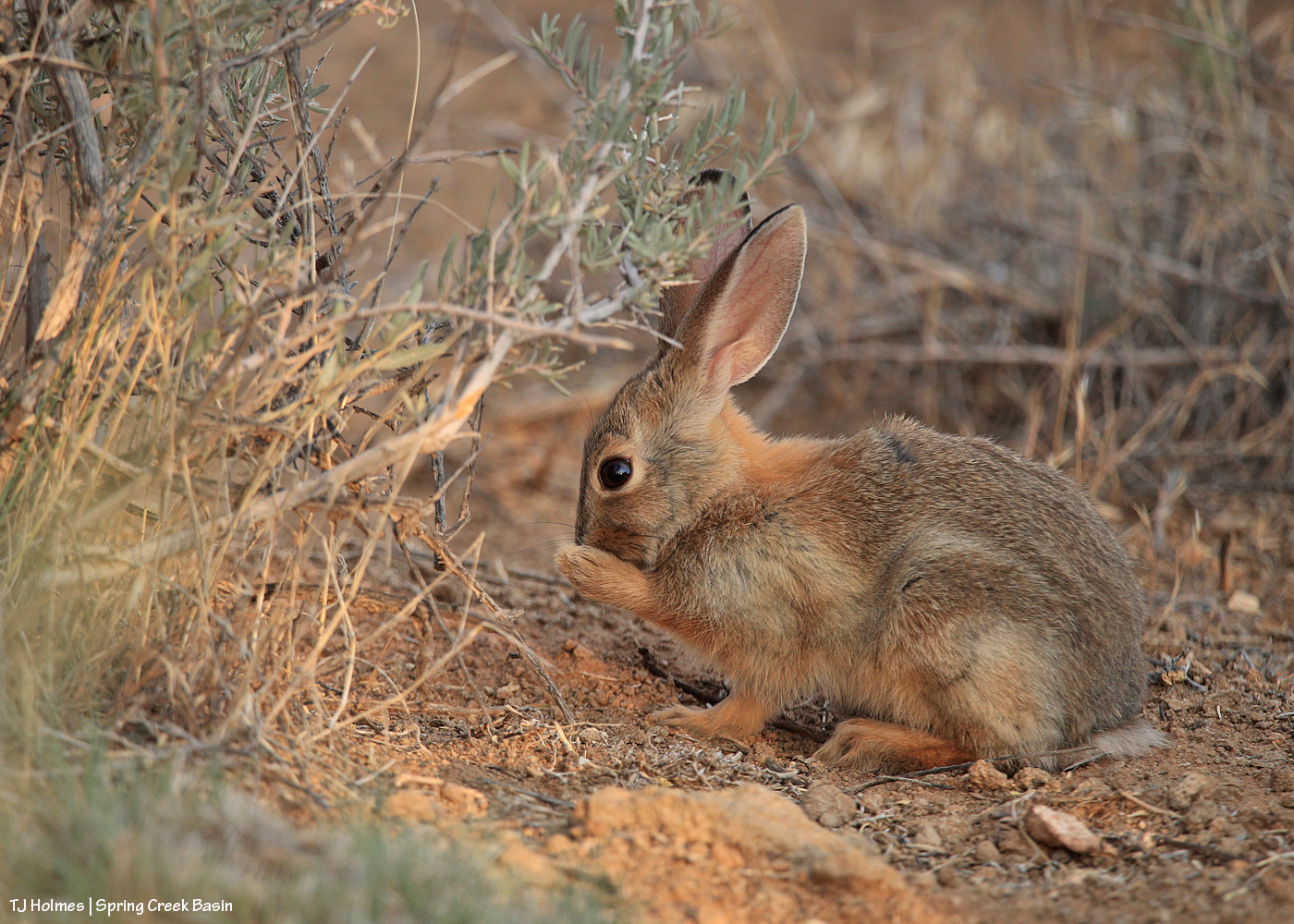
S/he even had time for a quick little touchup to the whiskers. 🙂

Cuuuuuuuuuuuuuuuuuute!
I believe both Jack (Jacqueline?) rabbit and Peter (Petra?) cottontail were youngsters and that’s likely why they didn’t immediately leave when my blundering flushed them from their respective covers. Also, they both *looked* young. … Either that, or it was just too damn hot and smoky to move much for a harmless-looking two-legged who made just oohing and ahhing and clicking sounds. 😉
Comments : 14 Comments »
Categories : Colorado, Disappointment Valley, Spring Creek Basin Herd Management Area, Wildlife
 Spring Creek Basin Mustangs