How often do we have fog in Disappointment Valley?
I won’t say nevvvvvvvvvvvvvvvvvvvvvvvver. But it’s very, super, pretty incredibly rare.
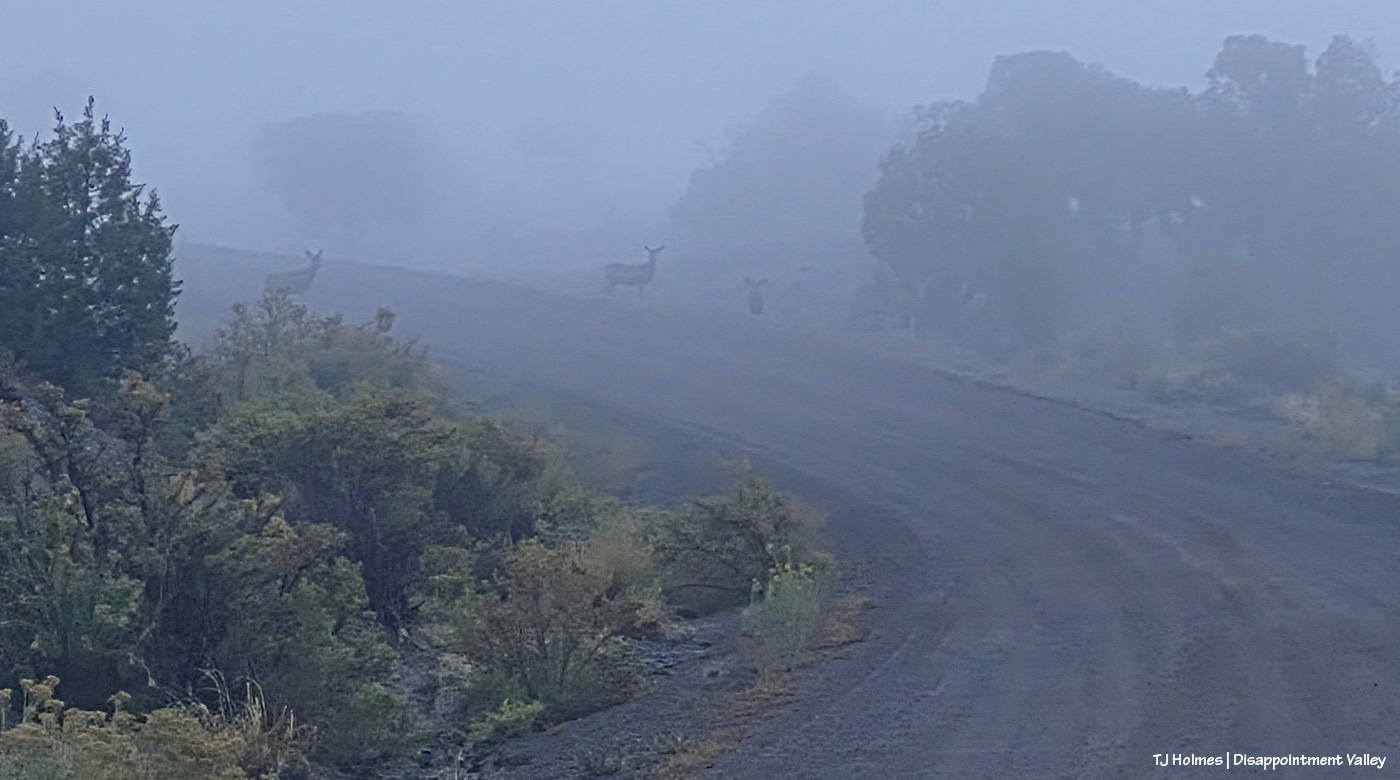
When I went out to see what I could see – FOG! – I found some critters looking back at me!
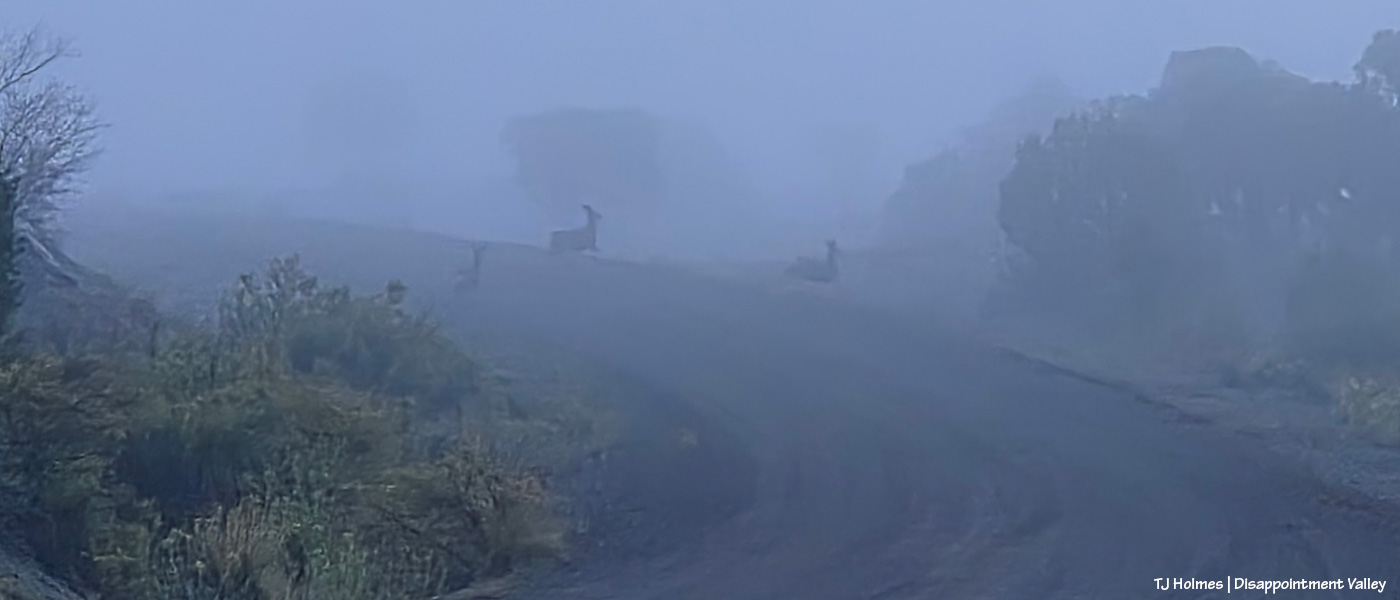
At the noise of a truck coming, they disappeared into the … fog! There were more deer than I’d realized, probably at least half a dozen.
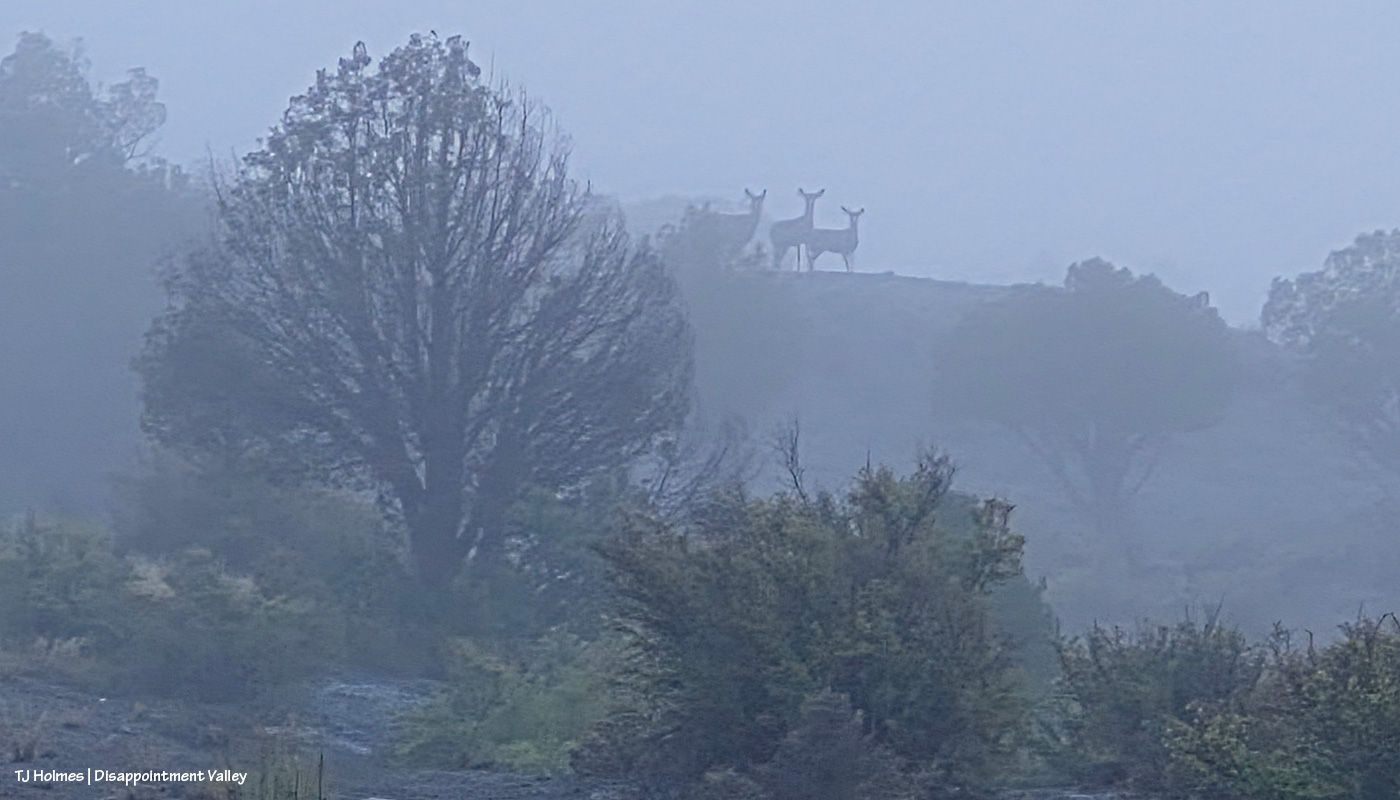
Ah! They didn’t actually disappear (at least yet). The fog makes even familiar landscape look completely different!
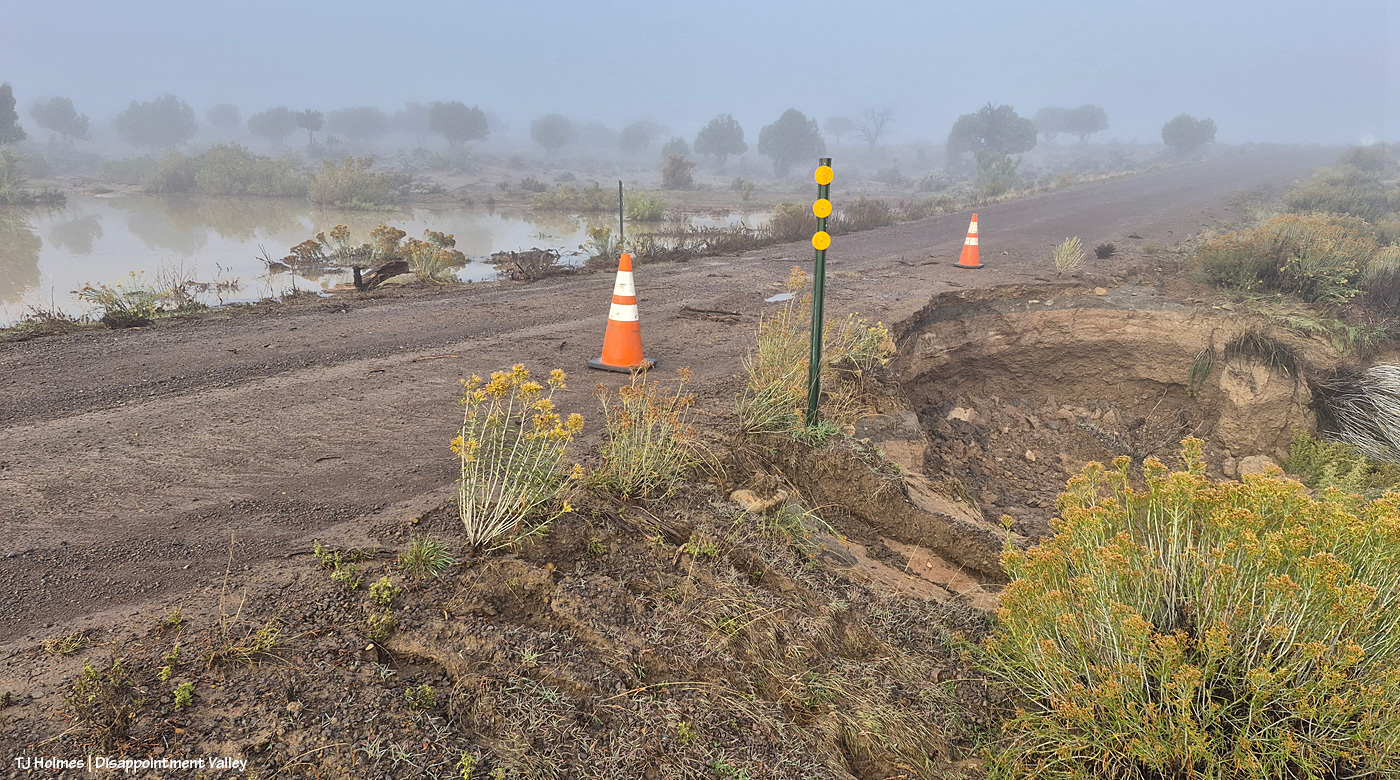
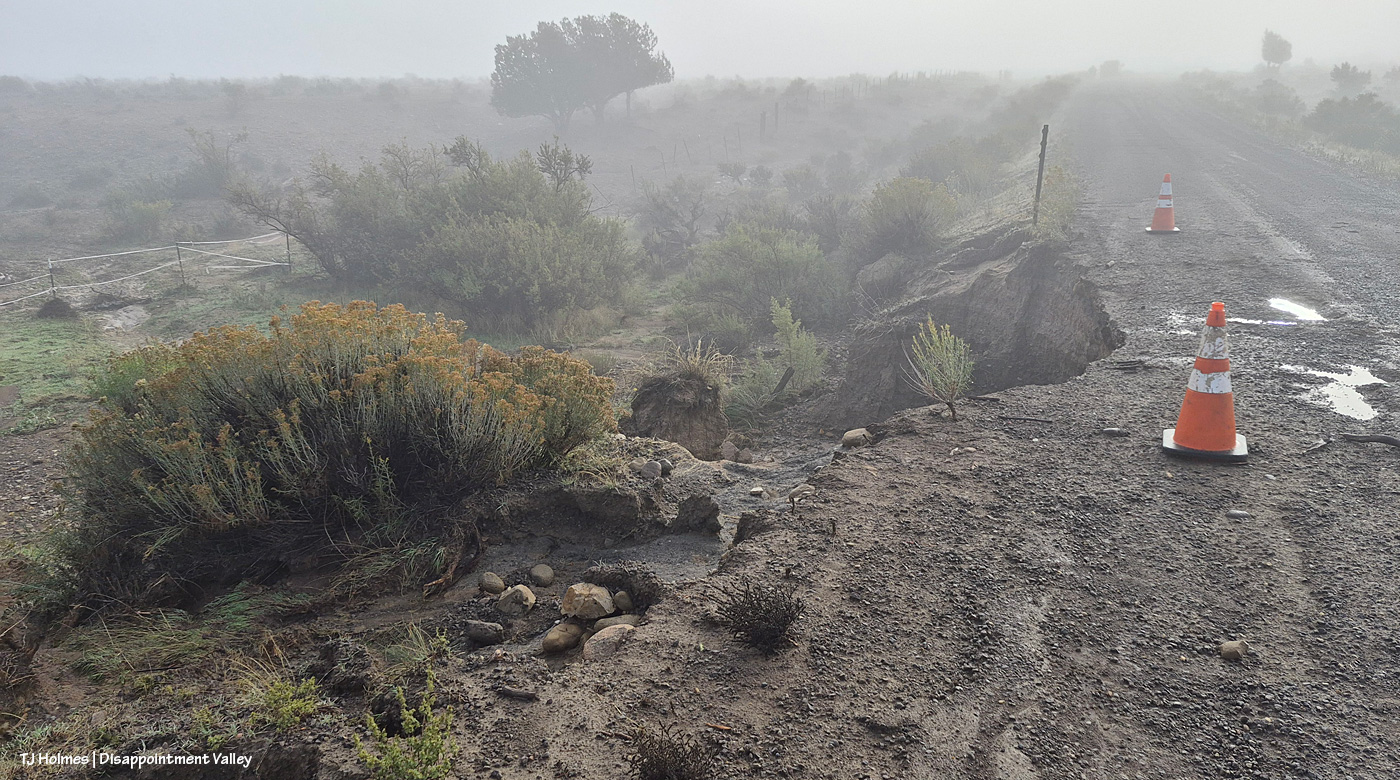
I wanted to check on the erosion spot again. … A county road-and-bridge guy came out later; he was out both Saturday and Sunday! And they’ve had someone checking every day. It’s narrow, but it’s well-marked. This is from the northeast side looking southwest.
Now I’m on the north side of the road looking eastish.
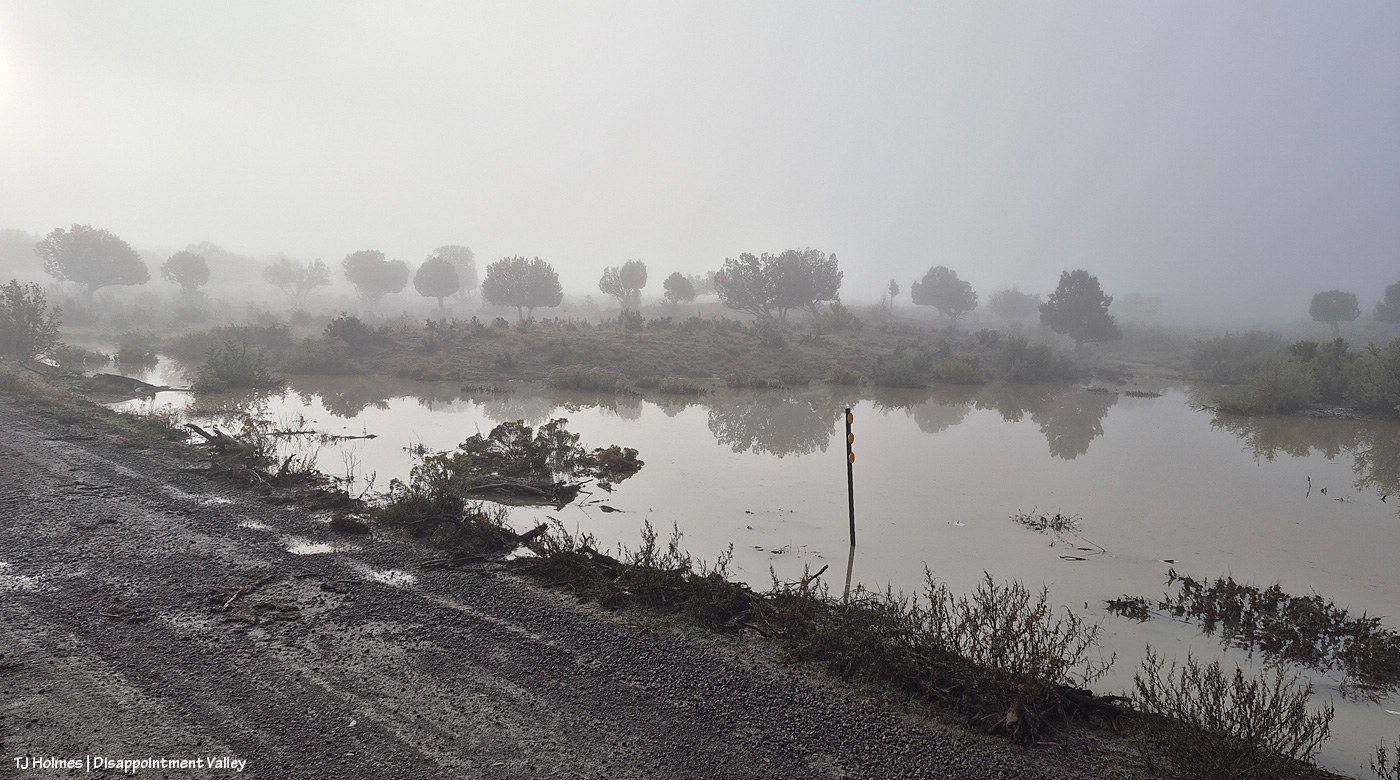
Meanwhile, Lake Disappointment (har har) continues to hold water. All I needed here were some ducks. 🙂
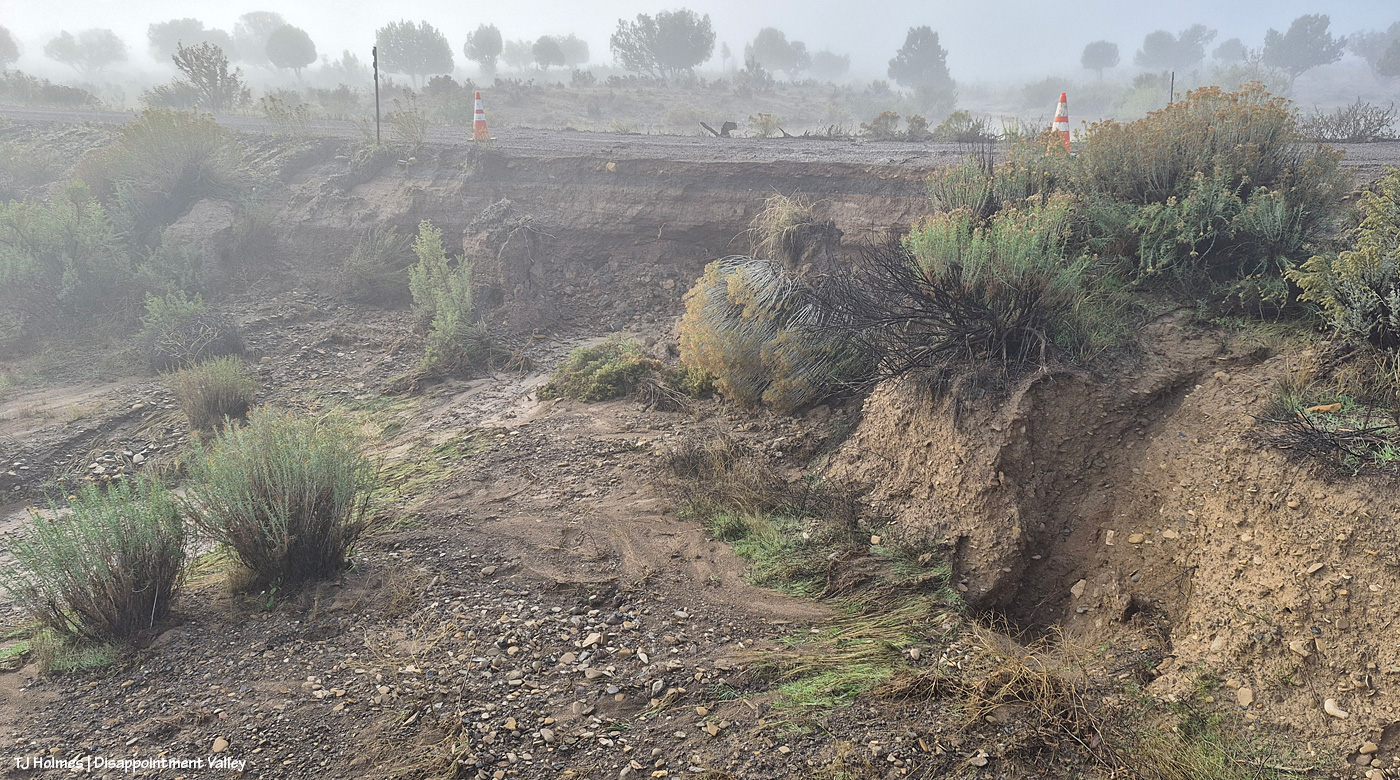
I’m 5 foot 10; standing in the bottom, the level of the road is just above my head. I’m not sure you can tell, but there are now two “hoodoos” – free-standing “pillars” – one nearly directly below the left cone, and one has the chamisa/rabbitbrush growing sideways out of it.
Mother Nature has been giving the gifts supremely freely the last few days (destruction in some places; there’s been a lot of flooding of towns and homes in southwestern/southern Colorado, northwestern New Mexico and southern/southeastern Utah (just that I know about)).
Just as I was thinking of heading on, I noticed something a little different about the sky. … My eyes followed it up and over and down the other side. … HOLY MOLY!
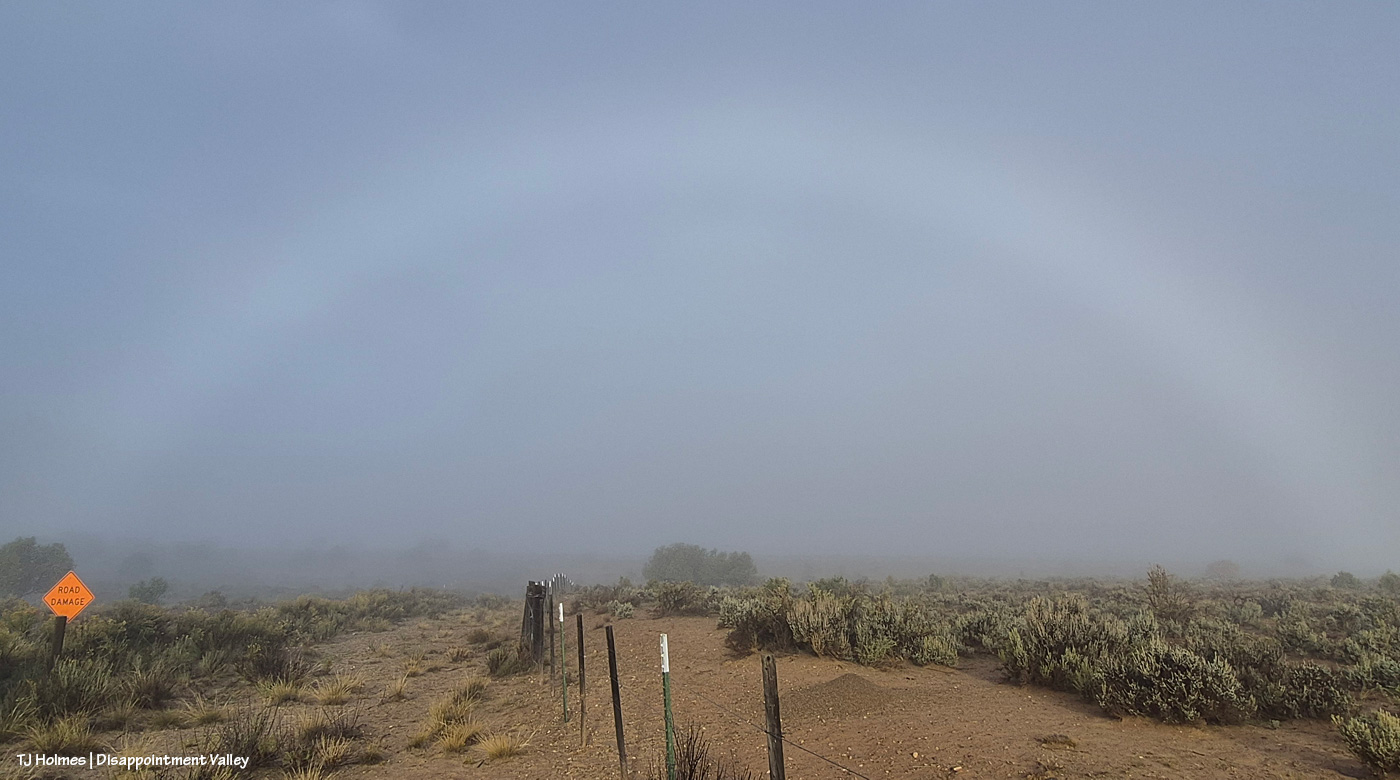
A FOG BOW!!!!!!!!!
OK, I might be a total weather nerd, but I’m not sure I’ve ever seen a fog bow (or fogbow?). It’s not like we get a lot of fog in Disappointment Valley (see above). 🙂
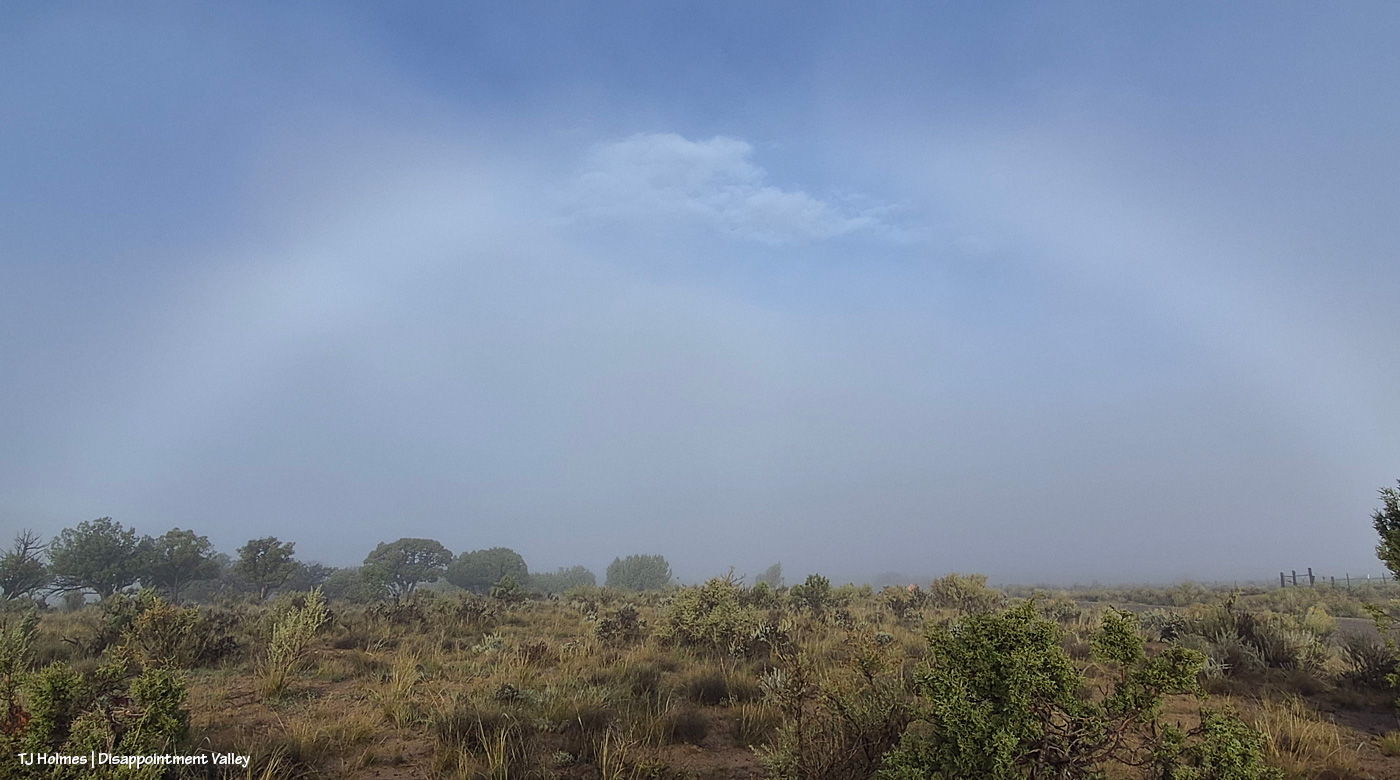
From this angle, the fogbow broke a little so I could see the little cloud beyond it.
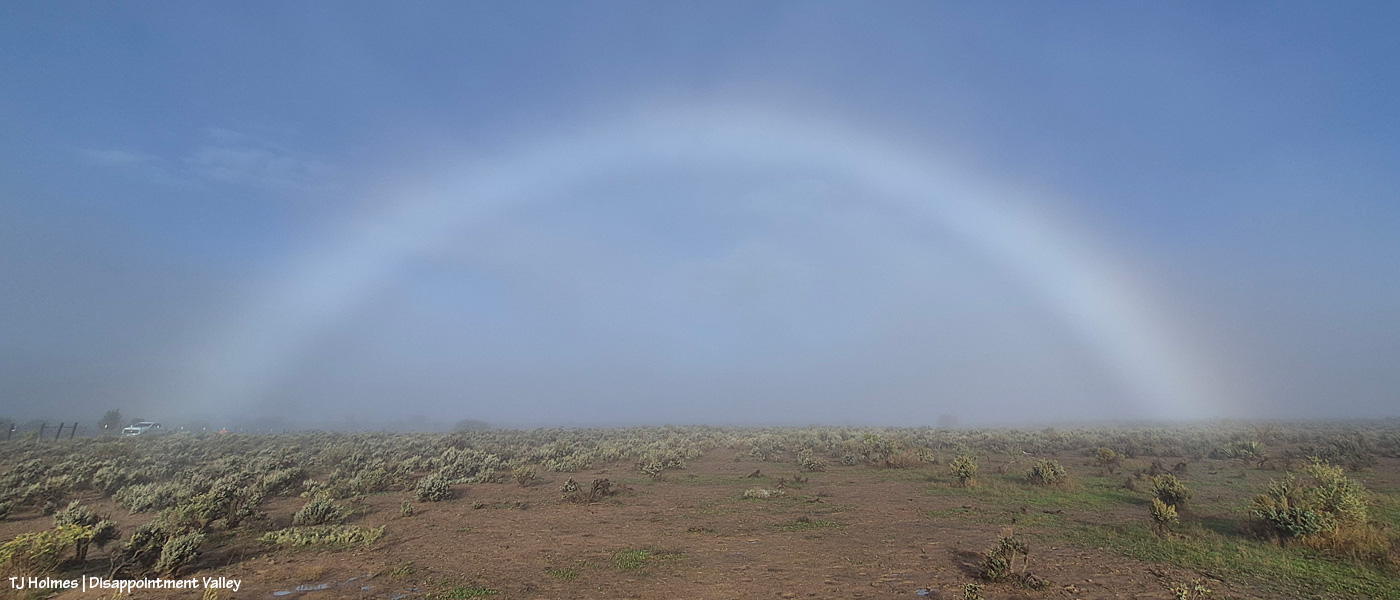
This is what ol’ AI says about fogbows:
A fogbow (or white rainbow) is a meteorological phenomenon that appears as a ghostly, pale, or completely white arc in a bank of fog or mist.
How It Works
- Droplet Size: Traditional rainbows form when light refracts through large raindrops (several millimeters wide). A fogbow forms when sunlight or moonlight interacts with tiny water droplets in fog or mist that are typically less than 0.05 mm (or 10 to 1,000 times smaller than raindrops).
- Diffraction vs. Refraction: Because the droplets are so small, light undergoes strong diffraction rather than clean refraction. This spreads out and overlaps the individual wavelengths of light, smearing the colors together into a milky-white band.
- Faint Colors: You might occasionally see a very faint red outer edge and a faint blue inner edge because those wavelengths are the least smeared.
How to Spot One
- Positioning: You must stand with the sun or moon behind you and look forward into the fog or mist.
- Conditions: It requires a delicate balance—fog that is dense enough to catch the light, but not so thick that it completely obscures visibility.
- Other Names: At sea, mariners sometimes call them “sea-dogs,” and versions seen from high-altitude aircraft are called “cloud bows”. When created by moonlight, it is a “lunar fog bow”.
Is it amazing, or is it ahhhhhhhhhhhhhhhhhhhhhhh-mazing?! 🙂
The fog lifted … then returned – or clouds did. More rain, too. After Wednesday, Thursday, Saturday and Sunday, I’ve gotten almost 3.7 inches of rain. Absolutely incredible! Friends near Dove Creek (southwest of Disappointment Valley) said they got between 5 and 7 inches! WOWOW.
I’m trying to keep this post a little shorter, but I have more pix from the day. It’s still very, very soggy out. Denny from San Miguel County was out Sunday (and Saturday, too! and other guys earlier in the week) checking on the road erosion. They are very much keeping an eye on it, but if you’re in the area, take care!

