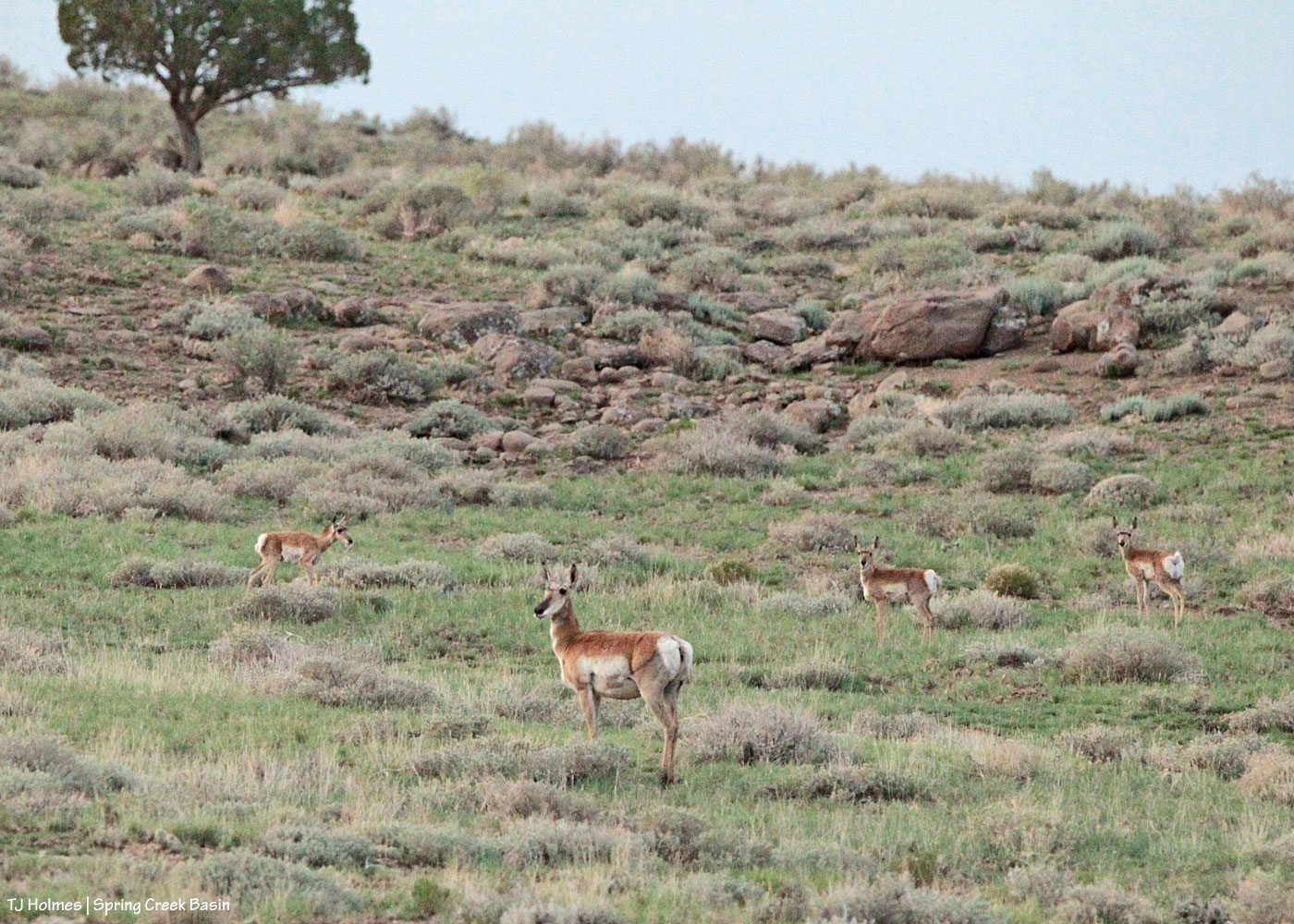
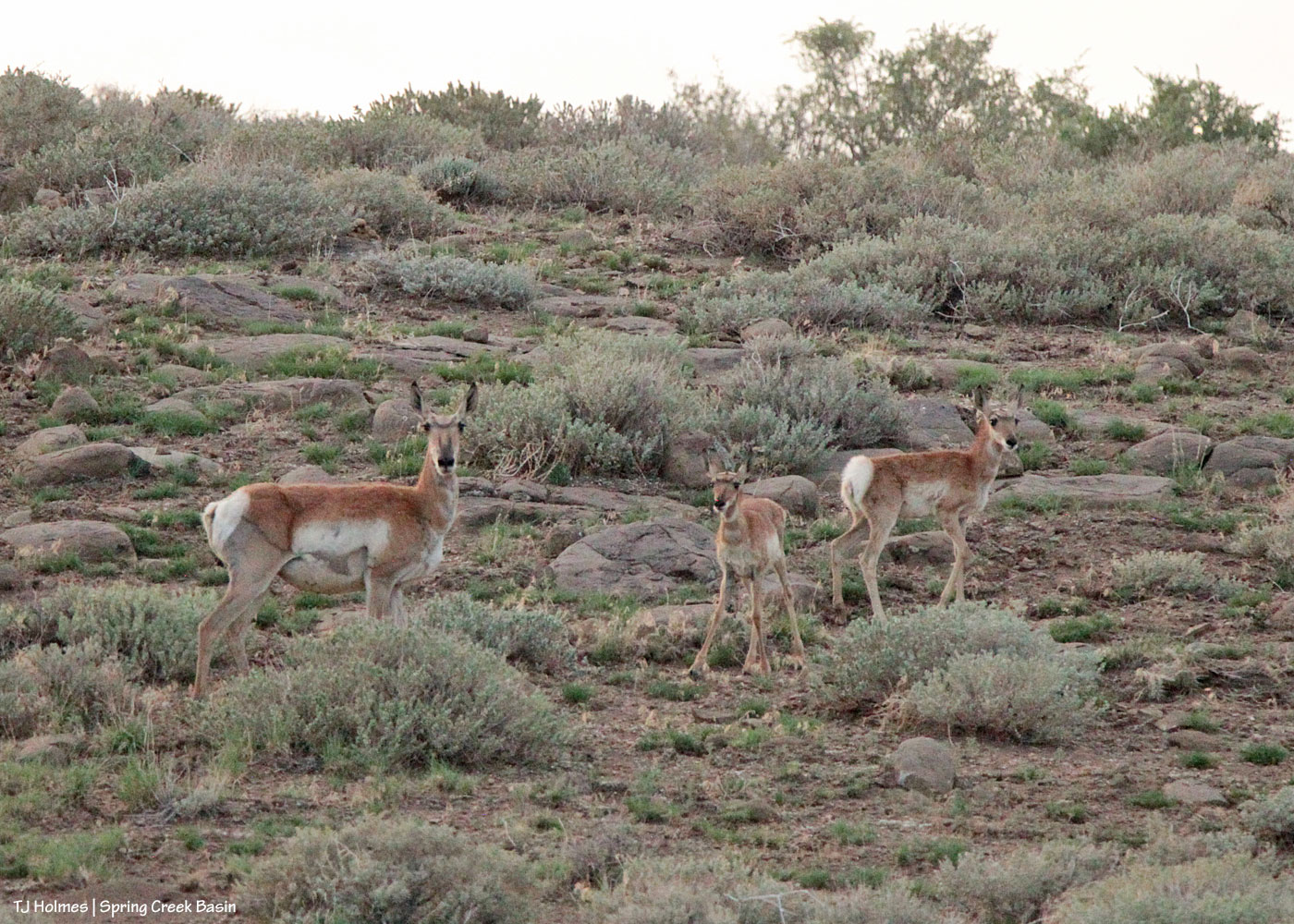
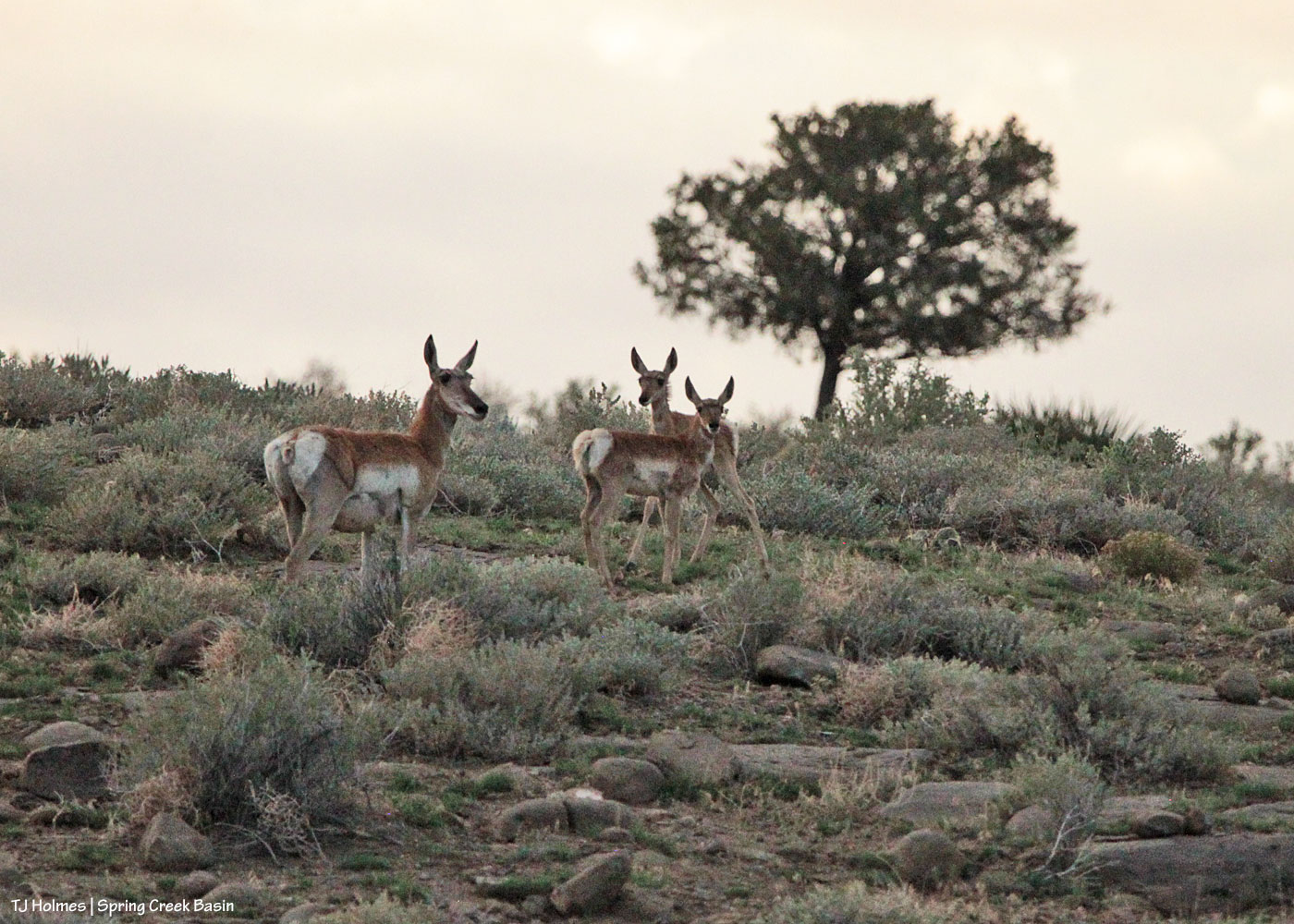
When I first saw the pronghorns as I was heading out of Spring Creek Basin, post-sunset under clouds (before I got my camera yanked out of my backpack and brought to bear at eye level and before this photo), I thought the doe shepherding three littles ahead of her had triplet fawns.
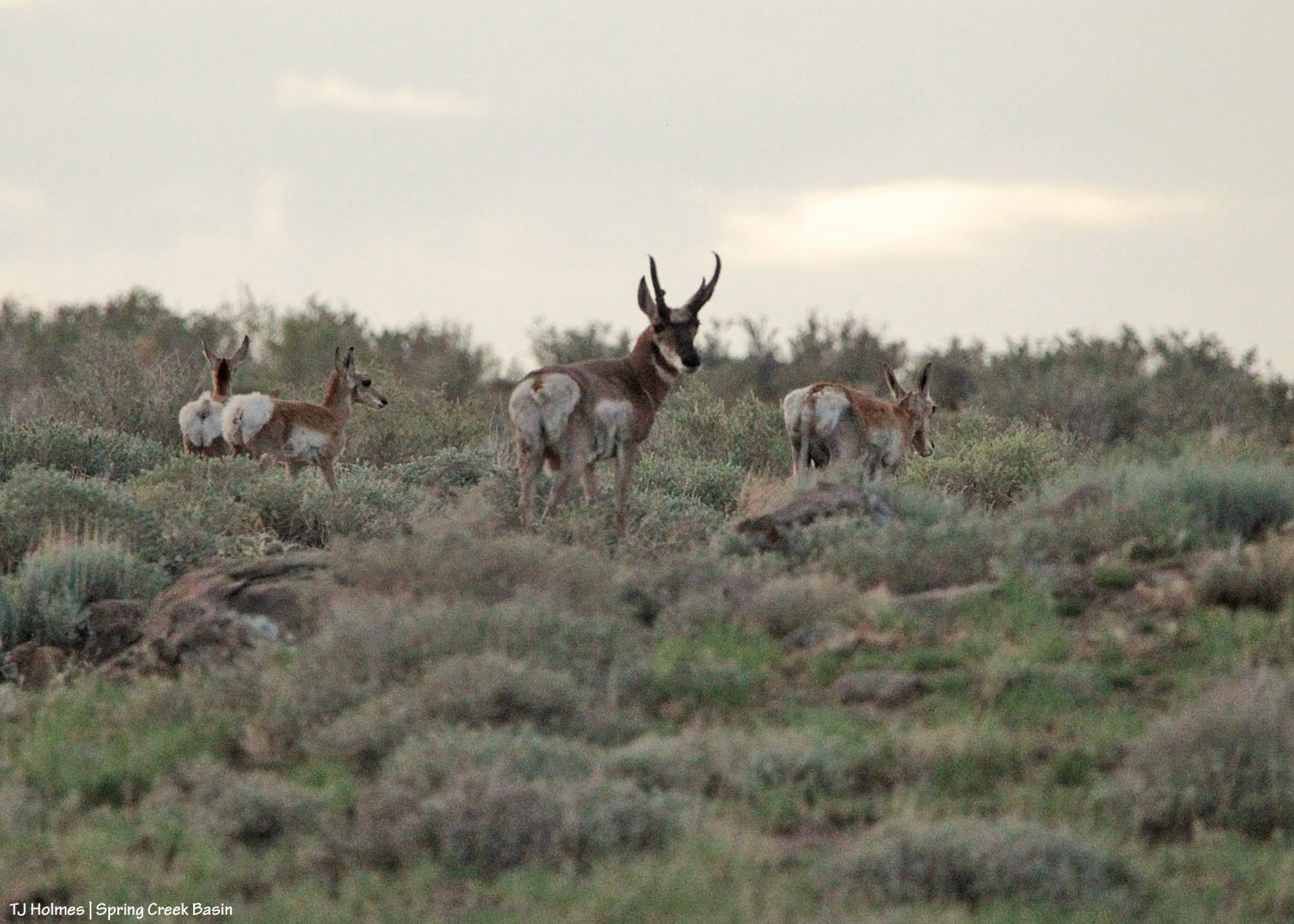
Then I realized that there was at least another doe with the group (in addition to the buck I also initially saw).
But I do think at least two of the little critters were twins.
Not sure he’s daddy, but he *was* protective of his little family.
Another beautiful end to another beautiful day in Spring Creek Basin, Disappointment Valley, Western Slope, Colorado, America, planet Earth. 🙂 (And as if this weren’t enough, two bands of mustangs were very nearby.)
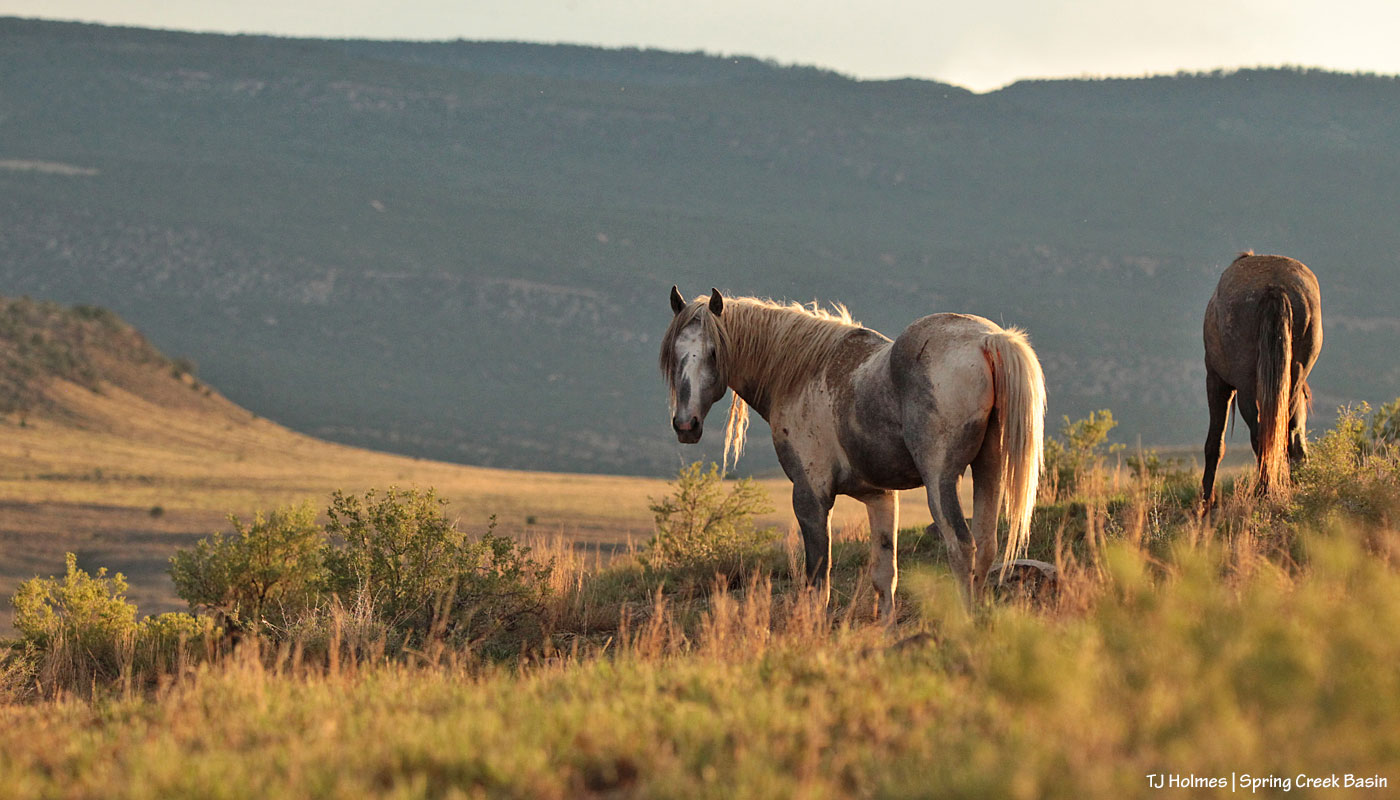
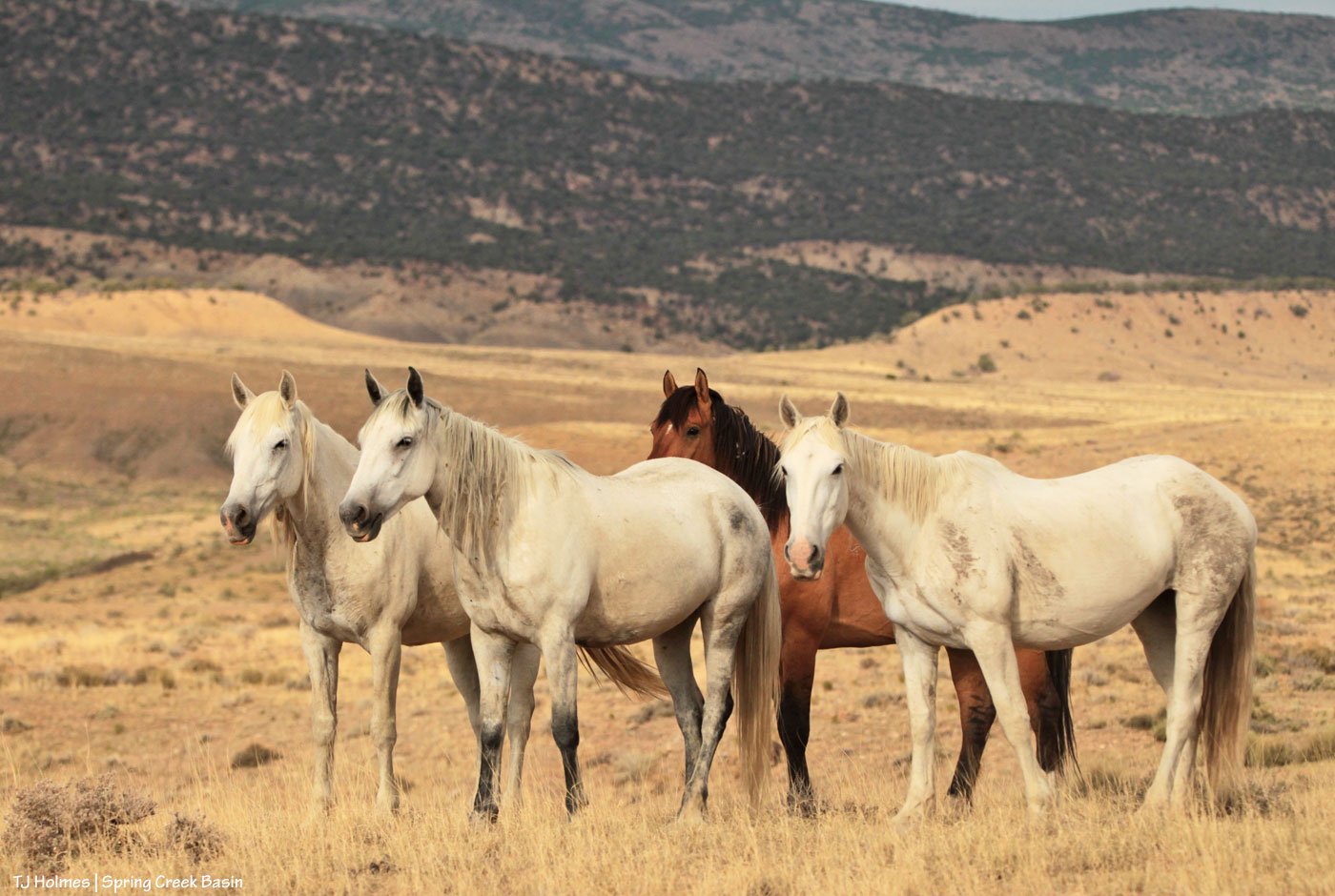
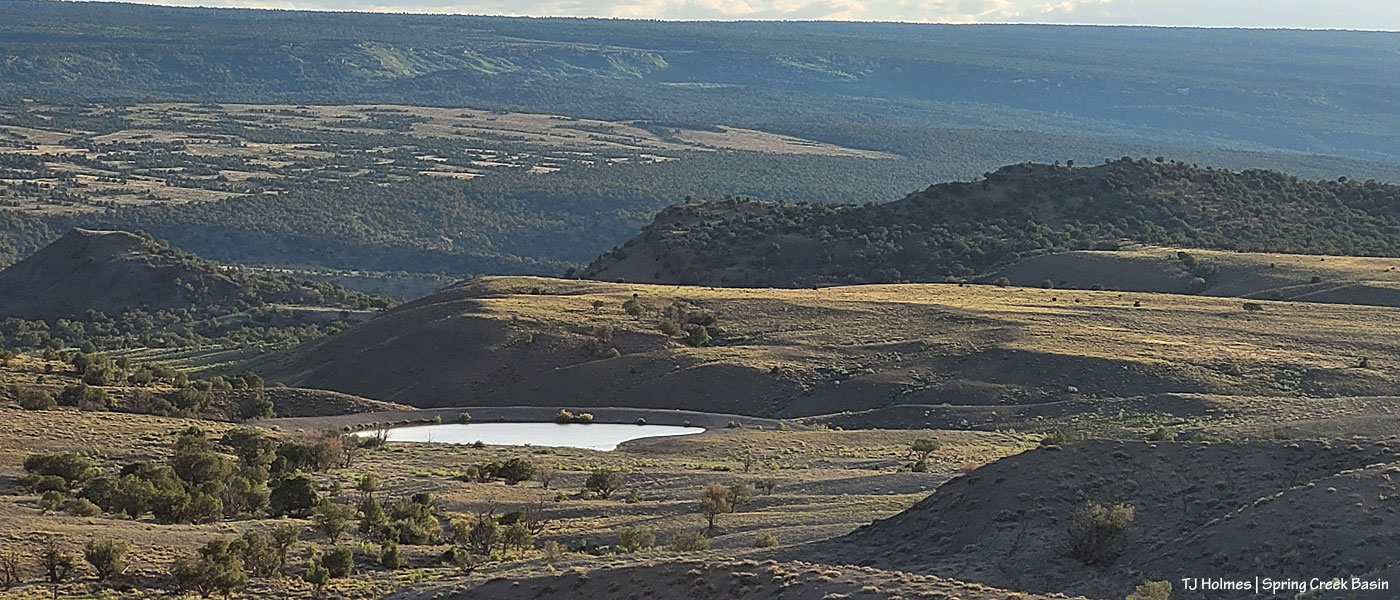
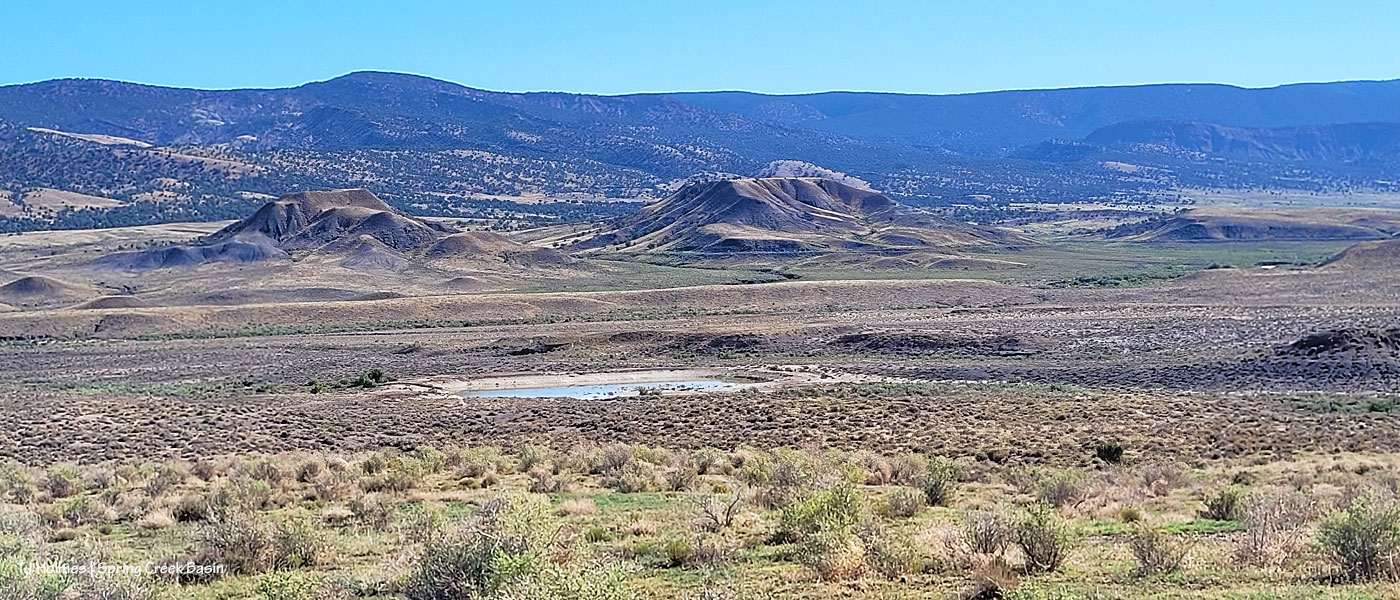
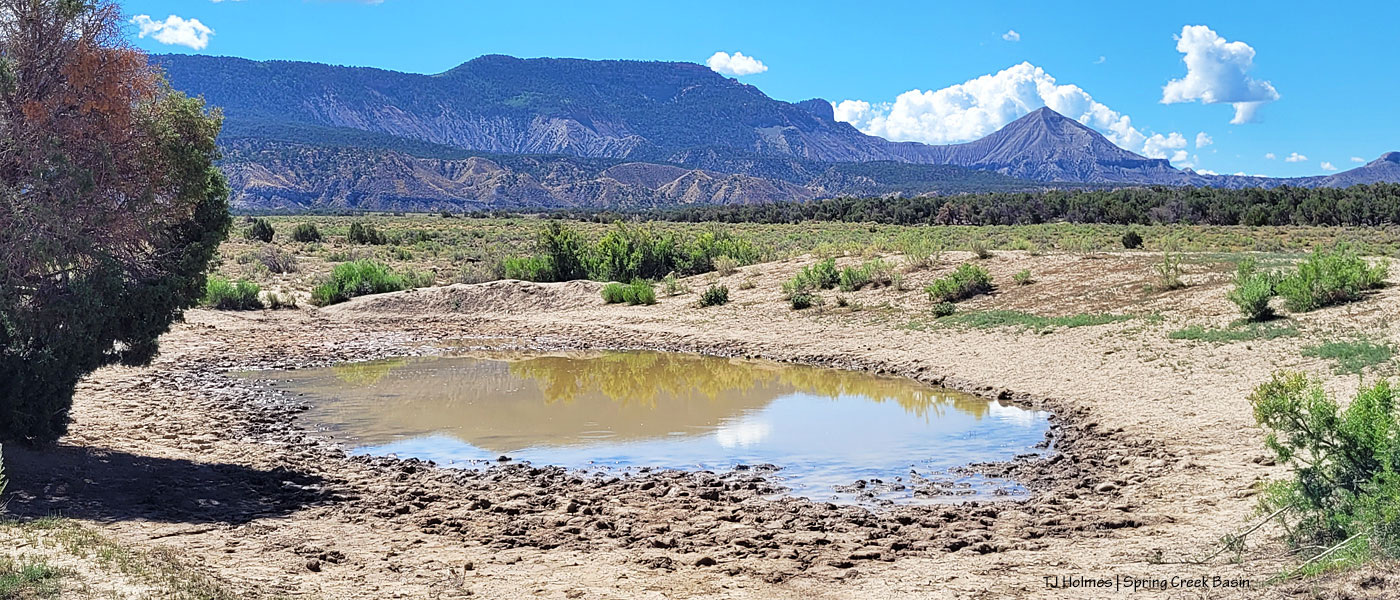
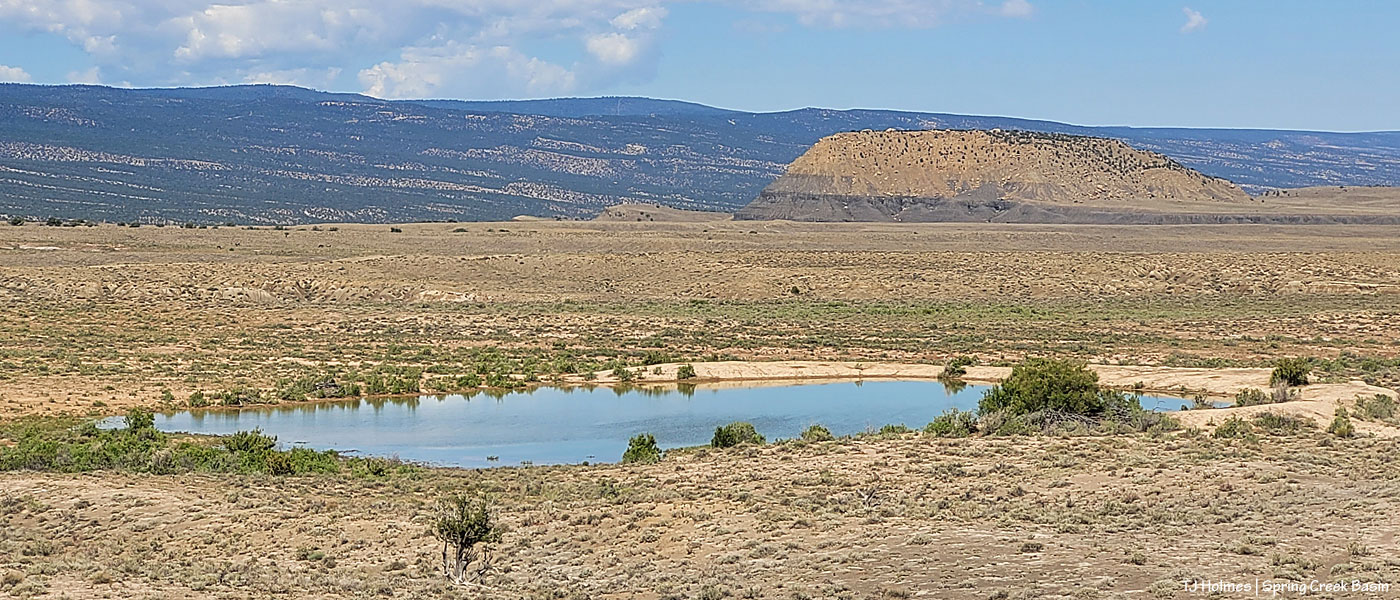
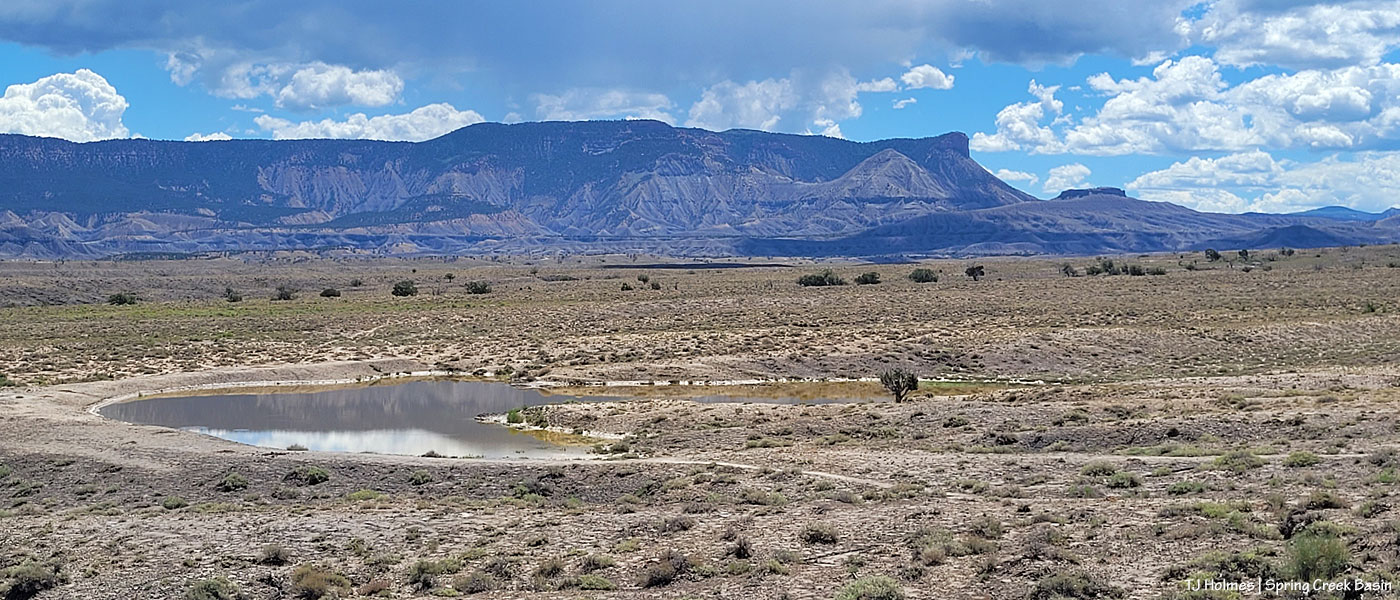
They were watching a small band some distance away, in the greasewood flats along Spring Creek in the western region of Spring Creek Basin. It doesn’t look so much in the above photo, but we’ve had some greening of the vegetation of the basin from recent rain events.
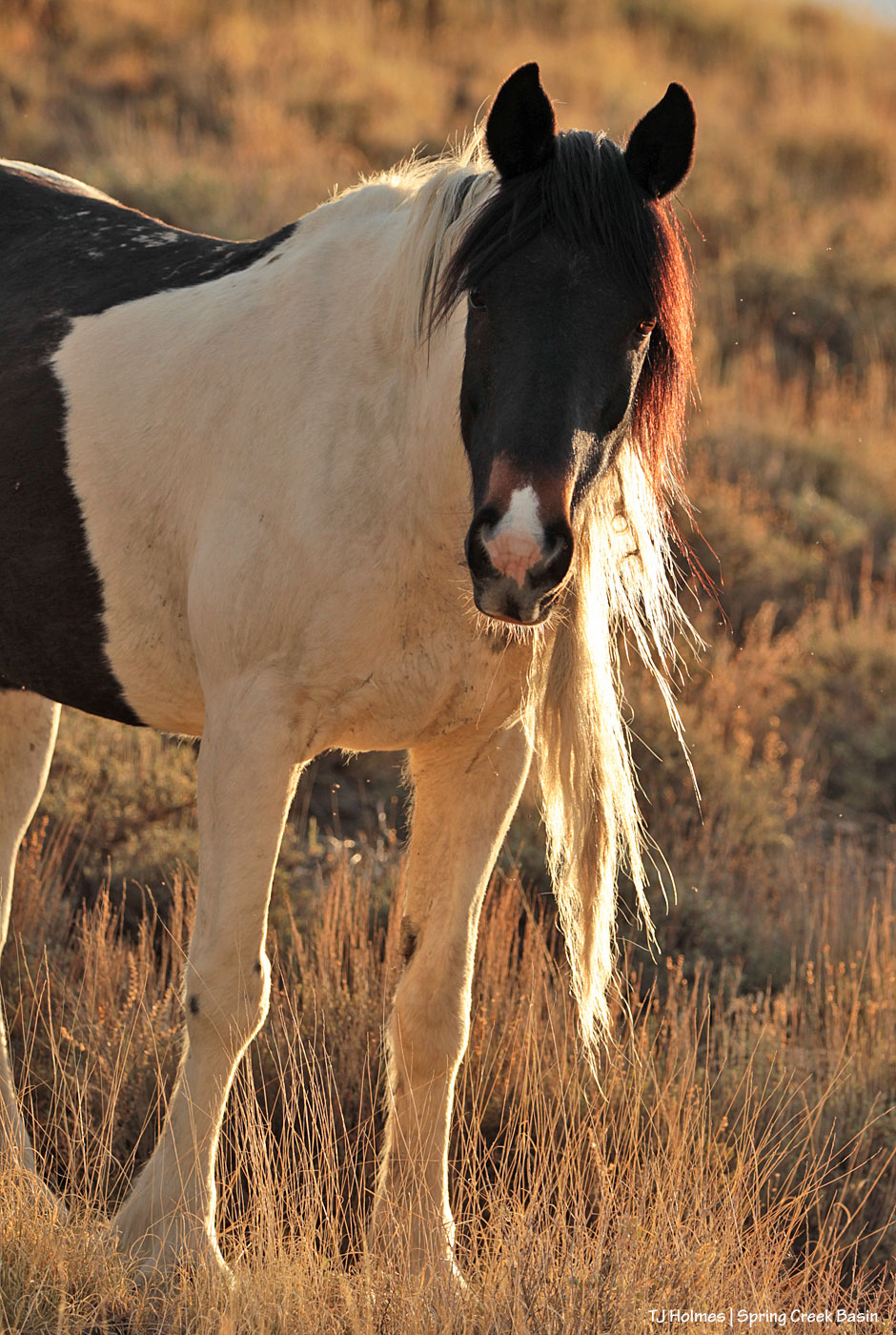
Speaking of love. This guy. 🙂 Storm has had my heart since I first saw him at his mama’s side, bright copper-penny red with still-curled ears. What a handsome mister, even with his hard-won scars.
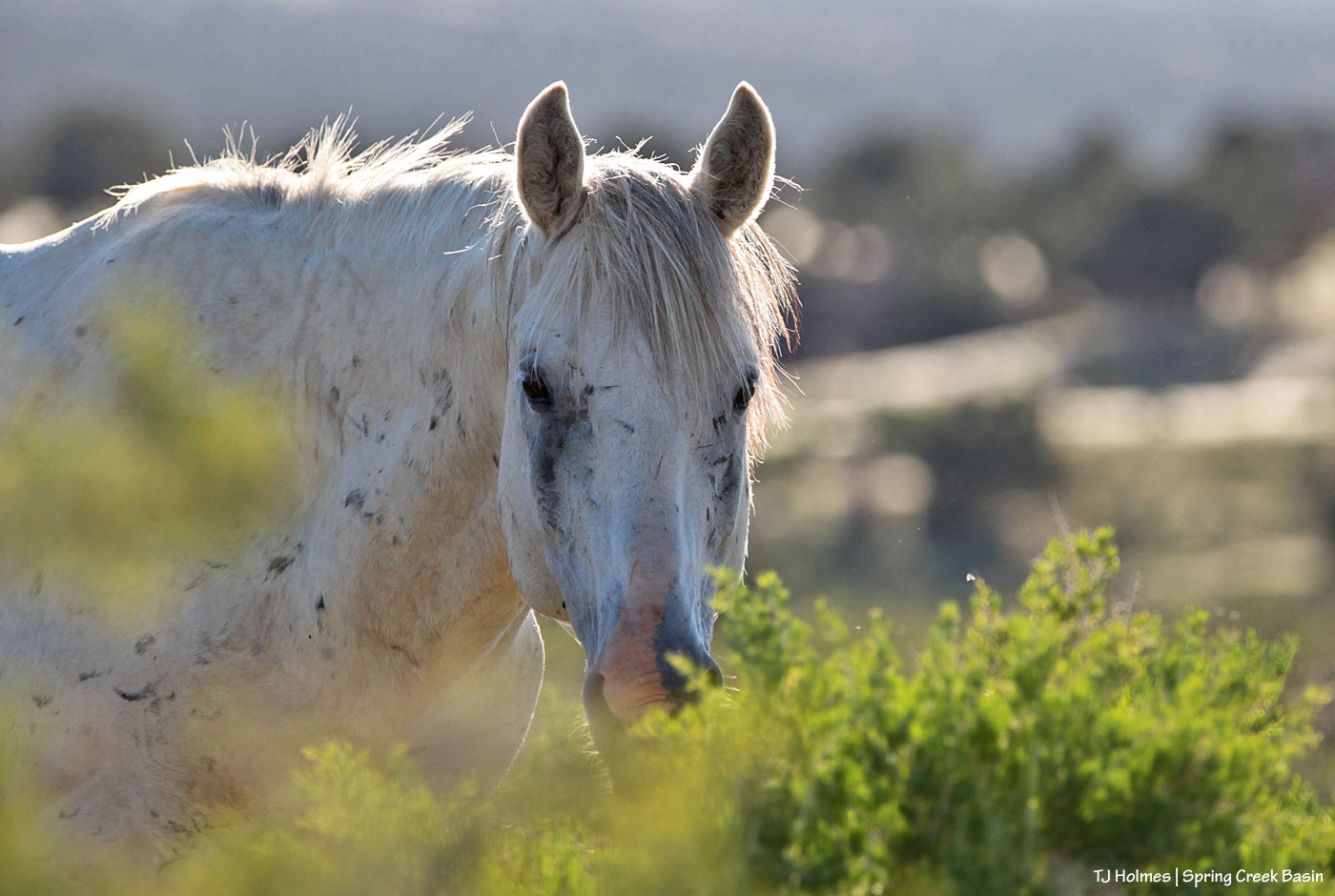
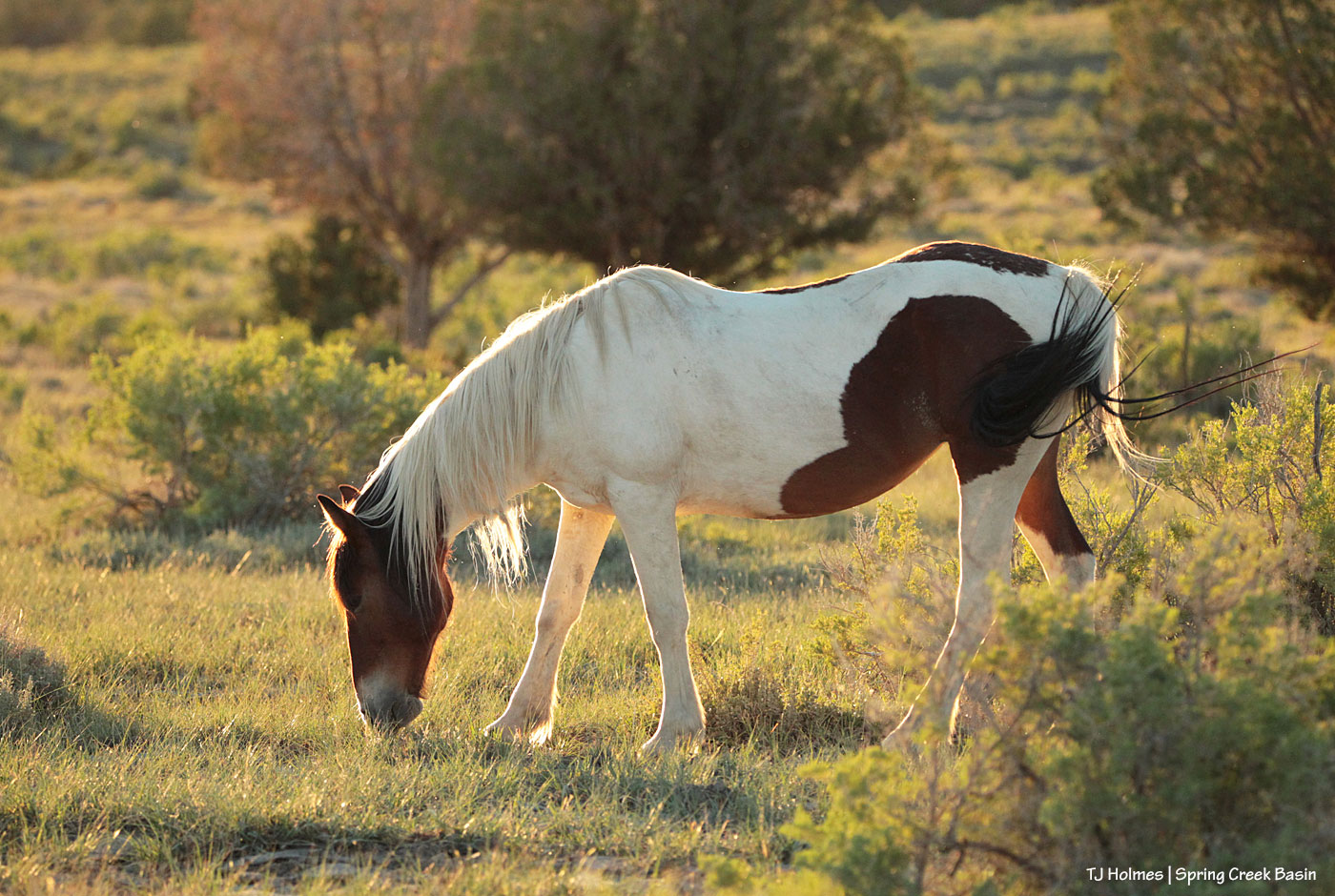
Isn’t she amazing? Think of all those wise eyes have seen during her wild life … the babies nurtured, the friends shared, the stallions led.
Houdini.
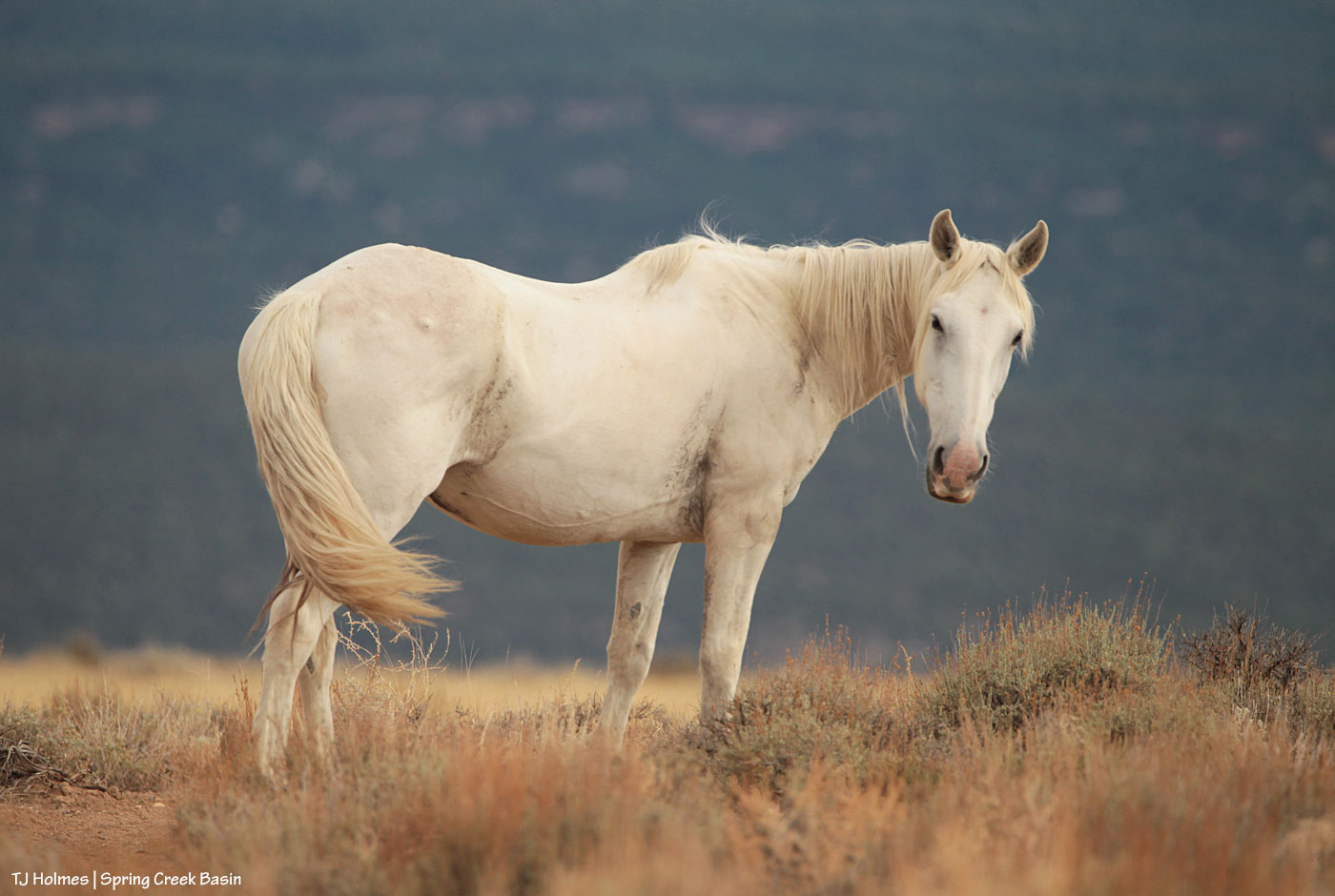
I just love her.
*****
Randomly, looking for something else among my files and files (both computerized and paper), I found the below that I apparently (I don’t remember it at all) composed for: March for Wild Horses, Girls Horse Club, March 19-26, 2010, interactive interview (according to my notes at the bottom of the page). I thought this post, about our remarkable, long-lived Houdini, fit the bill for bringing it (back?) to light.
“What inspires me most about mustangs is at once simple … and amazingly complex – just like the horses themselves. They are hardy. They are fragile. They are wonderfully complex in their social systems and bonds. They are refreshingly simple in their actions and reactions. They are adaptable. They are graceful. They are innocent. They carry the weight of their ancestors’ long history. They are curious and brave and easily frightened. They are bold and fearless and defensive of their families. They live in the harshest environments – to which man has committed them – and they thrive. They are independent. They are dependent (we have fenced them into these herd management areas and it is incumbent upon us that their basic needs of water and forage are met). In a perfect world, they could manage just fine without us (witness those few horses returned to the continent … the millions repopulating the continent … the devastation wrought upon them by generations of “mustangers” …). In many, many instances where they’ve been adopted, their adopters become so enamored of them as to say “I’ll never have but another mustang.” They are stunning. They are so much more.”
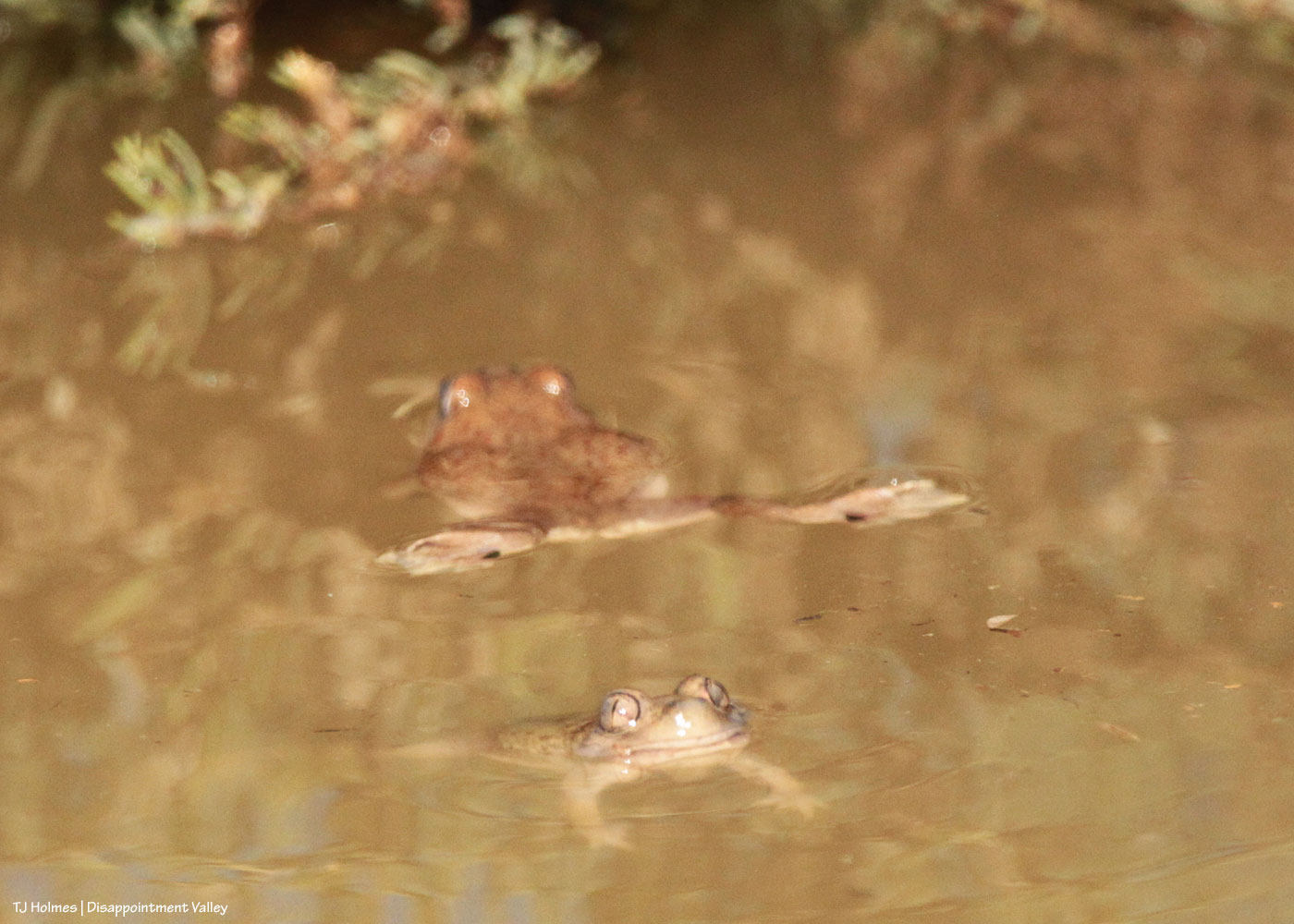
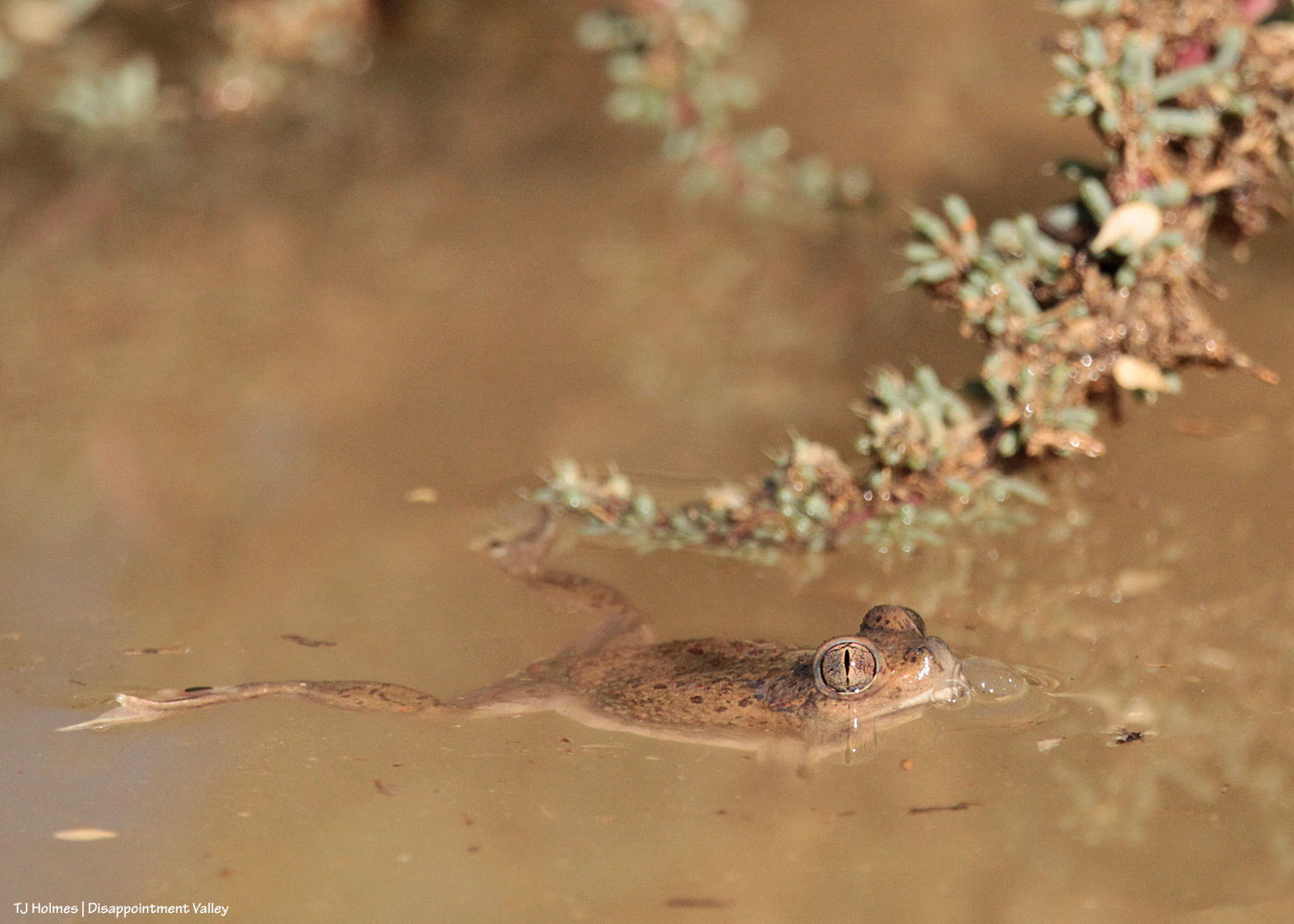
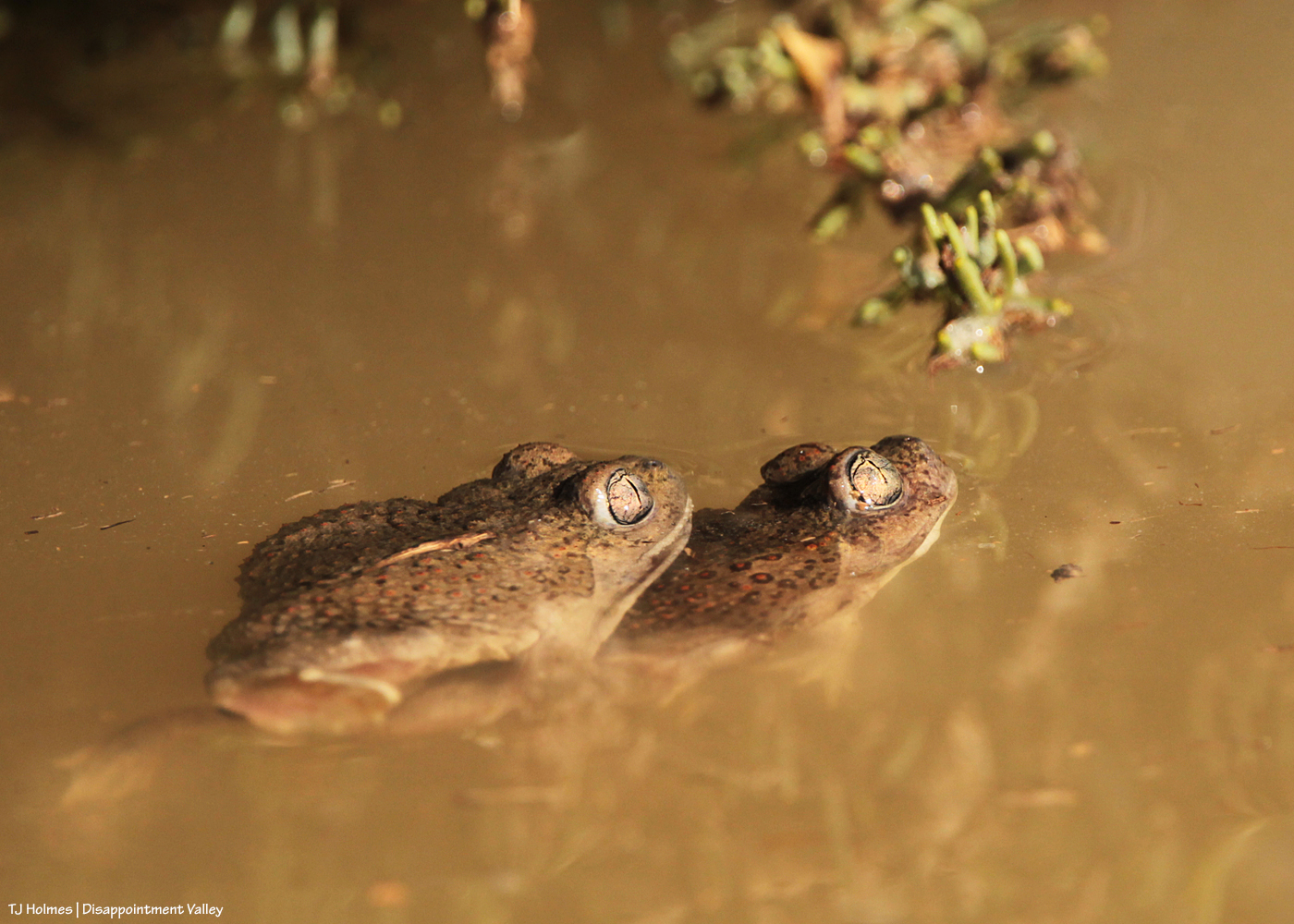
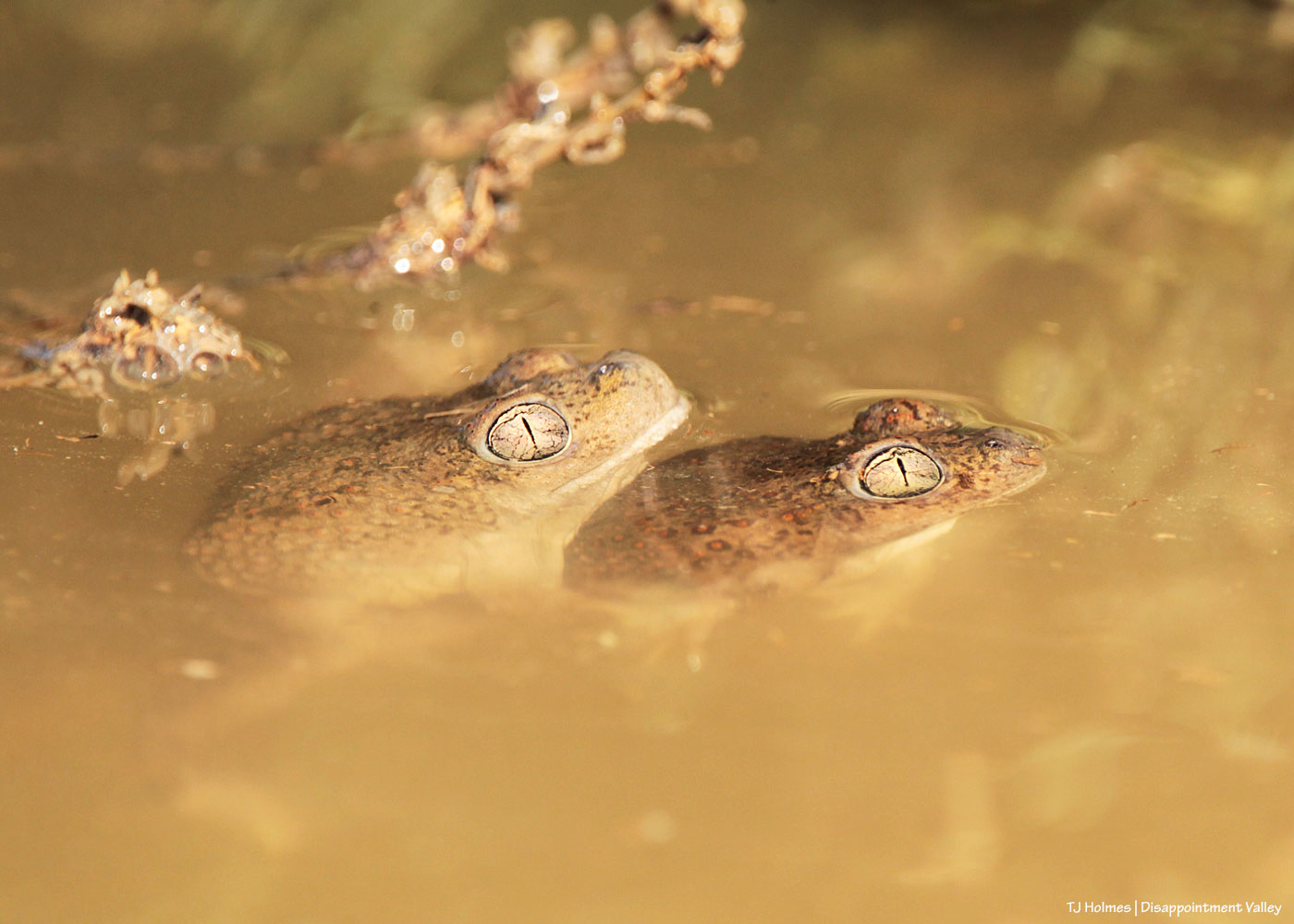
When we get enough rain to fill roadside ditches (which is infrequent to rarely occurring), the frogs/toads start singing! I’ll be the first to admit that I know *nothing* about frogs and/or toads, including how to tell which is which. I think these probably are toads. …
Ah, scratch that. Now I think they might be a variety of “spadefoot” (is that a toad or a frog? apparently, it’s something else altogether). One of the characteristics is “a vertical pupil like a snake, while toads have horizontal pupils.” Very clearly, the critters I saw have very vertical pupils, though the pix I saw showed them rather round (!). Also, “their skin is much smoother and has very few or no warts.” And “their back feet have bony, sharp spades that are used for burrowing into soil, sand, or loose gravel.” I couldn’t see their feet very well – they were in a nice bit of water that must have seemed extravagant to them – but surely they ought to be able to burrow into something during the (mostly) dry times that we (mostly) have? This is the website where I found the above information, and I think they might be Mexican spadefoot.



 Spring Creek Basin Mustangs