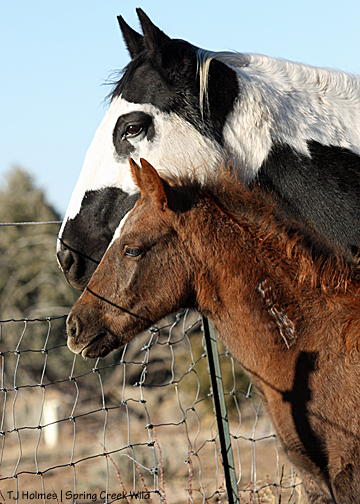
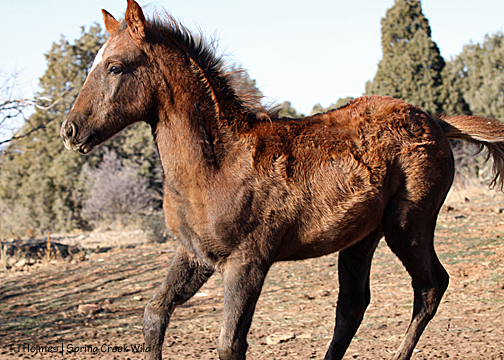
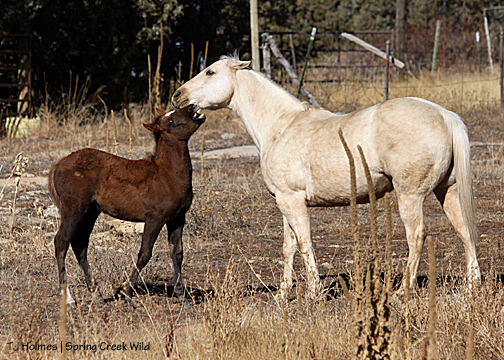
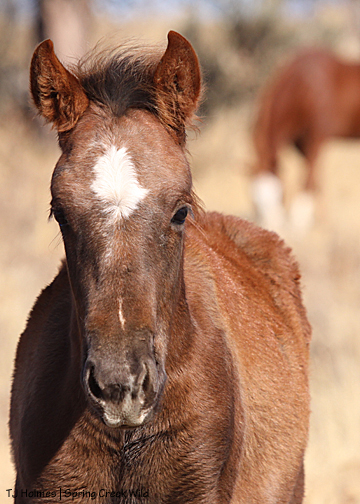
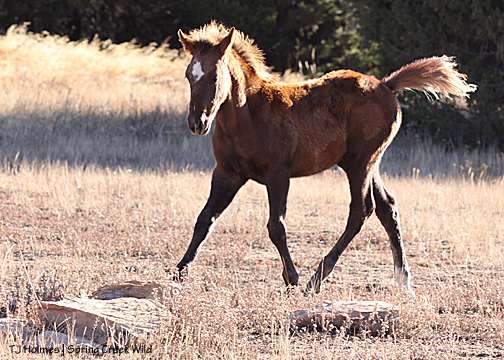
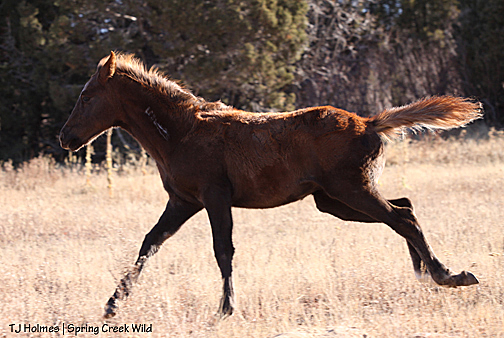
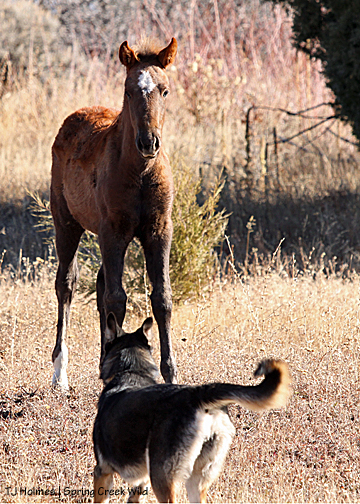
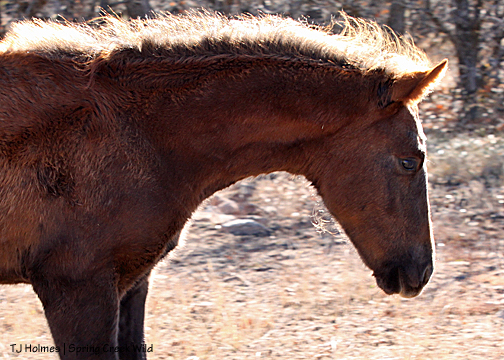
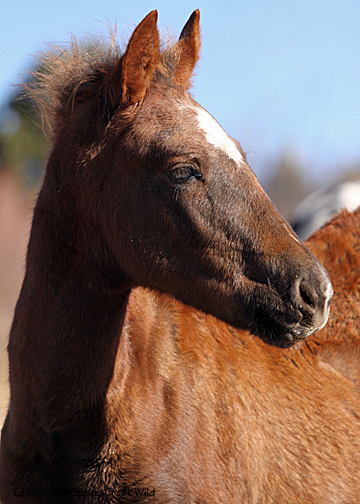
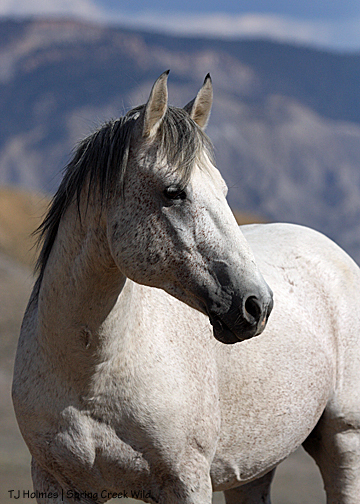
More water for mustangs in Colorado

22 06 2012

June 20, 2012

Contact: Christopher B. Joyner, Public Affairs Specialist, (970) 210-2126

BLM conducts emergency water operations; closes public lands for drought stricken wild horses

MEEKER, Colo. – The Bureau of Land Management recently began delivering water to wild horses in several areas in western Colorado in response to extreme drought conditions. Today BLM also issued an emergency closure for areas in the vicinity of Texas Mountain south of Rangely to further protect wild horses where the situation is particularly severe.

BLM is closely monitoring the wild horse herds it manages in Colorado and has begun supplementing natural water sources in three of the four wild horse herd management areas in the state, including the Piceance-East Douglas southwest of Meeker, the Sand Wash near Maybell, and the Spring Creek outside of Dolores. These are areas BLM manages specifically to maintain healthy wild horse herds in balance with other uses of the land. BLM is also closely monitoring the water situation in the Little Books Cliffs Wild Horse Range outside of DeBeque, which currently is not requiring supplemental water.

BLM issued the closure prohibiting public access south of Rangley in the West Douglas Herd Area, which is an area not planned for continued management of wild horses because it is not as suitable an area. BLM recently discovered a group of approximately 40 to 50 wild horses completely lacking any natural source of water. In addition to providing a large, temporary water tank and three water troughs, BLM is closing this area to reduce disturbance while the horses adjust to a new water source. The affected closed area is on or near Texas Mountain east of BLM Road 1214 and east of BLM Road 1063. Livestock are not currently in this specific area or using this water source.

BLM is closely monitoring the situation in the closure area and in the remainder of the West Douglas area, which holds an estimated 135 additional wild horses.

“BLM is committed to maintaining healthy wild horses in the White River Field Office and in Colorado,” said Kent Walter, White River Field Office manager. “We will continue to monitor the situation here and elsewhere, and may need to take additional steps to ensure the wild horses are cared for humanely.”

According to Walter, hauling water to such a remote location is not likely a sustainable, long-term solution.

*******************************************************

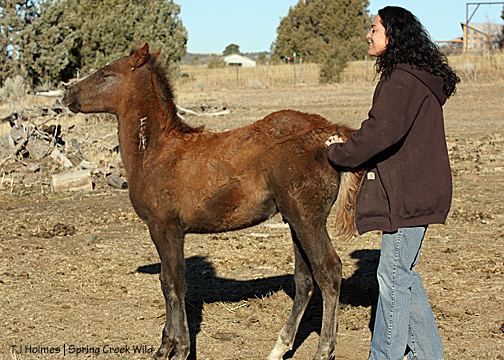
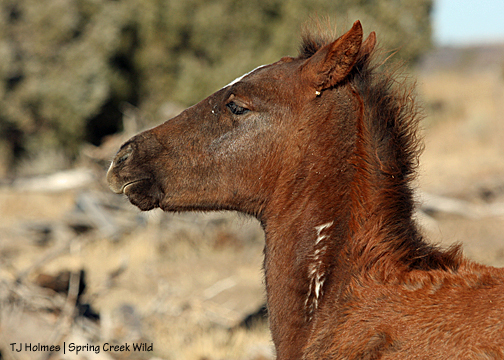
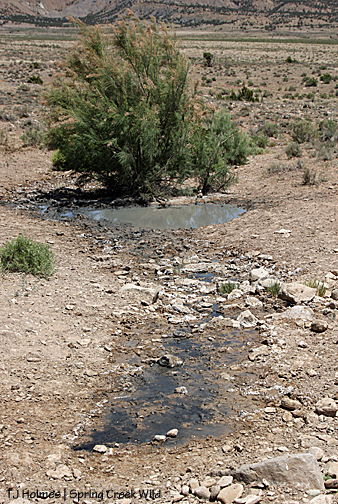
This is what I call “the trickle” in Spring Creek *Basin* (why do people always leave out the “basin” part?). Right above the S in Spring in my signature (and yes, I know, but Spring Creek Basin Wild was a long URL) is a pipe out of which water flows from an old well. It’s not much, it’s salty, it smells like sulphur. But the horses drink here when the drinking gets scarce. By the end of next week, we plan to install a pipeline and a drinking trough. The new line will run downhill to the new trough, which will sit where the pool of water currently is accumulating, right in front of the big tamarisk. Water will be controlled by a float instead of trickling on down into oblivion.

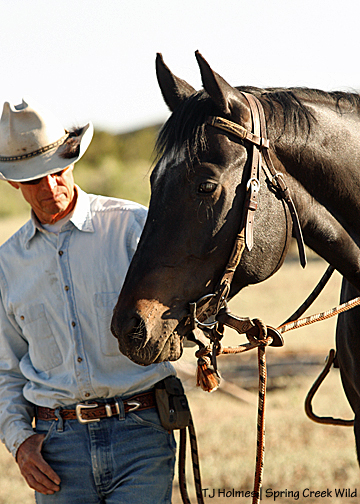
In addition to BLM’s green light (Tres Rios Field Office, Dolores), Disappointment Wild Bunch Partners partnership and (BLM) Director’s Challenge funding, the project involves Forest Service labor from the Dolores Public Lands Office. Thank you to all involved! (And many thanks to the Forest Service’s HP, who brought handsome Jammer for me to ride while we GPS’d water seeps in the Spring Creek (arroyo) and another main arroyo this week in the basin – and more next week!)


Mapping weeds and counting horses

21 05 2012

For 13 years now, members of the Durango-based Four Corners Back Country Horsemen have been visiting Spring Creek Basin every spring to help BLM monitor the mustangs. Members often set up work projects during the count weekends, and this year was no different, with help from Mike Jensen, the Tres Rios Field Office’s weed guru (I don’t know his actual title? he also was a former manager of SCB), and Kathe Hayes with San Juan Mountains Association. Mike gave a great talk Friday evening about the particulars of knapweed, in particular. Kathe readied maps and record sheets for the groups and led the horseback riders Saturday.

Special thanks to Pat and Frank Amthor, long-time 4CBCH members and organizers for most of the last 13 years of the count. Their knowledge and experience is invaluable! (And I have to give a special nod not only to the food in general but specifically to Frank’s awesome homemade strawberry ice cream!)

We had one group of horseback riders and one of vehicle drivers (horseless but not clueless – ha!). Between our groups, we mapped 14 sites for weeds – knapweed, musk thistle and tamarisk – so BLM can cut, dig, spray and/or “de-weed.”

One highlight of the weekend – besides the food (oh, the food!) – was the Irick family of Denver (area), who came with their Spring Creek Basin mustangs, Breeze (adopted in 2005) and Sage (adopted in 2007). Brother Luke stayed home, but Teresa and Steve rode with the group, and daughter Sara rode with our vehicle group and helped with recording the weeds.

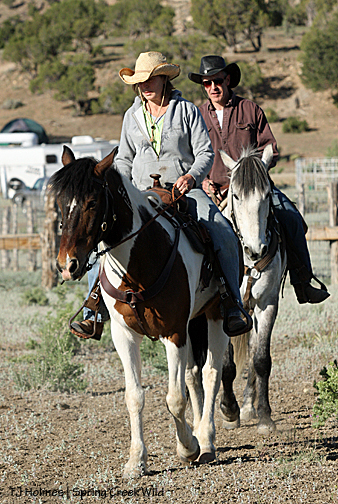
Teresa and Steve riding out on Breeze, pinto, and Sage.

It was an emotional ride, Teresa said afterward, seeing the boys remember their home. They’re not the first who have brought their adopted mustangs home to the basin, and I hope they won’t be the last! These boys are so loved and cared for – part of their family.

I didn’t take any pix of the horseless few, but here are the rest of horse folks who rode their horses to inventory weeds:

Kathe giving the safety talk at the beginning of the ride. Crow has obviously heard it all before!

Todd and Judy and their horses, Red and Dandy.

Nancy and Aspen, who came all the way from Corrales, N.M., where Aspen holds the distinction of “pet mayor”!

4CBCH president Bob and his lovely horse – whose name I’m embarrassed to say I didn’t ask, though I was very taken with this handsome fellow (regular readers may know my fascination with dark bay horses!). Just a young guy – 5 – but he did very well.

Riders heading out in the morning.

Riding into the sunrise.

Thank you to the Four Corners Back Country Horsemen, BLM and SJMA – and to Mother Nature for the truly excellent weather. After Friday night’s wind and chill, Saturday and Sunday were simply spectacular! Weed inventorying and eradication is part of our partnership objective with BLM under the Director’s Challenge grant we recently received. What a great start!


SCB mustangs in the spotlight

22 04 2012

Most readers of this blog aren’t local to this neck of the woods, but if you are, I’d like to invite you to the “Southwest Colorado Spring Creek Basin Wild Horse Management Program” at the Center of Southwest Studies at Fort Lewis College in Durango. It’s part of the center’s “2012 Program Series: Celebrating the Preservation of our Natural and Cultural Heritage.”

Guest speakers will be Fran Ackley from Canon City; Tom Rice from the Tres Rios Field Office in Dolores; and Kathe Hayes with the San Juan Mountains Association. Our Disappointment Wild Bunch Partners will represent our member groups – National Mustang Association/Colorado, Mesa Verde Back Country Horsemen, Four Corners Back Country Horsemen and SJMA – during the event. It’s a great way to let the public know about our groups individually and Wild Bunch as a whole, and educate people about our Spring Creek Basin mustangs and how we help, including being part of the Director’s Challenge award that netted our BLM office $25,000 for projects for the horses. We’re excited to be part of this educational series hosted by the Center of Southwest Studies!

The event will start with a reception at 5:30 followed by the program at 6 p.m. Tuesday, April 24, in the center’s Lyceum on the Fort Lewis College campus.

If you are local, or even passing through, we hope to see you there!


Piece of the pie

22 03 2012

“Nearly $US300,000 in funding has been approved by the Bureau of Land Management for 12 projects aimed at improving Western rangeland conditions where wild horses and burros roam.”

“* Tres Rios Field Office, Southwest District, Colorado, Spring Creek Basin HMA: This project is aimed at expanding the ongoing successful partnership with the Disappointment Wild Bunch Partners to include such actions as herd monitoring, fence repairs, invasive weed inventory and treatments, illegal route closures, and travel management sign installation. Funding amount from the Director’s Challenge: $25,000”

The Grand Junction Field Office also was awarded $25,000 for ongoing partnership with Friends of the Mustangs for the Little Book Cliffs herd. Congratulations!!

Read more about it.

Thanks to Wild Bunch’s Tif (adopter of Ze and Asher) for this news!


More Asher

1 12 2011

I’m going to break these up into two posts from my recent visit with Tif and her mustang boys (and other boy and girls). Ended up with a lot of photos I wanted to share.

Be sure to check out this article about Tif and Asher in the Cortez Journal!

The indomitable Mr. Asher. A blessed boy is he.

From Tif: “The last few weeks have been difficult. I’ve had many milestones and some setbacks with my boys, it’s been amazing.”

“Let’s start with Asher … what a pistol!”

“I finally felt comfortable enough, and knew he was strong enough, to put him with all of my horses together. I was a bit concerned about Mimi, my ‘alpha’ mare, as she wasn’t too fond of Asher in the beginning. Asher needs the discipline, though. He is so strong, so smart, always seeing what he can get away with.”

Here’s Asher with Pepper, with whom he bonded right away when Tif brought him home, and Mimi behind them.

“He now runs during the day with my other four horses, his new ‘herd,’ on about 30+ acres, and he absolutely loves it. To see him running and bucking, jumping over bushes, chasing my daughter’s dog, it’s hilarious!”

He DOES love to run!

The boy is NOT shy with either mama Tif or strangers!

Baby-butt scratches are – of course – required!

Sure and that’s ecstasy!

“I still give him two quarts of milk twice a day, morning and night. I lock him in at night, in a fairly big enough indoor/outdoor area, because I want to be sure he gets his pellets. He eats several pounds of pellets, milk transition and creep feed high performance, in the evening and during the night. He’s eating me out of house and home!”

Asher with long-suffering Sundancer (she’s 30 years old!).

Luckily (for Sundancer), Pepper also is within easy reach!

Looking toward Ze in his round pen and Quest and Mimi in the big yonder pasture.

And he’s through the gate!

“I can’t believe his strength. He’s had his vaccines, his first trim on his hooves, he’s halter broken, loves to go for walks, but I think he most enjoys being with the other horses.”

“This is not to say that he doesn’t still follow me when he gets the chance! Discipline is in the forefront and always something we hand out when we need to, just like my horses do. He deals with it well and will appreciate it when he’s older.”  🙂

Asher is drawn to Mimi like metal to a magnet, but he clearly has healthy respect for her!

Just like with Quest (in background).

What shall I be when I grow up?

A dressage star …

… maybe a racehorse!

Maybe a dog wrangler!

Playing with Selene!

His mane is coming in grey, just the ends are fiery reddish fringe.

Blessed and beloved.


Time

13 09 2011

Thank you to all who have offered your support, your tears, your concerns, your optimism and hope. I can’t begin to tell you how much it means.

The last four years (and before that … 13 years back since others in our group have been advocating for our Spring Creek Basin mustangs?) have been difficult … The last few days have been more difficult still. It will get better. We have been working too long and too hard and with too much single-minded purpose to settle for any other outcome.

I’m packing now. I need to buy food. I’ll be at work till midnight, home around 1 a.m., and then I’ll be on the road to the basin in the morning. I’ll know more tomorrow … with probably no way to relay it here.

Again, BLM plans to have a hot line to call for information about each day’s roundup activities: (970) 882-6843.

I do not think I will have enough of a signal to connect to the blog via my cell phone for updates, so anything from me will have to wait until I return home, which probably won’t be until Monday.

The horses are strong. They’re in excellent health. They’re resilient and they are just damn tough. They will adapt. We all will – because we have to. The coming years will bring even more changes – positive changes. The roundup is not the end of the story, just the end of a chapter, and as time goes on and it’s further in our past, it will be yet another thing to learn from and channel our management into better forms. We have to get through this to get there.

Thank you thank you thank you thank you thank you thank you thank you thank you thank you thank you thank you thank you thank you …

… for all your care.


Adoption flier

11 09 2011

While we’re posting this flier about the coming training demonstration and adoption (Sept. 23-24) around the region, I thought I’d post the flier here on the blog as well. You never know …

Thank you to all the volunteers posting this in Farmington, N.M., and Moab, Utah, and as far away as Montrose and Grand Junction, as well as locally in Cortez, Dolores, Mancos, Durango, Bayfield, Pagosa Springs, Norwood, Ouray, Ridgway and Telluride! Thank you!


News article about coming roundup

8 08 2011

The Cortez Journal published an article Saturday about the coming roundup/EA.

And on Monday, The Durango Herald published a letter to the editor about the roundup and adoption by our own Pati Temple (NMA/CO).


Thoughts on the preliminary EA for SCB roundup

28 06 2011

With less than two weeks before comments are due for the preliminary EA for the Spring Creek Basin roundup this fall, some thoughts.

First, here’s the link to the preliminary EA.

And here is information about where to send your comments.

I’ve been reading over the preliminary EA for our roundup this fall, and our groups (National Mustang Association/Colorado, Four Corners Back Country Horsemen and Mesa Verde Back Country Horsemen – singularly, and collectively as Disappointment Wild Bunch Partners) propose to support “Alternative 1 – Proposed Action: Helicopter drive trap and capture up to 60 wild horses in order to remove 50 excess animals. Apply the contraceptive porcine zona pellucida (PZP) with annual boosters over the next five years, and establish a 60% male sex ratio.”

A roundup IS necessary in Spring Creek Basin with the attendant removal of some horses for the benefit of the herd as a whole and for the finite, fenced environment on which they depend.

Notice that this preliminary EA is for the roundup, not specifically and/or separately for fertility control. I/we thought that was coming in a combined EA, but that’s apparently not the case. The fertility control EA will have to be much more complete – along the lines of the Pryor Mountain Wild Horse Range Fertility Control Environmental Assessment, but there are some things that need to be addressed in the roundup preliminary EA as presented.

Some of my concerns about our preliminary EA:

* Application of PZP: All the mares will need to be treated with primer this fall (primer, not “primary”), not just the mares captured and released. Hopefully, that’s just an oversight in this prelim EA because I’ve been talking about that all along. Also, I wonder when the number of mares to be “treated” fell from 10 to five? This has never been discussed with us by BLM. Note, it’s still “10” on the roundup schedule, even though the number of horses to be captured/removed varies between this preliminary EA (round up 60/remove 50) and the roundup schedule (round up 65/remove 45) – and has changed from the original roundup schedule (round up 90/remove 60). I was never sure where the number 10 came from originally (in fact, this was the first glimmer we had that BLM was planning fertility control here), and I’m making the possibly erroneous assumption that that’s the number of mares BLM thinks to give the booster (as opposed to the primer … but given the information about PZP, the EA writer is unfamiliar with PZP at all) … The point is, that number from BLM is premature; no one knows the post-roundup makeup of the herd or number of total mares, and there is no herd manager or approved fertility control plan in place to dictate for certain one way or another. As it says about gender skewing in this preliminary EA: “It is impossible to determine the sex ratio of captured horses until the gather takes place.” (Page 12, third full paragraph) It also is impossible to determine the number of mares to be boostered (or even given the primer) until the roundup is complete and the number of horses and makeup of the herd is known. But to implement the program, it is necessary to treat all the mares with the primer. They get it just once in their lifetimes, but they have to get it before the booster can be given the first time. The primer needs to be given even if the mare will not be boostered next spring. In the future, we will have a seasonal application plan of boostering selected mares in the late winter/early spring and giving primer doses in the fall to maturing fillies. NMA/CO will pay for the PZP (primer and booster doses) for the first five years. This should not be a problem, and it should not have been overlooked in this preliminary EA.

* Low range of AML: This preliminary EA continually mentions taking the population back to the bottom range of the AML – 35 (AML is 35 to 65 adult horses). We also have repeatedly argued against that, especially with the implementation of an annual PZP darting program. Based on the precedent in Spring Creek Basin of leaving 43 horses after the last roundup and the PMWHR statement that their “Decision Record” states “The population will not be taken to the low range of AML when fertility control is utilized” (top of Page 3), I’d like to see that acknowledged here, especially with the continuation of gender skewing. Even with gender skewing (apparently even less than this prelim EA proposes – gender skewing was said to be 55% stallions/45% mares post-2007 roundup and is planned to be 60% stallions/40% mares this fall), and the PZP-22 that was administered to the released mares in 2007 not working (it worked on one mare; two of the original five have since died), and the introduction of three mares (from Sand Wash Basin, for their genetics) between the last roundup and currently (and three foals produced by two of the mares), we still went four years before a roundup. There’s no rational reason to remove more horses than necessary given BLM’s troubled Wild Horse & Burro Program and all the horses in holding. In fact, rational reason dictates managing horses in the wild as much as possible and appropriate – as is the case here. So our suggestion is for BLM to leave 40-45 horses after this roundup, in conjunction with the annual PZP darting and their 60/40 gender skew. We do not plan to contest the gender skewing – partly because I think it will fall on deaf ears and so it’s not a battle worth fighting at this time, and partly because, if we are given enough time and not hampered in our ability to prove the efficacy of PZP here, it should naturally skew back to normal (and I’m curious enough to see that happen).

* Modeled population growth: Also, I’m disappointed that BLM’s “Win Equus” model of population growth and this preliminary EA seem to present a token use of PZP rather than making full use of it in a plan of sustainable management that will actually save BLM money and labor and us horses. This preliminary EA suggests status quo (even with the use of PZP and gender skewing): the continuation of roundups every few years – three per 10 years (2011, 2016 and, presumably, 2021) – as was done in 2001, 2005 and 2007. Why? Just five years between this roundup and the next? Why? My proposal shows that it’s possible to reduce roundups here from three per decade to one – with all the attendant cost savings, in roundups (lack thereof; this would amount to at least $150,000 in savings per decade in roundups NOT held), and horses going to holding (lack thereof; this is by far the biggest savings over time, at least $2 million saved in horses NOT removed and sent to holding during the decade). So BLM is already anticipating that PZP won’t work? Or that it won’t use the PZP well enough to be as beneficial as it could be? With a roundup in 2011, the next anticipated roundup (by BLM) – indicated by this preliminary EA – will be in 2016 (Page 31) and, presumably, one to follow in 2021, that’s three per decade – exactly what we’re trying to prevent.

Again, reviewing some precedents to the above issues: In 2007, BLM left 43 horses (remember, low end of the AML is 35). Pryor Mountain, in its fertility control EA (which, again, we do NOT yet have here …), says that when PZP is used, the herd population does NOT need to be reduced to the low end of the AML. Mention is made in our EA (Page 12) that it is “impossible to determine the sex ratio of captured horses until the gather takes place.” By all logic, it also is impossible to know how many mares to treat post-roundup with PZP – other than with primer, and this number should be “all.” 😉

A concern raised specifically by our Colorado chapter of the National Mustang Association is the lack of mention of our group’s longtime role in advocating for these particular mustangs – about 15 years’ worth.

On page 41, the preliminary EA states: “The Four Corners Back Country Horsemen has helped obtain horse counts in the Spring Creek Basin HMA for several consecutive years (I believe this is at least 12 years). They also have been consulted regarding the proposed gather and subsequent local adoption. Some members have expressed an interest in observing the gather but none have expressed any specific concerns relative to the gather or the adoption.”

I guess I can’t speak for 4CBCH, but NMA/CO and MVBCH have expressed concerns – members of both our groups made comments at the public hearing. Not mentioned? Why? Also, although 4CBCH has, indeed, conducted counts all these years, BLM has not very often taken their counts into account. Case in point: In February 2007, a flyover was conducted during which two BLM personnel (the then-current herd area manager and the previous herd area manager) counted horses. They each (separately, we were told) observed “97 horses.” In May that year, during their annual count, 4CBCH counted about 120 horses. Based on my knowledge of the 2007 roundup and subsequent documents and my own documentation, there were between 110 and 120 horses in the herd. Based on the numbers in this preliminary EA we’re now discussing, there were at least 118 horses present in the herd pre-roundup 2007. 4CBCH just about nailed it – but was discounted.

In the paragraph above the aforementioned, it states: “A local wild horse advocacy group the Disappointment Wild Bunch [Partners] (affiliated with the Colorado Chapter of the National Mustang Association (NMA)), has worked closely with BLM on several projects and have been consulted regarding both the proposed gather and the adoption planned immediately afterward at the Montezuma County Fairgrounds. In ” (One wonders what got cut out …)

Correctly, NMA/CO is one of the represented groups that make up Disappointment Wild Bunch Partners. Each group holds equal representation as a stakeholder in the welfare and well-being of the Spring Creek Basin wild horse herd. NMA/CO was formed at the request of a former BLM herd area manager (surprise?) and is the longest-serving advocate of the Spring Creek Basin herd.

Also, no mention is made of the specific, extensive documentation project conducted (by yours truly) that enables – finally – a sustainable management plan for this herd – and would allow for NOT BRANDING PZP-treated mares. This hasn’t been mentioned, but it’s a lingering concern. NMA/CO, 4CBCH and MVBCH have been the foundation and support of the documentation work I’ve been able to do to reach this point. Nationwide, BLM hasn’t been able to figure out a sustainable management plan in 40 years (euthanization, sterilization, tens of thousands of horses in holding, more being rounded up, HMAs and HAs zeroed out/reduced in size … need I say more?!) – though some individual herds have and are on that path (Little Book Cliffs, Pryor Mountain, McCullough Peaks). Now we have been able to, in less than three years, hand BLM a sustainable management plan on a silver platter. We had hoped bait trapping would be the method of this roundup … but that’s another story … and it’s likely coming in the future.

I’m extremely proud of the accomplishments we’ve made, and I’m cautiously optimistic for the future (I say that a lot; it has been a frustrating journey in many ways). We have a lot more work to do, but we’re here, we’re obviously not going away, and we will continue to advocate for the sustainable future of our Spring Creek Basin mustangs.

Again, with any questions, please contact me by leaving a comment or email me at mtbgrrl (at) fone (dot) net. If you’re a long-time reader of this blog and enjoyer of these mustangs, you are aware of most of the unique components of this herd and how/why we’ve arrived at this point. If not, I’ll be happy to explain some of the “back story” in more detail. Thank you with all appreciation for your support of our Spring Creek Basin mustangs.


Oppose sterilization

24 06 2011

Sterilizing wild horses is NOT management. BLM has apparently “reconsidered” spaying mares in two Wyoming herds (White Mountain and Little Colorado) but plans to continue with the gelding of stallions.

No, no and NO.

http://org2.democracyinaction.org/o/6931/t/0/blastContent.jsp?email_blast_KEY=1168526

Why BLM in general *won’t* come up with sustainable management plans is beyond me. It talks about that often enough. In fact, we’ve effected change here by showing local BLM just how workable sustainable management can be. In 40 years, things have gone from bad to worse with these hare-brained ideas apparently designed to allow BLM to do little to nothing about their responsibility to wild horses and burros AND the American public for whom mustangs and burros are managed. And yet, when I talk about fertility control in the form of REVERSIBLE PZP, people invariably ask: “Why don’t they just geld the stallions and return them?”

* Horribly invasive.

* Horses must be rounded up and captured to do it.

* Horses must (?!) be held in corrals while they heal.

* Complications?? One of the introduced Spring Creek Basin stallions (three were introduced in the late 1980s or so) was later removed to a sanctuary, where he was gelded … and bled out … How often does this happen insanitary conditions? In a temporary pen full of other horses in dusty range conditions …??

* If I wanted to see a pasture – no matter the size – of geldings, I’d take a drive up the road to see ranch horses. Talk about upsetting the natural dynamic of wild and free-roaming (as much as possible) horses.

In contrast, fertility control such as PZP is reversible. By its use, we’re not trying to stop population growth, just limit it to sustainable levels. Periodic removals will still occur but with less frequency and hopefully on a much smaller scale than currently. While I fully appreciate that annual darting is not feasible or even possible in many large areas, where it IS, it should be used.

As adamantly as I support limiting population growth, I am adamantly opposed to stopping it altogether.