
You have to be quick on the draw to snap a pic of Mr. Corazon looking up; he’s not one for worrying about humans when there’s grass to be grazed. Handsome little guy.
You have to be quick on the draw to snap a pic of Mr. Corazon looking up; he’s not one for worrying about humans when there’s grass to be grazed. Handsome little guy.

Having trotted past part of the band, Skywalker turns his attention to the horses that have already dropped down into the drainage ahead and are grazing their way up the other side.
He looks pretty studly, there, doesn’t he? Outlined in lovely light against the hills across Spring Creek Basin that form part of Disappointment Valley’s southwestern boundary.
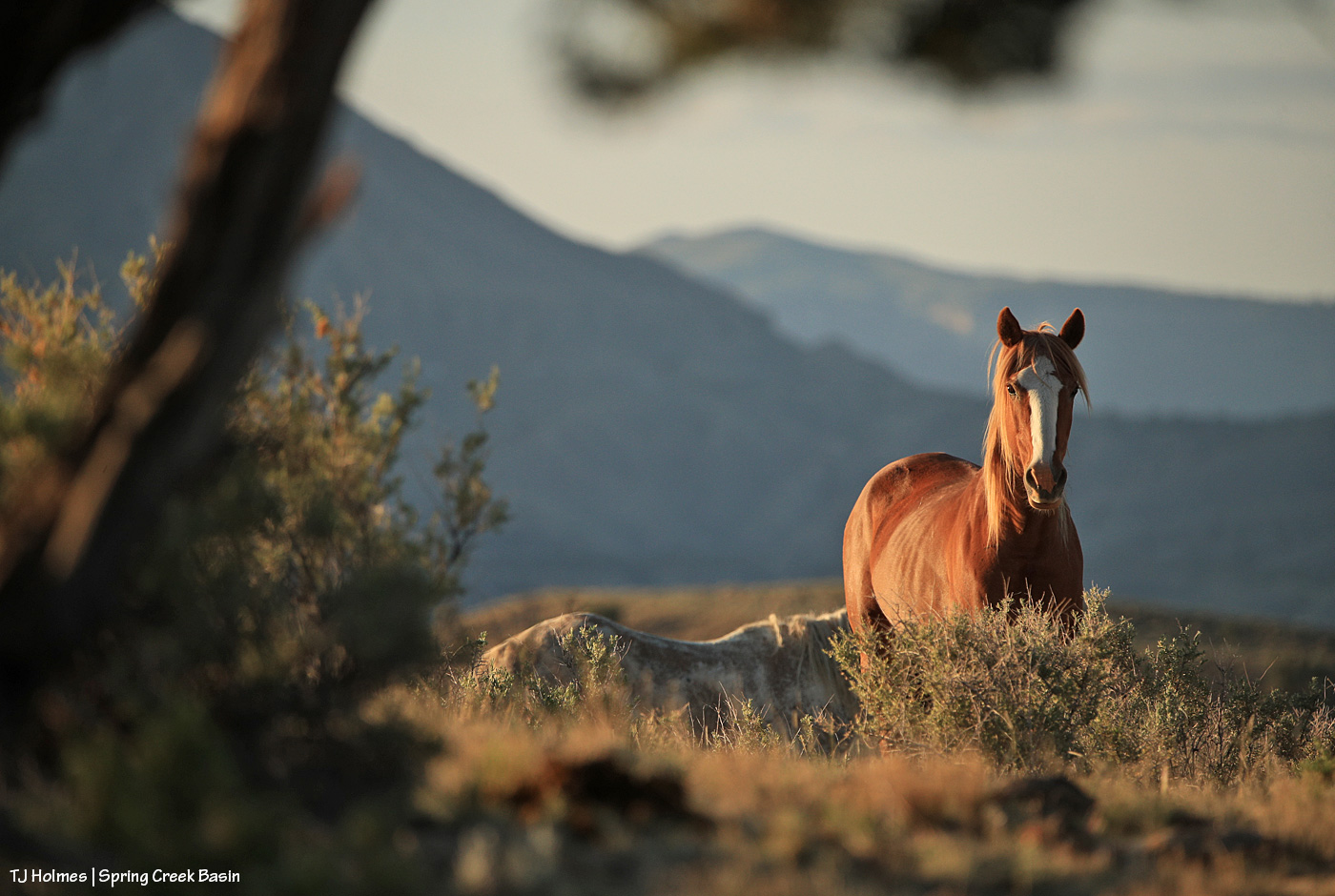
Pretty Gaia is still lean but looks sleek and shiny in her summer copper-gold in the first light of morning.
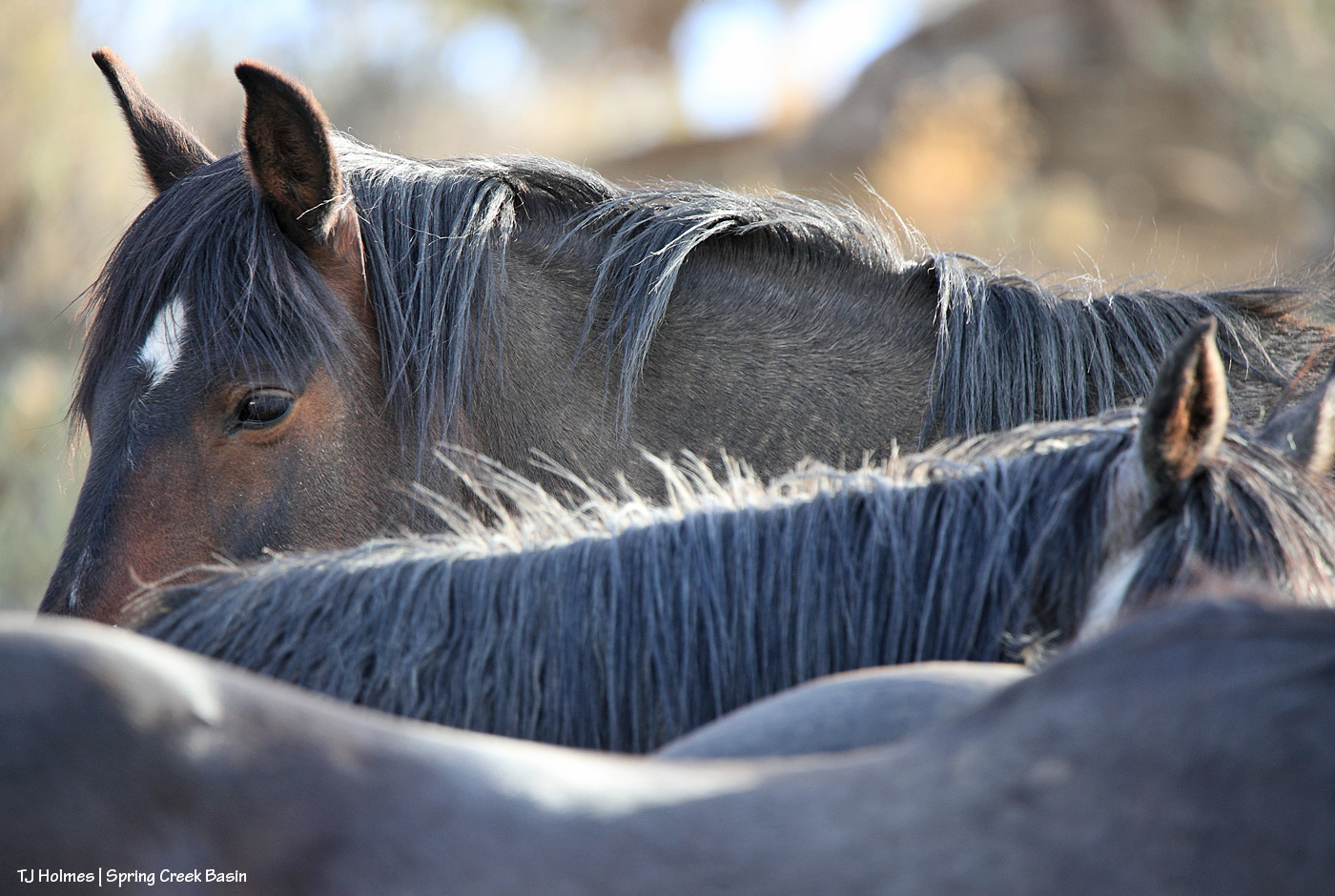
Cassidy Rain doesn’t like to be in the spotlight, so she often tries to “hide” behind her band mates. … Part of her problem is that she’s much bigger than everybody else in the band.
She stands out – in just about every way!
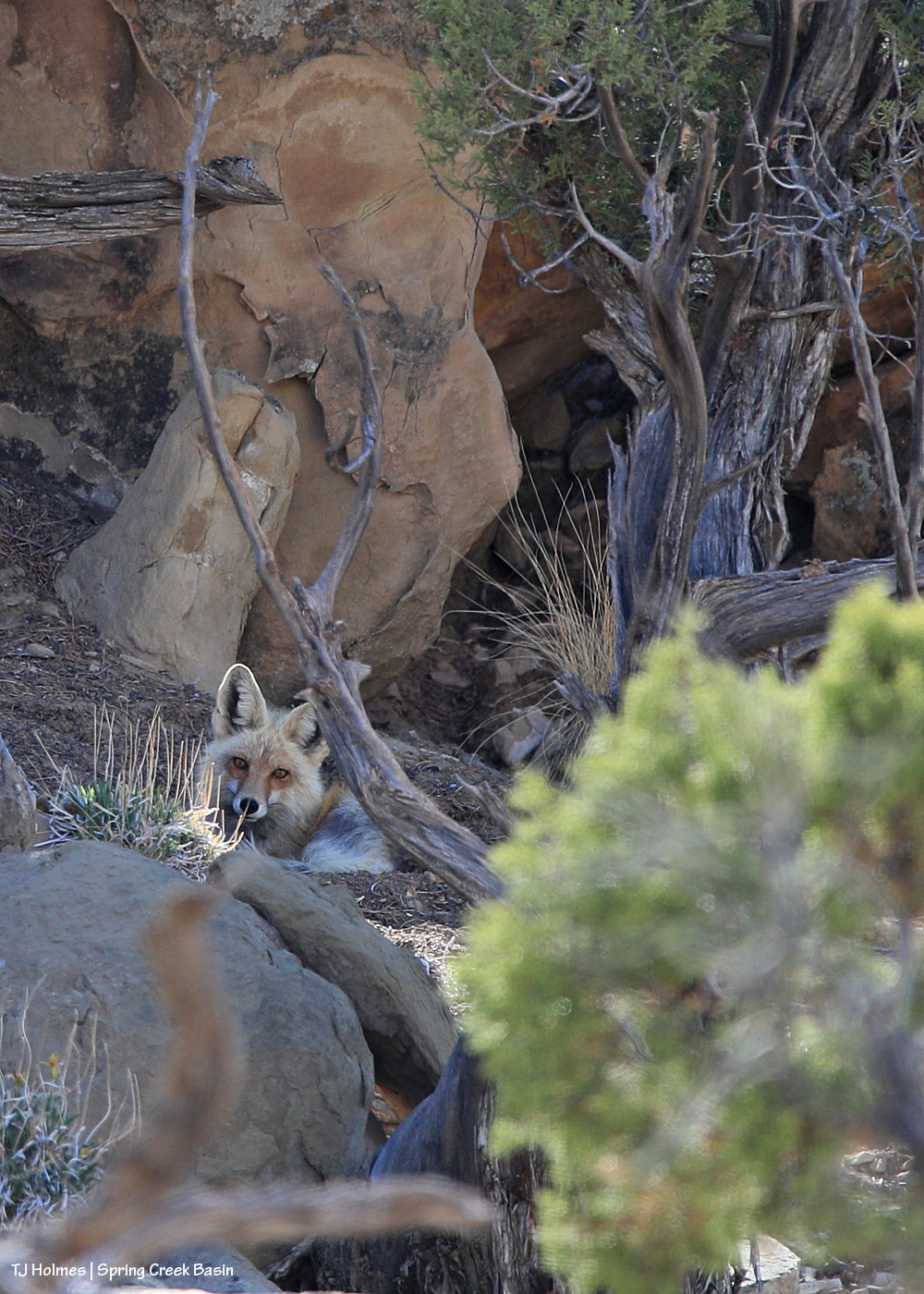
Sometimes, you never know who’s watching you when you think you’re all alone but the mustangs.
This red fox was a super cool sighting. I’ve seen them absolutely rarely, and I’m not sure I’ve seen (m)any in Spring Creek Basin before. I saw this handsome fellow or gal only because I caught some movement before s/he curled up in a ball to keep a bright eye on me as I was photographing some nearby mustangs.
I love foxes!

In honor of those men and women who have died during the long defense of American freedom, take a moment today to remember their sacrifices and those of their families. War profits only the war-mongers, those who would benefit from others’ patriotism and keen defense of America’s values of democracy and equality and humanity. Those who fell must never be thought to have done so in vain but for that higher purpose.
Peace should always be our ultimate goal.
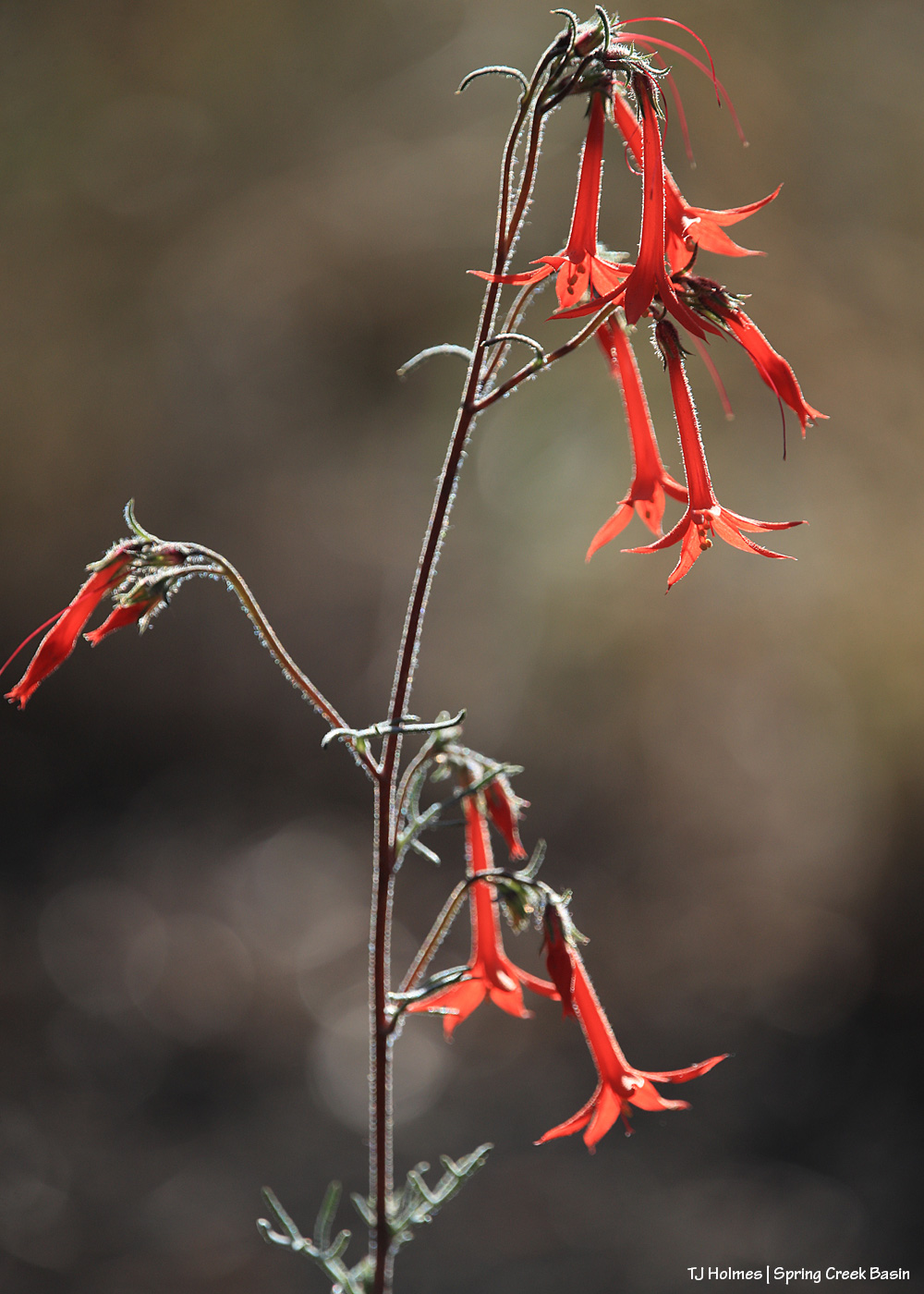
I was surprised and delighted to see four (seriously, just four) scarlet gilia flowering plants the other day in Spring Creek Basin.
The Southwest Colorado Wildflowers website says they’re in the phlox family, interestingly. Our phlox are always THE first things to bloom in the spring in the basin. They are very low-growing and small, and very widespread. They usually have white petals, but they can also be a soft pink or even purplish color. I would say that by sight, anyway, they don’t resemble at all their scarlet gilia … cousins? 🙂
I’ve only ever seen scarlet gilia at higher elevations in the San Juan Mountains, but apparently, they’re quite widespread over a variety of elevations, happily for admirers of these pretty, bright red flowers!

If you’ve ever looked at one of the maps of Spring Creek Basin, you might have noticed the curious words: “Custer Dam.” You might have wondered what the heck that’s about.
If you’ve visited Spring Creek Basin, you might also have noticed the “dugout” at the first (from the southish) intersection at the west end of “the loop road” (which is impassable all the way around because of washouts). You might even have parked and gotten out to inspect it.
The story I was told – and that I repeat for visitors – is that back around the turn of the last century (1910s?), someone (who must have carried the surname Custer, though I doubt he was closely related to he of massacre infamy?) or someones decided that in Spring Creek Basin, where the three major arroyos of Spring Creek Basin converge (as I call them: the north major arroyo, Spring Creek (the central/deepest arroyo) and the south major arroyo) wouldn’t it be a great idea to build a dam across the arroyo just downstream of the convergences, back up and hold water, dig some irrigation ditches and then sell off farm land with water shares? Because (I always say this with a straight face) the land is CLEARLY immensely fertile and flat and easy to farm. … It doesn’t take long before I break into a grin and/or a laugh when people look around, trying to be polite at the fact that the land is neither flat NOR immensely (or even barely) fertile and/or easy to farm.
I mean, what was ol’ Custer thinking?
The above pic with Sancho isn’t a great depiction of the dam, but I was so surprised when I saw him standing on one end that I took a pic before he left (which turned out to be a good idea as he left within seconds of me fumbling with my camera and taking that pic; the rest of the band was in the greasewood below and across Spring Creek, out of sight behind the other side of the dam). And I thought it would be a good excuse to illustrate some of the history of the place.
That IS Spring Creek between the two ends of the old dam, below the convergences of both the north major arroyo and Spring Creek and Spring Creek and the south major arroyo. See the white? That’s not remnant snow; that’s salt. The soil (and thus all the vegetation and ground water) is heavy with alkali, remnant of the vast ocean that once waved over what is now the very dry (and salty) Colorado Plateau.
The “rest of the story” is that after all the time and effort by the man/men (?) to build the dam and the associated irrigation ditch (it runs a very long way west) – and remember, this is WAY out here, even now; did he use oxen? some kind of tractor?? – the first (or maybe it was a couple of storms on) big storm came along, wiped out the dam (the soil is highly erodable), the water having gathered from all of Spring Creek Basin’s little, medium, big and large arroyos rushed through and down Spring Creek and out of the basin … and Mr. Custer went away *disappointed*. (In truth, I can’t even imagine how he must have felt; it had to have been an ENORMOUS amount of work (and money for equipment and such?) and taken an extraordinarily long time.)
There are a number of these dugouts in Disappointment Valley. What history they could tell.
(Where Eagles Winter: History and Legend of the Disappointment Country, by Wilma Crisp Bankston, tells a good bit of that history, though I’m not sure there’s anything in it about Custer Dam.)
All the birds (OK, many) and all the flowers (again, many) and all the mustangs (really) may be my favorites, but when I tell you that collared lizards are my *favorite* lizards, they really are. While I adore horny toads (aka horned lizards), the bright turquoise collareds really are my very favorites of the reptile world (which might not be saying much as I’m really not a reptile kinda gal).

This handsome mister was sunbathing on a very pleasantly warm morning in Disappointment Valley. When I first encountered him, I had only my cell phone, so I returned with the big gun. He was much happier with me at a distance necessary with a long lens. I was happy that it allows me much more precise focusing on his amazing details.
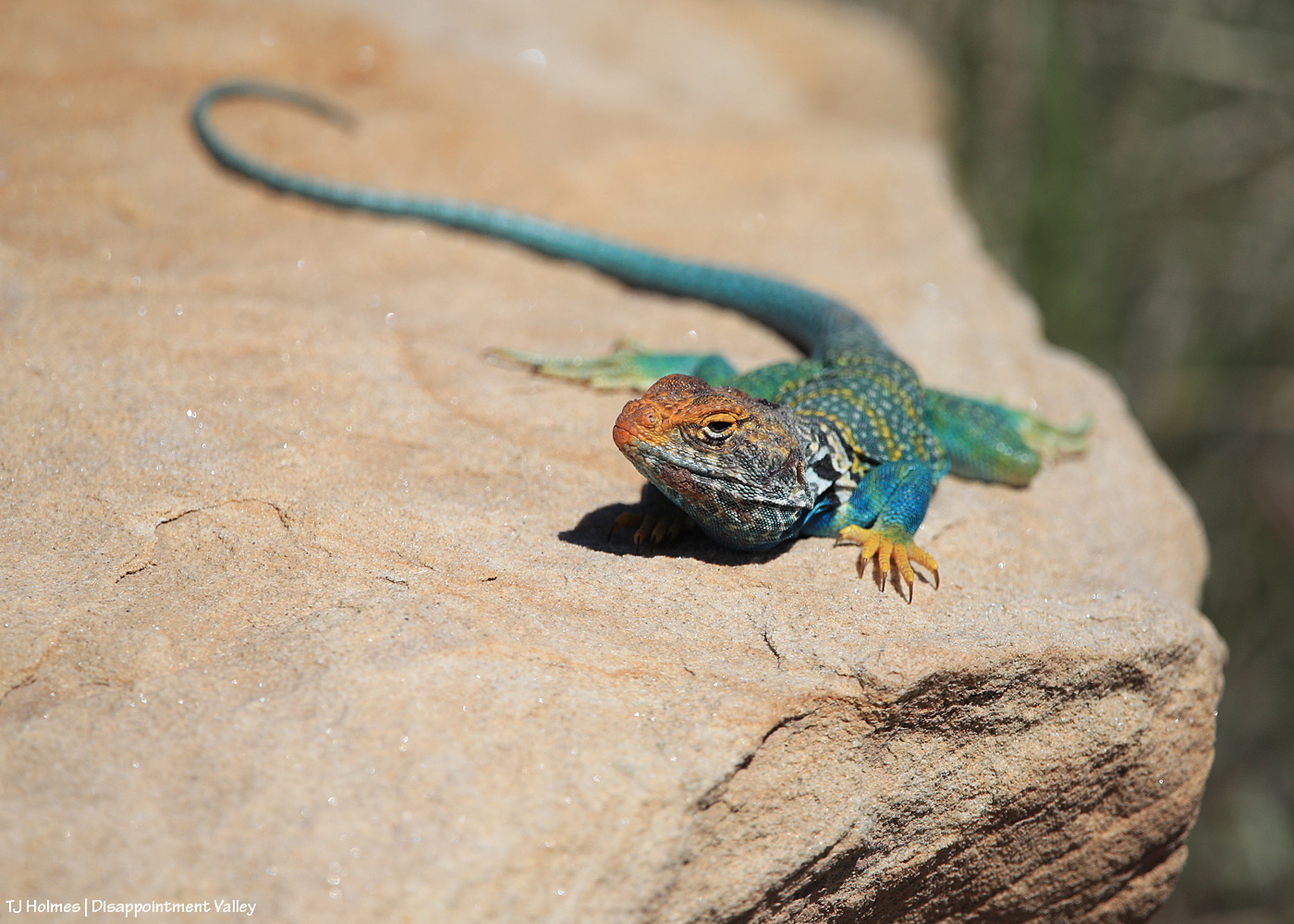
We photographers like the eye-to-eye approach, but I had to rise a little to get that magnificent tail all in view.
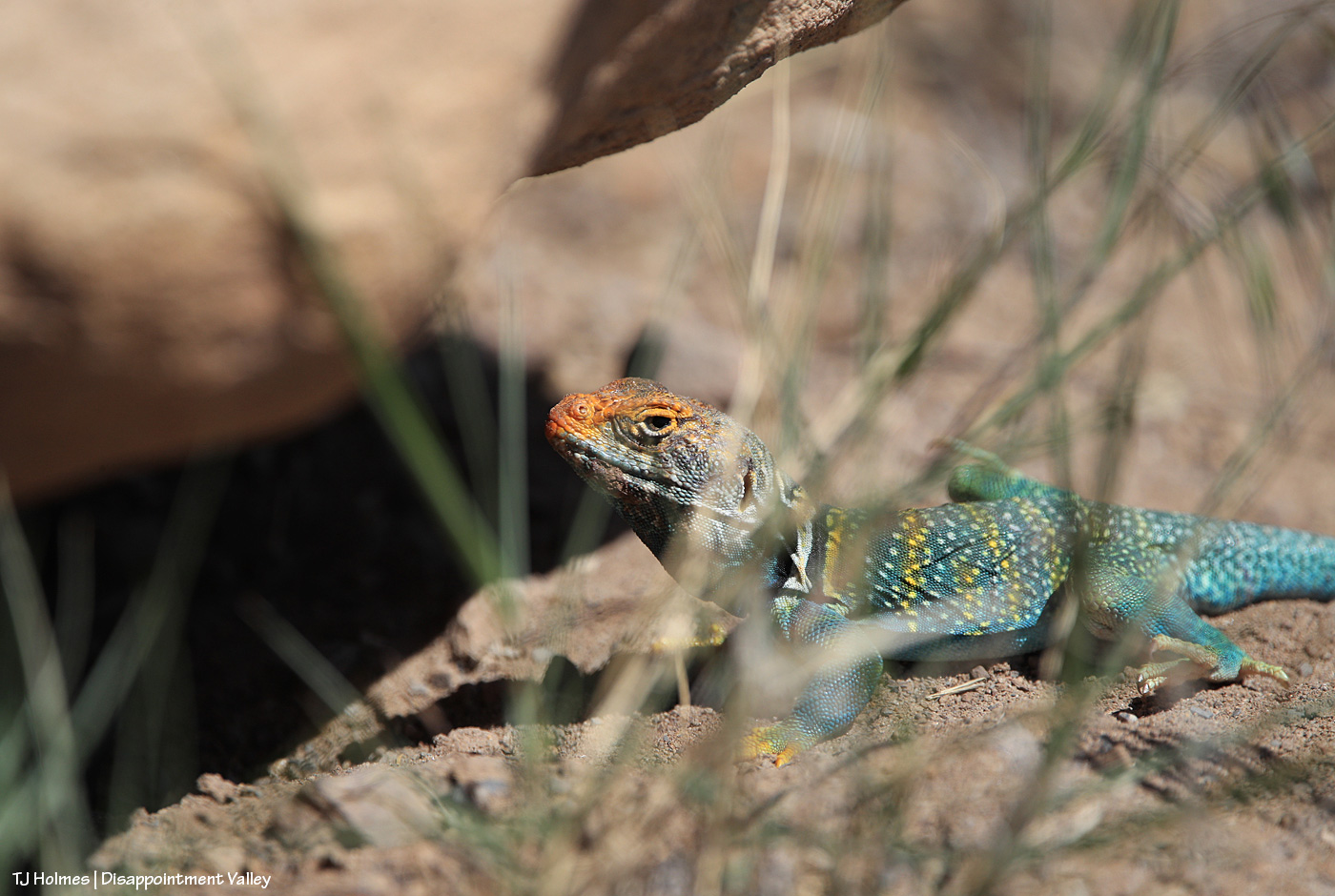
After a bit, he thought he’d seek his shelter’s shade (I don’t think he’d been the only occupant; there was quite a lot of room beneath the overhang of his boulder, and I think something else may have done the initial excavation).

And then I appreciated how the shade allowed more details of and around his eye.
What a super handsome little dinosaur! So glad to see this bright fellow – first of the year for me. 🙂
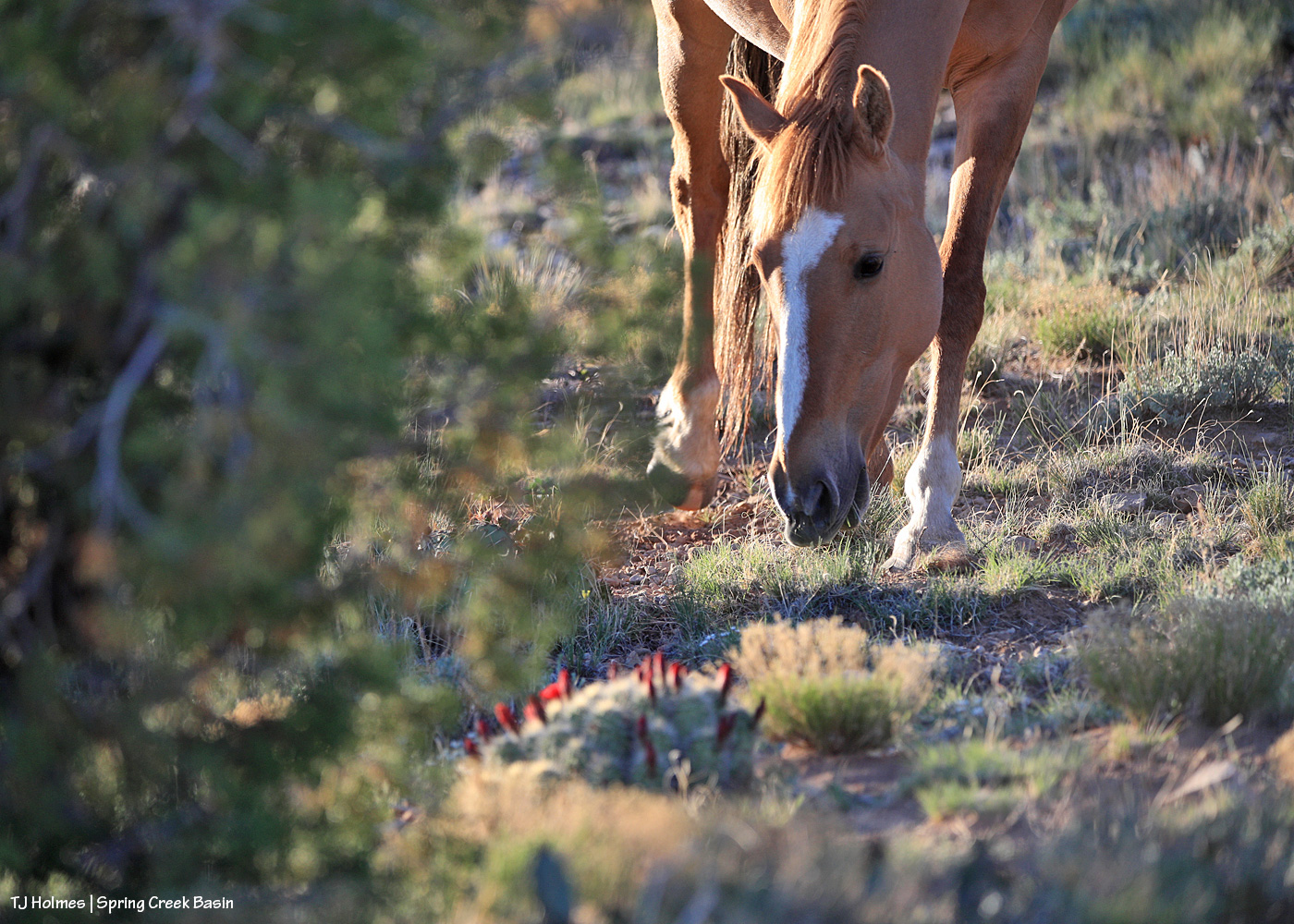
As widespread and gloriously blooming as the claret cup cacti are in Spring Creek Basin right now, you’d be surprised at how hard it is to get any in the same frame with any mustang as they graze peacefully in the open or on the treed slopes.
I liked this pic because it also shows Dundee going after the galleta and grama that’s currently coming up plentiful in the basin. After a rough winter and a sparse spring, it’s really nice to see the grass looking good in most areas.
 Spring Creek Basin Mustangs