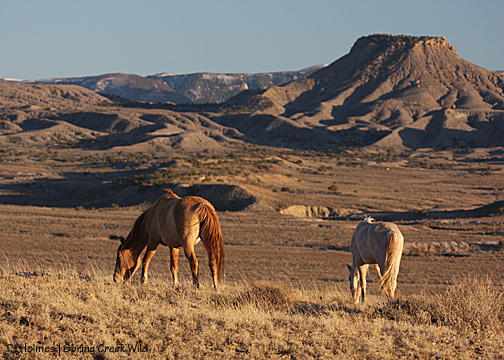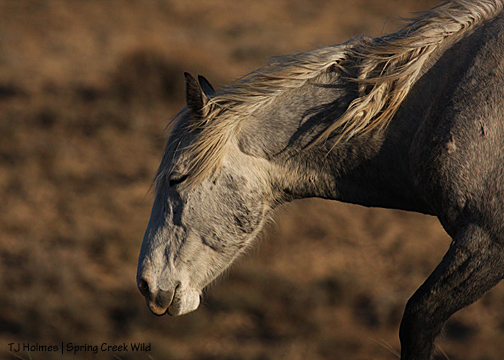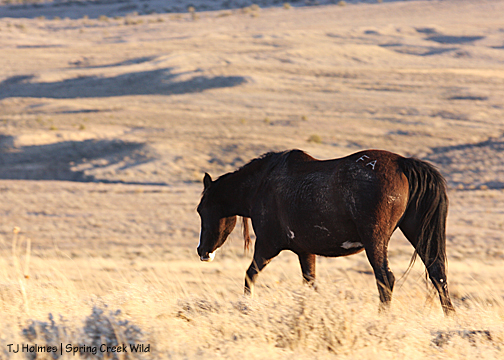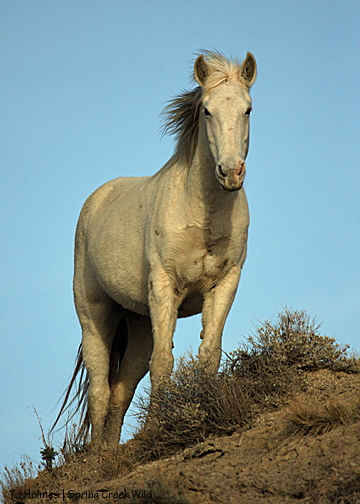
More baby

15 04 2011

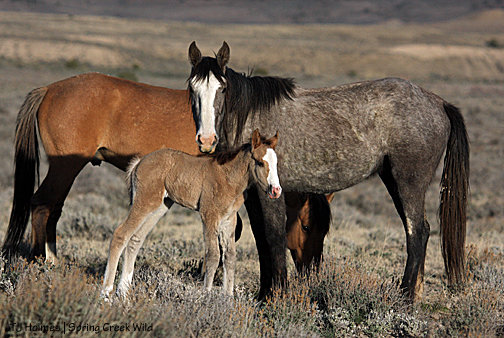
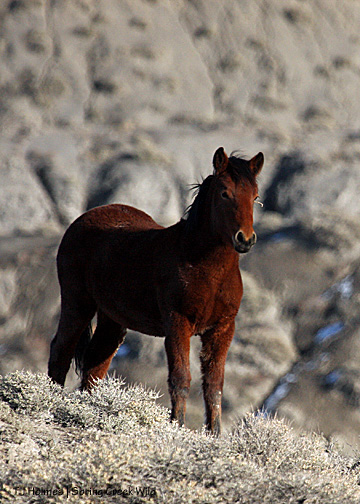
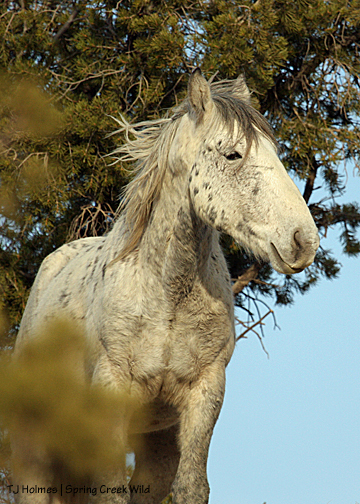
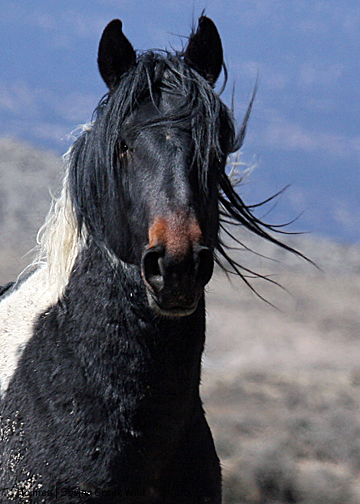
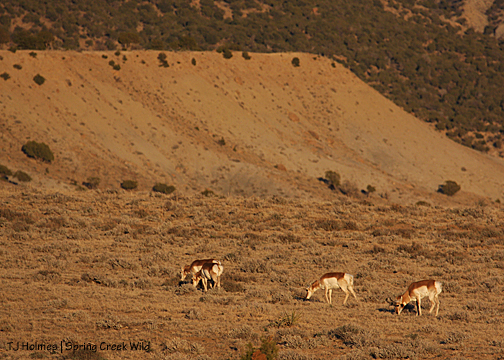
Some more pix of Hollywood’s and Iya’s baby boy:

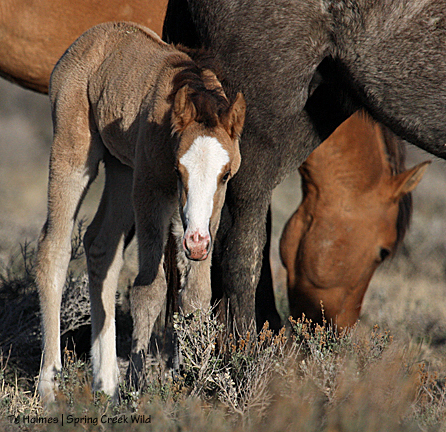
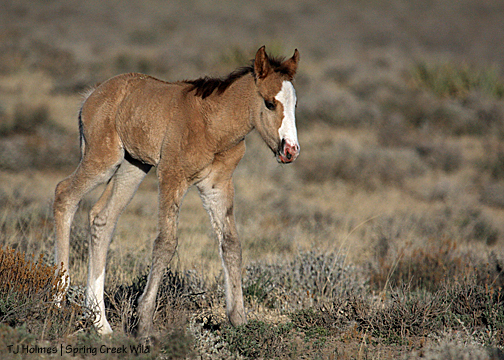
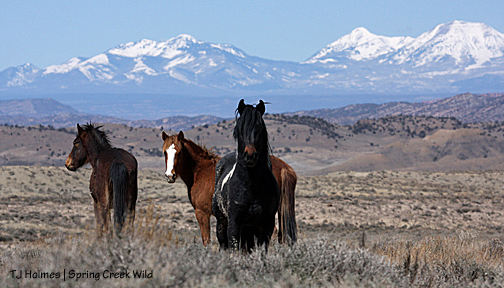
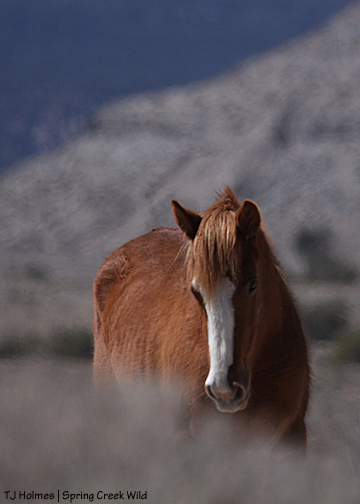
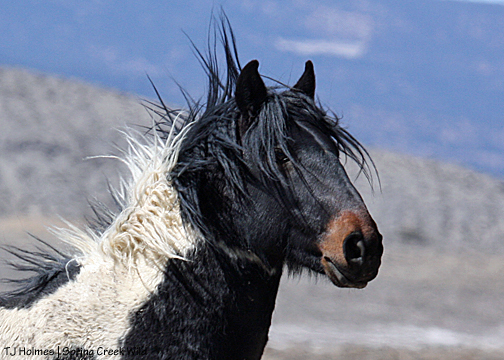
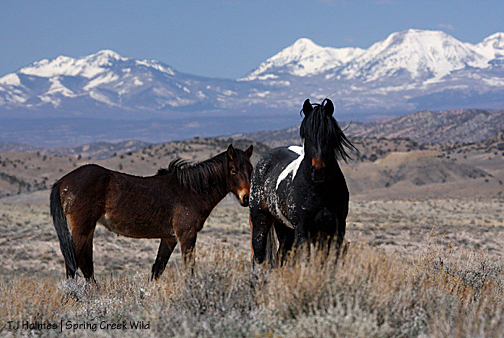
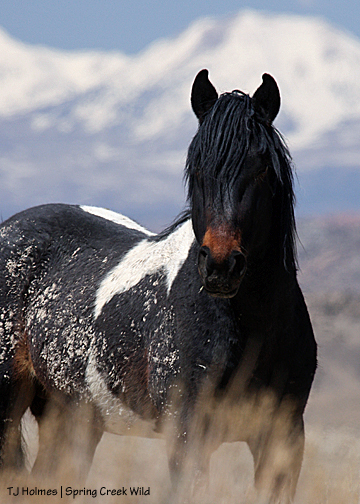
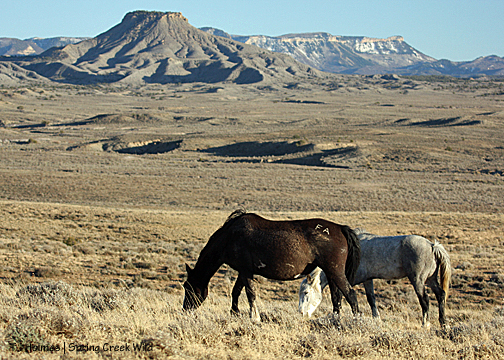
Such balance! Look at his heavenly zebra stripes and dark curled little ear tips. Just perfection! The sun had risen, and the light was marching steadily toward us, the roll of the Earth conquering the massive bulk of Knife Edge (to the right here).

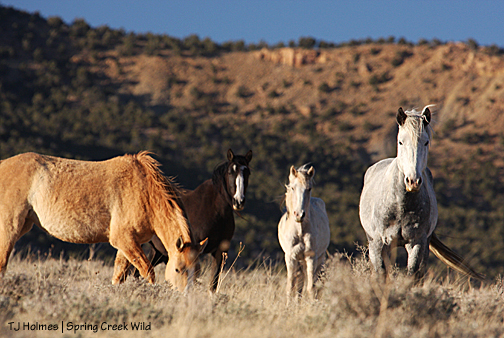
Comanche, Kestrel and Winona were very nearby … I love this of Hollywood with two of his girls and one of his boys, wide expanse of sunlit basin behind them – dawn of another day. Comanche’s and Hollywood’s have often been near each other this year – since winter. ‘Nona and Tenaz like to play together … Piedra, Baylee and Kestrel all used to be with the same band (Baylee and Kestrel, at least, are likely half-sisters (daddy: Steeldust)) … what (else) draws them together?

Still keeping an eye on Comanche.

Hello, beautiful! Look what a treasure you have!

Going back into the “vault” …

Iya as a babe with mama Houdini! She was 2 days old in this photo (her exact birth date is known), about the age I think her baby is here – see how big she was? A bit longer-bodied, and her legs go on for miles.

How fun is that?! 🙂

Sticking out the tip of his little pink tongue.

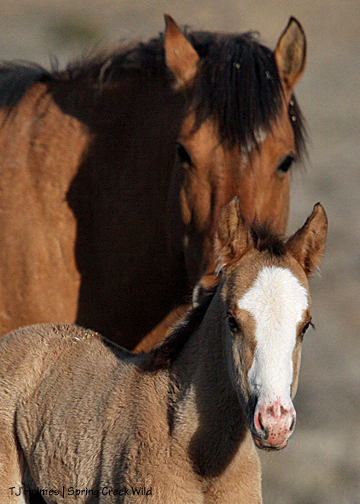
I’m a sucker for family portraits.

We know what the mamas are thinking … what do the daddies think about these little creatures who suddenly appear with the family? They KNOW they’re to be protected … Are they proud? Do they know they had a part in the little’s existence? Anthropomorphic, sure, but I’d still love to know!

Essentials: baby and mama and daddy.

What a fantastic morning! I admit that when I first saw them and saw that light little “shadow” at Iya’s side, I yipped and yay’d with delight. Something about the miracle of birth … in such a place … wild circle of life. Death and birth – and, most important, life. They don’t need our help … and yet they do. Independent of man … and yet fenced into a dry land that bustles with often-overlooked treasures. So many liquid-clear bird songs that morning! Their absence (except for the ever-present ravens) is so noticeable, their songs when they return are, in fact, the heralds of new seasons. I looked all morning for those trilling, warbling birds and never saw them. Their songs changed location, but I couldn’t for the life of me catch sight of the birds themselves.

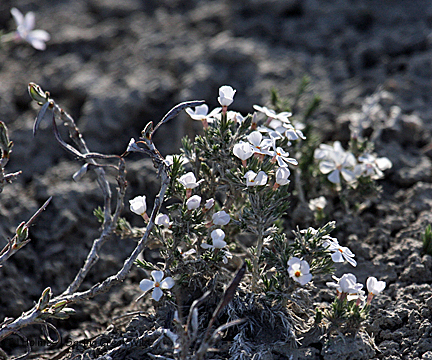
But this, first blooming about two weeks ago, is everywhere, carrying the oh-so-sweet fragrance of spring. Delicate/hardy phlox – tiny co-heralds of spring.


Baby!

14 04 2011

Look at this handsome little guy! Having not seen Shadow except for her back from a distance on the other side of a hill, as far as I know, this little mister is the first baby of the year in Spring Creek Basin. His color and markings tell you just who he belongs to … Do you know?

Soft claybank dun and big, b(o)ld face …

Daddy, of course, is Hollywood – and, as far as I know, this is the first dun he has sired! (Sage, almost 2, is grey, and Tenaz, almost a yearling, is bay.)

Who’s mama???

Iya – of course! Look at those matching faces! It’s like she’s been a mama forever. She grazes along, and he follows. She’s not as outwardly affectionate as some other new mamas (at least not with “company”). I think he’s not more than a coupla-few days old – still a little “bunched,” still a little over at the knees, ears still the tiniest bit curled at the tips. Iya herself was a big, big, baby for her mama, Houdini, but this little guy seems just right for a first baby. It seems nearly unbelievable that such a creature could grow and rest in that belly, eh? All folded up and snug. Another miracle into the world.

Now out in the world … and welcome to your Spring Creek Basin, little one!


Changes

13 04 2011

Well, folks, bad news about Spring. I finally found Poco and Roach today – right off the road (of course!) – and she’s not with them. Unless she’s wandering around by herself – not likely, especially after all this time – the poor girl has ascended to a “higher pasture.” I only hope her passing was as quick and painless as possible.

The other big news is that Twister and Cuatro have “lost” Duke – who is back to his lone ways and sticking closer to “home” – but they’ve gained two new compadres: Storm and Ze! Twister is 4 this spring (the lone colt left of 2007); Storm will be 3 in July; Cuatro will be 2 in May; Ze just turned 2. Oh, what havoc will they wreak?! Ha – look out!

I saw David, Shadow (who was due Monday) and Wind – but just behind a hill and for about 30 seconds before they went totally out of sight. I hiked in from the Disappointment Road later than I had intended and then couldn’t find them, so although I *saw* them, I didn’t get a good enough look to see whether a little one is shadowing Shadow’s hooves.

Just checked the weather, and western Colorado is a swath of green (rain). Not much sleep last night but SO worth it! I left work at 10 till midnight, drove to the basin, arrived at about 2:20 a.m., breathed deep the glorious air, reveled in the stars so almost within reach, slept about three hours to be up before sunrise over the east ridges and Knife Edge – which caught me with the REAL reason that made the trip so worth while … coming up.


Birthdays

11 04 2011

Wow. Things have been so busy here – and the status of one little girl so unknown – that three birthdays have passed with no mention. I’m going to do them all – and the fourth – today – in this post and then try to do a better job for the youngsters whose birthdays are coming.

Spring – April 2

This is the last good photo I have of Spring – from November. The last time I saw her was Feb. 3 with Bruiser (very far pix against snow). Before that, I saw her Jan. 5 with her family (Seven’s band). She’s either with Poco and Roach (I haven’t been able to find them since March 3, though I’ve been looking very hard, for this very reason) … or she’s not with us anymore. She’s a yearling if she’s still with us.

Ze – April 6

Ze, right, is now 2 years old. You can see by his face that he’ll turn grey like daddy Seven. His sorrel mama, Roja, is behind them, and “little sister” Shane is at left (she’s Mona and Kreacher’s little girl; now they’re with Seven’s band).

Hannah – April 8

Hannah-girl, center, is also 2 now. Her mama is queen-mama Luna – so prominent that she not only has alpha-mare status, she commands her own band. Pinon, left, (3 next month) and Sable (2 next month) are likely her half-siblings – courtesy daddy Steeldust, who now claims Alpha while Butch claims Luna. Hannah and these two – and Ember and her boy, Fierro – are in Hook’s band, since last spring. Hannah was named after a very generous young lady named Hannah, who, for the last two years, has sent $100 of her babysitting money to the Colorado chapter of the National Mustang Association.

I believe the silly girl is pregnant.

Always the comedienne. 🙂

Wind – April 11

This is the most recent photo I have of Wind, right, with daddy David (mama Shadow is lower to the left), taken March 17. I saw them all on March 31 – too far for pix. This is one of the most elusive bands and most wary of people, and I don’t bother them too much, even when I do see them – so I don’t have as many photos of Wind as of the other babies (though the same can be said of both Spring and Ze). He’s a year old today!

In September

Sharing a quiet moment with mama back in June. Look how dark he’s become – now very dark like Liberty and Spring.

Happy birthdays, all you beautiful babies!


Scoping comments – points to make

10 04 2011

The scoping process starts the chain of events of BLM looking for public input about the upcoming roundup in Spring Creek Basin. We also understand that it is a time when public comments advise BLM of “alternatives” the public would like to see – these then come out in the EA, which provides another opportunity to comment.

A roundup and removal of some horses needs to happen, and it needs to happen while the horses are in good condition – not when they’re in poor condition. An annual PZP darting program is necessary and appropriate to integrate into the management plan of Spring Creek Basin Herd Management Area.
When you make your comments in support of annual PZP darting by trained volunteer darters in Spring Creek Basin (and please do support us in exactly this, not more use of PZP-22), focus on these areas:

* Cost – This is perhaps the biggest in getting BLM’s attention. A complete dose of PZP (PZP + adjuvant + dart) costs less than $30 per mare. That’s no typo, and I’m not missing a zero. PZP-22 is about $200, and it currently requires the additional expense of a roundup to capture the mares and deliver. Native PZP does not require a roundup, does not require handling the mare in any way, so it’s also less stressful to the horses. And with fewer foals born, less potential for those grown-up horses to end up in holding, which is another massive expense for the Wild Horse & Burro Program. Labor provided by the Science and Conservation Center-certified volunteer darter(s) who knows and has complete documentation of the horses – FREE. Paperwork/record-keeping done by volunteer darter(s) – FREE. Cost to BLM to implement the annual PZP darting program – FREE. The Colorado chapter of the National Mustang Association has offered to pay for the first period (to be laid out in the EA as a five-year period, we hope) of PZP. This will be in our formal comments; we made the oral offer to BLM at our recent Disappointment Wild Bunch Partners meeting.

* Genetics – Roundups and removals completely remove genetics of horses that have never contributed – the youngsters. Reducing the frequency of roundups by use of PZP will allow more horses to contribute their genetics over a longer period of time – even though fewer horses are reproducing at any given time. Because of the small size of the Spring Creek Basin herd (AML = 35-65 adult horses), we foresee that periodic introductions of mustangs from similar herds will continue to be necessary.

* Social – PZP is far less disruptive to the horses than roundups and subsequent removals. PZP does not inhibit a mare’s cycles at all, so yes, she will continue to come into heat. The “disruption” of bands in the Spring Creek Basin herd has been minimal and, as far as I can tell, not related to the PZP-22 several of the mares have received. It worked on Alpha – she has been with the same band/stallion since she was released after the 2007 roundup. It worked on Mona – she was with the same stallion until she foaled in 2010; when she went off alone to have her foal, she was picked up by a different stallion. It worked on Raven – she came to us pregnant, and when she went off to have Corona, she ended up with a different stallion; after about six months, she ended up back with the original stallion; she did not foal last year; she looks on track for a spring foal. It worked on Kootenai – she has been with the same stallion with one brief exception (which seemed to be to go get Raven) since her arrival. She ought to have a foal this year, but so far, she does not look pregnant. The other surviving SCB mares have been with the same band since their release – with the exchange of a single band stallion for a dominant band stallion and three bachelors, one of which may be the mature son of one of the mares.

* Safe for the mares – PZP does not harm either the mare or the fetus she may be carrying at the time of application (of either primer or booster). PZP is a protein derived from pig eggs. It simply blocks fertilization of the mare’s egg by the stallion’s sperm. It does not cause a mare to develop masculine features – it is a protein. Mares in herds where PZP has been in long use (example: Assateague Island) are living longer, healthier lives – the result of not having babies year after year after year.

* Low stress/no handling – PZP is administered by remote dart when biologically appropriate. The mares aren’t rounded up, they aren’t tranquilized, they aren’t touched except by the dart. I won’t say there’s no stress to being darted, but compared with a roundup and separated from family members?? No comparison. Very low.

*Effective/successful at preventing pregnancy – PZP has at least a 90 percent efficacy (success) rate. On Assateague Island, as of last year, it’s 95 percent successful. We don’t want to stop reproduction; we want to slow it. No adult horses died last year, which means it’s not very realistic to think that we’ll equal birth and death rates.

* Branding of treated mares – Unnecessary because of extensive documentation of 100 percent of horses in the Spring Creek Basin herd.

*Excessive gender skewing – Unnecessary because of documented efficacy of native PZP.

* Removing horses to the low end of the AML – Unnecessary because of the documented efficacy of native PZP and potential slowed growth of the Spring Creek Basin herd.

* Ask also that bait trapping be used as a more humane alternative to driving horses with a helicopter. This requires more time and patience (when is that ever a bad thing with horses and/or wild animals?) and a temporary holding facility onsite or very near – which I have a lead on. We have pushed for this since 2007 … keep it on BLM’s radar! Dan Elkins, who does bait trapping, is just south of us in New Mexico, and he uses bait trapping very effectively on the Carson National Forest and Jicarilla Wild Horse Territory – also the first Forest Service-managed herd to use PZP.

Other comments to make about the roundup itself:

* During the heliocopter gather, bring the horses in band by band and corral them that way to avoid the injuries suffered by forcing unfamiliar horses together.

* Instruct the contractors and other handlers to be careful NOT TO OVERSTIMULATE the horses with their flagging, which often causes the horses to become very frightened, unduly stressed and often injured by jumping into panels.  This is not contemporary or humane handling.

* Be certain to use grass hay – not alfalfa.

* Provide water and salt immediately as many of the horses have been driven from the southern end of the herd management area. (The trapsite is at the upper western edge of the basin.)

Spring Creek Basin and its mustangs meet all the criteria: Check out again this FAQ card I created.

Talk about the horses. Call them “wild horses” or “mustangs” – beings that have touched your heart, that you admire, that you love. Make frequent use of their homeland’s name: “Spring Creek Basin.” This is not a random herd. This is not an unknown place. Yes, it’s remote. Yes, it’s small and out of the way. The horses are no less beloved for those facts. In fact, they ARE beloved – the “stats” on this blog tell me that – almost 70,000 hits in three years. YOU love these horses. Tell BLM – and back it up with these facts about why it should implement an annual PZP darting program in Spring Creek Basin using trained volunteer darters.

Do use these facts to make your case in your comments for the use of an annual PZP darting program here with trained volunteers. The way this works is that BLM needs you, the public, to make this information known – for this herd – ahead of this roundup. What can you do for our mustangs? … I hope I’ve just given you a way. On behalf of the mustangs of Spring Creek Basin – for their well-being and healthy future, I THANK YOU for helping us help them!


Little Book Cliffs – shining example

9 04 2011

Press release about fertility control out of the Grand Junction BLM office:

March 31, 2011

Contact: Tom Alvarez, Public Affairs Specialist, (970) 244-3097

Fertility Drug Contributes to Wild Horse Population Control

GRAND JUNCTION, Colo. — The Bureau of Land Management’s (BLM) Grand Junction  Field Office’s (GJFO) use of the fertility control vaccine porcine zona pellucida (PZP), used for managing wild horse herd populations, is significantly contributing to successful population control of wild horses in the Little Book Cliffs Wild Horse Range (LBCWHR). The fertility program’s success is due to the support and assistance from the Friends of the Mustangs (FOM), a local volunteer group in the Grand Junction community.

The fertility control program has reduced the annual population growth to an extent that a gather for 2011 will be unnecessary because 2004 foal counts in the LBC herd have declined, with just 11 born in 2010.

“We are not trying to stop population growth,” said Jim Dollerschell, rangeland management specialist for the GJFO. “We just want to slow it down to reduce the frequency of gathers, which leads to less disruption of the wild horse herd.”

The GJFO last gathered the LBC herd in 2007 and typically plans a gather every two or three years.  The next anticipated gather would now be in 2012.

“It’s a wise decision. We don’t have enough horses to justify a gather,” said Marty Felix, founding member and long-time volunteer of the FOM. “Our horses are very resourceful, and they know where to find food. Almost all of them look fantastic. We’re here to help the BLM and help the horses.”

A fertility control research program was first introduced in 2002 in coordination with the Biological Research Division of the United States Geological Survey.  Fertility control continues to be a principal component of management of the LBCWHR, using a one-year vaccine by means of field darting as the primary method used.  GJFO staff and volunteers from the FOM participate in the darting process, as well as keeping required observations and records.

“What we are doing here in the LBCWHR will not work for all herd management areas across the West,” added Dollerschell, “but our efforts do show that PZP is an effective tool to be used in controlling wild horse population growth rates.  Our relationship with the FOM also provides an example of  how partnerships are effective and needed within the wild horse program. When we are working together, positive results will occur.”

*****************************************************************************

This is exactly what we’re working toward here, with a partnership between BLM and NMA/CO and, collectively, Disappointment Wild Bunch Partners. We ARE here to help the horses and BLM, and this is what a successful partnership will look like: Slowing population growth and reducing the frequency of roundups in Spring Creek Basin. And we have set things up so it can work excellently here. All the pieces are in place – I’ve documented all the horses in the herd, I’ve been certified to handle and dart PZP, I’ve spent the time with the horses – we’re ready to start. And it has to start somewhere, like everything does.


**Scoping is out**

8 04 2011

Here it is. We need comments about using fertility control – specifically the annual/native/one-year PZP by trained volunteer darters.

Use this FAQ card I created to help with your comments: https://springcreekbasinmustangs.com/wp-content/uploads/2011/02/pzp-faqcard-forblog1.pdf

I’ll also write something in the next few days to highlight the components we want to address.

Remember, annual PZP darting on the Little Book Cliffs Wild Horse Range was instrumental in canceling the scheduled roundup there this fall. Please do not oppose this roundup – rather, ask that PZP be used in conjunction with bait trapping, as an alternative to helicopter-driven roundups. PZP will push roundups back to few and far between (the goal is no more than one per decade), and bait trapping will ensure humane, slow, careful treatment of the horses. But it has to happen. Spring Creek Basin simply cannot support a great number of horses. I was looking at pix from the 2007 roundup (which I hate) for an article, and at ~110 horses in the total population, they were so very lean. We don’t want to put the horses in that kind of situation again.

Please let BLM know we want to sustainably manage these mustangs using fertility control – make sure you specify “one-year PZP.” That’s the tool that will do the most to prevent roundups.

**************************************************

FOR IMMEDIATE RELEASE:  April 8, 2011
BLM to hold public hearing and scoping meeting on proposed Spring Creek Basin wild horse gather

DOLORES – The public is invited to a Bureau of Land Management public hearing and scoping meeting on Monday, April 25, beginning at 5:30 p.m. at the Dolores Public Lands Office, 29211 Highway 184, Dolores, on a proposed wild horse gather this fall in the Spring Creek Basin Herd Management Area.  
 
The public hearing portion of the meeting will take place from 5:30 – 6:30 p.m. and will cover only the use of motorized vehicles and helicopters to gather wild horses from the Spring Creek herd.  Helicopters are an effective tool in gathering wild horses and are commonly used in BLM gather operations. Trucks and trailers would be used to transport the gathered wild horses to adoption or a holding facility. The hearing will begin with a brief introduction, and then public comments will be taken on the use of helicopters and motorized vehicles for gather operations. Oral comments will be recorded and should be kept to five minutes in length. Written and oral comments will be submitted into the official public record, and summaries will be available upon request. 

Immediately following the hearing, the public is invited to an open house to learn about issues to be addressed in the preparation of an Environmental Assessment for the proposed wild horse gather.  The open house will include a brief overview of proposed activities and an opportunity for the public to help the BLM identify issues regarding the gather. Public input can be made either verbally to staff or via a comment card at the open house. 

Written comments will also be accepted until close of business Thursday, May 12, 2011. Written input should be mailed or delivered to Tom Rice, Associate Field Manager, Dolores Public Lands Office, 29211 Highway 184, Dolores, CO  81323.  Comments may also be sent via e-mail to: trice@blm.gov.

The wild horse gather is proposed for September 2011, at the Spring Creek Basin Herd Management Area, which encompasses 21,064 acres of BLM lands in Disappointment Valley. The removal of some wild horses is proposed to achieve a population of wild horses consistent with the land’s capacity to support the herd in balance with other public rangeland uses and resources. A local adoption of the gathered wild horses will take place after the gather.

For more information, contact Tom Rice, 970-882-6843.


Spring warm, tinder dry

5 04 2011

With his acquisition of Gaia this winter, Cinch is moving on up in the basin.

It was hard to catch them with all their heads up, mountains in the background. The girls, especially, having both most recently been with Bounce and Alegre (Gaia is her firstborn), concentrated on grazing, as in the pic a few posts ago.

Liberty is just a tiny little thing, though she’s only a year younger than Gaia. Molly shouldn’t have had to have a foal the year she died … but I wonder how often that happens in the wild? It happened also with Ceal and Shadow.

We used to have lots of sorrels … now she’s one of four. (Which reminds me … oddly … I had a dream last night … about a big band of greys and bays – our dominant colors …)

Three on Earth Day (hence her name). Cinch ought to breed her for her first foal as a 4-year-old. That’s pretty good. We’ll have a couple of 2-year-olds foal this year (Hannah and, probably, Sable) – not so good – and one 4-year-old (Baylee) still doesn’t look pregnant. Another 4-year-old (and orphan), Shadow, will have her second foal this year – she’s due within a week, which should make her the first this year. I saw them (her and David and Wind) last week but not close – other horses and the hunt for Spring kept drawing my attention.

Cinch kept a wary eye on me through that fantastic forelock …

He was more animated than my first visit to them this year … He has a lot of presence that makes him seem fairly big, but he’s a fairly small-bodied boy.

Love the graceful swish of his tail.

Saw lots of this …

… and caught this just before he went back to grazing.

He’s looking back at Gaia and/or Luna’s, who were coming down from their nap near Round Top for their midday drink at the roller-coaster pond (which is off to the right).

Definitely watching Luna’s … Gaia was just behind him to the left, Liberty to the right.

Pretty portraits in front of the La Sals.

The sun was high, but the shine was warm for about the first time this spring, so I sat with them for quite a while. I thought Cinch might lead them off, but they just moseyed around grazing and stayed fairly near. I leaned back like I was on the beach and soaked in the rays, the warmth, the horses, the magic. By the time I walked quietly away, they never even looked up. 🙂

We were supposed to get “significant moisture” over the region Sunday … but locally, at least, it seemed to be confined to the tips of the La Platas. On the west side of the La Platas, we got our first big Apocolypse-seeming dust storm of the year. Another storm system is forecast Wednesday through Sunday, which – if it happens – puts a crimp in my weekend plans, but do your dances, folks, for the horses to get some good rain. It’s so, so dry. Some campers started a 150-acre wildfire near Bradfield Bridge (basically south of the basin) on the Dolores River. The Forest Service and several other agencies got it under control pretty quickly, so you know they’re on alert. Other fires are burning already in other parts of Colorado.


Voices of reason

3 04 2011

Thanks to Karen Herman, I just became aware of this editorial published March 20 in the Santa Fe New Mexican, written by her and Dr. Jay Kirkpatrick. Karen runs Sky Mountain Wild Horse Sanctuary and is the business partner of Dan Elkins (owner of Mt. Taylor Mustangs who does no-chase gathers, also known as bait trapping), and Dr. Kirkpatrick, of course, is the director of the Science and Conservation Center in Billings. This was in response to a New Mexican editorial that espoused shooting mustangs as a “management” tool.

http://m.santafenewmexican.com/LocalColumnsViewpoints/Their-View–Karen-Herman-and-Jay-F–Kirkpatrick-Science-improvi

We were so privileged to meet Karen and Dan two summers ago when NMA/CO invited them to Spring Creek Basin to see the area and meet our mustangs. This was part of our ongoing work to move away from helicopters here to bait trapping … but it hasn’t come to fruition yet.

We want to have “gathers” as few and far between as possible – which will happen, I firmly believe, with PZP – but bait trapping is a much more humane option than chasing mustangs (and burros) with flying machines.


Looking toward sunrise at the onset of another end

3 04 2011

There’s always one … 🙂

“Photo-horse” – but their ears are all up!

Just to our east, this pronghorn buck (right) and three does.

Up on the finger hills with a marvelous view at the end-o-day. The heavily eroded flat-topped “peak” is Brumley Point, in the basin. The far ridges – and yes, that’s still a bit of snow – are not.

Love that delicious light. They felt no need to pose prettily but carried on with their wild lives. Brumley Point again (don’t you think it was really McKenna that deserved the “point” and Brumley the, well, peak, butte, mesa or hill designation? it reminds me of a high-and-tight cut; don’t ask me why). The low, tree-topped, snaky ridge in the near(er) foreground is what I call the roller-coaster ridge. The horses were already swishing their tails like it was summer. Interesting the little things we associate with certain seasons. I was in a T-shirt still at the end of the day, but it’s not yet summer …

Mr. Kreacher

Another PZP-22 success story. No foal last year (like Kootenai), but she looks on track for a spring foal now, eh? And while some of our other girls look a bit scruffy yet, a bit “wintered,” Raven is nearly fat and ready to shine under her spa coating. (The FA brand designates her as part of the October 2008 roundup and PZP-22-receiver from Sand Wash Basin, northwestern Colorado. Kootenai and Mona have the same brand. Our 2007 PZP-22 released mares have a DC brand. Because the horses are so well documented by yours truly, they do not need to be branded to be designated PZP recipients – and we’ll fight hard to ensure that is, in fact, the case.)