Book recommendations

15 05 2025

After posting the information about Kathryn Wilder’s forthcoming (in November) book, The Last Cows, I thought I’d do a “pay it forward” post and recommend another couple of books that I’ve recently added to my library.

I’ve been lucky enough to know Barb Kiipper for many years during our mustang advocacy journeys. She’s the founder and director of Jicarilla Mustang Heritage Alliance, a group that advocates for the mustangs of the Carson National Forest’s Jicarilla Wild Horse Territory in northwestern New Mexico. She has poured heart, sweat, blood and tears into the challenge of working toward good management for that herd, getting many, many mustangs adopted to good homes along the way. I met Michele Bell only recently and have been inspired about her approach to taming and training mustangs from a variety of places (the Jicarilla, BLM-managed herds and Mesa Verde National Park).

Why A Mustang is part memoir of their journeys, part philosophy about working with mustangs and what these amazing horses have taught these women about themselves and mustangs, specifically and in general. It’s a bit of an addictive read (and if you’ve been involved with horses and/or mustangs as long as I have, absolutely fascinating with insights about behaviors and taming/training techniques), and I highly recommend it.

Also …
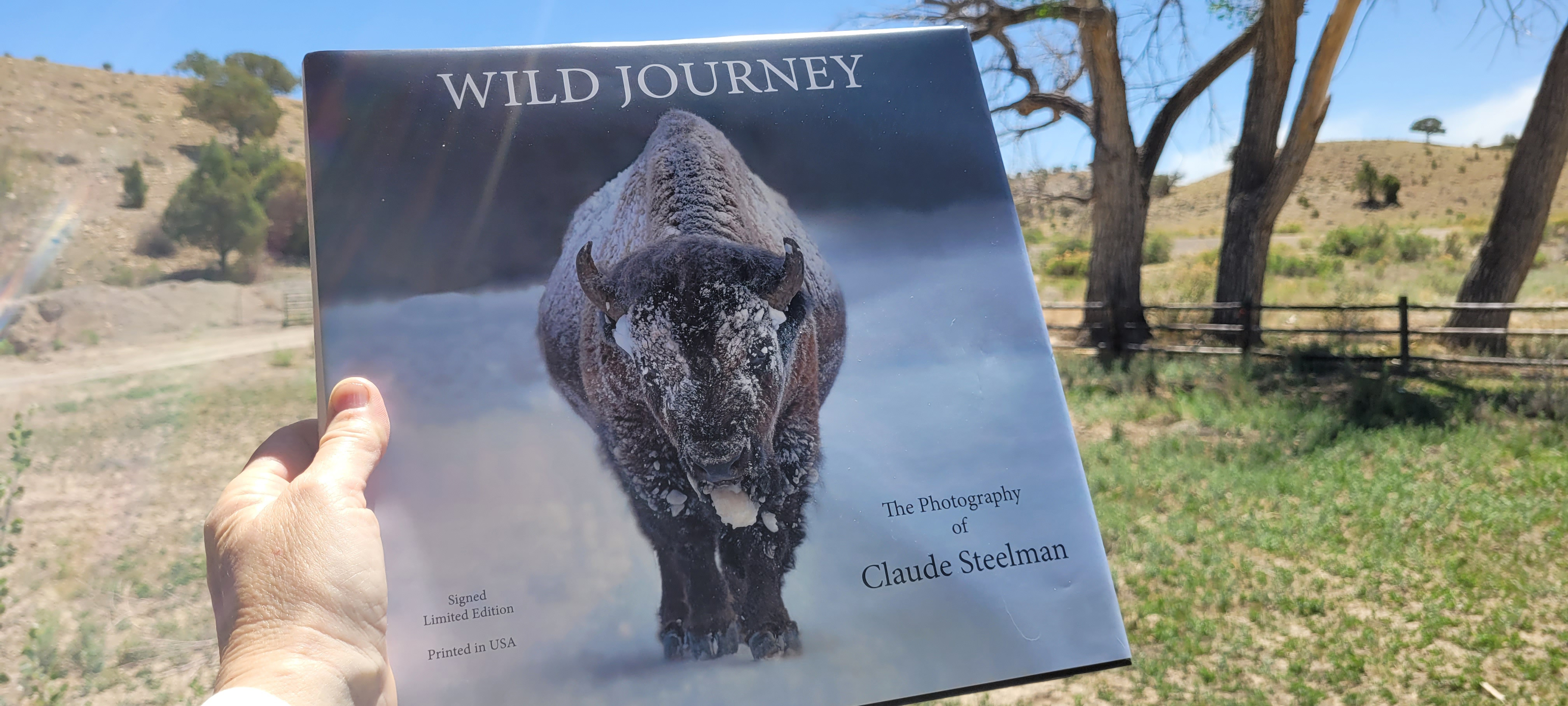
Long-time friend and amazing nature/wildlife photographer Claude Steelman visited the other day on his way to Spring Creek Basin, and he gifted me a copy of his newest book, Wild Journey: The Photography of Claude Steelman. I don’t see this book on his website, so I’m not sure of its availability. Claude had a gallery in Durango for a number of years and currently has downsized to a studio just above Main Avenue โ€“ so he can be out shooting more! This wonderful book is a sort of compendium of his travels and experiences across the West (and beyond) during his 40-plus years (!) as a photographer chasing natural light and wildness. Mostly images, only a little text; his photography truly speaks volumes.

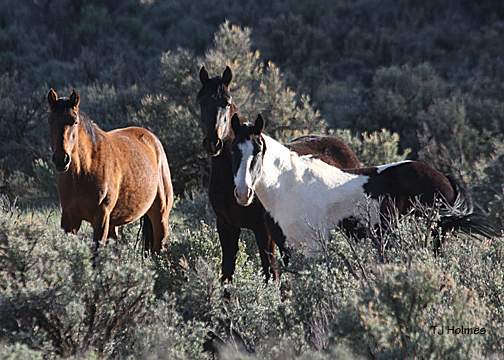
As you would expect from the photographer who published Colorado’s Wild Horses, there’s a section in this book about mustangs, which includes images from Spring Creek Basin, including the above gorgeous scene. ๐Ÿ™‚

Claude says people ask him when he’s going to retire, and I love his phrase at the end of the book that indicates that if he retired, he’d “just go take pictures, so why bother” retiring!? Find your passion, indeed!

I have been so fortunate along this journey to not only meet and spend time with “my” own mustangs but also many like-minded humans. The mustangs and these people keep me grounded on my own path.



Warning sign

13 05 2013

042913bayrear

The bay stallion with “the dark band” in the Jicarilla warns the “grey” pinto stallion away from his mares.


Tough guy

10 05 2013

042913lvs2

Handsome big guy from the Jicarilla, seen early in the morning – his band was the first we saw the morning of the tour. This was taken through my Jeep’s window as he was below the road with his band.


La Fragua bachelors

5 05 2013

Young bachelor stallions in sage flats, La Fragua Canyon.

These bachelors were in an area called La Fragua Canyon (or very close). Family bands and at least one lone bachelor (Anthony’s “favorite” bay stallion!) also were in the area.

I was intrigued by the “white” horses with a few bands. They seemed young to be so completely “greyed out.” So I walked out into this sage flat to get a better look … and I discovered that the “white” horses actually are pintos.

White pinto with La Fragua bachelors.

Do you see the darker shading on his cheek? Pink skin on his muzzle. Black hairs in the middle of his tail.

White pinto with La Fragua bachelors.

This side, no pigment on his face.

This made me realize in a flash that the “grey” pinto stallion isn’t grey at all. I’m not sure what you’d call this pattern? The white gene clearly is dominant over the dark/black color gene? (**Update: See the comments for a website link to more color info. This color pattern likely is “sabino white” orย sabino “maximum white.”)

Of all the horses we saw – 105 – only one looked like a true grey. Quite a difference from grey-dominated Spring Creek Basin.

Colorwise, the Jicarilla has many bays (all shades), sorrels (at least one handsome boy I’d call a liver chestnut) and blacks, some duns and buckskins and palominos. Lots of pintos.


Addition

3 05 2013

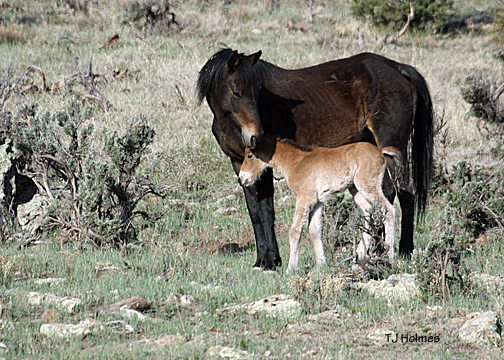
Mare and foal on the Jicarilla Wild Horse Territory.

Mare with a days-old foal at the Jicarilla Wild Horse Territory in northern New Mexico.


Jicarilla mares

2 05 2013

"Grey" and white pinto stallion's mares.

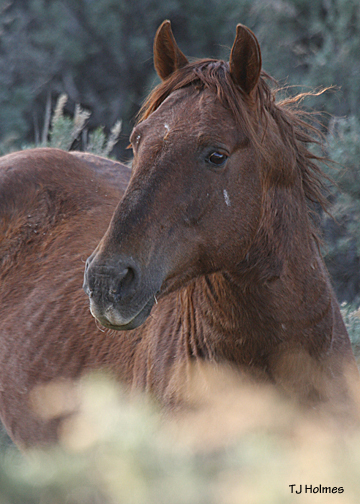
These mares belong to the pinto stallion I posted the pic of yesterday. He was on his way back to them after visiting “the dark band” and “the pinto band.” Note that the pinto mare has blue eyes. Not unusual there, apparently, with several blue-eyed pintos in the other band we saw.

Pretty girls. ๐Ÿ™‚


Jicarilla teaser

1 05 2013

042913gps2

Welcome to the Jicarilla Wild Horse Territory on the Carson National Forest in northern New Mexico! Isn’t this handsome boy stunning?

Seen during the Jicarilla part of a herd tour swap between the Jicarilla and Spring Creek Basin. Call it an education/info swap between herds in neighboring states with federal managing agencies and their partners/advocates.

The Jicarilla district is amazing, and its mustangs are beautiful (see above!). Next, we’ll bring our New Mexico neighbors to tour Spring Creek Basin. Look for more pix soon.