Warning: If snakes give you the heebie jeebies, scroll no more and wait for tomorrow’s post.
Warning No. 2: Seriously.
Warning No. 3: I’m really not kidding.
Are you still reading?
(Hopefully this is enough lines of text to take up space on most phones or tablets or computer screens?)
You were warned.

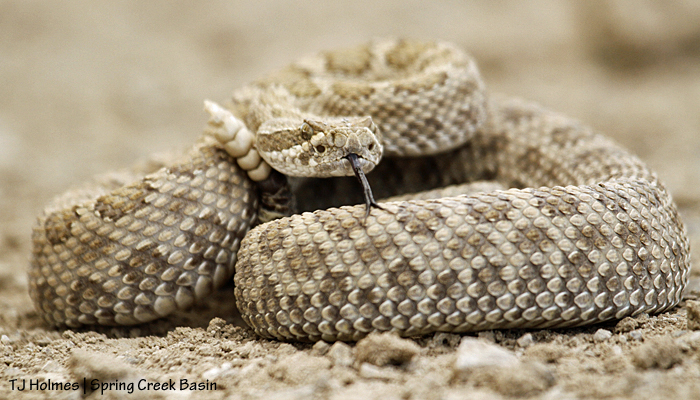
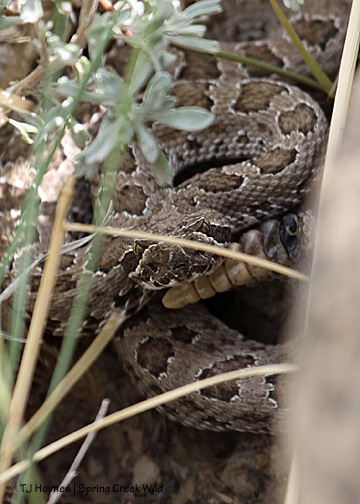
After a summer of fastidiously watching where I step and kneel and sit and seeing most snakes alive or dead on the area roads (as opposed to where I’m out hiking), this little fellow/a surprised me as I did a turn-and-step move – before watching where my step would land after I turned.
It did NOT rattle; I caught just the motion of the slither and performed one of my patented levitation-slash-backward-step (it may have involved a bit of a jump) moves. I think we surprised each other.

It quickly slithered into a nearby shadscale (one of our salt-desert shrubs) and loosely coiled around the inner stem with its head held up through a natural “window” in the vegetation – all the better through which to keep tabs on me … and allow me to photograph it from a lovely-safe distance (I do have a very long lens, after all).
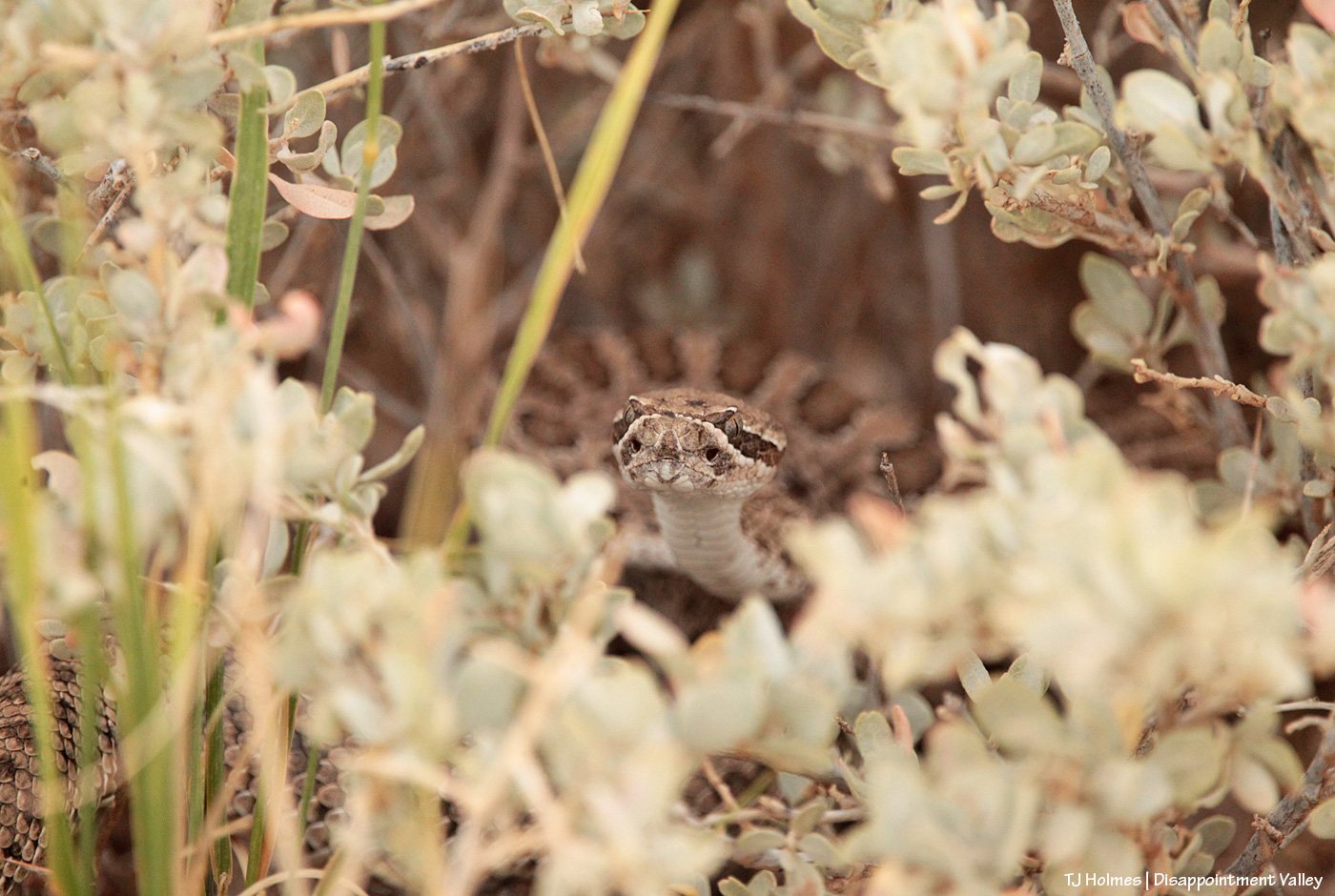
Taken from a bit higher perspective, this (though soft as the focus was on that distinctive head) shows a bit of the pattern on its … back? Dorsal aspect, I suppose. 🙂 Another scaly critter with dorsal spots sted stripes!
And young. While it seemed healthy (read: it had some width/circumference to its body/length), it had only two tiny little rattles/buttons at the tip of its tail.
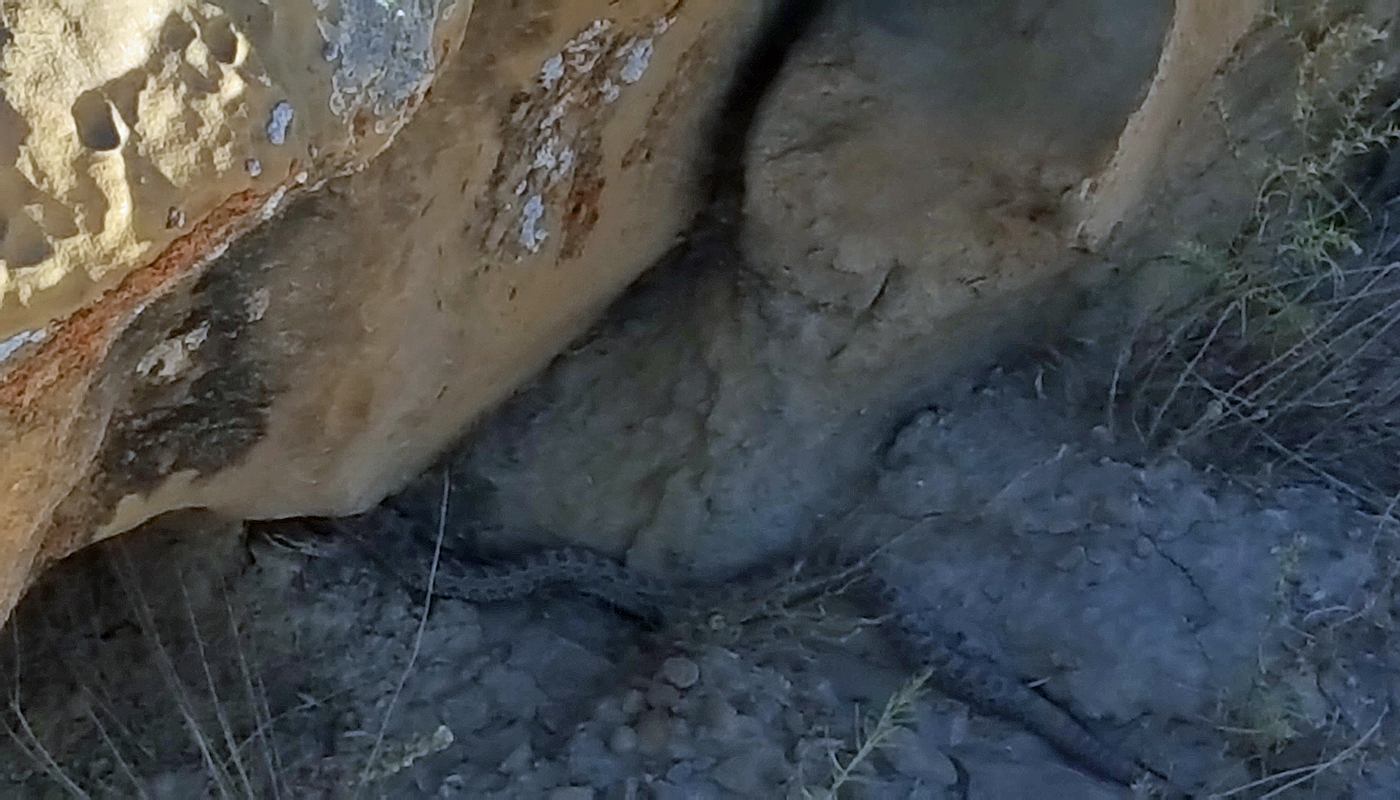
I went off in pursuit of other (safer) photographable things, and when I returned, snakey was gone. (I don’t think that made me any more relieved, not knowing where it went!?)
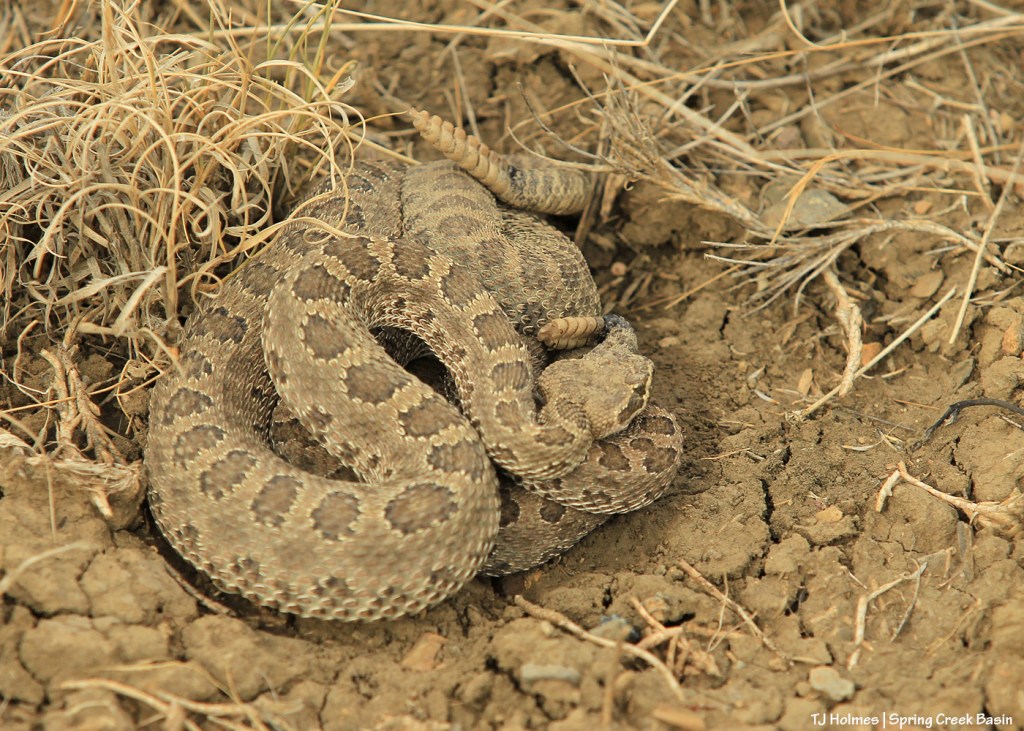
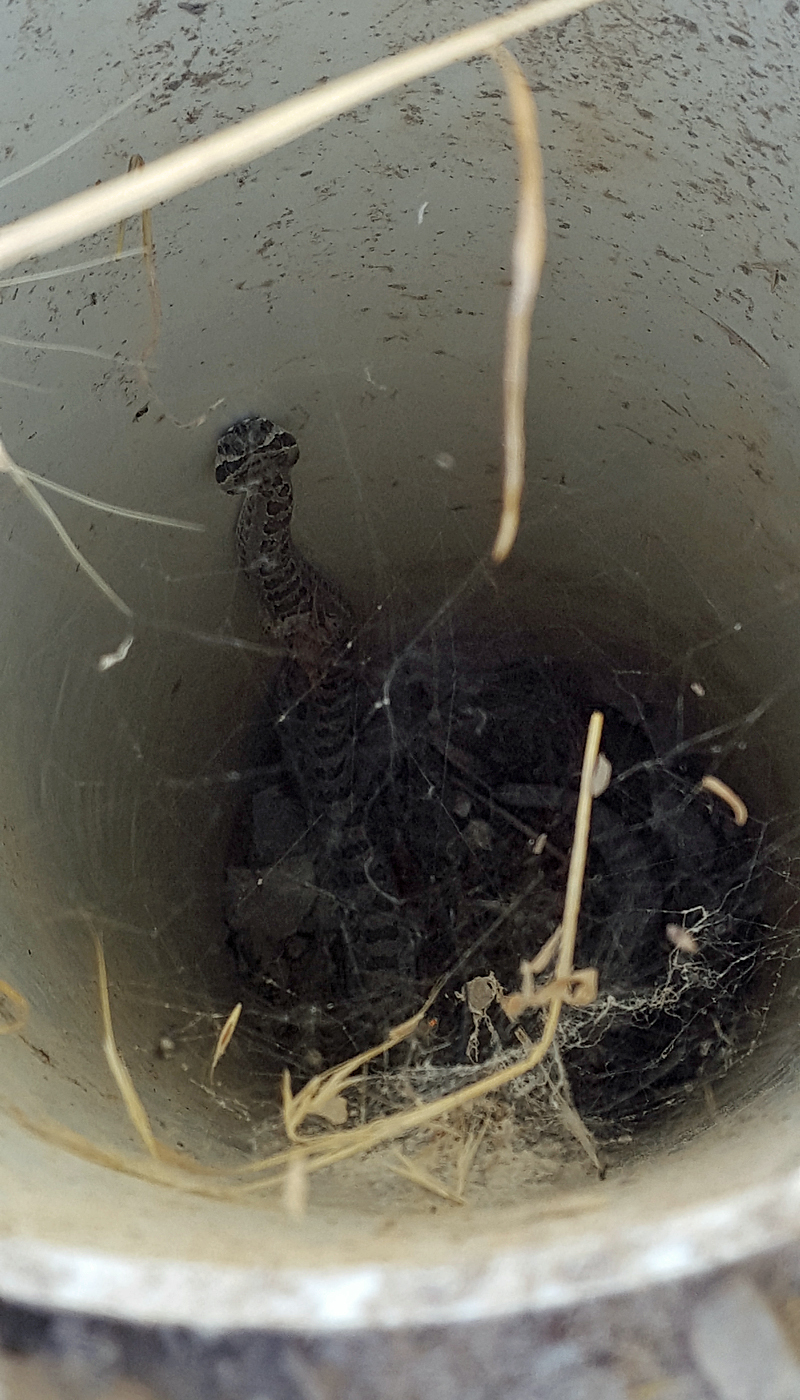
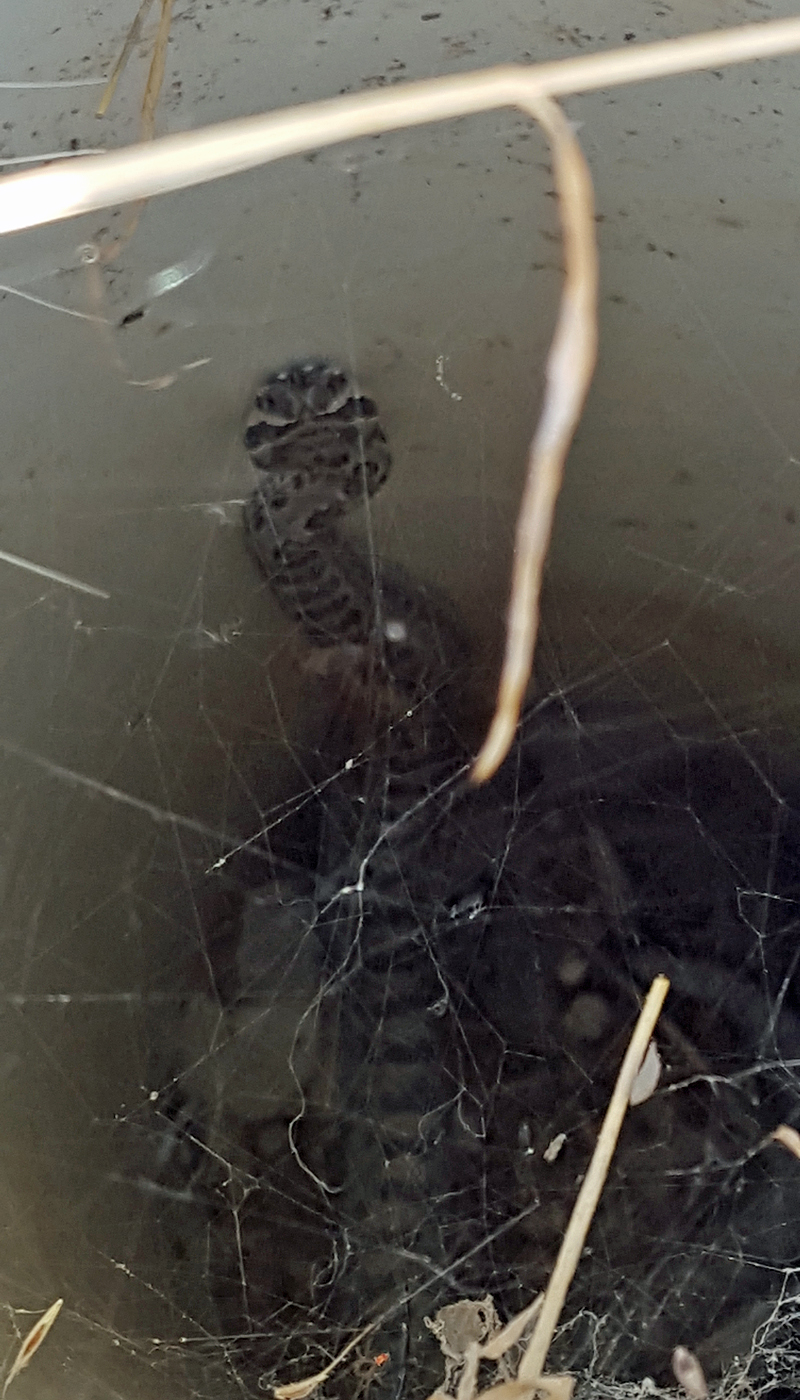
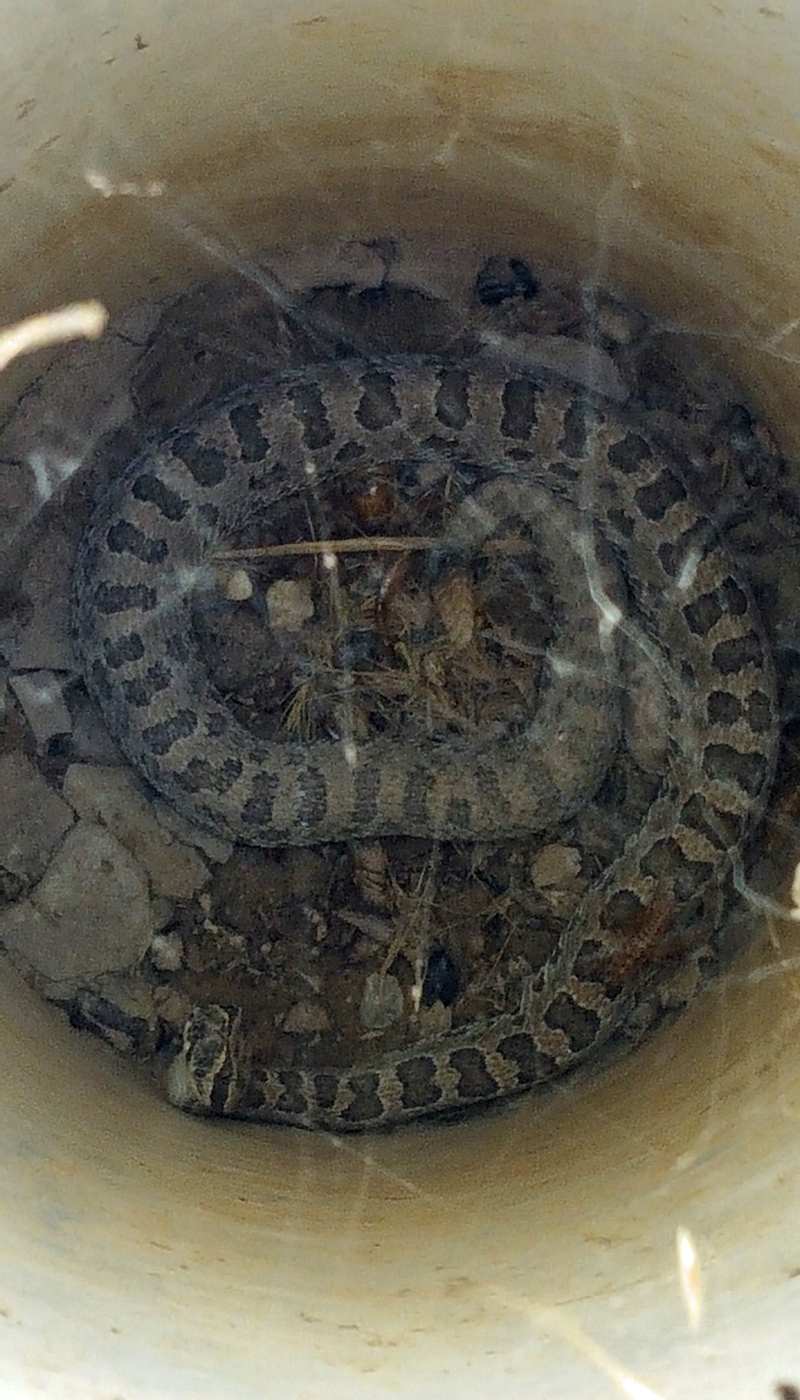
I’ve never known exactly what species of rattlesnakes we have here in Southwest Colorado. Ours are fairly short – no more than a couple of feet, generally (the ones I’ve seen) – even the ones with multiple rattles/buttons. While the one pictured above seemed “normal” in length, comparatively speaking, it had just a couple of little buttons (and unfortunately, I was too busy in my levitation mode to get pix of that end before it cozied up under the shadscale). This University of Colorado website has a good photographic listing of the state’s snakes, and what we apparently have are “midget faded rattlesnakes” – second-to-last slide.
This Colorado Parks and Wildlife site gives a lot more information about midget faded rattlesnakes – without the pix if you do, indeed, get the heebies just from looking at the critters (and if you do, how are you still reading this post?!). Having learned to levitate fairly late in life, I will say that while I appreciate their role in the ecosystem and always leave them alone – taking only pix and as quickly as I can so I can leave them to their snakey pursuits – they give yours truly the heebie big jeebies, too!












 Spring Creek Basin Mustangs