Whaaaaaaaaaaaaaaaat the heck are you doing out in mid-March?!
I don’t know what minimum temperature these little critters need to pop out into the open wide world, but it was at least 74F in Disappointment Valley yesterday.
Not quite 80 … but the weather(wo)man says it’s coming. 😦
I love seeing these lizards – they’re my favorites! – but I never think about seeing them in the middle of March. (Yes, yes, I am starting to watch for the first snakes of the season … !)
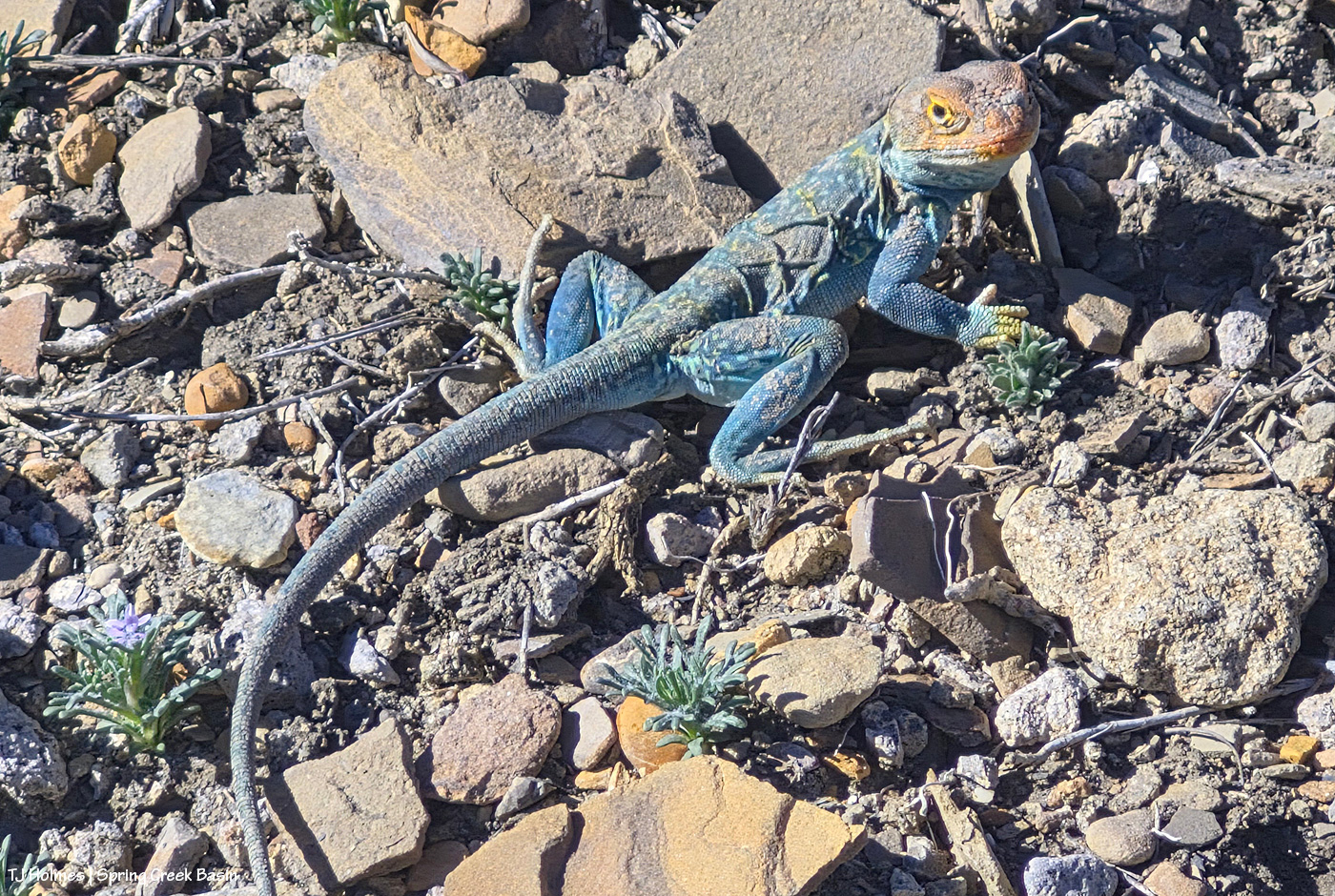
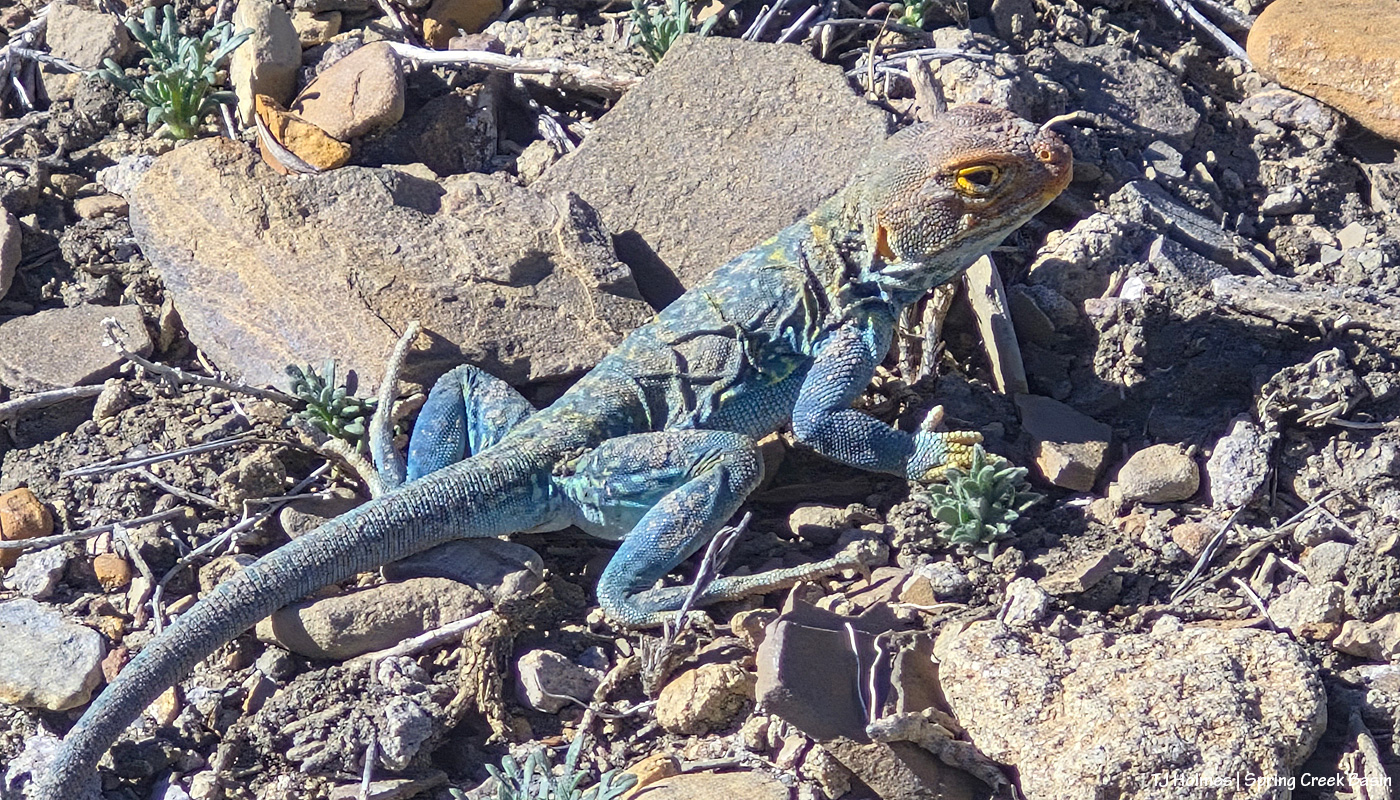
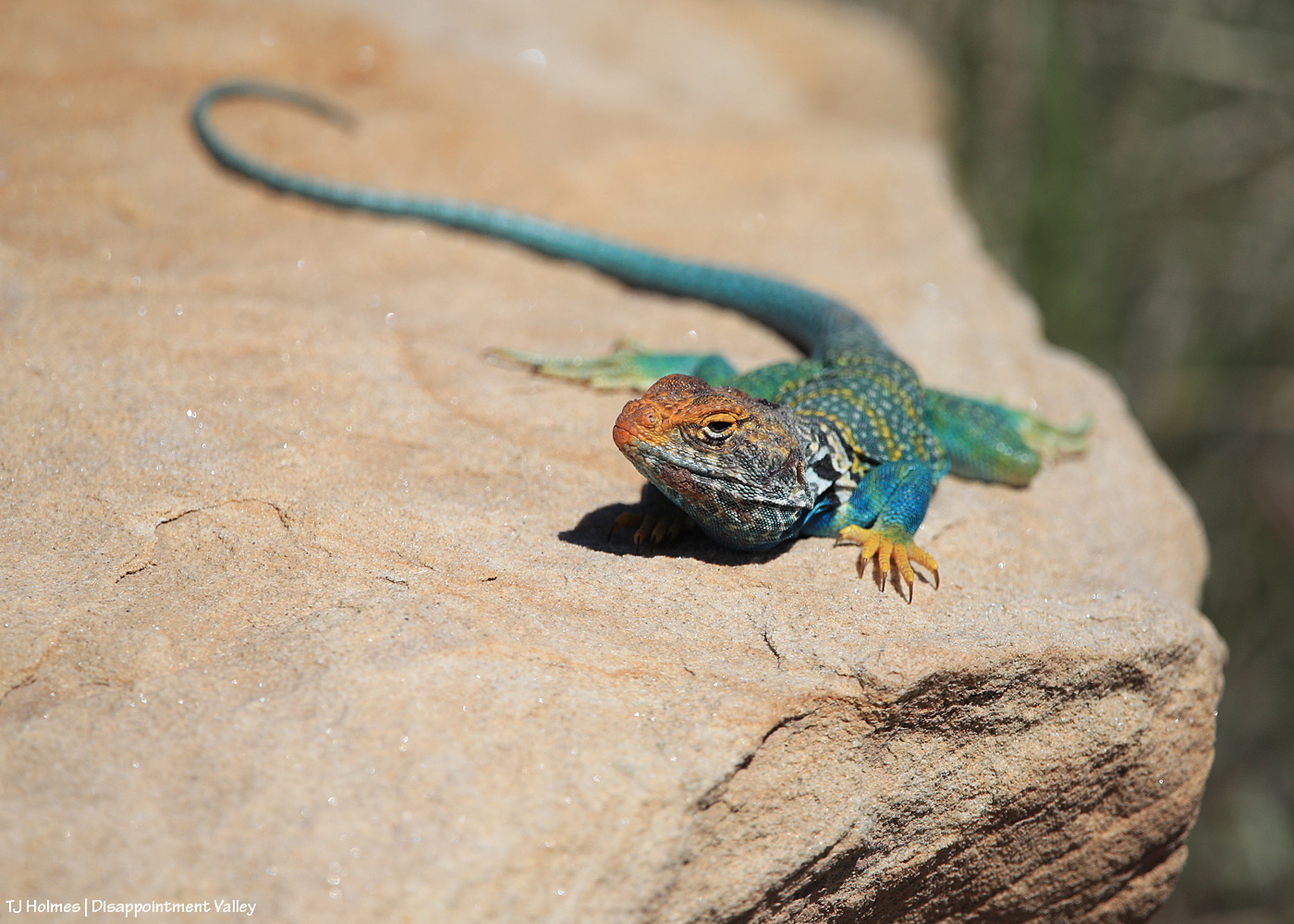
Remember our last little collared lizard friend? Very bright turquoise, and I’m pretty sure that one was a male. THIS one, pictured above and throughout this post, is a female, I’m pretty sure.
And I also think she’s pregnant. 🙂 Look at that belly!
From Google:
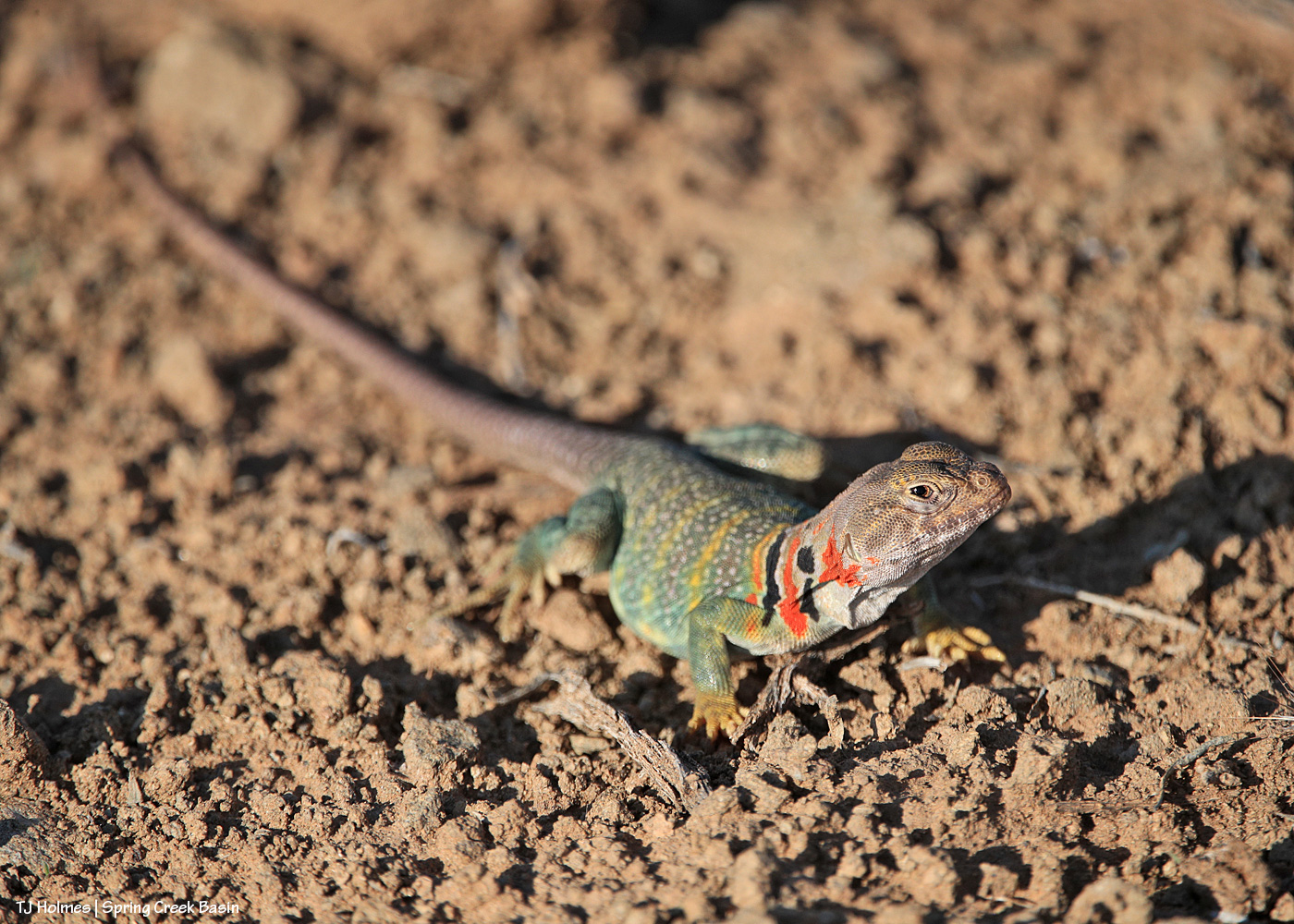
A pregnant female collared lizard can be identified by the presence of naturally occurring orangish spots, similar in color to chigger mites, on her body. These spots develop when the female is gravid, meaning she is carrying eggs. The spots are a visual indication of her reproductive state.
Female collared lizards develop these distinctive orange spots when they are carrying eggs.
Mating Behavior: . During mating season, males will approach females and may engage in head bobbing and wrestling.
Egg Laying: . After mating, the female will lay her eggs, often burying them in sand or soil.
Egg Care: . Some females may guard their eggs for a few days, while others will leave them immediately.
Hatching: . Hatching typically occurs within 40-55 days.
Post-Hatching:. Newborn lizards will have their yolk sacs attached for a couple of days and then begin to feed on small crickets dusted with supplements.
She was super calm while I took photos of her from all kinds of angles.
Super cool little dragon-dinosaur-lizard soon-to-be-mama (!?) girl. 🙂
All the birds (OK, many) and all the flowers (again, many) and all the mustangs (really) may be my favorites, but when I tell you that collared lizards are my *favorite* lizards, they really are. While I adore horny toads (aka horned lizards), the bright turquoise collareds really are my very favorites of the reptile world (which might not be saying much as I’m really not a reptile kinda gal).
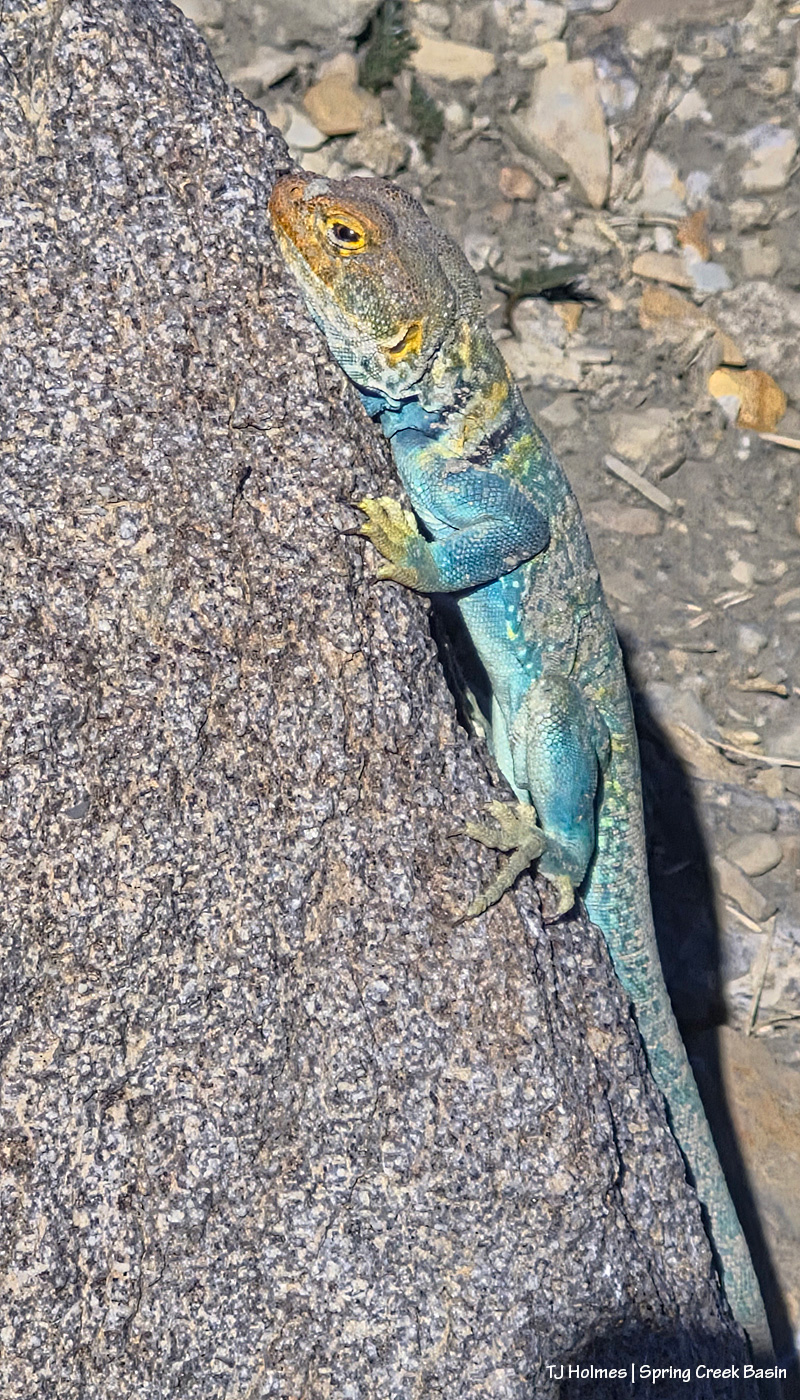
This handsome mister was sunbathing on a very pleasantly warm morning in Disappointment Valley. When I first encountered him, I had only my cell phone, so I returned with the big gun. He was much happier with me at a distance necessary with a long lens. I was happy that it allows me much more precise focusing on his amazing details.
We photographers like the eye-to-eye approach, but I had to rise a little to get that magnificent tail all in view.
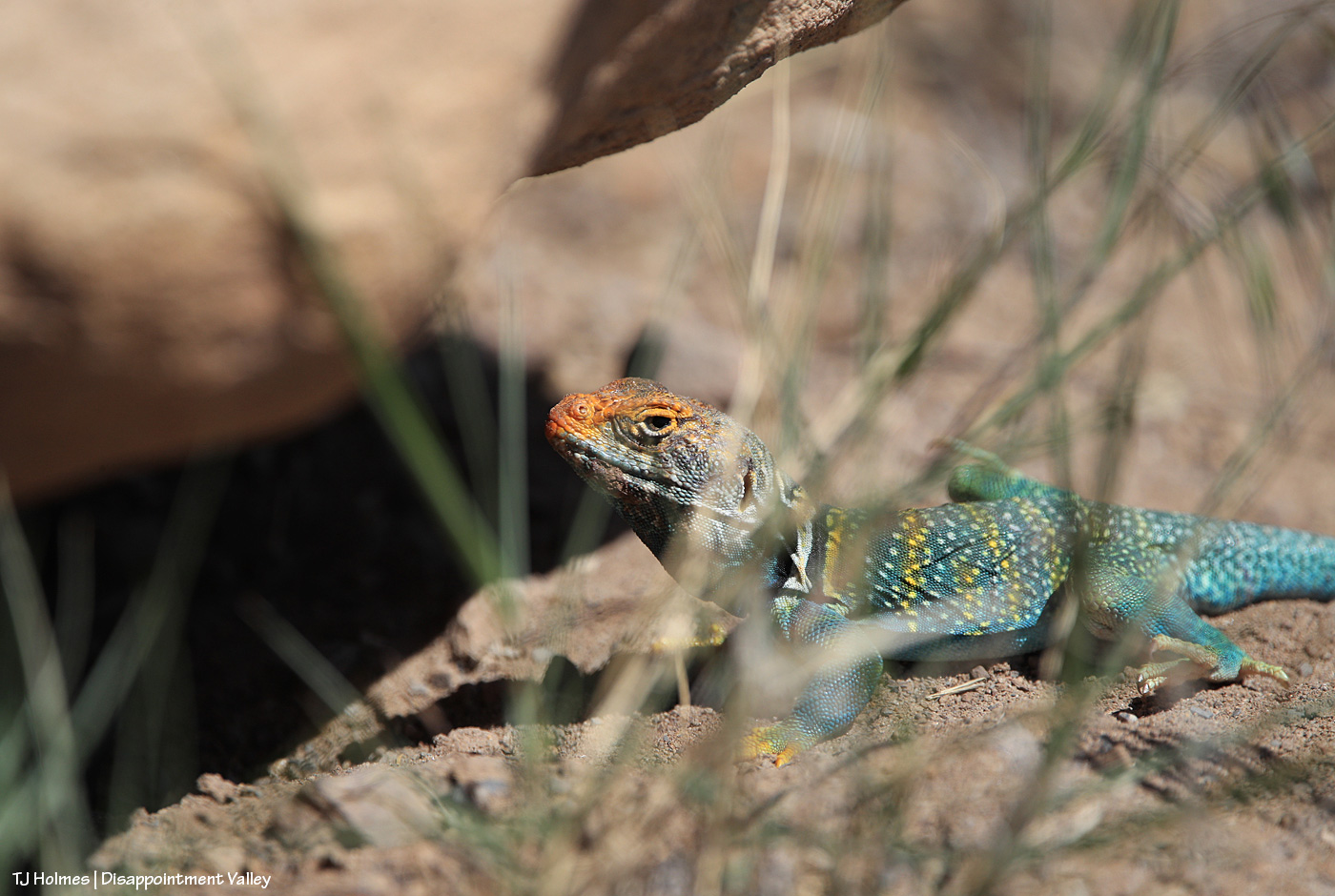
After a bit, he thought he’d seek his shelter’s shade (I don’t think he’d been the only occupant; there was quite a lot of room beneath the overhang of his boulder, and I think something else may have done the initial excavation).
And then I appreciated how the shade allowed more details of and around his eye.
What a super handsome little dinosaur! So glad to see this bright fellow – first of the year for me. 🙂




 Spring Creek Basin Mustangs