As we ease deeper into spring and the season of growth and life, I realize I need to bring up some harsh realities of wild horse life, particularly as it relates to the basin. In writing this blog about the lives of the Spring Creek Basin wild horses, I have tried to focus on them, their interactions and bonds and behaviors, and though I occasionally post something of wider wild horse interest, I try to keep the attitude on this blog – it’s mine, after all, *I* write it – upbeat and positive.
But it’s not all sunshine and paintbrush.
The next likely roundup of Spring Creek Basin wild horses will be in September 2011. The population of the herd will be at more than 100, which is nearly double the top end of our AML (35-65). I have some suspicions about why it is allowed to get that high that I won’t go into (yet, maybe), but from a manager’s point of view, especially when a concern – a stated concern – is the health of the range, I can’t for the life of me understand this management. Especially when the exact population of the herd is known absolutely. But it will be nearly exactly the same as the roundup of 2007 in numbers, when numbers where only guessed at (from a flyover count). Oddly enough, the local Back Country Horsemen’s count that spring of roughly 120 horses seems to have been closer than the BLM’s flyover count of 97 (according to my numbers, which change because BLM’s seem to change, there were 109-119 horses in the basin before August 2007).
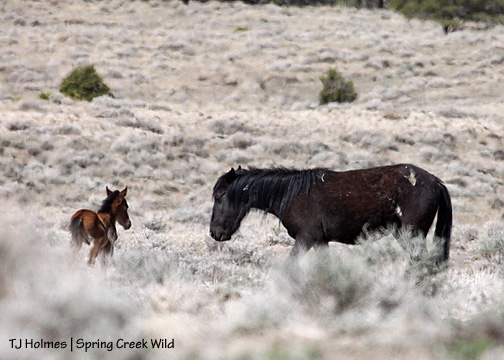
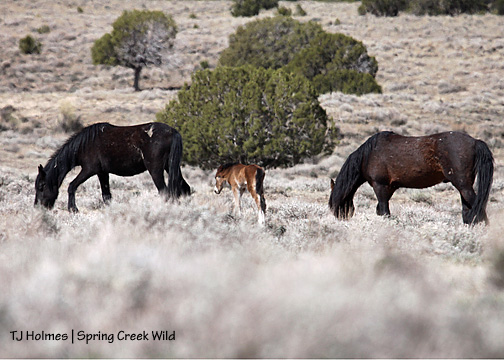
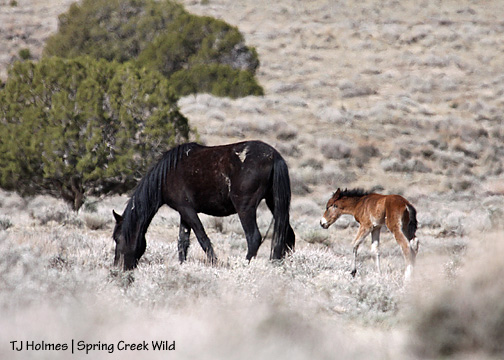
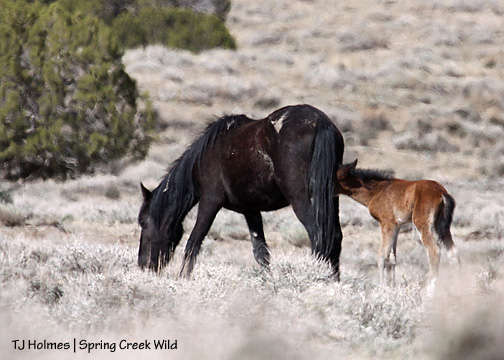
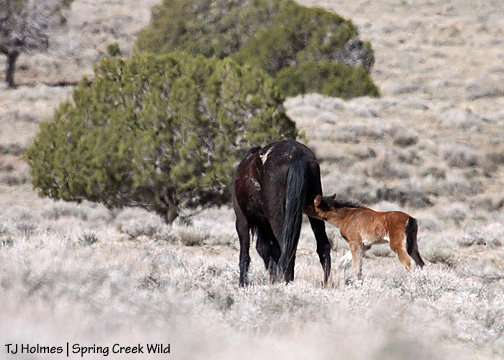
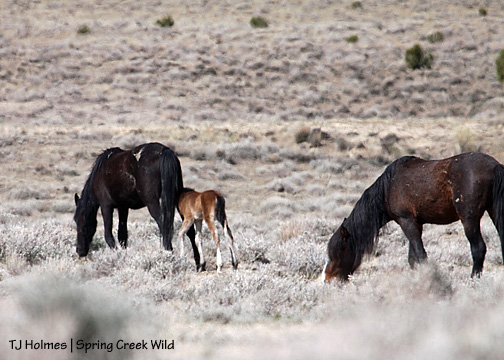
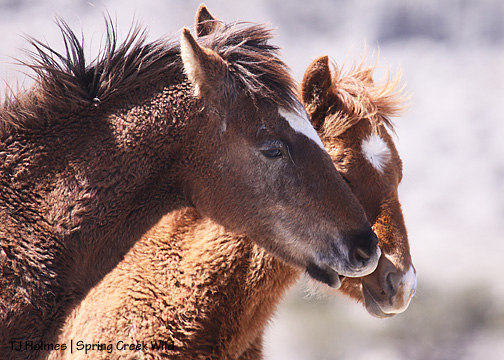
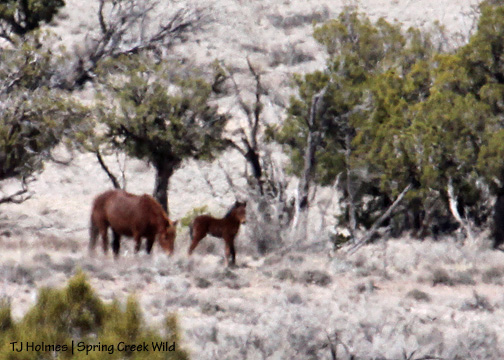
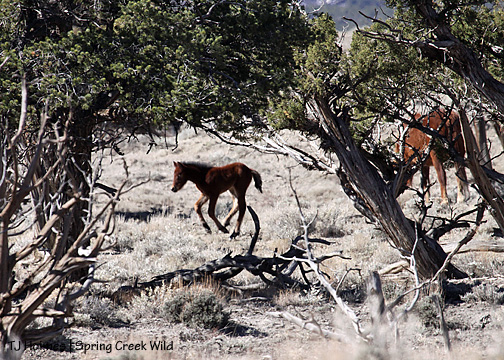
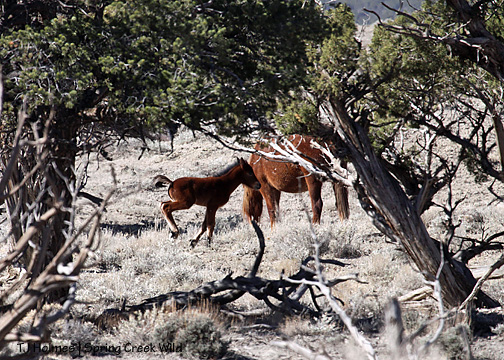
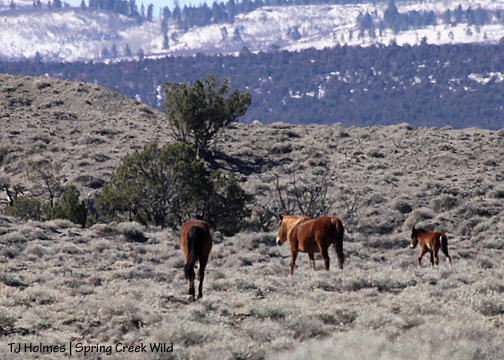
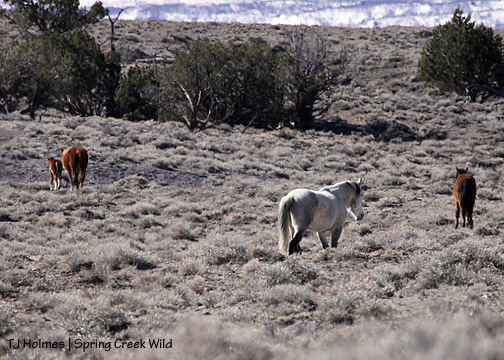
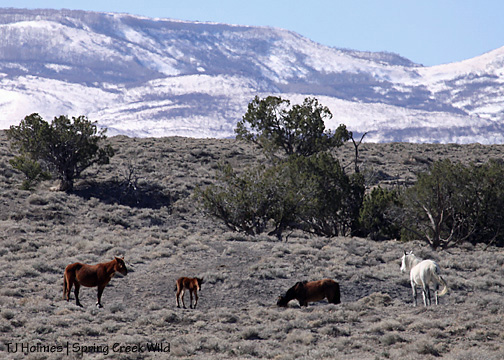
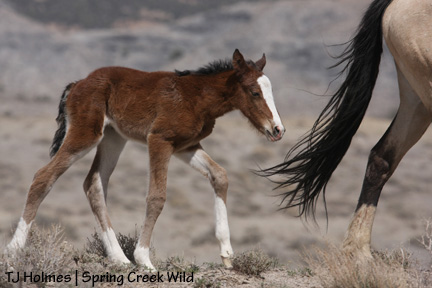
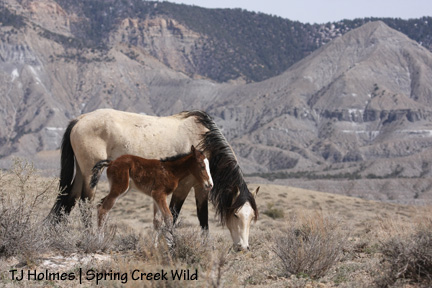
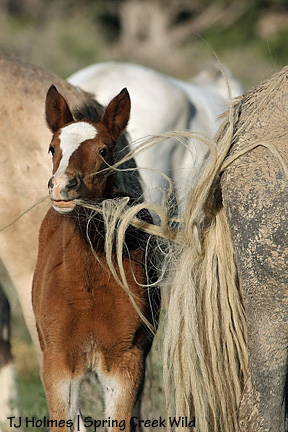
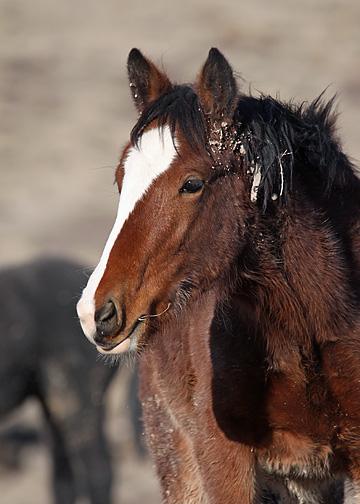
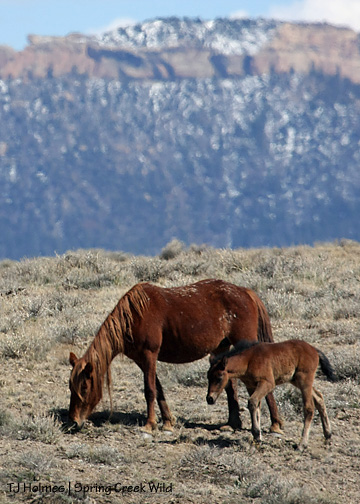
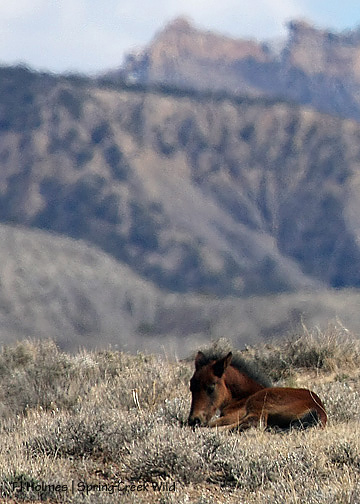
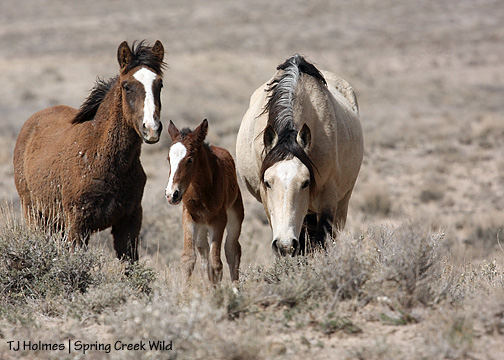
*** It is important to note that probably most of the foals born this year, likely all the foals born next year and many of the young horses born last year and the year before will not only be rounded up, they’ll be removed – because of BLM’s view of their “adoptability.” (And there is some truth in that.) So while I am – always – excited about new life in the basin, it is tempered by sadness.
In 2007, 77-87 (again, BLM numbers) were rounded up. Ten were released at the end of the roundup, and Grey/Traveler was released later for a total post-roundup population of 43 horses. In 2011, we’ll be there again. With Roja’s foal, we stand at 60 horses currently. (BLM doesn’t count foals, but contractors do, which, I suspect, has something to do with the number discrepancy and keeps the confusion level high.) I expect at least 13 foals this year, more than 20 next year. Are you following the math? Say 60 horses total are removed. Even if all this year’s and next year’s foals are removed (~35?), about half the current number of horses will be removed. Say half of last year’s foal crop (5-6) and half the crop of the year before (3), we’ll say good-bye to at least 20 of the current *mature* horses living in Spring Creek Basin. Hopefully the adoption in 2011 will attract as many adopters as observers (fewer than half the horses offered for adoption in2007 were adopted), but in this economy?
Yes, foals are fabulous news, in and of themselves … but readers should be aware of the ultimate end game BLM plays. Spring Creek Basin is not immune from roundups. In fact, because we’re so small – both in geographic area (SCB encompasses a little less than 22,000 acres – very small) and herd size, it is imperative to manage for a balance between the horse herd with the quality of the range – which, like most, ain’t that great. Occasional removal of horses is – I hate to say it – necessary, especially according to BLM’s current game plan, which involves, strictly, limited understanding of skewing gender ratios, roundups and hopeful adoptions. The herd area is fenced and/or bounded by natural barriers. Water is very limited and pretty poor quality. We got more moisture this winter than last, and I am surprised how little corresponding water is in the basin right now, in April.
There are many complex issues to this discussion, and I welcome any questions that I can try to answer to the best of my ability and on-the-ground knowledge. I guess I’m saying “don’t get too attached.”
Our local advocacy group is working on a proposal that explains two things: How to save BLM (a lot of) money (bottom line) and how to save horses (which saves a lot of money and is, of course, our group’s focus). It involves PZP. Again, I refer you to Matt Dillon’s excellent series on PZP on his blog: Pryor Wild
In a nutshell, we estimate BLM can save at least $100,000 per decade in roundup costs and more than $2 million per group of horses sent to long-term holding per roundup by using PZP to slow the population growth (we do not aim to *stop* population growth). PZP cost = a few hundred dollars per year. Labor cost = zero because of volunteers like yours truly and our local group members.
I’ll write more about this as it develops, but I want readers to know a couple of things: 1) I am already struggling mightily with the emotional effects of next year’s status quo roundup (and it may (will) affect what I write about and how I write it), and 2) we are very actively working on a plan to change status quo and save more Spring Creek Basin horses. It also is important to know that we are not creating precedent here but following well-established and/or newly re-established PZP programs (using one-year PZP doses, not PZP-22 or other multi-year fertility control).








 Spring Creek Basin Mustangs